It's all about Porsche…if you're an owner of a Porsche,or a big enthusiast of Porsche Cars, Porsche Motorsports, Porsche Design, Porsche History, or a member of a Porsche Club….join me on focusing just about PORSCHE!!
Porsche at the 2011 IAA Frankfurt Motor Show with four world premieres
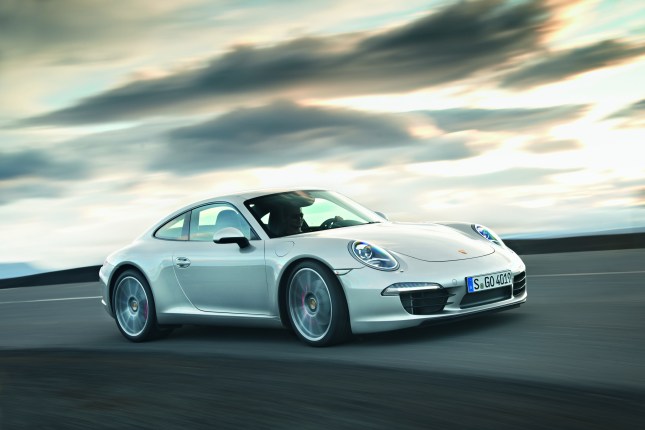
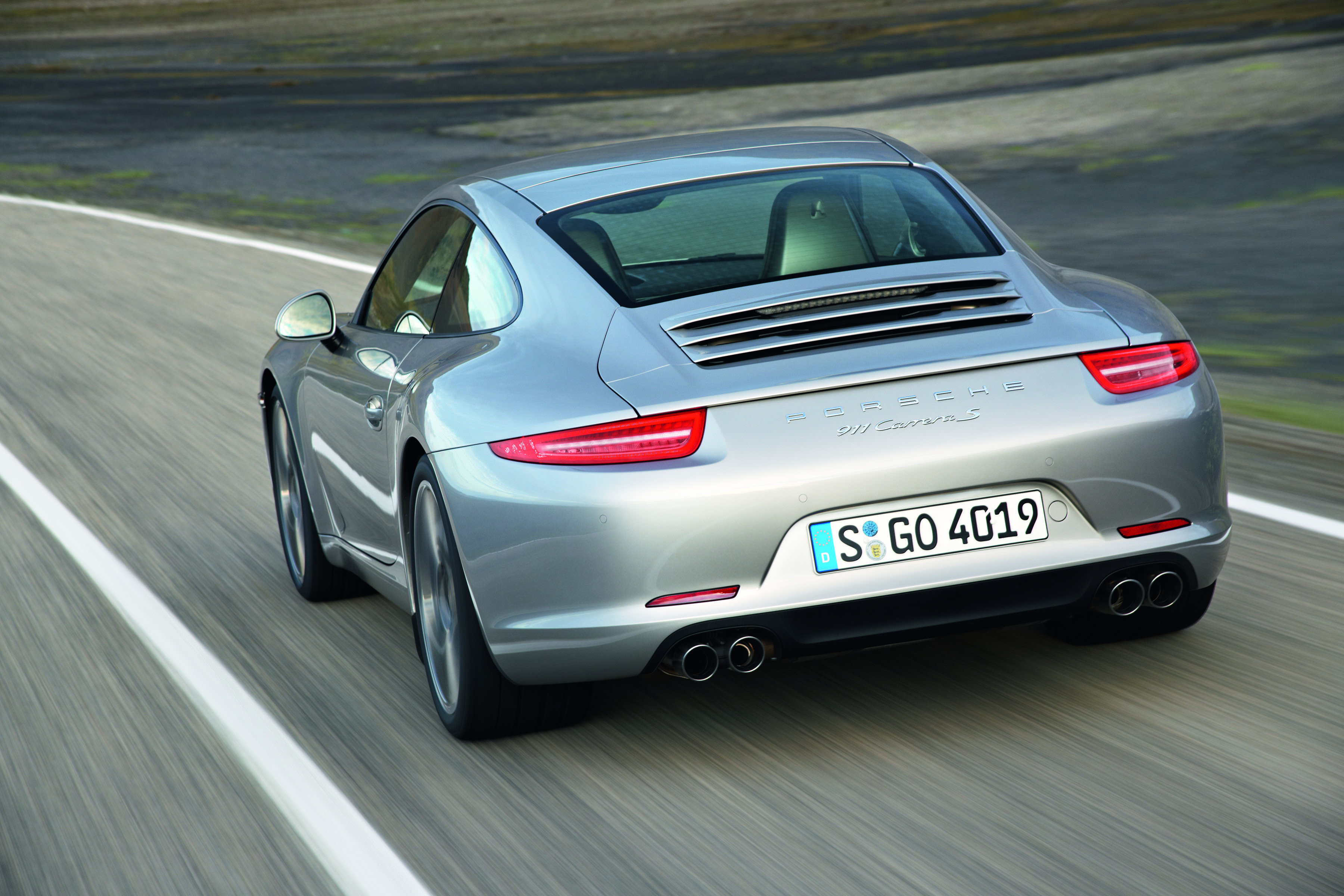
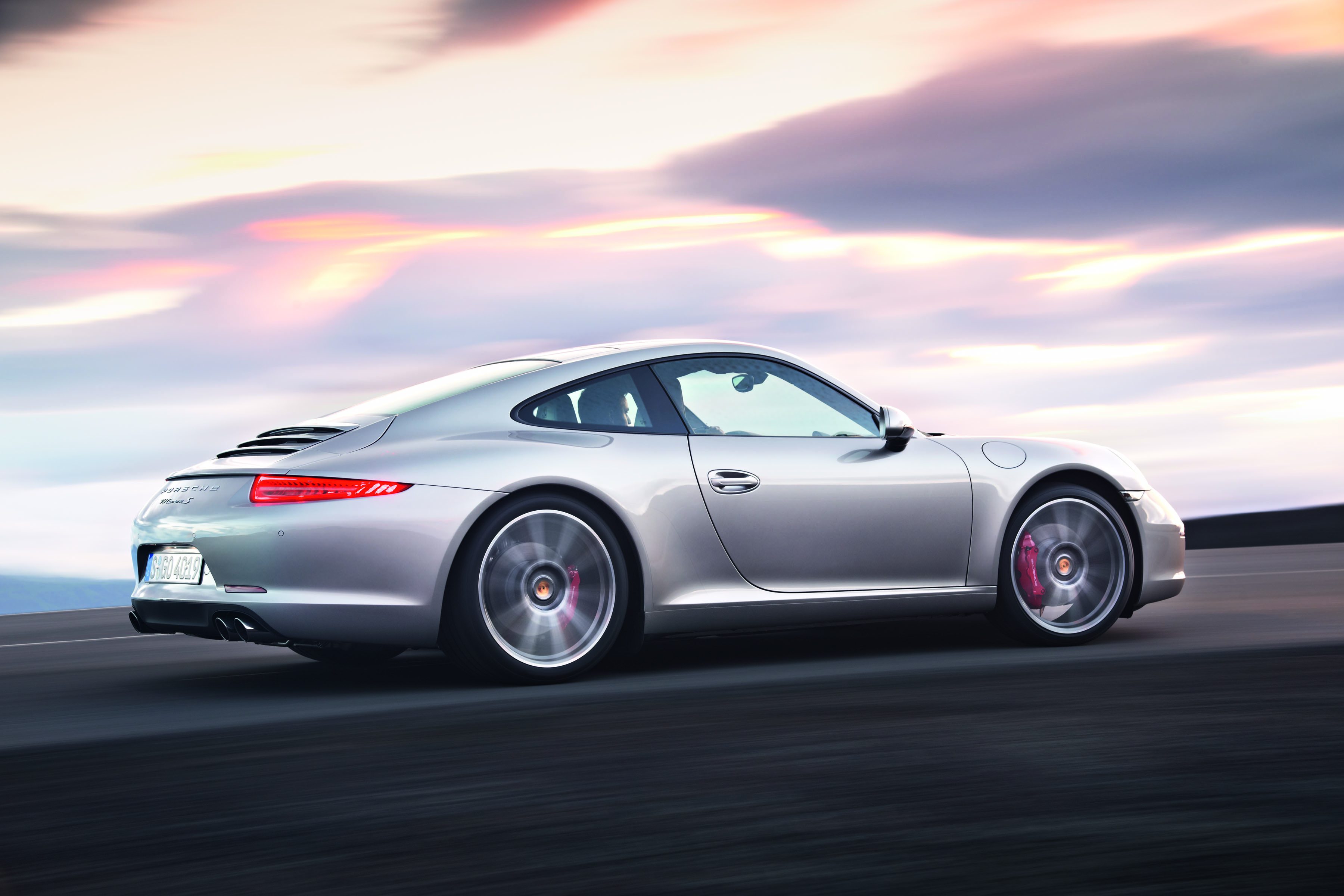
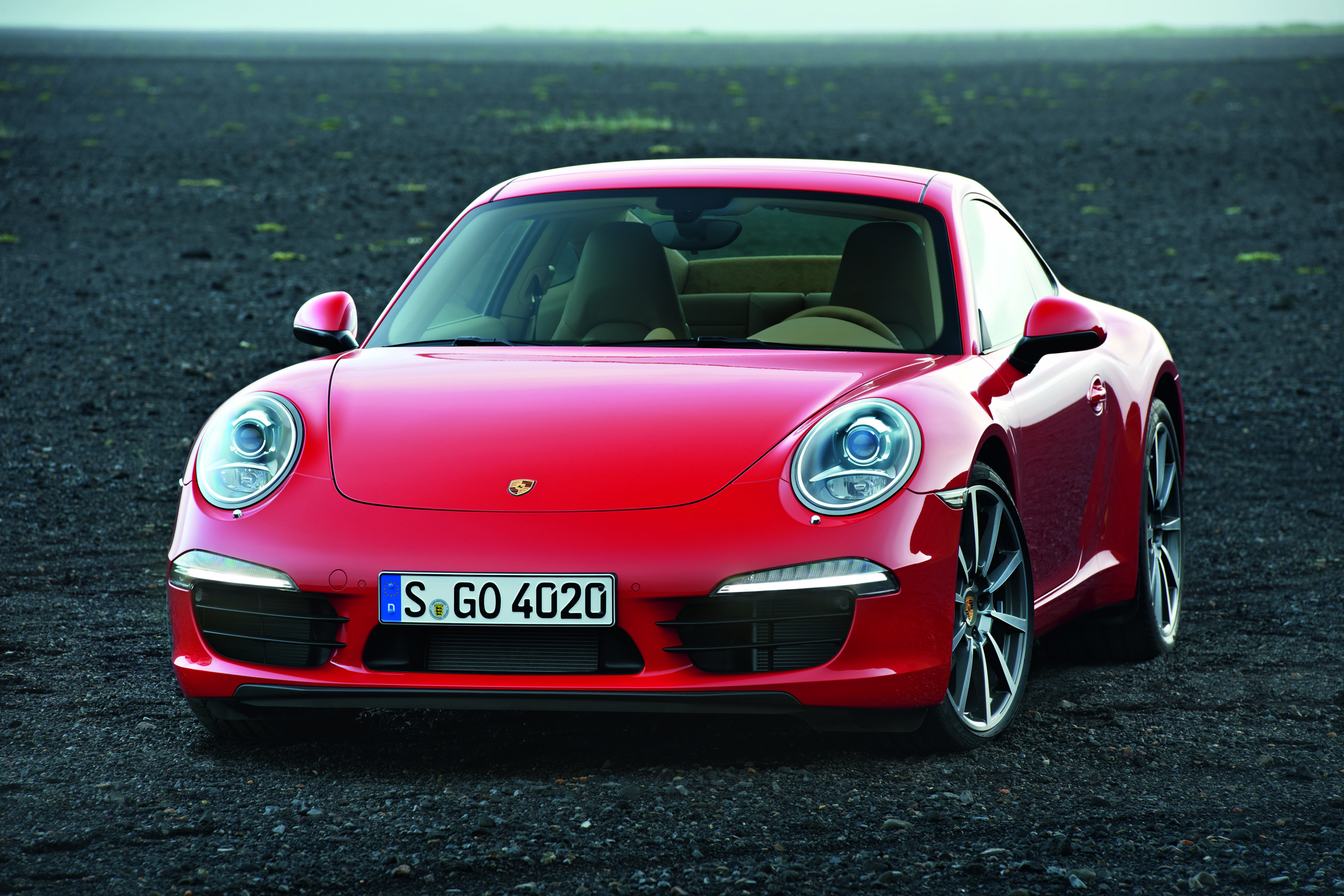
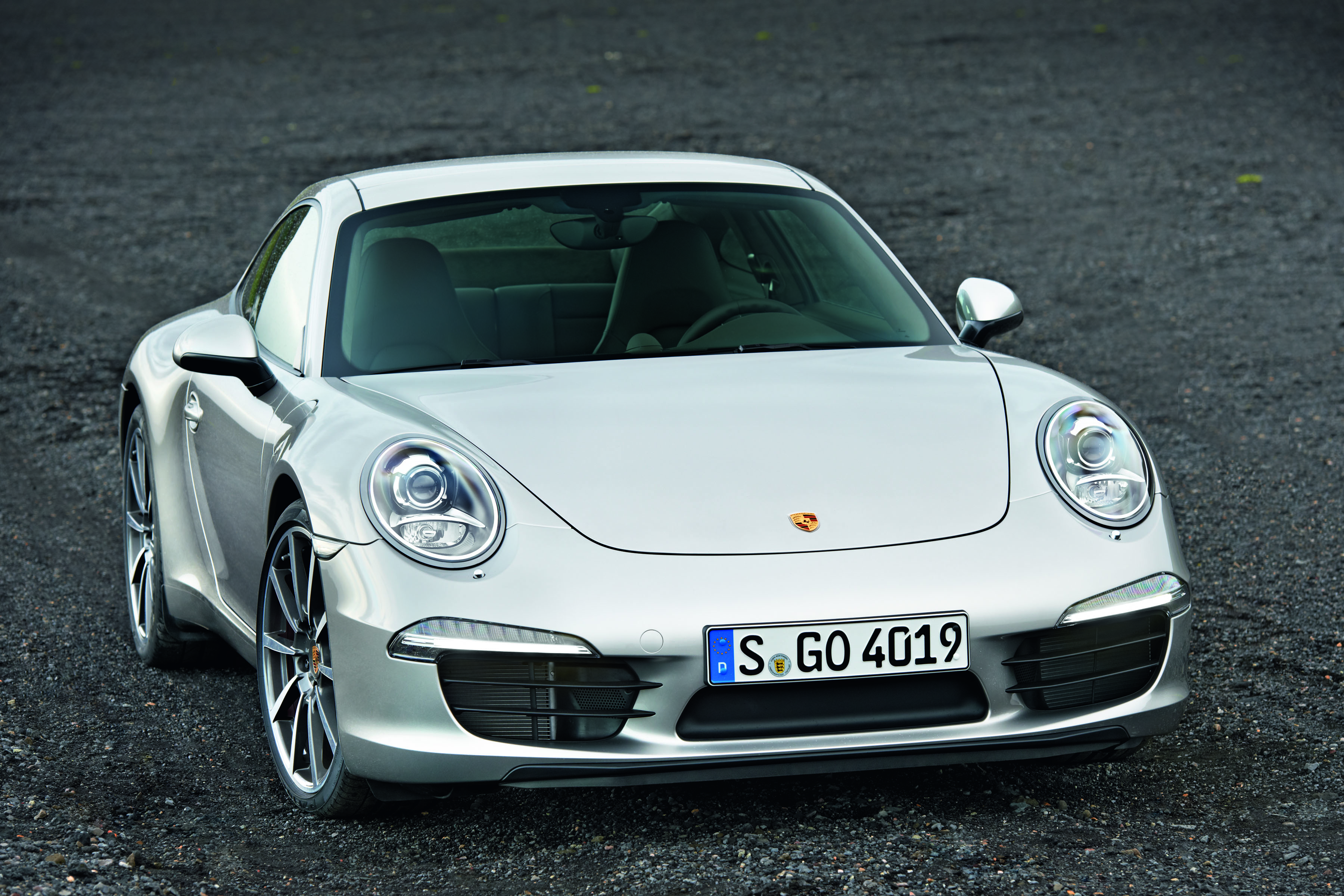
Stuttgart. With the new 911 Carrera, the next completely redeveloped generation of the sports car classic by Dr. Ing. h.c. F. Porsche AG, Stuttgart, celebrates its world premiere at the 2011 IAA Frankfurt Motor Show.
The sports car icon is stepping into the limelight with its flat, stretched silhouette, exciting contours and precisely designed details, yet from the very first glance it remains unmistakably a 911. True to the 911 tradition, the distinctive Porsche design language with its tendons and muscles exudes power and elegance. The 100 millimetre (3.94 inch) longer wheelbase and reduced height combined with the up to 20-inch wheels underpin the athletic appearance.
Setting the standard in its class, as it has for generations, the new 911 raises the performance and efficiency bar yet again. All Coupés get by with significantly less than ten litres of fuel per 100 kilometres. Fuel consumption and emissions are up to 16 per cent lower compared with its predecessor. The Carrera with the new 350 hp (257 kW) 3.4-litre boxer engine and optional Porsche Doppelkupplungsgetriebe (PDK) consumes a mere 8.2 litres per 100 kilometres based on the NEDC – 1.6 l/100 km less than its predecessor. Also, at 194 g/km CO2, it is the first Porsche sports car to make it below the 200 g/km mark.
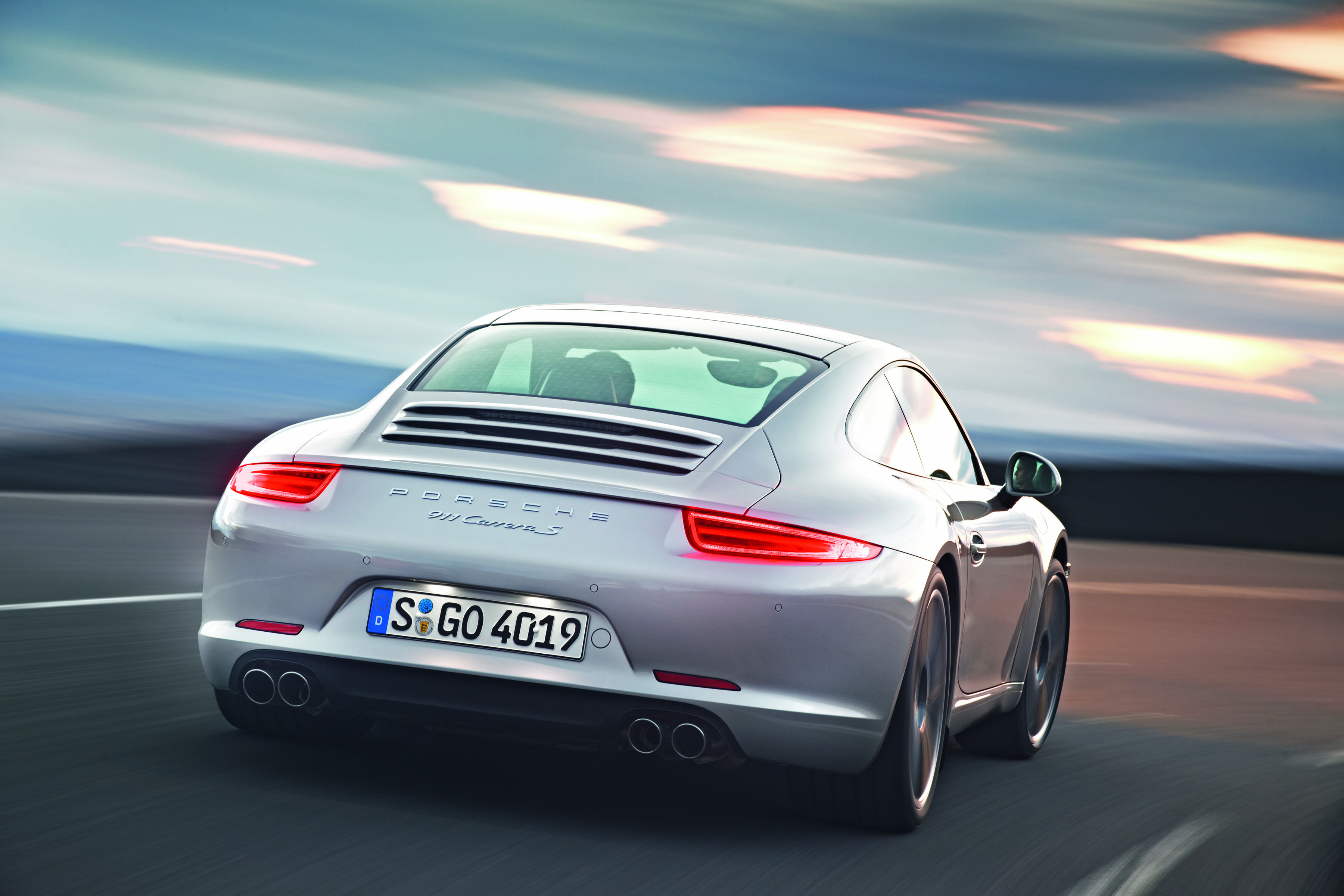
911 Carrera S
With the Carrera S as well, with its 3.8-litre boxer engine and what is now 400 hp (294 kW), fuel consumption when paired with the optional PDK is reduced by 14 per cent or 1.5 l/100 km to 8.7 l/100 km despite 15 hp (11 kW) more power. That equates to CO2 emissions of 205 g/km.
The all-new, lightweight body is an intelligent aluminium-steel construction. It is responsible for a significant proportion of the weight reduction of up to 45 kilograms. New active control systems elevate driving dynamics to an unprecedented level. The new electro-mechanical power steering offers Porsche’s typical precision and feedback, and also helps to economise on fuel. Moreover, the world’s first seven-speed manual transmission is featured as standard. Additional systems and functions such as auto start/stop, thermal management and electrical system recuperation further enhance the new Carrera’s efficiency.
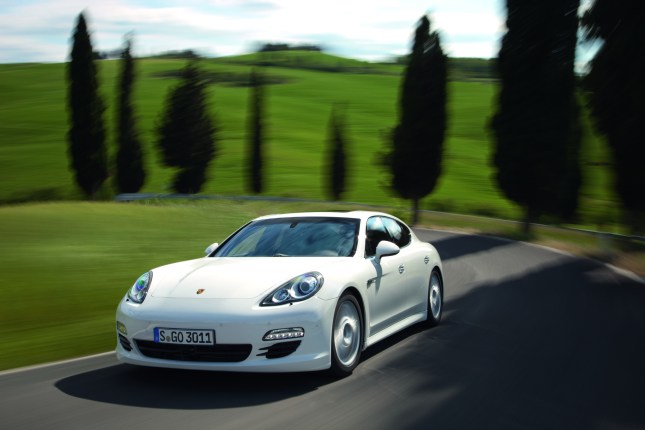
Also celebrating a world premiere at the 2011 IAA Frankfurt Motor Show is the Panamera Diesel, the long-range cruiser in Porsche’s Gran Turismo stable with an impressive turn of speed. With a range in excess of 1,200 kilometres on a full 80 litre tank, it is a good bet as a distinctly economical GT saloon thanks to its fuel consumption of only 6.3 litres of diesel per 100 kilometres based on the NEDC with optional low-friction tyres.
Panamera Diesel
The new Panamera Diesel is powered by a smooth-running, three-litre V6 250 hp (184 kW) engine and a brawny maximum torque of 550 Newton metres. Power transmission is handled by an eight-speed automatic transmission.
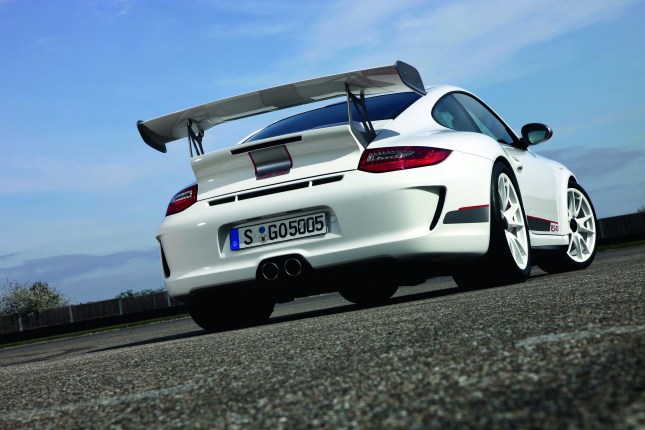
911 GT3 RS 4.0
With the 911 GT3 RS 4.0, which is making its debut in front of an international public in Frankfurt, one of the most popular, coveted and successful Porsche racing pedigree production cars is entering the home straight.
Limited to 600 vehicles, the 911 GT3 RS 4.0 brings together in a road car all the attributes that have made the Porsche 911 GT3 a serial winner on the race track.
The four-litre displacement sports engine, the largest engine ever used in a production 911, produces 500 hp (368 kW). At 125 hp per litre, the engine is also the most powerful naturally aspirated engine. This propels the 911 GT2 RS 4.0 around the Nürburgring-Nordschleife circuit in 7:27 minutes.
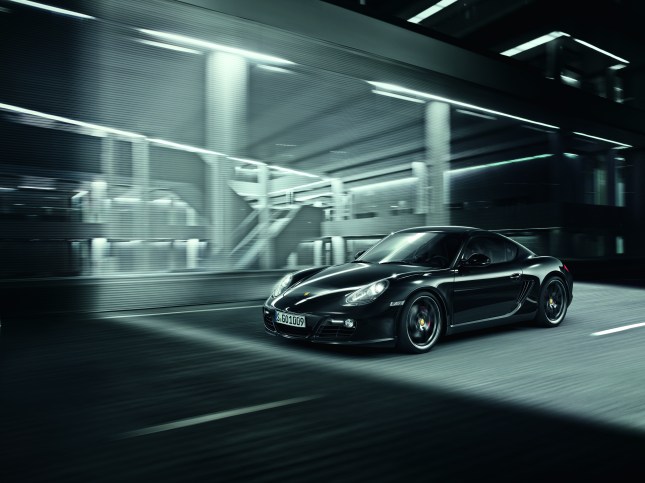
The Cayman S Black Edition limited to 500 units is also celebrating its debut in Frankfurt. The all-black, mid-engine Coupé boasts even better performance than the Cayman S and offers especially lavish equipment. The Cayman S Black Edition is powered by a 3.4-litre flat-six engine with power output increased by 10 hp to 330 hp (243 kW). The greater power feeds directly through into the two-seater’s performance. The acceleration times from nought to 100 km/h (62 mph) are improved to 5.1 seconds with the six-speed manual transmission and to 5.0 seconds with the optional Porsche Doppelkupplungsgetriebe (PDK).
Cayman S Black Edition
The world premieres are accompanied by two vehicles, which provide impressive proof of the tradition and future of Porsche Intelligent Performance. The Boxster E and the legendary “Semper Vivus”, the world’s first fully-functional, full-hybrid car. The Boxster E, with one electric motor apiece on front and rear axle, runs on purely electric power with four-wheel drive and is equivalent to a Boxster S in terms of driving dynamics. Together with two other Boxster Es, in which an electric motor drives the rear wheels, the prototype is being used to explore the everyday practicality of all-electric vehicles and how they are used, especially in terms of driving and battery charging.
The faithful reconstruction of the “Semper Vivus” pays tribute to the visionary invention of Ferdinand Porsche, who in building it in 1900 created the first ever functional vehicle with a series hybrid drive. The faithful replica, the visionary design of which impresses to this very day, was the outcome of a collaboration between Porsche Engineering and Karosseriebau Drescher, a coachbuilding company based in Hinterzarten (Germany).
Porsche looks forward to welcoming its visitors, prospective purchasers and customers at the IAA Motor Show in Hall 3.0, Stand A12. The press conference will take place on September 13th at the Porsche Stand.
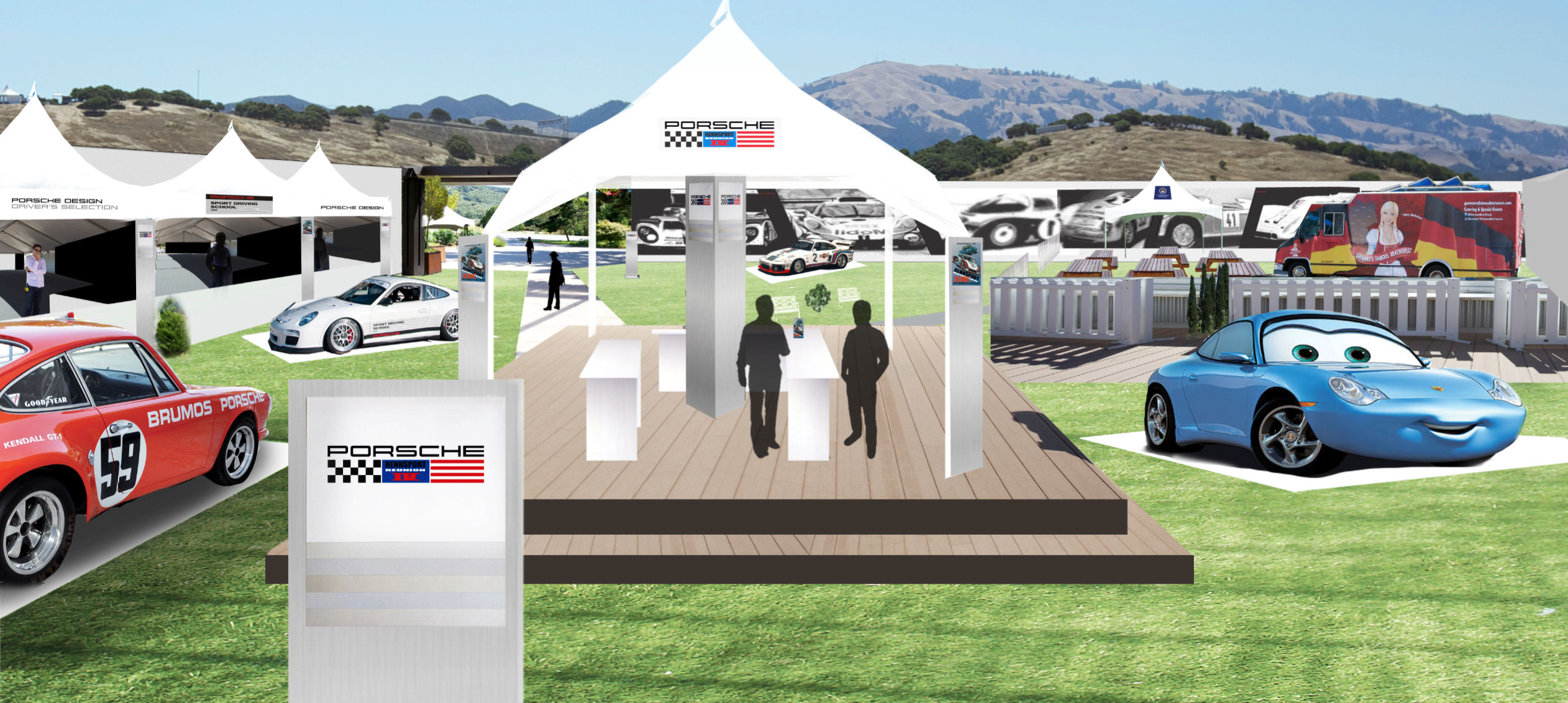
The 40,000 square-foot Park-in the-Paddock includes Genuine German Biergarten, Turf and Lots of Opportunities to Relax and Enjoy the Magic of Porsche Rennsport
This area, located behind the media center (where the tire companies usually set up for a race weekend), will feature an authentic German biergarten as well as German food and and a park atmosphere so Rennsport attendees can take a break from the on-track activity and absorb the experience. But Rennsport fans will still know that they are at a Porsche event, as the Park-in-the-Paddock will have plenty of sports car activity as well, according to Bernd Harling, Porsche’s Principal Communications Counsel and coordinator for Rennsport.
“Besides the food and drink, our Park-in-the-Paddock will include a center stage where driver introductions and all the autograph sessions will take place and live music will be played, as well as the very popular model car display, photo opportunities with the CARS movie star Sally Carrera – maybe our most famous 911 – and a Porsche Sport Driving School activity center,” said Harling.
“We also hope to have a sneak showing of a future Porsche model in the Park, but it’s a little too early to be able to confirm its appearance,” Harling teased.
Other activities around the paddock are taking shape as well for the October event, according to Harling.
“Porsche Motorsports North America, headquartered in Santa Ana, Calif., will have a display not only to show its modern and vintage race car parts and service capabilities, but to encourage the many Porsche race car owners to take advantage of the company’s free technical advice offered to anyone who asks,” said Harling.
With the Porsche 911 being the featured race car of Rennsport IV, fans will also be able to view two 911 displays which help capture the history of this iconic sports car. The first is a special collection of the most significant 15 race cars in 911 history.
Will you agree with the organizer’s choice as there have been hundreds of important 911 race cars? This display in the pit lane garages will surely spark a friendly debate, but, with more than 100 racing 911s in the paddock, everyone’s personal choices won’t be far away.
The other 911 display is being assembled by the Porsche Club of America, and proved to be very popular at Porsche Rennsport III at Daytona in 2007. In order to show the progression of the Porsche 911 model, the club has assembled one car from each year, starting in 1965, when the 911 first appeared in the U.S., until today’s 2011 Porsche 911 GT2 RS.
Final Schedule Announced
Mazda Raceway Laguna Seca and Porsche Cars North America have published an updated Rennsport schedule and race classification list based on the latest entries and input from competitors. Please click here to download a printer-friendly version
Porsche Rennsport Reunion Poster
PORSCHE RENNSPORT REUNION IV 2011
Event Schedule and Race Classification
Subject to change
Group 1: Gmund Cup
550, 550A, RSK, RS60-61 (4&8 cyl.) 2000 GSGT (Dreikantschaber), Abarth Carrera, 356 GT, and 356 (must have period racing history.) Group 2: Eifel Trophy
904 (4&6 cyl.), 914/6 GT, 911TR, 911ST, 911 (911 up to 2.5 liter), Lotus/Porsche, Cooper/Porsche (Pooper) etc, Elva/Porsche.
914’s & 911’s must have period racing history Group 3: Weissach Cup
906, 910, 907, 908, 908/2, 908/3 (8 cyl. & 6 turbo), 909, 917 (normally aspirated and turbocharged) Group 4: Carrera Trophy
911 (over 2.5 liter), RSR, 3.0 RSR, 2.1 Turbo, 934, 935, 936, 924 GTS, 924 GTR. Group 5: Stuttgart Cup
956, 962, GT1, WSC, RS Spyder. Group 6: Cayman Interseries/911 Invitational Group 7: PCA Club Racing
Porsche Club of America race cars
Group 8: Rennsport Reunion Cup – Porsche Cup Cars
FRIDAY, October 14, 2011
7:00 a.m. Gates Open
7:00 a.m. – 5:00 p.m. Registration : Embassy Suites, Seaside
8:00 a.m. – 8:20 a.m. Practice Group 1 – Gmund Cup
8:30 a.m. – 8:50 a.m. Practice Group 2 – Eifel Trophy
9:00 a.m. – 9:20 a.m. Practice Group 4 – Carrera Trophy
9:30 a.m. – 9:50 a.m. Practice Group 3 – Weissach Cup
10:00 a.m. – 10:20 a.m. Practice Group 5 – Stuttgart Cup
10:30 a.m. – 10:50 a.m. Practice Group 6 – Cayman Interseries/911 Invitational
11:00 a.m. – 11:20 a.m. Practice Group 7 – PCA Club Racing
11:30 p.m. – 11:50 p.m. Practice Group 8 – Rennsport Reunion Cup – 911 Cup Cars
12:00 p.m. – 12:15 p.m. Porsche Customer Hot Laps
12:15 p.m. – 1:20 p.m. LUNCH – VIP hot laps/Parade Laps
1:20 p.m. – 1:40 p.m. Qualifying Group 1 – Gmund Cup
1:50 p.m. – 2:10 p.m. Qualifying Group 2 – Eifel Trophy
2:20 p.m. – 2:40 p.m. Practice Group 4 – Carrera Trophy
2:50 p.m. – 3:10 p.m. Practice Group 3 – Weissach Cup
3:20 p.m. – 3:40 p.m. Practice Group 5 – Stuttgart Cup
3:50 p.m. – 4:10 p.m. Practice Group 6 – Cayman Interseries /911 Invitational
4:20 p.m. – 4:40 p.m. Practice Group 7 – PCA Club Racing
4:50 p.m. – 5:10 p.m. Practice Group 8 – Rennsport Reunion Cup – 911 Cup Cars
5:15 p.m. – 5:30 p.m. Porsche Customer Hot Laps
SATURDAY, October 15, 2011
7:00 a.m. Gates Open
7:00 a.m. – 5:00 p.m. Registration : Embassy Suites, Seaside
8:00 a.m. – 8:15 a.m. Warm up Group 1 – Gmund Cup
8:25 a.m. – 8:40 a.m. Warm up Group 2 – Eifel Trophy
8:50 a.m. – 9:10 a.m. Qualifying Group 4 – Carrera Trophy
9:20 a.m. – 9:40 a.m. Qualifying Group 3 – Weissach Cup
9:50 a.m. – 10:10 a.m. Qualifying Group 5 – Stuttgart Cup
10:20 a.m. – 10:40 a.m. Qualifying Group 6 – Cayman Interseries/911 Invitational
10:50 a.m. – 11:10 a.m. Qualifying Group 7 – PCA Club Racing
11:20 a.m.- 11:50 a.m. Qualifying Group 8 – Rennsport Reunion Cup – 911 Cup Cars
11:50 p.m.-1:00 p.m. LUNCH – VIP hot laps/Parade Laps
1:00 p.m. – 1:20 p.m. RACE Group 1 – GMUND CUP
1:30 p.m. – 1:50 p.m. RACE Group 2 – EIFEL TROPHY
2:00 p.m. – 2:45 p.m. RACE Group 8 – RENNSPORT REUNION CUP – 911 CUP CAR
RACE #1
3:00 p.m. – 3:40 p.m. Parade/exhibition of Porsche’s racing history to include significant Porsche racing cars
3:45 p.m. – 5:45 p.m. Concours on Pit Lane
SUNDAY, October 16, 2011
7:00 a.m. Gates Open
7:00 a.m.- 12:00 p.m. Registration : Embassy Suites, Seaside
8:15 a.m. – 8:30 a.m. Warm up Group 7 – PCA Club Racing
8:40 a.m. – 8:55 a.m. Warm up Group 4 – Carrera Trophy
9:05 a.m. – 9:20 a.m. Warm up Group 3 – Weissach Cup
9:30 a.m. – 9:40 a.m. Warm up Group 5 – Stuttgart Cup
9:50 a.m. – 10:05 a.m. Warm up Group 6 – Cayman Interseries/911 Invitational
10:20 a.m. – 10:35 a.m. Warm up Group 8 – Rennsport Reunion Cup – 911 Cup Cars
10:45 a.m. – 11:00 a.m. Porsche Customer Hot Laps
11:15 p.m. – 11:45 p.m. Race Group 7 – PCA CLUB RACING
11:55 p.m. – 12:15 p.m. Race Group 3 – WEISSACH CUP
12:15 p.m.- 1:30 p.m. LUNCH – VIP hot laps/Parade Laps
1:30 p.m. – 1:50 p.m. Race Group 4 – CARRERA TROPHY
2:00 p.m. – 2:20 p.m. Race Group 5 – STUTTGART CUP
2:30 p.m. – 2:50 p.m. Race Group 6 – CAYMAN INTERSERIES/911 INVITATIONAL
3:00 p.m. – 3:15 p.m. Porsche Customer Hot Laps
3:15 p.m. – 4:00 p.m. Race Group 8 – RENNSPORT REUNION CUP – 911
CUP CAR – RACE #2
PARK-IN-THE-PADDOCK– The Mazda Raceway Laguna Seca Paddock will be transformed into a Porsche immersion zone for attendees at Porsche Rennsport Reunion IV featuring a genuine German biergarten, exclusive Porsche 911 displays and activities, and special race cars in a relaxing atmosphere.
16 CYLINDERS – After its success with the early Porsche 917 race cars, the company wanted to build a car with even more horsepower, and tested this 16-cylinder engine before settling on the twin-turbo 12-cylinder powerplant that eventually powered the Penske Porsche 917/30 driven by Mark Donohue. This one-off car, never shown in public before, made its world debut at Porsche Rennsport Reunion III in 2007 and will be sent from the Porsche Museum in Germany for Rennsport IV as well
16 CYLINDERS – After its success with the early Porsche 917 race cars, the company wanted to build a car with even more horsepower, and tested this 16-cylinder engine before settling on the twin-turbo 12-cylinder powerplant that eventually powered the Penske Porsche 917/30 driven by Mark Donohue. This one-off car, never shown in public before, made its world debut at Porsche Rennsport Reunion III in 2007 and will be sent from the Porsche Museum in Germany for Rennsport IV as well.
CONCOURS – Always a big part of any vintage gathering, the Rennsport concours d’elegance will be a highlight at Porsche Rennsport Reunion IV. At Rennsport III in 2007, the crowd gathered around the best in each class, showing production-based to prototype race cars, from the 356 to the 962.
About Porsche Rennsport Reunion IV
Porsche Rennsport Reunion IV will be the world’s greatest gathering of Porsche race cars and the drivers that drove them to victory, held at Mazda Raceway Laguna Seca from October 14 to 16, 2011. Hosted by Porsche Cars North America, it will assemble the wide variety of Porsche’s most historic racing models from the nimble 550 Spyder of the mid-Fifties through the mighty 917 and 956/962 of the Seventies and Eighties to the highly successful RS Spyder of the last decade.
Special tribute will be paid to the numerous racing versions of the Porsche 911 and their countless victories on the dawn of what will become another milestone of this iconic sports car. Additional details of the Porsche Rennsport Reunion IV are published on http://www.porsche.com/usa/rennsport-reunion-iv/, and Mazda Raceway Laguna Seca’s web site ( http:// www.mazdaraceway.com ). Ticket information is available by contacting 800-327-7322 or online at http://www.mazdaraceway.co m.
The Porsche Race Car Classic, a gathering of significant race cars from Porsche’s break-out era of 1950-1965, will take place on Sunday, October 16, 2011 at the Quail Lodge in Carmel, CA. Event producer Steve Heinrichs is pulling out all the stops to bring rarely-seen race cars out of private collections and museums and into the light of day on the grassy fields at Quail. “These are the cars that started it all,” said Heinrichs. “From Gmünds to Spyders to 904s – this will be the largest, and most comprehensive gathering of the so-called silver cars since they raced in anger back in the day.”
While the cars are by invitation, the event itself is open to the general public. Special guests, celebrities, and era pilots will be on hand, and fine wines and gourmet specialties will be on the menu. Importantly, all net proceeds from the event will directly support lung cancer research.
For more information on the Porsche Race Car Classic or to purchase tickets visit www.porscheracecarclassic.com or contact Mr. Heinrichs at 775-691-2217.
World premiere at the 2011 IAA Frankfurt Motor Show
Stuttgart. At 48, the Porsche 911 Carrera is younger than ever: The completely redesigned generation of the sports car icon is stepping into the limelight with its flat, stretched silhouette, exciting contours and precisely designed details, yet from the very first glance it remains unmistakably a 911. True to the 911 tradition, the distinctive Porsche design language with its tendons and muscles exudes power and elegance.
The 100 millimetre (~ 3.9 inches) longer wheelbase and reduced height combined with the up to 20-inch wheels underpin the athletic appearance. At the same time, the typical sports car compact exterior dimensions were retained. Seen from the front, the eye is drawn to the 911’s trademark wide-arched wings. They emphasise the wider front track, so that the new 911 Carrera models sit even more solidly on the road. The remodelled exterior mirrors are accommodated on the upper edge of the door and not as before on the mirror triangle. Not only is this aerodynamically advantageous, it also emphasises the new design line and visual impression of width.
The all-new, lightweight body is an intelligent aluminium-steel construction. It is responsible for a significant proportion of the weight reduction of up to 45 kilograms. Combined with significantly greater rigidity. Aerodynamic optimisation – including a wider, variably extending rear spoiler – enabled the new 911 Carrera’s lift to be reduced yet further while retaining a very good Cd value.
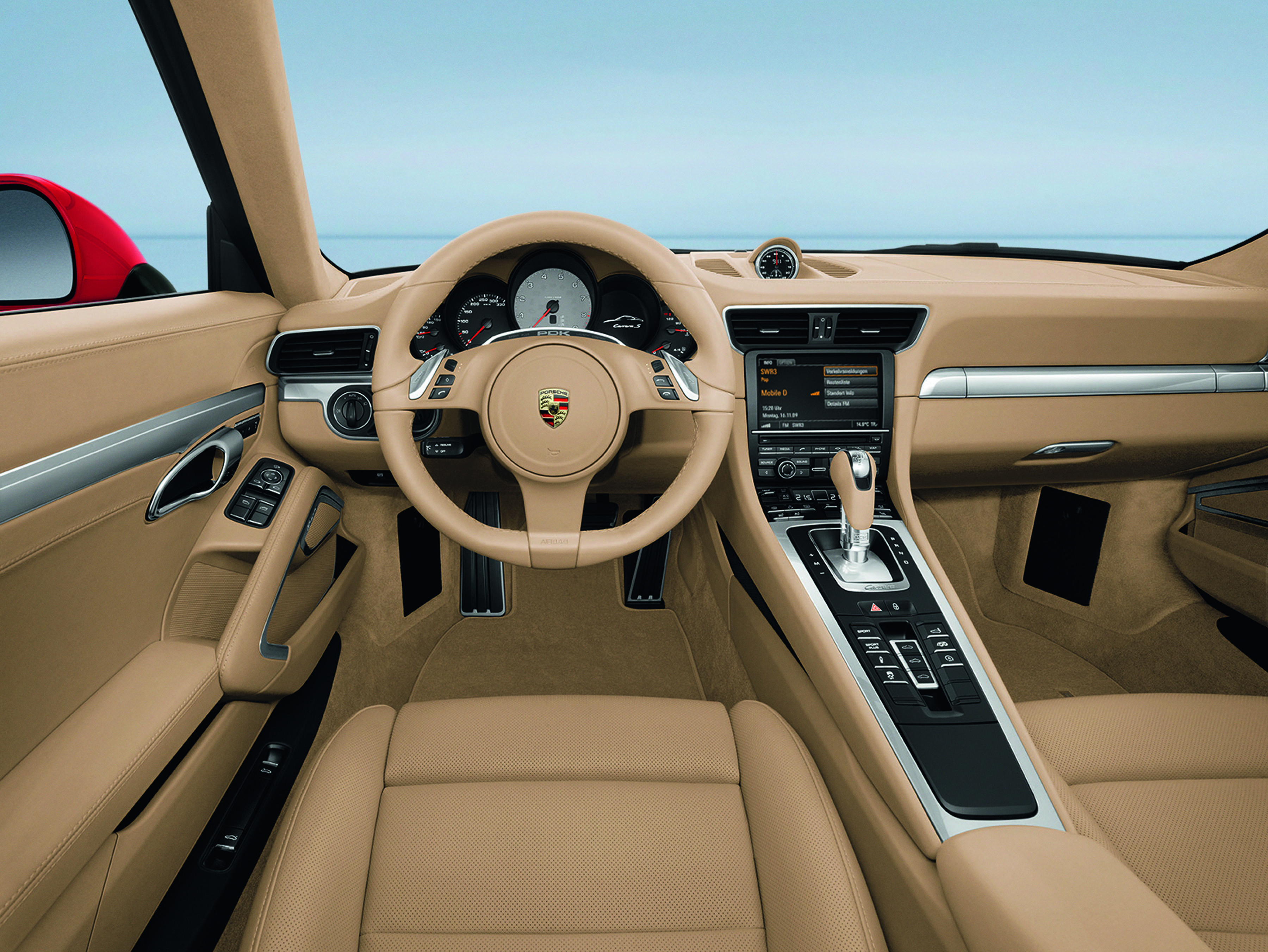
To complement the modern exterior design, the Porsche designers created an interior, the architecture of which takes its cue from the Porsche Carrera GT. The driver is now even more closely integrated with the cockpit thanks to the centre console rising up to the front with the high-mounted shift lever or gear selector located especially close to the steering wheel in typical motorsport fashion. Classic Porsche elements are also to be found inside, as they are on the outside: the instrument cluster with five round instruments – one of them a high resolution multifunction screen, the central rev counter and the ignition lock to the left of the steering wheel.
Setting the standard in its class, as it has for generations, the new 911 Carrera and Carrera S raise the performance and efficiency bar yet another notch. All versions get by with significantly less than ten litres of fuel per 100 kilometres (28 mpg imp.). Fuel consumption and emissions are up to 16 per cent lower compared with its predecessor. Among other things, this is achieved by systems and functions such as auto start/stop, thermal management, electrical system recuperation, the world’s first seven-speed manual transmission and – in conjunction with the Porsche-Doppelkupplungsgetriebe (PDK) – sailing as it is called. The new electro-mechanical power steering offers not only Porsche’s typical precision and feedback but also helps to increase efficiency and reduce fuel-consumption.
For example, the 911 Carrera with the new 350 hp (~ 257 kW) 3.4-litre boxer engine and optional PDK consumes a mere 8.2 litres per 100 kilometres (~ 34 mpg imp.) based on the New European Driving Cycle (NEDC) – 1.6 l/100 km (~ 6 mpg imp.) less than its predecessor. Also, at 194 g/km CO2, it is the first Porsche sports car to make it below the 200 g/km mark. With the 911 Carrera S as well, with its 3.8-litre boxer engine and what is now 400 hp (~ 294 kW), fuel consumption when paired with the optional PDK is reduced by 14 per cent or 1.5 l/100 km (~ 5 mpg imp.) to 8.7 l/100 km (~ 32 mpg imp.) despite 15 hp (~ 11 kW) more power. That equates to CO2 emissions of 205 g/km.
At the same time there are performance improvements in both models. The 911 Carrera S with PDK manages to accelerate from nought to 100 km/h (~ 62 mph) in 4.3 seconds. Pressing the Sport Plus button on the optional Sport Chrono package cuts that to 4.1 seconds. The 911 Carrera with PDK needs only 4.6 seconds (Sport Plus 4.4 seconds) to sprint from a standing start to 100 km/h (~ 62 mph).
The new 911 doesn’t just offer better longitudinal dynamics, however, but top performance at an unprecedented level in terms of transverse dynamics as well. In addition to the longer wheelbase, the greater agility, precision and driving stability are based, among other things, on the wider front track, the new rear axle and new electro-mechanical power steering. Depending on the model, there are other standard or optional active control systems available as well that further enhance the driving dynamics. That is especially true for the Porsche Dynamic Chassis Control (PDCC) active roll stabilisation system, available for the first time on the 911 Carrera S. For example, the system reduces lateral inclination when cornering, the tyres always being in the optimal position relative to the road surface and able to transmit higher lateral forces. Maximum cornering speeds are increased; even faster lap times on racing circuits are possible.
It has therefore been possible in the new model to extend yet further the span of apparently contradictory attributes such as performance and efficiency, sportiness and everyday practicality that has always typified the Porsche 911. That makes the 911 Carrera more of a 911 than ever.
The new Porsche 911 Carrera celebrates its world premiere at the 2011 IAA Frankfurt Motor Show. The launch of the new 911 models gets under way on 3 December 2011, the new cars can be orderd from September 1st. Prices in Germany are 88,038 euro for the 911 Carrera and 102,436 euro for the 911 Carrera S, including 19 per cent VAT and market-specific equipment.
This slideshow requires JavaScript.
Source: Porsche AG
Public Relations and Media
Product and Technology Press
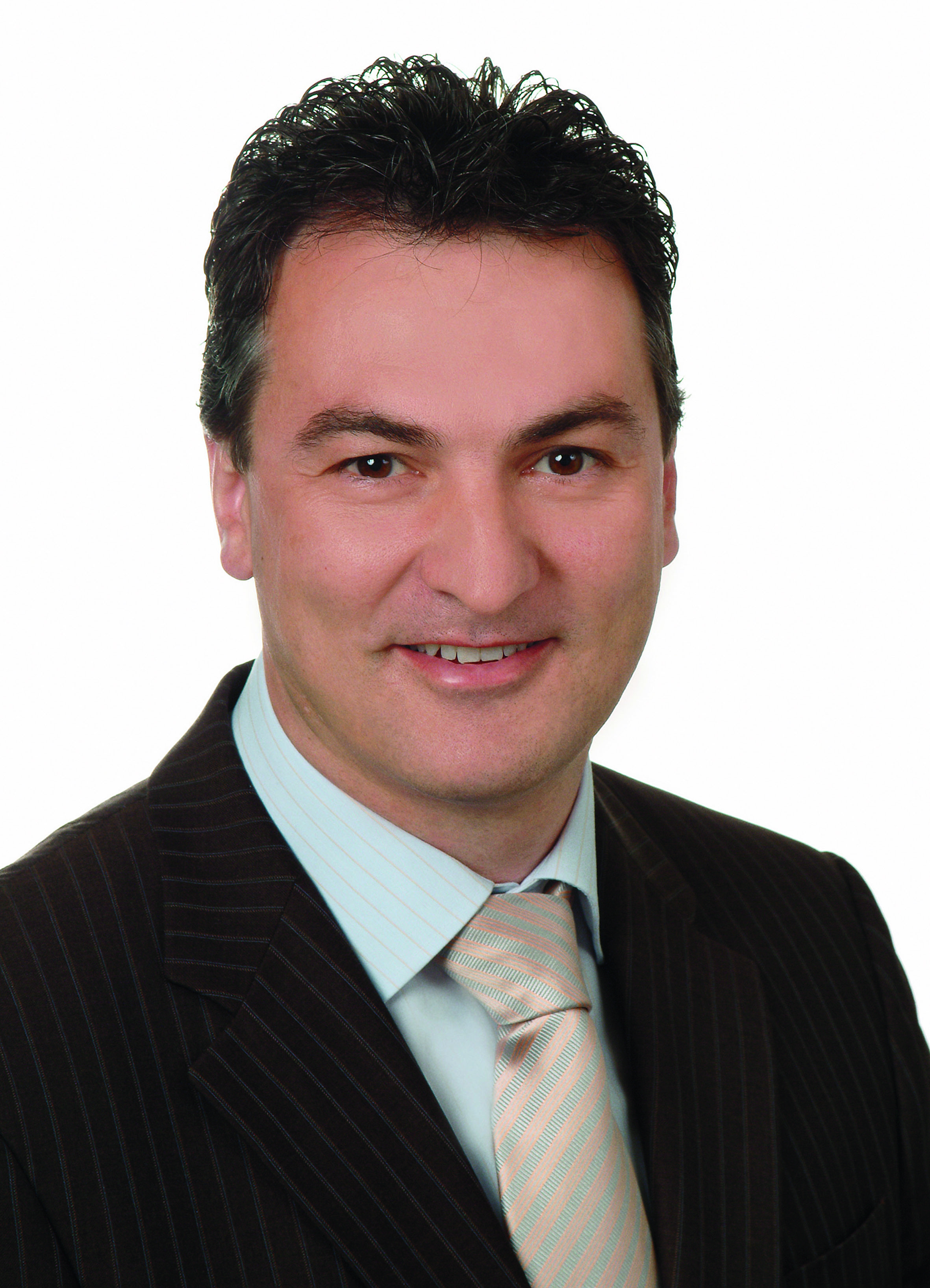
Stuttgart. With effect from October 2011, Jörg Kerner will be heading up the power train development division for Dr. Ing. h.c. F. Porsche AG, Stuttgart at the Weissach Development Centre. The 41-year-old succeeds Dr. Heinz-Jakob Neußer, who at the same time takes charge of power train development at the Volkswagen brand.
Jörg Kerner worked for Robert Bosch GmbH from 1986 to 2004 where his responsibilities included various Audi projects in the petrol engine control and application area. The engineering graduate joined Audi AG in 2004, where Jörg Kerner built up the engine and transmission electronics design, software and functional development division, managing it until 2009. The engine developer subsequently took over the power train electrification division at Audi.
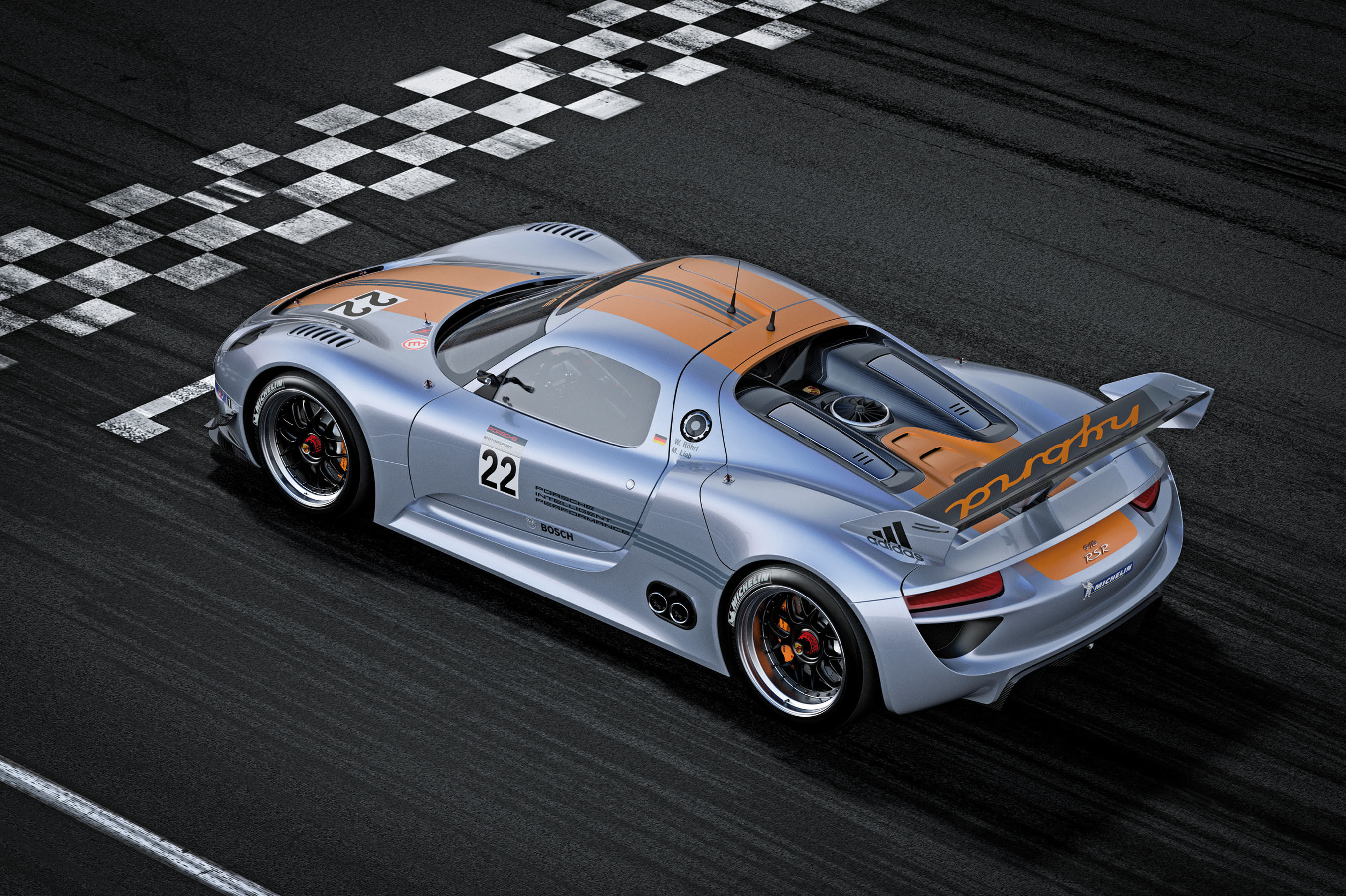
ATLANTA, Aug. 15, 2011 — Porsche celebrates the motorsport heritage of its iconic 911sports car alongside the 918 RSR Concept during the 2011 Monterey Classic Car weekend this year. In keeping with tradition, the Porsche Zentrum is the central hub for the Porsche experience during the week.
Porsche 918 RSR Concept
The Zentrum, located at Quail Lodge, features a full-line Porsche display and a consumer test drive program. A Porsche display will also be nearby at The Quail, A Motorsports Gathering on Friday, August 19 and on Peter Hay Hill at Pebble Beach, beginning on Thursday, August 18.
This display at Peter Hay Hill will feature several historic 911 race cars, including the 1979 935 from the Brumos Collection, believed to be the last remaining unmodified 935 in existence, as well as the 911 S that carried Hurley Haywood to 10 Camel GT race wins in 1972. Other cars to be on display include a 2011 911 GT3 Cup Car from the Porsche Sport Driving School, the Gunnar Racing 911 GT1 fashioned after the car that won Le Mans overall in 1998 as well as the 2011 911 GT3 RS 4.0.
The 918 RSR concept will be the highlight of the Porsche Zentrum display on Friday and Saturday, August 19-20. The 918 RSR concept is a high-end synthesis of Porsche’s successful hybrid concepts – the 911 GT3 R Hybrid and the 918 Spyder.
It is a true ‘racing laboratory’ featuring an updated V8 engine from the successful RS Spyder race car with an output of 563 hp at 10,300 rpm. In addition, it features electric motors on the two front wheels that each contribute 75 kW, i.e. a total of 150 kW, to provide peak drive power of 767 hp. This additional power, which is generated during braking, is stored in an optimized flywheel accumulator.
The 918 RSR and the displays from the Monterey Classic Car Weekend are a precursor to the cars that will be on the track at Rennsport Reunion IV later this year October 14-16 at Mazda Raceway Laguna Seca.
This event promises to bring together an unprecedented gathering of significant Porsche vintage and current race cars, as well those who have driven them to victory in the world’s most famous sports car races. The three-day program of on-track competition is complemented by a concours d’elegance, which is open to invited race participants, and special activities celebrating the decades-long history of the legendary 911 race cars.
Additional details of the Porsche Rennsport Reunion IV along with images from the first three Rennsport Reunions are published on Porsche’s press web site (www.press.porsche.com) and Mazda Raceway Laguna Seca’s web site (www.mazdaraceway.com). Ticket information is available by contacting 800-327-7322 or www.mazdaraceway.com.
About Porsche Cars North America
Porsche Cars North America, Inc. (PCNA), based in Atlanta, Ga. is the exclusive U.S. importer of Porsche sports cars, the Cayenne SUV and Panamera Gran Turismo. Established in 1984, it is a wholly-owned subsidiary of Porsche AG, which is headquartered in Stuttgart, Germany, and employs approximately 220 people who provide parts, service, marketing and training for 196 dealers. They, in turn, work to provide Porsche customers a best-in-class experience that is in keeping with the brand’s 63-year history and leadership in the advancement of vehicle performance, safety and efficiency. At the core of this success is Porsche’s proud racing heritage that boasts some 30,000 motorsport wins to date.
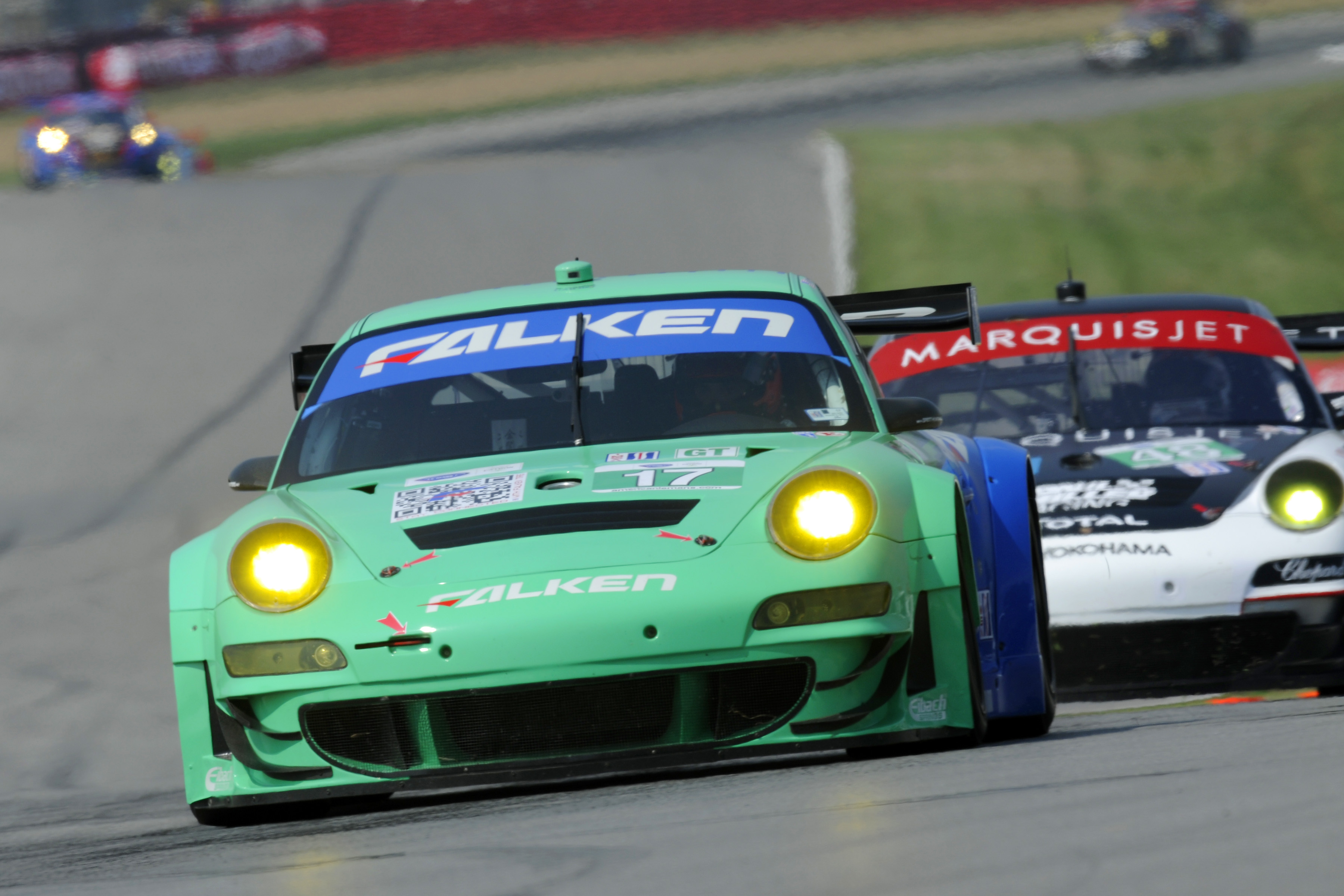
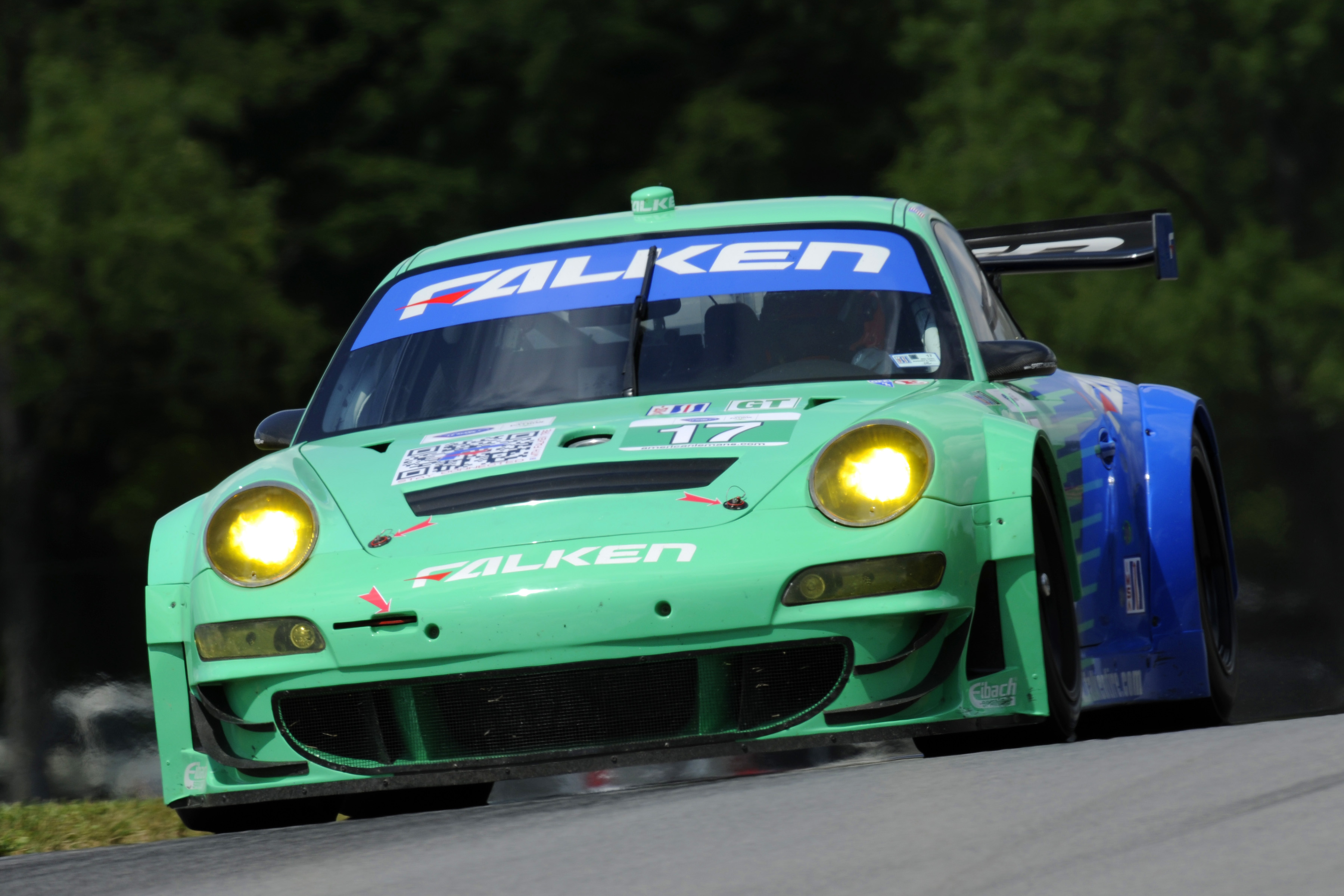
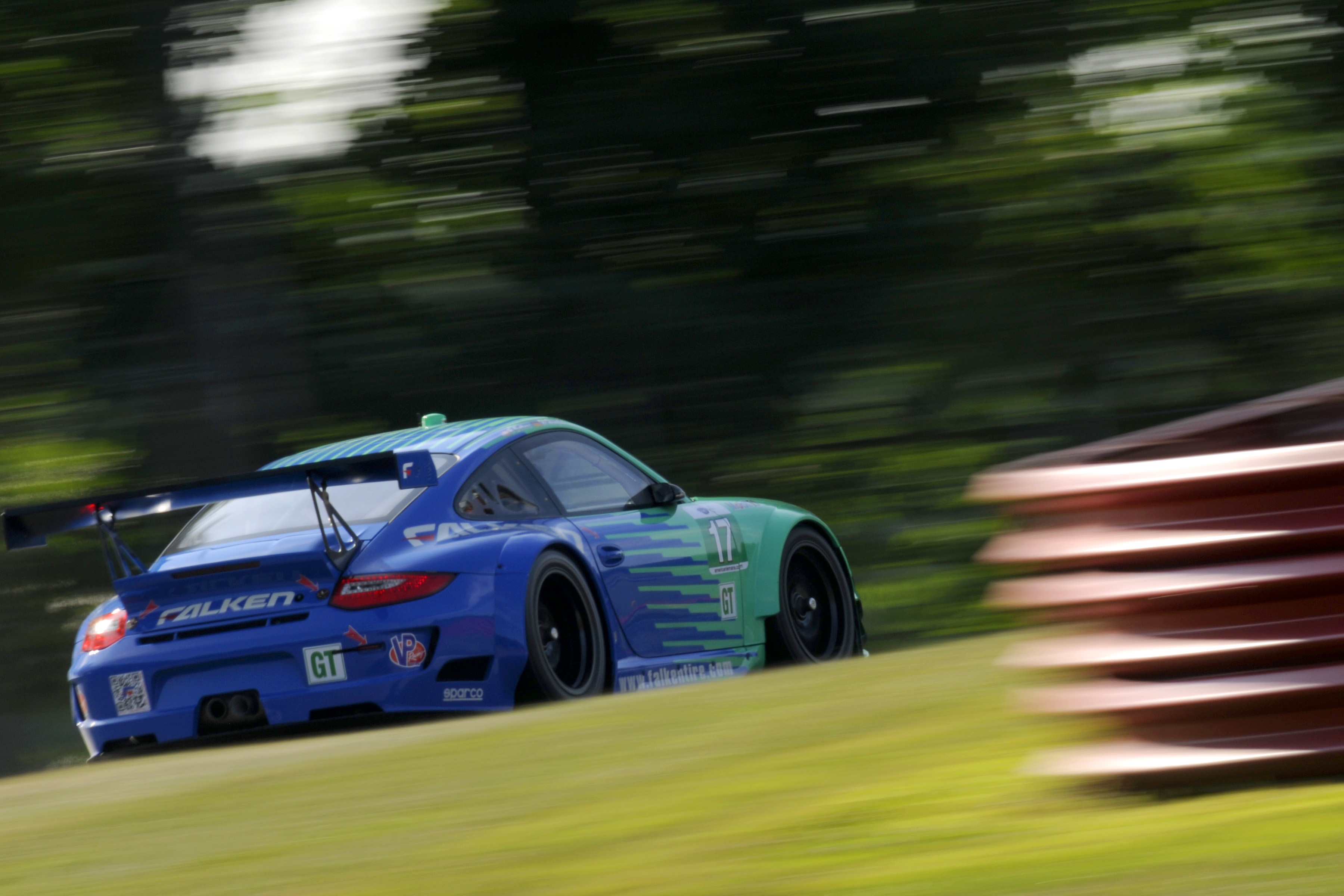
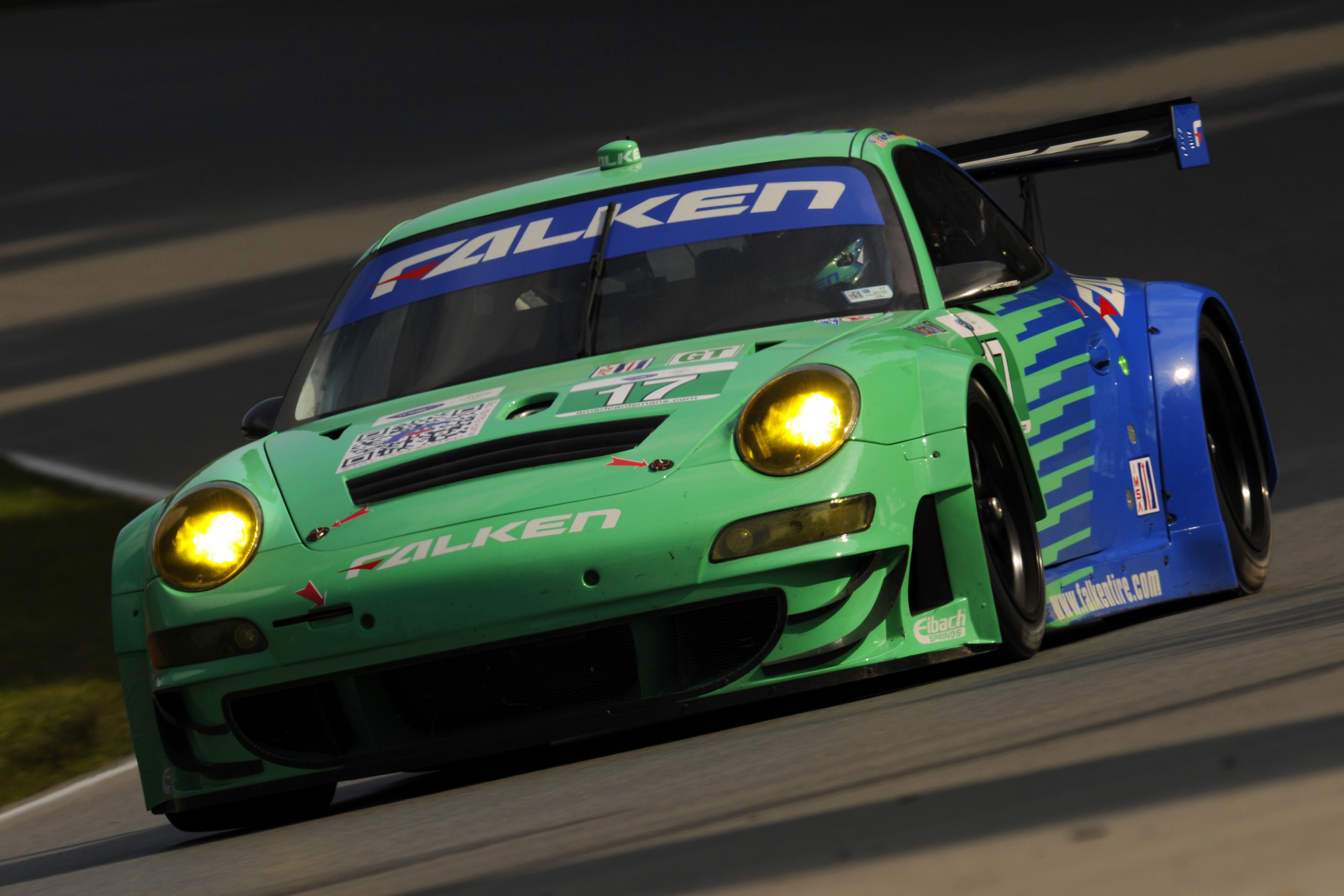
Stuttgart. After the first American Le Mans Series win of the season, the Porsche teams head to the legendary Road America circuit in Elkhart Lake with new confidence. Porsche factory driver Wolf Henzler (Germany) and his American teammate Bryan Sellers will try to repeat their brilliant Mid-Ohio win with their Porsche 911 GT3 RSR fielded by Falken Tire.
Porsche 911 GT3 RSR, Team Falken Tire: Wolf Henzler, Bryan Sellers
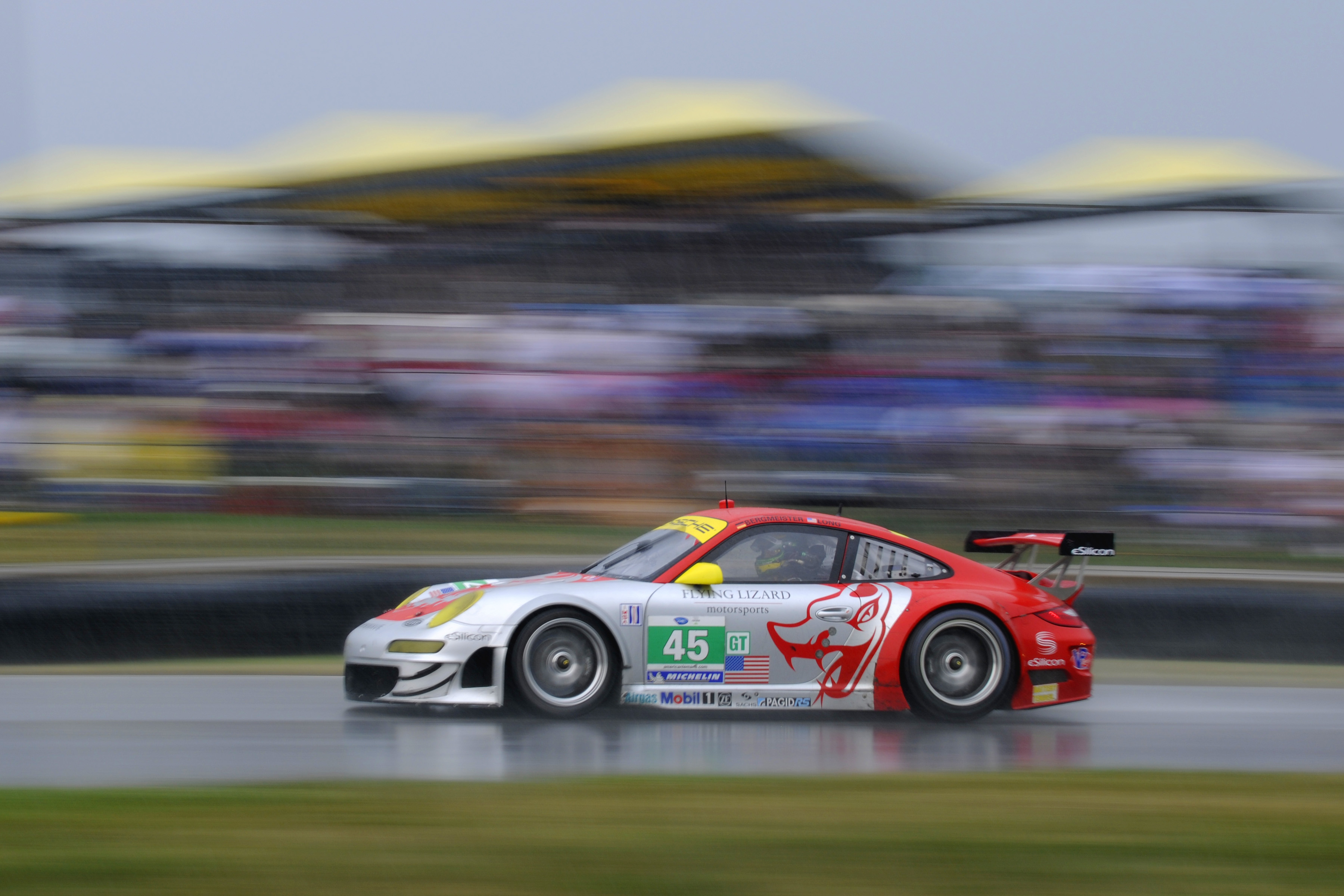
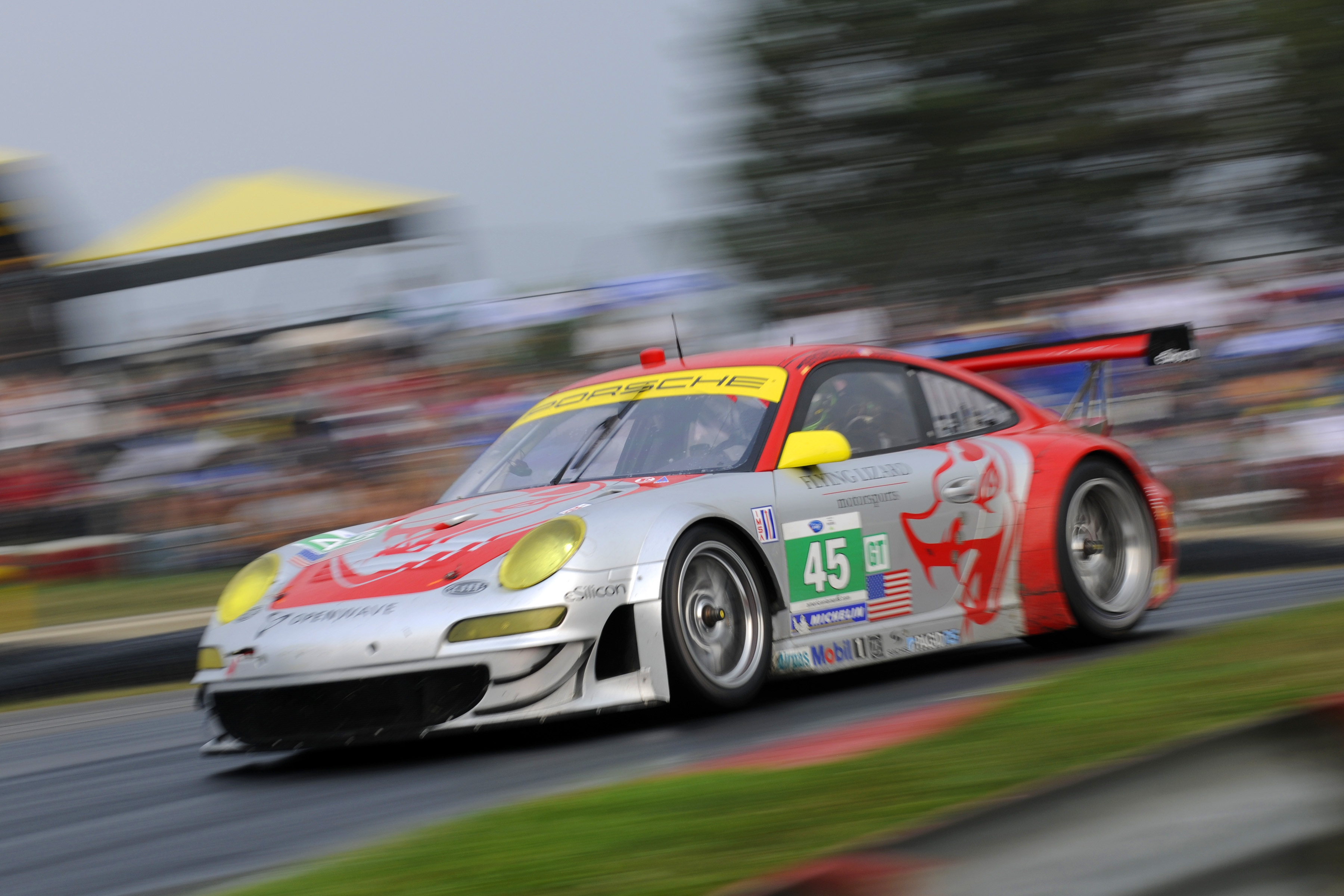
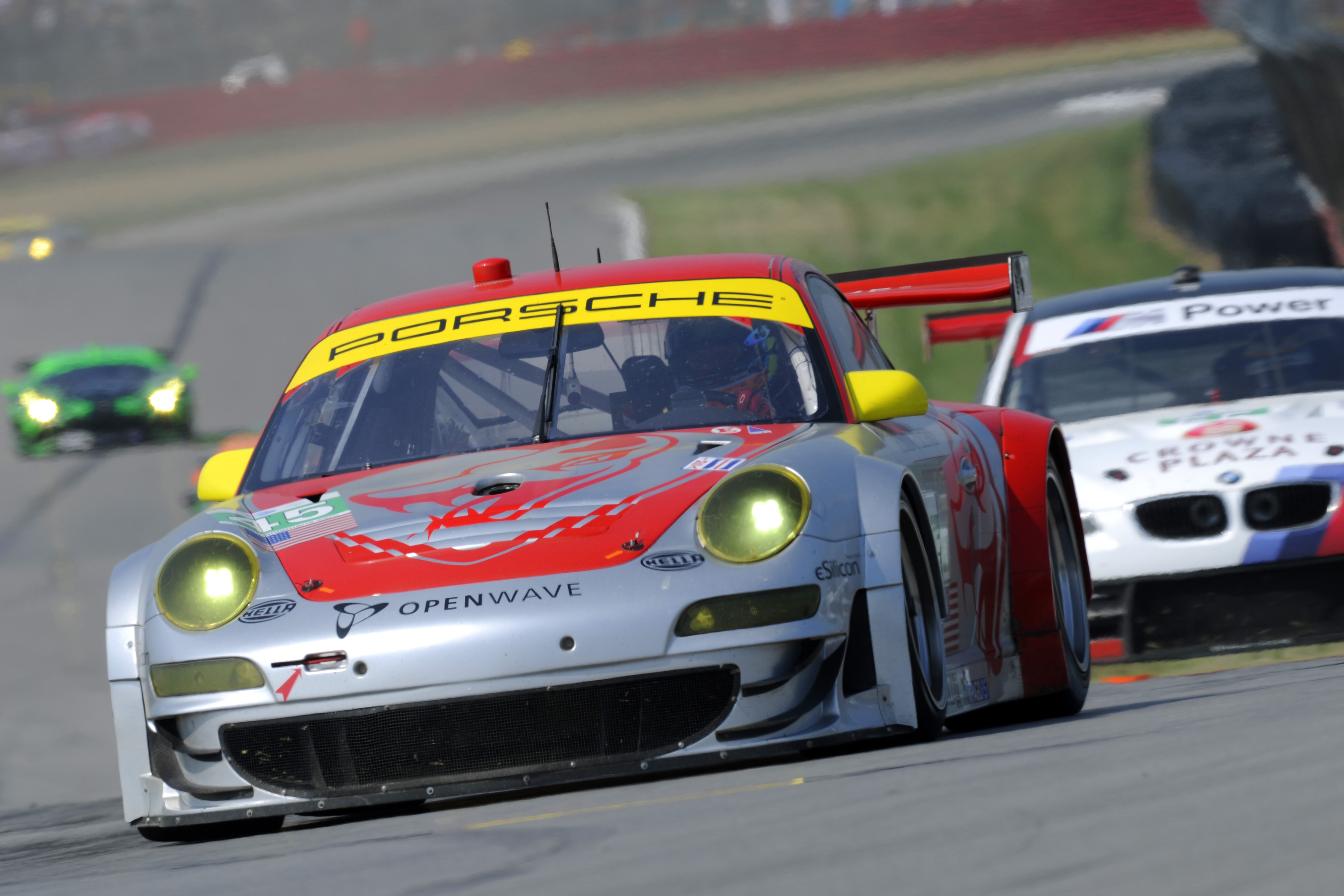
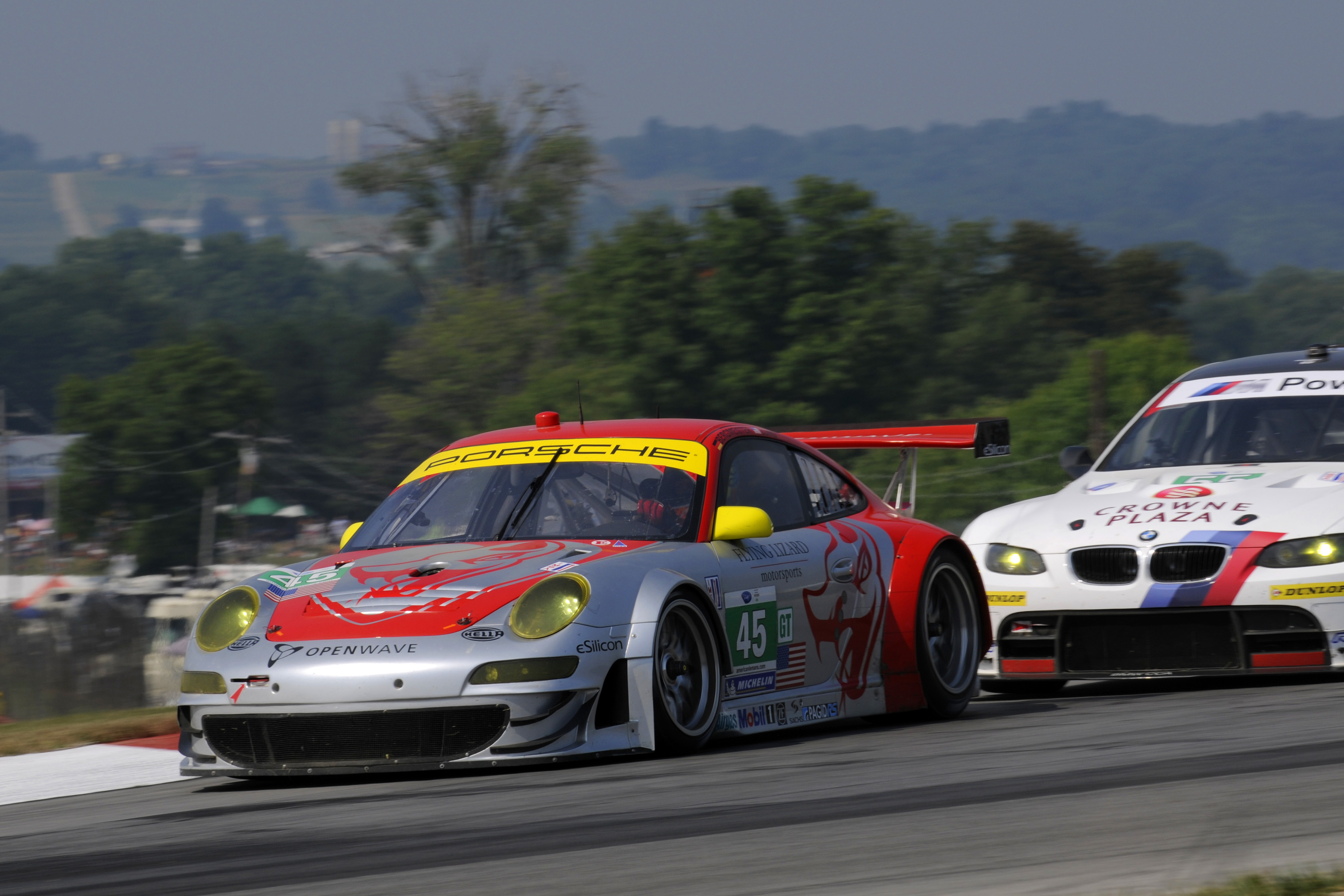
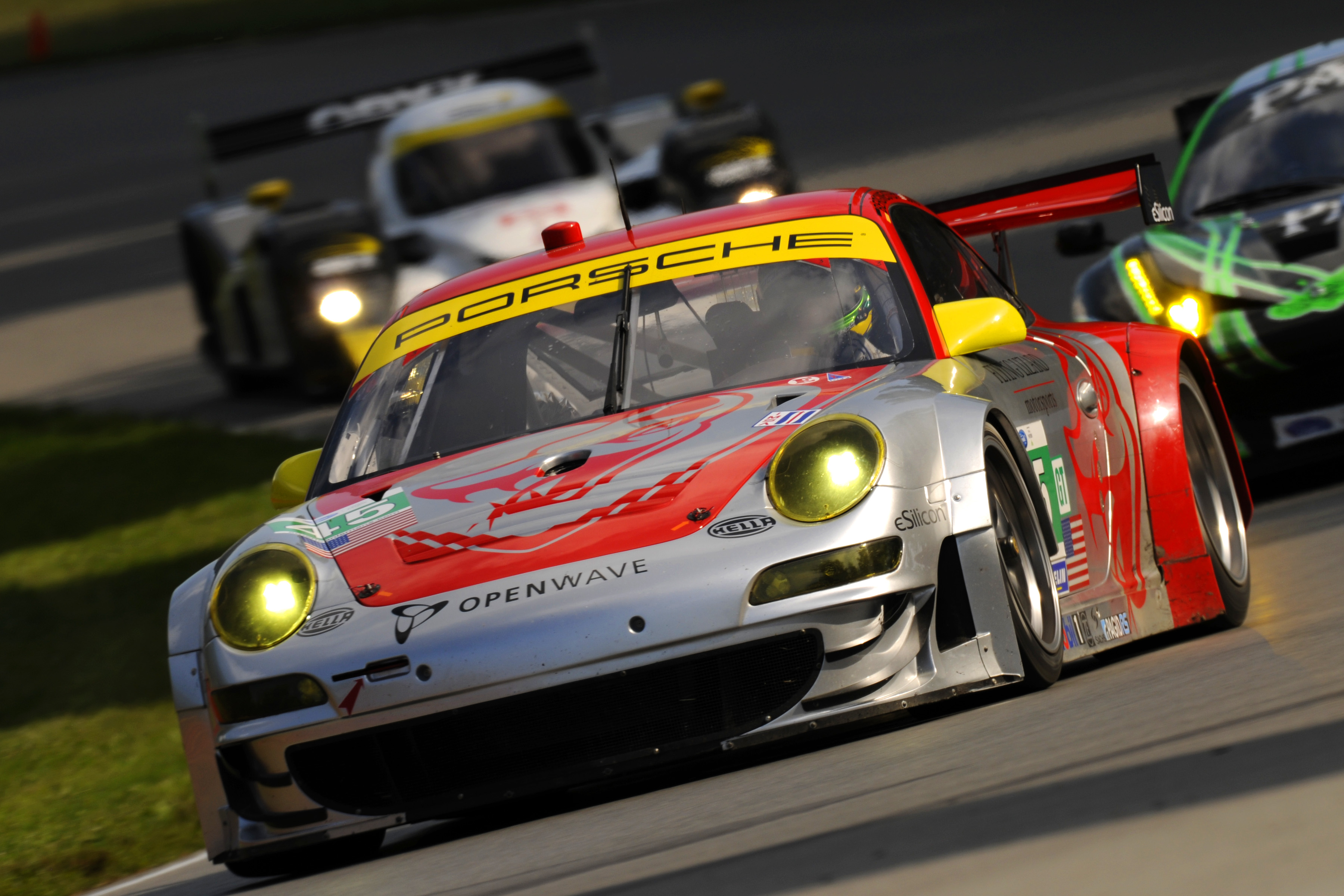
And with the Porsche 911 GT3 RSR run by Flying Lizard Motorsports, title defenders Joerg Bergmeister (Germany) and Patrick Long (USA) also have high hopes for the four-hour race in the US state of Wisconsin. After all, the pair have already clinched three victories in Elkhart Lake.
Porsche 911 GT3 RSR, Flying Lizard Motorsports: Jörg Bergmeister, Patrick Long
The race
This venue has been a regular fixture on the American Le Mans Series calendar since 2002. This season, the race runs over four hours.
The circuit
The 6.514 kilometre Road America circuit is one of America’s oldest race tracks and is regarded as the cradle of sports car racing in the USA. The circuit layout with its long finish straight and 14 corners has changed considerably since its foundation in 1955. Most fans watch the races from the hills surrounding the track. The first street race in Elkhart Lake, two hours’ drive north of Chicago, was run in 1950. The circuit of that time was awarded a place in the National Register of Historic Places in 2006.
The Porsche drivers
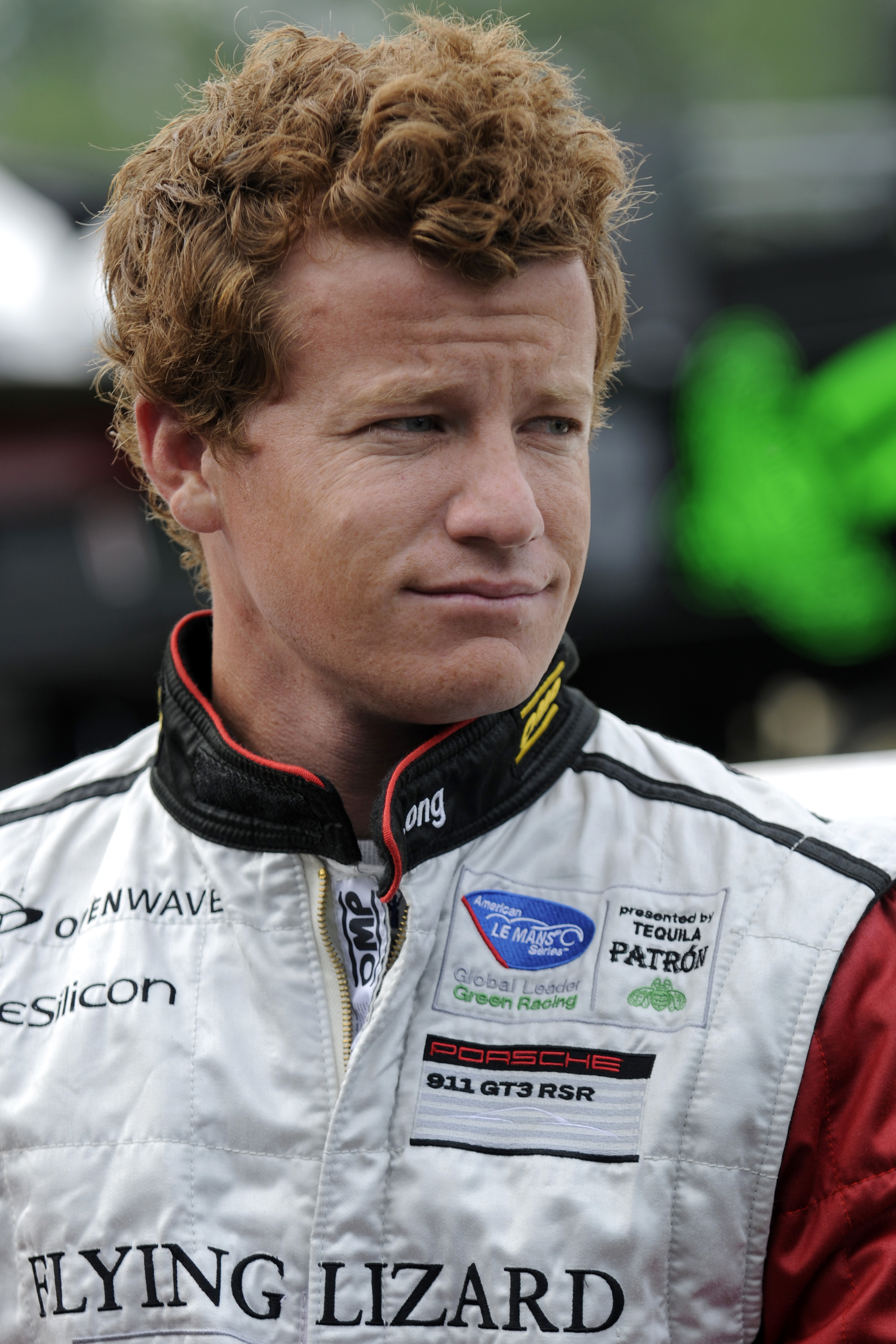
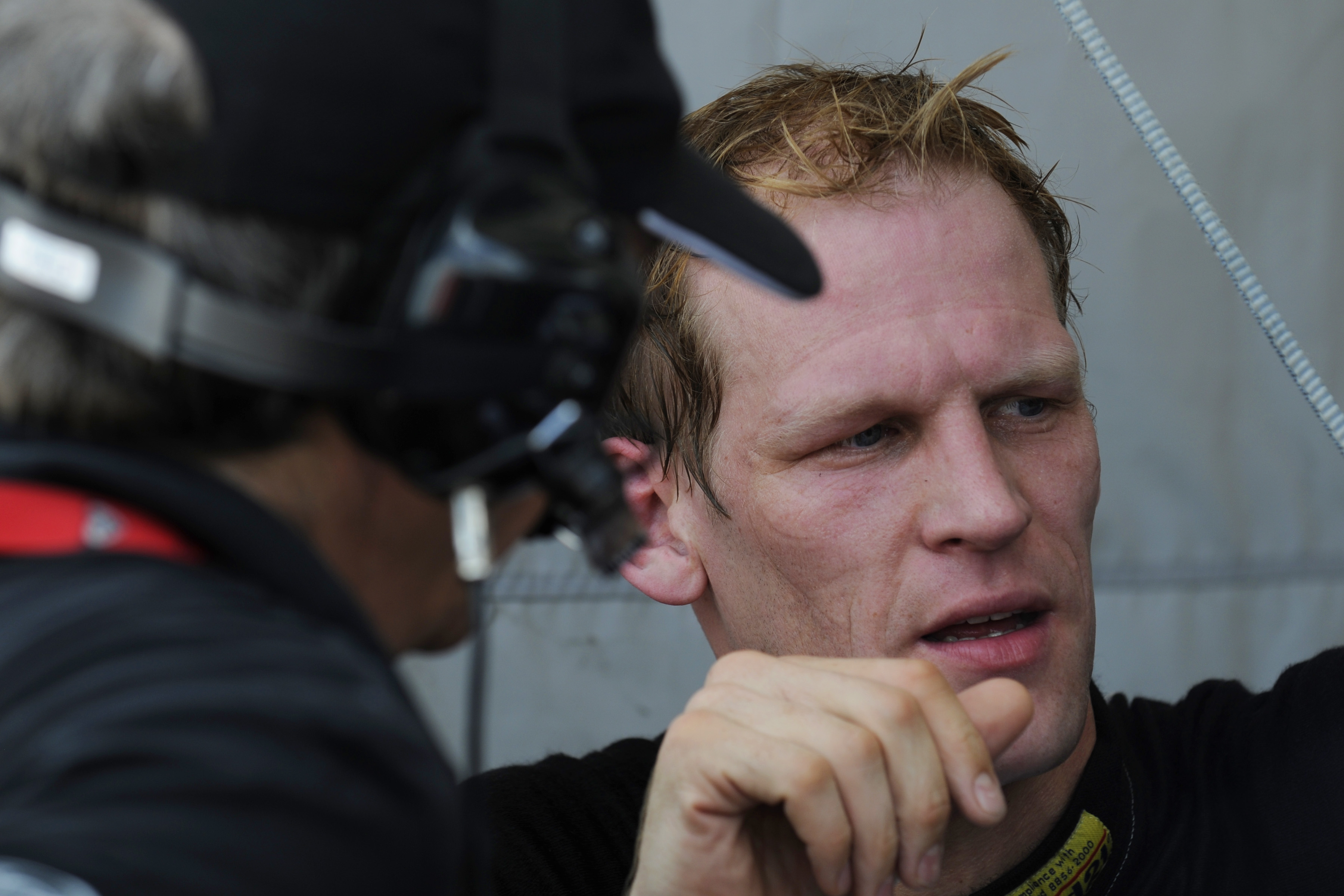
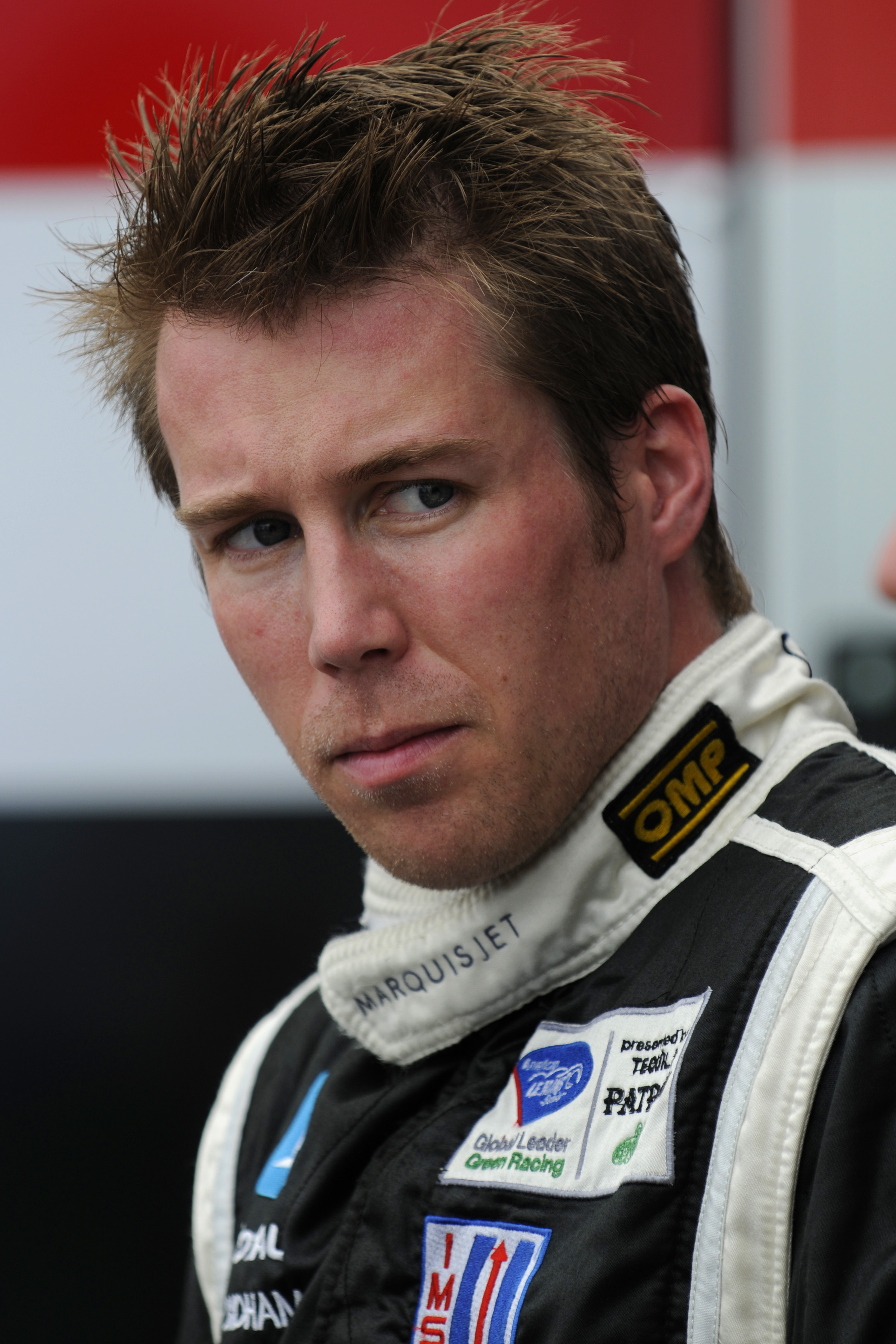
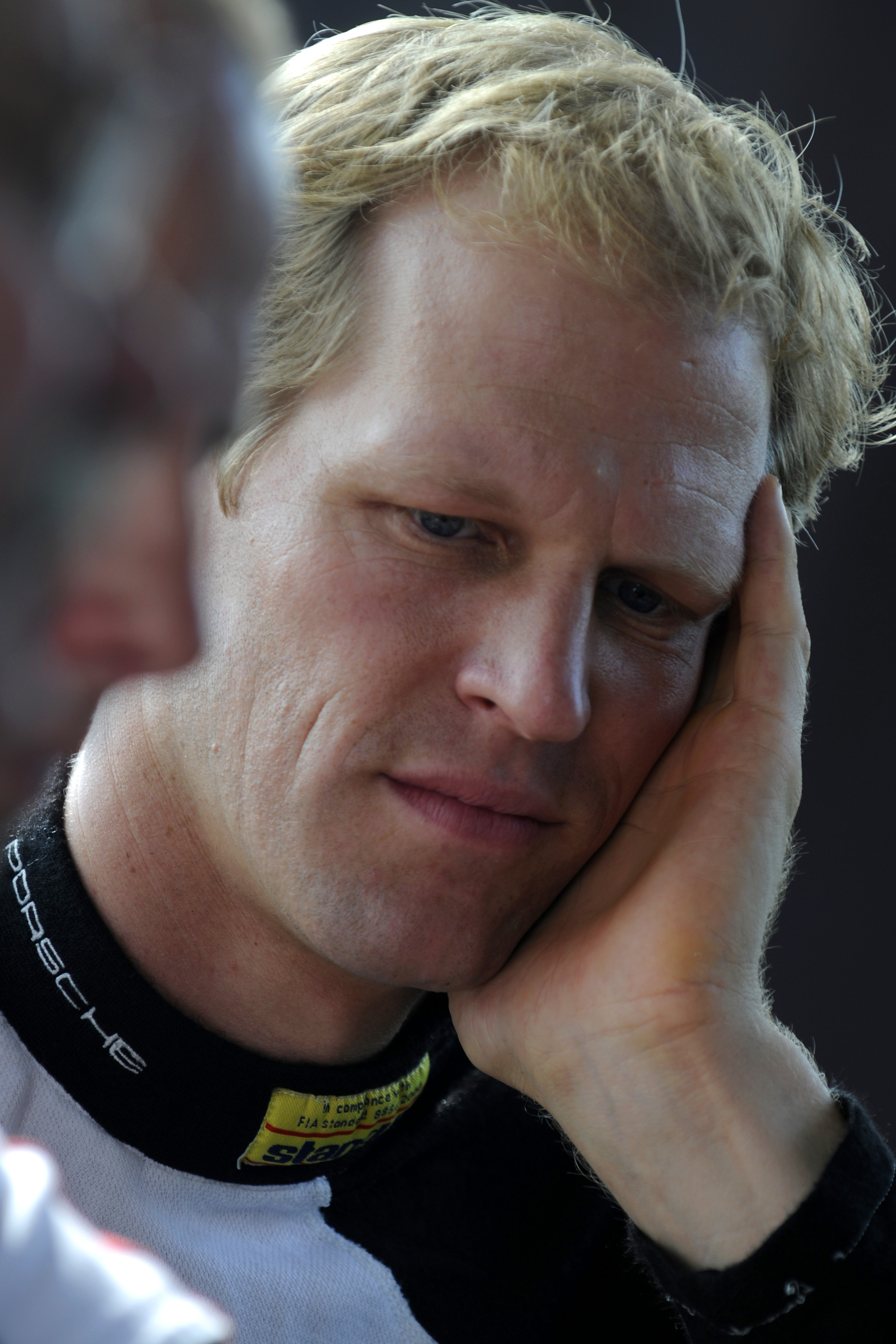
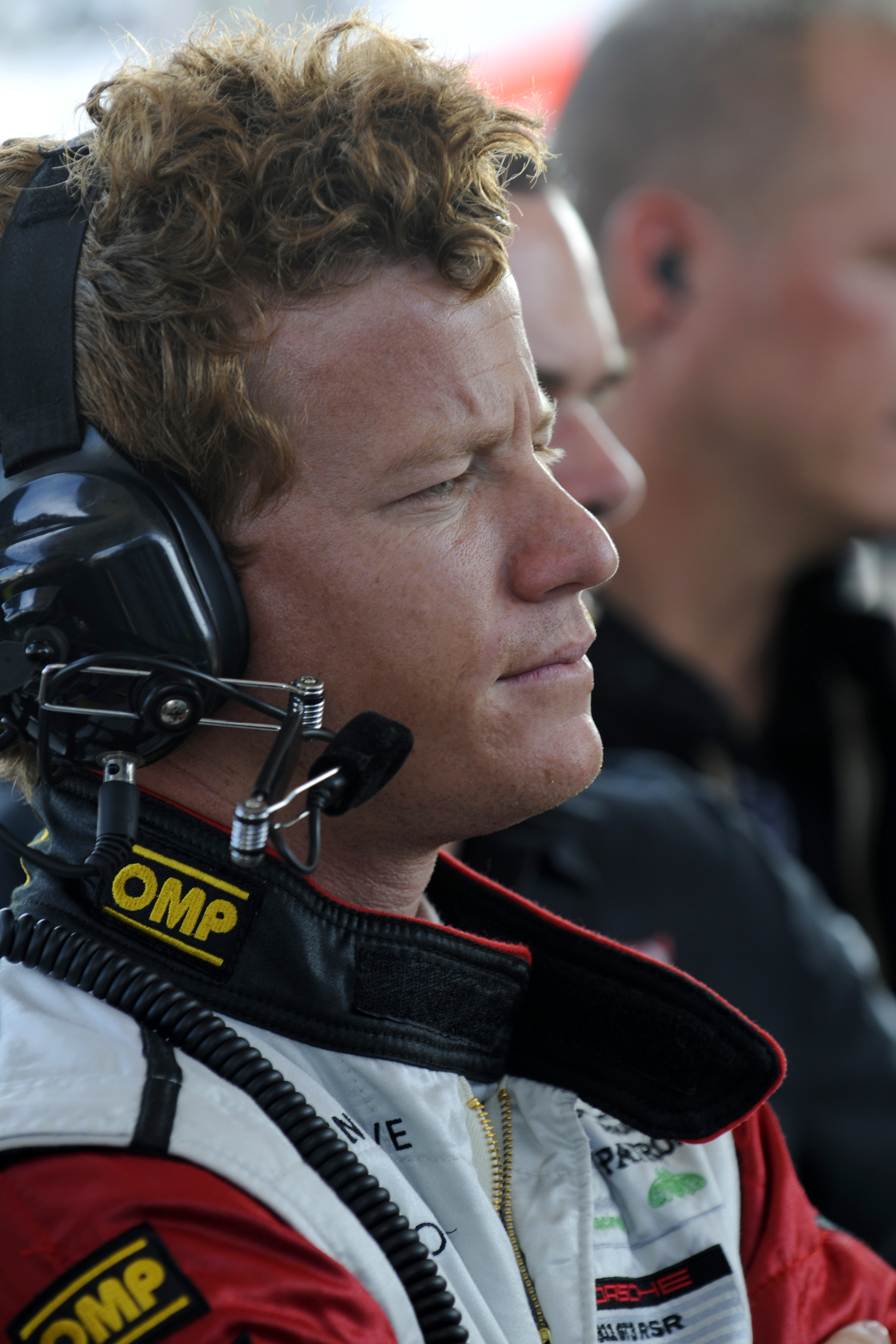
Porsche works drivers Joerg Bergmeister and Patrick Long drive the Porsche 911 GT3 RSR fielded by Flying Lizard Motorsports as reigning GT champions of the American Le Mans Series and three-time Road America winners.
Jörg Bergmeister
Patrick Long
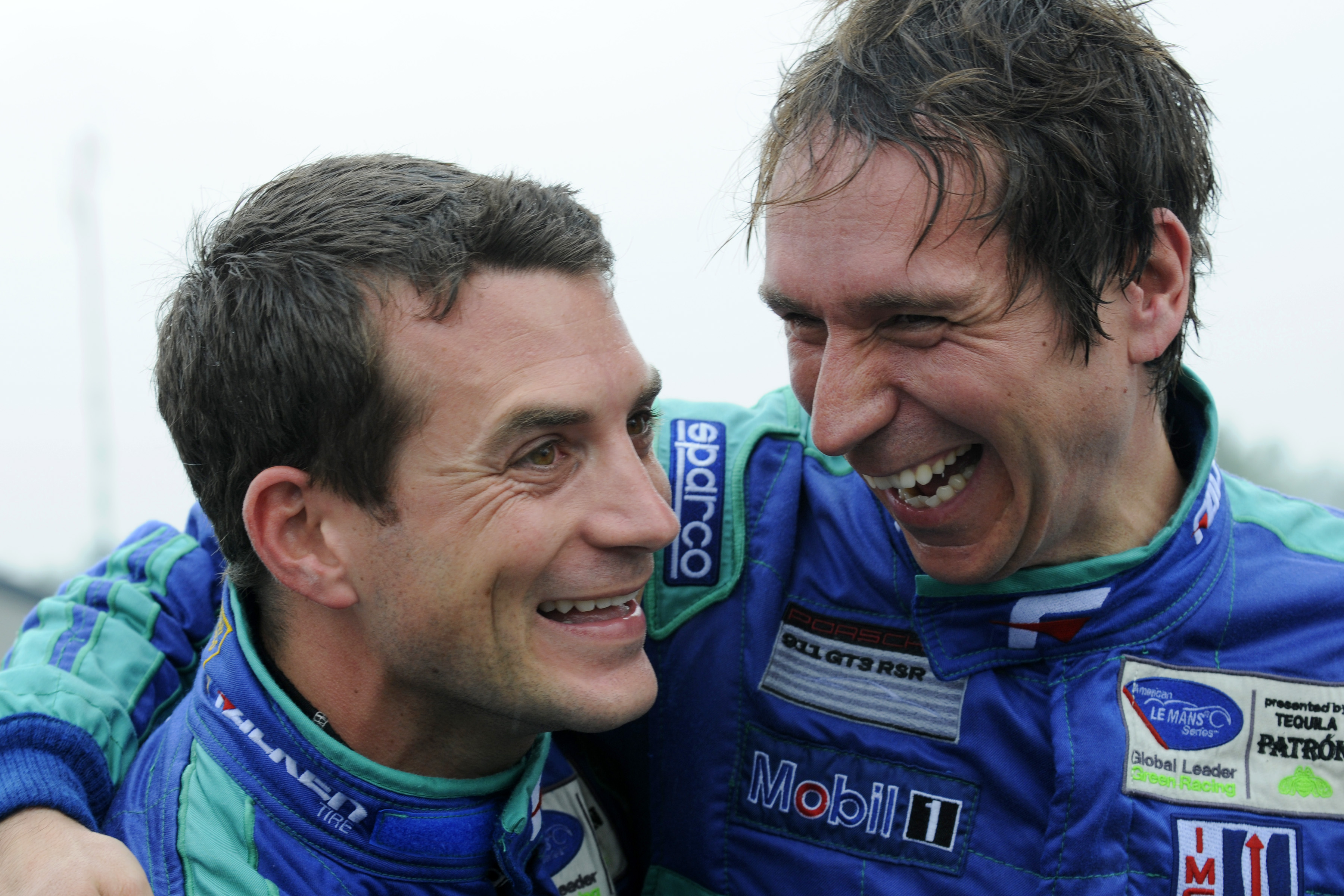
Their works driver colleague Wolf Henzler, who recently won in Mid-Ohio with Bryan Sellers, drives the Porsche 911 GT3 RSR of the Falken Tire team.
Bryan Sellers, Wolf Henzler
At his debut in Elkhart Lake, Porsche factory pilot Marco Holzer (Germany) shares driving duties in the second Flying Lizard Porsche with American Seth Neiman.
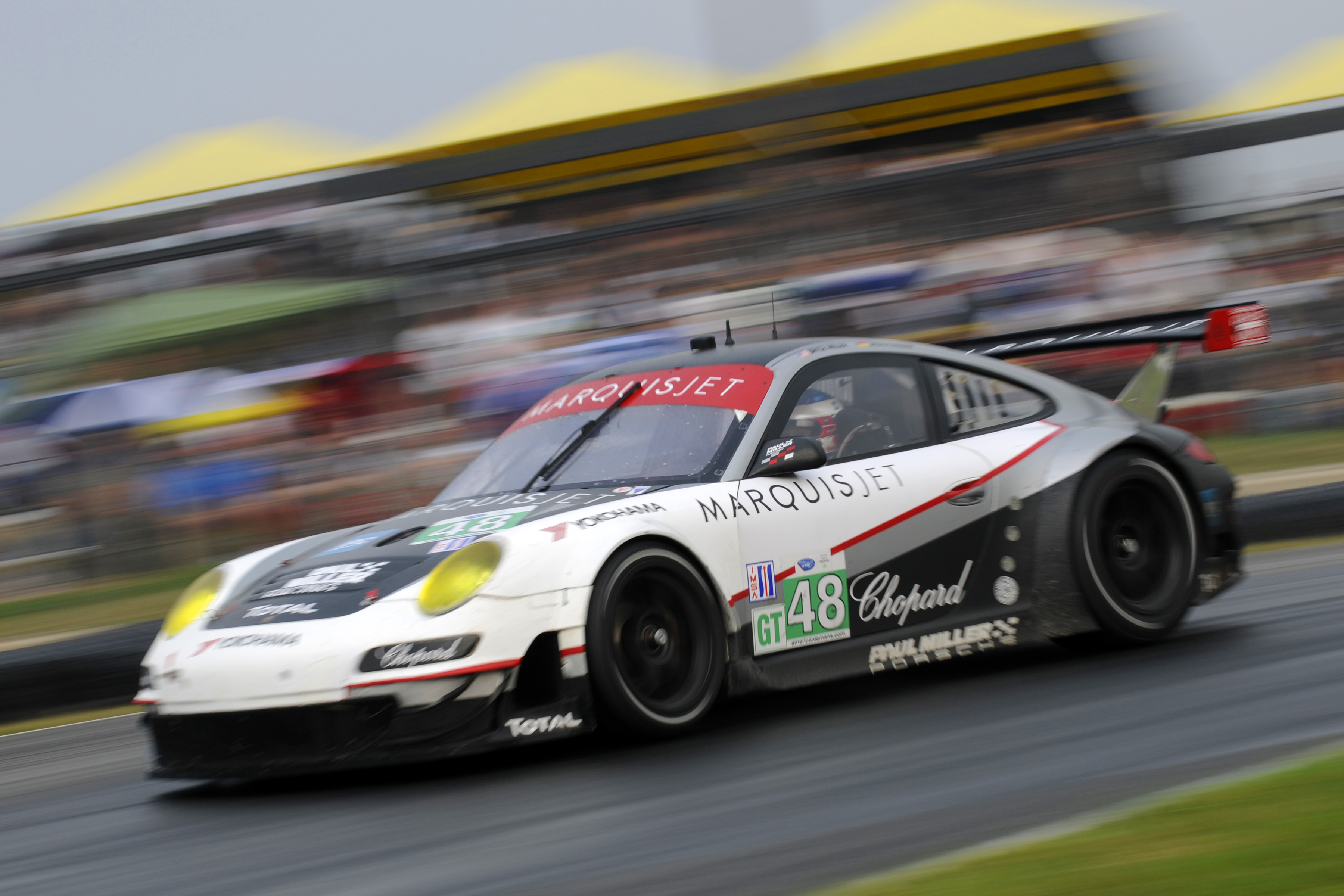
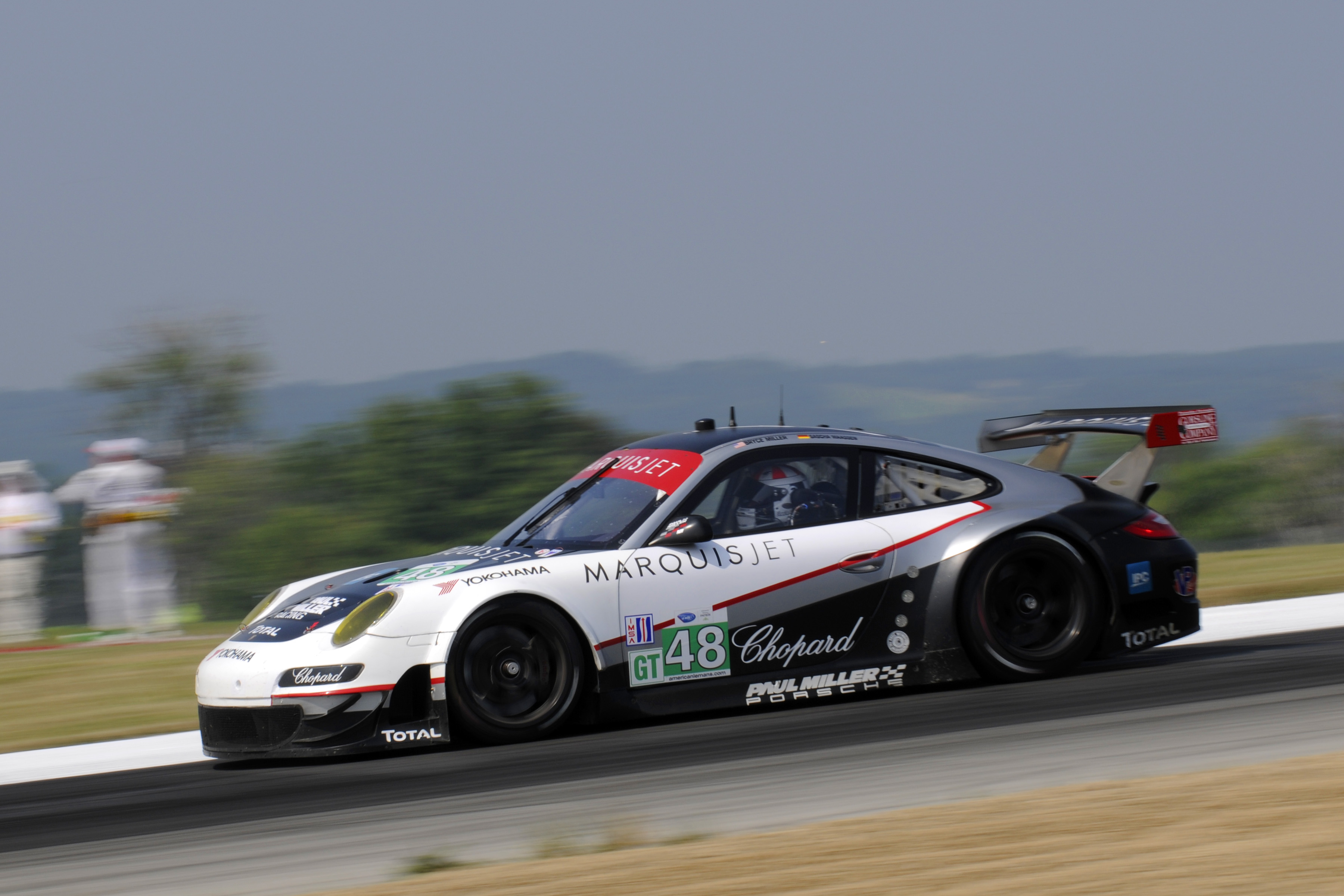
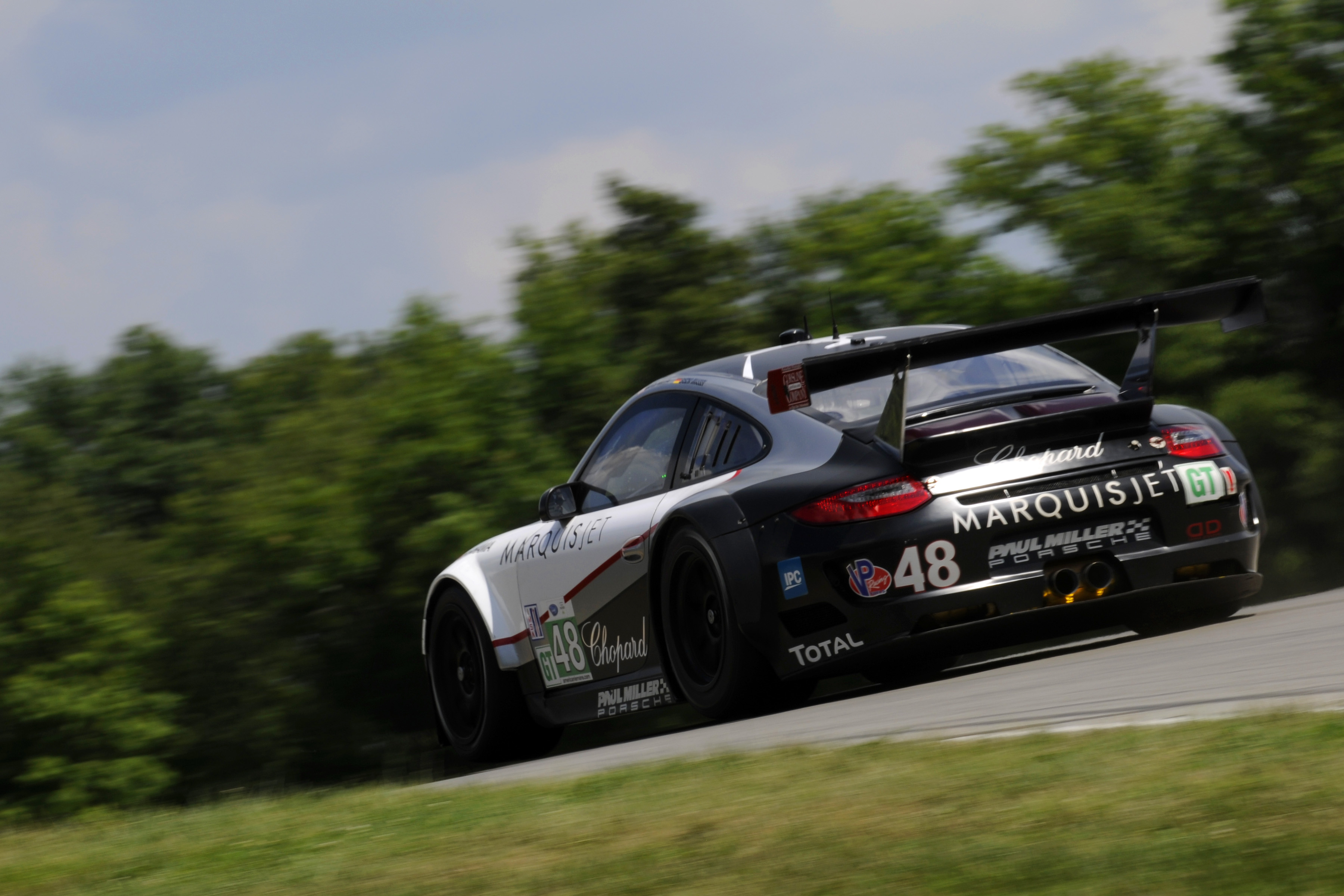
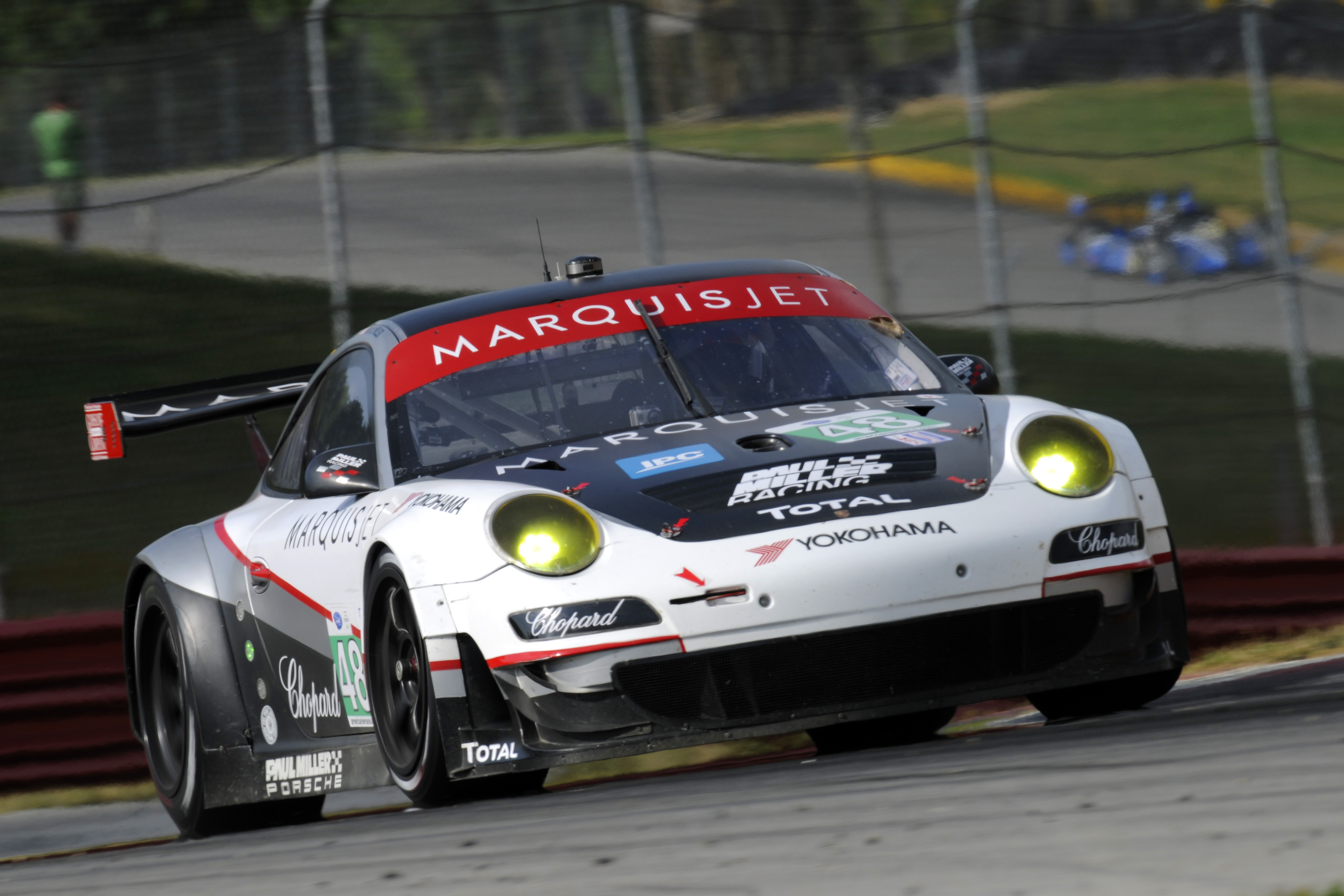
Sascha Maassen (Germany) and Bryce Miller (USA) take up the race for Paul Miller Racing in a Porsche 911 GT3 RSR.
Porsche 911 GT3 RSR, Paul Miller Racing: Sascha Maassen, Bryce Miller
Quotes before the race
Joerg Bergmeister:
“All year I look forward to this race. Road America is my all-time favourite circuit. It’s very fast, very hilly and very challenging – and those are all the things a race driver loves. The race track doesn’t really suit our car, but still the Porsche was very successful there in the last years. So I’m also feeling optimistic this time.”
Patrick Long:
“The smallest mistake here always costs a lot of time. To be able to keep up at the front everything has to run perfectly. And of course the strategy plays a major role at a four-hour race.”
Wolf Henzler:
“The characteristic of Road America with its long straights and fast corners is totally unlike any other circuit on the ALMS calendar. We tested there with very good results and in the race I hope we can now use what we learned. The whole team is highly motivated after winning in Mid-Ohio. We all want to show that this success is not a coincidence.”
Marco Holzer:
“This marks my third race in the American Le Mans Series and the third on a totally unfamiliar circuit. I’ve watched several videos of Road America and I’m very much looking forward to racing on this extraordinary race track.”
The Porsche 911 GT3 RSR
The most successful GT race car of the last years took off into the season with a raft of improvements. The output of the four-litre, six-cylinder boxer engine was increased to 455 hp (335 kW). Priority in the development of the car was given to the newly designed aerodynamics at the front and rear. In 2010, the 911 GT3 RSR again won the environmental “Michelin Green X Challenge” classification as the GT vehicle with the best overall efficiency in the American Le Mans Series.
Porsche successes
Of the nine races that have been contested here as part of the American Le Mans Series, Porsche as the most successful manufacturer has won seven. Five victories in the GT/GT2 class went to Joerg Bergmeister, who triumphed with Timo Bernhard in 2002 and 2004, as well as with Patrick Long in 2005, 2006 and 2009. In 2003, Craig Stanton and Johnny Mowlem won for Porsche, in 2008 Dirk Werner, Richard Westbrook and Bryan Sellers. In 2007, Timo Bernhard und Romain Dumas snatched overall honours at the wheel of the Porsche RS Spyder.
The schedule
The race in Elkhart Lake takes off on Saturday, 20 August, at 15.00 hours local time (22.00 hrs CEST) and is broadcast live in the internet on www.americanlemans.com/live. The GT qualifying on Friday is shown on www.porsche.com/alms-live from 22.25 hours CEST.
The American Le Mans Series
The American Le Mans Series (ALMS) was created in 1999 for sports prototypes and GT vehicles. The regulations correspond to those of the Le Mans 24 hour race. All classes start together but are classified separately:
GT class: This most popular class amongst car manufacturers is traditionally extremely well supported: Slightly modified standard sports cars with 440 to 500 hp and a minimum weight of 1,125 – 1,325 kilograms (e.g. Porsche 911 GT3 RSR). GTC class: This class is reserved for vehicles from one-make race series (e.g. Porsche 911 GT3 Cup). LMP1 class: Sports prototypes with up to 550 hp and a minimum weight of 900 kilograms. LMP2 class: Sports prototypes with ca. 440 hp and an 825 kg minimum weight. LMPC class: Prototype brand trophy series for the ORECA FLM 09.
American Le Mans Series, round 5 in Lexington, USA
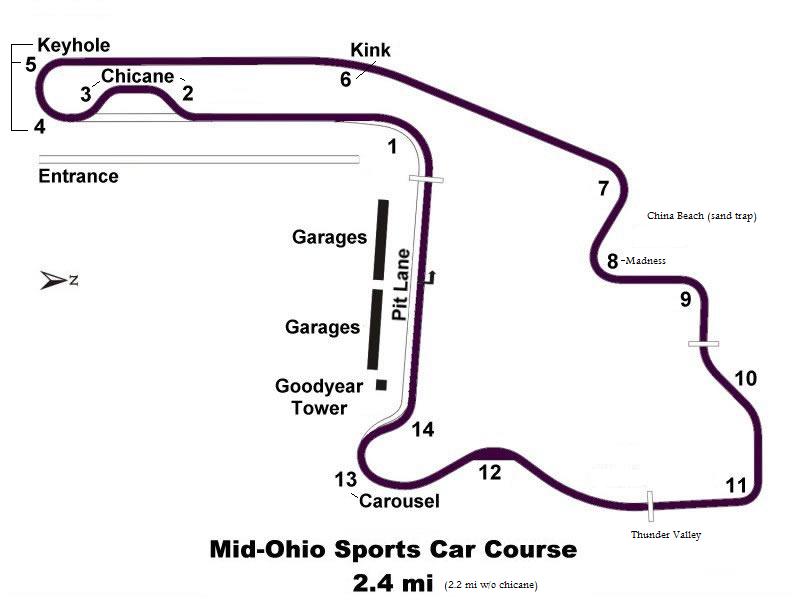
Stuttgart. On the Mid-Ohio Sports Car Course, Porsche factory pilot Wolf Henzler (Germany) celebrated a brilliant victory in the Porsche 911 GT3 RSR: With a sensational charge through the field in torrential rain, he clinched the first win of the season for Porsche with his teammate Bryan Sellers on the traditional circuit in America’s Midwest in the fiercely-contested GT class of the American Le Mans Series.
Bryan Sellers (USA)
Porsche 911 GT3 RSR, Team Falken Tire: Wolf Henzler, Bryan Sellers
For his Falken Tire team, this marks the first ever win in the popular race series with the world’s fastest sports cars.
Wolf Henzler (Germany)
“What an unbelievable race. The rain came just at the right moment,” said Wolf Henzler after his second Mid-Ohio win against strong opposition from BMW, Ferrari and Chevrolet. “When they called me in to the pits to switch to wet tyres I didn’t really want to at first. I would have preferred to stay on slicks as I had enough grip. But the team made the right decision. Thanks to Falken for the super tyres. The boys work so hard. Now they are finally rewarded for their untiring efforts.”
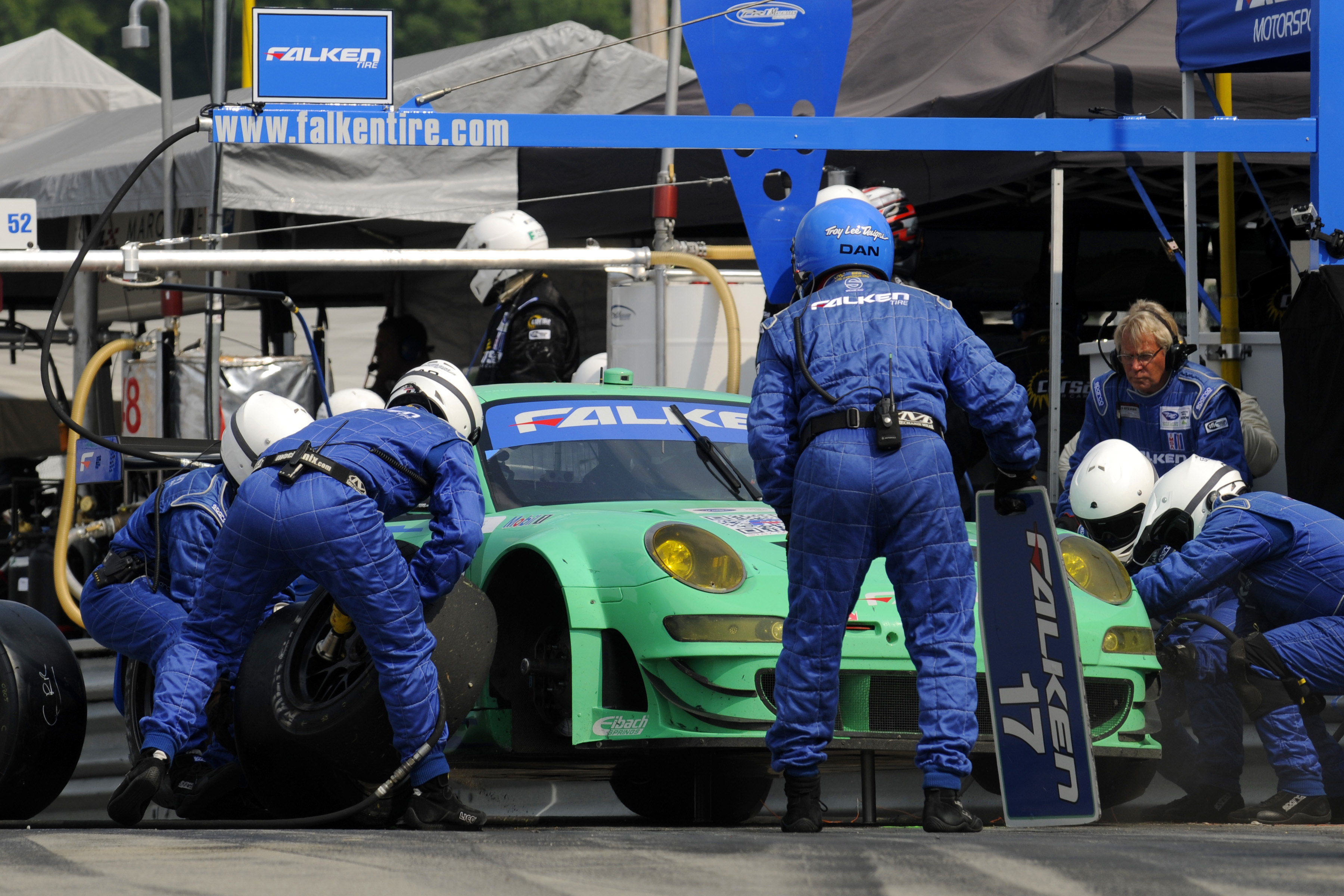
When it comes to drama, the final phase of the race that started under sunny skies was unsurpassed. First a few raindrops fell causing a flurry in the pits.
Porsche 911 GT3 RSR, Team Falken Tire: Wolf Henzler, Bryan Sellers
Then came a sudden heavy shower. That was the Wolf Henzler’s chance – and he used it:
Porsche 911 GT3 RSR, Team Falken Tire: Wolf Henzler, Bryan Sellers
When the race restarted after a yellow flag and most of his rivals had their hands full keeping their cars on the flooded circuit, he charged from fifth to the lead in just one lap – even passing Porsche works driver Patrick Long (USA) who had led the field until that point after a strong drive with the Flying Lizard Motorsports-run 911 GT3 RSR.
“In the final lap many cars driving on the inside line of the track spun. I found grip on the outside and could overtake them all,” said Wolf Henzler. “Falken has tested in rain in Mid-Ohio. We trusted these tyres and they yielded us victory.”
Bryan Sellers (USA) , Wolf Henzler (Germany)
Whilst Wolf Henzler brought home his first win of the season in heavy rain, Patrick Long struggled with the amount of water on the circuit.
Porsche 911 GT3 RSR, Flying Lizard Motorsports: Jörg Bergmeister, Patrick Long
The teammate of Porsche factory pilot Joerg Bergmeister (Germany) took up the race from the second grid row, slid into the gravel trap and fell back to ninth place.
Porsche 911 GT3 RSR, Flying Lizard Motorsports: Jörg Bergmeister, Patrick Long
Shortly afterwards, with ten minutes left to the finish, the race was red-flagged and not restarted due to the persistent rain.
Patrick Long (USA)
“Our car was good, the set-up and strategy worked well – that was our race,” said Patrick Long. “But when the rain arrived, we lost grip and everyone started sliding around, even those on wets.”
Joerg Bergmeister (Germany)
In front of the title defenders Joerg Bergmeister and Patrick Long, Sascha Maassen (Germany) and Bryce Miller (USA) finished in eighth place at the wheel of their Paul Miller Racing Porsche 911 GT3 RSR.
Bryce Miller (USA)
Paul Miller Racing Porsche 911 GT3 RSR
Sascha Maassen (Germany)
Americans Seth Neiman and Darren Law planted the second Flying Lizard Porsche on tenth. Victory in the GTC class went to Americans Spencer Pumpelly and Duncan Ende in the Porsche 911 GT3 Cup.
Teams
1. BMW Team RLL, BMW, 96 points
2. Corvette Racing, Chevrolet, 77
3. Flying Lizard Motorsports, Porsche, 60
Facts and figures
This is the American Le Mans Series
The American Le Mans Series (ALMS) was created in 1999 for sports prototypes and GT vehicles. The regulations correspond to those of the Le Mans 24 hour race.
GT class: This most popular class amongst car manufacturers is traditionally extremely well supported: Slightly modified standard sports cars with 440 to 500 hp and a minimum weight of 1,125 – 1,325 kilograms (e.g. Porsche 911 GT3 RSR). GTC class: This class is reserved for vehicles from one-make race series (e.g. Porsche 911 GT3 Cup). LMP1 class: Sports prototypes with up to 550 hp and a minimum weight of 900 kilograms. LMP2 class: Sports prototypes with ca. 440 hp and an 825 kg minimum weight. LMPC class: Prototype brand trophy series for the ORECA FLM 09.
All race cars start together but are classified separately according to their respective classes. This ensures exciting and diverse racing with many overtaking manoeuvres. Points are only awarded for placings in each class.
Stuttgart. The Porsche works drivers Joerg Bergmeister (Germany) and Patrick Long (USA) take up the fifth round of the American Le Mans Series on the Mid-Ohio Sports Car Course from the second row of the grid.
Joerg Bergmeister
With the Porsche 911 GT3 RSR fielded by Flying Lizard Motorsports, Joerg Bergmeister, two-time winner at Mid-Ohio, set the fourth quickest time in the GT class qualifying on the 3.621 kilometre circuit in America’s Midwest.
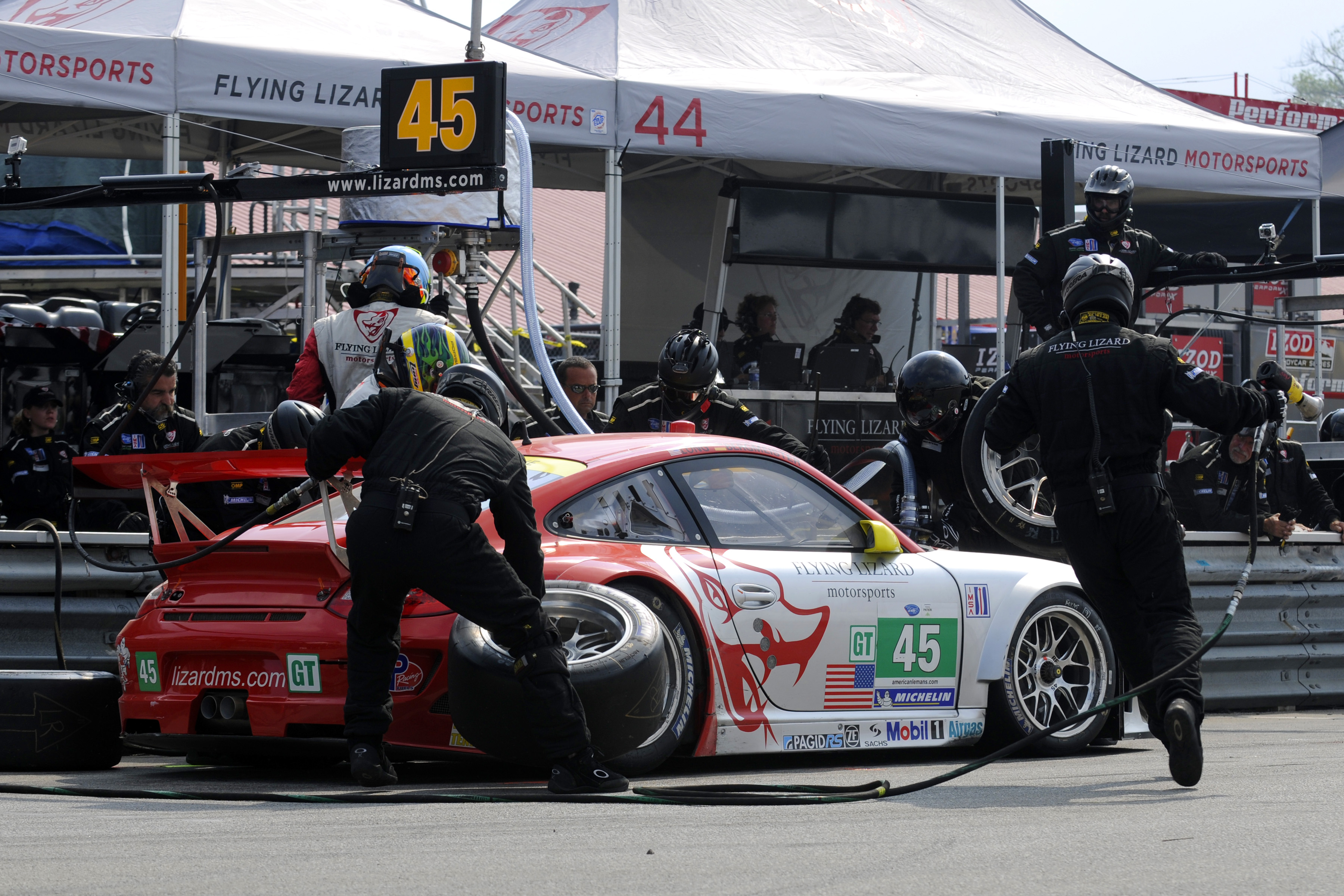
Flying Lizard Motorsports #45
“To start from the second row is not so bad considering the strong competition. If we get away well we could probably make up one or two positions,” said Joerg Bergmeister.
“The 15 kilogram weight handicap that we were handed prior to Mid-Ohio costs us about two-tenths of a second per lap. But we’re still hoping that the better strategy of our Flying Lizard crew can make the difference over the race distance.”
Patrick Long
At the wheel of the Porsche 911 GT3 RSR run by the Falken Tire squad, Bryan Sellers (USA) posted the ninth quickest time.
Porsche 911 GT3 RSR run by the Falken Tire
Bryan Sellers
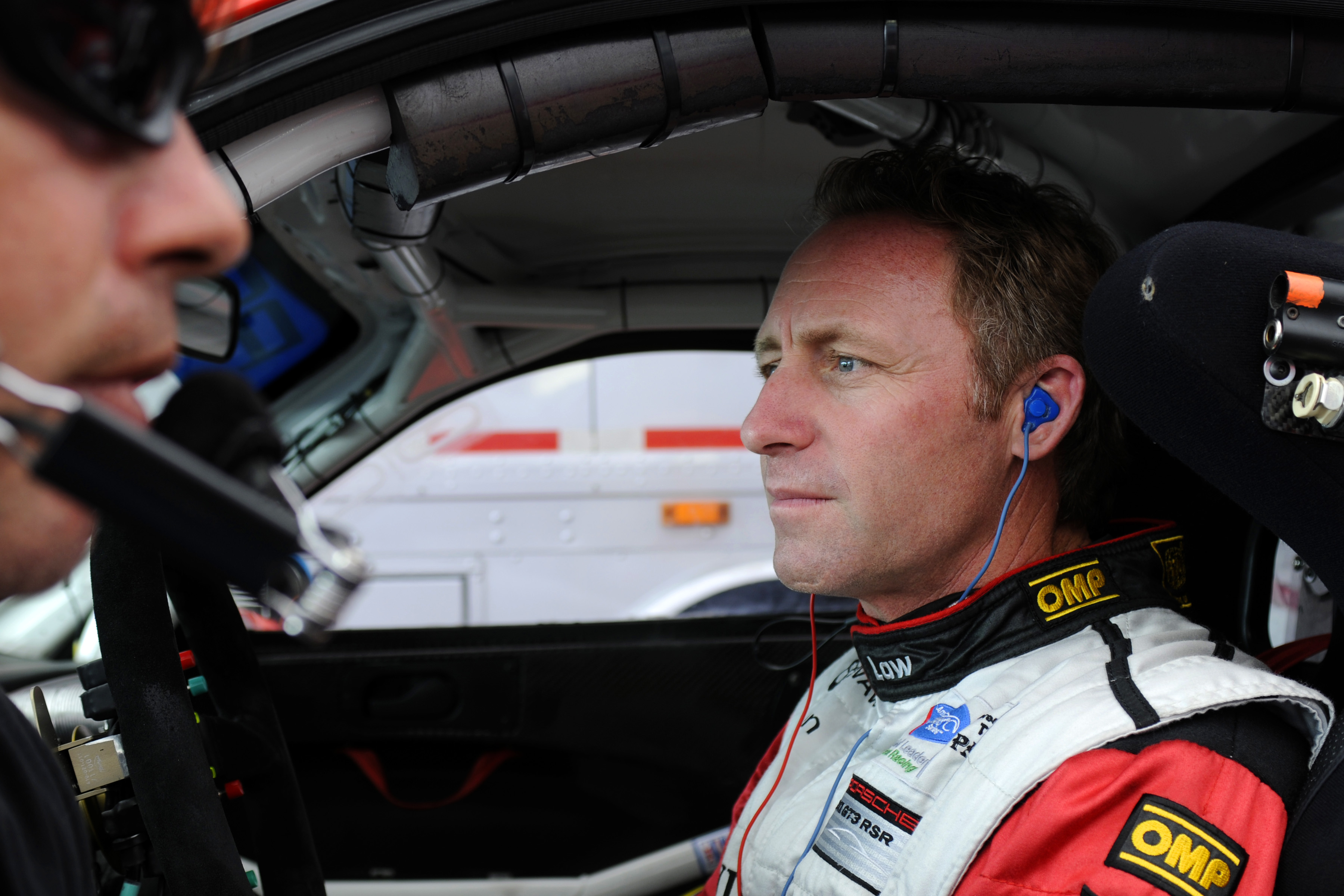
Sellers shares driving duties for the race on Saturday with Porsche factory pilot Wolf Henzler (Germany).
Wolf Henzler
Sascha Maassen (Germany) claimed the 13th grid spot with Paul Miller Racing’s Porsche 911 GT3 RSR.
Paul Miller Racing’s Porsche 911 GT3 RSR
Sascha Maassen
Bryce Miller
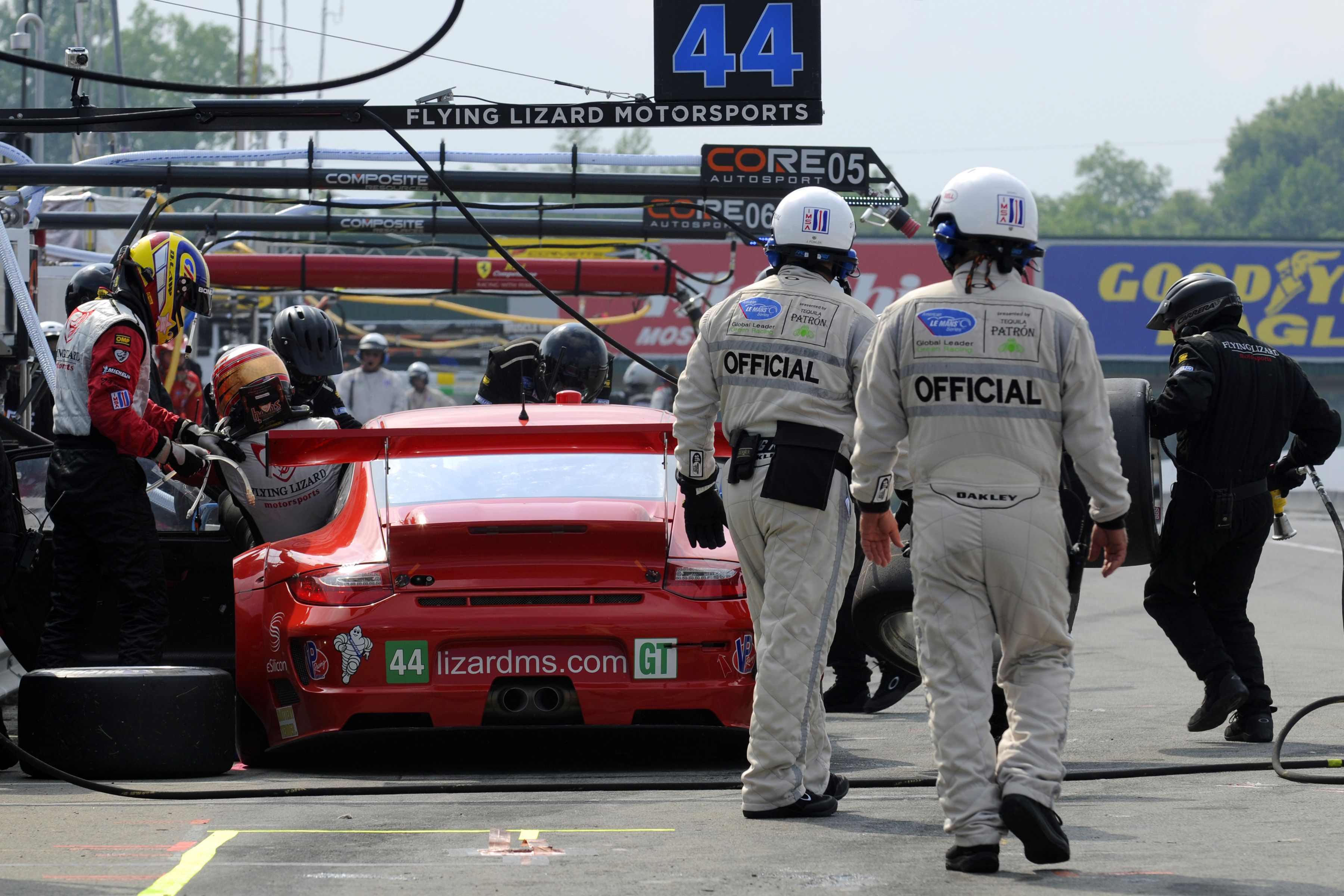
Two places behind him is Seth Neiman from America in the second Flying Lizard Porsche.
Flying Lizard Motorsports #44
Seth Neiman
Darren Law
The race starts on Saturday at 15.30 hours local time (21.30 hrs CEST) and runs over 2:45 hours, with a live broadcast on www.americanlemans.com.
Qualifying result
GT class
1. Joey Hand (USA), BMW M3 GT, 1:20.539 minutes
2. Dirk Werner (D), BMW M3 GT, + 0.116 seconds
3. Jaime Melo (BRA), Ferrari F458 Italia, + 0.206
4. Joerg Bergmeister (D), Porsche 911 GT3 RSR, + 0.378
5. Oliver Gavin (GB), Chevrolet Corvette, + 0.405
6. Guy Cosmo (USA), Ferrari F458 Italia, + 0.529
9. Bryan Sellers (USA), Porsche 911 GT3 RSR, + 1.382
13. Sascha Maassen (D), Porsche 911 GT3 RSR, + 2.545
15. Seth Neiman (USA), Porsche 911 GT3 RSR, + 4.173
The American Le Mans Series (ALMS) was created in 1999 for sports prototypes and GT vehicles. The regulations correspond to those of the Le Mans 24 hour race.
GT class: This most popular class amongst car manufacturers is traditionally extremely well supported: Slightly modified standard sports cars with 440 to 500 hp and a minimum weight of 1,125 – 1,325 kilograms (e.g. Porsche 911 GT3 RSR). GTC class: This class is reserved for vehicles from one-make race series (e.g. Porsche 911 GT3 Cup). LMP1 class: Sports prototypes with up to 550 hp and a minimum weight of 900 kilograms. LMP2 class: Sports prototypes with ca. 440 hp and an 825 kg minimum weight. LMPC class: Prototype brand trophy series for the ORECA FLM 09.
All race cars start together but are classified separately according to their respective classes. This ensures exciting and diverse racing with many overtaking manoeuvres. Points are only awarded for placings in each class.
Race: Aug. 6, 2011, 3:30 pm ET; 2 hour, 45 minutes ESPN2: Aug. 7, 10:00 pm-12:00 am ET ESPN3.com qualifying live: Aug. 5 2:20- 3:35 pm ET ESPN3.com race live: Aug. 6, 3:15-6:30 pm ET Europe: Live on MotorsTV Latin America: Live on Fox Canada: Live on Rogers SportsNet Outside of the U.S.: live at americanlemans.com/live
(broadcast times may vary by market; check your local listings)
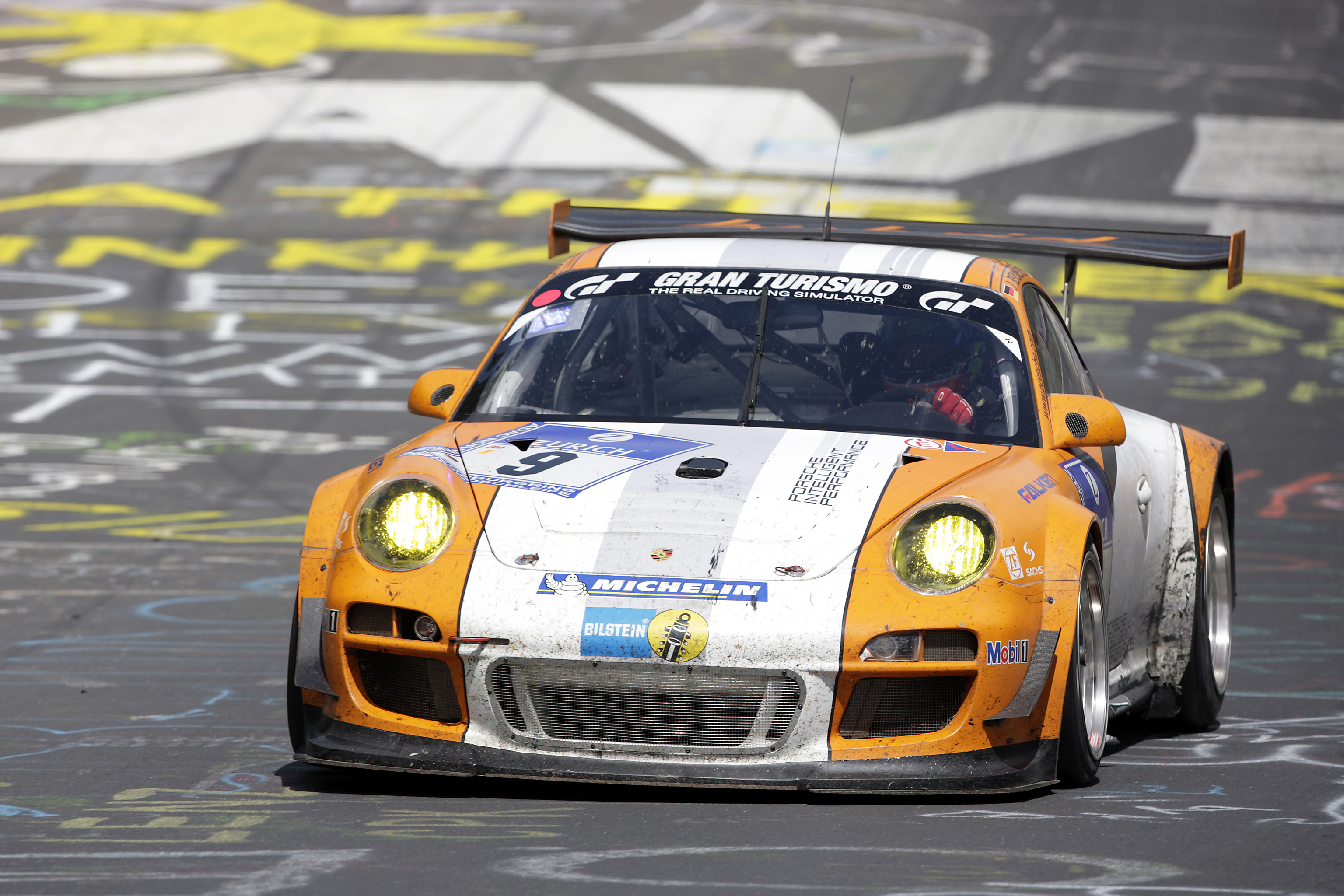
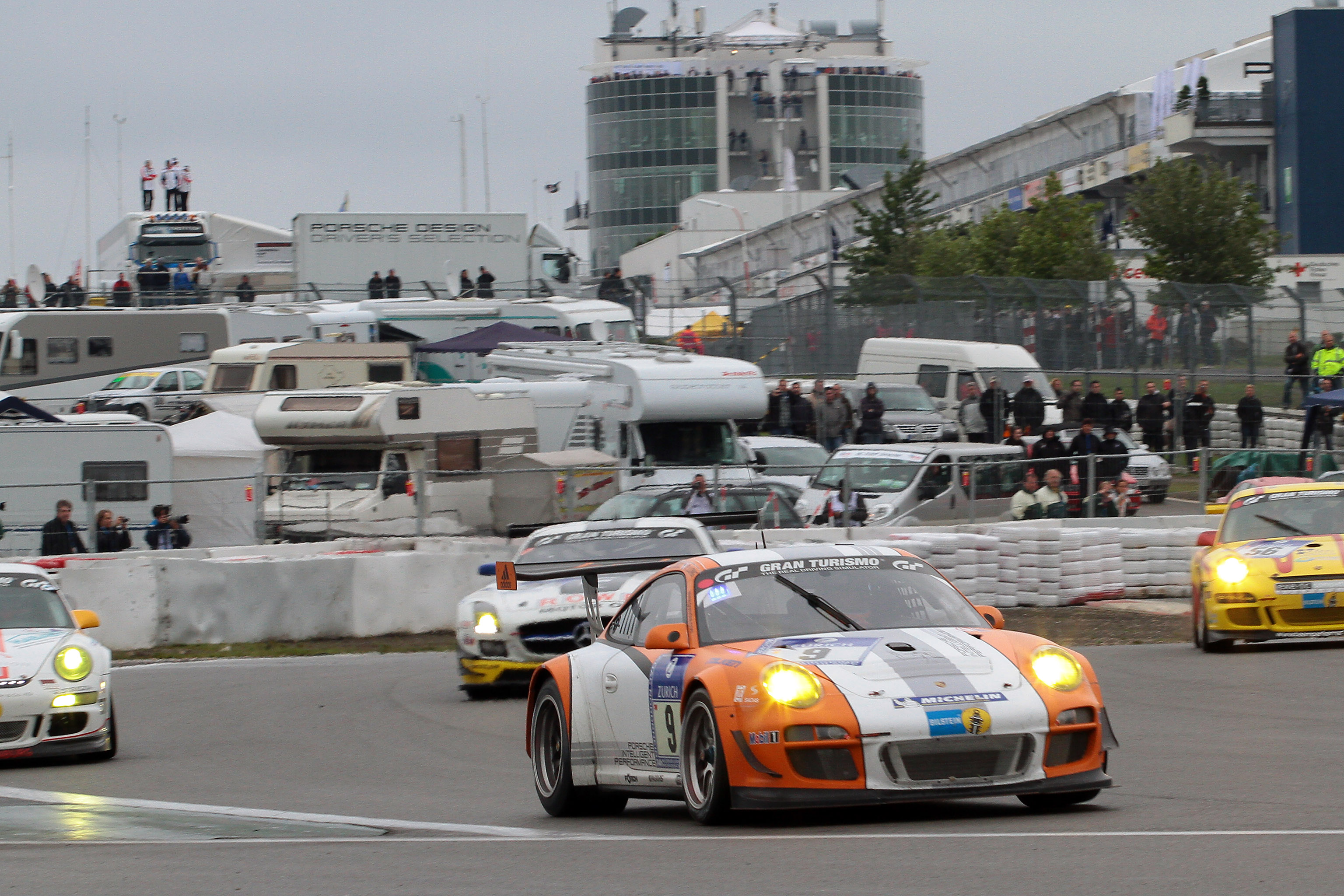
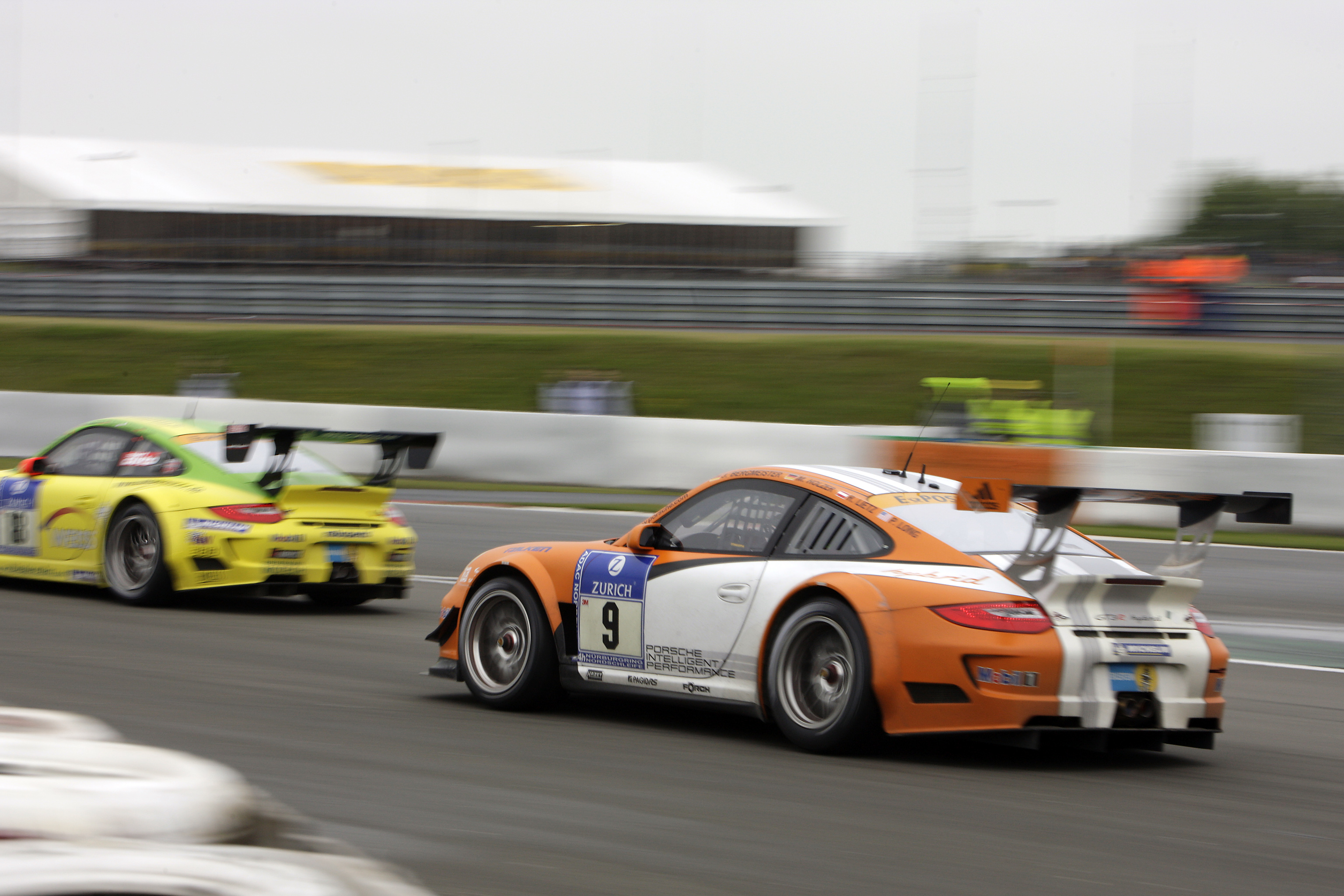
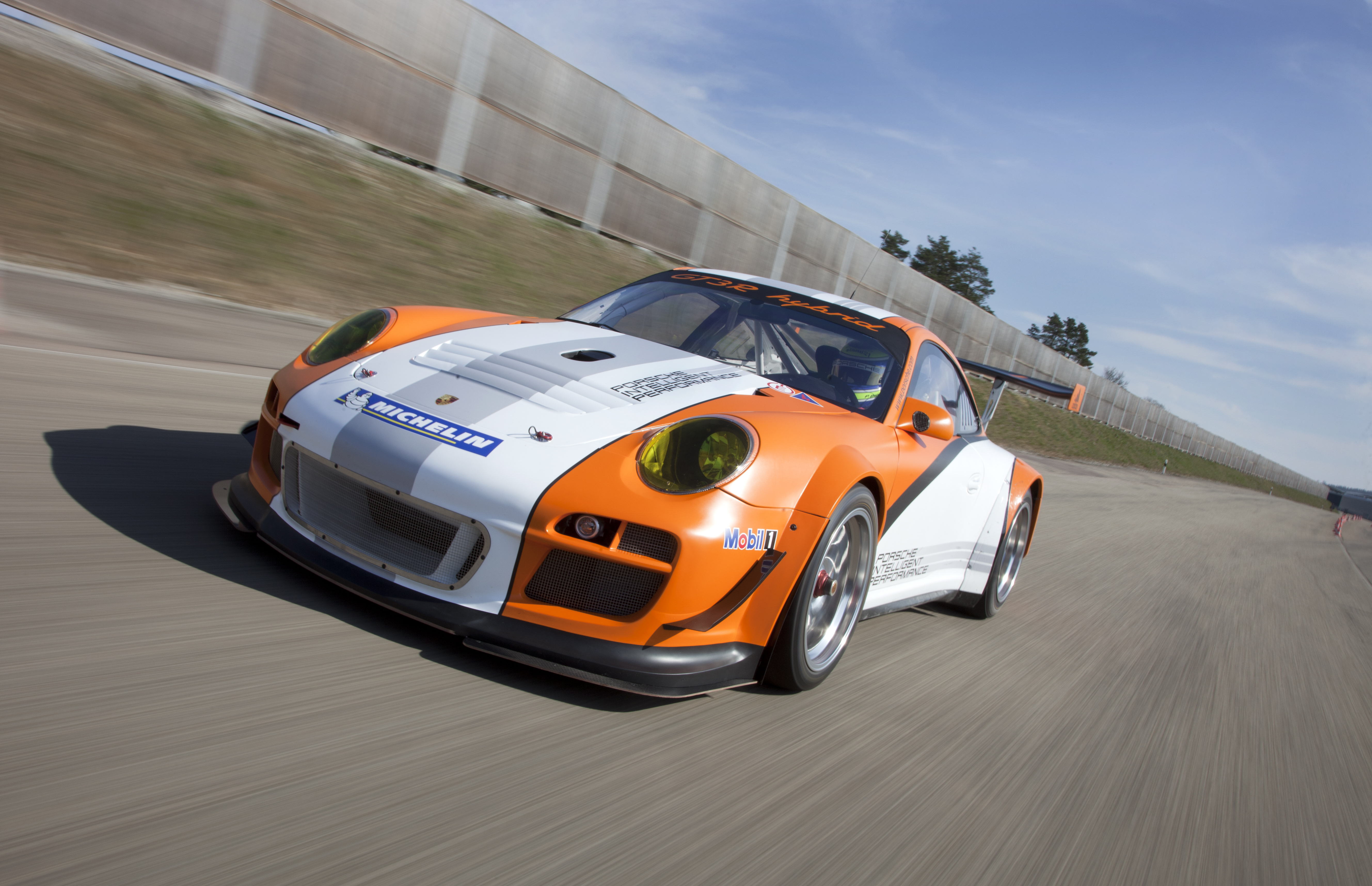
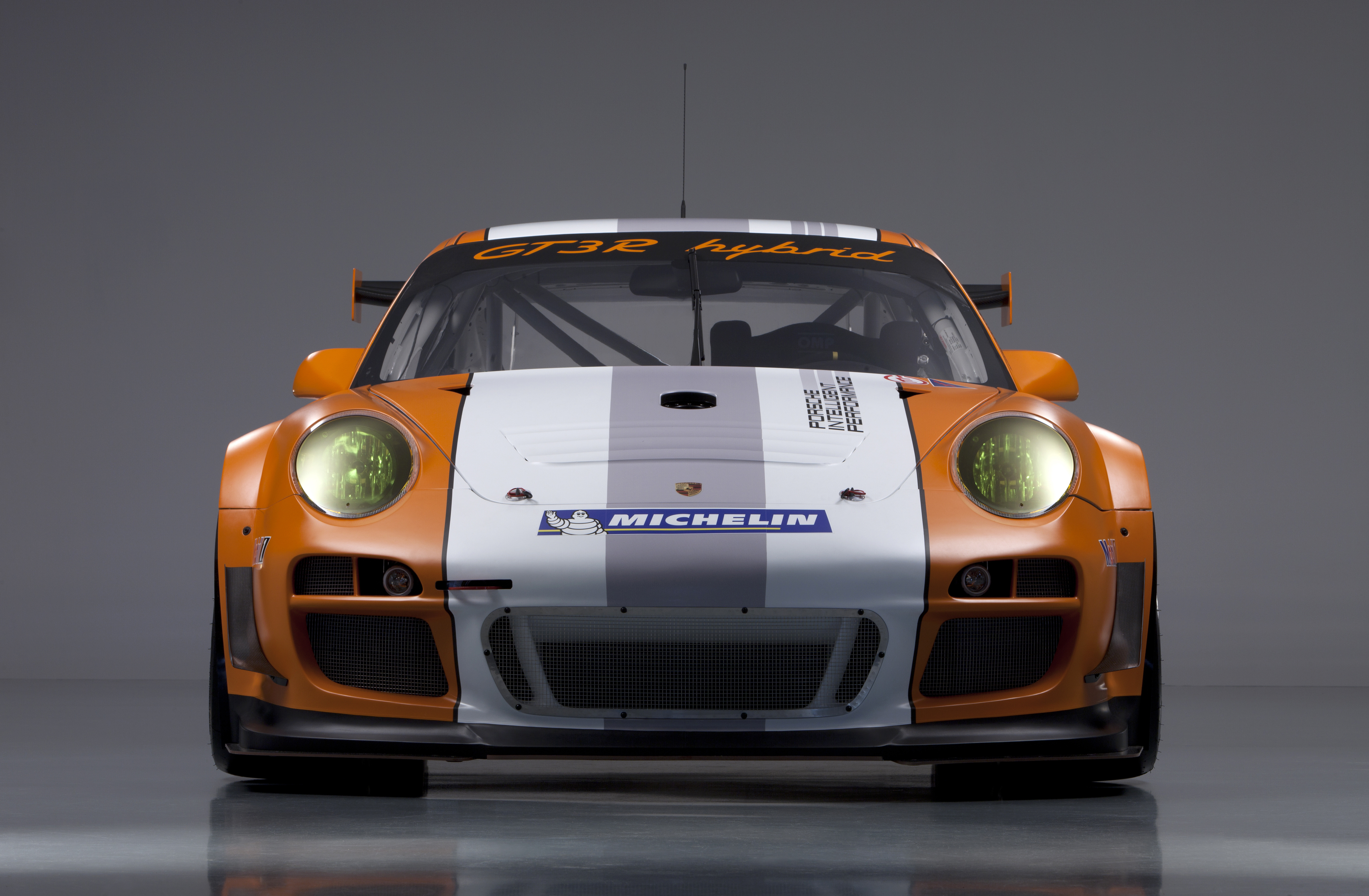
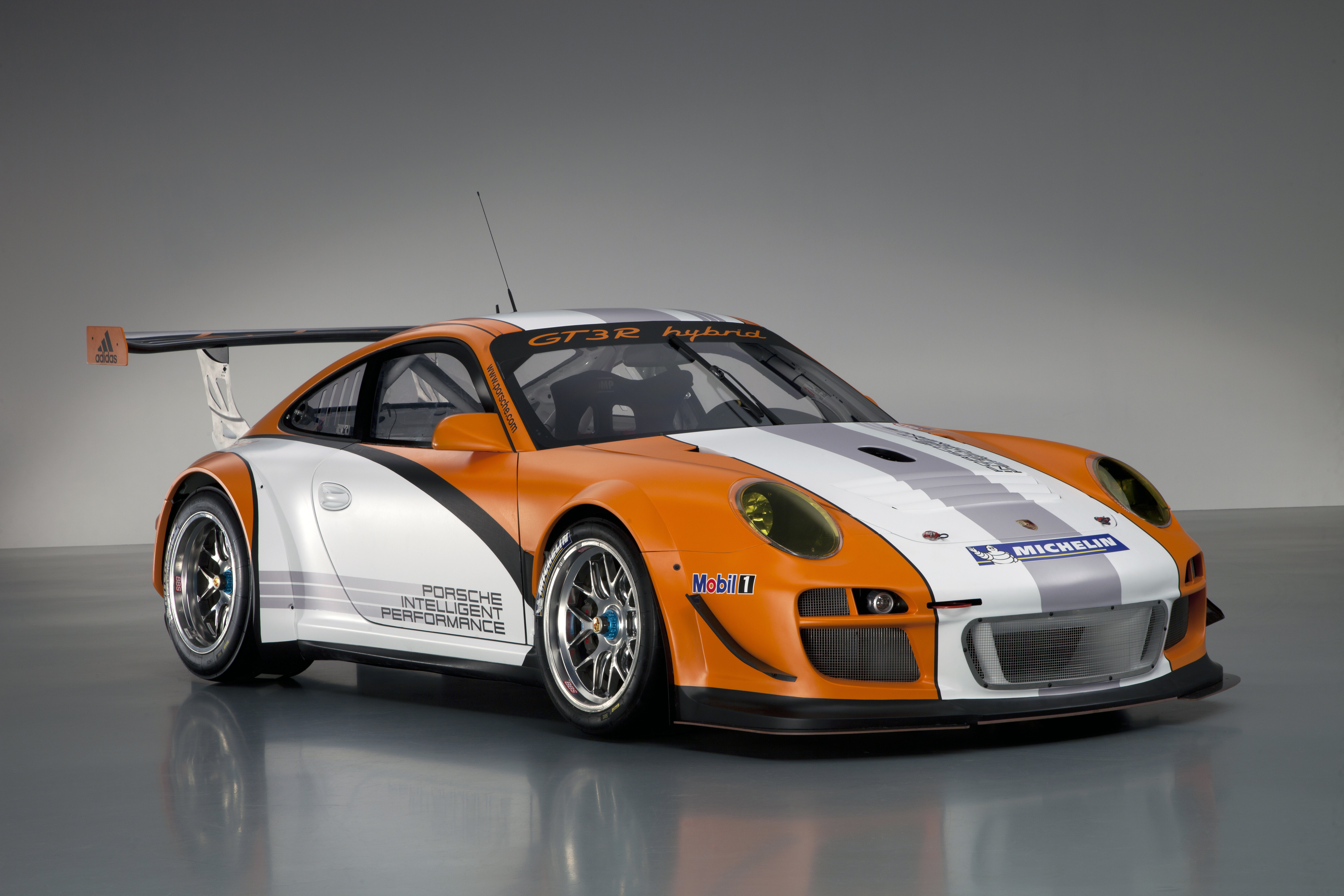
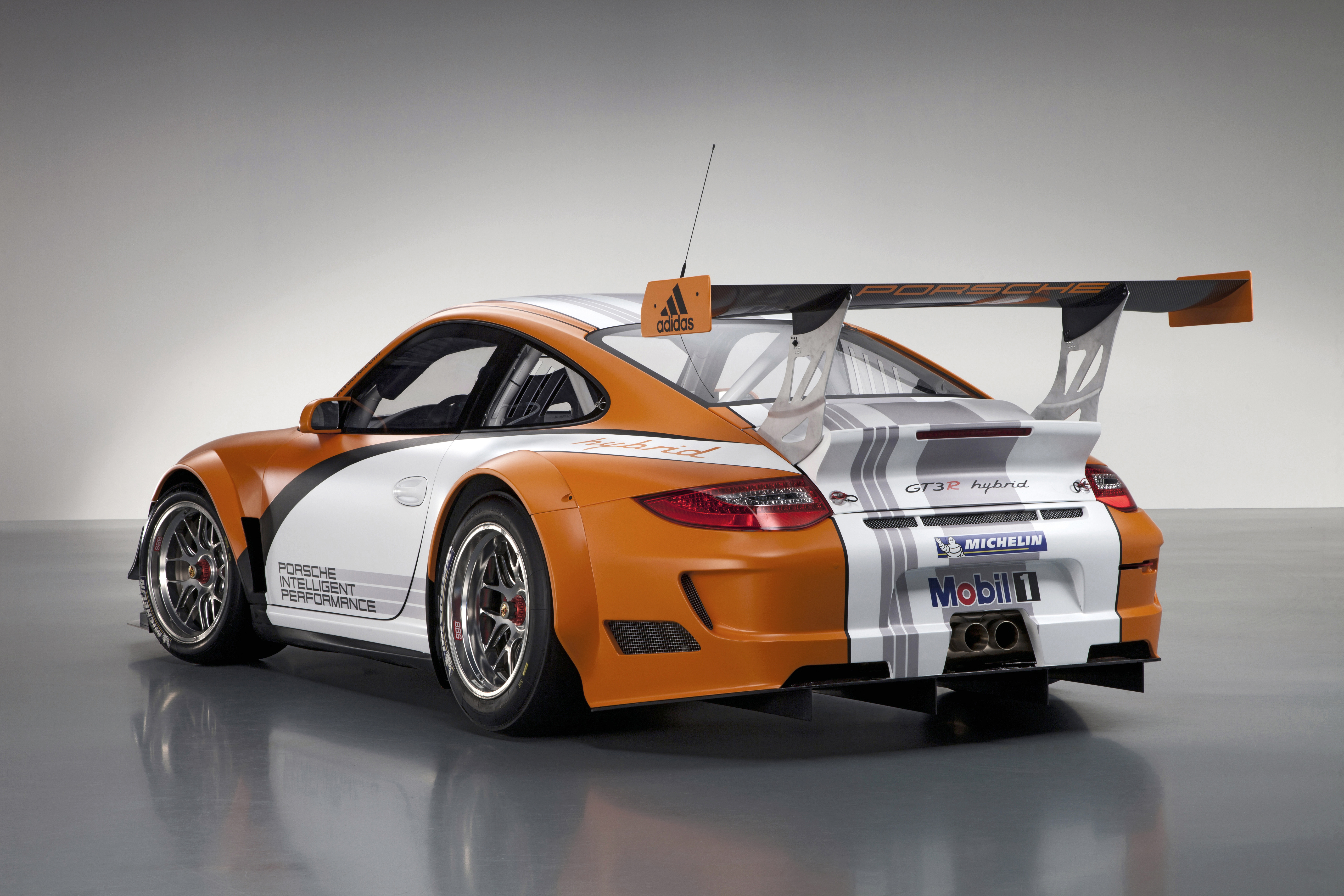
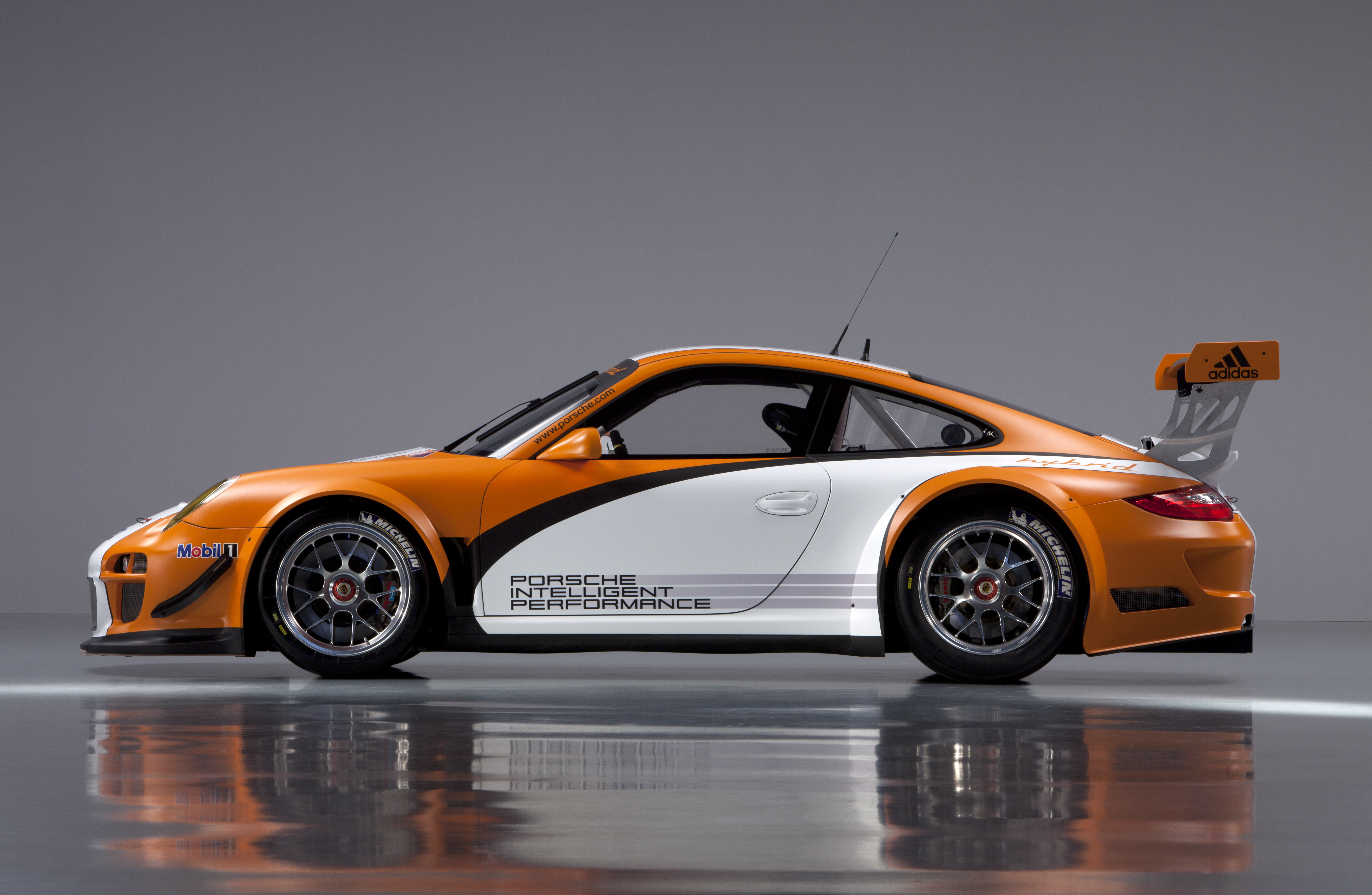
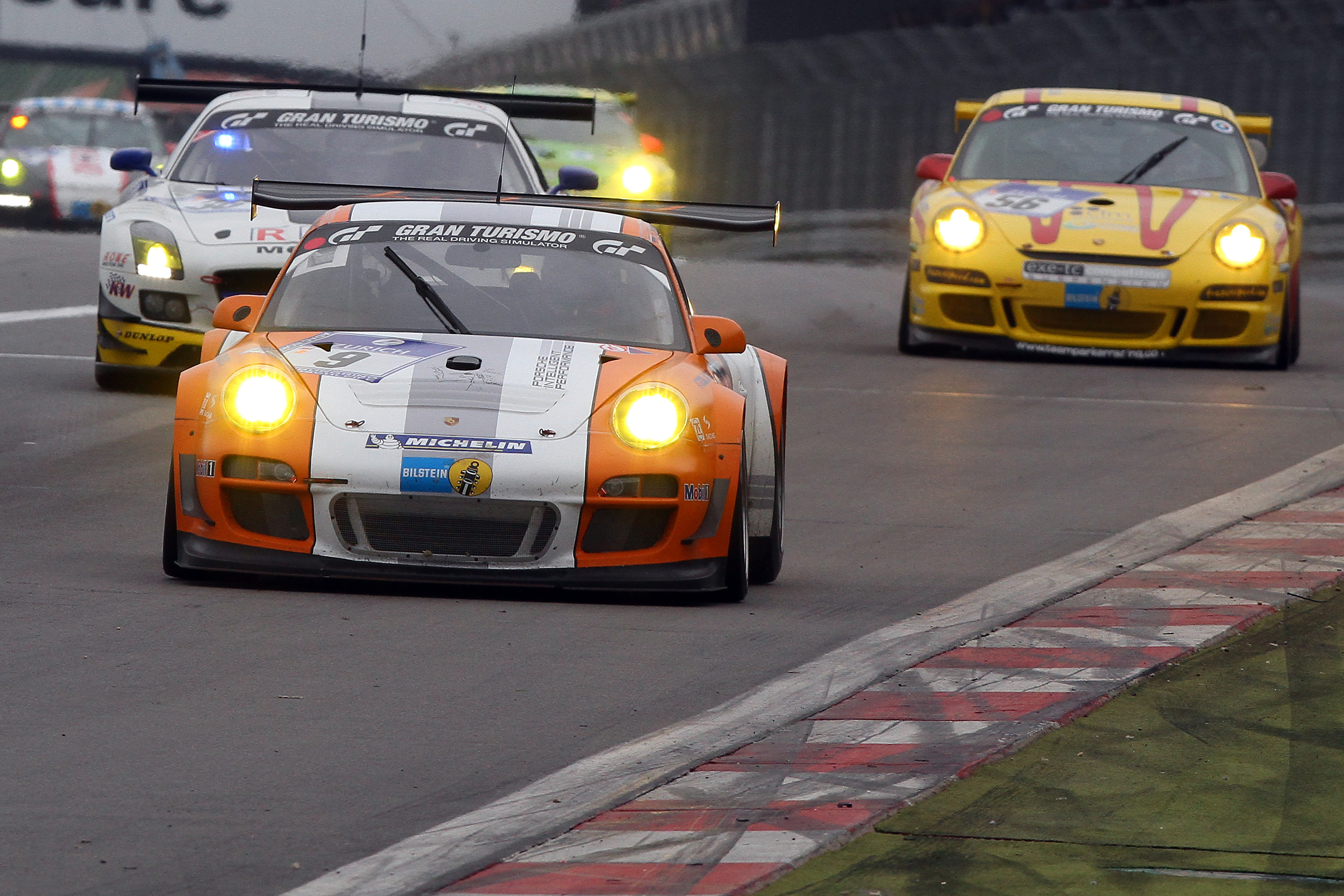
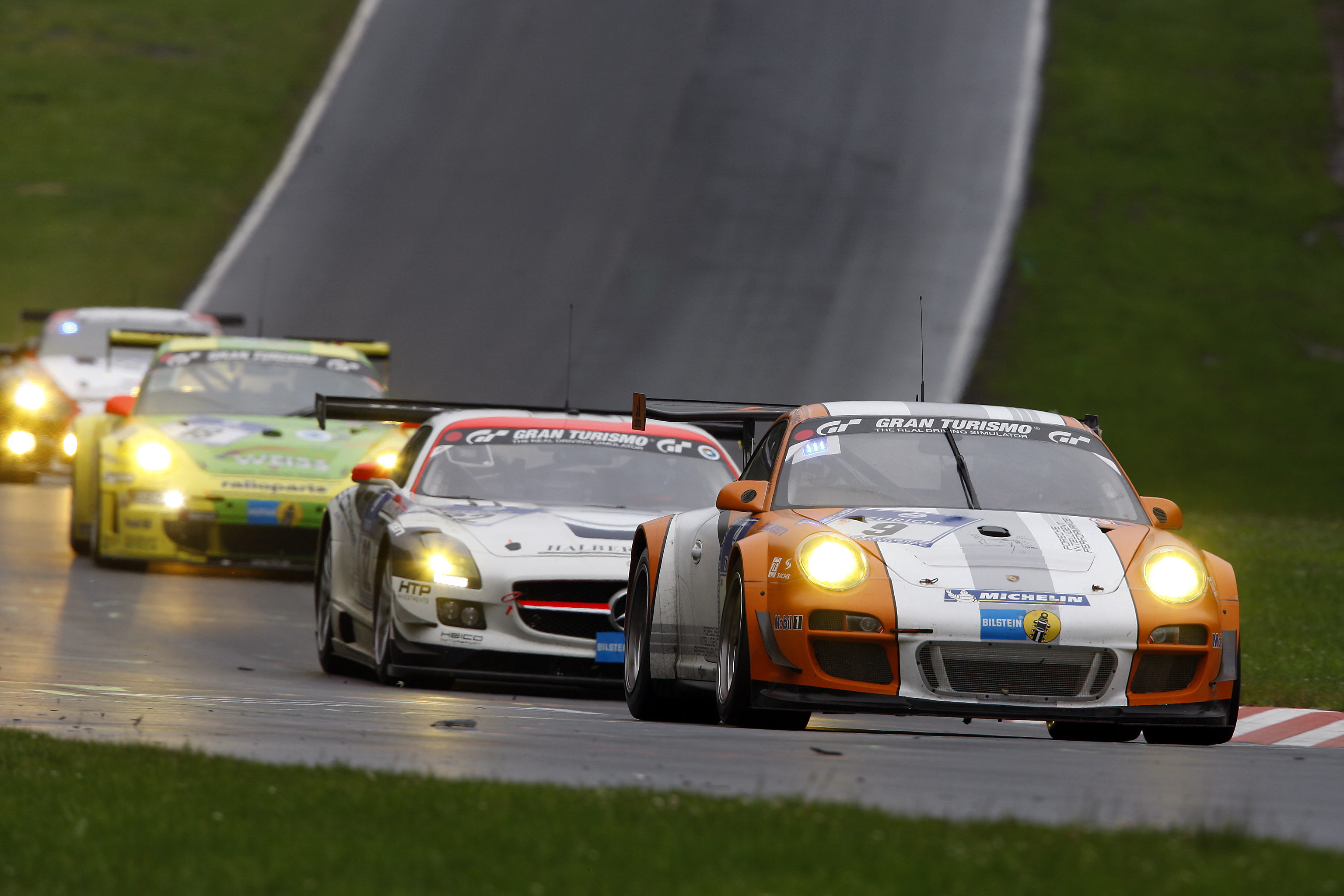
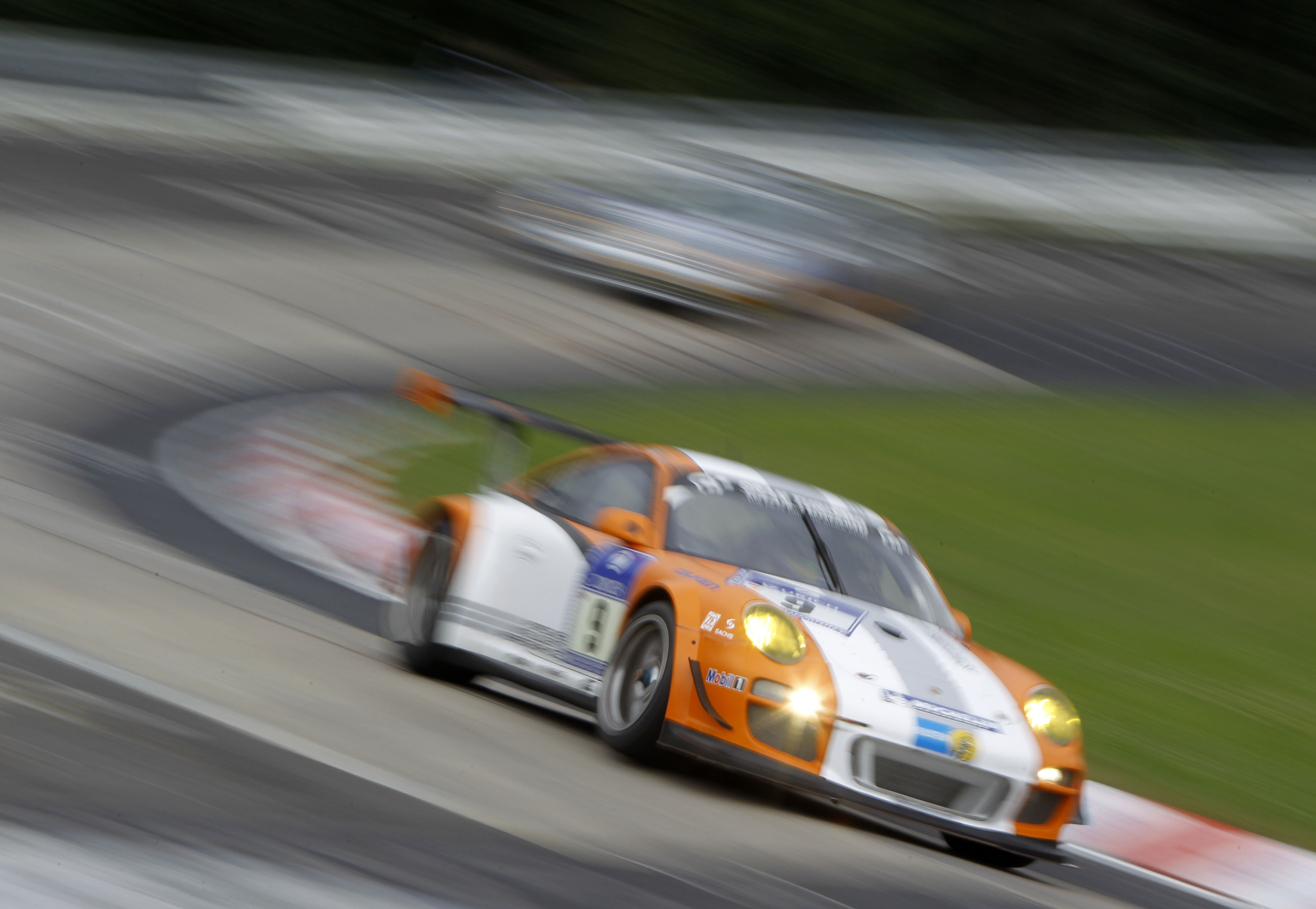
Stuttgart. The race outing of the Porsche 911 GT3 R Hybrid Version 2.0 was trend-setting. The innovative race car achieved the same quick lap times as its top rivals yet used considerably less fuel. Just two broken transmission flanges and a collision thwarted a possible podium spot.
The next test under race conditions for the further development of the particularly efficient drive technology of the 911 GT3 R Hybrid 2.0 is planned for the American Le Mans Series race on the Laguna Seca Raceway in California on 17 September.
The vehicle is not eligible for championship points, as the hybrid technology is not yet a part of the GT regulations.
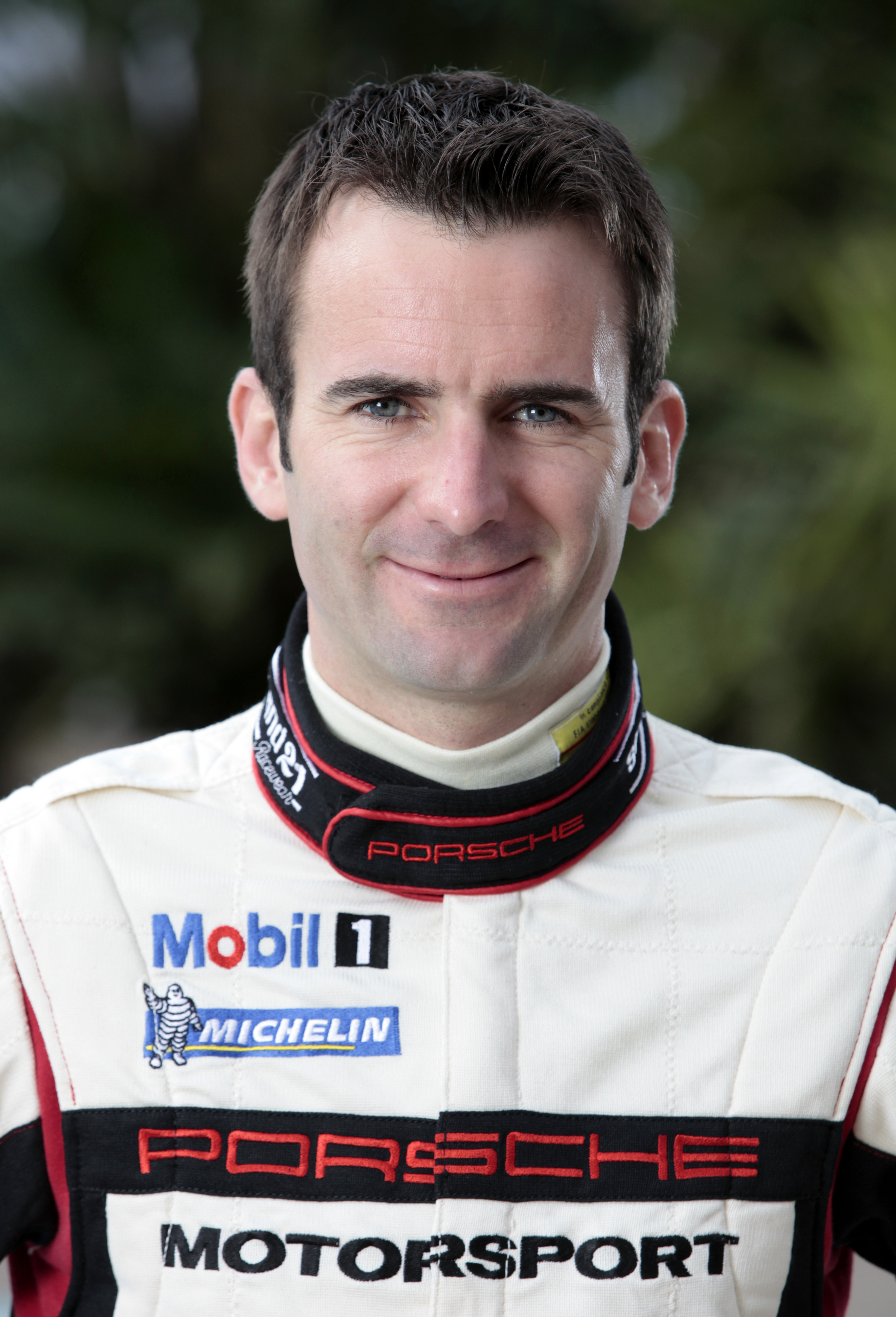
Romain Dumas (France)
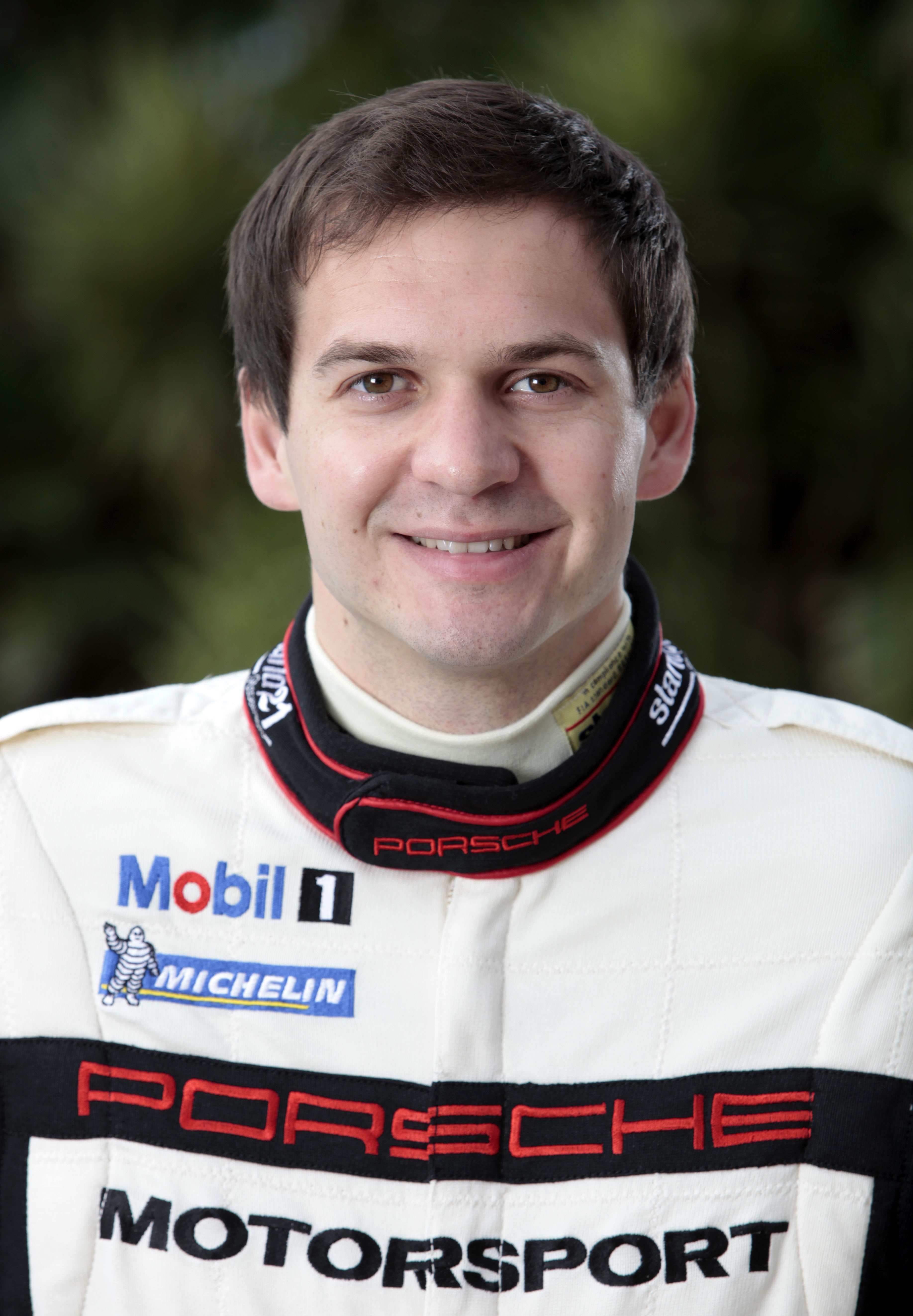
Two Porsche works pilots, Romain Dumas (France) and Richard Lietz (Austria) man the cockpit of the orange and white racer from Weissach.
Richard Lietz (Austria)
Dumas has already driven the world’s most innovative GT vehicle last year at the “Petit Le Mans”, the ALMS race on the Road Atlanta circuit.
Lietz piloted the Hybrid-911 at the 24 hour races on the Nuerburgring in 2010 and 2011 as well as at various long distance races on the Nuerburgring.
“I’m so looking forward to showing this very special car at race speed to the spectators in California. Many Porsche fans live on the west coast of America, and some of them have already discovered the advantages of the hybrid system at the wheel of a Porsche Cayenne S Hybrid,” says Romain Dumas.
“I’m very curious, because Laguna Seca is one of the most exciting race tracks on earth. I only know it from computer games and onboard videos. Its layout with a series of up and downhill passages should actually suit our 911 GT3 R Hybrid.”
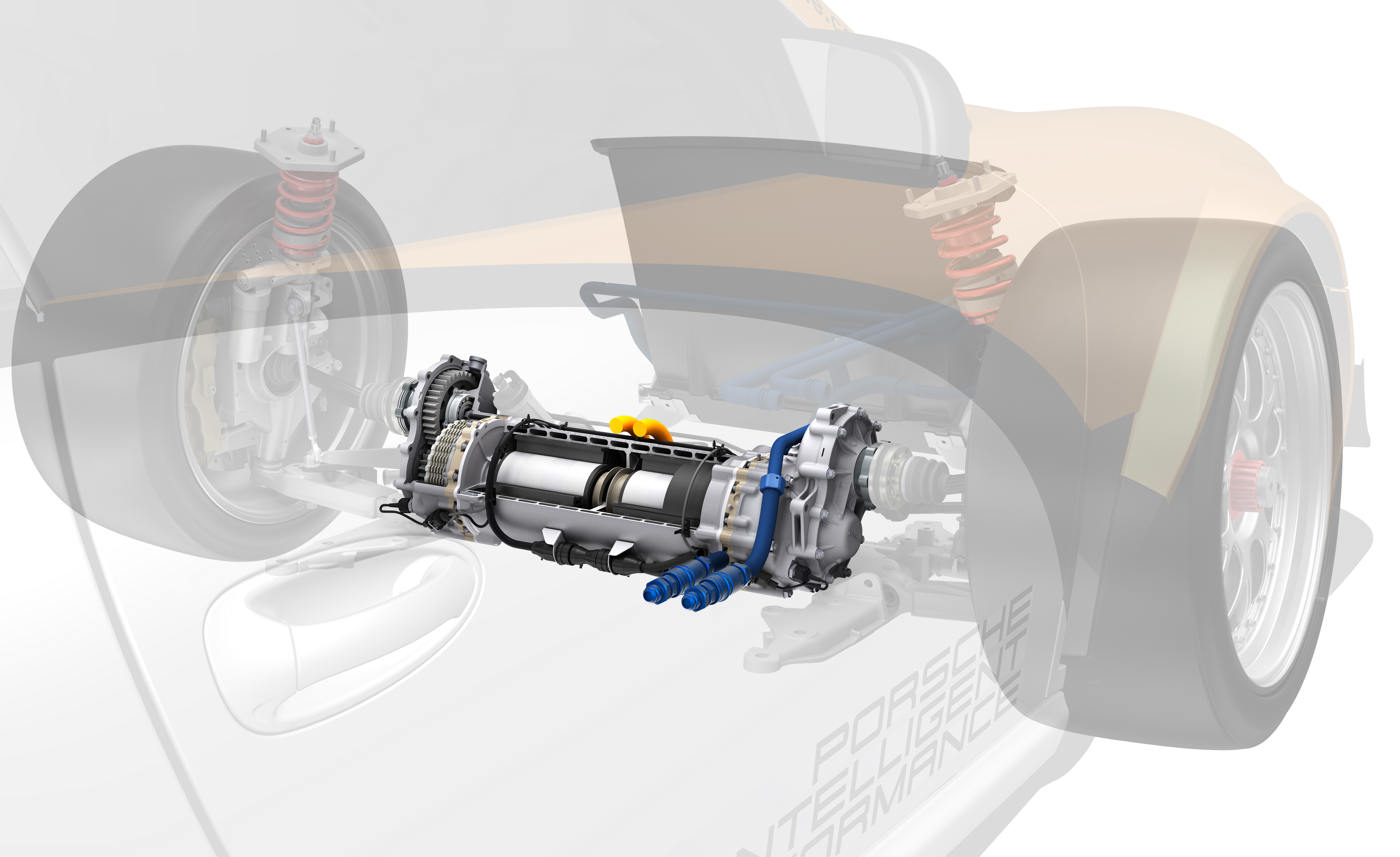
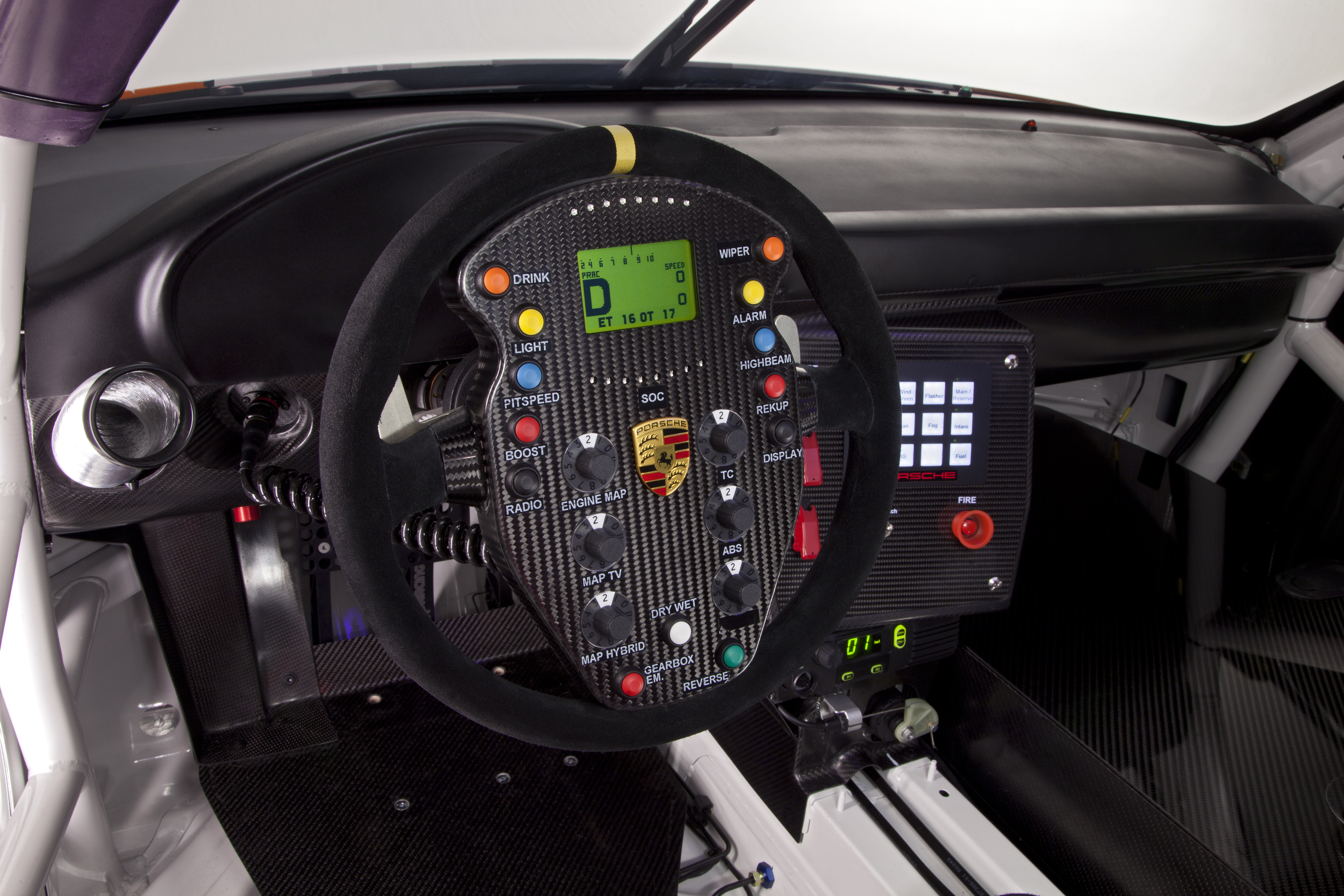
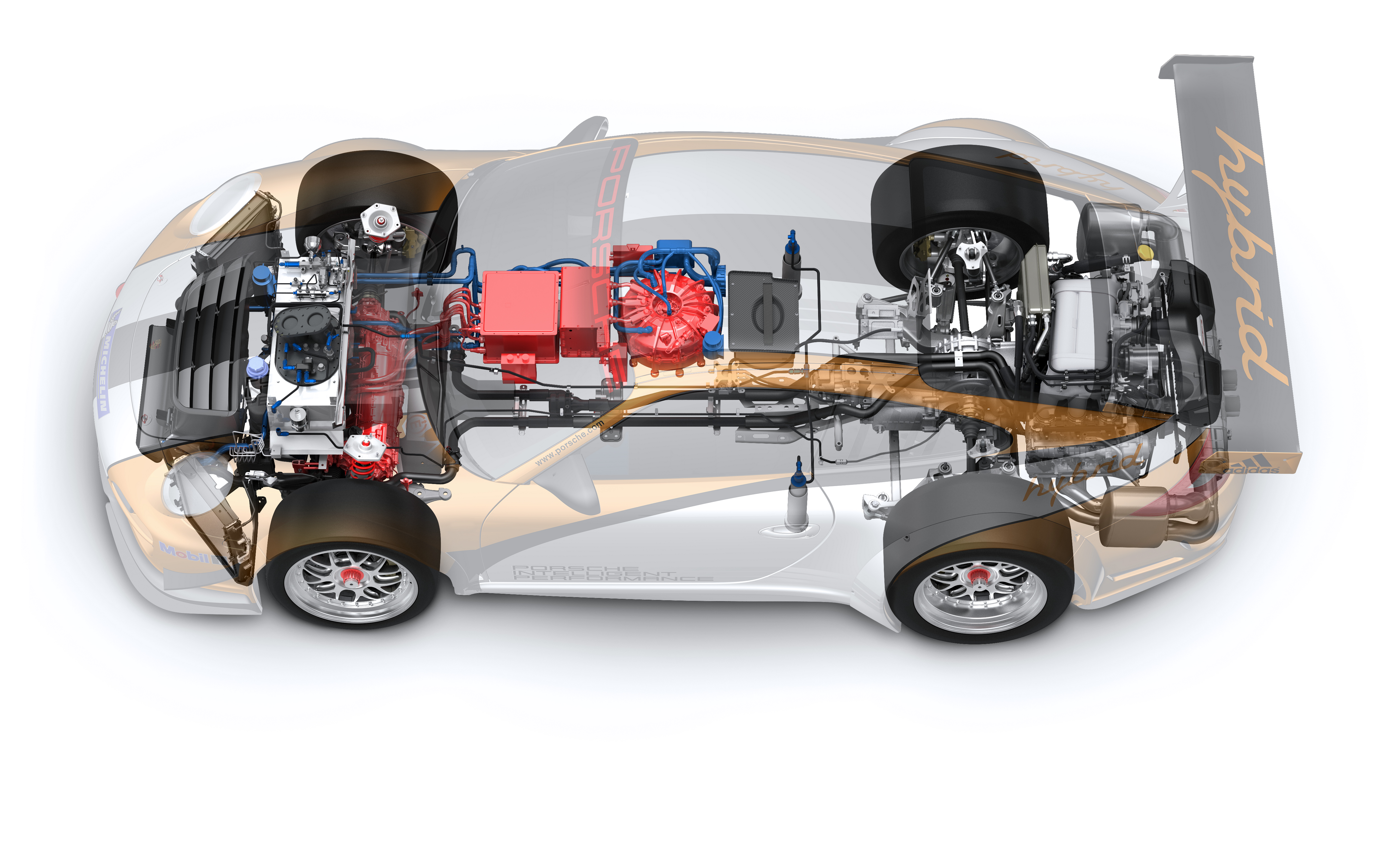
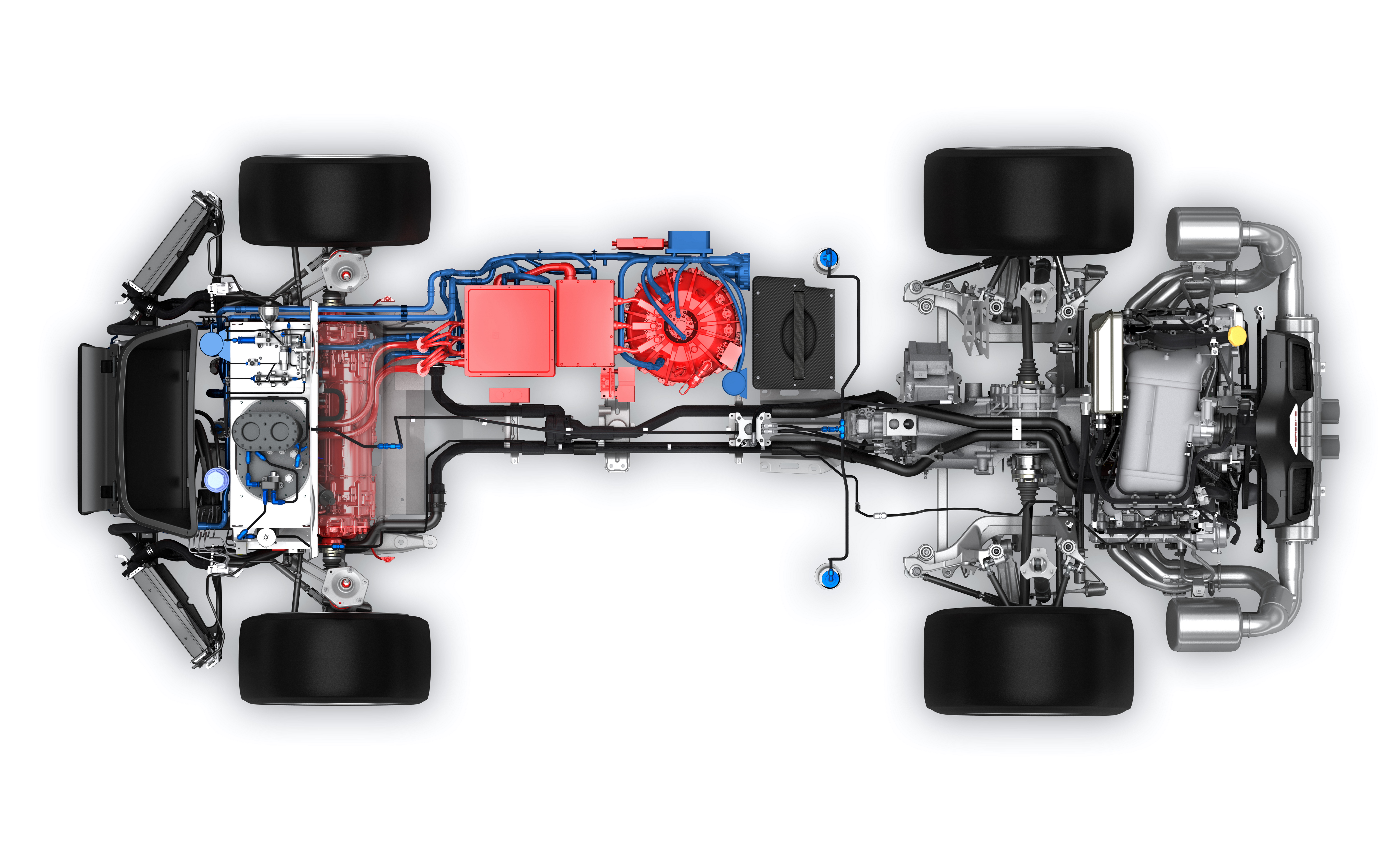
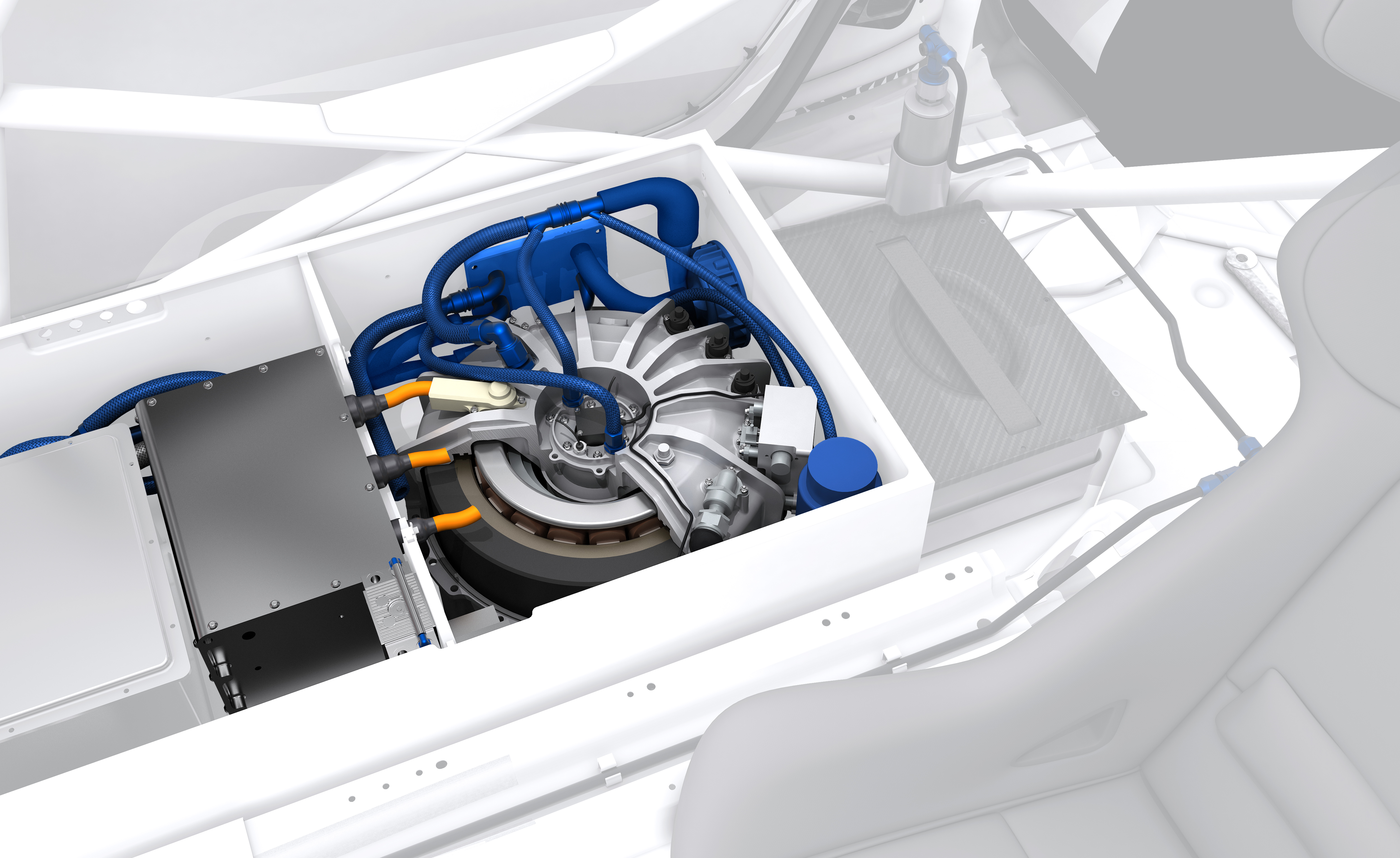
The Porsche 911 GT3 R Hybrid 2.0, with two 75 kilowatt electric motors on the front axle supplementing the 465 hp four-litre, six-cylinder power unit at the rear, particularly embodies the philosophy of “Porsche Intelligent Performance”: The electric energy is generated during braking and stored in an electric flywheel in the 911 GT3 R Hybrid 2.0, which has undergone further development since 2010.
During acceleration, this energy is automatically delivered to the front wheels, supporting the combustion engine. This leads to a reduction in fuel consumption and increases the cruising range on the circuit.
Moreover, drivers can manually utilise the stored energy with a boost-paddle on the steering wheel for overtaking.
Compared to its predecessor, the weight of the 911 GT3 R Hybrid was reduced from 1,350 to 1,300 kilograms.
 911 Carrera S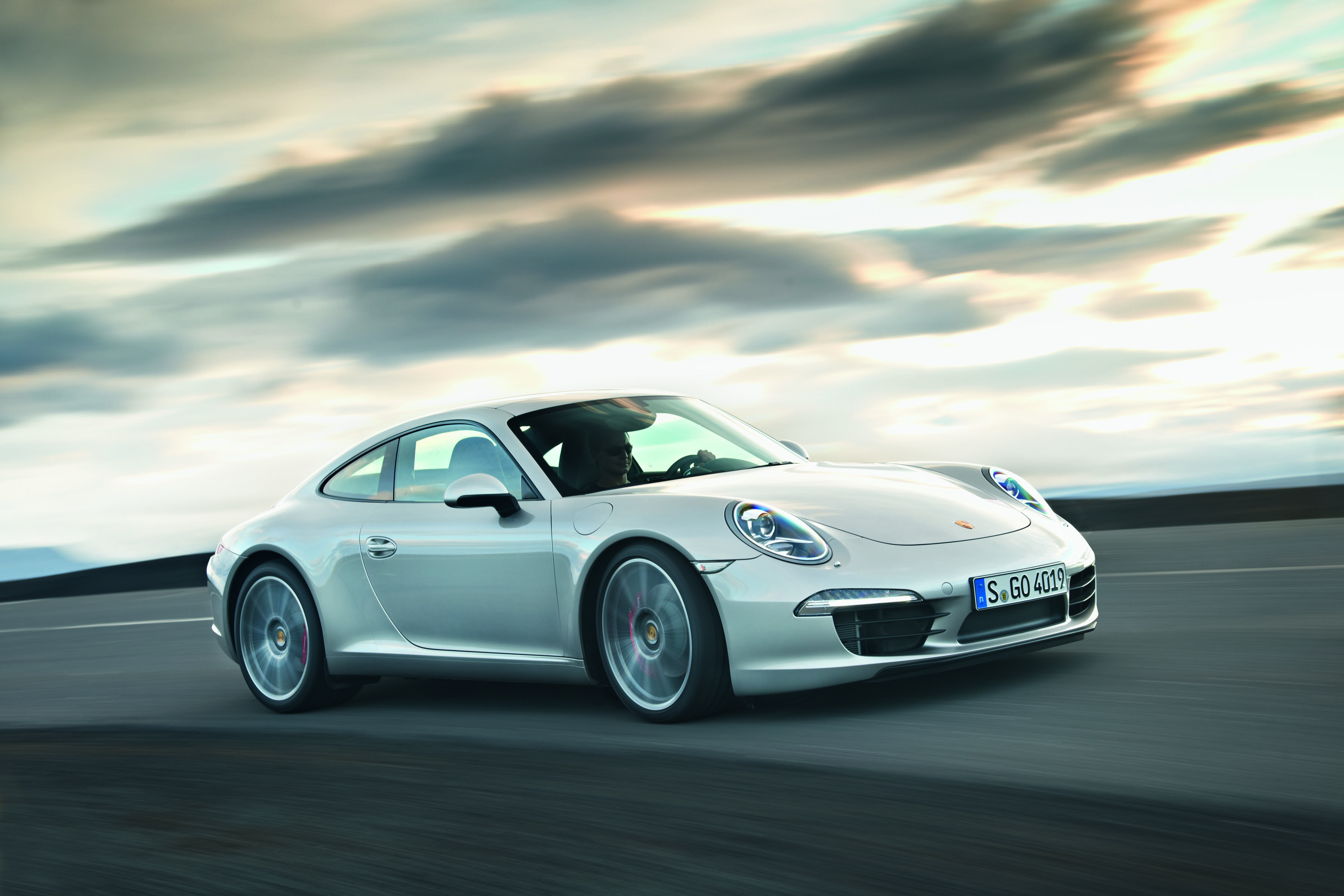
 Panamera Diesel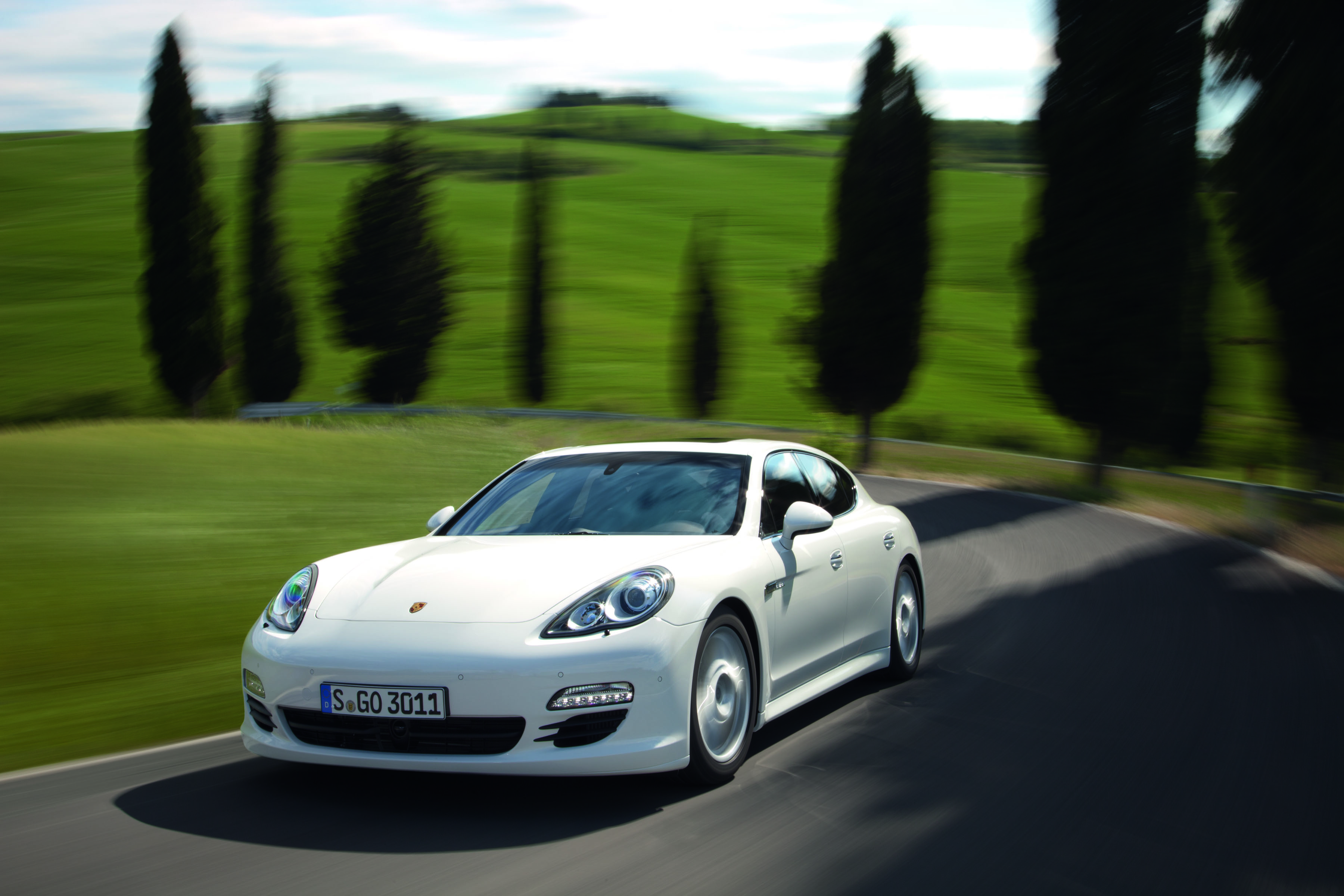
 911 GT3 RS 4.0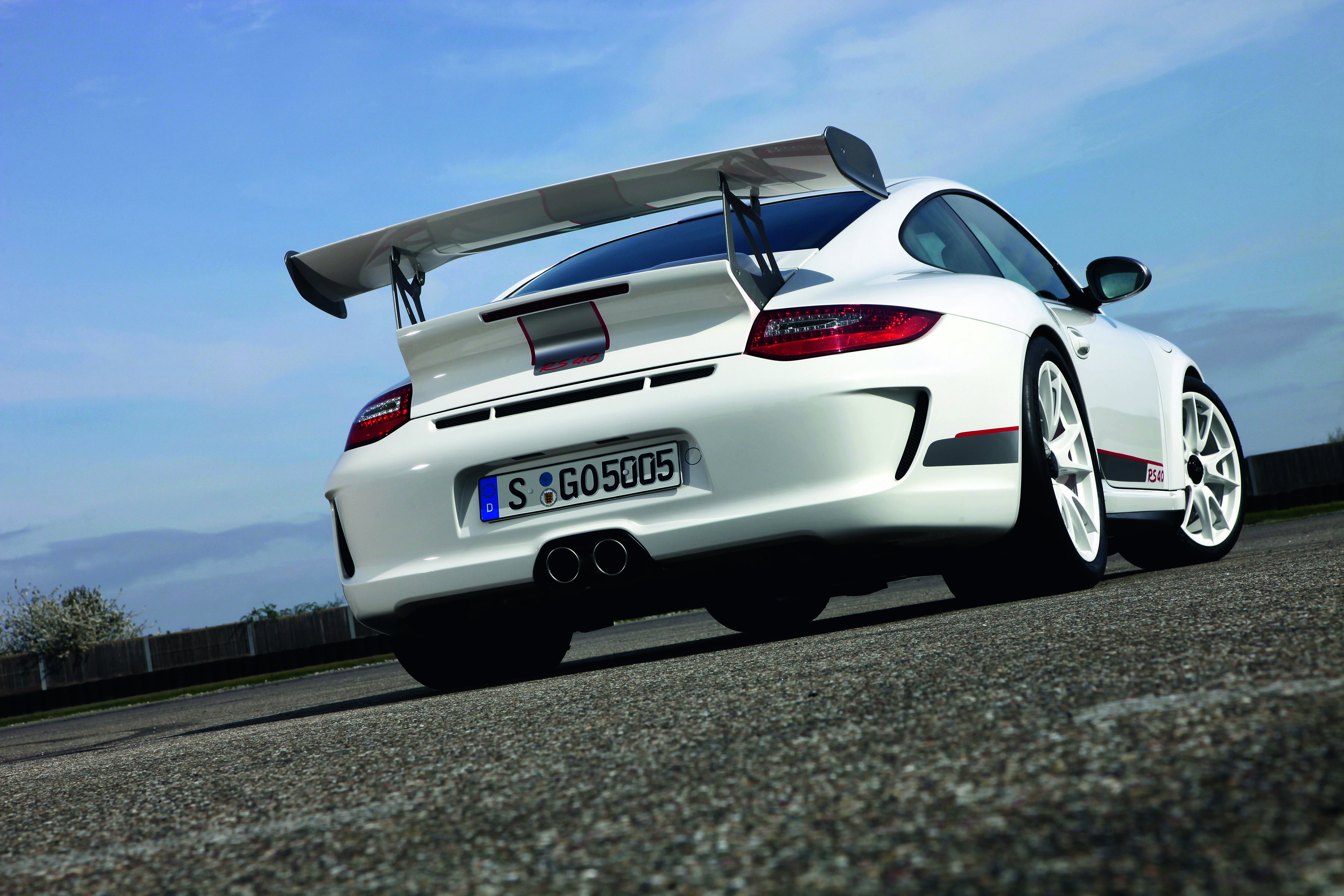
 Cayman S Black Edition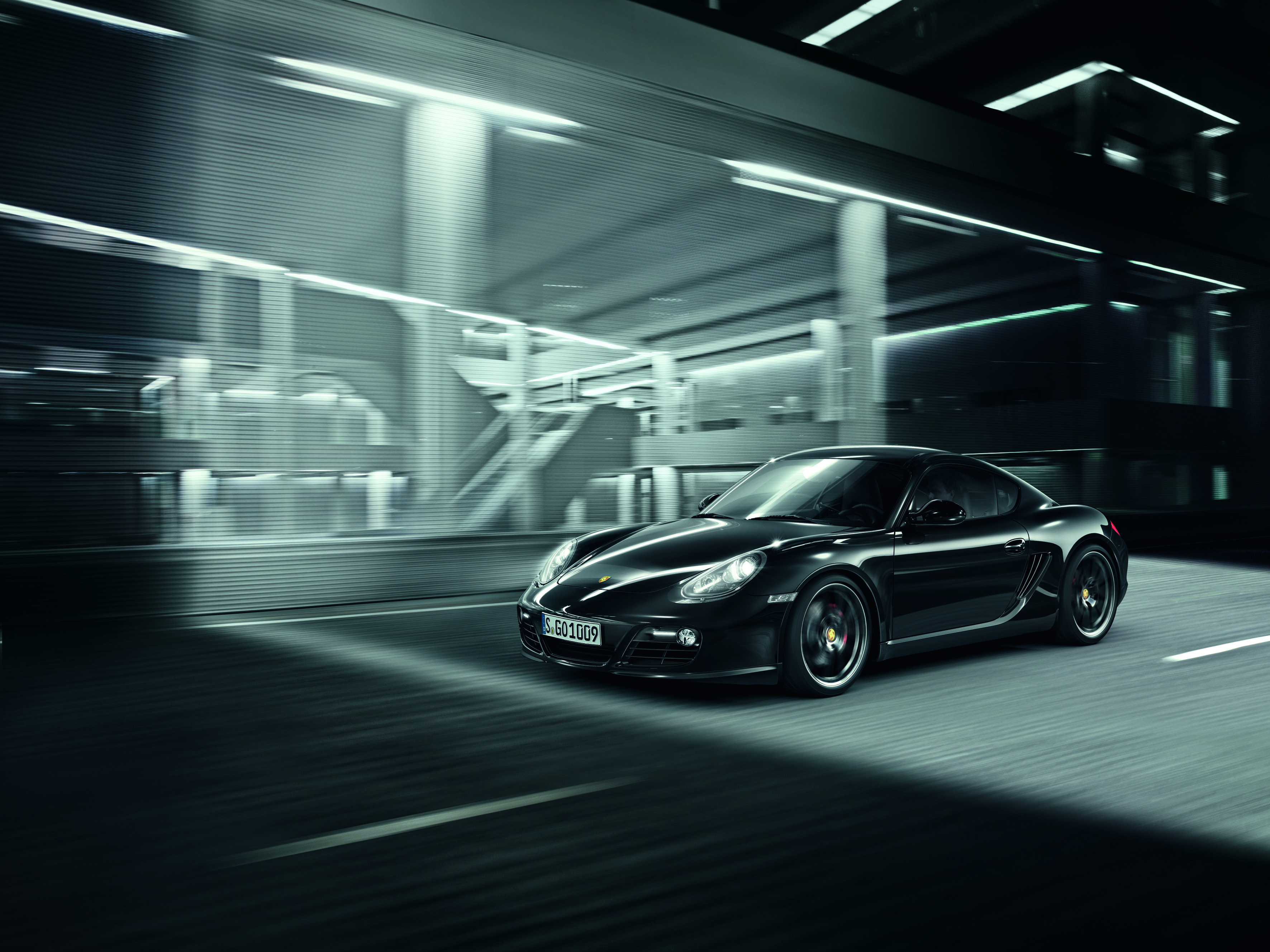


 Photos: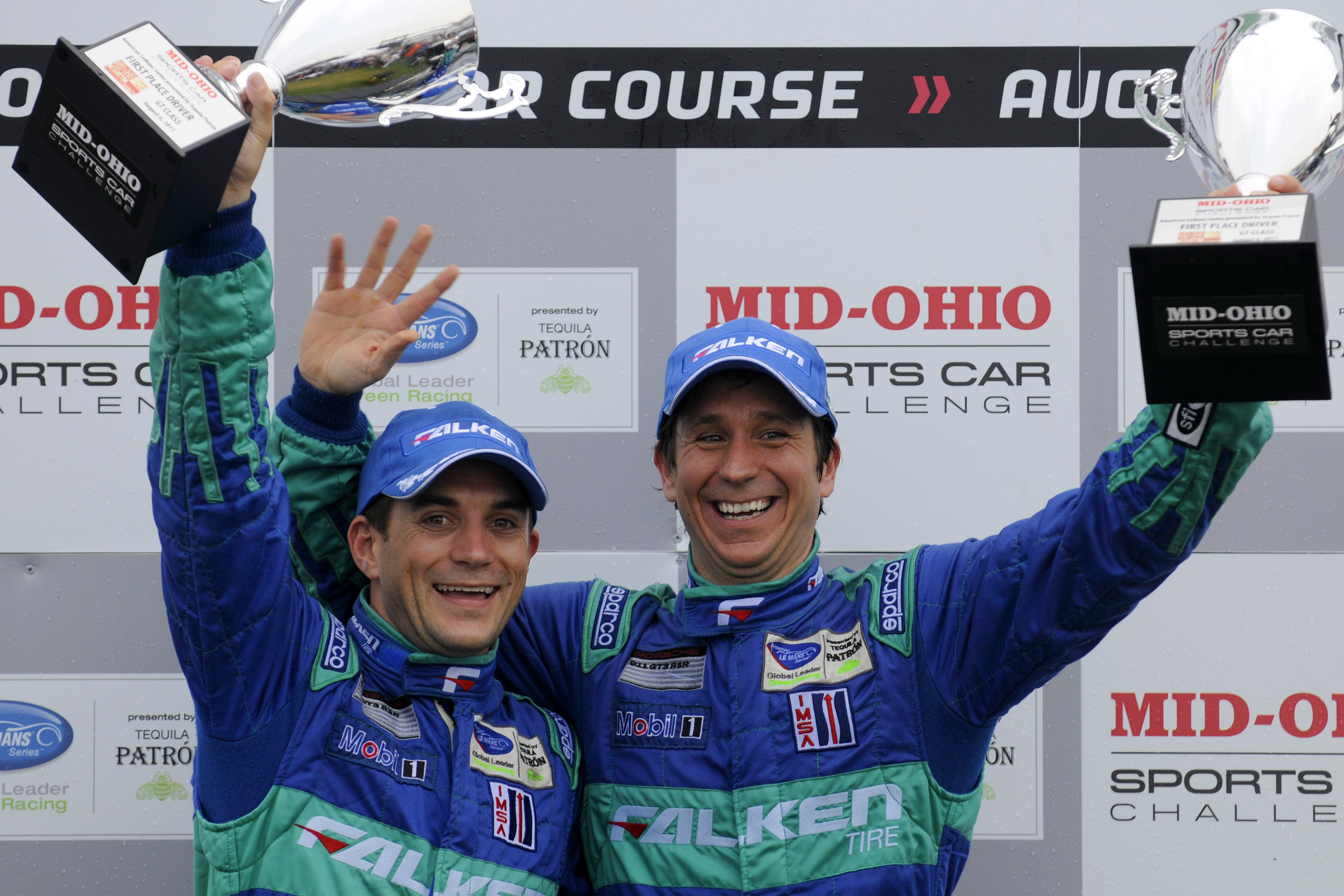
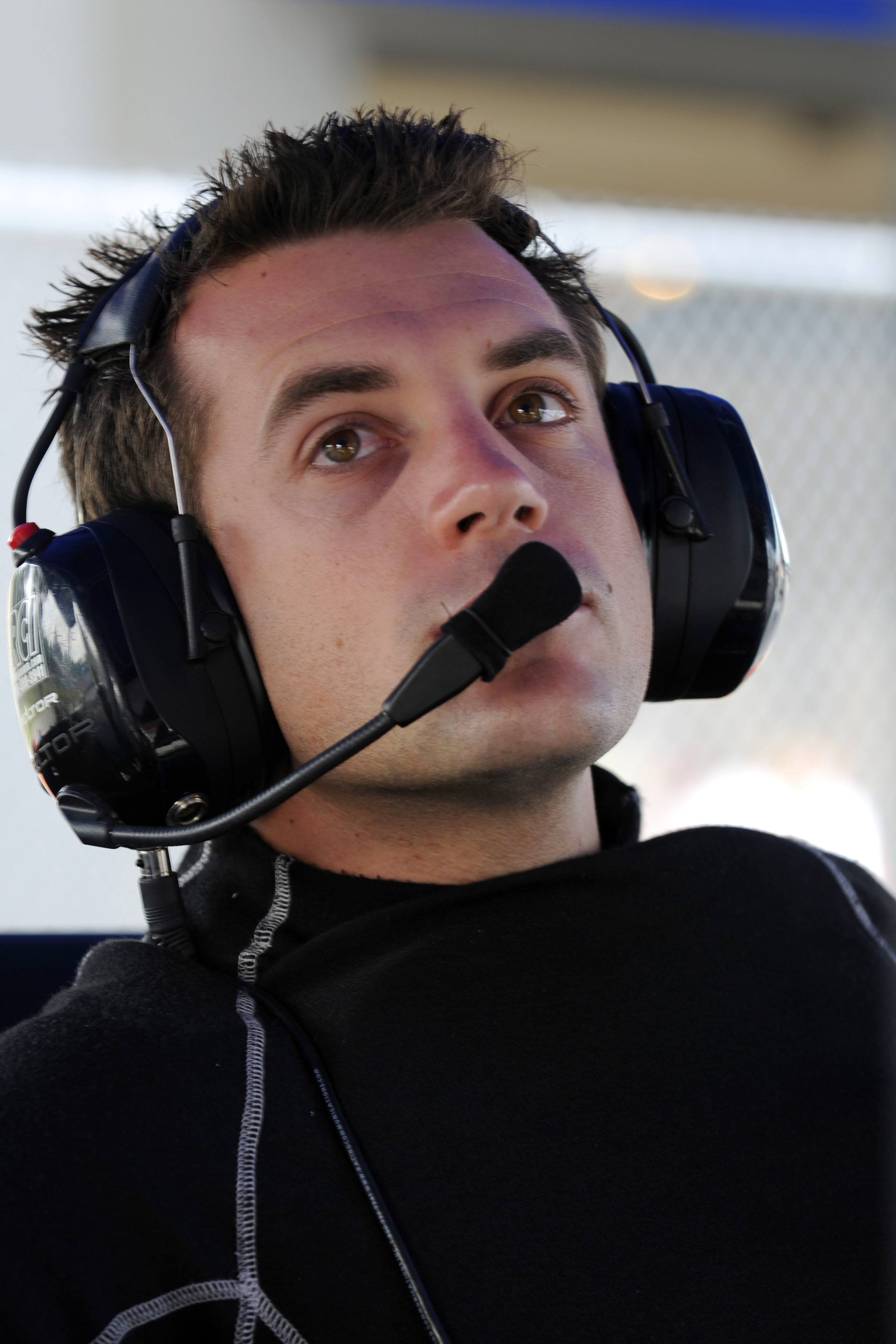
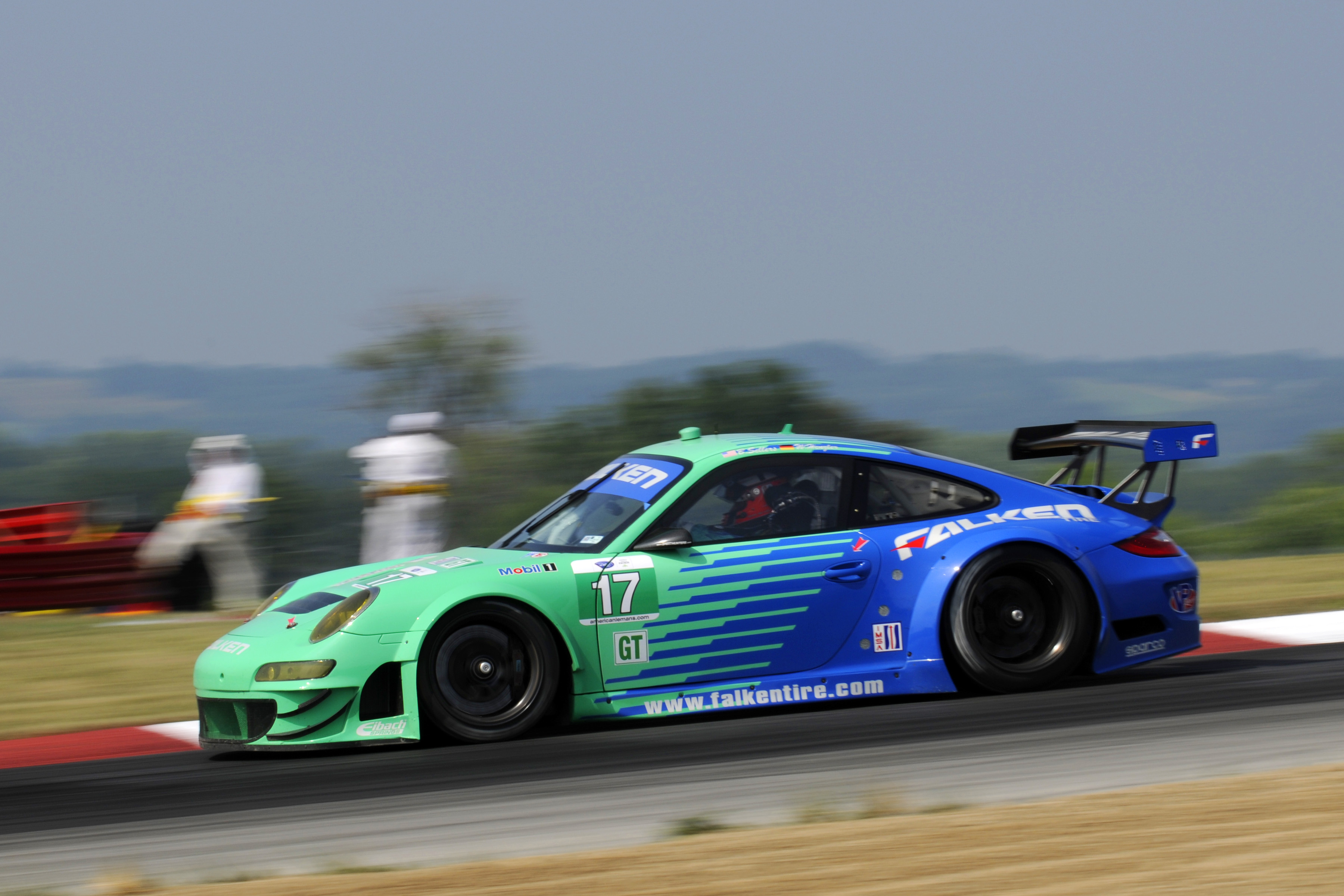
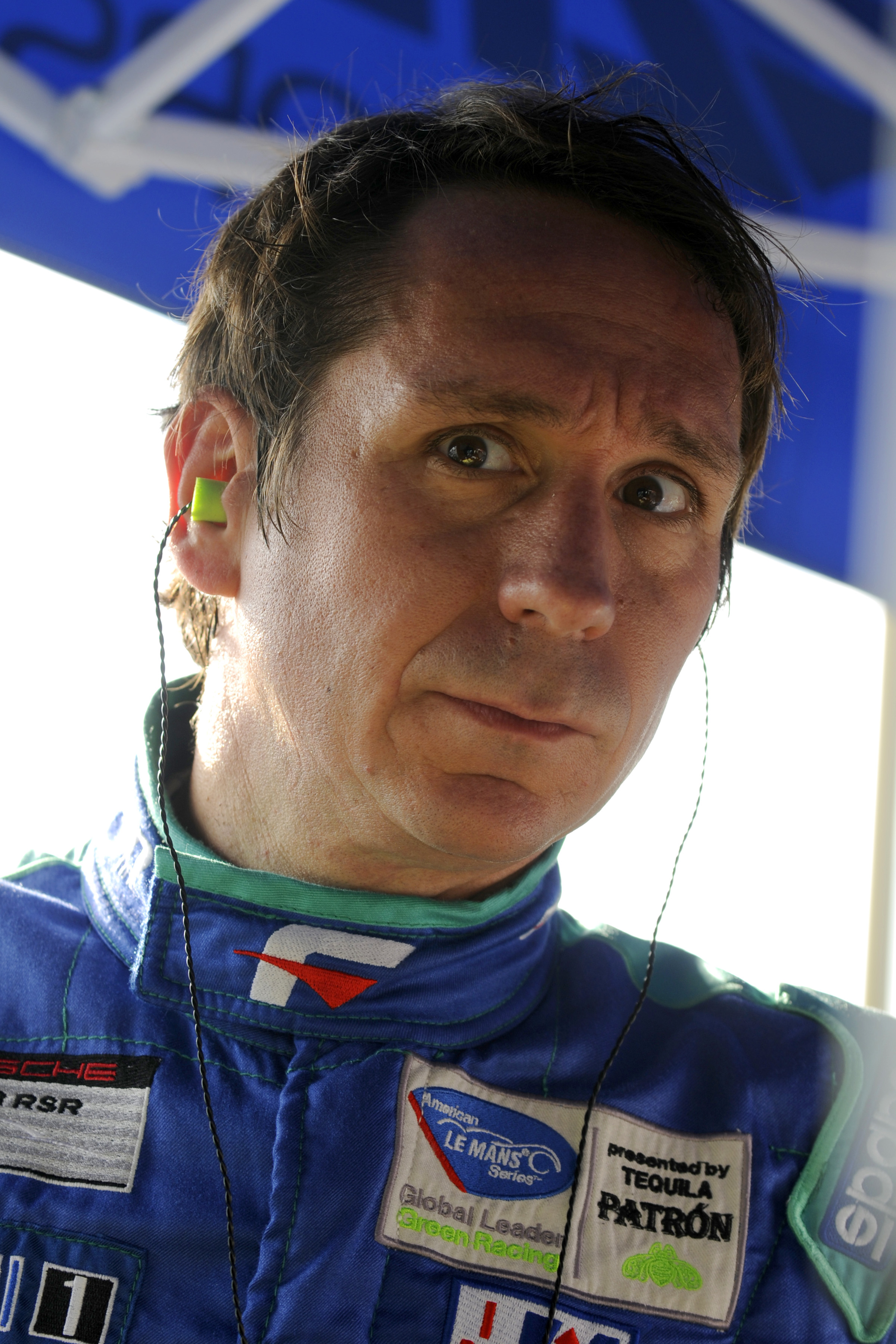
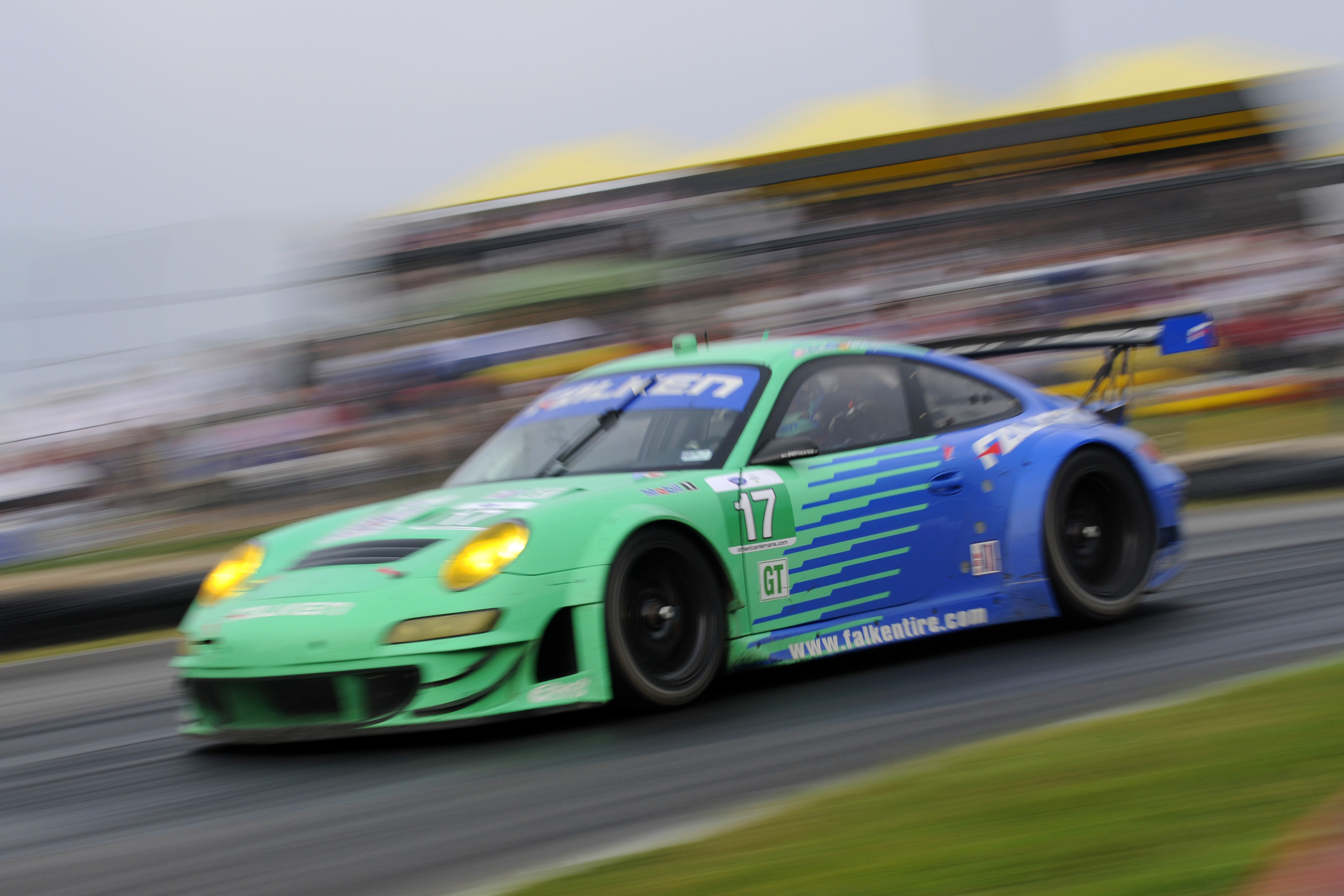
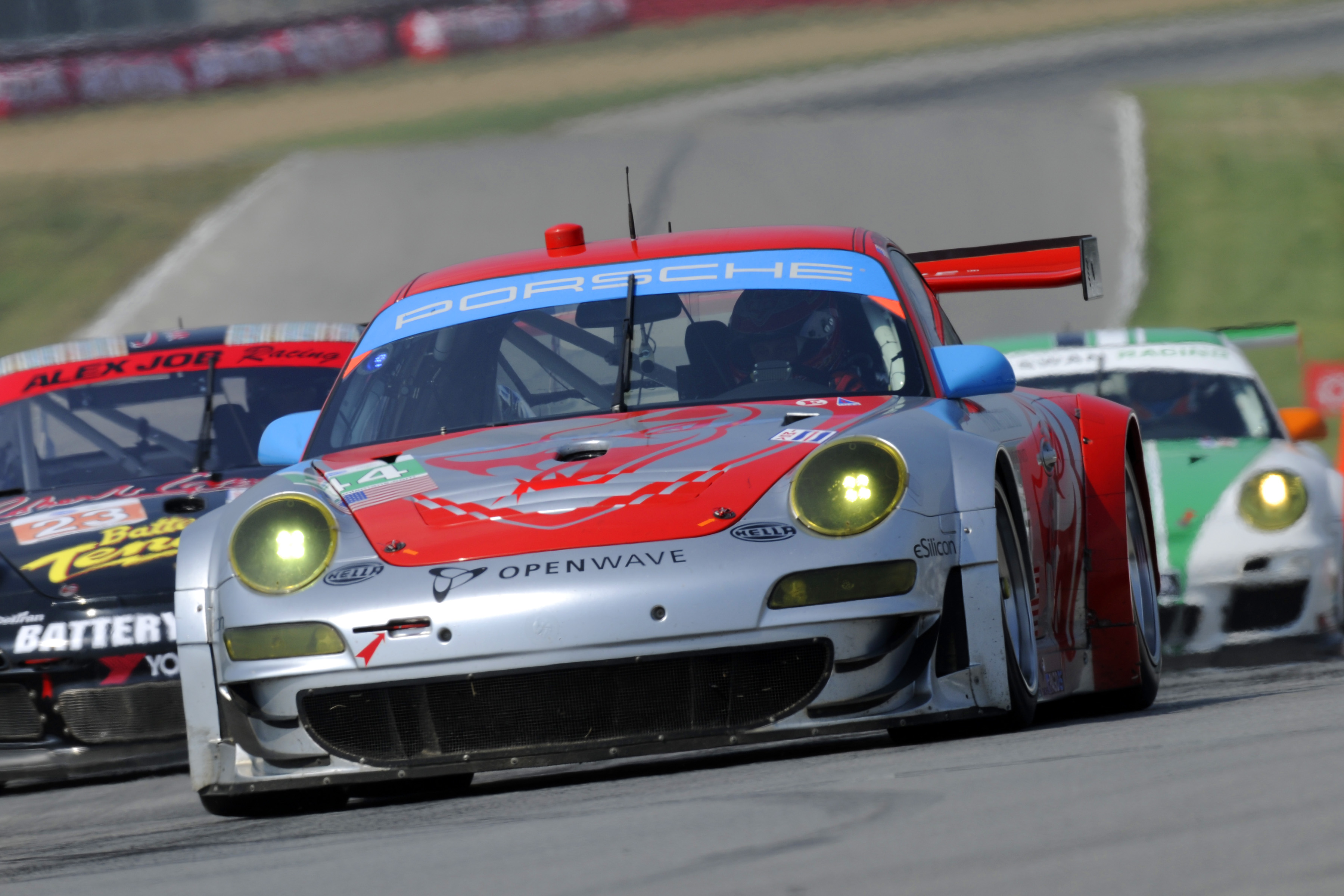
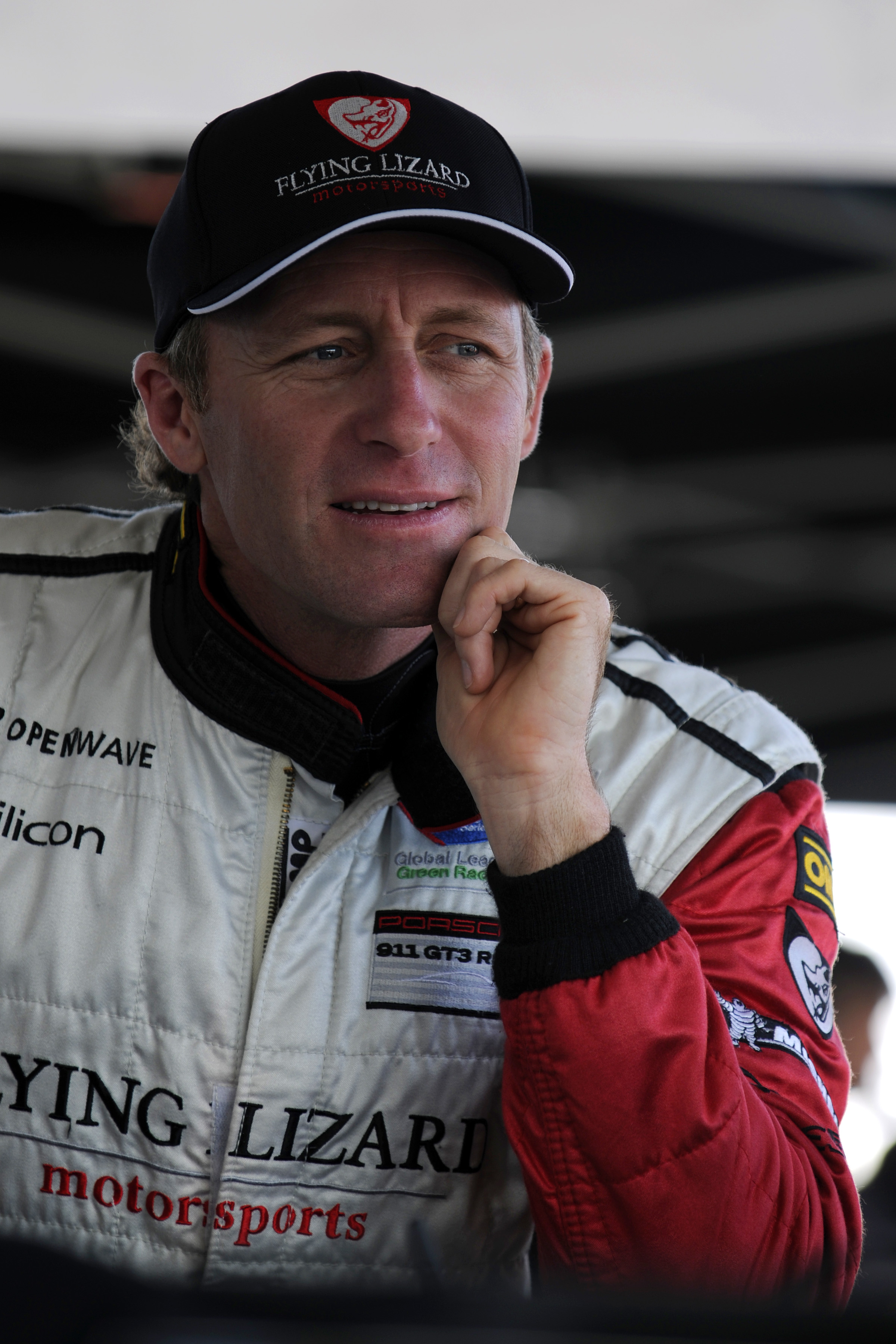
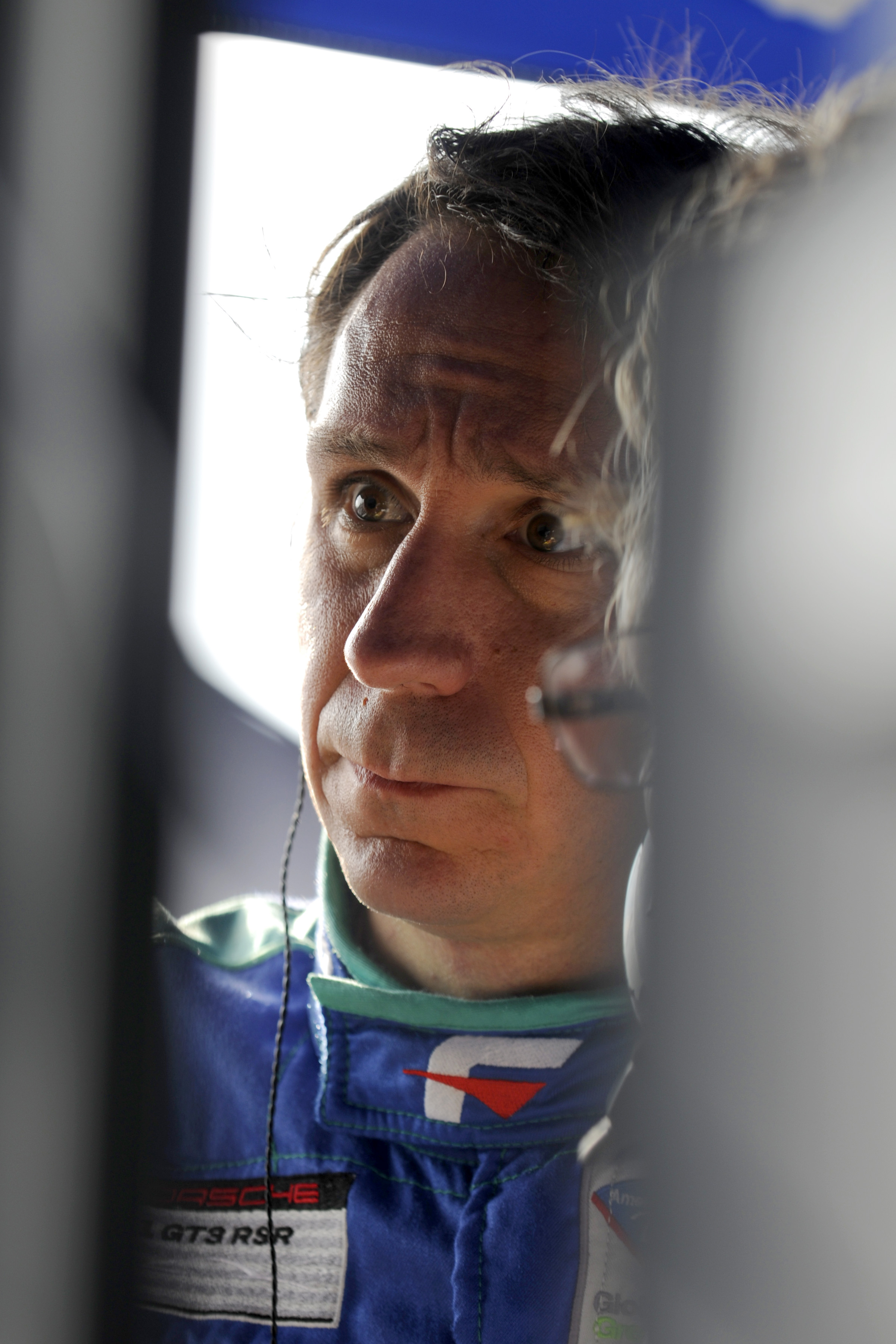
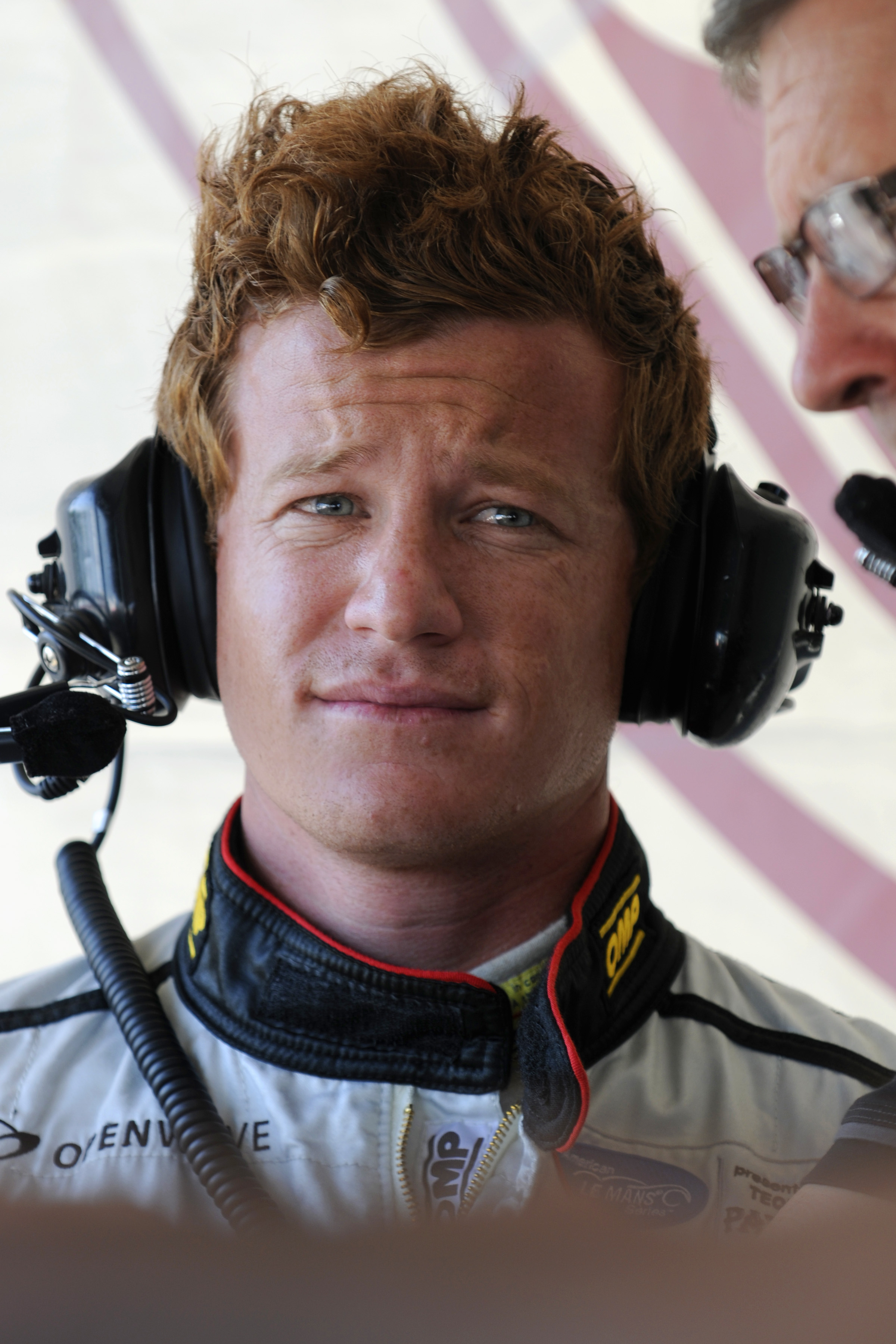
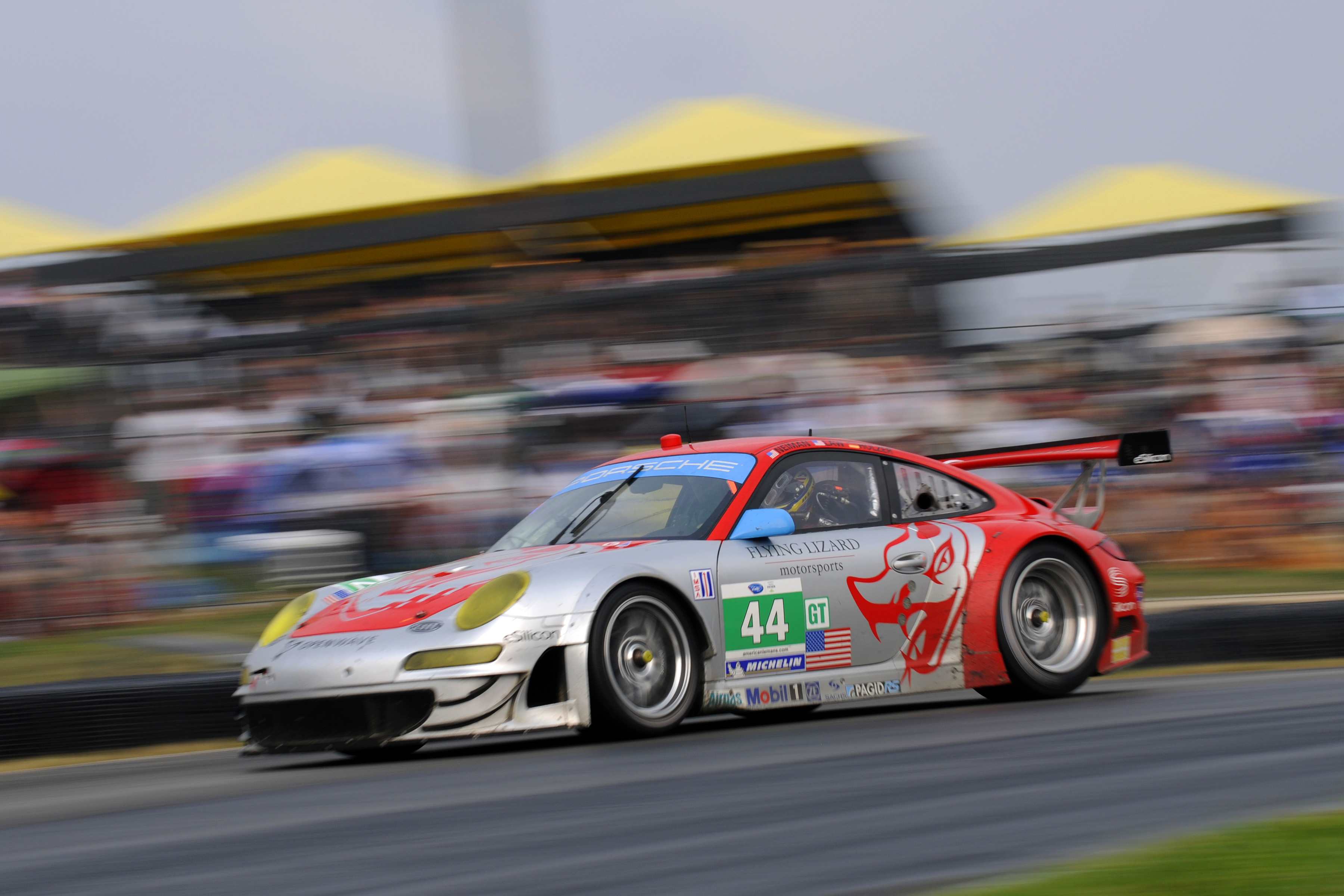
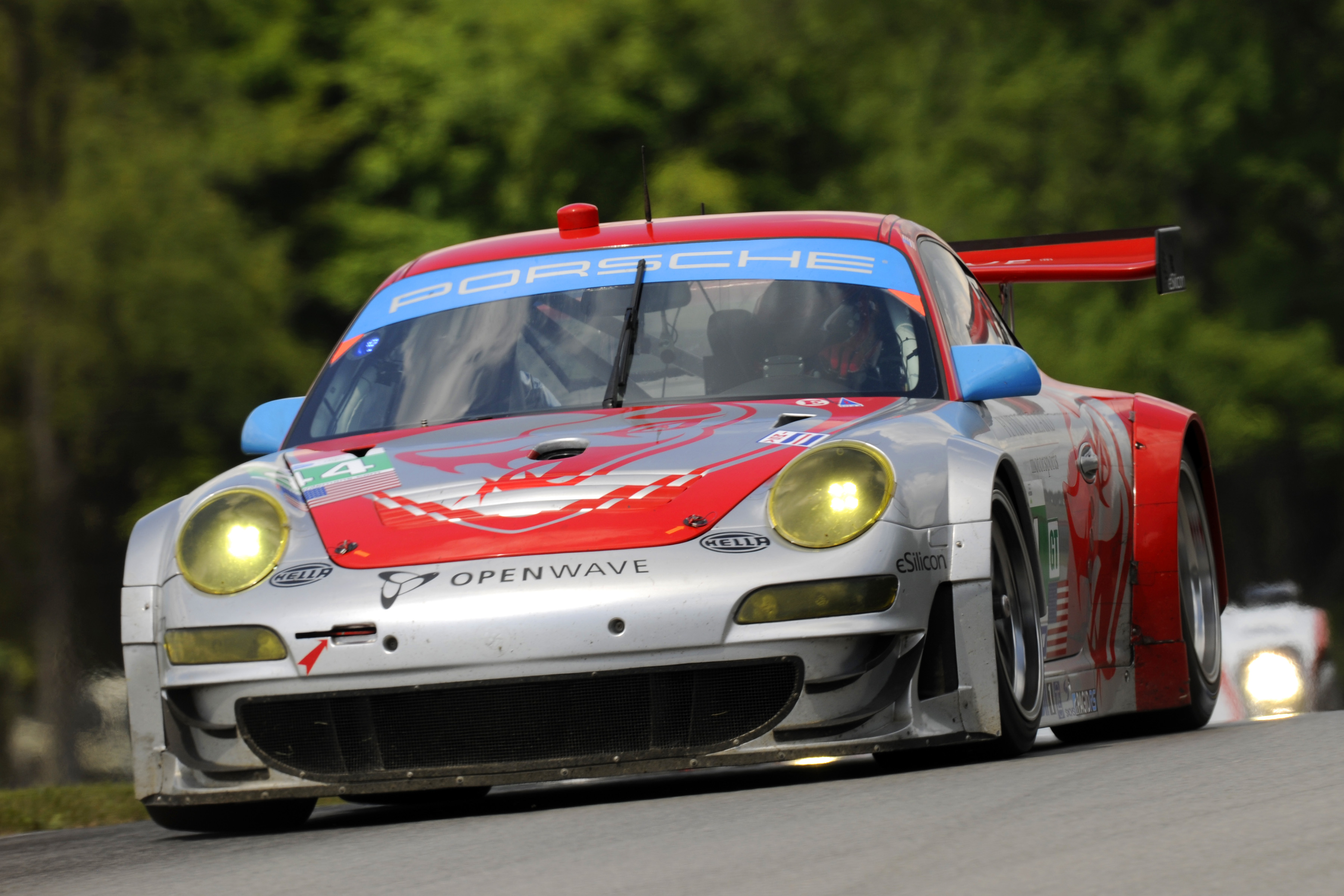
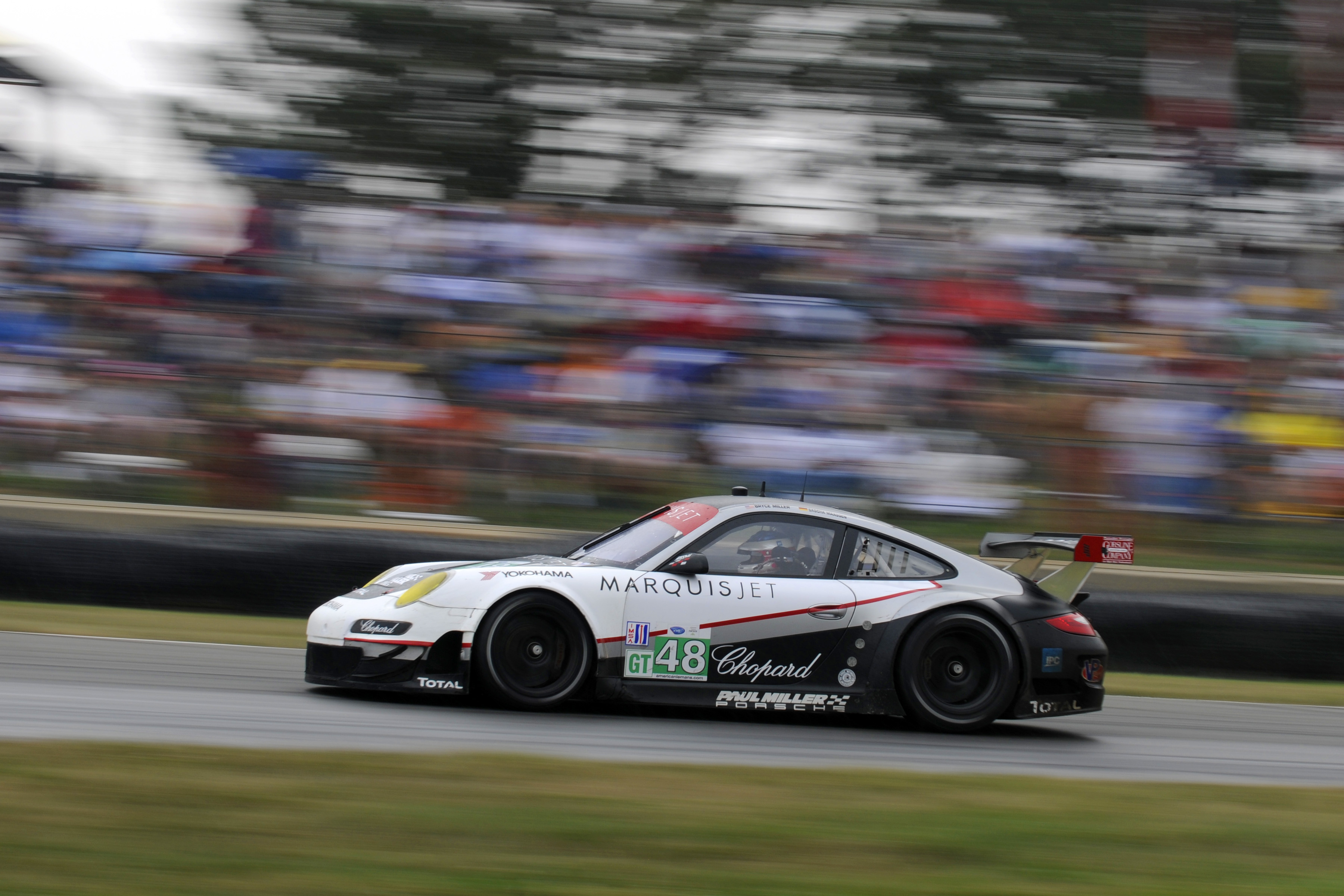
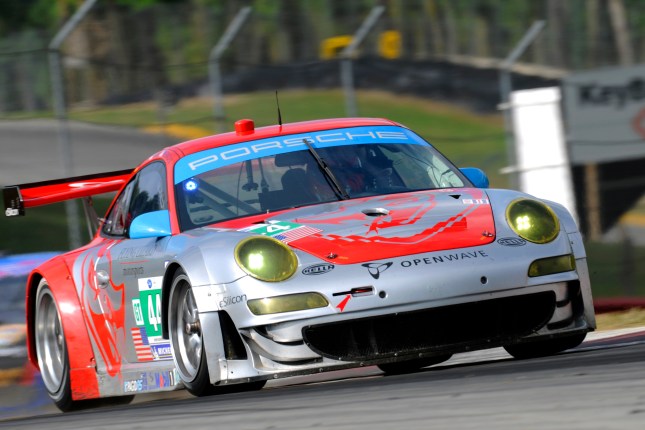 Flying Lizard Motorsports #44
 Porsche Everyday Dedeporsches Blog