RSS

Category Archives: Autos & Vehicles

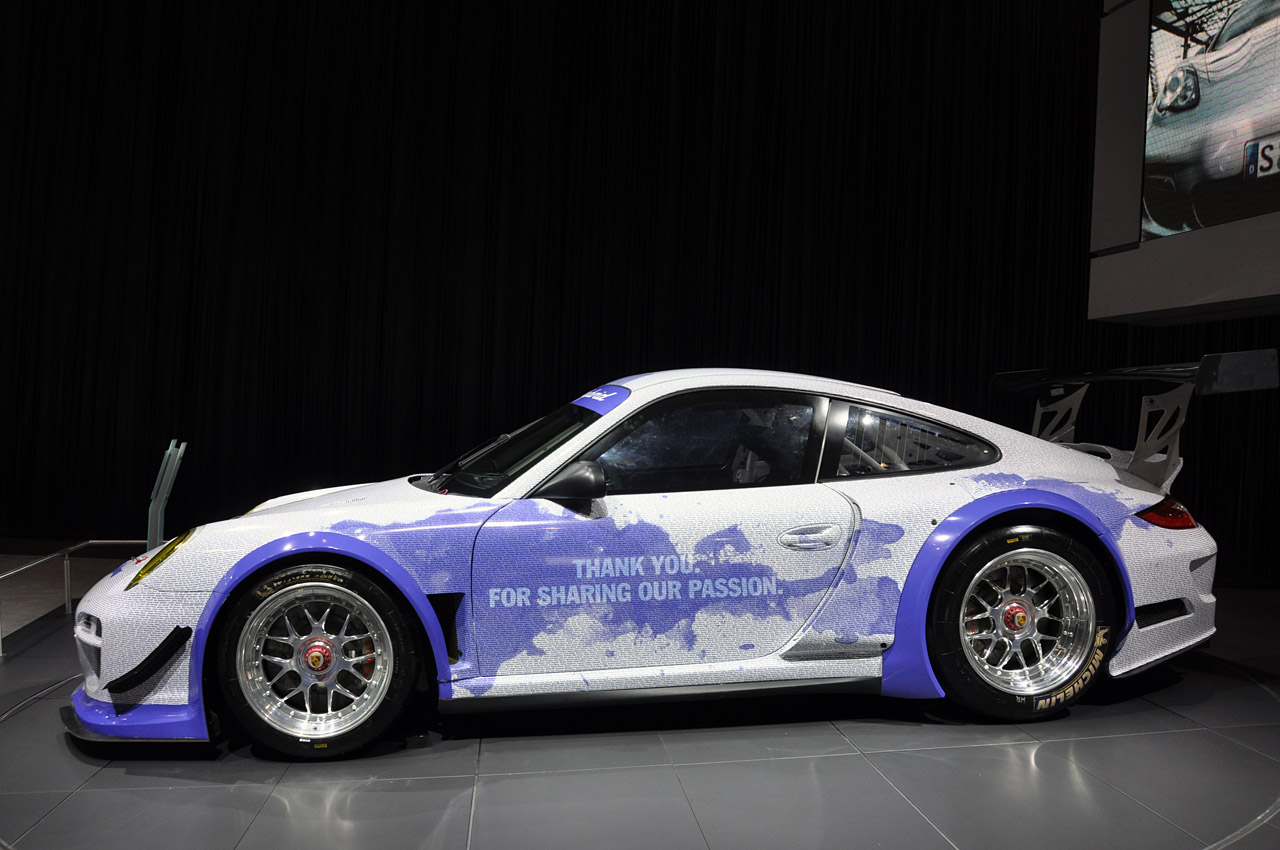
New York 2011: Facebook Porsche 911 GT3 R Hybrid is easy to ‘Like’

Photos copyright ©2011 Drew Phillips / AOL

To commemorate its social media milestone of surpassing one million fans on Facebook, Porsche has created this special edition of the 911 GT3 R Hybrid complete with the signatures of over 27,000 Porsche fans. The car makes its North American debut this week at the New York Auto Show before it goes on display inside the Porsche Museum in Stuttgart.

This slideshow requires JavaScript.

Photos copyright ©2011 Drew Phillips / AOL

Porsche’s hybrid racer develops 480 hp from its 4.0-litre flat-six engine and is matched with two 80-hp electric motors. The German automaker recently tested the hybrid system’s capability during the 2010 24 Hours of Nürburgring, and Porsche firmly believes that hybrid performance cars like this foreshadow the future of racing.

Thank you – A 1,000,000 times – Porsche

Porsche has achieved yet another milestone, the fastest 1,000,000 facebook fans in automotive history! This is the gift Porsche had prepared for their Facebook fans.

Porsche currently has over 1,504,488 fans on Facebook.

Credits: SOURCE


Tags: , , , , , , , , , , , , , , ,

Porsche Reveals New Panamera Models at New York International Auto Show

photo

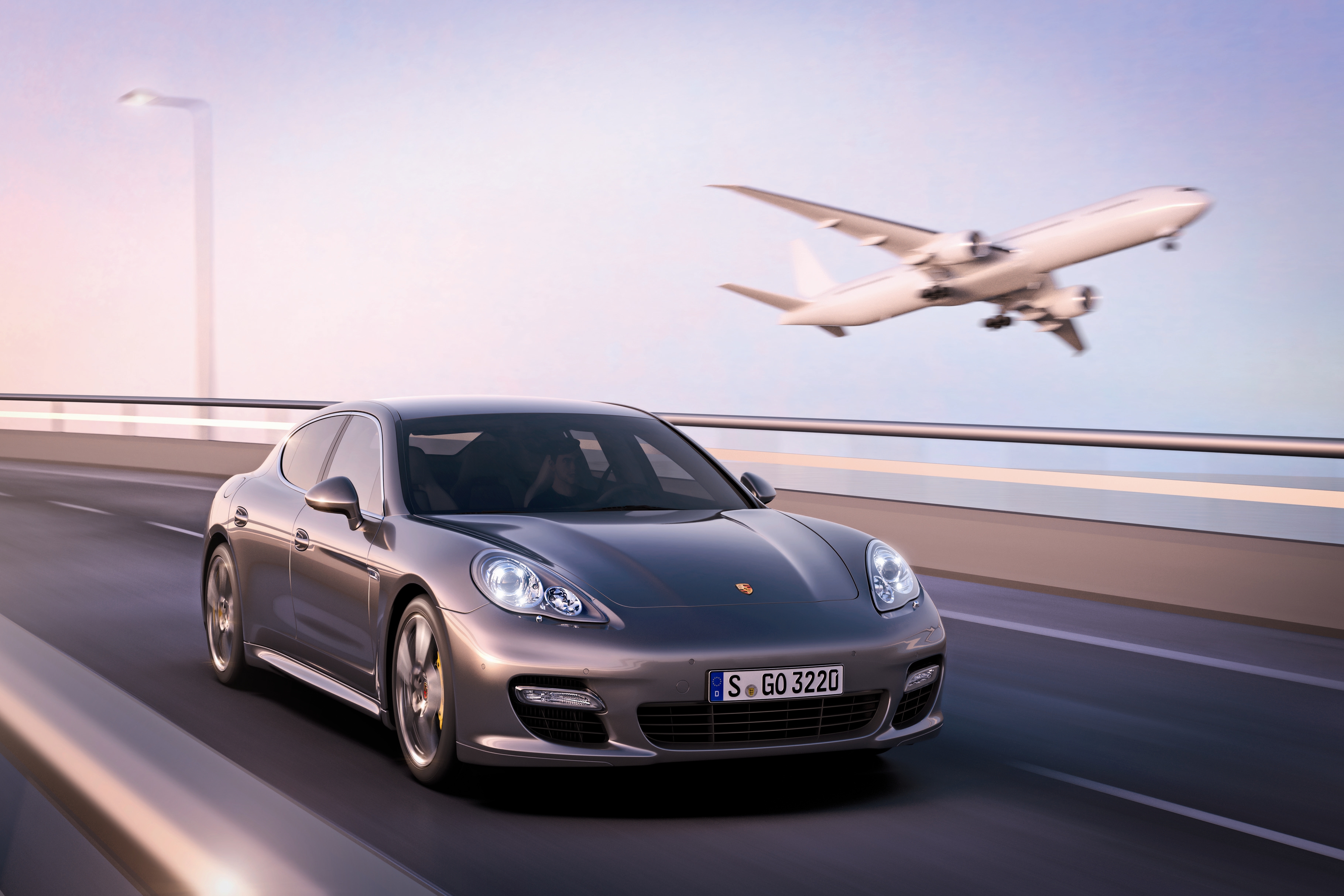
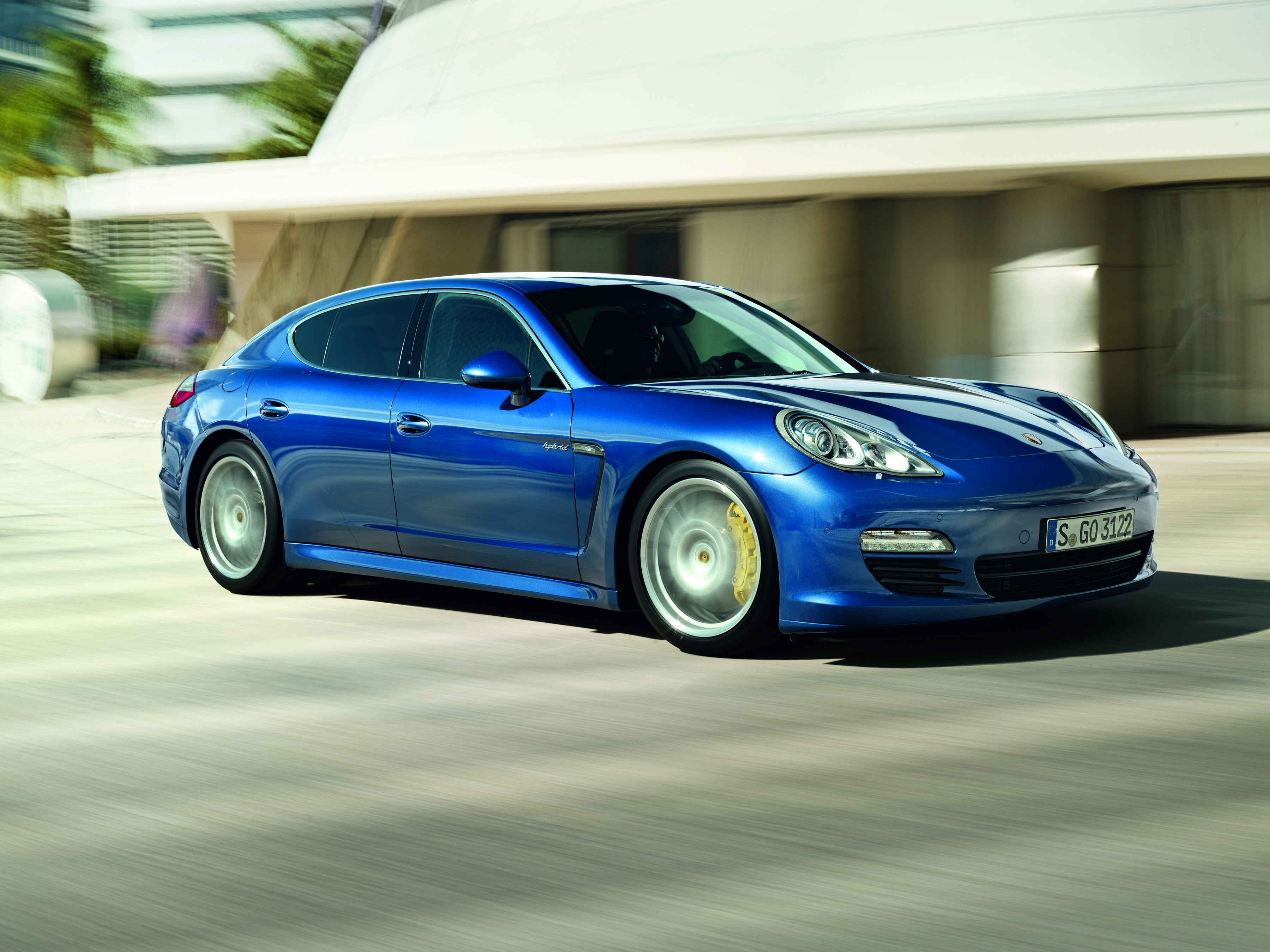
NEW YORK — April 20, 2011 – Marking a North American premiere at the New York International Auto Show, Porsche today showed two new versions of its highly acclaimed Panamera four-door sports sedan, including the company’s most fuel-efficient car ever — the 2012 Panamera S Hybrid — and its highest-performance Panamera ever, the 2012 Panamera Turbo S.

“Today we are unveiling two new, dynamic and high-performance Panamera models,” said Detlev von Platen, Porsche Cars North America’s President and CEO. “One is a highly advanced hybrid and the other is a car that raises the bar higher than ever in the premium sports sedan segment.”

This slideshow requires JavaScript.

Powerful New Panamera Turbo S is Revealed

With its new four-door Panamera Turbo S, Porsche is establishing a new benchmark for its competitors by delivering ultra high performance and efficiency, sports-car-like driving dynamics, and first-class comfort in a purely Porsche package.

The power under the hood of the new top-of-the-line Panamera is based on the proven twin-turbocharged 4.8-liter V8 engine in the Panamera Turbo. In the Turbo S this powerplant generates 550 horsepower, 50 more than that of the Panamera Turbo. The torque is also increased significantly over the Turbo from 516 lb-ft to 553 lb-ft. Even more torque — 590 lb-ft — is generated temporarily by the “Sport” and “Sport Plus” overboost mode of the standard Sport Chrono Package Turbo.
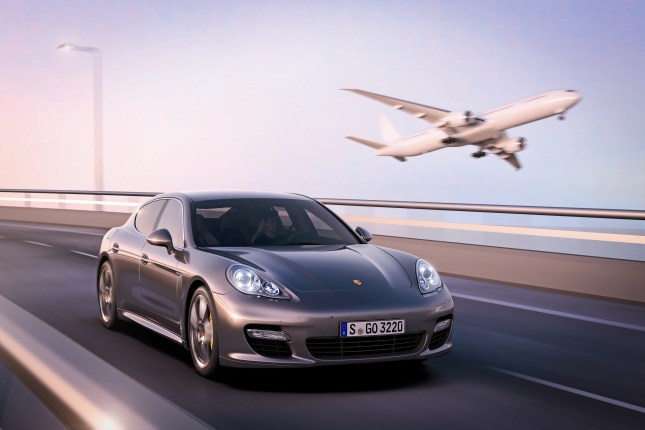
The increase in power in the Panamera Turbo S is the result of a quicker, more responsive turbo response and modified engine control unit. With the help of Launch Control, the newest Panamera can reach 60 mph in just 3.6 seconds. The top-track speed is 190 mph. And despite this increased performance, fuel consumption is expected to remain comparable to the Panamera Turbo that delivers an EPA estimated rating of 15 mpg city/23 mpg highway.  Official EPA fuel economy estimates for the Panamera Turbo S will become available prior to the car’s on-sale date later this spring.

Even for a world-class luxury car, the Panamera Turbo S offers an extraordinarily high level of features. In keeping with its sporty concept, it comes equipped with the most important driving-dynamic control systems. For example, Porsche Dynamic Chassis Control (PDCC) is an active anti-roll system that significantly reduces lateral body movement during corning, which enhances stability, handling and overall occupant comfort.  Porsche Torque Vectoring Plus (PTV Plus) is also standard and works to help ensure superior traction and higher-performance cornering by applying a variable torque split to the rear wheels in combination with an electronically controlled rear differential lock. Also standard is Porsche’s advanced speed-sensitive Servotronic® steering system, a sports exhaust system, and the Sport Chrono Package Turbo that further tunes the engine and suspension at the touch of the “Sport Plus” button.

While the sporting character of the new Panamera Turbo S is most apparent behind the wheel, the car’s exterior tastefully exudes its high-performance ambitions. The new 20-inch Turbo II wheels with increased rear axle track width, side skirts from the Porsche Exclusive range, and the adaptive four-way extending rear spoiler express the car’s elite performance abilities. Inside, the fusion of exclusivity and sportiness is conveyed in the interior by the standard bi-color leather finish. A new combination of black/cream is offered exclusively for the new Panamera Turbo S with Agate Grey/cream also being added as an exclusive option later this year. Agate Gray Metallic will also be an exclusive exterior color.

The new Porsche Panamera Turbo S will have a base MSRP of $173,200 (excluding destination).

Porsche Expands its Hybrid Lineup with the Panamera S Hybrid

The debut of the Panamera S Hybrid adds another important chapter to the Porsche Intelligent Performance philosophy of committing to build new cars that strive to deliver sportier performance with more fuel efficiency and lower emissions. Without sacrificing high-performance or luxury and comfort, this new Panamera model produces 380 horsepower with fuel consumption of only 6.8 L/100 km on the New European Driving Cycle (NEDC), making it the most fuel efficient Porsche of all time.

Official EPA fuel economy estimates for the U.S. will be available closer to the car’s on-sale date late this year.

As you would expect from Porsche, the Panamera S Hybrid sets new standards in terms of performance as well as hybrid efficiencies. It accelerates from 0 to 60 mph in just 5.7 seconds and has a top track speed of 167 mph (270 km/h). Its range in purely electric mode is approximately one mile, with electric-only acceleration possible up to just over 50 mph (85 km/h).
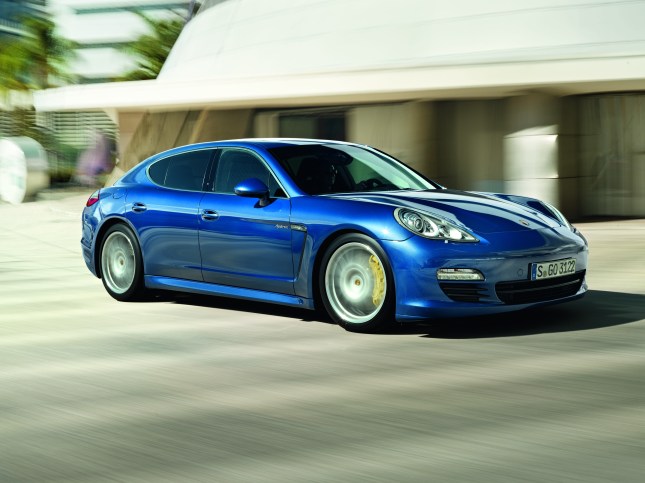
The Porsche parallel full hybrid system also reduces consumption at high speeds thanks to its ‘sailing’ or coasting mode. When the driver lifts off the accelerator at normal highway cruising speeds, the gasoline engine is completely switched off and disengaged from the drivetrain by a decoupling clutch. This eliminates the combustion engine’s drag forces and braking effect in the interest of lower resistance, fuel consumption and emissions. As soon as the driver presses the accelerator, to pass another vehicle for example, the gasoline engine smoothly starts within fractions of a second and engine rpms are increased to match the current vehicle speed. It does this seamlessly thanks to the Hybrid Manager, which also helps the Panamera S Hybrid accelerate dynamically in gears at higher speeds.

The Panamera S Hybrid employs a 3.0-liter supercharged V6 engine that delivers 333 horsepower. It is supported by a 47-horsepower (34 kW) electric motor. Depending on driving conditions, either drive unit can operate independently or together to drive the rear wheels. The electric motor, which also serves as the car’s generator and starter, combines with the decoupling clutch to form the compact hybrid module located between the combustion engine and the transmission. The electric motor is connected to a nickel metal hydride (NiMh) battery that stores electric energy recovered from braking and other driving situations. The transmission is the same eight-speed Tiptronic S fitted in the Cayenne models, with a wide range of gear ratios.

The Panamera S Hybrid has an even higher level of standard equipment than the V8 Panamera S that includes Adaptive Air Suspension with the Porsche Active Suspension Management (PASM) adaptive shock absorber system, Servotronic® variable-assist power steering and a host of other features. This new model also features an innovative display that provides the driver with relevant information about the status of the vehicle’s hybrid drive systems.

The Panamera S Hybrid will go on sale in the United States later in 2011 at a base suggested retail price of $95,000 (excluding destination).

World’s First Hybrid is Incredibly Recreated

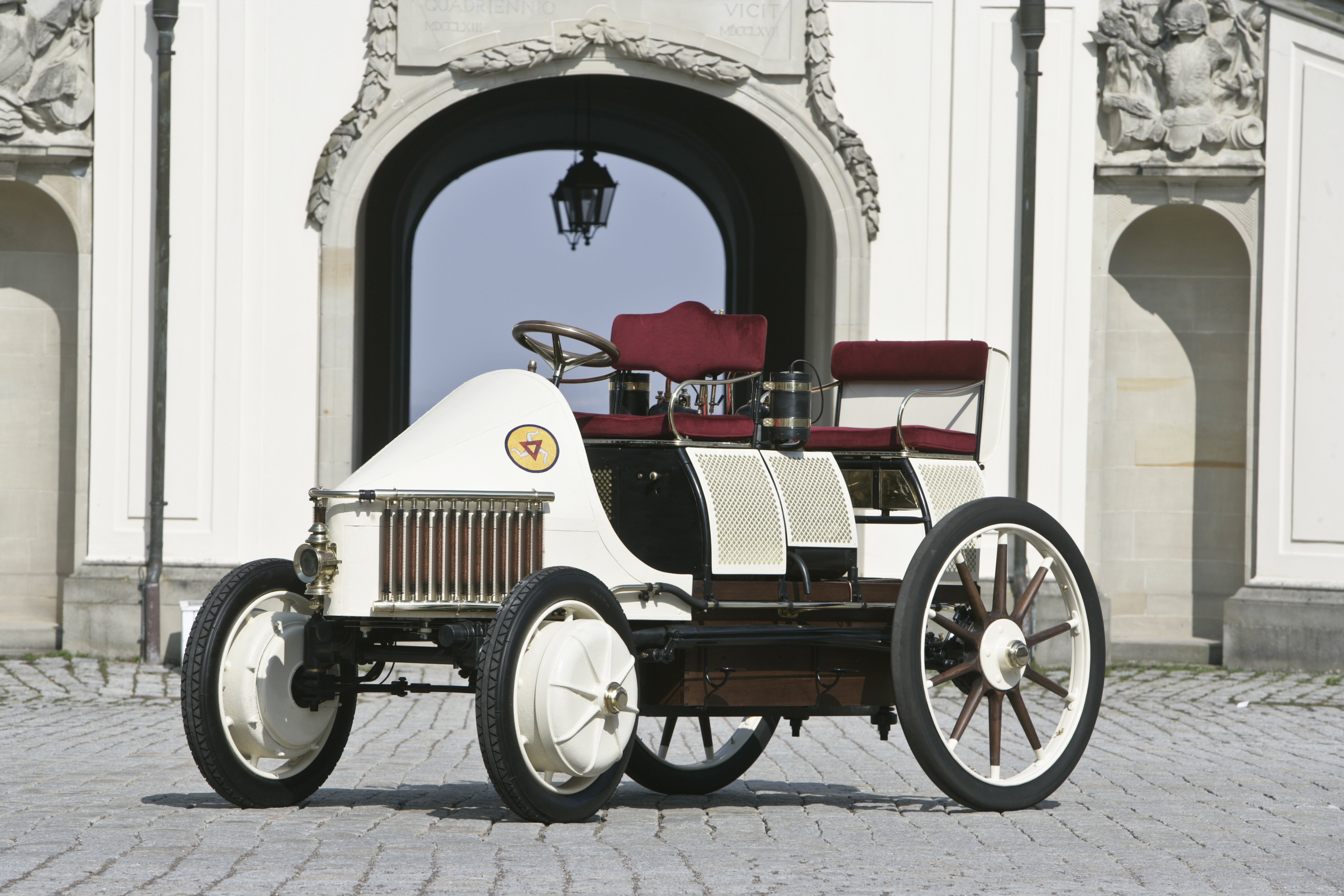
In 1900, history came to life when Professor Ferdinand Porsche built the first functional hybrid car. Aptly called Semper Vivus, which means “Always Alive” this historic car has been resurrected 111 years later by Porsche as a tribute to this acclaimed engineer’s visionary thinking.

The fully functional Semper Vivus replica, based on original drawings and exhaustive research, is a collaborative effort between Porsche Engineering and Karosseriebau Drescher, a coachbuilding company based in Hinterzarten in the state of Baden-Württemberg, Germany. Its masterful design impresses onlookers to this very day, and for the first time in the United States it is on display at the New York Auto Show press day on April 20.
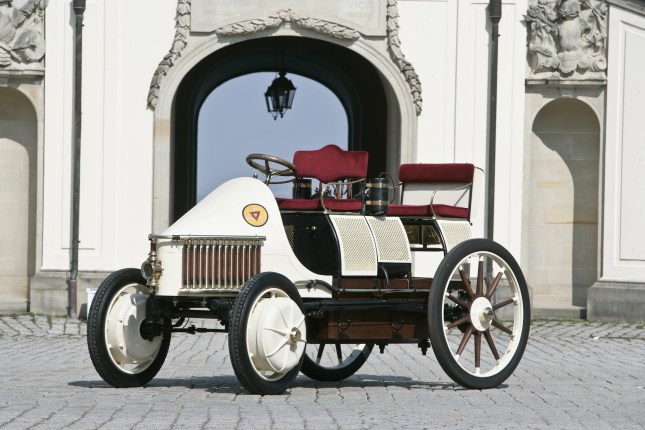
In November 2007 the Porsche Museum embarked on one of the most interesting and challenging projects in its history: the construction of a faithful replica of the 1900 Lohner-Porsche Semper Vivus. Even 111 years after its invention, building the world’s first functioning hybrid car was a great challenge for all. Ultimately it was not just about an extreme attention to visual details but also achieving the same driving performance as the original.

The Porsche Museum entrusted the workmanship to a team of experts led by coachbuilder Hubert Drescher, who had already proven his competence in numerous difficult restoration projects. As with a number of racing car projects, the aluminum body of the Porsche Type 64 museum exhibit originates from the Hinterzarten coachbuilder workshop, as well.

Exhaustive research in various archives the across Europe was the first step. The outcome was a handful of black-and-white photos and an original technical drawing serving as the project’s foundation. As with Prof. Porsche, the Semper Vivus replica initially began as a blank sheet of paper.

This meant that in addition to a good deal of imagination, the project required extensive research and calculations in order to be faithfully recreate an accurate and working likeness of the electric wheel-hub motor. Since no specifications or other helpful records had survived, experts initially created ready reckoners and design drawings on graph paper in the time-honored fashion. This involved the painstaking study and laborious measurement of photos and drawings. As there was no functioning wheel hub motor in existence, technical details such as performance and range had to be resurrected and calculated from scratch.

The replica car’s genius rivals what it took to build the original. What can be seen now took three years to build and ingenious engineering and craftsmanship, as well as a treasure hunt for original parts, including some for the combustion engine.

Today, Prof. Porsche’s innovative spirit lives on at Porsche, as a priceless historical creation and as an inspiration for the company’s commitment to developing new and ever-more advanced hybrid systems.

About Porsche Cars North America

Porsche Cars North America, Inc. (PCNA), based in Atlanta, Ga. is the exclusive U.S. importer of Porsche sports cars, the Cayenne SUV and Panamera Gran Turismo. Established in 1984, it is a wholly-owned subsidiary of Porsche AG, which is headquartered in Stuttgart, Germany, and employs approximately 220 people who provide parts, service, marketing and training for 196 dealers. They, in turn, work to provide Porsche customers a best-in-class experience that is in keeping with the brand’s 63-year history and leadership in the advancement of vehicle performance, safety and efficiency. At the core of this success is Porsche’s proud racing heritage that boasts some 30,000 motorsport wins to date.

SOURCE: Porsche AG / Porsche Cars North America, Inc.

Follow Porsche:  facebook.com/Porsche  twitter.com/Porsche
 

Tags: , , , , , , , , , , , , , , , , ,

PORSCHE: Prof. Ferdinand Porsche Created The First Functional Hybrid Car

The name Porsche has been associated with pioneering innovations in automotive engineering since the beginning of the last century. In 1900 Ferdinand Porsche, founding father of the present-day Dr. Ing. h.c. F.Porsche AG, Stuttgart, entered uncharted territory. With the first functional, full-hybrid car in the world, the ‘Semper Vivus’ (‘always alive’), the principle of the serial hybrid drive had been born. In a four year project the Porsche Museum in Stuttgart had the Semper Vivus recreated. 111 years after this ground breaking innovation by Ferdinand Porsche the Semper Vivus will again drive into the limelight of future appearances as part of the Porsche Museum collection in Stuttgart.

This slideshow requires JavaScript.

Source: Porsche AG

photo

He developed the world’s first hybrid car, advanced electric car, and all-wheel drive car a century ago, and now Porsche brings a recreation of his Semper Vivus to New York

NEW YORK – April 20, 2011 – The name Porsche has been associated with pioneering automotive engineering innovations since the beginning of the last century. In 1900 Prof. Ferdinand Porsche unveiled his Lohner Porsche, an electric car with wheel-hub motors driving the front wheels. Soon after, this car featured all-wheel drive and four-wheel brakes, another world first. A highlight of his early years as an automotive designer was the Lohner-Porsche Semper Vivus that went down in history 111 years ago as the first functional hybrid car.

Video: Fox Car Report @ New York

Porsche’s Semper Vivus (Always Alive) recreation is a tribute to Prof. Porsche’s visionary invention. The fully functional Semper Vivus replica, based on original drawings and exhaustive research, is a collaborative effort between Porsche Engineering and Karosseriebau Drescher, a coachbuilding company based in Hinterzarten in the state of Baden-Württemberg, Germany.  This faithful replica, whose visionary design impresses to this very day, is on display at the New York Auto Show press day on April 20.


Source & Credits: Porsche

The history of the Lohner-Porsche Semper Vivus

Prof. Ferdinand Porsche was busy designing and developing his cars as early as 1896. The first fruit of his endeavors was an electric vehicle known as the Lohner-Porsche. It was driven by steered wheel-hub motors, and it caused a sensation at the Paris World Exhibition in 1900. This was soon followed by an even more impressive example of Prof. Porsche innovative spirit. A racing car boasting four wheel-hub electric motors became the world’s first all-wheel drive passenger car and marked the automotive engineering debut of four-wheel brakes. No less visionary was Prof. Porsche’s next idea; in 1900 he combined his battery-powered wheel hub drive with a petrol engine, thus creating the serial hybrid drive principle.

Prof. Porsche had entered uncharted territory with the Semper Vivus, the world’s first functional, full-hybrid car. In this vehicle, two generators paired with petrol engines formed a single charging unit, simultaneously supplying electricity to wheel-hub motors and batteries. In autumn 1900, Prof. Porsche set to work on a first prototype with petrol-electric hybrid drive. Presumably he based the world’s full hybrid car on a conversion of his electric racing vehicle from the Semmering-Bergrennen race. To this end he combined his electrical wheel-hub motors with two combustion engines and no mechanical connection whatsoever to a drive axle. Instead, they each drove an electric generator supplying both the wheel-hub motors and accumulators with electricity. This was the birth of serial hybrid drive. As a full hybrid concept, the Semper Vivus was also able to cover longer distances purely on battery power until the combustion engine had to be engaged to recharge the batteries.

To save weight and create room for a petrol engine, Prof. Porsche swapped the original 74-cell accumulator in his electromobiles for a smaller battery with only 44 cells. In the middle of the vehicle he installed two water-cooled 3.5 PS (2.6 kW) DeDion Bouton petrol engines — driving two generators to create electricity — each producing 2.5 hp (1.84 kW). Both engines operated independently, each delivering 20 amperes with a voltage of 90 volts. The electricity generated by the dynamos initially flowed to the wheel-hub motors, with the surplus power being sent on to the batteries. An added bonus was that it was also possible to use the generators as electric starter motors for the petrol engines by reversing the direction of rotation.

In practice, Prof. Porsche still had to contend with the principal problem of his wheel-hub cars – the vehicle’s heavy weight. Although the Semper Vivus hybrid car’s total weight was only 70 kg more than the original version, the 1,200 kg prototype was a challenge for the pneumatic tires’ soft rubber mix. In other respects as well the hybrid concept was still a long way away from being ready for series production. With its bodiless chassis, exposed petrol engines and unsprung rear axle, the Semper Vivus may have impressed visitors to the Paris Motor Show in 1901 but potential car buyers must have felt the bare-bones prototype was not for them. The interaction of engine, batteries and control system also still needed a lot of development and in addition to the ambitious control technology, a constant problem was dirt being thrown up and fouling of the accumulators. Yet the hybrid concept pointed to new possibilities that Prof. Porsche resolutely set about turning into reality.

The road to the Lohner-Porsche Mixte

In 1901 Prof. Porsche developed the revised concept of his ‘petrol-electric hybrid car’ into a variant that was ready for series production under the Lohner-Porsche Mixte name (borrowing the French term ‘voitures mixtes’). With a four-cylinder, front-mounted engine, this model mirrored the Mercedes vehicle concept just recently designed by Wilhelm Maybach but with its two wheel-hub motors still conforming to the concept of a serial hybrid car. Prof. Porsche was now using a powerful 5.5-liter, 25-hp (18 kW) four-cylinder engine from the Austrian Daimler engine company as an electrical generator. The engine was connected by a driveshaft to the electric generator located under the seat, with control handled by a primary controller next to the steering wheel.

To solve his vehicles’ weight problems, Prof. Porsche was constantly reducing battery size while also attempting to design a dust-proof battery housing. While the Lohner-Porsche Mixte was only able to drive a few kilometers on electric power alone because of the reduced battery capacity, the unladen weight of the four-seat touring car including body fell to around 1,200 kg. In normal driving mode the petrol engine and generator ran at a constant speed, feeding the wheel-hub motors and battery with electricity at a constant voltage. In addition to his drive concept’s high-level of efficiency, the car offered other advantages as well. By reversing the polarity, the generator could be used as an electric starter motor, eliminating the need for the strenuous and hazardous hand cranking of the engine.

Before the end of 1901, Ludwig Lohner and Prof. Ferdinand Porsche had pulled off a respectable result by selling five Lohner-Porsche Mixte cars. With a selling price of approximately 14,000 Krone each, this made the cars very exclusive commodities. The purchaser of this initial series was Emil Jellinek, the well-known general agent of the Daimler engine company in Stuttgart-Untertürkheim and the inspiration behind the first Mercedes (named after his daughter) only the year before. Despite this contact, a cooperation agreement to supply Mercedes engines failed to materialize and only seven Lohner-Porsches with Daimler engines were built. From 1903 onwards, petrol engines from Panhard & Levassor were used because the large French automotive manufacturer had acquired the license rights for France, Great Britain and Italy from Ludwig Lohner.

At about the same time, Prof. Porsche again significantly modified his cars’ drive concepts. For the weight reasons and to reduce production costs he dispensed with the purely electric driving capability and shrunk the battery to a minimum for initiating the starter motor. He replaced the missing energy storage unit with another innovation. The generator, designed as a stationary armature machine, was fitted with an electro-mechanical speed regulator patented as a “device for automatically regulating electric generators.” Prof. Porsche also ushered in a further development in wheel-hub motor technology. A redesigned hub casing allowed the kingpins to be relocated closer to the center of the wheel. This steering geometry, patented in May 1902, significantly reduced the effect of road impacts and the effort needed to turn the steering wheel. To reduce the unsprung mass of the wheels, Prof. Porsche also reduced the diameter of his wheel-hub motors, which he compensated for by using wider windings.

In April 1902, having incorporated these improvements, Prof. Porsche took his place on the starting grid for the Exelberg race. His two-seat Mixte racing car was not only visually impressive due to its modern proportions but impressive on the track, as well. His Lohner-Porsche seemed to cope effortlessly with even the steepest gradients of the 4.2-km gravel road leading up to the Exelberg, and it emerged as the victor in the large car class. Porsche received additional high-profile publicity in the autumn of 1902 when he chauffeured Austrian Archduke Franz Ferdinand in the Lohner-Porsche during a military maneuver. The aristocratic passenger seems to have liked the vehicle with its elegant touring body. Soon after, Prof. Porsche received a thank you letter testifying “just how satisfied in every respect his Imperial Majesty” was after the ride.

Despite these impressive demonstrations, sales of the Mixte production variants remained far lower than expectations. With only 11 hybrid cars sold, the return on investment was not on par with the enormous technical development costs between 1900 and 1905. The main problem was undoubtedly the high sales price. Depending on design and equipment, a Lohner-Porsche Mixte cost between 14,400 and 34,028 Krone, in some cases making it almost twice as expensive as comparable, conventionally powered motor vehicles. This was compounded by the high maintenance cost of the complex drive system that was unable to keep pace with the ever increasing reliability of normal petrol cars. Pure electric vehicles, however, were economically more successful. Approximately 65 Lohner-Porsche electric cars were sold during the first five years of series production to the end of 1905.

The reincarnation of the Semper Vivus

In November 2007 the Porsche Museum embarked on one of the most interesting and challenging projects in its history: the construction of a faithful replica of the 1900 Lohner-Porsche Semper Vivus. Even 111 years after its invention, building the world’s first functioning hybrid car was a great challenge for all. Ultimately it was not just about an extreme attention to visual details but also achieving the same performance as the original. The Porsche Museum entrusted the workmanship to a team of experts led by coachbuilder Hubert Drescher, who had already proven his competence in numerous difficult restoration projects. As with a number of racing car projects, the aluminum body of the Porsche Type 64 museum exhibit originates from the Hinterzarten coachbuilder workshop, as well.

Exhaustive research in various archives the across Europe was the first step. The outcome was a handful of black-and-white photos and an original technical drawing serving as the project’s foundation. As with Prof. Porsche, the Semper Vivus replica initially began as a blank sheet of paper. This meant that in addition to a good deal of imagination, the project required extensive research and calculations in order to be faithfully recreate an accurate and working likeness of the electric wheel-hub motor. Since no specifications or other helpful records had survived, experts initially created ready reckoners and design drawings on graph paper in the time-honored fashion. This involved the painstaking study and laborious measurement of photos and drawings. As there was no functioning wheel hub motor in existence, technical details such as performance and range had to be resurrected and calculated from scratch.

When it came to selecting materials, coachbuilder Drescher took his inspiration, among other sources, from coaches and carriages from the dawn of the 20th Century. This required the assistance of experienced suppliers who were entrusted with the manufacturing of the special materials. The fully functioning Semper Vivus replica, which took approximately three years to build, does not solely include replica components. For example, it was possible to fit some original components including combustion engines.

Today, Prof. Ferdinand Porsche’s innovative spirit lives on at Porsche AG’s Research and Development Center in Weissach, Germany where the company is applying its engineering strength to develop various hybrid systems. Porsche’s first production hybrid, the 2011 Cayenne S Hybrid SUV, is on sale in many markets including the United States. Its parallel full hybrid system will be adapted for use in the Panamera S Hybrid that goes on sale later this year with a U.S. MSRP of $95,000 (excluding destination). Porsche engineers are busy developing its 911 GT3 R Hybrid racecar for further competition while continuing work on the 918 Spyder plug-in hybrid super sports car the company first showed at the Geneva Auto Show in 2010.

Semper Vivus Facts and Figures

Year Units
Engine: 2x Single cylinder De-Dion-Bouton combustion engine
Output: 2.5 hp (1.85 kW) per cylinder
Electric motor output: 2.7 hp (2 kW) per wheel
Top speed: 35 km/h (22 mph)
Range: 200 km (124 miles)
Overall width: 1,880 mm
Overall length: 3,390 mm
Overall height: 1,850 mm
Total weight: 1.7 tons
Front wheel weight (single): 272 kg (with wheel hub motor)
Track width front: 1,350 mm
Track width rear: 1,540 mm
Wheelbase: 2,310 mm
Ground clearance: 250 mm

About Porsche Cars North America

Porsche Cars North America, Inc. (PCNA), based in Atlanta, Ga. is the exclusive U.S. importer of Porsche sports cars, the Cayenne SUV and Panamera Gran Turismo. Established in 1984, it is a wholly-owned subsidiary of Porsche AG, which is headquartered in Stuttgart, Germany, and employs approximately 220 people who provide parts, service, marketing and training for 196 dealers. They, in turn, work to provide Porsche customers a best-in-class experience that is in keeping with the brand’s 63-year history and leadership in the advancement of vehicle performance, safety and efficiency. At the core of this success is Porsche’s proud racing heritage that boasts some 30,000 motorsport wins to date.

Source & Credits: Porsche Press Database

Contact: Porsche Cars North America, Inc.


Tags: , , , , , , , , , , , ,

Porsche 550 “The Lost Spyder” – a Mystery Novel by Sean Michael

If you enjoy a fast-moving story involving suspense, romance, interesting and likable characters, and surprising twists and turns, you will love this book! Mr. Michael immediately draws the reader in and makes it difficult to stop reading until the last page. He makes the characters both memorable and believable. But don’t take my word for it…buy the book and enjoy! Here on Amazon.com “The Lost Spyder” [Paperback]

https://i0.wp.com/ecx.images-amazon.com/images/I/51rEiwiBpNL._SS500_.jpg

Download a free sample of THE LOST SPYDER in PDF format.

Description of novel

John Christian (J.C.) Callahan was once an influential figure in Birmingham, Alabama — a brash entrepreneur known as much for his hard-edged personality as his business success. Now Callahan is living out his golden years in self-imposed isolation, a tough old man withdrawn from the community and seemingly obsessed with mechanical acquisitions. When he mysteriously disappears with a horse of cash, his estranged daughter Kristen is notified. Kristen Callahan is the sole remaining family that the old man can claim. But she’s the mirror image of her father. Instead of embracing his militaristic sense of order, Kristen is a free spirit who seeks wisdom in unexpected places – like palm readings and astrology charts. To locate her father, she contacts a low rent detective and second tier law student named Charlie Byrd. Together they discover that J.C. Callahan has disappeared on a quest. He is searching for a legend. The Porsche 550 Spyder. One of the rarest cars ever built, 550 Spyders are prized by wealthy collectors as valuable works of automotive art. For years, rumors whispered that one such car was stolen and lost forever. Now, after more than five decades, the mythical lost Spyder has finally been found. J.C. Callahan has the Spyder in his grasp, and its shocking secrets will not only change his life — they also may end it.

The Lost Spyder is refreshing. It is a fast-paced page turner. The characters and their interactions are believable. The scenes that the author takes the reader into are depicted beautifully.

Author Sean Michael inspects the very first proof of THE LOST SPYDER – in paperback!

Got a Kindle, Nook, or iPad? Check out Sean’s novel!

To learn more about Sean’s novel, head on over to LostSpyder.com – or just check it out on AMAZON KINDLE (CLICK HERE FOR AMAZON KINDLE) and BARNES & NOBLE NOOK (CLICK HERE FOR NOOK).

(Coming soon on other platforms. Note that if you have an iPad, you can easily read the book by using either the free Kindle or Nook apps.)

https://i0.wp.com/longlonghoneymoon.com/wp-content/uploads/2011/01/LS320.png

If Sean had to choose a genre for his book, it’s a “mystery” with elements of “thriller” and “suspense.” Yes, there is a private investigator. There are also generous amounts of humor and action. Probably because Sean loves to travel, there are a few different exotic (and not-so-exotic) locations. The book is 100% fiction, but it’s grounded by some genuine locales and historical events.

Author Bio

Sean Michael has appeared in a Business Week cover story, been photographed by National Geographic dancing in Czechoslovakia, directed short films on the backlot of Universal Studios, attended a top-20 American law school, drank cognac in the former Soviet republic of Transdniestria, sipped wine in Moldova, sampled herring in Sweden, been named a “Small Business Innovator of the Year,” hosted a party at the Playboy Mansion, lived in Greenwich Village, sat behind Dave Letterman’s desk, driven a Porsche on a race track, created among the first fictional characters on the Internet, publicly recited Russian poetry, watched ancient religious parades in Guatemala, developed some of AOL’s most popular online communities, told jokes onstage at LA’s Comedy Store, watched wild grizzly bears fight in Montana, climbed volcanoes in El Salvador, played videogames in Japan, and most recently hauled an Airstream travel trailer throughout the lower 48 states. The Lost Spyder is his first novel.

Legal

This is a work of fiction. Names, characters, places and incidents are either the product of the author’s imagination or are used fictitiously. Any resemblance to real events or persons, living or dead, is entirely coincidental. The publisher acknowledges that certain words, such as automobile names and designations, mentioned herein are the property of the respective trademark holders. Such words are used for purposes of identification only.

Product Details

  • Paperback: 288 pages
  • Publisher: Walkabout Production Group, LLC (February 2, 2011)
  • Language: English
  • ISBN-10: 0983306109
  • ISBN-13: 978-0983306108
  • Product Dimensions: 8 x 5.2 x 0.7 inches
  • Shipping Weight: 14.1 ounces

Source:LostSpyder.com


Tags: , , , ,

German Artist: Bernd Lehmann – Automotive Unique Old Master Etchings

“Bernd Lehmann, born in 1950, is a contemporary painter of beautiful objects. His works speak from within, and in their perfection they rank among the supreme achievements of the etching technique.”

The artist –  Atelier-Bernd Lehmann

Bernd Lehmann, born in 1950, is living in Germany in the countryside near Hamburg. He is a freelance artist since 17 years now. Before he worked for several companies in Hamburg and the surroundings as a lithographer. In a very sensitive and empathic way he brings out the deep characters of his illustrations. Their charisma may touch the contemplator’s soul. His style is a composition of realism and impressionism.

The technique

Lehmann sways the mature technology of etching. He cuts his mirrored  pictures into a metal surface to create a design in intaglio just like the old masters Rembrandt or Dürer did. He inks the metal plate with one color and puts it with a moistened sheet of paper in a high pressure  printing press. The numbers of the crafted impressions are low to keep  up the value. Every single print will be finished in a special way and  colored as may be necessary. So every print is a genuine original.

HANS HERRMANN-PORSCHE 917 K

The artists reputation

Connoisseurs all over Europe appreciate the impressive quality of his fine etchings. His etchings of flowers and portraits of musicians, poets and other characters of the contemporary history and also views from vintage cars to lighthouses formed his kudos. His works could be seen at the Frankfurt Book Fair, Frankfurt Ambiente, IAA Frankfurt Car Fair and Art Fair Europe.

Hans Herrmann-Le Mans 1970 – Original-Radierung

Lehmann crafted etchings for clients such as Caterpillar, Volkswagen, Porsche, Airbus, Lamborghini, Breitling, Rolls Royce and Bentley

A German philosopher and university professor characterized his works as “truly gorgeous, technically perfect and equally absolutely romantically empathetic.” “His art concentrates the beauty of the moment”, a doctor of literature lauded Lehmanns etchings.

The Dream of Flying

AIRBUS etchings by Bernd Lehmann, focusing on the A380

Source:http://www.bernd-lehmann.de


Bernd Lehmann
Platenkamper Strasse 12
Neuenkirchen-Tewel, 29643
Germany
Tel: +49 5195 933296
Web Site: www.bernd-lehmann.de
Email: blrf@bernd-lehmann.de
Fax: +49 5195 933532
Contact: Bernd Lehmann

YouTube Videos


Tags: , , , , , , , , , , , , , , , , , , , ,

Warpaint: The Graphic Design of Racing Cars

Warpaint: The Graphic Design of Racing Cars

Go Faster by Sven Voelker gives deep insight into racing-car graphic design

You’d never guess it, but these big toys for big boys were at the height of their design.
Mechanics and team members – adorned racecars with all of those flashy stripes, logos, numbers and colors prevalent race today.
A whip-fast lesson in competitive “WAR PAINT”, visual anarchy and car designs.
They were to LOOK dangerous and be the WINNER.
This video provides a very interesting look at the design of racing cars in 70s. The graphics on these cars are incredible — very minimal and nothing at all like the logo-plastered cars of NASCAR.

Go Faster is a book by a German university professor, Sven Voelker giving the clear insight into the glory of racing-car graphic design.

This book makes car fans familiar with the fact that most of the racing cars like Porsche and Ferrari were given looks not by marketing strategists or designers, but by chance.

Go Faster –The Graphic Design of Racing Cars

by Sven Voelker

bookAdditionalPackshotsImage


Go Faster is a collection of over one hundred examples of racecar design that documents the carefree anarchy in which they were created. In the book, each colorful racing car is featured next to a blank, white model.
bookAdditionalPackshotsImage
Thanks to this juxtaposition, Go Faster shows its readers exactly how graphics modulate the look of the vehicle.
The neutral models also give readers ample opportunity to imagine their own possibilities for graphic design in motor sports.
This makes the book an ideal gift for anyone interested in racing and high speeds.

go faster

Stripes, numbers, colors, and logos – the graphic visual look of a racecar has to stand out from all the others as they go zooming by.
Most people don’t know that racing cars from the likes of Porsche, Ferrari, Maserati, and Lotus were given their looks not by marketing strategists or designers, but by pure chance.
Go Faster is a collection of over one hundred examples of racecar design that documents the carefree anarchy in which they were created.
bookAdditionalPackshotsImage
In the book, colorful racing cars are featured next to blank, white models.
Thanks to this juxtaposition, Go Faster not only takes its readers on a breakneck ride through images of racing history, but also shows them exactly how the graphics modulate the look of the vehicle.
bookAdditionalImage
The neutral models in the book also give readers ample opportunity to imagine their own possibilities for graphic design in motor sports.
bookAdditionalPackshotsImage
The time and effort invested in the look of racecars is strangely out of balance compared to that used to shape the bodywork or engineer the technology present in the car.
But perhaps it is precisely this amateur quality, this anarchy and randomness that results in the irresistible attraction that racing cars and their graphics have on us.
bookAdditionalImage
There are, of course, countless books on racing cars, but Go Faster is the first to focus on the graphic design of these machines.
This makes the book an ideal gift for anyone interested in racing and high speeds.Sven Voelker
http://www.svenvoelker.com/Sven_Voelker.html
is a car enthusiast and graphic designer in Berlin.
He is responsible for the global corporate design of the Suzuki Motor Corporation and other clients.

go faster1go faster2go faster3go faster4go faster5

Via:Gestalten

This book with 144 pages and 21 × 26cm format was release on January 2010 and is priced at $ 40, 00. The book is the collection of more than hundred examples on race car design, documenting the carefree anarchy which these vehicles were created in.

At the same time, the book not only gives the readers a chance to know how graphics modulate the look of the vehicle but also the opportunities to imagine their own possibilities for graphic design in motor sports.

Go Faster gives meticulous attention to minutest details and discusses how the numbers, stripes, logos and colours in vehicle are not a willy nilly affair but purposefully placed by the designer team. Well, this book comes out to be a perfect gift for the racing nerds and car freaks.

While the go-faster stripe is a classic design element of the racing car, the look of these vehicles is rarely created by a designer. Sven Voelker looks at the unexplored area of fast and furious graphic art in the new book,…….

bookAdditionalImage

Go Faster…

The Graphic Design of Racing Cars
Release Date:
January 2010
ISBN:
978-3-89955-279-9
Authors:
Sven Voelker
http://www.svenvoelker.com/Sven_Voelker.html
Language:
English
Features:
144 Pages, full color, hardcover
Format:
21 × 26 cm
 
1 Comment

Posted by on November 16, 2010 in Autos & Vehicles


Tags: , , , , , , , , , ,

Italian Porsche Artist – Alessandro Gedda – Cayman Skyscraper

ITALIAN ARTIST ALESSANDRO GEDDA HAS A PASSION FOR FAST CARS AND IN PARTICULAR FOR THE PORSCHE

Porsche “My passion,” he says..

Fancy painted Cayman lifted onto a building.  A crane lifts a covered Porsche with a cloth, it does a fly over one of the most beautiful buildings in Milan and then laid gently on the Terrace Downtown.The curtain falls and reveals a Porsche Cayman completely customized by the brush of Alessandro Gedda.  The man seems to be a perpetual motion machine. Italian artist Alessandro Gedda radiates a dynamic energy that finds expression in his brilliantly hued, powerful paintings.

Cayman Skyscraper

Cayman Skyscraper


Cayman Skyscraper

With his zest for art, photography, and design, Gedda has gained an international reputation. His works have been exhibited in Rome and Milan and will be shown in Monaco, New York, Miami, and Moscow this year alone. One of the dominating themes of his work:

Porsche. “My passion,” he says.

A passion the forty-year-old Gedda is not content to express solely in his art: Last year, he pursued it for 50,000 kilometers (about 35,000 miles) on real-life roads. His current love is a 911 Carrera 4 in Seal Gray. Che bella macchina, as the Italians like to say. Gedda says he soaks up the various impressions he gains on these drives, unfiltered, so to speak, to later capture them on canvas. These fleeting impressions range from the typical anarchy of an Italian roundabout to a speedy highway jaunt to a stop by the side of beautiful Lake Como.

Gedda lives only about ten miles from Lake Como, in a sixteenth-century manor house in Appiano Gentile.

“I only keep a few of my canvases at home,” he says. “The others are in private collections. Two were recently bought by American gallery owners. Actually, when I think about it, selling one of my pictures is always a highly emotional experience. It means parting with one of your creations. It will travel new roads without you—but it carries your mark out into the world, the mark of passion.”

Alessandro GeddaAlessandro Gedda

How did it all start?

“I was six years old, and we were living on a country estate in Tuscany. Friends of my father would often drop by before taking part in a rally on the island of Elba. And there was this one car that caught my fancy more than anything else,” Gedda says. “A Porsche. I especially remember the big headlights and the inimitable sound. I drew a picture of it—and from that moment, I knew I wanted to own a Porsche myself one day.”

Just one Porsche? Actually… no.

Gedda’s current Porsche is his fourth. He started out with a 911 SC 3.0, then he fell in with a 911 RS, then he set his sights on a 911 Carrera, before ultimately falling for his current “baby.”

Gedda’s relationship with his Porsches is a close one. He even talks to them. He remembers how he once got up early so he could have a heart-to heart with his 911 RS and beseech it to climb the Cisa Pass “like only this 911 could.” The pass crosses the Apennines to link the Emilia-Romagna region with Tuscany.

“The Porsche replied in its own language, the musical tones of its flat-six engine.”

This slideshow requires JavaScript.

Talking to your car sounds a little crazy?

Well, maybe this kind of dialogue is less surprising when one considers that Gedda studied communications in New York City, and for the past thirteen years has headed an agency devoted to communications in the broadest sense of the term.

Alessandro Gedda has always liked to test limits, including his own—whether it’s parachuting (when he was with the police in the 1980s), deep-sea diving, or pursuing his passion for Porsche. In that respect, his current pet project fits the bill perfectly. It seems space will be getting a little tight in his studio soon. Besides his large canvases, Gedda will have to make room for a Porsche 356. He plans to restore the vintage machine—in 356 days, to be precise.

Source: Christophorus 315 – Mauro Gentile

Photos: menstyle.it

Be sure to visit his website:http://www.alessandrogedda.it


Tags: , , , , , , , , , , , , ,

Classic 1994 Marketing Video Porsche 911 993 Series Commercial – Are you listening?

Classic 1994 marketing video for the Porsche 911 (993 Series) television commercial….Great production if I may add. This was many years ago of course. Sweet promo piece…Patrick Stewart’s voice takes you back to the Porsche commercials for the 993, includes commentary by Hurely Haywood…This one’s definitely a keeper.

The voice that speaks to you, knows you better than any
other. The voice that knows what makes you happy. The voice knows what
makes you sad. The voice that knows.

There is a place not to far away, where people heard the voice
and listen, it said to them, build something. Build something pure.
Build something that isn’t temporary, disposable, build something to
inspire all those that experience it. Build a monument. ……….

“…looking for things that weren’t created, to be something to everyone… but everything to someone…”.
That sentence says a lot…

via youtube.com

Music is by Deep Forest

 Porsche – “Are You Listening?”

Your heart is still speaking all you have to do is listen.

Like everything, LIFE is a journey. A journey
that begins with a beat of a heart. And the voice that comes with
it…the voice that we  haven’t yet been conditioned to ignore, so we
listen to what it tells us. We follow where it leads us, we trust it,
were children…we are happy, but somewhere between then and now, we
lose touch with the voice, no matter how closely it whispers, or how
loud it cry’s.

Instead are ears are tuned
to other things, like the stock reports, 6 o’clock news, then one day,
putting the forks in the dishwasher or mowing the lawn, we happened to
catch the glimpse of joy in our children’s faces….and we REMEMBER, what it felt like.

Remember ….what it felt like to listen to that voice in our
hearts…and go with it. Then suddenly out of nowhere this SPARK of
wisdom occurs. It becomes very clear. It’s NOT to late. Your heart’s still speaking. All you have to do is LISTEN. 

Posted via web from dedeporsche’s posterous

 
Leave a comment

Posted by on March 12, 2010 in Autos & Vehicles, Porsche


Tags: , , , , , , , ,