It's all about Porsche…if you're an owner of a Porsche,or a big enthusiast of Porsche Cars, Porsche Motorsports, Porsche Design, Porsche History, or a member of a Porsche Club….join me on focusing just about PORSCHE!!
It was the first German aircraft to be built in any significant numbers after the Second World War: a classic aircraft of the type “Pützer Elster B” has been extensively restored with the assistance of the Porsche Museum and will now have the mission of representing the museum at airshows as its “flying ambassador”.
There are close historic ties between the Porsche Museum and the “Elster” (magpie): the Porsche aeroengine Type 678 was tested in this aircraft type at the end of the 1950s. The engine of the Porsche 356 was used not only as a drive for the first German post-war sports car, but also the first German aircraft engine production.
After extensive restoration lasting three years under Project Manager and owner Jürgen Gassebner, a “Pützer Elster B” has been restored to its former splendor. The restorers invested over 1,000 hours in giving the flying machine a thorough overhaul. Particular attention was paid to reconditioning original parts as thoroughly as possible, to minimize the need for new parts.
Tradition of care in the air: vintage aircraft promotes the Porsche Museum
Stuttgart. Not only on land but also in the air, operates the museum of Dr. Ing hc F. Porsche AG, Stuttgart, maintaining tradition.
A vintage aircraft of the type “Pützer Elster B” from 1963 and was extensively restored with Porsche support, and will continue to advertise as a “flying ambassador” for the museum.
Between the Porsche Museum and the “Magpie”, marked D-ElkY from 1963 is a close historical reference: Coinciding with the Porsche 356 was the “Magpie” is the first built in any significant quantity German engine aircraft after the Second World War.
Moreover, that aircraft type in 1957, the Porsche 678 type aircraft engine tested. This four-cylinder boxer engine was based on the drive of the Porsche 356 and was built in the late 50s to a whole aircraft engine program with launch services for up to 75 hp.
Ancestor of the aircraft type “Magpie” was the famous glider double Raab, “from which the aircraft maker Alfons Pützer with Fritz Raab, first developed the motor ship” Motor Raab, a little later – using the double-Raab-wings – after the prototype “Elster A to develop. ”
This was driven in 1957 by a strong 52 hp engine from the Porsche-type 678th Due to increased demands on the flight performance was the “Elster B” later the 95 horsepower Rolls-Royce Continental engine, type C-90 12 and 14 F. From this vintage aircraft that the KG Alfons Pützer constructed in 1957, are now only ten aircraft at LBA approved.
In the extensive, three-year long overhaul of the “magpie” the Restoration invested over 1,000 hours of work. Special emphasis was placed on work up original parts as possible to dispense with the installation of new parts as much as possible. Thus, in addition to the motor and the electronic equipment on board, called the avionics have been updated. Also received the wood airplane has a fully renovated interior and a proper overhaul of the cell, so the wings and the fuselage.
“Magpie” now with a new and classically modern painting: by the renowned Stuttgart designer Wolfgang Seidl developed design concept was quoted as traditional Porsche colors red, white and gray is the classic race car design from the 50s and 60s.
On the wings as well as the lettering on the fuselage has the Porsche Museum in the historical relationship between Porsche and the “Magpie” out.
In future, stationed in the Swabian Heubach Magpie D ElkY ” seen as a flying ambassador for the Porsche Museum at numerous vintage air shows. This museum pays tribute once again the engineering achievements of the company founder Professor Ferdinand Porsche. For over 100 years ago, he developed as Austro-Daimler chief designer in addition to automotive engines and aircraft engines successfully.
PICTURES: Porsche AG Database
Public Relations and Media
Porsche-Museum
Astrid Böttinger
As well as the engine, the electronic equipment on board – known as the avionics – was replaced. The wooden aircraft’s interior was also given full restoration treatment and the airframe, in other words the wings and fuselage, were expertly overhauled. The “Elster” also sports a modern, fresh design: the design concept created by renowned Stuttgart designer Wolfgang Seidl gives a nod to classic Porsche racing car design of the 1950s and 1960s in adopting the traditional Porsche colours red, white and grey. Both the wings and the fuselage itself are emblazoned with the Porsche Museum logo.
After three years of work the Puetzer Elster B D-ELKY took off for its first flight in Porsche colours and branding.
Economic miracle – the 356 runs like hot cakes.
Even in the automotive sector, where well-heeled in those days with the Porsche 356 at prices of around 12,000 .- Mark up can buy the first German sports car. And they do it diligently. The 356 sold like hot cakes, the known, and so roll this year, 4529 copies in Zuffenhausen assembly line.
Porsche is going really well, and Germany experiencing prosperity, at least in parts of the population. A simple employee earned in those days, however, only 250 marks a month. That will have a wife and family. As is to think of a Porsche 356 almost. While automobiles, the very front of 356, followed by VW beetles, Lloyds and other four-wheeled motorbikes with NSU as the Max and the streets of Regina Horex rule, must settle for a small minority of people with dreams. Dreams of flying with airplanes, which had in its extreme forms, the likes of North American P-51 Mustang, a Spitfire, a Messerschmitt Bf 109 or the previous decade brought so much suffering to the world. Memories of Icarus come to mind, the crash and the death sentence of the gods for his grip after the sun had.
Aircraft engines as a new business field for Porsche.
So it is only plausible that where the Allies of Germany in the postwar period, almost everything – not only just flying. The Potsdam agreements seal 1945, the flight ban, which will consolidate the demilitarization of Germany. Only about six years after the war, at least, the construction and flying gliders allowed again. Only four years later, in 1955, with the Paris agreements Germany again to build aircraft engines and operate.
Sun in 1955, anything seems possible, especially at Porsche in Zuffenhausen and we quickly recognize that the four-cylinder boxer engine of the 356 is good not only for vehement propulsion in a sports car, but could also serve as a formidable power an aircraft. The slim, compact design makes it ideal Boxer almost to slip under a plane-Cowling, and then make the Porsche engineers are working the 356-engine flying to teach.
The starting point for the first engine of the 356 had been delivered by the Porsche design office in 1938 and 1940 designed VW boxer engine with central camshaft, push rods and valves arranged in parallel. A design that is improved over the 356-company is a success and has become a powerful drive.
From this moment on D-ELKY is the PORSCHE MUSEUM’s official flying ambassador.
Flying ambassador of the Porsche Museum.
At the meeting in the Swabian Heubach, restored over a period of three years and 1,000 hours Elster B hits with the serial number 32 from the year 1963 therefore, a Porsche 356 B Super 90 from 1963. Quite the contrast to the first, 40-hp 356 with 1.1-liter engine of 1951, so that already at least 185 km / h “peak” and Porsche-typical sports-car performance possible.
With a maximum speed of 180 mph and a cruising speed of 142 km / h at 75 percent power marks the Elster B, the perfect matching flying counterpart.
Much like the posh restored 356 B of the Porsche Museum exudes the luxury of its interior in the 50s and 60s. Stitched gray genuine leather combined with walnut wood and a lot of glittering chrome and polished aluminum. As noble a magpie B was never so at the time, but it was for basic training in the Air Force, the Air sports groups in the armed forces and the training and the glider tow was built in clubs.
The historical connection between Porsche and Pützer is to the restoration team can be here to give full attention to detail, and so every little part not only once or twice, but assessed as long review, and possibly obsolete and refurbished is met by the claim of the highest quality.
On 25 and 26 June 2011, Aerospace and Porsche fans will be at the air shows in Schwäbisch Hall in their element. Heubach fly out of the magpie, and some machines with PFM3200 Porsche engine in the association are to Schwäbisch Hall.
On the ground, the planes form an attractive display with Porsche automobiles. The range that extends from the center of Schwäbisch Gmünd PORSCHE vehicle provided while classic cars like the Porsche 356 Cabriolet to current models like the 911 GT3 RS. Also is the team of 9ELF Dutt’s Motorsport in the ADAC GT Masters race cars used by the 911 GT3 R with 480 hp.
Not only on land but also in the air, operates the Museum of Dr. Ing hc F. Porsche AG, Stuttgart, maintaining tradition.
A vintage aircraft of the type “Pützer Elster B” from 1963 and was extensively restored with Porsche support, and will continue to advertise as a “flying ambassador” for the Porsche Museum.
Between the Porsche Museum and the “Magpie”, marked D-ElkY from 1963 is a close historical reference: Coinciding with the Porsche 356 was the “Magpie” is the first built in any significant quantity German engine aircraft after the Second World War.
Moreover, that aircraft type in 1957, the Porsche 678 type aircraft engine tested. This four-cylinder boxer engine was based on the drive of the Porsche 356 and was built in the late 50s to a whole aircraft engine program with launch services for up to 75 hp.
Since September 2010 the Puetzer Elster B D-ELKY is the PORSCHE MUSEUM’s official flying ambassador. Its design was transferred to 9ELF Team’s 911 GT3 R.
Stuttgart. The museum of Dr. Ing. h.c. F. Porsche AG, Stuttgart, has passed the million visitor mark just two and a half years after opening:
Today, museum director Achim Stejskal welcomed not just one, but 13 school children from India as jubilee guests. “We are very pleased to have been able to surprise these Indian boys and girls from Mumbai,” explained Achim Stejskal. “Almost 35 percent of our visitors are guests from other countries. Fascination for the Porsche brand and its history continues undiminished, all around the world.”
Museum director Achim Stejskal invited the class from Mumbai to take a look behind the scenes: In the museum workshop, which is not normally accessible to visitors, the school children were able to take a seat in a 1954 Porsche 550 Spyder. At the end of their visit, the young jubilee guests received a very special surprise: The Porsche Museum is to support their school project. The boys and girls construct a well in a village close to their school.
Since its opening on 31 January 2009, the Porsche Museum has provided more than 5,100 tours through the 5,600 m2 exhibition and hosted ten special exhibitions.
Many celebrities from all over the world, including Jerry Seinfeld, Paris Hilton, Jamiroquai, Robby Naish, Udo Lindenberg and Peter Maffay have also taken an interest in this historic vehicle collection on Porscheplatz.
This slideshow requires JavaScript.
Tickets sold to date would stretch a total of 150 km from Stuttgart to Lake Constance. Furthermore, since then more than 300 classics from the museum’s collection have been travelling the world as rolling brand ambassadors, attending historic racing and classic car events.
Whitsun sees the Porsche Museum opening exclusively for its visitors with the current special exhibition “Ferdinand Porsche – Pioneer of the Hybrid Drive” running until Whit Monday, 13 June 2011.
The Museum is open from Tuesday to Sunday, from 9 am to 6 pm. Entry costs € 8, € 4 for concessions. Children under the age of 14 go free when accompanied by an adult. Further information is available on the internet from www.porsche.com/museum.
SOURCE: Porsche Public Relations and Media Database
Porsche-Museum
Astrid Böttinger
Stuttgart. The Motorsport Newsletter regularly provides the latest information to keep you up updated on Porsche Motorsports all around the world.
Nürburgring
Porsche Intelligent Performance: First win for Hybrid race car on the ‘Ring’ With the further-developed Porsche 911 GT3 R Hybrid,
(l.-r.): Richard Lietz, Marco Holzer, Patrick Long
works drivers Marco Holzer, Richard Lietz and Patrick Long clinched the maiden win for a hybrid race car on the Nürburgring Nordschleife (28 May). Whilst almost all direct opponents needed three pit stops to refuel at the very fast four hour race, the innovative Porsche stopped only twice, providing the decisive advantage in the race.
Spain
Blancpain Endurance Series: Porsche trio stays at the top
With third overall at the second race of the new European GT series held on the northern Spanish track in Navarra (22 May),
(l.-r.): Raffaele Giammaria, Gianluca Roda, Paolo Ruberti
Porsche Cup winner Gianluca Roda as well as Paolo Ruberti and Raffaele Giammaria held on to their points’ lead. After three hours and 102 laps on the 3.9 kilometre circuit, the Italian trio saw the flag 25 seconds off the winner in a 911 GT3 R of Autorlando Sport. Roda and his teammates had won the first race in Monza.
France
French GT Championship: Beltoise and Pasquali defend points’ lead
Scoring third place twice at round three of the French GT Championship in Dijon-Prenois (13/15 May), Anthony Beltoise and Laurent Pasquali defended their position at the top of the table in a 911 GT3 R fielded by Pro-GT by Almeras. Title defenders Patrick Bornhauser and Laurent Groppi finished race one ranking second in Larbre Compétition’s 911 GT3 R.
Australia
Australian GT Championship: two weekends, two Porsche wins
David Wall is the overall winner of the third race weekend on the Eastern Creek Raceway (28/29 May) west of Sydney. The reigning GT champion planted a Porsche 911 GT3 Cup S on second place in race one on Saturday and won Sunday’s partly wet race. At the second race meeting in Winton (21/22 May) north of Melbourne, the overall winner of the weekend was Dean Grant in a 911 GT3 Cup S run by Vodka O Racing.
Spain
Porsche Mobil1 Supercup: Perfect Monaco weekend for the champion
Pole position, fastest race lap, light to flag win: perfect outcome for reigning champion René Rast in the Porsche 911 GT3 Cup of VELTINS Lechner Racing at round three in Monaco (29 May).
Britain’s Nick Tandy snatched the series’ lead with second after the 16-lap sprint. Victory at round two in Barcelona (22 May) went to Tandy’s compatriot Sean Edwards.
Nick Tandy – René Rast – Sean Edwards
Asia
Carrera Cup Asia: Four straight wins for Alexandre Imperatori
At the second race weekend in China’s Zhuhai (27/29 May) it was 24-year-old newcomer Alexandre Imperatori all the way. With these two victories in the 911 GT3 Cup of the StarChase squad, the Swiss-German has now proved unbeatable after four wins in succession.
Twice, Keita Sawa brought his 2010-spec GT3 Cup home in second. Rodolfo Avila from Macau secured the last podium spot for himself to now rank second on the points’ table.
Netherlands
Carrera Cup Deutschland: Home win for Bleekemolen, inspired show from Tandy
Jeroen Beekemolen (Team Deutsche Post by tolimit) from the Netherlands scored a clear lights-to-flag victory at round two in Zandvoort. Second place went to Martin Ragginger, 3.3 seconds adrift of Bleekemolen.
(l.-r.): Martin Ragginger, Jeroen Bleekemolen, Nick Tandy
However, the hero of the 19-lap sprint on the dune circuit was Nick Tandy.
Taking up the race from the last grid spot, the Briton made a bolt through the field to finish in third. With this, the winner of the season-opener retained his points’ lead.
France
Carrera Cup France: Kevin Estre again scores a double win
The dominant driver at the third race weekend was again Kevin Estre in the 911 GT3 Cup of AS Events. With two victories and the lap record at both races (15 May) on the swiftest track of the year in Dijon-Prenois, Estre extended his lead. After a double victory in Nogaro (24 April), the Frenchman has now been unbeaten at the last four races.
Italy
Carrera Cup Italia: Maiden win for Marco Mapelli, Balzan defends points’ lead
Reigning champion Alessandro Balzan celebrated his second win of the season at round three in the Autodromo di Franciacorta near Brescia in northern Italy in an Ebimotors’ 911 GT3 Cup.
Allessandro Balzan
The second race of the weekend (14/15 May) went to his 23-year-old teammate Marco Mapelli.
Marco Mapelli
Last year, Mapelli won the Cup class of the Italian GT Championship and now contests his first Carrera Cup Italia season.
Japan
Carrera Cup Japan: Hideto Yasuoka proves invincible
Hideto Yasuoka
Victory at the 2010 finale, victory at race one of 2011 in Fuji. And now first at both races in Okayama (21/22 May): Hideto Yasuoka, a young emerging driver supported by Porsche Japan, has a strong grip on his rivals.
Behind the vice-champion, who took off from pole position and turned the fastest race lap twice in Okayama came Akira in second place.
Scandinavia
Carrera Cup Scandinavia: Robin Rudholm hits the ground running
With three straight wins at the third race weekend in Sweden’s Mantorp (21/22 May)
(l.-r.): Linus Ohlsson, Robin Rudholm, Johan Kristoffersson
reigning champion Robin Rudholm (31, Xlander Racing) increased his points’ lead slightly over 22-year-old Johan Kristoffersson (Kristoffersson Motorsport) and his 20-year-old teammate Linus Ohlsson.
Canada
GT3 Cup Challenge Canada: Gripping start of the 20th one-make race series
Two sprint races in the Calabogie Motorsports Park (14/15 May, Ontario) kicked off the first season of the GT3 Cup Challenge Canada.
Fending off a hefty attack from Marco Cirone, Speed Merchants/Fiorano Racing pilot Perry Bortolotti won both heats in the Platinum Cup class for current 911 GT3 Cup race cars.
GT3 Cup Challenge Canada, Ontario, P1: Perry Bortolotti
Both races of the Gold Cup class for older models went to Martin Harvey in the GT3 Cup fielded by Wingho Motorsports Racing/McDonalds.
Source: Porsche Press Database Public Relations and Media
Motor and Sports Press
Oliver Hilger
Porsche Mobil 1 Supercup, round 3 at the Formula 1 race in Monte Carlo/Monaco
René Rast hits the jackpot in the Principality
René Rast (winner)
Stuttgart. When the Porsche Mobil1 Supercup took off into the most prestigious race of the year in Monte Carlo, the world-famous Casino was still closed.
René Rast (winner)
But still René Rast found his luck. In the picture postcard setting of the Principality on the Cote d’Azur, the German won round three of the world’s fastest international one-make series on Sunday at the wheel of VELTINS Lechner Racing’s 911 GT3 Cup. With this, he repeated his triumph of last year.
The race in the glamour world of the rich and beautiful is a unique challenge. The narrow street circuit is unforgiving of mistakes. Run-off zones are virtually non-existent, instead there are walls and crash barriers. Full concentration is needed from start to finish – this is the only way to get through the twisty labyrinth between luxury apartment blocks and high class boutiques safely.
To finish the 16 laps sticking to the ideal line is gruelling work. Drivers change gears 34 times per lap, that’s about every 2.8 seconds. Ex-Formula 1 world champion Nelson Piquet once compared driving through the maze of streets to “flying a helicopter in the living room”. No one is immune to the fascination of this race.
Driving in Monaco, say the pilots unanimously, is a fabulous experience. To win in Monaco is a dream.
2nd place Nick Tandy (GB), Konrad Motorsport, + 4.392 seconds, 1st place René Rast (D), VELTINS Lechner Racing, 26:05.841 minutes 3rd place Sean Edwards (GB), Team Abu Dhabi by tolimit, +9.273
On Sunday, René Rast fulfilled this dream for the second straight time. And hit the jackpot: Fastest in free practice, pole position, race winner and fastest race lap – with this, the reigning champion announced his comeback to the title fight impressively. Putting in a cracking start and following up with a solid drive at the highest level, he held off an attack from arch rival Nick Tandy.
The Konrad Motorsport pilot from Great Britain again had to settle for second place at round three, but with this performance snatched the points’ lead to rank first overall ahead of his compatriot Sean Edwards. Driving for the Abu Dhabi by tolimit squad, Edwards, resident of Monaco and winner of Barcelona, saw the chequered flag in third place.
Jeroen Bleekemolen’s hopes of being the first Supercup pilot to win three races in Monaco were dashed this season. The Dutchman of Abu Dhabi by tolimit yielded fourth. Behind the double Supercup champion came Kuba Giermaziak from Poland.
In the cockpit of VERVA Racing’s Porsche 911 GT3 Cup, he took up the race from third on the grid, only to make a mistake in the first lap while accelerating out of the famous St. Devote and was unable to regain his lost positions over the rest of the race. Still, he was the leader of a group of pursuers with Sebastiaan Bleekemolen and Norbert Siedler.
Driving for Team Bleekemolen, the Dutchman clinched sixth place, his best so far this season, while the Austrian competing for VELTINS Lechner Racing finished in seventh. Scoring his first top-ten result this season was Italy’s Alessandro Zampedri (Team Bleekemolen) in eighth, with Poland’s Robert Lukas (Hermes Attempto Racing) in ninth ahead of Supercup returnee Matt Halliday (MRS Team PZ Aschaffenburg) from New Zealand, 2009 winner of the BBS rookie classification.
Kévin Estre from France did not see the flag. After a strong start to the season, the ball in the race roulette of Monte Carlo rolled the wrong way for the newcomer and he retired early on in the race after an accident.
René Rast (winner): “What a great race. The boys in my team put a fabulous car on the track for me today. Thanks guys. I was able to pull away in the first laps and drove consistently fast times right to the flag. It feels really good to climb to the top of the podium again. We can keep doing this. Now we’ll continue the hard work and I’m already looking forward to the race on the Nürburgring-Nordschleife.”
Nick Tandy (second): “Second place and leader of the championship – not bad. As far as I’m concerned I can be second at every race as long as I can take home the title at the end. This is the first time I’ve led the series. René drove a great race, unbelievably precise, just millimetres away from the crash barriers. It was impressive. We were both faster than the rest today and that makes me optimistic.”
Sean Edwards (third): “A good start is decisive in Monaco. I got away well, but then I shifted to second gear too early and lost contact with the others. Still, third in Monaco is a great result. René was much quicker than all of us. I could match Nick’s times but he was too far ahead for me to have any real chance at second place.”
This slideshow requires JavaScript.
Race result
1. René Rast (D), VELTINS Lechner Racing, 26:05.841 minutes
2. Nick Tandy (GB), Konrad Motorsport, + 4.392 seconds
3. Sean Edwards (GB), Team Abu Dhabi by tolimit, +9.273
4. Jeroen Bleekemolen (NL), Team Abu Dhabi by tolimit, + 13.516
5. Kuba Giermaziak (PL), VERVA Racing Team, + 24.582
6. Sebastiaan Bleekemolen (NL), Team Bleekemolen, + 24.885
Drivers’ standings after 3 of 9 races*
1. Nick Tandy (GB), 54 points
2. Sean Edwards (GB), 52
3. René Rast (D), 43
4. Kuba Giermaziak (PL), 37
5. Jeroen Bleekemolen (NL), 36
6. Christian Engelhart (D), 34
* It has yet to be decided if and when there will be a replacement for the cancelled Formula 1 race in Bahrain with two rounds of the Porsche Mobil1 Supercup.
Round 4 of the Porsche Mobil1 Supercup takes place on 25 June as part of the Porsche Carrera World Cup on the Nürburgring-Nordschleife.
SOURCE: Porsche AG
Public Relations and Media
Motor and Sports Press
Oliver Hilger
Basis for the first victory was certainly the lower consumption of the hybrid compared to the other cars.
At the fourth round of the VLN, the Porsche 911 GT3 R Hybrid celebrate the first victory – only two stops as the key to success
Less recharge, drive longer: this is the recipe for success of the enhanced Porsche 911 GT3 R hybrid.
With version 2.0, Porsche works driver Richard Lietz, Marco Holzer and Patrick Long drove in the fourth round of the Endurance Championship for the first victory of the hybrid race car from Weissach.
While almost all direct competitors stopped three times to refuel in the pits, the hybrid with just two stops, was victory and checkered flag for the Porsche hybrid.
The second race of the 911 GT3 R hybrid in the Endurance Championship in 2011 is the successful completion of the intensive preparation for the 24-hour race Nürburgring 25-26. June.
“We are using the technical specifications of the vehicle and the reliability of the hybrid system extremely satisfied,” saysPorsche head of motorsport Hartmut Kristen.
“We have over the competition a pit stop saving and go with less energy input from the outside similarly fast lap times. This is what we mean by Porsche Intelligent Performance. I am particularly pleased that even the 911 GT3 RSR by Manthey Racing the known efficiency of the Porsche 911 models could prove, and was number two. “
The focus of the development of the Porsche 911 GT3 R hybrid was clearly on the increase in efficiency. For this, the vehicle weight was reduced from 1,350 kg to 1,300, which even the hybrid components are involved. Their weight was reduced by 20 percent by direct optimization. The general hybrid layout was taken from the 2010 model.
This slideshow requires JavaScript.
The power used in the portal axle two electric motors has been increased from every 60 to 75 kilowatts. Overall, the pilot of the 911 GT3 R Hybrid 2.0 seconds, an additional capacity of around 200 horsepower, which corresponds to a lap on the Nordschleife of an additional conventional capacity of approximately 23 kW (32 hp). The electric power is automatically supplied as programmed when the accelerator pedal.
In addition, the pilot, the hybrid-electric auxiliary power to retrieve it manually, for example when overtaking. While the portal axle drives the front wheels, was the 4.0-liter, now 465 hp six-cylinder boxer engine that delivers its power to the rear axle, cut back in power, and optimized in terms of fuel consumption.
“We ran like clockwork with hybrid penalty,” said Marco Holzer.
“The key to success was now near the low fuel consumption and reliable technology that all drivers were on a uniformly high level of the road and have made no mistakes,” added teammate Richard Lietz.
A trouble-free race also went to the yellow-green Porsche 911 GT3 RSR of the Manthey team.
With seven seconds behind occupied Lieb, Luhr and Dumas in second place.
“This was an almost perfect race. Unfortunately, our 911 GT3 R, the cockpit I’ve shared with Timo Bernhard and Romain Dumas, roughly by a competitor of the runway bowled,” said double starter Marc Lieb..
Oliver Hilger-Photo Porsche
Nürburgring Long Distance Championship PHOTOS: Porsche AG Press
Jim Danielson and Sean Kleinschmidt spent the summer before their freshman year at Purdue University turning a Porsche1987 924S with a blown engine into an electric-powered vehicle, displayed here at the 2009 Green Week car show. (Purdue News Service photo/Mark Simons)
Peter Thiel Gives Whiz Kids $100K To Quit College, Start Businesses
Jim Danielson is being paid to drop out of Purdue University.
This month the electrical and computer engineering major finished his sophomore year in West Lafayette and got an offer he couldn’t turn down.
Wednesday, Danielson was named as one of the first recipients of the 20 Under 20 Thiel Fellowship.The program is the brainchild of Peter Thiel, co-founder of PayPal and venture capitalist for Facebook.
One climbed Mount Kilimanjaro. Another started college in third grade. Another opened a business at age 9. And yet another scored 5580 on the SATs (on a total of 5 tests, but still).
Now they’re all getting two years of mentoring from a network of tech and entrepreneurial experts and $100,000 to start a business. The benefactor? PayPal founder, early Facebook investor, and Stanford’s least favorite alumnus, Peter Thiel.
Jim Danielson is working on building a more powerful and efficient motor for electric vehicles. He has already electrified a Porsche 1987 924S, including power electronics of his own design. He is currently co-launching Makt Systems LLC, a start-up to commercialize his research and design. Before becoming a Fellow, Jim co-founded the Electric Vehicle Club at Purdue and was president of Purdue Innovations, the university’s entrepreneurship club.
For Danielson that means creating a more powerful and efficient motor for electric vehicles.”I had this idea for the motor, but I did not have the funding to go through with it and I didn’t have the connections to really start a business,” Danielson said Thursday morning from his home in Arlington Heights, Ill., outside Chicago.They bought the Porsche for $500, then sold parts from it that they didn’t need for about the same amount. They spent about $6,000 on the conversion.
“One of the other reasons I thought the Thiel Fellowship was a good idea to drop out of school for a few years and forgo my degree, is that the electric vehicle industry is a fast-changing marketplace.
“I feel if I had waited two years to finish my degree and start a business without funding, I would lose the opportunity to make an impact in the industry.”The idea for applying to the Thiel Fellowship was planted in Danielson by his mother.” I had a heard about it from a friend and I told Jim about it,” Kim Danielson said. “But I told him, we would want you to be in school, not do something like this.”Kim Danielson said she expected her son to finish college and find a job — just as his three other siblings have done or are in the process of doing.
But Jim Danielson quietly applied for the fellowship, at age 19, and only told his parents after receiving a call he was a finalist. Overall, more than 400 people applied from 20 countries for the Thiel Fellowships”I would be lying as a parent, if I said we did not have concerns about his leaving school for two years,” she said.
But after researching Thiel and the fellowship, Kim Danielson and her husband realized it was the perfect fit for Jim.”You know how people think about doing things but don’t because we see the barriers,” she said. “Jim doesn’t see the barriers; he sees the possibilities.”Danielson became interested in electric motors in high school through involvement in the BattleBots robot competitions.
After high school Danielson electrified a Porsche 1987 924S with fellow Purdue student Sean Kleinschmidt .”I never was interested in gasoline cars,” he said. “I didn’t mess around with cars growing up, I messed around with electronics.
“Once on campus, Danielson co-founded the Electric Vehicle Club at Purdue and was president of Purdue Innovations, the university’s entrepreneurship club. Sunday Danielson will head to Mountain View, Calif. to start the program. But he will return to Purdue in the fall to take one class — electric motor design.”I will be simultaneously working on my project for the majority of the day,” he said.
In January he will move back to Silicon Valley and leave Purdue.Through the fellowship Danielson will work with mentors in the electric vehicle industry and have access to technology, labs and professionals that are not available at the West Lafayette campus.His goal is to create an electric motor for electric vehicles that is more efficient and cheaper to produce than current models. Much of the interest around the fellowship has focused on its creator, Thiel, who has raised eyebrows with his criticism of higher education in America and the debt associated with getting a modern college degree.
Danielson and Thiel were featured Friday on CNN’s American Morning program. During the program, Thiel said students taking part in the program were not dropping out of school. He called it “stop out,” since they can return to classes later. “Every moment in history happens only once.
So these technologies and inventions, there is a right time and right place for them,” Thiel told CNN. “If the Facebook people has stayed in college for another two years, they may not have started Facebook.”
Porsche entered the Chinese market in 2001 and in this one decade they’ve been present there they enjoyed an enormous success. So they announced a celebratory edition of the 911 on this occasion.
It is the Porsche 911 Turbo S China 10th Anniversary Edition which as you might have already guessed is limited to 10 units, each sporting a numbered plaque.
The Turbo S 3.8-liter flat-six makes 530 hp and sends them to all four wheels via a PDK gearbox. So the technicalities are similar to other Turbo S models. But the visual features set it apart.
The China edition is finished in a a special Gold Bronze Metallic garnished with carbon and high gloss bits. It even comes with Fuchs 19-inch wheels borrowed from the 911 Sport Classic special edition. The car also has a factory-fitted aero kit with bigger front spoiler and rear wing. A pretty unique 911 then.
But then it has hefty price tag of nearly 550,000 USD! That’s most likely due to the Chinese tax on imported cars, because a 911 wouldn’t cost that much no matter how special it is.
What’s so special? The new Porsche 911 10th Anniversary Edition China is characterized by a particular body for the golden color, topped by the front cover of carbon fiber (the same material is also a rear spoiler, fixed and clearly visible on the door of the sports coupe) and the rims 19-inch alloy Classic Sport (mostly blacks, with a drawing rather than vintage flavor).
Inside the cabin of the new Porsche 911 10th Anniversary Edition China, the manufacturer has installed the steering wheel Sport Design, Alcantara, sports sessions, the decorative insert Carbon fiber badge, and exclusive special version.
There was a VIP Preview in Shanghai on 20 April, where thе Porsche 911 “10 Year Anniversary Edition” was launched on 20 – 22 May at thе Porsche National 10 year anniversary event.
Owners of thе 911 “10 Year Anniversary Edition” will receive a replica sculpture with each owner’s name personally engraved on thе base plate.
“The Porsche 911 series is well recognised as thе most iconic Porsche model line.
Beyond greeting thе 10th birthday of Porsche in China, an important milestone in Porsche history, thе Porsche 911 ‘10 Year Anniversary Edition’ is anothеr endorsement to commemorate 25 years of Porsche Exclusive creations, all offering thе highest level of personalisation service,” said, Mr. Helmut Broeker, Chief Executive Officer of Porsche China.
The new Porsche 911 “10 Year Anniversary Edition” will be available at Porsche Centres across Mainland China from this June2011.
Porsche Centre Zhengzhou
Tel: +86 371 62008 911
Ten Years of Faith: Porsche Commemorates a Decade in Mainland ChinaAnniversary year honours outstanding growth in China market
Shanghai. Porsche China celebrates its tenth anniversary in 2011, looking back on a decade in which it has made history, broken records and led the automotive industry in bringing sports cars that are ‘Made in Faith’ to the Porsche enthusiasts of China. Since the opening of Porsche Centre Beijing Central in 2001, China has grown to become the second largest market for Porsche worldwide, achieving stunning growth over the past decade: from 27 cars sold in 2002, to 13,856 in 2010 in Mainland China.
The sports car maker’s illustrious legacy has been built with faith in its ability to meet the needs of the world’s most dynamic automotive market. By becoming an official subsidiary of Porsche AG in 2008, Porsche marked the beginning of a new era in its China history. The new subsidiary allowed Porsche greater flexibility to successfully satisfy the demands of the Chinese market. To date, the company has opened 31 Porsche Centres in China, with September 2010 seeing Porsche China open its first directly-operated Porsche Centre at Shanghai Pudong. This flagship facility is now a vital component of future Porsche operations in China, setting a benchmark for innovative new strategies and initiatives and making Porsche China even more responsive to the needs of customers.
Further landmark events are scheduled for 2011, as Porsche China continues its programme of expansion with grand opening ceremonies at Porsche Centres Taizhou, Zhengzhou, Haikou and Chengdu Airport. As a symbol of its phenomenal growth over the last decade, Porsche China welcomed its 50,000th customer this year, demonstrating the rising popularity of the marque as it moves forward into a second decade in the China market.
Mr. Bernhard Maier, Vice President Sales and Marketing of Porsche AG said, “The achievements of Porsche in Mainland China have been a significant factor in the success of Porsche across the world in the last ten years. With an on-going commitment to this market, we will continue to expand our network of Porsche Centres, bringing our Chinese customers ultimate sports cars that are instilled with Porsche DNA and provide the standards of performance, style and agility that are derived from Porsche Intelligent Performance.”
Throughout its first decade in China, Porsche has nurtured an automotive culture that values intelligent sports car engineering. Since Porsche first thrilled crowds at Auto Shanghai 2005 with the Carrera GT super sports car, Chinese enthusiasts have enjoyed yet more magnificent model premieres from the RS Spyder at Auto Shanghai 2007 and the Cayenne Turbo S at Auto China 2008 in Beijing. The World Premiere of the Porsche Panamera in 2009 – notably held on the 94th Floor of the Shanghai World Financial Centre – also underlined the great faith that Porsche has invested in the China market. More recently, Chinese crowds were treated to a glimpse of the mid-engine 918 Spyder at Auto China 2010 and the innovative new racing lab, the 918 RSR, at this year’s Auto Shanghai.
In supporting this enthusiasm for its unique sports cars, Porsche China has welcomed events that celebrate the faith of Porsche in its past, present and future. From 2002, the Porsche World Roadshow has toured China, proving to fans nationwide that there is no more exciting way to experience Porsche than on the racetrack. This sentiment is undoubtedly supported by the aspiring racers and customers that have made the Porsche Sport Driving School so hugely popular. Enthusiasts have also had a chance to take their passion for Porsche on the road with the Porsche Drive to Excellence. A fully comprehensive range of driving activities has been provided by Fascination Porsche since 2009, with a selection of famous sports cars from the Porsche Museum in Stuttgart and current model lines bringing unforgettable driving experiences to cities across China.
With popular acclaim has come significant praise, as China’s best automotive publications have continued to recognise the brilliance of Porsche Intelligent Performance. Close to 70 awards have been bestowed on the Porsche range, including ‘Best Imported Sports Car’ for the 911 Carrera from Auto Magazine, Auto World Magazine’s ‘People’s Choice Award’ for the Cayenne SUV and the title of ‘Luxury Car of the Year’ from Orient Auto for the Panamera. Porsche has also been honoured with the ultimate accolade from Auto Motor und Sport for two consecutive years, as ‘Best Sport Brand’ in 2010 and ‘Best Brand’ in 2011.
Highlighting its legendary racing history, Porsche has continued to bring the excitement of motor sports to new audiences in China. From 2001, the marque has triumphed throughout Asia, bringing its unique motorsport legacy to events from the Transsyberia Rally of 2008 to the Intercontinental Le Mans Series at Zhuhai in 2010. Since roaring off the grid in 2003, the Porsche Carrera Cup Asia (PCCA) has become China’s most popular one-make series, contesting rounds each year on racetracks across China. The success of the series has proved inspirational to Chinese teams, with PCCA legends such as Darryl O’Young and Christian Menzel taking to the track alongside mainland Chinese racers such as Wang Jianwei and Rose Tan with the support of thousands of Chinese fans. The success of teams from Mainland China, such as Team Jebsen, Team StarChase, Team BetterLife, Team Kangshun and Team C&D, point to a bright future for the series, which has now been under the management of Porsche China since January 2011.
As Porsche celebrates the many milestones of its first decade in China, it continues to demonstrate its commitment to China’s social development through the ‘Empowering the Future’ initiative. Conceived after Porsche contributed an initial RMB 5 million in the aftermath of the Wenchuan earthquake of 2008, the collaboration with UNICEF has supplied educational resources and training to schools that were affected by the natural disaster. Through direct donations and fund raising programmes such as the ‘Empowering the Future’ Art Contest with Sichuan Fine Arts Institute, Porsche has now contributed more than RMB 10.2 million and four modified Cayennes to the initiative, improving the lives of over 55,000 students in 260 schools throughout the region and affirming the strength of its confidence in China’s future.
In tribute to a first decade of achievement for Porsche China, customers, media and Porsche representatives from across the country were invited to the Grand Hyatt Beijing on May 20- 22 for an evening of gala celebrations. Guest of honour Dr. Wolfgang Porsche, Chairman of the Supervisory Board of Porsche Automobil Holding SE and grandson of company founder Ferdinand Porsche, was joined by Mr. Bernhard Maier, Vice President Sales and Marketing Porsche AG, in addressing the VIP audience. Both expressed their excitement at the success of Porsche China while underlining the continued importance of this market to worldwide Porsche operations. Renowned singer Na Ying also joined the event, presented by celebrity hosts Tsai Kang Yong and Wang Youjia.
The ten year anniversary celebration was complemented by the third annual Fascination Porsche event at Beijing Goldenport Circuit from May 21-22, as invited guests enjoyed a dazzling array of Porsche sports cars and activities within an authentic motor sport setting. Arriving from all corners of the world, the event features a showcase of some of the most famous cars in the history of Porsche. The award-winning line-up of Museum cars included championship racers such as the Porsche RS Spyder and Porsche 935, and models such as the Porsche 356 Speedster. Attendees were also treated to the sight of the Porsche 917 KH – originally sponsored by mineral oil producer Gulf and winner of classic races such as Daytona and Le Mans. Throughout the Fascination Porsche event, a range of track driving activities brought Porsche Intelligent Performance to life behind the wheel of contemporary models such the Boxster S, Cayman S and Panamera.
Mr. Helmut Broeker, Chief Executive Officer of Porsche China, said, “For the tenth anniversary of Porsche China, I am proud of the many milestones we have achieved so far. The successful expansion of our Porsche Centre network has brought flawless and consistent service closer to our customers across China. As a result of these great efforts, we welcomed the 50,000th Porsche customer in this market this year. With this growing community of Porsche enthusiasts, Porsche has been credited with bringing sports car culture to this emerging market. I would like to offer my thanks to our Porsche Centre dealers, customers, partners and media friends who have made this past decade a triumph. Together we have shared in China’s great prosperity, and together we look forward to many more decades of outstanding accomplishment for Porsche in China.”
Strong growth in April: Porsche reports a 53 per cent surge in customer deliveries Cayenne sales double and Panamera wins over even more buyers world-wide
FRANKFURT (Dow Jones)–German sportscar manufacturer Porsche Automobil Holding SE (PAH3.XE) said Tuesday its April global vehicle deliveries surged 53% on the year.
MAIN FACTS:
-In April 2011, customer deliveries rose to 11,741 vehicles world-wide.
-During the first four months of 2011, deliveries jumped nearly 32% from the year-earlier period.
-The new generation of the sporty Cayenne off-roader was the main driver of sales.
-With 19,175 deliveries from January to April, sales of this model have virtually doubled compared to the same period in the previous year.
-In Europe, April customer deliveries were up nearly 31% on the year.
-Frankfurt Bureau, Dow Jones Newswires; 49-69-29725-500
Stuttgart. Dr. Ing. h.c. F. Porsche AG, Stuttgart, has made a good start in the spring:in April 2011, the sports car manufacturer showed an increase in customer deliveries to 11,741 vehicles world-wide.
This is a strong gain of 52.8 per cent over the same period in the previous year. Looking back on the first four months of the current financial year 2011, deliveries have jumped 31.5 per cent overall.
The main driving force behind this is the new generation of the sporty Cayenne off-roader. With 19,175 deliveries from January to April, sales of this model have virtually doubled compared to the same period in the previous year.
Bernhard Maier, Porsche AG Board of Management Member for Sales and Marketing, sees this as confirmation of the company‘s strategy:
“Every Porsche is the sportiest model in its segment. Our customers world-wide love the combination of performance and efficiency, such as in the new Panamera S Hybrid or 911 GT3 RS 4.0.”
Porsche has posted robust growth in all key sales regions. North America (USA and Canada), saw growth of 77.1 per cent in April, which is 3,495 vehicles more than the same month of the previous year. Of this, 3,172 vehicles (+ 81.5 %) were sold in the USA, which is traditionally the number 1 marketplace for Porsche.
In Europe, Porsche has reported a gain of 30.6 per cent in the fourth month of the year: exactly 3,896 more sporty vehicles were sold than in April 2010. In Germany, sales grew by 1,523 vehicles (+ 19.5 %). In Asia and in the rest of the world, sales rose by 56.5 per cent to 4,029 vehicles. China, now Porsche’s second most important market, reported continued growth; with 2,316 Porsche vehicles delivered, sales were up 48.8 per cent compared to April 2010.
The overall results for all four model series clearly reflect the positive development made by Porsche in the past month: 5,998 Cayenne models were sold, almost double the figure of the same month last year.
The Panamera as well, up 14.9 per cent with unit sales of 2,212, accounts for a significant share of Porsche’s success. In the sports car segment, the 911 almost matched the previous year’s level with 2,225 vehicles delivered (- 2.9%). Sales of Boxster series were down 8.7 per cent at 1,306 units. 762 vehicles were accounted for by the Boxster and 544 units by the Cayman.
Stuttgart.Dr. Ing. h.c. F. Porsche AG, Stuttgart, is widening the top end of its Carrera model line and pairing up each of the two 911 Carrera GTS with an all-wheel drive twin. That means that the 911 Carrera 4 GTS Coupé and Cabriolet will combine the 408 hp (300 kW) top of the range engine of the Carrera GTS family with the intelligent, all-wheel drive Porsche Traction Management (PTM). Driving dynamics are not the only source of attraction. Economics are as well.
Thanks to Porsche Intelligent Performance the new all-wheel 911s consume no more than the equivalent Carrera 4S version, the Coupé remains at 11.0 l/100 km (25.7 mpg imp.) and the Cabriolet at 11.2 l/100 km (25.2 mpg imp.) respectively based on the New European Driving Cycle (NEDC). Moreover both of them boast an even more comprehensive standard equipment package compared with the Carrera 4S models.
The 911 Carrera 4 GTS power unit has its origins in the 3.8-litre, six-cylinder
Carrera S engine.
A wholesale revamping of the intake duct added 23 hp (17 kW), taking the power output to 408 hp (300 kW) at 7,300 rpm. The special aspiration system not only improves peak power output but flexibility and power development as well thanks to a more generous torque curve in the lower and middle engine speed range. 320 Newton metres kick in from as low as 1,500 rpm; the six-cylinder engine delivers its rated torque of 420 Nm in the broad engine speed range from 4,200 rpm and 5,600 rpm.
The sports exhaust system fitted as standard ensures a distinctly sporty sound. It invests the new Carrera 4 GTS with an unmistakable acoustic signature and the rear view of its tail pipe with its unique black surface design lends it a unique character.
At full power the Carrera 4 GTS Coupé sprints to 100 km/h (62 mph) in 4.6 seconds, the Cabriolet in 4.8 seconds.
The Carrera 4 GTS is fitted as standard with a six-speed manual transmission but the Porsche-Doppelkupplungsgetriebe (PDK) seven-speed is available as an option if desired.
The PDK shaves an additional 0.2 seconds respectively off the acceleration times from 0 to 100 km/h (62 mph).
In the Carrera 4 GTS as well, PTM all-wheel drive stands for Porsche’s typical driving pleasure with even more driving stability, traction and agile handling.
What’s more, just how single-mindedly the Carrera 4 GTS is designed for driving dynamics is evident from the use of a standard limited-slip differential. This mechanical rear differential lock contributes to the driving dynamics of the electronically controlled all-wheel drive system.
The PTM achieves this by directing the optimal proportion of the engine torque to the front wheels via a multiple-plate clutch.
Visually, the new Carrera 4 GTS models with all-wheel drive differ in points of detail from earlier variants with rear-wheel drive: In addition to the type name on the doors and rear lid, the distinguishing characteristic of all models with all-wheel drive is the additional reflective stripe between the taillights. What the Carrera GTS models have in common is the 911’s wide body, otherwise reserved for the all-wheel version of the 911s, and the rear axle track width that goes with it.
In numerous other details as well the GTS models differ both visually and technically from the other Carrera models. For example, they run on 19 inch RS Spyder wheels in black with central locking and gloss-lathed rim flanges fitted with 305/30 ZR 19 tyres on the rear axle.
Additional visual features include the Sport-Design front apron with black painted spoiler lip and special side skirts, also in black. Driver and passenger are accommodated on sports seats.
Typical of the GTS, the emphatically sporty black Alcantara covering on centre panels, steering wheel rim, gearshift and handbrake lever, door handles and door storage box lid and extension are offered as standard in addition to a range of leather upholstery options.
The 911 Carrera 4 GTS Coupé, including country-specific equipment and VAT at 19 per cent, is offered in Germany at a price of 111,956 euro, the Cabriolet costs 122,071 euro. Both models will be on sale in Germany from July 2011.
Brian Redman winning the 1970 Targa Florio, with Jo Siffert in a 908/3 – Porsche won the grueling mountain race in Sicily 11 times, more than any other manufacture
British Racing Legend Will Add His Expertise and Energy to the Much Anticipated October Event
ATLANTA, April 13, 2011 – Porsche Cars North America (PCNA) announced the appointment of Brian Redman as Official Ambassador to Rennsport Reunion IV. In his new role Redman will serve as an advisor to PCNA’s organizing team in the months leading up to the October 14 to 16 event and represent the company vis-à-vis race fans and participants in all Rennsport related matters.
“I can’t think of a more qualified person than Brian to help us realize another successful Rennsport Reunion”, said Detlev von Platen, President and CEO of Porsche Cars North America.
“Not only was he instrumental in designing and organizing the previous venues, but with his own colorful racing history, not the least with some of our most famous race cars, Brian Redman personifies the spirit and fascination that we want to encourage with this next gathering of Porsche race cars and their designers and drivers”, von Platen added.
Starting in 1959, Redman’s career has spun more than four decades of racing sports cars as well as Formula 5000 and Formula One. Although making a name for himself as an all-round talent, his biggest triumphs came in racing sport prototypes in the world’s most famous and notorious venues.
Brian Redman/Porsche 908.3/Nürburgring 1000 Km/1970
From Nürburgring, Spa, Monza, Imola, the Targa Florio, Brands Hatch, Zeltweg, Watkins Glen to Daytona and Sebring, Redman won them all. As a member of 1969 factory team he helped Porsche win the World Manufacturers Championship for the first time in the 908LH and 908/2. He then repeated this feat in 1970 with the 908/3 and awesome 917K.
Redman still drives vintage race cars, organizes and promotes historic automotive events and provides individual and group driving instructions.
Even now, at age 74, Redman still competes approximately a half-dozen times a year in various Vintage Series events. After more than 50 years of racing, the sport continues to pull him in.[Picture Source: International Motorsports Hall of Fame; Autosports Marketing Assoc.]
A member of the Detroit and Sebring halls of Fame, was inducted into the Talladega Hall of Fame earlier this year.
Brian Redman 1971 Porsche 908/3
Porsche Rennsport Reunion IV will be the world’s greatest gathering of Porsche race cars and the drivers that drove them to victory, held at Mazda Raceway Laguna Seca from October 14 to 16, 2011. Hosted by Porsche Cars North America, it will assemble the wide variety of Porsche’s most historic racing models from the nimble 550 Spyder of the mid-Fifties through the mighty 917 and 956/962 of the Seventies and Eighties to the highly successful RS Spyder of the last decade.
Special tribute will be paid to the numerous racing versions of the Porsche 911 and their countless victories on the dawn of what will become another milestone of this iconic sports car.
Additional details of the Porsche Rennsport Reunion IV will be published on Porsche’s press web site (press.porsche.com), and Mazda Raceway Laguna Seca’s web site (www.mazdaraceway.com), as they become available. Ticket information is available by contacting 800-327-7322 or online at www.mazdaraceway.com.
Like in the previous reunions, Rennsport Reunion IV will bring together over 60 years of Porsche racing history from the tiny but nimble Porsche 550 Spyder through the groundbreaking 906 and 908 with their plastic bodies to the mighty 917 with over 1,000 horsepower.
PRESS RELEASE: PORSCHE RENNSPORT REUNION IV STARTS ITS ENGINE
Groupings, Schedule of Greatest Gathering of Porsche Race Cars Released
More details and a schedule of events are listed below in the press release.
Atlanta, May 13, 2011 – Preparations for Rennsport Reunion IV continue, and Porsche Cars North America and Mazda Raceway Laguna Seca today released the latest race groupings and schedules for the fourth installment of fourth installment of its historic event, to be held Oct. 14-16, 2011.
This rare occasion will reunite the cars and drivers that together have written Porsche’s motorsports history during the last 60 years on all five continents.
When Porsche Cars North America held the first Rennsport Reunion in the summer of 2001 at Lime Rock Park, it didn’t take long for the participants to realize they were sharing in something extraordinary. Subsequent Rennsports, II and III, were both held at Daytona International Speedway in Florida and built upon the original premise, remarkable racecars reunited with their equally remarkable drivers.
As in the past three reunions, cars will be grouped by the period in which they raced so that enthusiasts can fully focus on the different motorsports eras with their ever more ferocious machines and increasingly sophisticated technology.
All fans will have full access to both paddocks and track side to view everything from the tiny but nimble Porsche 550 Spyder through the groundbreaking 906 and 908 with their plastic bodies to the mighty 917 with over 1,000hp.
A majority of the hundreds of racecars expected will be made up by the many racing versions of Porsche’s iconic 911 model. From its rather humble beginnings as 911 TR in the mid-1960s this car was for two decades the platform of motorsports legends. Letters and numbers such as RSR, 934 or 935 to GT3 series have stood for proven winners at that time and contributed heavily to the over 30,000 victories that Porsches collected over the past 60 years.
Eight groups promise a jam-packed, three-day racing program with practice, qualifying and warm-up for each group.
The races will be complemented by an exhibition parade and a Concours on Saturday afternoon.
The weekend will conclude with a guest appearance of the Cayman Interseries and a race of modern 911 Cup cars for the Rennsport Reunion Trophy.
Tentative schedule
Group 1: Gmund Cup
550, 550A, RSK, RS60-61 (4&8 cyl.) 2000 GSGT (Dreikantschaber), Abarth Carrera, 356 GT, and any other 356 with FIA history. Selected 356 history cars.
Group 2: Eifel Trophy
904 (4&6 cyl.), 914/6 GT, 911TR, 911ST, 911 (911 up to 2.5 liter), Lotus/Porsche, Cooper/Porsche (Pooper) etc, Elva/Porsche.
914’s & 911’s must have period racing history
Group 3: Weissach Cup
906, 910, 907, 908, 908/2, 908/3 (8 cyl. & 6 turbo), 909, 917 (normally aspirated and turbocharged)
Group 4: Carrera Trophy
911 (over 2.5 liter), RSR, 3.0 RSR, 2.1 Turbo, 934, 935, 936, 924 GTS, 924 GTR.
Group 5: Stuttgart Cup
956, 962, GT1, WSC, RS Spyder.
Group 8: Rennsport Reunion Cup – Porsche Cup Cars
911 Feature Race: – 911 Trophy
PORSCHE RENNSPORT REUNION IV 2011 Event Schedule Subject to change
For PORSCHE RENNSPORT REUNION IV 2011 Event Schedule pdf clickhere
FRIDAY, October 15, 2011
7:00 AM Gates Open
7:00 AM – 5 :00 PM Registration : Embassy Suites, Seaside
8:00 AM – 8:20 AM Practice Group 1 – Gmund Cup
8:30 AM – 8:50 AM Practice Group 2 – Eifel Trophy
9:00 AM – 9:20 AM Practice Group 3 – Weissach Cup
9:30 AM – 9:50 AM Practice Group 4 – Carrera Trophy
10:00 AM – 10:20 AM Practice Group 5 – Stuttgart Cup
10:30 AM – 10:50 AM Practice Group 6 – Cayman Interseries
11:00 AM – 11:20 AM Practice Group 7 – PCA Club Racing
11:30 PM – 11:50 PM Practice Group 8 – Rennsport Reunion Cup – 911 Cup Cars
11:50 PM – 1:00 PM LUNCH -VIP hot laps/Parade Laps
1:00 PM – 1:20 PM Qualifying Group 1 – Gmund Cup
1:30 PM – 1:50 PM Qualifying Group 2 – Eifel Trophy
2:00 PM – 2:20 PM Practice Group 3 – Weissach Cup
2:30 PM – 2:50 PM Practice Group 4 – Carrera Trophy
3:00 PM – 3:20 PM Practice Group 5 – Stuttgart Cup
3:30 PM – 3:50 PM Practice Group 6 – Cayman Interseries
4:00 PM – 4:20 PM Practice Group 7 – PCA Club Racing
4:30 PM – 4:50 PM Practice Group 8 – Rennsport Reunion Cup – 911 Cup Cars
SATURDAY, October 16, 2011
7:00 AM Gates Open
7:00 AM – 5 :00 PM Registration : Embassy Suites, Seaside
8:00 AM -8:15 AM Warm up Group 1 – Gmund Cup
8:25 AM – 8:40 AM Warm up Group 2 – Eifel Trophy
8:50 AM – 9:10 AM Qualifying Group 3 – Weissach Cup
9:20 AM – 9:40 AM Qualifying Group 4 – Carrera Trophy
9:50 AM – 10:10 AM Qualifying Group 5 – Stuttgart Cup
10:20 AM – 10:40 AM Qualifying Group 6 – Cayman Interseries
10:50 AM – 11:10 AM Qualifying Group 7 – PCA Club Racing
11:20 AM – 11:50 AM Practice Group 8 – Rennsport Reunion Cup – 911 Cup Cars
11:50 AM – 1:30 PM LUNCH – VIP hot laps/Parade Laps
1:30 PM – 1:50 PM RACE Group 1 – GMUND CUP
2:00 PM – 2:20 PM RACE Group 2 – EIFEL TROPHY
2:30 PM – 3:30 PM Parade/exhibition of Porsche’s racing history to include significant Porsche racing cars
3:30 PM -6:00 PM Concours on Pit Lane
SUNDAY, October 17, 2011
7:00 AM Gates Open
7:00 AM – 12:00 PM Registration : Embassy Suites, Seaside
8:00 AM – 8:15 AM Warm up Group 7 – PCA Club Racing
8:25 AM – 8:40 AM Warm up Group 4 – Carrera Trophy
8:50 AM – 9:05 AM Warm up Group 5– Stuttgart Cup
9:15 AM – 9:30 AM Warm up Group 6 – Cayman Interseries
9:40 AM – 9:55 AM Warm up Group 3 – Weissach Cup
10:05 AM – 10:35 AM Qualifying Group 8 – Rennsport Reunion Cup – 911 Cup Cars
10:45 PM -11:15 PM Race Group 7 – PCA CLUB RACING
11:25 PM – 11:45 AM Race Group 3– WEISSACH CUP
11:45 AM – 1:00 PM LUNCH – VIP hot laps/Parade Laps
1:00 PM – 1:20 PM Race Group 4 – CARRERA TROPHY
1:30 PM – 1:50 PM RACE -911 TROPHY
2:00 PM – 2:20 PM Race Group 5 -STUTTGART CUP
2:30 PM – 3:00 PM Race Group 6 – CAYMAN INTERSERIES
3:15 PM – 4:00 PM Race Group 8 – RENNSPORT REUNION CUP – 911 CUP CARS
The best scenes of the Porsche 911 GT3 RS in German Rally Championships.
Like me, I tend to get a bit excited about Porsche Rallye events. I hope that you do too, and if so, then these videos are for you The cars are powerful and the drivers are in full control of their incredibly insane machines. They burn up the courses, proving what a Porsche can do when allowed outside of the norm! Rock on!
Last November I posted … PORSCHE – Pure Engine Sound videos….so if you need more of a fix, just listen to the sweet rumble of Porsche during hill climb competitions, some of the best CLIPS recorded. MUSIC TO MY EARS !
Pro rally Team: Olaf Dobberkau, Anton Werner and Maik Stölzel
Le Mans Series / Intercontinental Le Mans Cup, round 2 in Spa-Francorchamps, Belgium
Second grid row for Marc Lieb
Marc Lieb (Germany)
Stuttgart. In qualifying for the second round of the Le Mans Series in Spa-Francorchamps, Marc Lieb (Germany) secured the fourth grid spot in the GTE Pro sports car category.
Richard Lietz (Austria)
With this, last year’s winners Lieb and Richard Lietz (Austria) have clinched a good starting position for the 1,000 kilometre race on the challenging circuit in Belgium’s Ardennes region with the 2011 version of the Porsche 911 GT3 RSR.
In the GTE Am category, in which just one professional race driver may compete per vehicle, Frenchman Nicolas Armindo again clinched pole position in the 2010-spec 911 GT3 RSR.
Marc Lieb (Germany)
“My lap was quite okay and, after the free practice, fourth on the grid is what we had expected,” said Lieb. “A half second gap to the pole-sitter is not a lot on a seven kilometre circuit. Tomorrow’s race will be tough. The opposition is strong and many. But we’ll go flat out and would like to finish on the podium.”
Teammate Lietz commented: “Compared to last year’s car, we didn’t manage to find the perfect set-up for the new 911. We simply don’t have the experience from the first round where through no fault of our own we retired due to the flawed start.”
Taking up tomorrow’s six-hour race from eighth on the grid are the two Porsche works drivers Wolf Henzler (Germany) and Patrick Pilet (France).
Wolf Henzler (Germany)
The professionals from the French IMSA Performance Matmut team were also not particularly satisfied with the set-up of their 911 GT3 RSR. “We tried several things but they turned out to be in the wrong direction,” Henzler concluded. “We feel the same as Marc and Richard, the experience with the 2011 car is missing because of our retirement in Le Castellet. We’re hoping to make up some positions through a good strategy and consistent driving performance.”
Belgium’s race professional Marc Goossens qualified the 911 GT3 RSR fielded by ProSpeed Competition on the tenth grid spot. His teammate, Porsche factory pilot Marco Holzer (Germany), was pleased. “With 60 vehicles on this demanding circuit, the race is going to be challenging.”
Like in Le Castellet, Nicolas Armindo was delighted with his pole position in the GTE Am category. The reigning champion of the Porsche Carrera Cup Deutschland shares the cockpit of the 911 GT3 RSR – on the technical basis of 2010 – with his compatriot, IMSA Performance team owner, Raymond Narac.
Austria’s Horst Felbermayr Junior posted the sixth fastest time in the GTE Am-911 run by Felbermayr-Proton. He joins forces with Bryce Miller from America. Team owner Christian Ried (Germany) takes up the race from ninth in the class with Nick Hommerson from the Netherlands.
Porsche works driver Timo Bernhard (Germany) was the fastest of the entire field at the wheel of the Audi R18 TDI. Bernhard shares driving duties in the sports prototype with Porsche factory pilot Romain Dumas (France) and former Porsche Junior Mike Rockenfeller.
This slideshow requires JavaScript.
The six hour race starts on Saturday, 7 May, at 14.05 hours. Eurosport broadcasts the entire race live. Eurosport 2 televises the Spa round from 14.00 to 17.30 hours, with the free-to-view station showing the last two and a half hours live from 17.30 hrs.
Qualifying result GTE Pro class
1. Jaime Melo (BR), Ferrari F458 Italia, 2:20.743 minutes
2. Robert Bell (GB), Ferrari F458 Italia, + 0.172 seconds
3. Giancarlo Fisichella (I), Ferrari F458 Italia, + 0.343
4. Marc Lieb (D), Porsche 911 GT3 RSR, + 0.548
5. Augusto Farfus (BR), BMW M3, + 0.717
8. Wolf Henzler (D), Porsche 911 GT3 RSR, + 2.212
10. Marc Goossens (B), Porsche 911 GT3 RSR, + 2.896
GTE Am class
1. Nicolas Armindo (F), Porsche 911 GT3 RSR, 2:23.007 minutes
2. Marco Cioci (I), Ferrari F430, + 0.262 seconds
3. Phil Quaife (GB), Ferrari F430, + 0.478
6. Horst Felbermayr Jr. (A), Porsche 911 GT3 RSR, + 1.592
9. Christian Ried (D), Porsche 911 GT3 RSR, + 3.790
The Le Mans Series
Contested for the first time in 2004, the Le Mans Series (LMS) is open for sports prototypes and GT vehicles. The regulations are based on those of the Le Mans 24 hour race. Five six-hour races are contested this season throughout Europe.
GTE-Pro class: This most popular class amongst car manufacturers (previously known as the GT2 class) is traditionally the best supported: Slightly modified standard sports cars with up to 500 hp and a minimum weight of 1,245 kilograms.
GTE-Am class: Like the GTE-Pro, but with the 2010-vehicle specifications. Moreover, the regulations stipulate that each vehicle must have one professional driver at the most.
LMP1 class: Sports prototypes with up to 550 hp and a minimum weight of 900 kilograms.
LMP2 class: Sports prototypes with ca. 440 hp, GT-class homologated engines and a 900 kg minimum weight.
FLM class: Prototype brand trophy series for the ORECA FLM 09.
All race cars start together but are classified separately according to the class. Points are only allocated for placings in each class. Championship titles are awarded for drivers, manufacturers and teams in all five classes. Claiming the title in 2005, 2006, 2009 and 2010, Porsche works driver Marc Lieb is the most successful pilot in the series.
My very good friends over at Porschepurist.com had a interview this morning with Bill Musselman, the owner of this rare 1992 Porsche American Roadster.
With the storm over and the water receding, life is slowly returning to normal. “The water has dropped drastically, it’s dropped 12 feet,” said Bill. The 964 is now back safe in the garage and sits next to Bill’s 2011 Porsche Carrera S. Having survived two floods (the house flooded once before in 1997) and 20 years under one roof and one owner it’s pretty safe to say this very collectible Porsche is a survivor.
Photo credits: Porschepurist.com
I must say what a awesome job hunting down the owner of this Porsche by Porschepurist.com and an interview with fantastic photos too!
PorschePurist.com is the web’s foremost destination for Porsche owners and automotive enthusiasts interested in the cars, products and lifestyle associated with the Porsche brand.
Exclusive special edition of the Porsche mid-engine coupé
Cayman S Black Edition with more power and comprehensive equipment package
Stuttgart. The next step up from the Cayman S is known as the Cayman S Black Edition: Starting in July 2011, Dr. Ing. h.c. F. Porsche AG, Stuttgart, is bringing the mid-engine coupé to market in a special edition limited to 500 units boasting even better performance and especially lavish equipment specification.
The Cayman S Black Edition is powered by a 3.4 litre six-cylinder boxer engine with power output increased by 10 hp (7 kW) to 330 hp (243 kW) at 7,400 rpm (an additional 200 rpm). The maximum torque remains unchanged at 370 Newton metres at 4,750 rpm.
The extra power feeds directly through into the performance of the all black two-seater. The acceleration times from nought to 100 km/h (62 mph) are improved by a tenth of a second to 5.1 seconds with the six-gear manual transmission and to 5.0 seconds with the optional Porsche Doppelkupplungsgetriebe (PDK) respectively. A mere 4.8 seconds are required if the Launch Control is activated on the Sport Chrono package, available as an option.
The Cayman S Black Edition’s top speed is two kilometres per hour (1.24 mph) faster than that of the Cayman S – 279 km/h (173 mph) with the manual transmission and 277 km/h (172 mph) with the PDK respectively.
The Cayman S Black Edition is not just more sportily agile in terms of its longitudinal dynamics but laterally as well. Among other factors, this is attributable to the Boxster Spyder wheels in black, which with a diameter of 19 inches are not just one inch bigger than the standard Cayman S wheels but are also half an inch wider than the optional 19 inch wheels on the Cayman S. The tyre sizes fitted are 235/35 ZR 19s on the front axle and 265/35 ZR 19s on the rear axle.
With its comprehensive and particularly high-quality equipment, the Cayman S Black Edition also caters for exceedingly exacting demands. For example, Bi-Xenon headlights with dynamic cornering lights and LED daytime running lights are just as much part of the basic specification as are automatic anti-dazzle interior and exterior mirrors with integrated rain sensor. Driver and front seat passenger sit on black partial leather seats with Porsche crest on the headrests; climate control ensures a comfortable temperature. The driver pilots the Cayman Black Edition by means of a Sport Design steering wheel, the cruise control makes driving at constant speed a more comfortable and economical experience.
The colour scheme of the limited edition sports coupé is consistent to the smallest detail: the dashboard trim is black as are the gear lever/selector trim and the instrument dials in the instrument cluster.
The door entry guards emblazoned with the lettering “Black Edition” are made of stainless steel; the glove compartment lid bears the badge proclaiming the limited edition status.
Equipped with Sound Package Plus, the Cayman S Black Edition’s infotainment systems are controlled via Porsche Communication Management (PCM).
This also includes, for example, the navigation module and universal audio interface (AUX, USB, iPod). Mobile phone integration is already enabled. In all, the Cayman S Black Edition features the Porsche Comfort, Infotainment and Design packages, offering a price reduction into the bargain.
With country-specific equipment, the Cayman S Black Edition costs 67,807 euro in Germany including VAT.
The owner of what appears to be a rare “Fly Yellow” colored 964 Porsche 911 saved his car from the flood waters encroaching his or her property near Louisville, Kentucky.
This owner has their Priorities right !!
A Porsche sports car sat high and dry in rising flood waters as it floated on a cushion tethered to a home along the Ohio River in Oldham County, near Louisville, April 26, 2011. (PHOTO CREDITS: AP Photo/The Courier-Journal, Pat McDonogh) PAT MCDONOGH | ASSOCIATED PRESS ….Read more: http://www.kentucky.com/2011/04/26/1720246/flooding-storms-in-kentucky.html#ixzz1LPiaYzaK
I posted these photos on my Facebook page earlier, after I read the latest news on the Kentucky Flooding. I was hoping to find more information from my fellow Porsche friends.
Don’t think the owners had time to drive it anywhere, and I think that’s the garage door behind the car?….this Porsche owner definitely was prepared and outsmarted the flood waters…..That is some creative thinking!
If it’s the area I’m thinking of, the water probably came up too high for him to drive it away before he realized he needed to do something with it. Looks like a inflatable Boat lift he used by Air-Dock. Works in any water depth. …………………………………….. Whatever floats your boat!VERSATILE * SIMPLE * AFFORDABLE
The guy is the ultimate Boy Scout…..!!!
What would you do if your PORSCHE was trapped and about to be washed away?
Leave your comment’s below………..
I would definitely vote for the “Porsche Enthusiast of the Year” award!!!
UPDATE May-4-2011 9:06 PM: According to the local PCA chatboard, where this Porsche is located, the owners efforts, while heroic, didn’t save this Porsche. We’re waiting to hear back from the owner or someone close to them to verify, but that’s what’s being reported on the PCA chat service. We really hope it’s not true…
Germany – birthplace of the inventors of the automobile and home to chief brands in the four wheels market, such as Mercedes-Benz, BMW, Audi, Volkswagen and Porsche, of course – is celebrating the 125° anniversary of this mean of transportation with a series of events in several cities. The hub of celebrations will be the region of Baden-Württemberg and its capital, Stuttgart.
FOR PORSCHE: “125 years of the car” birthday procession kicks off on the Porscheplatz
Porsche classic cars on the streets of Stuttgart
Stuttgart. On Sunday 8 May 2011, Dr. Ing. h.c. F. Porsche AG, Stuttgart, will be teaming up with Mercedes-Benz and Audi, two other car brands also based in Baden-Württemberg, to stage a car procession through Stuttgart. 125 vehicles, contemporary witnesses all, will bring the history of the three carmakers to life – in some cases with well-known drivers at the wheel.
The Zuffenhausen sports car manufacturer will be putting 45 current and historic vehicles from more than six decades of Porsche history on the start line.
The “125 years of the car” procession will get under way at 11.00 a.m. at the Porsche museum, which will be offering visitors free admission on the day.
Matthias Müller, Chairman of the Board of Management of Porsche AG, will head the birthday procession in a Porsche 911 Turbo S – together with his Mercedes-Benz and Audi opposite numbers.
Dr. Wolfgang Porsche, Chairman of the Supervisory Board of Porsche Automobil Holding SE, will be driving the first Porsche prototype, the Type 356 “No. 1”, developed by his father Ferry Porsche in 1948.
Ferry Porsche with the Porsche Type 356 “Nr. 1”
Current and former Porsche AG works and racing drivers will also be taking part in the drive through the town. For example, racing legend Hans Hermann will be piloting the Porsche 917 KH on the streets of Stuttgart, the same car he and Richard Attwood drove in the 1970 Le Mans 24 Hours when they won the first ever overall victory for the Zuffenhausen company.
Le Mans winner car 917 KH with Hans Herrmann and Richard Attwood.
The three times winning Porsche 908/03 Spyder is being withdrawn from the Porsche museum’s exhibition for Porsche works driver Marc Lieb.
Porsche 908/03 Spyder – 970 2997cc 350PS
Finally, the 612 hp (450 kW) Carrera GT high performance sports car, once limited to 1,270 units, will be driven by double world rally champion Walter Röhrl.
In addition to a “police presence”, the car procession will also give an outing to the Swabian sense of humour. Stuttgart “Tatort” (Crime Scene Investigation) Inspector Richy Müller will be switching on the blue lights on the Porsche 356 C Cabriolet. In the Sixties, this classic car was used by the Württemberg motorway police.
Police Interceptor, German style: A 1956 Porsche 356C 1600SC Cabriolet.
And cabaret artist Christof Sonntag will be behind the wheel of a Porsche 911 Targa (Type 964).
The destination of the procession that will start at Zuffenhausen’s Porscheplatz is the Schlossplatz in the centre of Stuttgart. Here there will be an opportunity on Sunday afternoon to admire all the participating vehicles at close quarters.
Porsche will also be showcasing itself on the Schlossplatz as part of an innovation exhibition true to its “Porsche Intelligent Performance” philosophy: more power with lower consumption, increased efficiency and reduced CO2 emissions.
Three modern day Porsche vehicles await the visitor there, providing an impressive demonstration of alternative driveline technologies: the Porsche Boxster E, the Porsche Cayenne S Hybrid and the Porsche 911 GT3 R.
Porsche Hybrid GT3 R beim freien Training der VLN auf der Nordschleife 29.04.2011
Stuttgart. The development of the Porsche 911 GT3 R Hybrid 2.0 is running at full revs.
This Saturday, April 30th, the further-developed version of the innovative Hybrid race car contests round two of the Nürburgring Long Distance Championship (VLN).
Another test under race conditions is planned at the fourth VLN round on 28 May.
At the race debut of the modified version of the 911 GT3 R Hybrid on 30th April, Porsche works drivers Joerg Bergmeister (Germany),
Porsche takes up the Nürburgring 24 hour race on 25 June with a further developed version of the Porsche 911 GT3 R Hybrid.
So, what’s been done with this latest Porsche 911 Hybrid race car?
Priority of the development was given to the improvement of efficiency through the targeted optimisation of hybrid components, which also resulted in a 20 percent weight reduction. Version 2.0 of the 911 GT3 R Hybrid is intended to achieve the same lap times as its predecessor but with less fuel consumption.
The general layout of the hybrid was adopted from the 2010 model. A portal axle with two electric motors drives the front wheels and supplements the four-litre, depending on the balance of performance classification approximately 470 hp, six-cylinder boxer engine at the rear. The output of both electric motors has increased from 60 to 75 kilowatts each. For seconds at a time, pilots now have almost an additional 200 hp at their disposal with the 911 GT3 R Hybrid 2.0.
Depending on the programming, this power is automatically activated through use of the throttle pedal. Moreover, pilots can manually call up this extra power, for instance when overtaking.
The electric flywheel accumulator, with its rotor spinning up to 40,000 rpm and stor-ing energy mechanically as rotational energy, is now housed with the other hybrid components in a carbon fibre safety cell on the passenger’s side.
At first glance, the new GT3 R Hybrid is clearly distinguishable from the 2010 model. Thanks to the optimisation of the hybrid system’s high voltage components, the large louvres in front of the rear fenders were no longer necessary. This reduces drag and also lowers fuel consumption. All in all, the weight of the vehicle decreased from 1,350 to 1,300 kilograms. “We’ve collected a great deal of information from our races on the Nürburgring, at the ALMS race at Road Atlanta in the USA, as well as from the ILMC race on China’s Zhuhai circuit, which was an invaluable help for the further development of our racing laboratory,” says Hartmut Kristen, head of Porsche motorsport.
“The emphasis of our work was on improving efficiency. That means we want to keep the lap times consis-tent with 2010 but use less energy, hence less fuel. In this way, we support future developments of road-going, sporting hybrid vehicles.”
The cockpit of the 911 GT3 R Hybrid has also been completely revised. Most of the displays and controls have moved to the steering wheel. Drivers can operate the rest of the functions via backlit buttons now situated on the centre console.
Priority was placed on the ergonomics and the clear layout for pilots – particularly in darkness.
The new 911 GT3 R Hybrid is a perfect example of the ‘Porsche Intelligent Performance’ philosophy, a principle found in every Porsche: More power on less fuel, more efficiency and lower CO2 emissions – on the race track and on the road.
For the Porsche Museum in Stuttgart-Zuffenhausen, the 80th anniversary of the Porsche engineering office founded in 1931 is one of the central themes of 2011.
From 7 July to 28 August 2011, the special exhibition “Porsche Engineering – 80 years of Porsche design” will be paying tribute to the most important and interesting third-party client developments of the past eight decades.
On display will be approximately 20 special exhibits extending from the development of entire vehicles via engines and gearboxes to remarkable industrial projects of the present day.
The ten third-party client vehicle developments include a 1931 vintage Wanderer saloon, the legendary Auto Union Grand Prix racing car and the Audi Sport Quattro S1 with the Porsche Doppelkupplungsgetriebe (PDK) driven by Walter Röhrl.
The Porsche Museum is open Tuesday to Sunday from 9:00 a.m. to 6:00p.m.
On 25 April 1931 Ferdinand Porsche founded an engineering office called “Dr. Ing. h.c. F. Porsche Limited, construction and consulting for engine and automobile manufacturing” (Dr. Ing. h.c. F. Porsche Gesellschaft mit beschränkter Haftung, Konstruktion und Beratung für Motoren- und Fahrzeugbau). Porsche Engineering, contract development by Porsche, thus dates back to the oldest predecessor company of today’s Porsche AG and for more than 80 years has developed customised solutions on behalf of automotive manufacturers and suppliers from the automotive industry, but also for other industrial companies from around the world.
Discover the milestones of Porsche history and join Porsche in taking on the challenges of the future.
Stuttgart. Dr. Ing. h.c. F. Porsche AG, Stuttgart, has been the leading manufacturer of premium sports cars for more than six decades. However, the historic roots of the Porsche brand go back much further than that. When Ferry Porsche built the legendary Type 356 in 1948, he and his engineers were able to look back on a wealth of comprehensive technological experience.
Back on 25th April 1931, Ferdinand Porsche founded and registered a design bureau named “Dr. Ing. h.c. F. Porsche Gesellschaft mit beschränkter Haftung, Konstruktion und Beratung für Motoren- und Fahrzeugbau” in Stuttgart.
Since then, the Porsche company has experienced many highs and lows and has grown from a small design bureau to a world famous manufacturer of sports and racing cars. This success story is based on decades of development experience, stretching far beyond just building sports cars. Over an 80 year period, Porsche has built up a reputation as one of the best known and multi-faceted engineering service providers in the world. The tradition of customer development started by Ferdinand Porsche in 1931 is still successfully continued today by Porsche Engineering Group GmbH, based in Weissach.
Porsche Engineering carries out development work on behalf of car manufacturers and suppliers, as well as companies from other sectors, combining the skills of Porsche as a series manufacturer, technology company and engineering service provider and making these available to third parties.
The 80th anniversary of the founding of the Porsche design bureau in 1931 is one of this year’s central themes for the Porsche Museum in Stuttgart-Zuffenhausen. From 21st June to 11th September 2011 the special exhibition entitled “Porsche Engineering – 80 Years of Porsche Designs” will honour the most important and interesting customer developments from the last eight decades. It will display around 20 special examples ranging from whole vehicle developments, through engines and gearboxes to extraordinary industrial projects in the present. The ten vehicle customer developments on display include a Wanderer Limousine from 1931, the legendary Auto Union Grand Prix racing car and the Audi Sport Quattro S1 with Porsche dual clutch gearbox (PDK). The Porsche Museum is open from Tuesday to Sunday, from 9 am to 6 pm. Further information is available on the internet from www.porsche.com/museum.
80 years of Porsche designs
Discover the history of Porsche customer growth in the Webspecial.
For more than six decades, Dr. Ing. h.c. V. Porsche AG, Stuttgart, has enjoyed a reputation as a leading manufacturer of sporty premium cars. But the Porsche brand has much deeper historical roots. When Ferry Porsche built the legendary Type 356 in 1948, he and his engineers were able to draw on a comprehensive trove of technical experience.As long ago as 25 April 1931, Ferdinand Porsche had established an engineering office in Stuttgart under the name “Dr. Ing. h.c. F. Porsche Gesellschaft mit beschränkter Haftung, Konstruktion und Beratung für Motoren- und Fahrzeugbau“, (“Dr. Ing. h.c. F. Porsche Ltd., Design and Consultancy Company for Engine and Vehicle Production”) and had it entered in the trade register.
Since then, the Porsche company has experienced many ups and downs and grown from a small engineering office into a manufacturer of sports and racing cars that is known throughout the world. This success story is based also on decades of development experience extending far beyond sports car construction. Over an eighty-year period, Porsche has acquired the reputation as one of the world’s most illustrious and versatile engineering service providers. The tradition begun by Ferdinand Porsche in 1931 of third-party client development has been successfully carried on to this very day by the Porsche Engineering Group GmbH with its headquarters in Weissach. Porsche Engineering develops on behalf of automotive manufacturers and suppliers but also for companies from other sectors, bundling the know-how of the manufacturer, technology company and engineering service provider that is Porsche and making this available to third parties.
Ferdinand Porsche the automotive designer
The name Porsche has been associated with pioneering innovations in automotive engineering since the beginning of the last century. Ferdinand Porsche had been busy designing and developing his first cars as far back as 1896. The first fruit of this endeavour was an electric vehicle known as the “Lohner-Porsche” driven by steered wheel hub motors that caused a sensation at the Paris World Exhibition in 1900. This was soon followed by ever more impressive proof of just how innovative Ferdinand Porsche was. A racing car boasting four wheel hub electric motors became the world’s first all-wheel drive passenger car, brilliant also for having four-wheel brakes. No less visionary was Ferdinand Porsche’s next idea: Again in 1900 he combined his battery-powered wheel hub drive with a petrol engine – the principle of the serial hybrid drive had been born.
With this first functional, full-hybrid car in the world, the “Semper Vivus” (“always alive”), Ferdinand Porsche had entered uncharted territory. In this vehicle, two generators twinned with petrol engines formed a single charging unit, simultaneously supplying electricity to wheel hub motors and batteries. As a full hybrid concept, the “Semper Vivus” was also able to cover longer distances purely on battery power until the combustion engine had to be engaged as a charging station. To save weight and create space for a petrol engine, Ferdinand Porsche used a comparatively small battery in the “Semper Vivus” with a mere 44 cells. In the middle of the vehicle he installed two water cooled 3.5 hp (2.6 kW) DeDion Bouton petrol engines for generating electricity, driving two generators, each producing 2.5 hp (1.84 kW). Both engines operated independently of one another, each delivering 20 amps with a voltage of 90 volts. The electricity generated by the dynamos initially flowed to the wheel hub motors, with the surplus power being forwarded to the batteries. An additional special side effect was that it was possible to use the generators as electric starter motors for the petrol engines by reversing the direction of rotation. Starting as far back as 1901 as the Lohner-Porsche “Mixte” and from 1906 onward as the “Mercedes Electrique”, Ferdinand Porsche brought his hybrid drive to the start of volume production.
Ferdinand Porsche in the Lohner-Porsche
This was followed in 1906 by the next step in Ferdinand Porsche’s career. At the tender age of only 31 he landed the position of Technical Director at Austro Daimler in Wiener Neustadt, giving him product responsibility for one of Europe’s leading automotive companies. One of the greatest successes of this era was the so-called “Prinz-Heinrich Car”, in which the Austro-Daimler works team won the first three places in the 1910 running of the highly regarded Prinz-Heinrich Race. In the guise of the Austro-Daimler “Sascha”, he developed a small car which, thanks to its excellent power-to-weight ratio prevailed against its larger displacement competitors in the 1922 Targa Florio, notching up no fewer than 43 racing victories in total.
In 1923 Ferdinand Porsche moved to the Daimler engine company in Stuttgart-Untertürkheim as Technical Director. There, in addition to the Type 8/38 midsized model and the first eight cylinder engine Mercedes-Benz, the “Nürburg” Type 460, it was first and foremost the supercharged sports and racing cars that further consolidated his worldwide reputation as an automotive designer. The sports and racing cars developed under his guidance with the abbreviations “S” (Sport), “SS” (Super Sport) and “SSK” (Super Sport Kurz, or short) ranked among the most coveted cars of their time. In January 1929 he left Daimler-Benz AG. Following a short interlude at the Austrian Steyr works, at the end of 1930 he returned to Stuttgart and opened an engineering office.
Ferdinand Porsche at the office
The founding of the Porsche engineering office
The “Dr. Ing. h.c. F. Porsche Gesellschaft mit beschränkter Haftung, Konstruktion und Beratung für Motoren- und Fahrzeugbau“ was entered in the Stuttgart trade register on 25 April 1921, at the height of the world economic crisis. In addition to Ferdinand Porsche, who contributed 24,000 Reichsmarks to the limited company’s share capital, his son-in-law Anton Piëch and Adolf Rosenberger also invested 3,000 Reichsmarks each as executive partners. From the outset, the work undertaken by the initial twelve strong team around Ferdinand Porsche spanned the entire gamut of motor vehicle technology. Legendary cars such as the Auto Union Grand Prix racing car or the Volkswagen “Beetle” were to emerge from this Stuttgart engineering office in the years that followed. Porsche’s workplace progressed to be one of the most important seedbeds of automotive technology, at the same time preparing the ground for mass car ownership in Germany.
As early as 1931, Porsche designed a six cylinder average mid-size saloon for the Chemnitz car manufacturer Wanderer as well as a new in-line eight cylinder engine. This was followed by a swing axle for the Horch-Werke in Zwickau and an air-cooled five-cylinder radial engine designed for the Phänomen-Werke in Zittau, intended for use in trucks. In addition, the engineering office developed a small car for Zündapp GmbH, which with its rear-engine, rigid tubular backbone chassis and transmission mounted forward of the rear axle was to prove to be decisive for the Volkswagen that came later. The torsion bar suspension patented on 10 August 1931 and used in international automotive manufacturing over many decades is also held to be a milestone in automotive history.
In the spring of 1933, Ferdinand Porsche was commissioned by Auto Union in Saxony to develop the Grand Prix racing car. The moment the contract was signed, the Porsche team led by senior engineer Karl Rabe began work on the Auto Union P racing car (P for Porsche), configured as a mid-engined vehicle. The first test drives took place as early as November 1933 and in the very first racing season in 1934 this vehicle set three world records and won three international Grand Prix races in addition to several hill climb races. Between 1934 and 1939, with drivers such as Bernd Rosemeyer, Hans Stuck or Tazio Nuvolari, the constantly refined Auto Union racing car became one of the most successful pre-war era racing cars . Its technical mid-engine concept proved to be a trendsetter for all modern racing cars and is used to this very day in Formula One.
In addition to developing racing cars, the engineering office had been equally hard at work since 1933 on the design of a low-cost small car commissioned by the NSU works – an idea that was also exercising other car designers such as Belá Barényi or Hans Ledwinka against the backdrop of the world economic crisis. When Ferdinand Porsche began work on designing the Type 32 compact car, this was already the seventh small car design of his career. A number of prototypes of this vehicle type were built, which with the air-cooled, flat-four, rear-mounted engine and Porsche torsion bar suspension exhibited distinct similarities with the later Volkswagen Beetle. The “Memorandum on the construction of a German people’s car” (Volkswagen) that he presented to the Reich Transport Ministry on 17 January 1943 was to prove critical to the breakthrough of the small car concept. Shortly thereafter, on 22 June 1934, he received the official order from the RDA, the “Reichsverband der Deutschen Automobilindustrie” (German Reich Automobile Industry Association) to design and build Volkswagen prototypes that were assembled in the garage of his Porsche villa in the north of Stuttgart in 1935.
Ferdinand Porsche and Auto Union GP
Contrary to the initial idea of having the Volkswagen built jointly by Germany’s car manufacturers, the Reich government decided in 1936 to build an independent Volkswagen plant, the planning of which was entrusted to Dr Ferdinand Porsche. Since the incorporation of the “Gesellschaft zur Vorbereitung des Deutschen Volkswagens mbH” (Gezuvor) in May 1937, a company established to pave the way for the construction of the German “people’s car”, Porsche, as one of three Managing Directors, was officially responsible for technology and the planning of the future Volkswagen plant and, accompanied by his son Ferry, travelled to the United States of America to find out about modern production methods.
In addition to the Volkswagen project, the Porsche engineering office, located in the Zuffenhausen district of Stuttgart since 1938, was working on numerous other development contracts from the automotive industry. For Daimler-Benz AG work included the development of technical engine components for the Mercedes “silver arrows” between 1937 and 1939 as well as the design of the Type 80 high-speed car for an attempt on the land speed record. The Type 110 compact agricultural tractor with an air-cooled two cylinder engine, developed for the “Deutsche Arbeitsfront” (German Labour Front) (DAF), was the model for the later “People’s Tractor” and the Porsche diesel tractor produced after the Second World War.
In 1938 the Volkswagen works awarded the Porsche engineering office the contract to develop a racing car based on the Volkswagen Type 60, which was to take its place on the grid for a planned long distance race from Berlin to Rome as a promotional stunt for the “KdF car” (“Strength through Joy” car). By the spring of 1939, the Porsche engineers had developed three sports car coupés under the in-house designation Type 64, for the “Non-stop speed endurance test” scheduled for September. As much of the more than 1500 kilometre long race was to be on the new motorways, particular attention was lavished on the vehicle’s aerodynamics. With a sleek streamlined aluminium body, shrouded wheel wells and a modified VW horizontally opposed engine, the would-be record-breaking car, weighing a mere 600 kg, topped 140 km/h (87 mph). When the outbreak of the Second World War prevented the race from being held, the Porsche engineering office used the completed sports cars as fast touring cars, achieving average speeds in excess of 130 km/h (81 mph) on long business trips.
After the outbreak of the Second World War, other types of vehicle were spun off from the Volkswagen for military use. In addition to the Type 81 “VW Kastenwagen” the company, trading as Porsche KG since the end of 1937, developed the Type 62 “KdF off-road vehicle”, the Type 82, known as the “VW Kübelwagen” and the all-wheel drive Type 87 and Type 166 “VW Schwimmwagen” amphibious vehicle, among others. At the end of 1939, the Army’s Armaments Office also awarded the Porsche engineering office the development contract for a medium tank, the design of which however was temporarily shelved owing to the need for heavier types of tank. Initially employed by the Armaments Ministry as a consultant, Ferdinand Porsche headed the Tank Commission from 1941 to 1943. In 1942 Ferdinand Porsche received the contract to design a super heavy tank, the Type 205 “Maus” (Mouse), of which only two prototypes were ever built, however, and never saw action. During the war, development of the military derivatives of the Volkswagen as well as various tank prototypes – including the involvement of prisoners of war employed as forced labourers – took place predominantly in Stuttgart-Zuffenhausen. With the intensification in bombing raids, the Porsche KG engineering office, classified as important to the war effort, was relocated in autumn 1944 from Stuttgart to Gmünd in Carinthia, Austria.
New beginning with third-party client development and sports car construction
With the war over, the Porsche engineering office in its new home in Austria strove to attract new contracts from the automotive sector. But initially it was water turbines, cable winches, ski lifts, mowing bars and various types of tractor based on the “People’s Tractor” that were developed and for the first time also sold under the Porsche name. The most important customer in the early post-war years was the Italian company Cisitalia, whose car enthusiast owner Piero Dusio awarded numerous design contracts at the end of 1946. In addition to a tractor and water turbine, Dusio ordered a mid-engine sports car with hydraulic torque converter and a Grand Prix racing car. The upshot was the Type 360 “Cisitalia” completed in 1948, which technically was far ahead of its time on many counts. Unlike the front-engine Formula One racing cars of the post war year, which for the most part still featured rigid axles, the Type 360 was designed with a mid-engine layout. The suspension featured double trailing arms on the front axle, the rear axle being configured as a double-joint swing axle with torsion bar suspension. In terms of drive train, the single-seater featured a 385 hp (283 kW) 12-cylinder engine with compressor, achieving a maximum engine speed of 10,600 rpm. The 1.5 litre boxer engine’s four camshafts were driven by bevel shafts. The synchronised five-speed transmission – as with the gear change on a motorbike – could be operated with just two gearshift levels via a dog clutch. Thanks to the experience with the Auto Union P-racing car, there was an awareness of the traction problems with the narrow racing tyres that were customary at the time. Power transmission was therefore by means of all-wheel drive that could be activated by the driver if required. But financial difficulties affecting the client Cisitalia prevented the Type 360 from taking part in Grand Prix races.
In July 1947, independent design work began on the Type 356 “VW sports car”. The design concepts became reality in the first half of 1948 under the in-house design number 356 based on earlier designs such as the Volkswagen or Type 64 “Berlin-Rome car”. Once the chassis had completed its maiden drive in February, the finished prototype with the chassis number 356-001 received one-off approval by the State Government of Carinthia. The Porsche sports car brand had been born. Production of the rear-engined coupé and convertible versions of the Porsche Type 356/2 started in the second half of 1948. Series production of this sports car began after the return to Stuttgart in 1950, approximately 78,000 vehicles being built by 1965. The successor model, the Porsche 911, finally helped the company to make the breakthrough as one of the technically and stylistically leading sports car manufacturers in the world.
From the Weissach Engineering Office to the Weissach Development Centre
Despite the successful entry into vehicle manufacturing, third-party client development commissions remained a firm fixture in the then Porsche KG’s service portfolio. The most important client right into the 1970s was Volkswagen AG, with whom there had been an extensive cooperation agreement. Numerous detailed improvements were devised for the VW “Beetle”, which was produced in Wolfsburg in exchange for payment to Porsche of a licence fee of approximately DM 5 per vehicle. Porsche was also involved in developing the successor models for the successful Beetle. The Stuttgart-based company developed numerous prototypes on behalf of the Volkswagen Group, which were to prove groundbreaking for the Wolfsburg Group’s passenger vehicle programme. The best-known contract developments were the VW Porsche 914 unveiled in the autumn of 1969 and the Porsche 924 built in response to Volkswagen development contract EA 425.
In addition to the numerous orders for the Volkswagen Group, Porsche’s third party client development engineers developed numerous other innovations for domestic and foreign clients in the 1950s and 1960s. Porsche developed the amphibious all-wheel-drive Type 597 Jagdwagen vehicle in response to a Bundeswehr invitation to tender. Although the Jagdwagen proved to be technically superior, the contract was awarded to car and motorcycle manufacturer DKW for labour market reasons. Overseas customers as well, such as the Studebaker Corporation, put their faith in Porsche KG’s experience. Between 1952 and 1954, the Stuttgart-based sports car manufacturer developed a four-door saloon with self-supporting body and modern ponton design for the American carmaker.
In 1971, Porsche’s Development Division with its Construction, Testing and Design Departments relocated to the newly constructed Development Centre in Weissach, 25 kilometres to the north-west of Stuttgart-Zuffenhausen. Ferry Porsche had already had a so-called “skid pad” built there 10 years earlier, which had been used ever since for conducting suspension tests. In addition to a large test track, the 1970s and 1980s saw the building of high-spec installations such as wind tunnel, crash facility, emissions testing centre and a wealth of engine test rigs that are available for third-party contracts and in-house developments alike. The Development Centre spanned virtually all areas of civil and military engine technology. Large orders from the German Army were also handled as were future automotive studies for the Federal Ministry of Research and Technology. The client portfolio was recruited from virtually the whole of the world’s automotive industry, which drew on Porsche’s know-how for its own vehicle programmes, from detailed technical solutions to entire vehicles.
Industrial projects and series development
Breaking new ground is a tradition with Porsche’s third-party client development. For example, in the early 80s, Weissach engineers and aircraft manufacturer Airbus joined forces to design a cockpit layout for wide-bodied aircraft, setting a trend by using displays in place of the conventional analog instruments. The project sought to achieve discernible improvements for the pilots’ working environment through optimised styling.
Another major project was the “TAG Turbo made by Porsche” engine developed for the British McLaren International racing team, with the aim of causing a sensation at the very pinnacle of motor sport. Unveiled in the summer of 1983, the 1.5 litre, six-cylinder turbocharged engine dominated Formula One, with 25 Grand Prix victories and three world championship titles between 1984 and 1986. The secret of the Formula One high-performance engine’s success lay in marrying the turbocharger technology with an electronic engine management system. As a consequence, the racing car’s fuel consumption was particularly economical, which critically influenced the racing strategy
A milestone in the development of vehicles for industry was the beginning of the tie-in with Linde Material Handling, which continues successfully to this very day. Having already designed slewing gears and chain drives for Linde, in the 1980s the sports car manufacturer Porsche was retained to design a new generation of forklift trucks. In addition to the functional design of the machine, the Porsche engineers paid particular attention to developing a new ergonomically designed driver workstation concept. The symbiosis of technology and aesthetics also proved beneficial to sales: Sales of the stylistically distinctive Linde forklift trucks increased by approximately 15 per cent in the mid-1980s. In addition to steering axles and lifting masts for every conceivable forklift truck weight class, an electric forklift truck model line was also jointly developed with Porsche to the point of market launch. The Porsche styling of Linde’s conveyor systems has since become an award-winning trademark. For example, the Linde T20 pallet truck received the coveted “Red Dot Award for Product Design” from the prestigious North Rhine Westphalia design centre.
Linde forklift truck
But Porsche Engineering also regularly worked for other carmakers. From 1990 onwards, Porsche’s third-party client development team worked for Daimler-Benz AG on the design and test aspects of a W 124 production saloon fitted with the 5 litre, V8 four-valve M 119 engine. The result was impressive performance. With the four-speed automatic transmission fitted as standard, the Mercedes-Benz 500 E reached the 100 km/h mark (62 mph) in only 5.9 seconds with the top speed electronically limited to 250 km/h (156 mph). In the process, the contract far exceeded the usual development activities. Series production together with the assembly of the body shell and final assembly took place at Porsche’s Zuffenhausen works. The Daimler-Benz works in Sindelfingen were responsible for the paint finish and delivery. Production of the Mercedes-Benz 500 E kicked off in the spring of 1990. The sales success of the speedy GT saloon testified to the successful outcome of the collaboration: 10,479 units had been built by April 1995.
In the early 1990s, Porsche’s third-party client development department entered into a joint venture with Audi to develop a high-performance sport estate car, which caused a sensation. The Audi Avant RS2 unveiled in the autumn of 1993 came into being in Weissach based on the 315 hp (232 kW) variant of the all-wheel drive Audi Avant S2. This borrowed numerous Porsche components, such as for example wheel hubs, high-performance brakes and rims. Exterior parts such as fog lights and indicators as well as the exterior mirrors also came from the Porsche 911 of the then current 993 model series. The Audi Avant RS2 was built at Porsche’s Zuffenhausen works between October 1993 and July 1994. The “Porsche estate car in Audi clothing” – as “Auto Bild” magazine put it – enjoyed keen customer interest. The planned production run of 2000 vehicles was exceeded by 895 units.
In 2001, under the development name “Revolution Engine”, Porsche Engineering started work as a development partner on developing a new V2 engine for the American motorbike manufacturer Harley-Davidson’s “V-Rod” model. Against the backdrop of a collaborative relationship stretching back to the 1970s, Porsche engineers designed a water-cooled, 1131 cc power unit based on a racing engine which delighted discerning Harley-Davidson customers with its performance and engine sound in equal measure.
Harley Davidson V Rod
Into the future with tradition and innovation
Today, as in the past, Porsche Engineering is grappling with the engineering challenges of the future. Be it the conspicuous expertise in the electromobility arena that Porsche Engineering displayed in the Boxster E research project in 2011 or in the development of the Seabob production water sport sled, experience in the lightweight construction and downsizing arenas but also thinking outside the box with the development of a premium outdoor grill in 2008 – Porsche Engineering’s engineers dedicate themselves to each project with the same commitment to ultimate quality, innovative concepts and customised solutions.
Nowadays, all development projects for clients worldwide are controlled by the Porsche Engineering Group GmbH (PEG) founded in 2001 and headquartered in Weissach. Thanks to Porsche’s own distinctive development network, PEG is able to call on the services of its subsidiaries Porsche Engineering Services GmbH in Bietigheim and Porsche Engineering Services s.r.o. in Prague. By networking all its locations and sharing information closely between project teams, PEG offers interface competency and lateral thinking, ensuring that client projects are delivered consistently and productively and without a hitch.
The combined expertise of Porsche Engineering’s engineers and the comprehensive resources at the Weissach Development Centre’s disposal are behind innovative services to the highest quality standards.But the public only gets to see the tip of the iceberg. Thanks to draconian confidentiality, Porsche Engineering protects its clients’ product strategies and brand identities with the greatest care at all times. Only very few projects are known of, and only with the clients’ explicit consent. Because Porsche’s third-party client development will only succeed if a customer returns. This maxim prevails to this day – as it has for more than 80 years.
Power, efficiency, performance. Porsche has risen in every discipline. Porsche ambition is high, but the result clearly illustrates why they build sports cars – because there is only one direction: forwards.
ATLANTA – April 28, 2011 — The 911 GT3 RS, one of Porsche’s most popular, coveted and successful track-inspired production cars, has been given a final, thrilling injection of thoroughbred motorsport technology resulting in the 2011 Porsche 911 GT3 RS 4.0. Limited to 600 vehicles worldwide, the 911 GT3 RS 4.0 brings together in a sports car the attributes that have made the Porsche 911 GT3 a consistent winner on the race track.
The motorsport-derived 4.0-liter engine, already the highest displacement 911 engine ever, also features the highest per-liter output — 125 horsepower (hp) per liter — from a naturally aspirated Porsche flat-six engine.
The engine uses forged pistons, the connecting rods are fashioned from titanium, and the crankshaft has been lifted unchanged from the 911 GT3 RSR race car. It achieves its maximum power of 500 hp at 8,250 rpm. Maximum torque of 339 ft/lbs is reached at 5,750 rpm.
The 911 GT3 RS 4.0 offers truly impressive performance, lapping the famed Nürburgring-Nordschleife in 7 minutes and 27 seconds.
Available exclusively with a six-speed manual transmission, the 911 GT3 RS 4.0 sprints from 0 to 60 mph in only 3.8 seconds, and with its gearing designed for the race circuit it reaches the 124 mph mark on the race track in under 12 seconds. The 911 GT3 RS 4.0’s outstanding driving dynamics come from numerous, meticulously coordinated details. In addition to using suspension components typically encountered in motor racing, weight reduction is also of supreme importance.
Equipped as standard with lightweight components such as light but strong carbon fiber sport bucket seats, …………………..
…………….carbon fiber front fenders and luggage compartment lid, and weight-optimized carpets, the two-seater’s ready-for-action weight is just 2,998 lbs with a full fuel tank.
The 911 GT3 RS 4.0’s power-to-weight ratio is 5.99 lbs/hp. This limited edition 911 is painted Carrara White as standard and emphasizes its proximity to motor racing by its dynamic appearance.
Signature characteristics are the wide track, the low vehicle position, the large rear wing with side plates, central twin tailpipe, and the aerodynamically optimized body. Air deflection vanes mounted on either side of the front bumper – called ‘flics’ or dive planes – make their first appearance on a production Porsche. They create increased downforce on the front axle, and together with the steeply inclined rear wing, provide aerodynamics on par with its performance capabilities.
As a result, at the 193 mph top track speed, aerodynamic forces exert an additional 426 lbs of downforce, thus pushing the 911 GT3 RS 4.0 onto the road. With a manufacturer’s suggested retail price starting at $185,000 (excluding destination), the new Porsche 911 GT3 RS 4.0 goes on sale in the United States in late 2011.
Chris Harris has an exclusive interview with Andreas Preuninger about the new Porsche 911 GT3 RS 4.0. Read the full story at www.evo.co.uk
The UK list price is yet to be confirmed, but Porsche has advised that £128,000 is likely to be the figure. There are only 600 cars being built, and fewer than 50 will come to the UK.
About Porsche Cars North America Porsche Cars North America, Inc.
(PCNA), based in Atlanta, Ga. is the exclusive U.S. importer of Porsche sports cars, the Cayenne SUV and Panamera Gran Turismo. Established in 1984, it is a wholly-owned subsidiary of Porsche AG, which is headquartered in Stuttgart, Germany, and employs approximately 220 people who provide parts, service, marketing and training for 196 dealers. They, in turn, work to provide Porsche customers a best-in-class experience that is in keeping with the brand’s 63-year history and leadership in the advancement of vehicle performance, safety and efficiency. At the core of this success is Porsche’s proud racing heritage that boasts some 30,000 motorsport wins to date. Note:
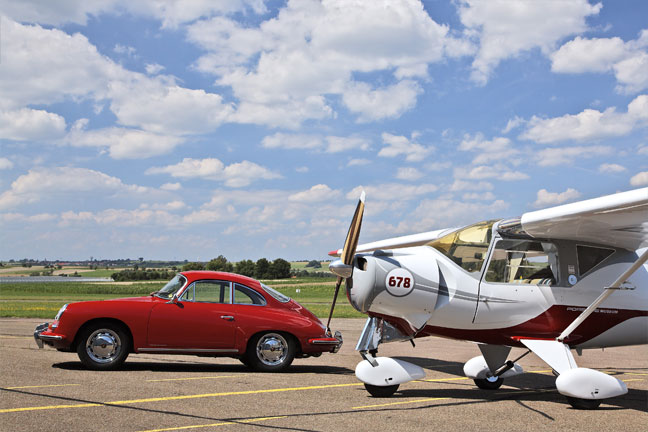
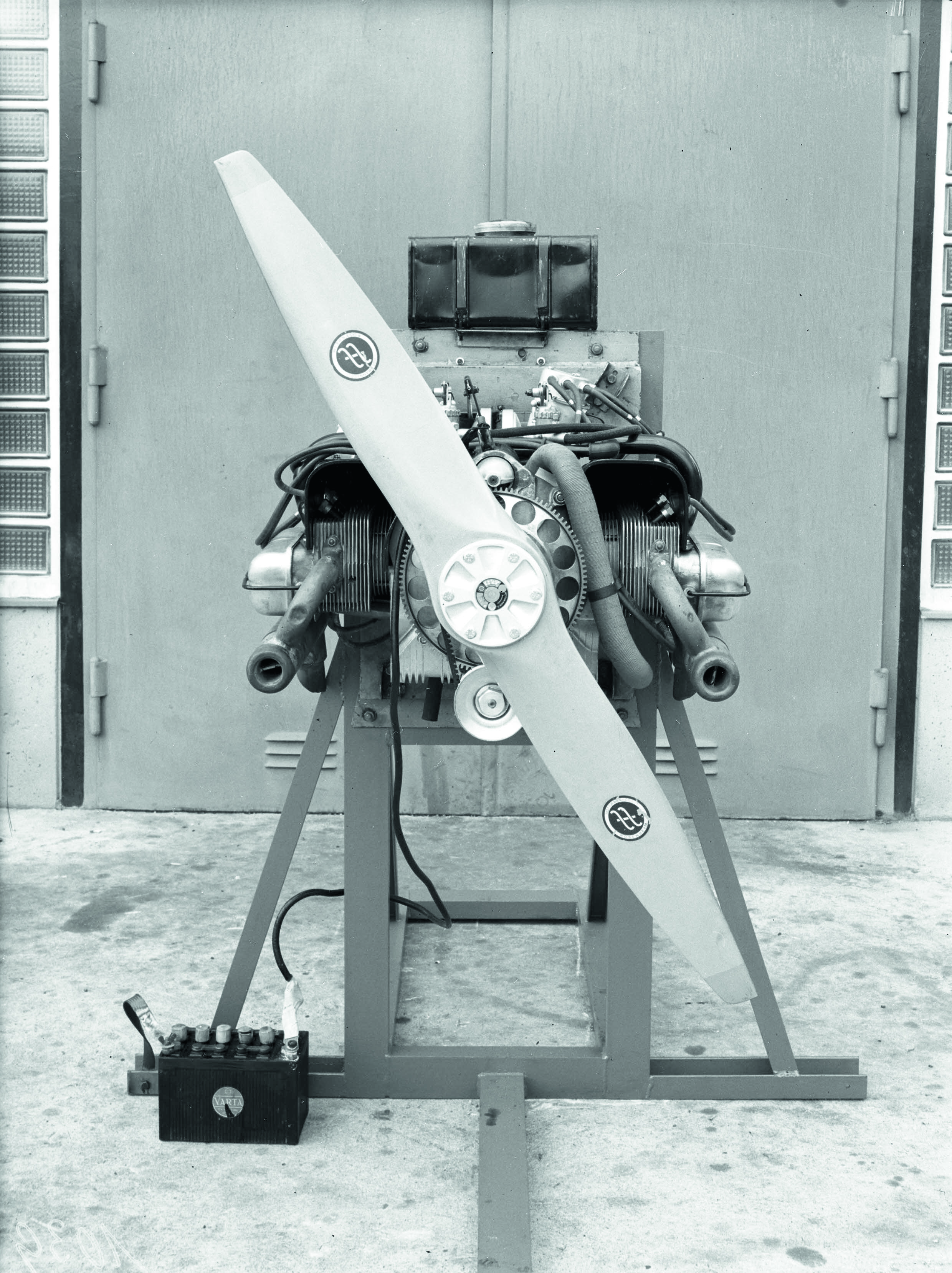
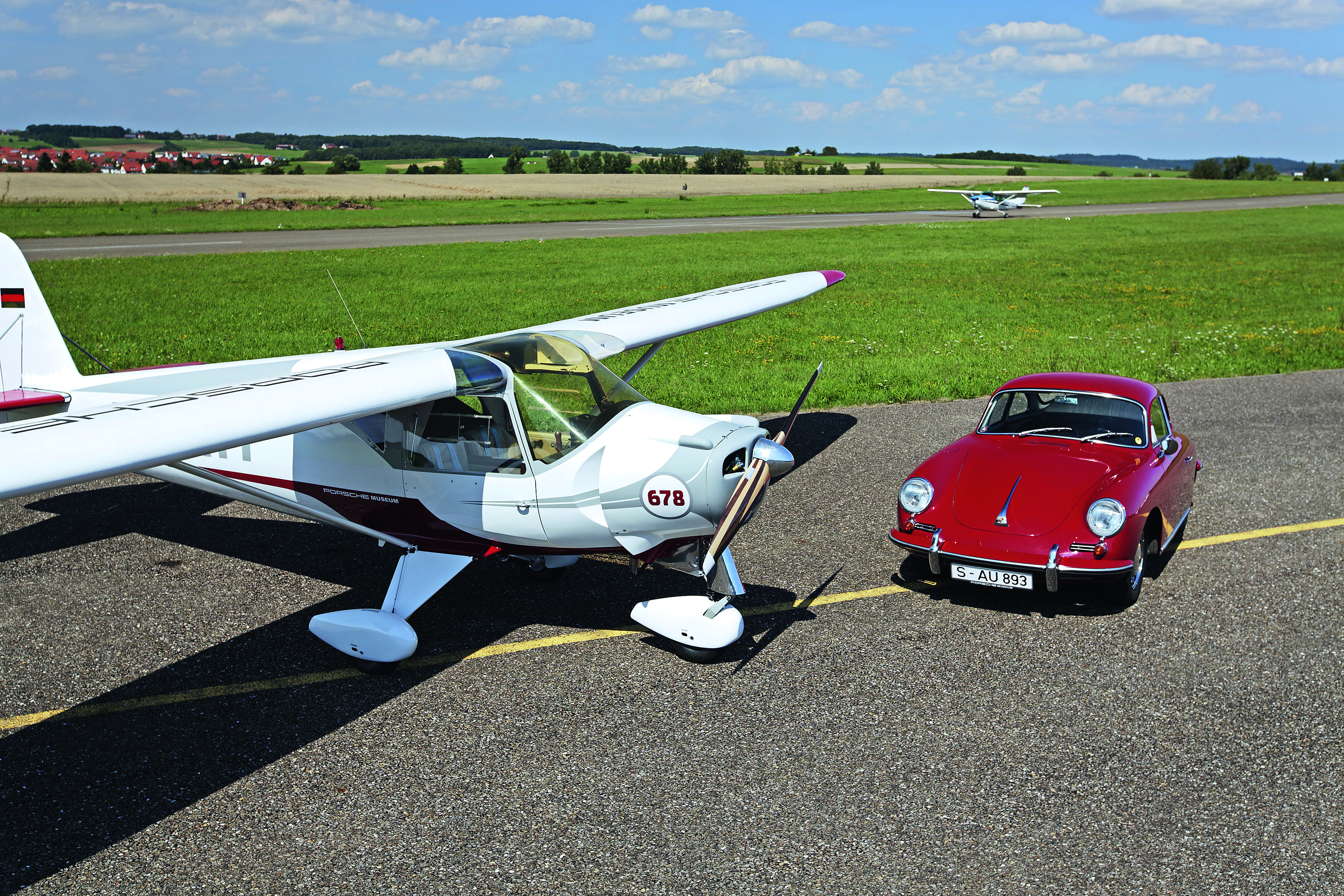
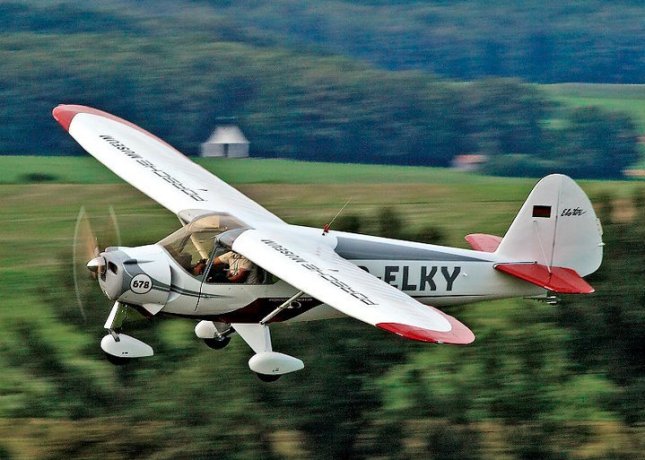 “Magpie” now with a new and classically modern painting: by the renowned Stuttgart designer Wolfgang Seidl developed design concept was quoted as traditional Porsche colors red, white and gray is the classic race car design from the 50s and 60s.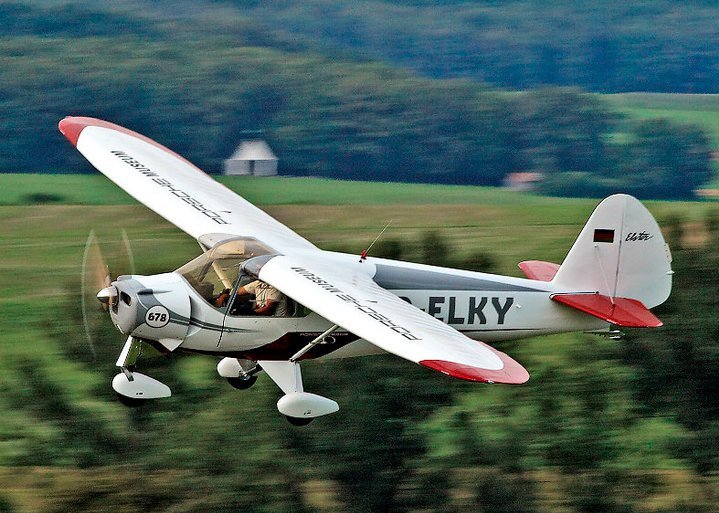
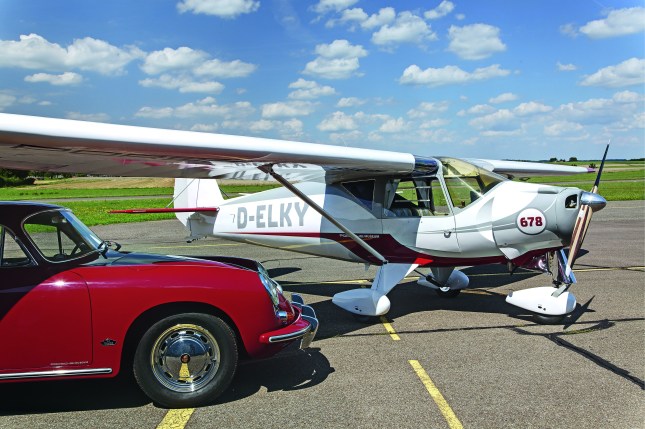 On the wings as well as the lettering on the fuselage has the Porsche Museum in the historical relationship between Porsche and the “Magpie” out.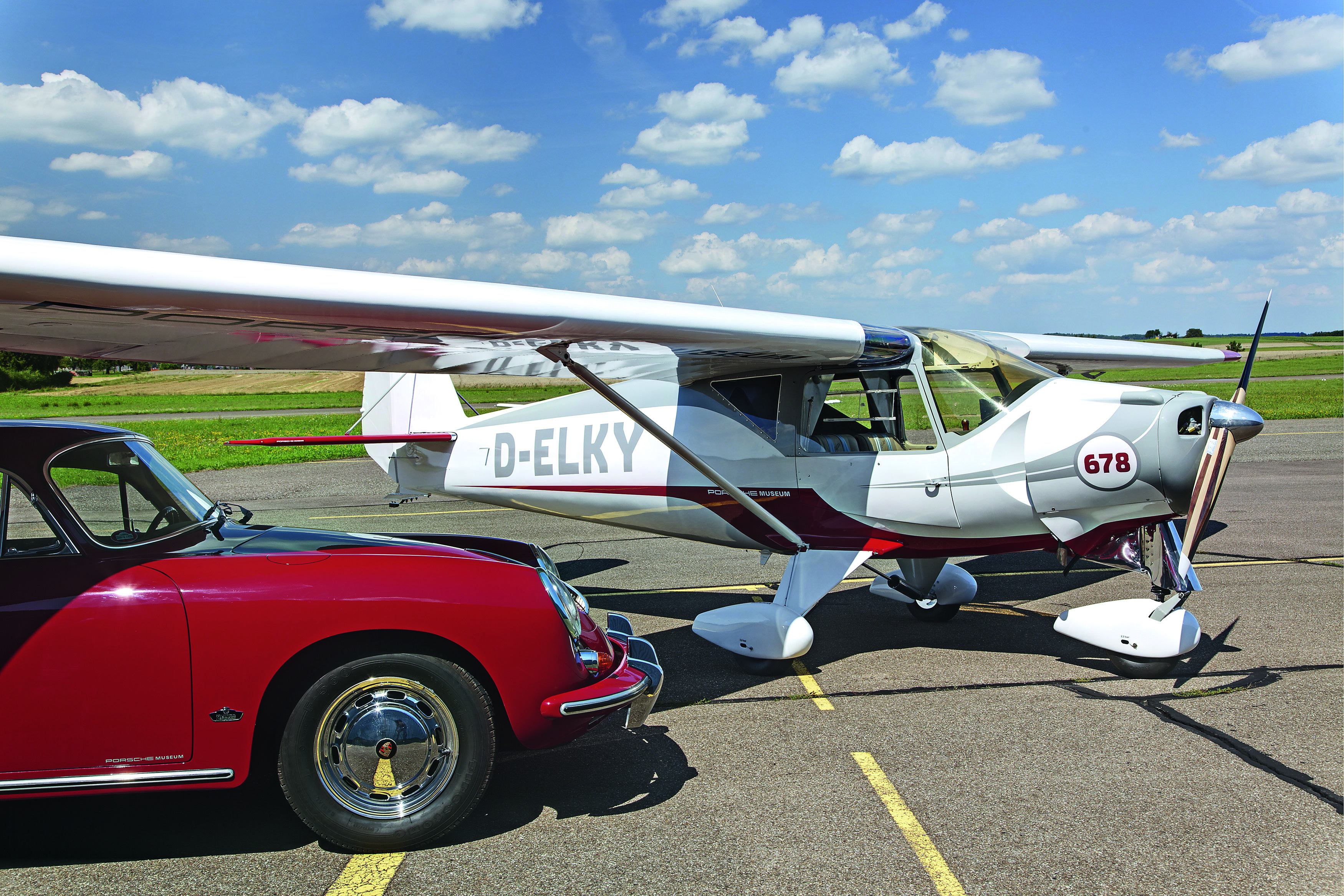
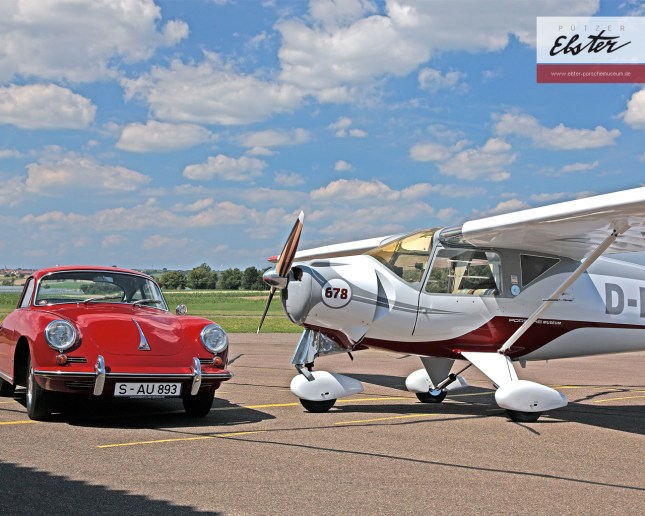 As well as the engine, the electronic equipment on board – known as the avionics – was replaced. The wooden aircraft’s interior was also given full restoration treatment and the airframe, in other words the wings and fuselage, were expertly overhauled. The “Elster” also sports a modern, fresh design: the design concept created by renowned Stuttgart designer Wolfgang Seidl gives a nod to classic Porsche racing car design of the 1950s and 1960s in adopting the traditional Porsche colours red, white and grey. Both the wings and the fuselage itself are emblazoned with the Porsche Museum logo.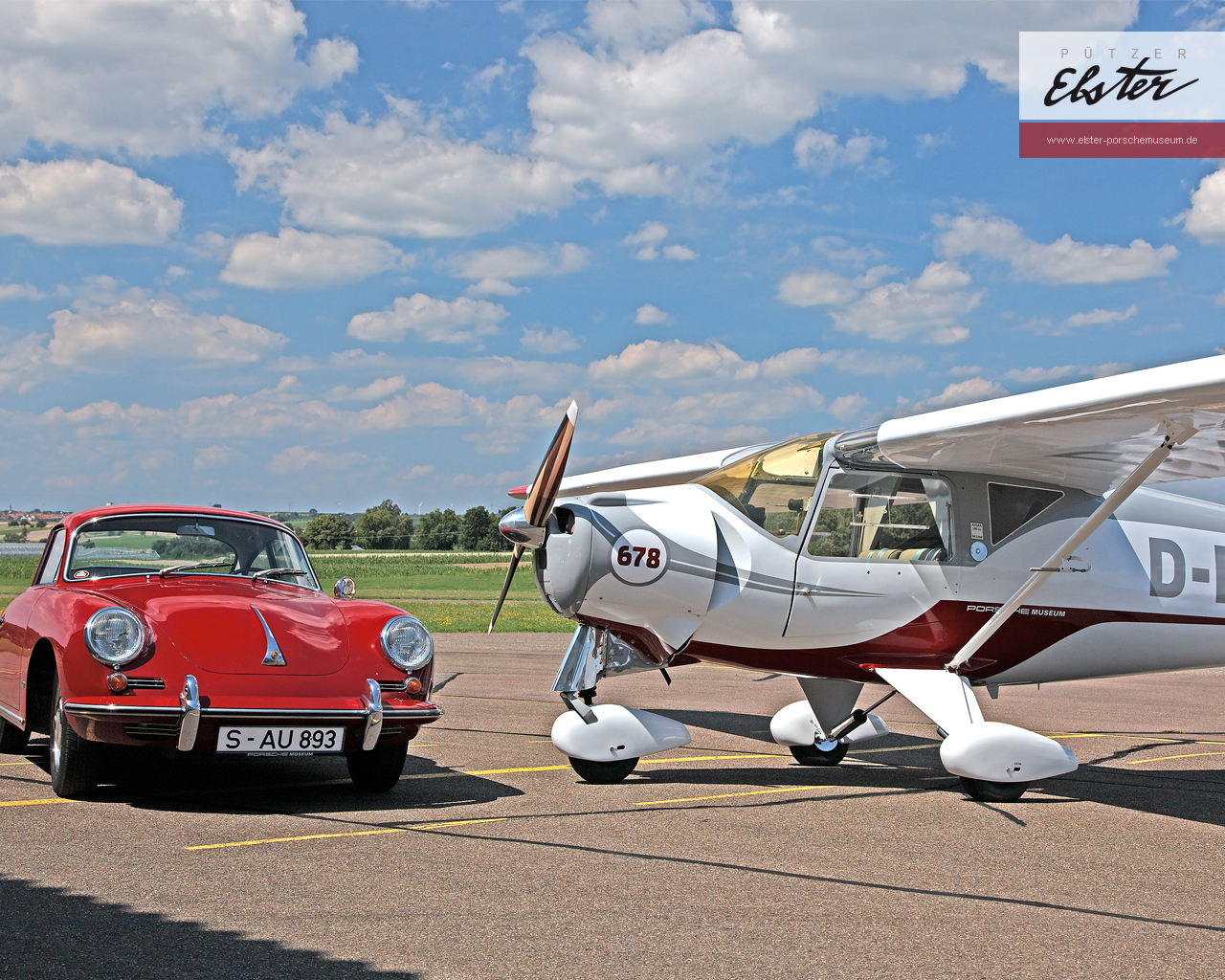

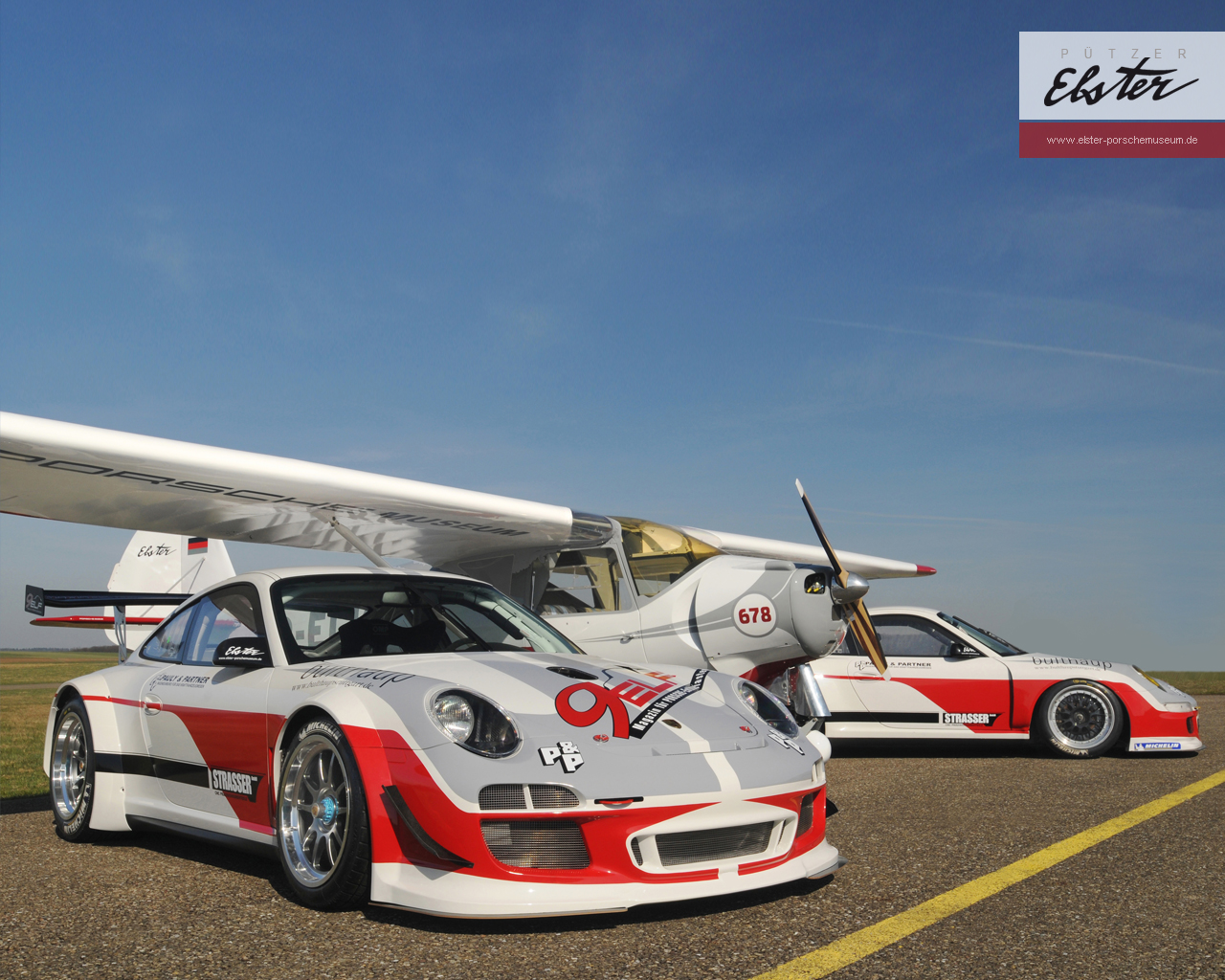
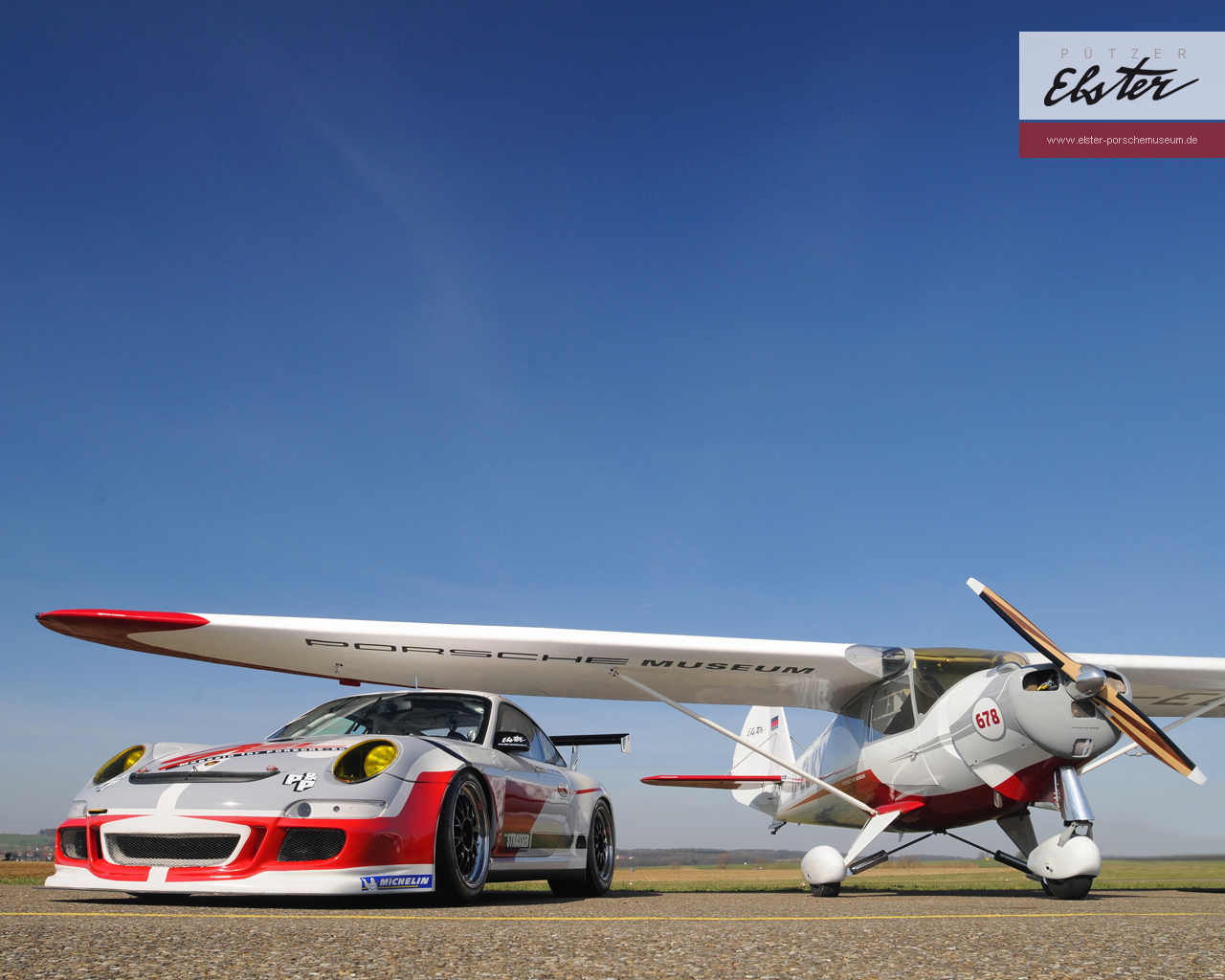
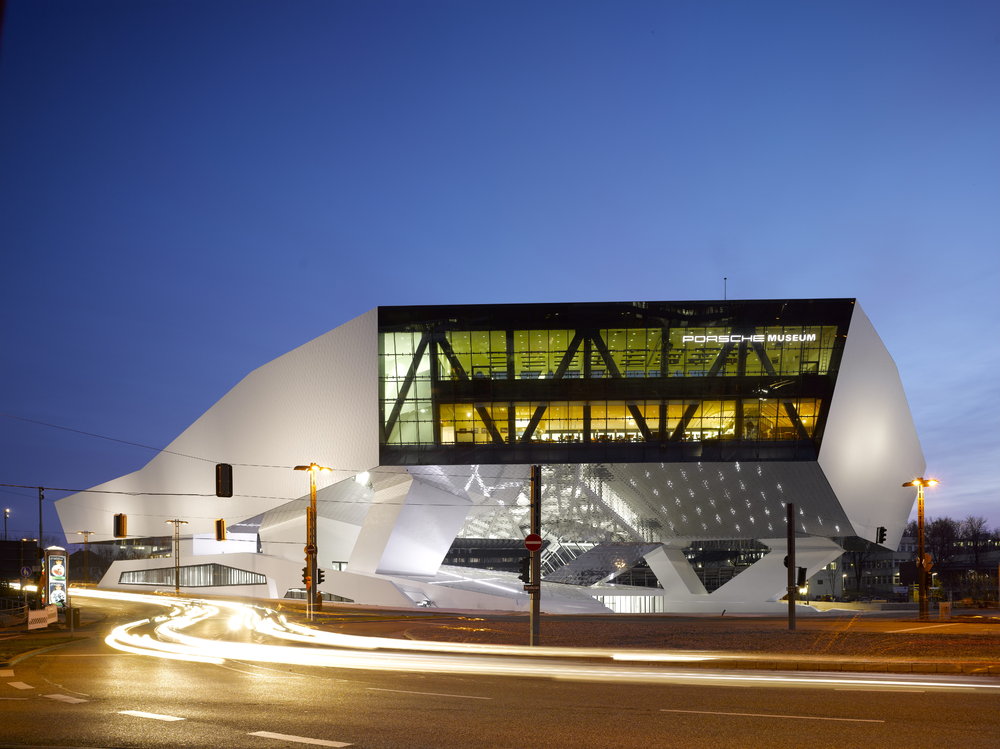
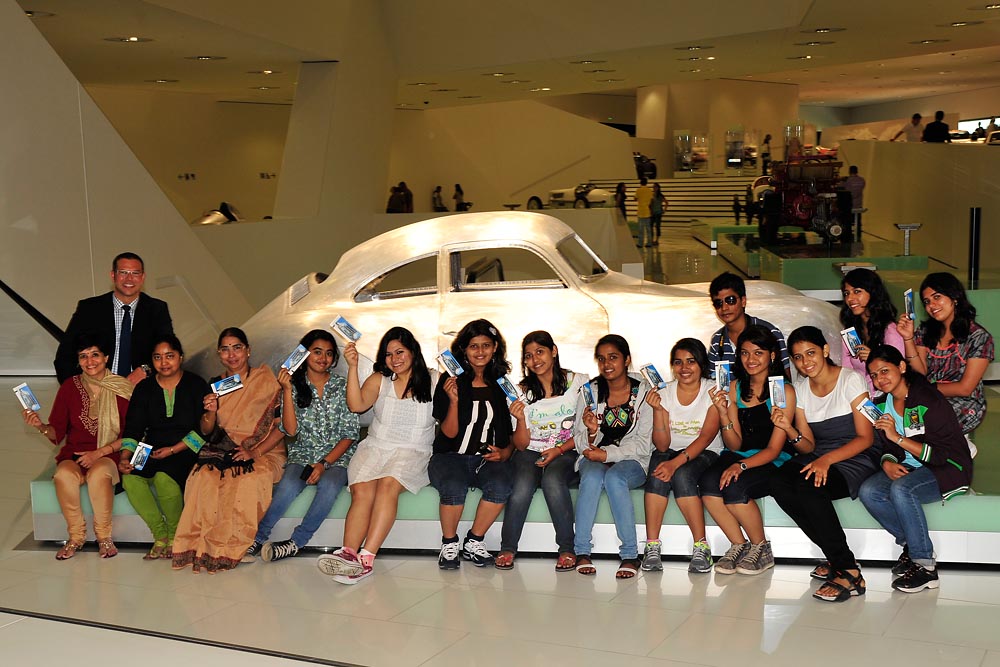
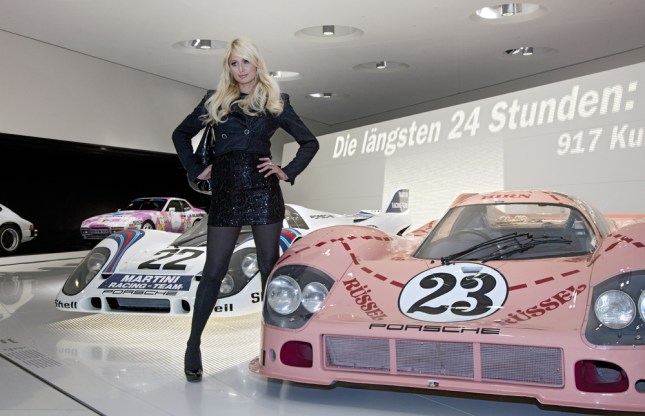
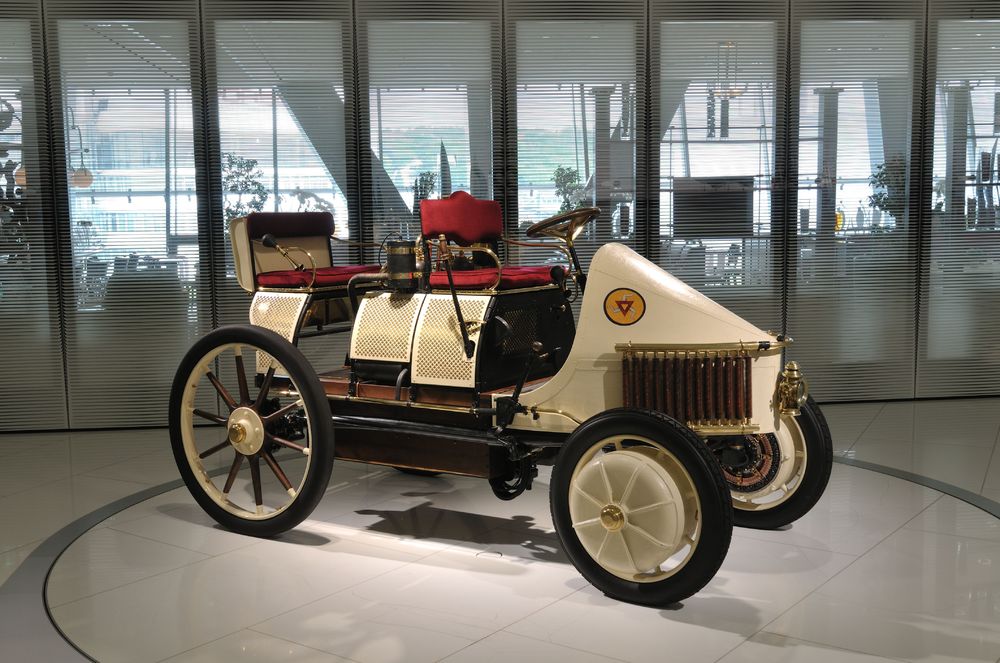


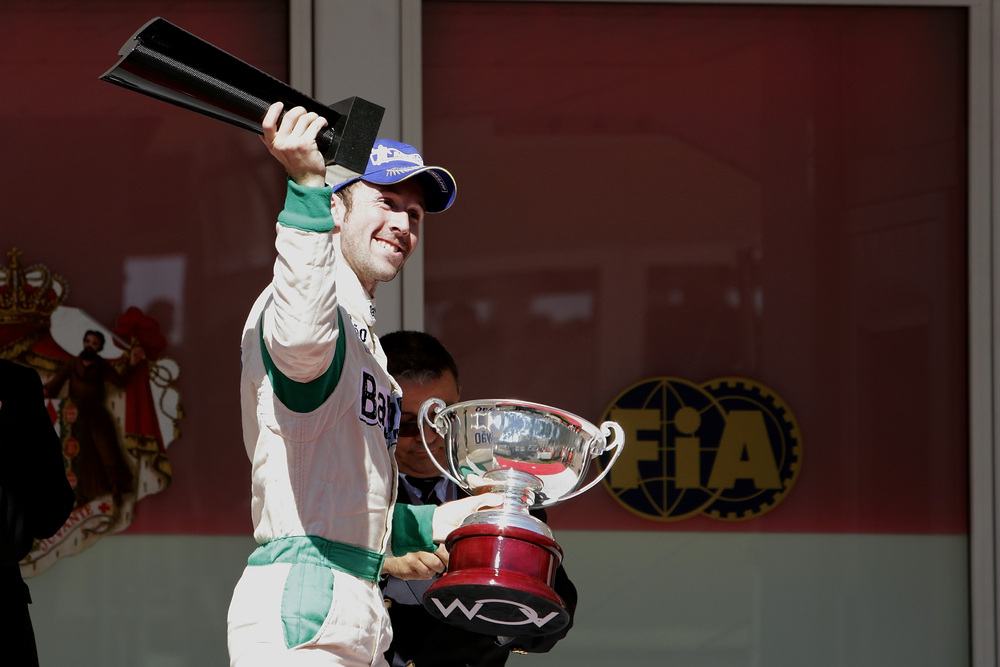
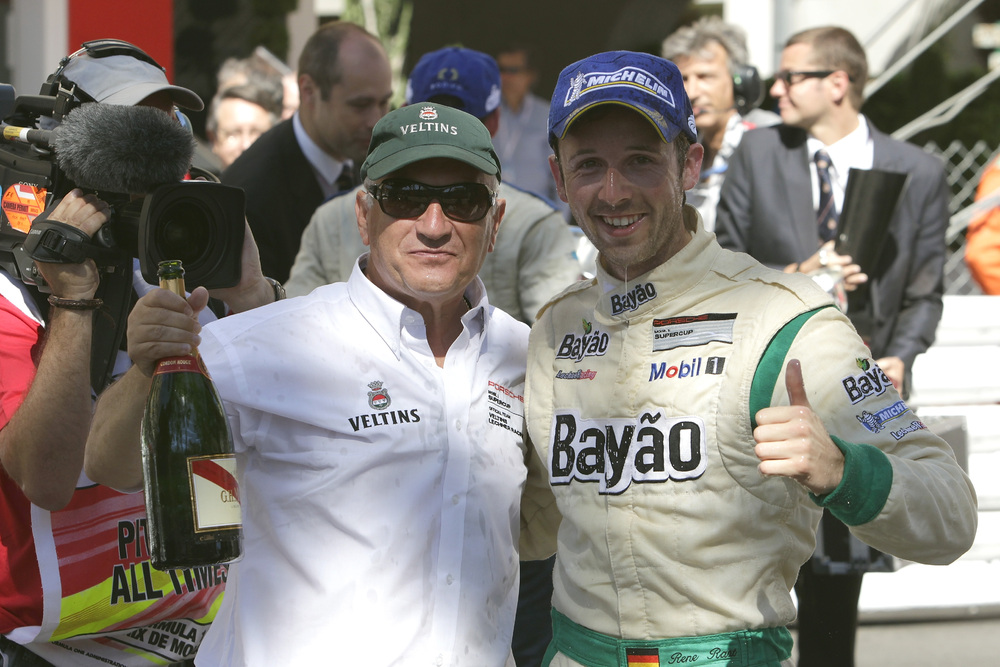
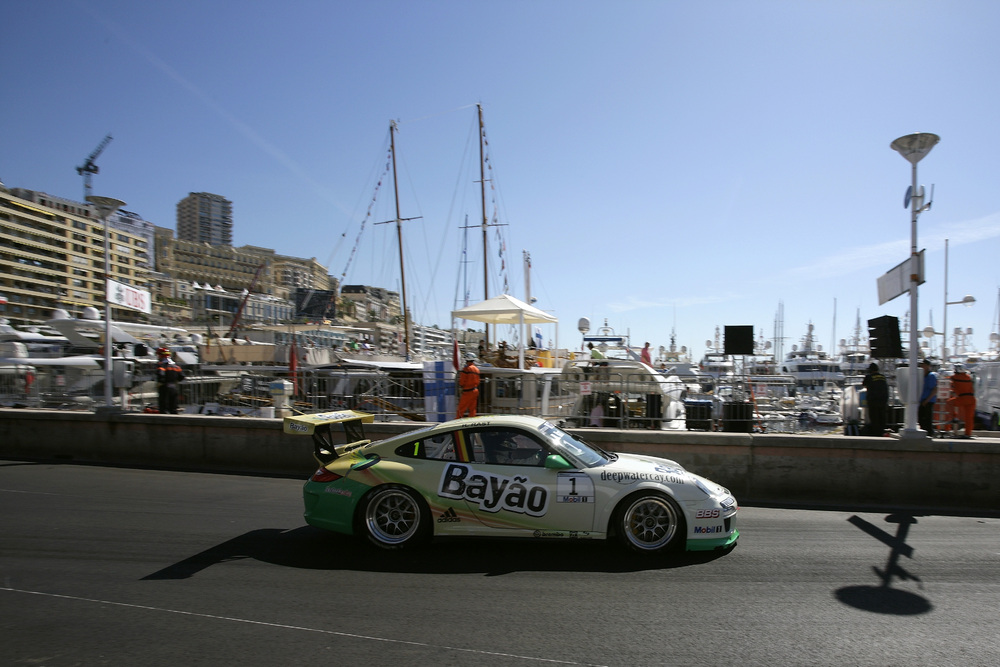
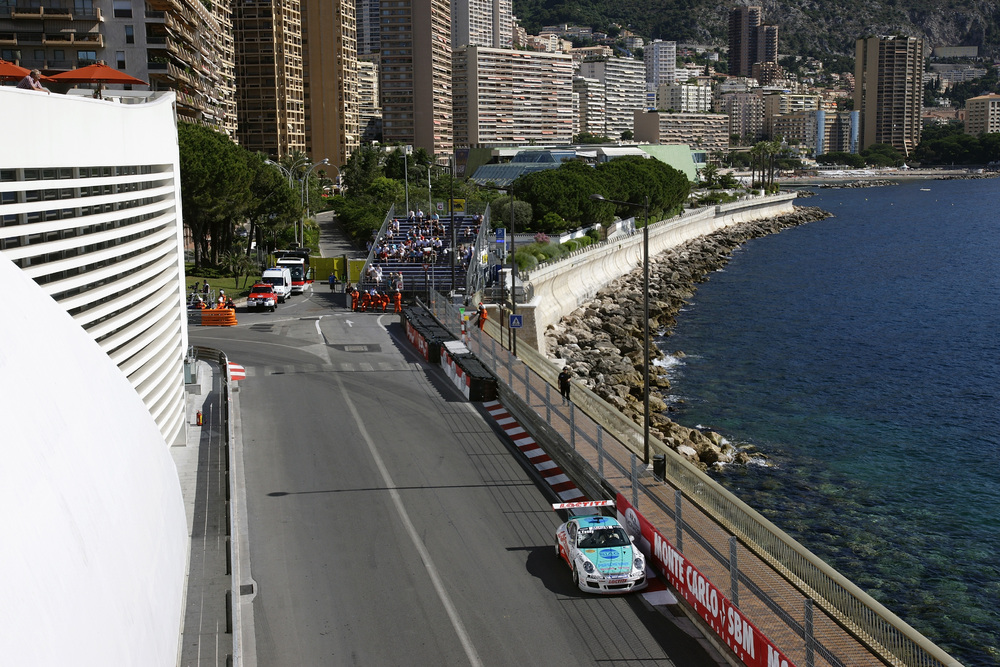
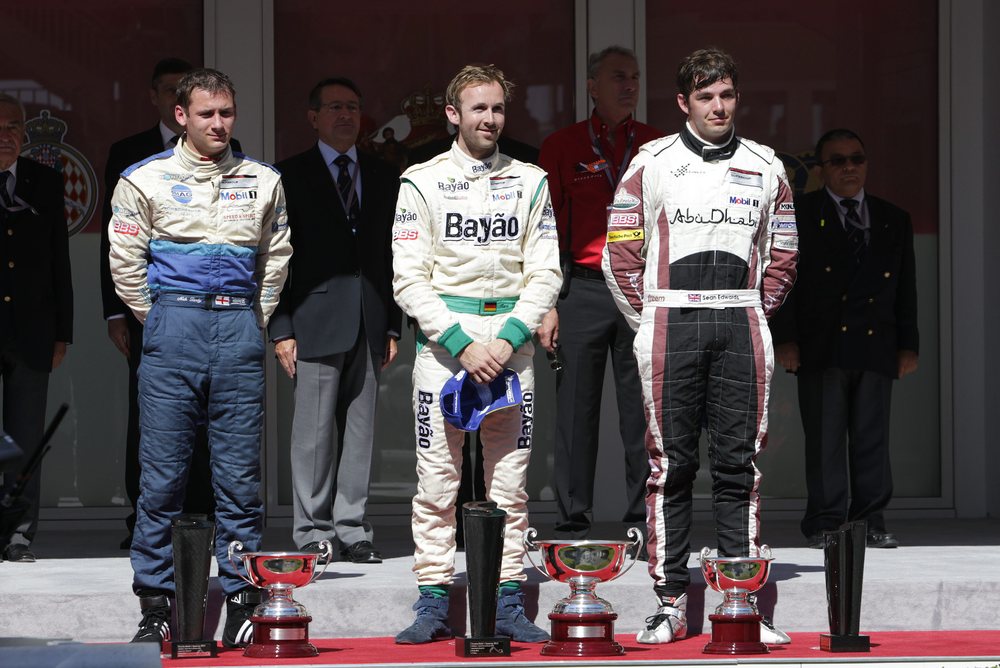
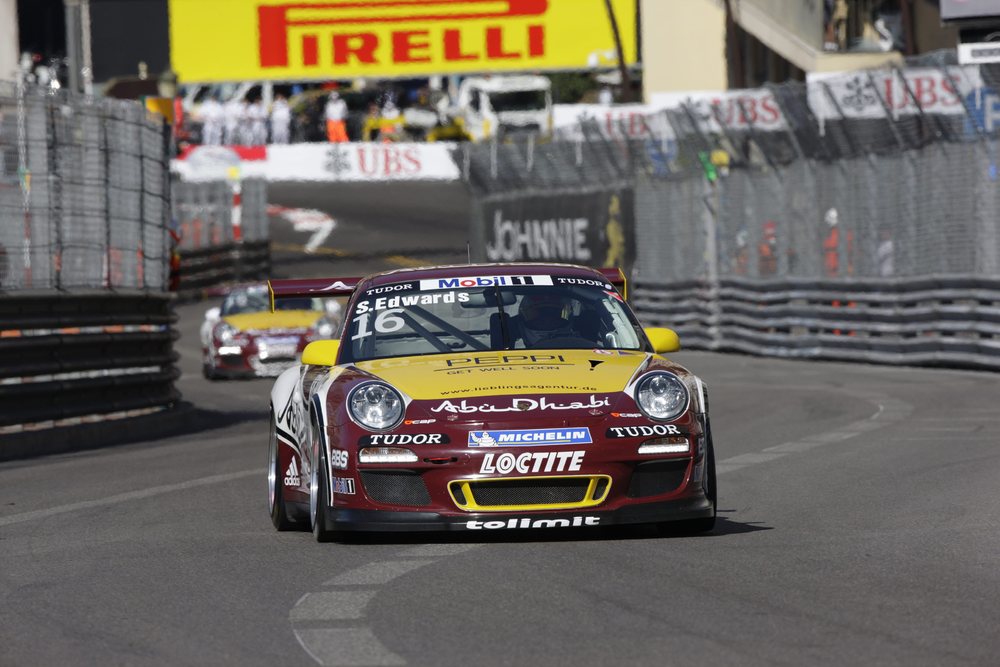
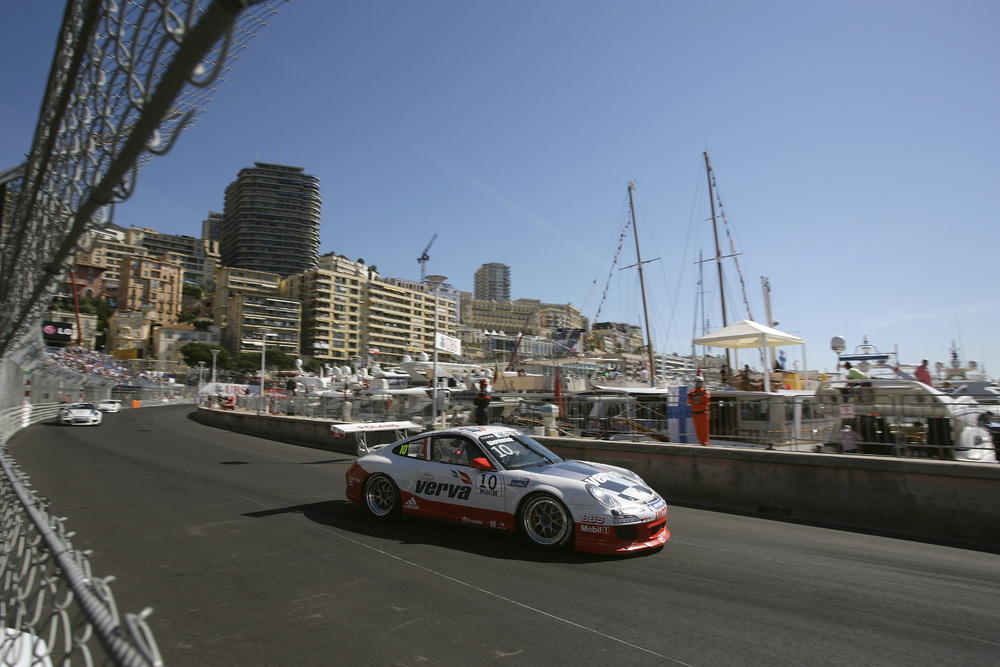
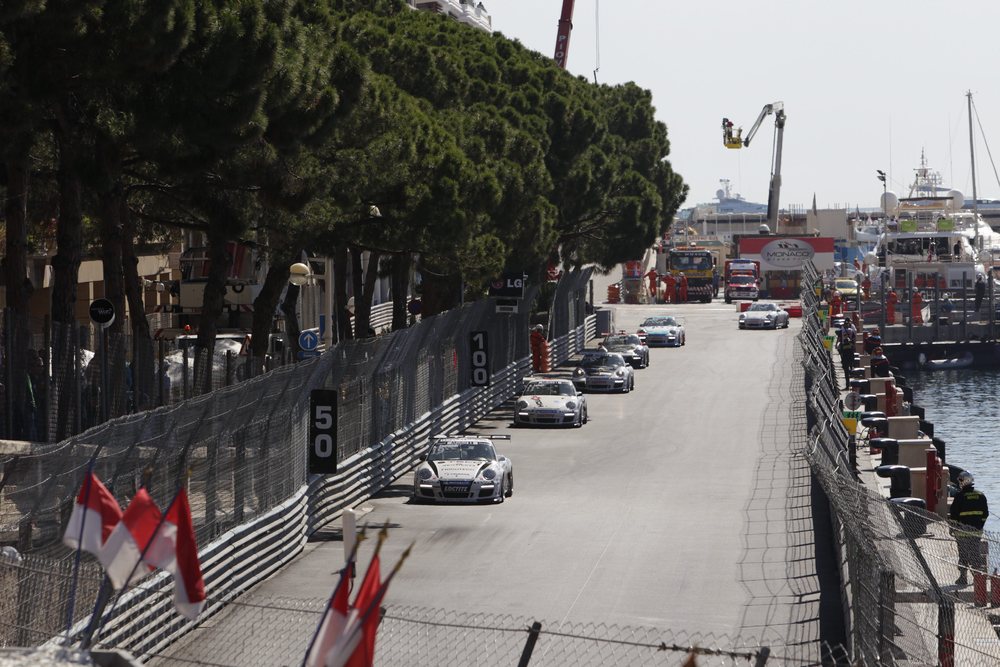
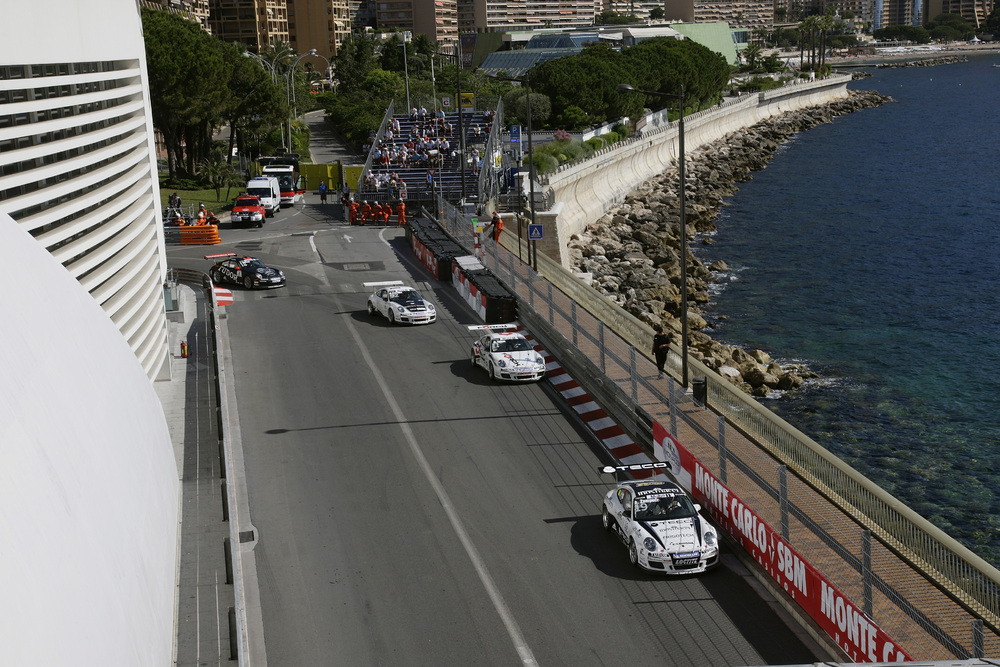
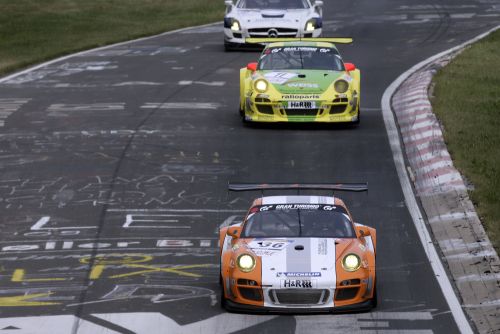
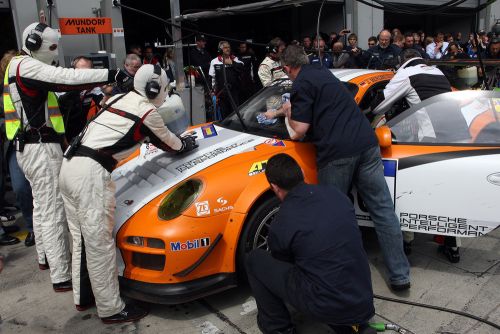
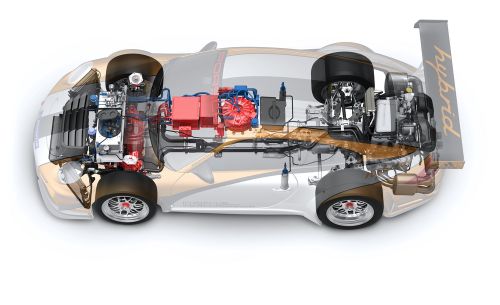


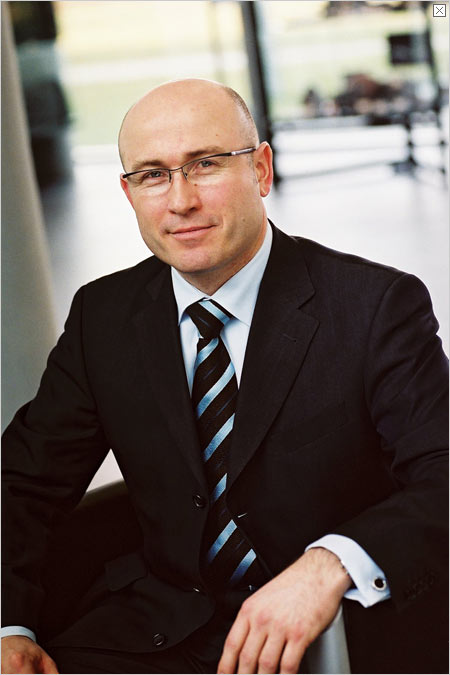


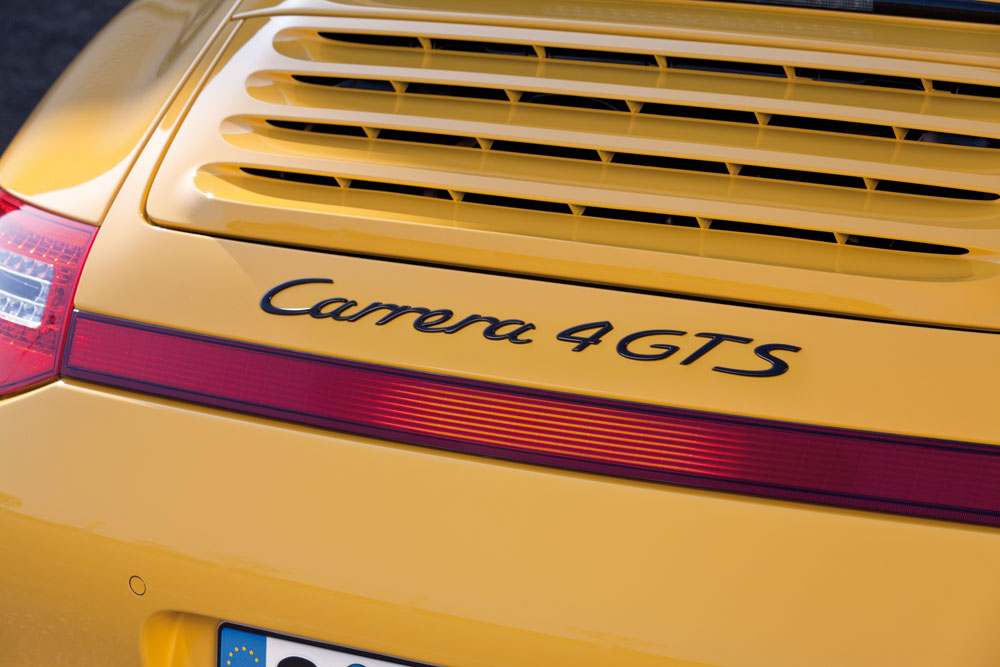


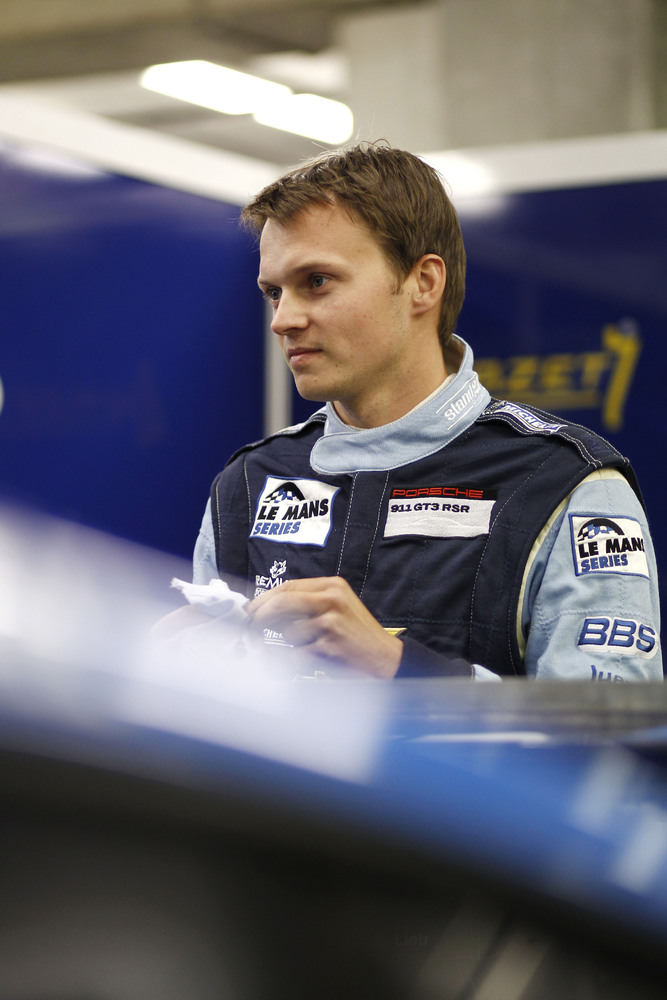
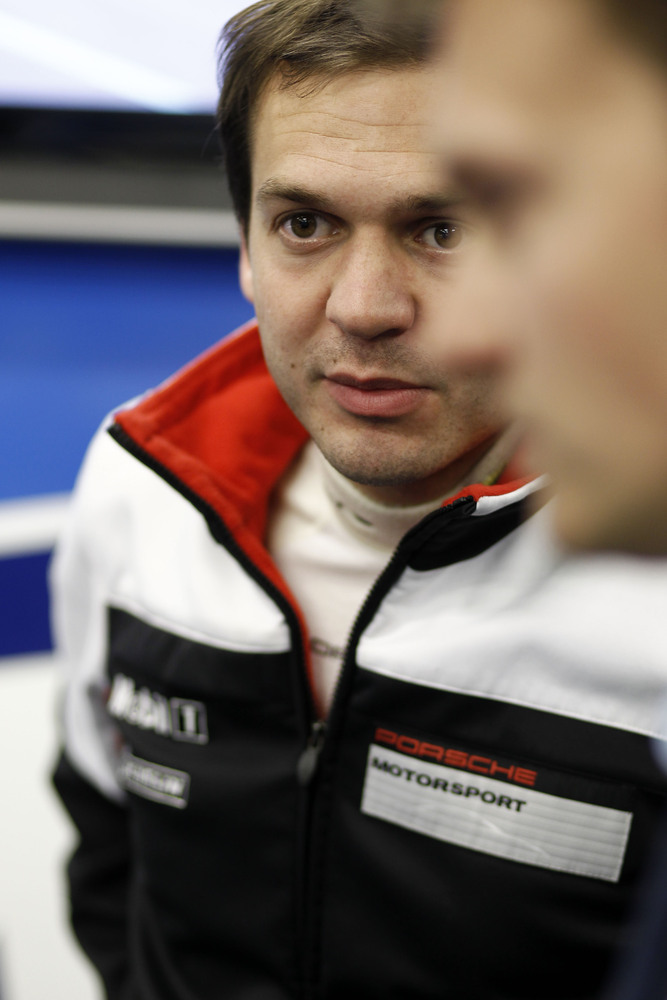
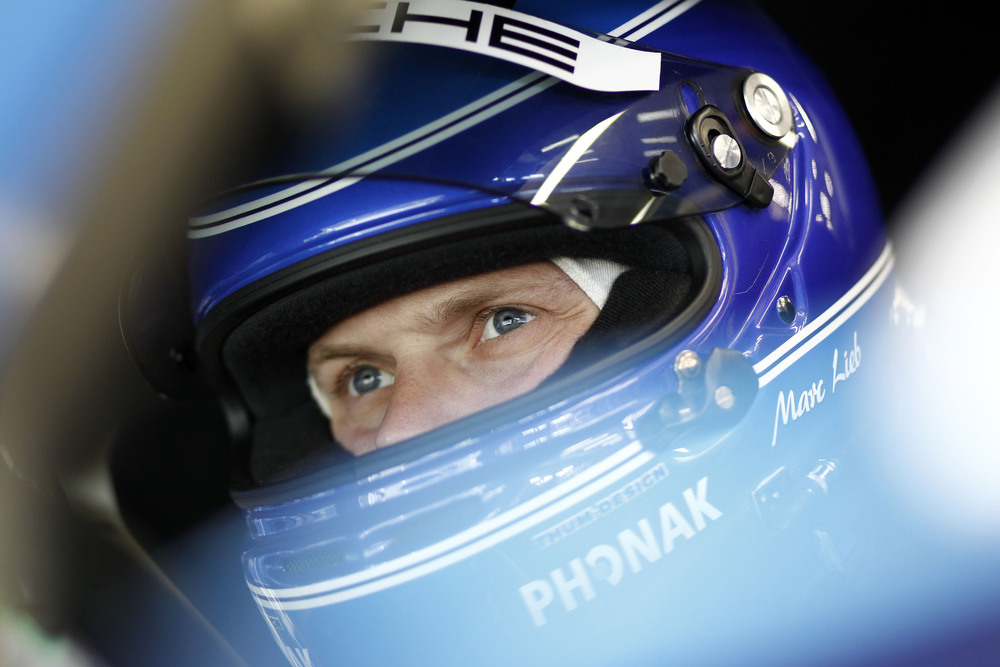
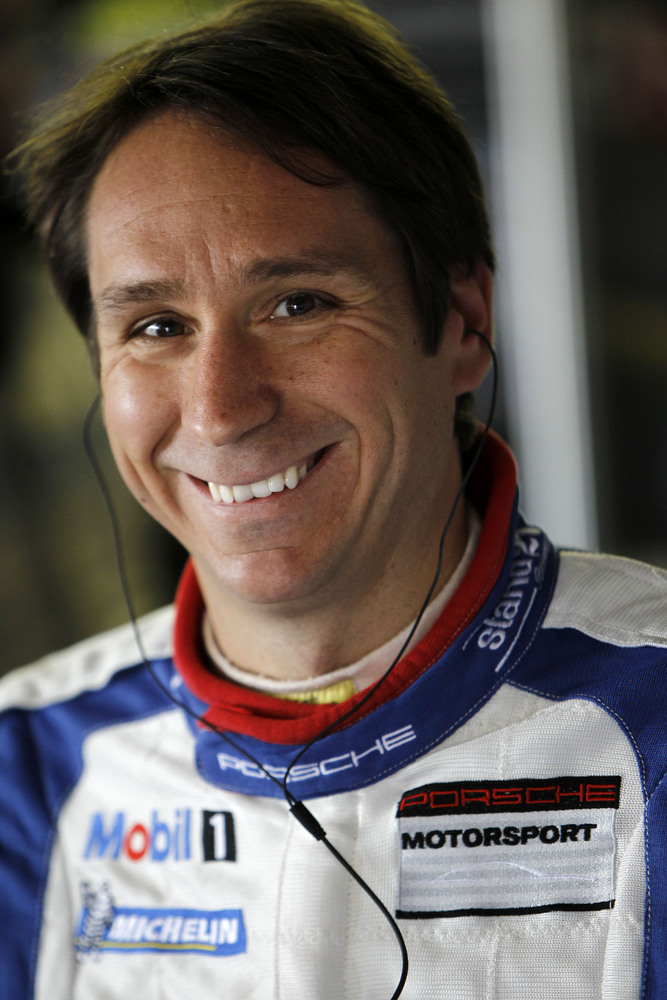


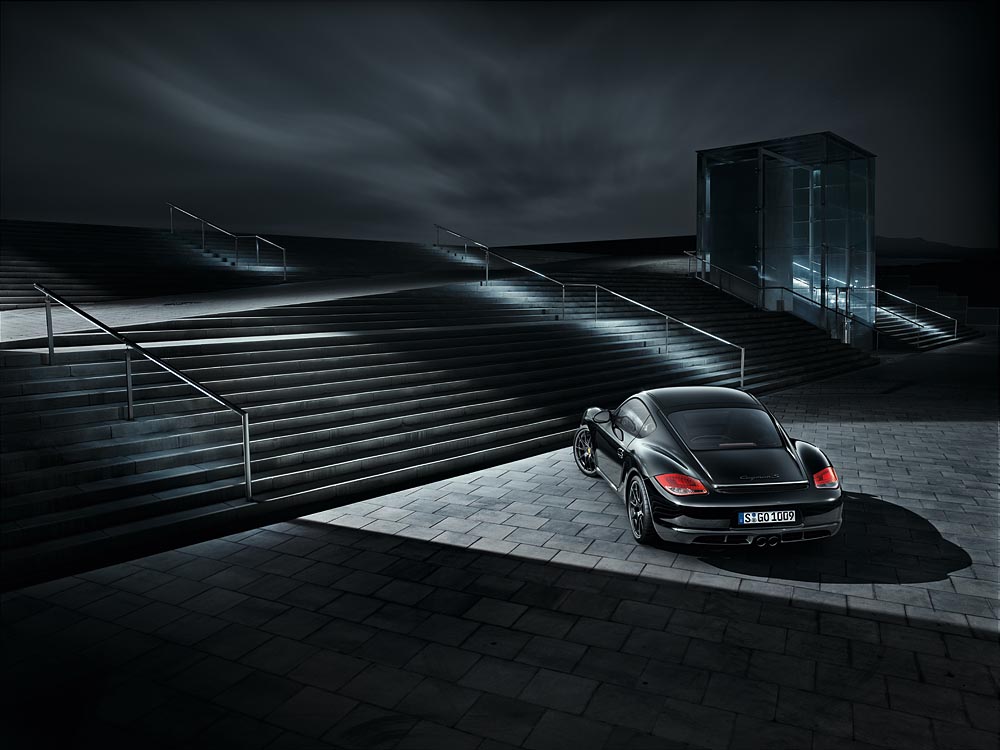
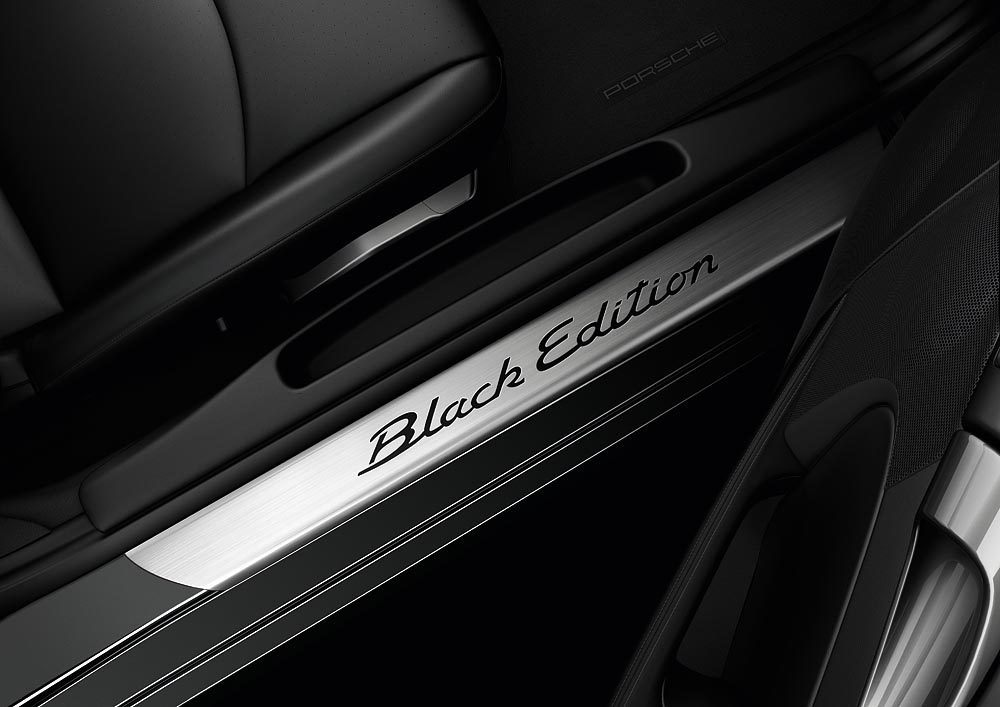
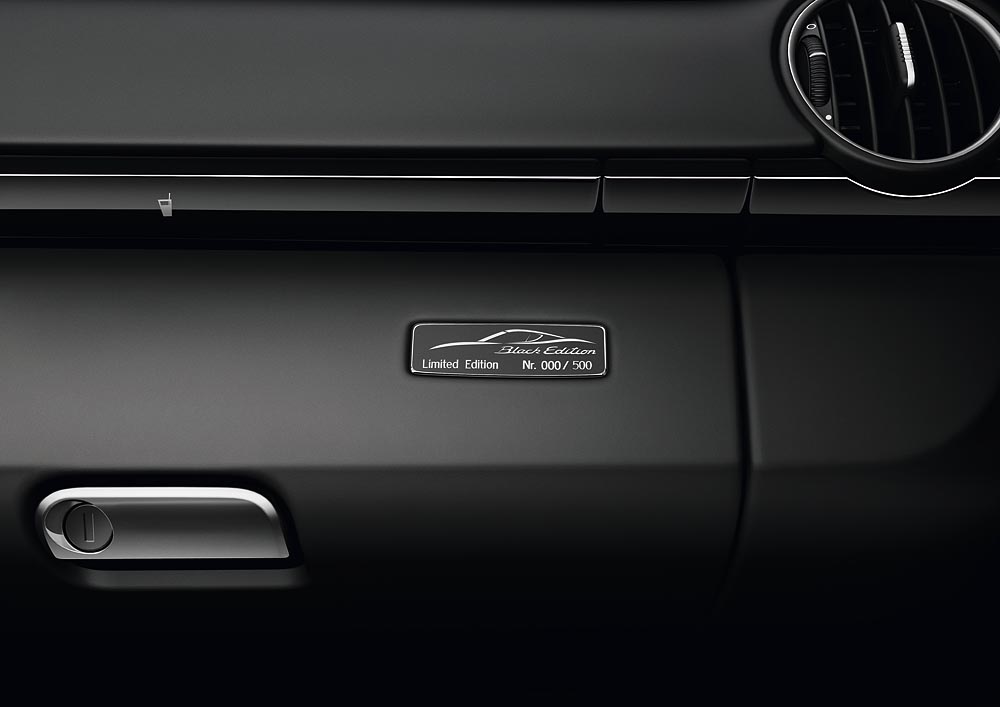
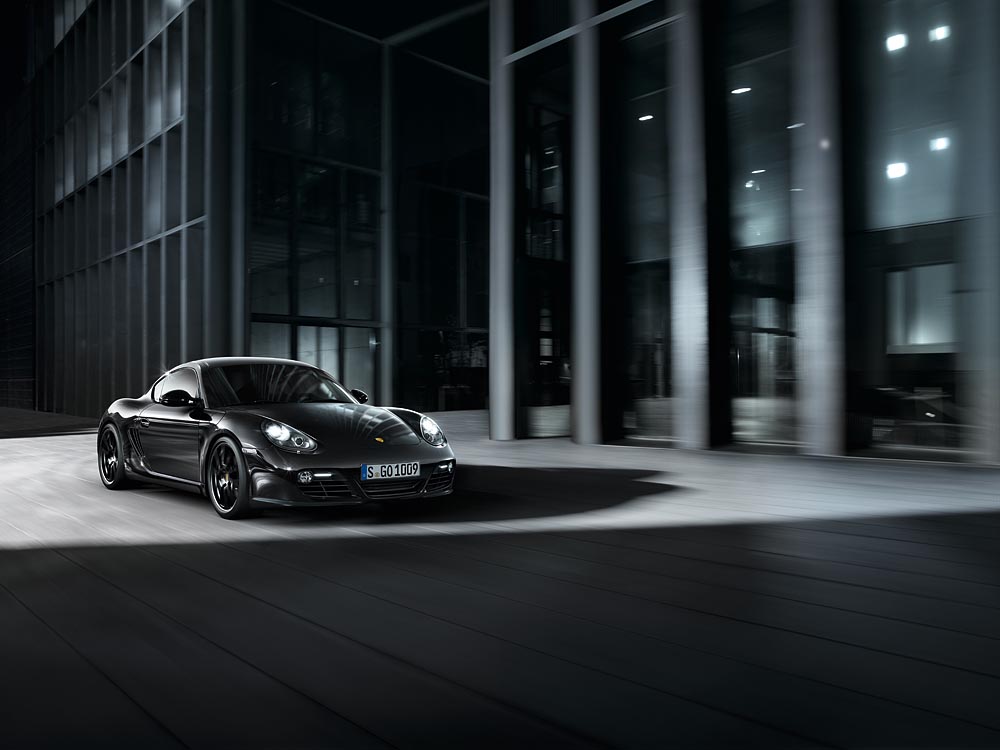
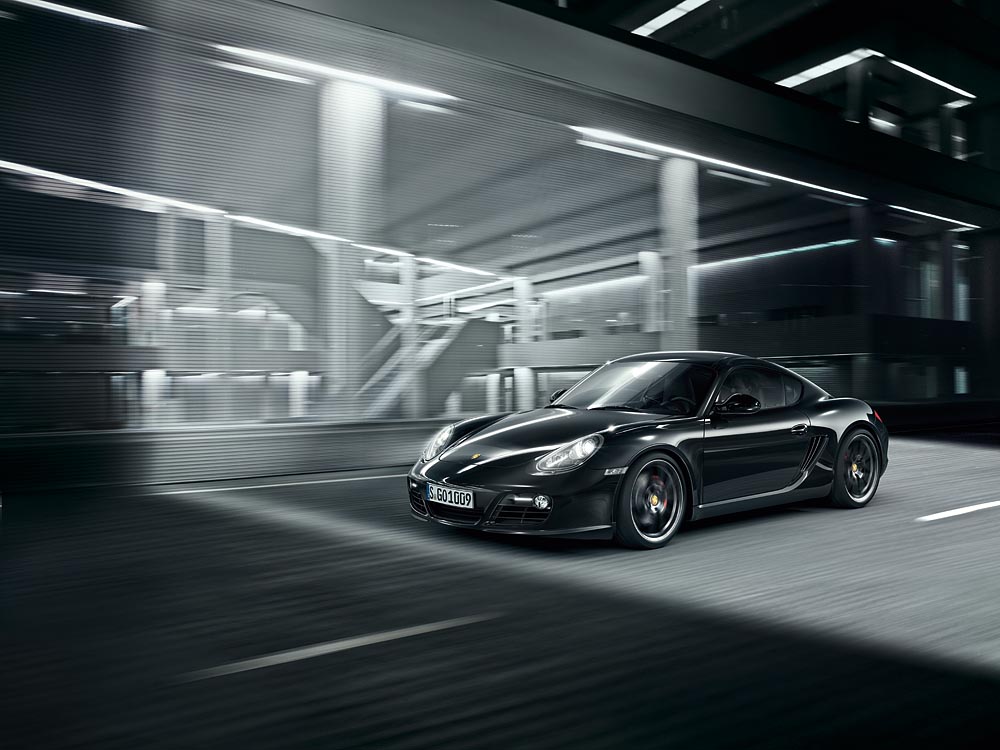
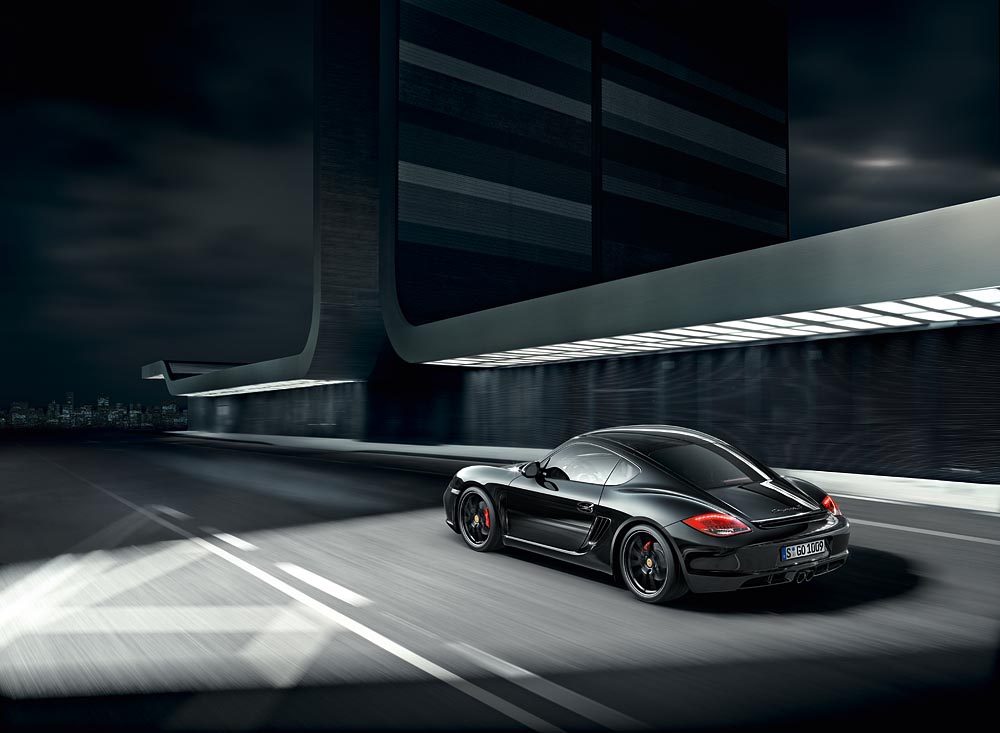


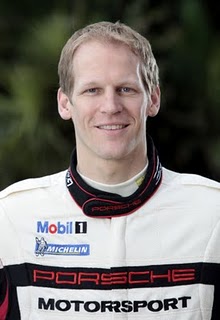
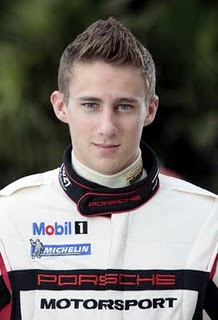
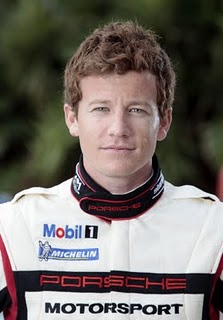
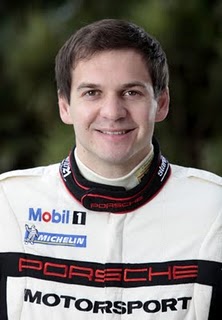
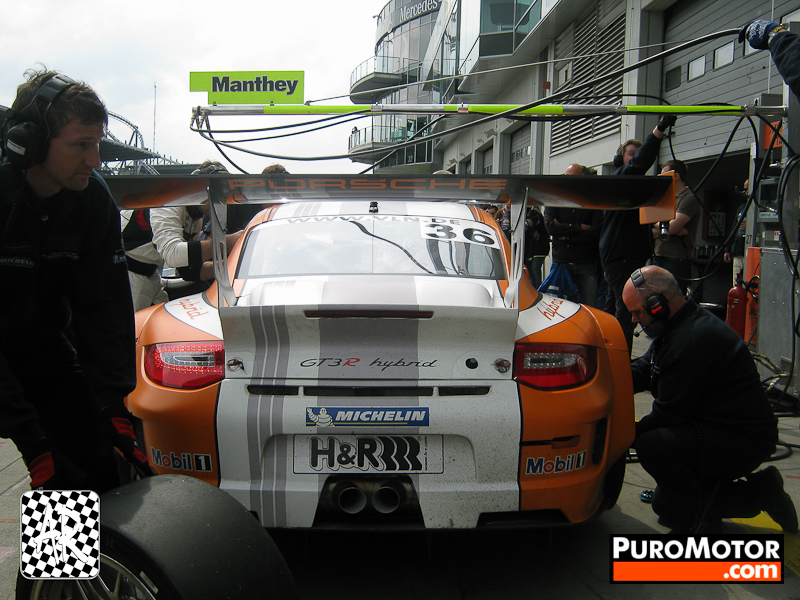
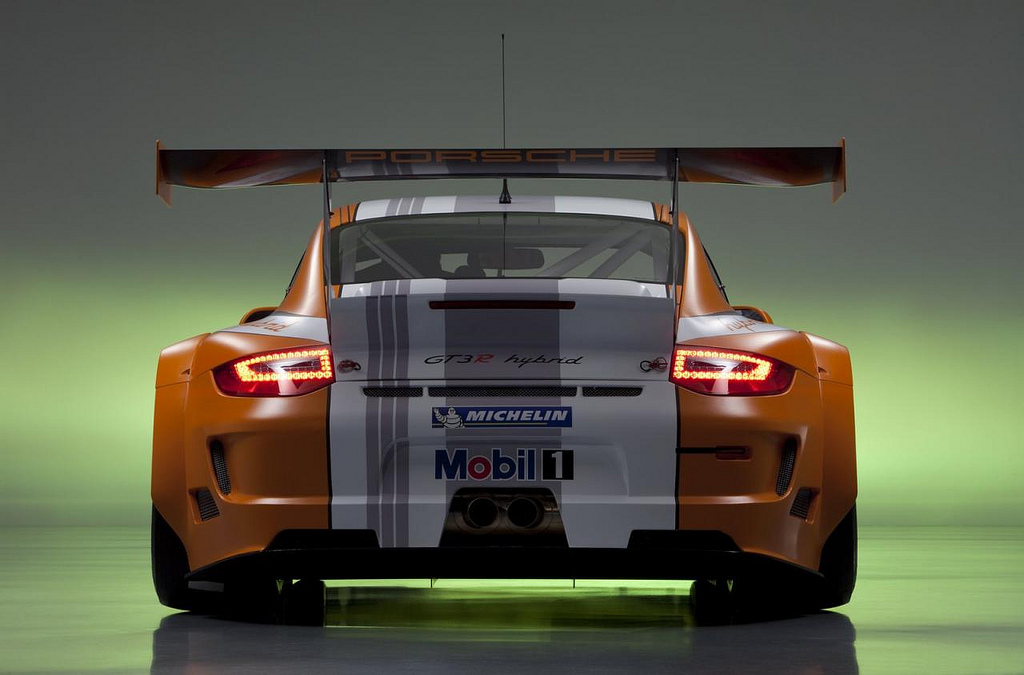
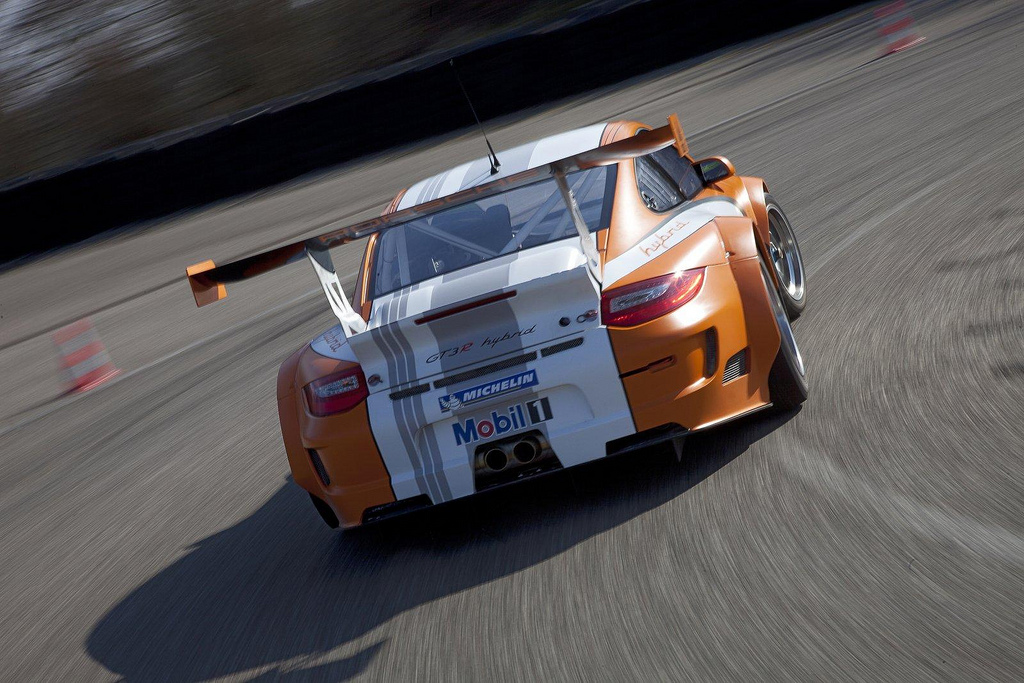
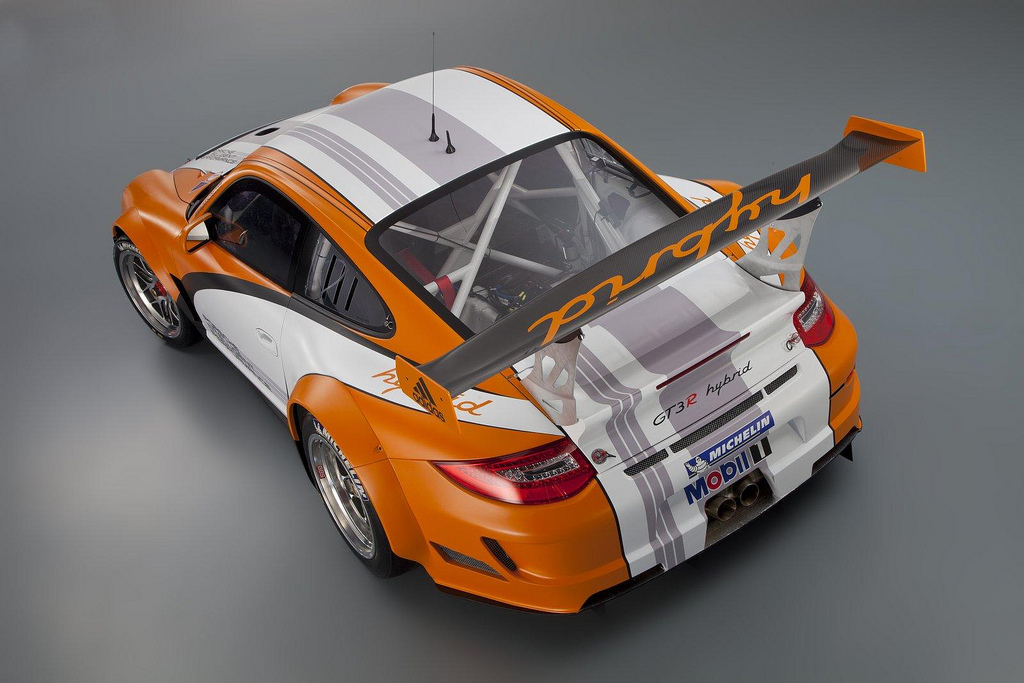
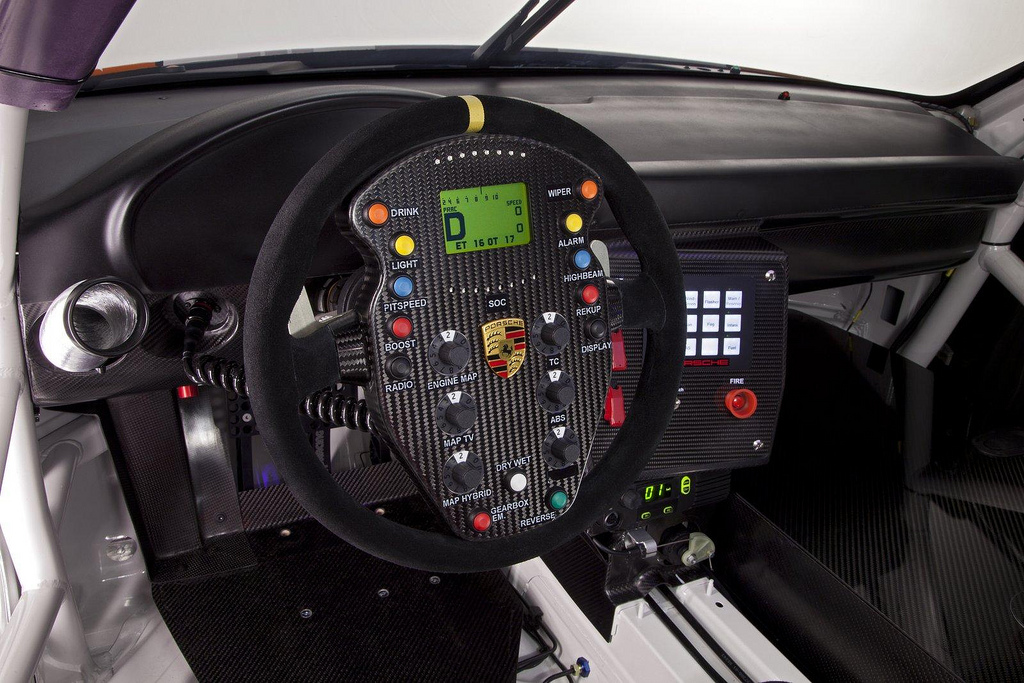
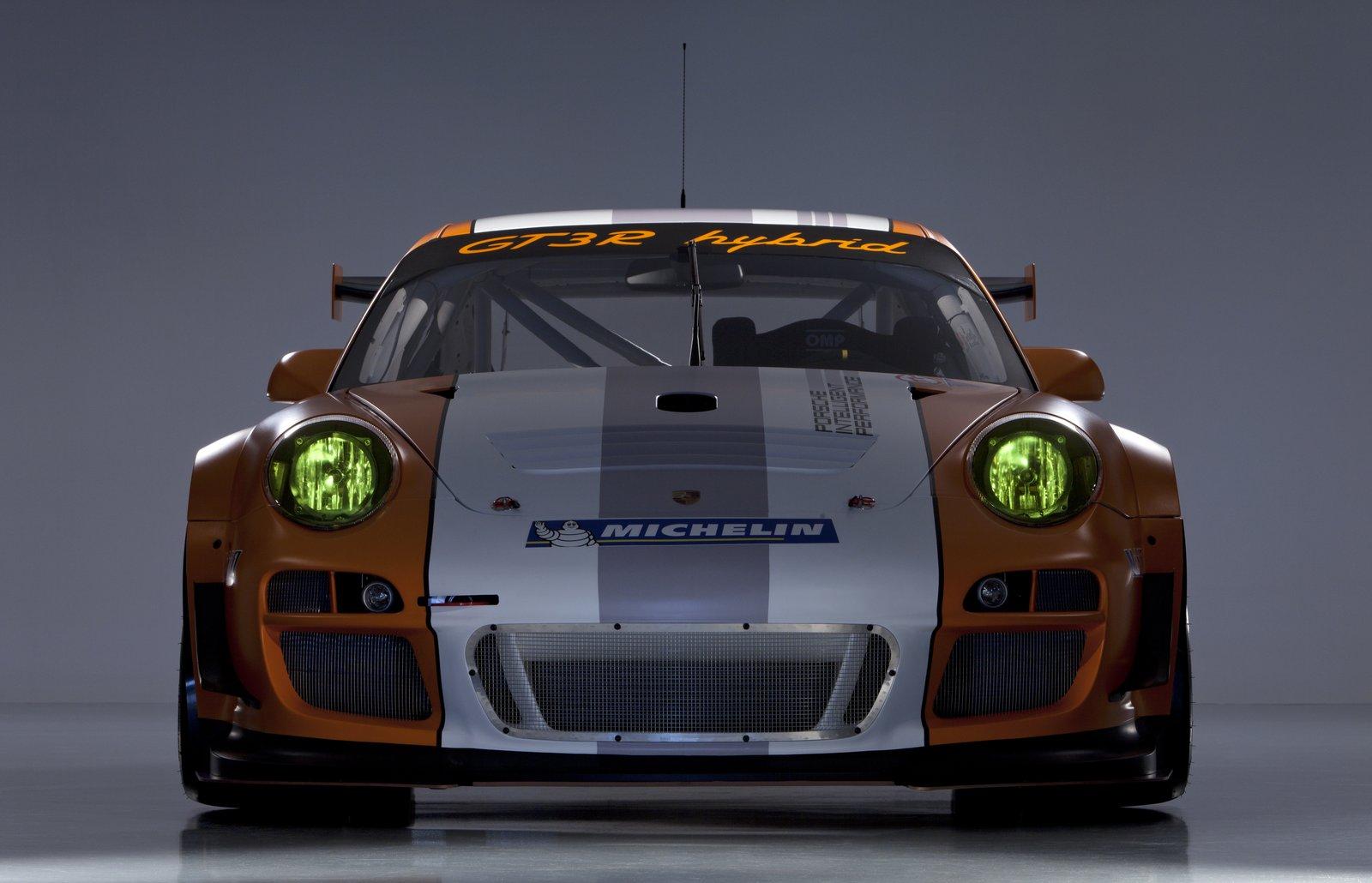


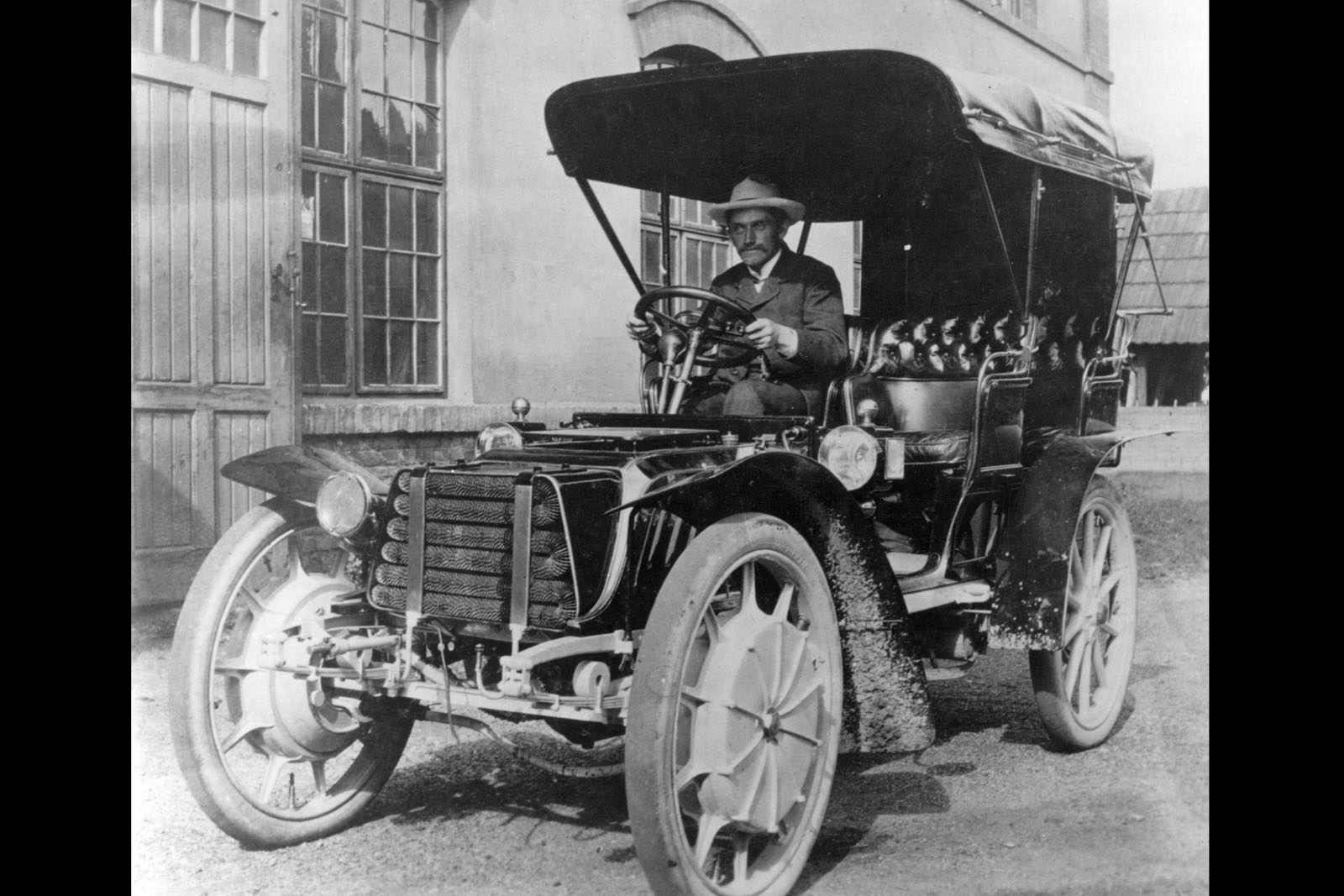
![[x]](https://i0.wp.com/files.porsche.com/filestore.aspx/zoom.jpg)
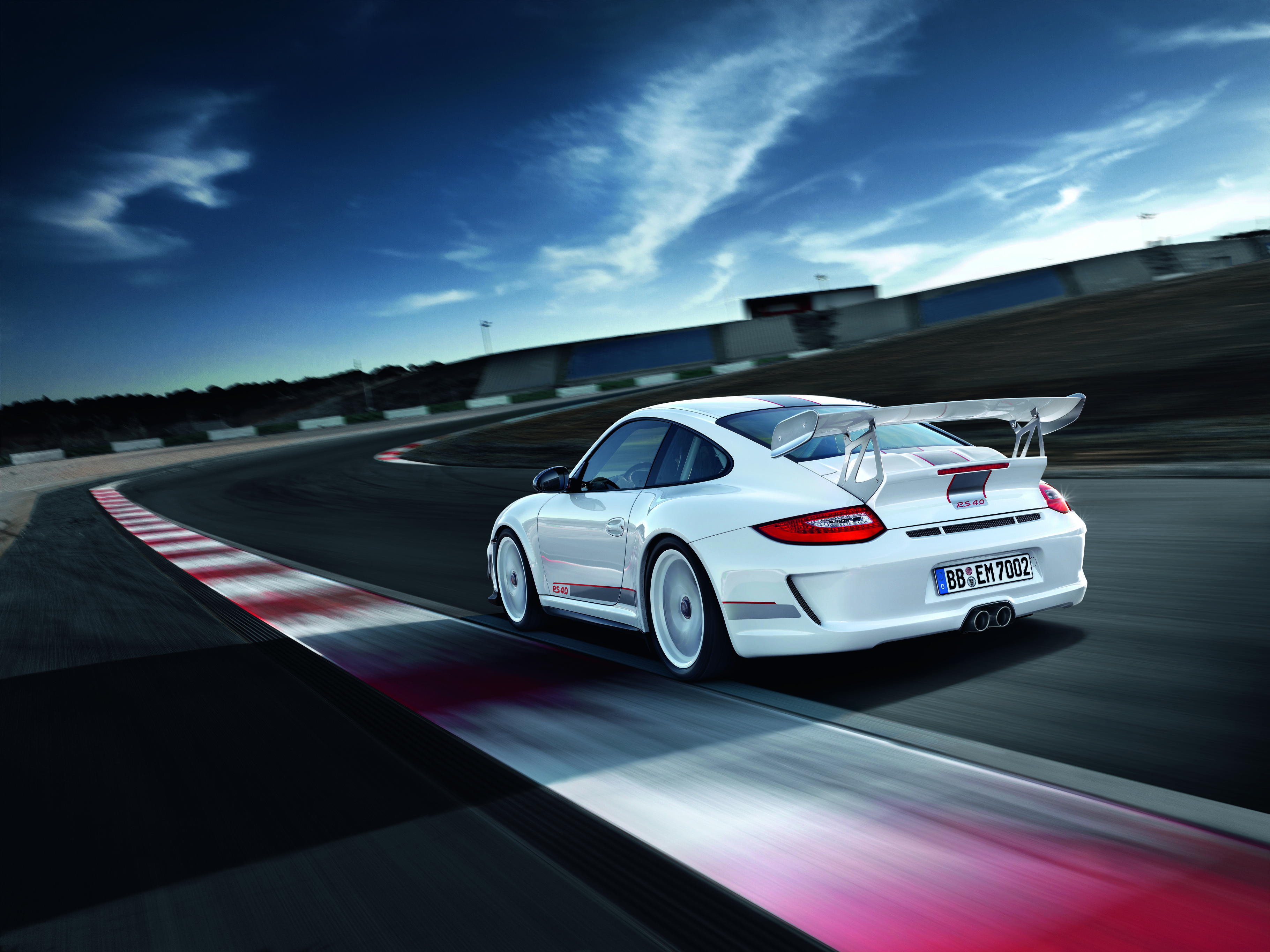
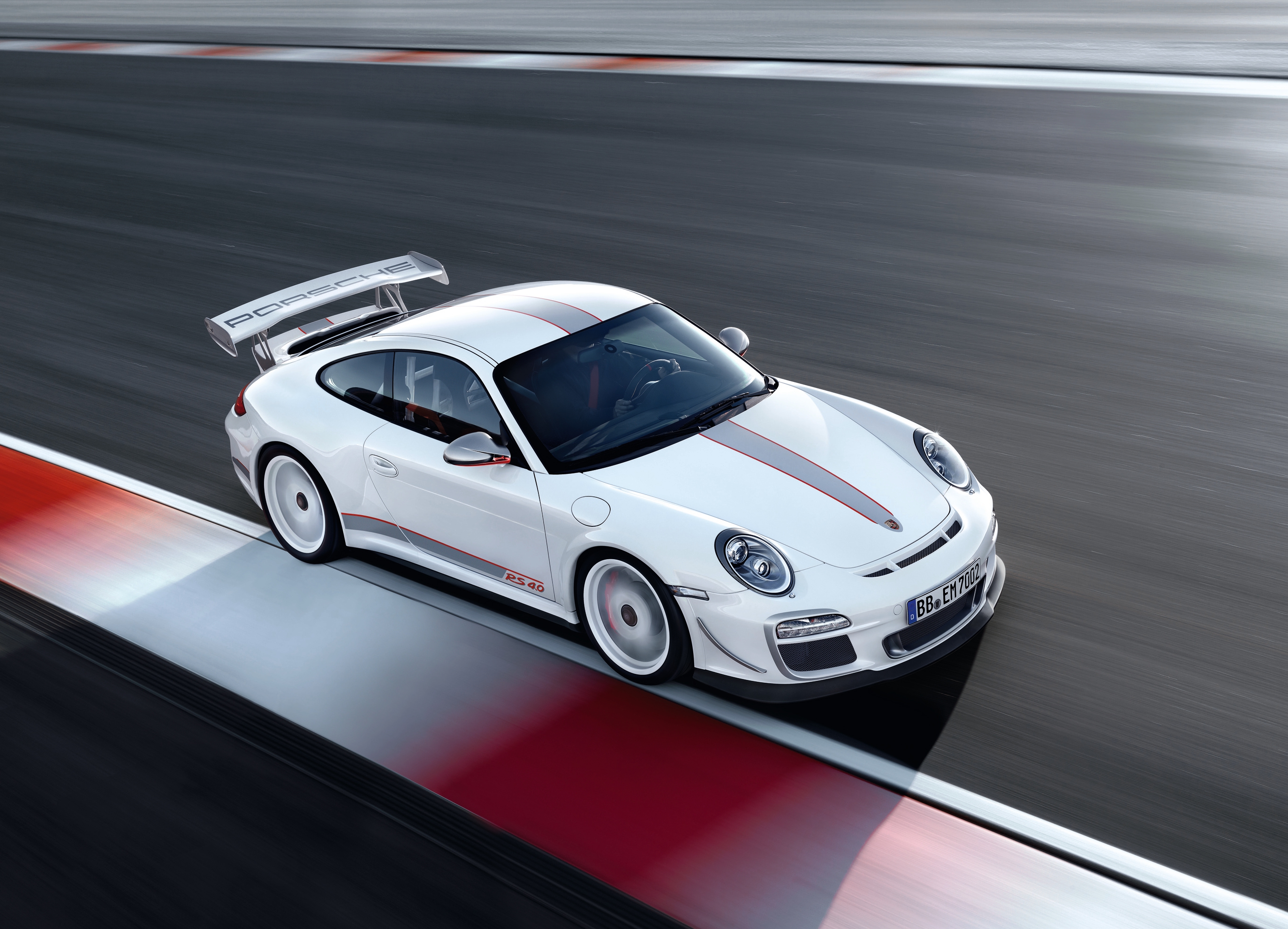

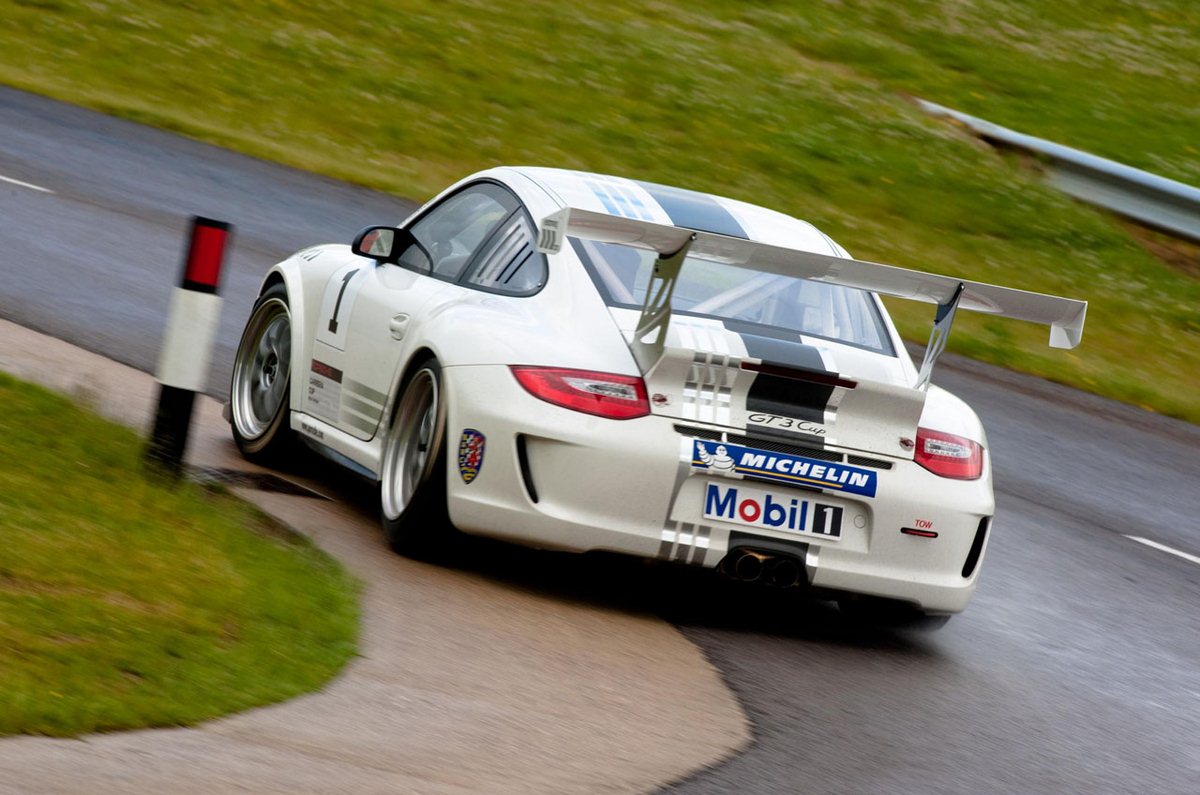
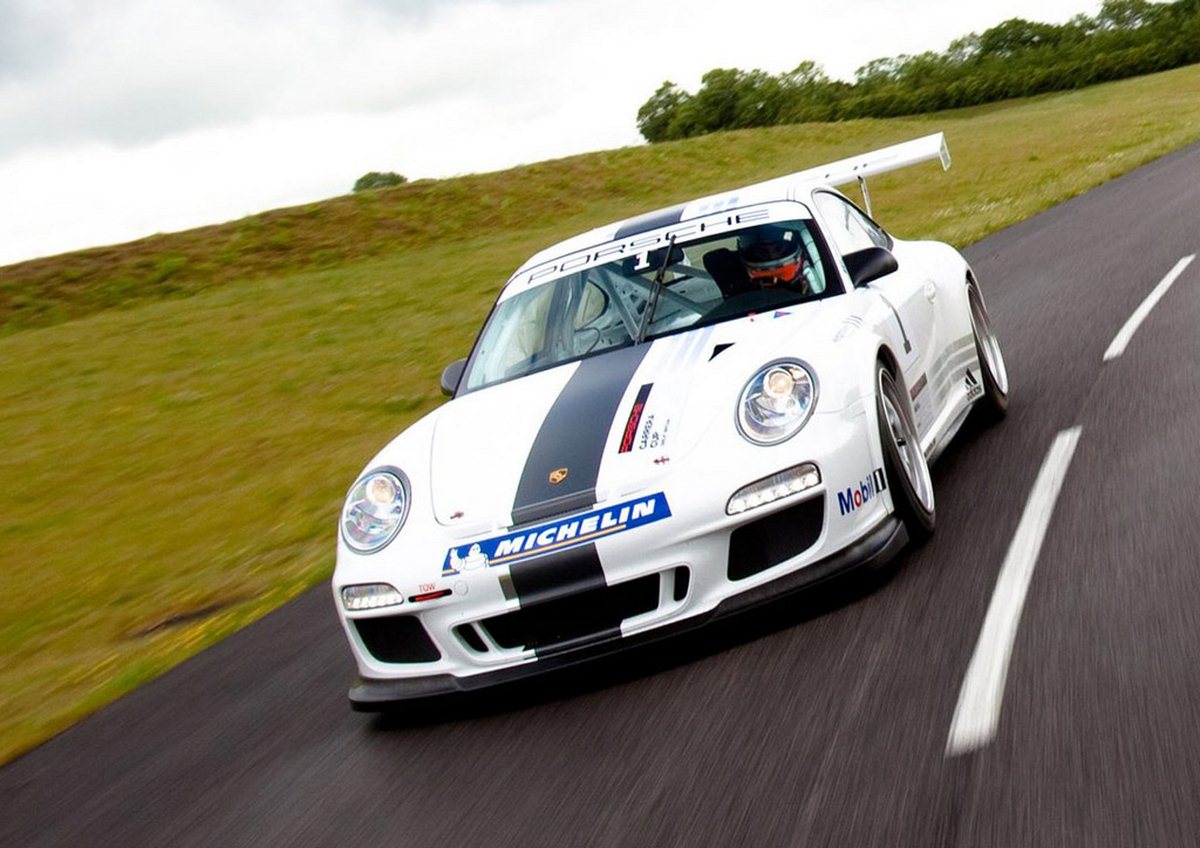
 Porsche Everyday Dedeporsches Blog