It's all about Porsche…if you're an owner of a Porsche,or a big enthusiast of Porsche Cars, Porsche Motorsports, Porsche Design, Porsche History, or a member of a Porsche Club….join me on focusing just about PORSCHE!!
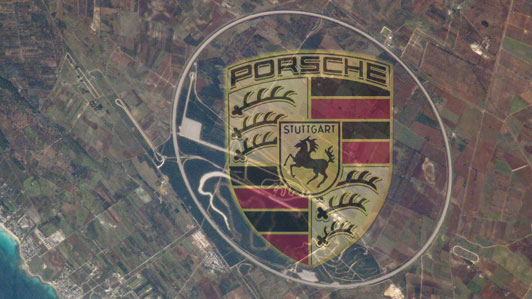
Something we all didn’t expect to stumble upon today: On 11 April 2012, the famed Nardò Technical Center with its high-speed ring in southern Italy will soon have a new owner as the Porsche Engineering Group announced that it would take over the facility from its current landlord Prototipo SpA in May. Italy’s famed high speed test track, located at more than 20 kilometres (12 mi) north-west of the town of Nardò, Italy, in the southern region of Apulia, in the province of Lecce.
Neither Porsche nor the track’s former owner, Italy’s Prototipo SpA, will say how much the deal went for, we can only guess. Porsche has been a regular at the circuit, along with other manufacturers.
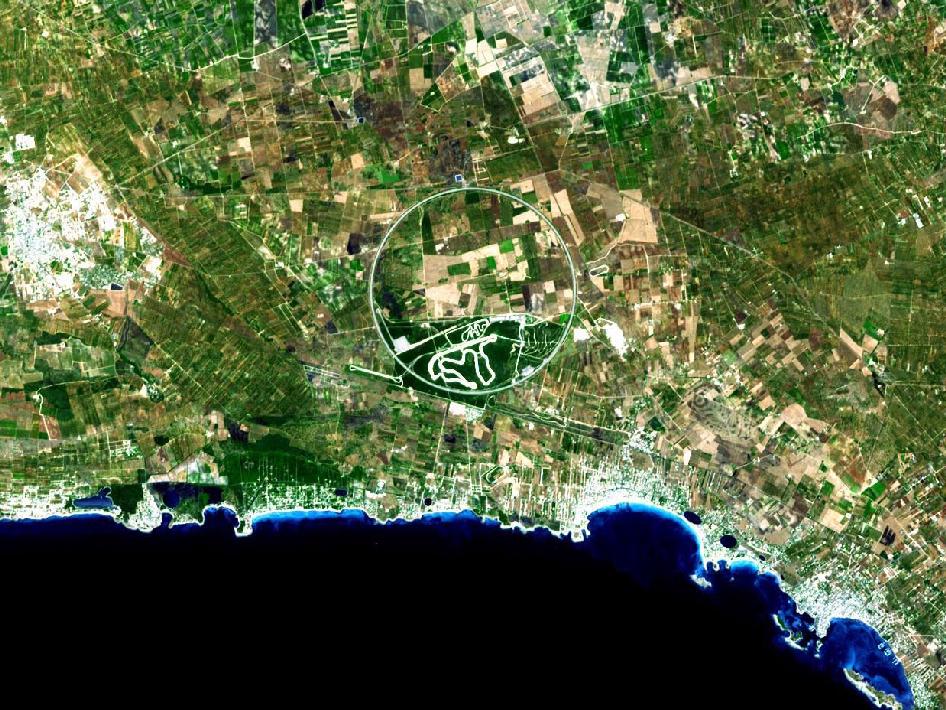
Nardo Ring, Italy The Nardo Ring is a striking visual feature from space, and astronauts have photographed it several times. The Ring is a race car test track that is steeply banked to reduce the amount of active steering needed by drivers. The Ring lies in a remote area on the heel of Italy's "boot," east of the naval port of Taranto and encompasses a number of active (green) and fallow (brown to dark brown) agricultural fields. In this zone of intensive agriculture, farmers gain access to their fields through the Ring via a series of underpasses. Winding features within the southern section of the Ring appear to be smaller, unused race tracks. Image Credit: NASA/GSFC/METI/ERSDAC/JAROS, and U.S./Japan ASTER Science Team
The automotive proving ground that can be seen from space covers an area of more than 700 hectares and comprises a 6.2-kilometer (3.9 miles) long handling circuit, a 12.5-kilometer (7.8 miles) long oval circuit and facilities for simulating different road surfaces and changeable weather condition.
“The Nardò proving ground with its high-speed and vehicle handling circuit ideally complements our facilities in Weissach,” said Matthias Müller, President and CEO of Porsche AG.
“With the systematic development of the company in Nardò as part of Strategy 2018, Porsche is proving to be a reliable employer and business partner in Apulia as well.”
Porsche said that it plans to optimize the test facilities and make them available to its clients for testing and trials purposes.
“With its rich array of facilities, from dynamic surfaces to acoustic and off-road sections coupled with the numerous workshops, our clients can continue to make extensive use of Nardò for their vehicle trials in the future as well,” said Malte Radmann, CEO of Porsche Engineering.
Thanks to the mild Mediterranean weather, the track can be used throughout the year in three shifts around the clock, seven days a week.
The ring is banked to such a degree that, on the track’s outer lane, cars can travel 150 miles per hour. Presumably, that’s what Porsche will be doing with it—that, and loan it out to their co-members of the VW Group. We’re guessing Lamborghini and other brands will want to spend as much time there as they can.
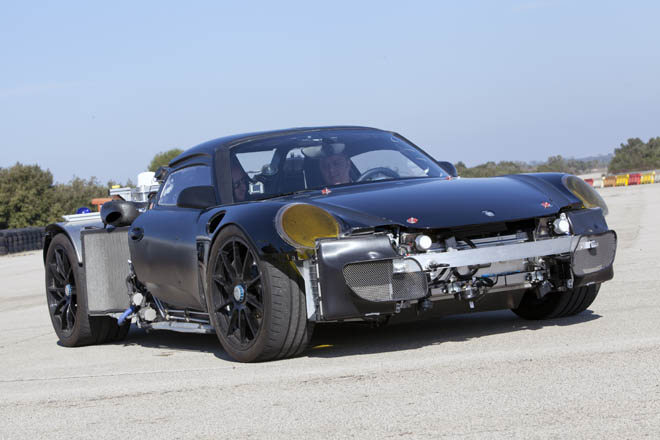
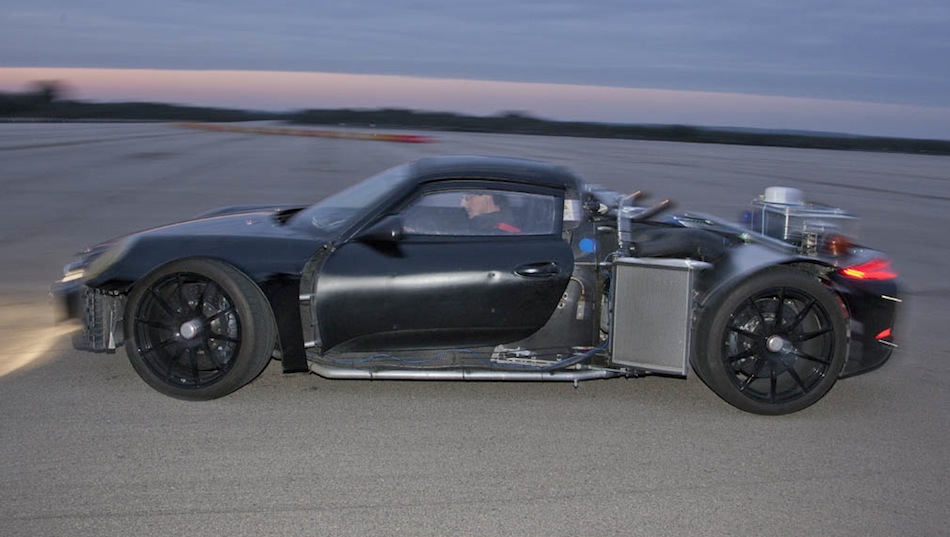
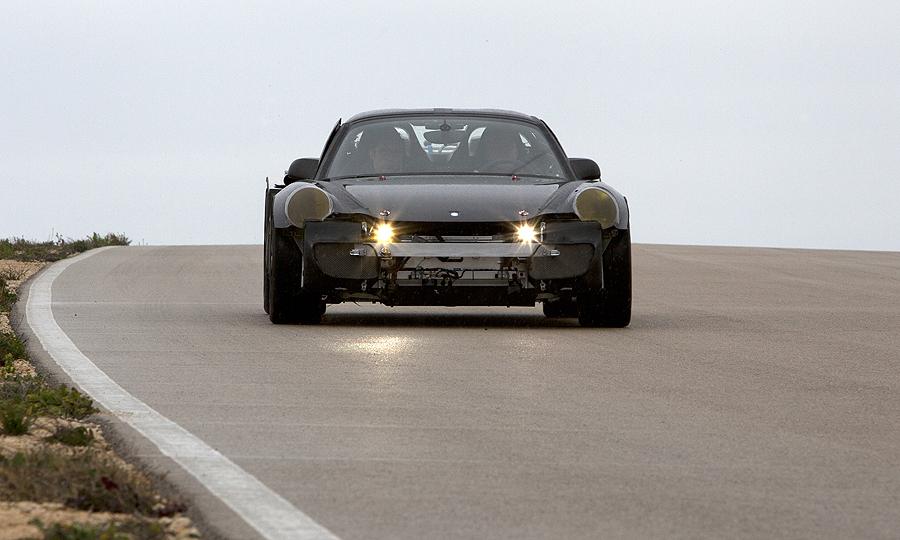
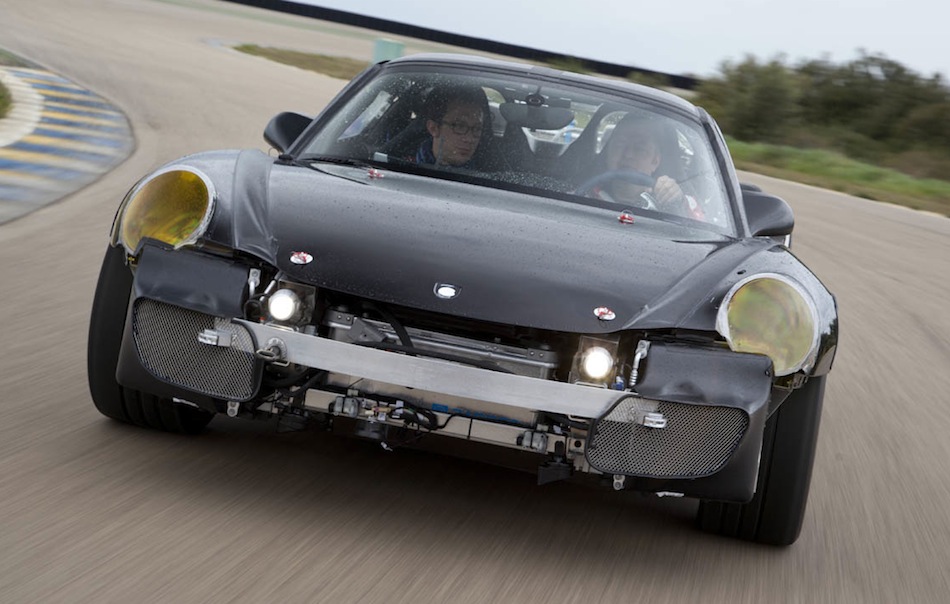
Most of us are aware that Porsche is developing their next supercar model which is the 918 Spyder and it will be the world’s first hybrid supercar. Porsche has built three prototypes until now and recently, the German automaker invited the guys from Wired magazine to test drive one of them on the Nardo Ring high speed test track in Italy this last March..
Porsche 918 Prototype testing at Nardo Ring
The car may not look much or complete right now but it was in bits and pieces a few weeks ago and Porsche managed to assign a team to assemble the parts in time for the test drive on the Nardo Ring.
Porsche will use the Nardo Ring to test future models and rent to other makers for development
The track is 12.5 kilometres (7.8 mi) long and is round, has four lanes for cars and motorcycles totaling 16 metres (52 ft) in width and has a separate inner ring for trucks at a width of 9 metres (30 ft).
In the cars/motorcycle ring the lanes are banked at such a degree that a driver in the outer most lane need not turn the wheel while driving at speeds of up to 240 km/h (149 mph). In essence, at the so called neutral speed which is different for the four lanes, one can drive as if in a straight lane. However extremely fast cars still require the steering wheel to be turned when going faster than the maximum neutral speed.
For example the Koenigsegg CCRwhich set a speed record for a production car at the Nardò Ring did so with the steering wheel at a 30° angle. This speed record has since been beaten by the Bugatti Veyron at Volkswagen Group‘s private Ehra-Lessien straight line test track in Germany, and hence the CCR only holds the speed record for the Nardò Ring.
An example of a Highspeed racing in Italy on the Nardo racetrack
In the process of fighting a turn as needed when going faster than the neutral speed quite a bit of potential top speed is lost and hence a fast car will go faster in a straight line than what is possible on the Nardó Ring.
Even at the neutral speed in a banked turn a car runs a bit heavier than it would in a straight line, since the downforce created by the banking increases the rolling resistance on the tires. There has only been one fatality at the ring.
The neutral speed for the four car/motorcycle lanes are respectively:
Lane 1 – 100 km/h (62 mph)
Lane 2 – 140 km/h (87 mph)
Lane 3 – 190 km/h (118 mph)
Lane 4 – 240 km/h (149 mph)
During regular weekly working activity the maximum speed allowed on the circular track is 240 km/h (149 mph). Higher speeds are only allowed at times when a client gets the track for its exclusive use.
The neutral speed for the truck ring is between 80 km/h (50 mph) and 140 km/h (87 mph) over the width of the track, highest in the outer most part of the lane.
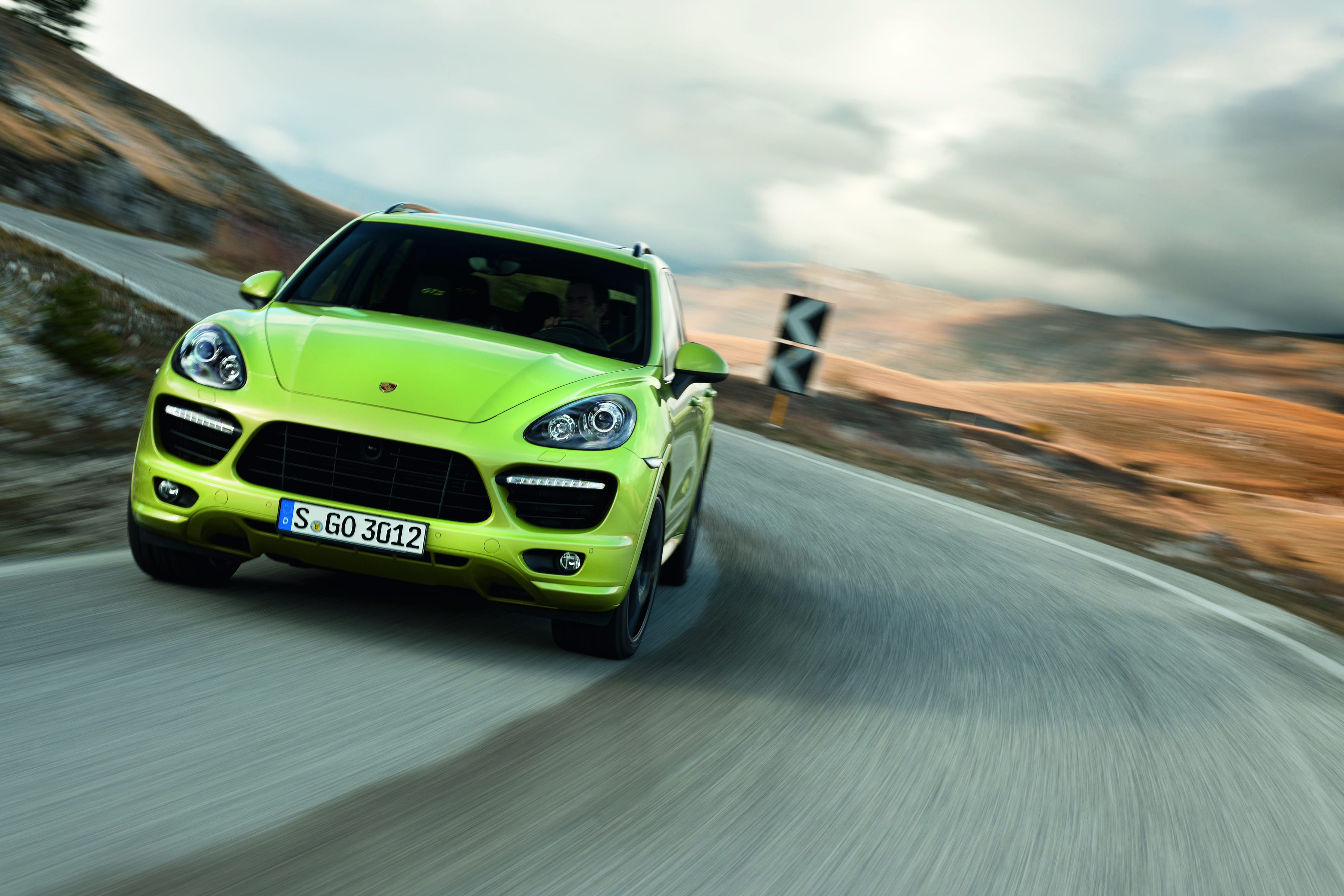
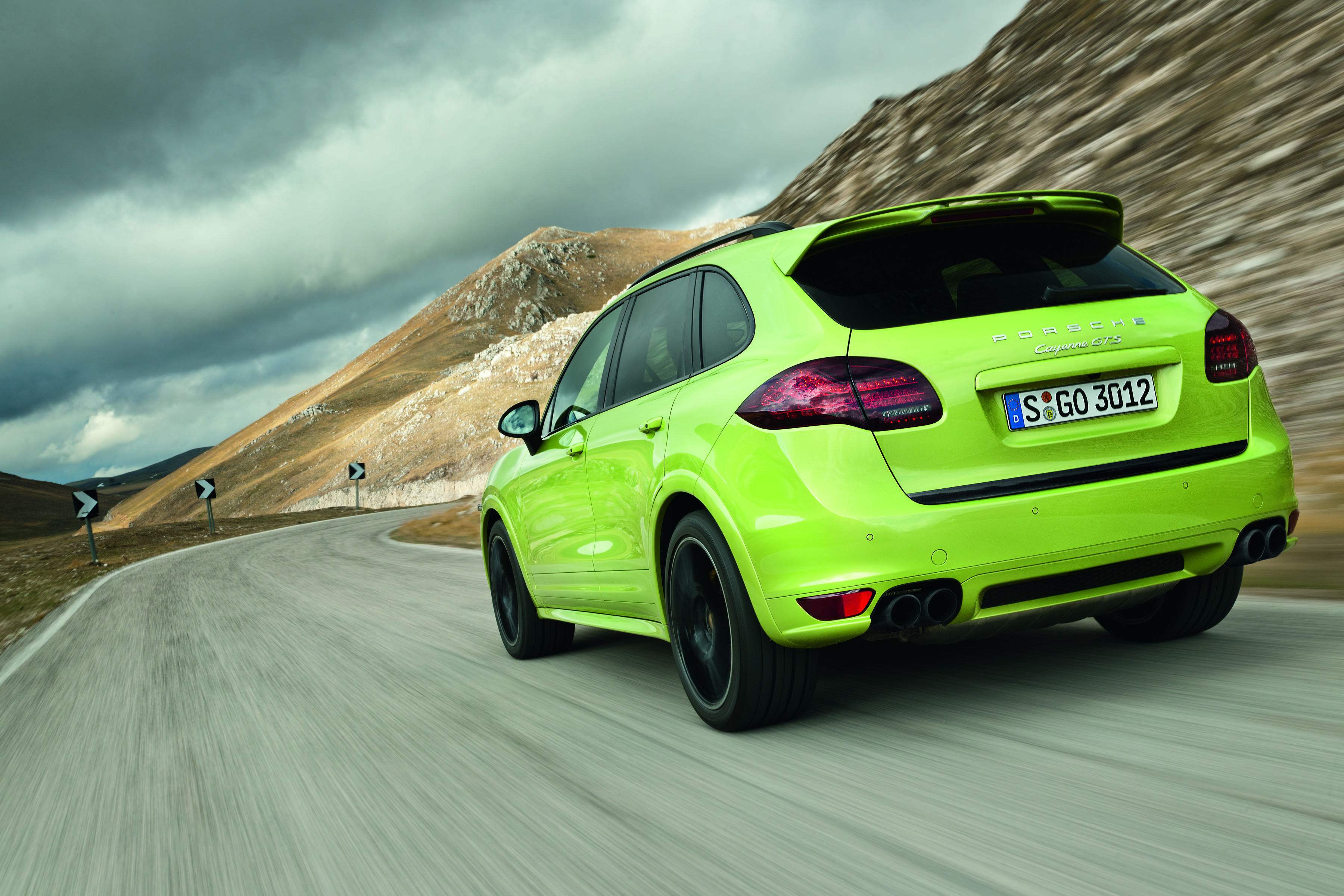
Press Release – Cayenne GTS with 420 hp and sporty chassis – Sitting like in an SUV, driving like in a sports car: the Cayenne GTS
Porsche Cayenne GTS
Stuttgart. The SUV with the driving fun of a sports car is entering its second generation. In Beijing, at the Auto China 2012, Dr. Ing. h.c. F. Porsche AG, Stuttgart, is celebrating the world premiere of the new Cayenne GTS.
Its concept: concentration on sporty performance.
Its recipe: a more powerful engine, more dynamic power development, a tauter chassis with lower ride height, emphatically sporty equipment. In the process, the new Cayenne GTS doesn’t just fill the gap between the Cayenne S and the Cayenne Turbo but also differentiates itself clearly from the other models with its own special character.
The Cayenne GTS’s bonnet conceals a 420 hp (309 kW) uprated V8 engine, based on the Cayenne S power unit. Power transmission is ensured by the eight-speed Tip-tronic S with integrated auto start/stop function.
Porsche Cayenne GTS
An especially dynamically tuned en-gine and transmission design reinforces the emphatically sporty characteristics, ena-bling short bursts of speed at any time. The Cayenne GTS sprints from a standing start to 100 km/h in 5.7 seconds, reaching 160 km/h in 13.3 seconds. The top speed is 261 km/h and the NEDC fuel consumption 10.7 litres per 100 kilometres.
The specially tuned chassis ensures thrilling driving dynamics. It is more tautly tuned, equipped with Porsche Active Suspension Management (PASM) and lowers the body by 24 mm relative to the Cayenne S. As a result, the new Cayenne GTS is even closer to the road and moves with the sports car’s trademark composure and agility.
The Cayenne GTS’s looks openly proclaim its pronounced sportiness with eye-catching features such as the front-end borrowed from the Cayenne Turbo, frames and trims in high-gloss black, prominent side skirts and wider wheel arches as well as a distinctive roof spoiler with twin-wing profile. The prevailing ambiance of the inte-rior is sporty elegance, the GTS features a leather interior with Alcantara elements as standard. Front sports seats with eight adjustment options are also featured as stan-dard in the new Cayenne GTS.
The Cayenne GTS will come to market in July 2012 with a price tag in Germany of 90,774 euro including value-added tax.
Matthias Müller, President and Chief Executive Officer of Porsche AG, paid tribute to Ferdinand Alexander Porsche’s services to the sports car manufacturer:
“We mourn the death of our partner, Ferdinand Alexander Porsche. As the creator of the Porsche 911, he established a design culture in our company that has shaped our sports cars to this very day. His philosophy of good design is a legacy to us that we will honour for all time.”
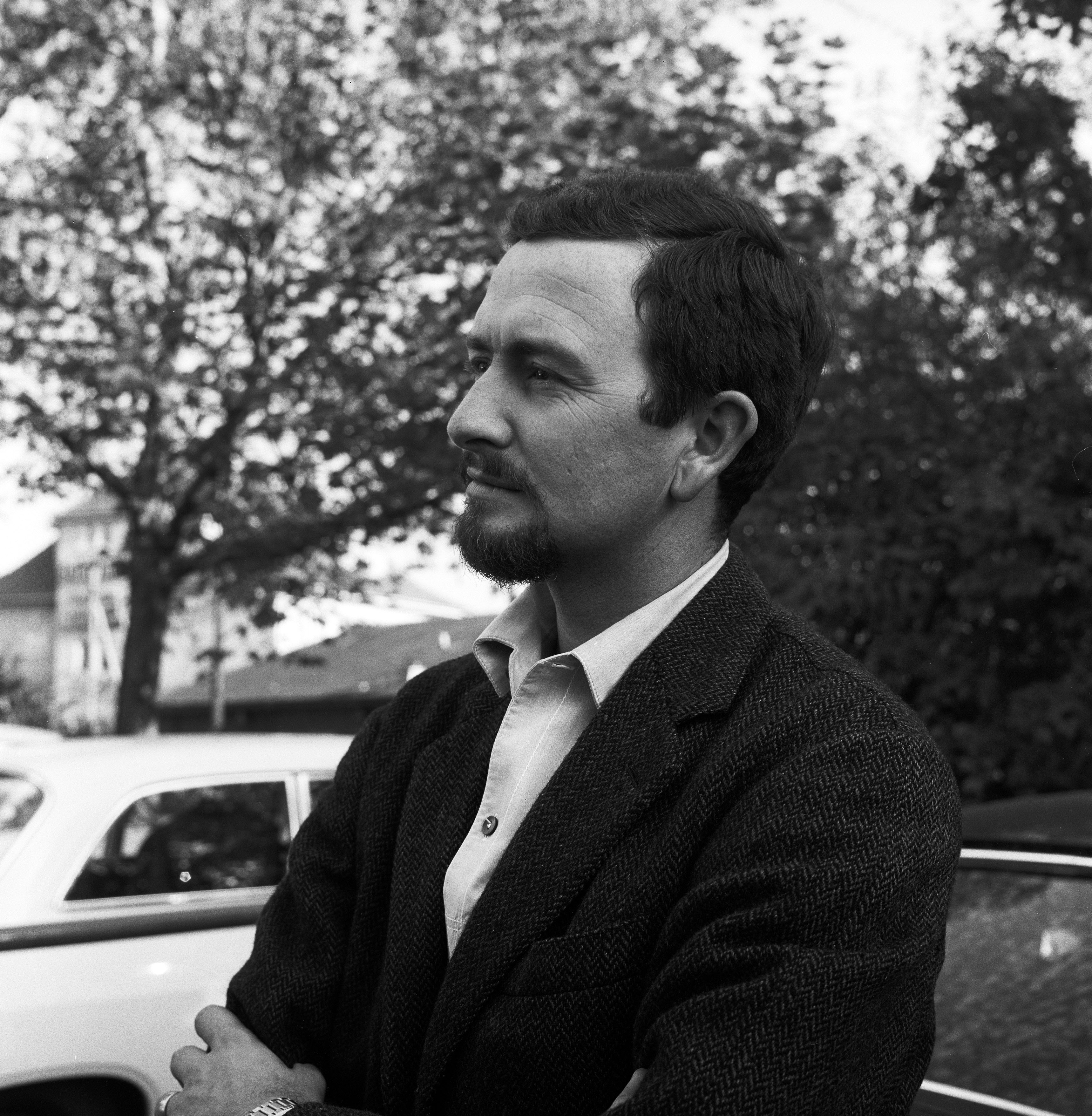
Ferdinand Alexander Porsche was born in Stuttgart on 11 December 1935, the oldest son of Dorothea and Ferry Porsche.
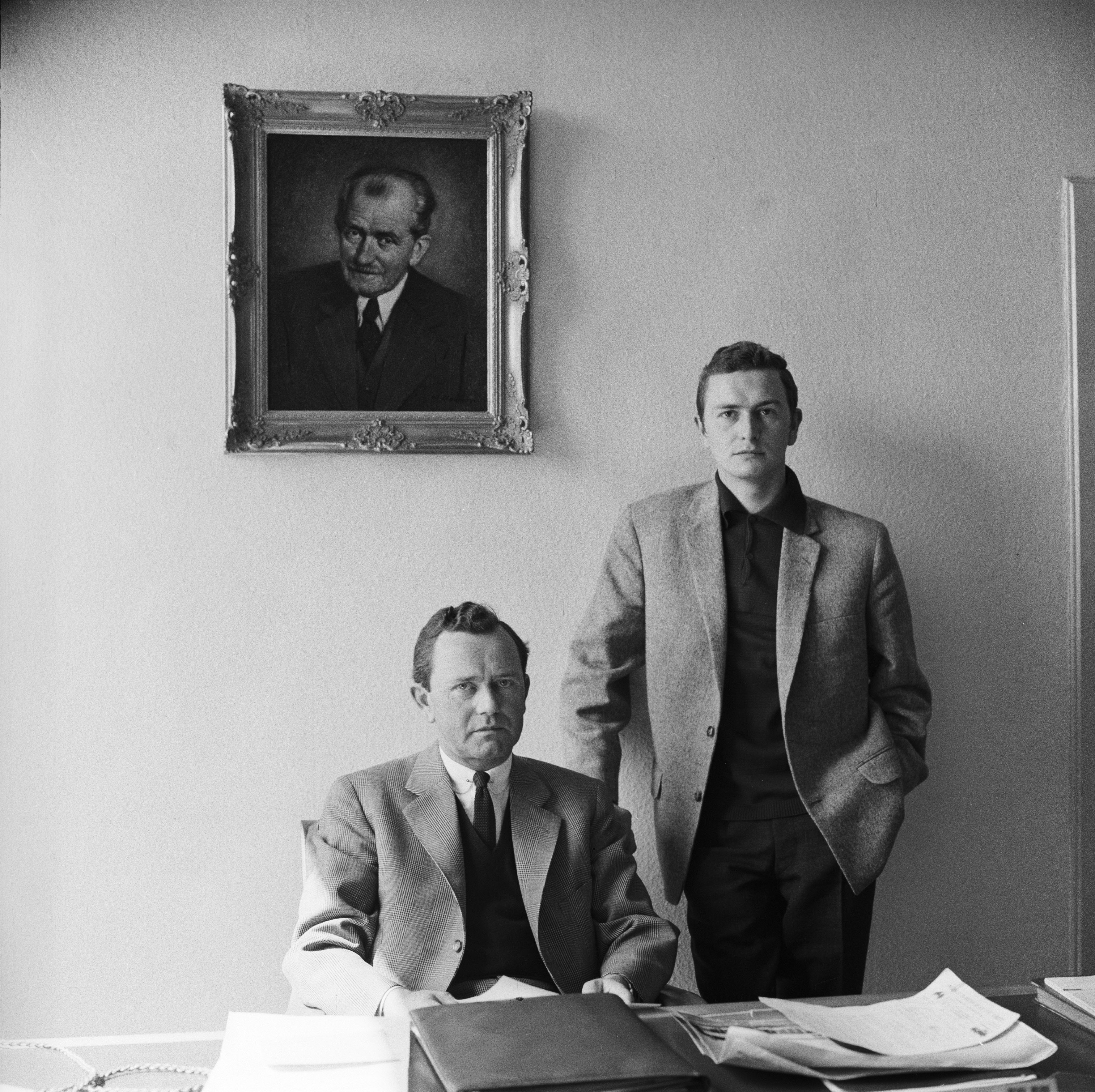
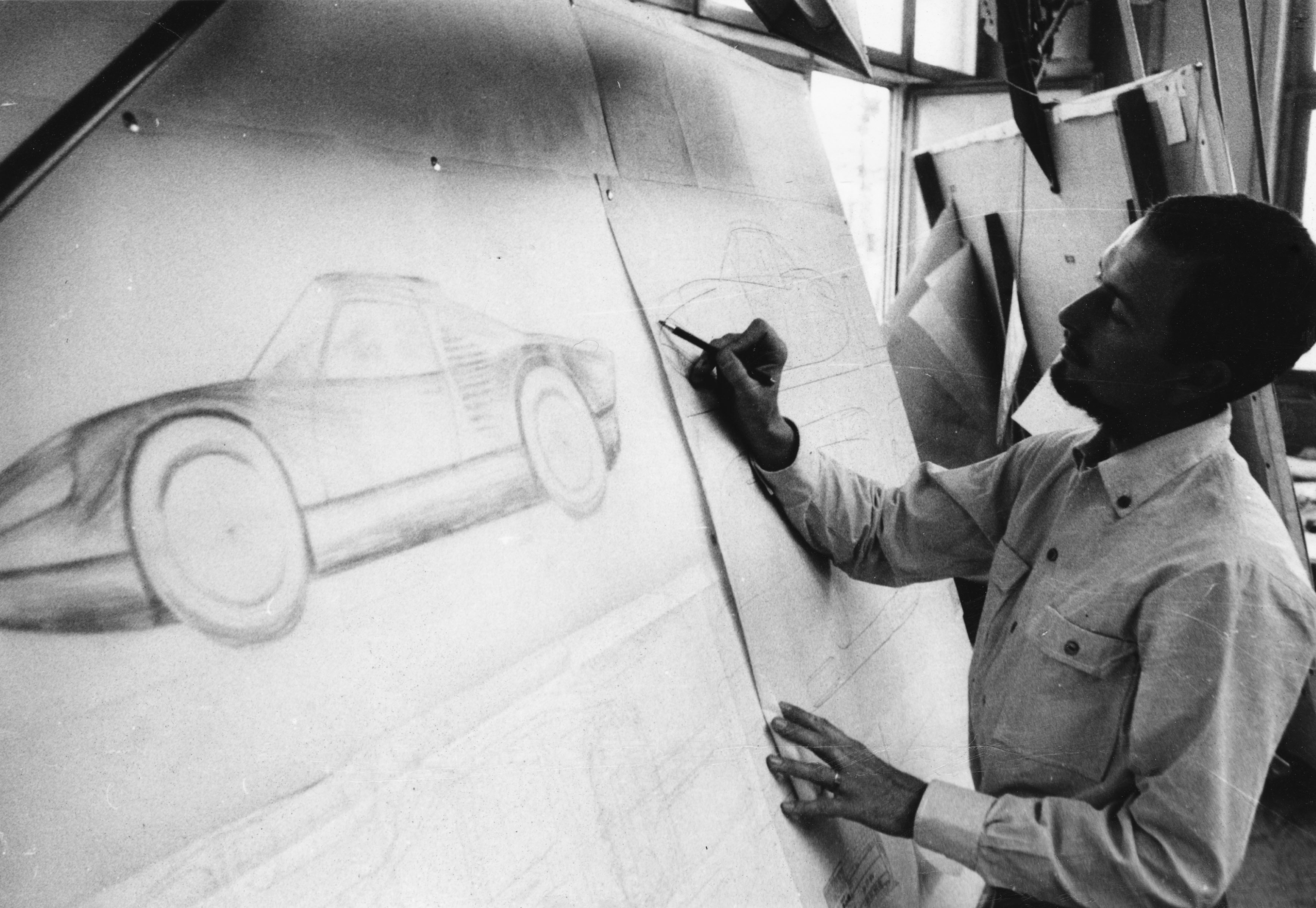
Ferry Porsche (left) in his office with his son Ferdinand Alexander Porsche (ca. 1960)
Even his childhood was shaped by cars, and he spent much of his time in the engineering offices and development workshops of his grandfather Ferdinand Porsche. In 1943 the family accompanied the Porsche company’s move to Austria, where he went to school in Zell am See.
After returning to Stuttgart in 1950, he attended the private Waldorf school. After leaving school, he enrolled at the prestigious Ulm School of Design.
Ferdinand Alexander Porsche in his Design office (1963)
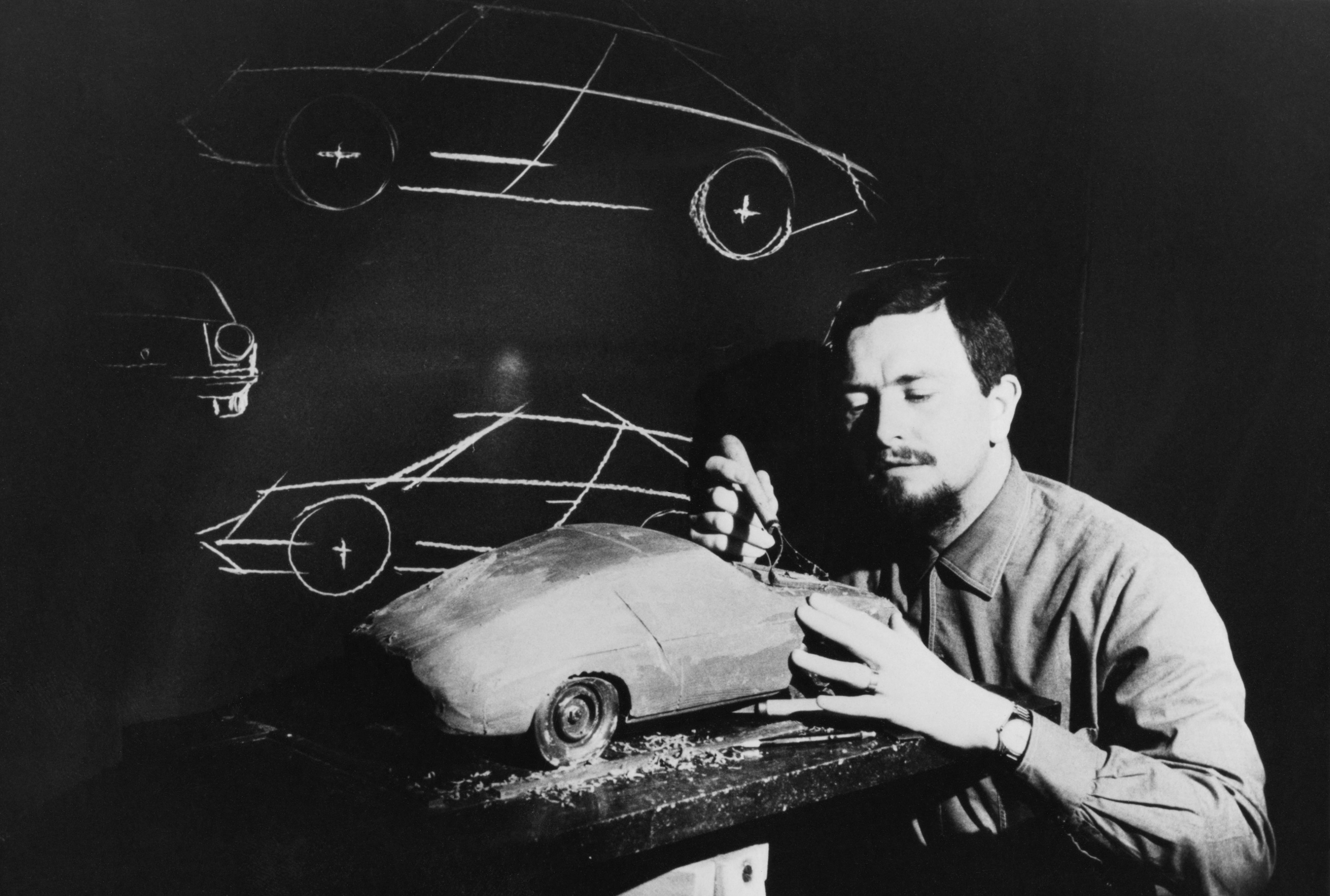
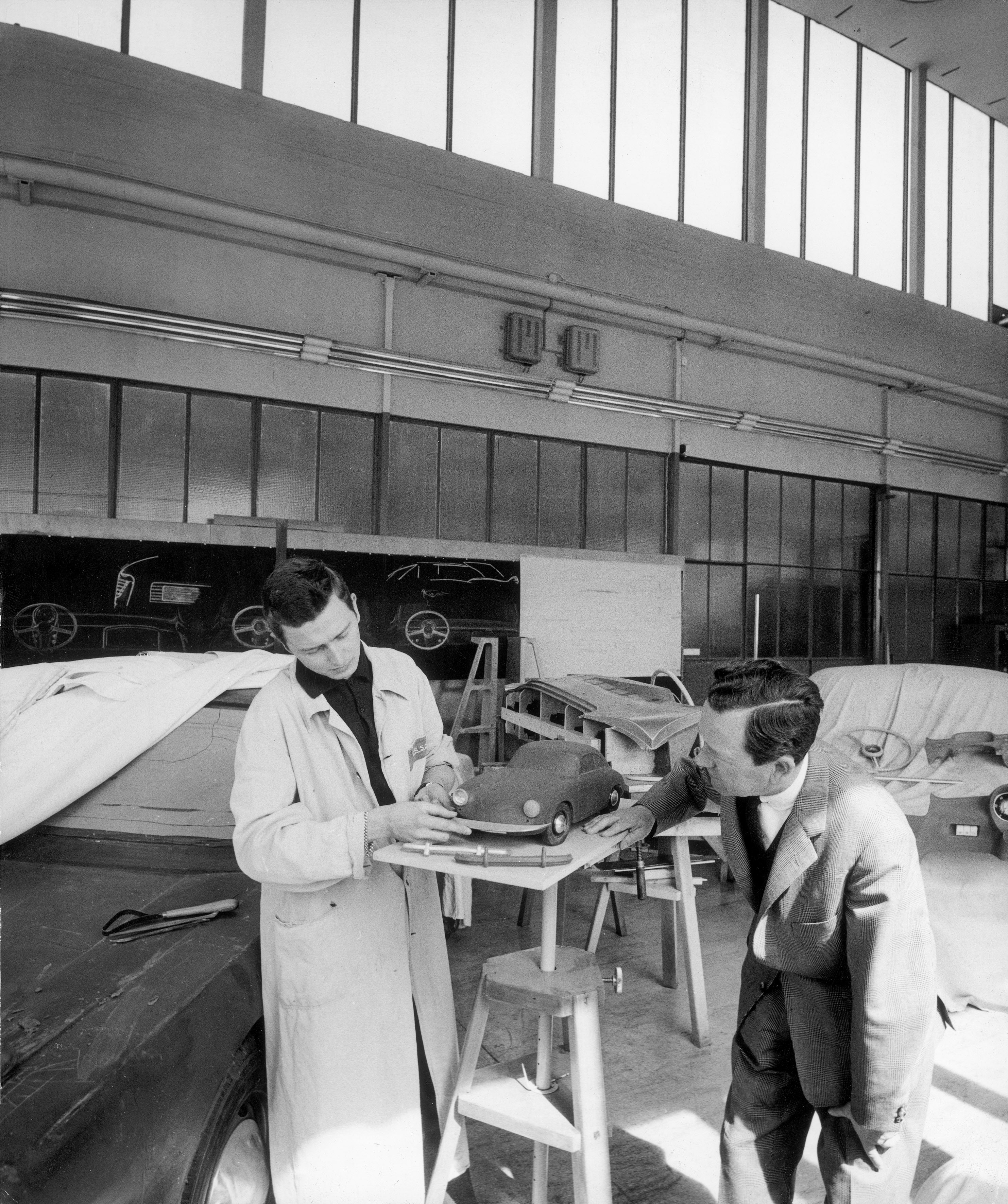
In 1958, F.A. Porsche, as he was known by his colleagues, joined the engineering office of what was then Dr. Ing. h.c. F. Porsche KG. He soon proved his great talent for design by sculpting the first model of a successor to the 356 model line out of plasticine.
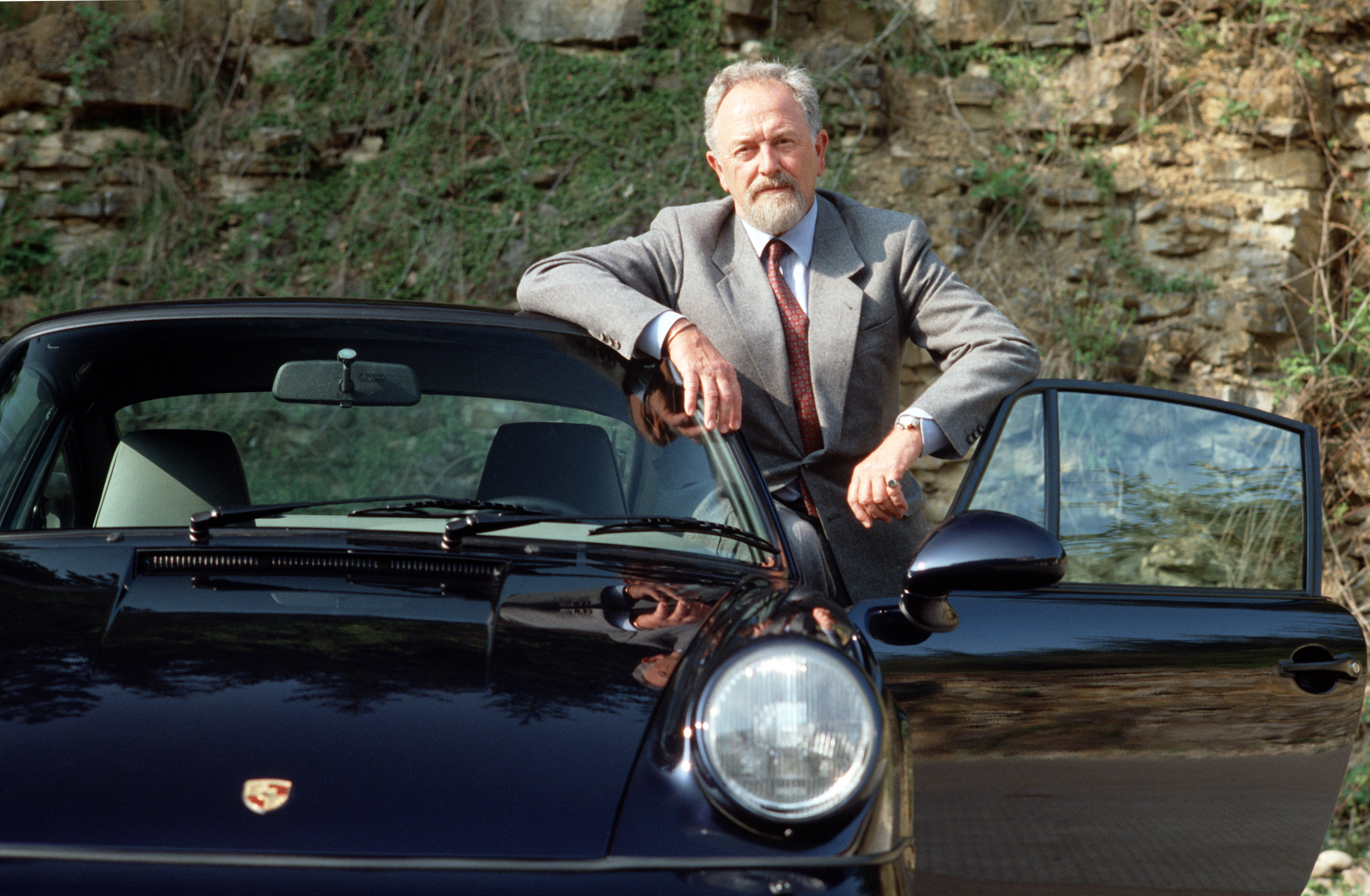
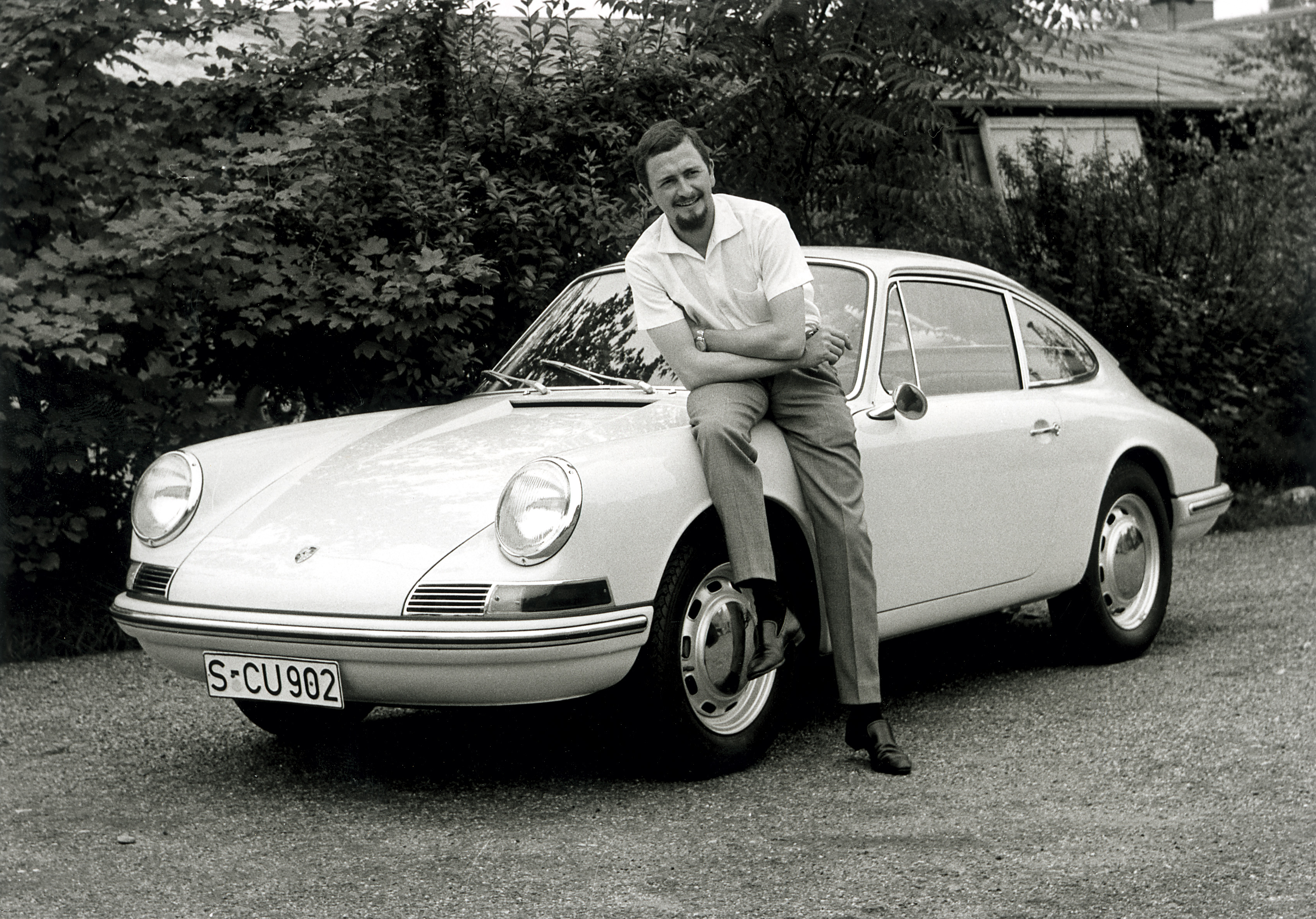
Ferdinand Alexander Porsche next to Modell Typ 911 (1968)
In 1962 he took over as head of the Porsche design studio, creating a worldwide furore one year later with the Porsche 901 (or 911). With the Porsche 911, F.A. Porsche created a sports car icon whose timeless and classical form survives to this very day in what is now the seventh 911 generation.
Porsche Typ 901 (T8), next to model: Ferdinand Alexander Porsche (1963)
However, in addition to passenger cars, F.A. Porsche also concerned himself with designing the sports cars of the 1960s. His best-known designs include the Type 804 Formula One racing car or the Porsche 904 Carrera GTS, now considered to be one of the most beautiful racing cars ever.
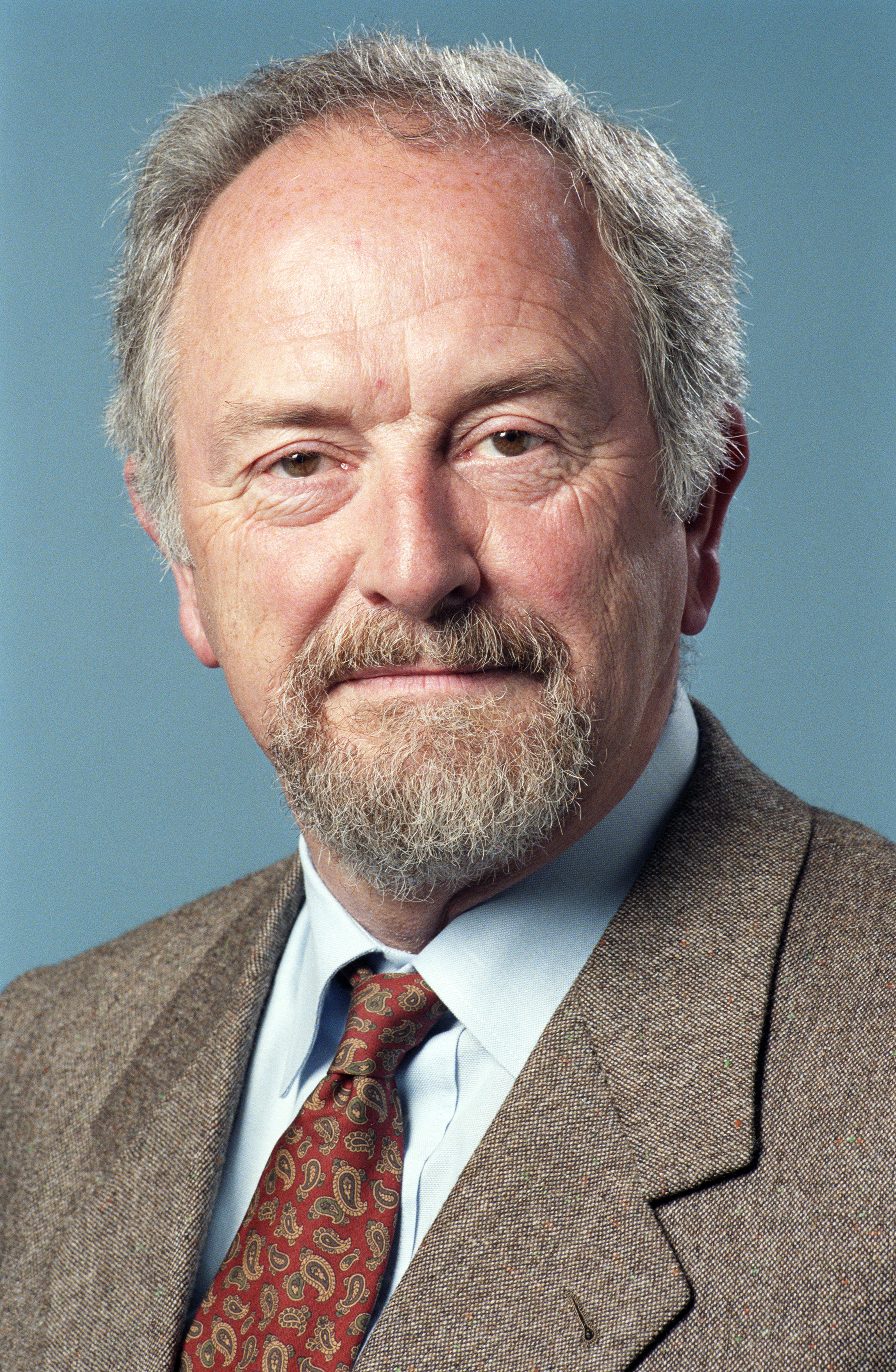
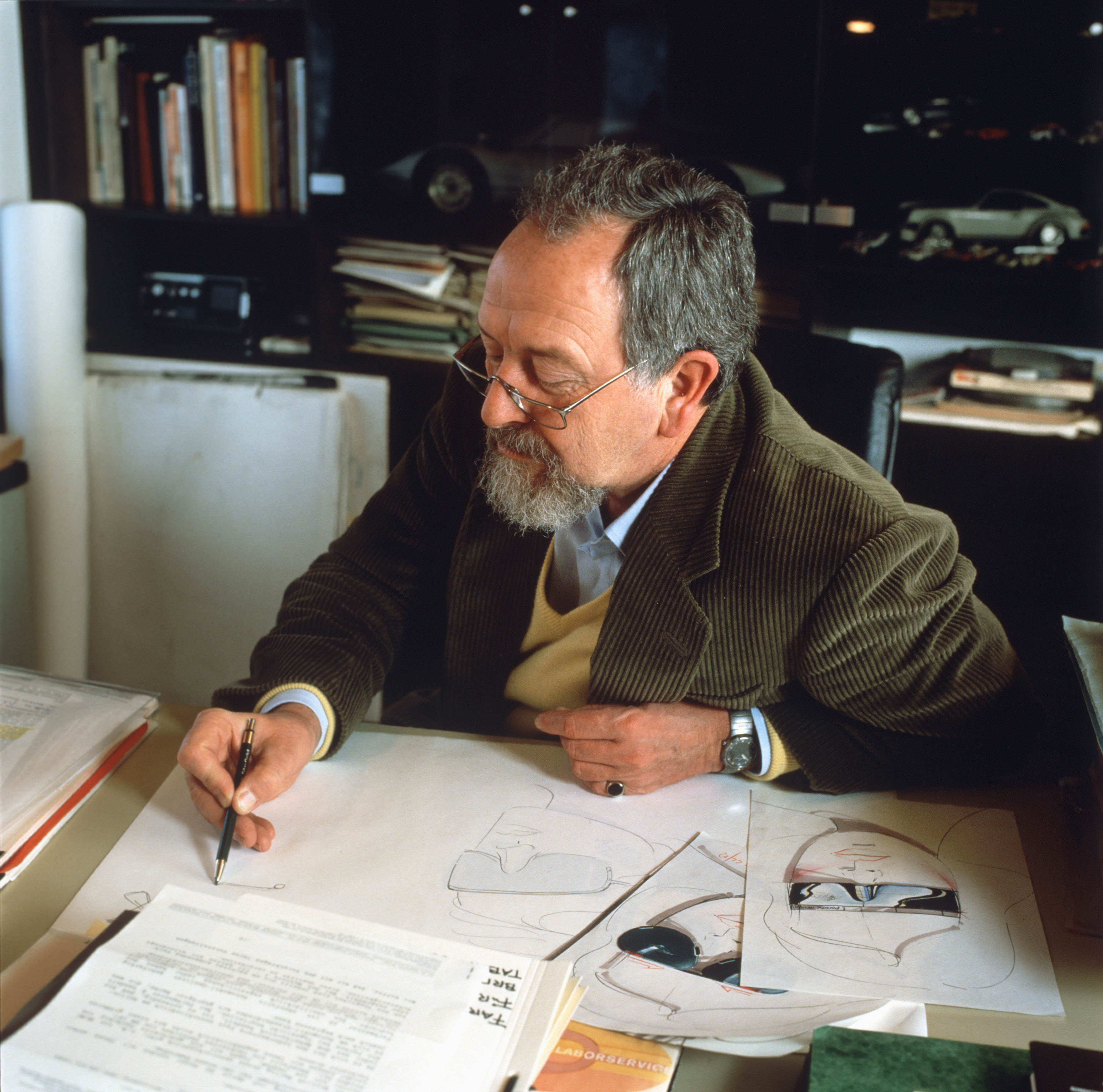
Ferdinand Alexander Porsche (1989)
In the course of the conversion of Porsche KG into a joint-stock corporation in 1971/72, Ferdinand Alexander Porsche, along with all the other family members, stood down from the company’s front-line business operations.
In 1972 he founded the “Porsche Design Studio” in Stuttgart, the head office of which was relocated to Zell am See in Austria in 1974. In the decades that followed, he designed numerous classic gentlemen’s accessories such as watches, spectacles and writing implements that achieved global recognition under the “Porsche Design” brand. In parallel, with his team, he designed a plethora of industrial products, household appliances and consumer durables for internationally renowned clients under the brand “Design by F.A. Porsche”.
Ferdinand Alexander Porsche (1965)
A strong and clear design concept typifies all product designs created in his design studio to date. The credo of his design work was:
“Design must be functional and functionality has to be translated visually into aesthetics, without gags that have to be explained first.”
F.A. Porsche: “A coherently designed product requires no adornment; it should be enhanced by its form alone.” The design’s appearance should be readily comprehensible and not detract from the product and its function.
His conviction was: “Good design should be honest.”
Ferdinand Alexander Porsche received numerous honours and awards both for his work as a designer as well as for individual designs. For example, in 1968 the “Comité Internationale de Promotion et de Prestige” honoured him for the outstanding aesthetic design of the Porsche 911 while the Industrial Forum Design Hannover (iF) voted him “Prizewinner of the Year” in 1992.
Ferry (right) and Ferdinand Alexander Porsche in the Porsche Design-Studio (ca. 1959)
Ferdinand Alexander Porsche retained a close lifelong association with Porsche AG as a partner and member of the Supervisory Board. For example, even after stepping down from front-line business operations, he contributed to the design of Porsche’s sports cars over many decades and repeatedly steered the company in the right di-rection. This was especially the case for the difficult period Porsche experienced at the beginning of the 1990s.
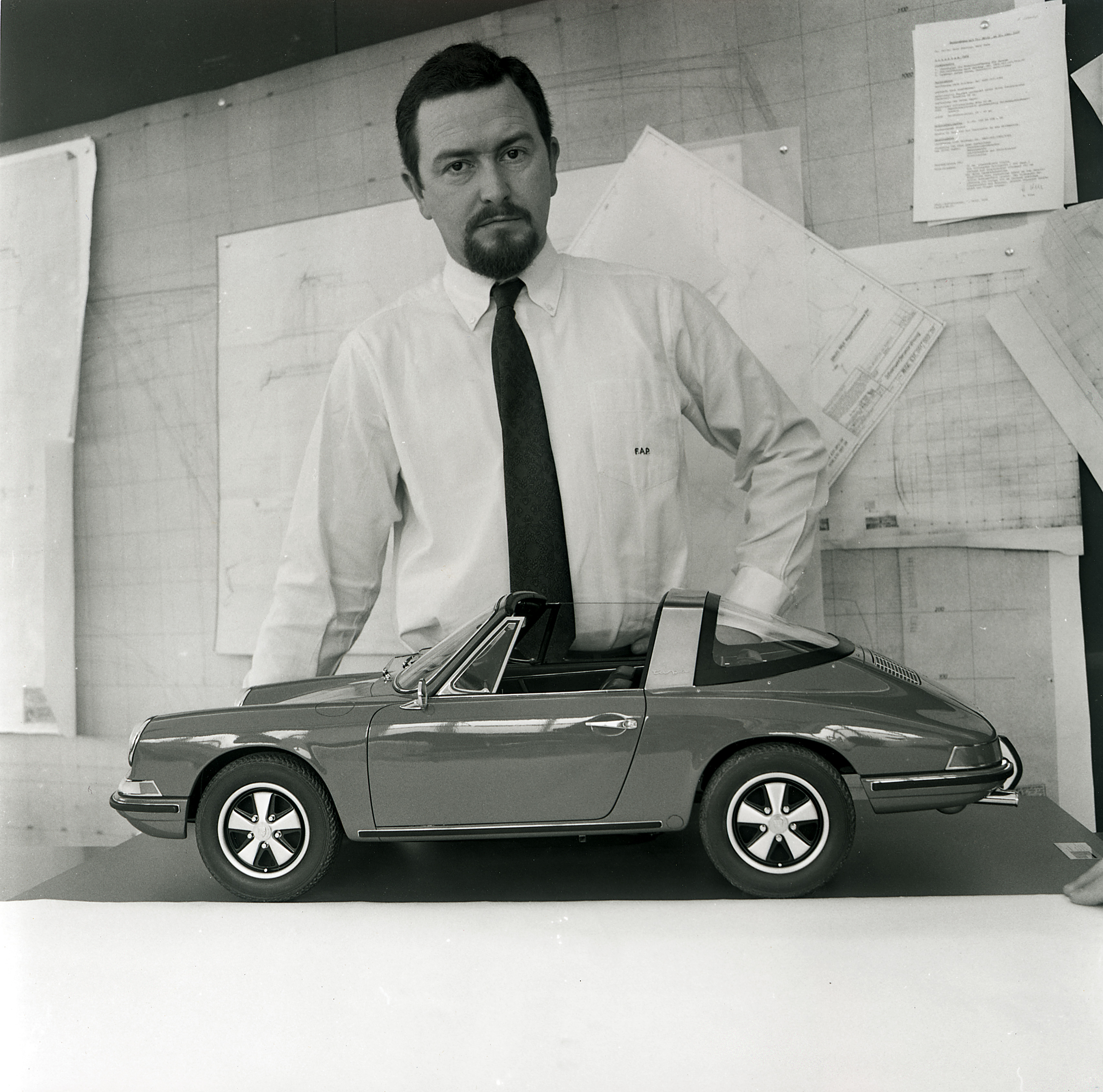
Ferdinand Alexander Porsche with model 911 S Targa (1968)
From 1990 to 1993, F.A. Porsche served as President of the company’s Supervisory Board, thus playing a major role in Porsche A.G’s eco-nomic turnaround. In 2005, he stood down from his Supervisory Board role in favour of his son Oliver and assumed the mantle of Honorary President of the Supervisory Board.
Ferdinand Alexander Porsche will be buried in the family grave at Schüttgut in Zell am See, attended by his immediate family. An official funeral service will be held in Stuttgart at a later date.
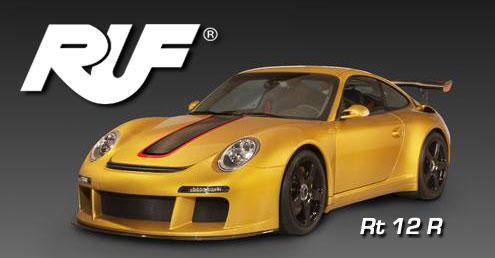
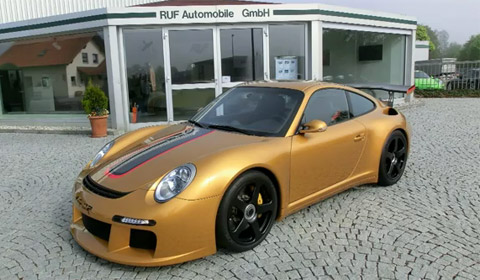
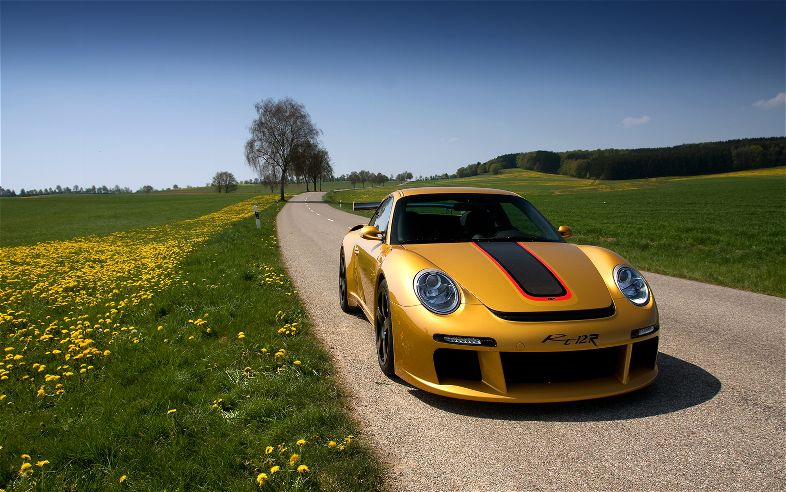
iRacing.com today announced plans to add the Ruf RT12R to its lineup of virtual race cars and high performance automobiles. Manufactured by Ruf Automobile GmbH, the RT12R is among the world’s very fastest production automobiles.
iRacing.com, the world’s foremost online motorsport simulation service, today announced plans to add the RUF RT12R to its lineup of virtual race cars and high performance automobiles.
Manufactured by RUF AutomobileGmbH, the RT12R is among the world’s very fastest production automobiles.
“We’re excited to offer the RUF RT12R to iRacers around the world,” says Steve Myers, Executive Vice President and Producer, iRacing.com Motorsport Simulation, LLC.
“We’re proud of the assortment of virtual race cars we have available, but iRacers have made it clear they also want high-performance, exotic automobiles in our service. The RUF RT12R certainly fits the bill. It’s a superb piece of automotive sculpture, with performance that is nothing short of breathtaking.”
At the heart of the RUF’s performance is a 3.8 liter, twin-turbo, flat six engine producing 730 horsepower and nearly 700 lb/ft of torque. Coupled with a six speed transmission, the RT12R has a top speed of 230 mph.
“RUF is pleased to partner with iRacing.com in building a digital version of the RT12R,” said Estonia Ruf, Director of Marketing, RUF Automobile GmbH.
“For more than 70 years RUF has been recognized for the craftsmanship and cutting-edge engineering that goes into all of our automobiles. Although it is a young company, comparatively speaking, iRacing clearly shares those core values of craftsmanship and engineering excellence.”
iRacing vehicle dynamic engineers will begin the process of creating a digital prototype of the RT12R later this spring.
When completed, the prototype will undergo a rigorous testing and development process in order to insure the virtual RUF drives just like the real one.
iRacing expects to make its RUF RT12R available to iRacing members in the fall of 2012.
Production of the most anticipated Porsche starts at the company’s Stuttgart plant on Sept. 18, 2013 with only 918 units to be produced. Porsche will start selling the car for a starting price tag of $845,000 and the first customer cars will begin arriving in the United States near the end of 2013.
That’s quite a bit time. But before all that happens, Porsche decided to give a select few a first ride in a very early prototype for the 918 Spyder.
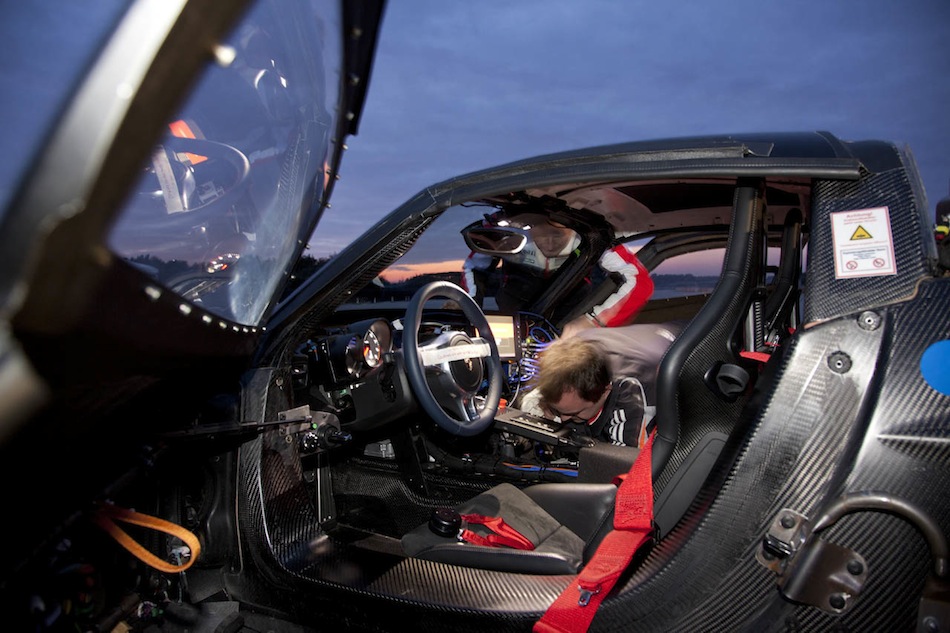
A ride in a 2014 Porsche 918 Spyder prototype, the only one in the world at a remote test track, a gaggle of Porsche engineers are at work, surrounded by all sorts of data-logging equipment. And there, in the middle of it all, is the 918.
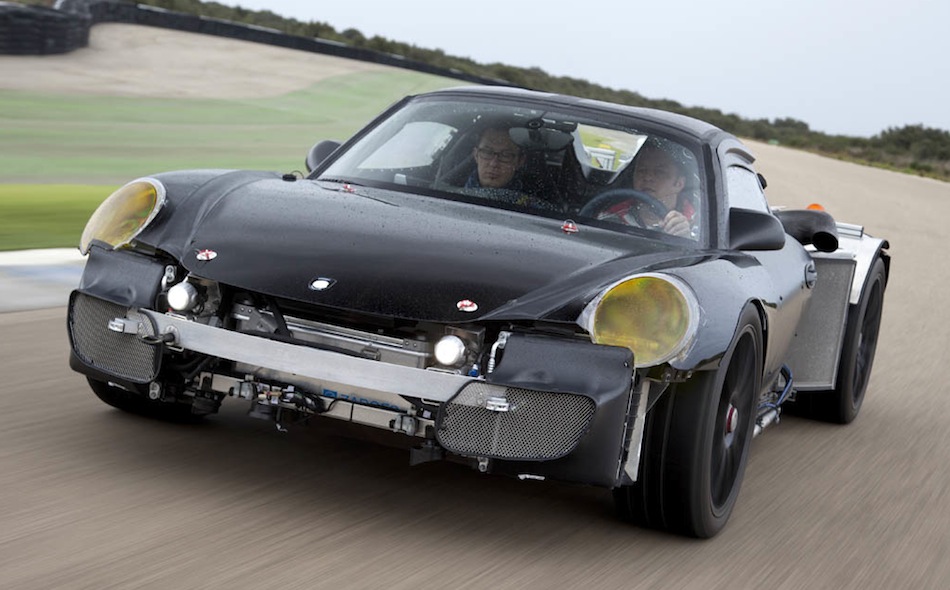
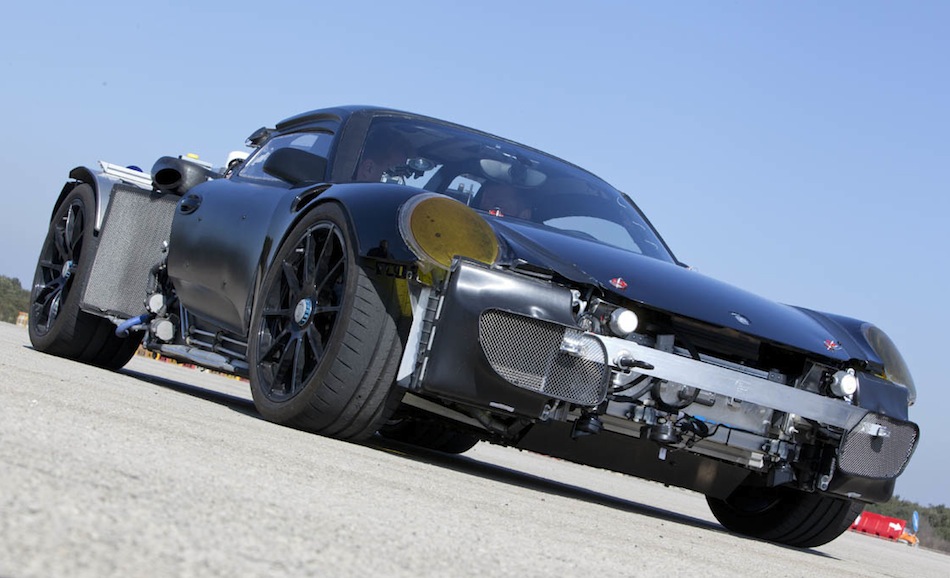
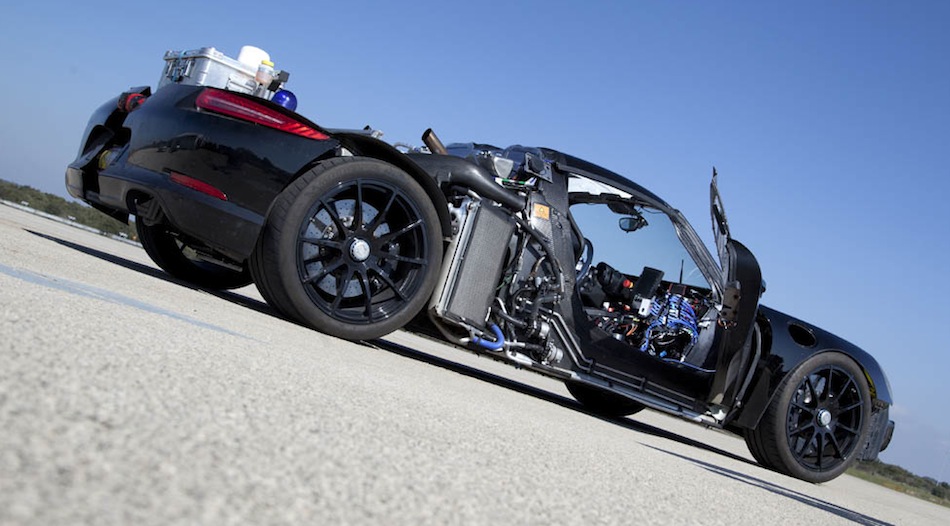
The first ever Porsche 918 Spyder to run under its own means is nothing more than a rolling chassis pieced together so engineers can test its gasoline-electric hybrid drivetrain.
Partly covered in modified Porsche 911 body panels and flaunting outrageous exhaust pipes that sprout up from the engine bay at the rear (a feature we’re assured will be retained for production), it is a long way from the 918 Spyder concept that basked in the spotlight at the 2010 Geneva Auto Show.
“The production version will be very similar to the concept car in overall appearance,” Frank Walliser, chief engineer for the 918 program.
“There will be some changes, like these tailpipes. This is really just a systems mule that we’re using to sort the various gasoline-electric hybrid components and its electronics package before we begin construction of road-going prototypes back in Weissach (Porsche’s research and development center in Germany).”
As we know the Porsche 918 Spyder by now. Mere months after its unveiling, Porsche confirmed it would put the supercar into production as a successor to the celebrated Carrera GT, starting on September 18, 2013.
Just 918 examples are planned, each running down a dedicated line that is being established in a former paint shop at the car maker’s Zuffenhausen headquarters in Germany. It is the same factory that builds the latest Boxster and 911 — a holy grail to true Porsche fans, no less.
Waking Up the Engine
The Porsche engineers make some adjustments to the prototype’s electronics, which are housed in a makeshift aluminum box strapped to an area that will eventually be occupied by the production car’s rear spoiler. Walliser’s boss, Wolfgang Hatz, Porsche’s chief of research and development, slides down into the driver seat and twists a key in the left-hand-mounted ignition. Odd whirring sounds rise up from underneath before the gasoline engine catches and fills the garage with a deep pulsating blare of exhaust from those prominent tailpipes.
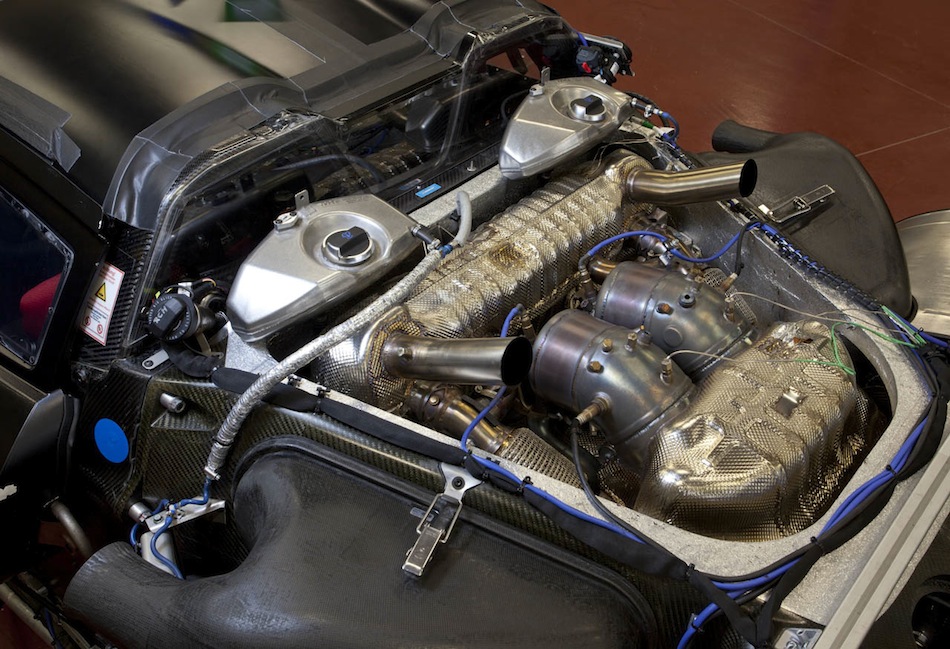
The centerpiece of the new Porsche is its mid-rear-mounted V8 gasoline engine, seated on traditional rubber mounts (rather than the hydraulic mounts used on the 911) within a carbon-fiber cradle that is attached to the back of the main tub by six prominent mounting points.
Similar to the 90-degree V8 used in the Porsche RS Spyder successfully campaigned in the American Le Mans series between 2005 and 2008, the engine has gained 1.2 liters of displacement, going from 3.4 liters in race trim up to 4.6 liters in this application.
Walliser describes the engine as “entirely new,” noting that it features an all-new crankcase, cylinder head design and low-reciprocating-mass internals, plus that radical exhaust system that sees two pipes exit just behind the integral carbon-fiber roll hoops. The point of this arrangement is to keep hot exhaust gases well away from the car’s heat-sensitive battery pack mounted down low directly behind the tub.
Let’s Talk About the Numbers
The revamped V8 has been tuned to rev to a dizzying 9,200 rpm (though in its current state of tune, it has a lower redline), and owing to its racing gene, Walliser promises it will deliver the same razor-sharp throttle response as the Carrera GT’s 5.7-liter V10. Porsche engineers tell us the V8 makes about 562 horsepower.
But the 2014 Porsche 918 Spyder is a hybrid, remember, so it also has a pair of synchronous electric motors — one mounted up front acting exclusively on the front wheels with 107 hp, and a second, 121-hp motor attached to the rear of the gasoline engine providing drive to the rear wheels. We’re told total system power will be in the neighborhood of 759 hp, with 568 pound-feet of torque.
Barely containing his delight at finally getting to show off the 918 Spyder to someone other than an engineer, Hatz gingerly guides the prototype out of the garage. After prodding the throttle a couple times to release some heat into the engine and its peripheries, he speeds off into the distance. We scramble back into the Multivan and catch up with the prototype at the end of an immense test track. The engineering team has spent the 10 days here at the track methodically running through the first systems test of the new car.
This car will offer five driving modes. There’s “e power” for all-electric operation, a “hybrid” mode that allows either electric or gasoline operation, followed by “sport hybrid,” which is the first of three performance-oriented gasoline-electric modes. Beyond that, “race hybrid” calls up even further levels of performance, while “hot lap” unleashes all the battery’s remaining power for short periods of what Walliser describes as overboost.
How Quick Is It?
Nothing is official just yet, but Porsche is aiming for a curb weight around 1,700 kg (3,747 pounds), with 0-62-mph acceleration in less than 3 seconds.
Officials also hint at a 0-124-mph time of less than 9 seconds and zero to 186 mph in less than 27 seconds — quicker than the Carrera GT. Top speed, achieved with the help of a series of active aerodynamic functions including diffuser elements behind the front wheels and a multistage rear wing that extends to a maximum height of 4.7 inches, is pegged at 202 mph
The Chassis
The 2014 Porsche 918 Spyder prototype rides on a unique chassis made almost entirely from cast-aluminum components. The suspension is a combination of double wishbones at the front and a multilink setup in back, but unlike the system on the Carrera GT, which used a racecarlike pushrod system attached to the unit-body, the 918 has conventional springs and dampers sited outboard near the center-lock-style wheels, which measure 20 inches up front and 21 inches in the rear and are wrapped in 265/35R20 and 325/35R21 Michelin Pilot Sport Cup rubber.
Computer simulations suggest the production car will be capable of generating up to a 1.4g on the skid pad (though that’s a maximum figure, rather than the average lateral acceleration we customarily report). He also drops a Nurburgring claim: Porsche is targeting 7 minutes, 22 seconds on the Nordschleife — still well short of the Dodge Viper’s 7:12, but moving nonetheless.
Even in early prototype form, the 2014 Porsche 918 Spyder is hugely impressive. There’s still a long way to go — another 18 months of intensive development, no less. But as our ride comes to an end, we’re struck by just how far Porsche’s engineering team has come during just 10 days of development work on the rolling chassis.
evo’s Editorial Director and Founder Harry Metcalfe has a look at the future of the supercar.
From Top Gear: The performance headlines are this. Acceleration from 0-62mph in ‘less than three’ seconds. Zero to 125mph in a time that almost matches a Bugatti Veyron. And a Nürburgring lap time (so far verified only on Porsche’s supernaturally accurate simulators), of 7.22. That’s 10 seconds faster than the old Carrera GT, and 10 seconds.
From AutoWeek: As if that’s not enough, Porsche also says its new supercar will boast a combined city/highway fuel-consumption figure of more than 78.4 mpg (U.S.) on the current European cycle. By comparison, the Carrera GT returned just 13.2 mpg (U.S.) under the same test procedure.
From Wired: Porsche pulled a variant of the 4.6-liter V8 originally fitted to the three-time ALMS LMP2 Championship-winning RS Spyder. That engine put out a comparatively paltry 503 horsepower, but fitted to the 918, output is up to 570 hp. That figure is before you account for the 918′s two electric motors, and it’s also where the similarities to past supercars ends.
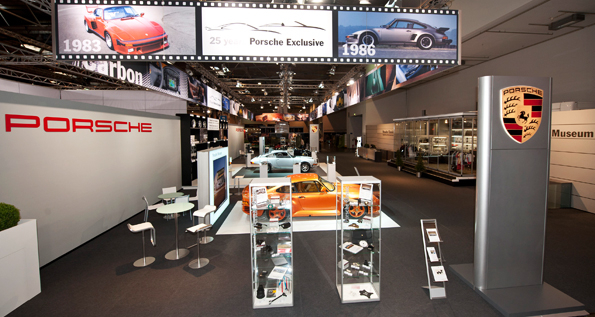
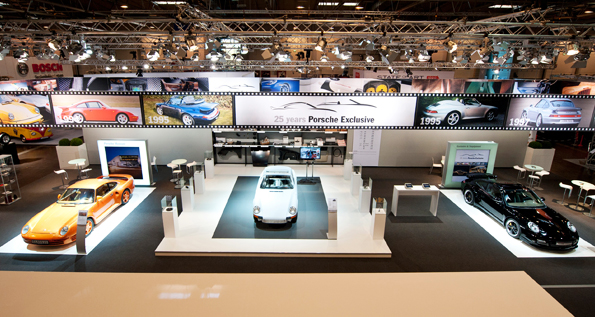
Stuttgart. Porsche Classic will be exhibiting from 21- 25 March 2012 at the biggest Classic trade fair in the world in Essen, this time showcasing its comprehensive service offering on a stand with more than twice the area compared with last year.
The Techno Classica in Essen – the world’s leading motor show for classic cars
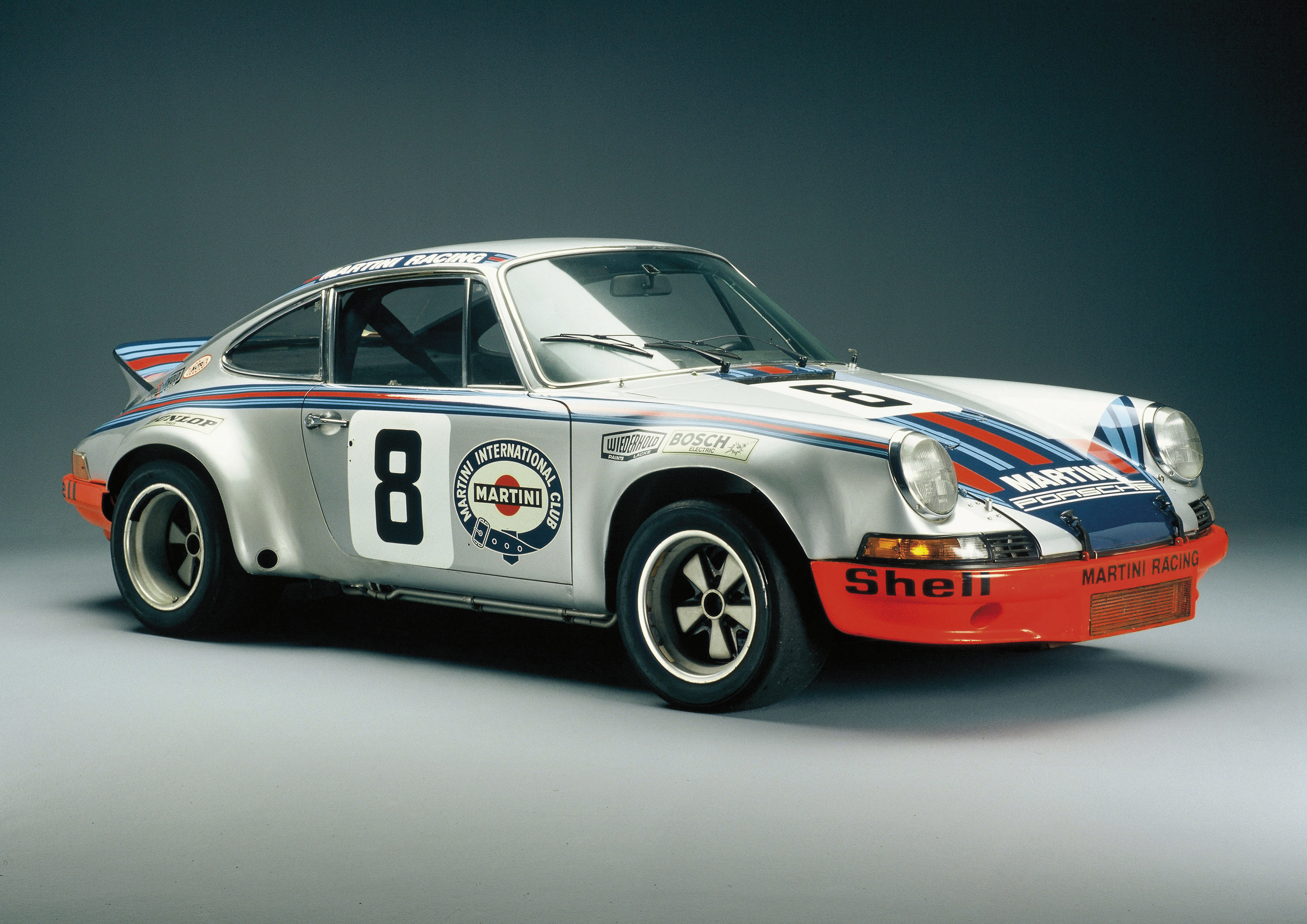
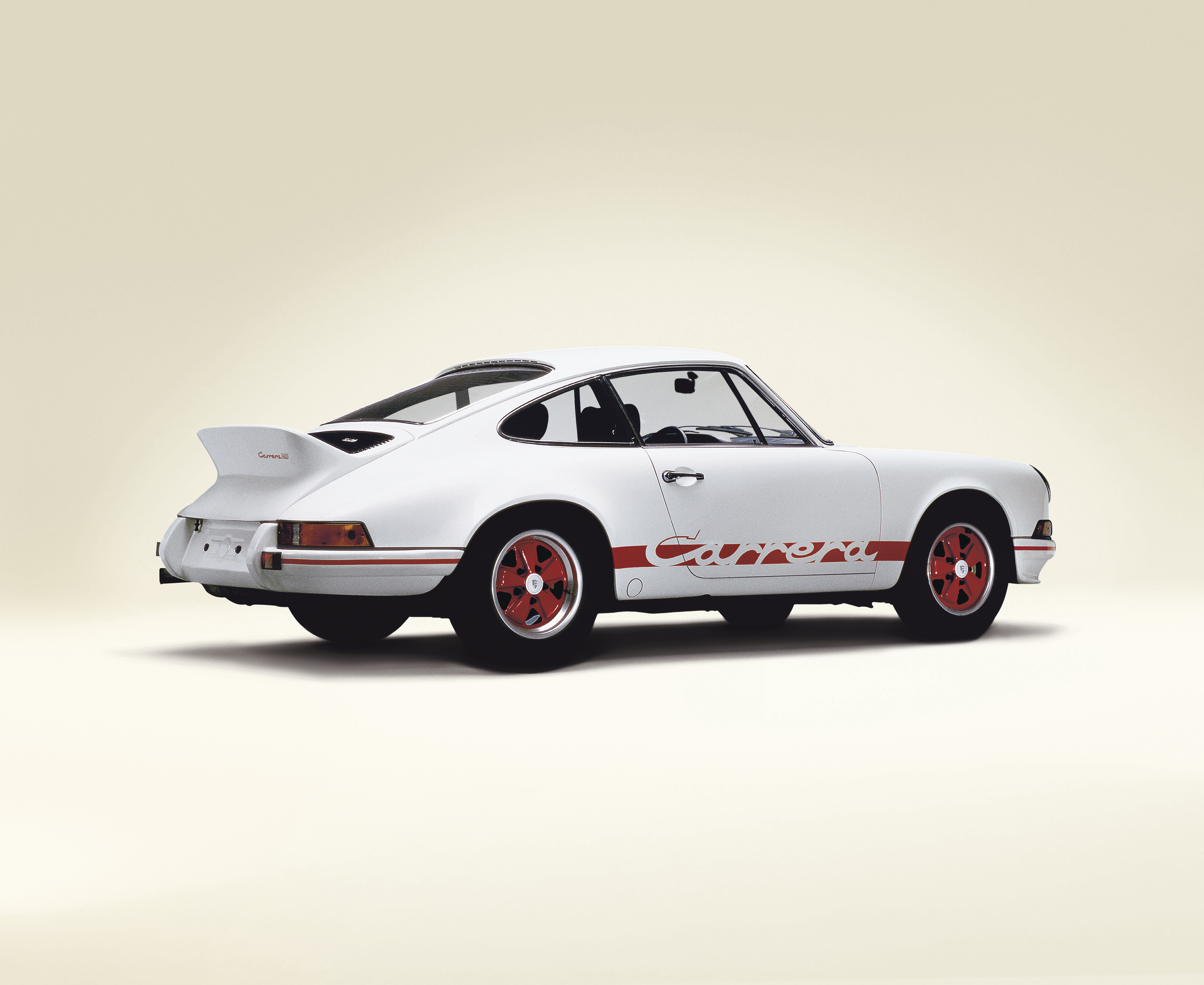
A particular highlight is the legendary 911 Carrera RS 2.7, celebrating its 40th anniversary this year.
To mark the occasion, Porsche is presenting two racing versions of the 911 Carrera RS from the Porsche Museum at the new location in Hall 7.0.
The Techno Classica in Essen – the world’s leading motor show for classic cars
The 1973 vintage 911 Carrera RSR delivers 330 hp. The ultimate RS variant dating from 1974, the 911 Carrera RSR Turbo with its two-metre wide rear end, even manages a sensational 500 hp, which it achieves with a mere 2.1 litre displacement.
Porsche 911 RSR - built in 1973, 330 hp
The “40 years of the 911 Carrera RS” anniversary is rounded off by a 911 Carrera RS 2.7, that has been restored by the Porsche Classic workshop specialists. Also on show is an early Porsche 911, which is currently being restored for a customer at Porsche Classic.
40th anniversary for the Porsche 911 Carrera RS 2.7
It goes without saying that the Porsche Classic experts will once again be on hand to provide advice and practical assistance to visitors regarding the preservation and maintenance of their historic vehicles and will provide information on the availability of Porsche Classic original spare parts. Especially noteworthy, for example, is the much coveted “orange” Porsche bonnet badge of the 911 models from 1965 to 1973, no longer available since 1974. 2012 will see it being re released again.
Complete wings, classic Fuchs wheels and many other parts besides – presented in a large high-bay storage system – demonstrate that Porsche Classic takes a close interest in preserving these sports car treasures.
The specialists’ repertoire comprises the repair, maintenance and restoration of classic Porsche road vehicles as well as the provision of original spare parts.
Together with a Porsche museum information stand, Porsche Exclusive & Tequipment will also be represented on the spacious 600 plus square metre stand. A custom-equipped 911 Carrera of the current 991 model series is being used to showcase the comprehensive personalization options. Porsche Design Driver’s Selection rounds off the varied offering on the Porsche stand with a wide selection of Porsche accessories.
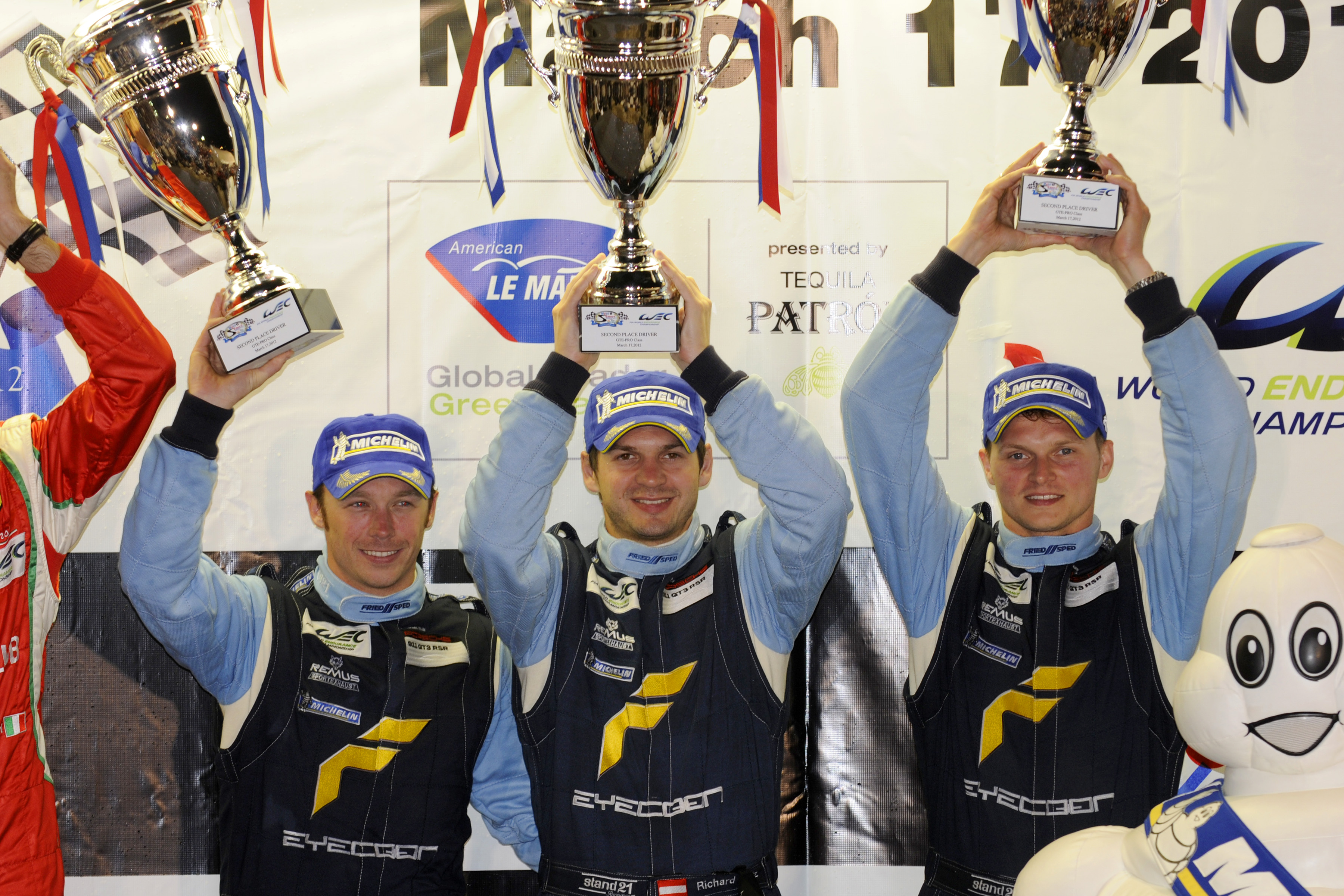
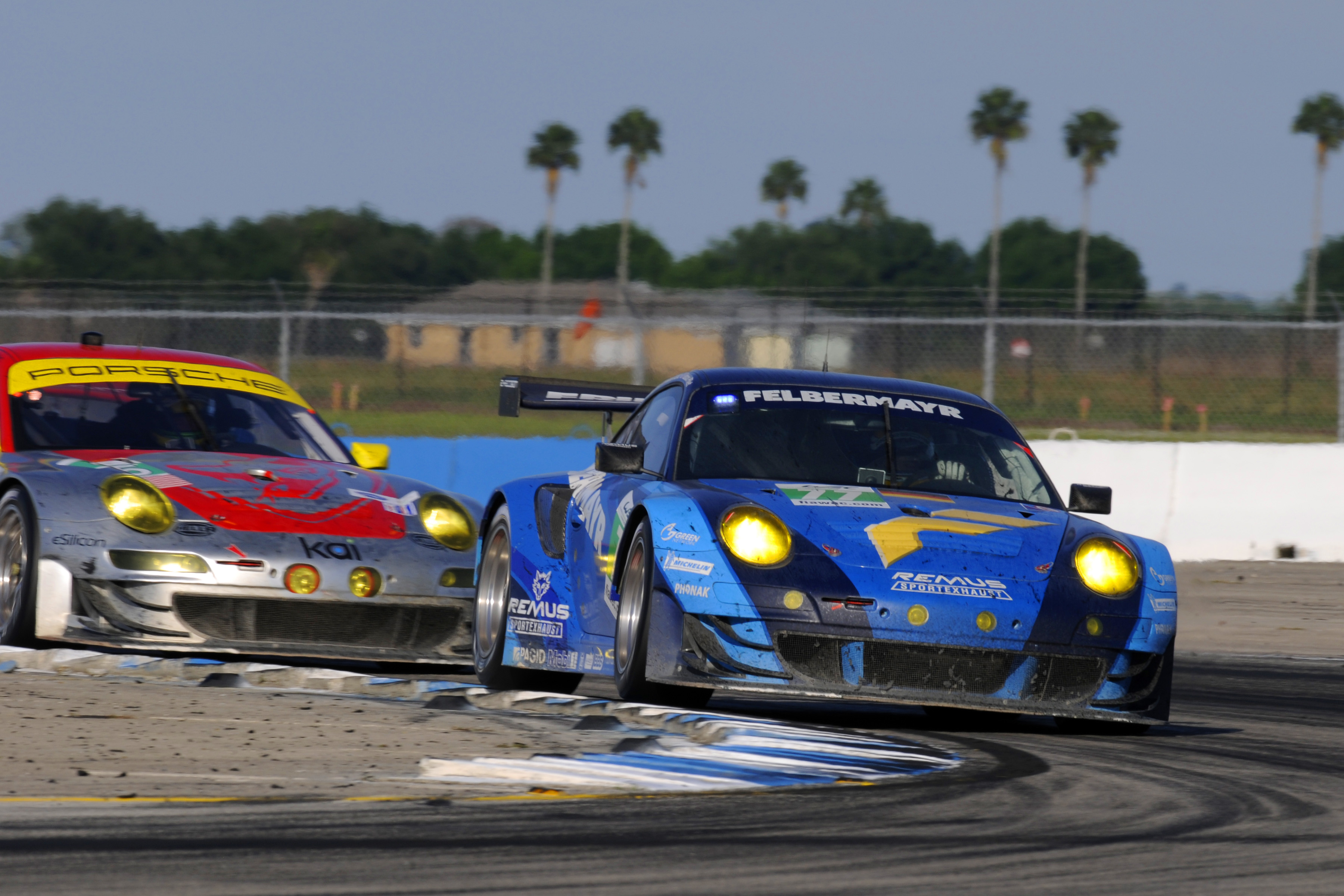
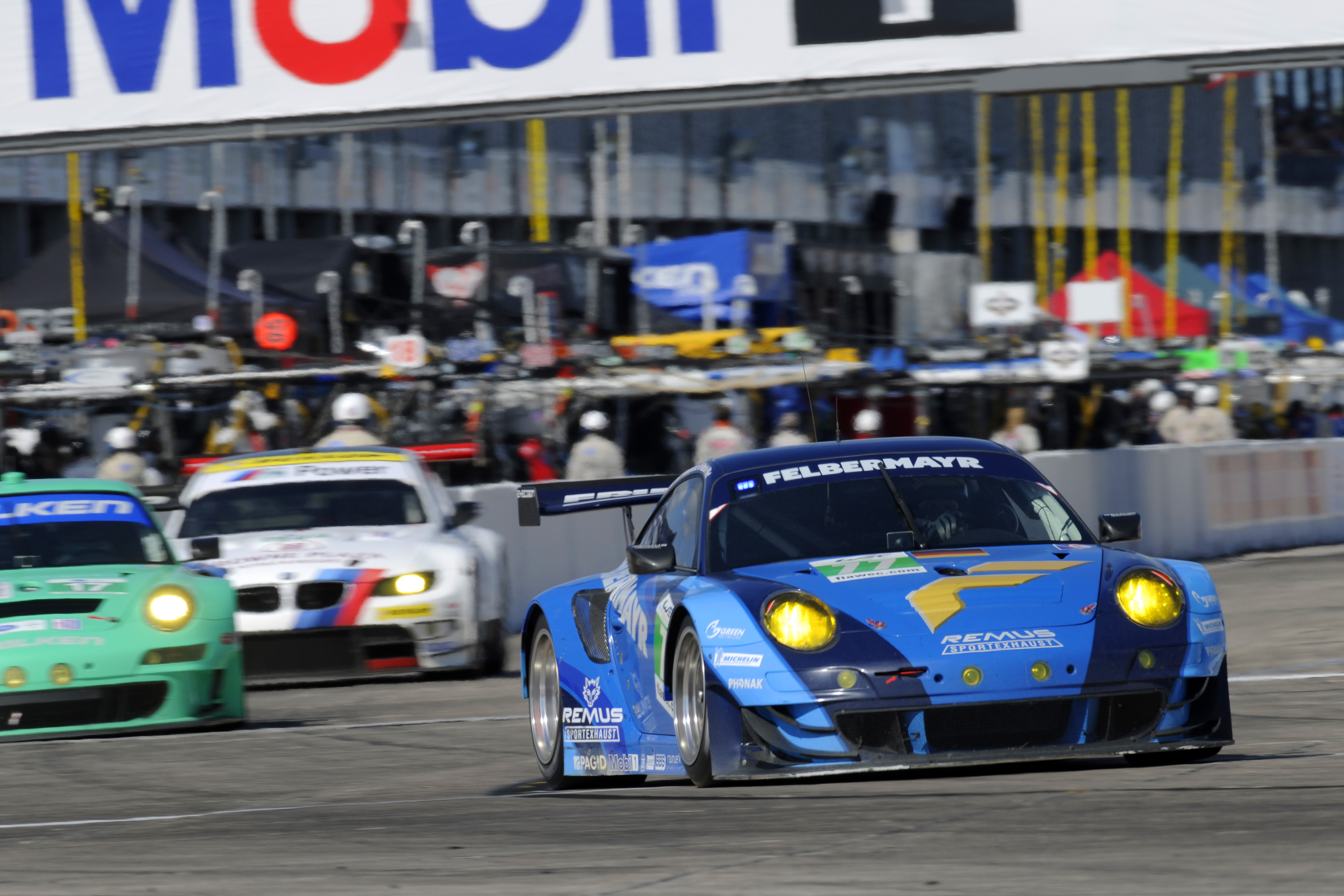
At the wheel of the 911 fielded by the Felbermayr-Proton team, Porsche works drivers Marc Lieb (Germany), Richard Lietz (Austria) and Patrick Pilet (France) secured second place in the GTE Pro class at the long distance classic in Florida and with this made a very promising start into the new World Endurance Championship.
“Second place is a great result. Right from the start, our new 911 GT3 RSR was reliable and that’s very positive,” said Marc Lieb.
“But we lacked the speed to win off our own bat.”
Richard Lietz, who had to start from the back of the field because the cockpit temperature of his Porsche in qualifying was one degree over what was permitted, said,
“I’m very satisfied with how the race went. For twelve hours our 911 ran without the slightest technical problem. Which is, of course, not something you take for granted at the first race with a new car.”
This slideshow requires JavaScript.
Christian Ried (Germany) and his Italian teammates Gianluca Roda and Paolo Ruberti made a superb start to the season. With the second Porsche 911 GT3 RSR (2011 model year) run by Felbermayr-Proton they celebrated victory in the GTE Am class.
“This win is a perfect way to kick off the season,” Ried commented. “The last one and half hours of the race were incredibly tough for Paolo, because he had to cope without power steering.”
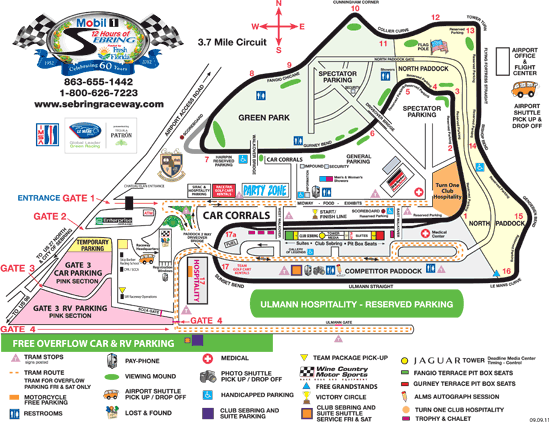
With the tradition-steeped twelve hour race on the Sebring International Raceway the American Le Mans Series also took off into the season.
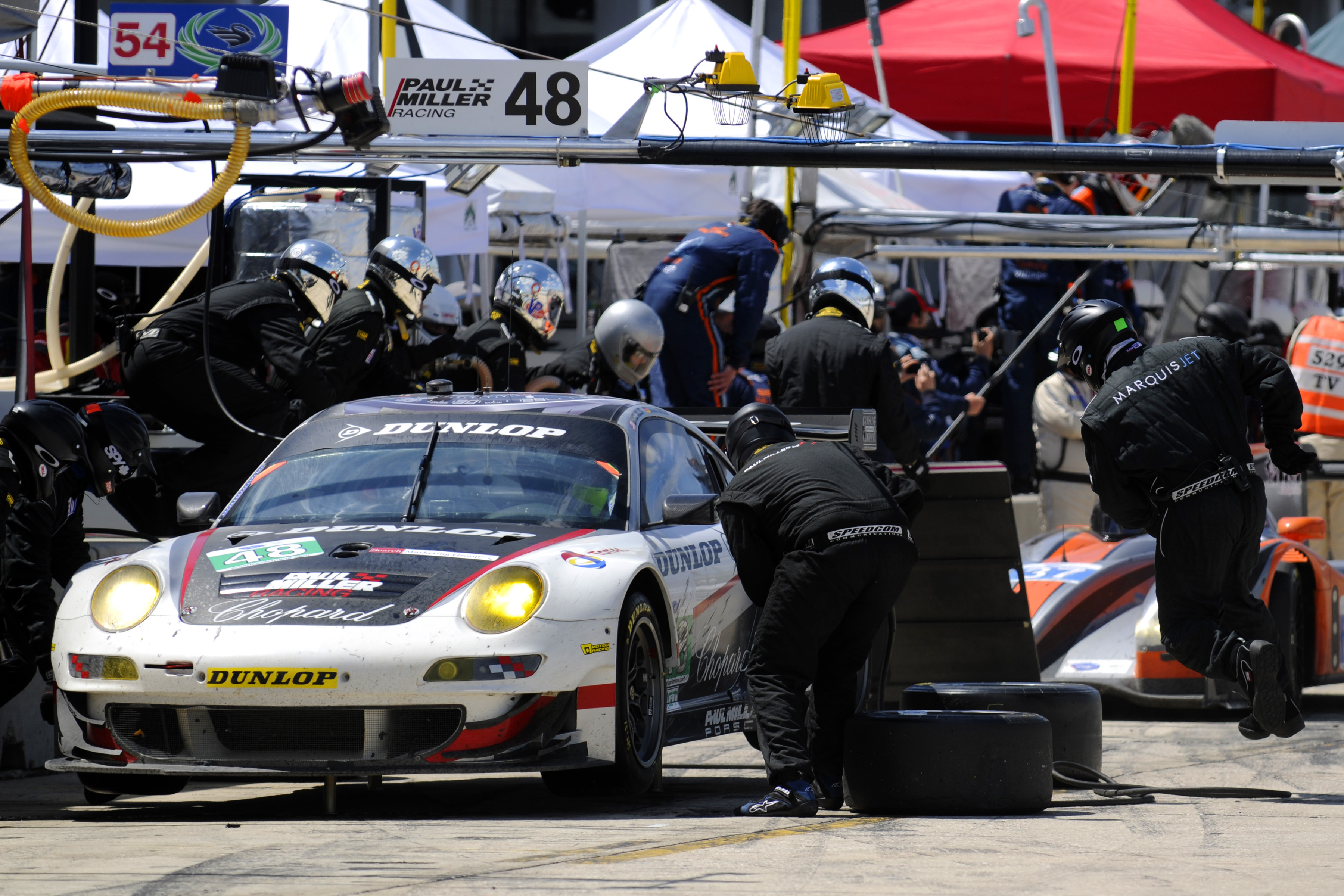
Driving the new Porsche 911 GT3 RSR for Paul Miller Racing, Sascha Maassen (Germany), Bryce Miller (USA) and Rob Bell (Great Britain) secured fifth place in the GT class.
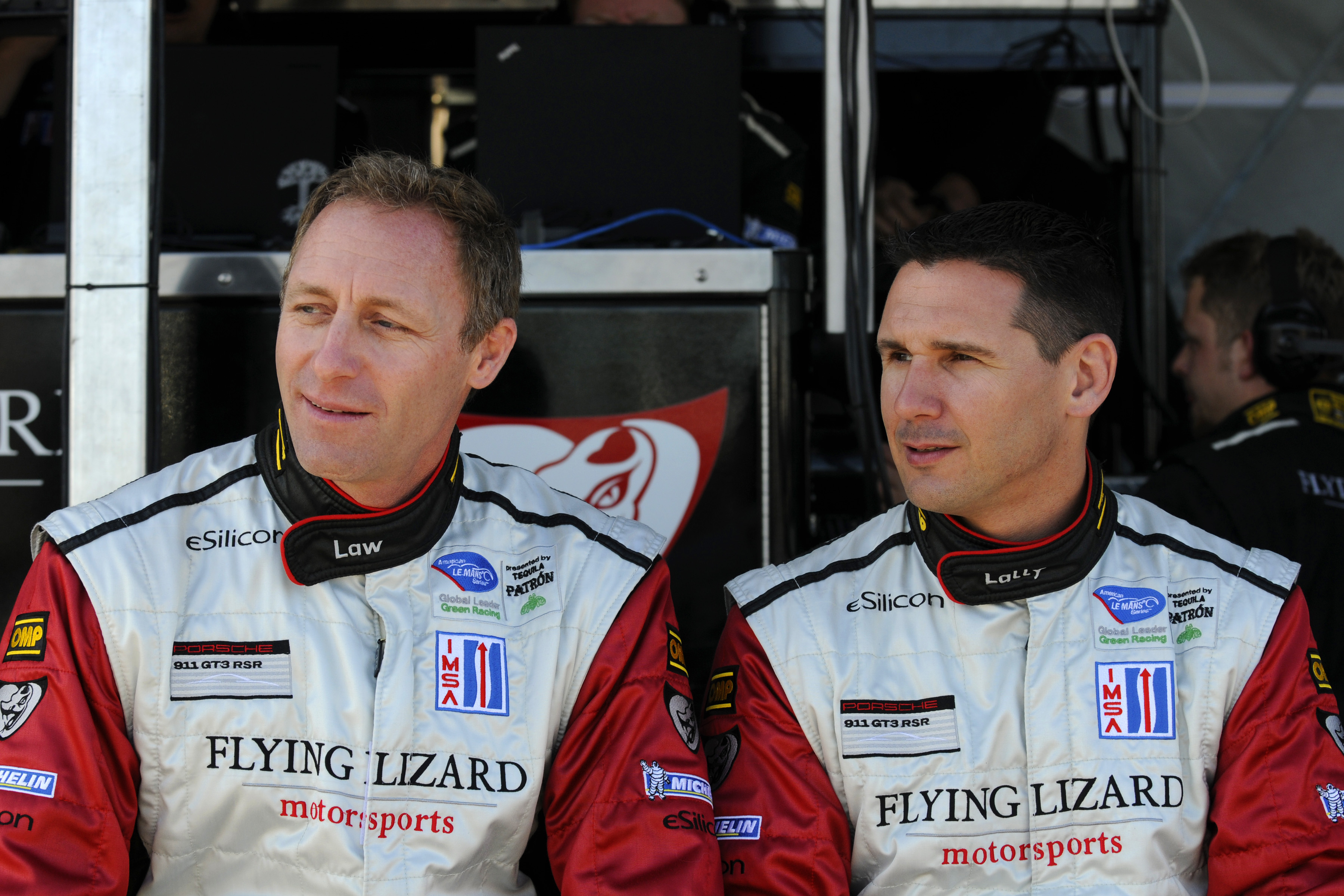
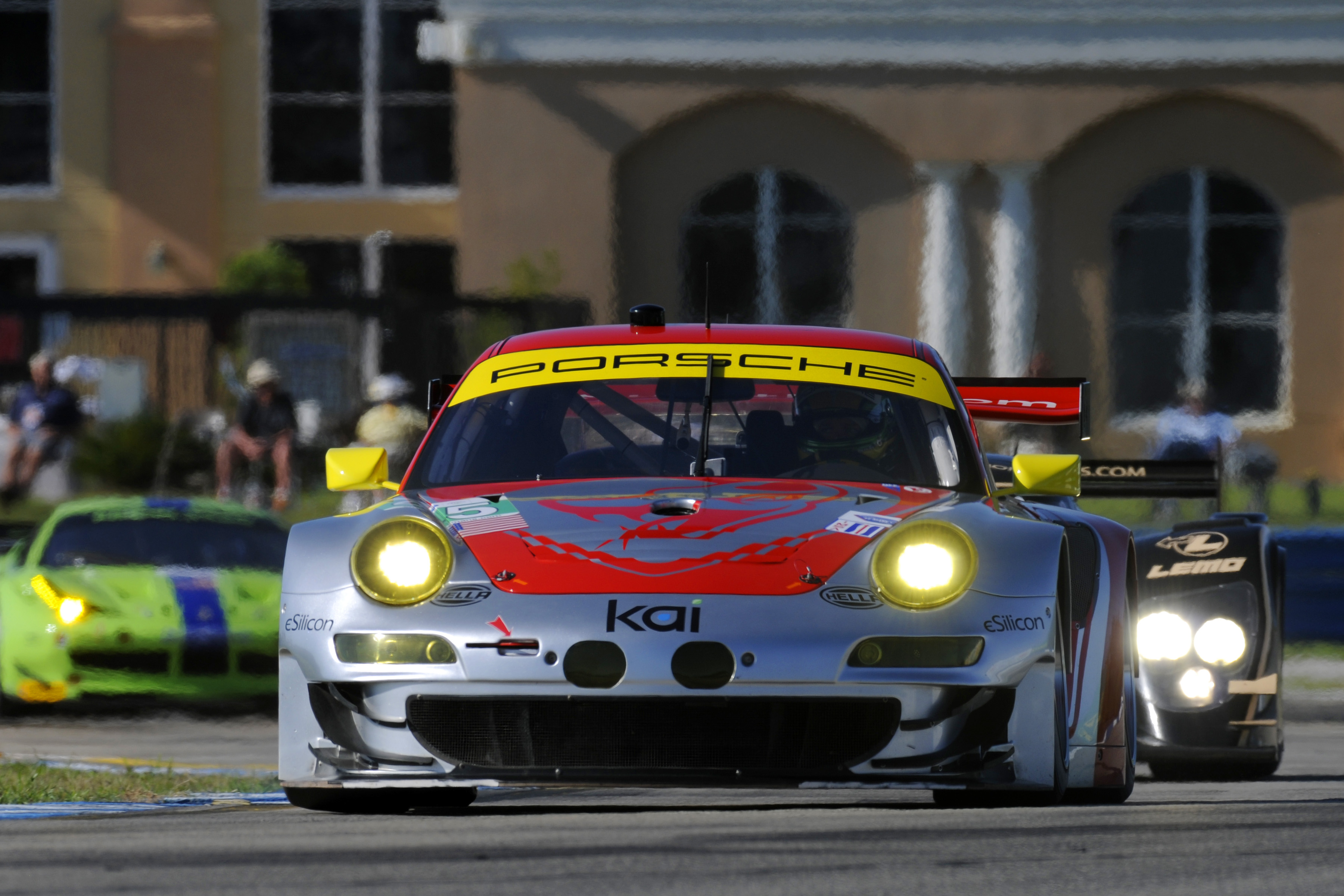
At the wheel of Flying Lizard Motorsports’ 911, Americans Seth Neiman, Darren Law and Andy Lally saw the flag in seventh place.
Darren Law (USA) and Andy Lally (USA)
For two other new Porsche 911 GT3 RSR, the season-opening round in the sunshine state of the USA brought less than perfect results.
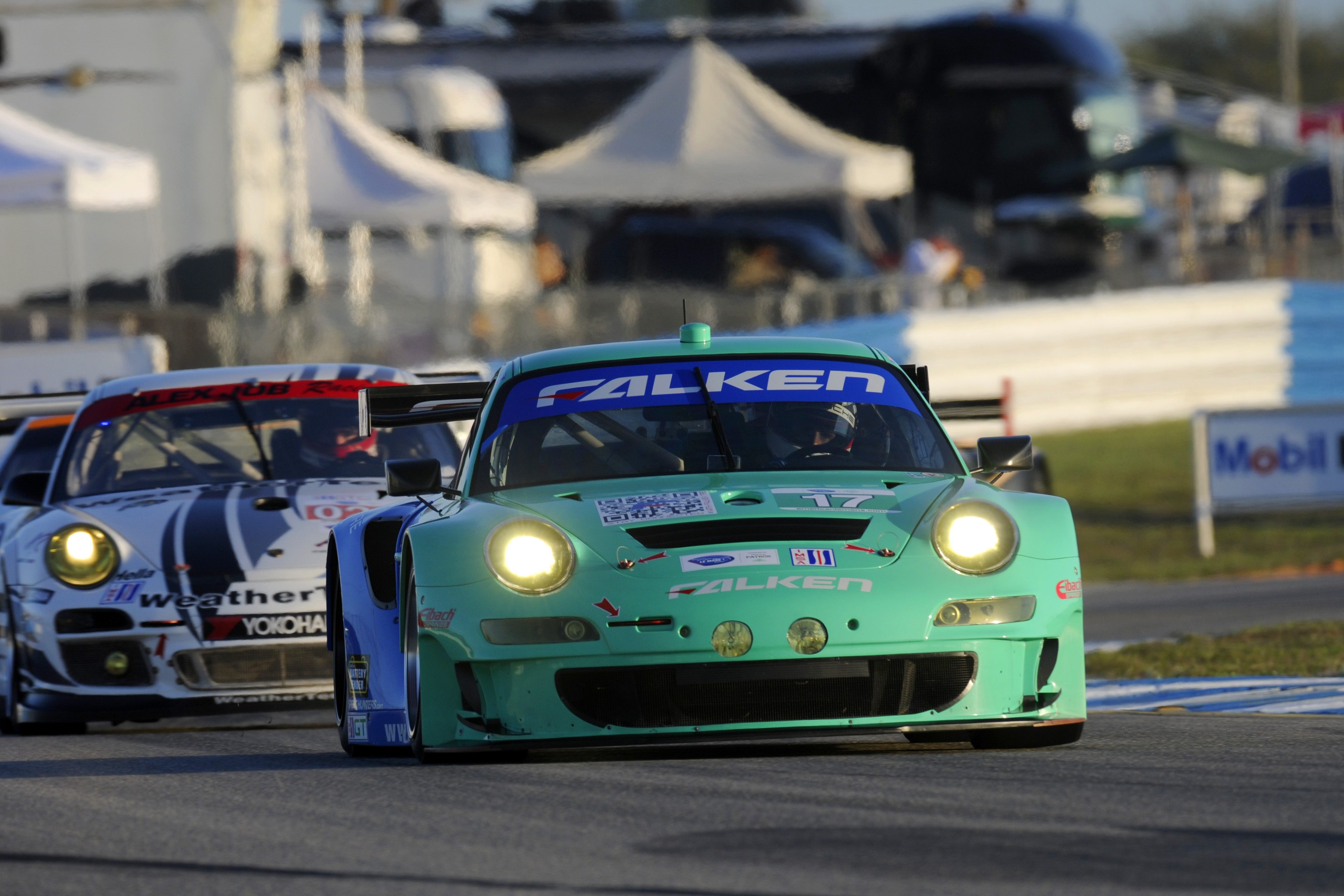
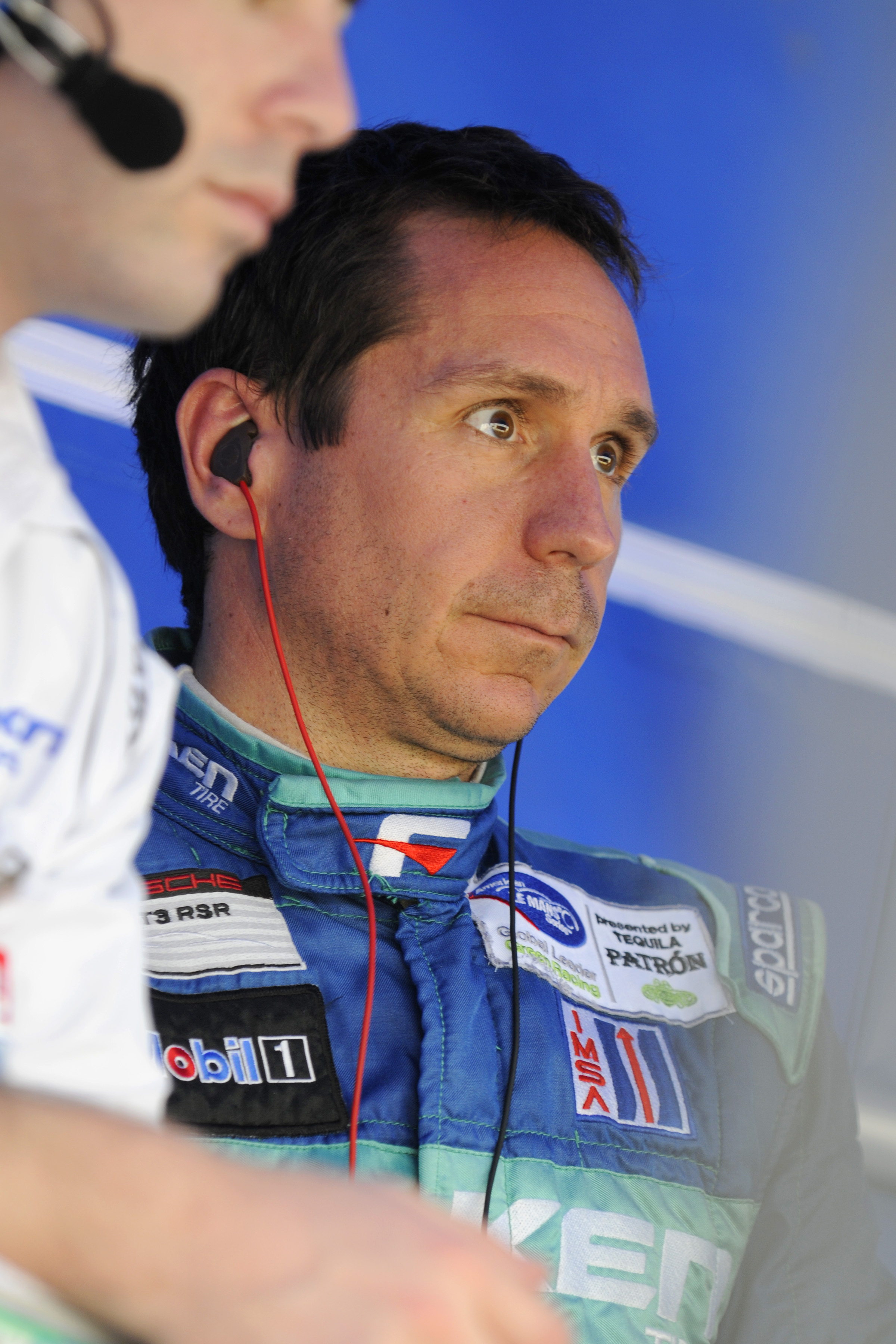
Porsche works driver Wolf Henzler (Germany) secured ninth with Bryan Sellers (USA) and Martin Ragginger (Austria).
After the qualifying, their Falken Tire team had to replace the engine in the 911, and although the mechanics managed this in record time, he still took up the race one lap behind.
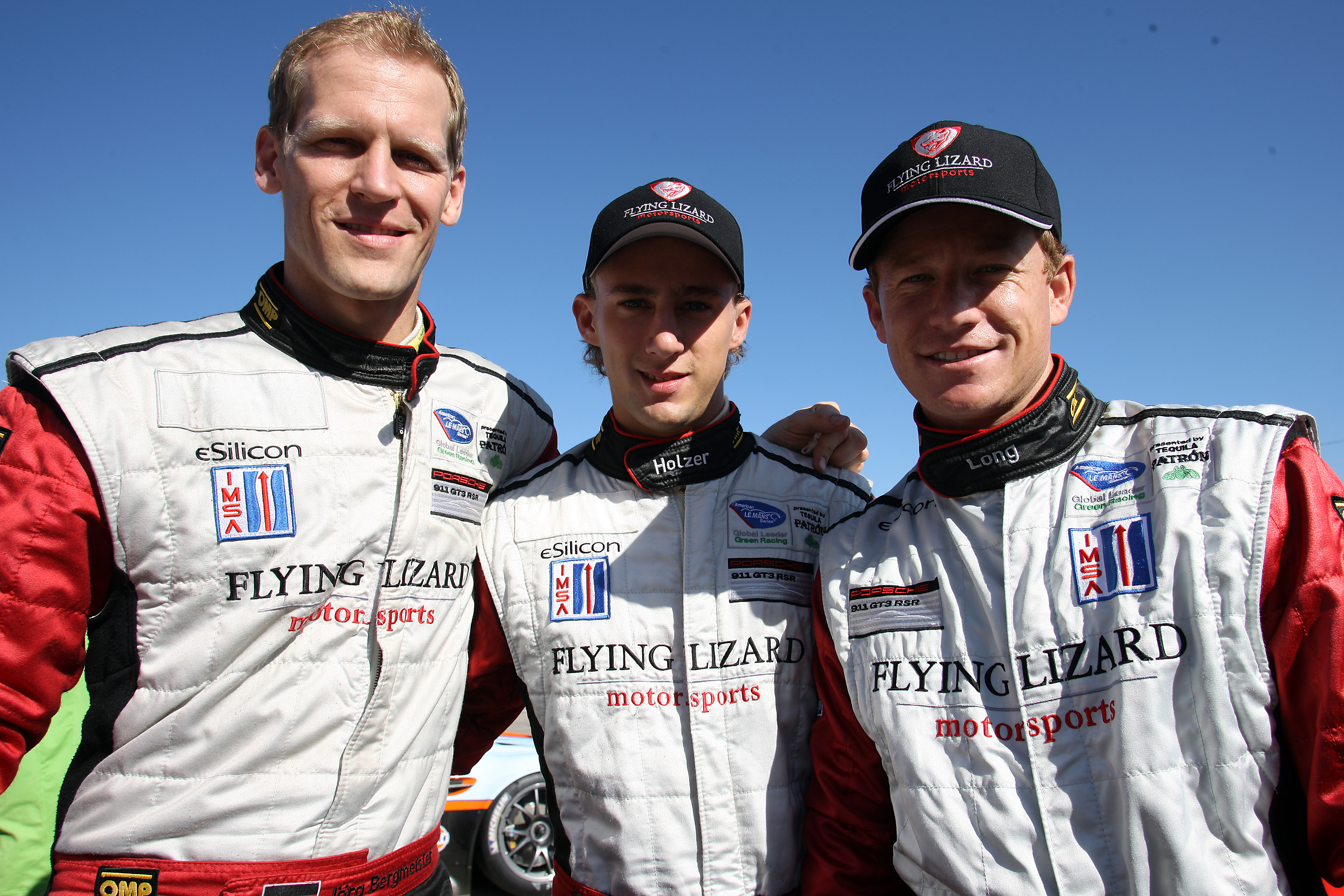
Things were not a lot better for his factory pilot colleagues Joerg Bergmeister (Germany), Patrick Long (USA) and Marco Holzer (Germany) in the second Flying Lizard Porsche: In the formation lap, a Ferrari rammed into the rear of the Porsche, which threw them far back. After putting in a spirited chase, they still managed to yield tenth and earn valuable points towards the end.
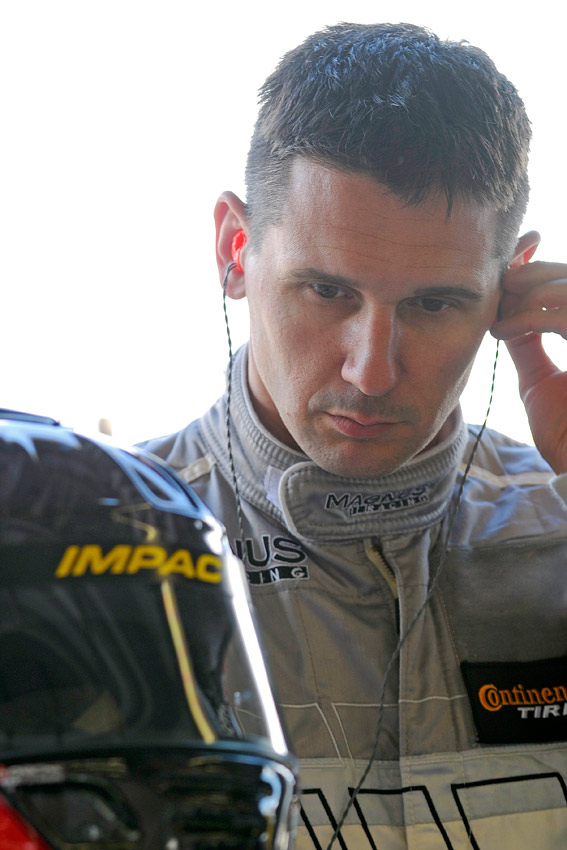
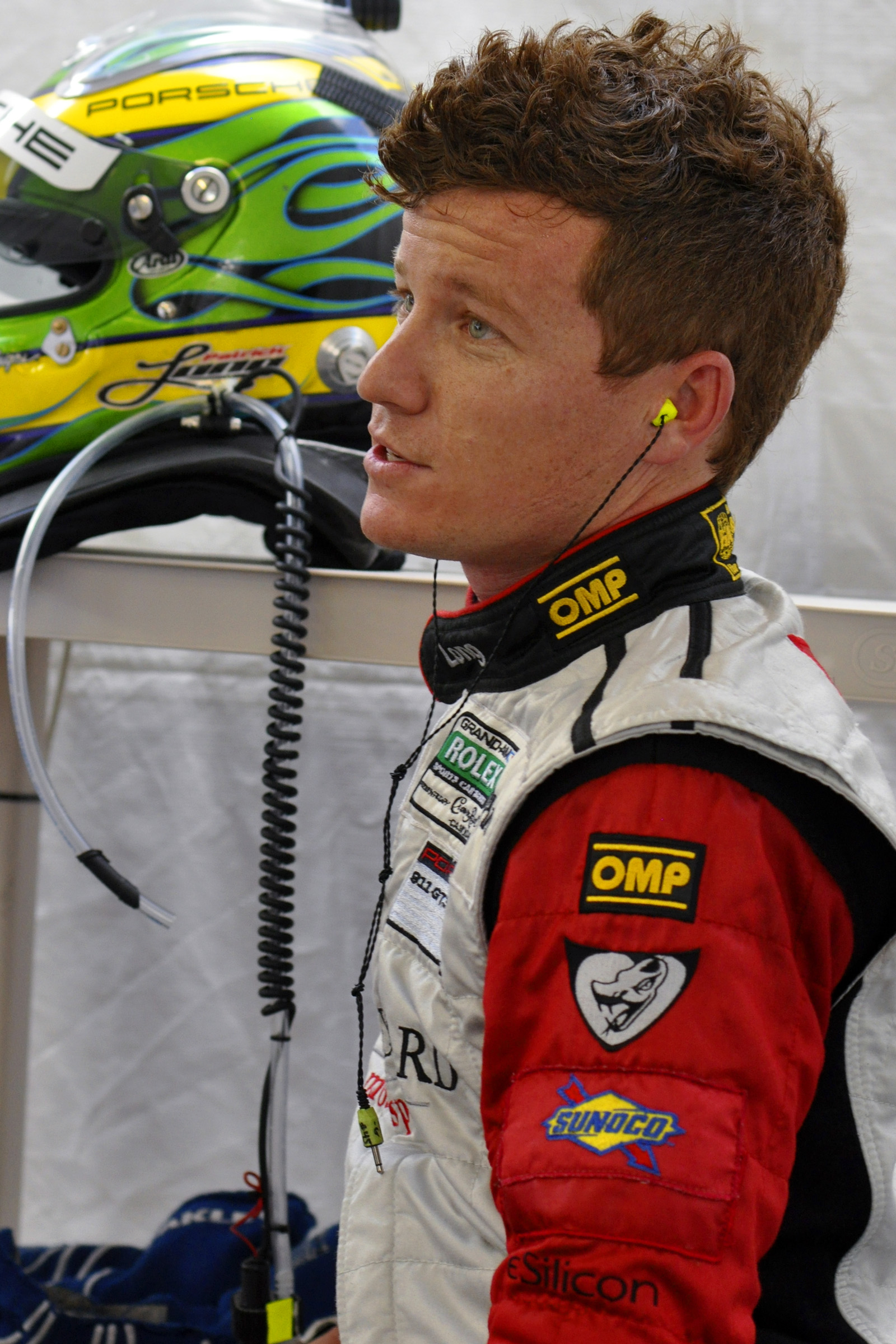
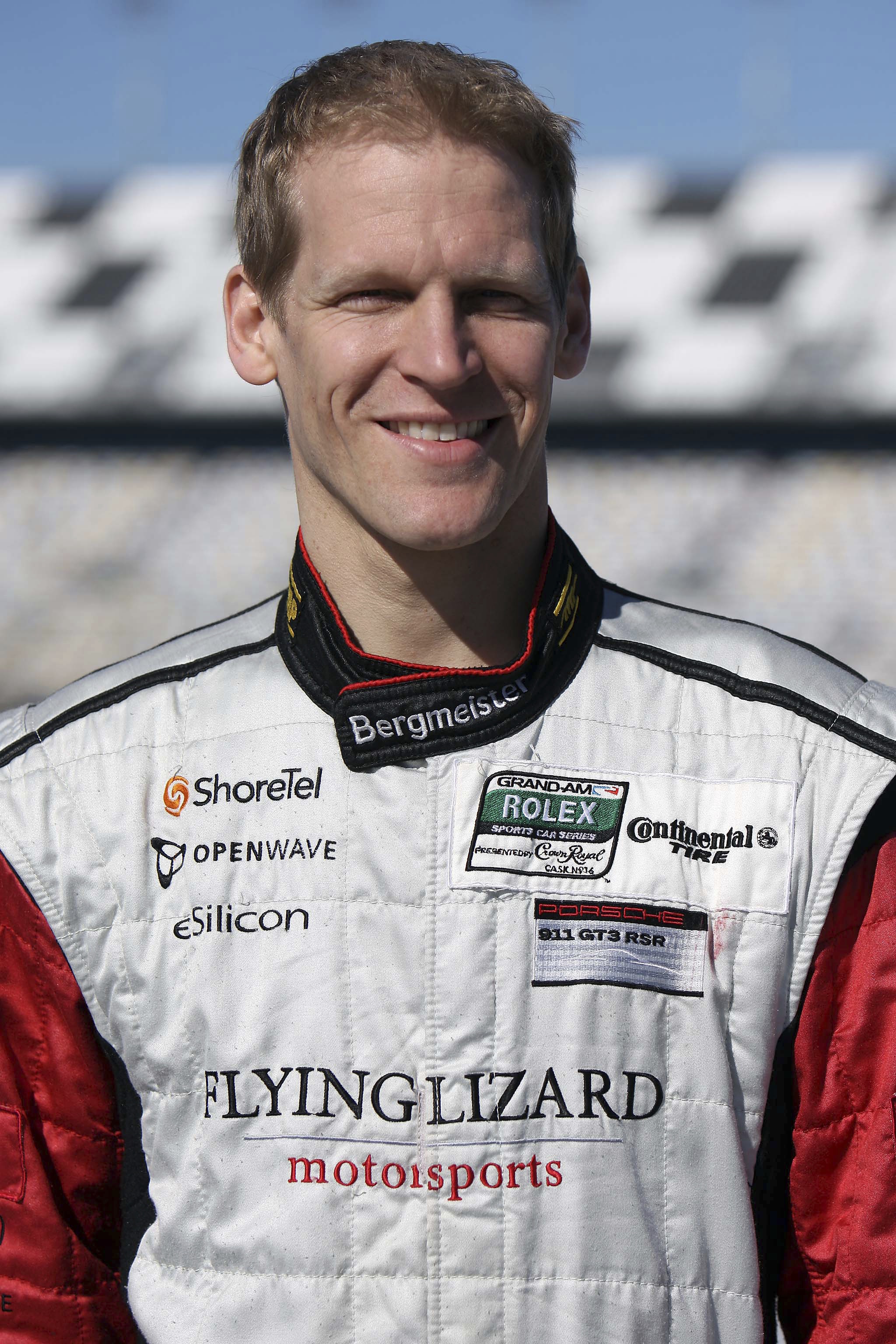
Joerg Bergmeister, Marco Holzer and Patrick Long
“Our car ran better in the race than it did in qualifying. We drove consistently fast lap times to the end,” stated Wolf Henzler. Marco Holzer added:
“That was a bitter race. It was already over for us before it had really begun. So our goal was to finish the 70 percent distance and safeguard those important championship points.”
Hartmut Kristen, head of Porsche motorsport, regarded the start of the season as positive.
“Compliments to the Felbermayr-Proton team for their victory in GTE-Am class and second place in GTE-Pro class. This was almost an optimum result,” he said. “I am extremely pleased with the reliability of the new 911 GT3 RSR.
As far as the time difference to our fastest rivals in qualifying and in the race is concerned, we will be analysing that gap to determine whether the performance balancing influenced this.
Congratulations as well to Paul Miller Racing for its great result in the American Le Mans Series with fifth.
It’s a pity that the race was over before the start for one of our strongest cars, it was not the team’s fault.”
Round two of the World Endurance Championship takes place on 5 May 2012 in Spa-Francorchamps/Belgium.
On 14 April, round two of the American Le Mans Series takes off on the street course in Long Beach, California.
Results
World Endurance Championship GTE Pro class
1. Bertolini/Beretta/Cioci (I/MC/I), Ferrari F458 Italia, 307 laps
2. Lieb/Lietz/Pilet (D/A/F), Porsche 911 GT3 RSR, 306
3. Mücke/Fernandez/Turner (D/MEX/GB), Aston Martin Vantage, 291
4. Fisichella/Bruni/Vilander (I/I/SF), Ferrari F458 Italia, 215
5. Melo/Makowiecki/Vernay (BRA/F/F), Ferrari F458 Italia, 183
GTE Am class
1. Ried/Roda/Ruberti (D/I/I), Porsche 911 GT3 RSR, 298 laps
2. Bourret/Gibon/Belloc (F/F/F), Chevrolet Corvette, 297
3. Bornhauser/Canal/Lamy (F/F/P), Chevrolet Corvette, 288
4. Kaufmann/Waltrip/Aguas (USA/USA/P), Ferrari F458, 283
5. Krohn/Jönsson/Rugolo (USA/S/I), Ferrari F458 Italia, 265
6. Binnie/Palttala/Camathias (USA/SF/CH), Porsche 911 GT3 RSR, 251
American Le Mans Series GT class
1. Hand/Müller/Summerton (USA/D/USA), BMW E92 M3, 307 laps
2. Magnussen/Garcia/Taylor (DK/E/USA), Chevrolet Corvette, 307
3. Gavin/Milner/Westbrook (GB/USA/GB), Chevrolet Corvette, 307
4. Müller/Auberlen/Alzen (D/USA/D), BMW E92 M3, 306
5. Maassen/Miller/Bell (D/USA/GB), Porsche 911 GT3 RSR, 302
6. Brown/Segal/Lazzaro (USA/USA/USA), Ferrari F458 Italia, 302
7. Law/Neiman/Lally (USA/USA/USA), Porsche 911 GT3 RSR, 302
9. Henzler/Sellers/Ragginger (D/USA/A), Porsche 911 GT3 RSR, 289
10. Bergmeister/Long/Holzer (D/USA/D), Porsche 911 GT3 RSR, 251
World Endurance Championship Teams GTE Pro
1. AF Corse, Ferrari, 25 points
2. Felbermayr-Proton, Porsche, 18
3. Aston Martin Racing, Aston Martin, 15
Teams GTE Am
1. Felbermayr-Proton, Porsche, 25 points
2. Labre Competition, Chevrolet, 18
3. AF Corse-Waltrip, Ferrari , 12
American Le Mans Series GT class
1. Joey Hand, Dirk Müller, Jonathan Summerton, BMW , 24 points
2. Jan Magnussen, Antonio Garcia, Jordan Taylor, Chevrolet , 20
3. Oliver Gavin, Tommy Milner, Richard Westbrook, Chevrolet, 17
5. Sascha Maassen, Bryce Miller, Rob Bell, Porsche, 12
7. Seth Neiman, Andy Lally, Darren Law. Porsche, 8
9. Wolf Henzler, Bryan Sellers, Martin Ragginger, Porsche, 6
10. Jörg Bergmeister, Patrick Long, Marco Holzer , Porsche, 5
Teams
1. BMW Team RLL, BMW, 24 points
2. Corvette Racing, Chevrolet, 20
3. Paul Miller Racing, Porsche, 12
4. Extreme Speed Motorsports, Ferrari, 10
This is the World Endurance Championship
Sports prototypes and GT vehicles race in the new World Endurance Championship. They are divided into four classes that start together but are classified separately:
LMGTE Pro class: This class is reserved for slightly modified standard sports cars with 440 to 500 hp and a minimum weight of 1,245 kilograms (e.g. Porsche 911 GT3 RSR). LMGTE Am class: Like the LMGTE Pro, but the regulations stipulate that there must be no more than one professional driver per vehicle. LMP1 class: Sports prototypes with up to 550 hp and a minimum weight of 900 kilograms. LMP2 class: Sports prototypes with around 440 hp and a 900 kilogram minimum weight.
This is the American Le Mans Series
The American Le Mans Series (ALMS) was created in 1999 for sports prototypes and GT vehicles.
The field is divided into five classes that start together but are classified separately:
GT class: This most popular class amongst car manufacturers traditionally receives the most support: Slightly modified standard sports cars with 440 to 500 hp and a minimum weight of 1,245 kilograms (e.g. Porsche 911 GT3 RSR).
GTC class: This class is reserved for vehicles from one-make race series like the Porsche 911 GT3 Cup. LMP1 class: Sports prototypes with up to 550 hp and a minimum weight of 900 kilograms. LMP2 class: Sports prototypes with ca. 440 hp and a 900 kg minimum weight. LMPC class: Prototype brand trophy series for the ORECA FLM 09.
Stuttgart. With the qualifying session for the tradition-steeped twelve hour race on the Sebring International Raceway in Florida/USA, both the new World Endurance Championship and the American Le Mans Series took off into the new season. The long distance classic, at which the new Porsche 911 GT3 RSR makes its race debut, marks the only time that the two series run together.
This slideshow requires JavaScript.
In the GTE Pro class of the World Endurance Championship, Porsche works driver Richard Lietz (Austria) planted his Felbermayr-Proton Porsche 911 GT3 RSR on the fifth grid spot.
At the wheel of the second Felbermayr-Proton Porsche, Paolo Ruberti (Italy) posted fourth in the GTE Am class.
“My lap was perfect and our car feels very good,” said Richard Lietz.
“Still, the gap is too big. We’ll be analysing this and trying to close that gap as quickly as possible.”
In the American Le Mans Series, Porsche factory pilot Joerg Bergmeister (Germany) also posted the fifth best time in the GT class with the Porsche 911 GT3 RSR fielded by Flying Lizard Motorsports.
“That was a decent lap,” he said, “but it was all that was possible today.” His works driver colleague Wolf Henzler (Germany) clocked the eighth quickest time in Falken Tire’s Porsche 911 GT3 RSR.
“We have to get more familiar with our new car,” he said. “It handles the bumps extremely well, but we still experienced way too much oversteer.”
Sascha Maassen (Germany) posted the new 911 run by Paul Miller Racing on ninth and commented,
“We turned our fastest lap of the weekend during qualifying and that’s exactly how it should be. But we’re still in the process of familiarising ourselves with the tyres of the new car. And there’s a great deal of potential there.”
Several pilots from the Porsche Mobil1 Supercup are using the GTC class, which they contest with the Porsche 911 GT3 Cup, to gain experience in international long distance racing.
The seasoned Supercup and Carrera Cup pilot Sean Edwards (Great Britain) clinched pole position with Damien Faulkner (Ireland) posting second. Reigning Supercup rookie champion Kévin Estre (France) put his 911 on position five.
Nicki Thiim (Denmark), who contests the world’s fastest international one-brand series for the 2012 season, qualified on sixth.
“That was an exciting qualifying. We are all very close,” said Sean Edwards.
“My team has done a great job in preparing the 911. Last year an accident before the qualifying prevented us from competing in the race. Now we’re back with a vengeance.”
The race starts on Saturday, 17 March, at 10.30 hrs local time (15.30 hrs CET) and is broadcast live on http://www.alms.com.
Qualifying result
World Endurance Championshi GTE Pro class
1. Gianmaria Bruni (I), Ferrari F458 Italia, 1:58.427 minutes
2. Jaime Melo (BRA), Ferrari F458 Italia, + 0.286 seconds
3. Olivier Beretta (MC), Ferrari F458 Italia, + 0.611
4. Stefan Mücke (D), Aston Martin Vantage, + 1.697
5. Richard Lietz (A), Porsche 911 GT3 RSR, + 1.779
GTE Am class
1. Dominik Farnbacher (D), Ferrari F458 Italia, 2:00.258 minutes
2. Niclas Jonsson (S), Ferrari F458 Italia, + 0.745 seconds
3. Pedro Lamy (P), Chevrolet Corvette, + 1.456
4. Paolo Ruberti (I), Porsche 911 GT3 RSR, + 1.603
American Le Mans Series GT class
1. Jan Magnussen (DK), Chevrolet Corvette, 1:58.996 minutes
2. Oliver Gavin (GB), Chevrolet Corvette, + 0.011 seconds
3. Joey Hand (USA), BMW M3, + 1.031
4. Johannes van Overbeek (USA), Ferrari F458 Italia, + 1.098
5. Jörg Bergmeister (D), Porsche 911 GT3 RSR, + 1.123
8. Wolf Henzler (D), Porsche 911 GT3 RSR, + 2.636
9. Sascha Maassen (D), Porsche 911 GT3 RSR, + 3.154
10. Seth Neiman (USA), Porsche 911 GT3 RSR, + 8.358
Sports prototypes and GT vehicles race in the new World Endurance Championship. They are divided into four classes that start together but are classified separately:
LMGTE Pro class: This class is reserved for slightly modified standard sports cars with 440 to 500 hp and a minimum weight of 1,245 kilograms (e.g. Porsche 911 GT3 RSR). LMGTE Am class: Like the LMGTE Pro, but the regulations stipulate that there must be no more than one professional driver per vehicle. LMP1 class: Sports prototypes with up to 550 hp and a minimum weight of 900 kilograms. LMP2 class:Sports prototypes with around 440 hp and a 900 kilogram minimum weight.
This is the American Le Mans Series
The American Le Mans Series (ALMS) was created in 1999 for sports prototypes and GT vehicles. At the season-opener in Sebring, the field is divided into five classes that start together but are classified separately: GT class: This most popular class amongst car manufacturers traditionally receives the most support: Slightly modified standard sports cars with 440 to 500 hp and a minimum weight of 1,245 kilograms (e.g. Porsche 911 GT3 RSR). GTC class: This class is reserved for vehicles from one-make race series like the Porsche 911 GT3 Cup. LMP1 class: Sports prototypes with up to 550 hp and a minimum weight of 900 kilograms. LMP2 class: Sports prototypes with ca. 440 hp and a 900 kg minimum weight. LMPC class: Prototype brand trophy series for the ORECA FLM 09.
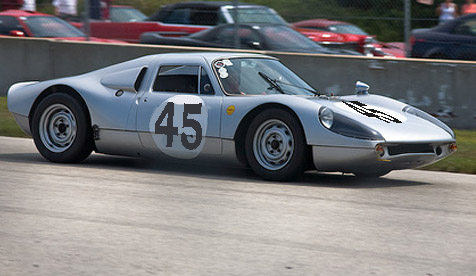
1964 Carrera Chassis #0028 – 2.0 Porsche 904 GTS (Gerhard Koch) 7th (2nd in class) [chassis 904 028]
You will see some original sketches done in the early 70’s by the owner in the opening part of video one of the three part videos, along with the exhaust notes coming from the early six cylinder.
You will see Dave Conklin of Porsche Excellence as he goes through his photo shoot and sets up the 904 in different locations.
You will also see the 904 with racing history in motion with the great sounding exhaust note.
Some 904 photos taken during the Porsche Excellence Photo Shoot, in between the filming.
This slideshow requires JavaScript.
Photo Video Shoot 1 of 3
Photo Video Shoot 2 of 3
Photo Video Shoot 3 of 3
Source: Photos & videos by Nick Moskatow Carrera GTS Club
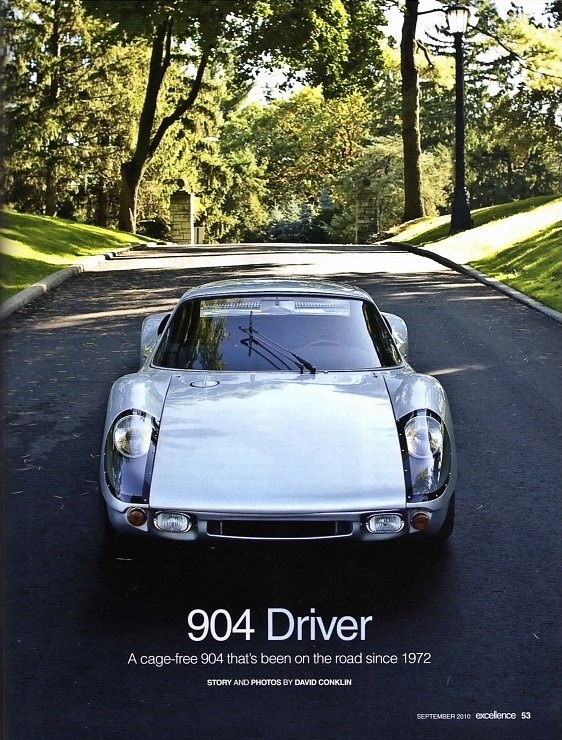
“904 Driver” Story
A cage-free 904 that’s been on the road since 1972.
Story and Photos by David Conklin
Wow, a 904! ….Is that one of those new kits?” asked the soccer dad leaning out of his “soccer van.” Alex Pollock stepped towards him and replied, “No, that’s the real thing.” “Really? I never thought I would see one of those in Detroit,” said the soccer dad, before dropping his van into gear and slowly pulling away, still glancing back at the diminutive silver racer.
For my part, I’m not sure what’s more out of the ordinary: a 904 in the heart of Detroit or a casual observer in Detroit recognizing it! Detroit is, after all, the home of the Big Three, muscle cars, and rust. While some designers at the domestic automakers indulged themselves with European exotica, “little foreign jobs” weren’t really looked upon kindly here. That was especially true in 1972, when Alex purchased his 904.
Alex’s love affair with Porsche’s first fiberglass flier had started several years earlier and hundreds of miles south of the Motor City — when he was a student at the University of Florida with a passion for sports-car racing. He went to Daytona and Sebring every chance he got. He watched George Follmer win the GT class at the 12 Hours of Sebring in a 904, and promptly fell in love with the car. Away from the track, he purchased a plastic model kit of a 904 and decided that, one day, he would own the real thing.
Once he had graduated from college and was making a good living as an engineer, Alex bought a used 1967 911. He couldn’t shake his hankering for a 904, but as things turned out, the path from plastic model to plastic Porsche was a relatively short one — albeit one punctuated by a move to Detroit and a wedding.
In time, Alex placed a want ad in Hemmings Motor News to see what might surface. Not long after, his phone rang. Uwe Buehl was on the other end, saying that on his lot in Pennsylvania was a 904, white with blue trim and equipped with a four-cam engine that would fit both expectation and budget. It was 904-028, and by 1972 it wasn’t much more than an old, used-up race car. In fact, Alex says he was young and impetuous, and that he should have looked the car over more carefully, calling its condition at the time “tortured.”
The 904 had earned its scars. Its first several years were spent on the racing circuits of Europe. First delivered to Gerhard Koch in Germany, 028 competed in and typically won the GT class in regional Flugplatzrennen (airfield races) in 1964. More noteworthy were a second-place finish in the 500 kilometers of Spa in May and a series of class wins at the Nürburgring, the GP de Paris, and the GP Angola.
With a works ride for 1965, Koch sold 904-028 to Rainer Ising of Munich. Ising and Bernd Degner piloted the car to a significant victory that year: the GT class win in the 84-hour Marathon de la Route at the Nürburgring.
In 1966, the Porsche was brought into the U.S. by Uwe Buehl for yet another new owner, Roger Neuman in Pennsylvania. He kept 904-028 for only one year before selling it to fellow Pennsylvanian Dieter Oest, who campaigned it throughout the 1967 season before replacing it with another 904. Continue reading <<<here>>>
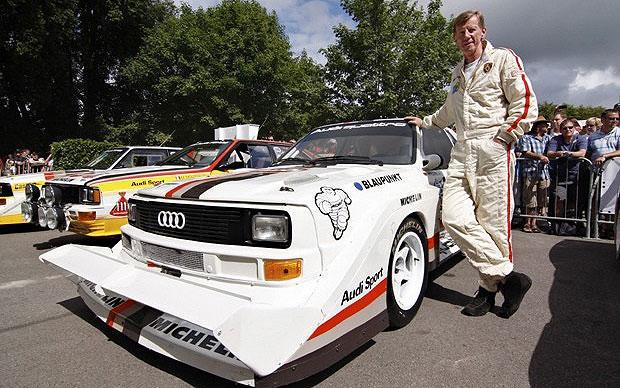
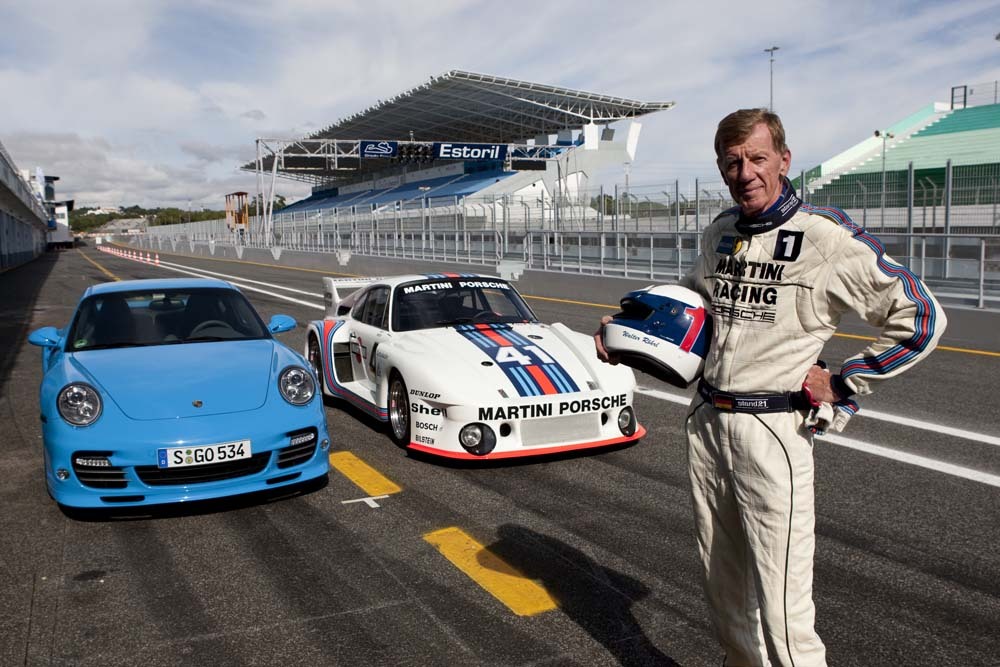
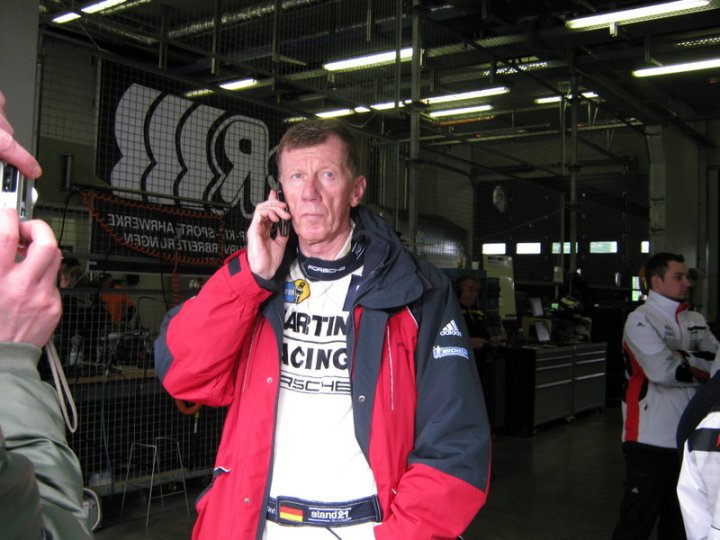
July 8th, 2012 will mark the twenty-five year anniversary win of “perhaps” the greatest rally driver of all time—Walter Röhrl. And in recent years, he has been retained as the senior test driver for Porsche road cars
Cool and collected, Röhrl piloted an Audi sport quattro S1 up the world’s highest highway in record time of 10:47.85 minutes.
Walter Röhrl triumphed at Pikes Peak 25 years ago
* Convincing victory in 1987 in Colorado with Sport quattro S1
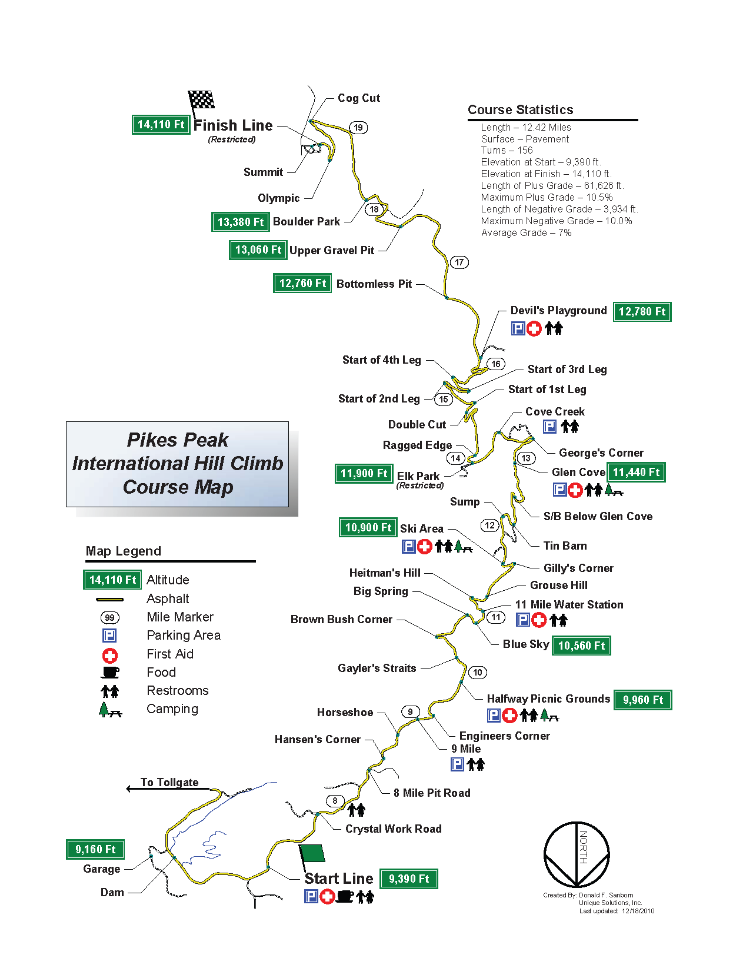
* 19.99 kilometres, 156 corners, with over 600 bhp
* Audi won the famous hill-climb race three years running
Of the many rally victories recorded by Audi in the 1980s, the last one was particularly memorable: 25 years ago, on 11 July 1987, Walter Röhrl and his Audi Sport quattro S1 won the Pikes Peak Hill Climb in the US state of Colorado.
Walter Röhrl and Audi, the best driver and the most successful rallying team at that time, enjoyed a close and always extremely intensive relationship. Röhrl, the world champion of 1980 and 1982, had joined the Ingolstadt team in 1984 at a time when the brand with the four rings dominated the entire rallying scene.
The permanent four-wheel drive system left the rear-wheel-drive competitor vehicles with no chance whatsoever. A mere two years after first testing the Audi quattro at the end of 1980, Audi had already clinched the manufacturers’ world title. The Finn Hannu Mikkola won the drivers’ world championship in 1983, and in the following year Audi took both titles, with Stig Blomqvist from Sweden topping the drivers’ rankings.
Walter Röhrl was emotional and happy following his victory, and seemed close to tears. He later stated:
“All I can say is that it was great to take part. It was crazy, but often it is in fact the crazy things which are the best in life. It was the very pinnacle of what can be done with a rally car.”
To commemorate this victory, ACNA members will gather at the starting line to watch as racers rev their engines, embracing the mighty challenge as they quest for victory, just as Walter did 25 years ago…..http://forums.quattroworld.com/quattro/msgs/6277.phtml
Stay with the video, for the most part not in English..but great video and music to your ears!
It’s a gathering of like-minded Audi enthusiasts that will share a spirit of adventure as they gather for the Pikes Peak International Hillclimb–Race to the Clouds.
At the age of 16, Röhrl began working for the commercial director of a company that legally represented the Bishop of Regensburg along with 6 further Bishops in Bavaria, and skiied in his spare time. In time he became a qualified ski instructor and a keen driver, and became the chauffer to the commercial director, covering up to 120,000 kilometres annually. Some unqualified reports have stated he was once the Bishop’s own driver, but this has been acknowledged as untrue. Having also now been active in sports like skiing, Röhrl was invited to drive his first rally in 1968.
Röhrl was a World Rally Championship favorite throughout the 1970s and 1980s, winning the Monte Carlo Rally four times with four different marques. His co-driver for many years was Christian Geistdörfer. His Fiat 131 Abarth carried him to the 1980 title, clinched with his victory in that year’s San Remo rally, but it was arguably his equivalent success in 1982 that impressed most of all, with Röhrl fending off audacious four-wheel drive opposition, led by Audi‘s resurgent Michèle Mouton, to take the title, by virtue of consistency, in his increasingly outmoded rear-drive Opel Ascona 400. It was also during this time that he won the African Rally Championship, in 1982.
In 1983, he joined Lancia to pilot the new, rear-wheel drive Lancia 037, before finally changing his machinery, in 1984, to the four-wheel drive Audi Quattro, an automobile actually incidentally produced in his home state of Bavaria.
Despite being selective in his choice of top-level events, albeit during a time when this was a less unusual occurrence for top-line drivers in the championship, he still scored 14 WRC victories in his career.
Röhrl was also successful in road racing events, and called “Genius on Wheels” by Niki Lauda. In the 1992 24 Hours Nürburgring race which saw fog and heavy rain in the night, he hardly slowed down, anticipating the corners by timing. The race was nevertheless interrupted for hours.
Best rally driver of all time
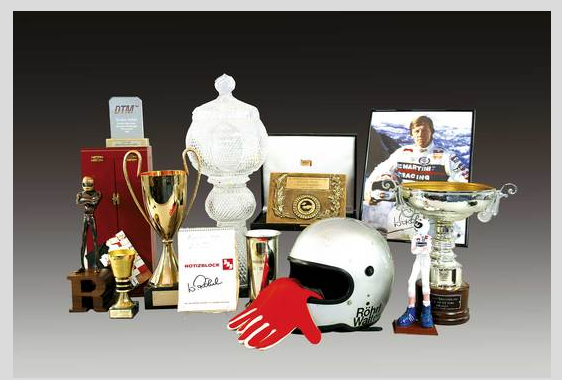
In Italy, a jury selected 100 motor sports experts from around the world named Walter Röhrl as “the best rally driver of all time.”
Here are the standings table from the magazine “Rally-Sprint” (anno numero 3 1/2):
In Italy, he was elected “Rallye driver of the century”. In France he was elected “Rallye driver of the millennium” in November 2000.
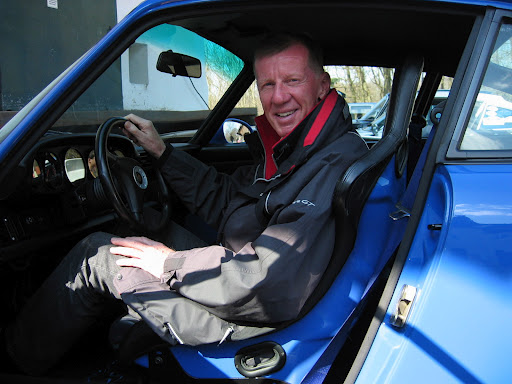
In recent years, he has been retained as the senior test driver for Porsche road cars, famously setting quick laptimes for them testing round the famous Nürburgring Nordschleife, for example with the Porsche Carrera GT.
Röhrl was expected to make his competitive return to the Nürburgring 24 hour race in 2010 at the wheel of a Porsche 911 GT3 RS. However, he was forced to withdraw from the event due to a back injury. It was to be his first 24 hour race in 17 years, since his last start in 1993.
This year it’ll be different, as it’s the first year where the whole 19.9 kilometre climb is lined with tarmac. Will he be any less sideways? We doubt it.
If you can’t make it to Colorado on July 8th, you can watch Rohrl’s 1987 run below. Once you get past the German bits, there’s some handy footwork, wailing waste-gate chatter, a 2.1-litre five-cylinder engine screaming at 8,000rpm and a long way down if it all goes wrong. You’re going to like it…
Porsche with 420 horsepower will be used to track drivers that press the accelerator too hard.
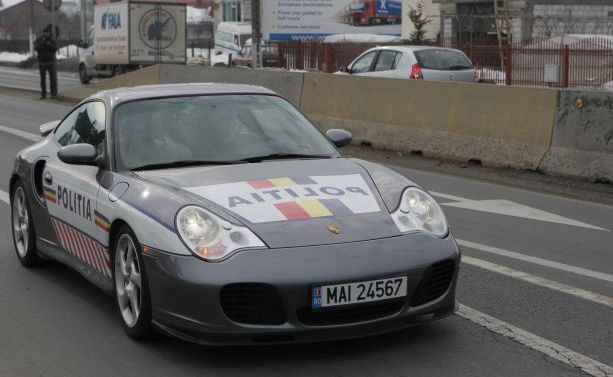
This supercar from a decade ago has one heck of a story behind it.
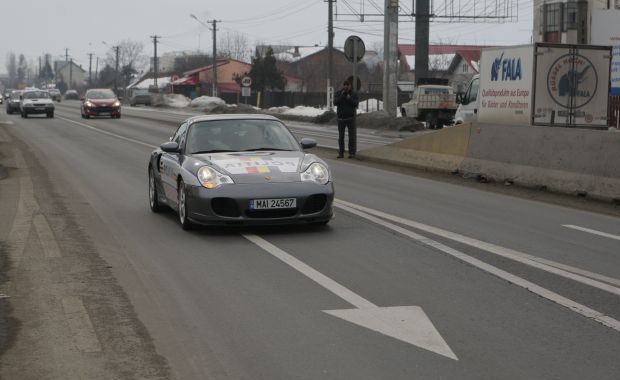
Back in 2002, a 996 generation of Porsche 911 Turbo was stopped by Romania police.Two turkish drug dealers were trying to use it to smuggle 60 kilograms of heroine into Germany.
The car was confiscated by the police and was subsequently used by the Romanian Finance Ministry.
Turn the clock forward and in 2007, 60 more kilos of drugs were found in the car when it was taken in for a routine service and checkup as the Turbo was going to be used for undercover work.
This car has become quite famous in the Romanian media, and now it’s being shoehorned into another role.
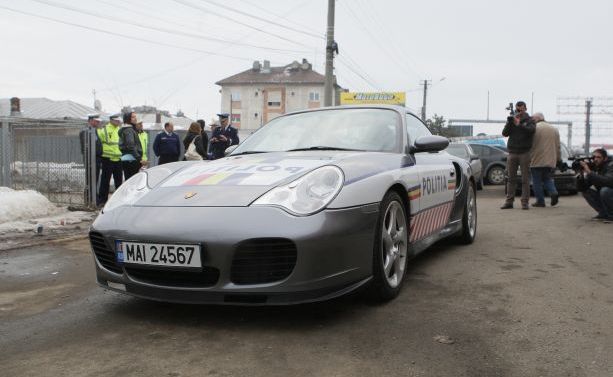
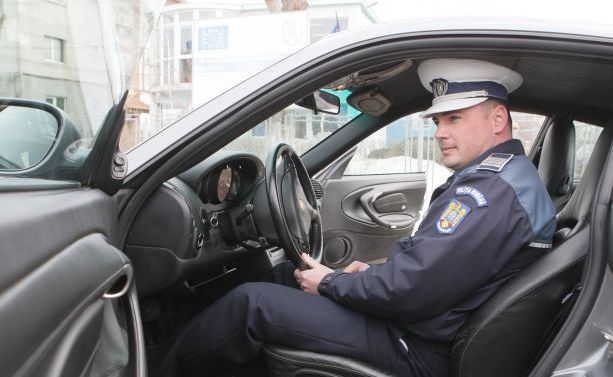
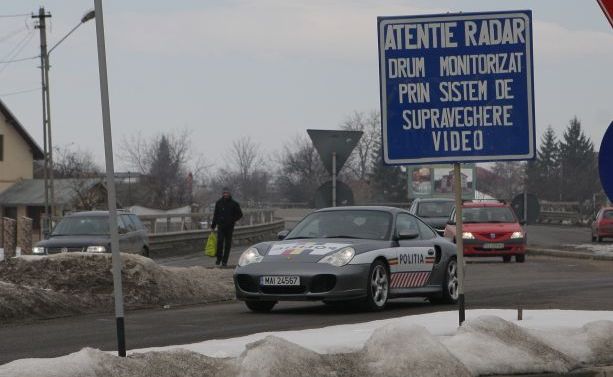
It’s been livered with Police stickers and will soon become their tool to hunt down speed freaks.
These photos provided by Adevarul.ro show the car being tested on DN1 highway, at the hand of a specially trained policeman.
When you see a Porsche Police car in your rear view mirror with the warning lights turned on at a speed worthy of a supersonic plane, you can not help to comply and pull over. Unless you drive a F1 car, to avoid meeting with the police.
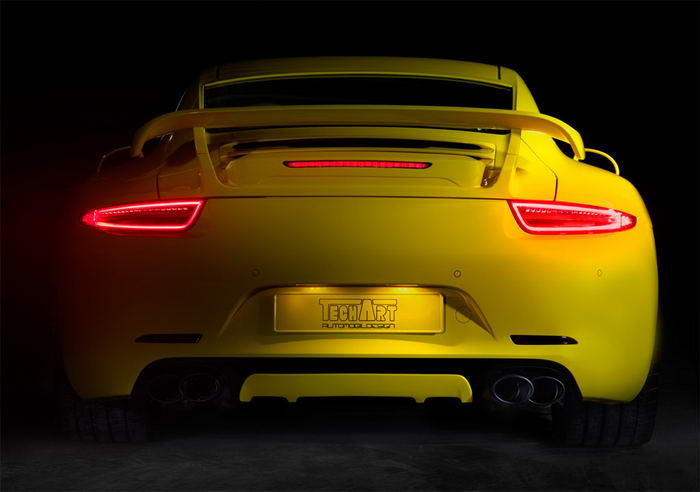
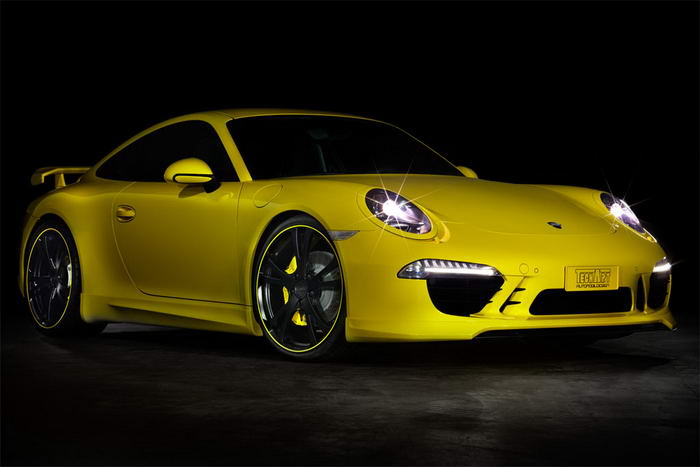
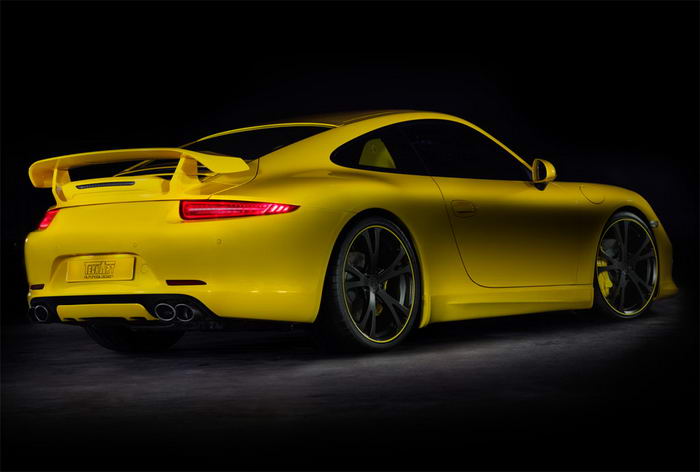
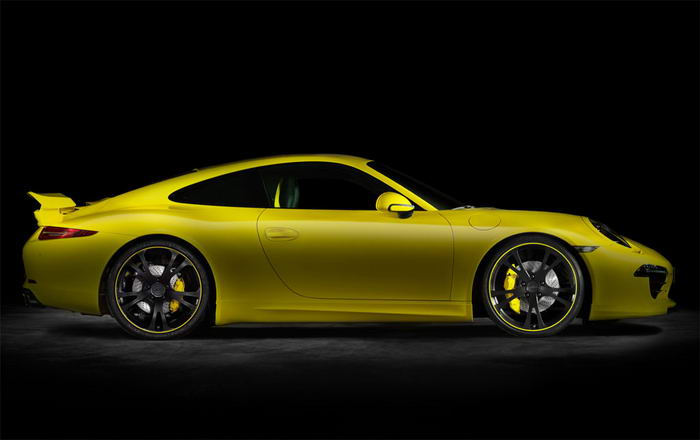
German tuner TechArt has officially released their program for the 2012 Porsche 911 (991) ahead of its public debut at the Geneva Motor Show 2012.
The newly developed exterior design for the Carrera and Carrera S models features a series of parts. The two-part front spoiler with an integrated splitter fits perfectly into the design of the new sports car and allows the front to sit even closer to the ground. In addition, two aero wings are integrated into the front air inlet vents.
At the rear you will find a fixed rear spoiler with a trailing edge and an integrated third brake light. The rear diffusor and side skirts on the wing of the vehicle complete the exterior range. Subtle trim panels for the front headlights as well as side mirror panels are the final touch.
A new exhaust system with valve control including EC-type approval, as well as dual oval tubes, provides an improved acoustic sound track. The new 911 rides on TechArt Formula five-spoke light alloy wheels in 20 or 21 inch. Additionally, Formula III forged wheels with five dynamically designed double spokes are available in 20 and 21 inch. This wheel offers a weight advantage of up to 15 percent compared to a cast wheel.
German tuner TechArt has officially released their program for the 2012 Porsche 911 (991) ahead of its public debut at the Geneva Motor Show 2012.
The newly developed exterior design for the Carrera and Carrera S models features a series of parts. The two-part front spoiler with an integrated splitter fits perfectly into the design of the new sports car and allows the front to sit even closer to the ground. In addition, two aero wings are integrated into the front air inlet vents.
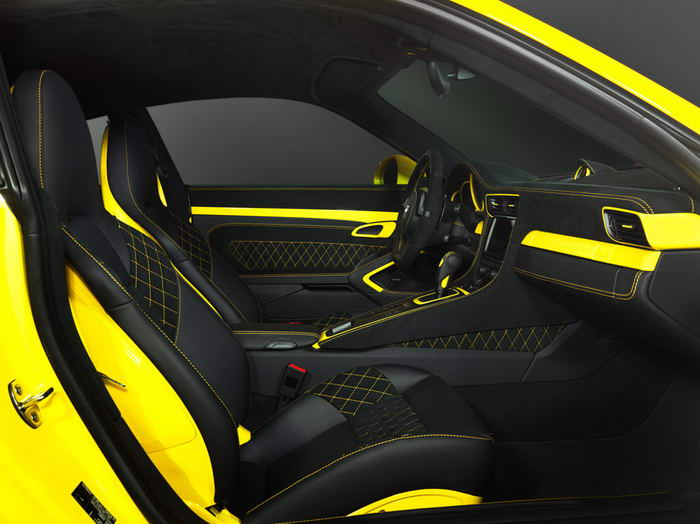
For the interior of the sports car there is a range of the materials, stylish colour combinations and numerous modification options, giving the customer the chance to implement all of the customisations they want, according to the tuner.
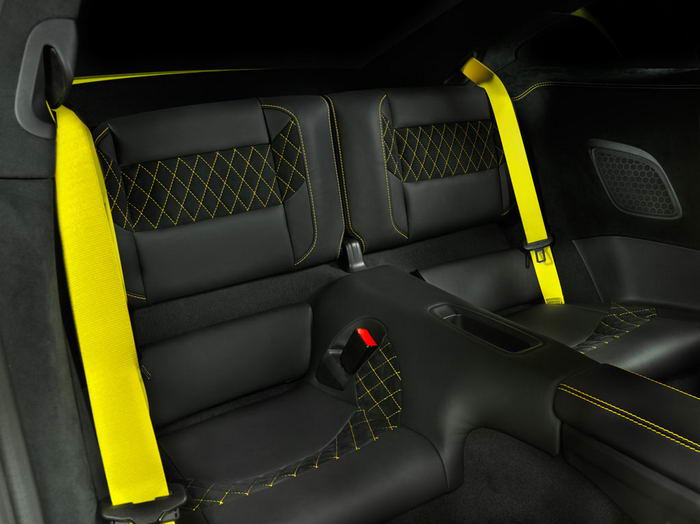
The exhibition display car for the Geneva Motor Show features a modified interior in black leather and Alcantara. The vehicle-colour-coordinated stitching is combined with matt-painted interior components in racing yellow and black, as well as a carbon fiber trim.
An ergonomically shaped TechArt three-spoke sports steering wheel has paddle shifters and completes the interior of the yellow Porsche 911 Carrera S.
Stay tuned as more details will be revealed at the 2012 Geneva Motor Show!
UPDATE 02/27/2012: With Geneva set to open its doors in a week’s time, TechArt has officially taken the wraps off of their new program for the 2012 Porsche 911. The program fits right in the Carrera and Carrera S models and comes with plenty of aerodynamic parts, including a two-part front spoiler with an integrated splitter that fits perfectly into the ergonomics of the 911. The kit also has two aero wings that are integrated into the front air inlet vents, a fixed rear spoiler with a trailing edge, an integrated third brake light, a new rear diffuser, new side skirts, side mirror panels, trim panels for the front headlights, and a new set of either 20″ or 21″ TechArt Formula five-spoke light alloy wheels.
As far as the Geneva-bound show car is concerned, TechArt opted to show the 911 with a modified interior dressed in black leather and Alcantara with matching matte-painted interior components in racing yellow and black to go with a carbon fiber trim.
Visit TECHART at the Geneva Motor Show from 8th to 18th March 2012. We look forward to welcoming you to the TECHART stand, number 2250 in hall 2. Register online at www.techart.de/messen or call +49 (0) 7152 9339 0.
THINK YOU CAN DESIGN SOMETHING AMAZING INSPIRED BY THE PORSCHE 911?
IF SO, YOU MIGHT WIN A 911 FOR A YEAR, OR $20,000.
Design competitions are a dime a dozen, so it’s hard to create something that stands out and piques the creative interest of talented designers.
But Co.Design thinks they’ve done just that. Today, with great enthusiasm, they’re announcing the Porsche Next Design Challenge.
The winner stands to get a very nice prize indeed: A one-year lease on a brand-new Porsche 911, or a cash-equivalent of $20,000.
The challenge for you: Design an object smaller than a living room and bigger than a purse, which references three design elements taken from Porsche 911s of the past or present. (But not a car!)
Your work will be judged by two design luminaries:Dror Benshetrit, who has created products for everyone from Cappellini to Target, and Jens Martin Skibsted, founder of Biomega and the designer behind Puma’s superb line of city bikes. (The third judge will be yours truly.)
Far from being a purely speculative contest,Co.Design be giving finalists and outstanding entries a spotlight on their site–highlighting the process and ingenuity, and hopefully giving more visibility. You’ll see these posts roll-out throughout the spring, in the run-up to the deadline.
Are you entering the Next Design Challenge? Here’s something to get your creative juices flowing: A look at great Porsche 911’s of the past and present.To get your process started, they created a slideshow of famous Porsche designs. And if you want to find out more about the contest, you can click here.
The deadline for entries is April 6, 2012. We can’t wait to see what you come up with. Good luck!
There are thousands of design details that go into creating a Porsche. Each builds upon the rest, creating the car’s essence. Could you take one element of the iconic design to create a brand new thing that embodies what Porsche is, but in an entirely new outlet?
NEXT DESIGN KEY CONTEST DATES
April 6, 2012
Entries Due
April 13, 2012
Top 25 Designs Revealed
April 23, 2012
Top 7 Designs Revealed
May 14, 2012
Top 7 Updated Designs Posted and User’s Choice Voting Begins
May 21, 2012
Grand Prize Winner and User’s Choice Winner Revealed
Co. Design is looking for designs inspired by Porsche’s signature car.
Enter by April 6th, and you could win a one year lease
on your own Porsche 911 or cash equivalent worth $20,000.
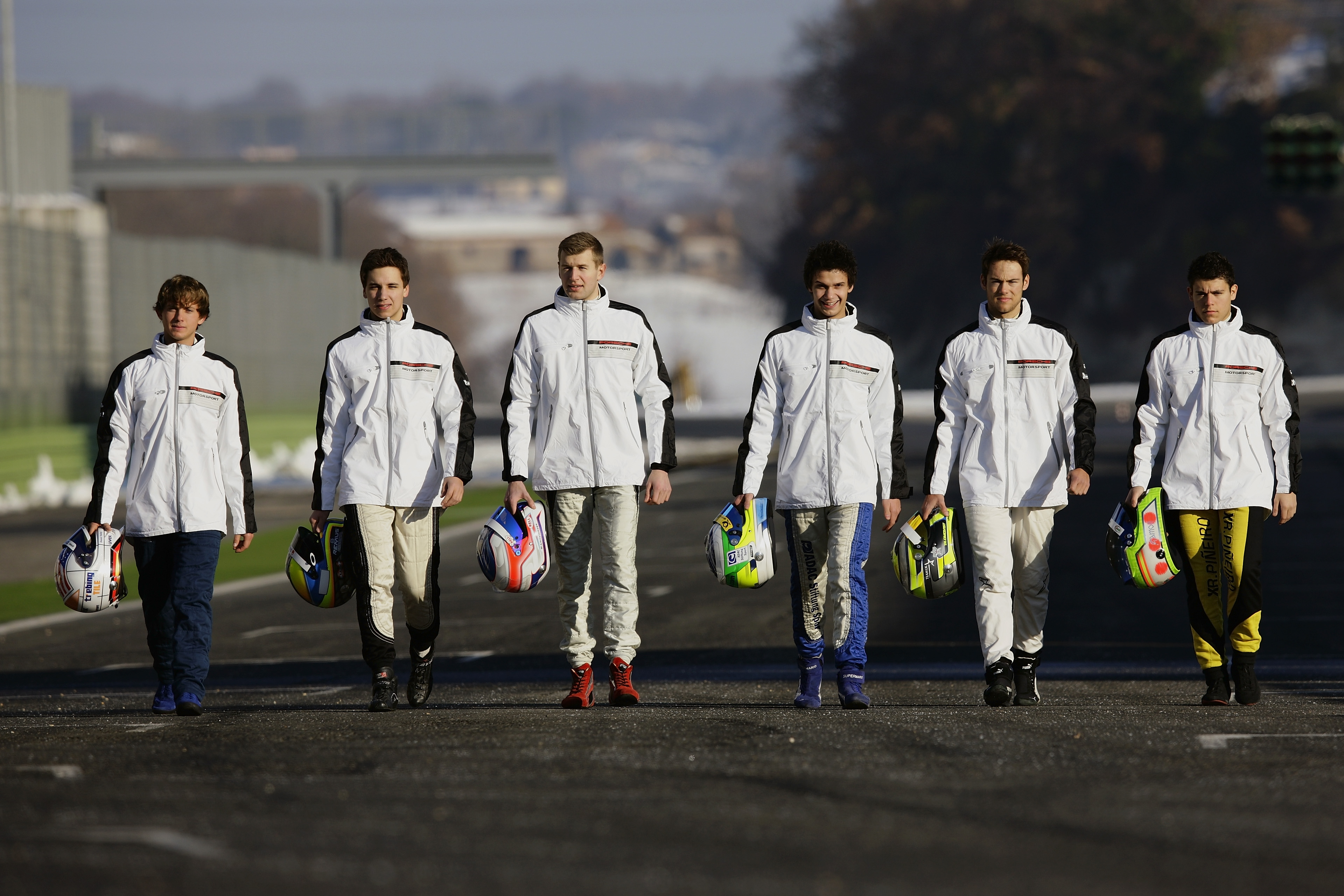
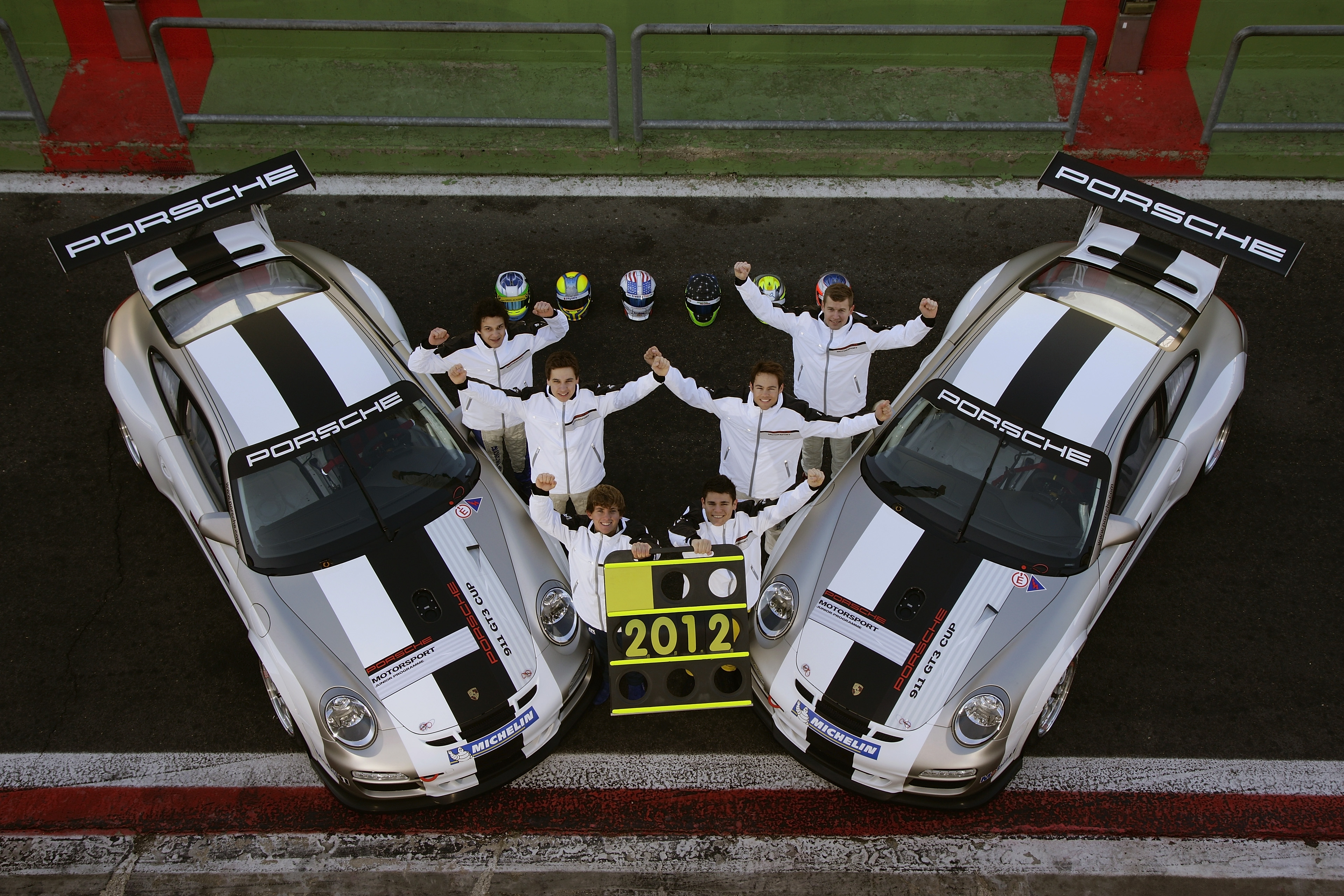
“The six finalists have had very little opportunity to get experience at the wheel of a GT race car. They have far exceeded our expectations,” praises Maassen.
“All of the pilots very quickly grasped how you have to drive the 450 hp Porsche 911 GT3 Cup in order to be fast.”
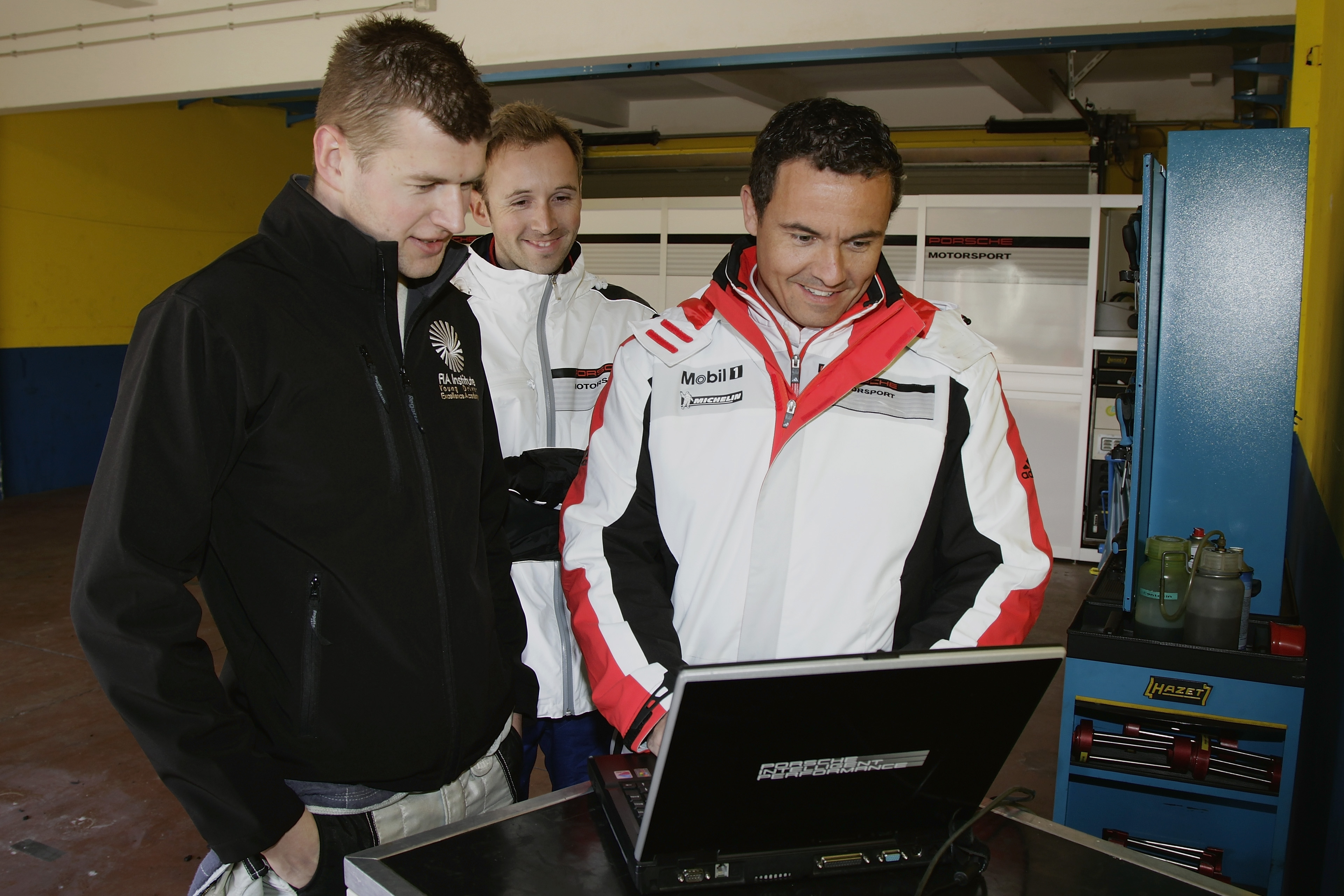
Aside from financial support, the drivers receive assistance similar to the
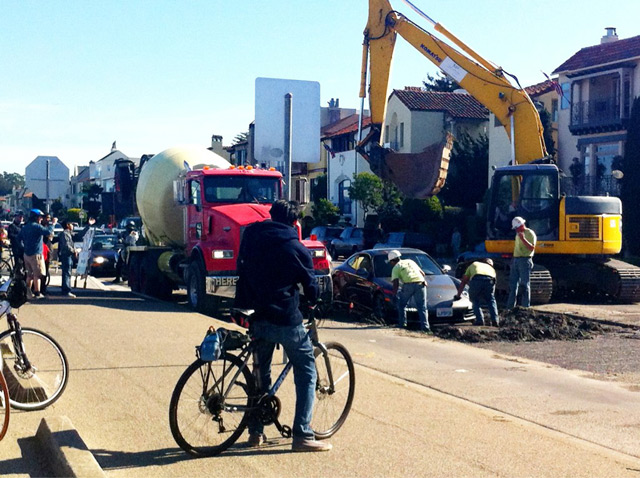
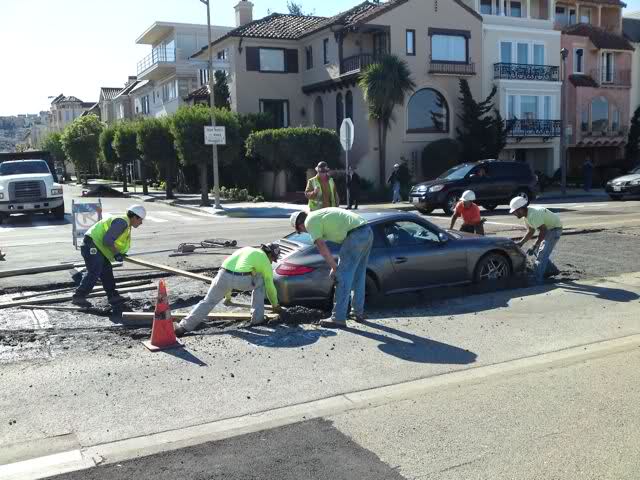
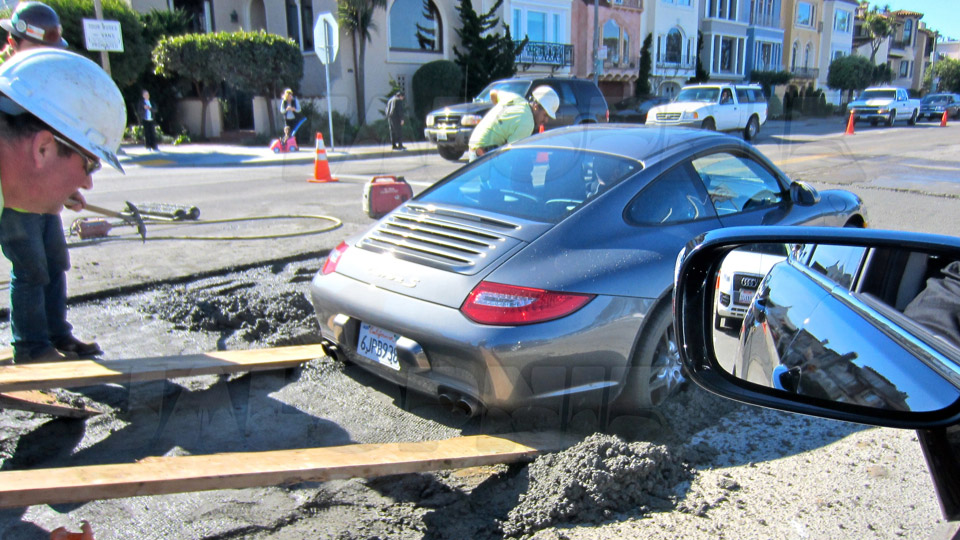
According to eyewitness reports on twitter, it took half a dozen city workers to dig out the vehicle, while the guy just sat in his car and assumed everyone else would do the work for him.
**********************************************************************************************************
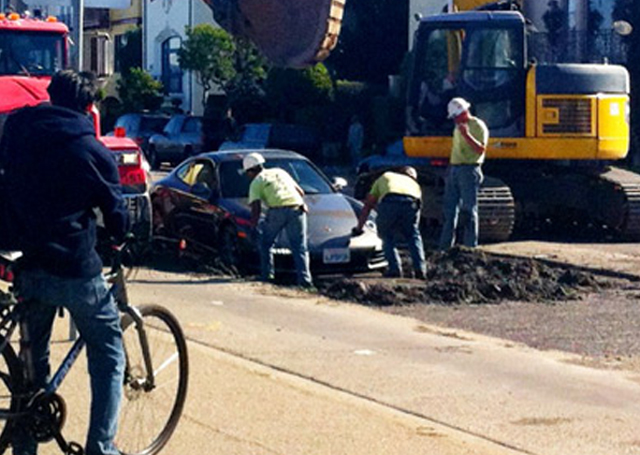
On Thursday, the driver of the Porsche 911 decided he’d take a shortcut around some construction cones and drove straight into wet concrete near Marina Green on Marina Blvd. in San Francisco.
“It was coned off,” according to Bobswire, a user of the Paceline bike forums. “He was just trying to sneak in from a side street. [The] concrete looked solid.”
Bobswire reports that the hapless driver remained stuck in his car. “He didn’t want to open the door and have concrete get in; the whole undercarriage and brakes will need to [be] cleaned or replaced.”
Whether the uncured pavement was concrete, asphalt concrete, or just plain cement is up for debate.
What’s unquestionable, that this is far the best Lightning McQueen impression you ever seen since Cars ?
The unidentified male driver was navigating San Francisco’s hilly roads last week when he reportedly swerved to get ahead of stopped traffic.
Instead, his own sports car came to a complete stop when he drove it right into a patch of wet cement.
Unfortunately for the driver, not only was he stuck, but he was also caught on tape by Jim Gorzelany, an automotive writer for Forbes who just happened to be driving by and posted the incident on the magazine’s website.
Gorzelany reports the man stayed in his six-figure sports car as construction workers scurried to shovel the cement out from underneath the car’s wheels before the cement set even more.
The car was eventually removed, according to Gorzelany, but it was already too late. He says the likely damage will likely require replacing the car’s undercarriage.
WOULD you be hyped if these PORSCHE Air Jordan VI were an official Air Jordan release?
Porsche’s official “Guards Red” and “Silver Metallic”, complete with that auto body like shine using a waxed gloss finish….
Over the 26 years of Air Jordans a main point of inspiration for their designers has been found in the automotive and airline industries.
One of the first was the Air Jordan VI made by the brands most well known designer, Tinker Hatfield. Releasing in 1991 Hatfield’s VI design was created based on the look of the Porsche 911, one of Michael Jordan’s cars at that time.
The most telling piece of the shoe became the pronounced, black and red plastic heel tab on the VI that was created in the essence of the 911′s over sized spoiler. Chris Hui of C2 Customs‘ goal on this pair of Air Jordan VIs was to further develop the original inspiration and transform the shoe to embody the look of a Porsche as close as possible.
C2 started out using a youth sized white/varsity red/black Air Jordan VI retro as his base shoe, seen below to understand the amount of changes made.
After prepping the shoes properly, change number one was painting all white parts Porsche’s official “Guards Red”, complete with that auto body like shine using a waxed gloss finish.
Second the white neoprene tongues were dyed tan to match the rich tan leather interiors.
A third subtle detail included painting of the Air Max cavity walls a bright maize to represent the signature Brembo brakes and calipers of the 911s.
To add more of that official Porsche look, the placement of emblems on the toe and heels a la hood and trunk was painted with gold and black. The front being a small C and 2, while the back mimics the Porsche coat of arms using the stitched Jumpman logo as its centerpiece. Now that is where many customizers would stop and call it done.
The details are what C2 is all about though, as his toughest task was drilling four holes and filling them with hand cut metal to create the look of the Porsche 911′s quad exhaust. Luckily C2 is patient enough to not have mis-drilled the holes considering he probably did that step first and could have easily ruined this pair of Jordans and the entire project.
There is no way to imagine how hyped these Porsche Air Jordan VI would be if they were an official Air Jordan release. Thanks to C2 for the first look here on PaintOrThread.com.
Checkout more work by Chris and contact him for your own detailed C2 custom sneaker via his website: C2Customs.com
This Air Jordan 6 custom features the Porsche emblem on the heel surrounding the Jumpman, dual muffler, agate metallic silver upper, with the original Red strip on the pull tab and Jumpman on the Sole. Surely these are one of the craziest customs we’ve ever seen and probably one of the best.
What do you think about the Air Jordan 6 “Porsche 911″ Metallic Silver Custom shoes?
Coincidentally, Porsche announced and unveiled a new 911 on the same morning this design went public. There was more action on Twitter about these kicks than there was about the announcement of the actual car. #imjustsaying
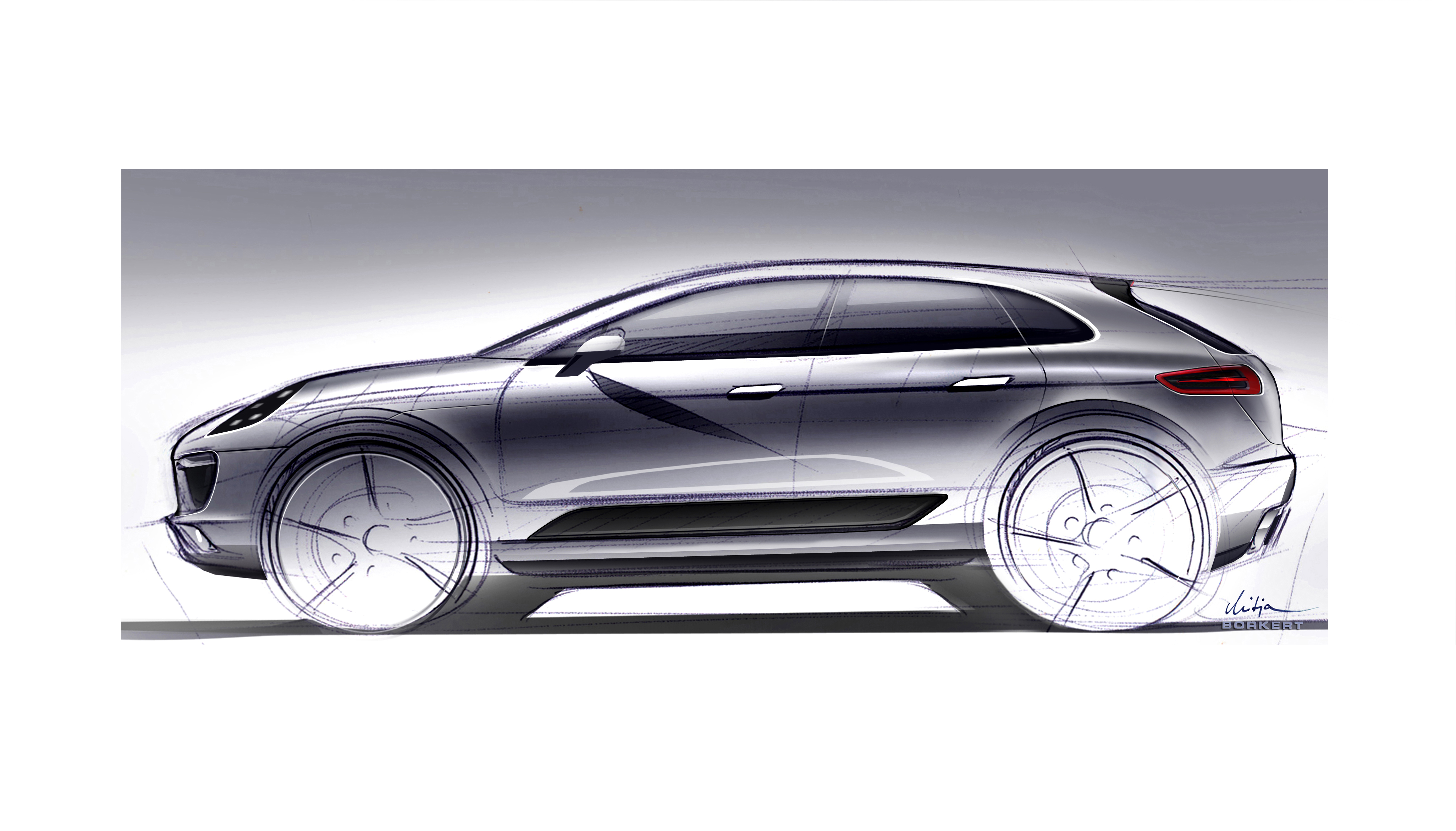
Stuttgart. Dr. Ing. h.c. F. Porsche AG, Stuttgart’s new sports car in the SUV segment has been given the name Macan. The name Macan is derived from the Indonesian word for tiger and combines suppleness, power, fascination and dynamics – core characteristics of the new off-road car.
“The Macan combines all sports car characteristics with the benefits of a SUV and is a genuine Porsche”, said Bernhard Maier, Member of the Executive Board Sales and Marketing of Porsche AG.
“The name of a new Porsche has to fit with the brand, sound good in very many languages and dialects and evoke positive associations.”
As the fifth Porsche model line, the Macan is a central plank of Strategy 2018, by which the sports car manufacturer wishes to expand its model portfolio. Porsche intends the Macan to emulate the success of the Cayenne.
The SUV will start coming off the production lines in Leipzig in 2013.
To that end, the site in this city in Saxony is being expanded into a fully-fledged production plant including body assembly line and paint shop – with 500 million euro of investment one of the biggest building projects in Porsche’s corporate history. In the medium-term, the sports car manufacturer will be creating more than 1,000 new jobs here.
Word names at Porsche have a concrete connection with the corresponding model and its characteristics: the name Boxster describes the combination of boxer engine and roadster, Cayenne stands for sharpness, the Cayman is snappy and agile and a Panamera is more than a Gran Turismo, capable also of winning the Carrera Panamericana long-distance race.
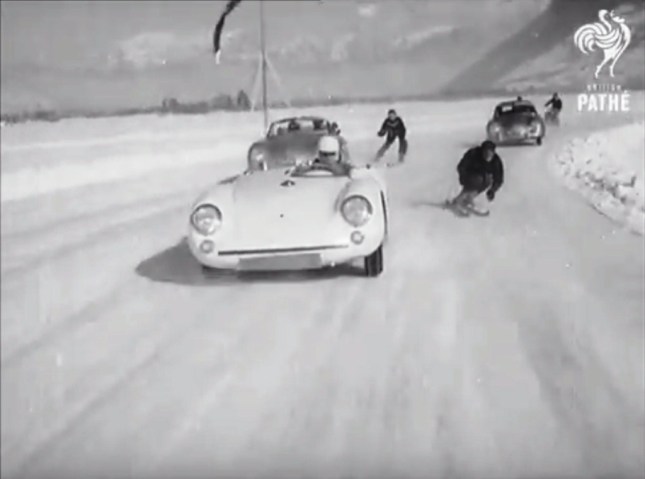
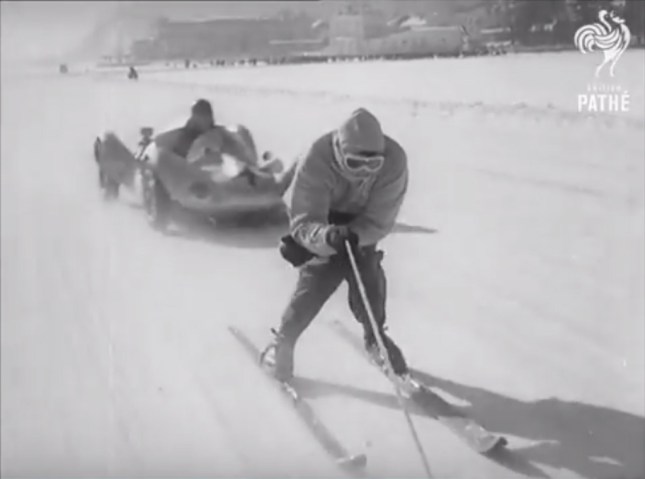
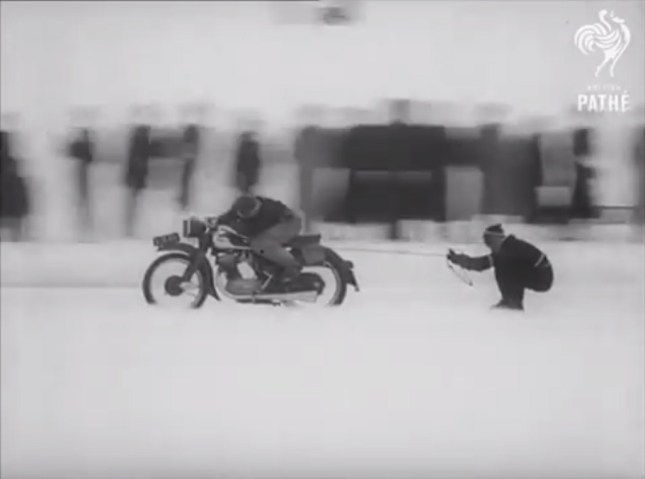
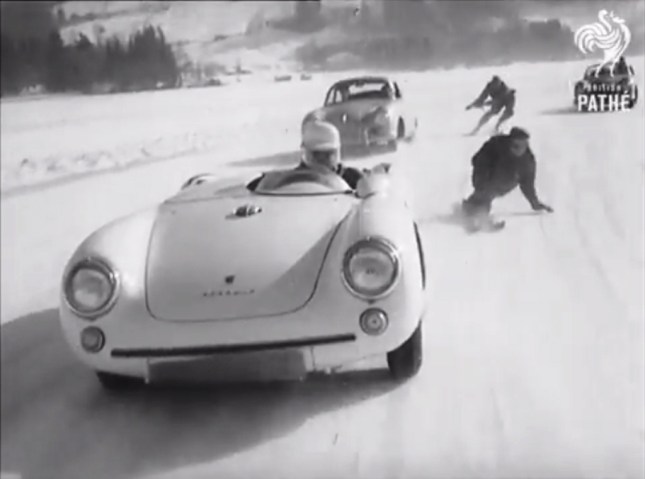
The roots of ‘skijoring’ or motor skiing can be traced back to Bavaria, circa 1955, when a group of Germanic lunatics decided it would be a good idea to use motorbikes, VW Beetles and Porsches to tow themselves around for fun.
Filmed in Bavaria, Germany. The skiers are towed behind cars travelling at great speed.
The concept is simple enough: put a rope on a car or motorcycle, presumably equipped with studded snow tires, then have the driver navigate a race course at speeds up to 100 miles per hour.
Probably not considered the most dangerous sport by today’s standards!
Evidently safety was not as big of a concern back then either. The speeds and proximities to other skiers in this clip are unlike anyone would have attempted.
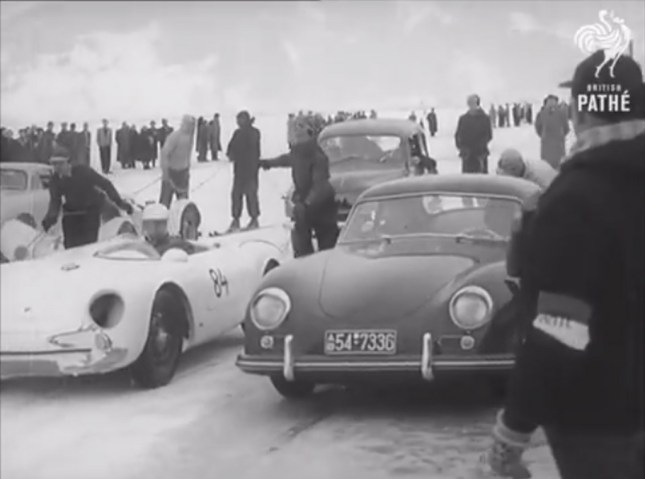
See the Teutonic madness, featuring Porsche 356s and even a Porsche 550 Spyder, a short but sensationalized video below.
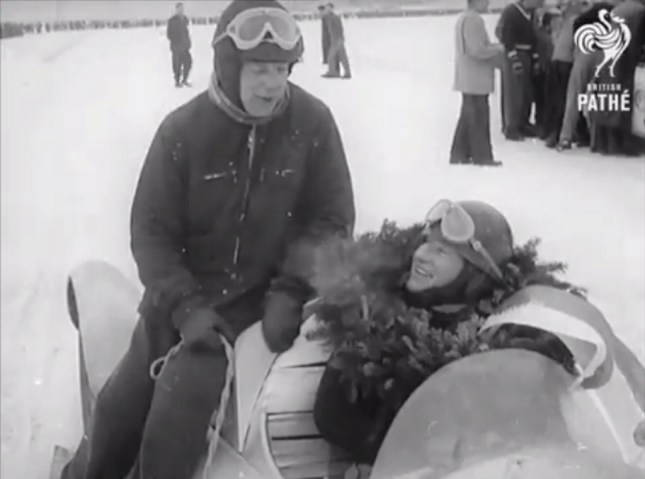
You can spot the Porsche 550 Spyders in the video, and what appears to be Otto Mathe’s famous 4 cam-powered single seat racer, which you can see in person visiting the Prototype Museum in Hamburg.
Probably the Gmund 040, then used by Otto Mathe to tow his ice racer
World’s Most Dangerous Sport (1955). Filmed in Bavaria, Germany. Skiers are towed by cars and motorcycles travelling at great speed. Probably not considered the most dangerous sport by today’s standards!
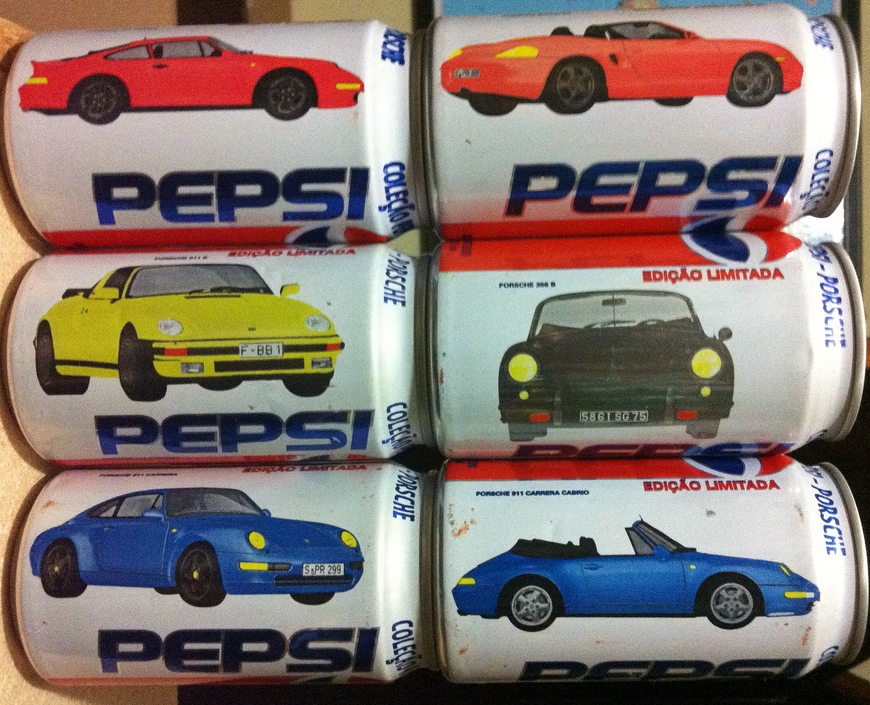
On a hot summer day, nothing can be more refreshing than an ice cold soft drink. From Pepsi to Coca-Cola, from Orange to Root Beer, sparkling water to seltzer, there are numerous soft drinks to choose from. Soft drinks are sold in every gas station, every restaurant and just about every place you go today.
But where did this Porsche theme Pepsi six pack of carbonated delight come from?
Brazil of all places and with a Porsche “transportation” theme!
For any Porsche enthusiast and Porsche collector this is one more thing to add too the shelf. Unfortunately, this maybe hard to find as the promotion was back in 1997 in Brazil. Pretty cool though. I love it when Porsche and various companies do theme promotions like this. Now if they would only do more marketing like this, I would be first in line to purchase!
And a little more “Pepsi Porsche” triva… from what I remember according to the Porsche race car driver/actor James Dean‘s official site, James Dean’s first professional acting job was a 1950 Pepsi commercial “in which a group of teenagers dance around a jukebox singing ‘Pepsi-Cola hits the spot‘” a rare James Dean video. Now that’s a classic.
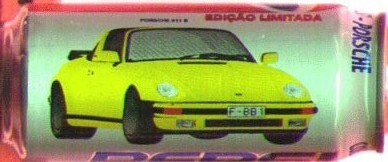
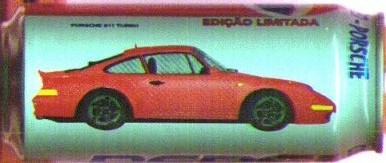
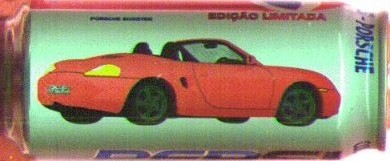
The six pack includes:
Pepsi Porsche 911 Carrera azul (blue)
Pepsi Porsche 911 Carrera Cabrio azul (blue)
Pepsi Porsche 356 B (black)
Pepsi Porsche 911B amarelo (yellow)
Pepsi Porsche 911 Turbo vermelho (red)
Pepsi Porsche Boxster vermelho (red)
Product Description Information:
Can Museum ID: PEP03-COL-350-BR-1997
Brand: PEPSI
Flavor: Cola
Volume: 350mL
Country Made For: Brazil
Country Made In: Brazil
Description: PORSCHE SET: 911 CARRERA
Year of Issue: 1997
Material: Aluminum
Barcode: 7892840800079
Top: Tab top
Theme: TRANSPORTATION
Two of the largest and most profitable soda corporations is Coca-Cola Company and the Pepsi Cola Company, which is now referred to as PepsiCo by the company. Both Coca-Cola and PepsiCo invest tens-of-millions of dollars per year in worldwide marketing campaigns. By visiting their websites (www.cocacola.com and http://www.pepsi.com), one can see that the two rival companies are invested in very diverse products. Even though Coca-Cola and PepsiCo are targeting the same markets, they approach their marketing strategies in very different ways.
Flying Lizard Returns for 9th Consecutive ALMS Season
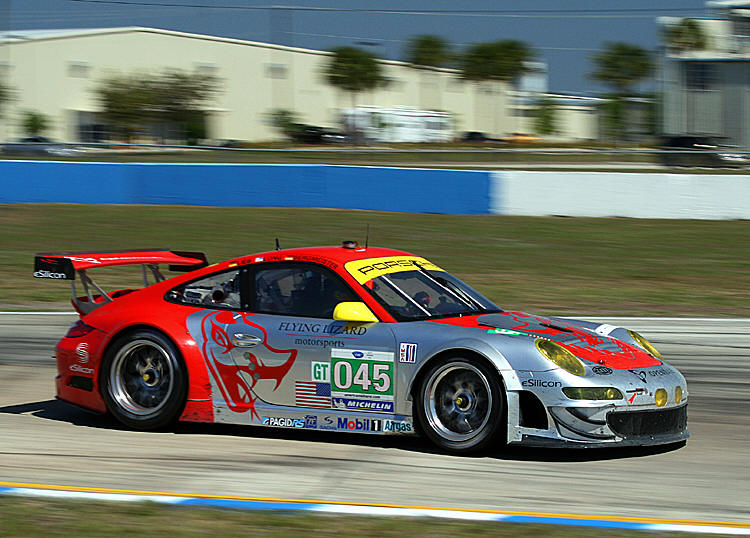
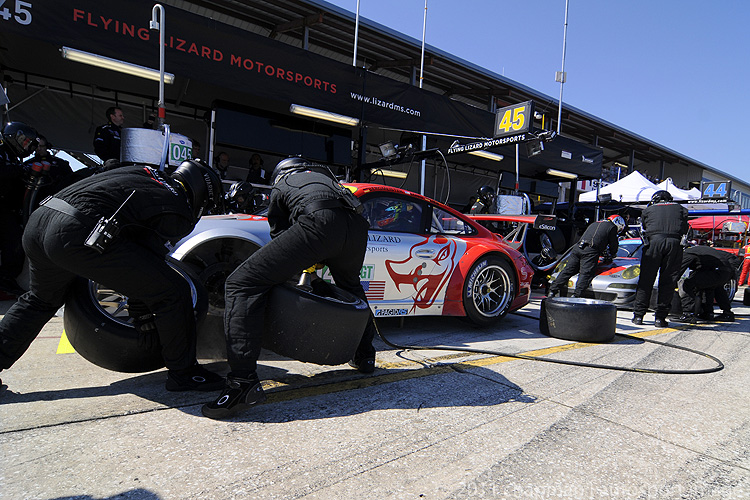
February 06, 2012 – Sonoma, Calif. – Flying Lizard Motorsports announced its driver lineup for the 2012 Mobil 1 Twelve Hours of Sebring.
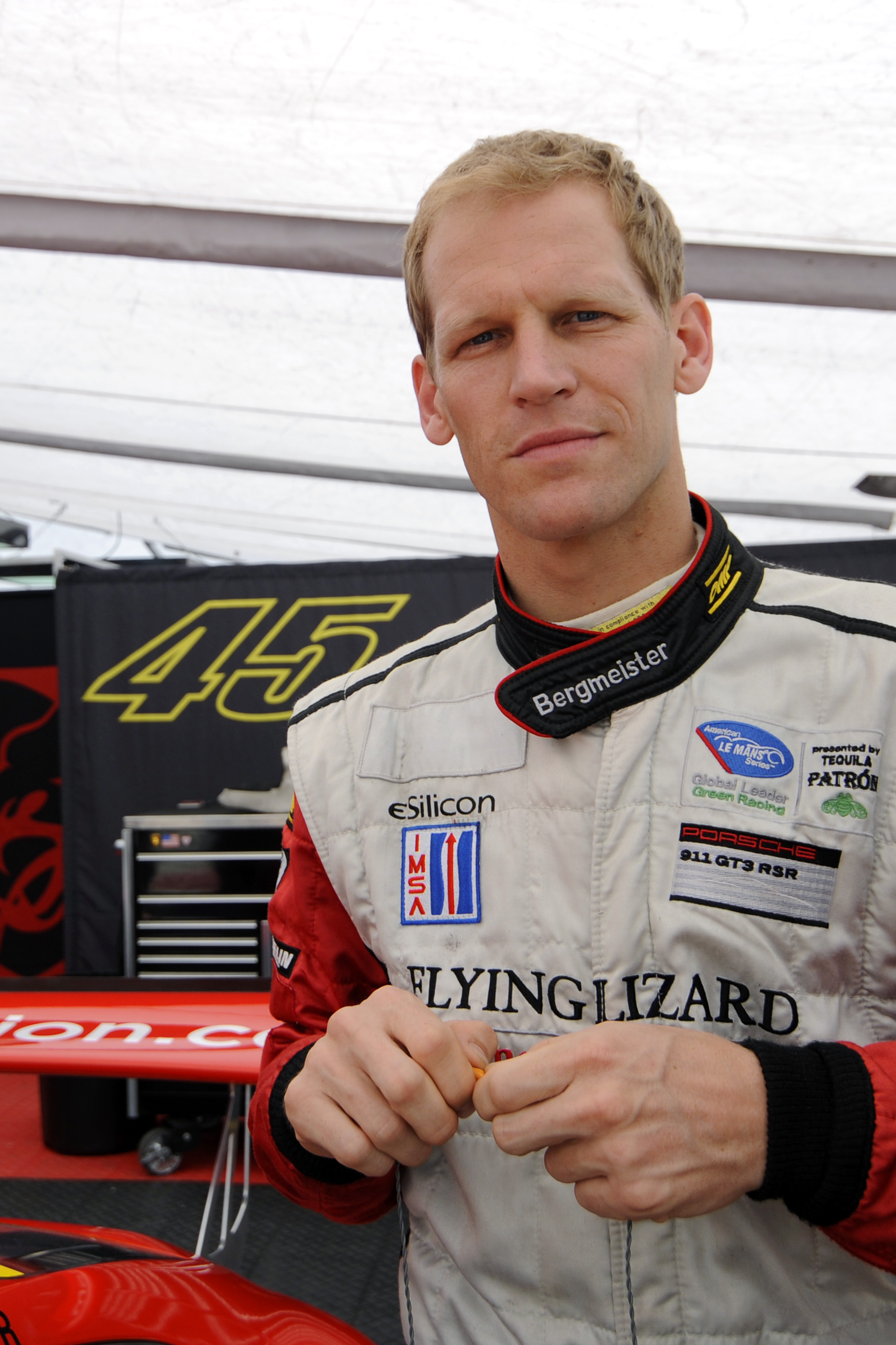
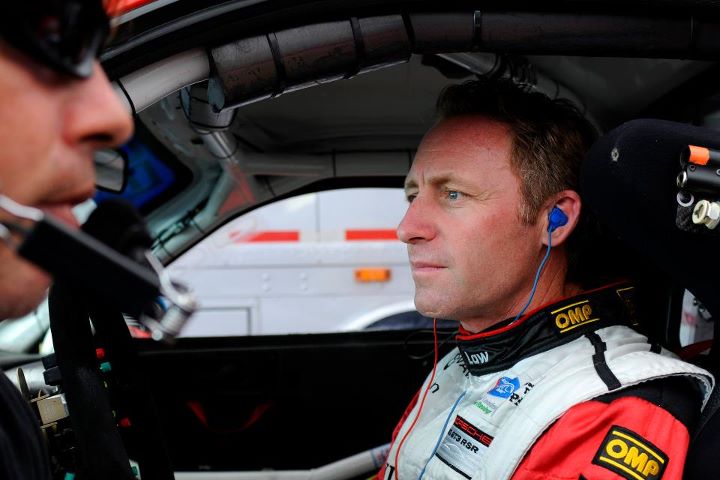
The team will field two new racecars in the GT class for the ALMS season: the No. 45 and No. 44 2012 Porsche 911 GT3 RSRs. Joerg Bergmeister and Patrick Long, both Porsche factory drivers, will return for their fourth consecutive season driving together in the No. 45; this will be Bergmeister’s fifth year with the team.
Bergmeister is a five- time ALMS GT drivers’ champion (2005-2006 and 2008-2010). The 2008, 2009 and 2010 championships were won with Flying Lizard in the No. 45. Long has won the title three times: 2005, and 2009-2010, each with Bergmeister.
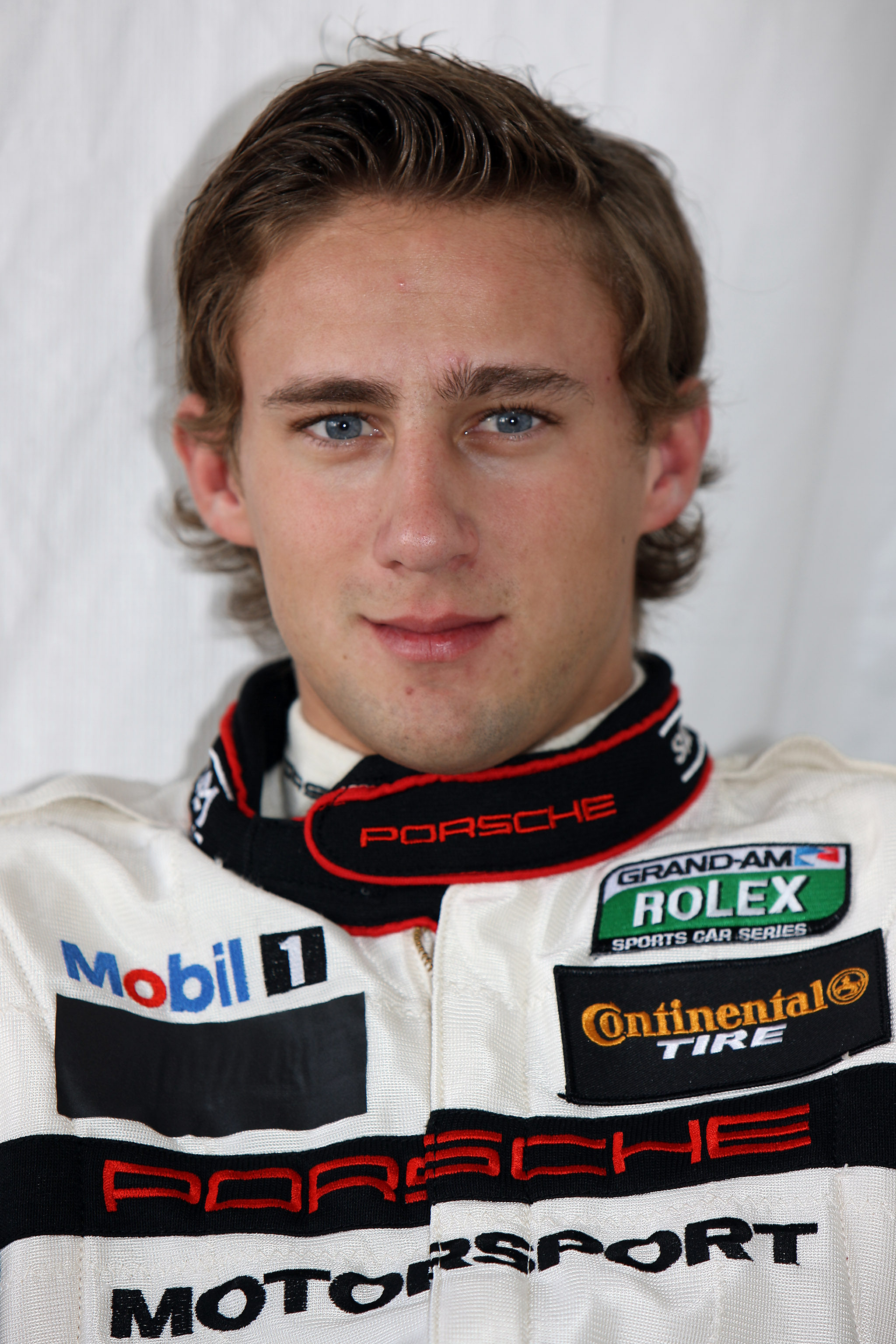
At Sebring, the pair will be joined by Porsche factory driver Marco Holzer. 2012 will be Holzer’s second year with the team. After Sebring, Holzer will return to his regular seat in the sister No. 44 Porsche for the season.
2011 12 Hours of Sebring
For Sebring, in the No. 44, Seth Neiman will be joined by Darren Law and Andy Lally. Law has driven with the Lizards since 2004 and will return as a guest driver in 2012.
Darren Law
Sebring will be Lally’s first race with the team.Andy Lally
Lally heads to Sebring following a GT win last week at the 2012 Rolex 24 At Daytona (with Magnus Racing). 2012 is Lally’s fourth GT win at the Rolex 24 At Daytona. Among his notable achievements in endurance racing and stock car racing, Lally was named NASCAR Sprint Cup Rookie of the Year for 2011. Click here for more information on Lally.
Thomas Blam, Flying Lizard Chief Strategist said,
“Marco Holzer has proven to be a highly consistent driver; he contributed a great deal to our 2011 program. He will be a very solid addition to Joerg and Patrick in the No. 45 for Sebring. In the No. 44, we have an All-American lineup with Seth, Darren and Andy. This will be Andy’s first time driving with the Lizards but he has a proven performance record in Porsches and brings a wide breadth of endurance racing experience.”
The new Porsches will have their inaugural run at the ALMS Sebring Winter test this week: February 8 and 9 in Sebring, Florida.
Developments to the RSR for 2012 include a wider body, increased front tire diameter and wider front and rear track width. Porsche has also modified the bodywork to optimize aerodynamics and added new air intake ducts to the rear quarter panel.
The Porsche 911 GT3 RSR is powered by a six-cylinder boxer engine with a four-litre capacity. Click here for details.
About Flying Lizard Motorsports
Flying Lizard returns to the American Le Mans Series for their ninth season and the fourth consecutive season for Bergmeister and Long together in the No. 45.
The Lizards have won two ALMS GT team championships (2008 and 2009) and have finished in the top three each year since 2004.
The team has secured three ALMS GT drivers’ championships: Bergmeister and Long took the title together in 2009 and 2010 and Bergmeister with Wolf Henzler in 2008. Bergmeister is five-time ALMS GT drivers’ champion (2005-2006 and 2008-2010) and Long has won the title three times (2005, and 2009-2010), all with Bergmeister.
Bergmeister is the only driver in Grand-Am and ALMS history to win the championship in both series in the same year (2006).
Flying Lizard has also competed in the 24 Heures du Mans from 2005 through 2011, finishing third in 2005, fourth in 2006, sixth in 2008, and sixth in 2011.












 Probably the Gmund 040, then used by Otto Mathe to tow his ice racer



 Porsche Everyday Dedeporsches Blog