|
|
||
|
||
 |
||
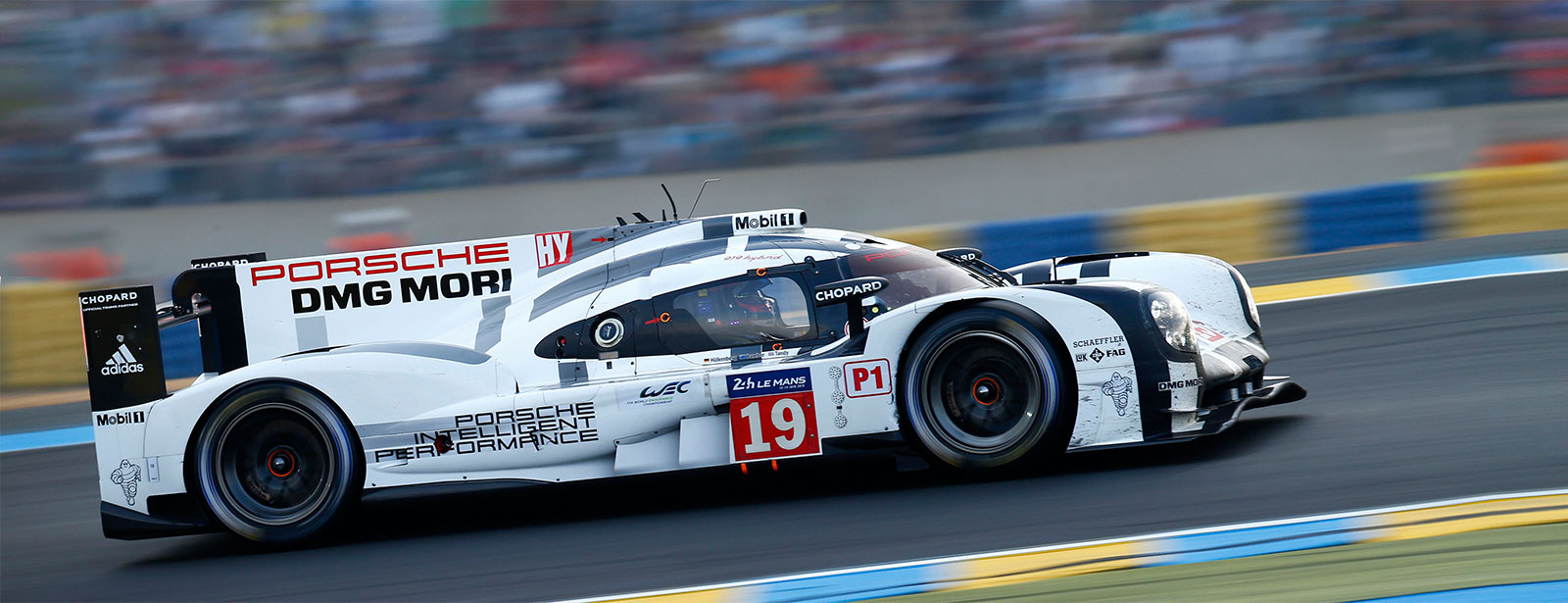
| Stuttgart. On Monday and Tuesday next week (27-28 July) Porsche will prepare for the fourth round of the FIA World Championship (WEC). Following its victory at the Le Mans 24 Hours, the Porsche 919 Hybrid will be driven for the first time on the Nürburgring. In action on the renowned German racetrack will be one of the innovative prototypes which, by combining a two-litre four-cylinder turbocharged engine with brake and exhaust heat recovery systems recuperations, produces a combined power of about 1000bhp.
On Monday Timo Bernhard (34, Germany) and Romain Dumas (37, France) will share the testing duties at the wheel of the Le Mans prototype, for Tuesday Dumas and Marc Lieb (35, Germany) are scheduled to be in the car. The main focus of the test sessions is on preparations for the six-hour race at the Nürburgring on 30 August, as well as generally for the second half of the season with races in Austin (USA), Fuji (Japan), Shanghai (China) and Sakhir (Bahrain). The Nürburgring-based Porsche Team Manthey will also use the testing opportunity at the “ring”. The team will test the GTE-Pro-class 911 RSR. Furthermore the Dempsey Proton Racing team, with race driver and actor Patrick Dempsey (49, USA) at the wheel, will also be testing the RSR. In Le Mans Dempsey, alongside Porsche factory driver Patrick Long (33, USA) and Marco Seefried (39, Germany), finished the race in second place in the GTE-AM class, which was the best result of his career so far.
On both days spectators will be allowed free access to the T3 grandstand. On Tuesday members of the press are welcome in the paddock, but must apply in advance for accreditation. Patrick Dempsey, Timo Bernhard and Andreas Seidl, Director Race Operations LMP1 for Porsche, will take part in the WEC press conference on Tuesday, at 12:00 in the business lounge (segment 1) next to the grandstand. “After the overwhelming one-two result in Le Mans we are very exited to finally be able to present the Porsche 919 on the racetrack in front or our home fans,” explained Fritz Enzinger, Head of Department, LMP1. “Our main goal obviously will be to thoroughly prepare for the six-hour race at the Nürburgring. This season’s last European round once more promises a fascinating race with the likelihood of a very close finish. From now on we are concentrating on winning the world championship and we are doing this thanks to a lot of support from our fans.” Communication Porsche AG |
Tag Archives: Nurburgring
Porsche 919 Hybrid and 911 RSR are coming to the “ring” FIA World Endurance Championship WEC, Nürburgring Test Drives
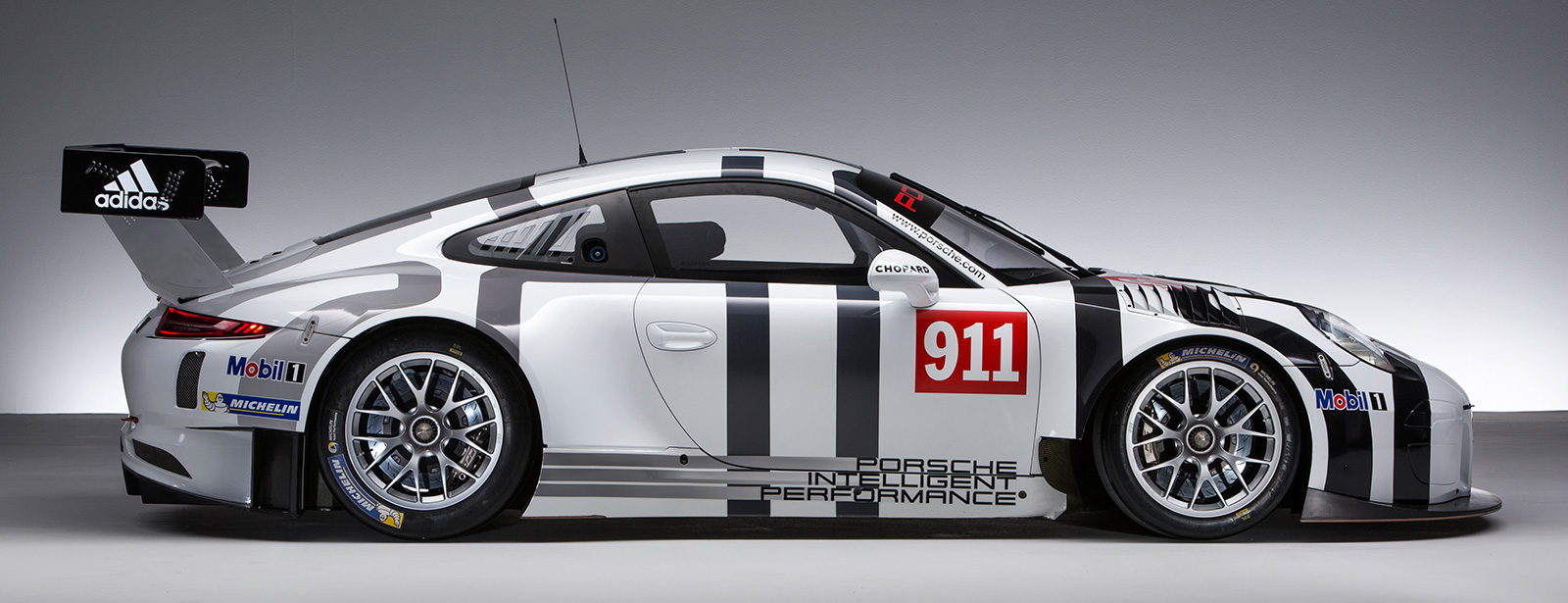
Video: Porsche Sport Driving School, Hone your skills at the ‘Green Hell’ Nürburgring
Date: 05.08.–06.08.2015
at the Nürburgring, Nordschleife
a superlative racing venue, guaranteeing maximum motoring pleasure.
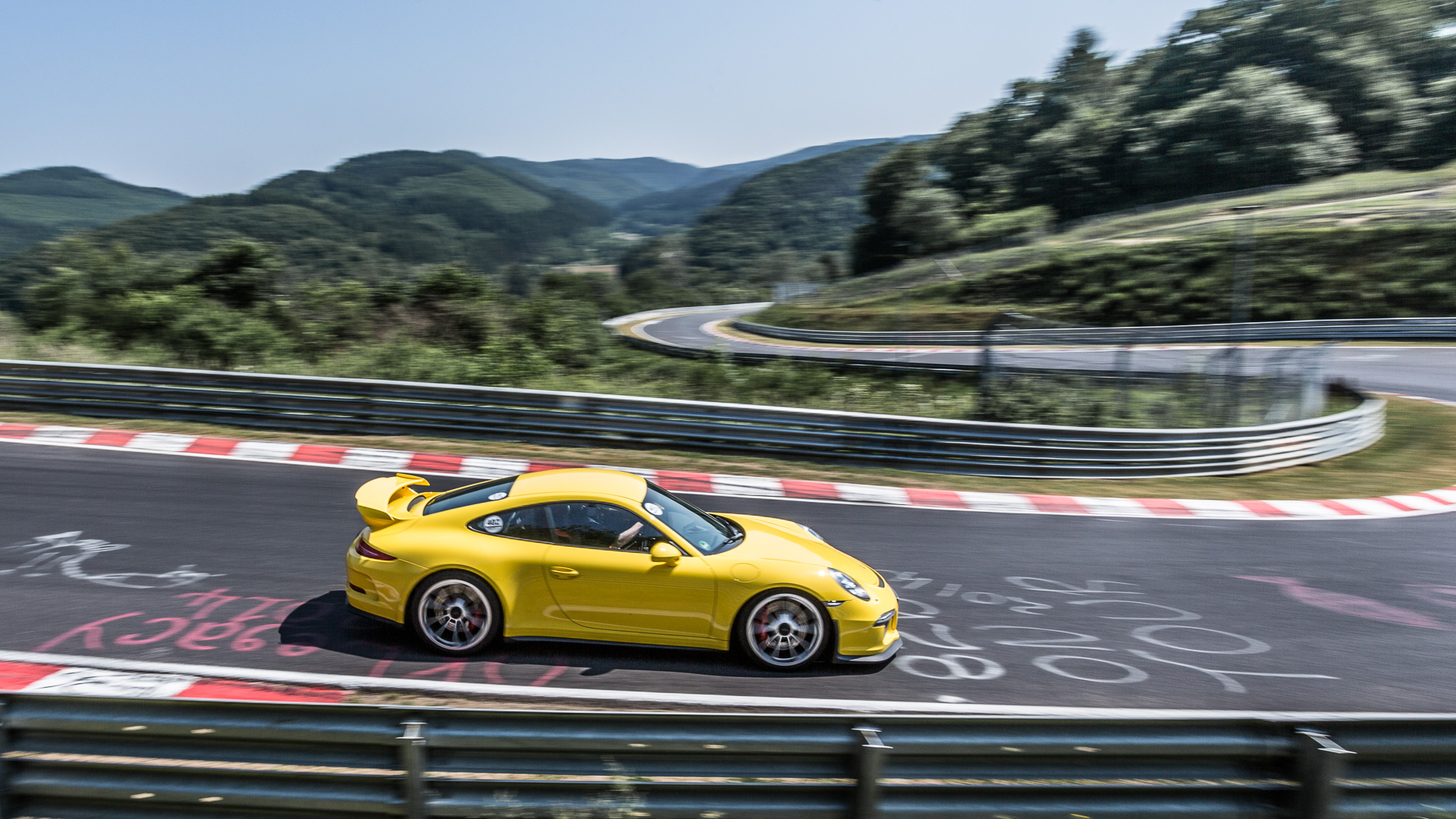
Training Level: Master. Two day course for advanced participants.
Prior training level: Performance
Training content:
-
Following the racing line quickly and independently
-
Developing alternative racing lines
-
Individual laps with one-to-one coaching
-
Influence of chassis and tyres on road-going vehicles
-
Overtaking safely on the circuit
Included in the programme: a Porsche works driver, and our instructors, all of whom are experienced in racing. Participation in high-performance vehicles is not essential, but highly recommended.
You are already an accomplished driver, so we don’t need to cover the basics. Instead, we can focus on showing you how to drive more independently and quickly find your way around the track without the aid of cones and instructors. Naturally, this also includes identifying and following the racing line. You’ll also discover how this can be developed still further.
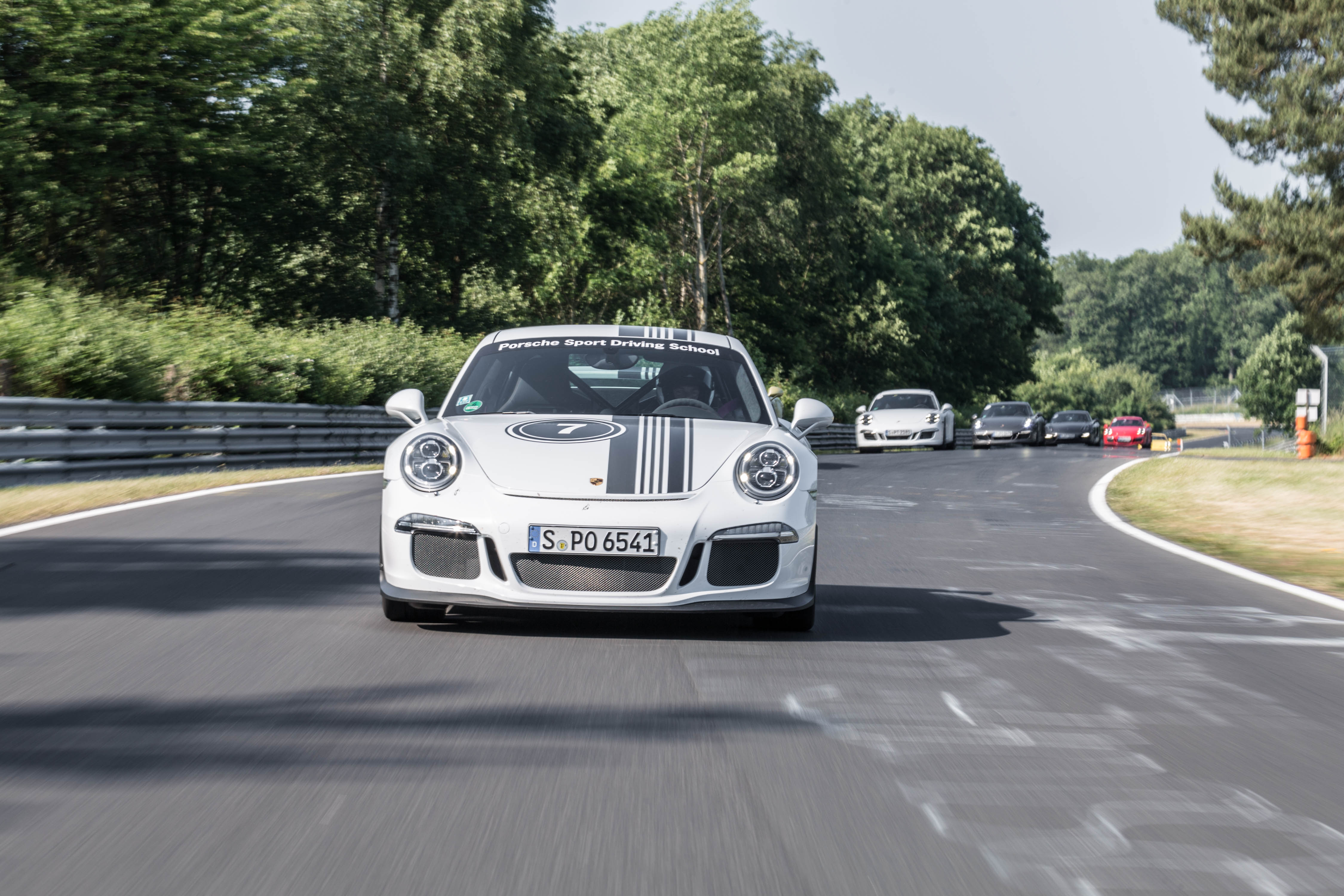
You’ll also have plenty of time out on the track to put what you’ve learned into practice and continue to improve your skills – you’ll even receive one-to-one guidance on some laps of the circuit.
In addition, a workshop covering both theoretical and practical aspects will teach you all you need to know about the chassis and tyres to enable you to transfer the power of your vehicle to the road in the most efficient way.
More information about our trainings plus dates and prices can be found online at: www.porsche.com/sportdrivingschool
Porsche Sport Driving School
Operator: _wige EVENT gmbh
Stammheimer Straße 31
70435 Stuttgart
Tel.: +49 (0) 711 911-23364
Fax: +49 (0) 711 911-23277
E-Mail: info@porschesportdrivingschool.de
Link Website:
https://drivingexperience.porsche.com/en/sport-driving-school/events-and-services/training-levels-onroad/master/nuerburgring-nordschleife
Porsche 918 Spyder tops global debut with a Nürburgring lap record in 6.57 minutes

Press Release |
11/09/2013 |
Super sportscar equipped with a hybrid drive takes the Nürburgring Nordschleife in 6.57 minutes
918 Spyder tops global debut with a Nürburgring lap record
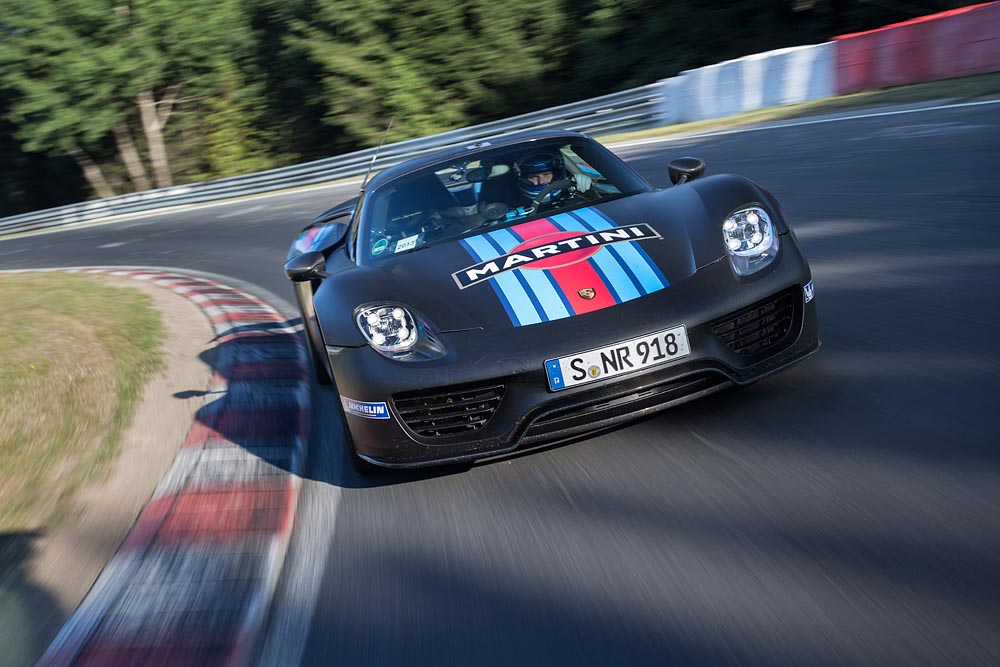
Record Run 918 Spyder Nürburgring
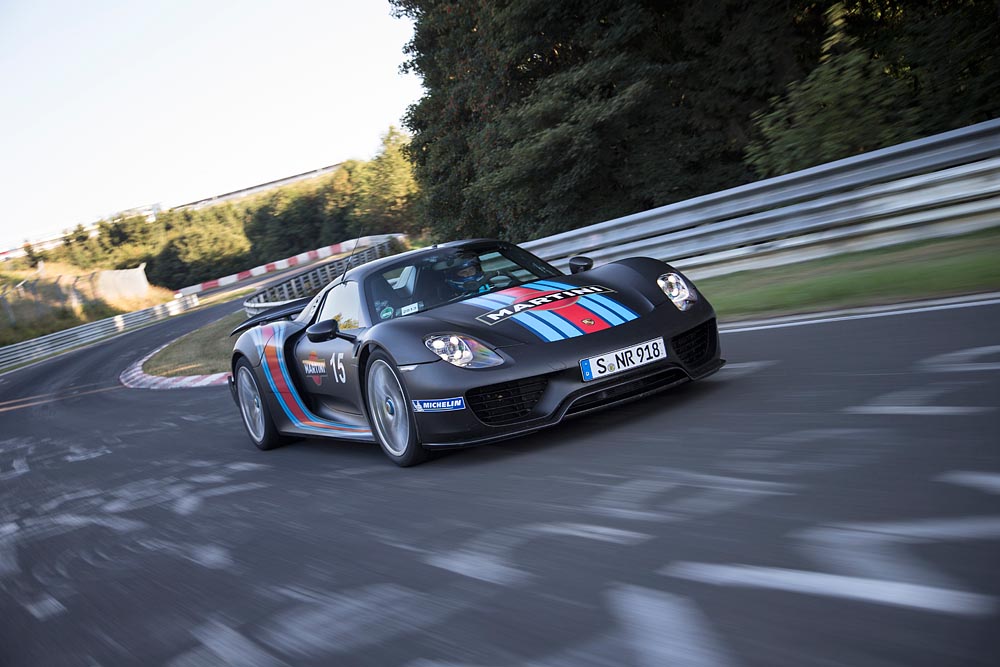
Stuttgart. As the first vehicle to boast global road homologation, the Porsche 918 Spyder* has conquered the 20.6-kilometre lap around the Nürburgring Nordschleife in less than seven minutes. Achieving a time of exactly six minutes and 57 seconds, the super sportscar equipped with a hybrid drive shaved 14 seconds off the previous record.
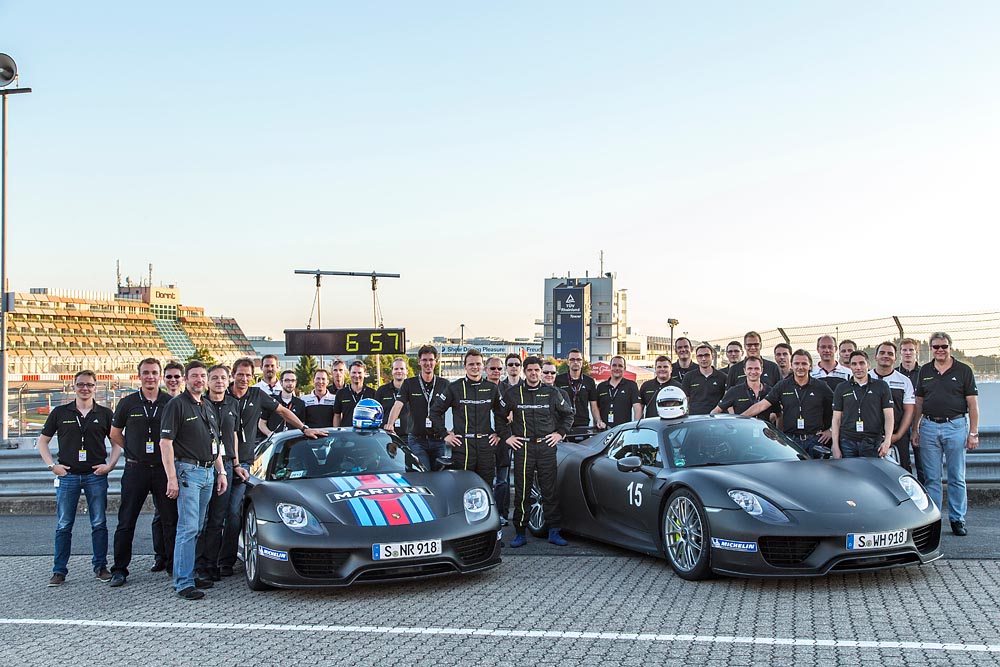
Record Run 918 Spyder Nürburgring
Wolfgang Hatz, member of the Porsche AG Board of Management in charge of Research and Development, had the following to say:
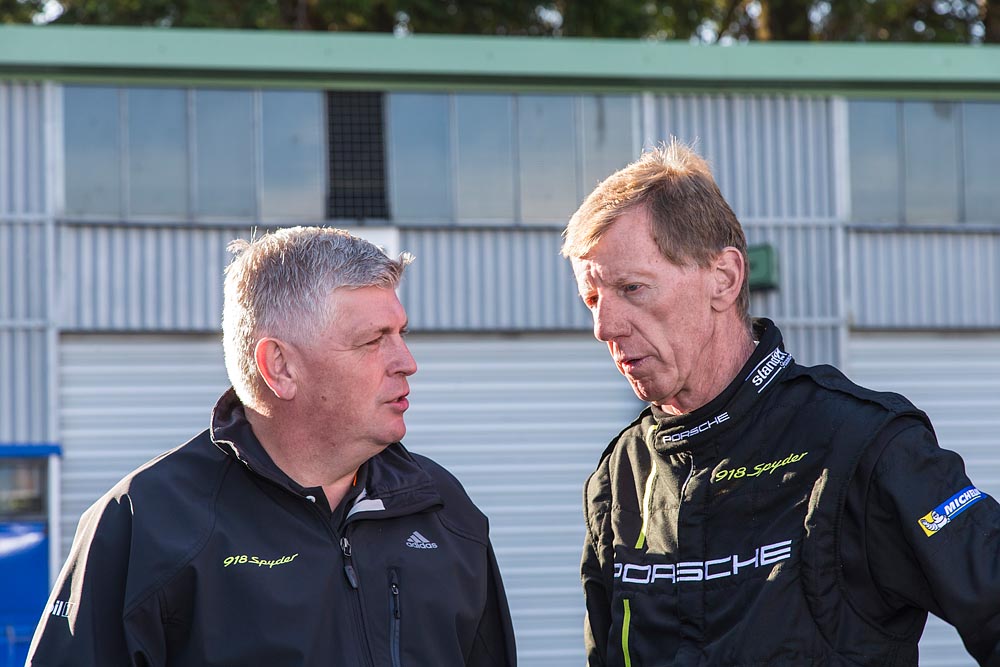
l.- r.: Wolfgang Hatz, Board Member of the Executive for Research and Development, Walter Röhrl, twice holder of the rally world championship
“We promised a great deal with the 918 Spyder, namely to redefine driving pleasure, efficiency and performance. We have kept our word.”
As is always the case with Porsche, the 918 Spyder is also leading the way for future generations as the latest in the line of super sportscars. It is currently making its global début at the International Motor Show (IAA). With its unique spread, the model blends maximum driving dynamics with minimal fuel consumption. By taking the Nürburgring record, the sportscar is demonstrating the enormous potential that lies in Porsche’s pioneering plug-in hybrid concept, and is underpinning the leading role the company enjoys when it comes to developing sporty hybrid vehicles.
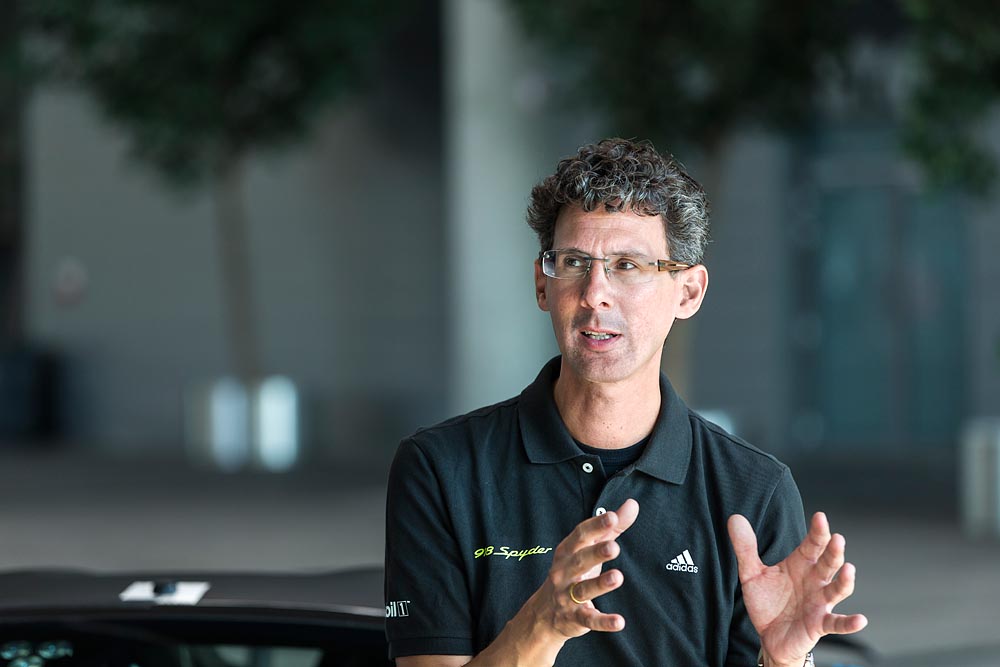
Dr. Frank Walliser, Overall 918 Spyder Project Manager
“The radical hybridisation of the 918 Spyder from the very outset is what made this lap record possible” says Dr. Frank Walliser, head of the 918 Spyder project. “The lap time on the Nordschleife is and remains the toughest measure of a super sportscar. Posting a time of 6.57 minutes, we achieved a result of which everyone in the development team and at Porsche as a whole is rightly proud.”
The record, which was previously held for four years, was even broken during the first attempt in the test drive on the morning of September 4.
All three drivers – Former European Rally Champion Walter Röhrl, Porsche test driver Timo Kluck and Porsche factory driver Marc Lieb – were quicker than the existing record with each lap driving the two 918 Spyder models used, and posted lap times of less than seven minutes on numerous occasions.
Record Run 918 Spyder Nürburgring
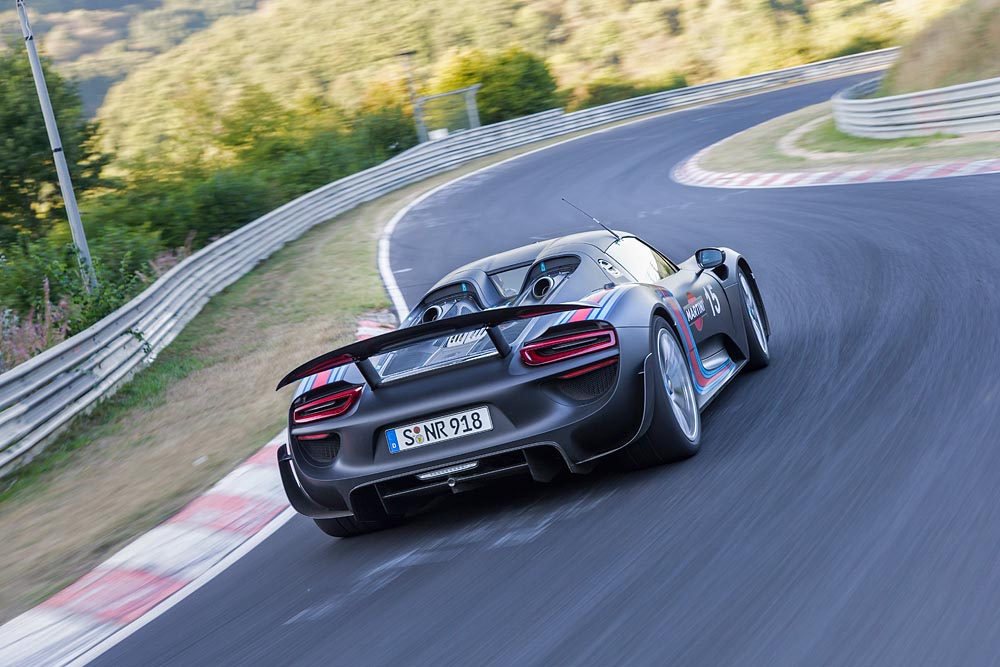
Ultimately, it was Marc Lieb who posted the absolute best time of 6.57 minutes, driving at an average speed of 179.5 km/h, as measured by Wige Solutions. Marcus Schurig, editor-in-chief of sportscar magazine “sport auto”, was on hand as an objective observer of the record-breaking runs.
Record Run 918 Spyder Nürburgring
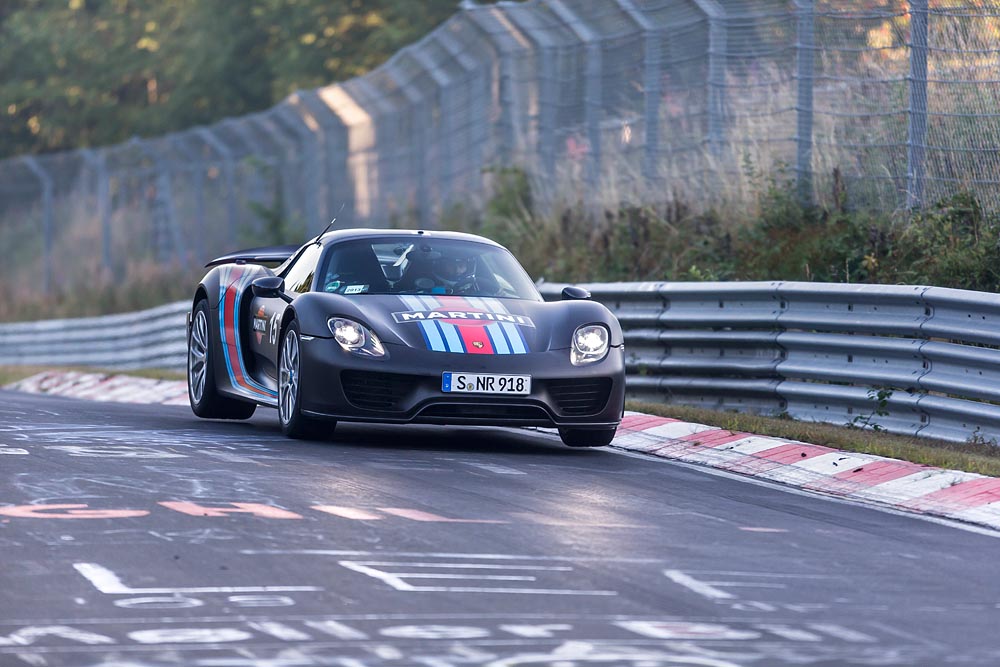
The two sportscars, which deliver an output of 887 bhp (652 kW), were equipped with the optional “Weissach package” to increase the driving dynamics, and lead out on the standard Michelin tyres developed specifically for the 918 Spyder.
Record Run 918 Spyder Nürburgring
* 918 Spyder: combined fuel consumption: 3.3–3.0 l/100 km; combined energy consumption: 12.5–13.0 kWh/100 km; CO2 emissions: 79–70 g/km
Source:
Communication Porsche AG
Product and Technology Communication
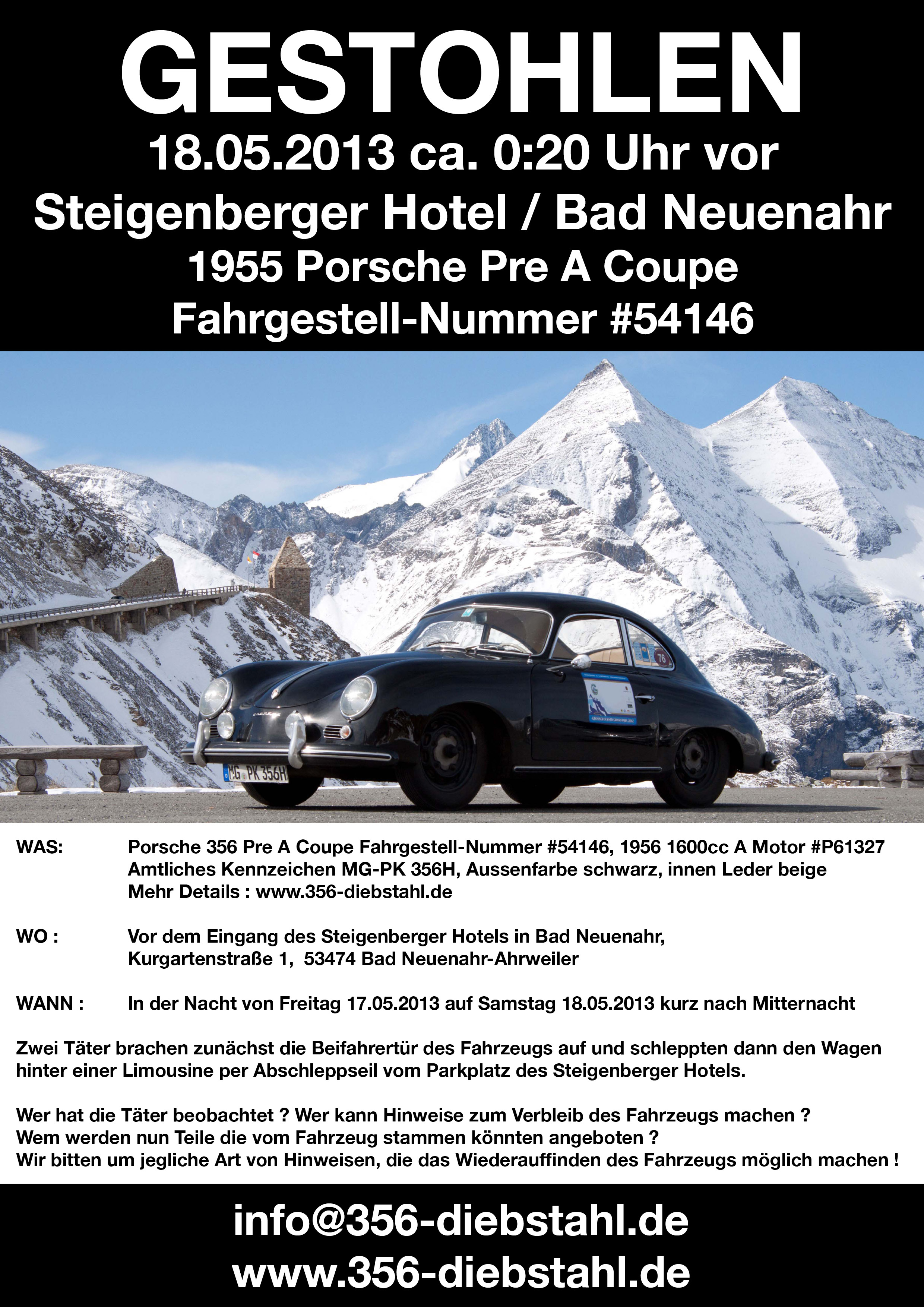
STOLEN 1955 Porsche 356 Bendwindow Coupe close to the Nürburgring in Germany…need help!
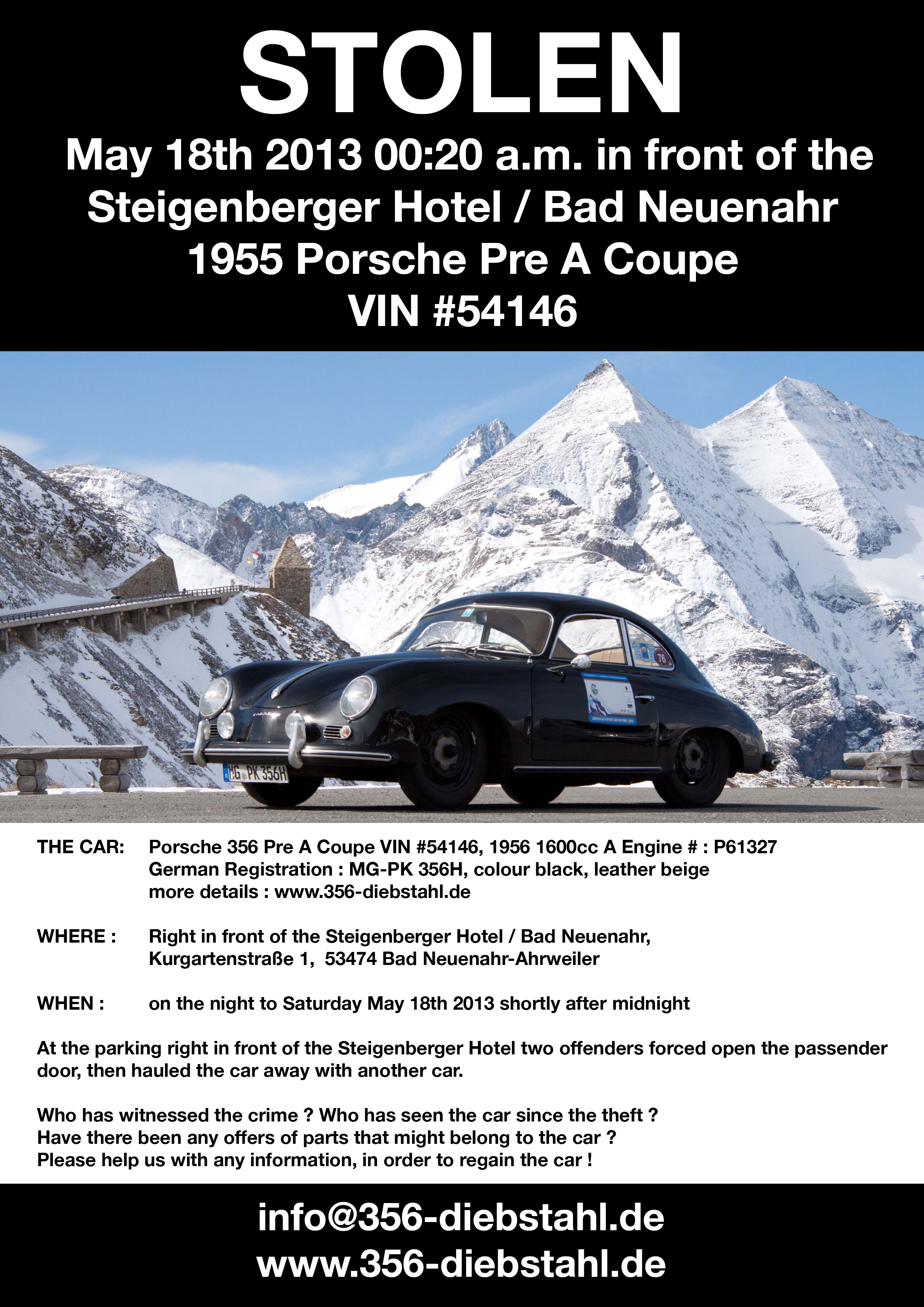
ATTENTION: Porsche People…ANOTHER STOLEN PORSCHE!!
A friend of mine had his 1955 356 Bendwindow Coupe STOLEN !
PLEASE SHARE!
HELP FIND THIS CAR! SPREAD THE WORD,
SHARE ON YOUR FACEBOOK PAGES/PROFILES, WEBSITES AND CONTACT YOUR MEDIA FRIENDS.
LET’S GET THIS CAR BACK SAFELY!
Porsche Everyday – Dedeporsches Blog
Dear Dede,
thanks for sharing this.The car was stolen last Saturday May 18th 2013 at 0:20 a.m. right in front of the Steigenberger Hotel in Bad Neuenahr close to the Nürburgring in Germany. It is a black car with beige interior. The Vin is #54146. It has an 1956 1600cc A engine #61327. More infos will be on the website we are currently creating which can be reached under www.356-diebstahl.de.
It would be very kind of you to spread the word wherever you can.
Kind regards,
Marcus
Porsche 918 Spyder A unique combination of performance and efficiency
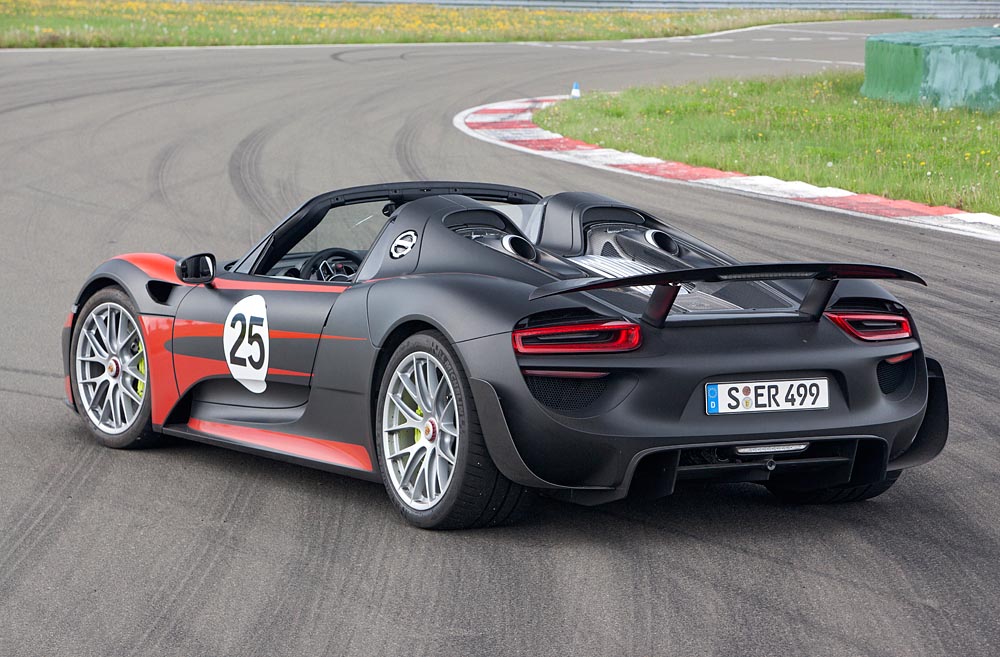
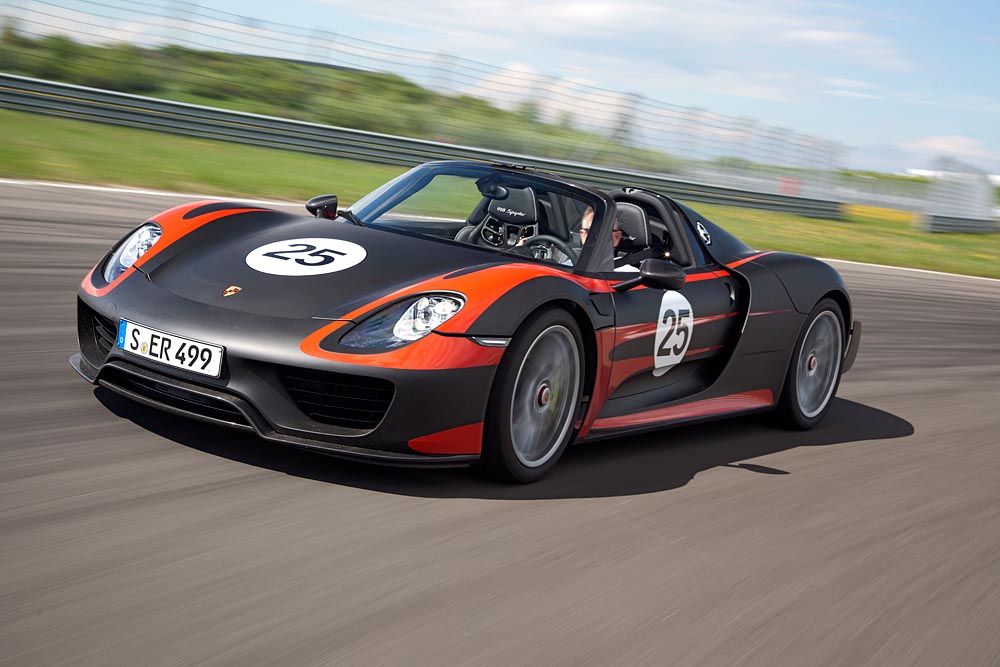
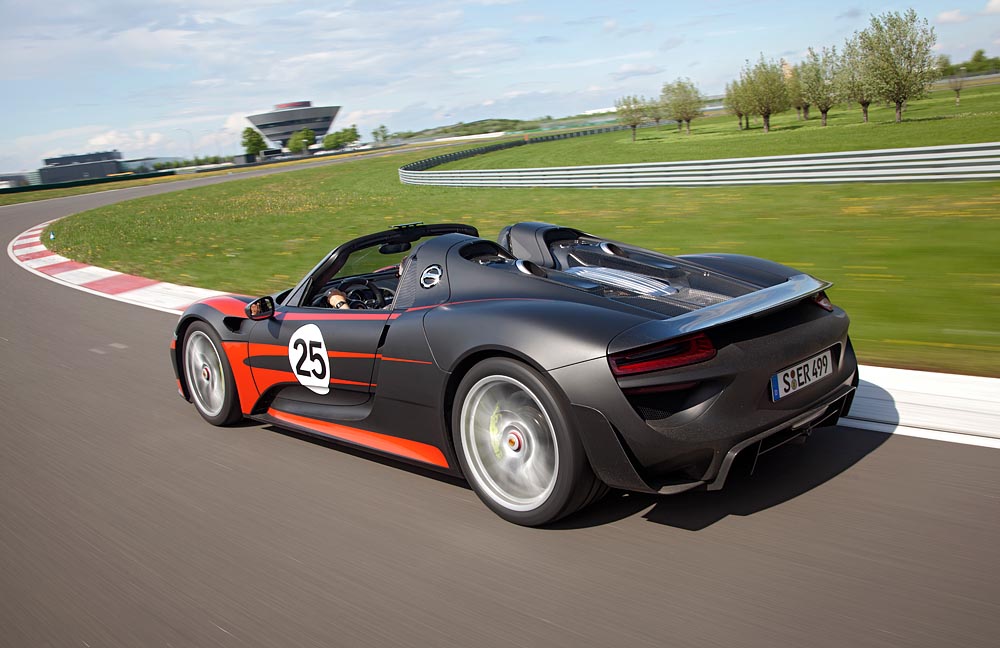
Stuttgart. The 918 Spyder embodies the essence of the Porsche idea: it combines pedigree motor racing technology with excellent everyday utility, and maximum performance with minimum consumption. The task faced by the development team was to create the super sports car for the next decade with a highly efficient and powerful hybrid drive. Developing the car from scratch, appropriately beginning with a sheet of white paper, allowed the team to come up with a no-compromise concept. The entire car was designed around the hybrid drive. The 918 Spyder therefore demonstrates the potential of the hybrid drive to a degree never seen before: the parallel improvement of both efficiency and performance without one being at the cost of the other. This is the idea that has made the Porsche 911 the most successful sports car in the world for 50 years. In short, the 918 Spyder will act as the gene pool for the Porsche sports cars of the future.
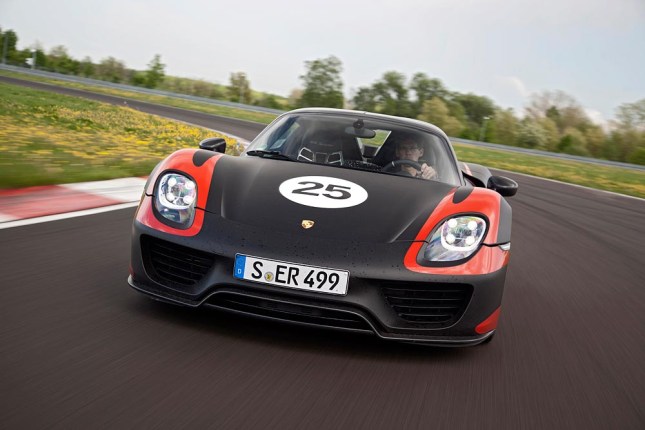
The 918 Spyder reveals its close links to motorsport in a variety of ways. It has been designed, developed and produced by Porsche engineers who build race cars, in cooperation with series production specialists. A great deal of insight gained from the development of Porsche race cars for the 24 hours race in Le Mans in 2014 is thus integrated into the 918 Spyder – and vice versa. The structural concept of the 918 Spyder with a rolling chassis as its basis – a basic vehicle that can be driven even without a body – is race car tradition at Porsche. The concept of the V8 engine originates from the LMP2 RS Spyder race car. The load-bearing structures, the monocoque and subframe, are made of carbon fibre reinforced polymer. Porsche has many years of experience with this high-strength, lightweight construction material and has again achieved top results with the development of the series production 918 Spyder. Many parts of the super sports car come from manufacturers who have a proven record as suppliers for motorsport vehicles.
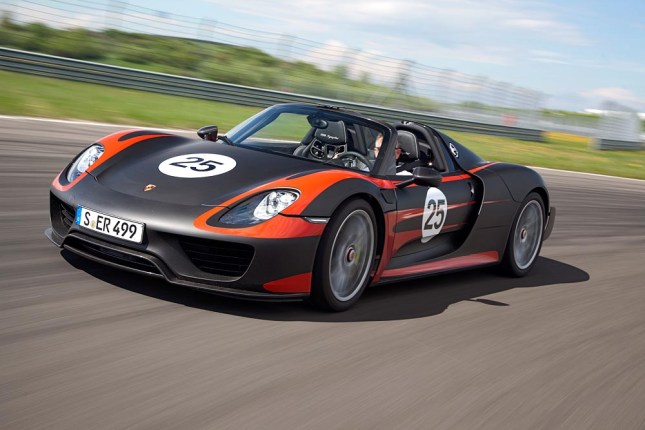
Hybrid drive brings advantages in terms of driving dynamics
A key message of the 918 Spyder is that the hybrid drive from Porsche is a plus for no-compromise driving dynamics. Drivers can experience this thanks to the unique all-wheel drive concept with a combination of combustion engine and electric motor on the rear axle and the second electric motor on the front axle. It is based on knowledge gained by Porsche during motor races with the successful 911 GT3 R Hybrid. Due to the additional, individually controllable front drive, new driving strategies for extremely high, safe cornering speeds can be implemented, especially for bends. Furthermore, the advanced “boost” strategy manages the energy of the electric drive so intelligently that, for every sprint with maximum acceleration, the full power of the 918 Spyder can be tapped into by simply pressing the accelerator down fully. In short, the 918 Spyder allows even drivers without motorsport training to experience the potential of advanced longitudinal and transverse dynamics.
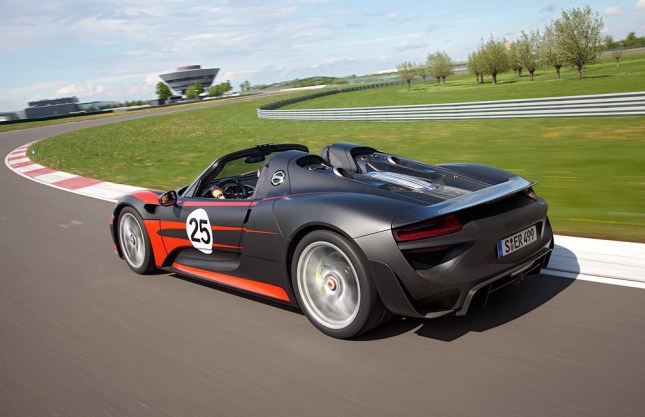
The Porsche 918 Spyder also has the potential to break many records. The current lap time for the North Loop of the Nürburgring is 7:14 minutes. This time was achieved in the presence of international journalists during test drives in September 2012 – more than a year before start of production. The 918 Spyder prototype was therefore approximately 20 seconds quicker than the Porsche Carrera GT. More test drives on the Nürburgring North Loop will follow. An even more important factor is that the 918 Spyder surpasses previous models and competitors by far in its efficiency as well. As a plug-in hybrid vehicle, it systematically combines the dynamic performance of a racing machine with over 880 hp and low NEDC fuel consumption, which at about three litres fuel per 100 km is better than that of most small cars today. To sum it up: maximum driving fun with minimal fuel consumption.
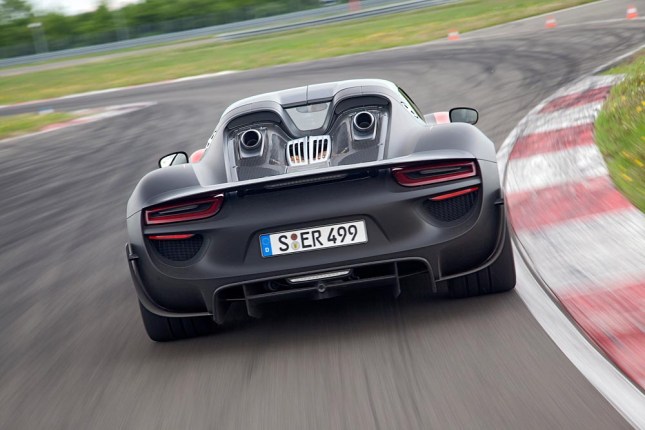
Carbon monocoque guarantees lightweight design with a low centre of gravity
The 918 Spyder utilizes the best state-of-the-art technologies, taken straight from motor racing, to achieve its top performance. The entire load-bearing structure is made of carbon fibre reinforced polymer (CFRP) for extreme torsional rigidity. Additional crash elements at the front and rear absorb and reduce the energy of a collision. The car’s unladen weight of approximately 1,640 kg (“Weissach” package), an excellent low weight for a hybrid vehicle of this performance class, is largely attributable to this concept. The drivetrain components and all components weighing over 50 kg are located as low and as centrally as possible within the vehicle. This results in a slightly rear end biased axle load distribution of 57 per cent on the rear axle and 43 per cent on the front axle, combined with an extremely low centre of gravity at approximately the height of the wheel hubs, which is ideal for driving dynamics. The central and low position of the traction battery directly behind the driver not only supports efforts to concentrate masses and lower the centre of gravity; it also provides the best temperature conditions for optimum battery power capacity.
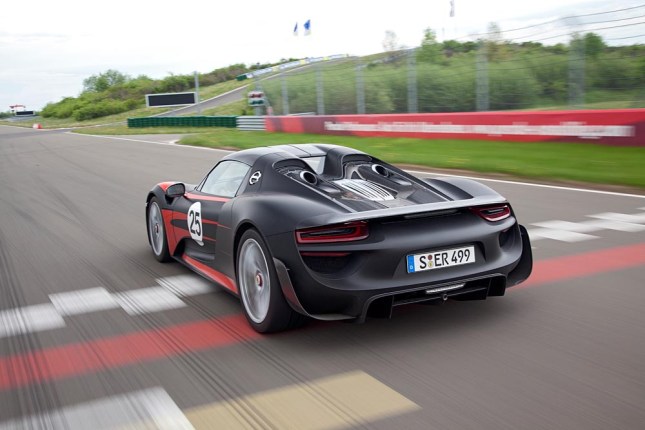
Chassis with race car genes and rear-axle steering
The multi-link chassis of the Porsche 918 Spyder is inspired by motorsport design, complemented by additional systems such as the PASM adaptive shock-absorber system and rear-axle steering. Basically, this incorporates an electro-mechanical adjustment system at each rear wheel. The adjustment is speed-sensitive and executes steering angles of up to three degrees in each direction. The rear axle can therefore be steered in the same direction as the front wheels or in opposition to them. At low speeds, the system steers the rear wheels in a direction opposite to that of the front wheels. This makes cornering even more direct, faster and more precise, and it reduces the turning circle. At higher speeds, the system steers the rear wheels in the same direction as the front wheels. This significantly improves the stability of the rear end when changing lanes quickly. The result is very secure and stable handling.
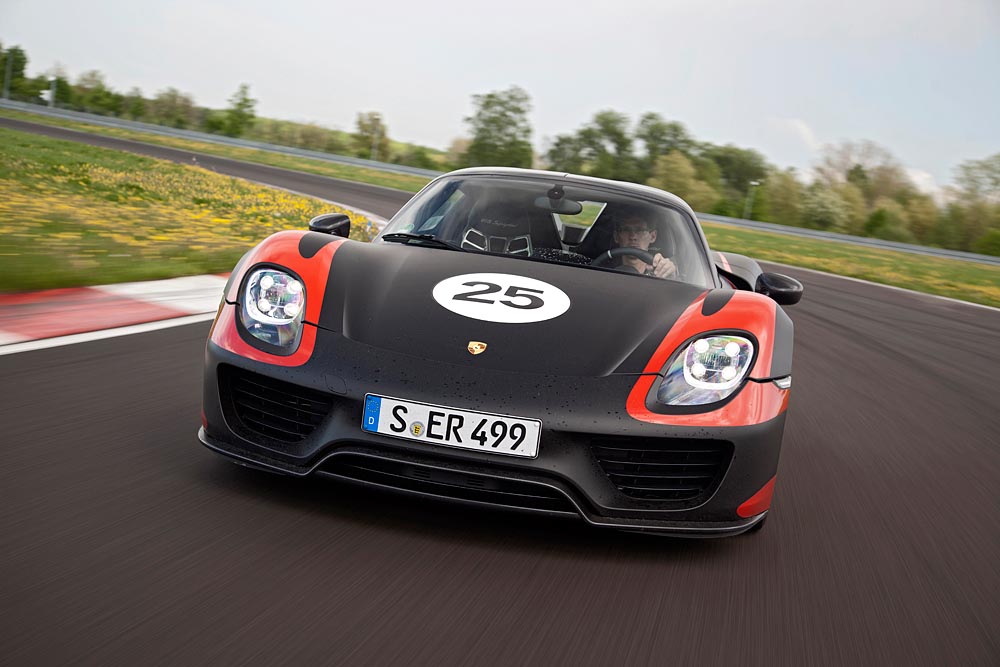
Porsche Active Aerodynamic (PAA) for different driving modes
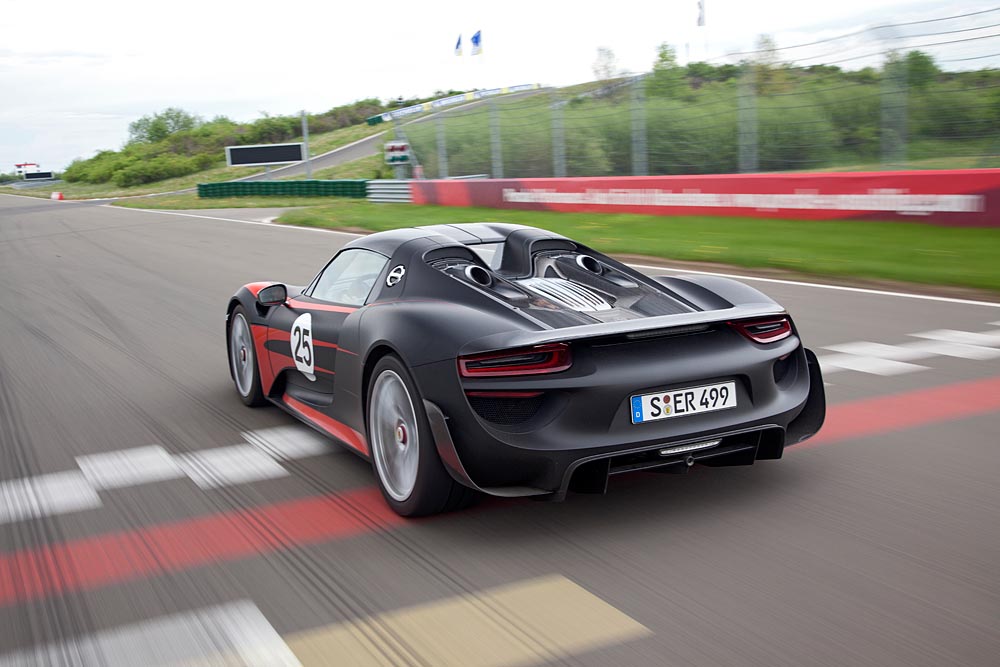
Porsche Active Aerodynamic (PAA), a system of adjustable aerodynamic elements, ensures unique and variable aerodynamics; its layout is automatically varied over three modes ranging from optimal efficiency to maximum downforce and is tuned to the operating modes of the hybrid drive system. In “Race” mode, the retractable rear wing is set to a steep angle to generate high downforce at the rear axle. The spoiler positioned between the two wing supports near the trailing edge of the airflow also extends. In addition, two adjustable air flaps are opened in the underfloor in front of the front axle, and they direct a portion of the air into the diffuser channels of the underbody structure. This also produces a “ground effect” at the front axle.
In “Sport” mode, the aerodynamic control system reduces the attack angle of the rear wing somewhat, which enables a higher top speed. The spoiler remains extended. The aerodynamic flaps in the underfloor area close, which also reduces aerodynamic drag and increases attainable vehicle speeds. In “E” mode, the control is configured entirely for low aerodynamic drag; the rear wing and spoiler are retracted and the underfloor flaps are closed.
Adjustable air inlets under the main headlights round off the adaptive aerodynamic system. When the vehicle is stationary and in “Race” and “Sport” mode, they are opened for maximum cooling air intake. In “E-Power” and “Hybrid” modes, they close immediately after the car is driven off in order to keep aerodynamic drag to a minimum. They are not opened until the car reaches speeds of approximately 130 km/h or when cooling requirements are higher.
From comfortable to race-ready: five modes for three motors
The core of the 918 Spyder concept is its distribution of propulsive power among the three power units; their cooperation is controlled by an intelligent management system. To best exploit these different approaches, the Porsche developers defined five operating modes that can be activated via a “map switch” on the steering wheel, just like in motorsport cars. On the basis of this pre-selection, the 918 Spyder applies the most suitable operating and boost strategy without driver intervention, thus allowing the driver to concentrate fully on the road.
Quiet and elegant: “E-Power”
When the vehicle is started up, the “E-Power” mode is the default operating mode as long as the battery is sufficiently charged. In ideal conditions, the 918 Spyder can cover over 30 kilometres on purely electric power. Even in pure electric mode, the 918 Spyder accelerates from 0 to 100 km/h in less than seven seconds and can reach speeds of up to 150 km/h. In this mode, the combustion engine is only used when needed. If the battery’s charge state drops below a set minimum value, the vehicle automatically switches to hybrid mode.
Efficient and comfortable: “Hybrid”
In “Hybrid” mode, the electric motors and combustion engine work alternately with a focus on maximum efficiency and minimum fuel consumption. The use of individual drive components is modified as a function of the current driving situation and the desired performance. The Hybrid mode is typically used for a fuel economy-oriented driving style.
Sporty and dynamic: “Sport Hybrid”
In more dynamic situations, the 918 Spyder selects the “Sport Hybrid” mode for its power sources. The combustion engine now operates continuously and provides the main propulsive force. In addition, the electric motors provide support in the form of electric boosting or when the operating point of the combustion engine can be optimised for greater efficiency. The focus of this mode is on performance and a sporty driving style at top speed.
For fast laps: “Race Hybrid”
“Race Hybrid” is the mode for maximum performance and an especially sporty driving style. The combustion engine is chiefly used under high load, and charges the battery when the driver is not utilising its maximum output. Again, the electric motors provide additional support in the form of boosting. Furthermore, the gear-shifting programme of the PDK is set up for even sportier driving. The electric motors are used up to the maximum power output limit to deliver the best possible performance for the race track. In this mode, the battery charge state is not kept constant, rather it fluctuates over the entire charge range. In contrast to Sport Hybrid mode, the electric motors run at their maximum power output limit for a short time for better boosting. This increased output is balanced by the combustion engine charging the battery more intensively. Electric power is thus available even with several very fast laps.
For pole position: “Hot Lap”
The “Hot Lap” button in the middle of the map switch releases the final reserves of the 918 Spyder and can only be activated in “Race Hybrid” mode. Similar to a qualification mode, this pushes the traction battery to its maximum power output limits for a few fast laps. This mode uses all of the available energy in the battery.
Main propulsion: the race car’s eight cylinder engine
The main source of propulsion is the 4.6-litre, eight cylinder engine that produces 608 hp of power. The engine is derived directly from the power unit of the successful RS Spyder, which explains why it can deliver engine speeds of up to 9,150 rpm. Like the race engine of the RS Spyder, the 918 Spyder power unit features dry-sump lubrication with a separate oil tank and oil extraction. To save weight, components such as the oil tank, the air filter box integrated into the subframe and the air induction are made of carbon fibre reinforced polymer. Further extensive lightweight design measures have resulted in such features as titanium connecting rods, thin-wall, low-pressure casting on the crank case and the cylinder heads, a high-strength, lightweight steel crankshaft with 180 degrees crankpin offset and the extremely thin-walled alloy steel/nickel exhaust system. Striking features of the V8 are that it no longer supports any auxiliary systems, there are no external belt drives and the engine is therefore particularly compact. Weight and performance optimisations achieve a power output per litre of approx. 132 hp/l – the highest power output per litre of a Porsche naturally aspirated engine – which is significantly higher than that of the Carrera GT (106 hp/l) and outstanding for a naturally aspirated engine.
Unique race car design heritage: top pipes
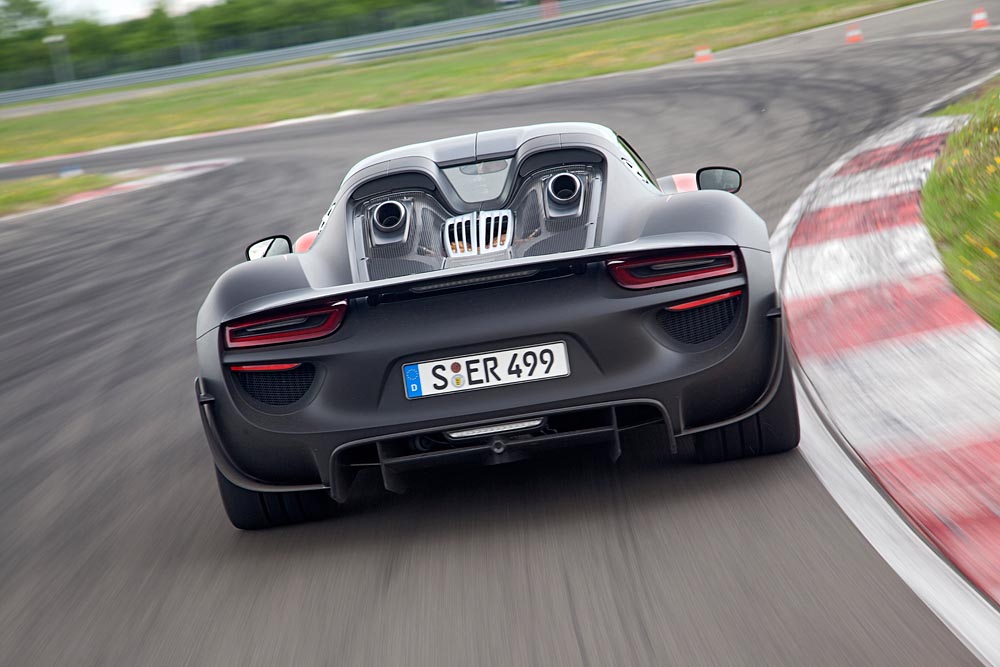
It isn’t just this engine’s performance but also the sound it makes that stokes the emotionality of the 918 Spyder. This is attributable first and foremost to the so-called top pipes: the tailpipes terminate in the upper part of the rear end immediately above the engine. No other production vehicle uses this solution. The top pipes’ greatest benefit is optimal heat removal, because the hot exhaust gases are released via the shortest possible route, and exhaust gas back pressure remains low. This design requires a new thermodynamic air channelling concept. With the HSI engine, the hot side is located inside the cylinder V, the intake channels are on the outside. There is another benefit as well: the engine compartment remains cooler. This is especially beneficial to the lithium-ion traction battery, as it provides optimum performance at temperatures between 20 and 40 degrees Celsius. Consequently, less energy needs to be used for active cooling of the battery.
In parallel in the drivetrain: hybrid module
The V8 engine is coupled to the hybrid module, since the 918 Spyder is designed as a parallel hybrid like the current hybrid models from Porsche. Essentially, the hybrid module comprises a 115 kW electric motor and a decoupler that serves as the connection with the combustion engine. Because of its parallel hybrid configuration, the 918 Spyder can be powered at the rear axle either individually by the combustion engine or electric motor or via both drives jointly. As is typical for a Porsche super sports car, the power pack in the 918 Spyder has been placed in front of the rear axle, and does not have any direct mechanical connection to the front axle.
Upside-down for a low centre of gravity: Doppelkupplung
A seven-speed Doppelkupplung (PDK) transmission handles power transmission to the rear axle. The high-performance transmission is the sportiest version of the successful PDK; it has undergone a complete redesign for the 918 Spyder and has been further optimised for high performance. To ensure a low mounting position for a low centre of gravity of the entire vehicle, the gear unit was turned “upside down” by rotating it 180 degrees about its longitudinal axis, in contrast to other Porsche series. If no power is required on the rear axle, the two motors can be decoupled by opening the decoupler and PDK clutches. This is the action behind the Porsche hybrid drive’s typical “coasting” with the combustion engine switched off.
Independent all-wheel drive: front axle with electric motor
On the front axle, there is another independent electric motor with an output of approximately 95 kW. The front electric drive unit drives the wheels at a fixed ratio. A decoupler decouples the electric motor at high speeds to prevent the motor from over-revving. Drive torque is independently controlled for each axle. This makes for very responsive all-wheel drive functionality that offers great potential in terms of traction and driving dynamics.
Lithium-ion battery with plug-in charging system
The electric energy for the electric motors is stored by a liquid-cooled lithium-ion battery comprising 312 individual cells with an energy content of about seven kilowatt hours. The battery of the 918 Spyder has a performance-oriented design in terms of both power charging and output, so that it can fulfil the performance requirements of the electric motor. The power capacity and the operating life of the lithium-ion traction battery depend on several factors, including thermal conditions. That is why the battery of the 918 Spyder is liquid-cooled by a dedicated cooling circuit. The global warranty period for the traction battery is seven years.
To supply it with energy, Porsche developed a new system with a plug-in vehicle charge port and improved recuperation potential. This vehicle charge port in the B-column on the front passenger side lets users connect the storage battery to a mains supply at home and charge it. The charge port is standardised for the country of purchase. The on-board charger is located close to the traction battery. It converts the alternating current of the mains supply into direct current with a maximum charge output of 3.6 kW. Using the supplied Porsche Universal Charger (AC), the traction battery can be charged within four hours from a ten ampere rated, fused power socket on the German 230 Volt mains supply, for example. Furthermore, the Porsche Universal Charger (AC) can be installed at home in the garage using the Charging Dock. It enables rapid and convenient charging within approximately two hours, irrespective of regional conditions. The Porsche Speed Charging Station (DC) is available as an optional extra. It can fully charge the high-voltage battery of the 918 Spyder in just 25 minutes.
Pioneering control concept: clear organization of the cockpit
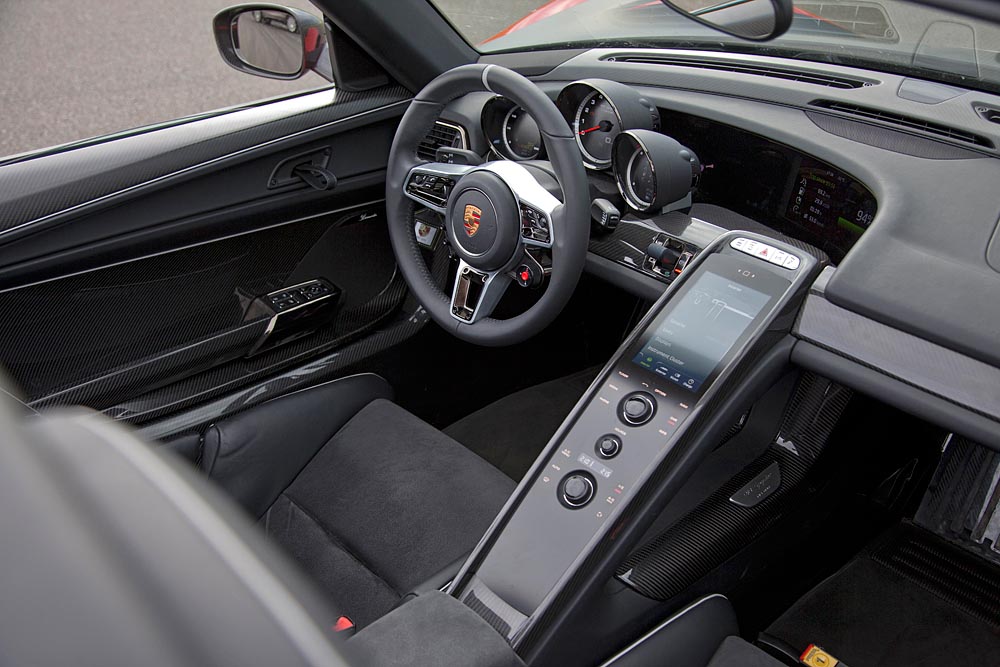
The driver is the focus of all technology in the future Porsche super sports car. A cockpit was created for the driver that is typical of the brand and pioneering in its clarity. It is partitioned into two basic areas. First, there are the controls that are important for driving, which are grouped around the multifunction steering wheel, combined with driver information displayed on three large round instruments. Second, there is the infotainment block that is housed in the lifted centre console, which was introduced in the Carrera GT. Control functions, e.g. for the automatic climate control system, wing adjustment, lighting and Porsche Communication Management (PCM), including a Burmester high-end sound system, can be intuitively operated by multitouch with a new type of black panel technology.
For even higher performance: the Weissach package
For very performance-oriented customers of the 918 Spyder, Porsche offers the “Weissach” package. These modified super sports cars can be recognised at first glance by special colours and designs that are based on legendary Porsche race cars. The roof, rear wings, rear-view mirrors and frames of the windscreen are made of visible carbon. Parts of the interior are upholstered with Alcantara instead of leather, and visible carbon replaces much of the aluminium. Sound insulation has been reduced. The emphasis on performance is not just visual: very lightweight magnesium wheels reduce unsprung masses; gross weight was reduced by about 35 kg. The benefits are experienced in further improved dynamic performance. Other references from motorsport are six-point seatbelts for driver and front passenger, optional film-coating instead of body paint, as well as additional aerodynamic body parts in visible carbon.
Porsche redefined: a new super sports car for a new decade
The 918 Spyder continues a long tradition of super sports cars at Porsche; as technology platforms, as the driving force behind both car emotion and car evolution and as the ultimate sports cars of their decades: the Carrera GTS, the first Porsche Turbo, the 959, the 911 GT1, the Carrera GT. More than any of its predecessors, the 918 Spyder is providing key impetus for developing technologies for future vehicle concepts. It offers a complete package of components that reflect Porsche DNA – more concentrated than ever before.
SOURCE: Porsche AG Media Database
Product and Technology Communication
Product Communication
VIDEO – New Generation Porsche 911 Turbo and 911 Turbo S
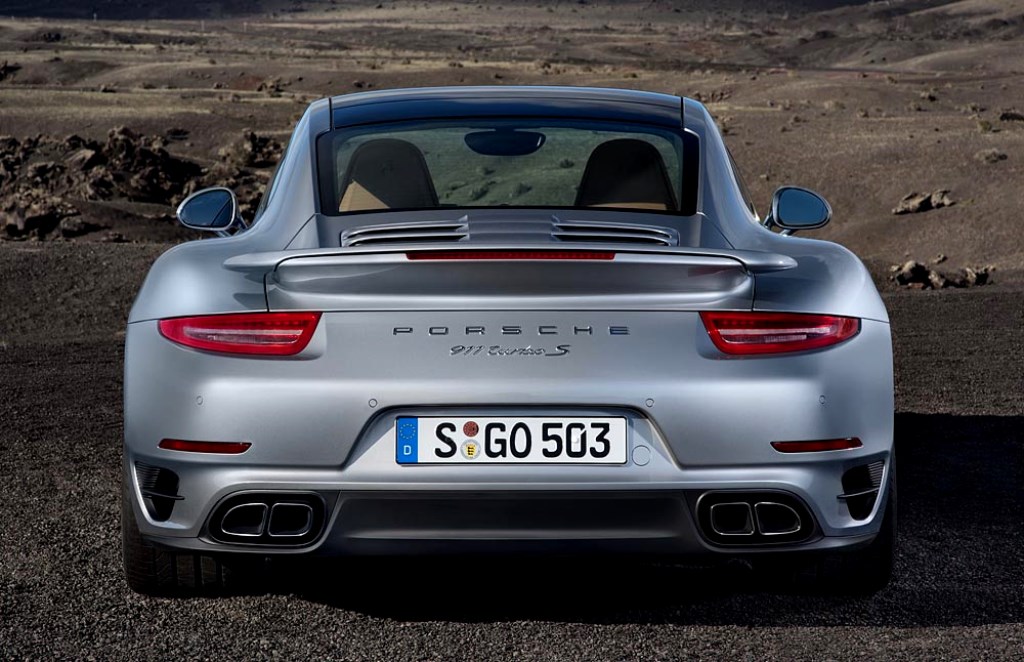
911 Turbo S Coupé
911 Turbo sets new reference values for dynamics and fuel consumption
Stuttgart. The Porsche model offensive in the anniversary year of the 911 is reaching new heights.
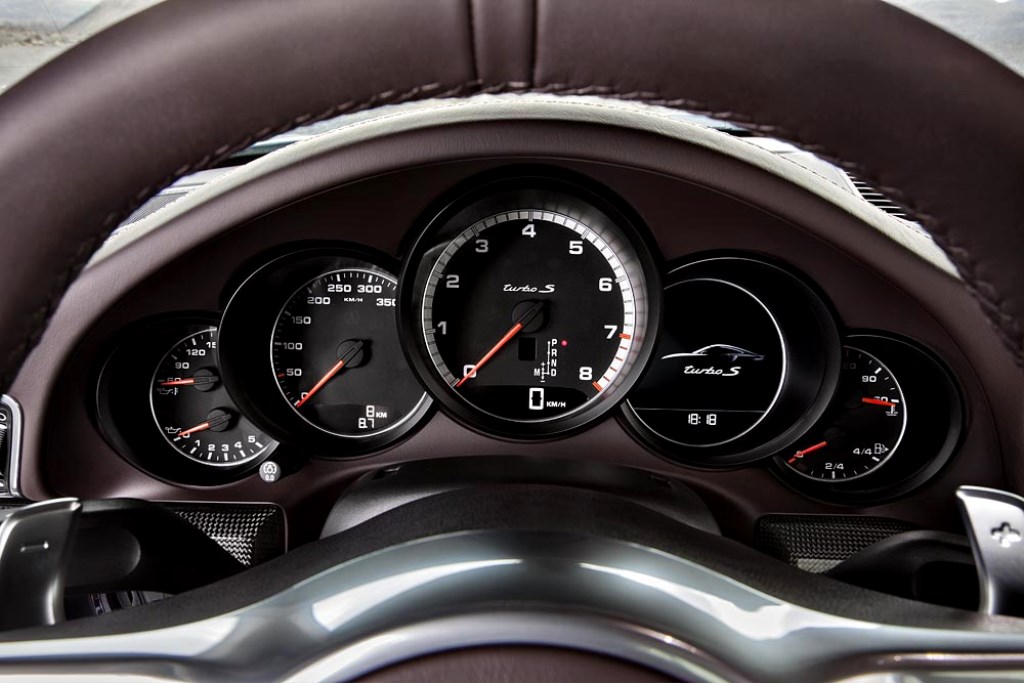
911 Turbo S Coupé Interior
50 years ago, the 911 made its debut at the Frankfurt International Auto Show. And just ten years later, the first 911 Turbo prototype was at the IAA. On this 40th anniversary Porsche is now presenting the new generation 911 Turbo and Turbo S – the technological and dynamic performance peak of the 911 series.
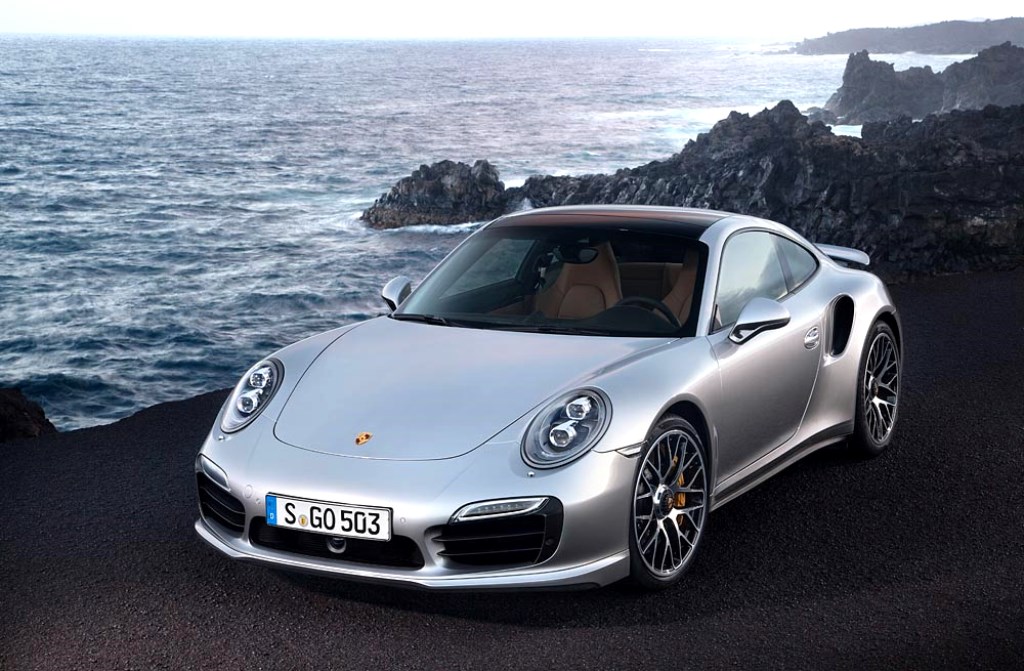
911 Turbo S Coupé
New all-wheel drive, active rear axle steering, adaptive aerodynamics, full-LED headlights and the up to 560 hp flat six-cylinder engine with bi-turbo charging underscore the role of the new generation 911 Turbo as a circuit racing car, everyday car and technology platform. Playing an equally crucial role are the entirely new chassis in lightweight design with a 100 mm longer wheelbase and larger 20-inch wheels.
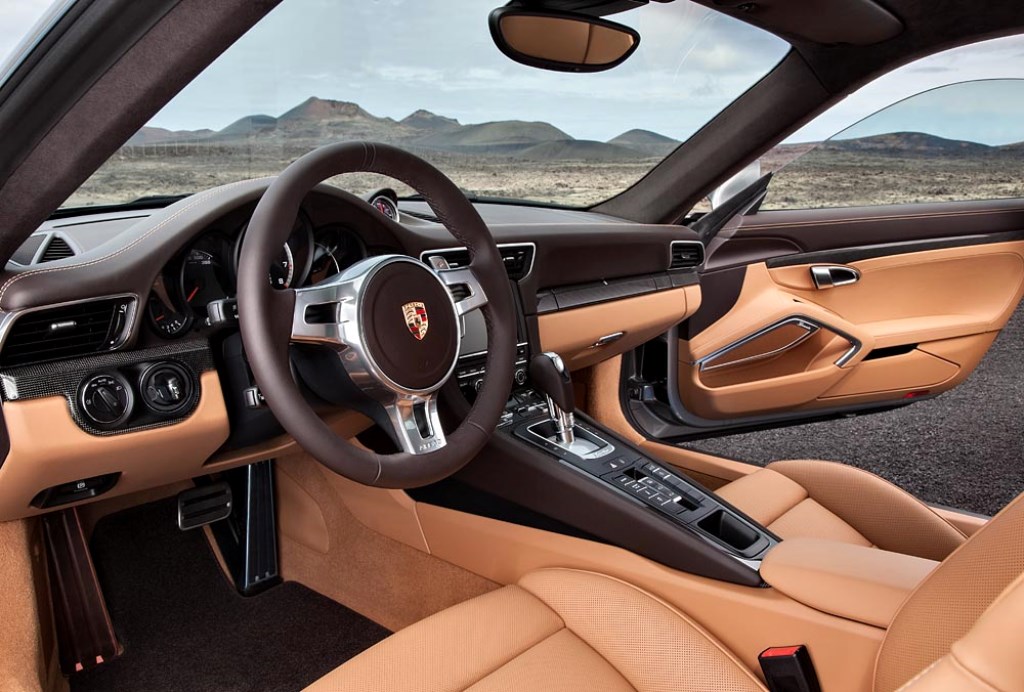
911 Turbo S Coupé Interior
The PDCC active anti-roll system, which is being offered for the first time in 911 Turbo models, increases dynamic performance even more. This system is standard equipment in the 911 Turbo S, as is the Sport Chrono Package with dynamic engine mounts and PCCB ceramic brakes; all of these features are also available as options in the 911 Turbo.
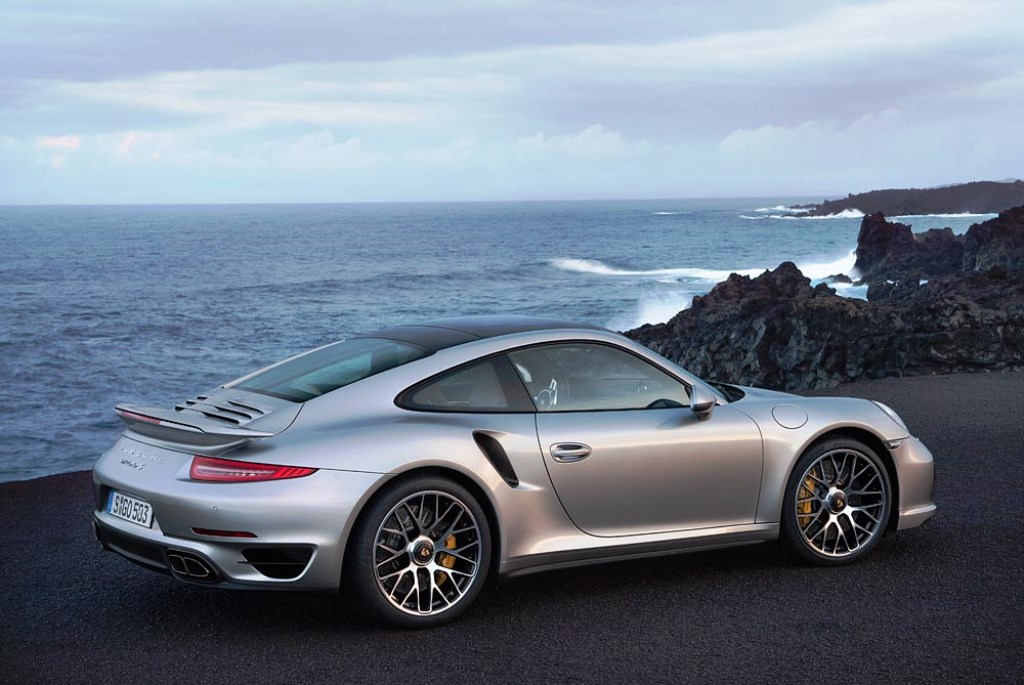
911 Turbo S Coupé
The results:
The new 911 Turbo S shortens the lap time for the North Loop of the Nürburgring to well under 7:30 minutes – naturally with standard production tyres. The standard sound symposer intensifies the driving experience; it transmits induction sounds of the turbo engine to the passenger compartment via a speaker diaphragm.
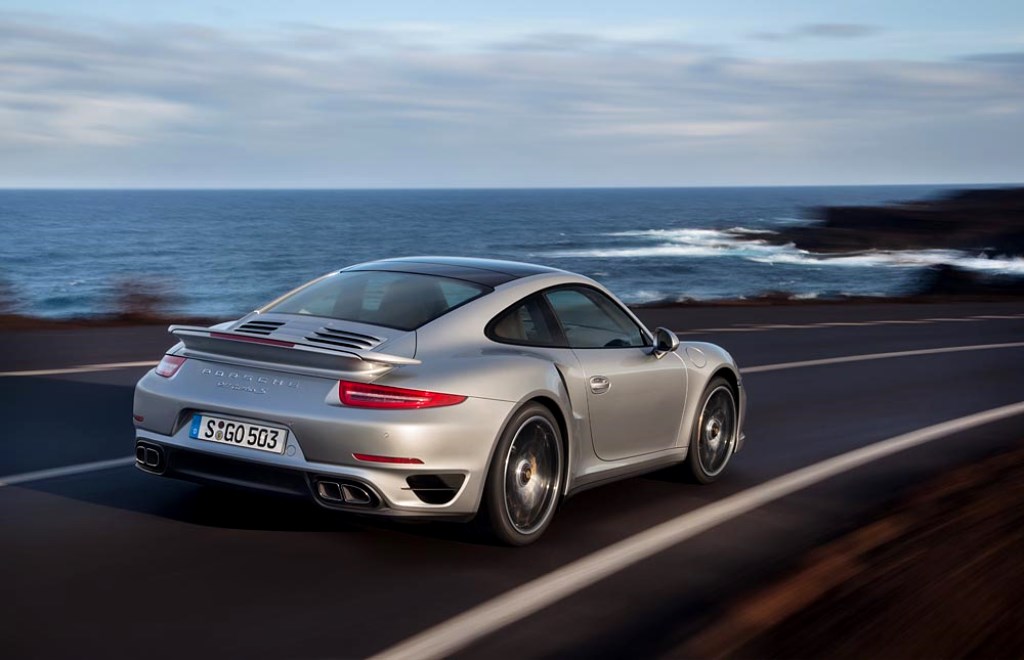
911 Turbo S Coupé
More power, fuel economy improved by 16 per cent
The performance partners in the powertrain area are the further advanced engines and the new PTM all-wheel drive system. The turbocharged 3.8-litre six-cylinder engine with direct petrol injection produces 520 hp (383 kW) in the 911 Turbo and 560 hp (412 kW) in the S model. Porsche continues to be the only carmaker to offer two turbochargers with variable turbine geometry for a petrol engine.
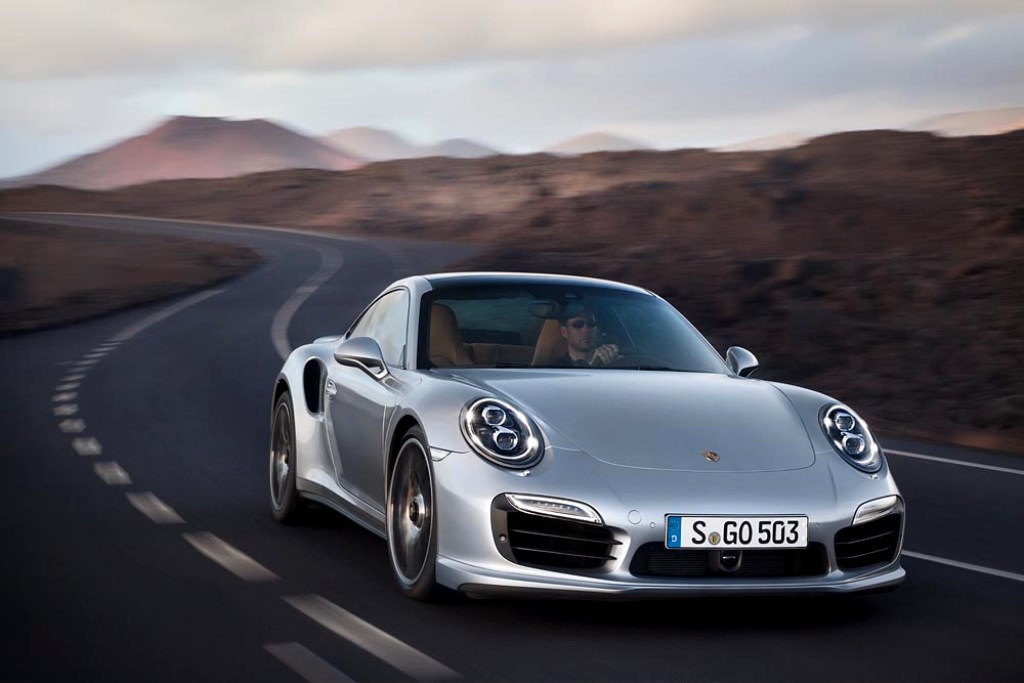
911 Turbo S Coupé
Power is transferred to the drivetrain via the seven-speed dual clutch transmission (PDK), which now enables an auto start/stop function with engine shutoff that now activates earlier during coasting to a stop as well as a coasting function. Together with the new thermal management system for the turbo engine and the PDK transmission, fuel efficiency technologies have reduced NEDC fuel consumption by up to 16 per cent to 9.7 l/100 km; these figures apply to both models.
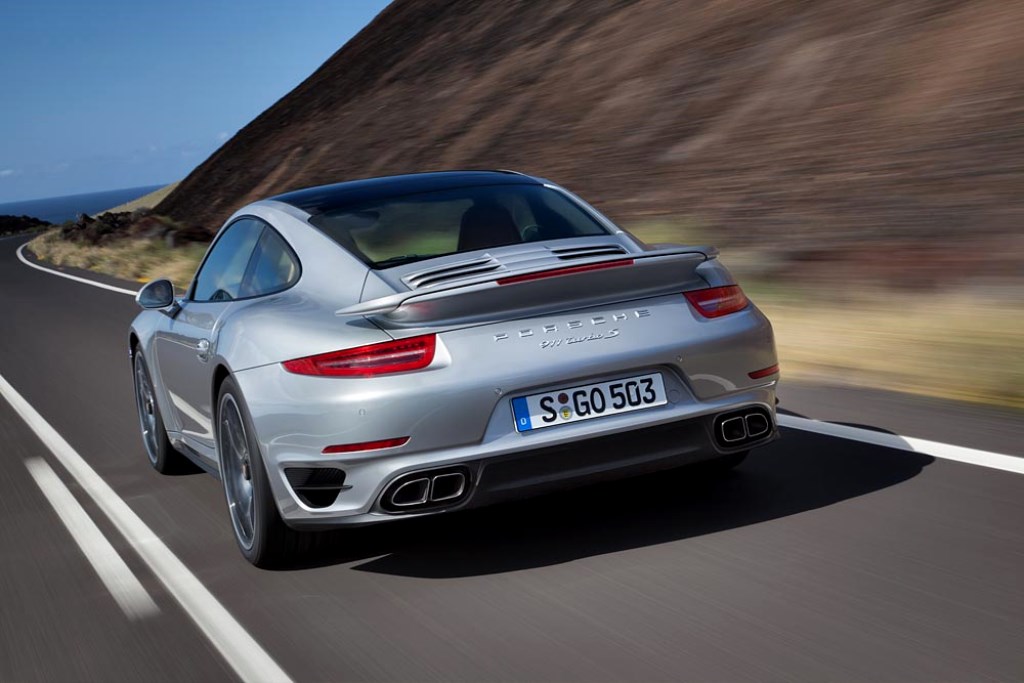
911 Turbo S Coupé
New all-wheel drive with electro-hydraulic control
For an even faster and more precise power distribution to the two axles, Porsche developed a new all-wheel drive system (PTM) with electronically controlled and activated multi-plate coupling. The system is equipped with a new water cooling function, so that it can direct even more drive torque to the front wheels if necessary. Simultaneously, the optimised interplay of the engine, transmission and all-wheel drive systems takes the new top 911 to even better sprint capabilities. The 911 Turbo with the optional Sport Chrono Package accelerates from zero to 100 km/h in 3.2 seconds, which is even one-tenth better than the value of the previous 911 Turbo S. The new 911 Turbo S handles the standard sprint to 100 km/h in just 3.1 seconds. The car’s top speed is 318 km/h.
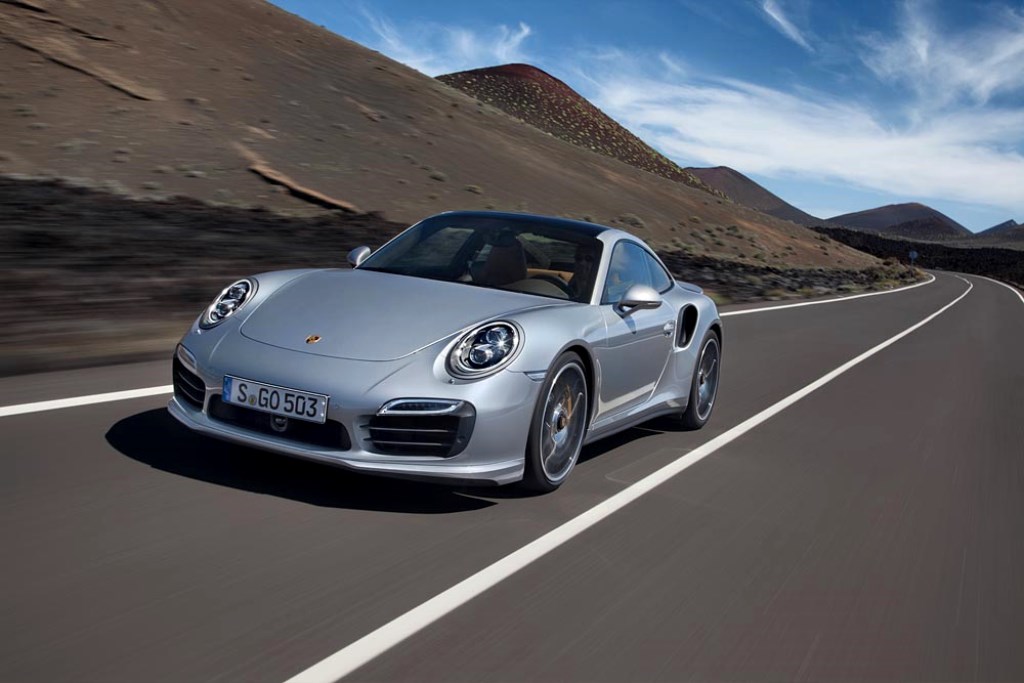
911 Turbo S Coupé
Widest body of all 911 cars
The two new top models display their performance visually more than ever. The characteristic, expansively wide rear body panels of the new generation 911 Turbo are 28 mm wider than on the 911 Carrera 4 models – they feature a nearly level surface, about the width of a hand, between the C-pillar and the outer edge of the car body. Other differentiating characteristics include two-tone forged 20-inch wheels – on the 911 Turbo S they have hub wheel locks. The Turbo S is also making its appearance with new full-LED headlights that feature four-point daytime running lights and dynamic, camera-based main beam control, which can be ordered as an option for the 911 Turbo.
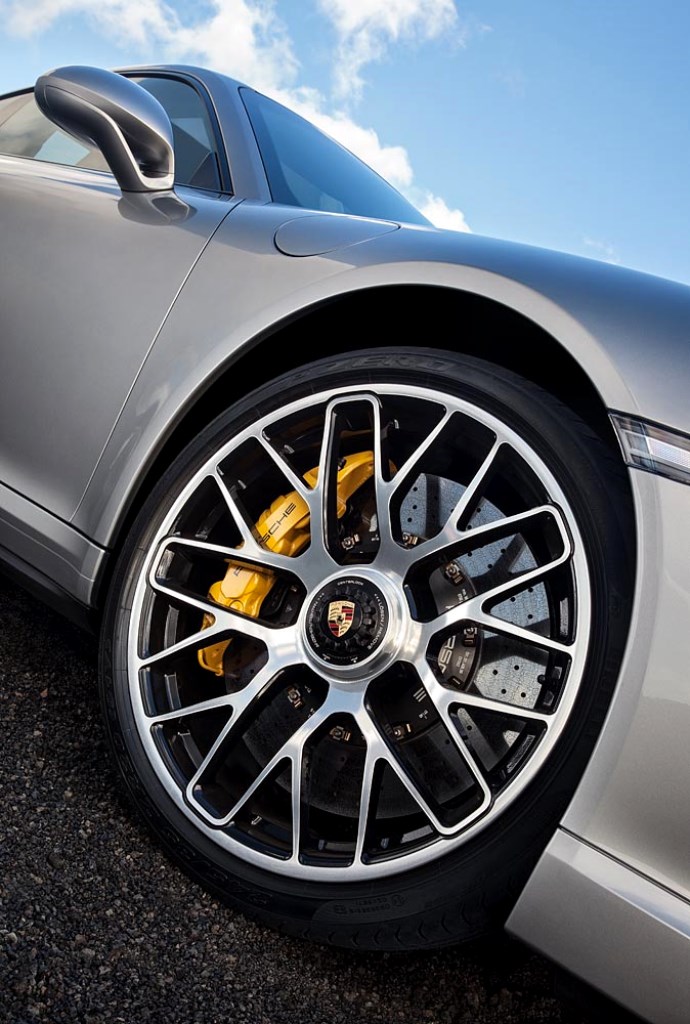
911 Turbo S Coupé
Rear axle steering sustainably improves handling
The introduction of rear axle steering in all turbo models immensely improves both circuit racing and everyday performance of the two new top sports cars. The system consists of two electro-mechanical actuators instead of the conventional control arms on the left and right of the rear axle. The steering angle of the rear wheels can be varied by up to 2.8 degrees, depending on vehicle speed. At speeds up to 50 km/h, when the front wheels are turned the system steers the rear wheels in the opposite direction. This actually corresponds to a virtual shortening of the wheelbase by 250 mm, which gives the 911 Turbo unrivalled performance in bends. The system lets the car turn faster into the bend and offers more dynamic steering response. This noticeably simplifies manoeuvring and parking.
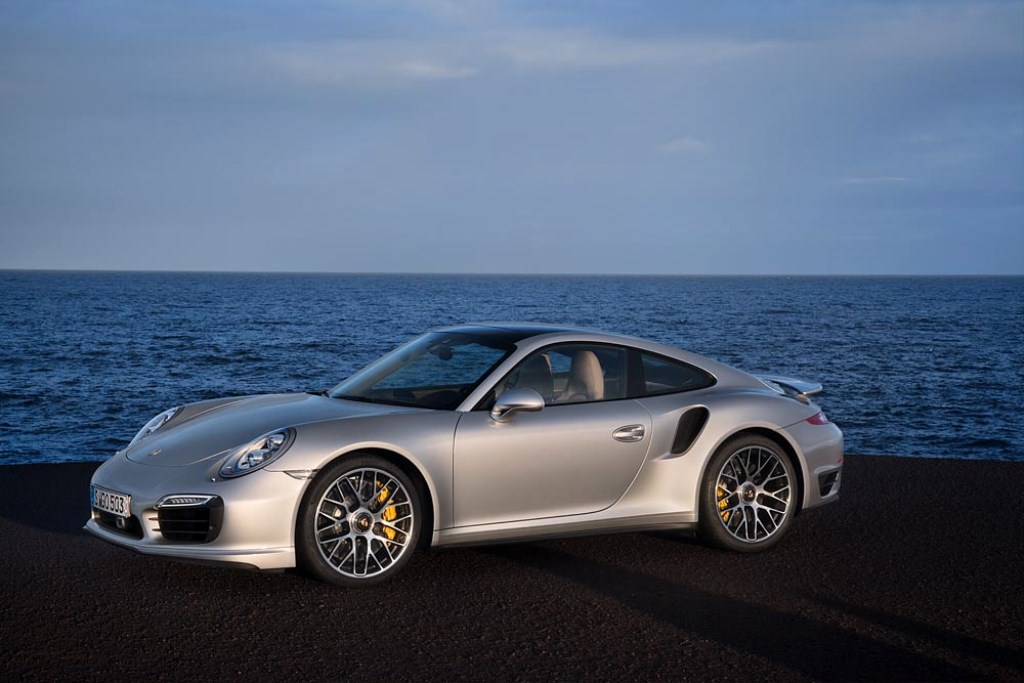
911 Turbo S Coupé
At speeds above 80 km/h, the system steers the rear wheels parallel to the turned front wheels. This is equivalent to a virtual lengthening of the wheelbase by a significant 500 mm and gives the sports car tremendous stability, especially at high speeds. At the same time, the steering input by the driver leads to significantly faster build-up of lateral force at the rear axle, which initiates the change in direction more spontaneous and harmoniously.
Active aerodynamics improve efficiency and performance
Porsche developed an active aerodynamic system on the new 911 Turbo models for the first time — Porsche active aerodynamics (PAA). It consists of a sturdy, retractable three-stage front spoiler, whose segments can be pneumatically extended, and a deployable rear wing with three adjustable wing positions. This makes it possible to tune the aerodynamics of the 911 Turbo to fulfil driver wishes for either optimal efficiency (speed position) or top dynamic performance. In the performance position, all segments of the front spoiler are fully extended, and they generate considerable downforce at the front axle. Similarly, the rear wing is extended to its maximum height with the greatest angle of attack. This also generates more downforce at the rear axle. Dynamic performance is improved to such an extent that lap times at the North Loop of the Nürburgring are improved by up to two seconds due to this system alone.
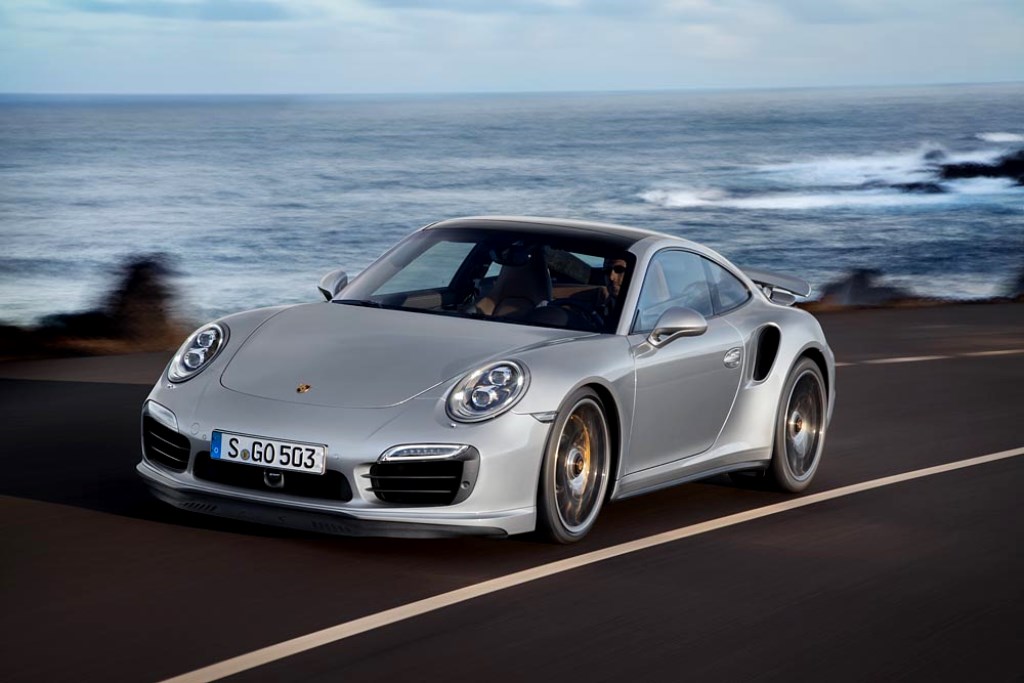
911 Turbo S Coupé
New interior with high-end features
The interior was completely redesigned in both 911 Turbo models, and it builds on the 911 Carrera family. The S model is particularly well equipped, offering such features as an exclusive interior in a black/carrera red colour combination and adaptive sport seats plus with 18-way adjustment and memory. In addition, the seat backrest shells are leather upholstered with double cap seams and various elements in carbon look. Like on the previous models, the Bose sound system is installed as standard; for the first time, a Burmester system is also available as an optional feature. A radar-controlled cruise control system, camera-based road sign recognition and speed limit recognition are other new options being offered.
The new top models of the 911 model series arrive on the market at the end of September 2013. In Germany, the 911 Turbo costs 162,055 euros; the new 911 Turbo S costs 195,256 euros, including VAT and country-specific features.
SOURCE: Porsche AG Media Database
Product and Technology Communication
Product Communication
VIDEO: Porsche in Geneva 2013, Designing a new 911 GT3
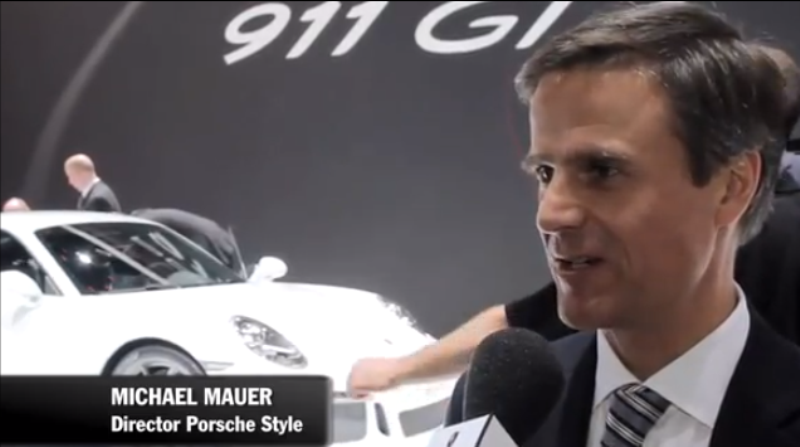
In this video, Michael Mauer explains the philosophy that went into the creation of the new 911 GT3. Follow all the news from Geneva here: http://www.porsche.com/geneva
Porsche celebrates the 50th anniversary of the 911 with a new GT3, World premiere at the International Motor Show in Geneva
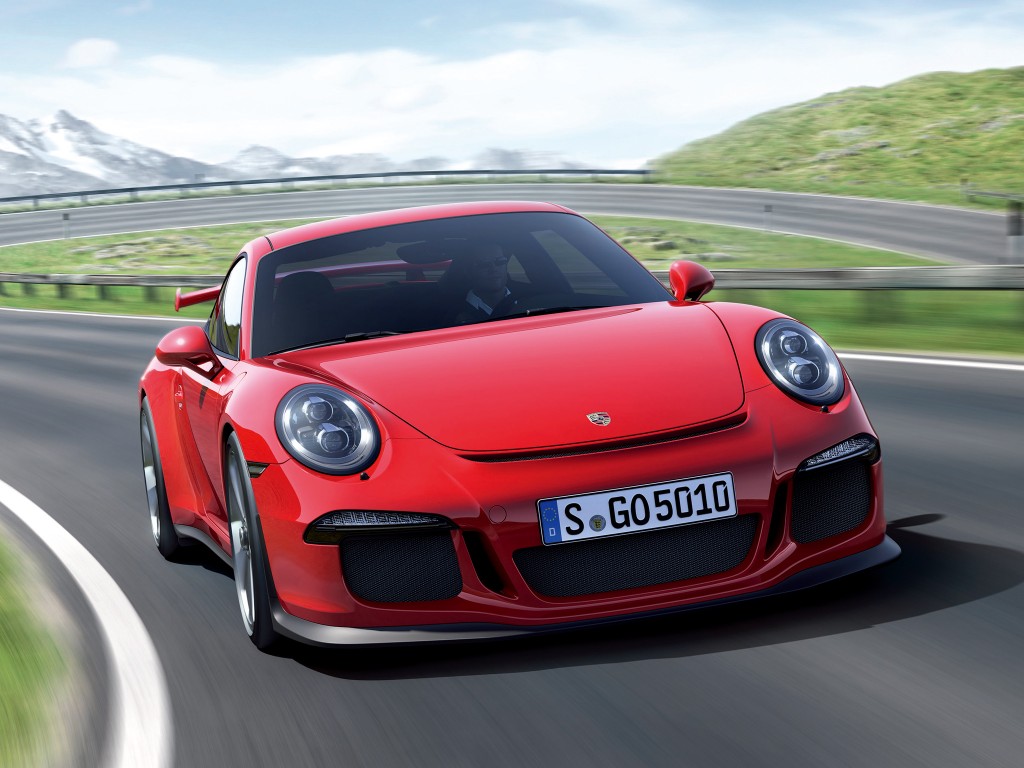
Porsche celebrates the 50th anniversary of the 911 with a new GT3
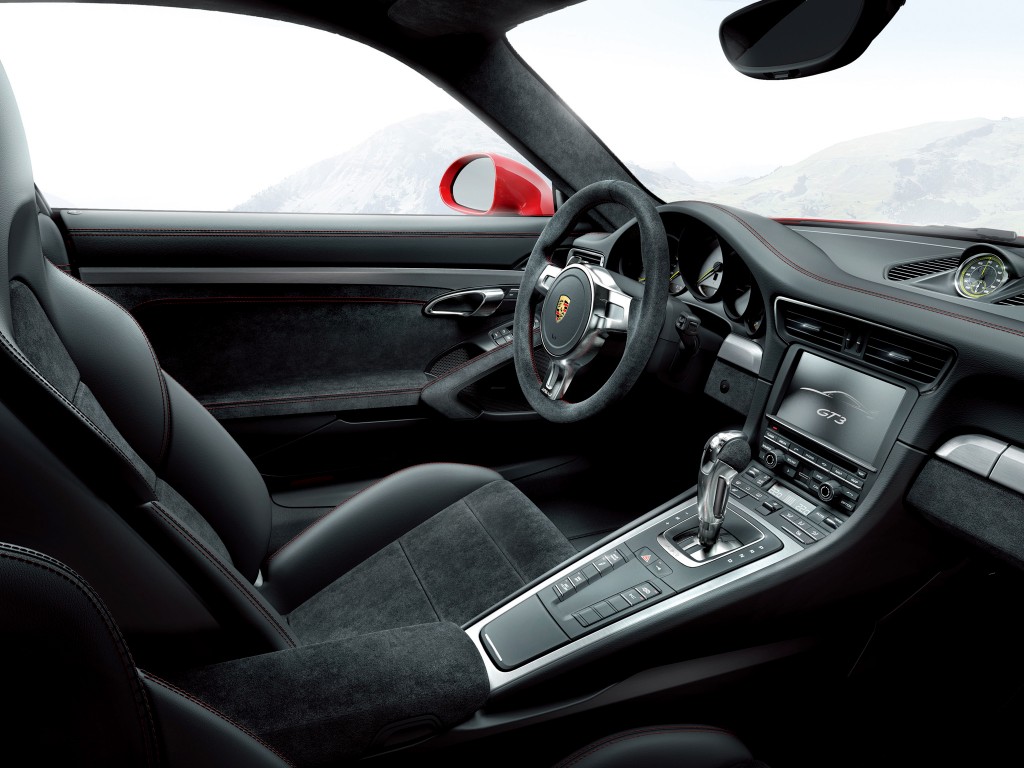
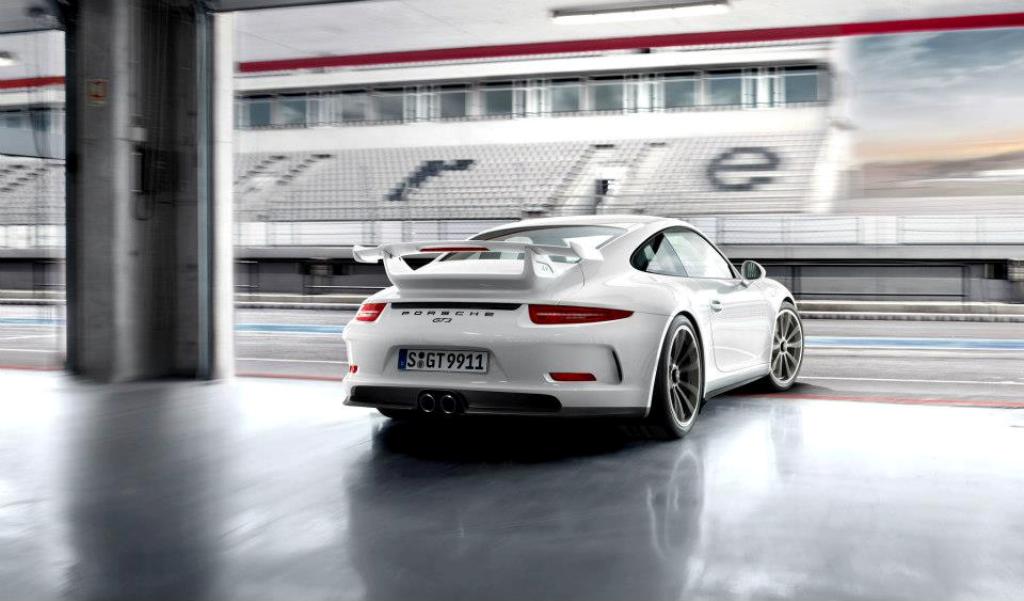
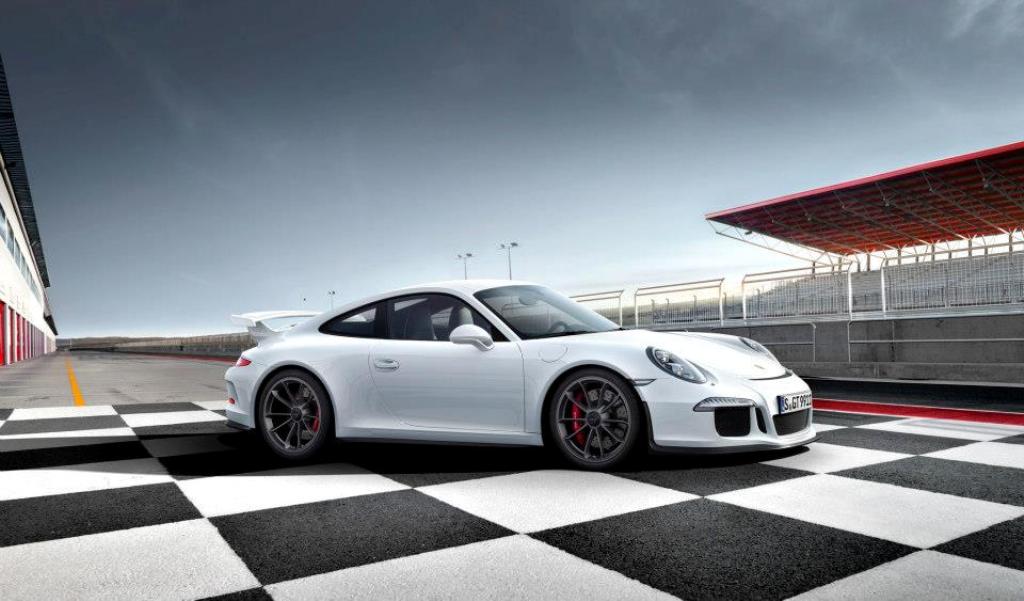
Stuttgart. The sportiest 911 will have its world premiere at the Geneva International Motor Show: the new Porsche 911 GT3. In the 50th anniversary year of the 911, Porsche is now set to open a new chapter in race track performance sports cars. The fifth generation of the 911 GT3, a complete new development, will take the pole position among the thoroughbred Porsche sports cars with naturally aspirated engines.
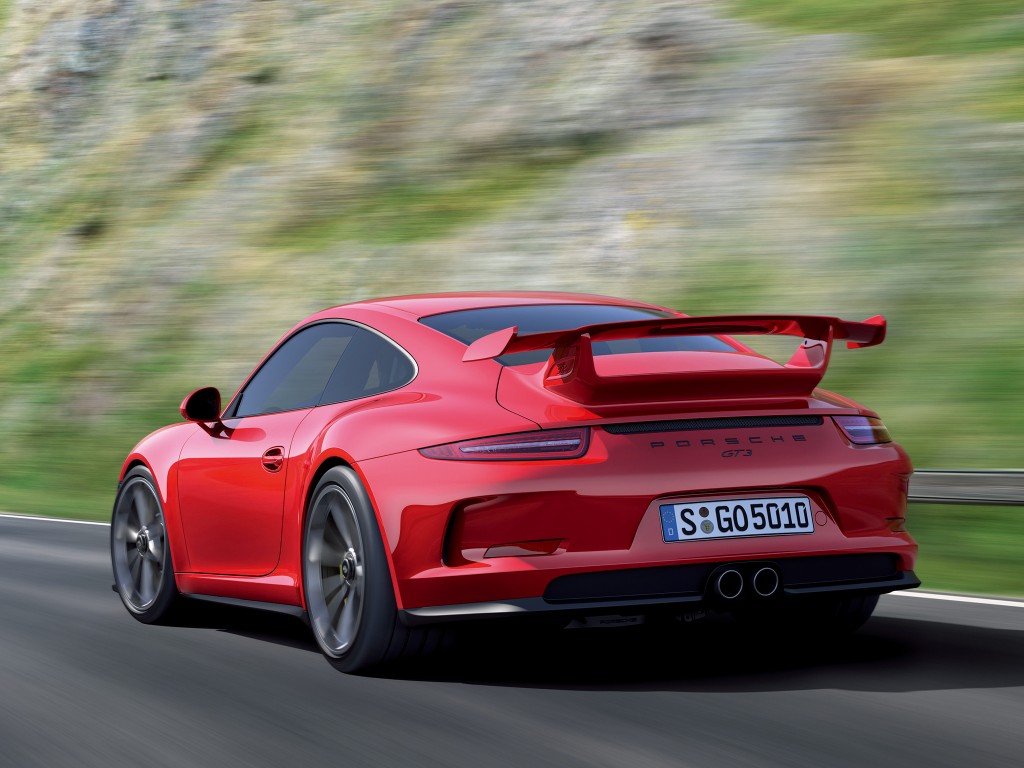
Boxer engine and transmission, as well as body and chassis are completely new and constitute a further development of the 911 GT3 concept with an impressive performance leap. Power: 475 hp. Power to weight ratio: 3.0 kg/hp. Acceleration from zero to 100 km/h: in 3.5 seconds. Top speed: 315 km/h.
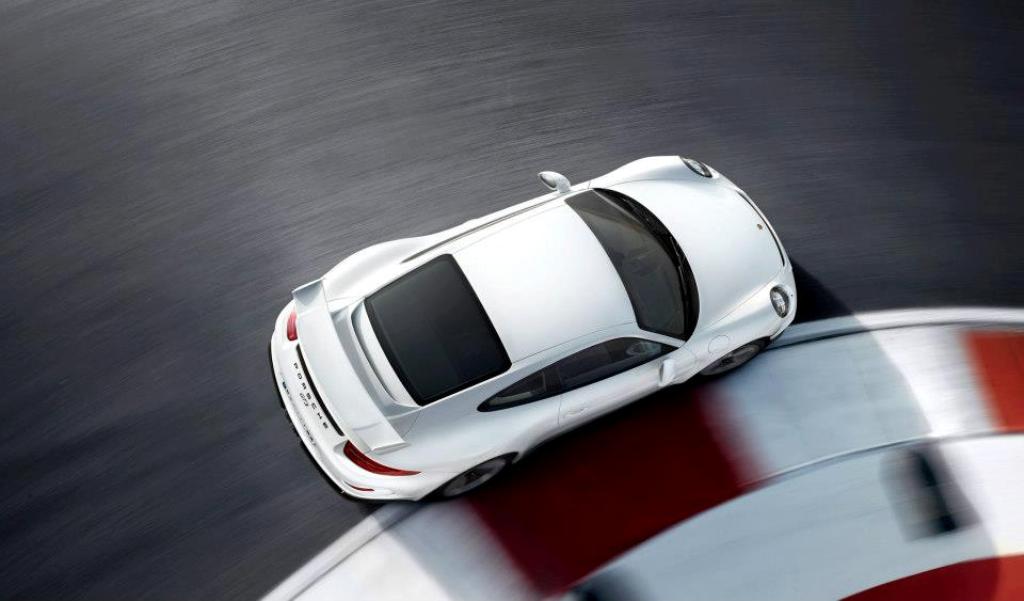
Lap time Nürburgring Nordschleife: under 7:30 minutes. As a technical highlight, it features the first active rear wheel steering in a production Porsche. As well as the optional full LED headlights. The new 911 GT3 keeps all the successful properties of a sports car suitable for racing, with even more driving dynamics, more sophisticated practicality – and a highly emotional fun factor.
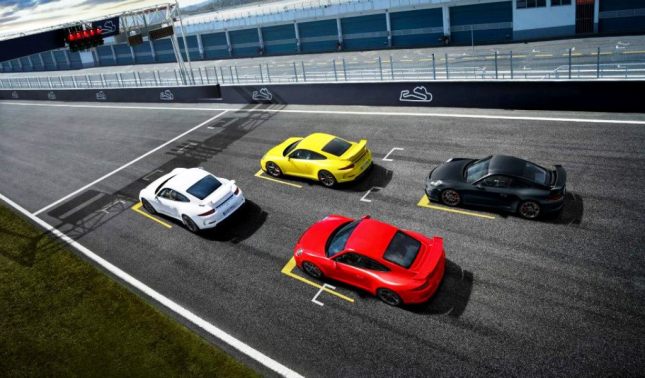
The powertrain of the new 911 GT3 is composed of a 3.8-liter boxer engine yielding 475 hp (350 kW) at 8.250 rpm, a Porsche dual-clutch transmission (PDK) and a high-traction rear-wheel drive. The six-cylinder engine is based on the same engine as the 911 Carrera S, although they share only few common parts.
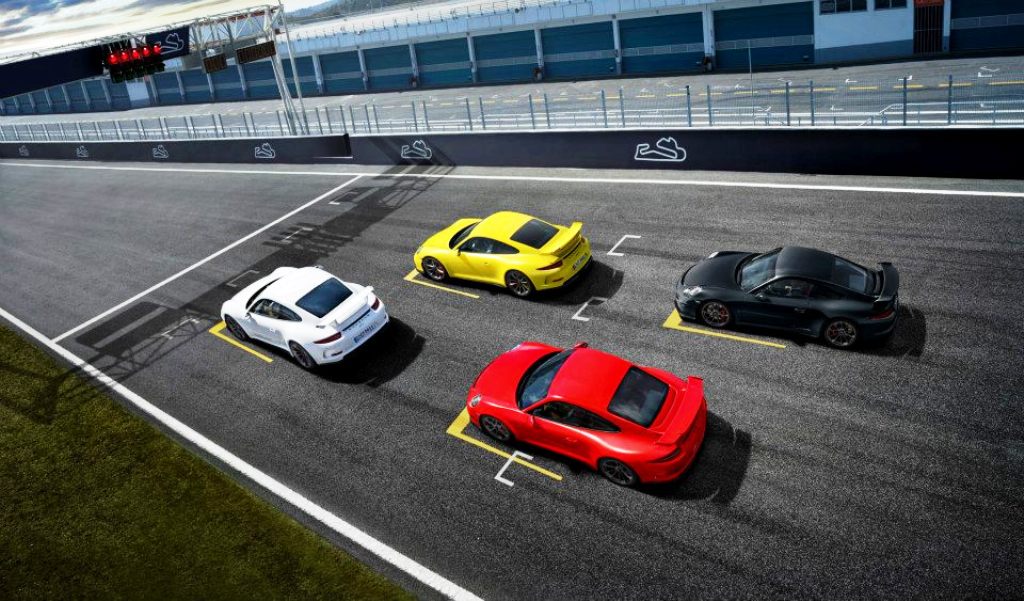
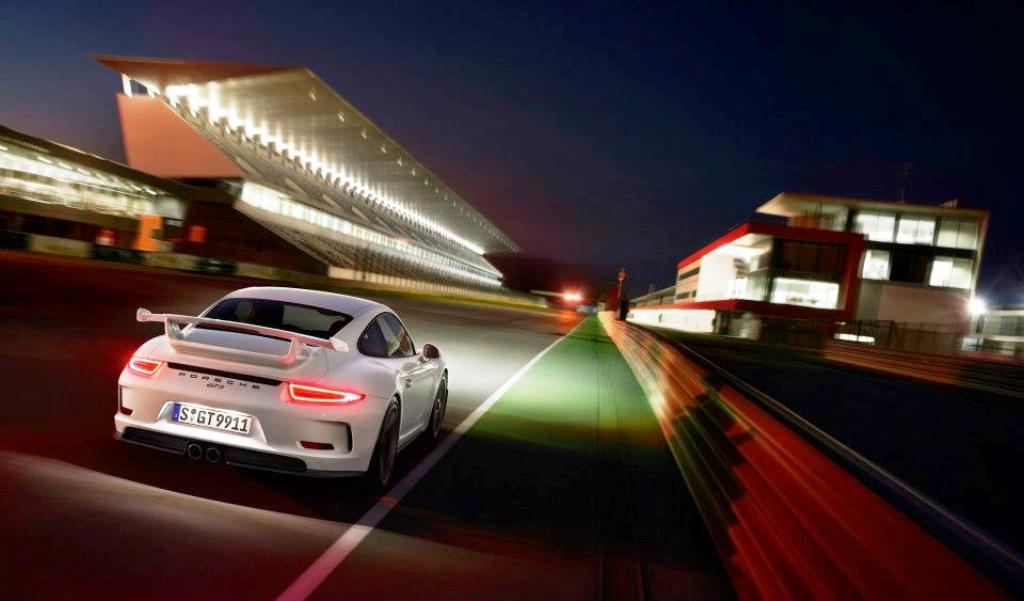
All other components, particularly the crankshaft and valve gear, were specially adapted or designed for the GT3. For instance, Porsche designed titanium connecting rods and forged pistons. The basic modifications set the stage for an extremely high-speed engine that reaches up to 9.000 rpm. The Porsche dual-clutch transmission was also specially developed; the characteristics are directly based on a sequential gearbox from motor racing, thereby providing further performance and dynamics advantages to the driver.
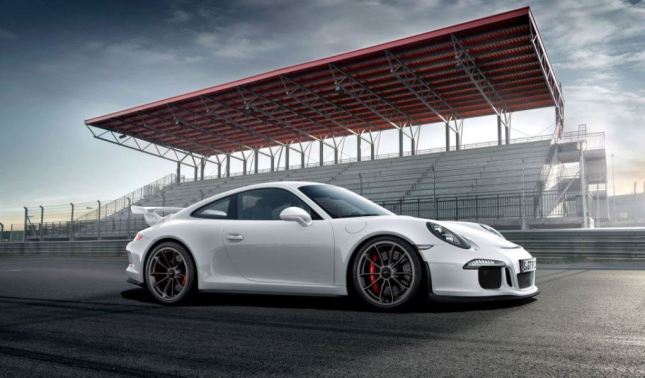
For the first time, Porsche is using active rear wheel steering in order to achieve even higher precision and lateral dynamics. Depending on the speed, it steers in the same or opposite direction of the front wheels, improving stability and agility.
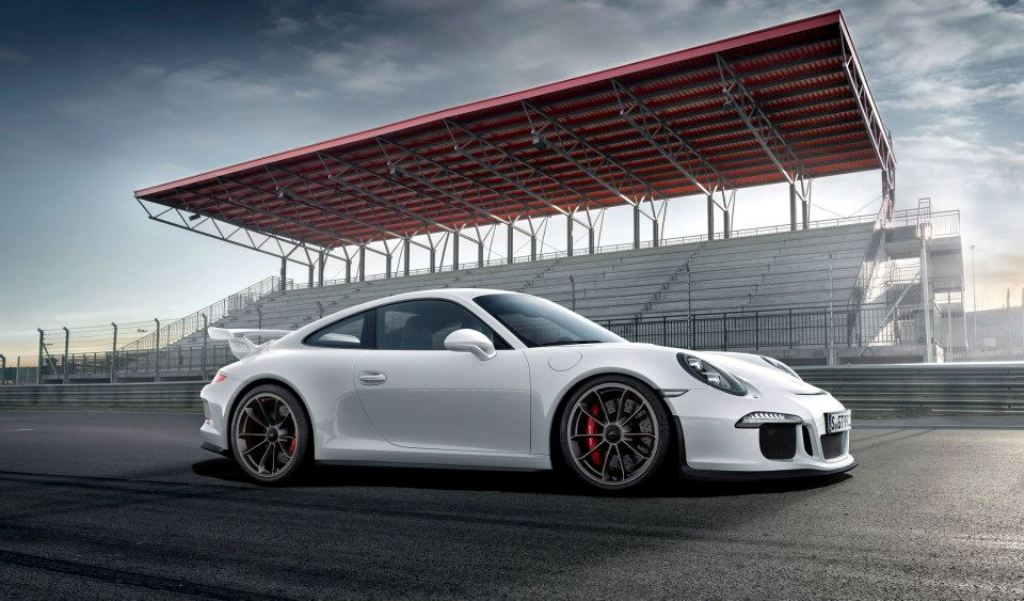
Other new modules improving driving dynamics are the electronically controlled, fully variable rear differential lock, and the dynamic engine mounts. The newly developed all-aluminium chassis can still be adjusted by height, toe and camber. Contact with the road is made by the new 20-inch forged alloy wheels with central locking.
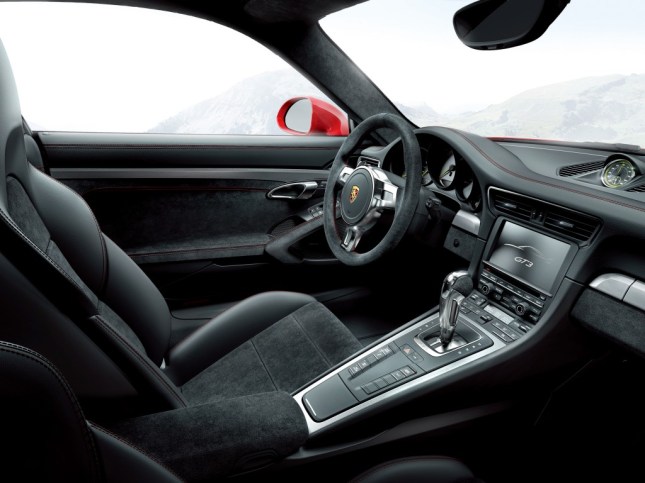
The 911 GT3 is based on the light, yet stuff body of the current generation 911 Carrera in hybrid steel-aluminium construction, however, it comes with independent front and rear parts. In addition, the 911 GT3 is 44 millimetres wider than a 911 Carrera S in the area of the rear axle. Another clear recognition feature is again the large, fixed rear wing. This makes a decisive contribution to the exemplary aerodynamics of the new 911 GT3, which combines low air resistance with even more power.
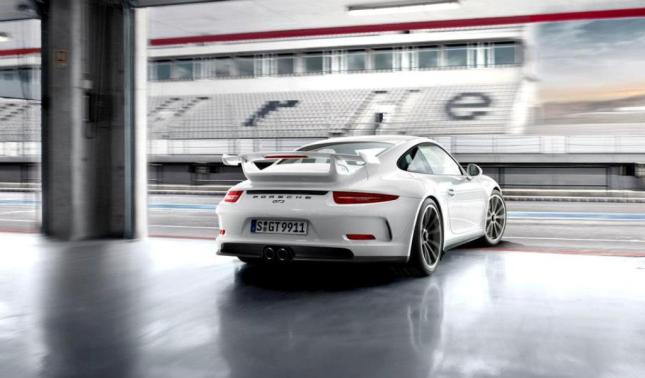
As a result, the new 911 GT3 sets new performance records. At full acceleration from standstill, the 100 km/h mark is breached after 3.5 seconds, and 200 km/h are reached in less than twelve seconds. The top speed is 315 km/h in the seventh, top gear of the completely newly adapted PDK transmission. The lap time on the Nürburgring Nordschleife, which the new 911 GT3 manages in under 7:30 minutes, is even more impressive.
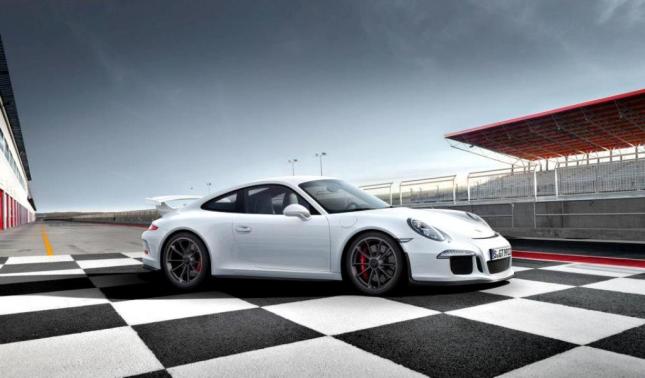
The new Porsche 911 GT3 will be launched on the market from August 2013 on, and will cost in Germany 137,303 Euro including VAT and national specifications.
SOURCE: PORSCHE AG MEDIA DATABASE
Product and Technology Communication
Product Communication
Related articles
- Porsche at the International Motor Show in Geneva, Sporty premieres in the 911 anniversary year (dedeporsche.com)
- Porsche celebrates the 50th anniversary of the 911 with a new GT3, World premiere at the International Motor Show in Geneva (dedeporsche.com)
Porsche 918 Spyder Prototype Successful Testing / lap time 7 mins 14 secs on the “Nürburgring-Nordschleife”
|
|
||
|
Porsche 918 Spyder-Prototyp auf der Nürburgring-Nordschleife
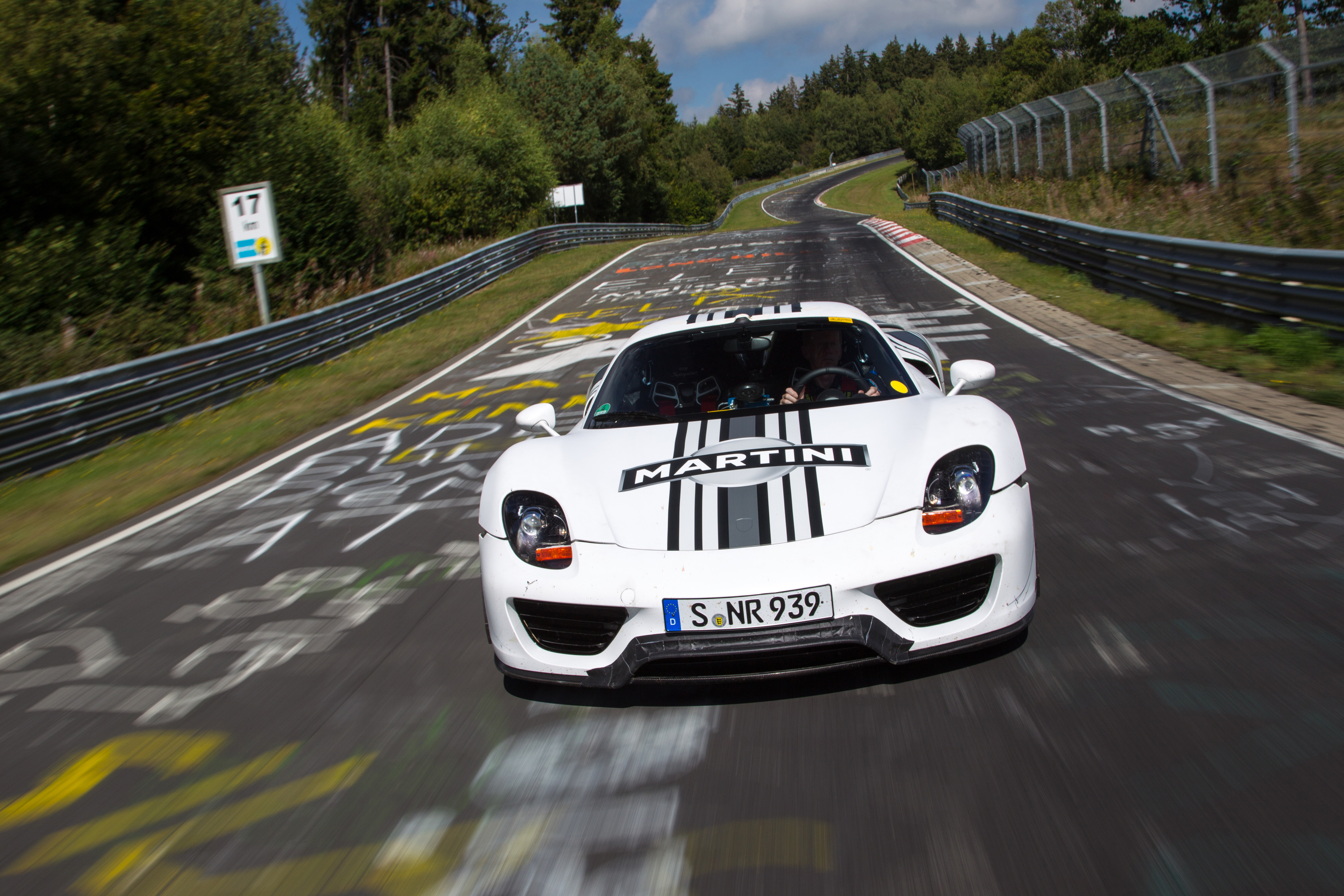
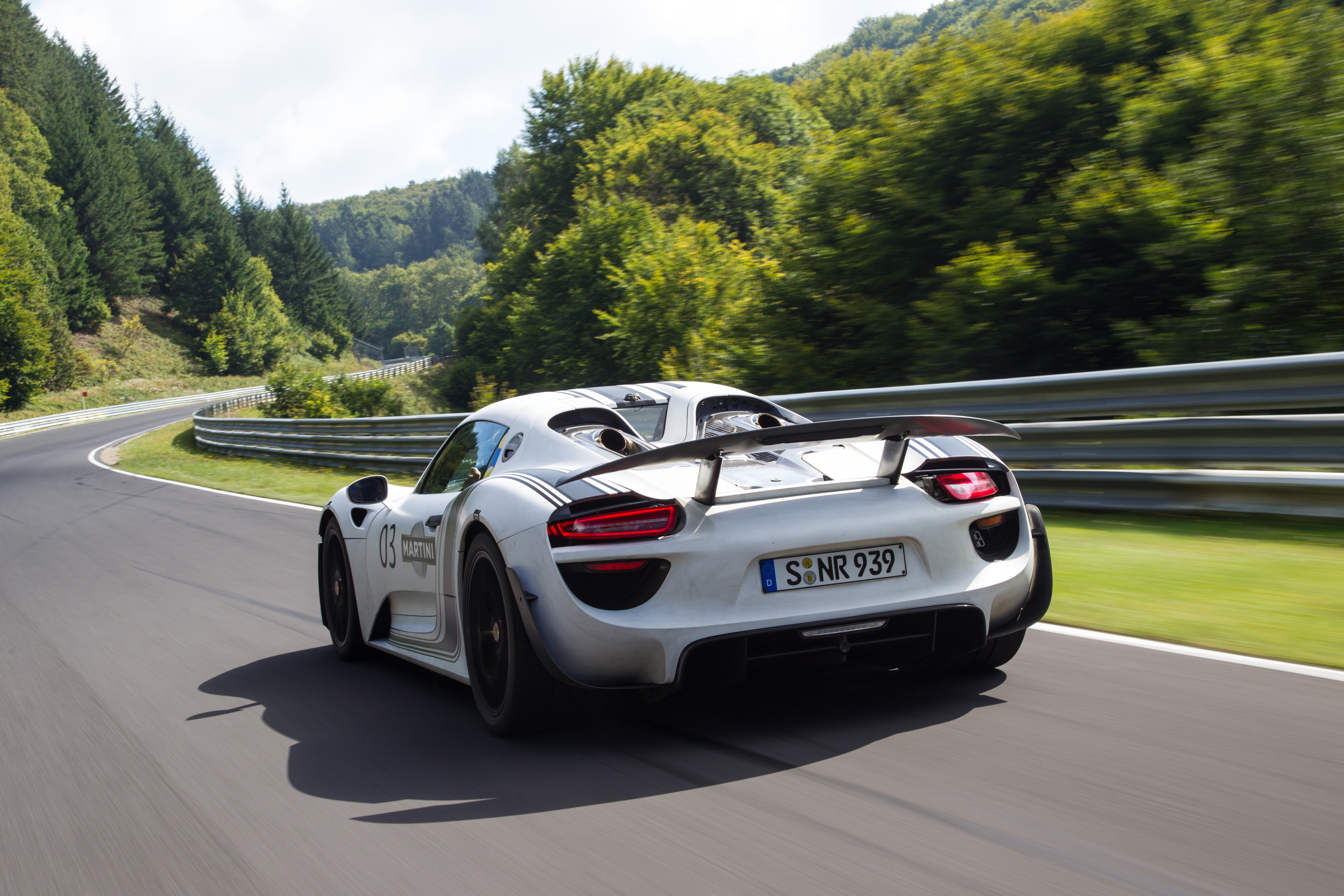
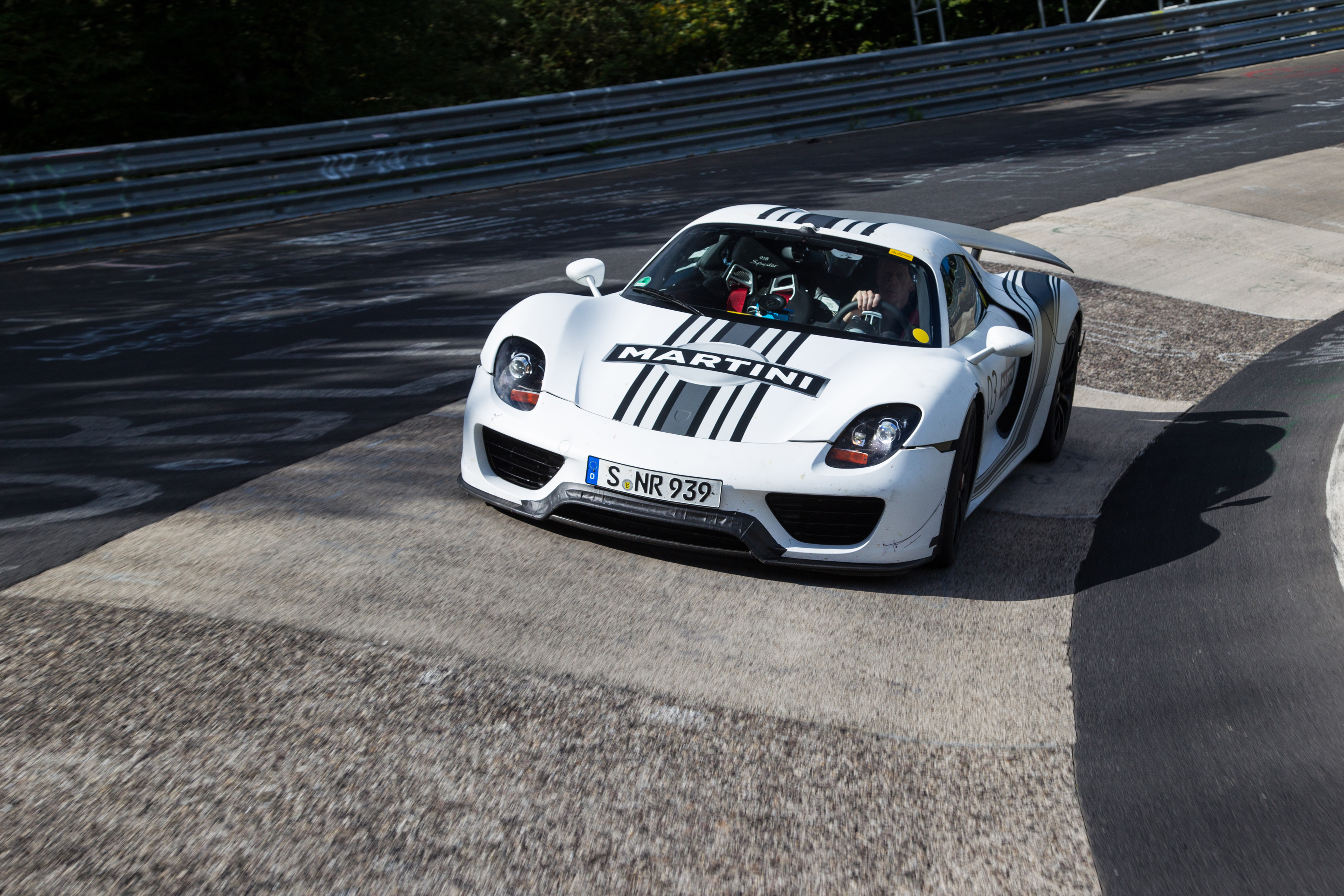
Stuttgart. On September 18th, in test drives on the “Nürburgring-Nordschleife”, a Porsche 918 Spyder prototype turned in a remarkable best time of just 07:14 minutes for the 20.6 km long circuit.
Porsche 918 Spyder-Prototyp auf der Nürburgring-Nordschleife
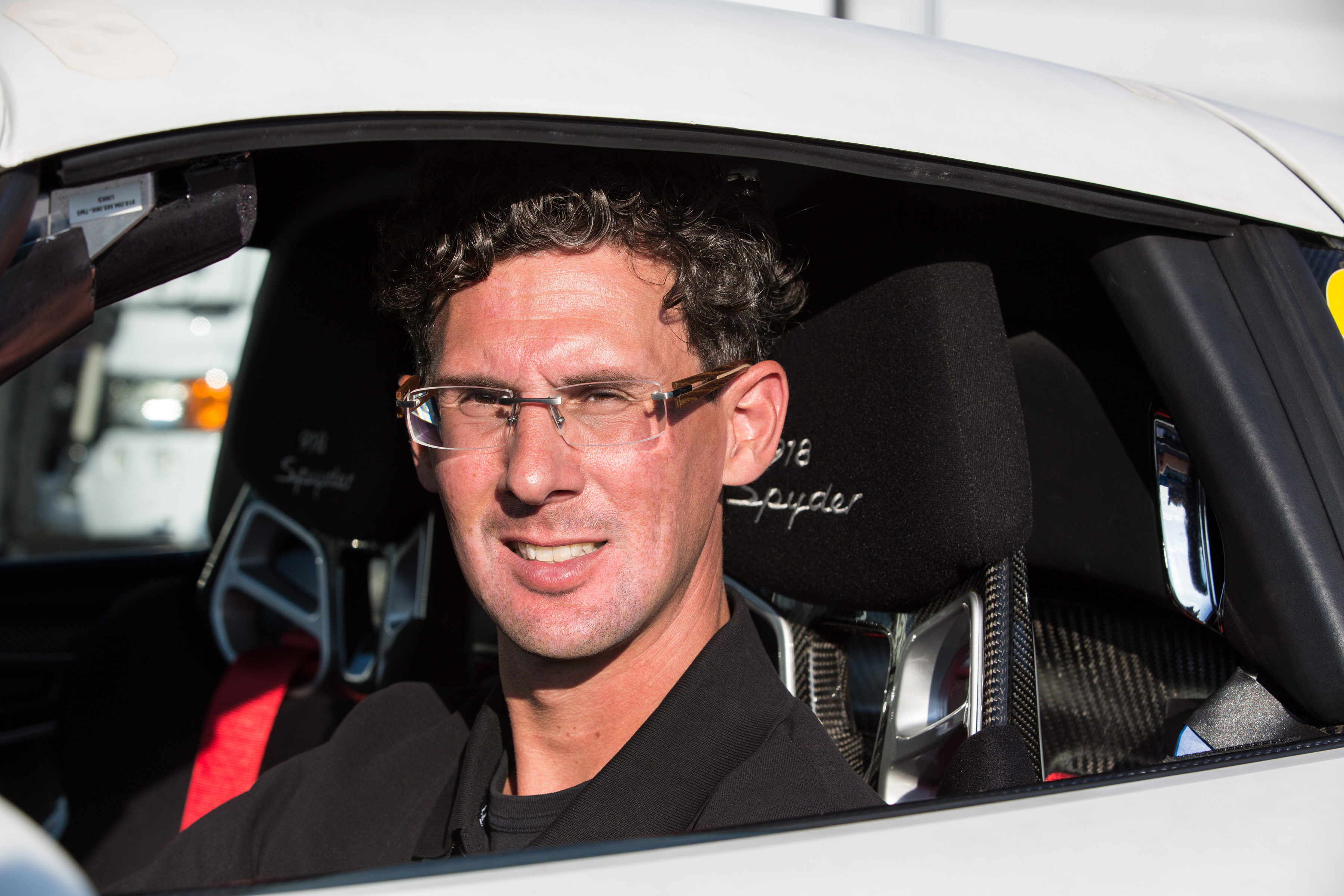
One year before its production launch, the plug-in hybrid super sports car from Porsche AG is already proving its superlative dynamic performance potential far surpassing all expectations placed in it. Dr. Frank Walliser, overall project leader for the 918 Spyder:
“By turning in a fabulous time of 07:14 minutes, the 918 Spyder prototype has already fully confirmed the viability of its future concept after just a few months on the road.”
Dr. Frank Walliser, Gesamtprojektleiter 918 Spyder
The lap time of the Porsche 918 Spyder prototype is one of the best ever clocked for street-legal vehicles with standard production tyres.
Porsche 918 Spyder-Prototyp auf der Nürburgring-Nordschleife
The course was only available to the development team from Weissach for one lap, and it had to be started from a standstill.
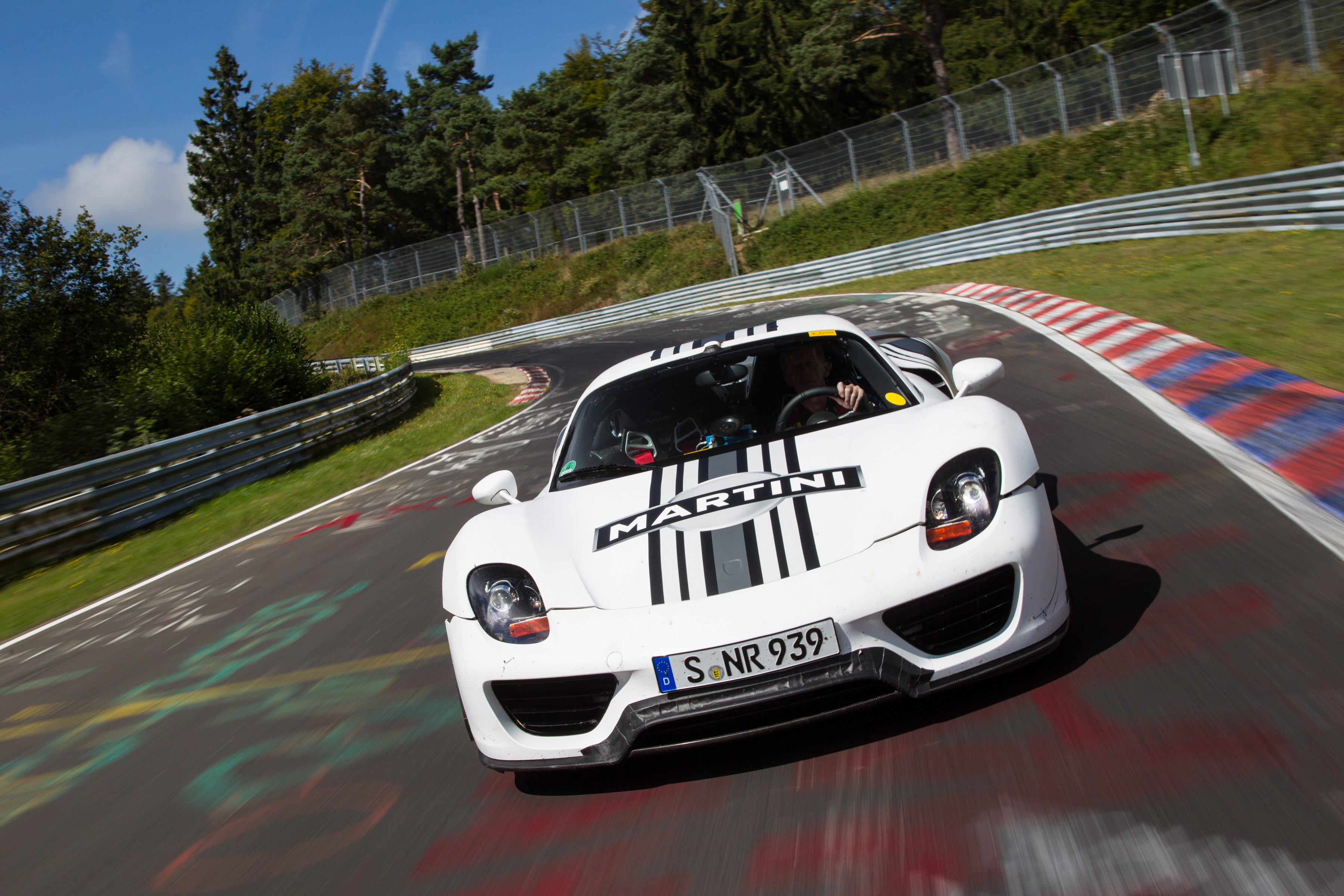
Porsche 918 Spyder-Prototyp auf der Nürburgring-Nordschleife
The plug-in hybrid super sports car with over 795 hp was equipped with production tyres from development partner Michelin as well as the optional “Weissach” package, which integrates modifications that boost driving performance.
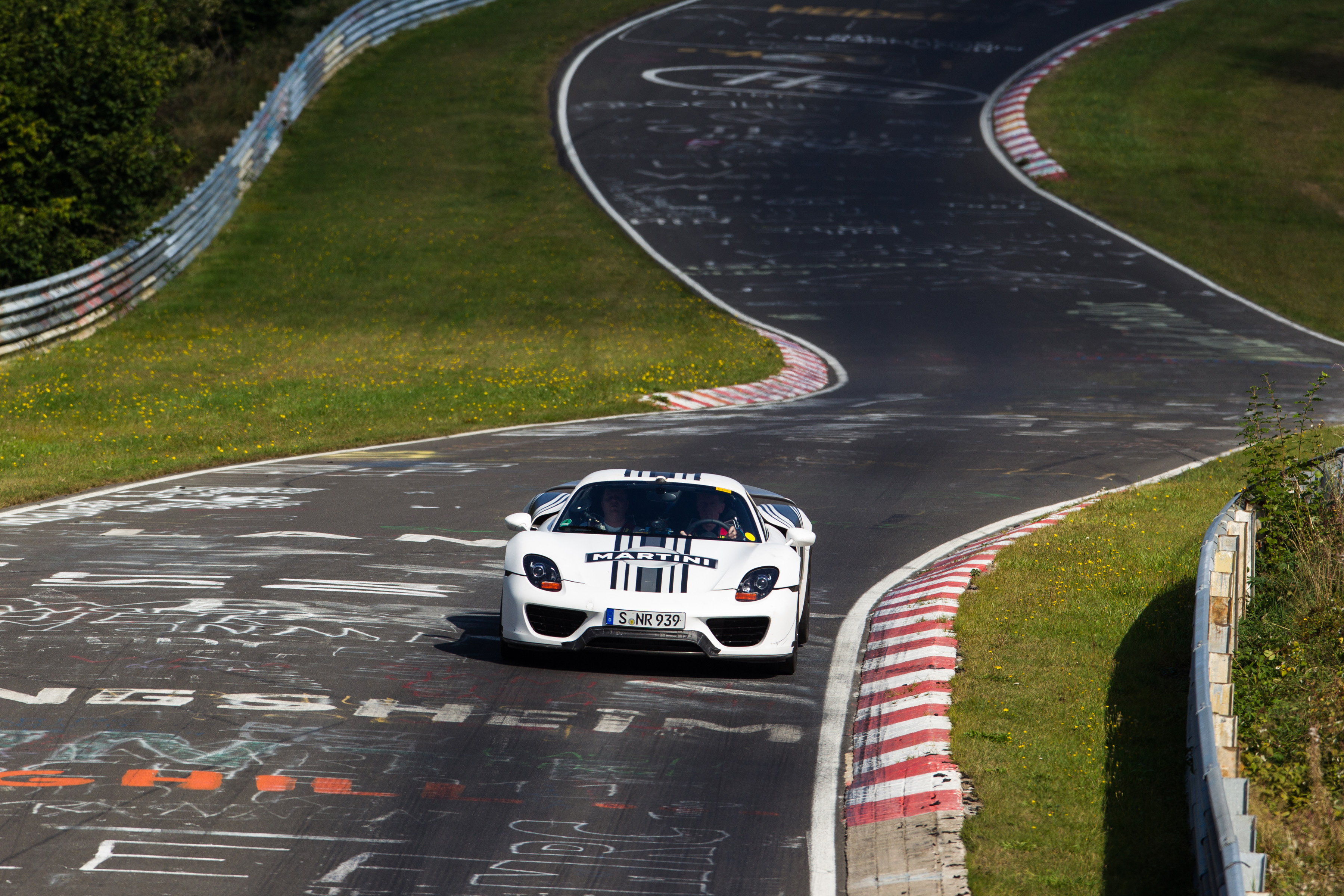
Porsche 918 Spyder-Prototyp auf der Nürburgring-Nordschleife
SOURCE: Porsche AG Media Database
Product and Technology Communication
Product Communication
Related articles
- Porsche Press Release – 918 Spyder prototype in attractive Martini Racing design (dedeporsche.wordpress.com)
International GT Open, race 3 on the Nürburgring,Podium spot 4th place Porsche customer teams
Podium spot and fourth place for Porsche customer teams
Stuttgart. The International GT Open race on the Nürburgring began very promisingly for Porsche customer teams. With works driver Patrick Pilet and team owner Raymond Narac (both France) at the wheel of the 911 GT3 RSR, IMSA Performance Matmut claimed position three from race three – and with this the second podium spot this season.
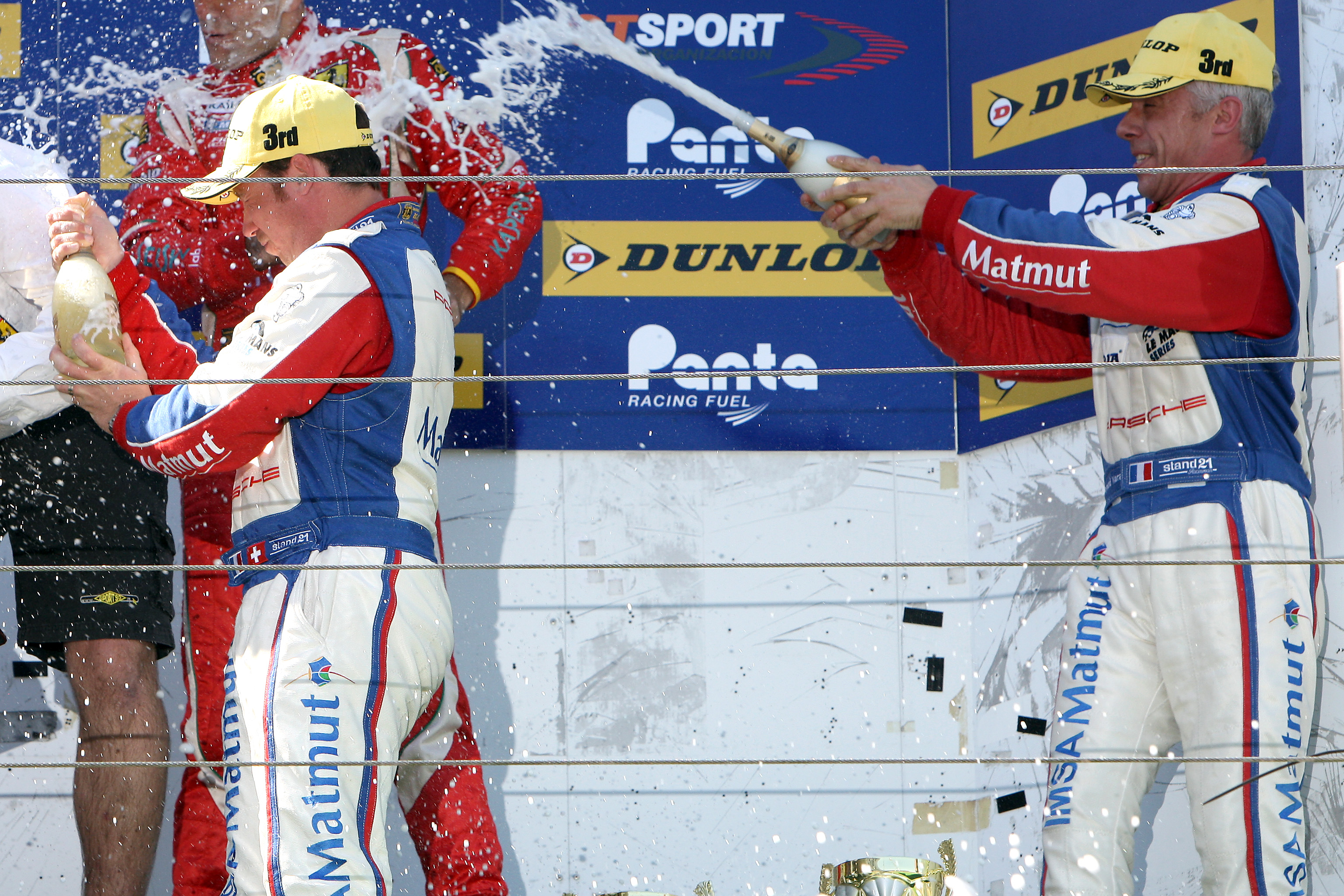
The winning duo of the first two season races, works driver Marco Holzer (Germany) and Manthey-Racing pilot Nick Tandy (Great Britain) secured valuable points ranking fourth in the 911 GT3 RSR. With this, Holzer and Tandy retain their points’ lead in the drivers’ classification. Pilet/Narac have moved up the table to now rank second. The Austrian Deboeuf Team yielded a second place in the GTS class and seventh overall with the Porsche 911 GT3 R. Porsche leads the manufacturers’ classification.
Positions three and four for IMSA and Manthey Racing respectively are something to be highly valued. Both teams had to spend extra time in the pits: To increase the suspense amongst the front-runners there is a handicap regulation in the race series that hands the top three of the race a time penalty. Because of this, during the driver change between Patrick Pilet and Raymond Narac, the IMSA team had to wait for ten seconds because the Frenchmen had secured second place at Sunday’s race on the Algarve.
Marco Holzer and Nick Tandy had a whole 30 seconds to pay for their two Algarve wins. Still, fourth place from the 70 minutes race on Saturday in the Eifel had its upside for the German/British team: For tomorrow’s fourth race of the season, which runs over 50 minutes, the time penalty during a pit stop has now been shortened to 15 seconds.
“It was a good race for us with a perfectly set-up car. Above all, my start from sixth to move up the field into second was just great,” thought Patrick Pilet.
“We made it over the distance well with the tyres, although we weren’t allowed to change to new rubber during the pit stop. Raymond’s spin during qualifying made one set of tyres completely unusable. And we need the remaining fresh set for tomorrow’s race. At the end there was a misunderstanding. We didn’t know that the driver ahead of us had been handed a time penalty so we slowed the pace. Otherwise we would have finished in second. Fourth or fifth tomorrow would be good, then we are exempt from the ten second penalty.”
“The race was okay with fourth place at the end,” stated works driver Marco Holzer.
“Luckily we don’t get a 15 second handicap for tomorrow’s race. To have to stand for a full 30 additional seconds during a pit stop is really long. I lost a couple of positions at the start, other than that another driver nudged my car, but there were no repercussions. Afterwards, we kept out of any trouble. Tomorrow we definitely want to take a trophy home from the Eifel.”
Seventh place overall for Deboeuf Racing yielded the Austrians second in the GTS class. This category, in which the 911 GT3 R starts, is based on the FIA GT3 regulations whilst the FIA GT2 regulations underlie the Super GT class. The top model of Porsche customer racing, the 911 GT3 RSR, is fielded in this category.
Germany’s Marco Seefried and the Austrian Thomas Gruber brought the 911 of the Deboeuf squad home safely. Eleventh went to the Spanish Drivex School team. Sharing the cockpit of the new 911 GT3 RSR are team owner Miguel Angel De Castro and Miguel Amaral from Portugal.
On the series’ website www.gtopen.net, the International GT Open provides Live-Timing and also Live-Streaming. The respective schedules, points’ standings and further information are also available there.
Race four starts tomorrow at 13.00 hours.
Result race 3
1. Bruni/Federico (I/I), Ferrari 458 GT Italia, 1:10.45.515 hours
2. Barba/Malucelli (E/I), Aston Martin Vantage, + 47.393 seconds
3. Narac/Pilet (F/F), Porsche 911 GT3 RSR, + 47.426
4. Holzer/Tandy (D/GB), Porsche 911 GT3 RSR, + 55.822
5. Heyer/Seyffarth (D/D), Mercedes SLS AMG, + 1.12.851 minutes
6. Ramos/Giammaria (P/I), Ferrari 458 GT Italia, + 1.17.663
7. Seefried/Gruber (D/A), Porsche 911 GT3 R, + 1.29.773
Points’ drivers
1. Holzer/Tandy, 54 points
2. Narac/Pilet, 44
3. Barba/Malucelli, 36
This is the International GT Open
Inaugurated in 2006, the International GT Open features two races per weekend with identical points’ allocation – the first race on Saturday runs over 70 minutes, the second on Sunday over 50. Two drivers share the cockpit. A handicap system ensures more suspense at the head of the field. The top three drivers of each race are handed a 15, ten or five second penalty respectively for the following race. The calendar of the race series includes eight races on selective circuits like Silverstone, Spa-Francorchamps and the Nürburgring.
One of the keys to success in the International GT Open is the stable technical regulations and the capping of costs, for instance through control tyres. The grid is divided into two classes, the stronger Super GT category and the GTS class.
Super GT: This class is based on the FIA GT2 regulations – the 911 GT3 RSR competes here. The particularly efficient six-cylinder boxer engine in the International GT Open version delivers significantly more than 500 hp.
.
GTS: Based on the FIA GT3 regulations. The Porsche 911 GT3 R is fielded here, now delivering 500 hp after the new model year underwent improvements.
In 2007, Autorlando Sport won the overall classification for drivers and teams with Porsche works driver Richard Lietz (Austria) and Joel Camathias from Switzerland.
SOURCE: Porsche AG Media Database
Communication Porsche AG
Motorsportpress
Related articles
- Perfect start to the season for Porsche customer teams International GT Open, Races 1 and 2 in Portimao/Portugal (dedeporsche.wordpress.com)
- Porsche Motorsport around the world – Newsletter 2 – 2012 (dedeporsche.wordpress.com)
- Porsche Mobil 1 Supercup kicks off the new season in Bahrain, anniversary season of the world’s fastest international one-make race series (dedeporsche.wordpress.com)
- Porsche Junior Program – Six finalists shine at young driver selection (dedeporsche.wordpress.com)
- Porsche Carrera Cup Deutschland, round 5 on the Nürburgring Nordschleife, newcomer Philipp Eng on pole position (dedeporsche.wordpress.com)
Porsche Carrera Cup Deutschland, round 5 on the Nürburgring Nordschleife, newcomer Philipp Eng on pole position
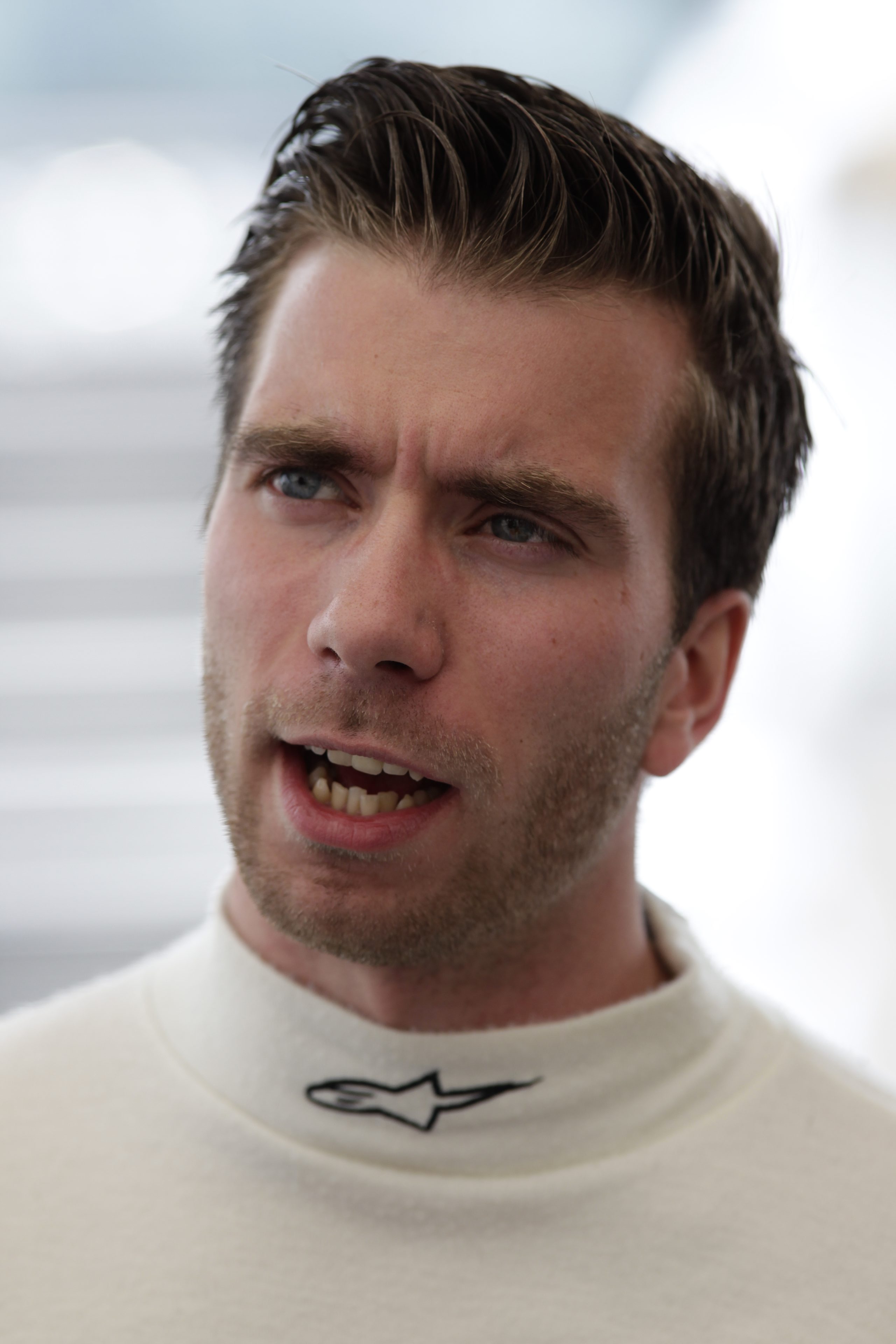
Porsche Carrera Cup Deutschland 2012
Philipp Eng (A)
Newcomer Philipp Eng on pole position
Stuttgart. The season highlight of the Porsche Carrera Cup Deutschland began with a surprise.
On a damp track with dry patches, a complete Nordschleife rookie positioned himself at the front of the 24-strong field. Austria’s Philipp Eng, driving for the MRS GT-Racing squad, snatched pole position at just his fourth qualifying session with the 450 hp 911 GT3 Cup on the world’s most challenging circuit.
Eng lapped the 25.378 kilometre track combining the Grand Prix circuit and the legendary Nordschleife in 9:53.131 minutes.
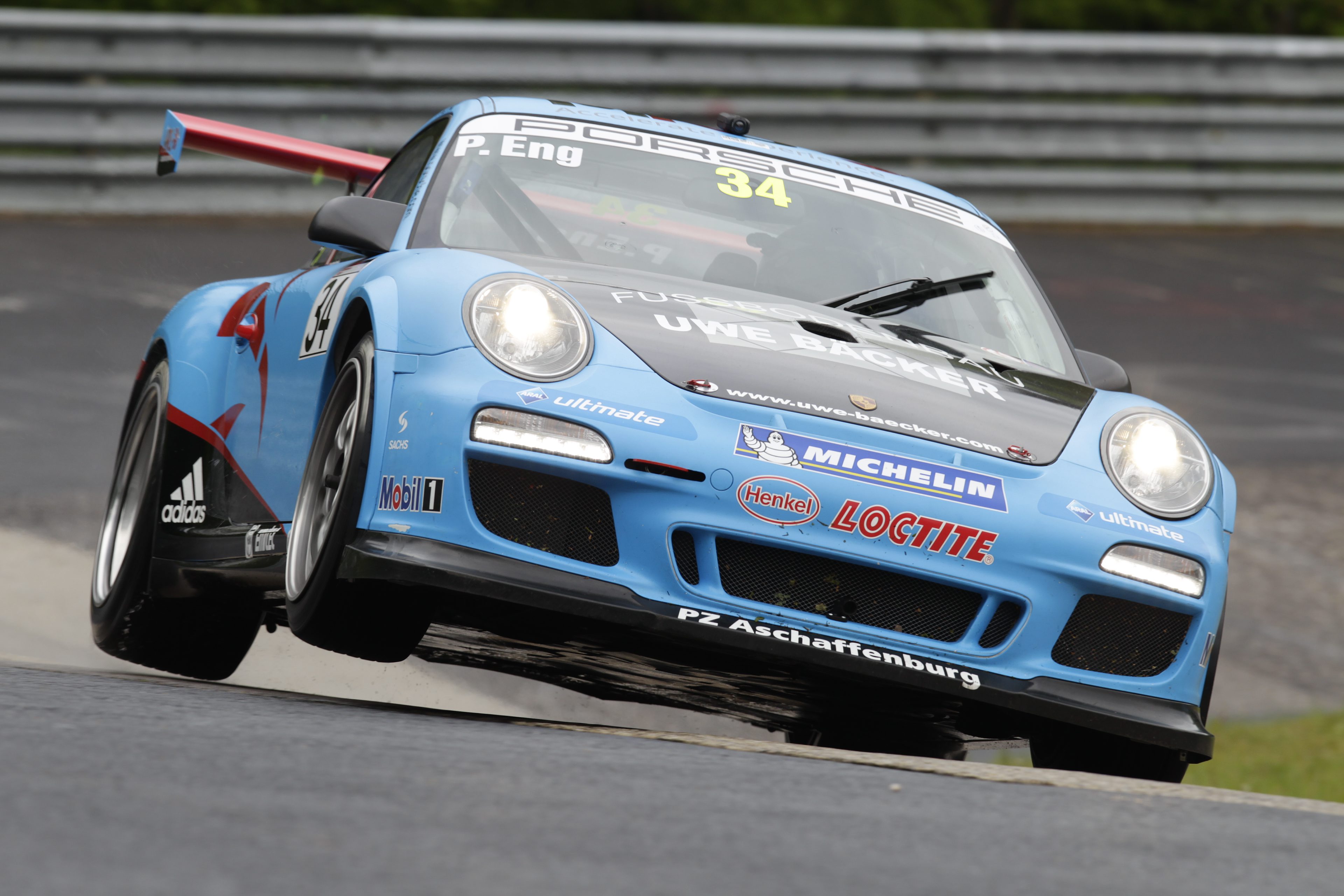
Porsche Carrera Cup Deutschland 2012
Philipp Eng (A)
Porsche Carrera Cup Deutschland – 03 –
24h Nürburgring 2012
A mere 0.294 seconds shy of the pole-sitter, Nicki Thiim (Hermes Attempto Racing) posted the second quickest time.
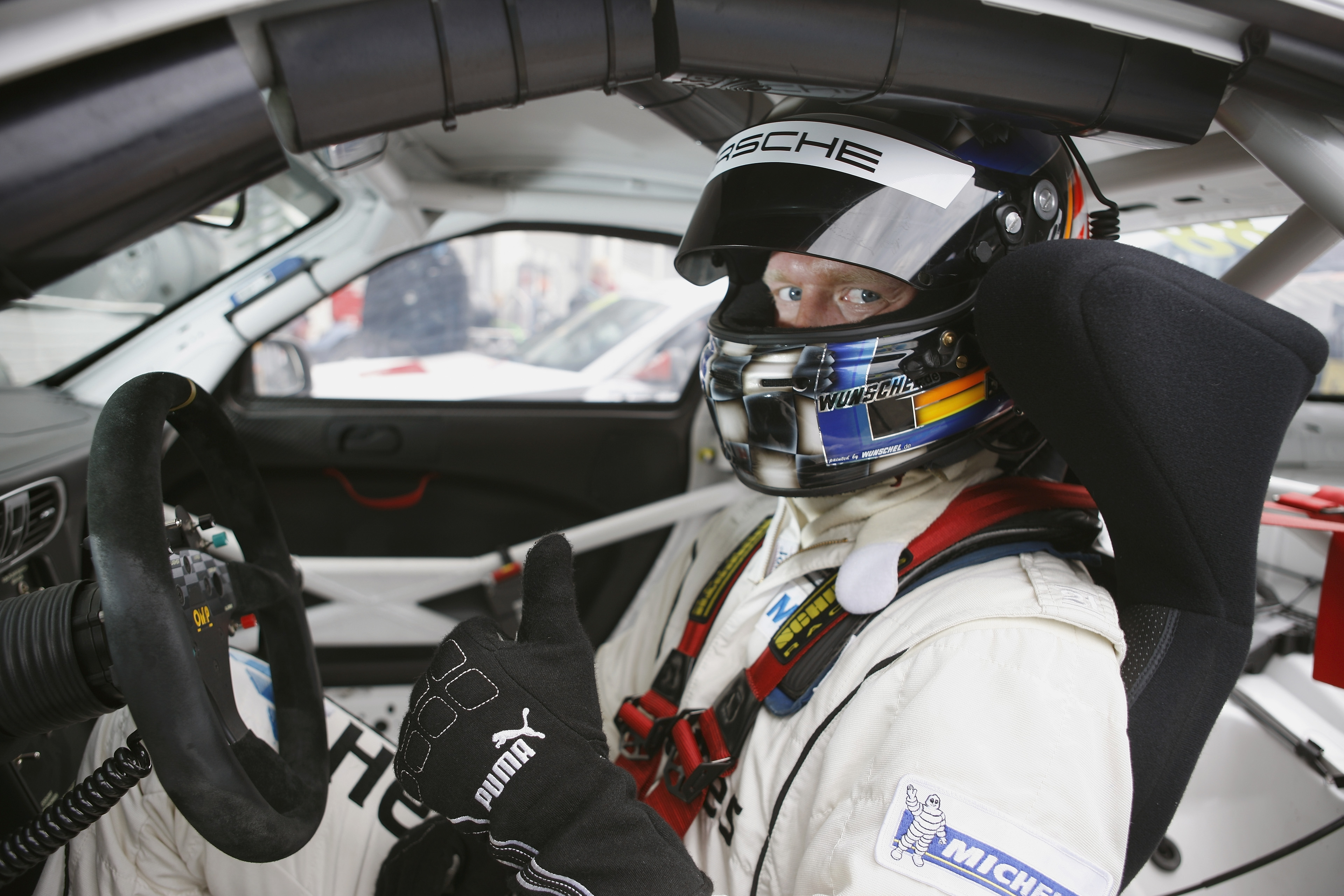
Porsche Carrera Cup Deutschland 2012
Nicki Thiim (DK)
Porsche Carrera Cup Deutschland – 03 –
24h Nürburgring 2012
However, the Dane and winner of round three on the Lausitzring was relegated back to fifth starting position due to a collision at Sunday’s race in the Lausitz.
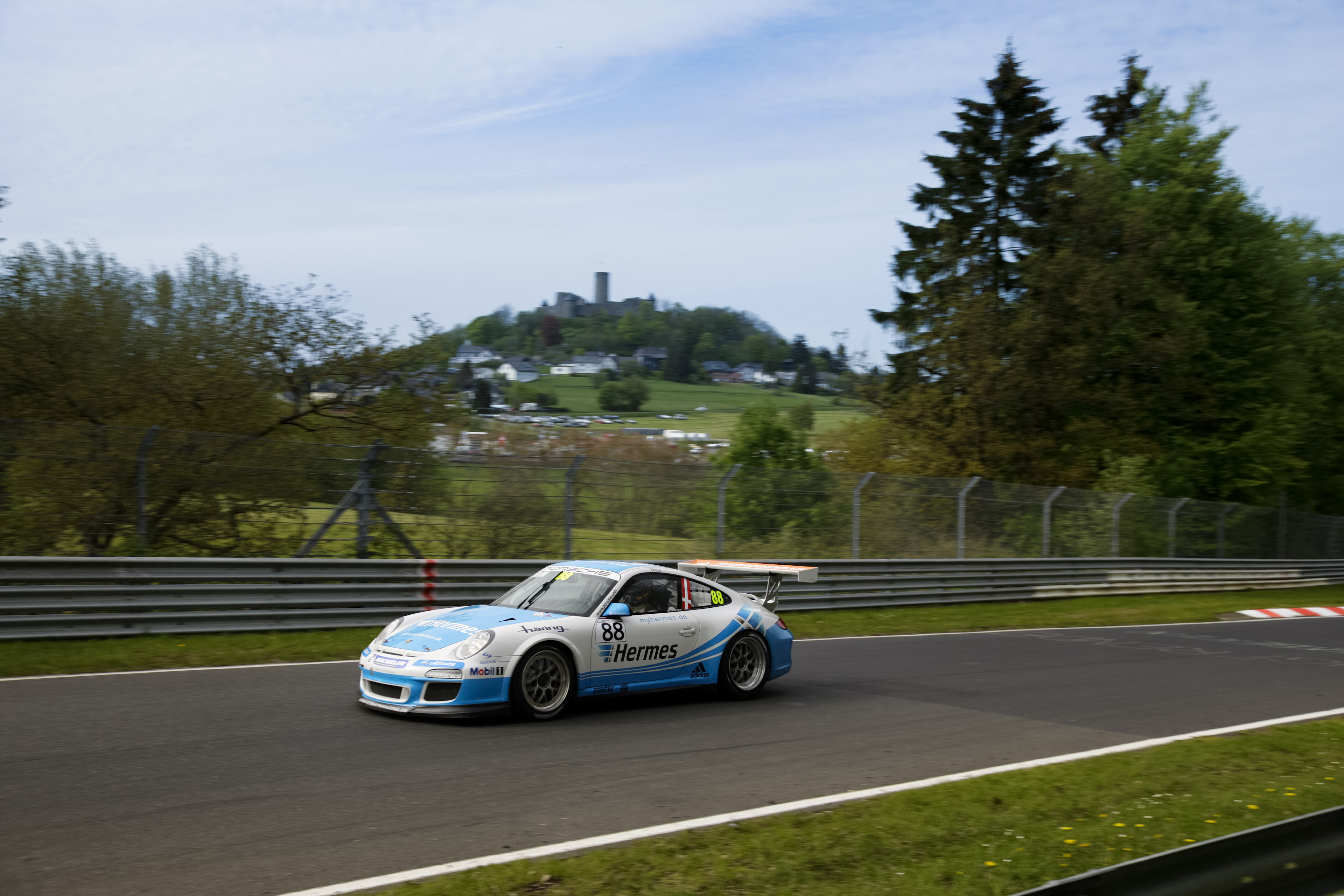
Porsche Carrera Cup Deutschland 2012
Nicki Thiim (DK)
Porsche Carrera Cup Deutschland – 03 –
24h Nürburgring 2012
Instead, Sean Edwards (Great Britain, Team Deutsche Post by tolimit), the third qualifier and two-time winner this season, takes up the four-lap race from the second grid spot.
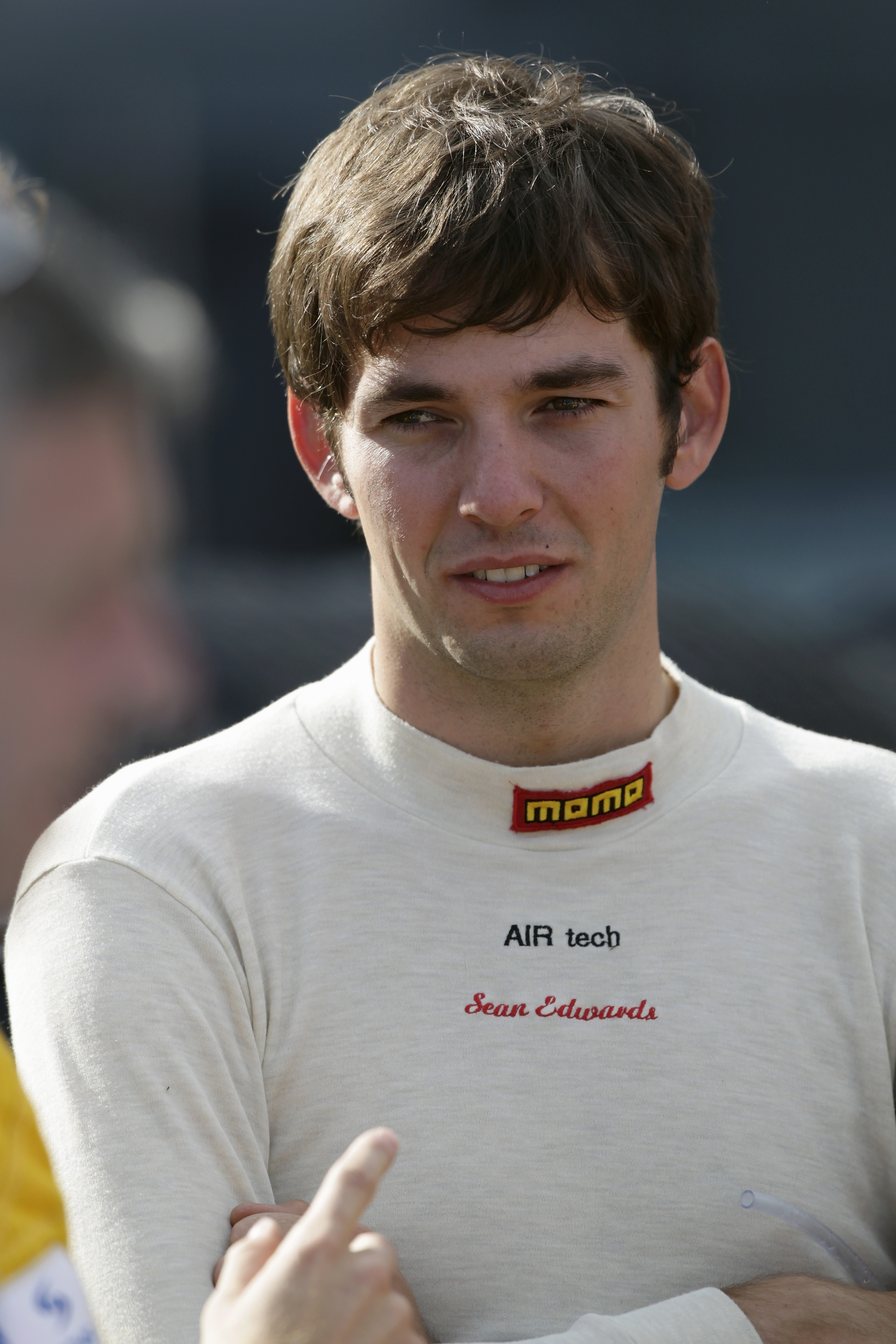
Porsche Carrera Cup Deutschland 2012
Sean Edwards (GB)
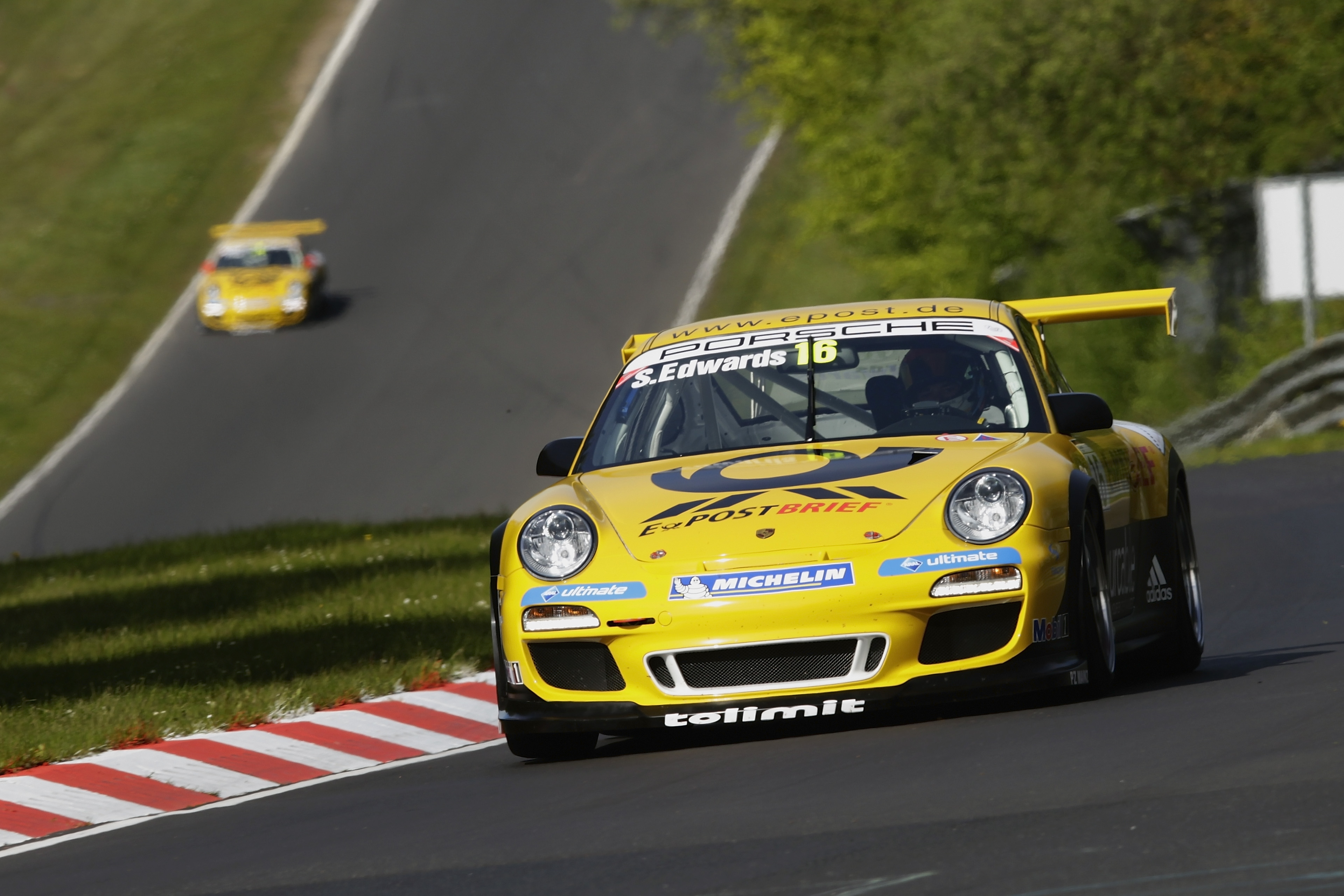
Porsche Carrera Cup Deutschland 2012
Sean Edwards (GB)
Porsche Carrera Cup Deutschland – 03 –
24h Nürburgring 2012
The one-hour qualification session for the fifth race of the season run as support to the Nürburgring 24 hour race featured suspense from the first to the last minute as well as swaps at the top of the time sheets.
At first Philipp Eng was sixth but improved from lap to lap until in the dying minutes of the qualifying he popped up at the head of the list – and stayed there although everyone expected him to be ousted by a seasoned campaigner.
Eng is a Carrera Cup rookie with just one guest appearance at the 2011 finale to his credit. The 22-year-old did his mandatory training on the Nordschleife only two days ago at the wheel of his team boss Karsten Molitor’s Porsche 911 GT3. Yesterday’s free practice marked the first outing in a race car on this difficult circuit for the Austrian.
His namesake, Philipp Frommenwiler, is another unfamiliar name in the fiercely-contested one-make race series. Driving for Attempto Racing, the Swiss racer first contested the Carrera Cup in 2011 and concluded his first season as the best newcomer. Because of Nicki Thiim’s penalty, the 22-year-old takes up tomorrow’s race at 11.35 hours from the third grid spot.
Although last year’s Nürburgring winner, René Rast (Germany, Team Deutsche Post by tolimit), managed to secure the fifth fastest qualifying time despite scraping the barrier, he was also bumped down the grid by five positions due to the Lausitzring collision.
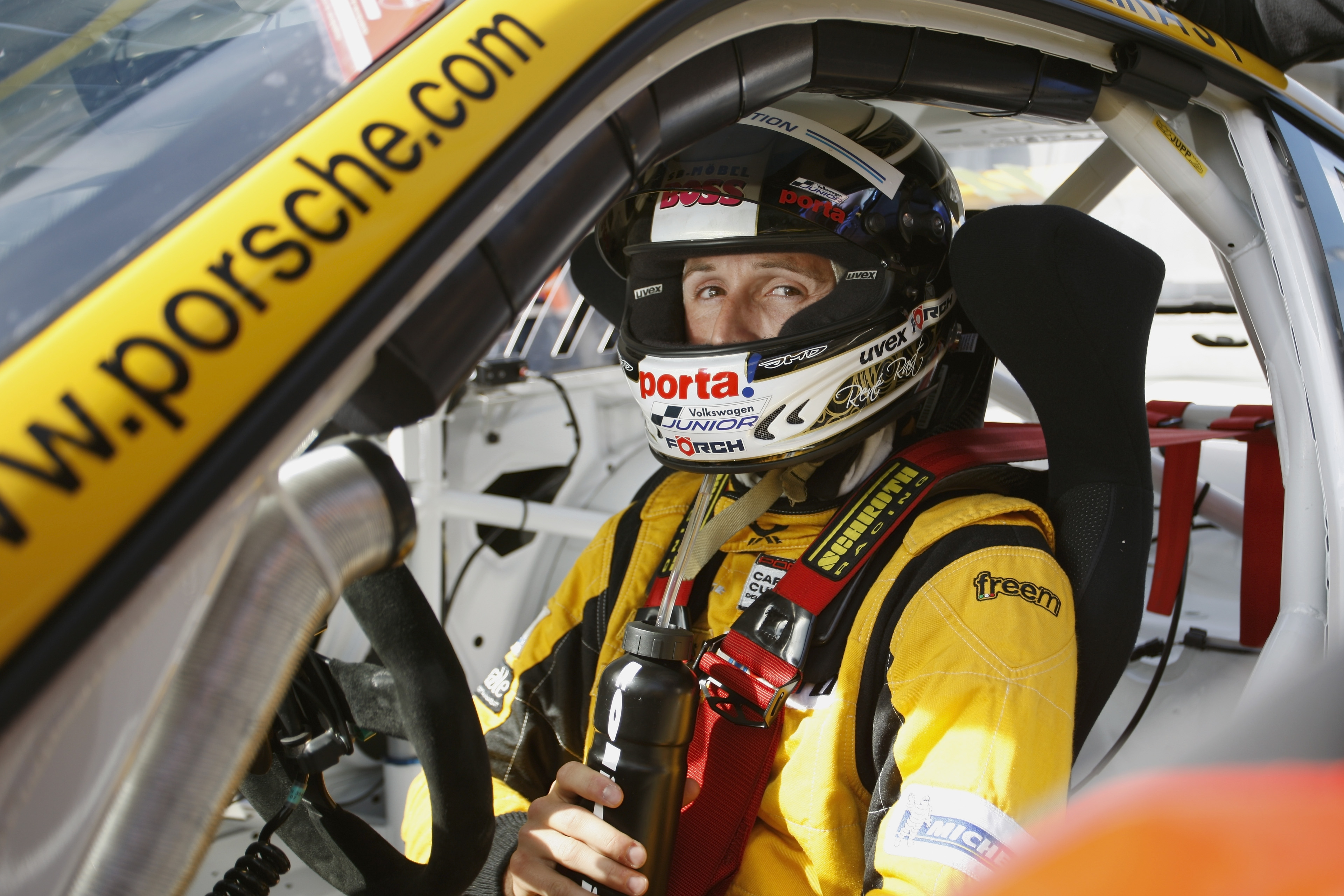
Porsche Carrera Cup Deutschland 2012
René Rast (D)
Porsche Carrera Cup Deutschland – 03 –
24h Nürburgring 2012
For this reason, Jaap van Lagen (Netherlands, FE Racing by Land-Motorsport) starts from fourth place.
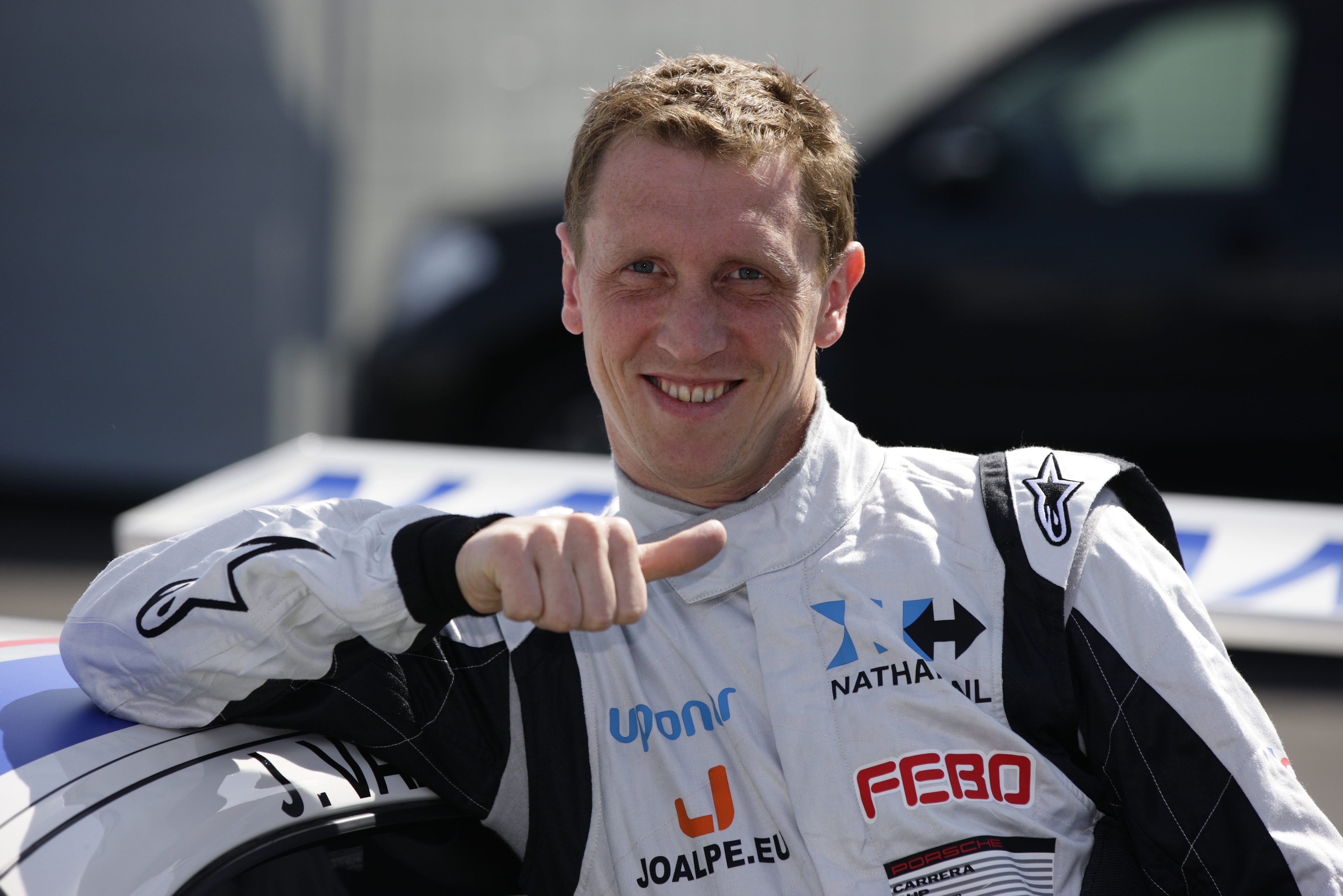
Porsche Carrera Cup Deutschland 2012
Jaap van Lagen (NL)
Porsche Carrera Cup Deutschland – 03 –
24h Nürburgring 2012
Sharing the third grid row are Kévin Estre and Michael Ammermüller (Germany, SWITCH IT Lechner Racing).
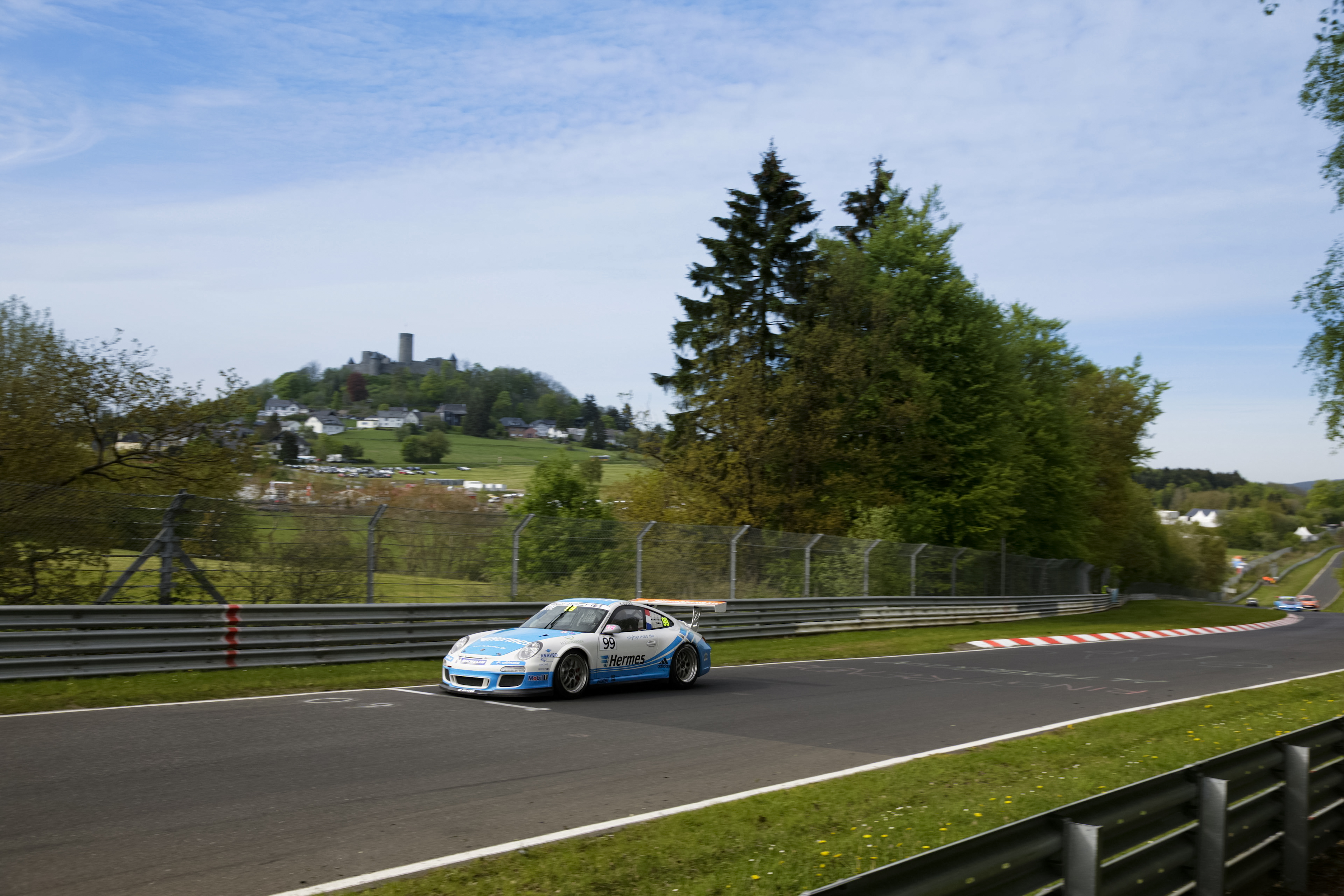
Porsche Carrera Cup Deutschland 2012
Kévin Estre (F)
Porsche Carrera Cup Deutschland – 03 –
24h Nürburgring 2012
The Frenchman driving for Hermes Attempto Racing currently leads the rookie classification, but he already has one season of experience under his belt. At the end of the 2011 season, Estre took home the ‘Rookie of the Year’ title.
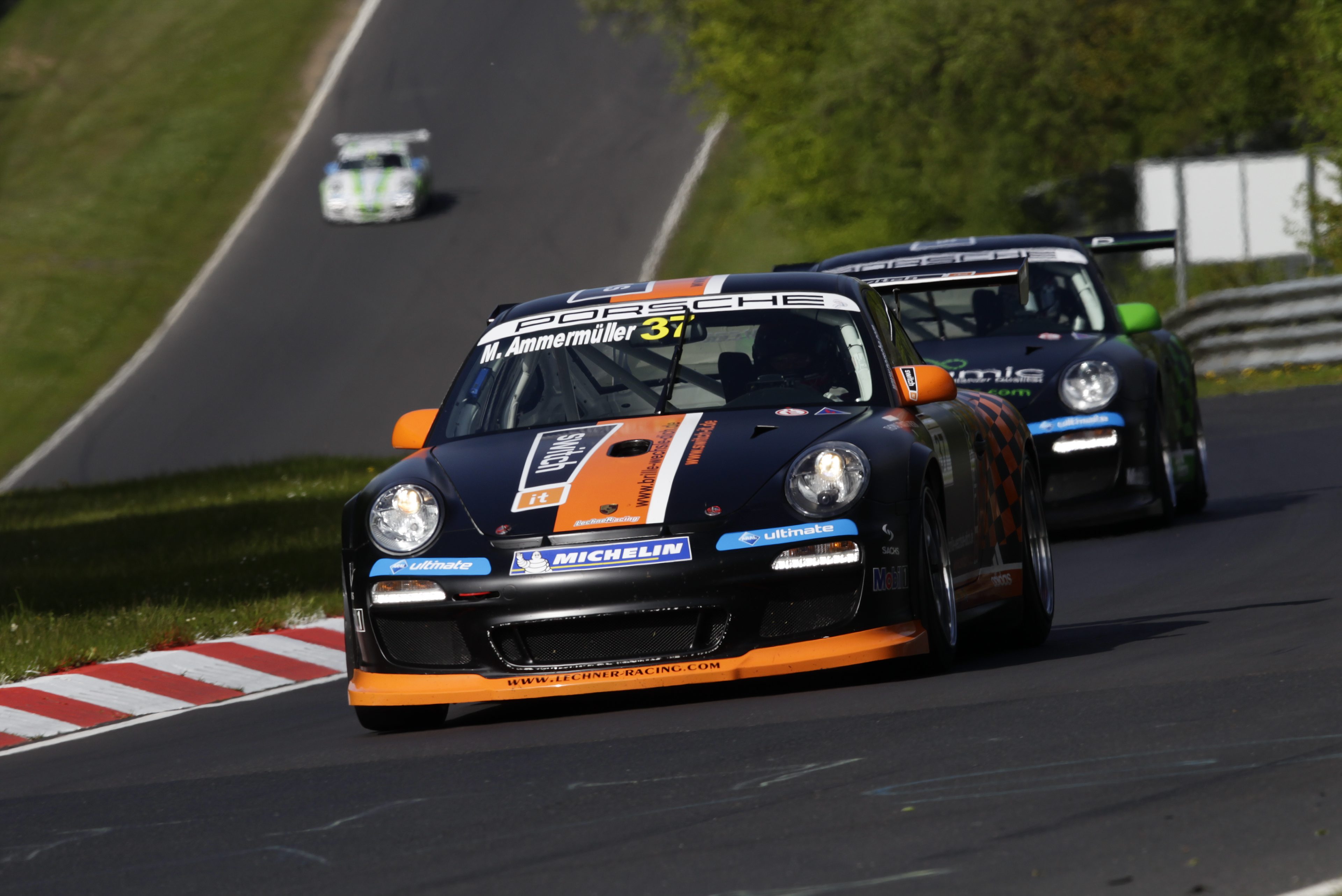
Porsche Carrera Cup Deutschland 2012
Michael Ammermüller (D)
Porsche Carrera Cup Deutschland – 03 –
24h Nürburgring 2012
Although the ex-Formula 1 test driver Michael Ammermüller is new to the Carrera Cup, he is not eligible to campaign for rookie honours, as the Bavarian is already 26-years-old.
Porsche-Junior Klaus Bachler made a good showing on the slippery surface in the Eifel after his previous difficulties at the Lausitzring race. At the wheel of the yellow Deutsche Post by tolimit 911, the 20-year-old Austrian takes up the highlight race from eleventh in front of huge crowds lining the Nordschleife.
The second Porsche-Junior, Michael Christensen (Denmark, Konrad Motorsport), was just 16th in qualifying after his sensational third place in the Lausitz.
The Nordschleife race is aired live by Sport1 tomorrow from 11.35 to 12.35 hrs. Also on the official Porsche website (www.porsche.com), the race is broadcast live exclusively and in high quality – with editorial reports before the actual live-streaming, live-timing and commentary in Germany and English.
The broadcast begins at 11.10 hours. On May 21st, the Monday after the race weekend, news station N24 televises the 30-minute “Porsche Carrera Cup Magazin” at 18.30 hours. Sport1 broadcasts Carrera Cup highlights on Saturday, 26 May, from 17.45 to 18.15 hours.
Philipp Eng (pole-sitter):
“I’m actually totally surprised and I can hardly believe it. I’ve only driven 15 laps on the Nordschleife in a road-legal 911 and yesterday was my very first attempt with a Cup car. My vehicle ran superbly. And I very probably had a bit of luck on my side. But when that happens to you on the Nordschleife then it’s something quite extraordinary.”
Porsche Carrera Cup Deutschland 2012
Philipp Eng (A)
Porsche Carrera Cup Deutschland – 03 –
24h Nürburgring 2012
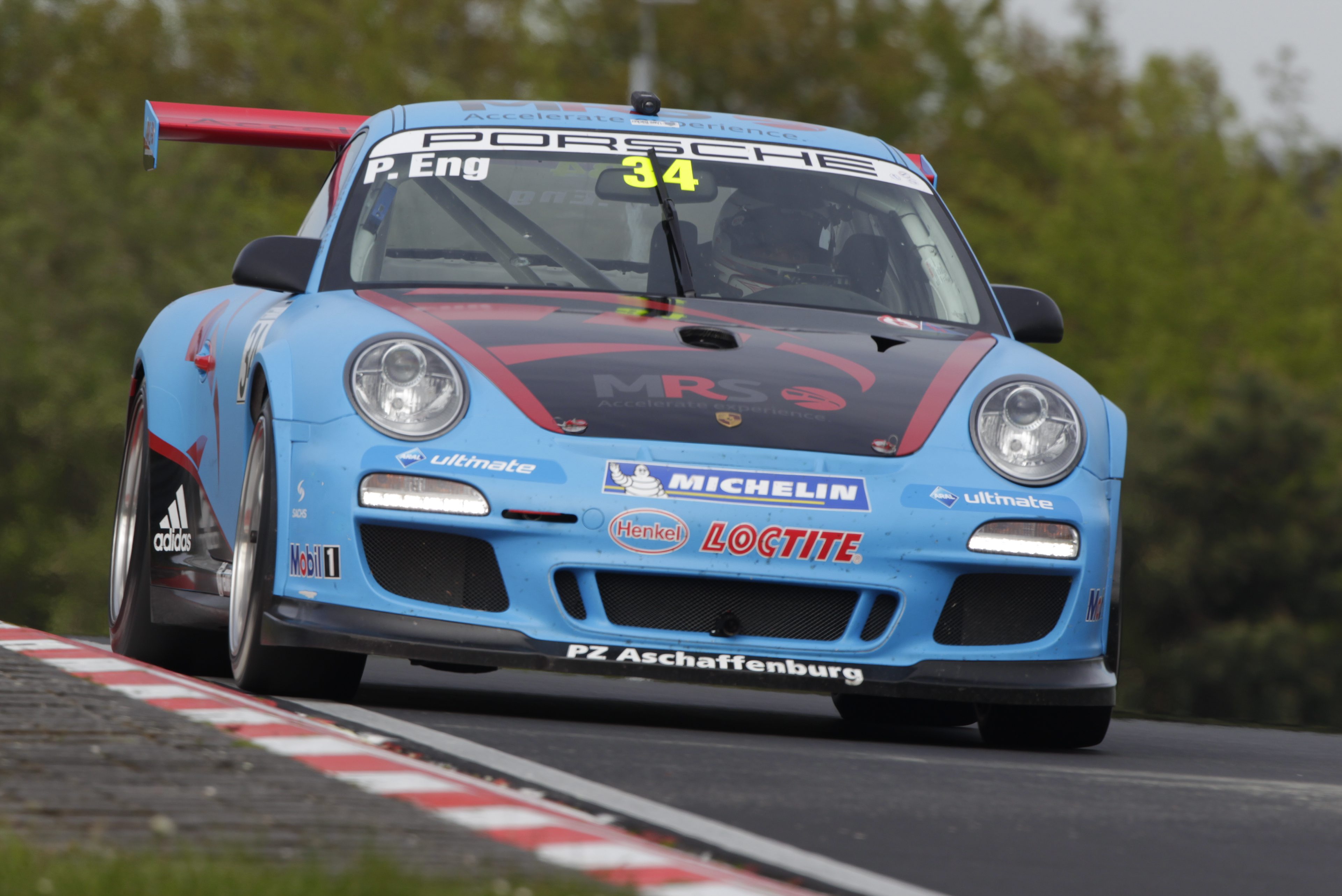
Sean Edwards (second in qualifying):
“That was a crazy session. At the beginning everything ran well, but later, on each lap, you had to overtake a couple of Clios which were practicing at the same time. I didn’t manage to get a clear lap where there wasn’t a yellow flag out. Still, I’m totally happy with second on the grid.”
Porsche Carrera Cup Deutschland 2012
Sean Edwards (GB)
Porsche Carrera Cup Deutschland – 03 –
24h Nürburgring 2012
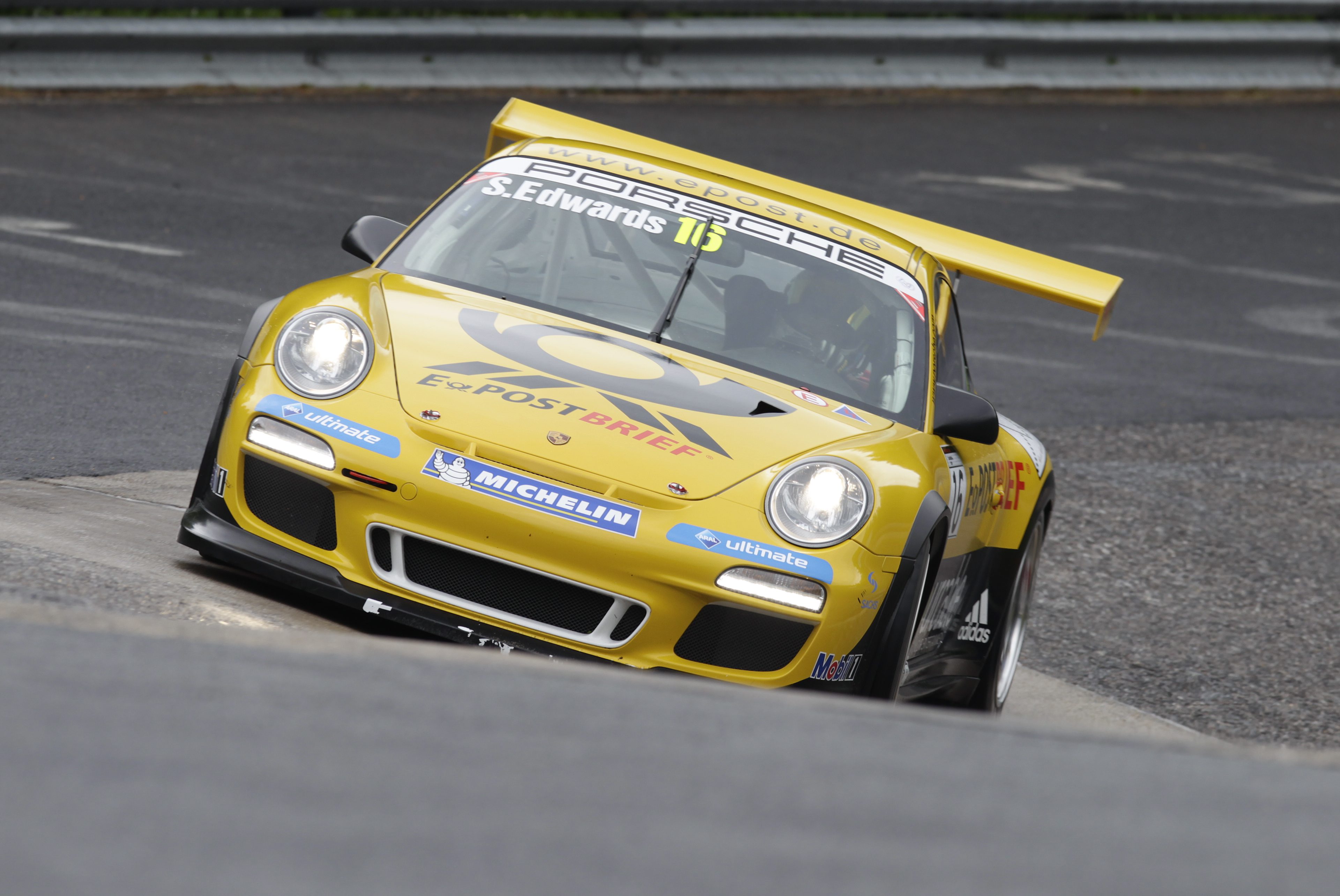
Philipp Frommenwiler (third in qualifying):
“My qualifying was not so bad. When I take a look at the gap to the top time I think it could have been me on pole position. But I’m actually quite pleased not to start as the leader. This way I can trail along behind at first and that’s not a bad thing.”
Porsche Carrera Cup Deutschland 2012
Philipp Frommenwiler (S)
Porsche Carrera Cup Deutschland – 03 –
24h Nürburgring 2012
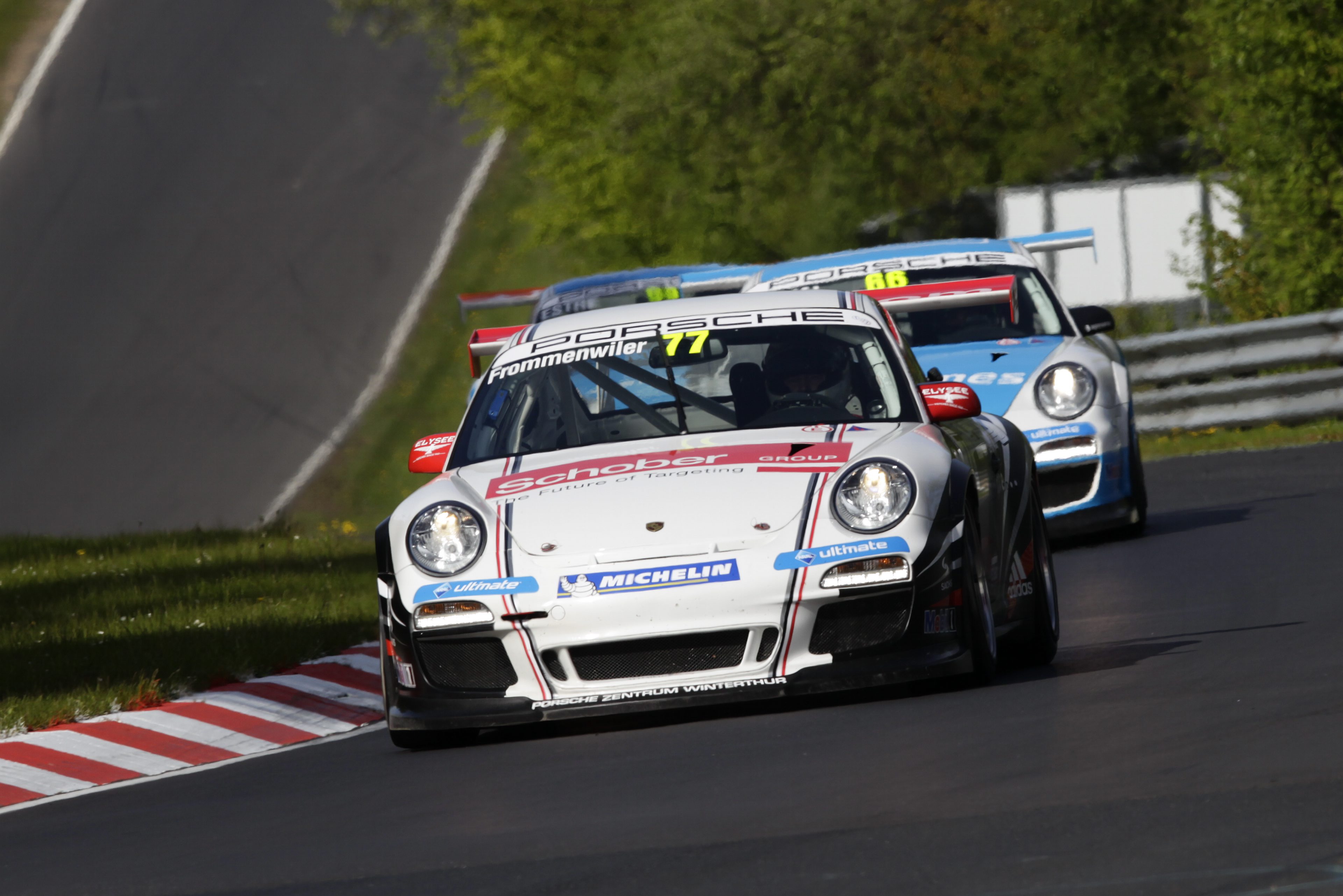
Klaus Bachler (Porsche-Junior, eleventh qualifier):
“I’m very satisfied with my result. This was my first time on the wet Nordschleife. And it’s really hard because the circuit has all sorts of tarmac surfaces and every corner has a different level of grip. I felt my way step by step, but unfortunately I had to stop in the final lap because the circuit was too dry to turn a quick time with wet tyres.”
Michael Christensen (16th in qualifying):
“Whew, that was an extremely tough qualifying session, but it was certainly a good experience. I couldn’t get the most out of my new tyres when it became drier towards the end. I made the mistake of pushing too hard on the Grand Prix circuit during the warm-up. When I reached the Nordschleife the wet tyres were much too hot for the dry passages.”
Qualifying result
1. Philipp Eng (A), MRS GT-Racing, 9:53.131 minutes
2. Sean Edwards (GB), Team Deutsche Post by tolimit, +2.307 seconds
3. Philipp Frommenwiler (CH), Attempto Racing, + 2.455
4. Jaap van Lagen (NL), FE-Racing by Land-Motorsport, + 3.745
5. Kévin Estre (F), Hermes Attempto Racing, + 4.104
6. Michael Ammermüller (D), SWITCH IT Lechner Racing, + 4.585
7. Nicki Thiim (DK), Hermes Attempto Racing, + 0.294*
8. Norbert Siedler (A), Konrad Motorsport, + 6.491
9. Clemens Schmid (A), SWITCH IT Lechner Racing, + 6.491
10. René Rast (D), Team Deutsche Post by tolimit, + 2.634*
* set back 5 grid positions
Amateurs
1. Peter Scharmach (NZ), GT3 Cup Middle East, + 14.336
2. Hoevert Vos (NL), Land-Motorsport, + 17.716
3. Pascal Bour (F), BG Racing, +25.630
SOURCE: Porsche AG Media Database Porsche Carrera Cup Deutschland
Communication Porsche AG
Motorsportpress
PORSCHE Collection of Matthew Drendel offered at Gooding – Amelia Island Auction – March 9th, 2012
Gooding and Company Presents the Renowned Drendel Family Porsche Collection at its Amelia Island Auction on March 9th, 2012
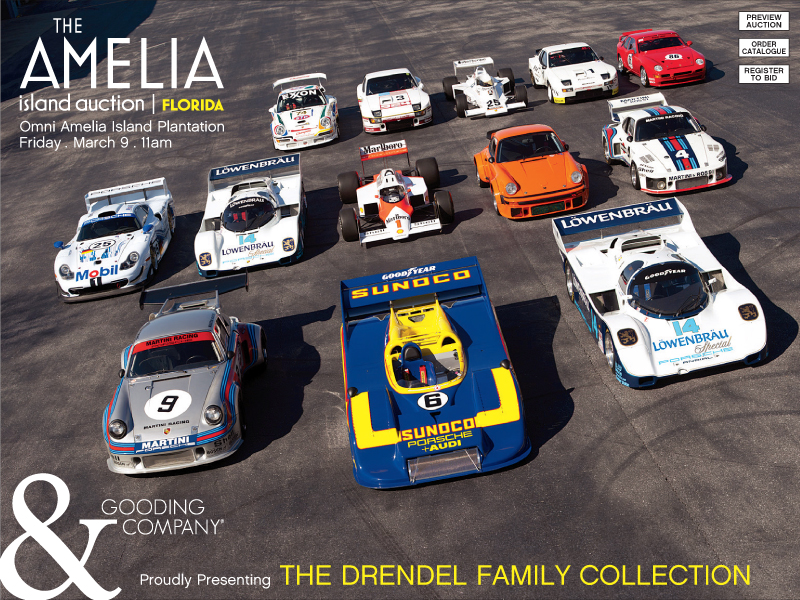 Photo source Gooding & Co.
SANTA MONICA, Calif. (February 6, 2012) – Gooding and Company, the acclaimed auction house celebrated for selling the world’s most significant and valuable collector cars, is honored to announce its recent consignment of the Drendel Family Collection of 18 Porsches.
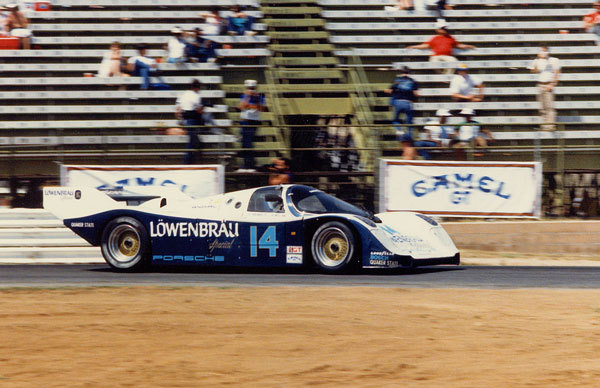 Lowenbrau 962
Recognized as the world’s finest private collection of its kind, the Drendel Family Collection consists of both road and race cars spanning 25 years of Porsche history from 1973 – 1997. With 10 of the 18 lots being offered without reserve, the arrival of this extraordinary collection in Amelia Island offers collectors and Porsche enthusiasts around the world the opportunity to own a piece of Porsche’s winning motorsport heritage.
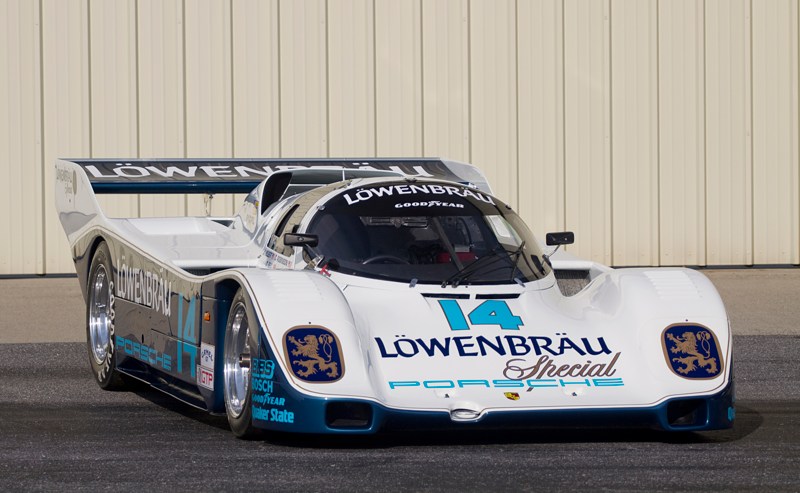 1984-Porsche-962
In addition, the March auction marks the first time many of these historically-important racing stars will have ever been presented at auction. Gooding & Company has moved the start time of its Amelia Island Auction to 11 a.m. on Friday, March 9th to accommodate the extensive 18-car collection, as well as to accommodate the schedules of its guests at the daytime auction.
“The result of well-developed connoisseurship and deep passion, Matthew Drendel built what has become the world’s most significant private collection of turbocharged Porsches,” says David Gooding, President and founder of Gooding & Company.
“It’s a very rare occurrence when a refined, single-marque collection of high-quality road and race cars is offered to the public.
We feel privileged to have been selected to present the Drendel Family Collection in Amelia Island.”
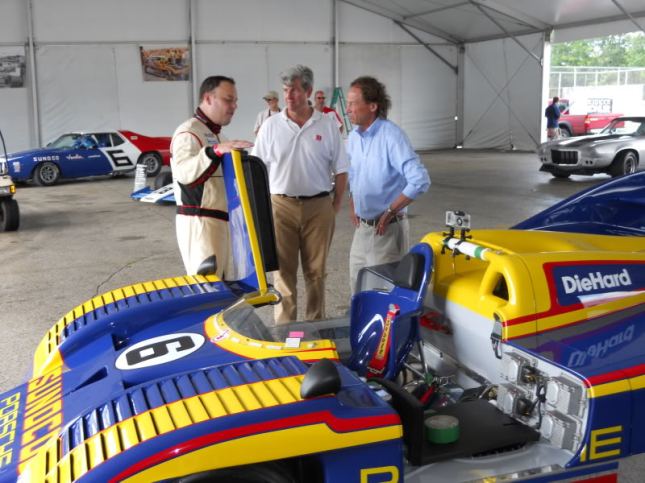 Matt Drendal – Photo Credit by Paul Powell (Owner at Unfair Advantage Racing )
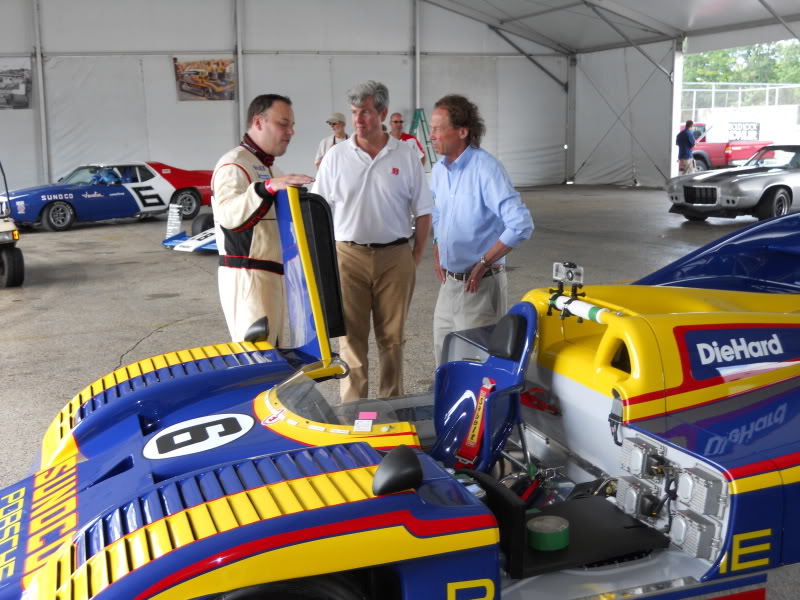
A Passion for Porsche Matthew Drendel was attracted to Porsche automobiles from an early age. Although his personal racing successes were primarily associated with normally-aspirated 911 Cup cars, it was the legendary turbocharged Porsches that most interested him as a collector.
His collection began with a single 930 road car and later expanded to the 18 magnificent cars it is today.
Heritage Motorwerks was founded by Porsche collector, Matthew Drendel. Four of Matthew Drendel’s Porsches were used in filming of the Porsche “Family Tree” video commercial for the Pananmera… the baby turbo, 962 Lowenbrau, the GT 1 and the 917-30 that Matt drove in the Porsche Panamera “Family Tree” commercial.
Extended version of the Porsche Panamera – Porsche Family Tree Commercial Video
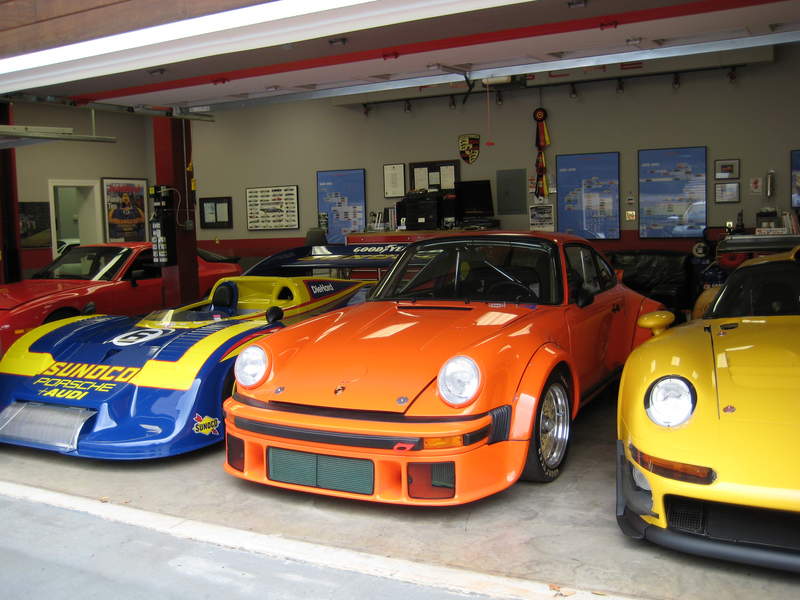
“Matthew Drendel maintained a reputation for collecting the very best cars and, therefore, has always been respected in the Porsche community,” says Gooding & Company Specialist David Brynan.
“The overall scope of the collection and focus on factory team cars reflect his tremendous dedication and knowledge of the marque.”
Related link:
In tribute to Matt Drendel of the Porsche Community – CEO/Founder of Heritage Motorwerks LLC
Matthew Clayton Drendel was 35 and died quickly of a stomach aneurysm on November 24, 2010. The Drendel family is highly regarded in the Porsche community and has contributed a great amount to the quality of life here.
______________________________________________________________________
Detailed below are seven of the most significant collector cars being offered as part of the Drendel Family
Collection:
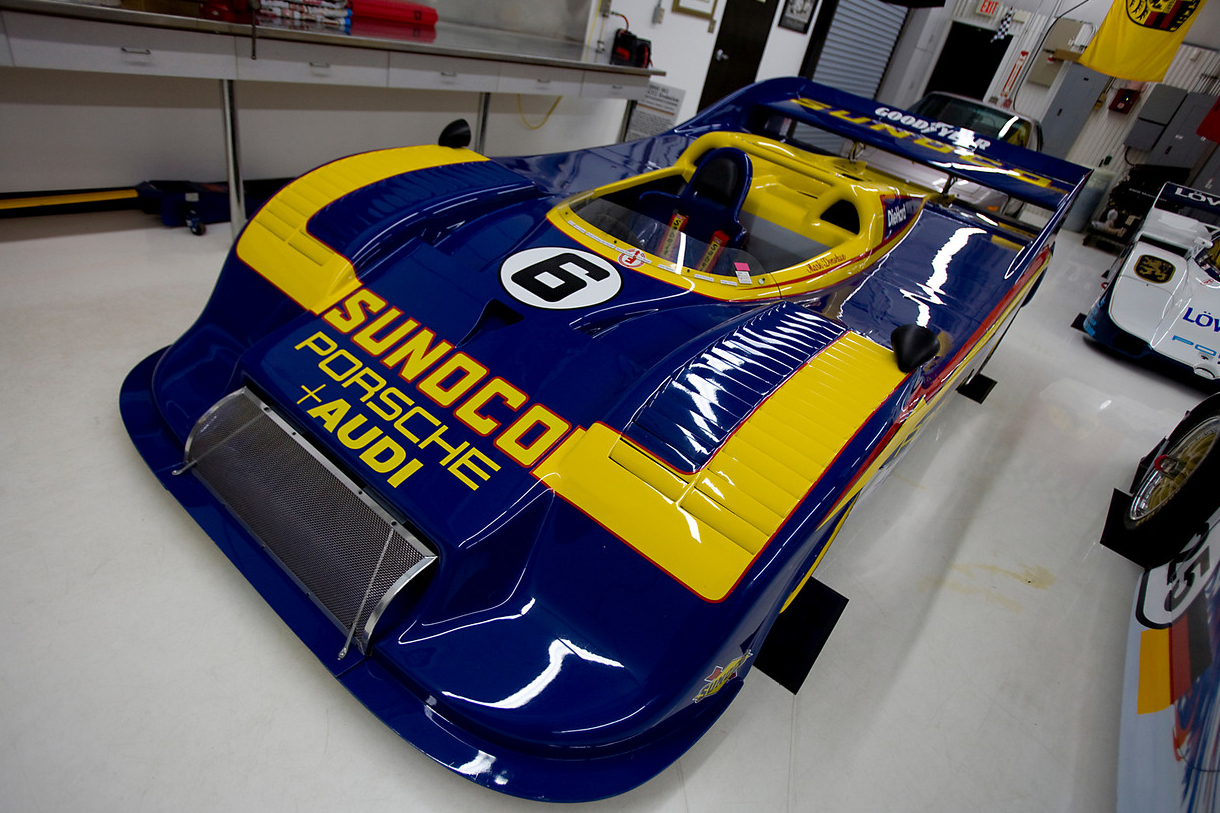
1. – 1973 Porsche 917/30 Can-Am Spyder
Chassis 917-30-004
Estimate: $3.25 – $4 million
The Porsche 917 racing program was one of the most successful in the history of motor sport and the 973 917/30 Can-Am Spyder represents its pinnacle. With a 1,000 hp turbocharged flat-twelve, American racing champion Mark Donohue’s 917/30 was so dominant that the Can Am Challenge Cup was disbanded and the other manufacturers withdrew due to their inability to compete. One of four examples completed at the Porsche factory, 004 was intended to be the 1974 Penske-Sunoco team car but was instead sold to Australian Porsche Importer Alan Hamilton. Later purchased by the Porsche factory, this car is now the centerpiece of the Drendel Family Collection. Meticulously restored and presented in the iconic Penske-Sunoco livery, this 917/30 has been raced at the Monterey Historics and has been displayed at the Amelia Island Concours d’Elegance and Rennsport Reunion.
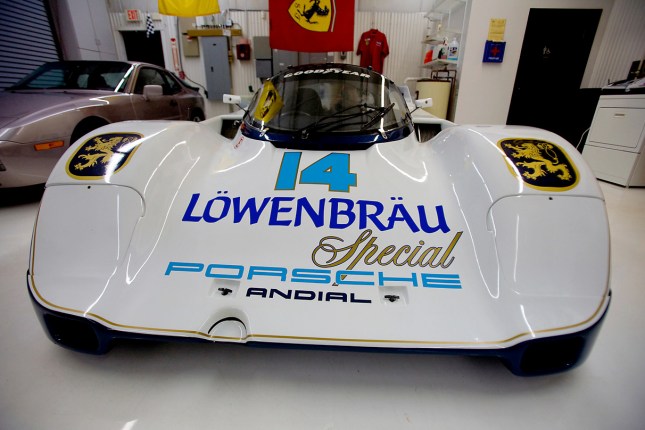
2. – 1984 Porsche 962
Chassis 962-103
Estimate: $1.75 – $2.225 million
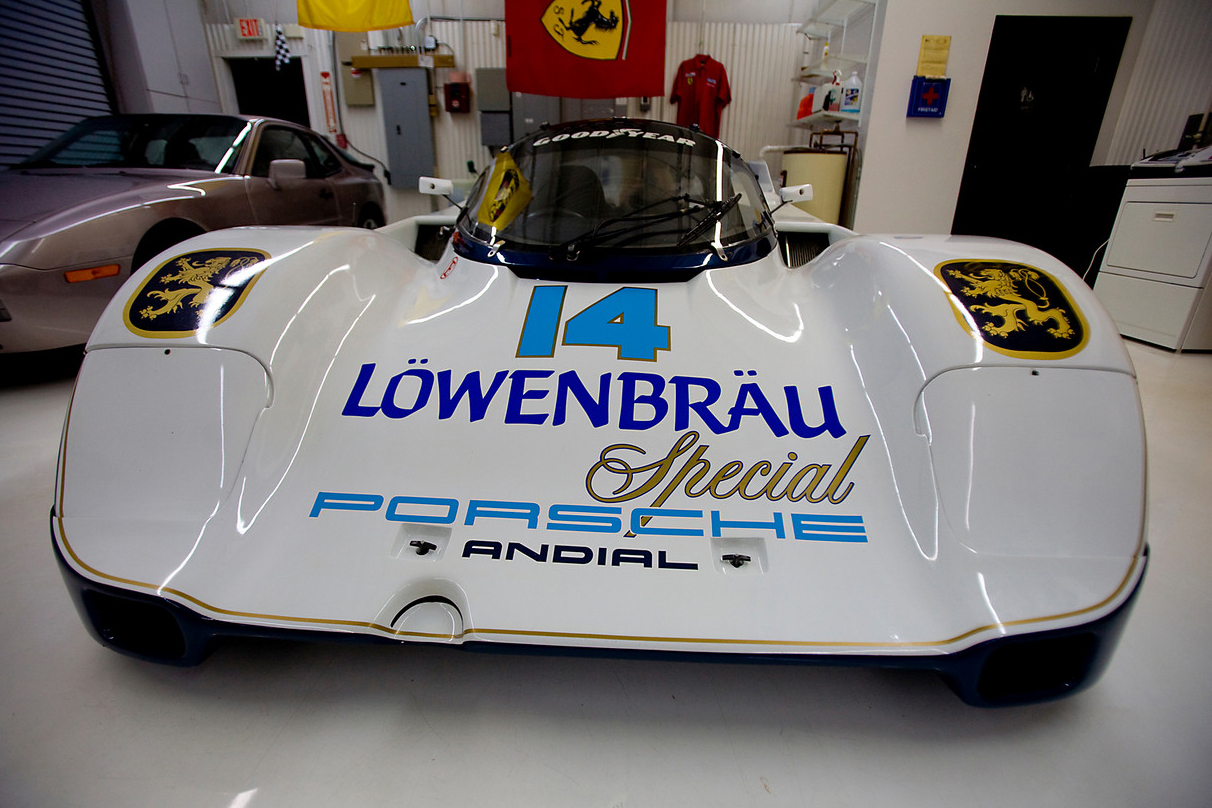
According to Gooding & Company specialists, this car is the finest example of the Porsche 962 and one of the most successful racing cars of its generation. With only two owners from new, this back-to-back 24 Hours of Daytona winner will be one of the Drendel Family Collection’s most significant offerings at the auction with its immediately recognizable Löwenbräu livery, list of legendary drivers, unrivalled racing record and superb documentation.
Rennsport II HR1 Porsche 962
In 1984 Porsche provided the late Al Holbert this 962 to compete in the IMSA road racing series where it would go on to earn 15 overall wins from 1984 to 1986, this included a back to back Daytona 24 hour overall win in 1986 and 1987. 962-103 scored three Drivers Championships, three Team Championships and three Manufacturer Championships for Porsche! This was the first 962 chassis to score a win and is by far the most successful 962. With names like Derek Bell and Chip Robinson joining Al, it proved to be an unbeatable combination. The 956 and 962 are still today regarded as the most successful sports-cars in history, making this example the winningest sports-car in history.
3. – 1974 Porsche RSR Turbo Carrera 2.14
Chassis 911 460 9016 (R9)
Estimate: $1.75 – $2.25 million
The Carrera RSR Turbo 2.14 represents a turning point in the history of competition Porsches when it introduced the use of turbocharged engines in production-based race cars. Used by the factory for development, this hand-built experimental 911 was campaigned as a Martini & Rossi Porsche Works entry in the 1974 season at Nürburgring, Imola and Zeltweg. Few racing cars of this caliber have remained so correct and untouched, making this car an extremely important piece of Porsche history.
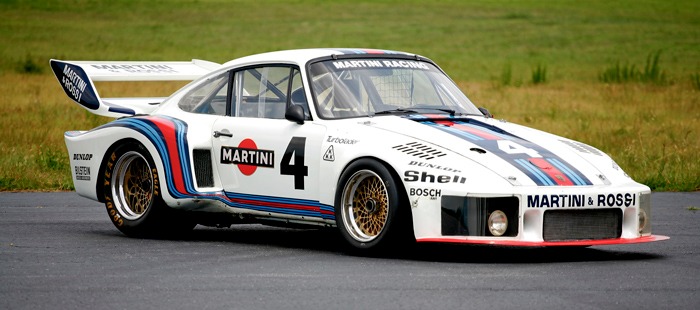
4. – 1976 Porsche 935/76
Chassis 930 570 0001 (R14)
Estimate: $1.7 – $2 million
This 935, serial number 935-001, is the very first 935 ever made by Porsche. It was built on the very first production 911 Turbo chassis, 930 570 0001. Initially used for testing and development purposes, it was pressed into service near the end of the 1976 season in the Group 5 World Manufacturers Championship, as BMW was closing the gap with Porsche towards points in winning the championship. On its racing debut, 935-001 dominated the Six Hours of Watkins Glen, and went on to win the race overall.
Following the triumphant success, “001” would go on to earn a second place finish at the Six Hours of Dijon, right behind 935-002. The result was at the end of 1976 was a Group 5 World Championship for Porsche. 935-001 is the only former, factory team 935/76 in the world in private ownership. 935-002 is now on display at the Porsche museum in Stuttgart, Germany. 935-001 launched what would become one of the most successful types of road racing sports cars ever. Porsche 935s dominated race tracks around the world for over a decade. Today, 935-001 remains in its original, unrestored state, exactly as it was when it was last raced in 1976.
5.- 1985 Porsche 962
Chassis 962-HR1
Estimate: $900,000 – $1.2 million
During its career, this Porsche achieved 11 overall wins and 19 podium finishes, as well as 2 IMSA GTP Drivers Championships and an IMSA GTP Manufacturers Championship. Along with its Holbert Racing sister car, 962-103, this 962 is one of the most significant 962s in history. Fresh from restoration, 962- HR1 was displayed at RennSport Reunion IV in 2011.
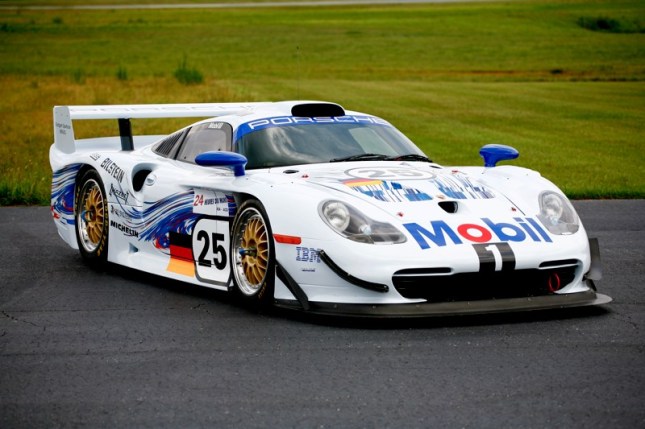
6. – 1997 Porsche 911 GT1 Evolution
Chassis 993-GT1-004
Estimate: $900,000 – $1.2 million
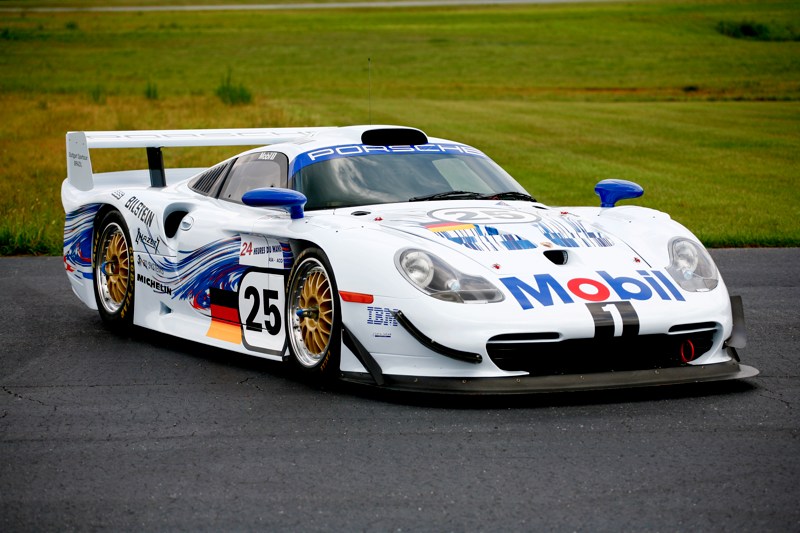
Chassis 993-GT1-004 was part of the family tree commercial filmed for the introduction of the Panamera.
This rare factory team car – one of just four built – has competed at top events (Le Mans, Nürburgring and Laguna Seca) in the highest levels of international racing with known drivers behind its wheel. Later campaigned by Rohr Racing at Daytona and Harry Bytzek in the Canada GT Challenge Cup, GT1-004 has one of the most impressive racing records of any factory GT1.
A restructuring of the rules as handed down by the FIA was largely responsible for the classes known as GT1 and GT2. While GT2 cars were based on production platforms, to call a GT1 anything other than a prototype would be to misconstrue the logic of effort. While a few road going versions of the Mercedes CLK-GTR and the Toyota GT-One were constructed, it was all done at face value. Only Porsche made a complete effort to adhere to the rules by making an actual run of GT1 road going production models. As Weissach was to learn for the 1997 and 1998 FIA GT seasons, no good deed goes unpunished, as their GT1 was a victim of questionable limitations on performance compared to the competition. Only at Le Mans, under the rules of the ACO, was the true potential of the GT1 clearly in evidence.
The genesis behind the decision to build the original GT1 came as an answer to counter the successful road to race configuration of the McLaren F1 which won Le Mans overall in 1995. In reality, this was to be Norbert Singer’s first new real prototype to come from Weissach since the 956 in 1982.
After the initial successful appearance of the Porsche GT1 at La Sarthe in 1996, ( 1st in class, 2nd overall ) McLaren would counter with a new car for the upcoming season. Norbert Singer developed the evolution version of the GT1, which was a considerable improvement over the previous edition. The FIA GT Championship debuted in 1997 and while Weissach entered a pair of GT1’s to contest the series, the major focus was preparing for Le Mans.
GT1 evolution chassis 004 had it’s initial roll out at Weissach for the 1997 season in late March and immediately was used for testing prior to pre-qualifying for Le Mans in May. Wearing number 25 for the actual June race, the trio of Stuck, Wollek and Boutsen quickly established 004 as the car to beat for the overall win. However, in motorsport there is only one certainty and that is uncertainty. With eight hours remaining, Wollek spun and 004 was retired from the race. For the remainder of the 1997 FIA GT season 004 was entered for only two races. However, at Laguna Seca, a new star in sportscar racing was ignited as Allan McNish got the jump on the superior Mercedes squad and kept the Porsche badge in front until the first round of pit stops and a miscalculation knocked 004 out of first place. The duo of McNish and Kellners settled for a podium position of third overall. GT1 004 was returned to Weissach where it was used for extensive tire testing with Michelin in preparation for the 1998 season and a year long birthday party for Porsche’s 50th.
GT1 004 was sold in 1998 and was campaigned successfully, retired from use and eventually sold in 2005 to a private collector. Three years later 004 was obtained by Matt Drendel and restored visually to the way it appeared at Le Mans in 1997. The three year run of werks GT1’s continue to be immensely popular with enthusiasts in the manner of models, books and published material. Porsche requested 004 to be on their stand at the New York Auto Show in 2009 and later that year 004 was part of the family tree commercial filmed for the introduction of the Panamera.
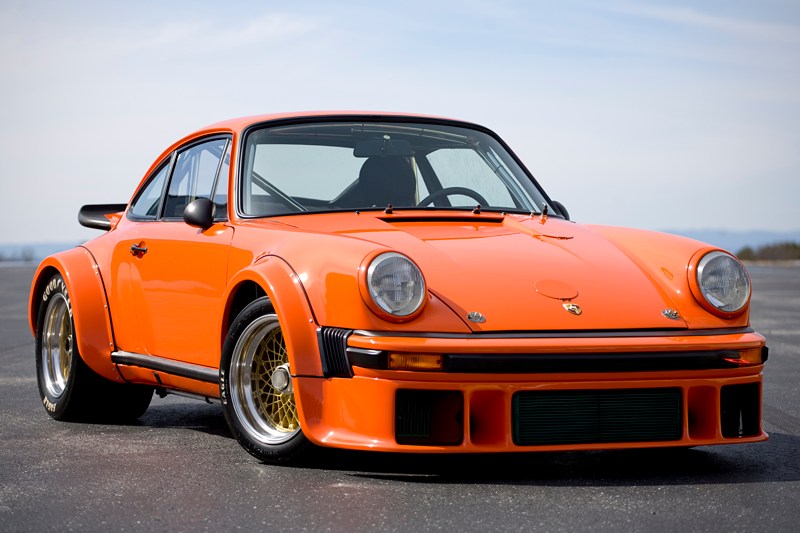
7. – 1975 Porsche 934
Chassis 930 670 0155
Estimate: $800,000 – $1 million
The racing variant of the road-going 930, the 934 expanded on the success of the RSR, winning the European GT Championship as well as the TransAm Championship in North America. The second 934 constructed, this car was actively campaigned through the early 1980s, culminating in a first in class at the 1982 24 Hours of Le Mans.
In regards to this car, noted Porsche authority Bruce Anderson was quoted as saying
“it is the most successful 934 to race in international competition.”
Only the second 934 of the 31 produced by Porsche, “930670155” has a wonderful story to tell. Competing successfully for seven consecutive seasons, this 934 has won more races and had more podium finishes than any other 934 in history. It would go on to earn both a Group 4 class win at the 1982 24 Hours of Le Mans. Powered by an air-cooled 3.0L, turbocharged, flat six, this example would go on to make an amazing 630hp!
_________________________________________________________________________________________
The remaining cars of the Drendel Family Collection, 11 offered without reserve, are listed below:
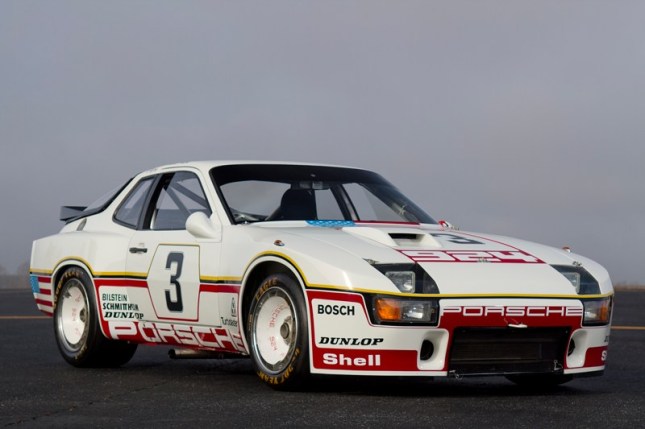
8. – 1980 Porsche 924 Carrera GT Le Mans
Chassis 924-003
Estimate: $450,000 – $600,000, Without Reserve
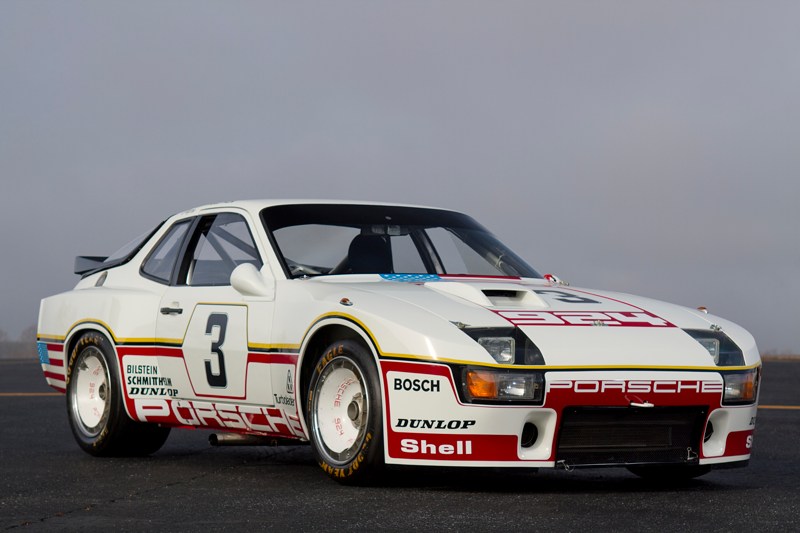
One of three Works entries at the 1980 24 Hours of Le Mans; placed 13
th Overall with Bell and Holbert
Born as a project of Porsche AG, to show that the front engined 924 was just as suitable for racing as their other models, the 924 Carrera GT Le Mans (924-003) was a remarkable success in so many ways. Credited for being the car that originally brought Derek Bell and the late Al Holbert together, this car was already off to a good start before there’s even a mention of its successful racing career. This 924 certainly proved its worth amongst others in the Porsche range, as it would go on to be a popular choice for several other private racing teams following the success of the Factory 924 Carrera GT Le Mans at the challenging, 24 Hours of Le Mans. In total, there were four of these cars produced, this is the only example in private hands, with the other three still belonging to Porsche today.
9. – 1980 Porsche Indy Car
Chassis 0031
Estimate: $350,000 – $550,000
Intended as Porsche’s return to open-wheel racing, the company’s ground-breaking program was cancelled a month before the Indianapolis 500 s a result of last-minute USAC rule changes
10 – 1987 McLaren-Porsche MP4/3 Formula One
Chassis MP4/3/1
Estimate: $450,000 – $600,000, Without Reserve
The first MP4/3 built and the only example in private hands
11. – 1981 Porsche 924 GTP “Le Mans”
Chassis 924-005
Estimate: $375,000 – $450,000, Without Reserve
Factory prototype and development car, built to compete at the 24 Hours of Le Mans
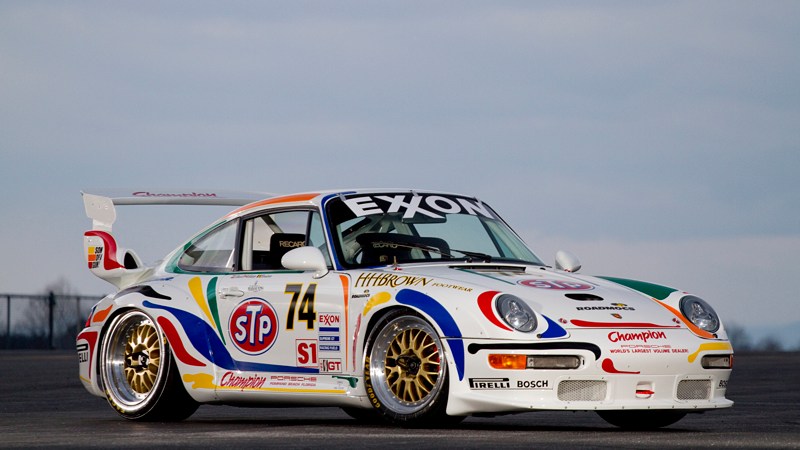
12. – 1995 Porsche 911 GT2 Evolution
Chassis WP0ZZZ99ZTS393062
Estimate: $375,000 – $425,000, Without Reserve
The Champion Porsche, 1996 12 Hours of Sebring class winner
All the way from Pompano Beach, Florida, this 911 GT2 Evolution cut its teeth racing for Champion Racing in the ‘Sunshine State’, where it earned everything from a GT1 class win at the 12 Hours of Sebring in 1996 to a second in class finish in 1997 at the grueling, 24 Hours of Daytona. Taking several other podium finishes throughout its racing career, this chassis, #393062, is one of the most successful 993 GT2s to ever compete thanks to an impressive list of endurance racing legends that piloted it during its career, including Hans Stuck, Thierry Boutsen and Bill Adam. This iteration of the (993) 911 GT2 is proof that evolution is very effective within the Porsche Motorsport department, as this GT2 Evolution produced 600hp, growing 150hp from the original “GT2” to make it competitive within the GT1 racing class.
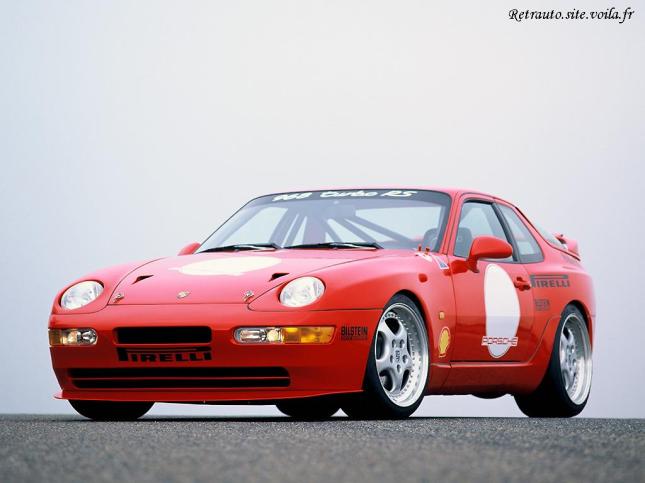
13. – 1992 Porsche 968 Turbo RS
Chassis WPOZZZ96ZNS820065
Estimate: $250,000 – $325,000, Without Reserve
Factory prototype with Le Mans and Sebring race history
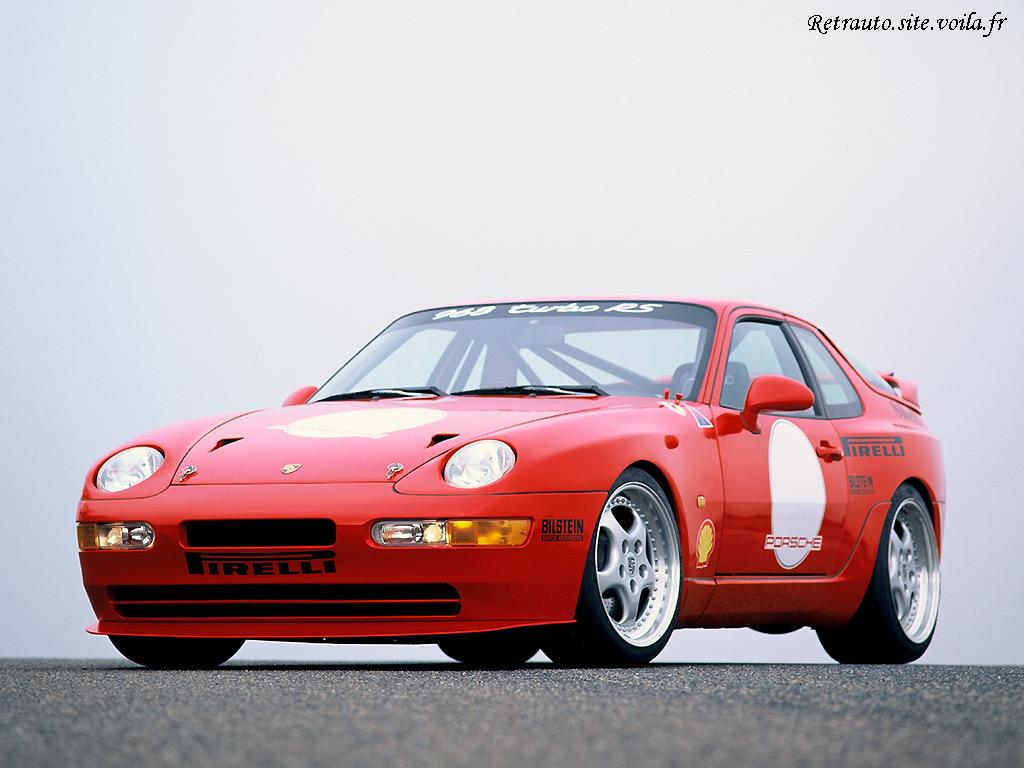
With 450 horsepower and nearly 500 foot pounds of torque this is anything but your typical 968. The 968 Turbo RS was a product of the men at Porsche Motorsport in Weissach, Germany. Featuring the familiar 3.0L engine block, but utilizing a SOHC cylinder head, the 968 Turbo RS was fitted with a large, KKK L41 Turbocharger that helped make it so competitive that the entire project was eventually abandoned because of what some might call ‘sibling rivalry’. The 968 Turbo RS had the basic ingredients to embarrass its older brother, the 911. With an extensive use of Carbon Fiber and TAG engine management, this 968 proved to be a cutting edge weapon within its career. This particular example is undoubtedly the most desirable of the four produced, as it’s the prototype chassis and is the only example to be raced during the 24 Hours of Le Mans in 1994.
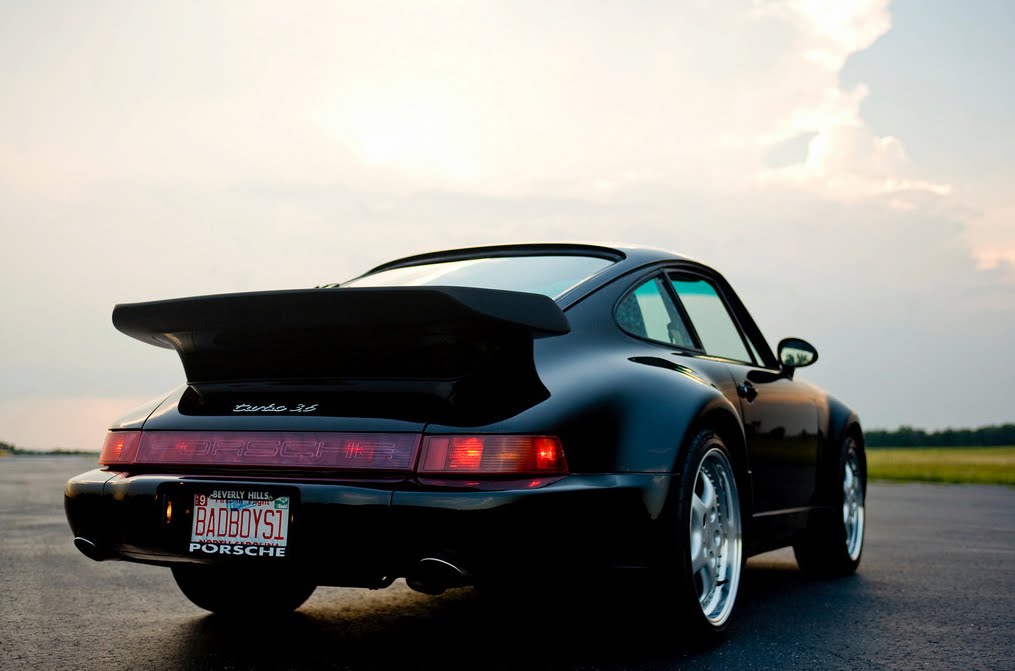
14. – 1994 Porsche 911 Turbo 3.6 “Bad Boys” Movie Car
As seen in Columbia Studio’s “Bad Boys” Film
Chassis WP0AC2965RS480276
Estimate: $75,000 – $90,000, Without Reserve
The 964 chassis 911 Turbo 3.6 marks the end of an era for Porsche, as it was the end of the single-turbo, rear-wheel driven 911 Turbos, making it especially prominent amongst discerning Porschephiles. This particular example is especially significant as it is the exact car used in the popular film “Bad Boys”, starring Will Smith, Martin Lawrence and Tea Leoni.
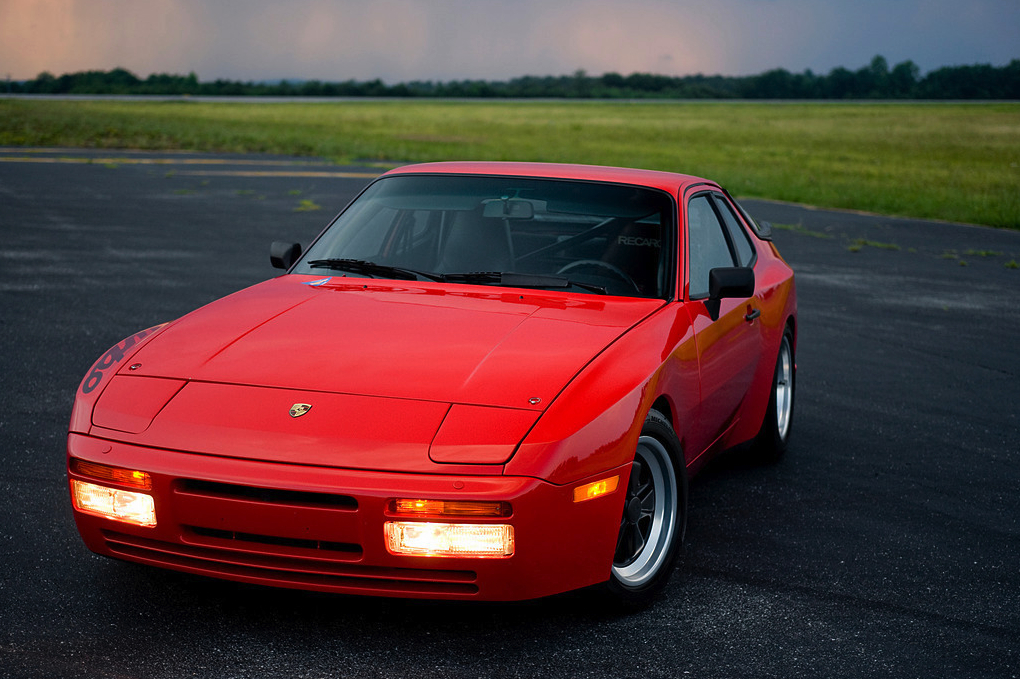
15. – 1986 Porsche 944 Turbo Cup
Chassis WP0ZZZ95ZGN154076
Estimate: $65,000 – $85,000, Without Reserve
Underneath this 944’s relatively unassuming exterior lurks a beast. The 944 Turbo Cup, or “944 Weissach Turbo” as the factory would call them, were gifted with all the best secrets from Porsche Motorsport. Featuring everything from lightweight body panels to significant suspension and chassis modifications, the 944 Turbo Cup is already off to a good start before you even mention the significant power increase over the standard model. Shedding over 400lbs from a showroom 944 Turbo, the Turbo Cup could now accelerate to 60mph in under 5 seconds! A frequenter of victory lane, this chassis would go onto be highly successful during its racing career even at one point earning six consecutive wins while competing in the Firehawk endurance showroom stock series. Since its retirement from racing, it was given a FULL ground up restoration by the experts at Rennsport Porsche in Louisiana, and now enjoys its life as a true race car for the street!
16. – 1988 Porsche 944 Turbo S
Chassis WP0AA2957JN151272
Estimate: $50,000 – $65,000, Without Reserve
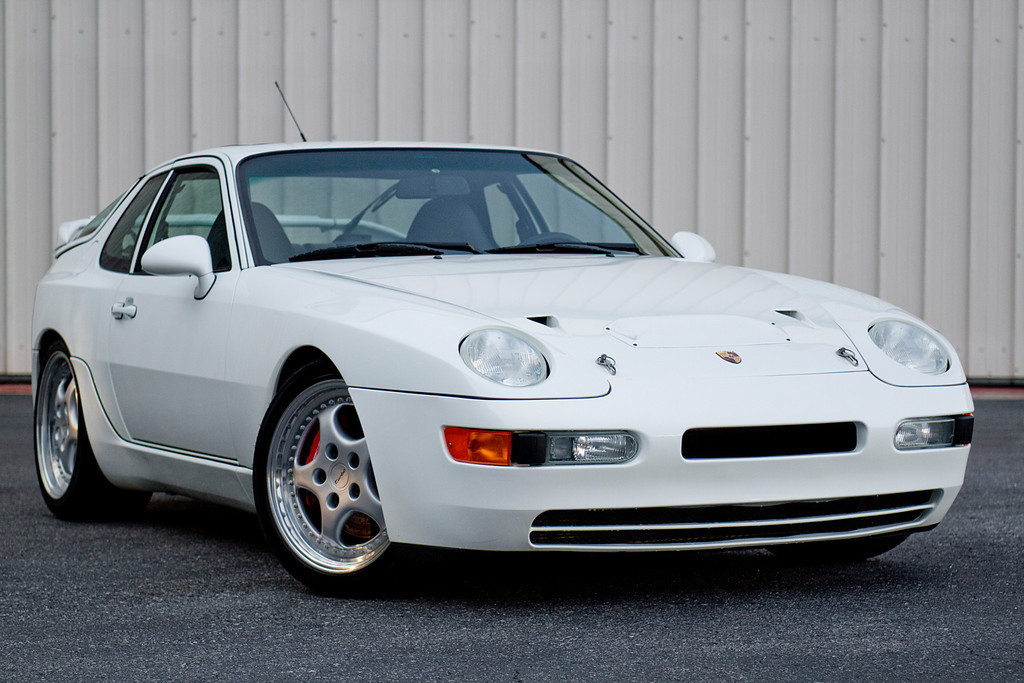
17. – 1994 Porsche 968 Turbo S Clone
Chassis WP0AA2961RS820772
Estimate: $45,000 – $55,000, Without Reserve
If you are thinking this is your typical 968 Turbo S, think again. Mr. Lloyd Hawkins, then owner of the prototype 968 Turbo RS s/n 820065 and the owner of Rennsport Porsche in Louisiana wanted nothing less than a road going version of his 968 Turbo RS prototype.
In collaboration with Porsche Motorsport North America and Porsche Motorsport in Germany, the trio of experts went to work on Mr. Hawkins wish. When they were finished, they created a true one off beast! If ever there was a “Wolf in Sheep’s clothing”, this is it.
Able to produce over 500 horsepower at the wheels from it’s 3.0 liter 4 cylinder engine at 26 psi or about 1.75 bar, with a quick change to racing “slick tires”, this car would be at home on any race track, or by simply switching back to “street tires”, you could set the cruise control on for a long journey down the interstate.
While the project was no doubt expensive, costing over $200,000 dollars and over 1800 man hours to complete, the project was a huge success! NO detail was overlooked. Carrillo “H-Beam” connecting rods were used, along with Mahle pistons, an actual 968 Turbo RS 3.0 liter racing engine block, ARP studs, three angle valve cuts, “O” ringed heads, stainless steel brake lines, 964 Turbo S brakes with ABS, adjustable coil over springs with Bilstein shocks, adjustable sway bars, carbon fiber clutch, 968 Turbo RS G44/01 transmission with limited slip differential, and that is just to name a few, all the correct parts to go racing with are present and accounted for.
Inside the car however, it features many comfort amenities, such as heated leather Porsche sport seats, Porsche/Alpine Hi-Fi stereo system with 6 disc changer, power steering, front airbags, rear foldable seats, full lightweight carpet (without sound deadening material) throughout, air conditioning, removable/tilting sunroof, power windows, power rear window wiper and even a fully functioning adjustable rear wing to add or remove downforce at the rear of the car as needed.
This 968 Turbo RS really embodies the “best of both worlds”‘ and in some ways pays homage to the great racing cars of the past. The racing cars that could truly be driven to the track to compete, and then be driven home again. It is, without question, one of Mr. Drendel’s favorite street cars. He was once quoted as saying, “For me, this car is much more fun to drive than my 959 Sport. With a perfect 50/50 weight distribution, once I got my set up dialed in just right within the suspension, there isn’t anything else I would do to change this car, I don’t know how it could possibly get any better.”
That is high praise indeed!
18. – 1991 Porsche 944 S2 Cabriolet
Chassis WP0CB2949MN440106
Estimate: $25,000 – $30,000, Without Reserve
____________________________________________________________________________________________
Gooding & Company will be conducting its annual Amelia Island Auction on March 9, 2012 at 11 a.m., at the Racquet Park located at the Omni Amelia Island Plantation at 6800 First Coast Highway in Amelia Island, one mile south of the Amelia Island Parkway.
Guests may preview the cars on Thursday, March 8th from 9 a.m. to 6 p.m., and Friday, March 9th from 9 a.m. to 11 a.m.
An auction catalogue for $75 admits two to the viewing and auction. General admission to the viewing and auction can be purchased at the tent for $30 per person.
Bidder registration forms, press credentials and additional auction information are available at www.goodingco.com or by calling (310) 899-1960. Auctions are broadcast Live at www.goodingco.com/auction
About Gooding & Company
Gooding & Company, internationally celebrated for its world-class automotive auctions, provides unparalleled service in the collector car market, offering a wide range of services including private and estate sales, appraisals and collection management.
In the past two years, Gooding & Company has realized the most prestigious automotive records in the world for a Car Sold at Auction with the iconic 1957 Ferrari 250 Testa Rossa Prototype at $16.39 million, an American Car at Auction with the 1931 Whittell Coupe Duesenberg Model J at $10.34 million, and the undisclosed private treaty sale of the world’s Most Valuable Car with the 1936 Bugatti Type 57SC Atlantic.
The auction house ignited 2012 achieving extraordinary results at its annual Scottsdale Auctions in January with more than $39.8 million in sales and 98% sold. Preceding each auction, a complete catalogue is made available online at www.goodingco.com and a
virtual auction guide is published via Gooding & Company’s IAC award-winning iPhone and iPad app.
For additional vehicle information and up-to-the-minute results, follow Gooding & Company on Facebook and Twitter @GoodingCompany. Renowned for its annual standing as the official auction house for the Pebble Beach Concours d’Elegance, Gooding & Company will return to Pebble Beach, California on August 18 & 19, 2012.
SOURCE / CONTACT:
Katie Hellwig
Gooding & Company
Katie@goodingco.com
Main (310) 899-1960
Direct (310) 526-0584
Source:Gooding & Company
Photos: Heritage Motorwerks
Related articles
-
Finest Porsche Collection of Matt Drendel offered at 2012 Gooding – Amelia Island Auction – March 9th, 2012 (dedeporsche.wordpress.com)
Porsche congratulates Derek Bell – Famous works driver celebrates 70th birthday
Happy Birthday Derek Bell!
 Porsche congratulates Derek Bell
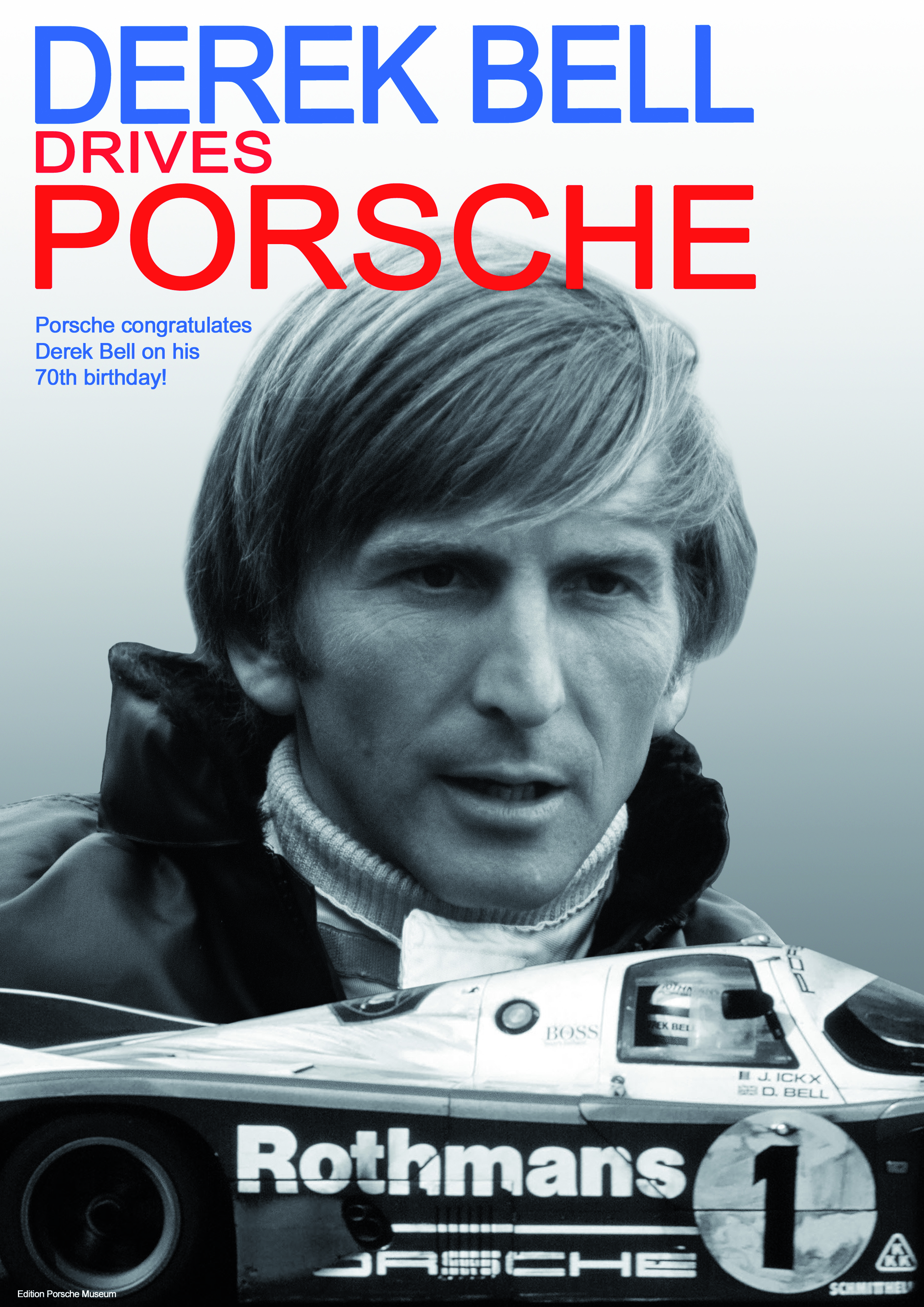
Stuttgart. Derek Bell, one of Dr. Ing. h.c. F. Porsche AG’s most successful works drivers, will celebrate his 70th birthday on 31 October 2011.
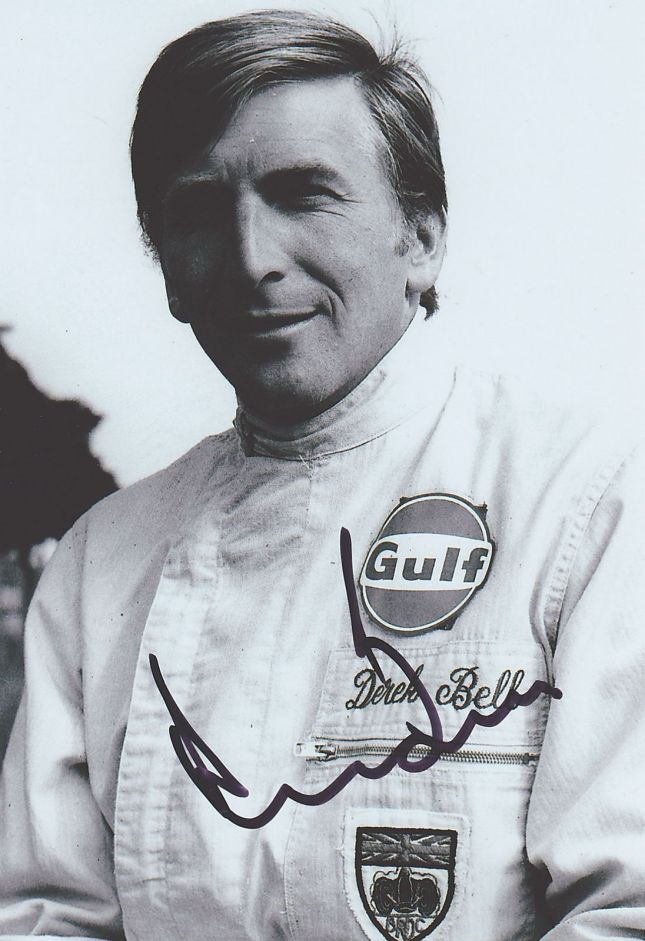 Derek Bell (GB), five times winner at Le Mans.
He won two World Sportscar Championship titles in 1985-86, the 24 Hours of Daytona three times in 1986-87 and 1989 and Le Mans five times in 1975, 1981, 1982, 1986 and 1987, mostly teamed with Jacky Ickx in one of the Porsche 936 and Porsche 956/Porsche 962 models. Ickx/Bell is nowadays considered as one of the most famous pairings in motorsport history.
Born in Pinner, Middlesex, Great Britain in 1941, Bell is considered to be one of the most versatile and popular racing drivers of his time.
VIDEO: Derek Bell in car Porsche 956 at Nordschleife. Derek Bell drives and describes a lap in a Porsche 956 around the old Nurburgring
Matthias Müller, Porsche AG’s Chairman of the Board of Management has this to say about the birthday boy:
 Derek Bell in Monza, 1983
“Derek Bell made motorsport history with Porsche. Whether it was in a 917, 936 or 956 – he was always one of the fastest and above all most reliable drivers. Derek Bell won the 24 Hours of Le Mans four times for Porsche. He won the world championship twice. For that we owe him our gratitude and great respect.” ~ Matthias Müller, Porsche AG’s Chairman of the Board of Management
Derek Bell began his racing career with Lotus in 1964. In Formula 1 he then took his place on the starting grid for Ferrari in 1969. In the 1971 season he drove the Porsche 917 and 908/03 racing cars for the Porsche-Gulf team, forming a successful driver duo with Jo Siffert.
 Porsche 917 KH Coupé in Spa, 1971, Drivers: Jo Siffert and Derek Bell
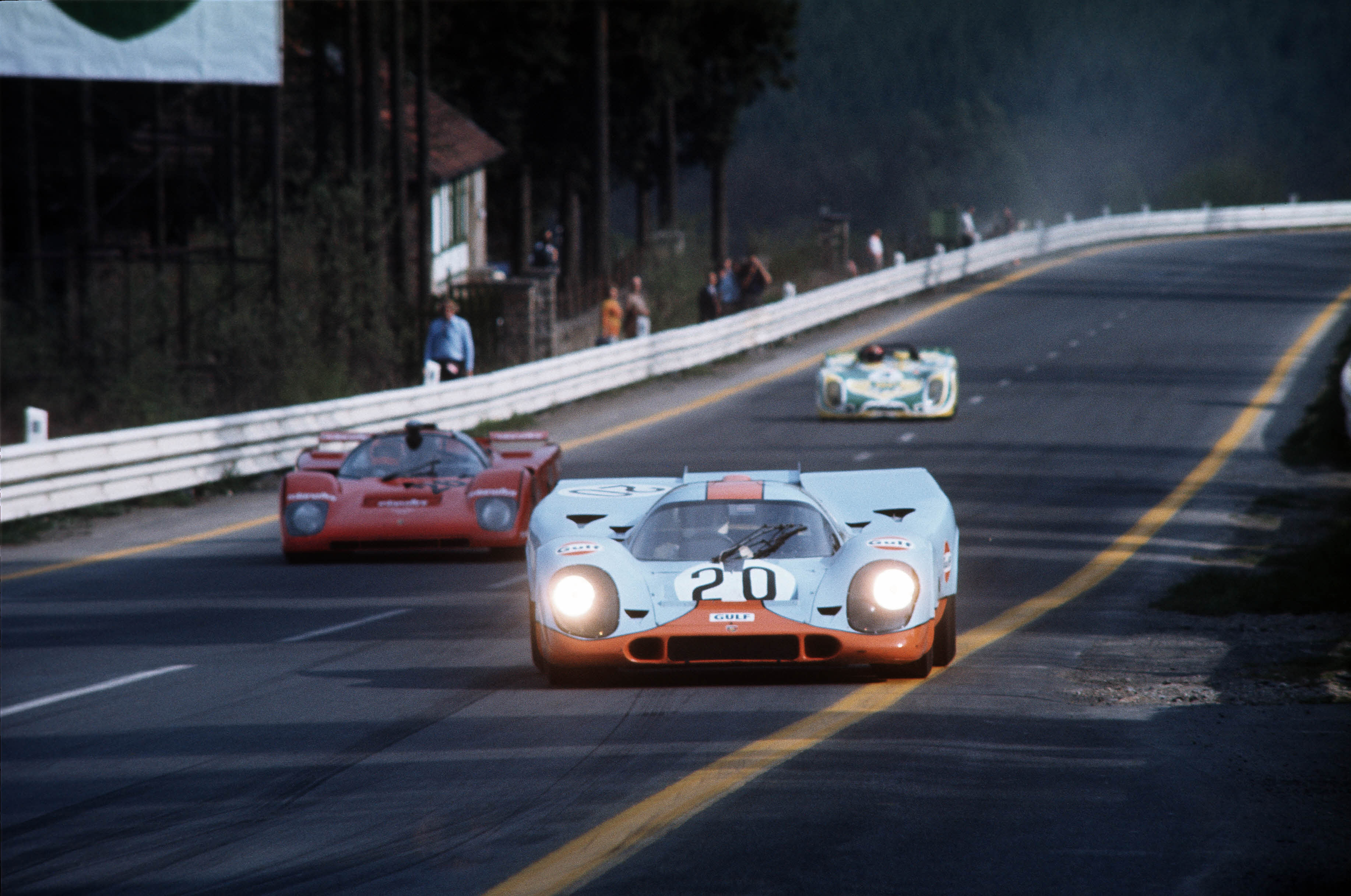
This was followed by appearances in the Porsche 934 and 935 in 1976 and 1977 before Derek Bell took his place on the Le Mans starting grid as a works driver in the 924 Carrera GT. In 1981, together with Jacky Ickx in the Porsche 936/81 Spyder, he won the first of his total of four Le Mans overall victories in a Porsche.
1982 saw the beginning of the Group C era with the Porsche 956 during which time Bell made his mark as one of the most successful endurance drivers of all time.
 Derek Bell in Brands Hatch, 1971
VIDEO: Derek Bell in the Porsche 956 gives a running commentary at Brands Hatch.
Together with drivers such as Jacky Ickx, Stefan Bellof and Hans-Joachim-Stuck, he not merely won numerous overall victories in the Types 956 and 962 but also the World Sportscar Championship in 1985 and 1986.
Derek Bell remains in close contact with Porsche to this very day, constantly undertaking ambassadorial tasks for the Stuttgart-based sportscar manufacturer, such as for example at the Oldtimer Grand Prix at the Nürburgring or at this year’s Corso to celebrate the 125th anniversary of the car.
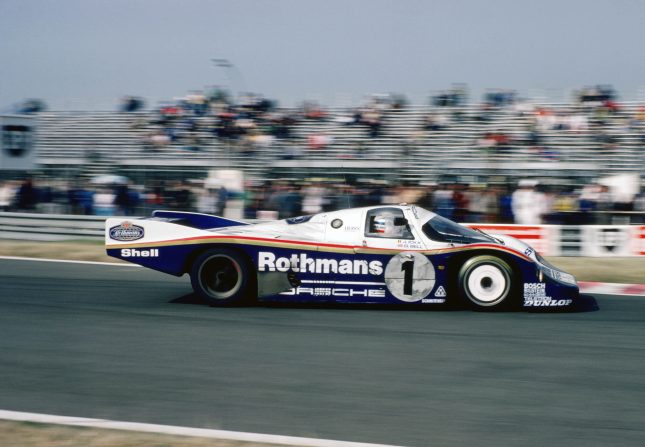 Porsche 956 in Le Mans, 1983, Drivers: Jacky Ickx and Derek Bell
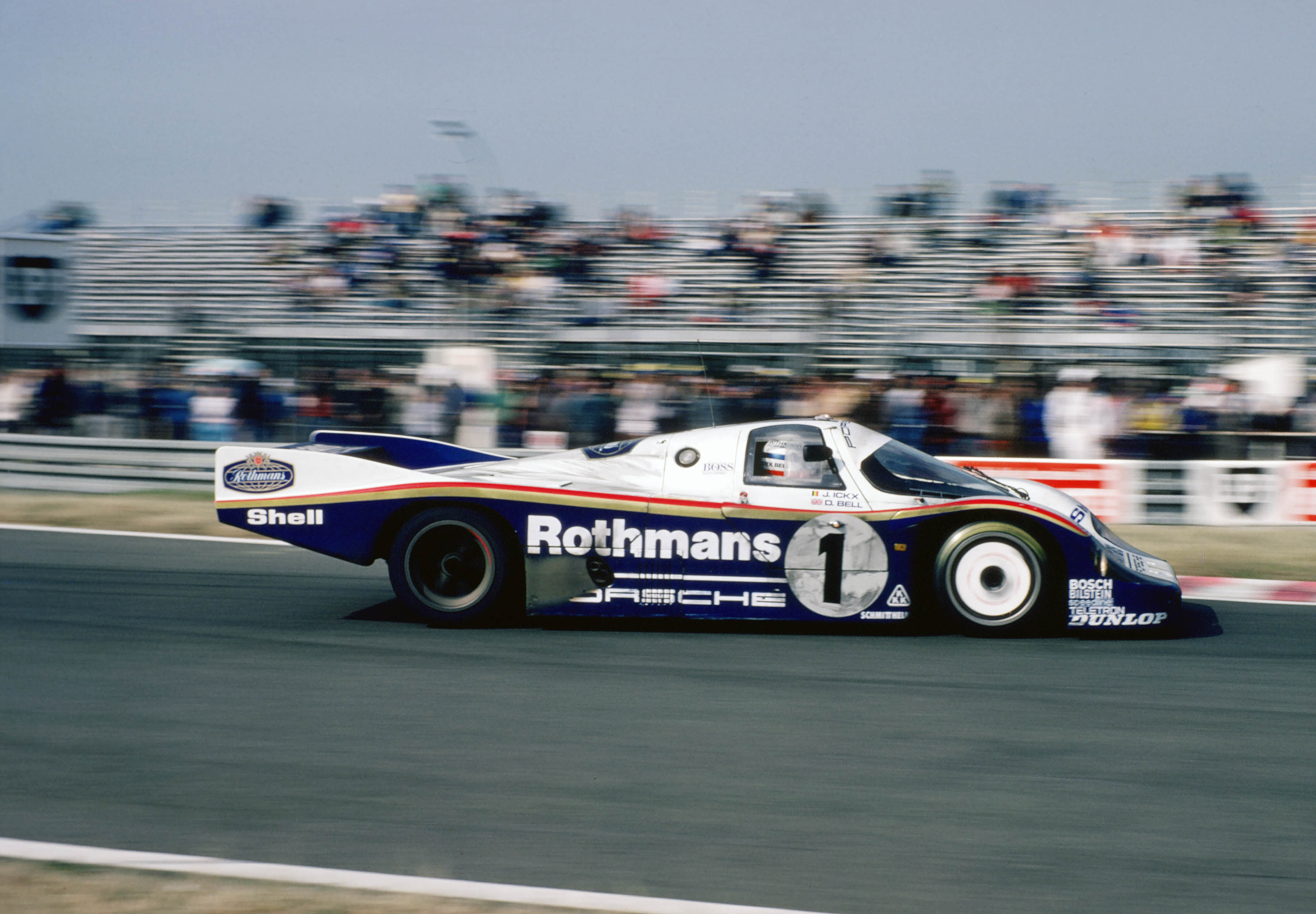
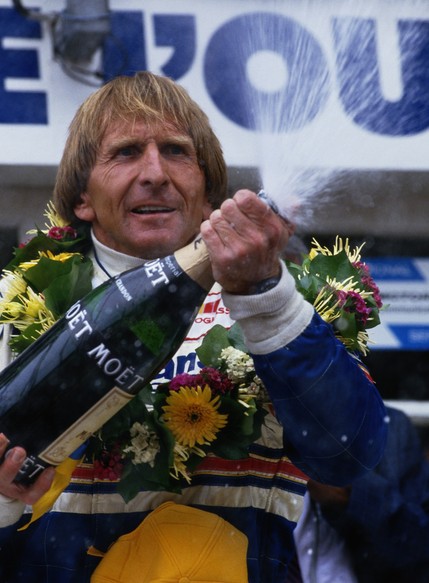 Derek Bell, driver of the #17 Rothmans Racing Porsche 962C celebrates with champagne after winning the FIA World Sportscar Championship 24 Hours of Le Mans on 14th June 1988 at the Circuit de la Sarthe, Le Mans, France. (Photo by Simon Bruty/Getty Images)
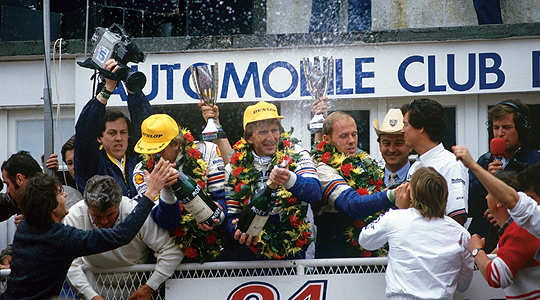 Photos: Haynes – For further information, visit www.haynes.co.uk.
There’s no question that Derek Bell also remained faithful to the Porsche brand off the race track:
To this very day he can be seen on Britain’s roads driving a 1981 vintage Porsche 924 Carrera GTS.
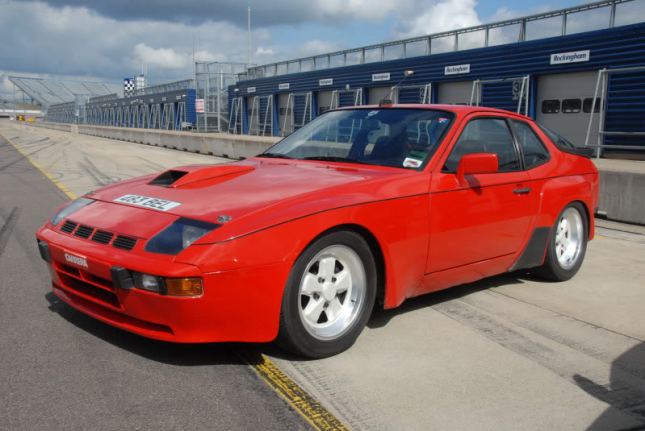 Derek Bell’s GTS, a special one in that it has a factory fitted road interior with carpets and road seats, one of only 2 done like that.
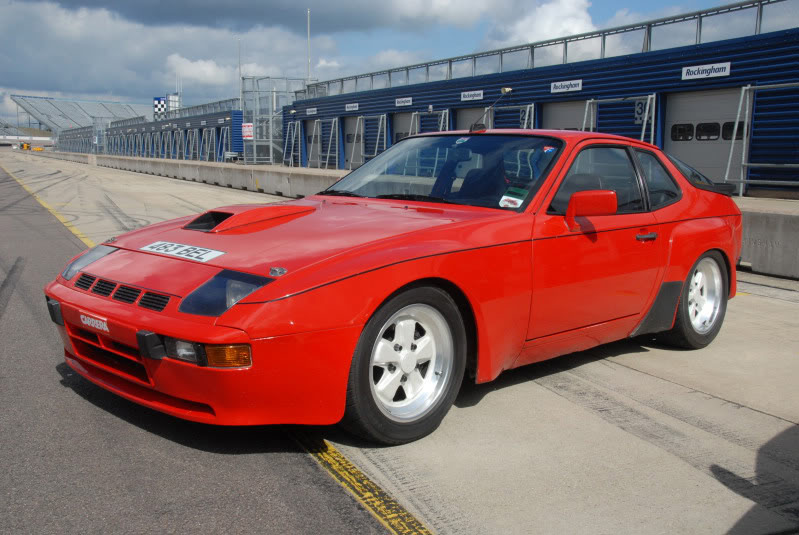
SOURCE: Porsche AG Media Database
Public Relations and Media
Porsche-Museum – Astrid Böttinger
Porsche Mobil 1 Supercup, rd 7- F1 race in Budapest/Hungary-Kuba Giermaziak 50th Supercup winner
Kuba Giermaziak 50th Supercup winner
 Start – Porsche Mobil1 Supercup – GP Ungarn 2011
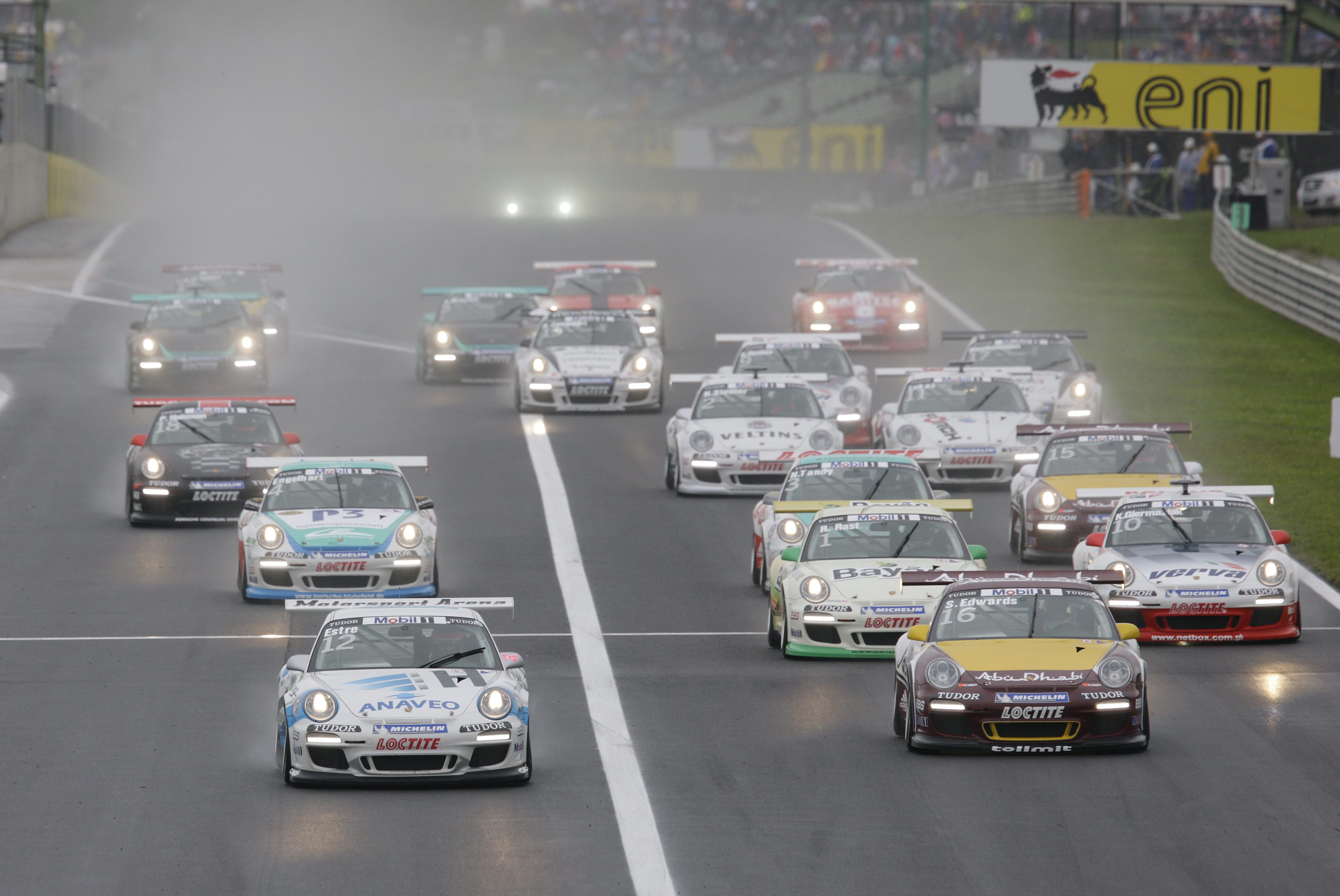
Stuttgart. In a turbulent rain race, Kuba Giermaziak celebrated his maiden victory in the Porsche Mobil1 Supercup on the Hungaroring near Budapest.
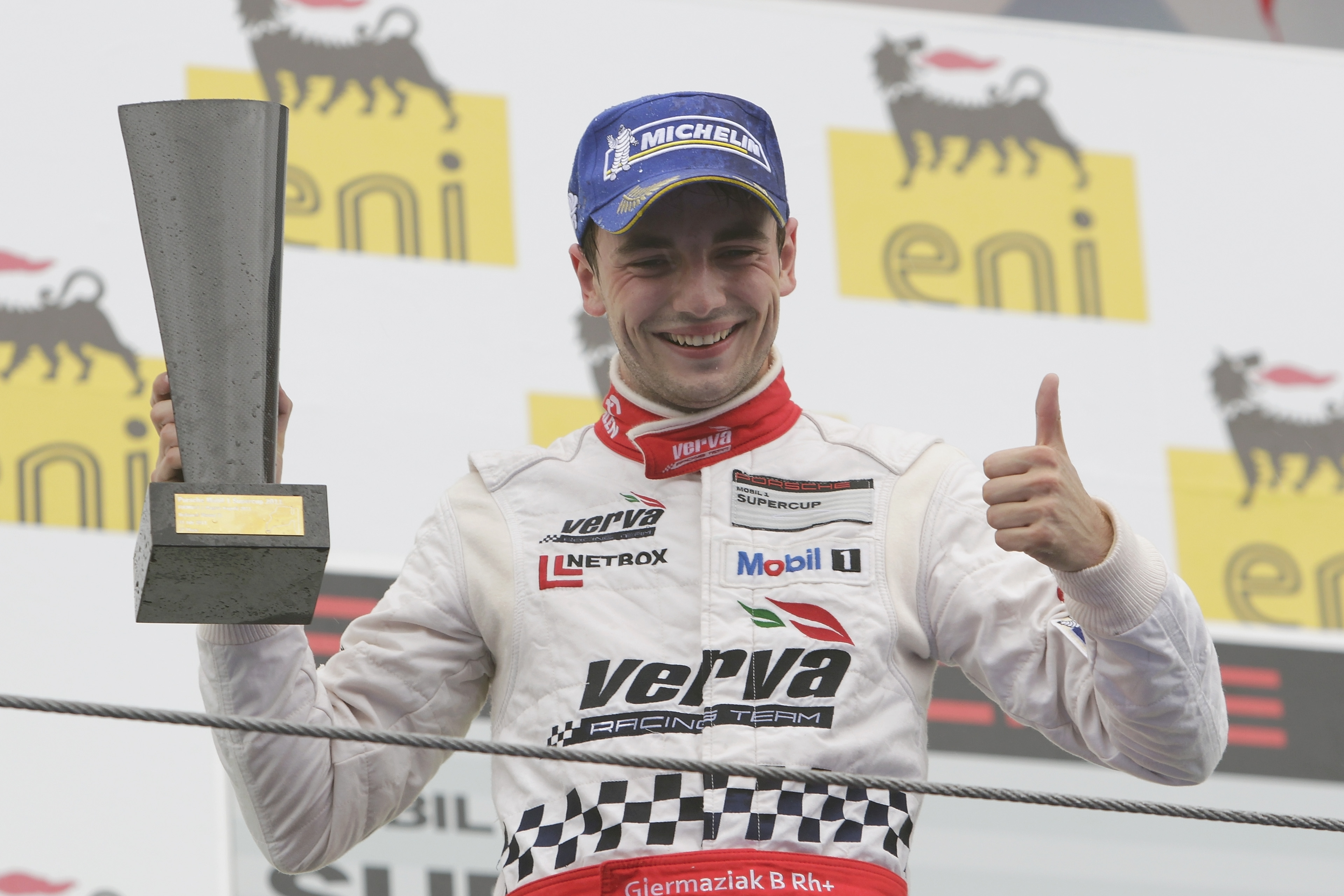 Kuba Giermaziak (PL) – Porsche Mobil1 Supercup – GP Ungarn 2011
With his win, the Pole goes down in the successful history of the world’s fastest international one-make race series as the 50th winner out of 201 races contested so far.
 Kuba Giermaziak (PL) – Porsche Mobil1 Supercup – GP Ungarn 2011
 Kuba Giermaziak (PL) – Porsche Mobil1 Supercup – GP Ungarn 2011
At the wheel of his 450 hp Porsche 911 GT3 Cup, which is based on the lightweight 911 GT3 RS street sports car, the VERVA Racing pilot put in a brilliant drive to outpace Dutchman Jeroen Bleekemolen (Team Abu Dhabi by tolimit) by 18.783 seconds.
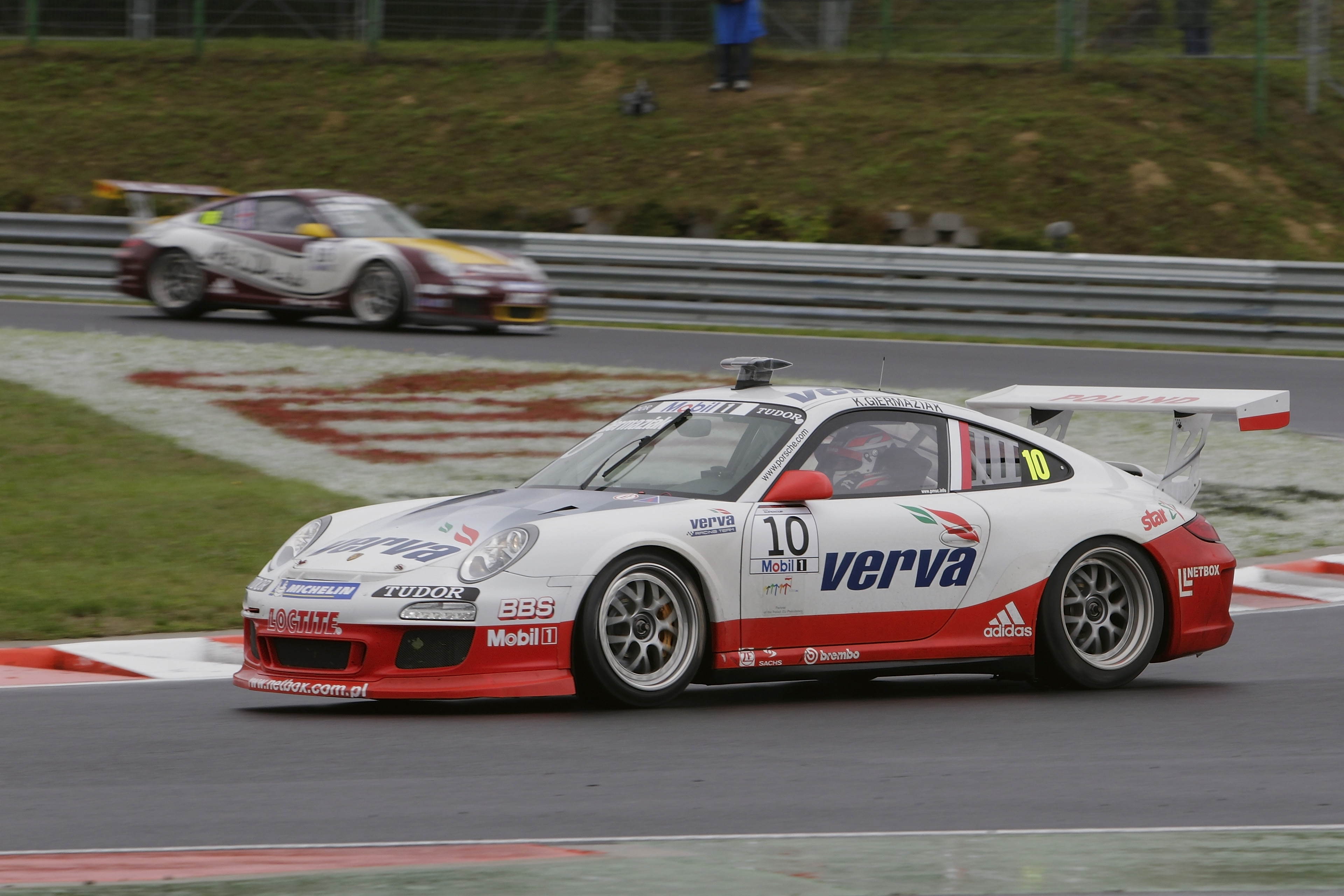 Kuba Giermaziak (PL) – Porsche Mobil1 Supercup – GP Ungarn 2011
Third place was enough for Bleekemolen’s British teammate Sean Edwards to snatch the championship lead.
 Jeroen Bleekemolen (NL), Kuba Giermaziak (PL), Sean Edwards (GB) Porsche Mobil1 Supercup
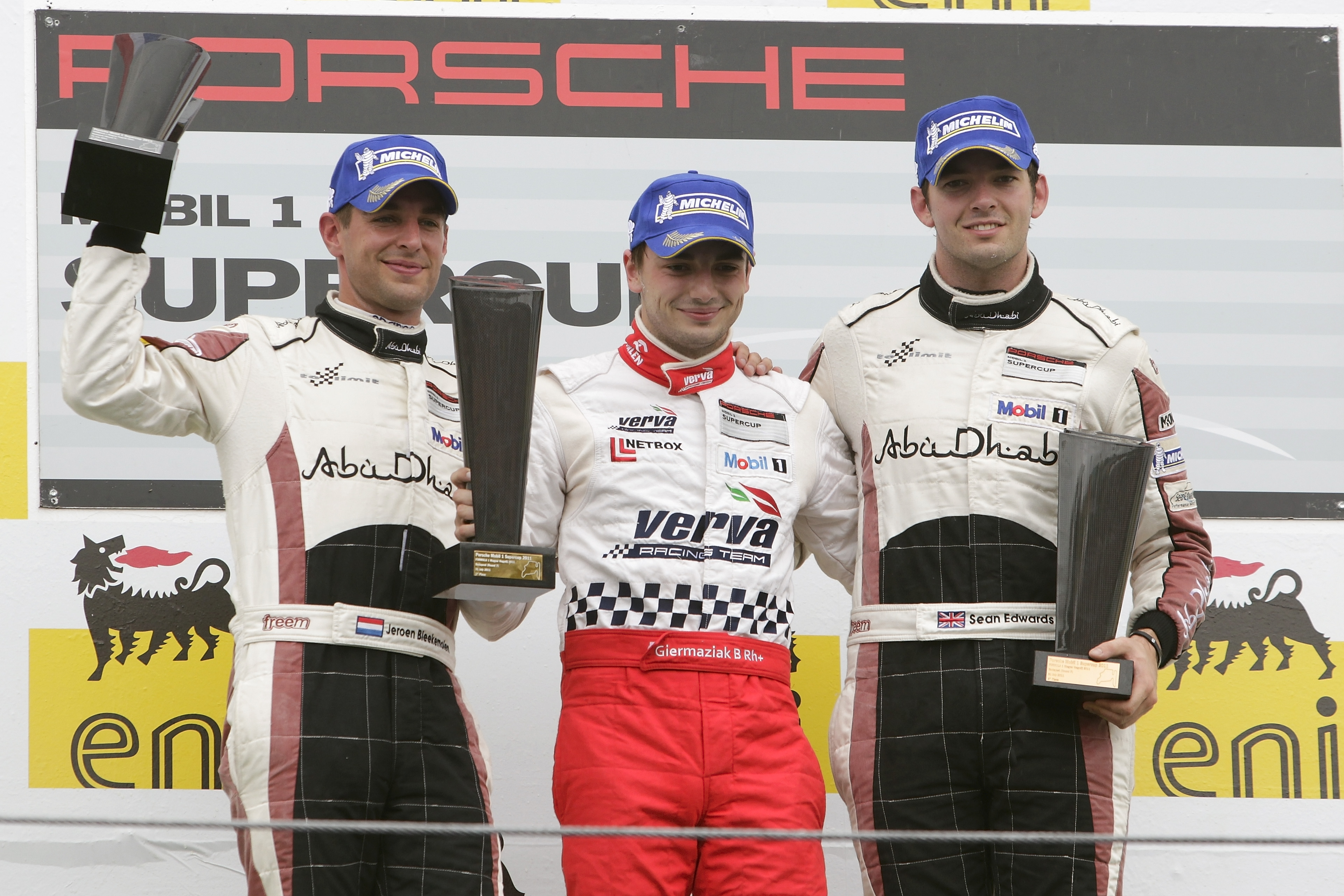
Kuba Giermaziak claimed the maiden win for a Polish and East European driver by a huge margin, very rarely seen in this fiercely-contested championship. Many young pilots have used the one-make series run as support to the Formula 1 as a launching platform for extremely successful careers in international GT racing and attracted attention with performances similar to that of the youngest driver in the field at 21 years. Taking up the sprint from fifth on the grid, Giermaziak immediately shot past the first rivals and already after one lap had moved into third place. In lap four he had snatched the lead.
During the first laps on the wet Grand Prix circuit, positions changed almost by the second. Kévin Estre, the French Supercup newcomer driving for Hermes Attempto Racing, made the most of his pole position and initially defended his lead.
 Kevin Estre (F) – Porsche Mobil1 Supercup – GP Ungarn 2011
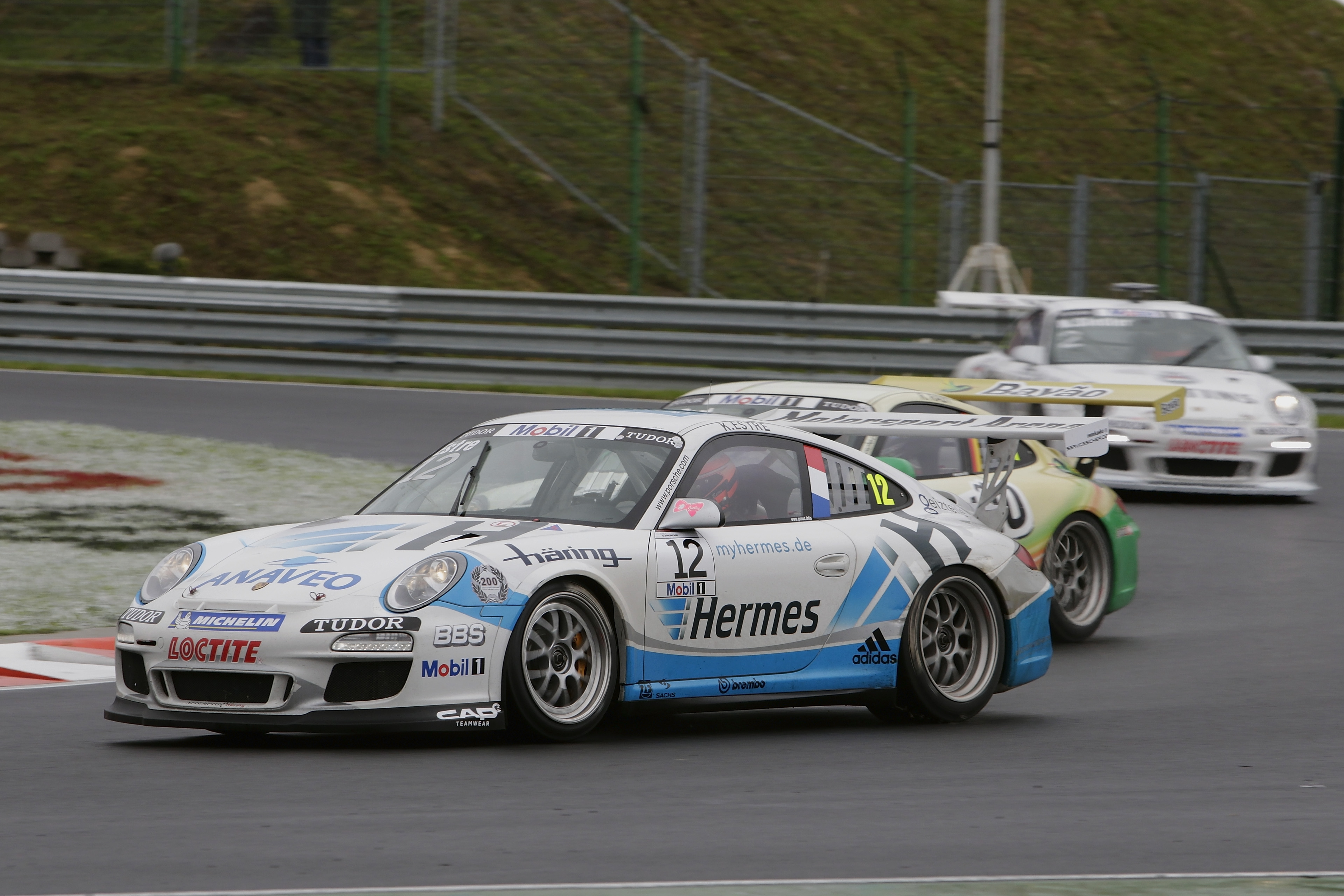
When he visited the gravel in the lap one, René Rast (Germany) took his place at the front. But under such difficult conditions the points’ leader from VELTINS Lechner Racing made several mistakes and fell back in the field. Over the course of the race, the title defender had to let more opponents past. With four laps to the flag, technical problems forced the German into retirement, which robbed him of his overall points’ lead.
Nick Tandy also came away from the seventh round with a disappointing result. Driving for Konrad Motorsport, the Briton spun in the second lap and lost touch with the front-runners. Crossing the finish line in ninth, last year’s vice-champion very likely has to bury his title aspirations completely.
Meanwhile at the front, Kuba Giermaziak continued to pull away from his pursuers. With his VERVA Racing team, he had previously tested in the rain on the Hungaroring. Team boss Timo Rumpfkeil could implement the insight gained from this almost 1:1 in the race.
Behind the leader, Sean Edwards and Kévin Estre managed to fend off any attacks for quite some time before the Frenchman made some errors and lost contact to the front-runners to finish in fifth. For the Briton, this didn’t bring much relief.
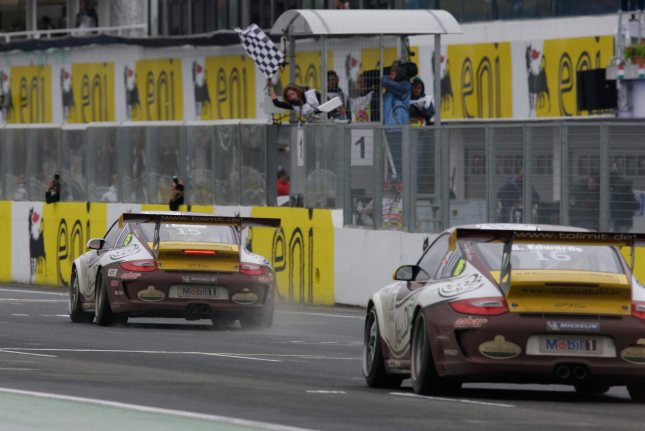 Jeroen Bleekemolen (NL), Sean Edwards (GB) – Porsche Mobil1 Supercup – GP Ungarn 2011
His teammate Jeroen Bleekemolen put him under immense pressure from behind to finally pass him shortly before the finish in the final lap to snatch second. For the two-time Supercup winner, this marked his first podium result so far this season.
Behind the Team Abu Dhabi by tolimit duo, Norbert Siedler’s stunning chase through the field was rewarded with fourth place.
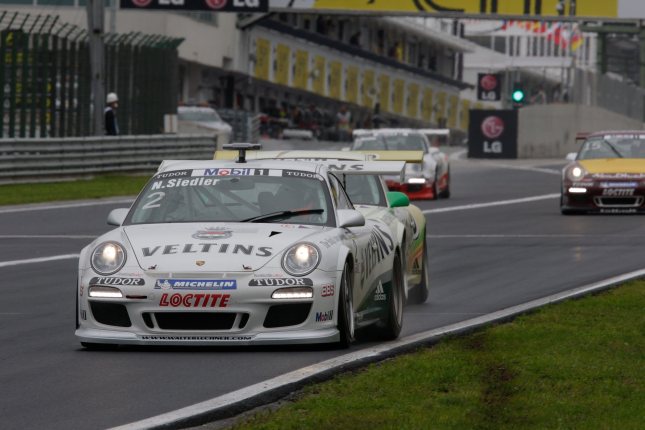 Norbert Siedler (A) – Porsche Mobil1 Supercup – GP Ungarn 2011
Taking up the race from tenth place after a poor qualifying, VELTINS Lechner Racing sent the Austrian as well as René Rast into the race on brand new rain tyres. With sixth, Robert Lukas yielded his best result this season behind his teammate Kévin Estre.
 Kuba Giermaziak (PL) – Porsche Mobil1 Supercup – GP Ungarn 2011
Kuba Giermaziak (winner):
 Kuba Giermaziak (PL) – Porsche Mobil1 Supercup – GP Ungarn 2011
“I’m absolutely delighted with my first victory in the Porsche Mobil1 Supercup, and my biggest thanks go to my team. It’s incredible how hard the boys work to put a perfect car on the track for us at every race. We tested here in Budapest, luckily in rain, and that paid off. We knew we’d do very well on the wet circuit, but we hadn’t anticipated that we’d do it with such a huge advantage. Despite the awful weather conditions I didn’t make any mistakes. I’m particularly pleased for the many Polish fans who came so far this weekend to support us. Thank you all very much.”
Jeroen Bleekemolen (second):
“What a great race. I started from seventh, struggled with grip at the start and lost two places. But I crawled my way up lap by lap with a couple of good overtaking manoeuvres – huge fun! I tried to be cautious with my tyres over the whole distance, even during the formation lap, and it proved very helpful at the end when the track dried up, particularly for overtaking Sean.”
Sean Edwards (third):
“Now that was one crazy race. I had a lot of fun. The grip wasn’t really great over the distance and I had to fight hard to defend my position. But there was nothing I could do about Jeroen. Still, I’m totally happy. Both cars from Abu Dhabi by tolimit on the podium, the first time this season – that’s a great result. I’m hoping we can continue like this at the next race in Spa. The championship is really exciting now.”
Race result
1. Kuba Giermaziak (PL) VERVA Racing Team, 30:12.507 minutes
2. Jeroen Bleekemolen (NL), Team Abu Dhabi by tolimit, + 18.783 seconds
3. Sean Edwards (GB), Team Abu Dhabi by tolimit, + 19.449
4. Norbert Siedler (A), VELTINS Lechner Racing, + 21.931
5. Kévin Estre (F), Hermes Attempto Racing, + 23.112
6. Robert Lukas (PL), Hermes Attempto Racing, + 24.539
Drivers’ classification after 7 of 11 races
1. Sean Edwards (GB), 106 points
2. René Rast (D), 105
3. Norbert Siedler (A), 97
4. Kuba Giermaziak (PL), 90
5. Jeroen Bleekemolen (NL), 86
6. Nick Tandy (GB), 79
Round 8 of the Porsche Mobil 1 Supercup takes place on 28 August as support to the Formula 1 race in Spa-Francorchamps/Belgium.
SOURCE: Porsche AG Media Database
Public Relations and Media
Motor and Sports Press
Porsche Mobil 1 Supercup, rd 6 at the F1 race-Nürburgring/Germany-René Rast wins 200th Supercup race
 René Rast (D) – Porsche Mobil 1 Supercup Deutschland 2011
René Rast wins 200th Supercup race
 Kuba Giermaziak (PL), René Rast (D), Sean Edwards (GB) – Porsche Mobil 1 Supercup Deutschland 2011
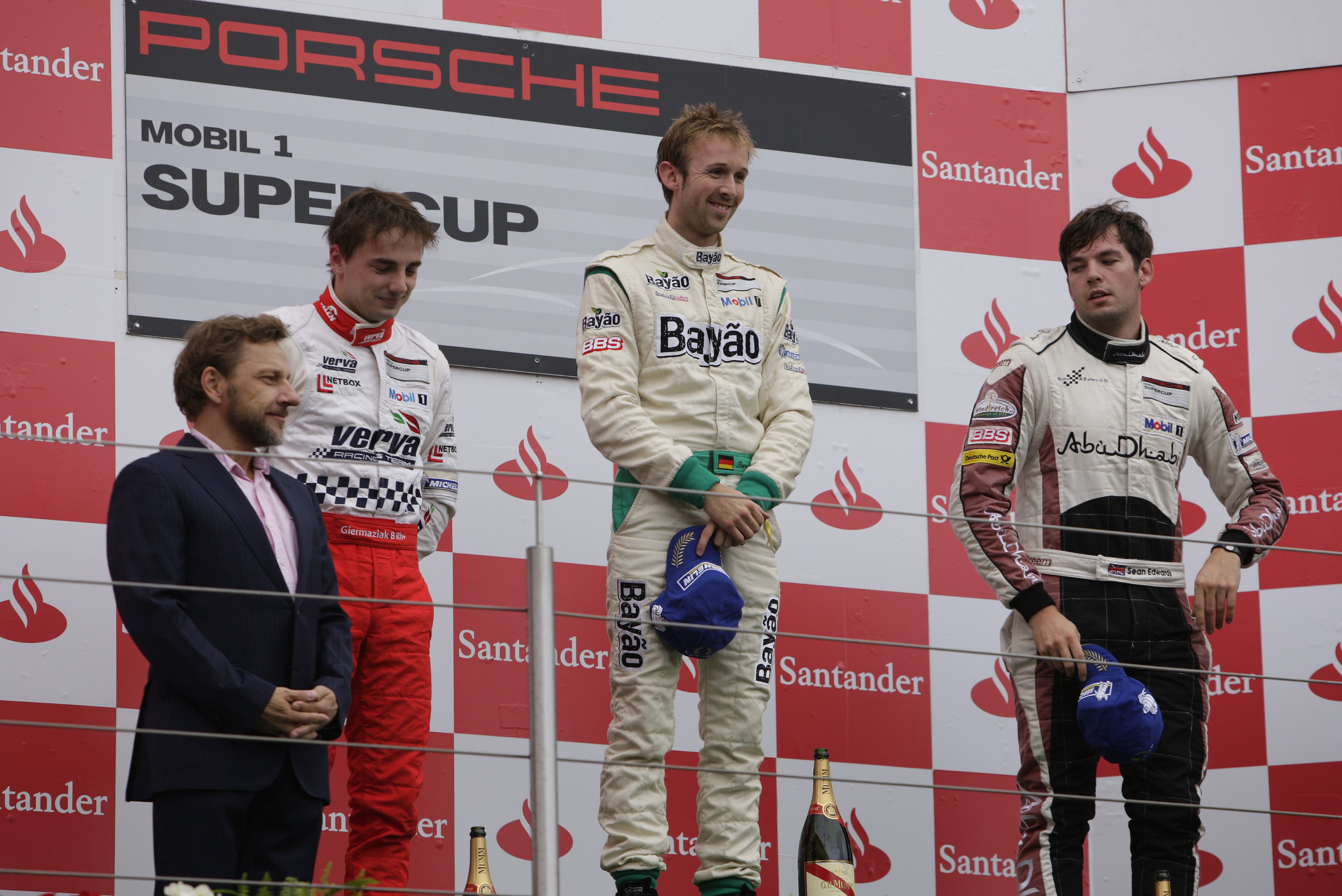
Stuttgart. The hero of the day in the Porsche Mobil1 Supercup is René Rast.
 René Rast (D) – Porsche Mobil 1 Supercup Deutschland 2011
At the wheel of the Porsche 911 GT3 Cup fielded by VELTINS Lechner Racing, the title defender from Frankfurt in Germany won the 200th race of the world’s fastest international one-make series on the Nuerburgring.
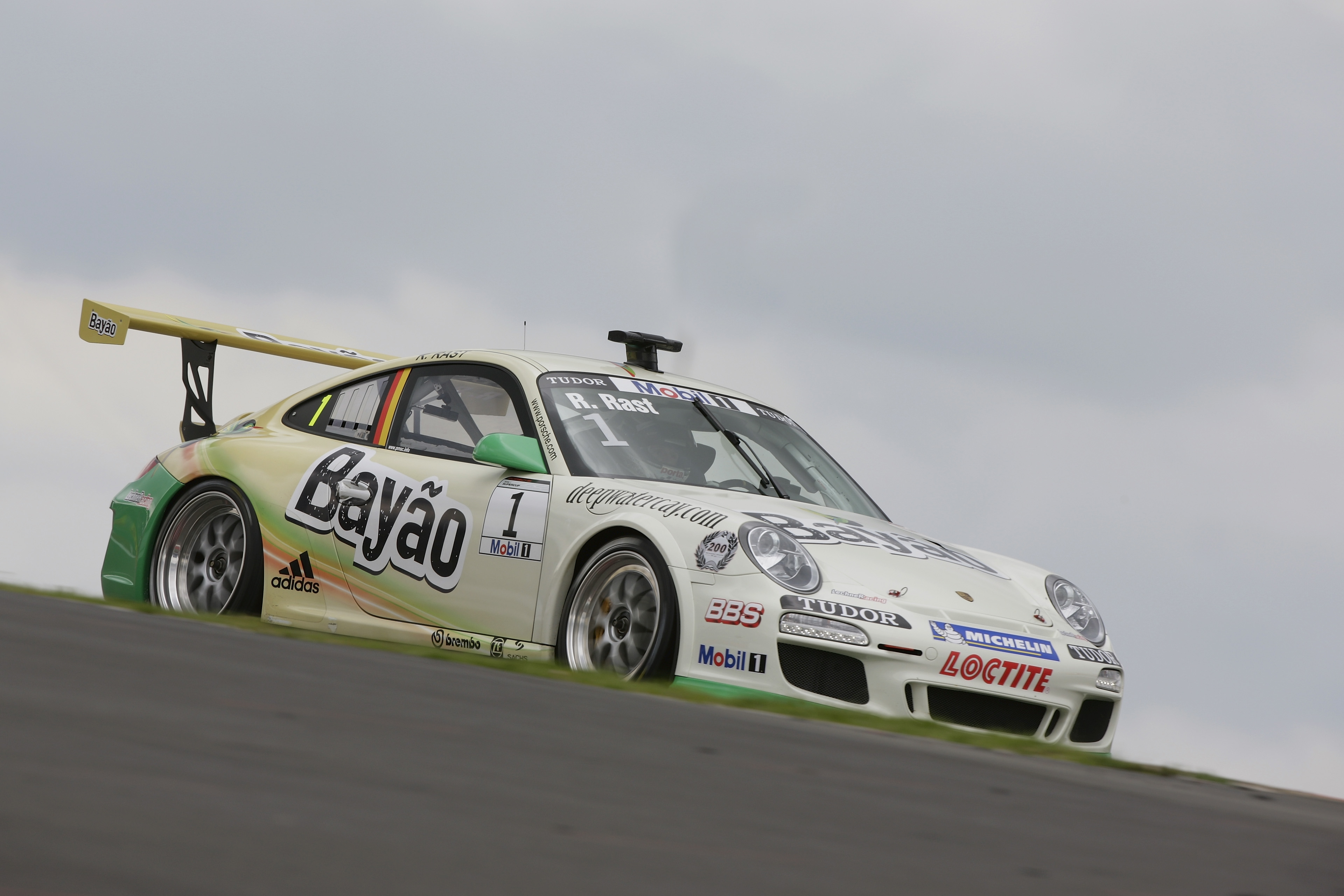 René Rast (D) – Porsche Mobil 1 Supercup Deutschland 2011
 René Rast (D) – Porsche Mobil 1 Supercup Deutschland 2011
This marks his fourth win so far this season.
 Kuba Giermaziak (PL) – Porsche Mobil 1 Supercup Deutschland 2011
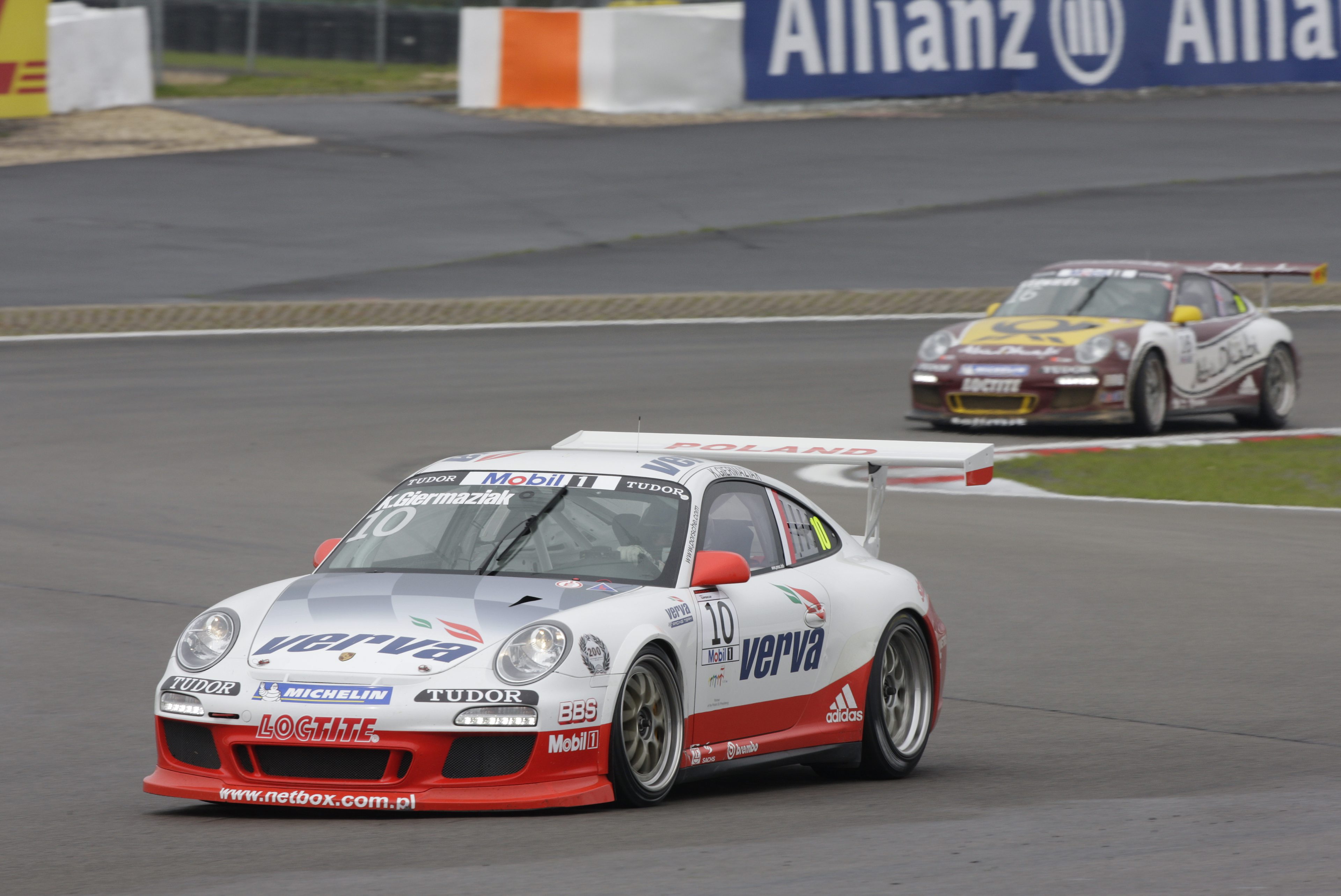
In a gripping race under typical Eifel weather conditions, he relegated Poland’s Kuba Giermaziak (VERVA Racing Team) to second place and further extended his championship lead.
 Start zum 200. Rennen – Porsche Mobil 1 Supercup Deutschland 2011
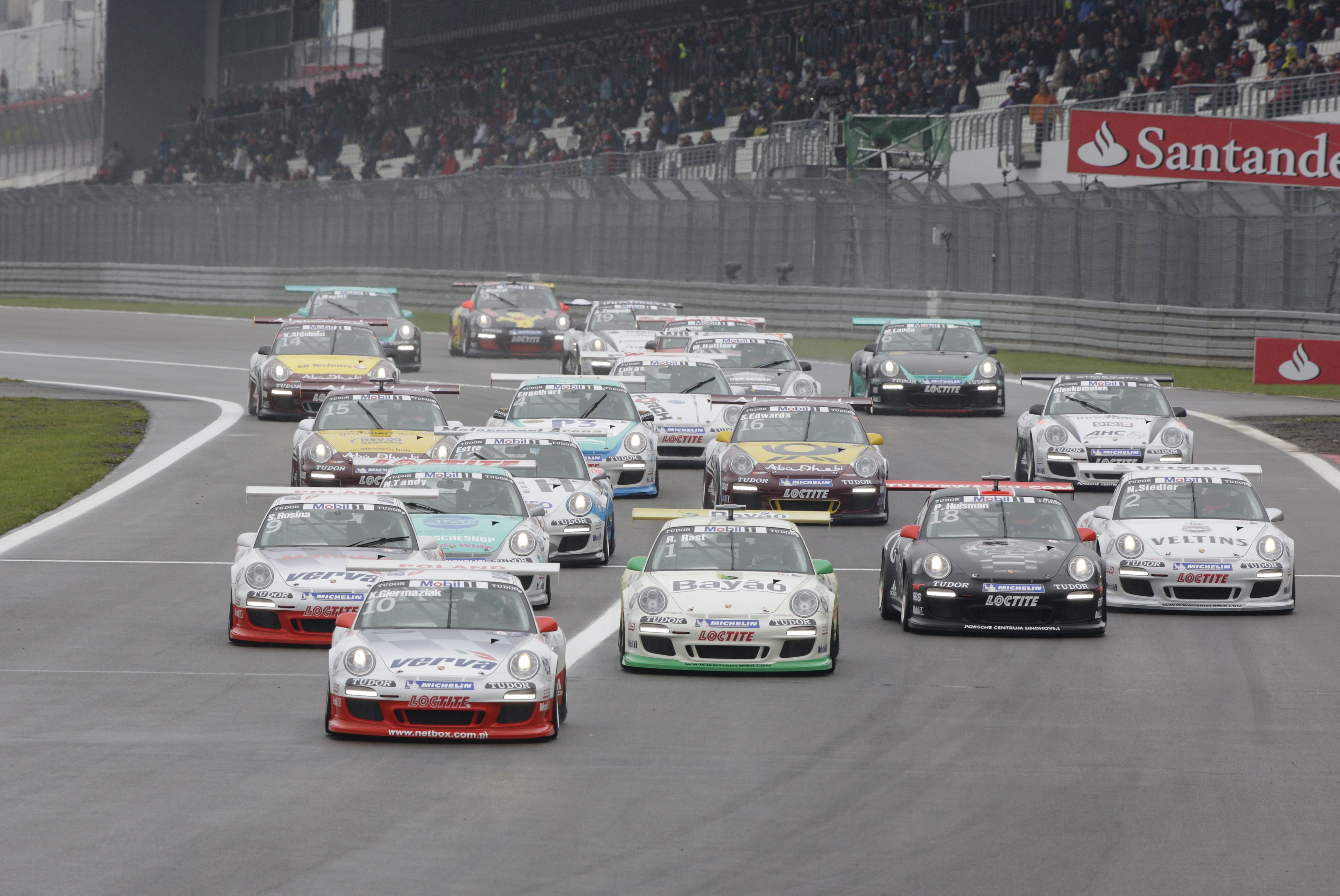
The anniversary race of the Porsche Mobil1 Supercup, which has run as support to the Formula 1 worldwide since 1993, started with a worried glance at the low-hanging clouds.
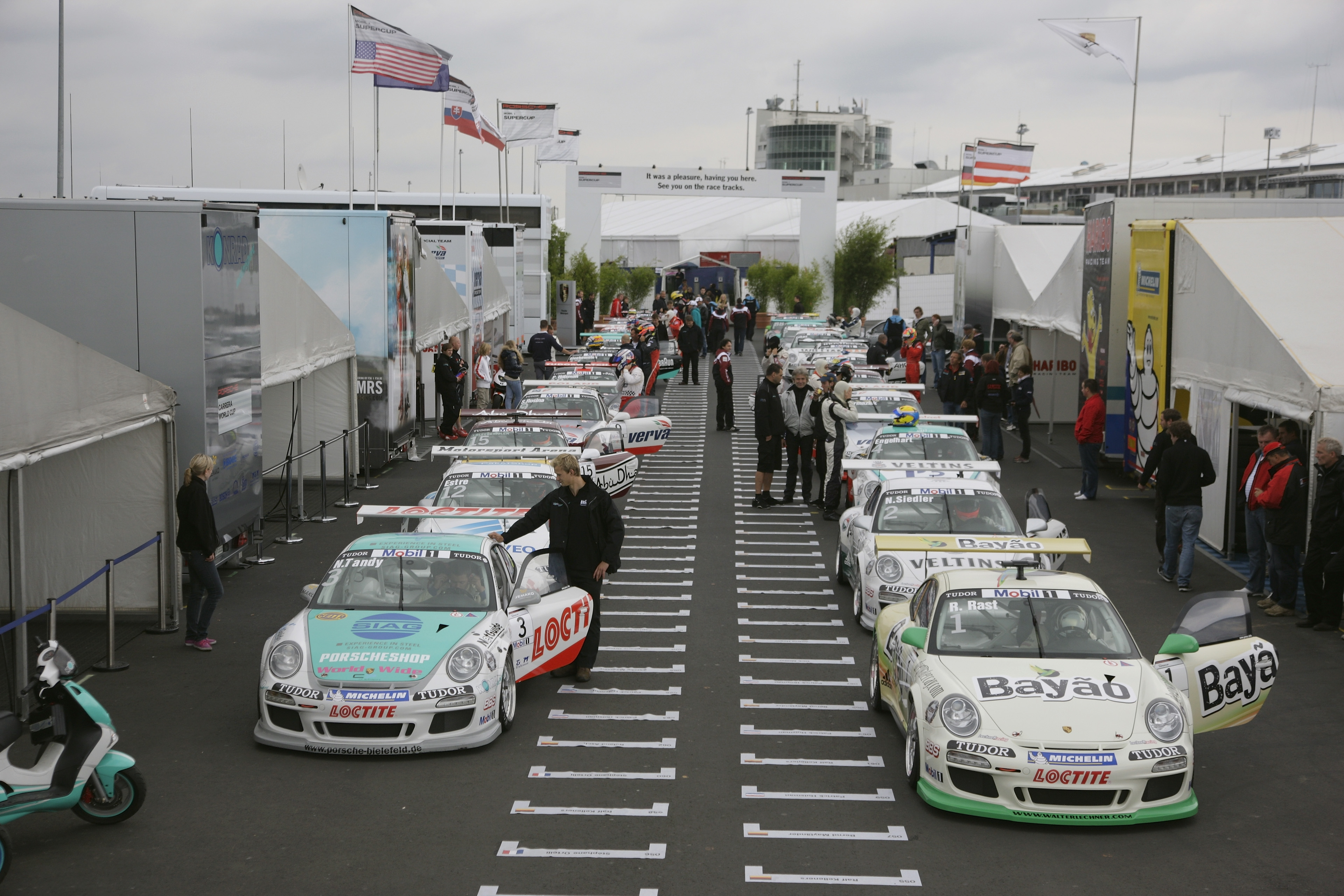 Porsche Mobil 1 Supercup Deutschland 2011
When the rain stopped shortly before the start, the majority of drivers opted for slicks – with Sebastiaan Bleekemolen (Team Bleekemolen) in position 12 on the grid selecting rain tyres.
 Jeroen Bleekemolen (NL) – Porsche Mobil 1 Supercup Deutschland 2011
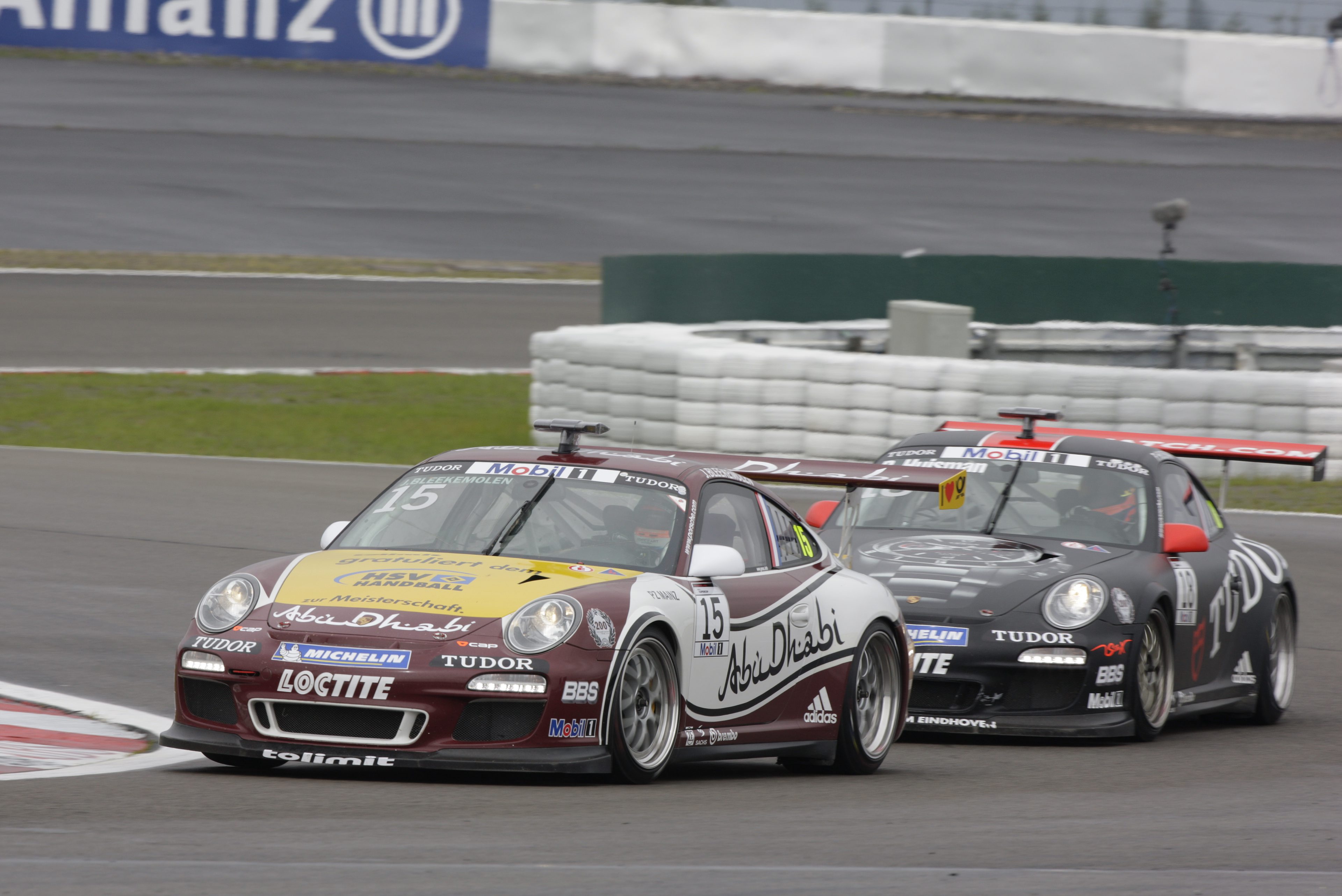
On the partly wet track, the Dutchman fought his way through half the field in the first lap to promptly move into first place. But his blaze of glory was short-lived: The slowly drying circuit foiled any further plans.
Sharing this fate were Britain’s Nick Tandy and Frenchman Kévin Estre. The title aspirant from Konrad Motorsport and the Supercup newcomer driving for Hermes Attempto Racing had such a lively encounter in the second corner that they were thrown remorselessly to the back of the field and went home without any championship points.
 Porsche Mobil 1 Supercup Deutschland 2011
This was particularly bitter for Nick Tandy, who as reigning vice-champion has yet to notch up a victory this season and for whom this setback is possibly decisive in his bid for the title.
 René Rast (D) – Porsche Mobil 1 Supercup Deutschland 2011
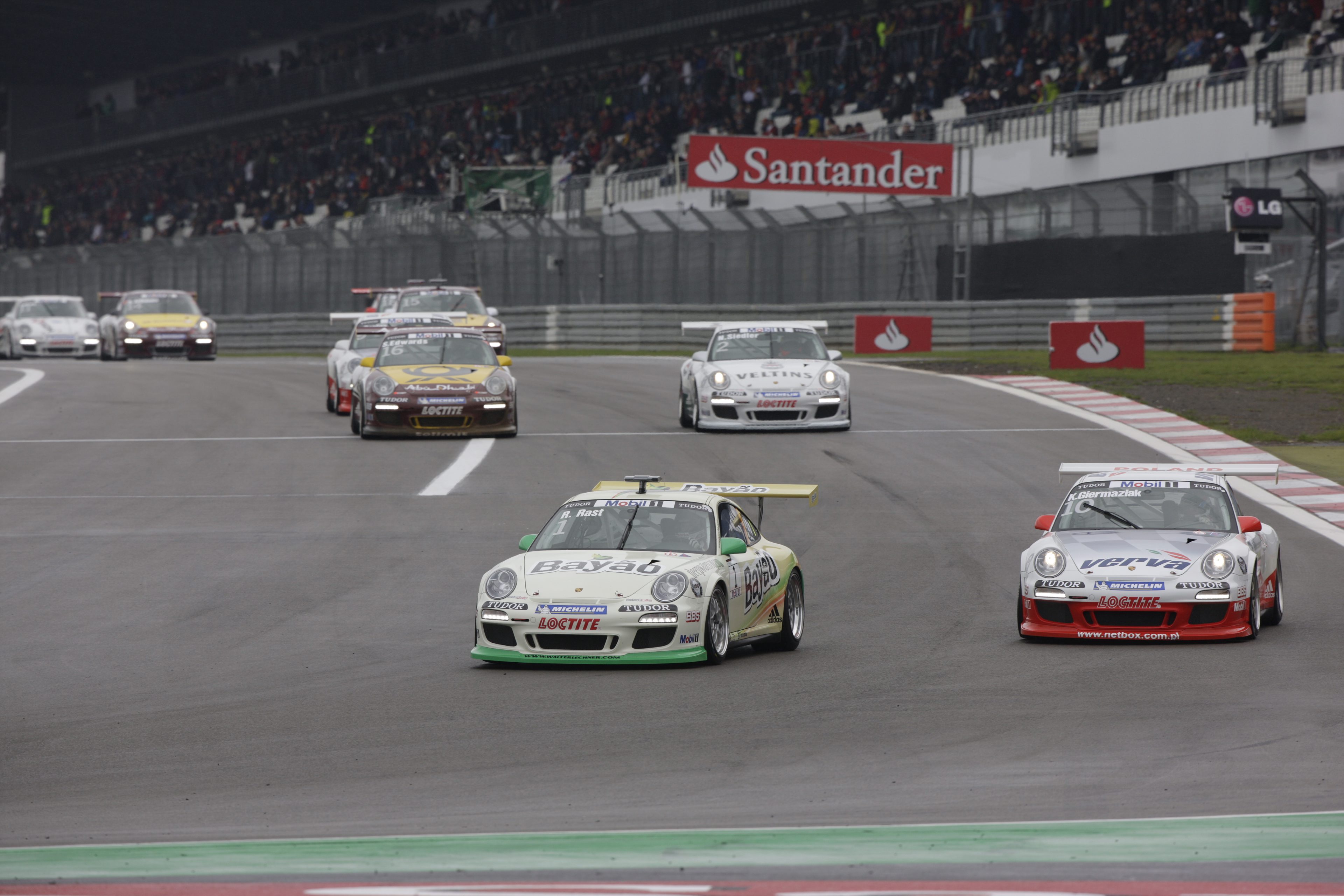
At the head of the pack René Rast and the first-time pole-sitter Kuba Giermaziak delivered a tough fight for victory right to the flag. Still, the Pole drove a cautious race to clinch his best Supercup result so far.
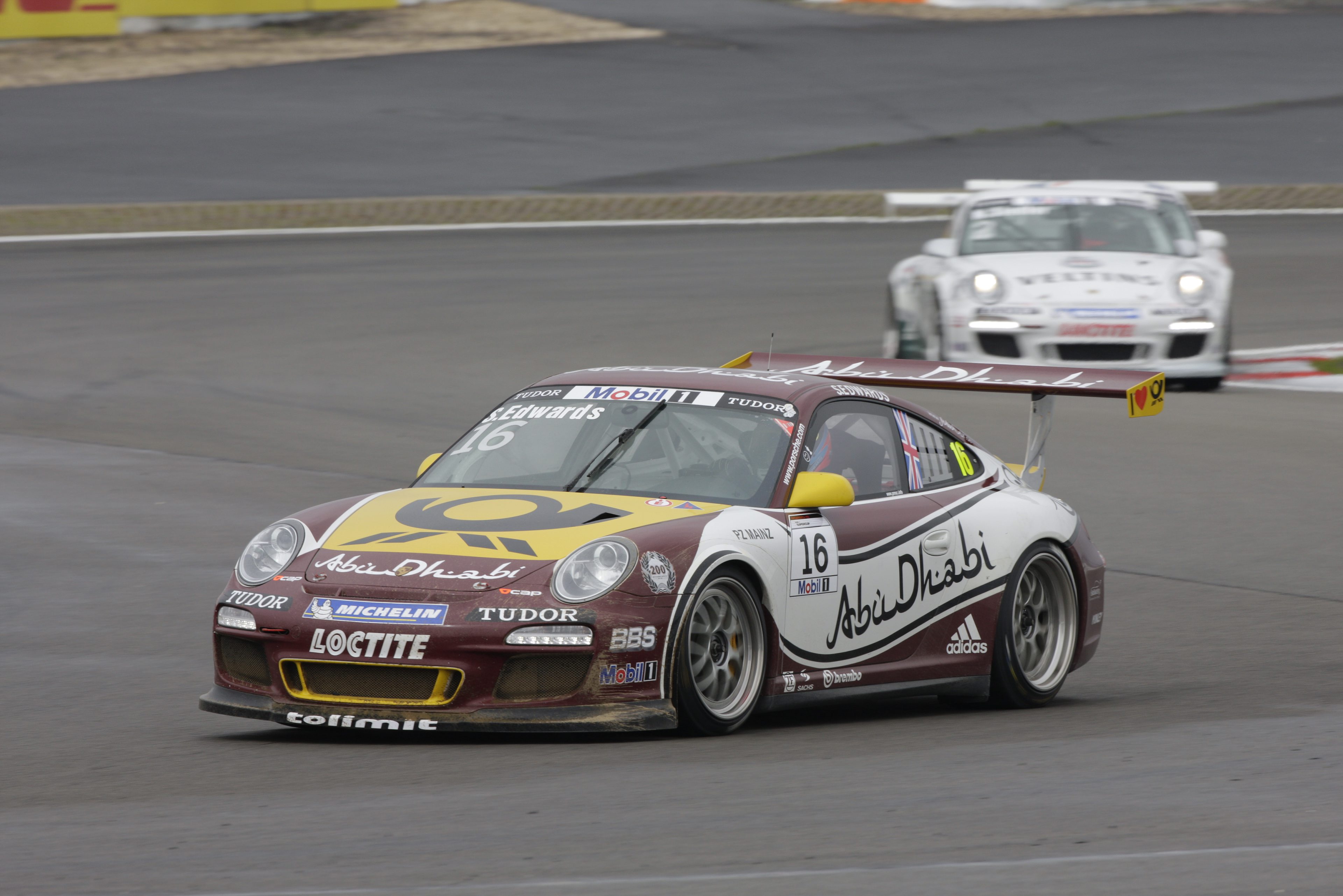 Sean Edwards (GB) – Porsche Mobil 1 Supercup Deutschland 2011
Britain’s Sean Edwards, who eventually brought home third in his Porsche 911 GT3 Cup run by Team Abu Dhabi by tolimit, posed no threat from behind.
 Norbert Siedler (A) – Porsche Mobil 1 Supercup Deutschland 2011
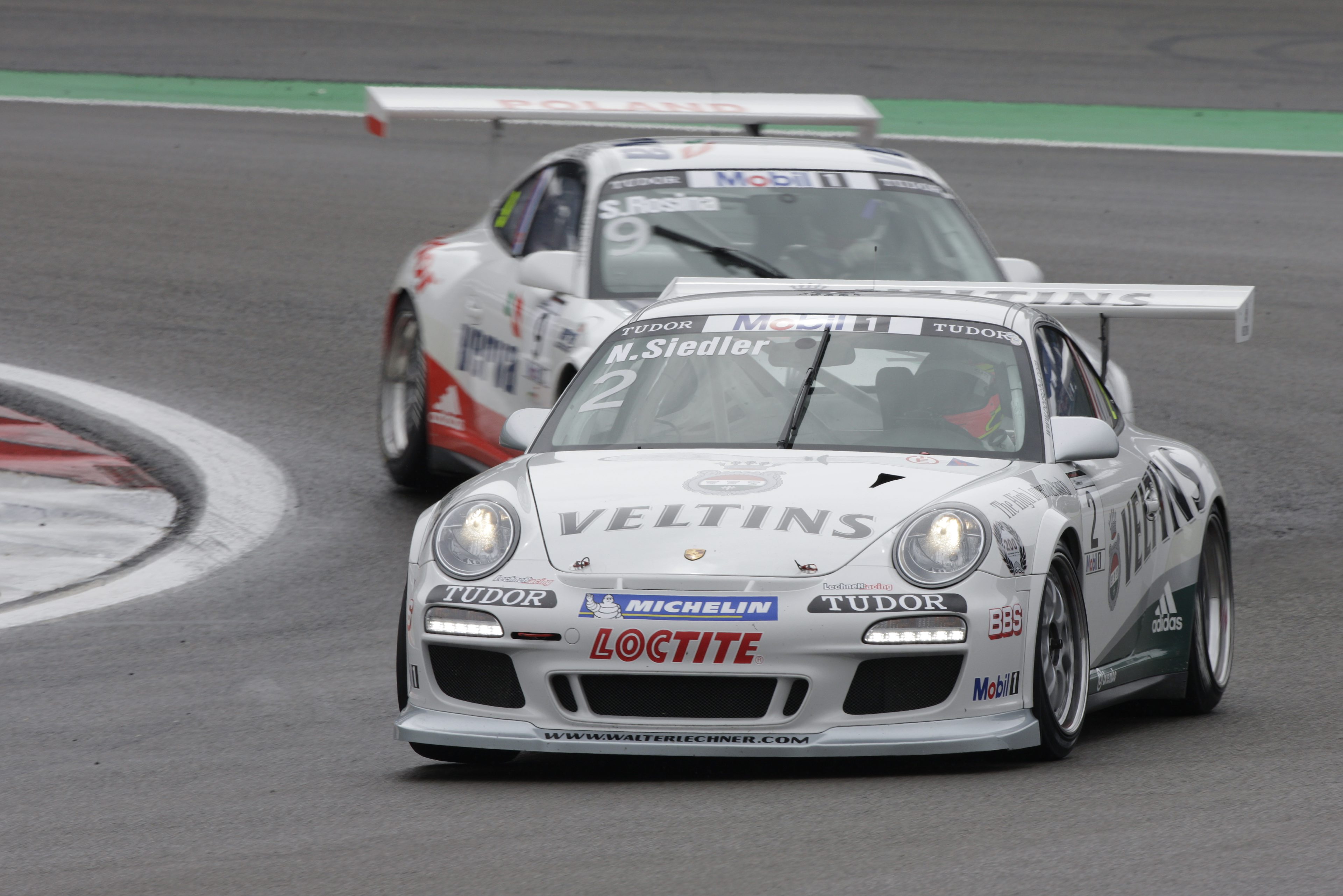
Trailing the Barcelona winner, Austria’s Norbert Siedler (VELTINS Lechner Racing) secured fourth, but not before fending off a strong attack from Stefan Rosina.
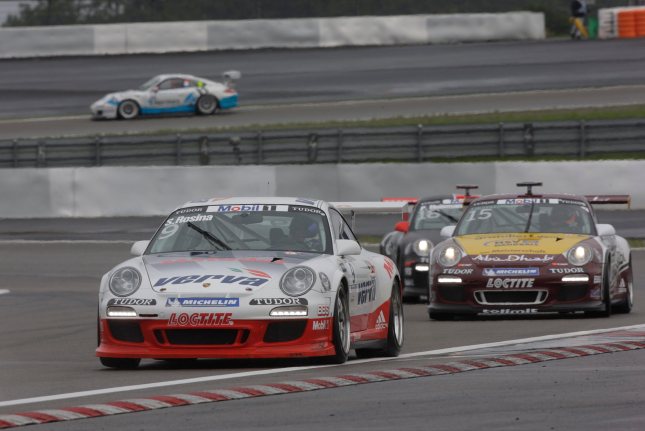 Stefan Rosina (SK) – Porsche Mobil 1 Supercup Deutschland 2011
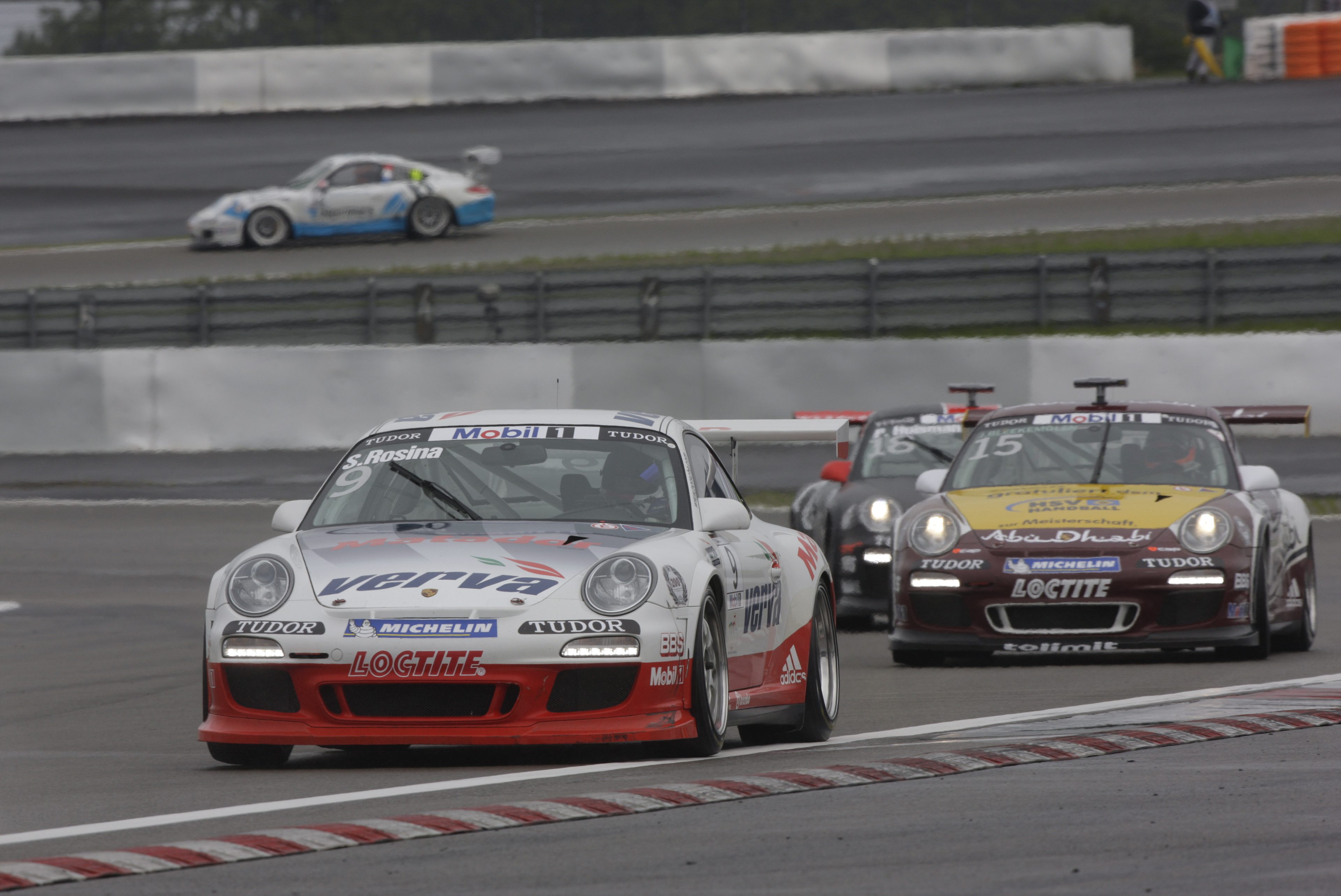
Driving for VERVA Racing, the Slovakian secured his best result to date with fifth ahead of Jeroen Bleekemolen (Team Abu Dhabi by tolimit), two-time Supercup champion from the Netherlands.
 Kuba Giermaziak (PL), René Rast (D), Sean Edwards (GB) – Porsche Mobil 1 Supercup Deutschland 2011
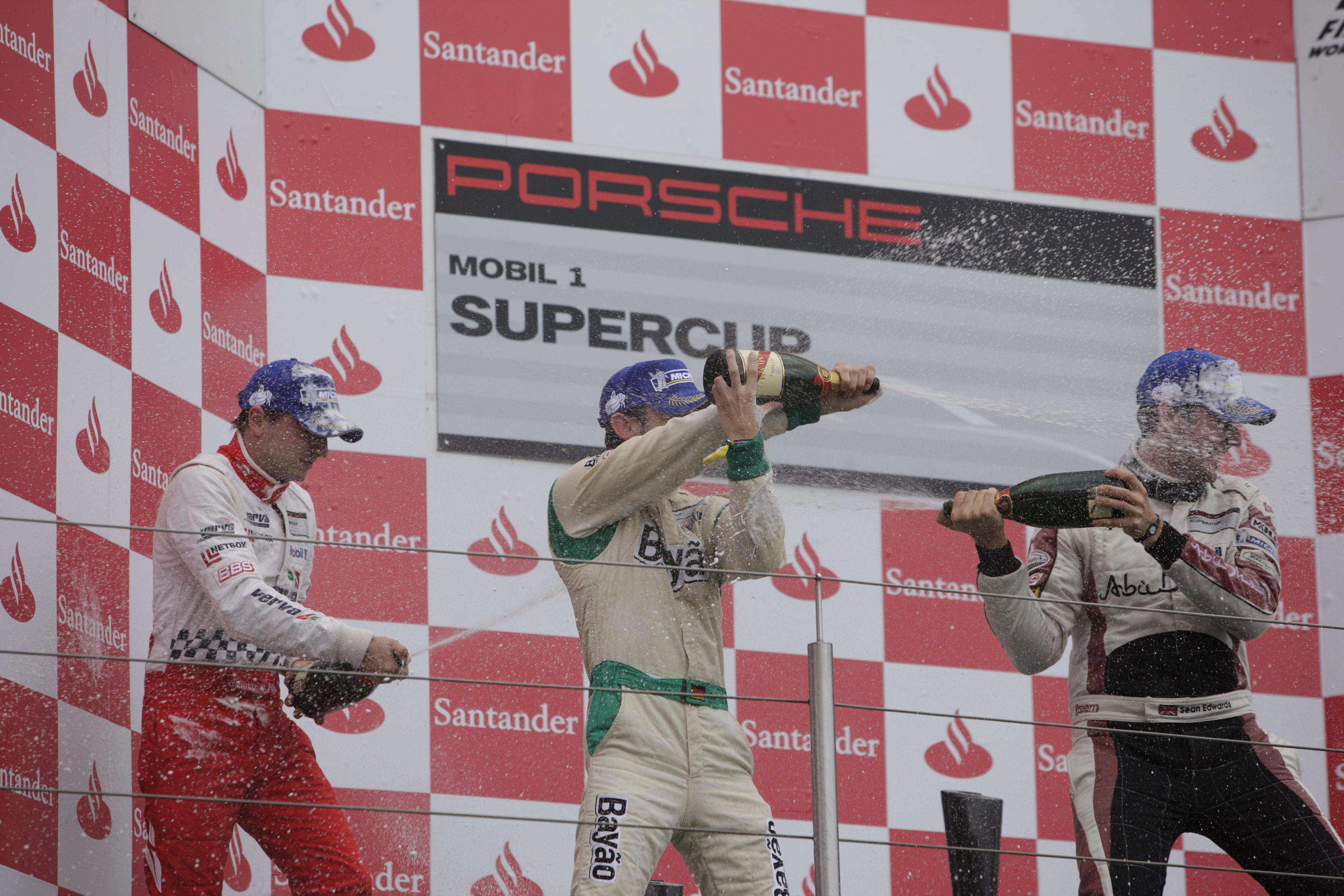
Putting in their personal best Porsche Mobil1 Supercup performance to now at the anniversary race in the Eifel were William Langhorne and Mathias Lauda. The American, who races for SANITEC Aquiles MRS Racing, finished tenth with the Konrad Motorsport pilot from Austria and son of racing legend Niki Lauda in eleventh.
René Rast (winner):
“That was a perfect race. The conditions were unbelievably tough. First it was totally wet, then dry again. When you’re at the front it’s very difficult to predict what’s going to happen. You never know what to expect in the next second. It’s a lot easier for the guys behind me. They can just wait to see what I do. Towards the end I slowed the pace a little to bring my victory home safely. With an eye on the championship, this was a great weekend for us.”
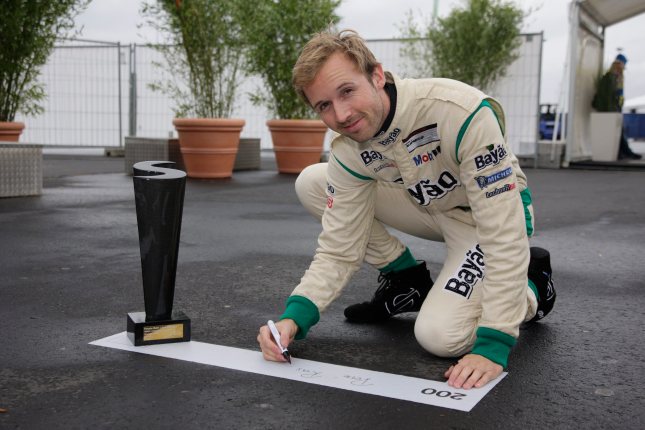 René Rast (D) – Porsche Mobil 1 Supercup Deutschland 2011
Kuba Giermaziak (second):
“Congratulations to René. He drove a strong race under the most difficult conditions. As the track dried up I was quicker, in fact I could have won today. At least we had the speed. But René is not one to make silly mistakes when he’s under pressure. And I wasn’t prepared to risk anything. So now we just have to keep waiting for our first win, but I’m quite sure it’ll happen this season.”
 Kuba Giermaziak (PL), René Rast (D), Sean Edwards (GB) – Porsche Mobil 1 Supercup Deutschland 2011
Sean Edwards (third):
“A great race. I started from seventh on the grid and finished in third – that’s not bad under such tough conditions. In the dry we simply didn’t have the speed to attack.”
Kuba Giermaziak (PL), René Rast (D), Sean Edwards (GB) – Porsche Mobil 1 Supercup Deutschland 2011
Race result
1. René Rast (D), VELTINS Lechner Racing, 30:00.552 minutes
2. Kuba Giermaziak (PL) VERVA Racing Team, + 1.001 seconds
3. Sean Edwards (GB), Team Abu Dhabi by tolimit, + 5.288
4. Norbert Siedler (A), VELTINS Lechner Racing, + 8.042
5. Stefan Rosina (SK), VERVA Racing Team, + 8.628
6. Jeroen Bleekemolen (NL), Team Abu Dhabi by tolimit, + 9.964
Drivers’ standings after 6 of 9 races*
1. René Rast (D), 105 points
2. Sean Edwards (GB), 90
3. Norbert Siedler A), 83
4. Nick Tandy (GB), 72
5. Kuba Giermaziak (PL), 70
6. Jeroen Bleekemolen (NL), 68
* It has yet to be decided if and when there will be a replacement for the cancelled Formula 1 race in Bahrain with two rounds of the Porsche Mobil1 Supercup.
Round 7 of the Porsche Mobil1 Supercup takes place on 31 July as support to the Formula 1 race in Budapest/Hungary.
SOURCE: Porsche AG Media Database
Public Relations and Media
Motor and Sports Press
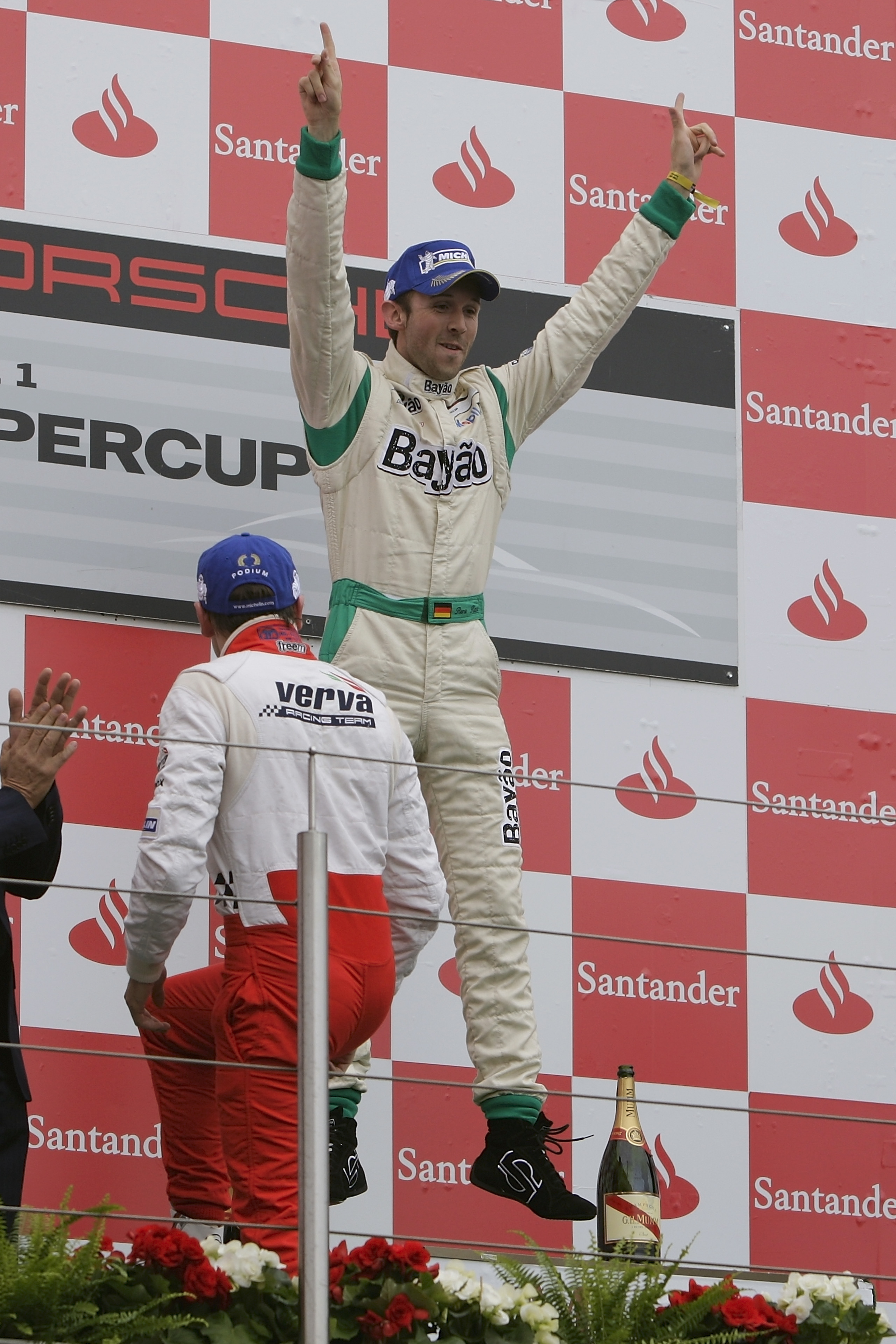
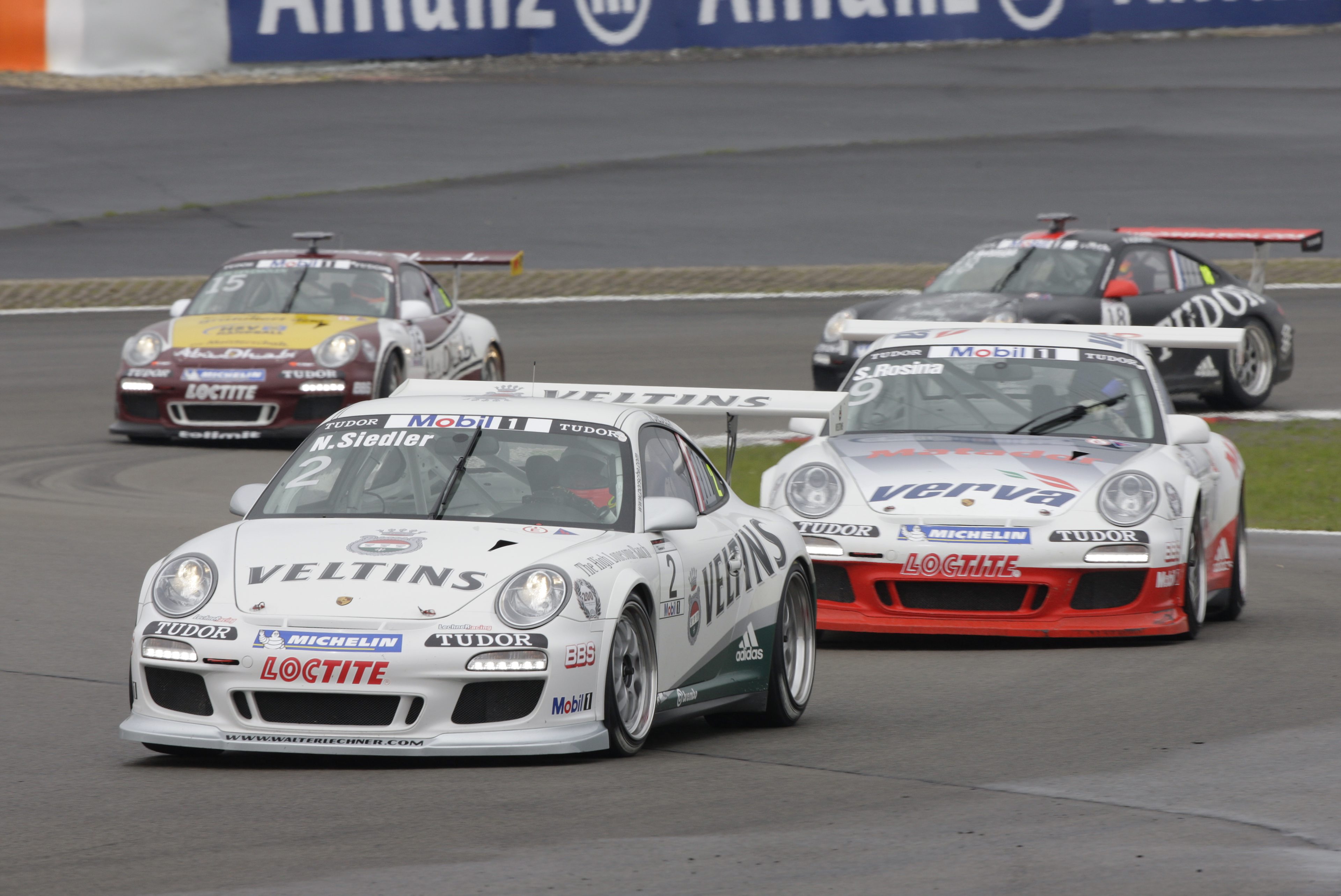
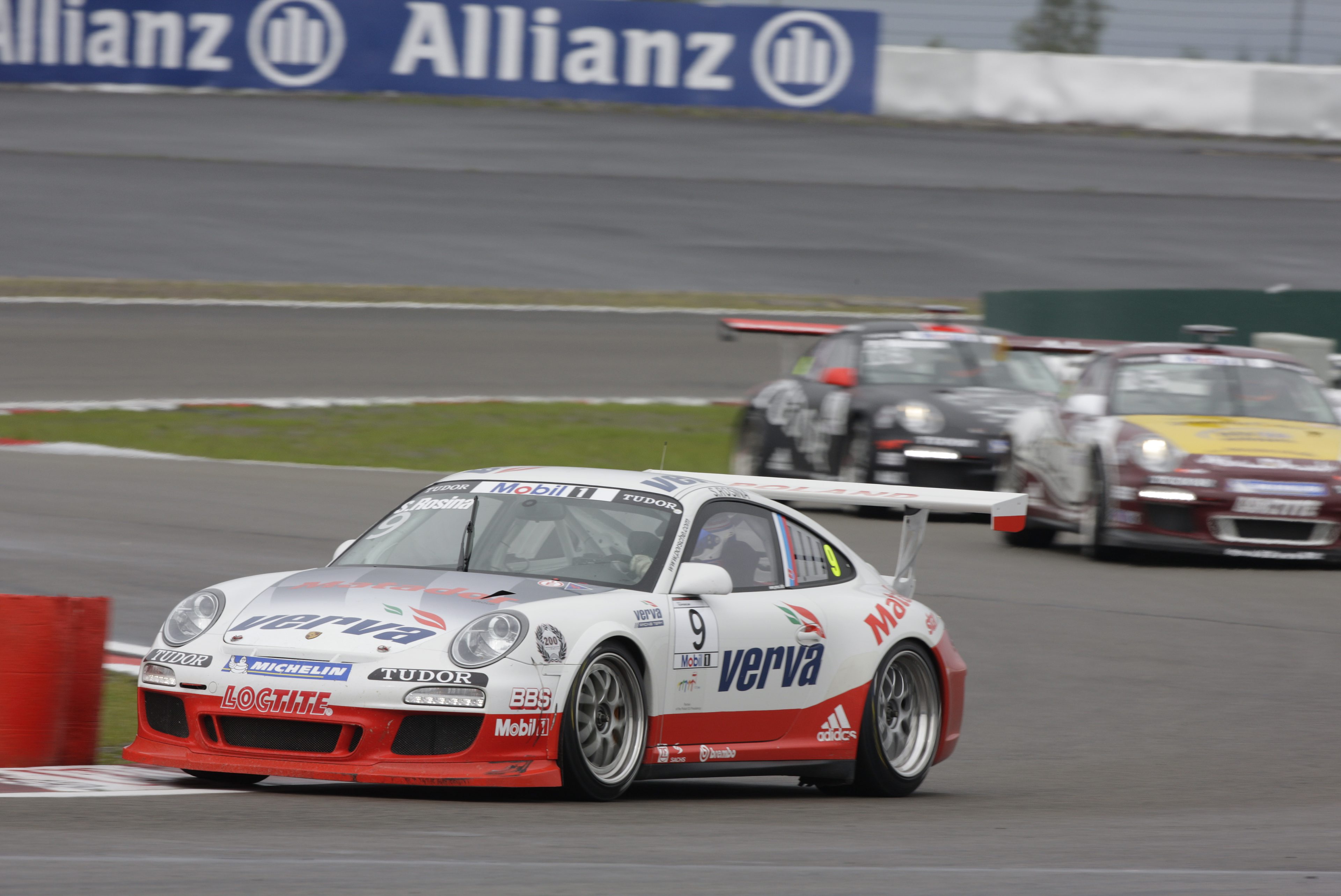
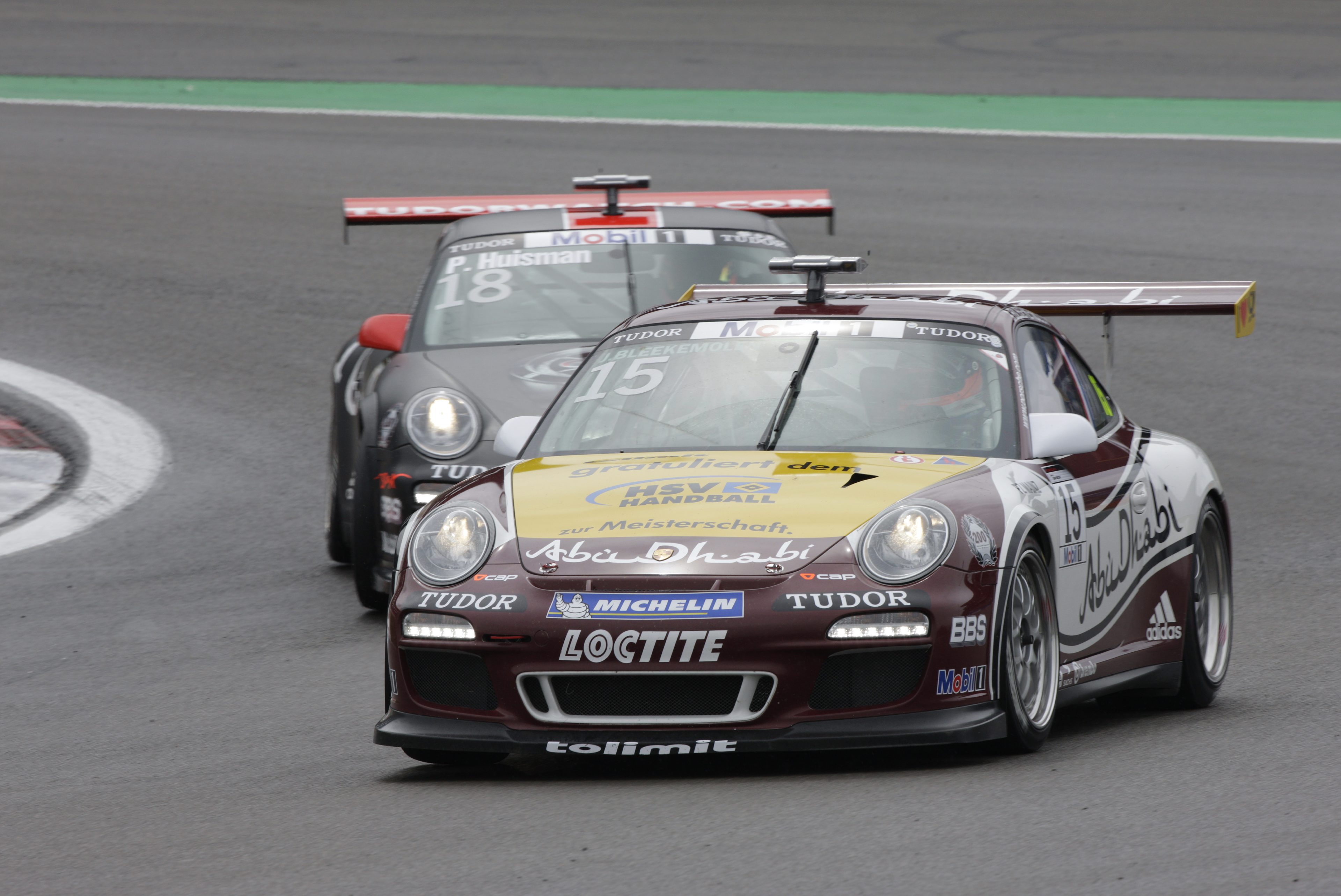
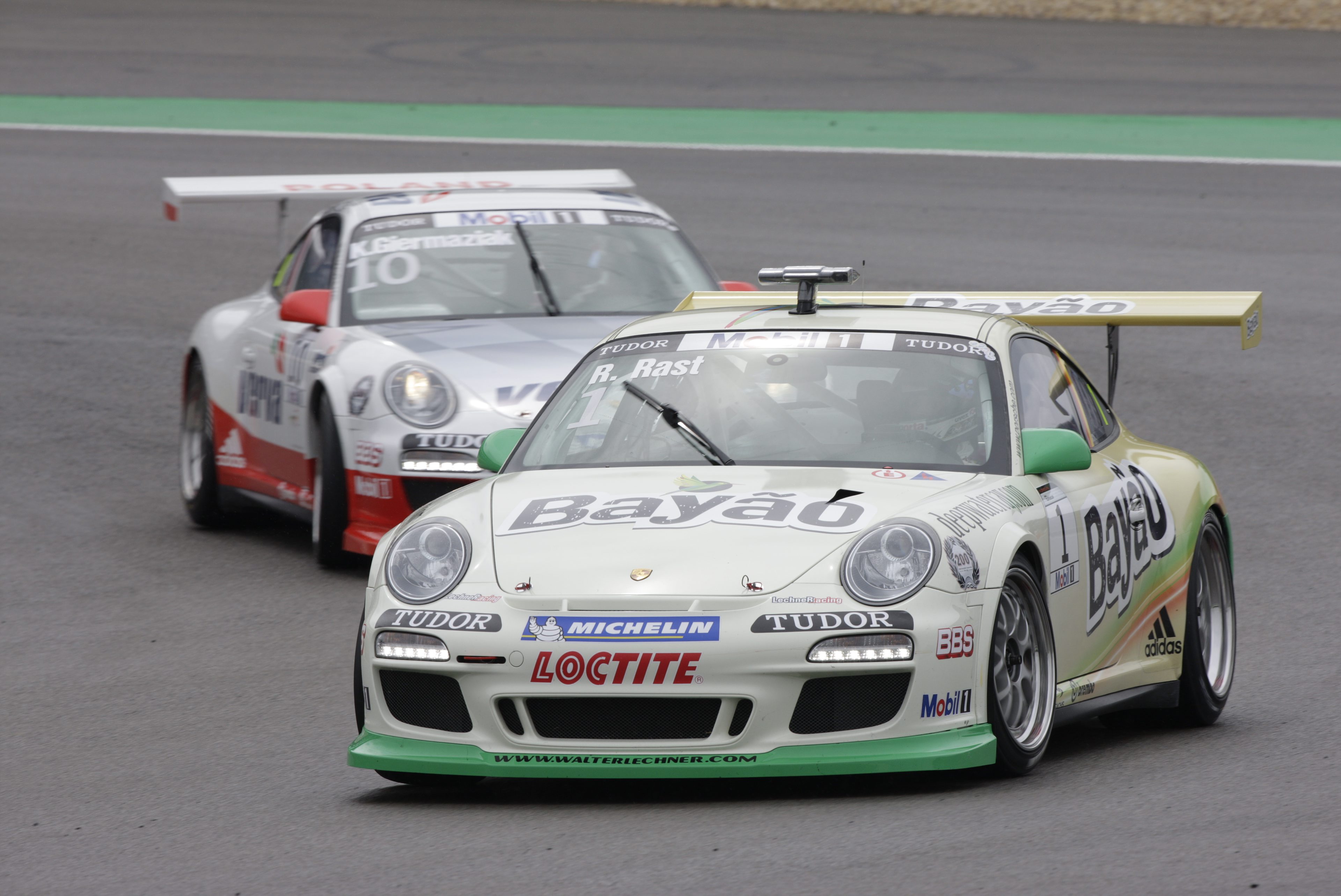
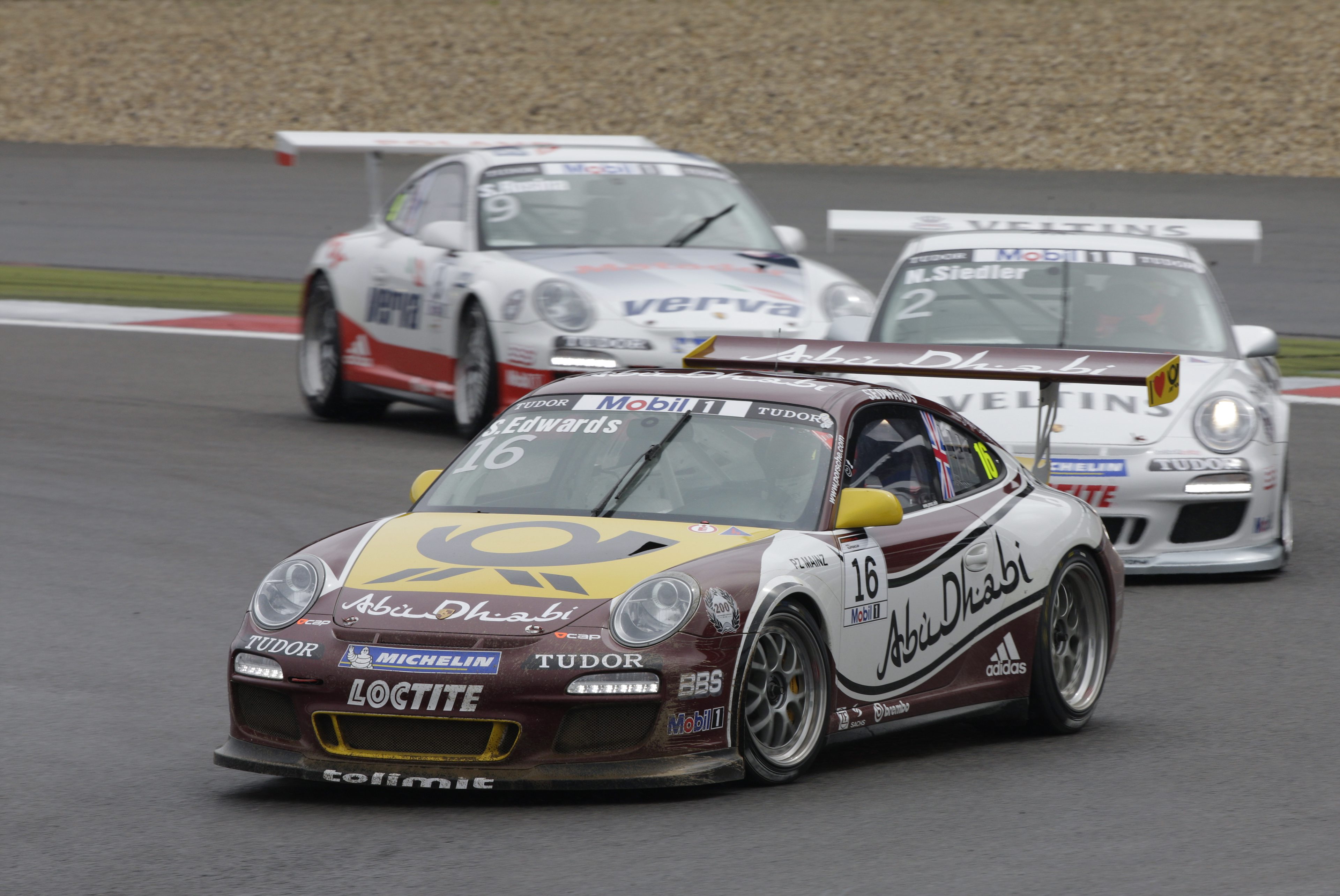
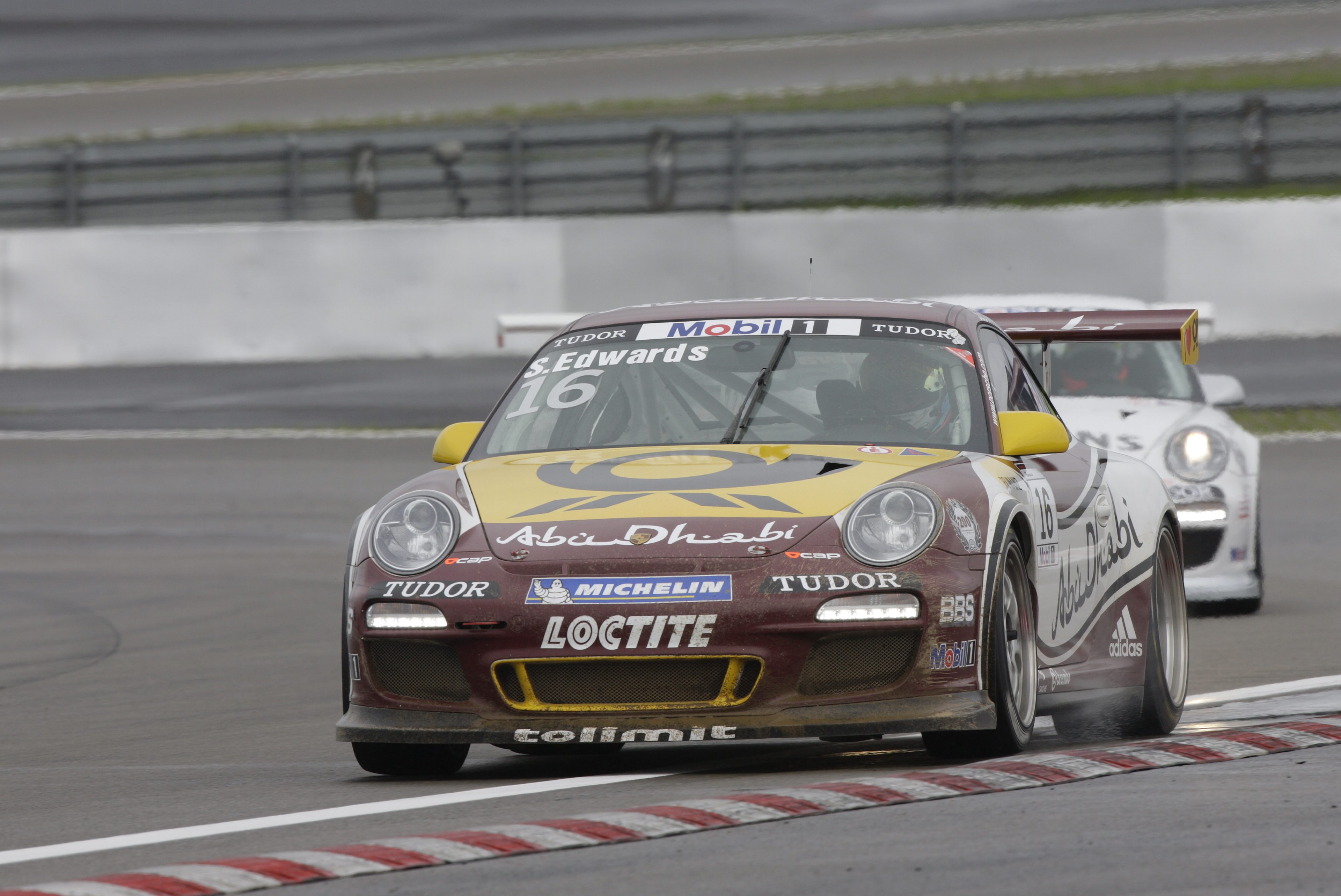
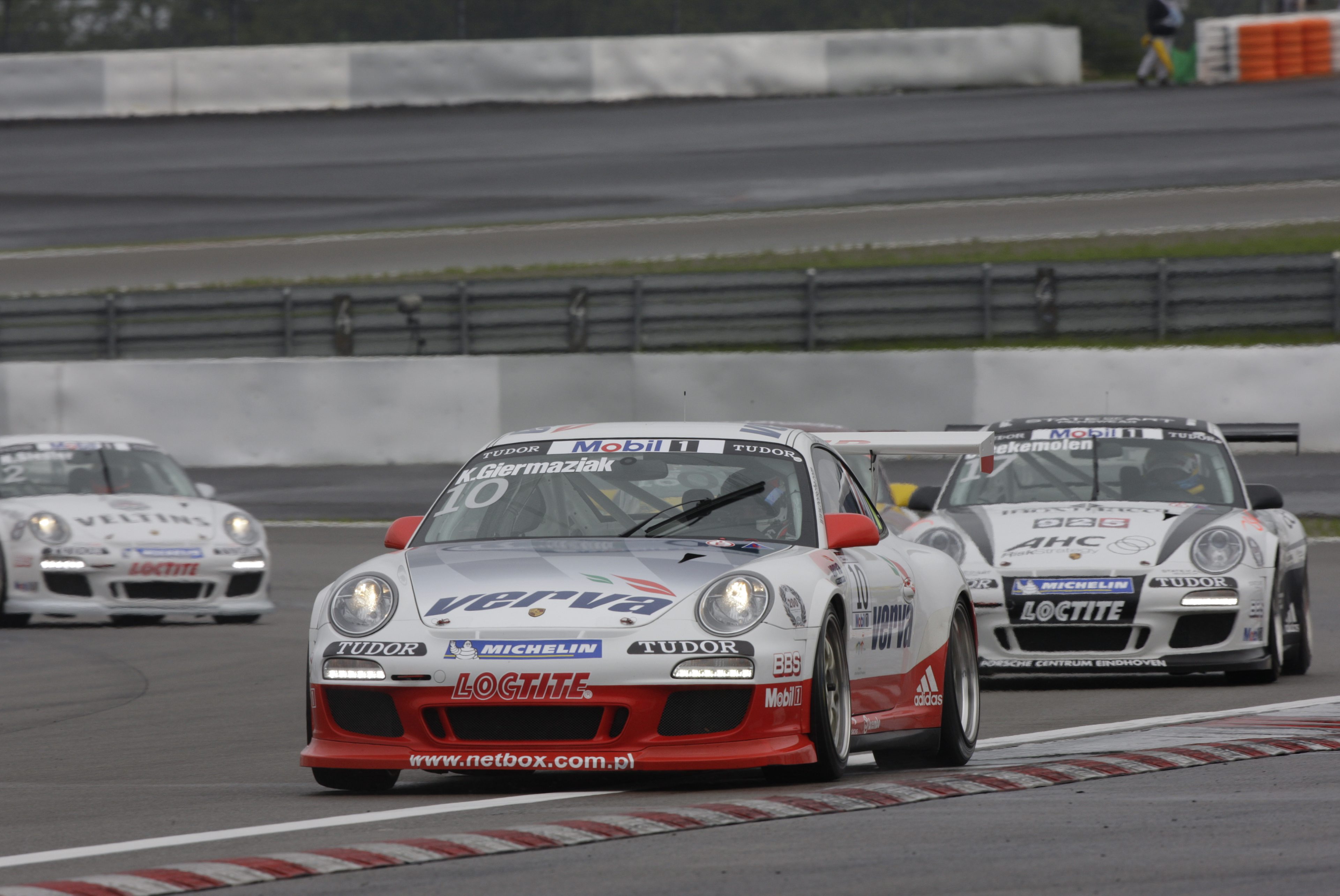
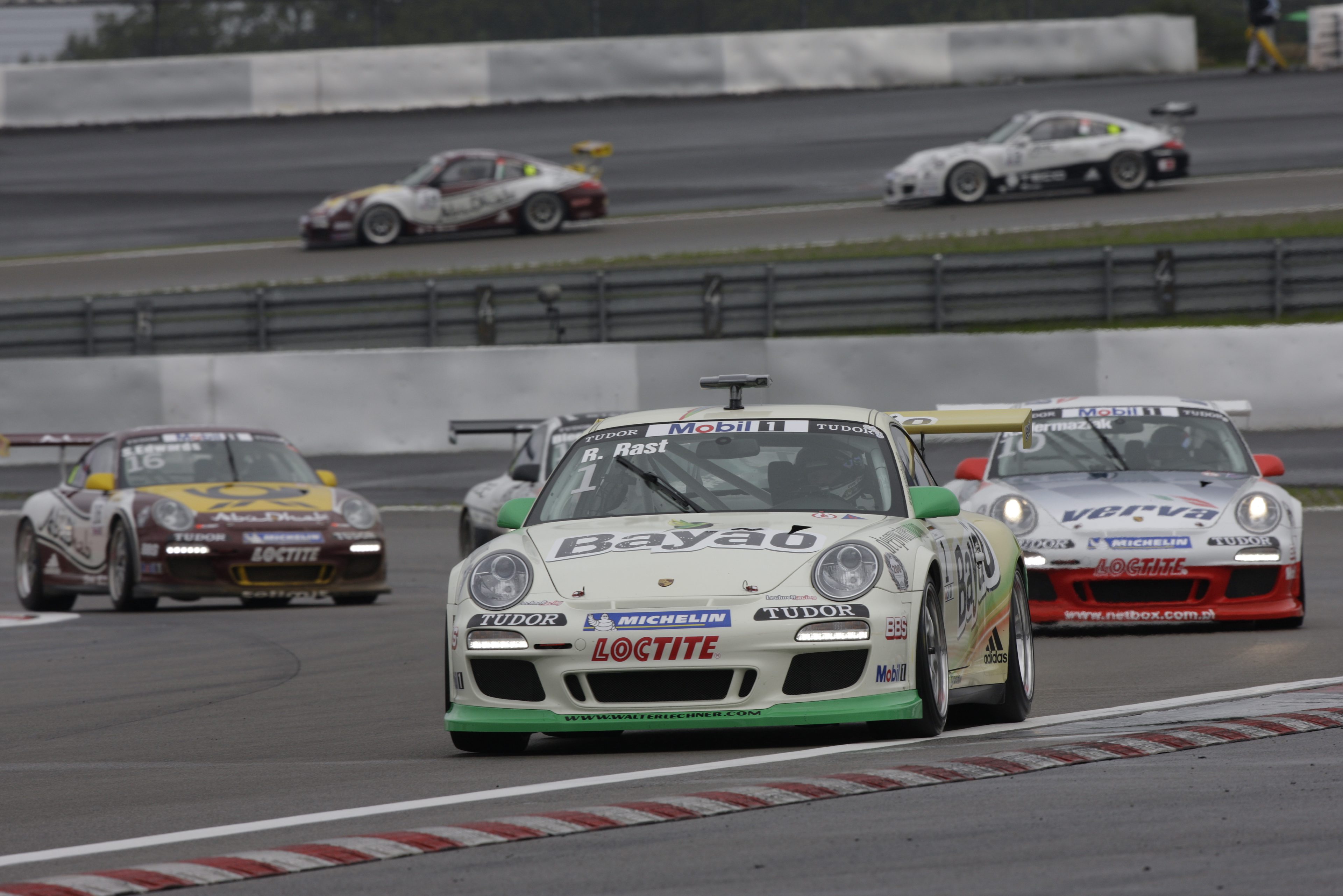
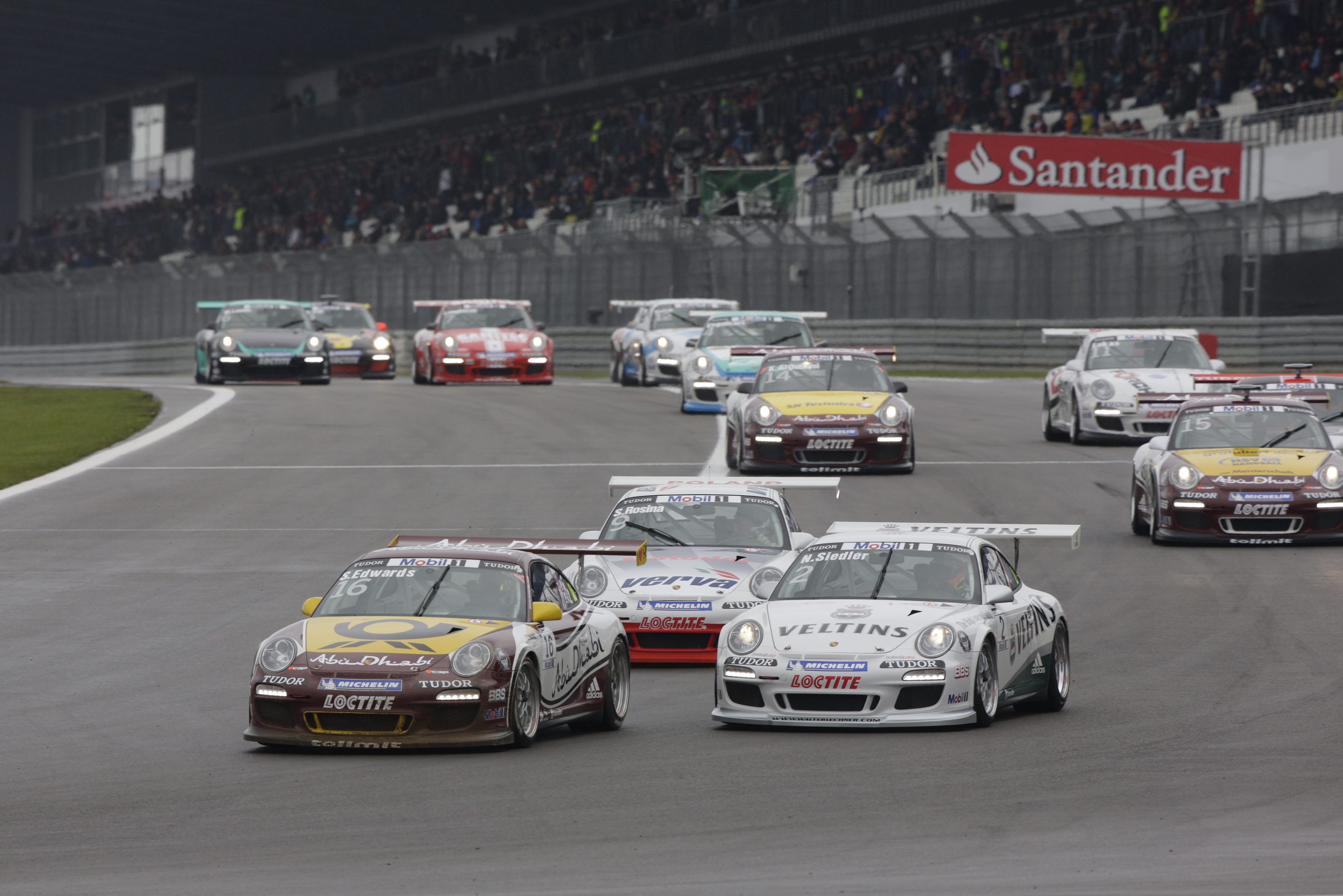
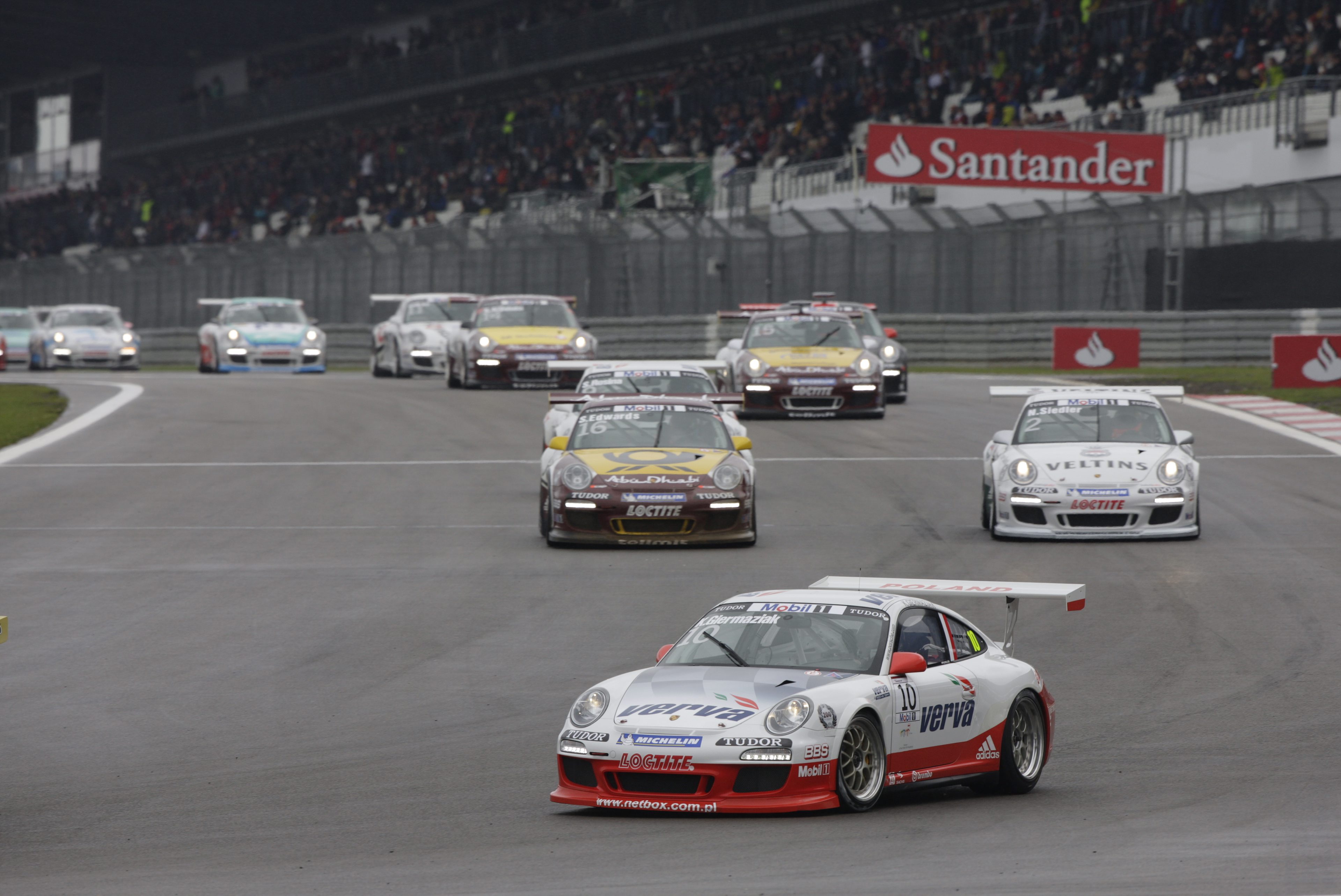
Porsche Mobil 1 Supercup, rd 6 at the F1 race on the Nürburgring/Germany-200th anniversary race
First pole position for Kuba Giermaziak at 200th anniversary race
Stuttgart. At the 200th race in the successful history of the Porsche Mobil1 Supercup, Kuba Giermaziak from Poland starts from pole position on the Nürburgring on Sunday.
 Kuba Giermaziak (PL) – Porsche Mobil 1 Supercup Spanien 2011
Kuba Giermaziak (pole-sitter):
“It couldn’t have been better. I’m so thrilled with my first pole position. But we already noticed in free practice that we had the speed. The entire team prepared everything brilliantly. The Nürburgring is my absolute favourite, in fact I’m always fast here. Achieving pole position is of course a fantastic effort. Now we will try everything to turn it into a fantastic race result.”
At the wheel of the Porsche 911 GT3 Cup fielded by the VERVA Racing team, he turned the fastest qualifying lap for the first time. At 21, Giermaziak is the youngest driver in the series and currently sits seventh overall in the championship.
 Stefan Rosina (SK) – Porsche Mobil 1 Supercup Türkei 2011
Stefan Rosina (2nd in qualifying):
“A huge compliment to my team. With two of us on the first two grid spots, it shows just how well we prepared. The race will certainly not be easy, after all we have a couple of hot-shots breathing hard down our necks. But first we’re going to enjoy this wonderful result and tomorrow we’ll be ready to fight for a top place.”
His teammate from Slovakia, Stefan Rosina, secured the second grid spot with a gap of 0.295 seconds for the anniversary race of the world’s fastest international one-make series and rounded off a strong team performance.
 René Rast (D) – Porsche Mobil 1 Supercup Deutschland 2011
René Rast (3rd in qualifying):
“I’m satisfied with third place. More important is that Nick and Sean are behind me. If I manage to beat them in the race then I can extend my points’ lead. But it looks like rain tomorrow, so in that case anything can happen.”
Behind the VERVA Racing team pilots, title defender René Rast from Germany had to settle with the third quickest time.
 Nick Tandy (GB) – Porsche Mobil 1 Supercup Deutschland 2011
Driving for VELTINS Lechner Racing, the current points’ leader and winner of three race this season tackles the anniversary event on the circuit in Germany’s Eifel region alongside his British opponent and title rival Nick Tandy (Konrad Motorsport).
 Norbert Siedler (A) – Porsche Mobil 1 Supercup Spanien 2011
Notching up the fifth fastest time, Austria’s Norbert Siedler (VELTINS Lechner Racing) secured a good starting position for Sunday, just like Patrick Huisman (Team Bleekemolen), the Supercup record winner from the Netherlands with sixth.
 Patrick Huisman (NL) – Porsche Mobil 1 Supercup Türkei 2011
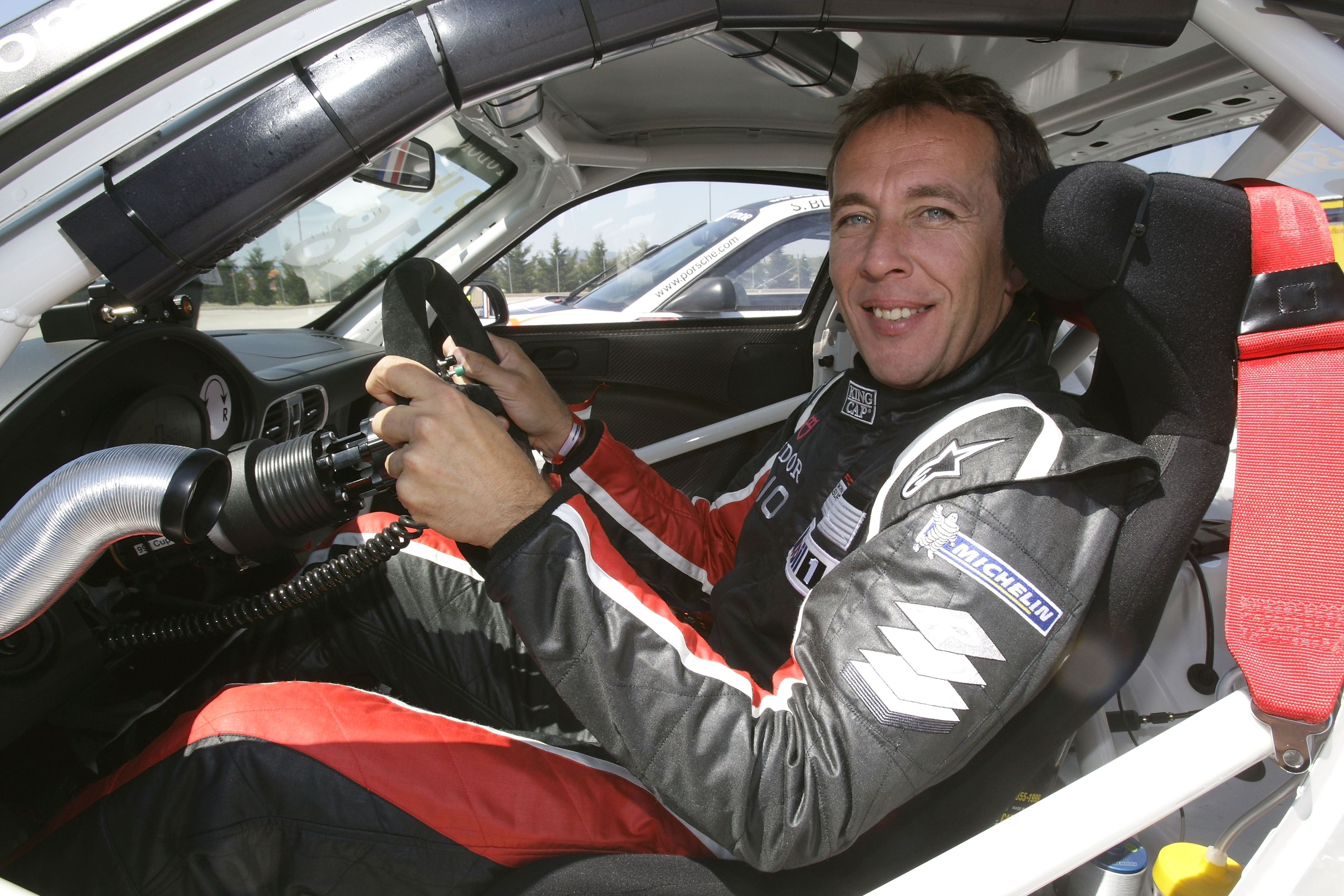
Sean Edwards from Great Britain had to settle for the seventh grid position. Driving for Team Abu Dhabi by tolimit, the current number two in the championship faces a tough task in his bid to make a dent in the points’ difference between him and front-runner René Rast.
 Sean Edwards (GB) – Porsche Mobil 1 Supercup Deutschland 2011
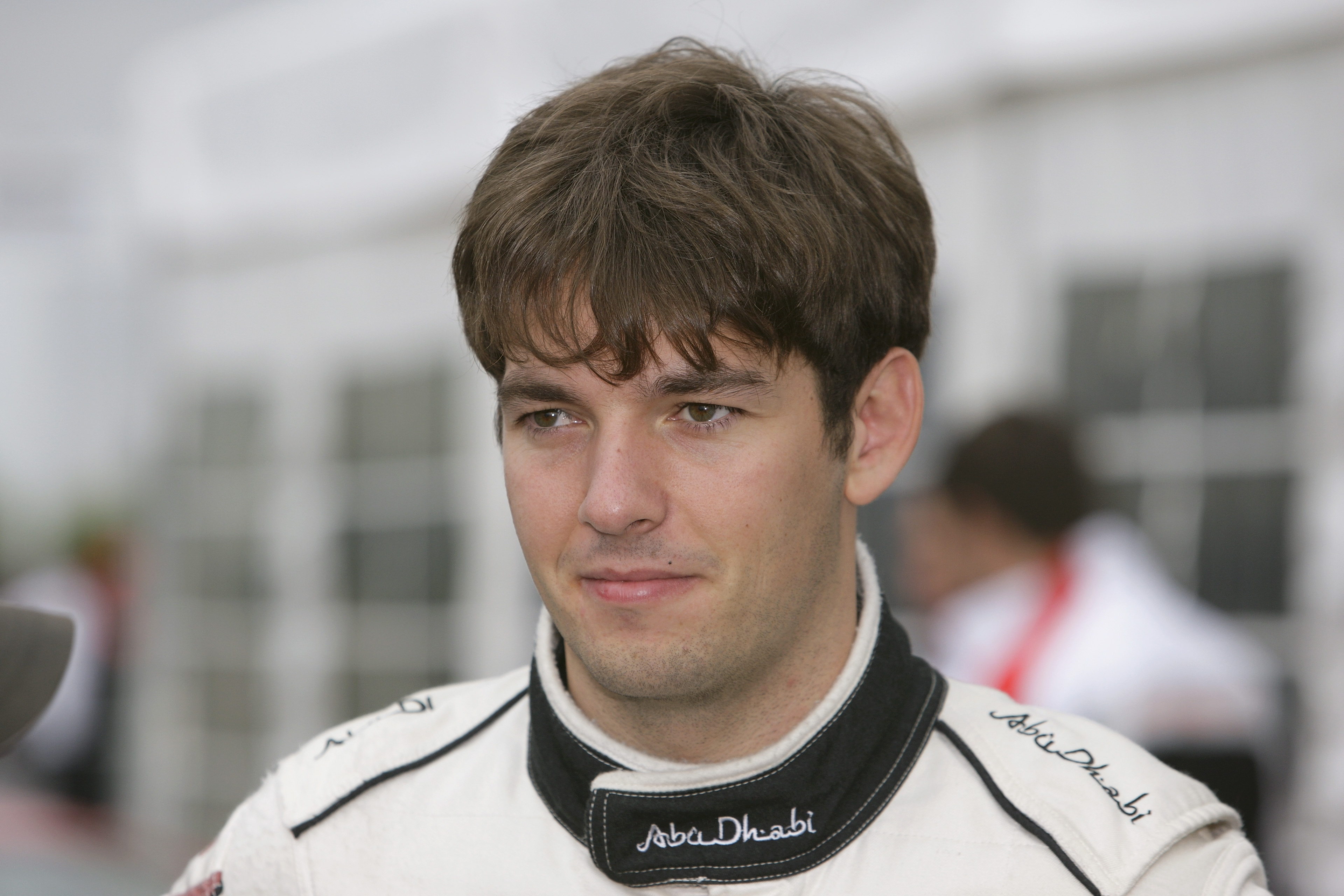
This also applies to his teammate Jeroen Bleekemolen.
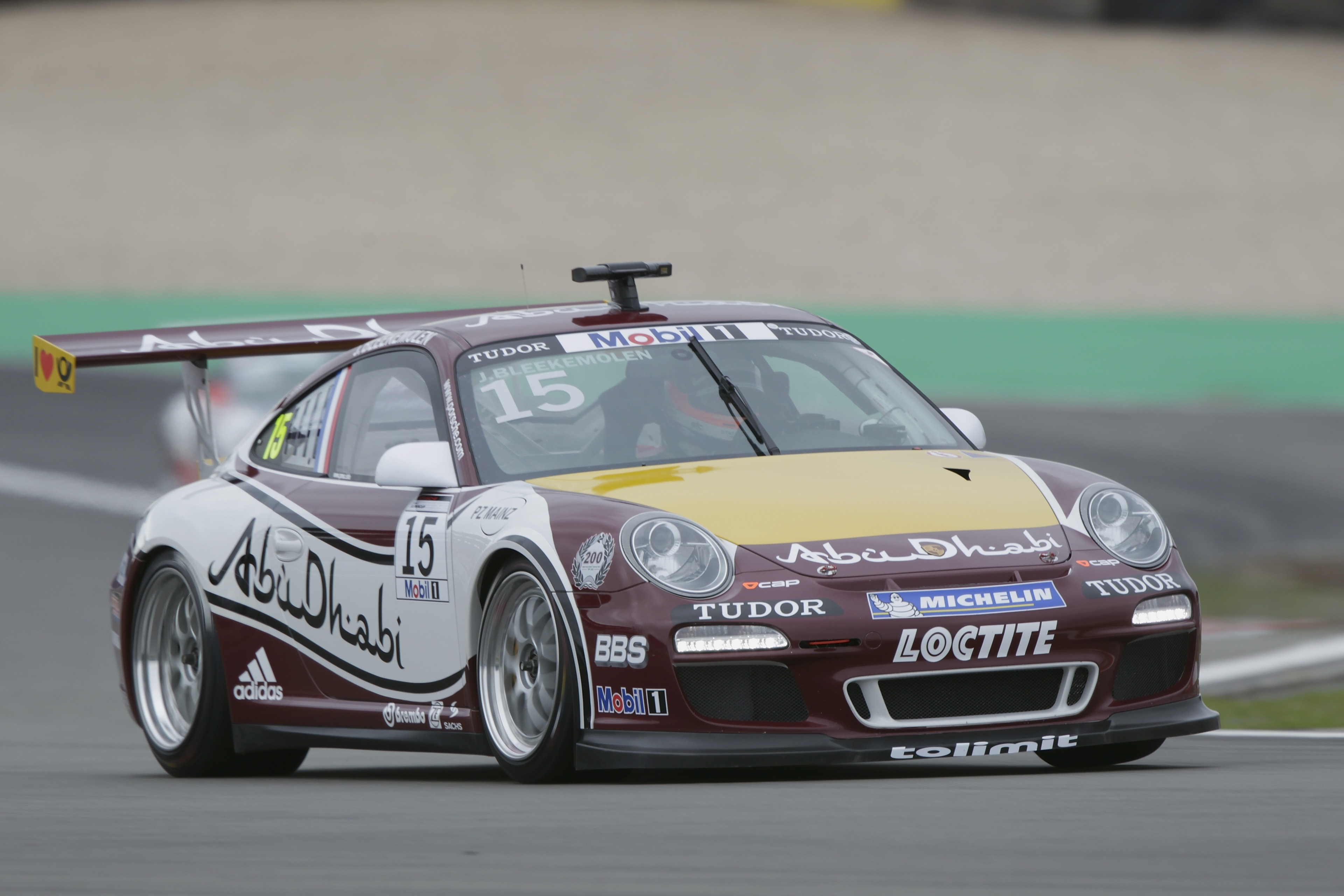 Jeroen Bleekemolen (NL) – Porsche Mobil 1 Supercup Deutschland 2011
The double Supercup champion from the Netherlands occupies the eighth spot ahead of Supercup newcomer Kévin Estre (France) and Robert Lukas (Poland), the Hermes Attempto Racing duo.
Qualifying result
1. Kuba Giermaziak (PL), VERVA Racing Team, 2:01.791 minutes
2. Stefan Rosina (SK), VERVA Racing Team, + 0.295 seconds
3. René Rast (D), VELTINS Lechner Racing, + 0.376
4. Nick Tandy (GB), Konrad Motorsport, + 0.433
5. Norbert Siedler (A), VELTINS Lechner Racing, + 0.568
6. Patrick Huisman (NL), Team Bleekemolen, + 0.801
SOURCE: Porsche AG Media Database
Public Relations and Media
Motor and Sports Press
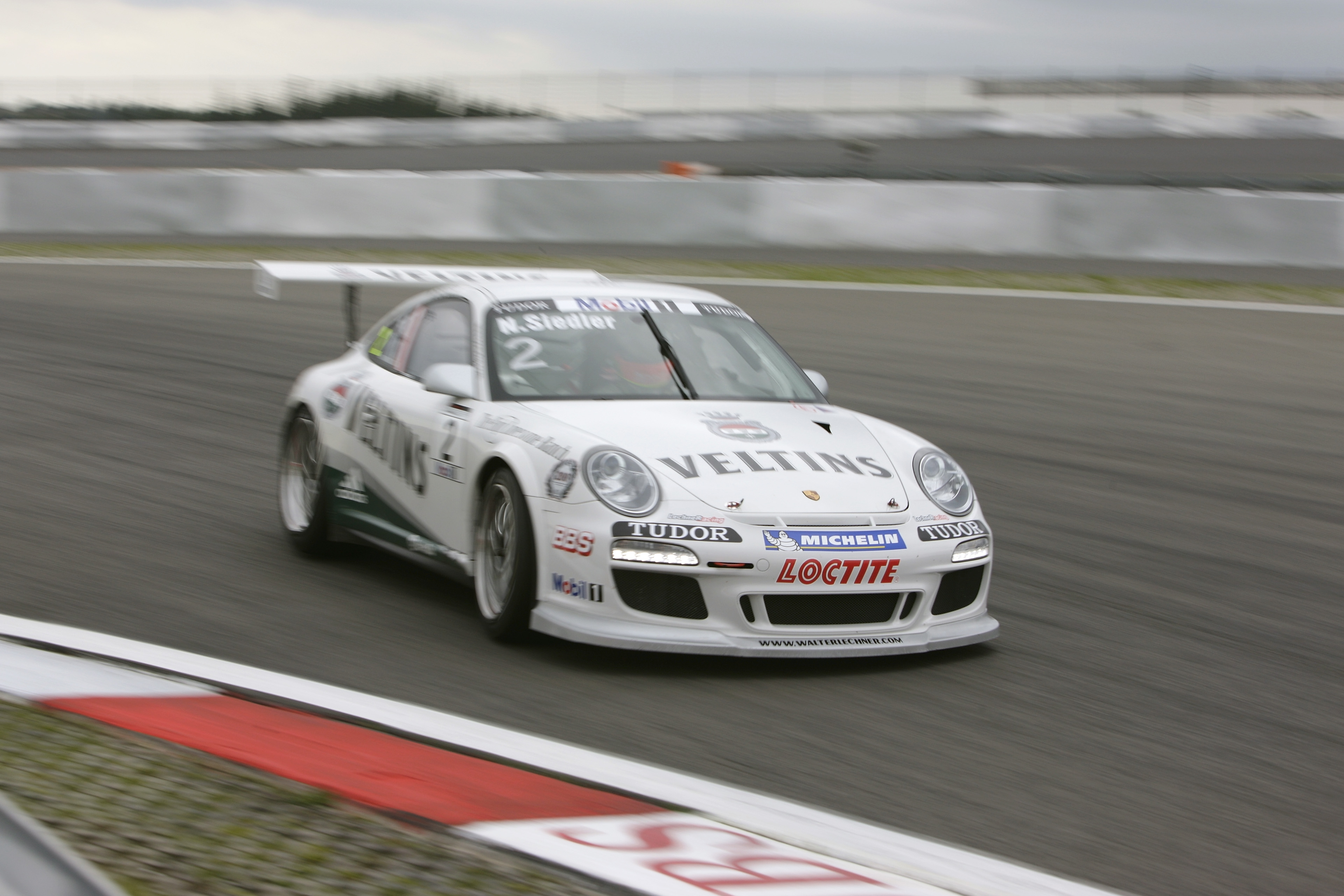
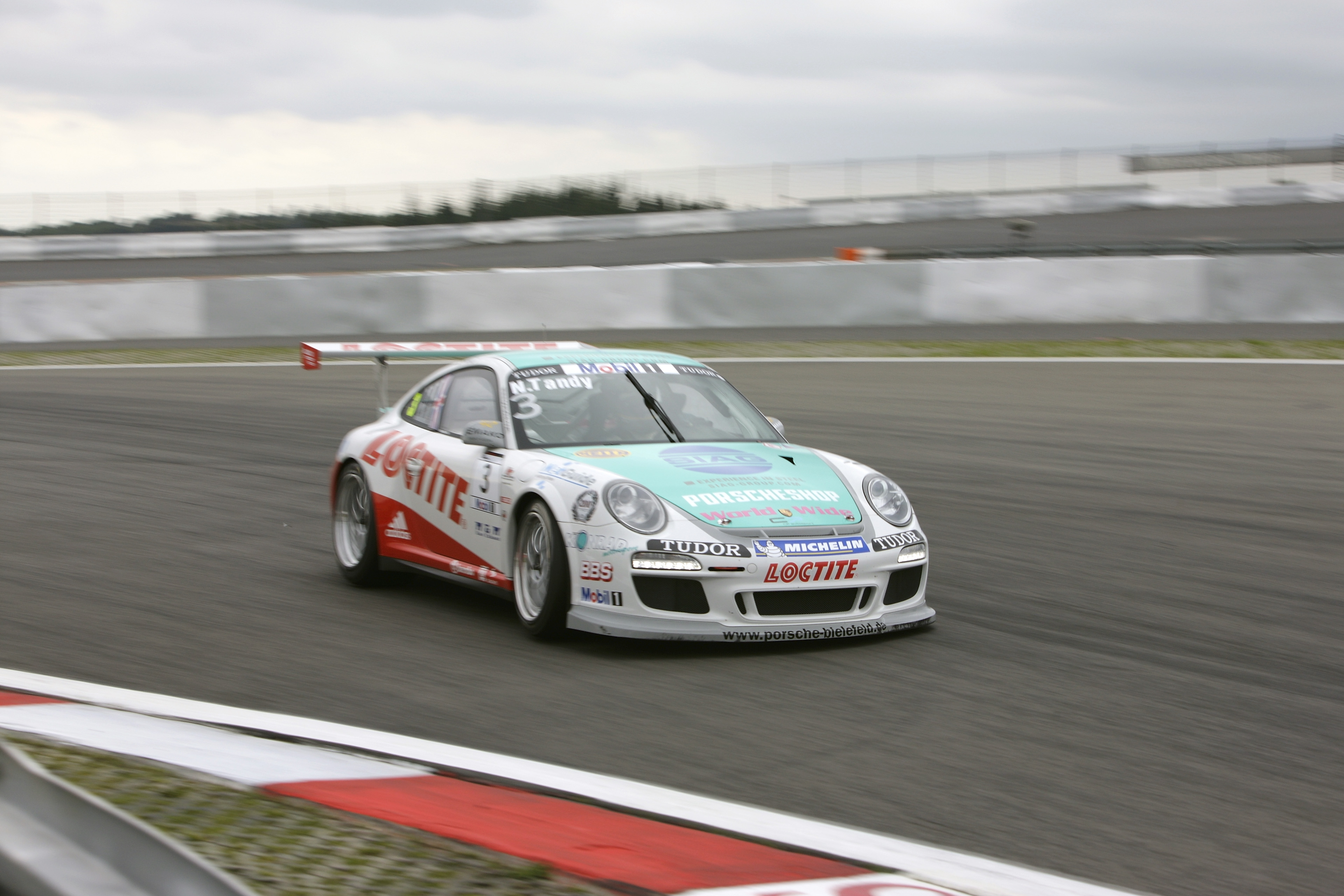
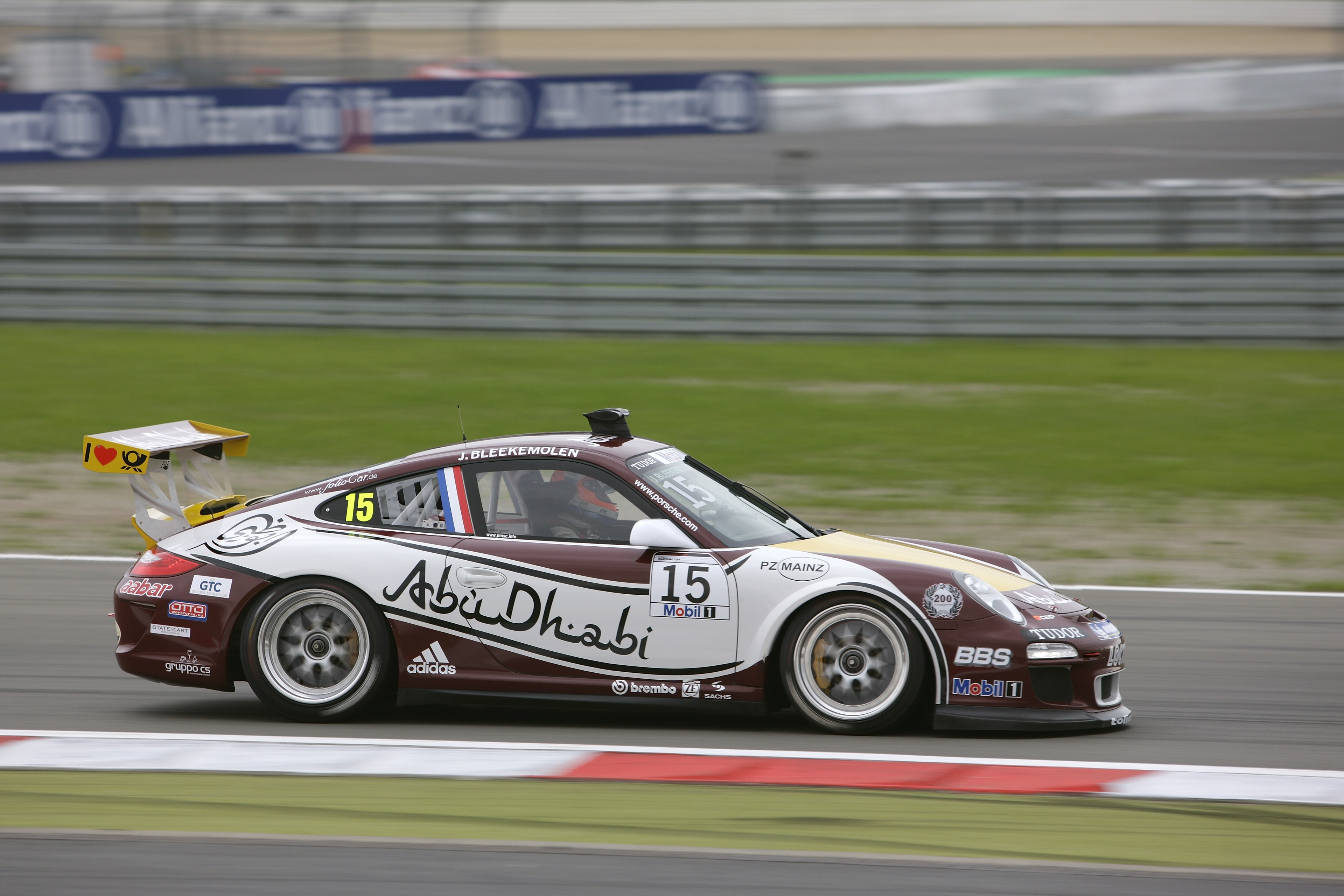
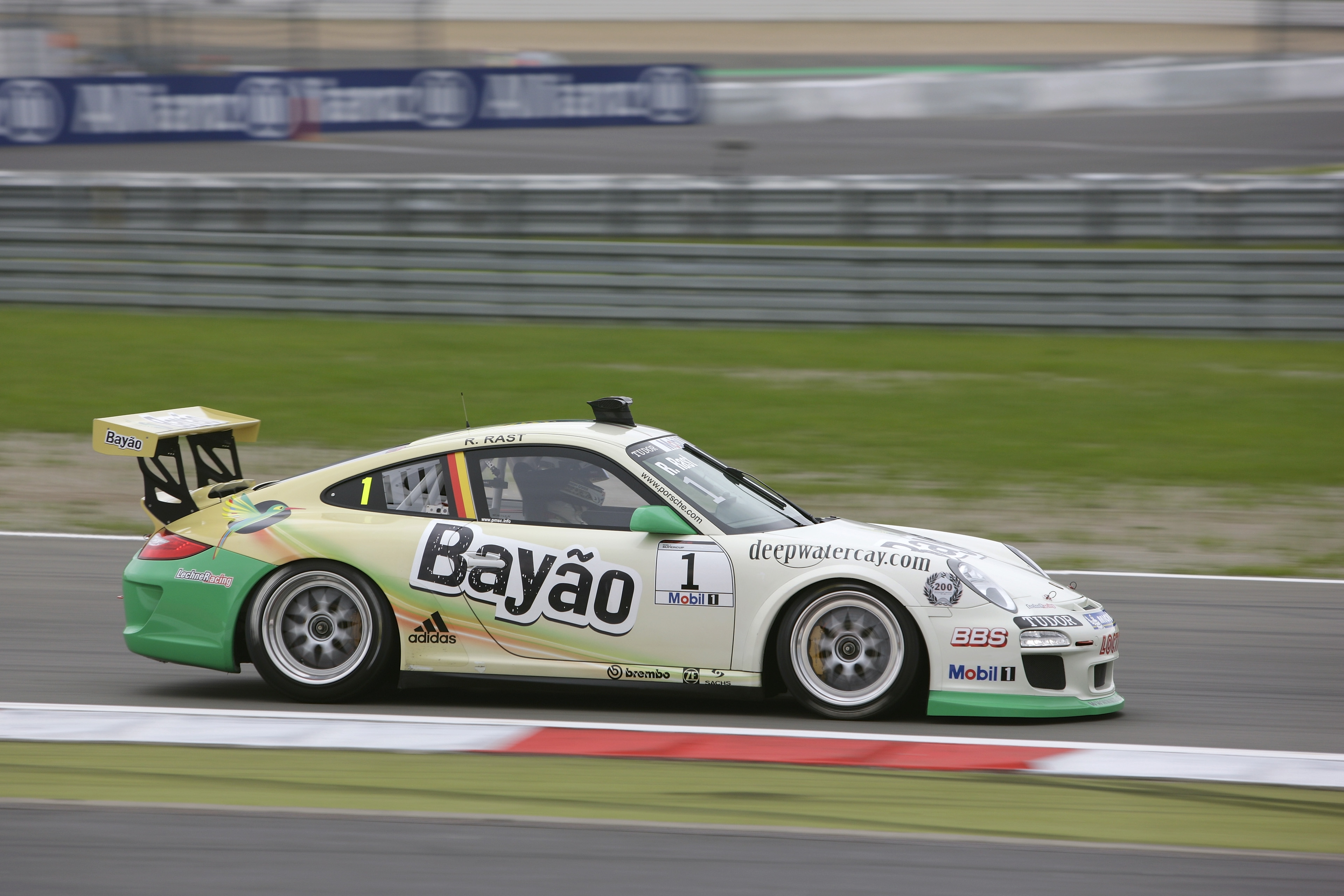
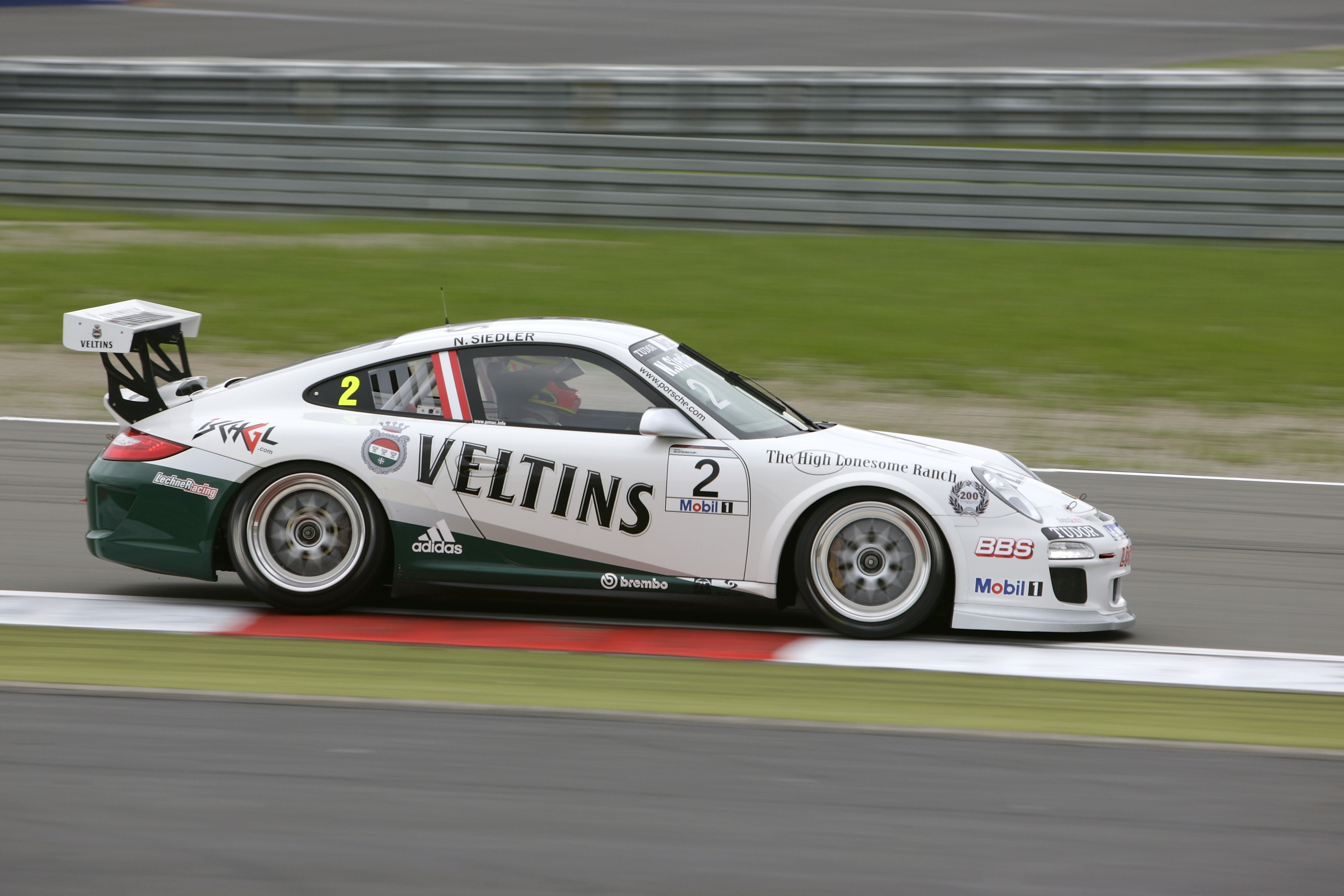
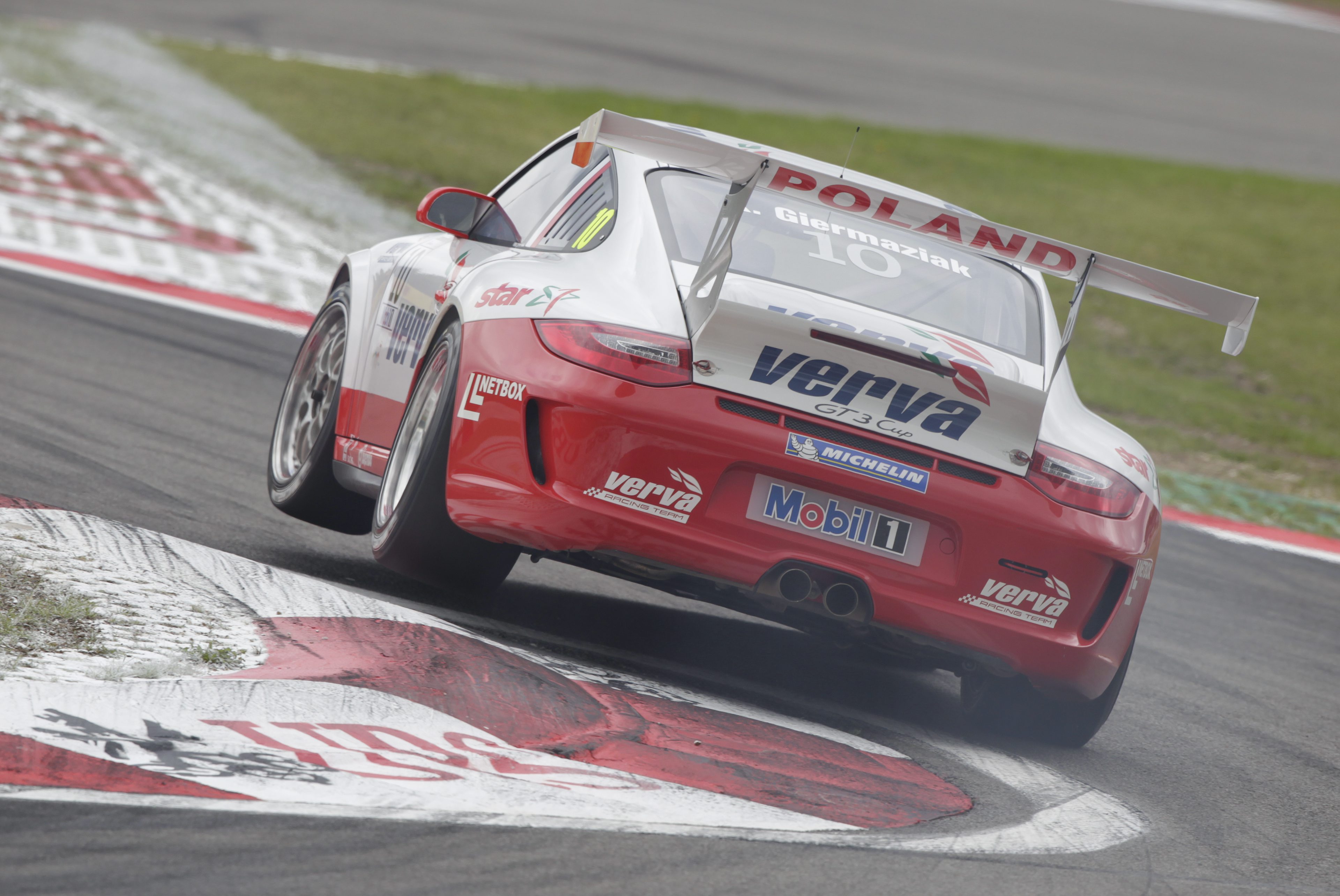
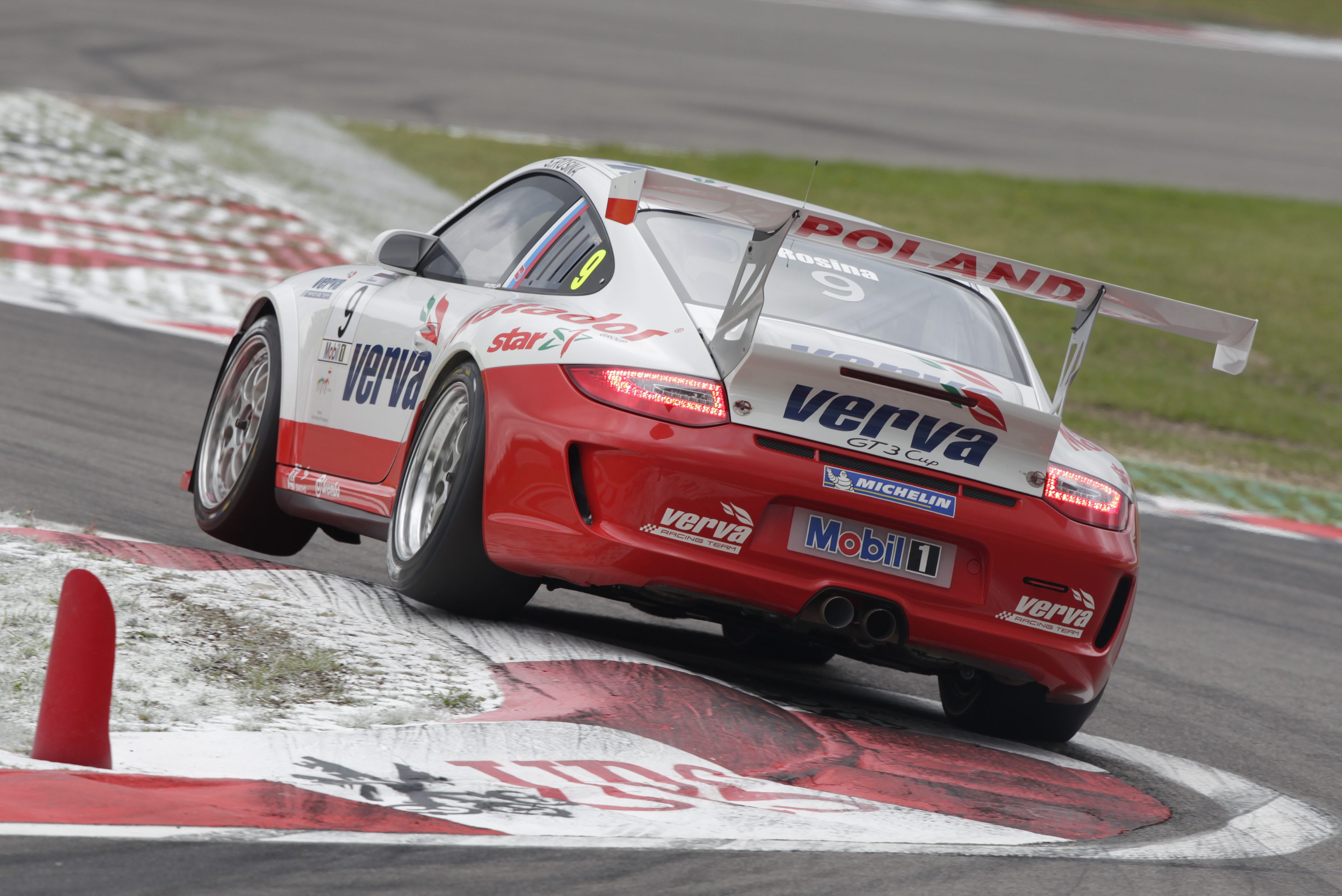
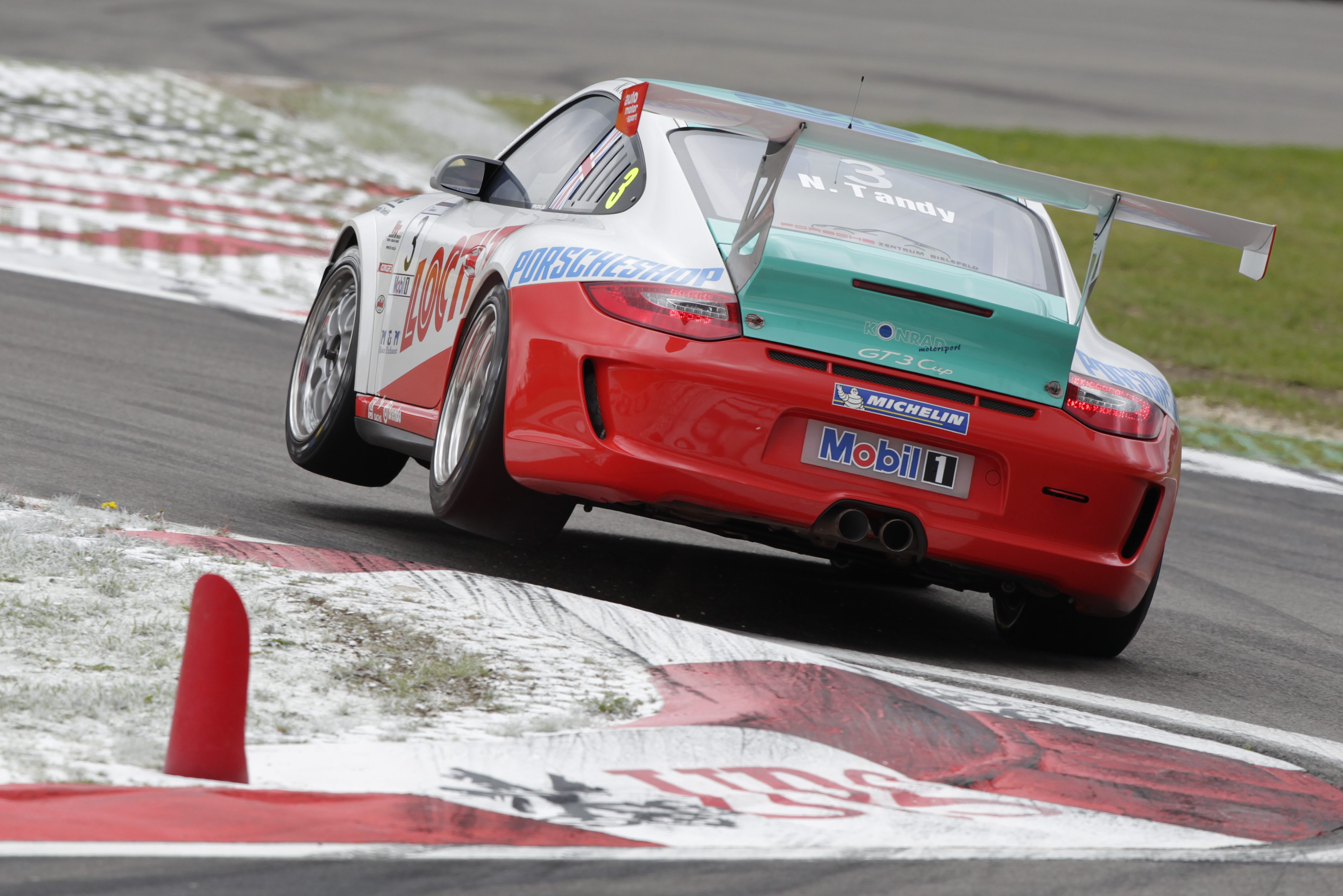
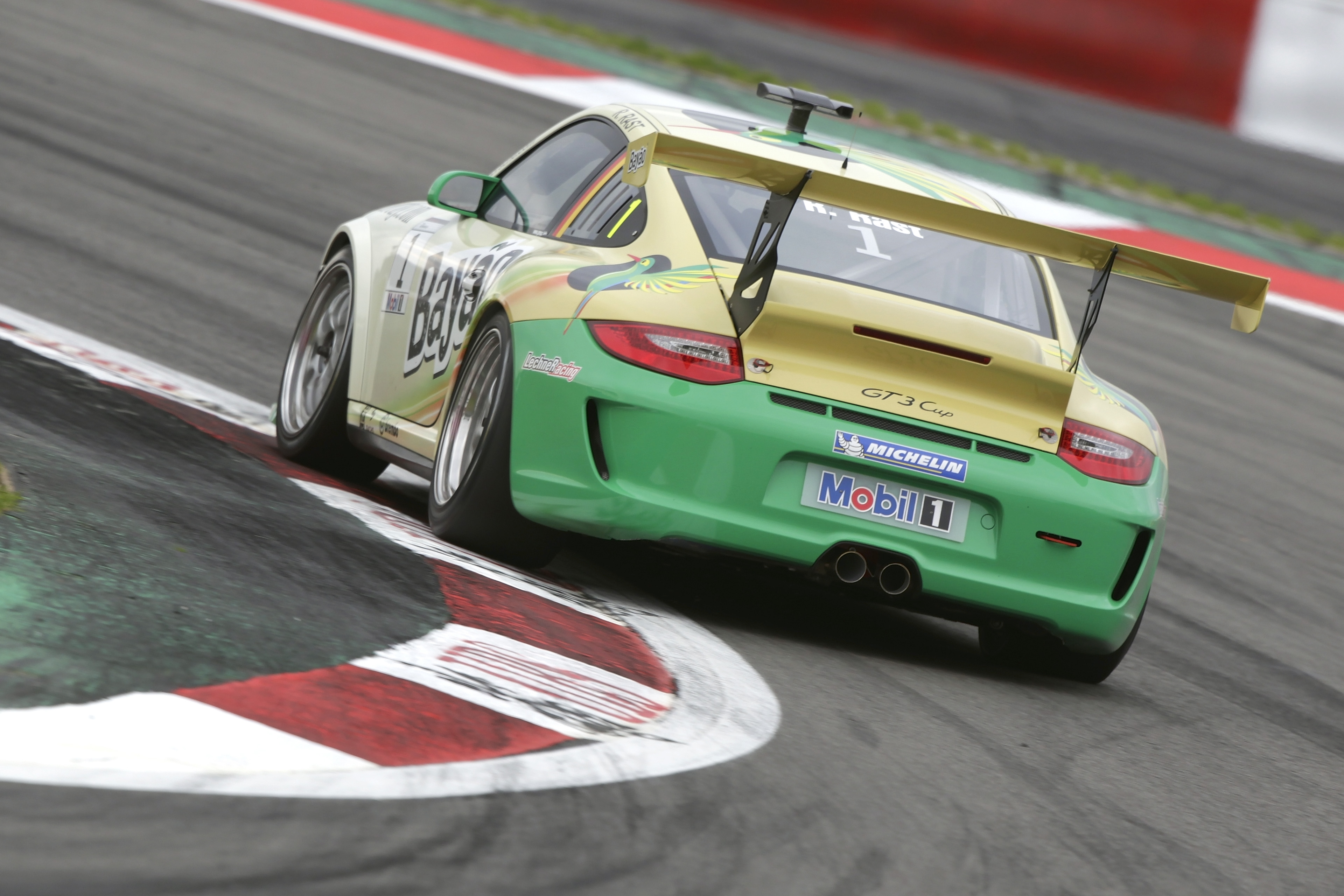
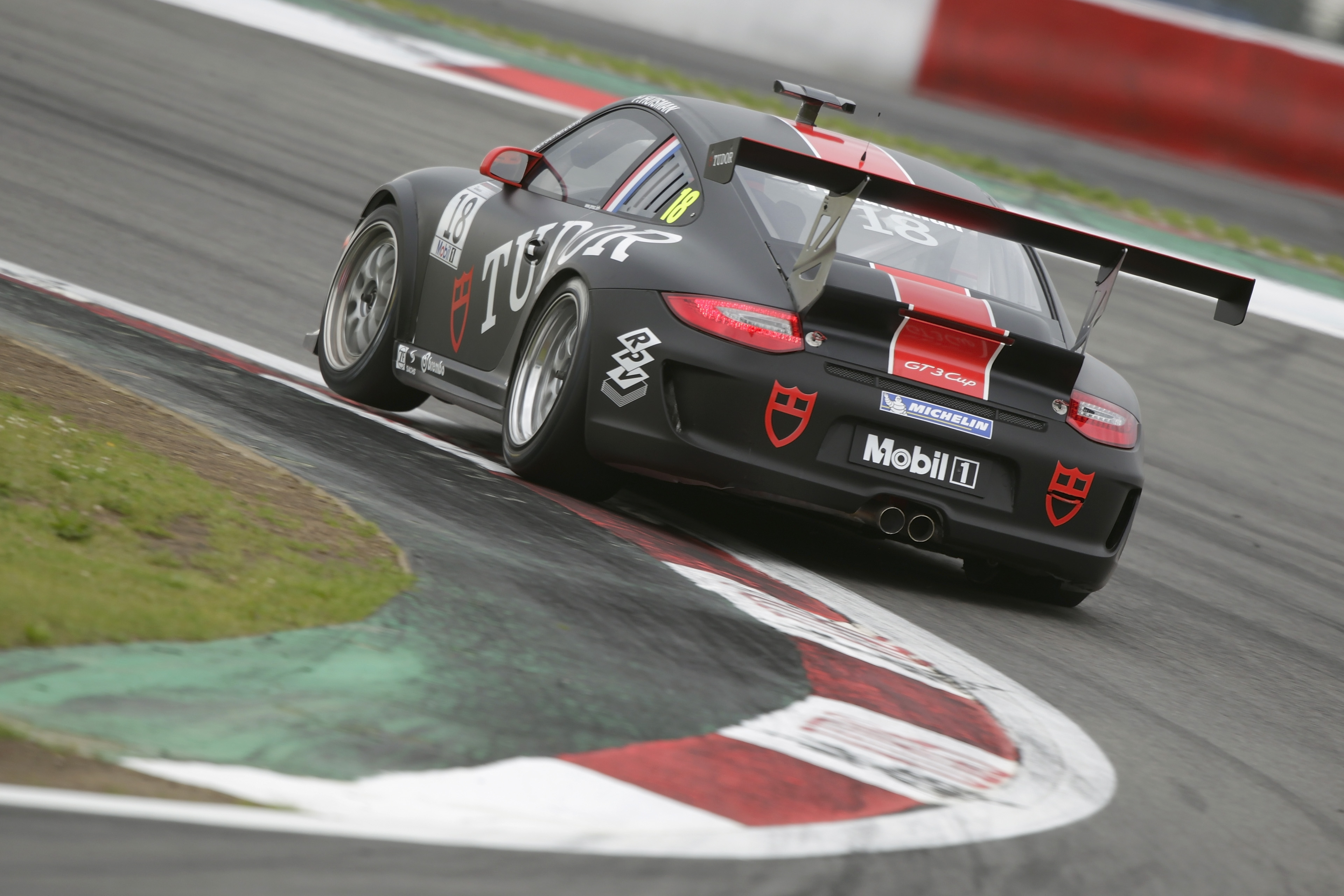
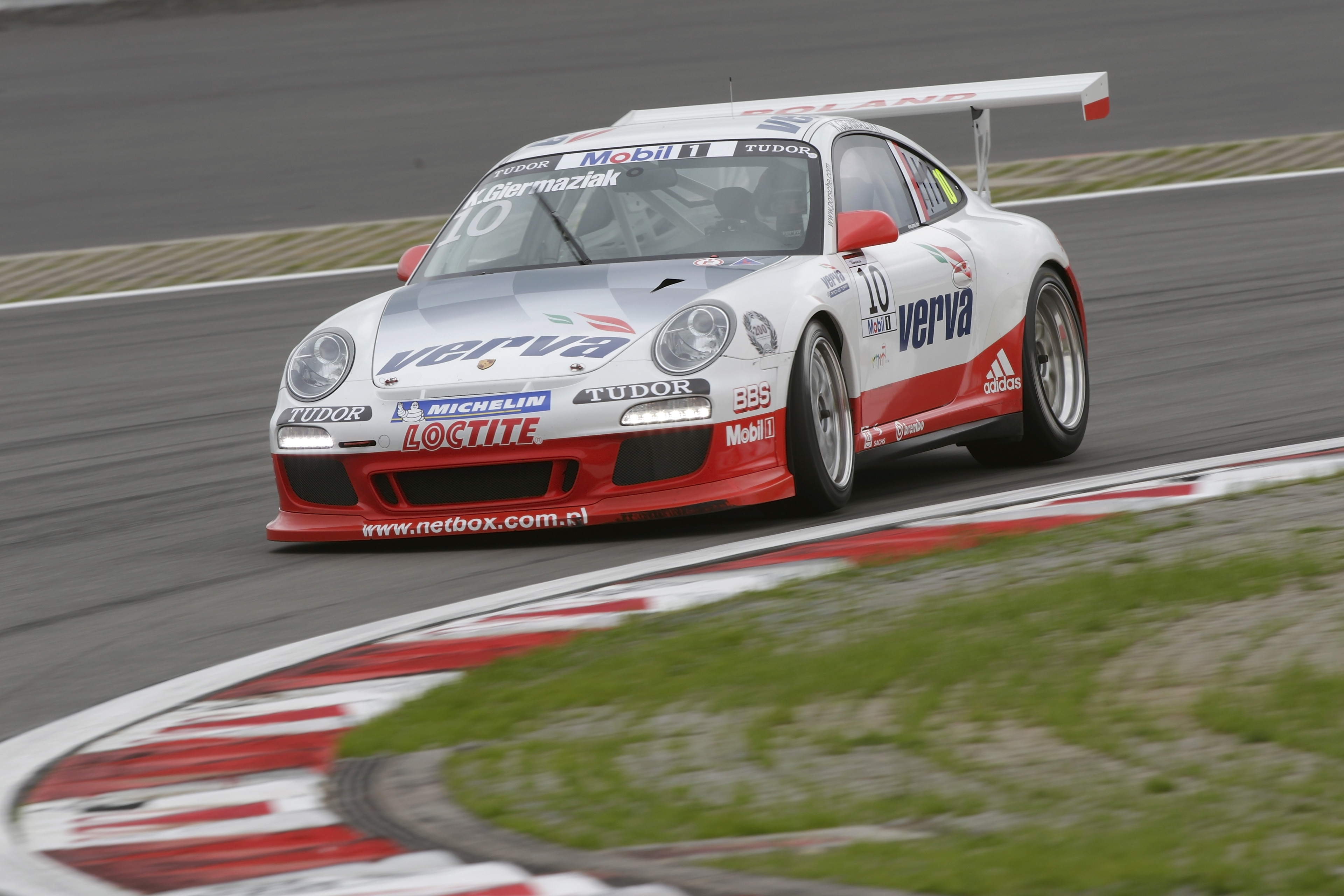
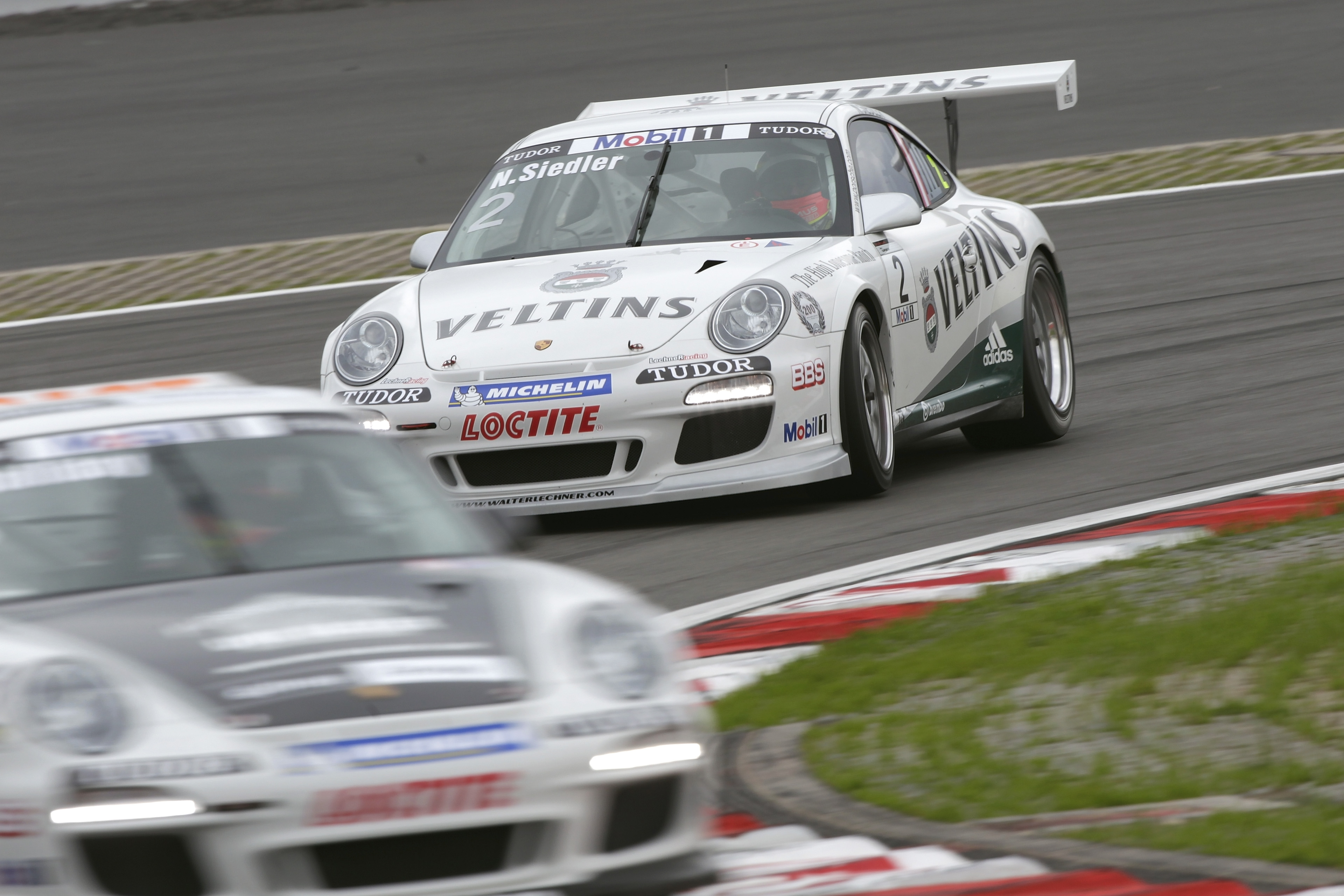
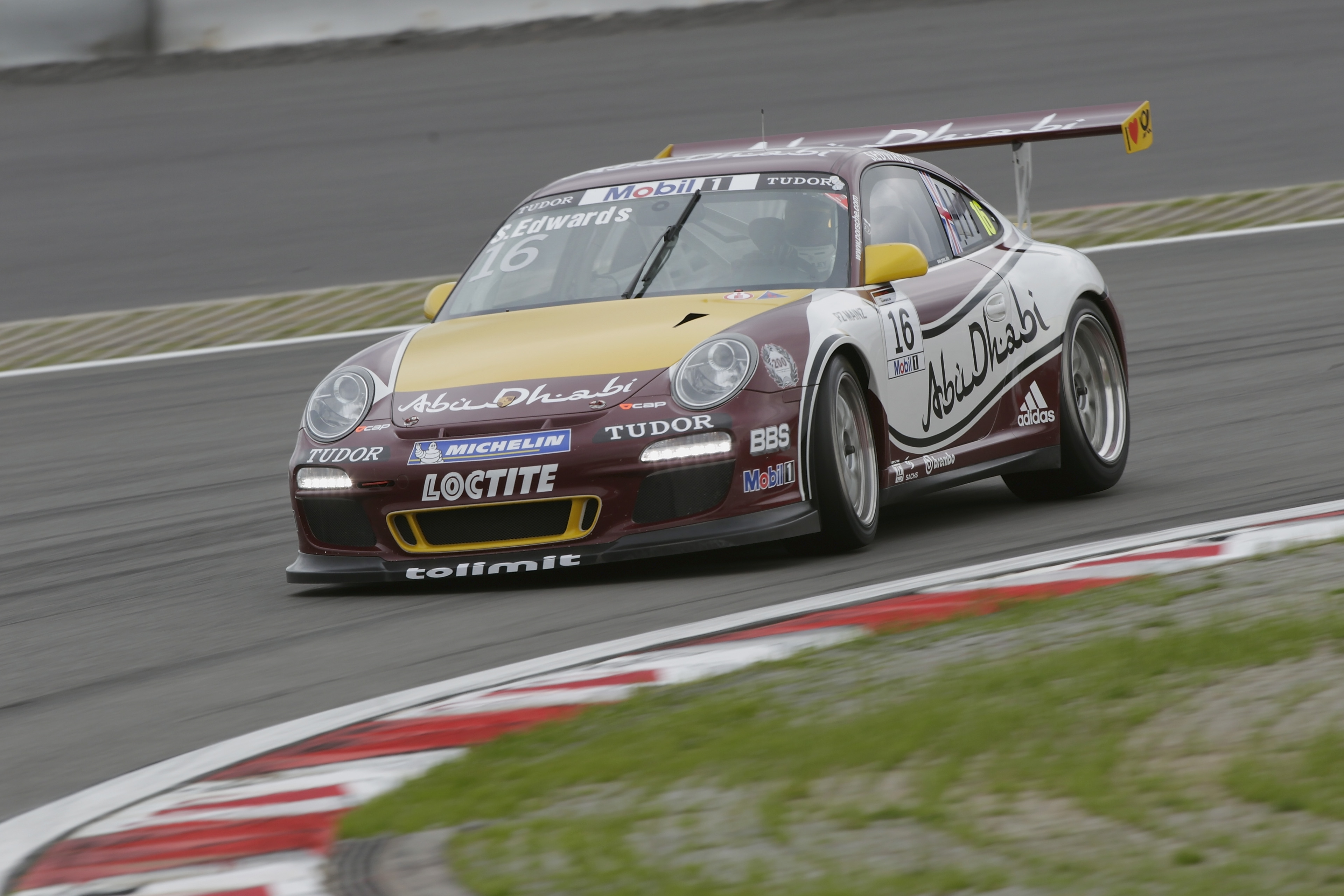
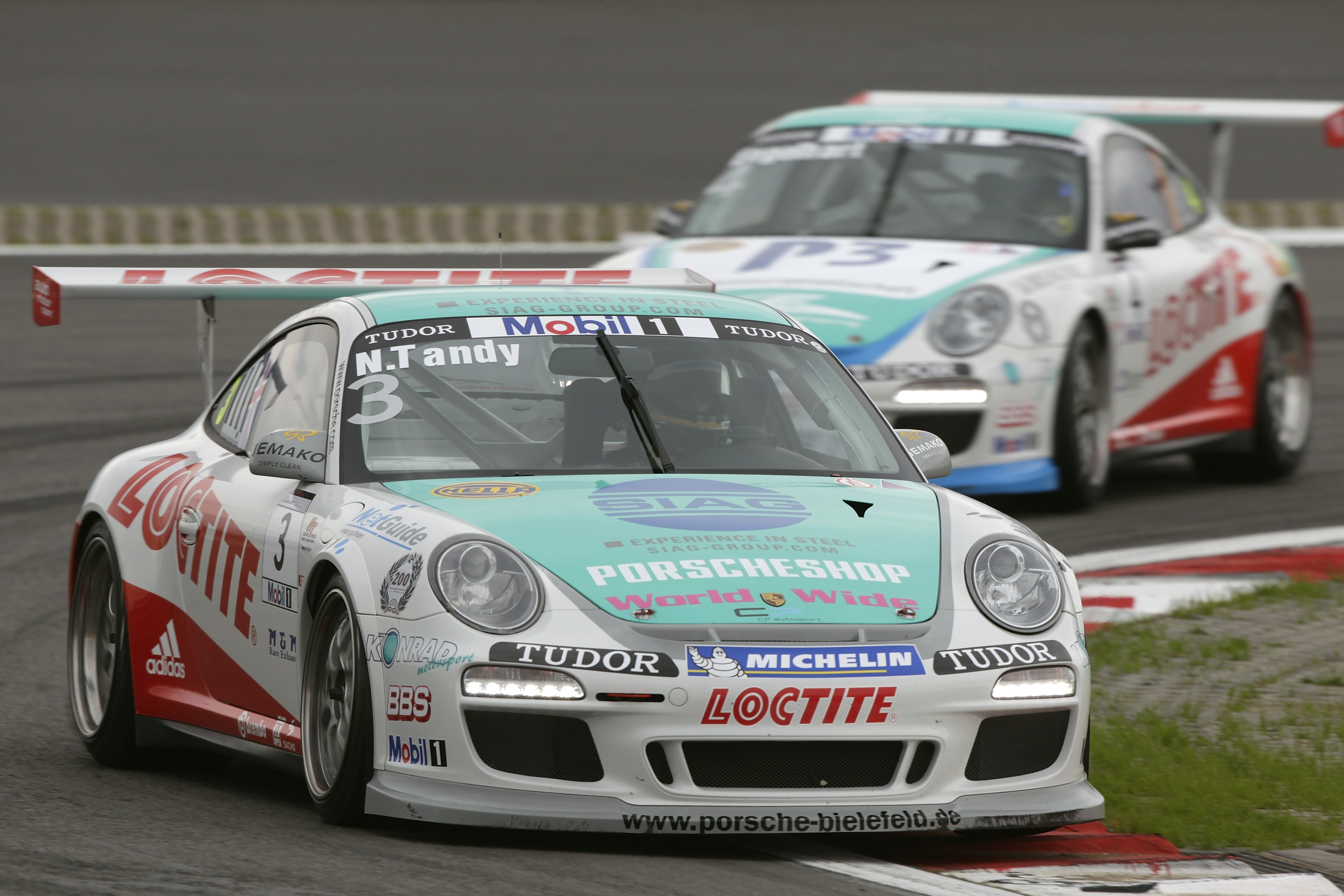
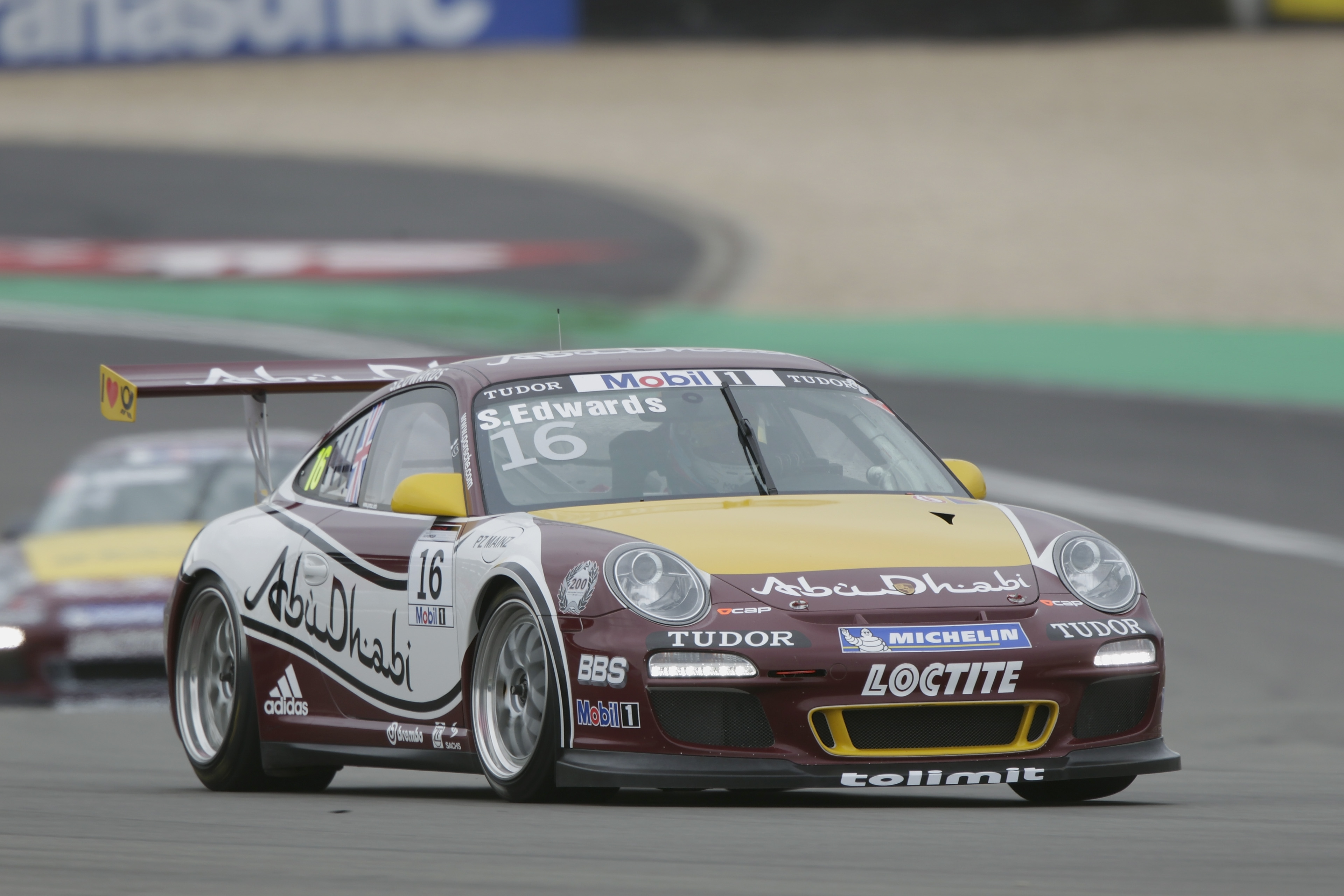
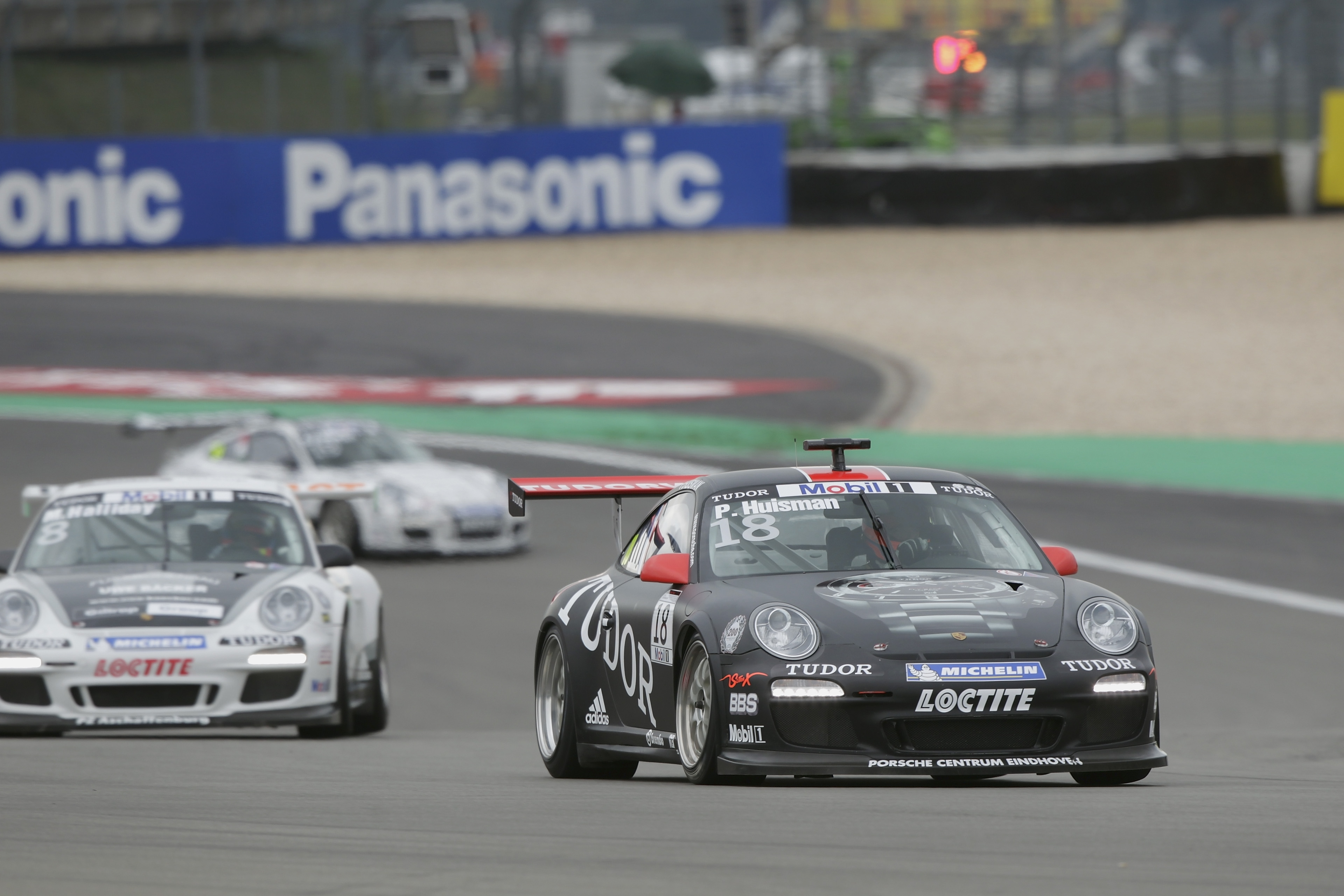
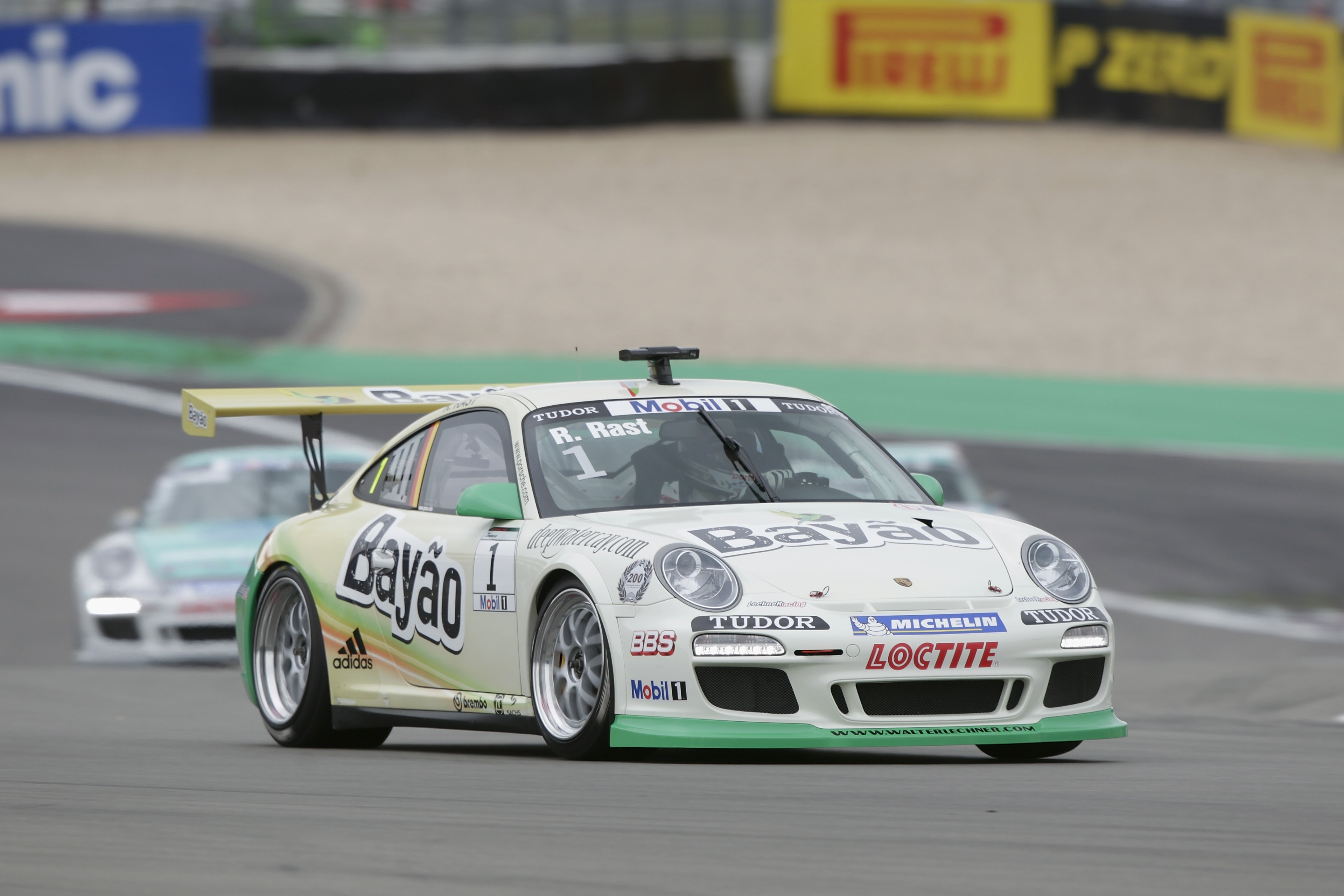
200th race in the Porsche Mobil1 Supercup-The highlights of a success story
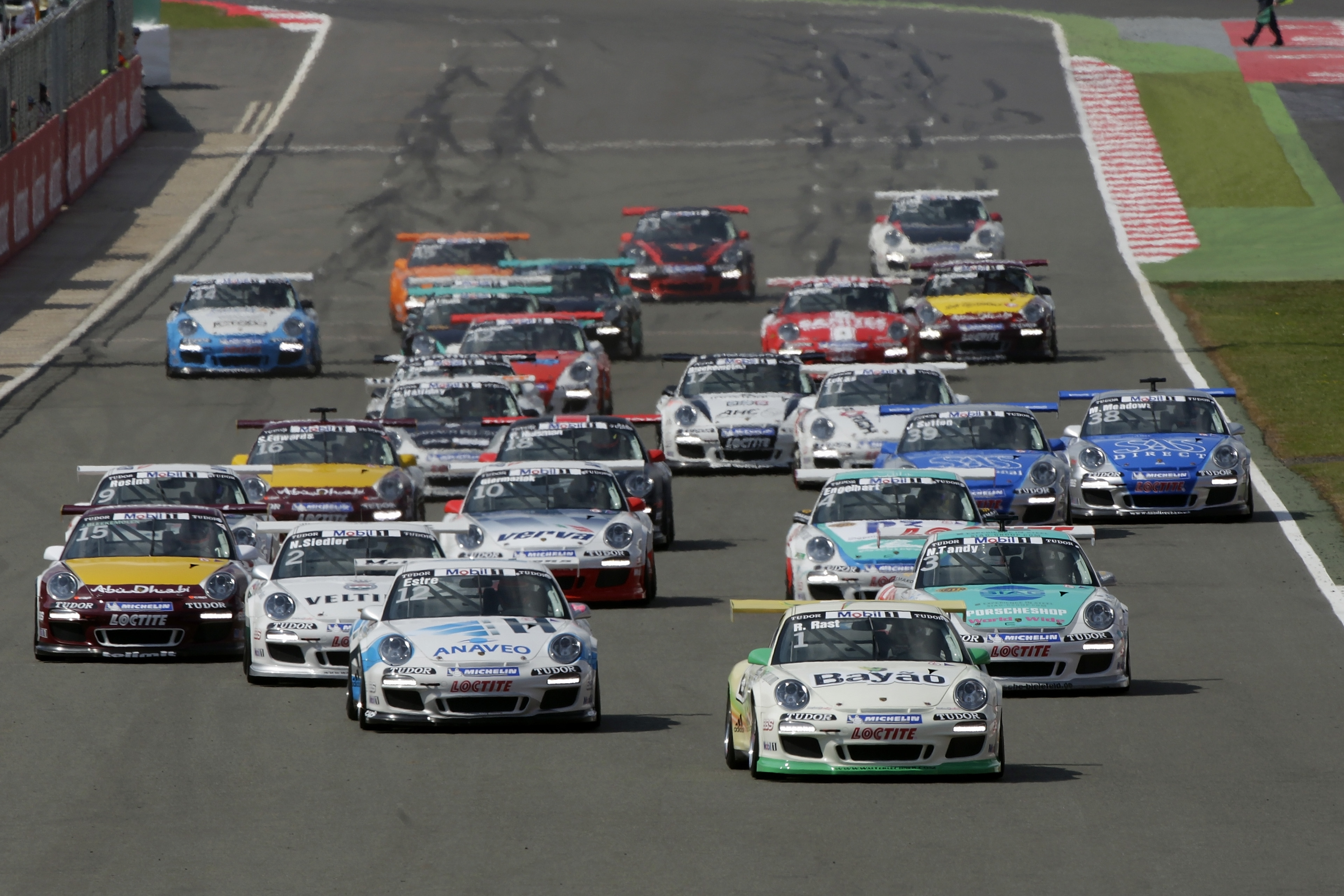 Porsche Mobil1 Supercup 2011
Stuttgart. The Porsche Mobil1 Supercup has reason to celebrate:
On 24 July,the 200th race of the world’s fastest international one-make series takes off at the Nürburgring. The series has run as support to the Formula 1 races since 1993. Some interesting facts and figures of a success story:
The first race was run on 25 April 1993 as support to the San Marino Grand Prix in Imola. Victory went to Uwe Alzen, who was eventually beaten in the fight for the title by Altfrid Heger.
 Uwe Alzen (GER) – Porsche Carrera Cup Deutschland – 04 Norisring 2010
The closest title decision came in 1997. Patrick Huisman and Oliver Mathai both had 128 points to their credit. The title went to Huisman who had won three races, whilst Mathai triumphed just once.
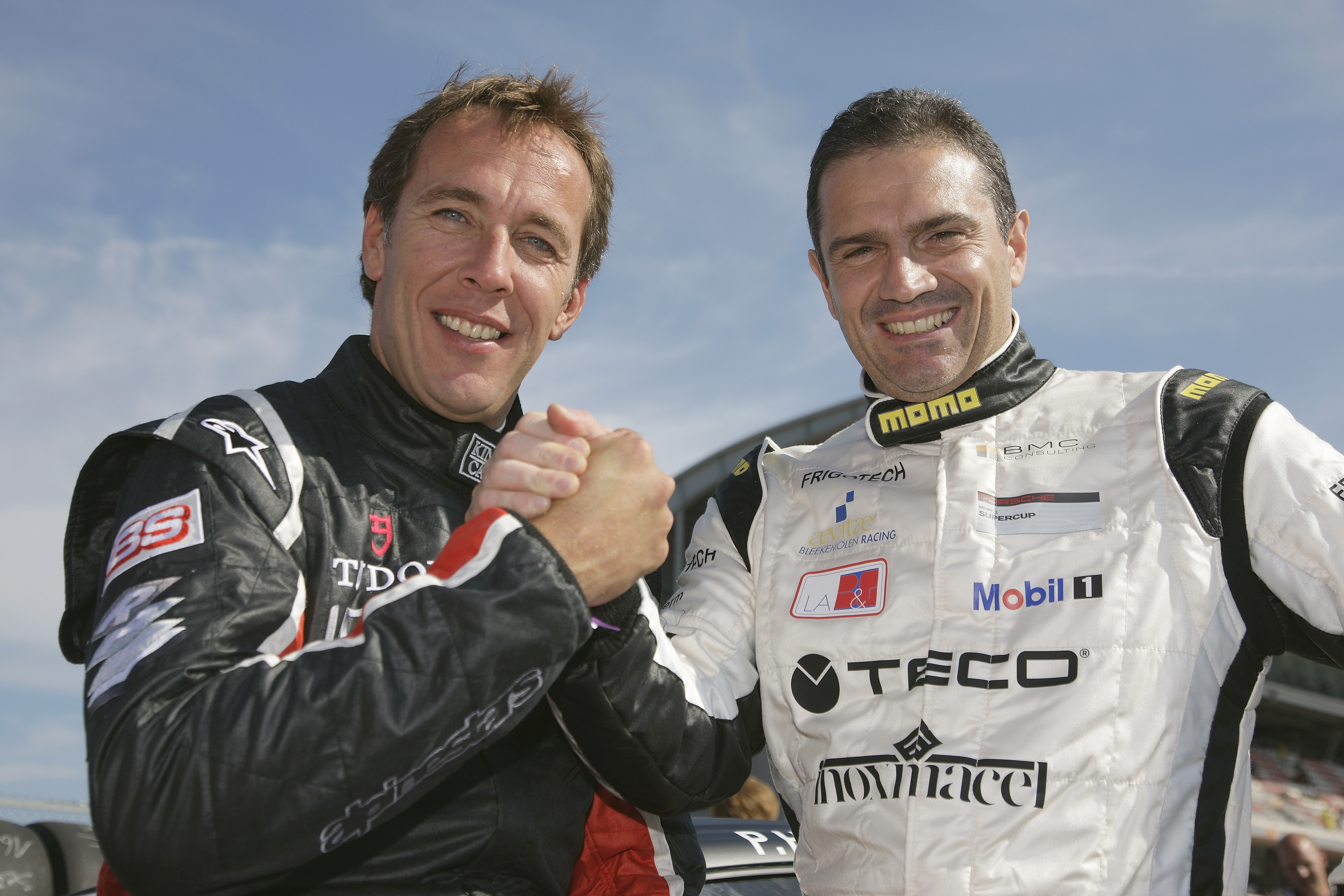 Patrick Huisman (l., Champion 1997 – 2000), Alessandro Zampedri (Champion 2005)
Two records were set by Wolf Henzler, the champion of the 2004 season: His nine wins and ten fastest race laps are unrivalled.
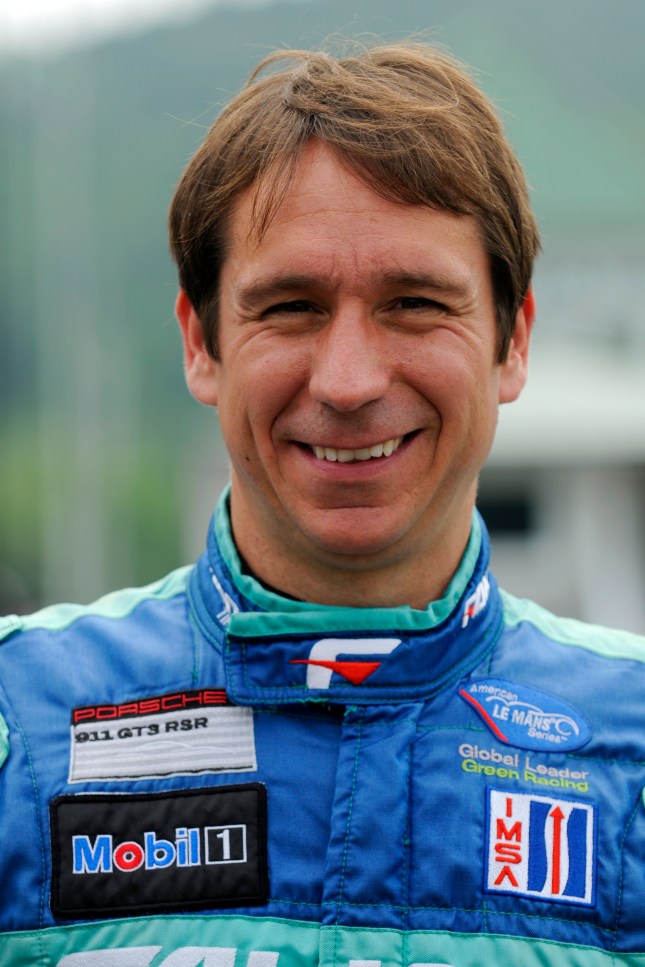 Wolf Henzler
He posted pole position eight times, matching Joerg Bergmeister’s record from the 2001 season.
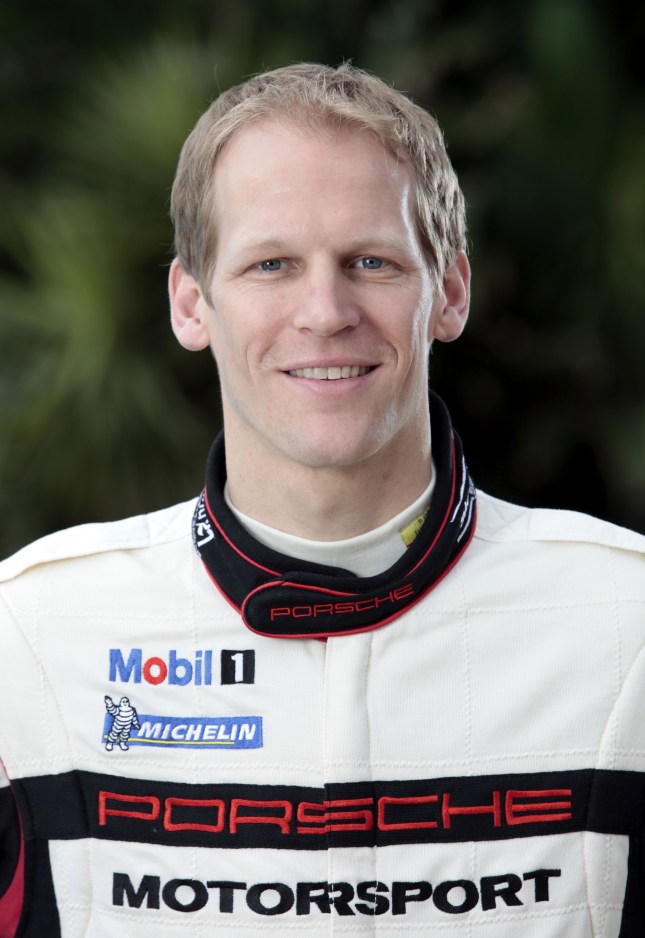 Joerg Bergmeister
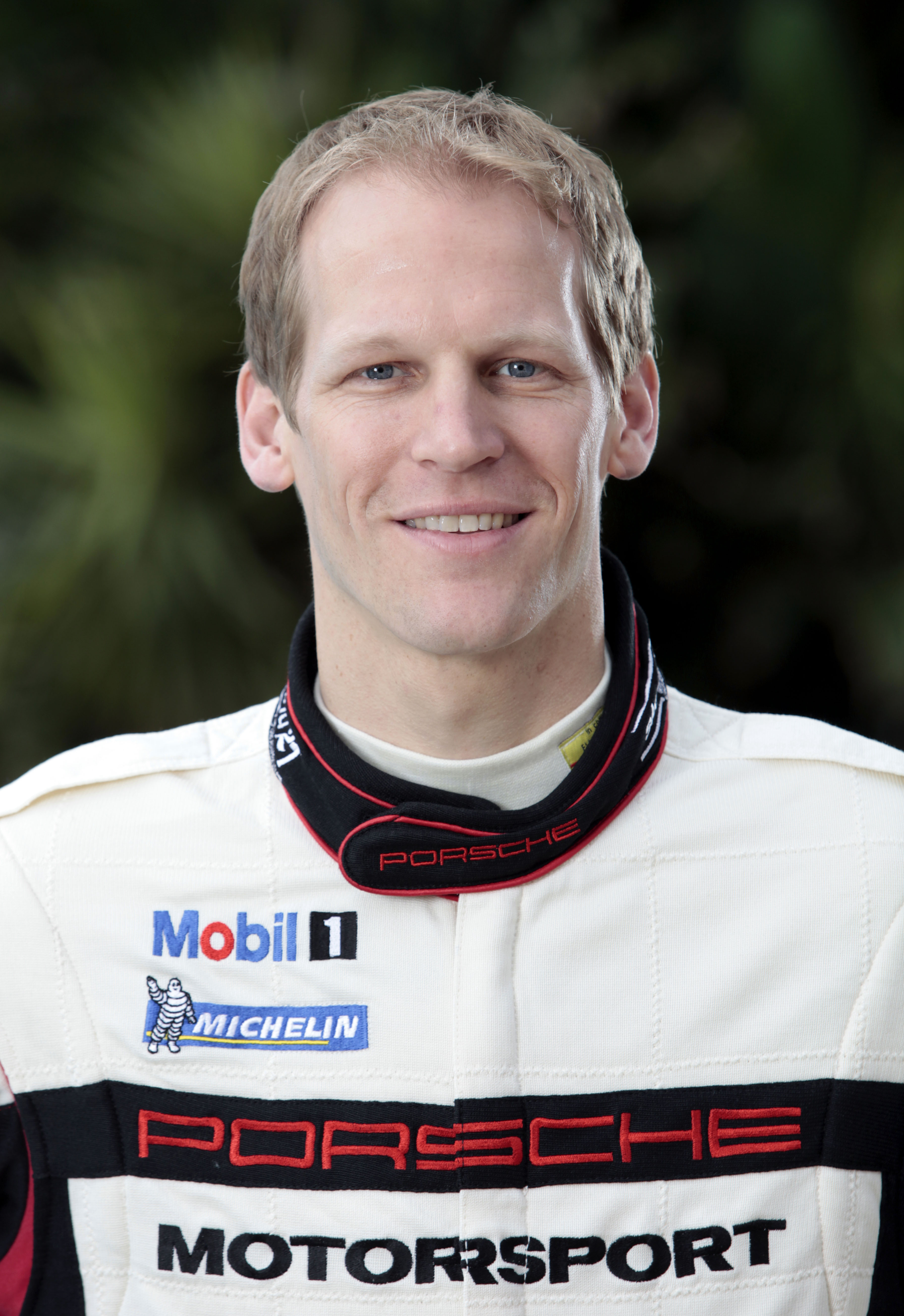
The most successful VIP driver was Mika Häkkinen. The eventual two-time Formula 1 World Champion won the Supercup races in Monaco and Budapest in 1993.
The most victories were claimed by Patrick Huisman. To date, the Dutchman has won 24 races – the first in 1996 at the Hockenheim round, the most recent in 2007 at Spa. In 18 races he started from pole-position – more than any other driver. A total of 48 drivers have joined the list of winners from the 199 Supercup races contested so far.
The most titles were also secured by Patrick Huisman. From 1997 to 2000 he was crowned champion four times straight.
 Richard Westbrook (Champion 2006, 2007)
Two championships have been clinched by Richard Westbrook (2006, 2007) and Jeroen Bleekemolen (2008, 2009).
 Jeroen Bleekemolen (NDL) – Porsche Mobil 1 Supercup Abu Dhabi 2009
As the sole drivers, Dutchman Jeroen Bleekemolen (2009/13 races) and Frenchman Emmanuel Collard (1996/9) climbed the podium at every race of a season. They both took five wins.
The most successful Supercup countries are Germany and the Netherlands, each with six championship titles. Next comes France with three outright wins.
The youngest overall winner was René Rast who was 23 years old when he secured the title in 2010. The oldest was Frenchman Jean-Pierre Malcher: He was 45 when he took home the championship in 1995.
 René Rast (Champion 2010)
The most Supercup races were held in Monaco. The Principality hosted the series 19 times, followed by Budapest and Silverstone (18 each) as well as Hockenheim (17). All in all, the Supercup has been contested on 19 race tracks around the world.
SOURCE: Porsche AG Media Database
Public Relations and Media
Motor and Sports Press
Porsche Mobil 1 Supercup, rd 6 at the Formula 1 race on the Nürburgring/Germany-returns for the 2nd time on July 24th
Strong rivals pursue points’ leader René Rast
René Rast (D) – Porsche Mobil1 Supercup – GP England 2011
Stuttgart. After a successful guest appearance at the Porsche Carrera World Cup, the Porsche Mobil 1 Supercup now returns for the second time this season to the Nürburgring on 24th July.
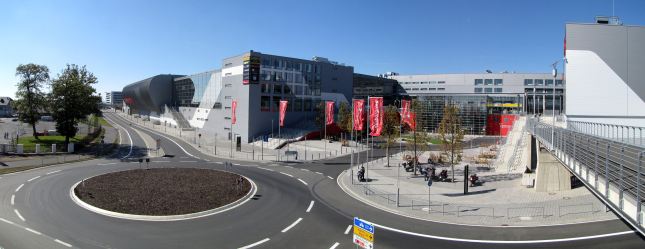 Panorama main entrance of Nürburgring – Photo : Holger Weinandt
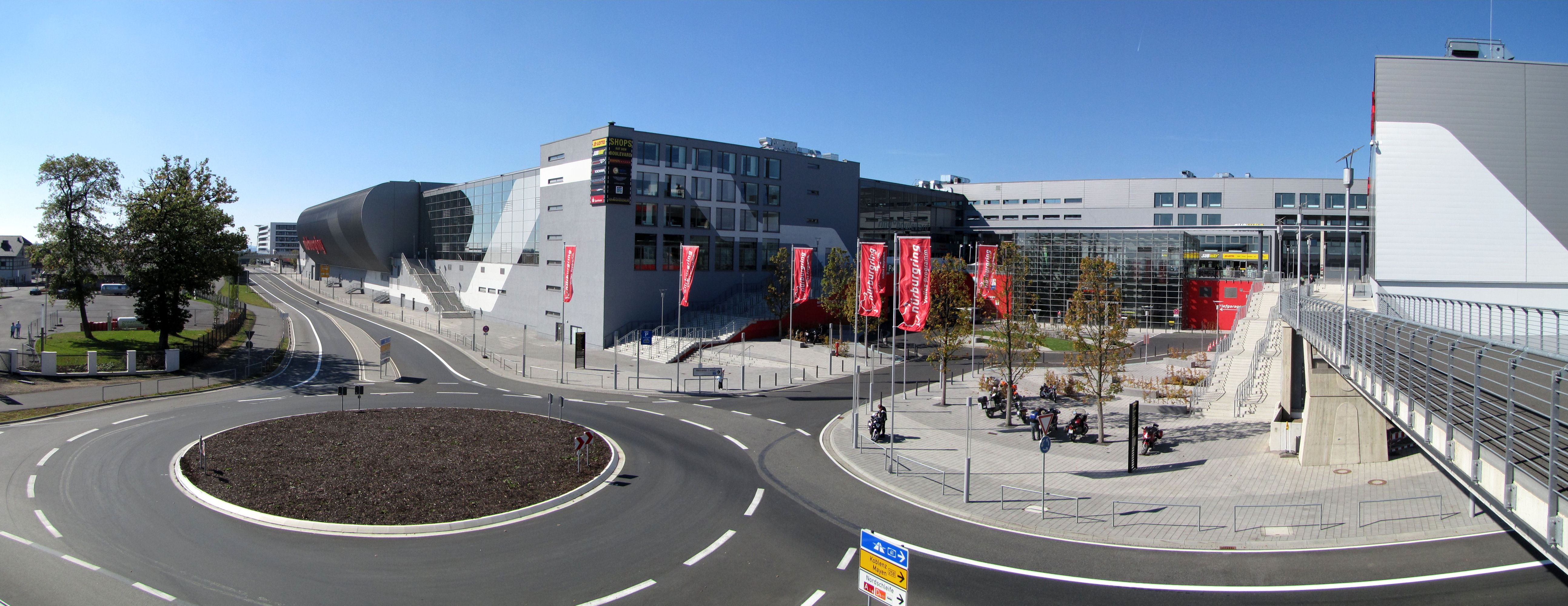
It’s the 200th race in it’s successful history and rather than on the Nordschleife it takes place on the Grand Prix circuit.
But the change of track doesn’t at all faze René Rast.
“We’re doing well at the moment,” grins the points’ leader driving for the VELTINS Lechner Racing squad. “I don’t really mind where I win.”
The title defender from Germany, who celebrated the greatest success of his career with the World Cup victory, is the man to beat in the world’s fastest international one-make race series.
 Start, René Rast (D) vorne – Porsche Mobil1 Supercup – GP England 2011
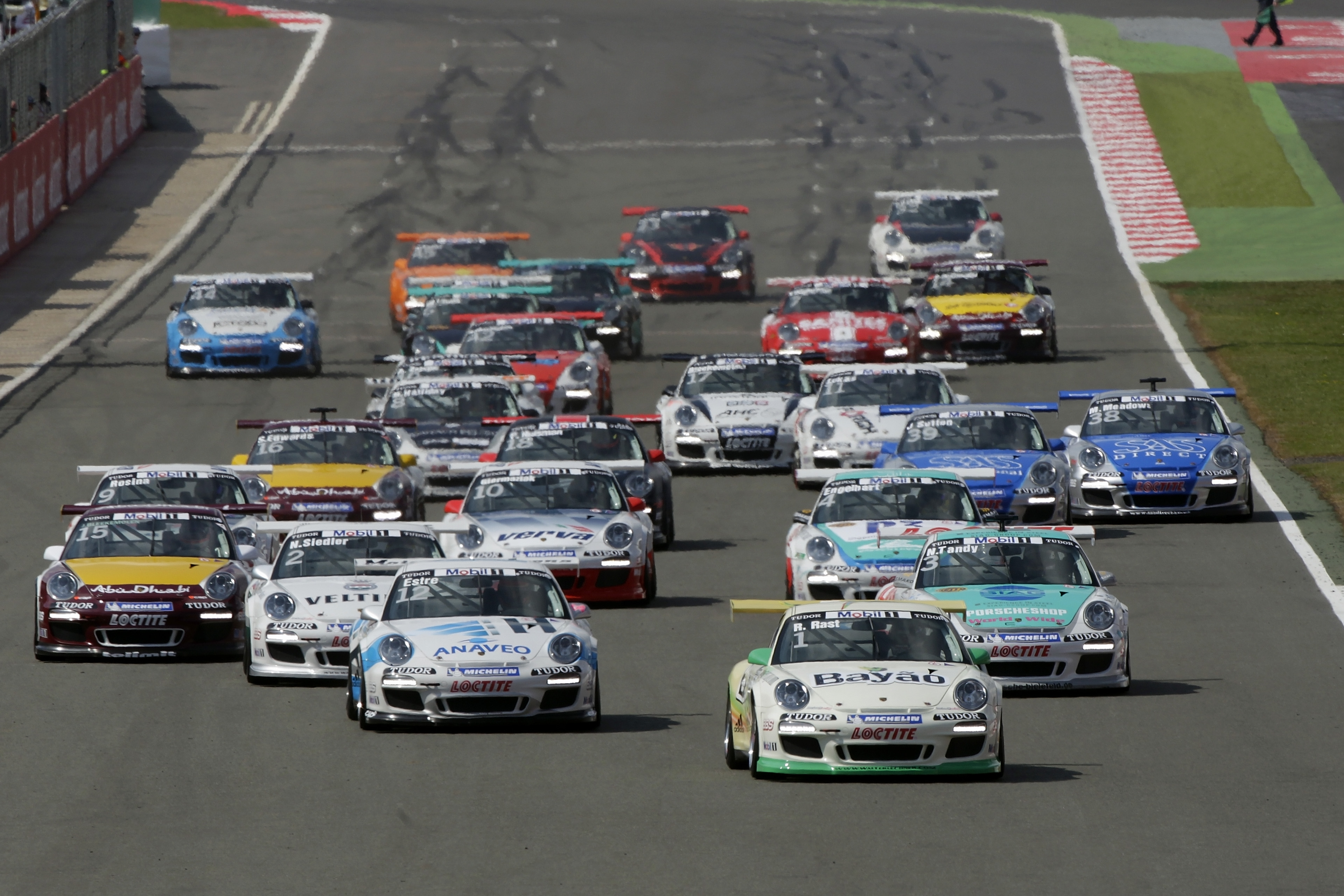
His start to the season was somewhat bumpy until he turned the corner with his victory in Monaco. Recently on the storied Silverstone circuit, the home track of his arch rival Nick Tandy (Konrad Motorsport), he celebrated his third straight win.
This success saw his old self-confidence return:
“Earlier on we had a couple of hiccups, but now we’re back in force.”
Despite Rast’s winning streak, the fight for the Porsche Mobil1 Supercup title is still wide open before the anniversary race on the Nürburgring.
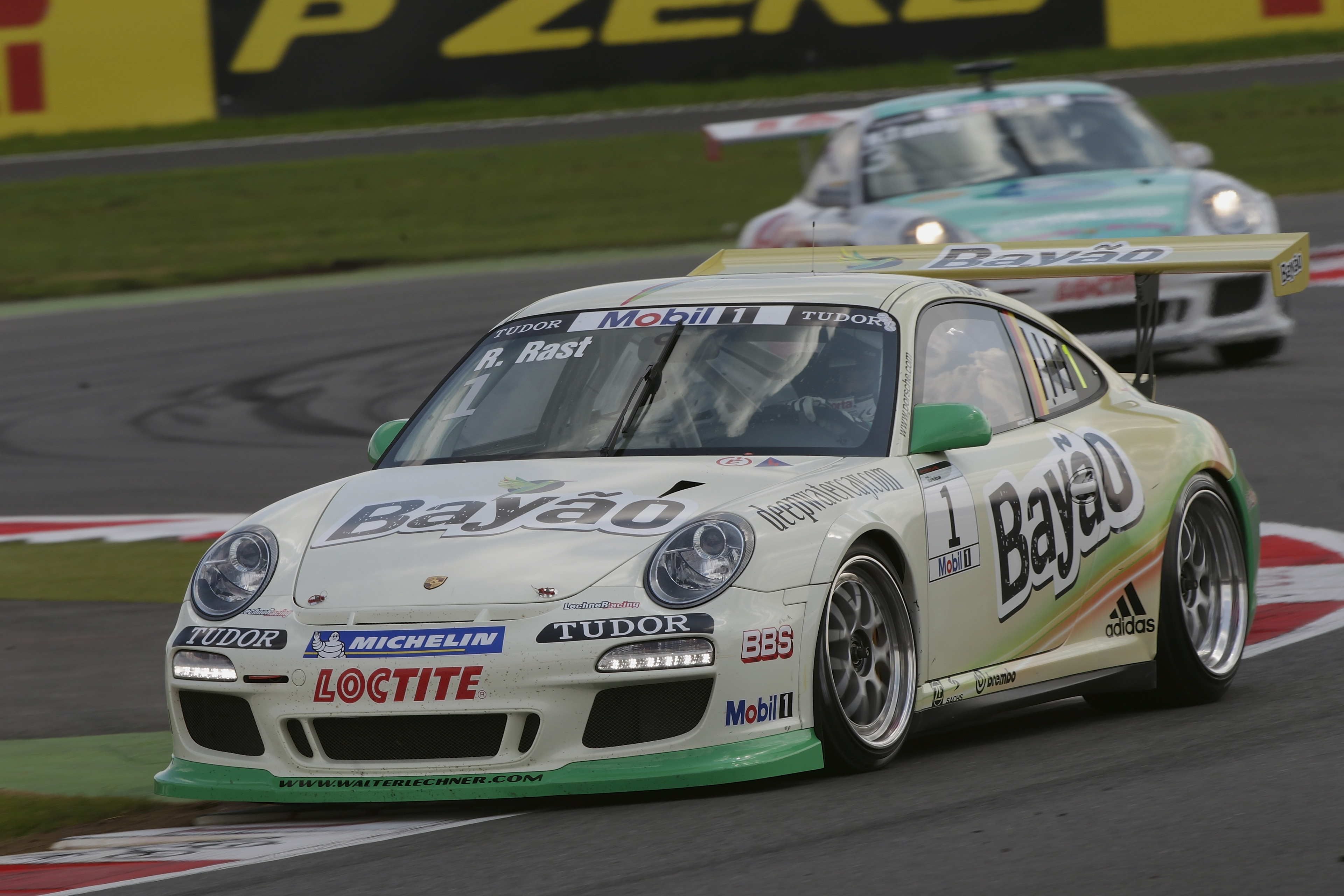 René Rast (D) – Porsche Mobil1 Supercup – GP England 2011
Competing for the Abu Dhabi by tolimit team, Britain’s Sean Edwards secured his place amongst the hot favorites with his win in Barcelona. Although he lost the points’ lead at Silverstone, he hasn’t lost his faith in claiming the title.
“Despite this little misfiring we’re still looking good,” he says. “Now we just have to stick at it.”
Germany’s Christian Engelhart (Konrad Motorsport), winner of the season-opener in Istanbul, also has new hopes. After a lengthy lean spell he finally yielded a good result with fifth in Silverstone.
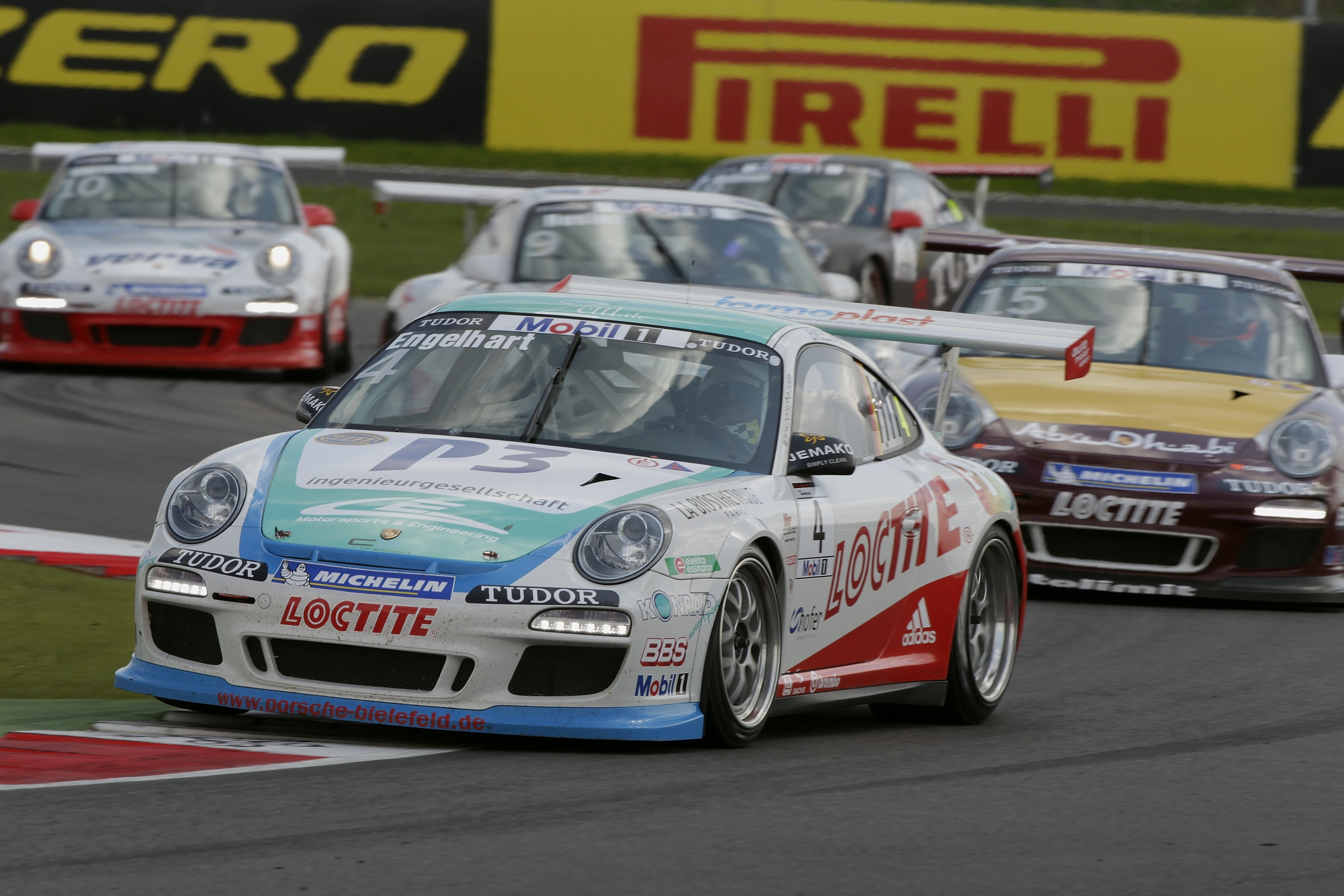 Christian Engelhart (D) – Porsche Mobil1 Supercup – GP England 2011
Fighting to keep up with the front-runners are two drivers that started into the season as keen title aspirants: Nick Tandy and Jeroen Bleekemolen. The Briton fell from the top of the points’ table after retiring from the Porsche Carrera World Cup. He finished four of the five rounds contested by now in second place, but is still waiting for his first win.
Ranking third overall, he needs every point to maintain his bid for the title, as does Jeroen Bleekemolen of Team Abu Dhabi by tolimit, who lies behind Austria’s Norbert Siedler (VELTINS Lechner Racing) in fifth. Bleekemolen, the two-time Supercup winner from the Netherlands, experienced a slow start to the season.
With fourth place in Monaco as his best result to now he knows only too well that he has to pull out all stops if he doesn’t want to miss the championship boat.
“On the Nürburgring,” he says, “only a podium result can help. Obviously a win would be the best. But with the competition at the top so close it’s going to be tough.”
In light of the strong competition, the performance of Supercup newcomer Kévin Estre is even more remarkable. The French Hermes Attempto Racing pilot raised eyebrows in Silverstone with third in qualifying, which he turned into his best race result of the Porsche Mobil1 Supercup season with fourth place.
His next goal?
“The podium,” he says confidently, “preferably on the Nürburgring.”
▀▄▀▄▀▄▀▄▀▄▀▄▀▄▀▄▀▄▀▄▀▄▀▄▀▄▀▄▀▄▀▄▀▄▀▄▀▄▀▄▀▄▀▄▀▄▀▄▀▄▀▄▀▄▀▄▀▄▀▄▀▄▀▄▀▄▀▄▀▄▀▄▀▄▀▄▀▄▀▄▀▄▀▄▀▄▀▄
TV stations Eurosport (11.45 hours) and Sky (11.40 hours) broadcast the race on the Nürburgring live on 24th July.
Moreover, Eurosport telecasts highlights at 23.00 hours in its “Motorsport Weekend Magazin” programme.
Points’ standings after 5 of 9 races*
Drivers’ classification
1. René Rast (D), 85 points
2. Sean Edwards (GB), 74
3. Nick Tandy (GB), 72
4. Norbert Siedler (A), 69
5. Jeroen Bleekemolen (NL), 58
6. Christian Engelhart (D), 53
BBS rookie classification
1. Kévin Estre (F), 50 points
Team classification
1. VELTINS Lechner Racing, 148 points
2. Team Abu Dhabi by tolimit, 130
3. Konrad Motorsport, 124
* It has yet to be decided if and when there will be a replacement for the cancelled Formula 1 race in Bahrain with two rounds of the Porsche Mobil1 Supercup.
SOURCE: Porsche AG Media Database
Public Relations and Media
Motor and Sports Press
▀▄▀▄▀▄▀▄▀▄▀▄▀▄▀▄▀▄▀▄▀▄▀▄▀▄▀▄▀▄▀▄▀▄▀▄▀▄▀▄▀▄▀▄▀▄▀▄▀▄▀▄▀▄▀▄▀▄▀▄▀▄▀▄▀▄▀▄▀▄▀▄▀▄▀▄▀▄▀▄▀▄▀▄▀▄▀▄
This video brings you footage about the Porsche Carrera World Cup which took place for the first time at Nürburgring. More information on http://www.porsche.com/motorsport and http://www.lemanslive.com
Uploaded by Porsche on Jun 30, 2011
Porsche Motorsport around the world – Newsletter 4 – 2011
Stuttgart. The Motorsport Newsletter regularly provides information on Porsche Motorsport around the world.
Development of an LMP1 sports prototype: Porsche returns to Le Mans Porsche returns to Le Mans with a works-run LMP1 sports prototype. The first outing of the race car developed from scratch is planned for 2014.
With 16 overall victories, Porsche is the most successful manufacturer in Le Mans. The last overall victory went to the Porsche 911 GT1 in the year 1998.
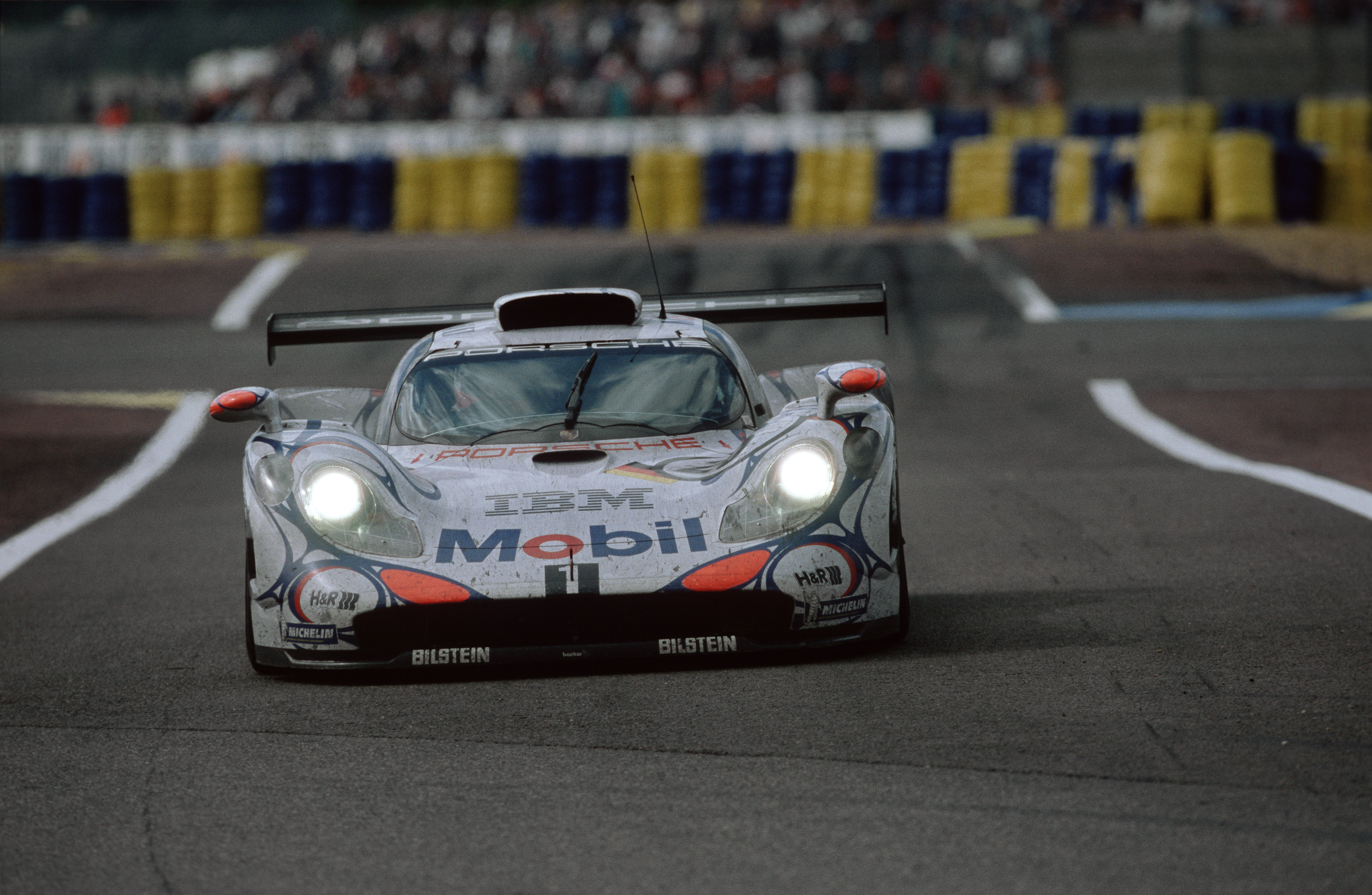 Porsche 911 GT1
Nürburgring 24 Hours: Porsche triumphs and sets new distance record Dramatic 24 hour sprint:
At the 39th running of the classic on the Nuerburgring-Nordschleife (25/26 June), works drivers Marc Lieb, Timo Bernhard, Romain Dumas as well as Lucas Luhr took the lead with a Porsche 911 GT3 RSR after 7:25 hours ahead of strong competition from Audi, BMW und Mercedes.
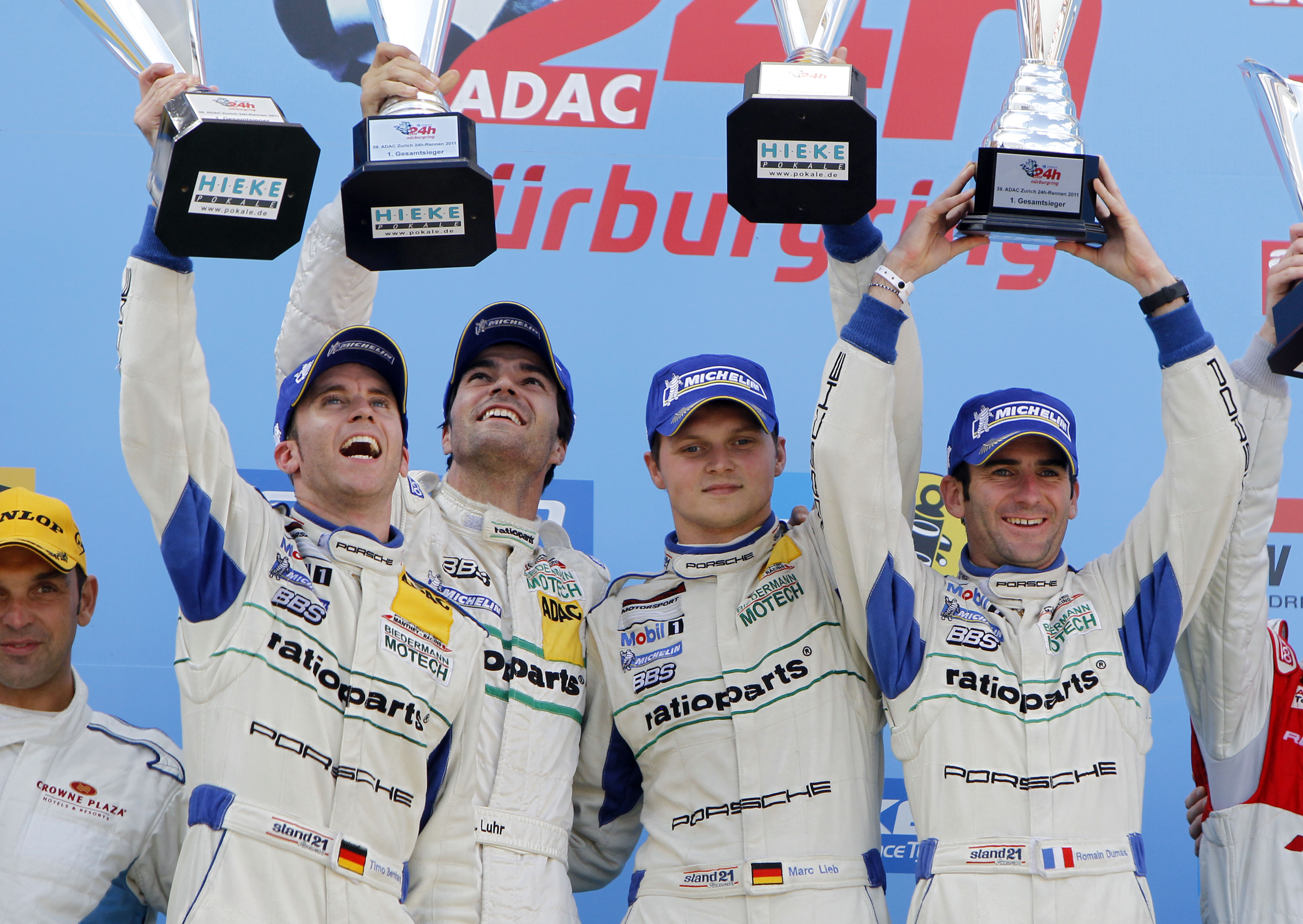 (l. – r.): Timo Bernhard, Lucas Luhr, Marc Lieb, Romain Dumas
P1, 24h Nürburgring
 Timo Bernhard, Lucas Luhr, Marc Lieb, Romain Dumas
P1, 24h Nürburgring
The quartet fended off rivals to the flag and set a distance record of 3,958.968 kilometres. For Porsche and the Manthey Racing squad, this marked the fifth victory at the “Ring” in the last six years – the same for Timo Bernhard.
 Porsche 911 GT3 R Hybrid, Porsche Team Manthey: Jörg Bergmeister, Richard Lietz, Marco Holzer, Patrick Long
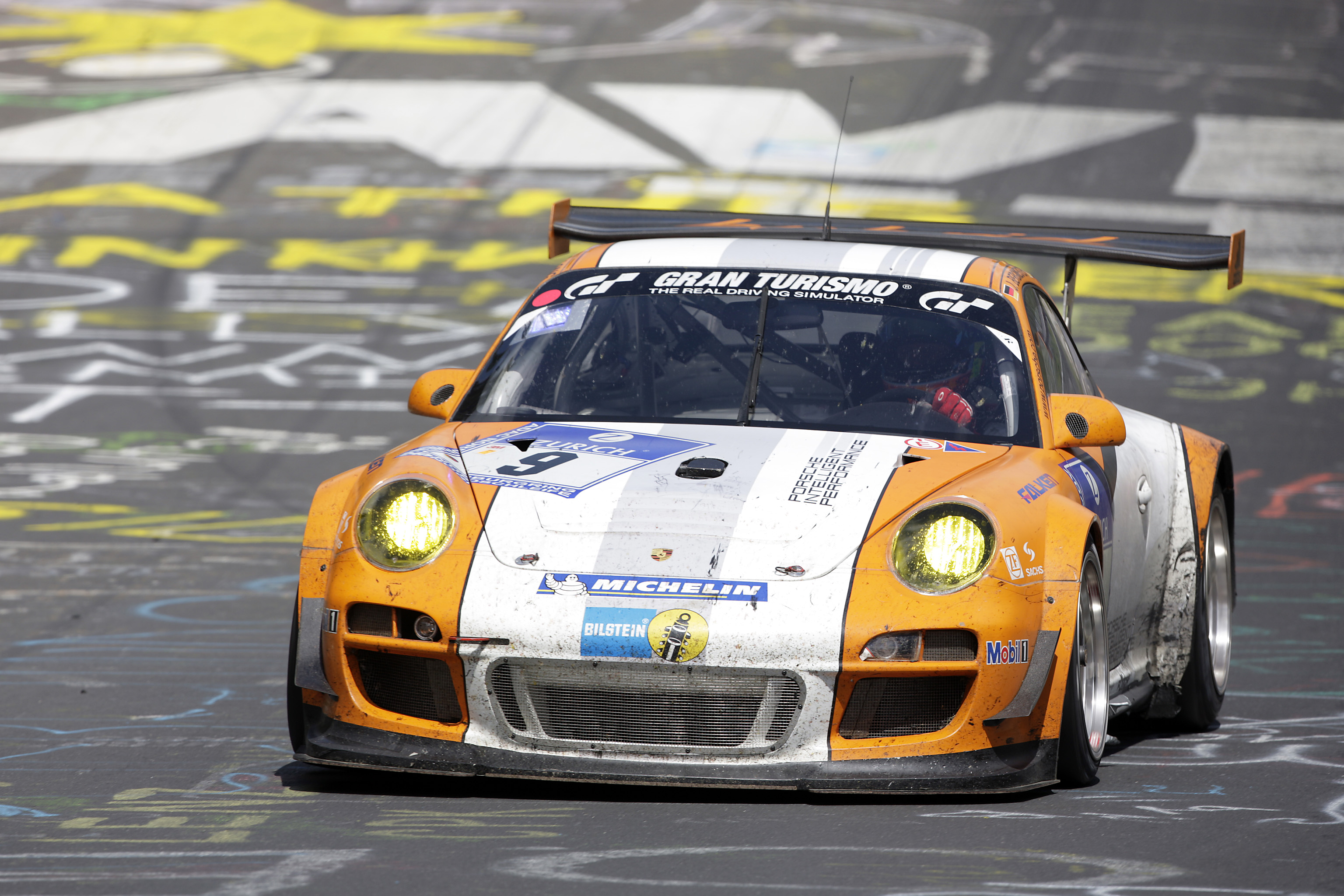
For the innovative Porsche 911 GT3 R Hybrid the weekend ran less smoothly. Works drivers Joerg Bergmeister, Richard Lietz, Marco Holzer and Patrick Long led the field after four hours in front of 220,000 spectators, but spent a lot of time in the pits with a broken flange on the differential to finish 23rd.
Le Mans Series/Intercontinental Le Mans Cup: Fourth after tough struggle Works drivers Marc Lieb and Richard Lietz brought the 911 GT3 RSR fielded by Felbermayr-Proton home in fourth as the best Porsche at the third round of the LMS (3 July, 4th ILMC race) in Imola.
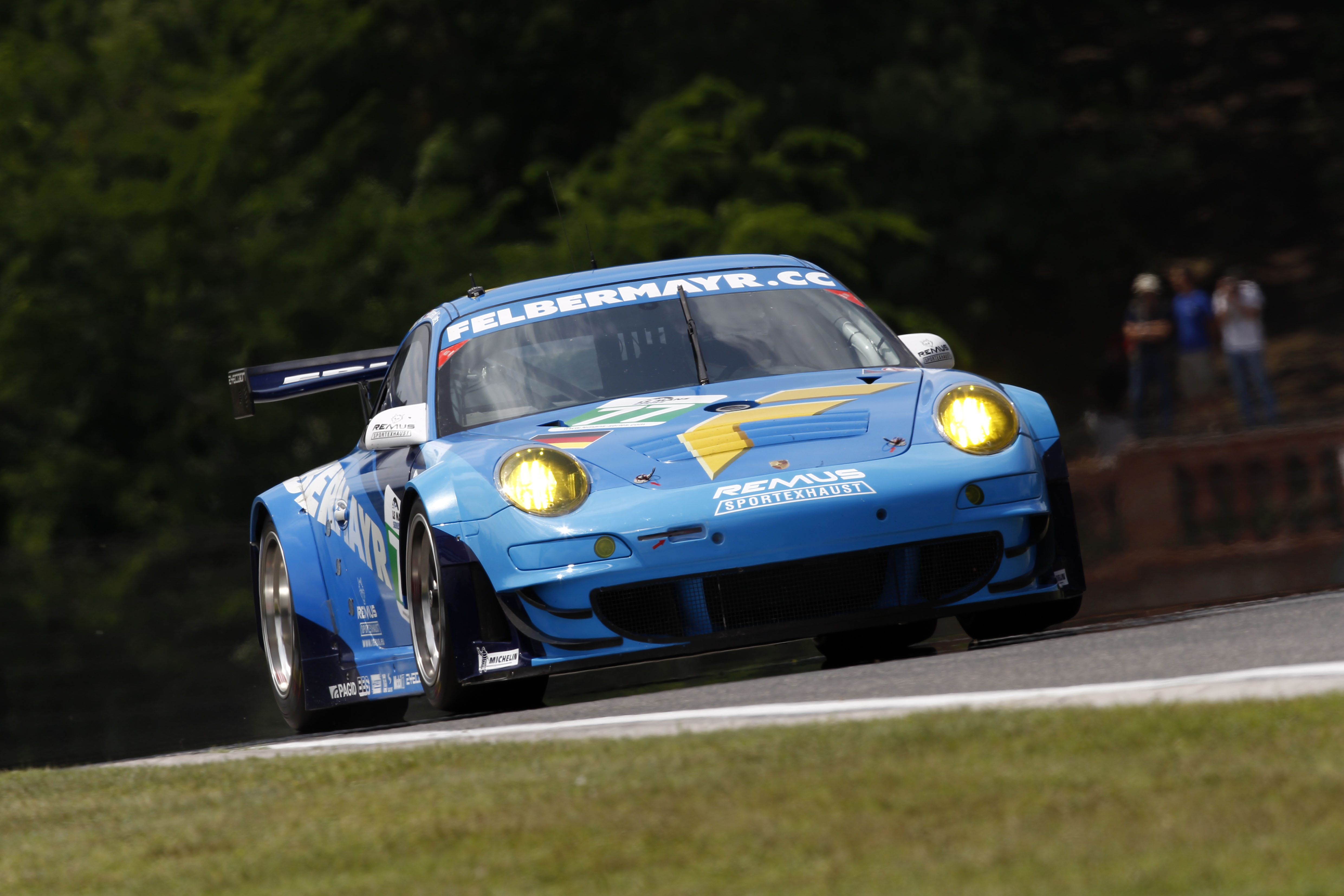 Team Felbermayr-Proton, Porsche 911 GT3 RSR , Marc Lieb, Richard Lietz
After being the innocent victims of two accidents in the first two races, this result was the best for the title defenders in the GTE Pro category.
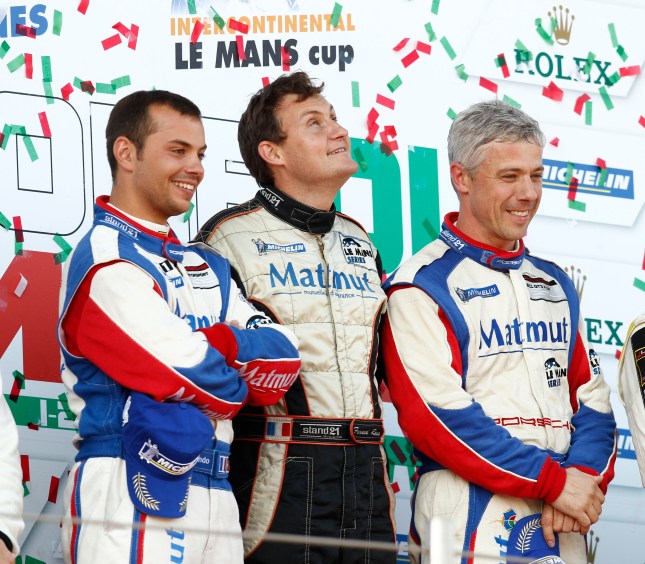 Nicolas Armindo (l), Raymond Narac (r)
P1, GTE-Am, Le Mans Series Imola
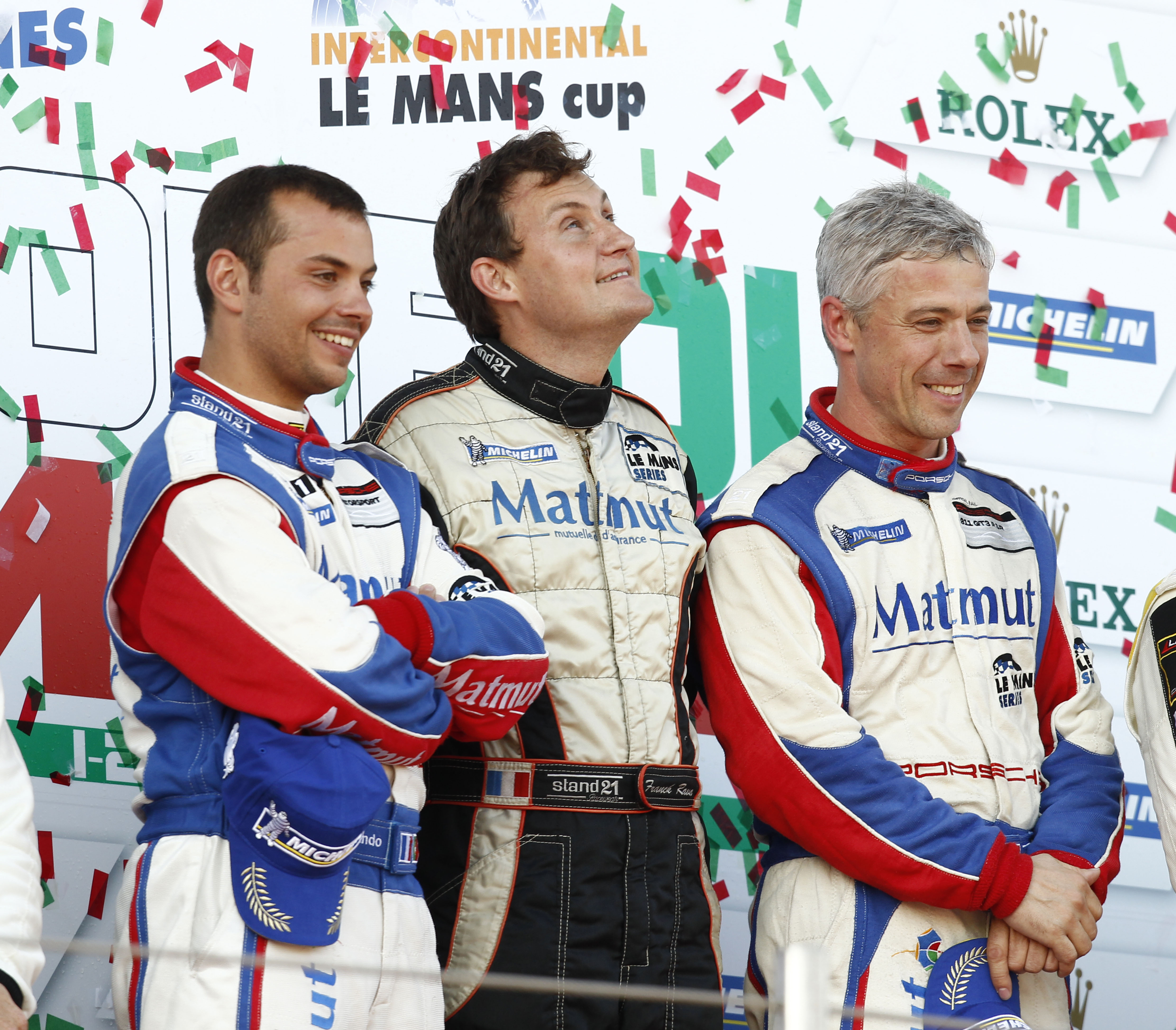
Nicolas Armindo and Raymond Narac were delighted with victory number two in the GTE Am class with their 911 GT3 RSR fielded by IMSA Performance Matmut.
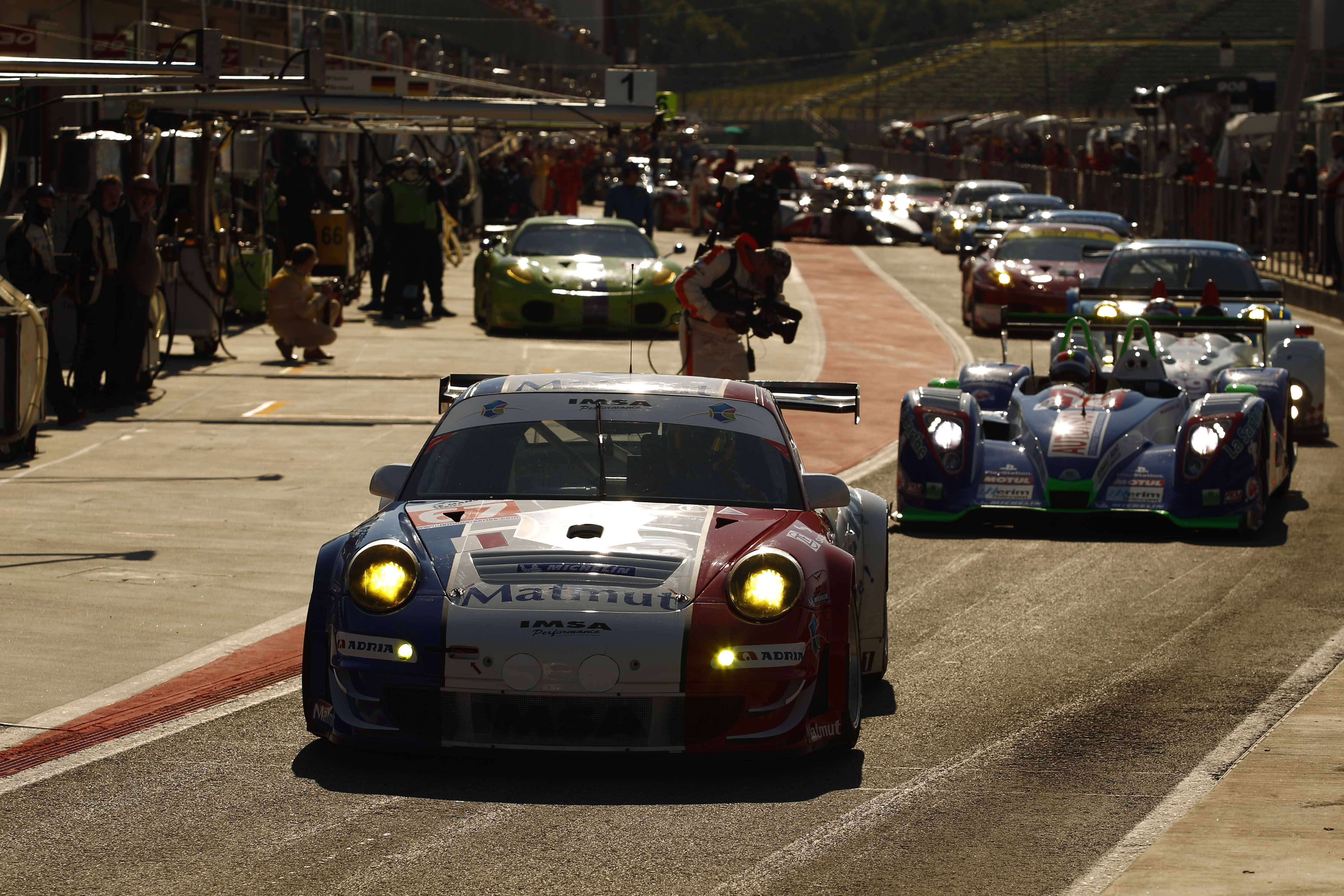 IMSA Performance Matmut, Porsche 911 GT3 RSR, Raymond Narac, Nicolas Armindo
Porsche Carrera World Cup: René Rast wins the greatest Porsche race of all time Rain, the world’s most difficult circuit and a field hailing from 25 countries: The Porsche Carrera World Cup on the Nordschleife, contested prior to the 24 hour race, was not for the faint-hearted.
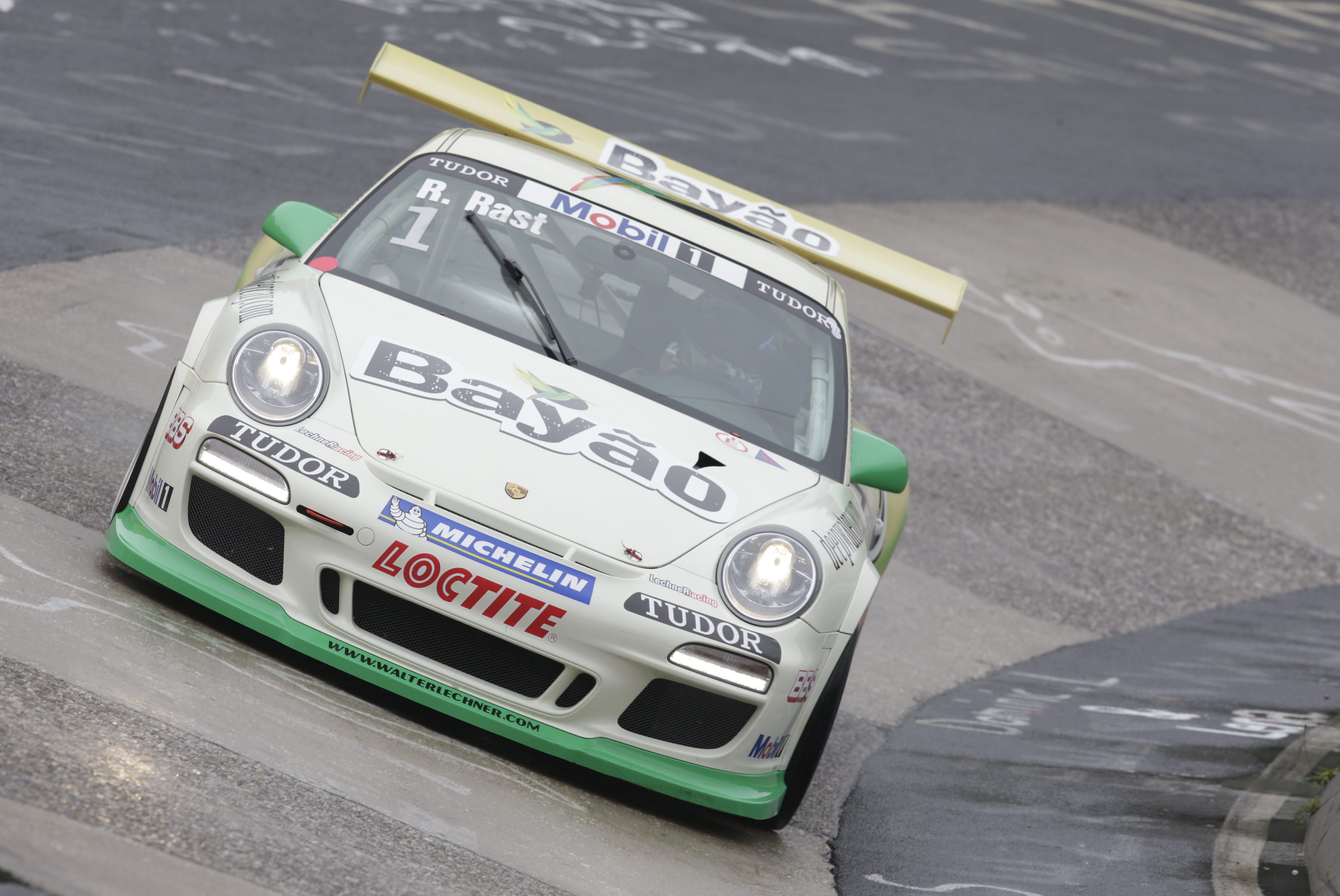 René Rast (D)
Porsche Carrera World Cup – Nürburgring 2011
After six hours and about 150 kilometres, René Rast celebrated overall victory at the greatest Porsche race in history. In the class for 911 GT3 Cup vehicles from 2007 to 2009, Timo Rumpfkeil won.
For the Porsche Mobil1 Supercup and many national Carrera Cups the race counted towards their respective championships. René Rast took home maximum points for the Supercup.
Former champion Tim Harvey was the quickest in the Carrera Cup Great Britain (13th overall). Kévin Estre won the Carrera Cup France (6th overall), Alessandro Balzan was the best Italian (12th overall) and Johan Kristoffersson the best driver from the Carrera Cup Scandinavia (25th overall).
Grand-Am: Andrew Davis and Leh Keen at the front at half-way mark After the seventh of twelve Grand-Am races, Andrew Davis and Leh Keen rank second in the GT driver’s classification. At the six hour race in Watkins Glen (4 June) the duo won their class in a Brumos Racing Porsche 911 GT3 Cup with none other than racing legend Hurley Haywood calling the tactical shots. On the last June weekend (27 June), Davis and Keen clinched sixth in Road America.
French GT Championship: Dream weekend for Porsche teams With a double win for Patrick Bornhauser/Laurent Groppi in Larbre Compétition’s 911 GT3 R ahead of Anthony Beltoise/Laurent Pasquali in the GT3 R of Pro GT by Almeras, the fourth race weekend took off in Val de Vienne (25/26 June).
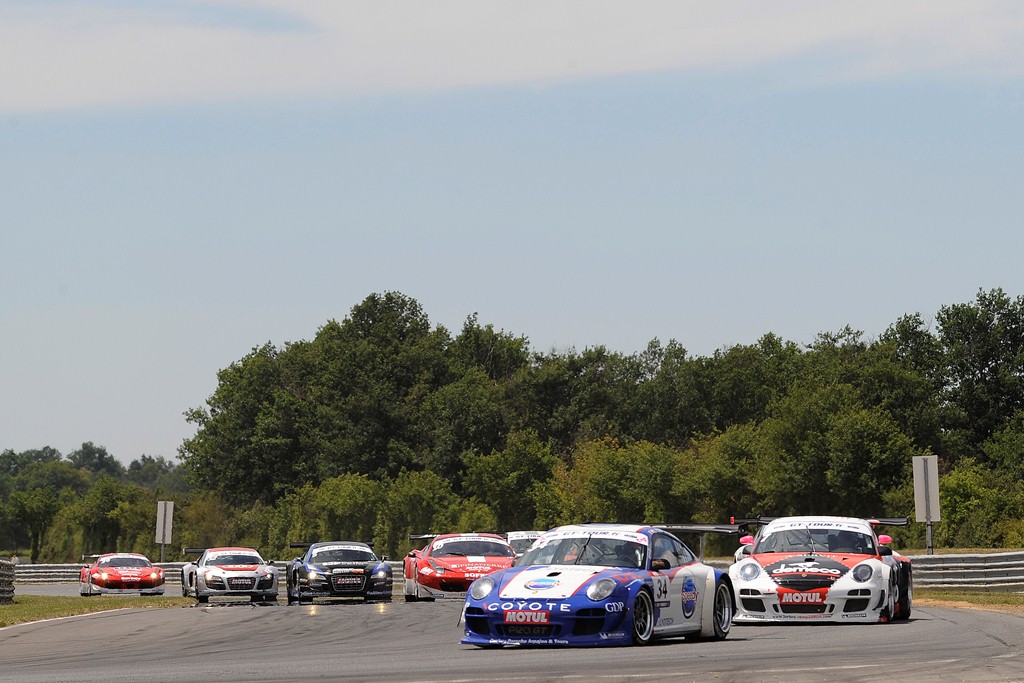 Porsche 911 GT3 R: Anthony Beltoise, Laurent Pasquali
GT Championship France, Val de Vienne
A one-two-three at race two with Beltoise/Pasquali in front of Bornhauser/Groppi and Laurent Cazenave/Jean-Claude Police in the sister Almeras-Porsche made the weekend perfect for Porsche.
Italian GT Championship: Autorlando pilot battles for points’ lead After a win and a second place at the third race weekend at the Autodromo dell Umbria near Magione (19 June), Autorlando pilot Ruberti lies a close second in the GT drivers’ classification. Ruberti shared the cockpit in Magione with his regular teammate Mario Cordoni.
Belcar Endurance Championship: Tactical brilliance yields win for Prospeed A courageous tyre choice and a perfect performance from drivers Marc Goossens and Maxime Soulet yielded the Prospeed Competition team their second win of the season at round three in Spa (18 June).
The squad sent the 911 GT3 R into the three-hour race on slicks, whilst the competition opted for rain tyres. With ten laps to go, Prospeed again made the right choice with slicks and won by more than a minute. Goossens/Soulet currently lead the driver’s classification.
British GT Championship: Victory for Trackspeed-Porsche at Brands Hatch Tim Bridgman and Gregor Fisken are the victors of the spectacular third race in Brands Hatch (19 June). A rain shower after the first half hour provided thrills and spills amongst the 30-strong field.
Bridgman and Fisken brought their Porsche 911 GT3 R fielded by Trackspeed home in first after two hours. Reigning champion David Ashburn was forced into retirement with a fire in the rear left wheel arch of his Porsche.
Pikes Peak Race to the Clouds: Jeff Zwart clocks record time in 911 GT2 RS At the wheel of a Porsche 911 GT2 RS, American Jeff Zwart set a record time for street homologated sports cars at the famous Pikes Peak Race to the Clouds in Colorado (26 June).
 Porsche 911 GT2 RS: Jeff Zwart
Pikes Peak Race, Colorado
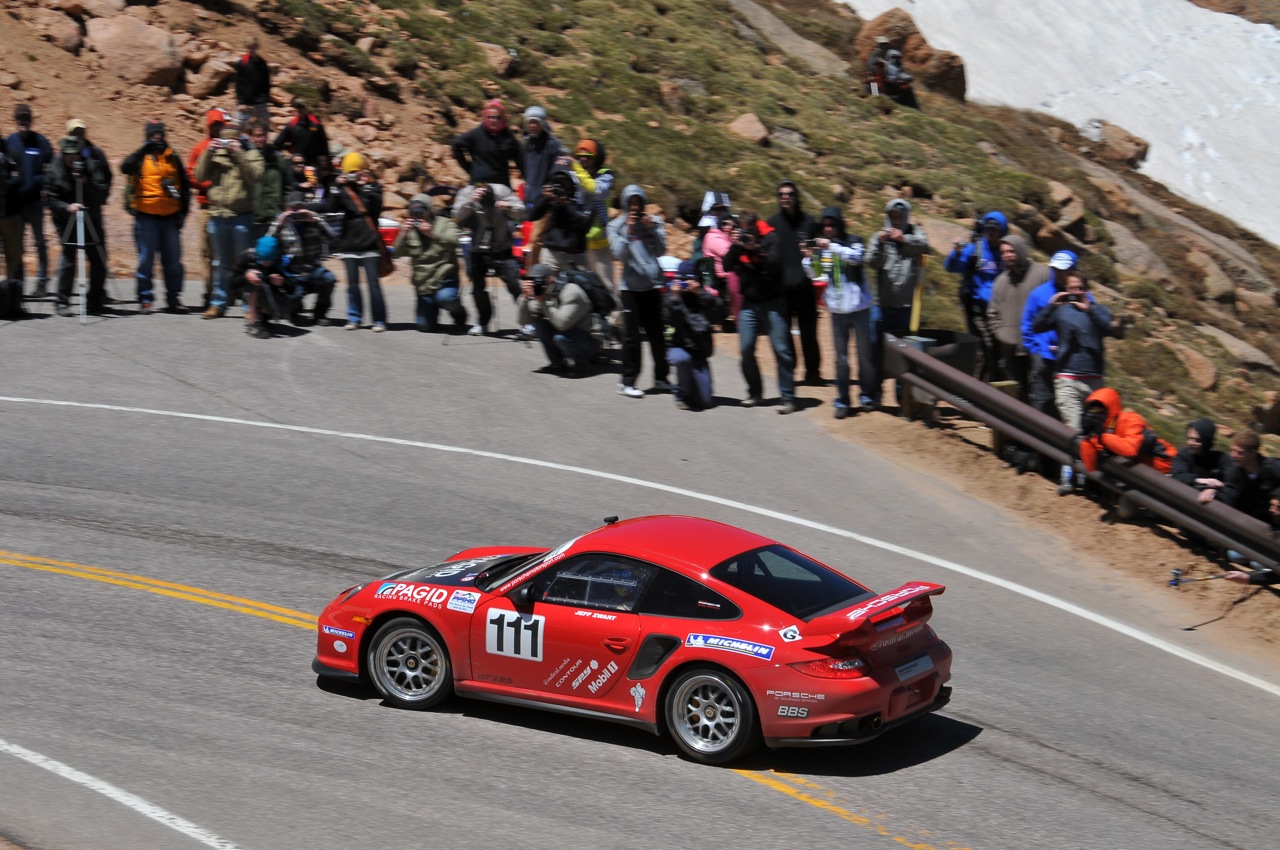
In the 620 hp 911, he broke the old record on the 20 kilometre track which leads over 156 corners from an altitude of 2,860 up to 4,600 metres, by 24 seconds.
 Porsche 911 GT2 RS: Jeff Zwart
Pikes Peak Race, Colorado
Zwart had collected the 911 GT3 RS himself from Porsche Motorsport in California and drove the 1,770 kilometres to the start.
Carrera Cup Deutschland: Six races, six different winners Sean Edwards from Great Britain won the sixth round of the season on the rain-soaked, extremely difficult Norisring in Nuremberg (3 July) to extend his points’ lead ahead of Jeroen Bleekemolen.
Round five of the series run at the Porsche Carrera World Cup (25 June) went to Nicolas Armindo, with the Frenchman finishing fifth out of 98 starters.
Carrera Cup Japan: Hideto Yasuoka unstoppable At the fourth and fifth race of the Carrera Cup Japan on the extremely demanding Fuji International Speedway (11/12 June), Hideto Yasuoka again proved unbeatable in his class with two pole-to-flag wins.
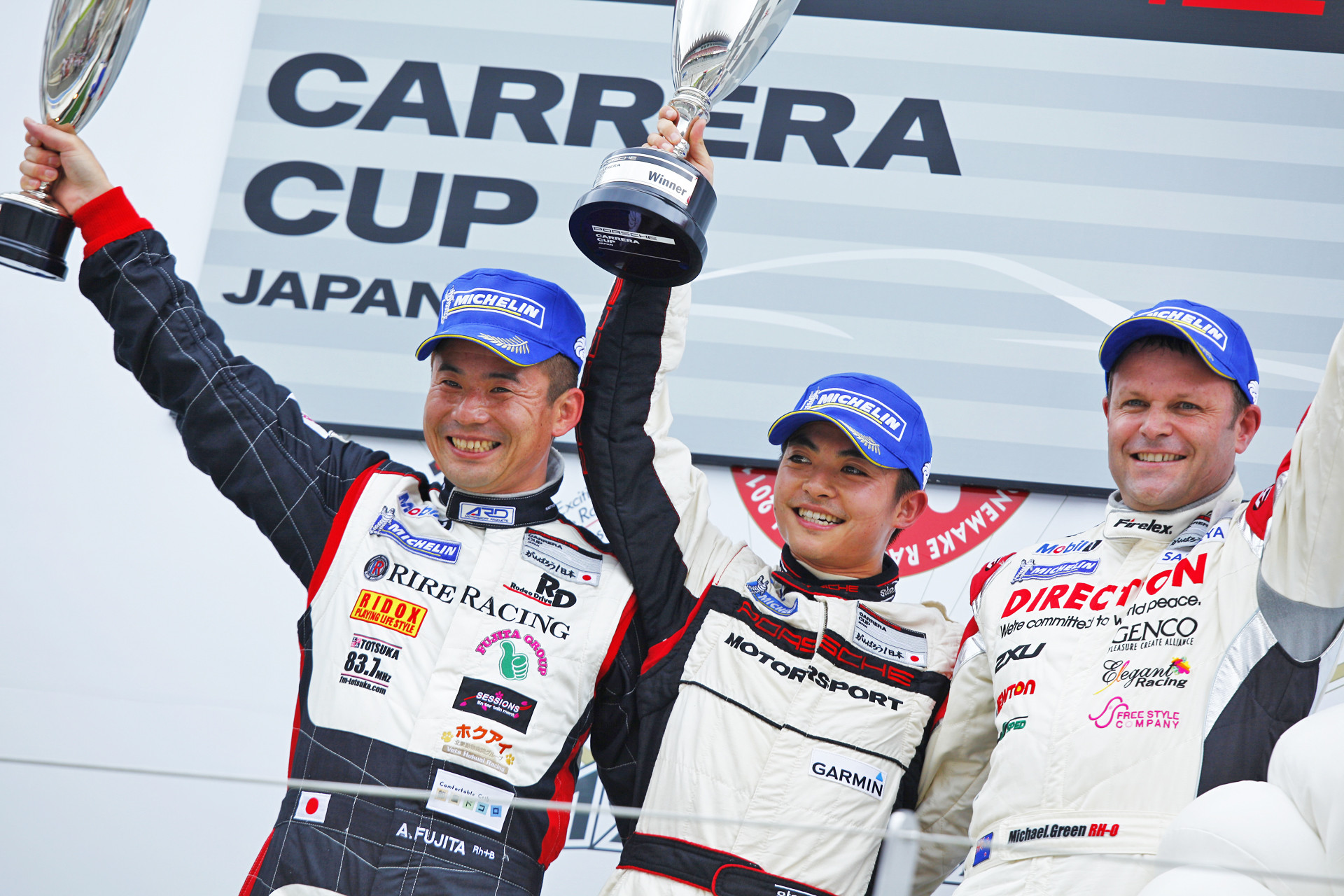
(l.-r.): Akira Fujita, Hideto Yasuoka, Michael Green
Porsche Carrera Cup Japan, Fuji International Speedway
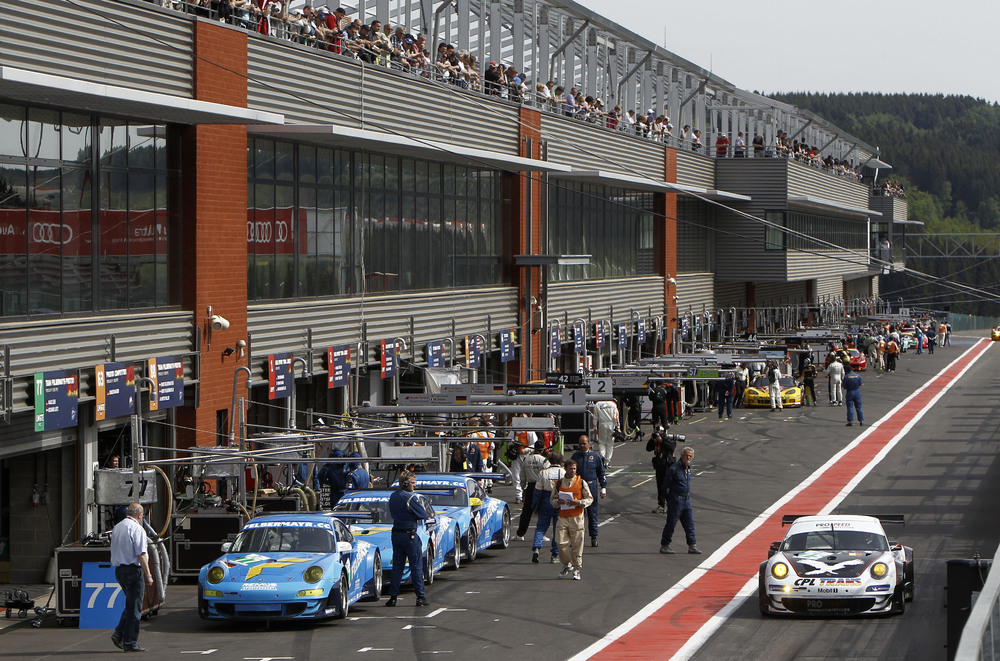
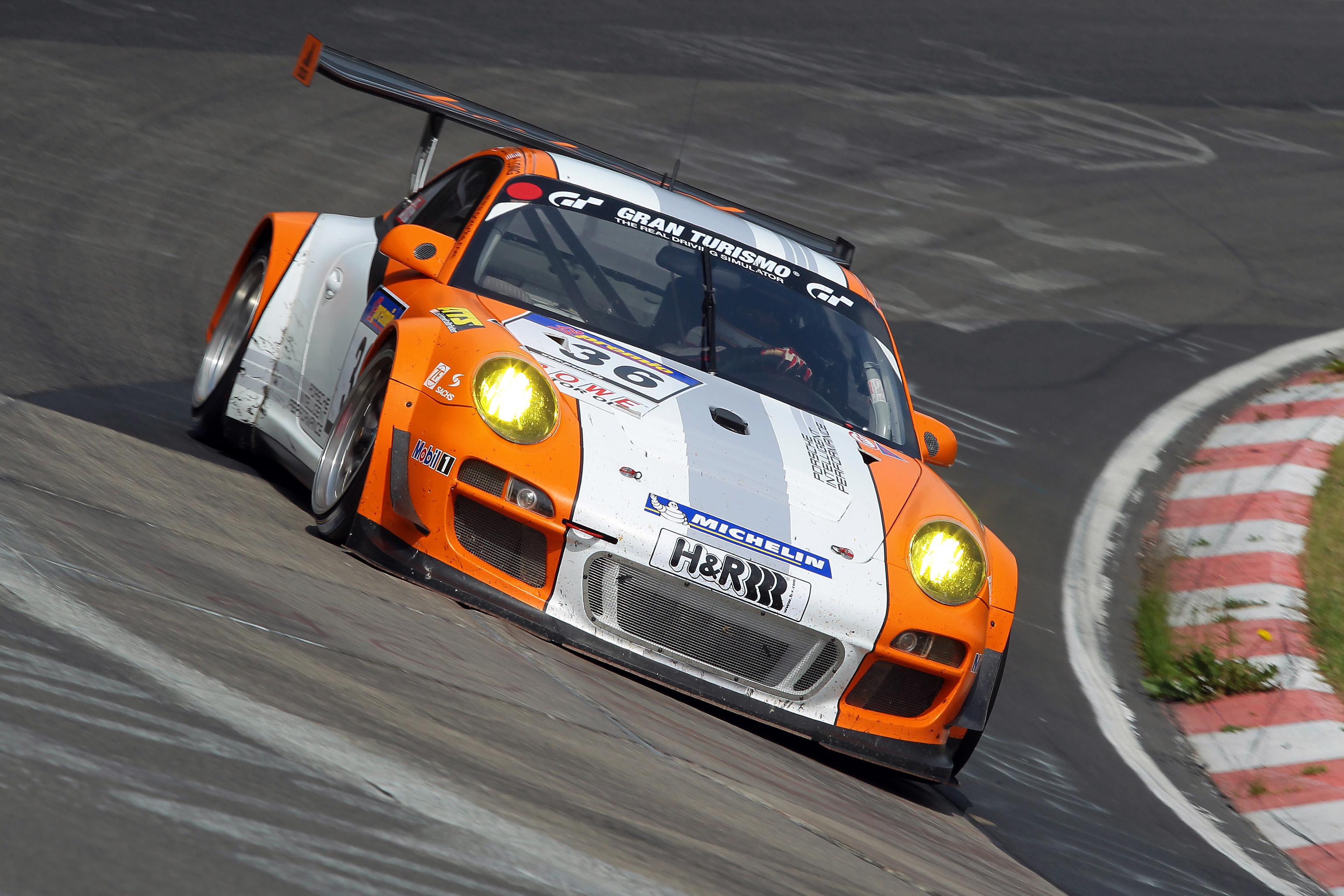
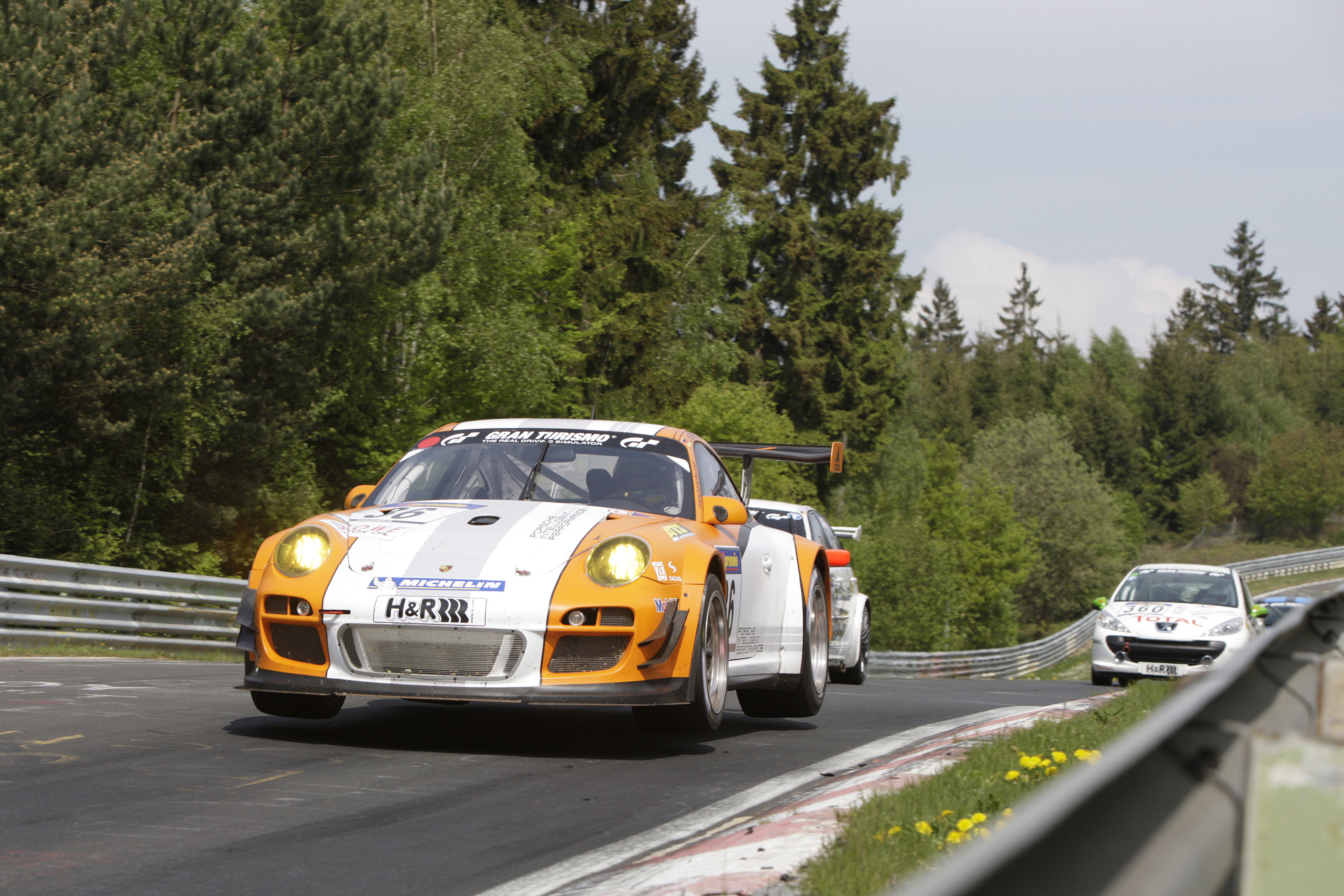
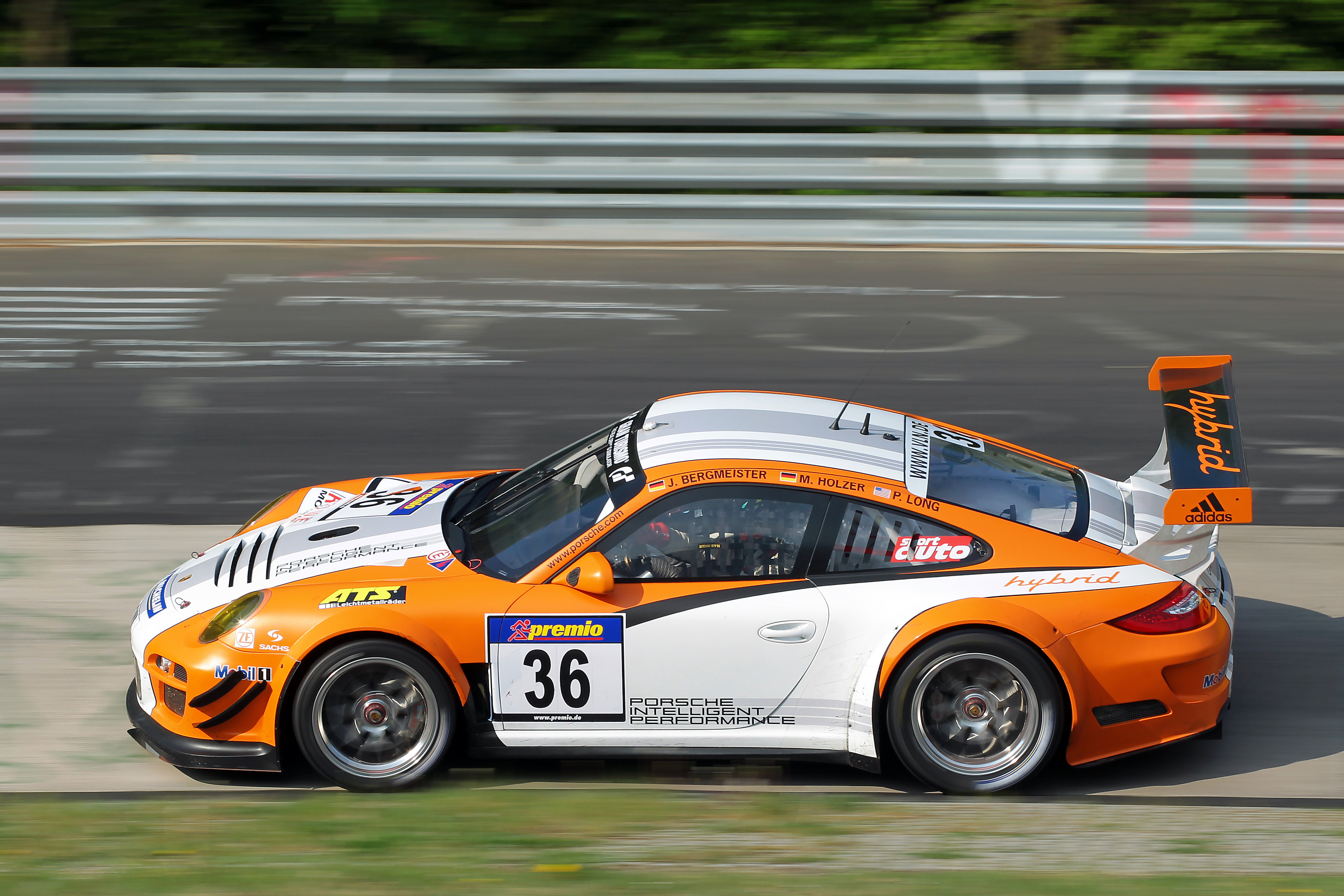
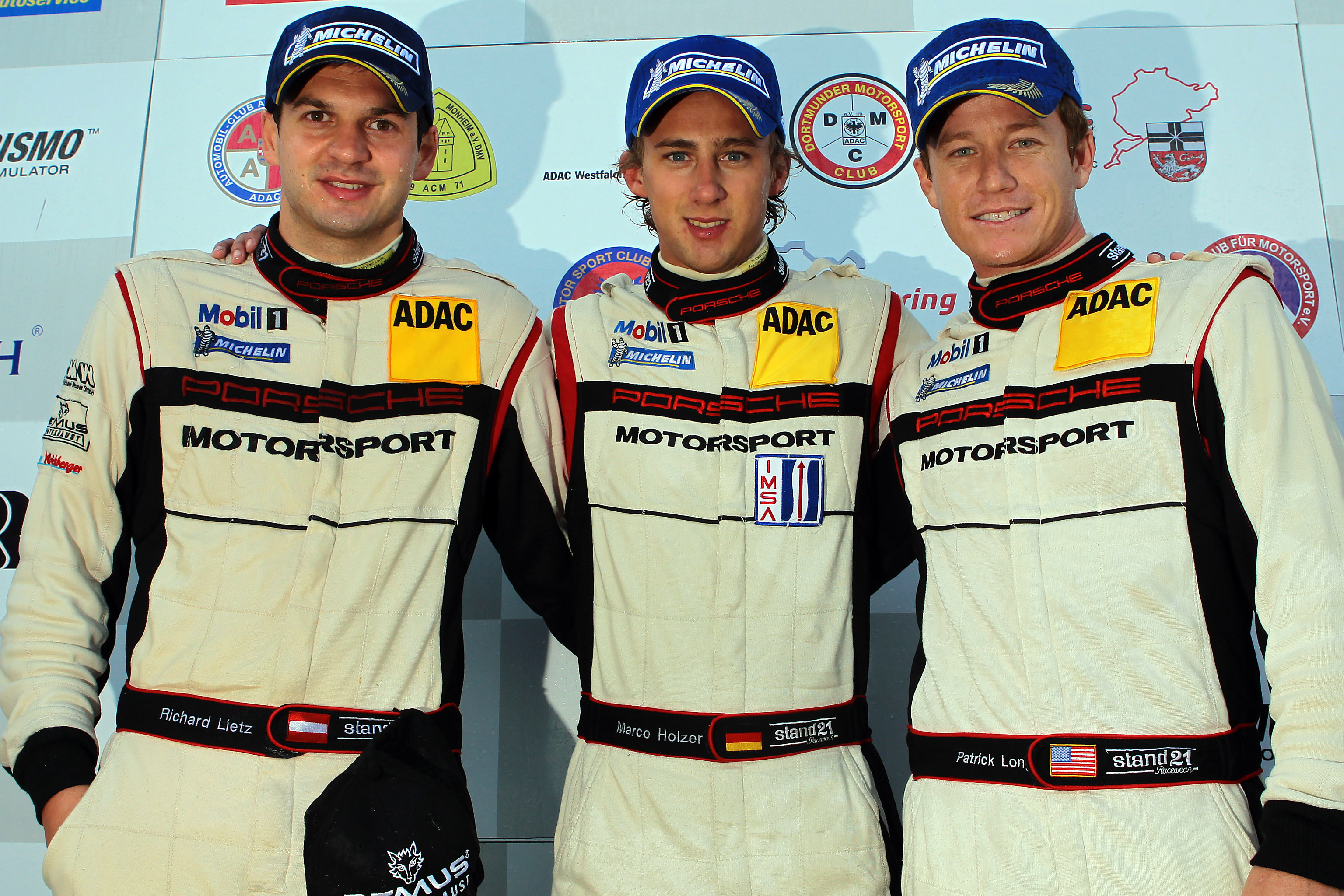
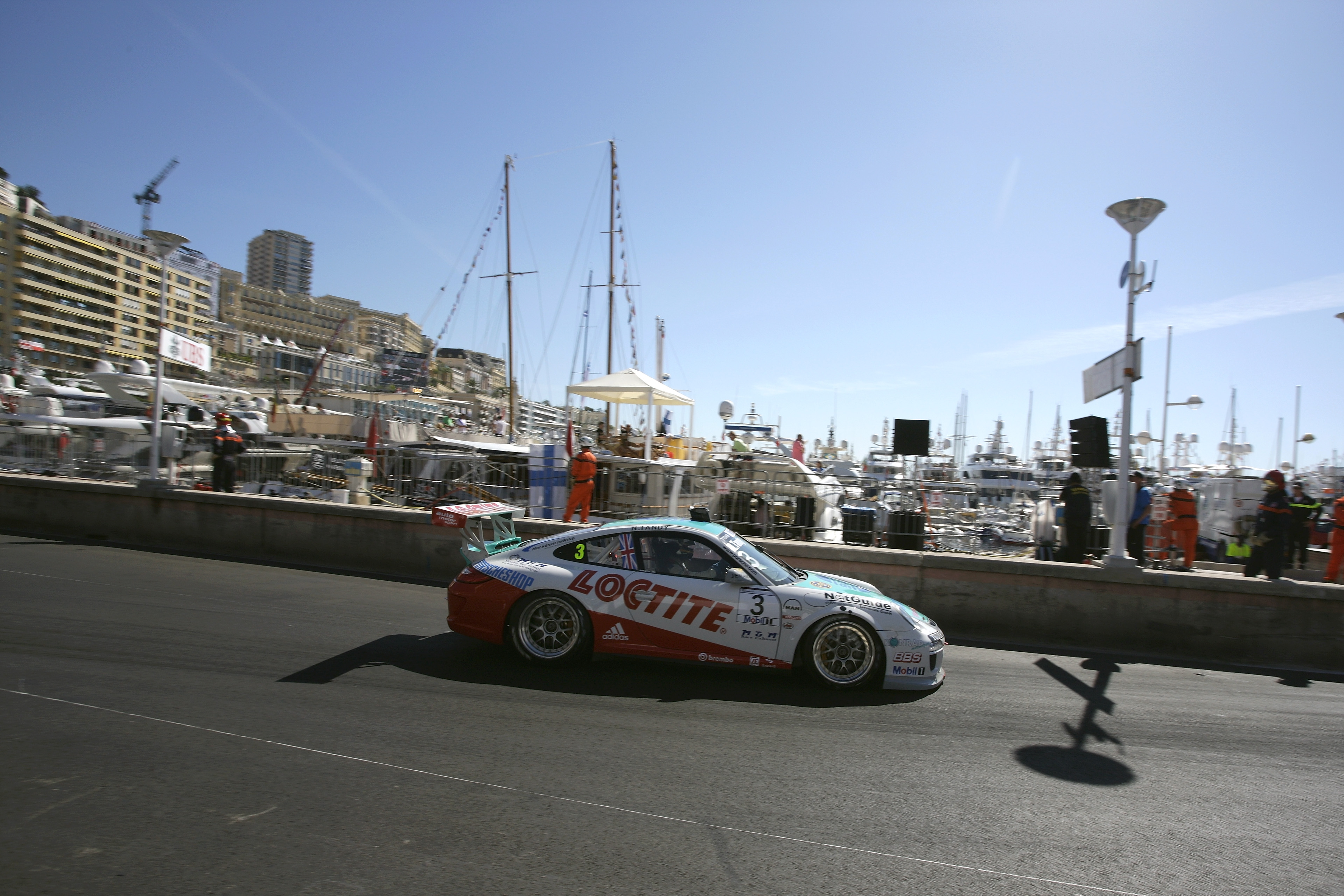
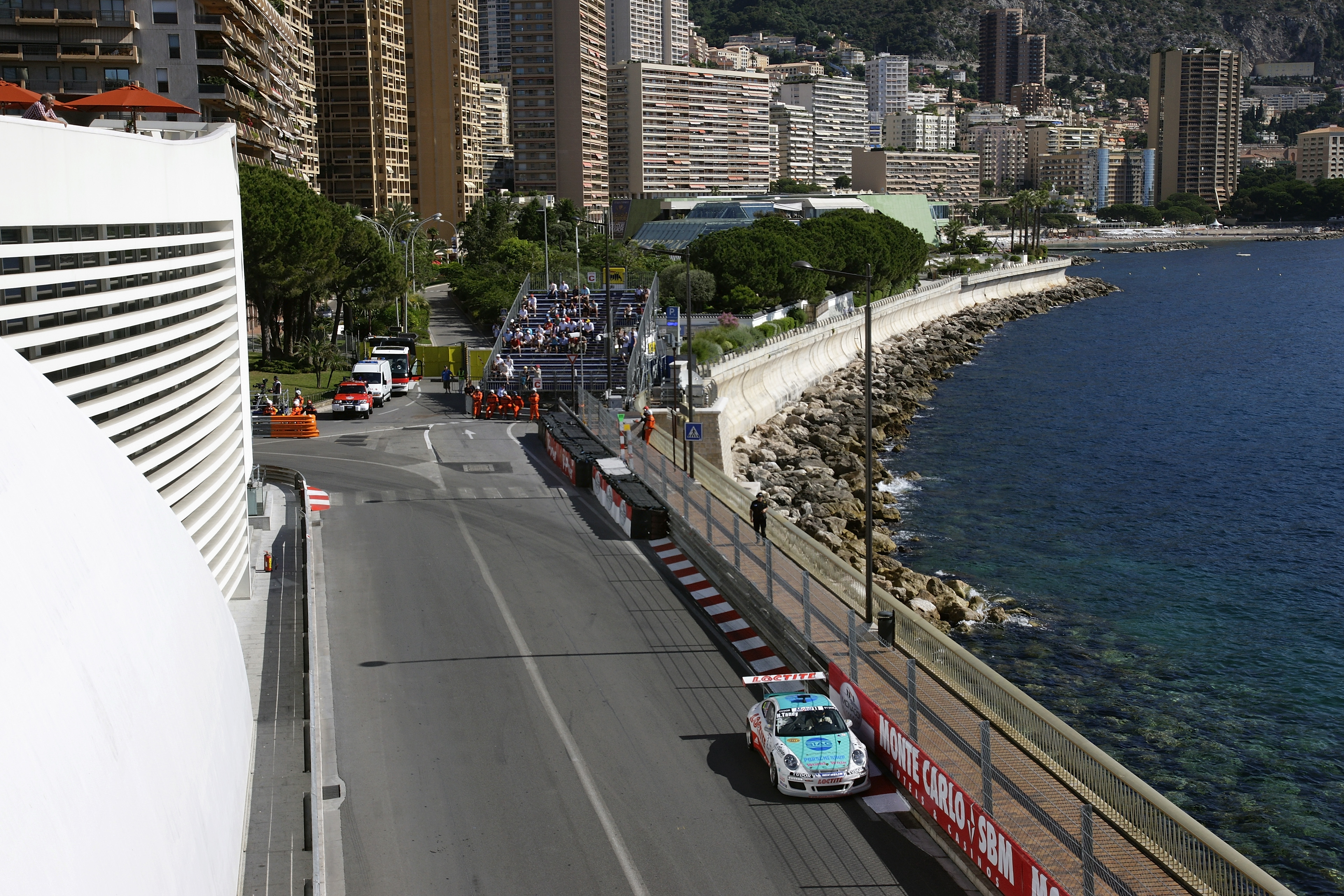
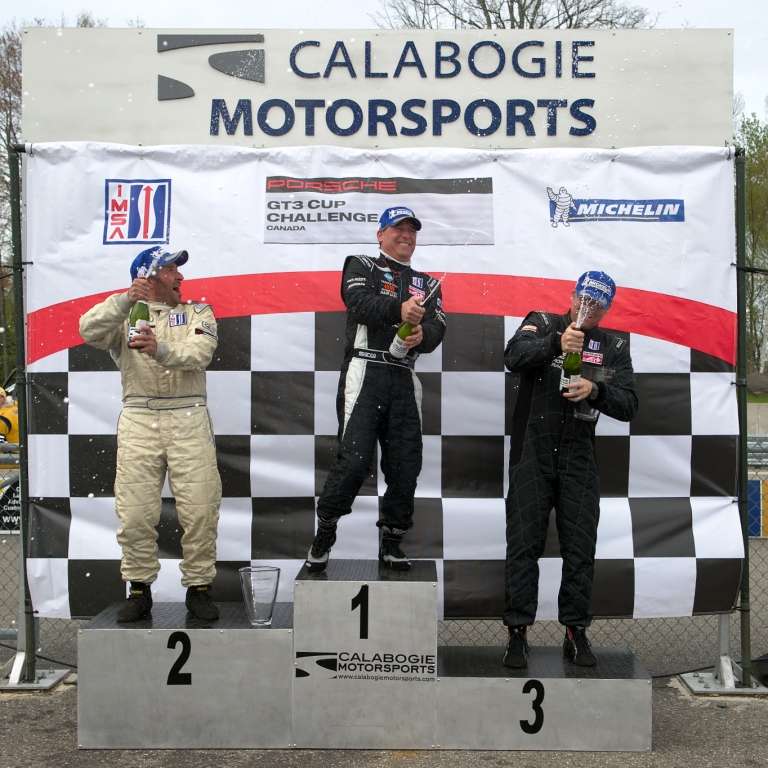
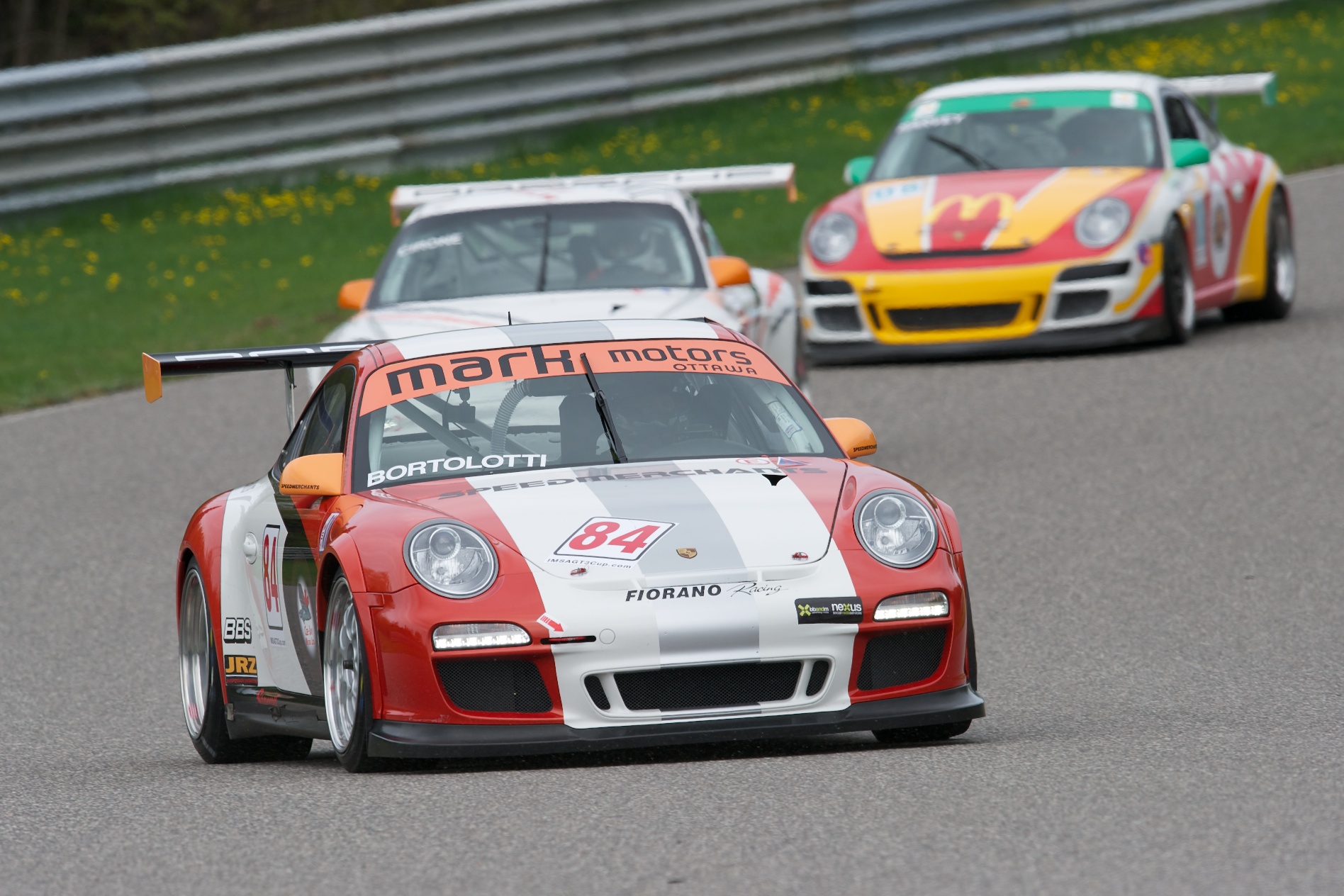
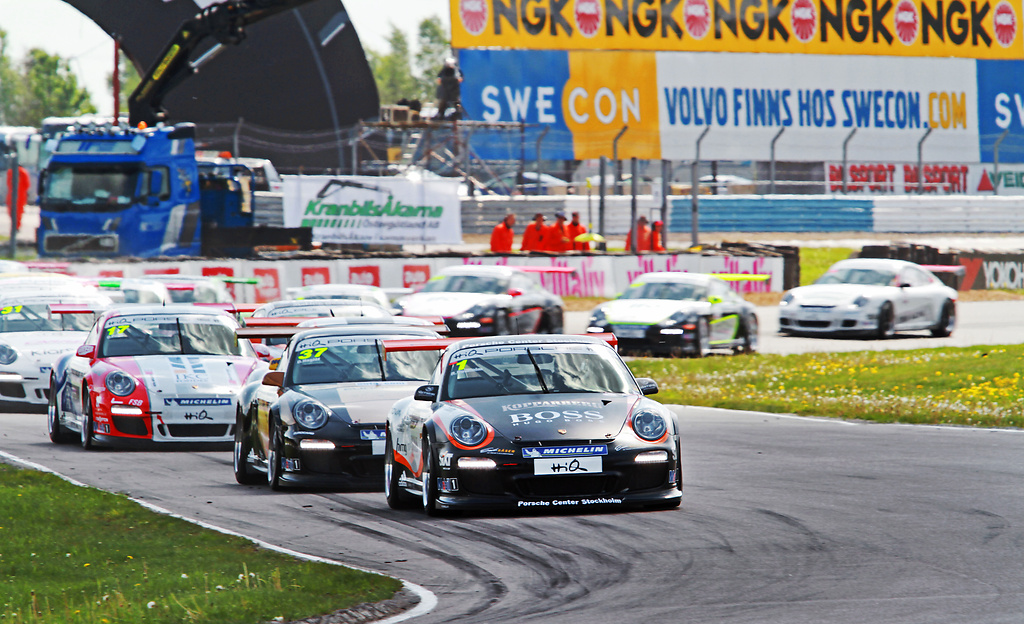
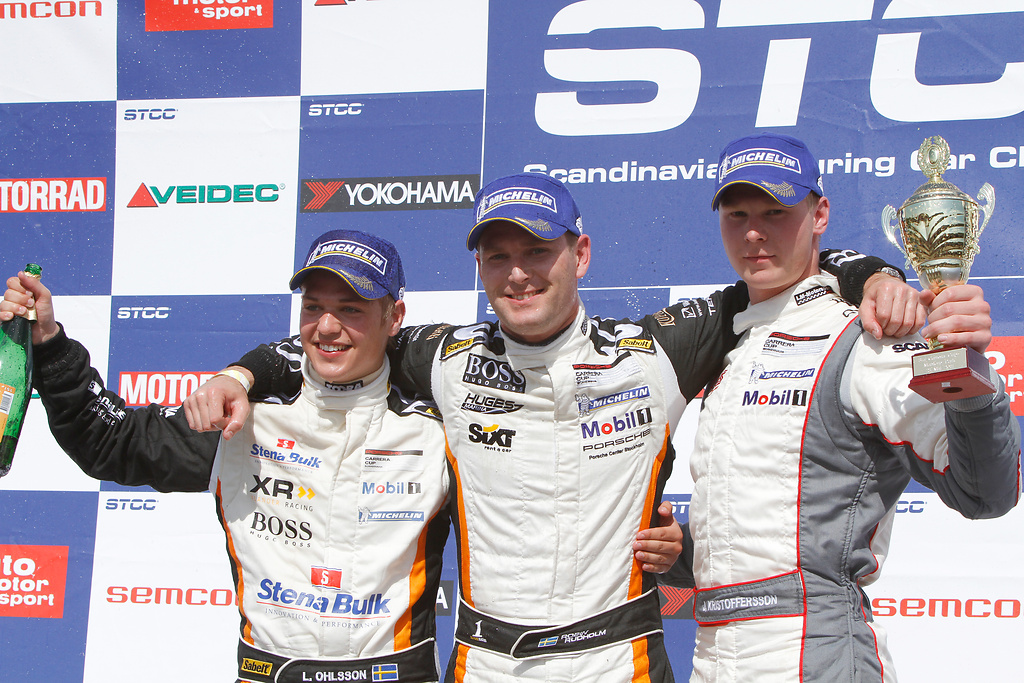
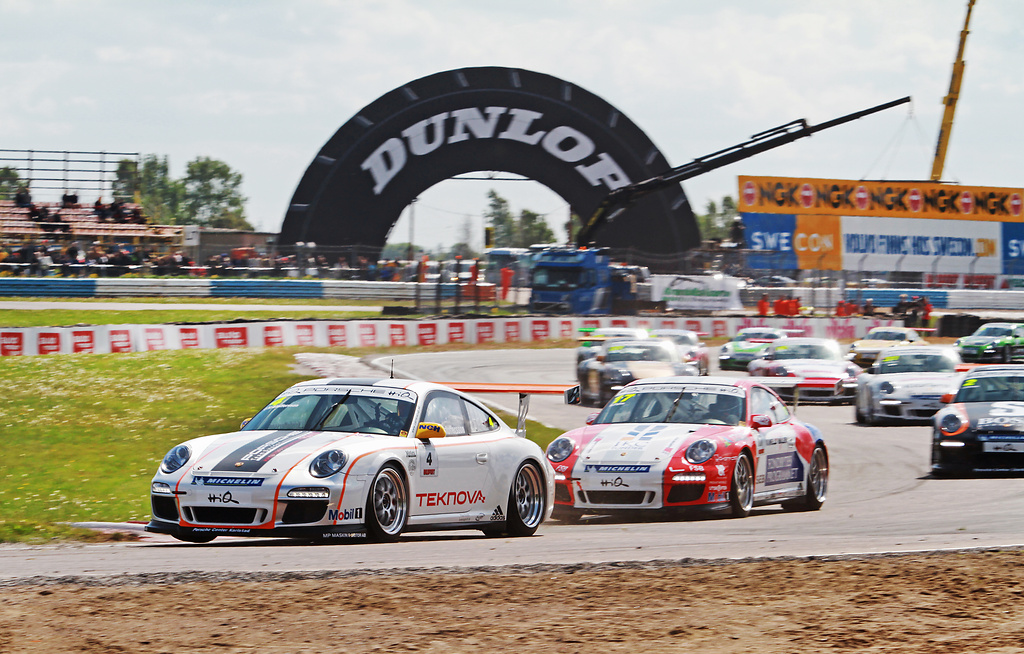
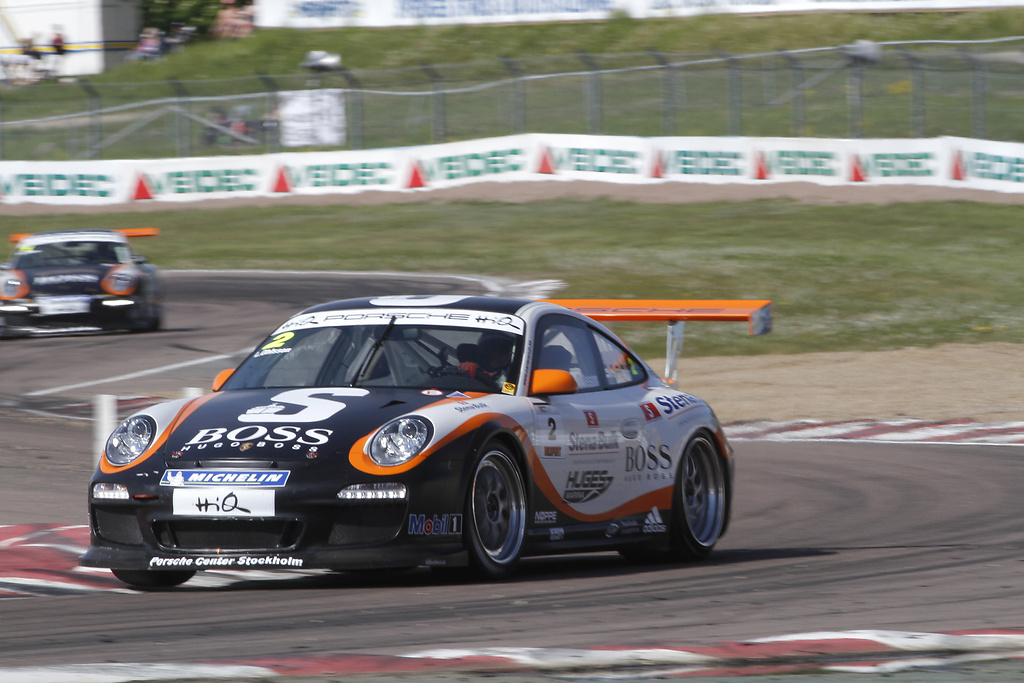
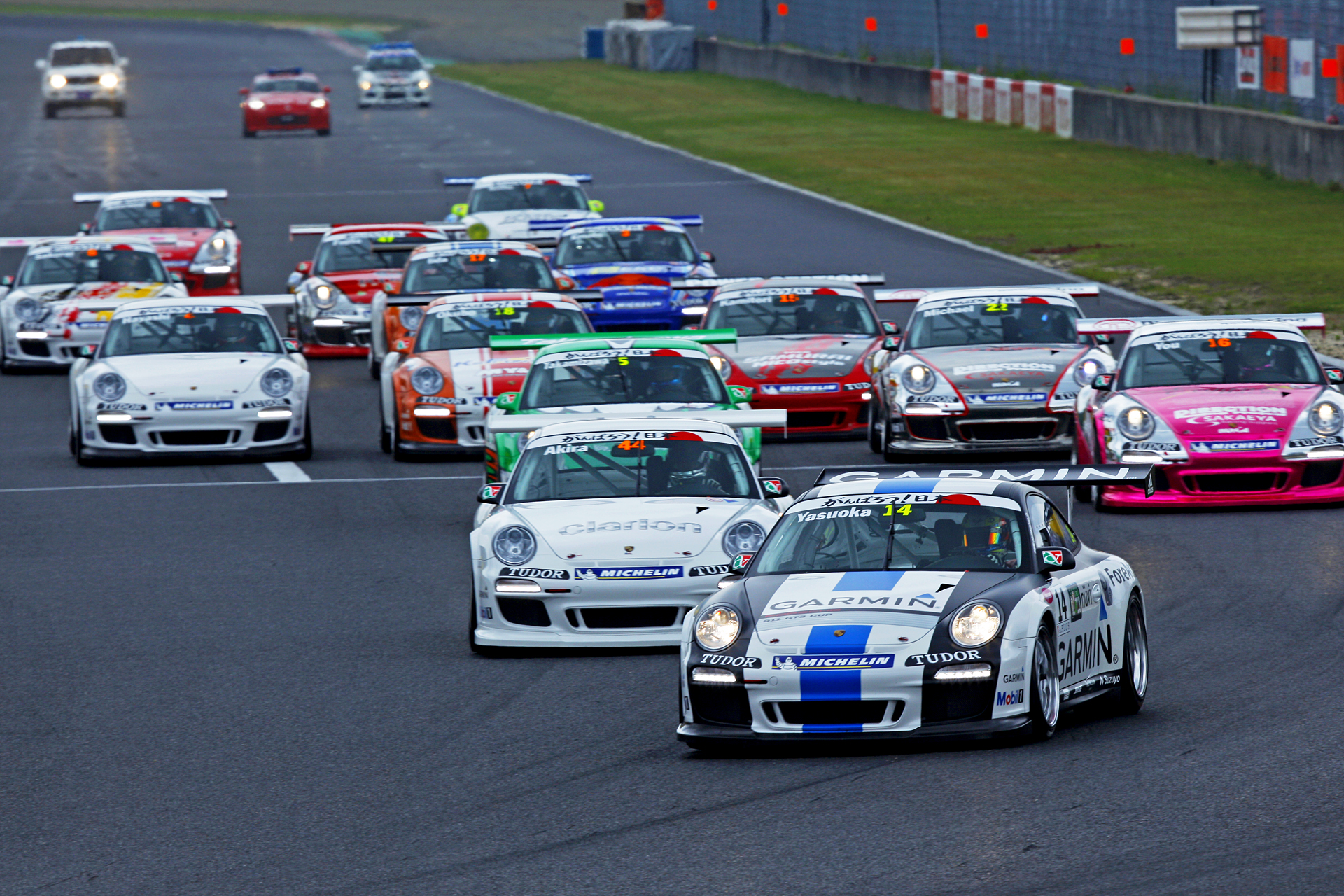
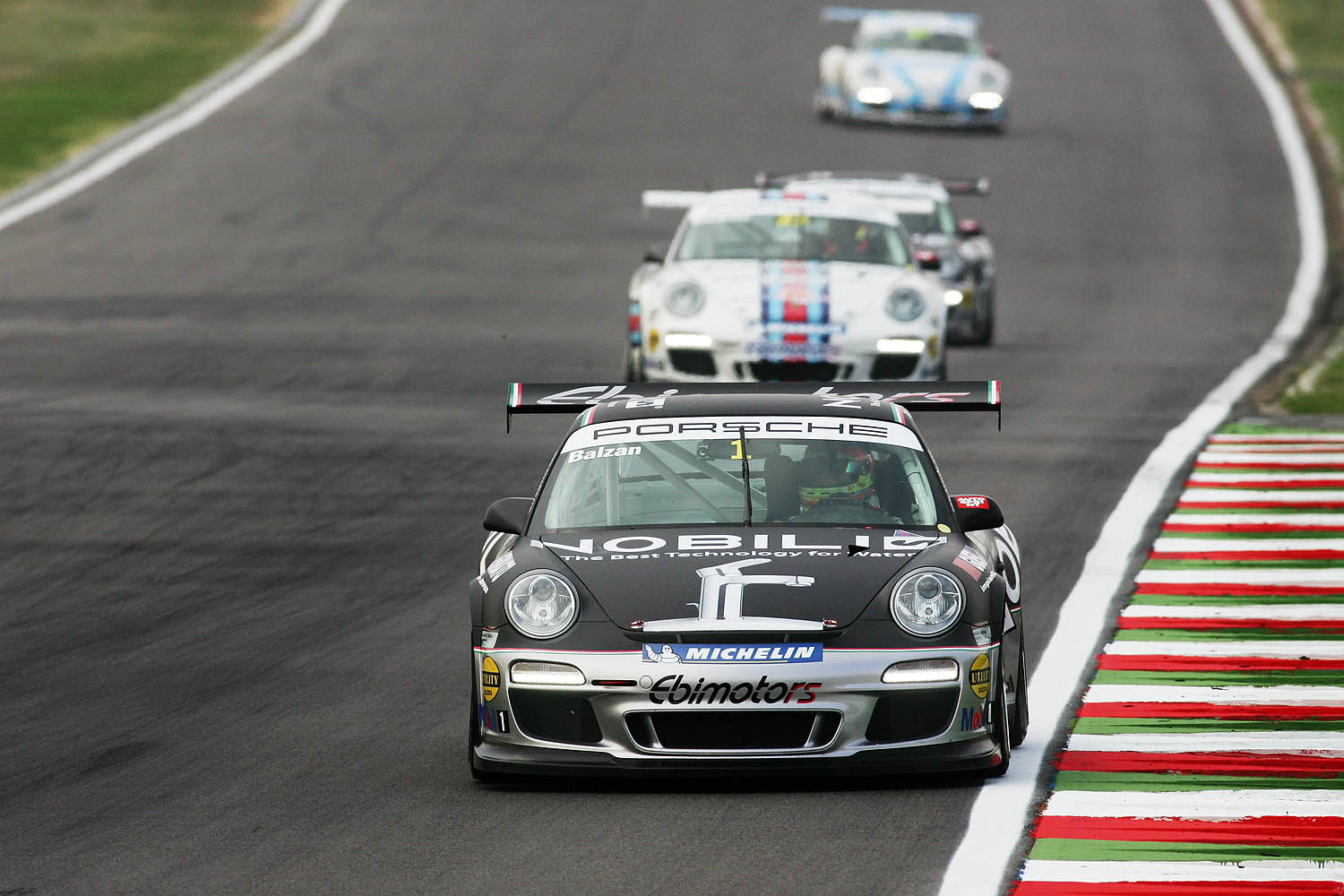
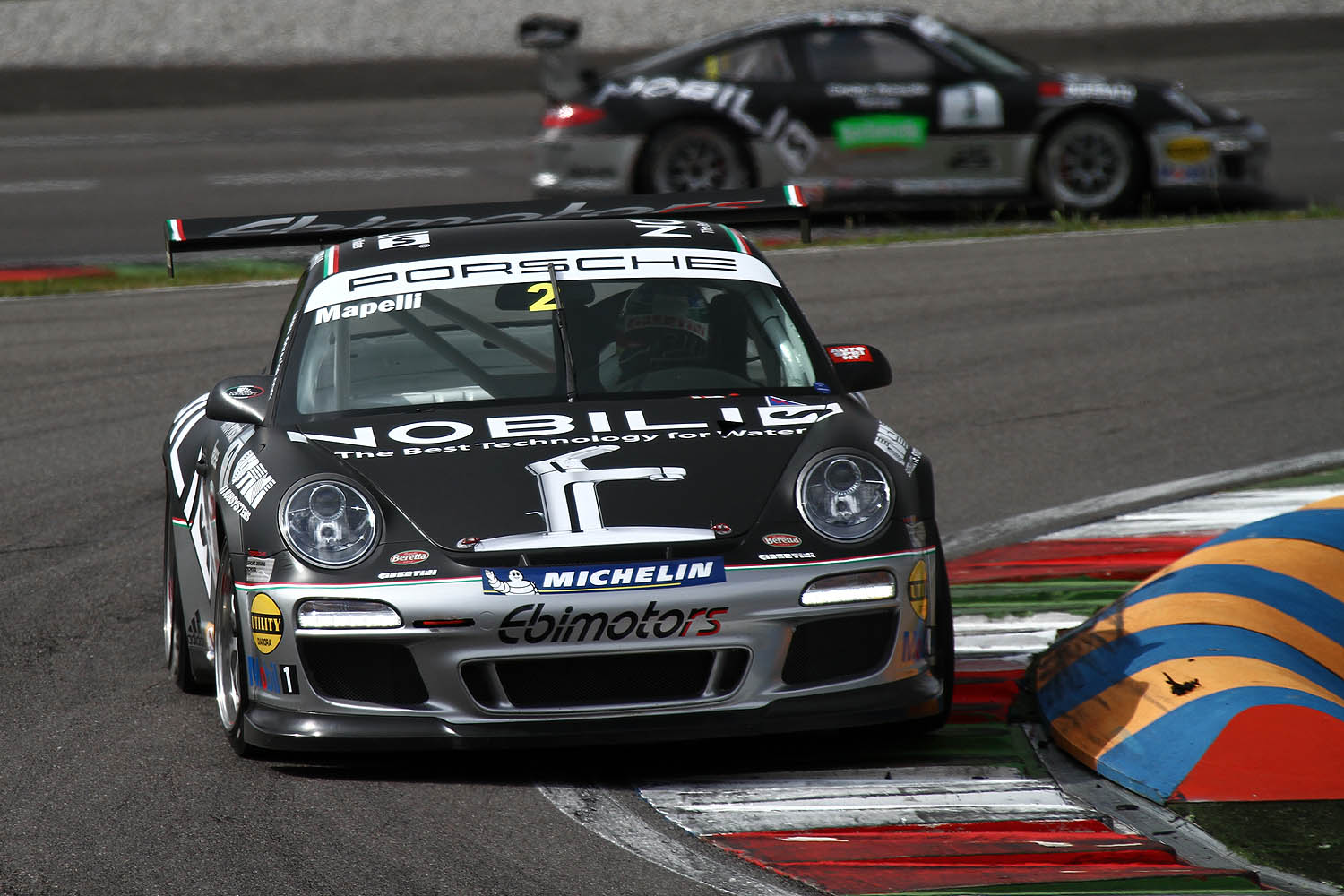
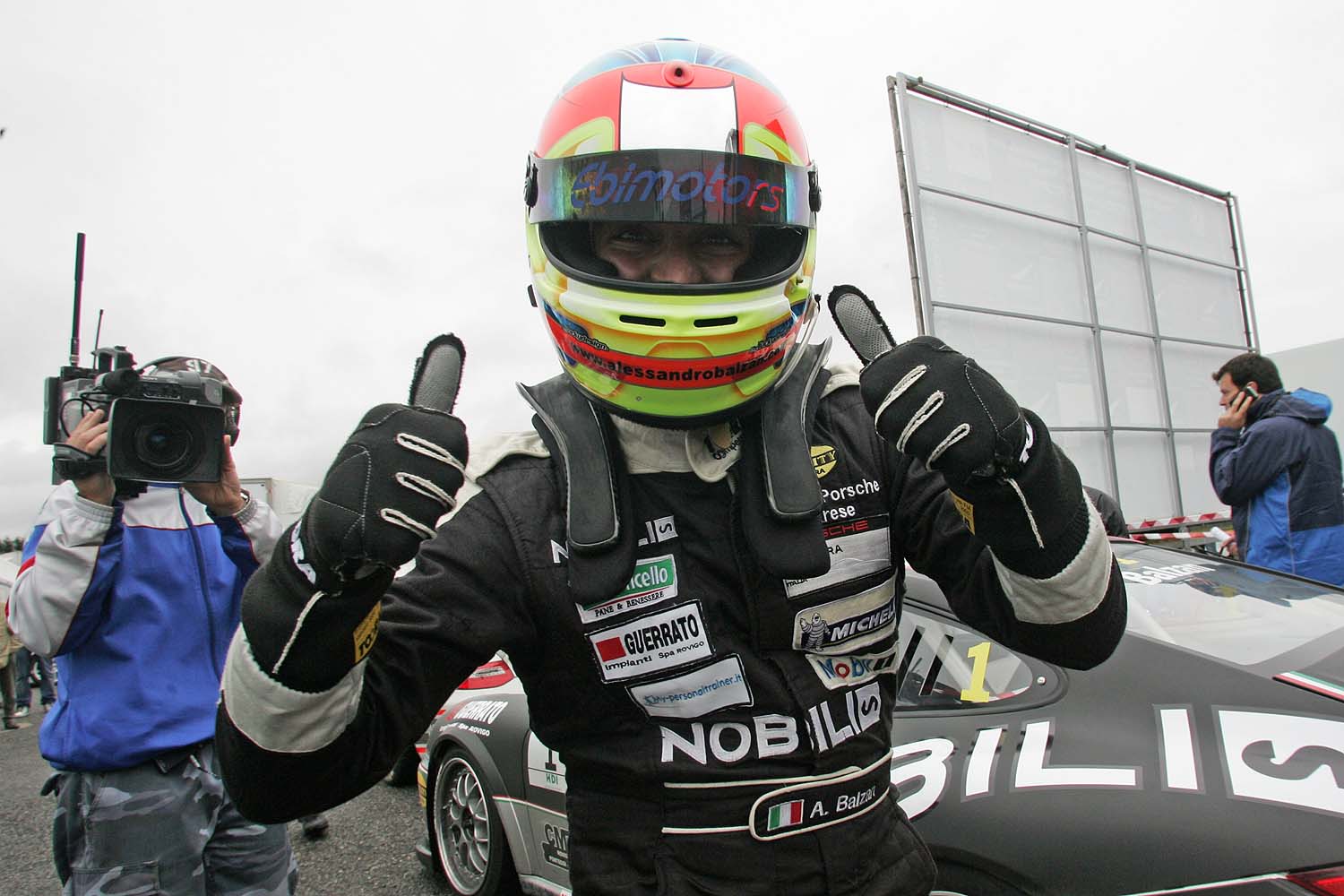
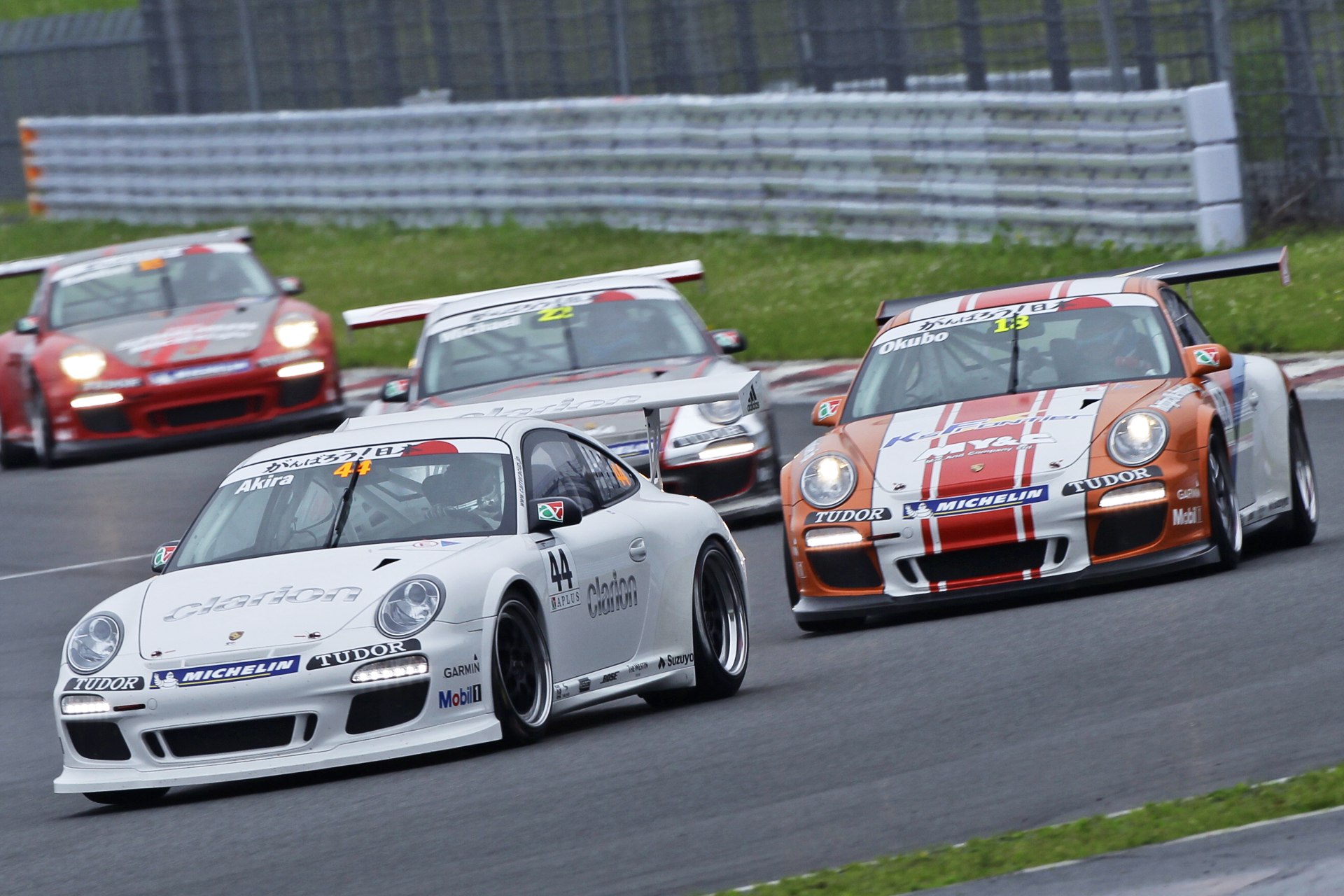
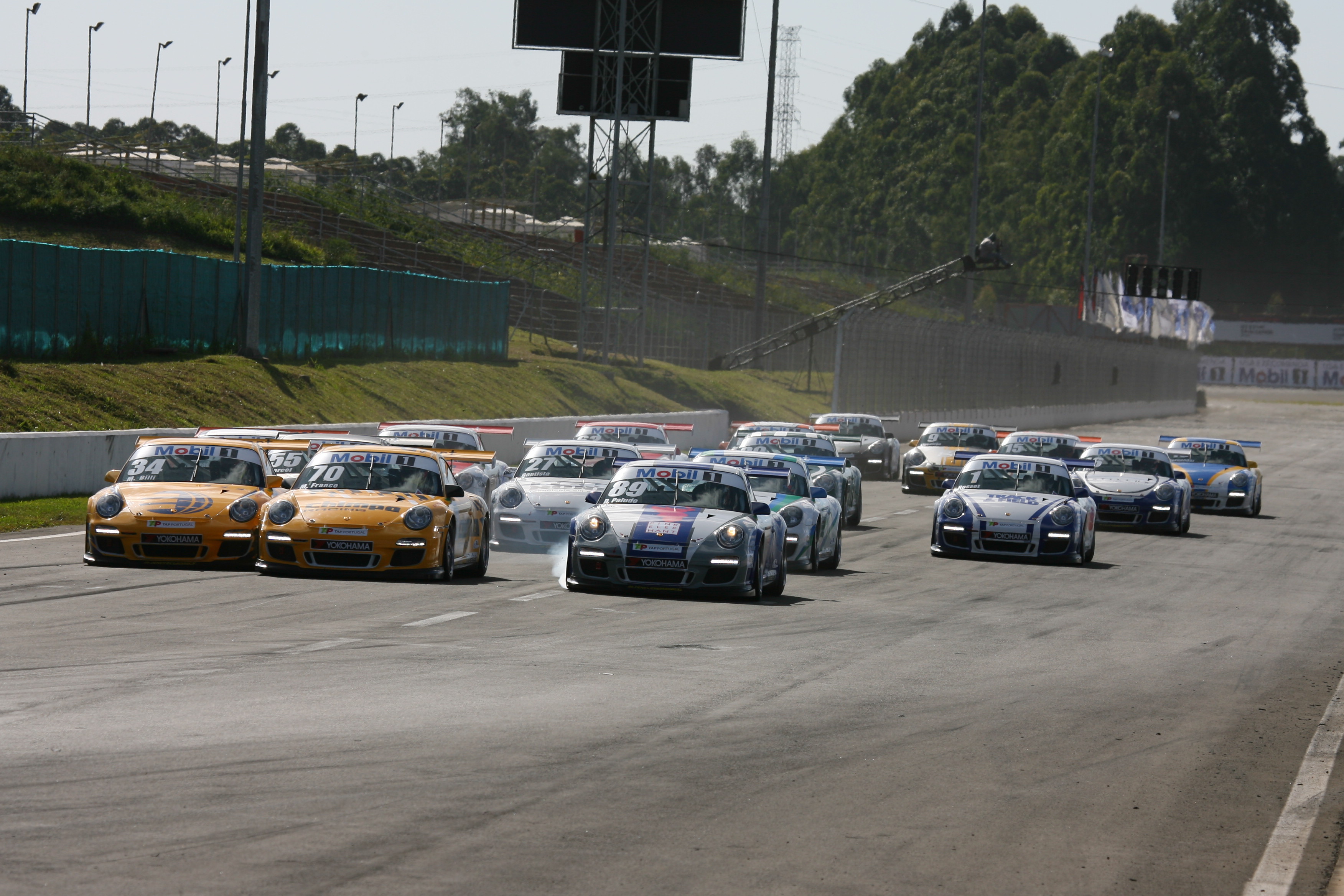
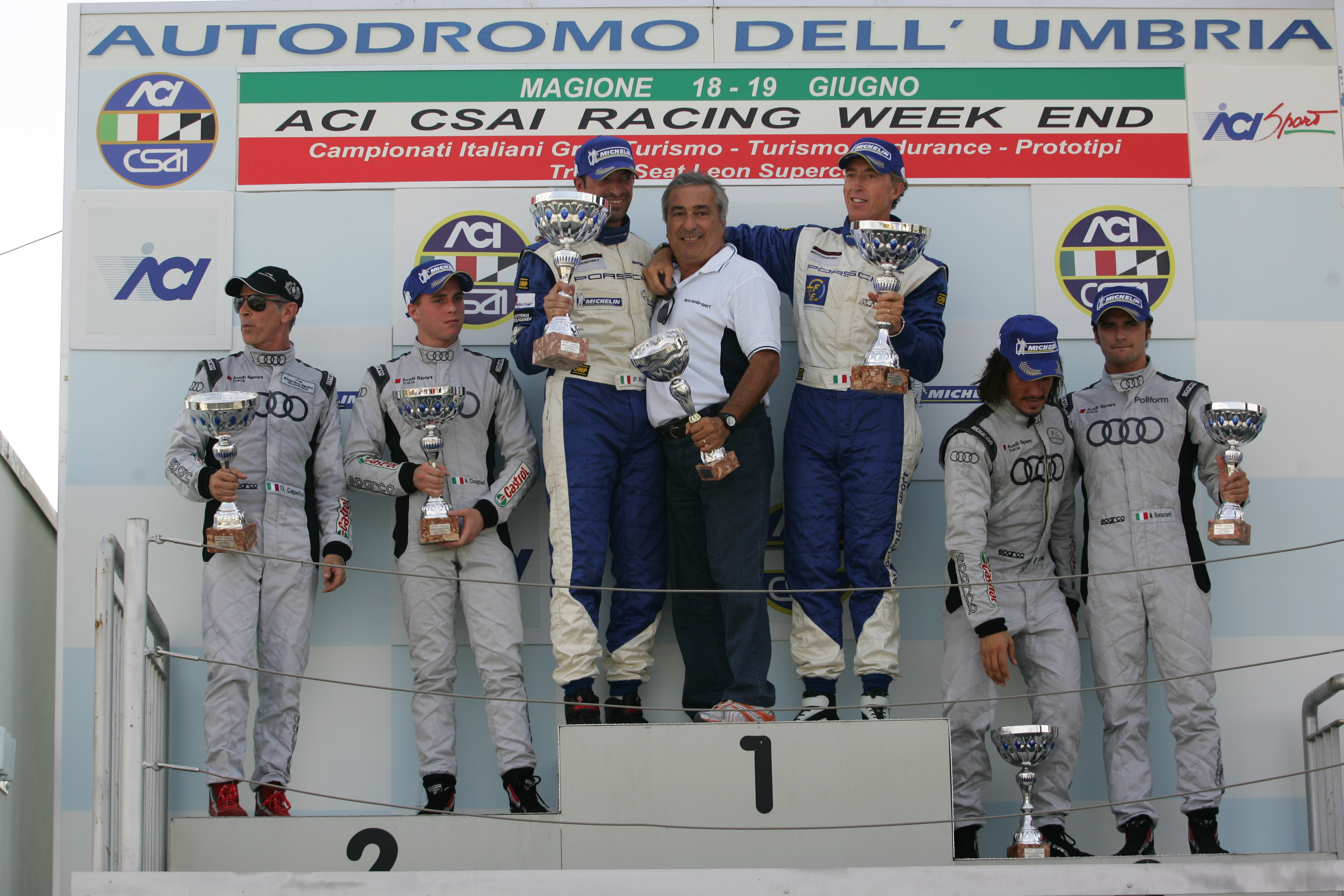
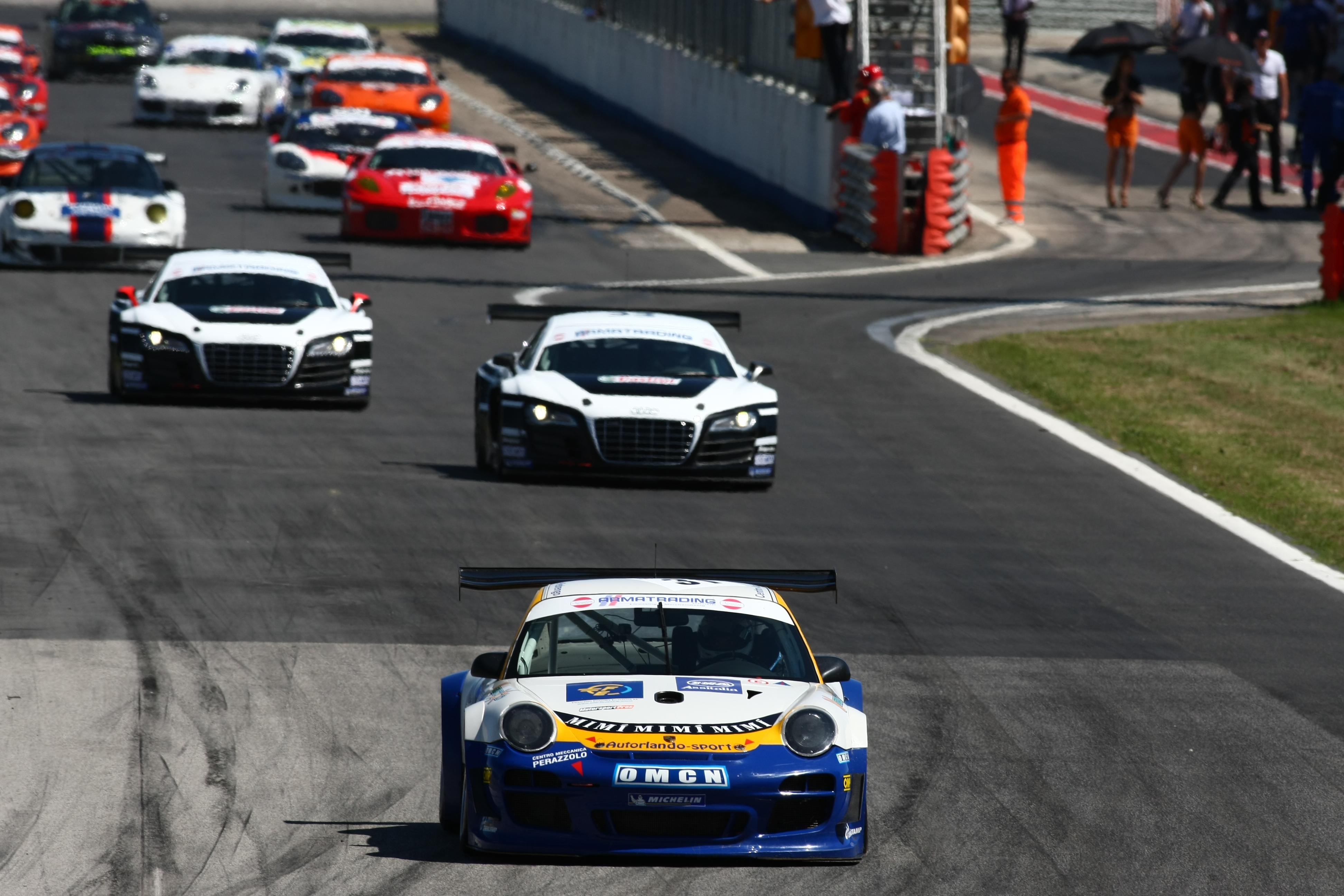
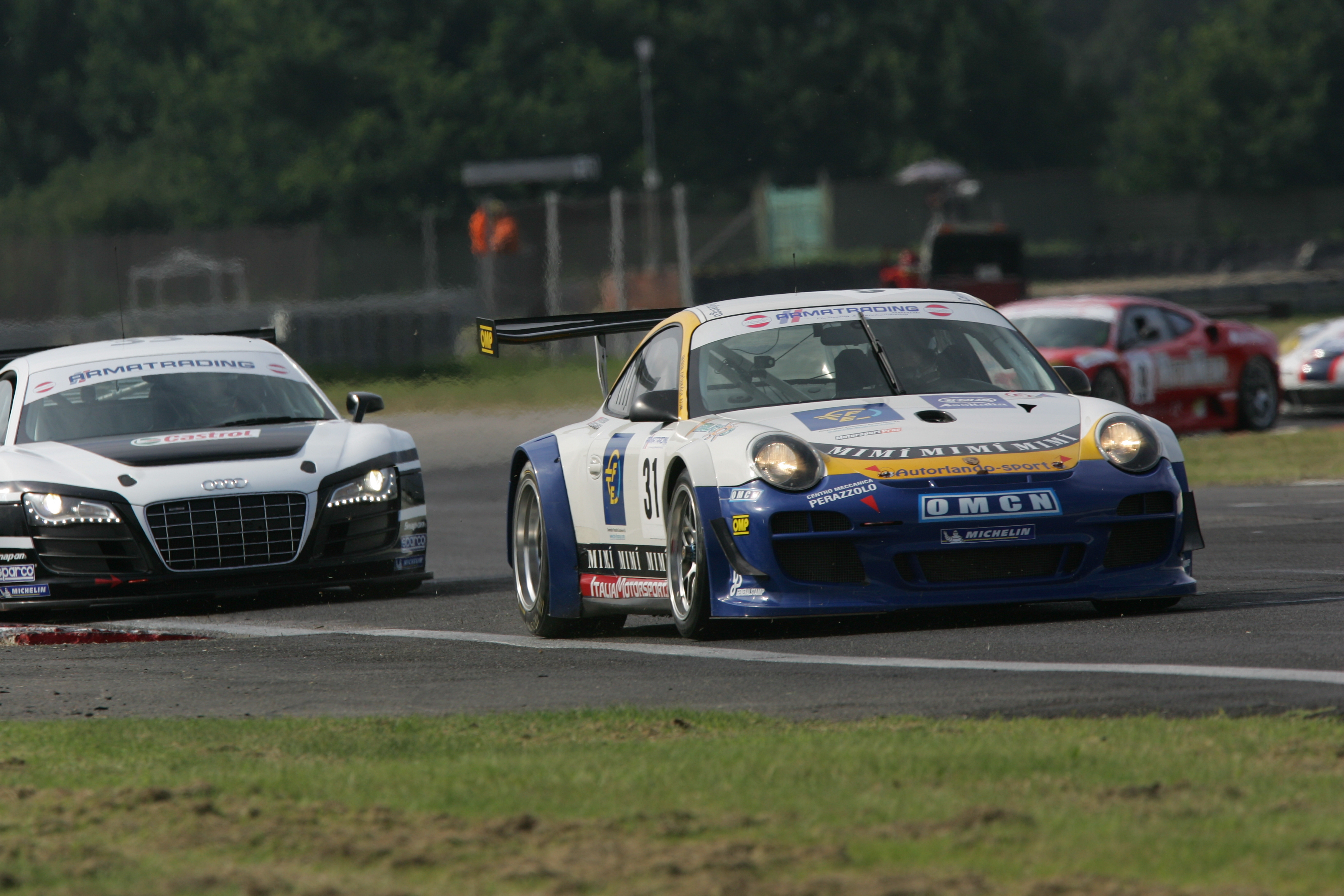
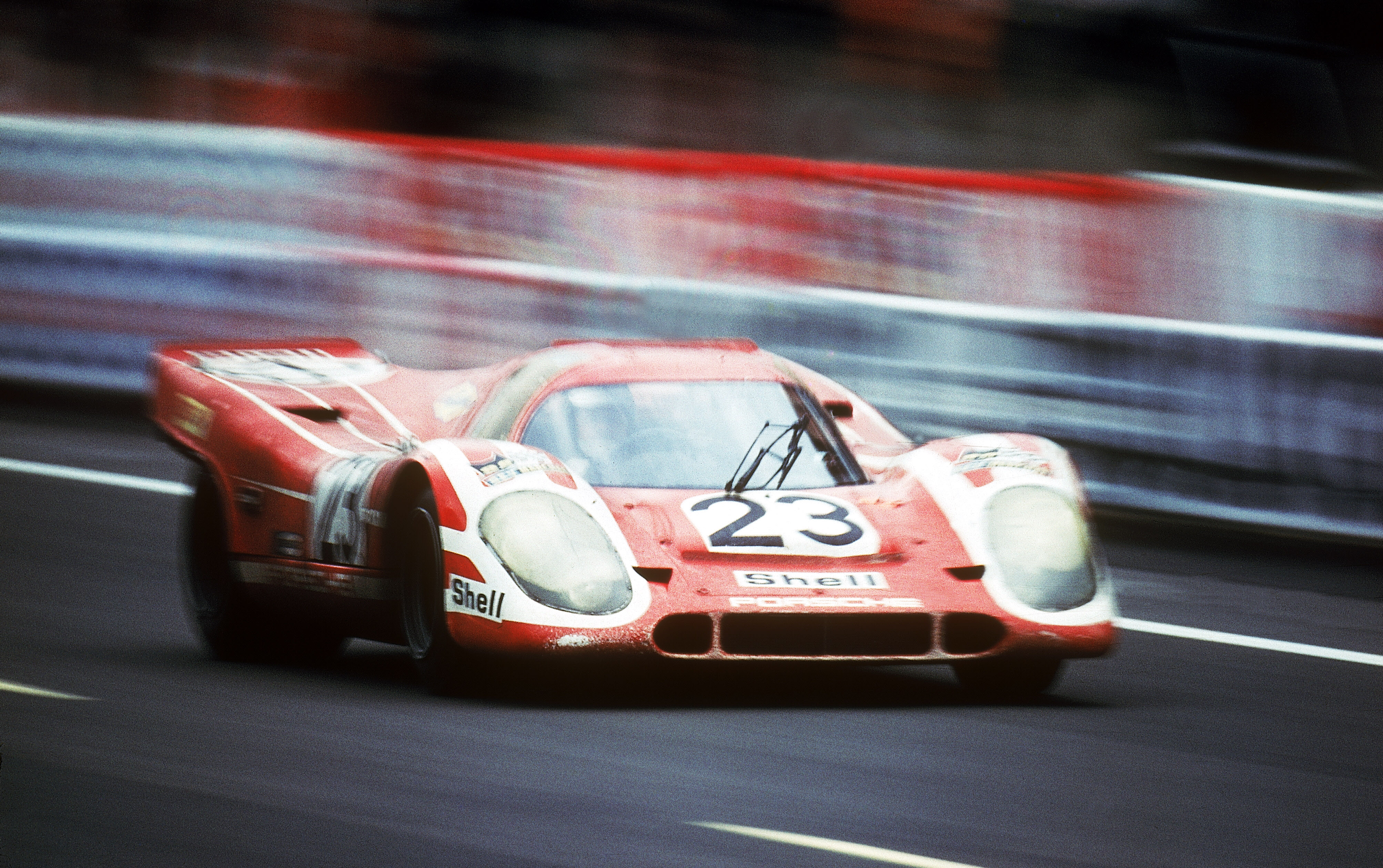
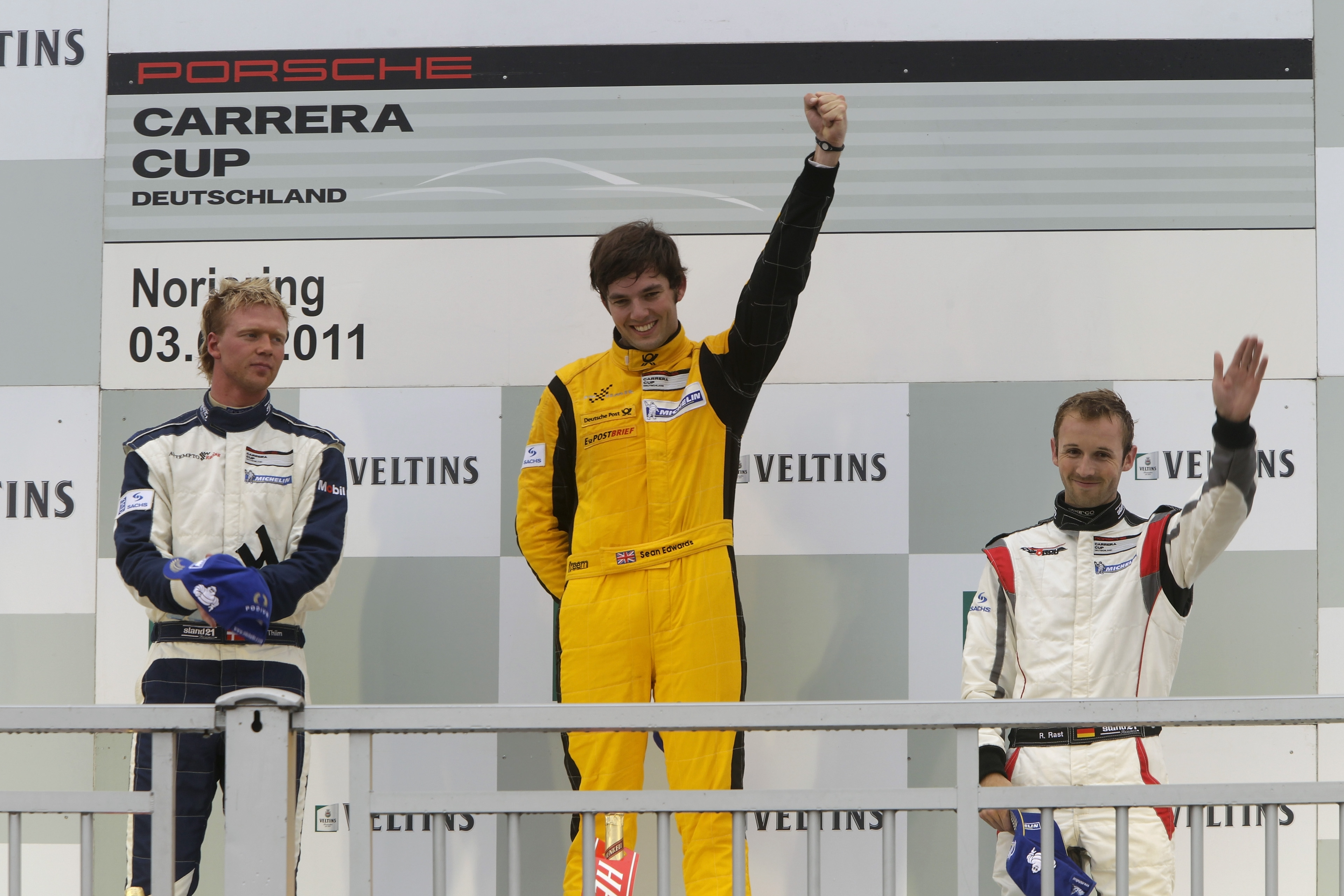
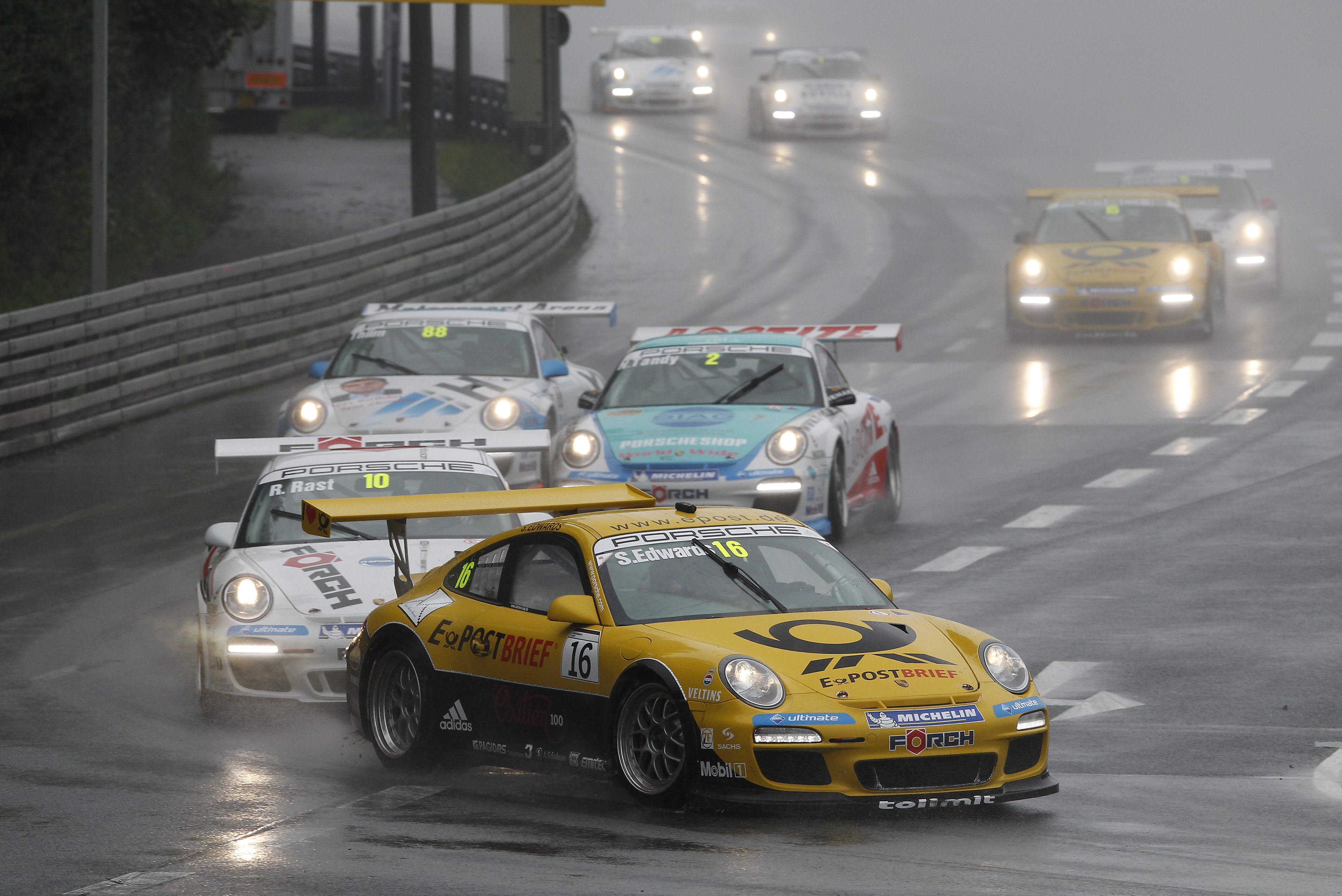
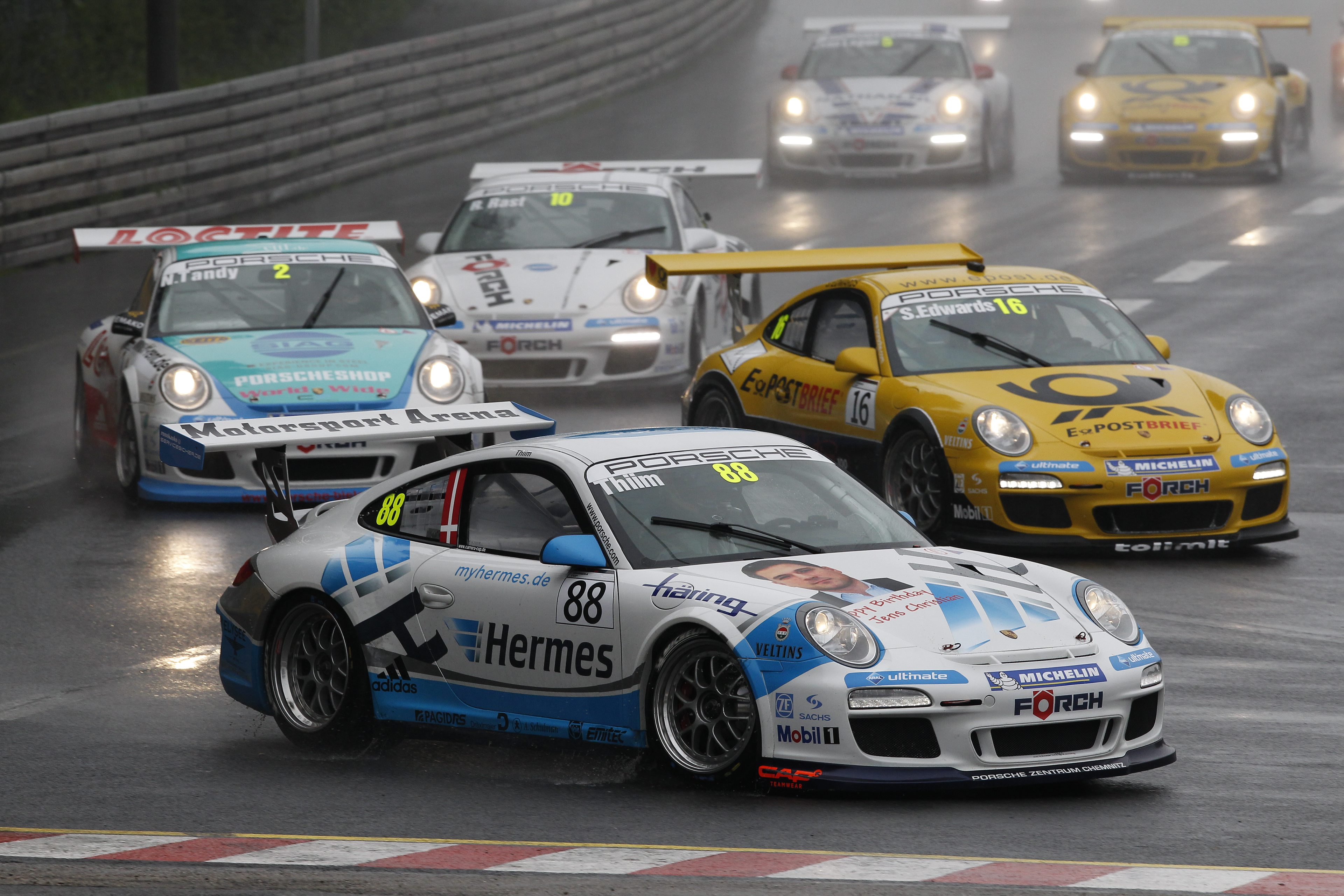
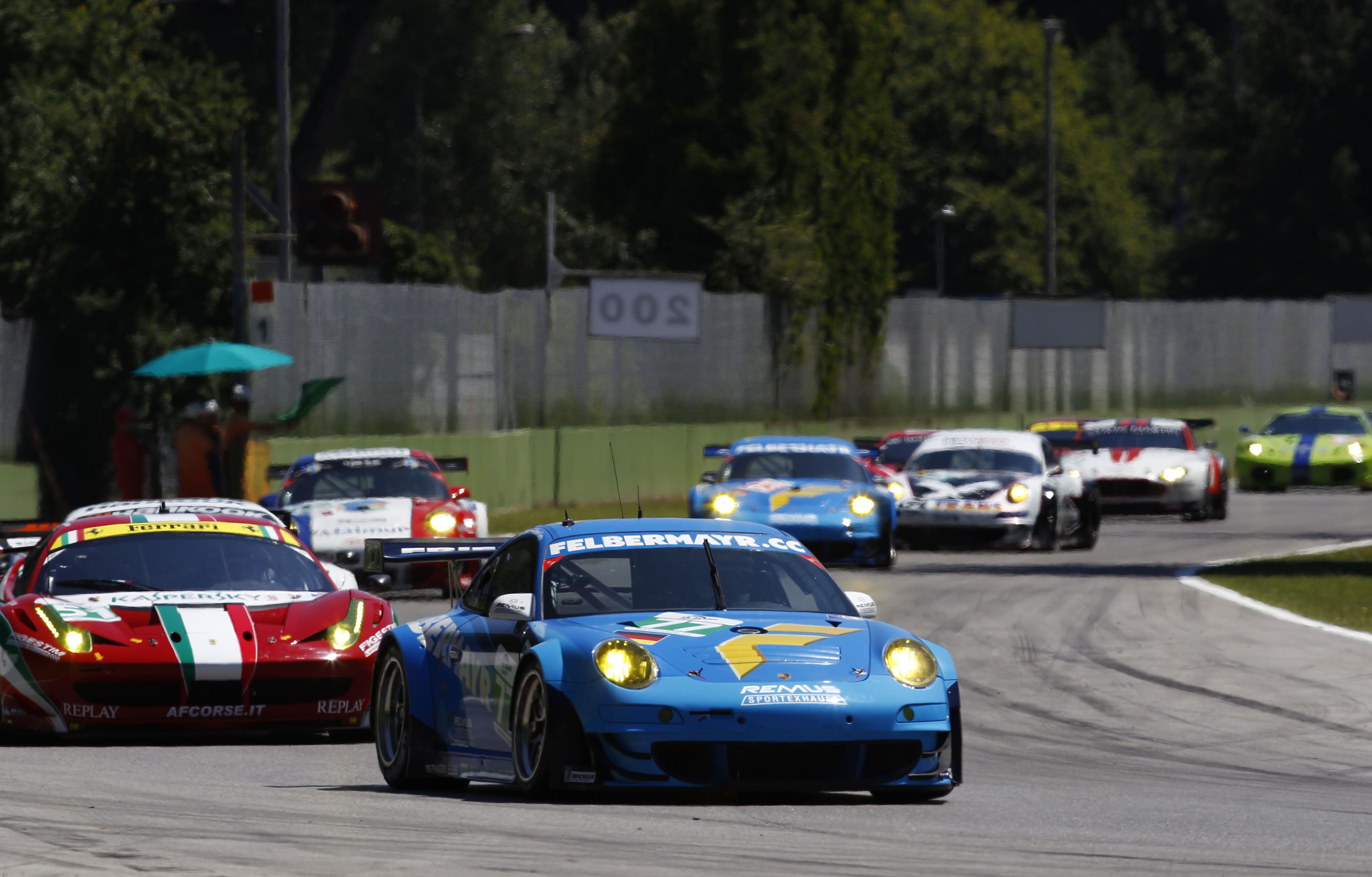
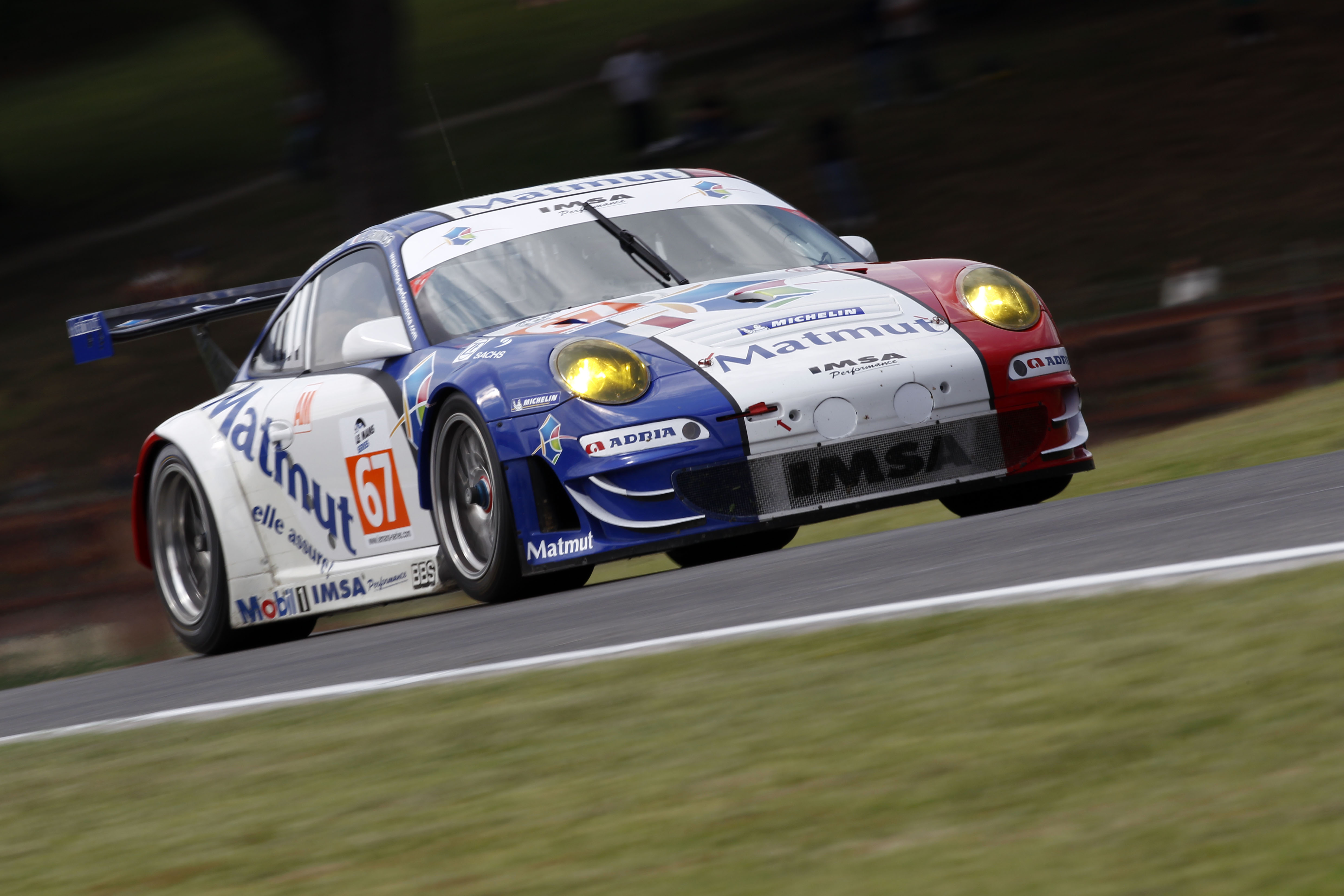
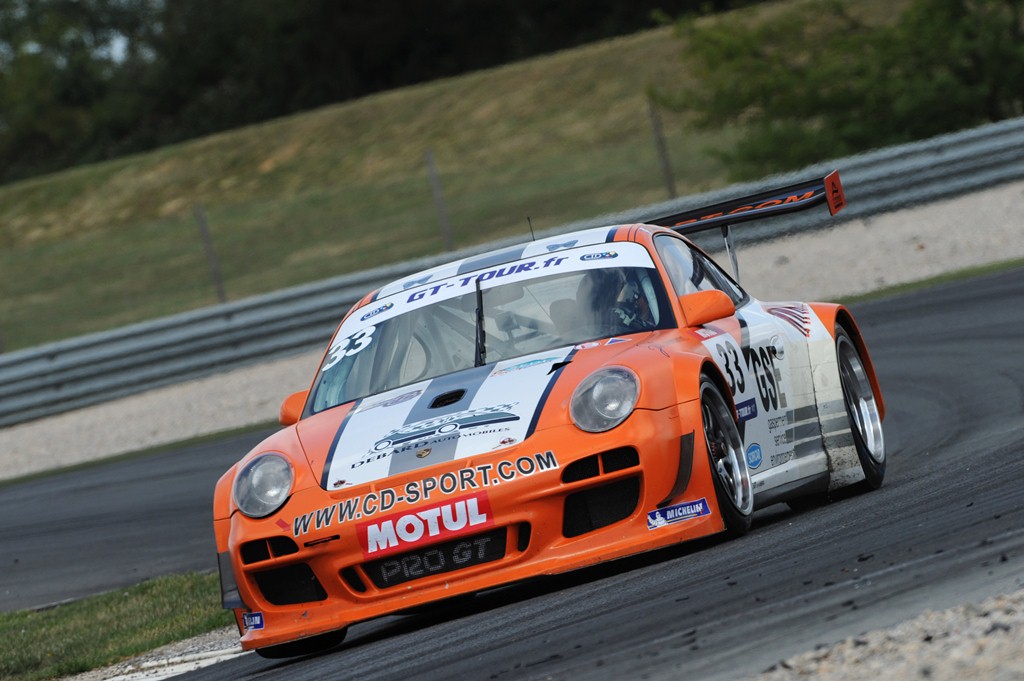
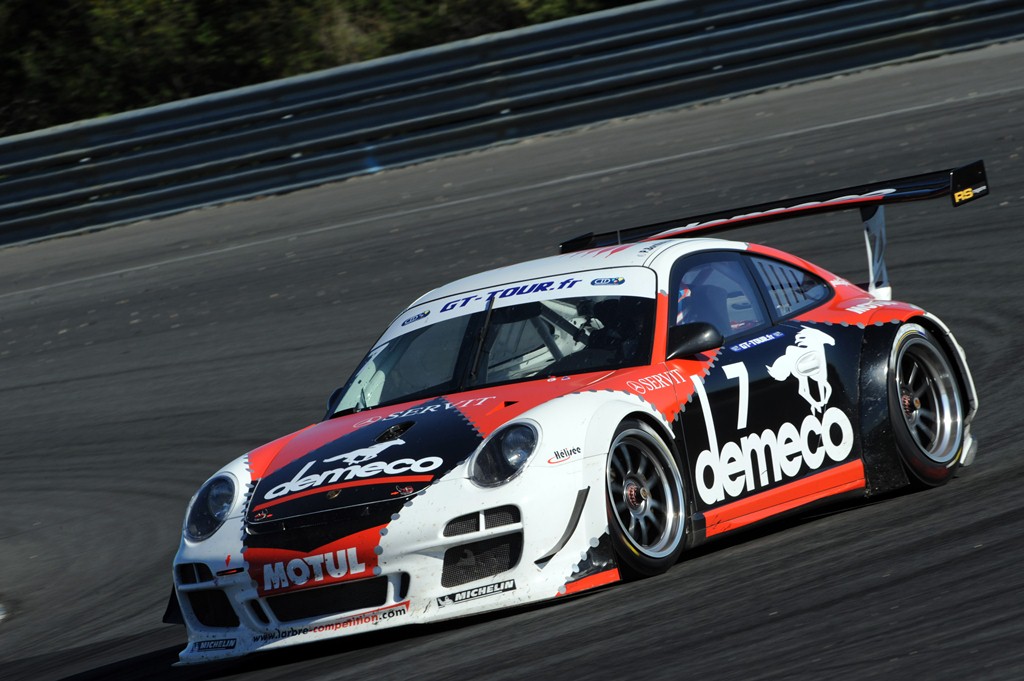
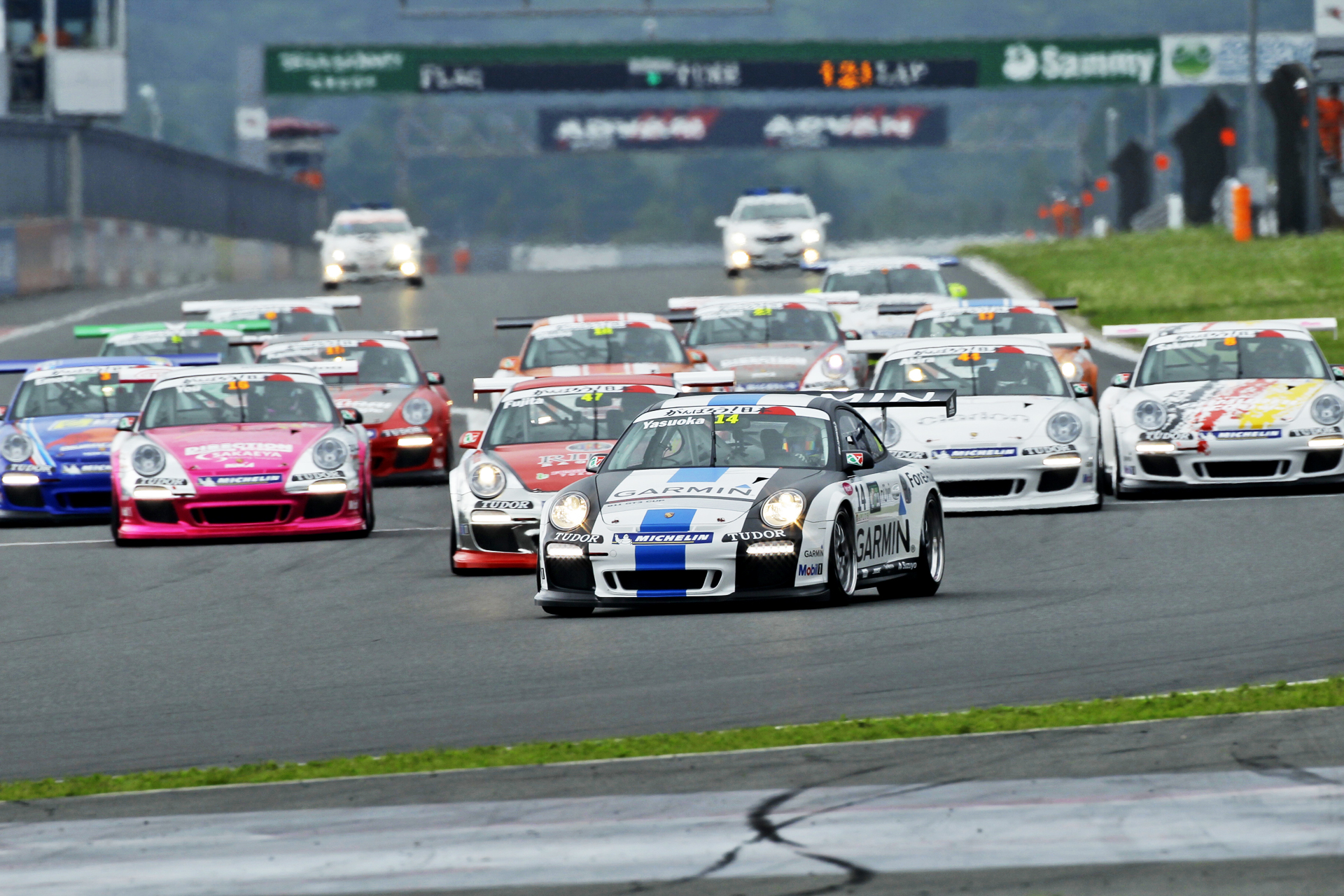
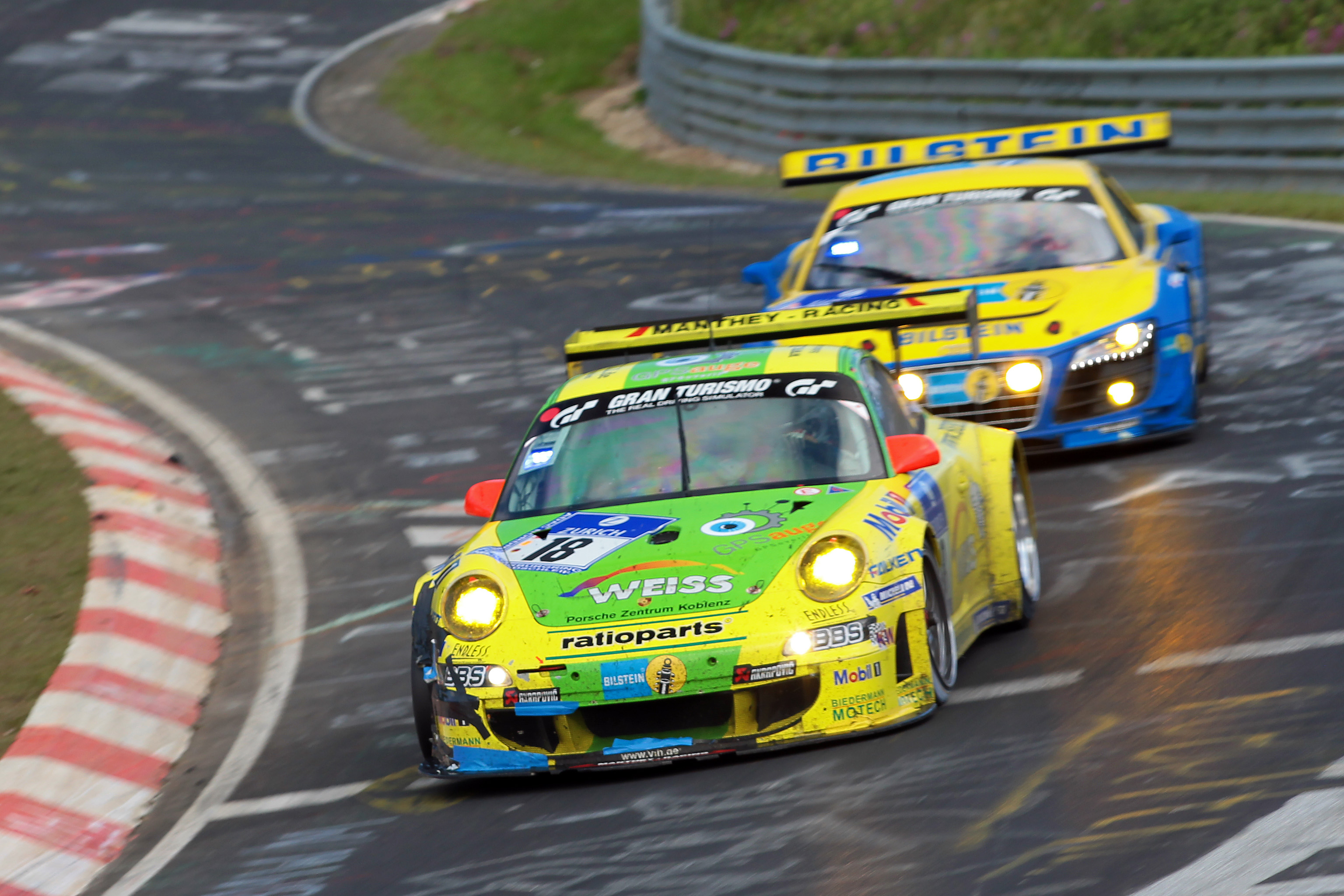
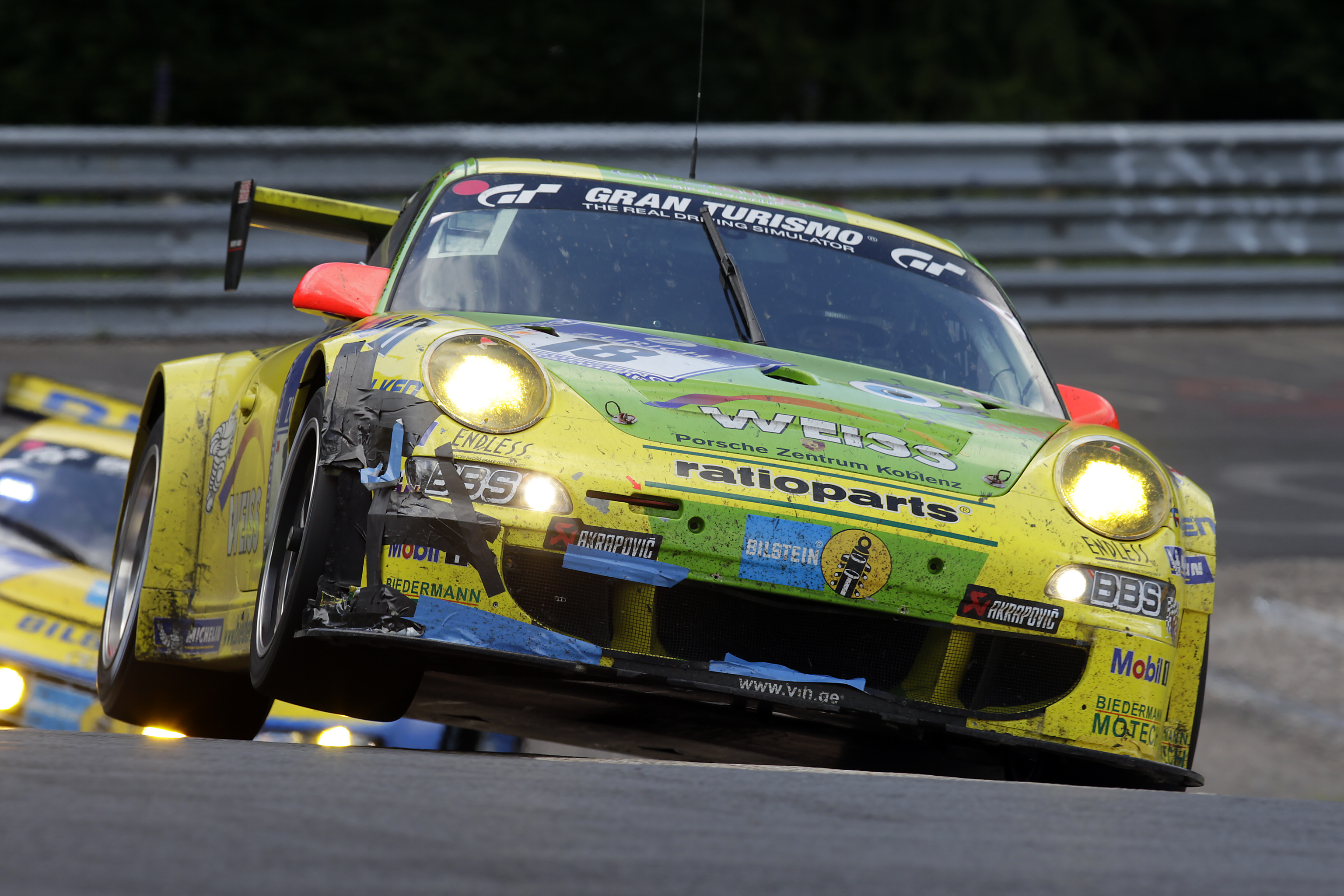
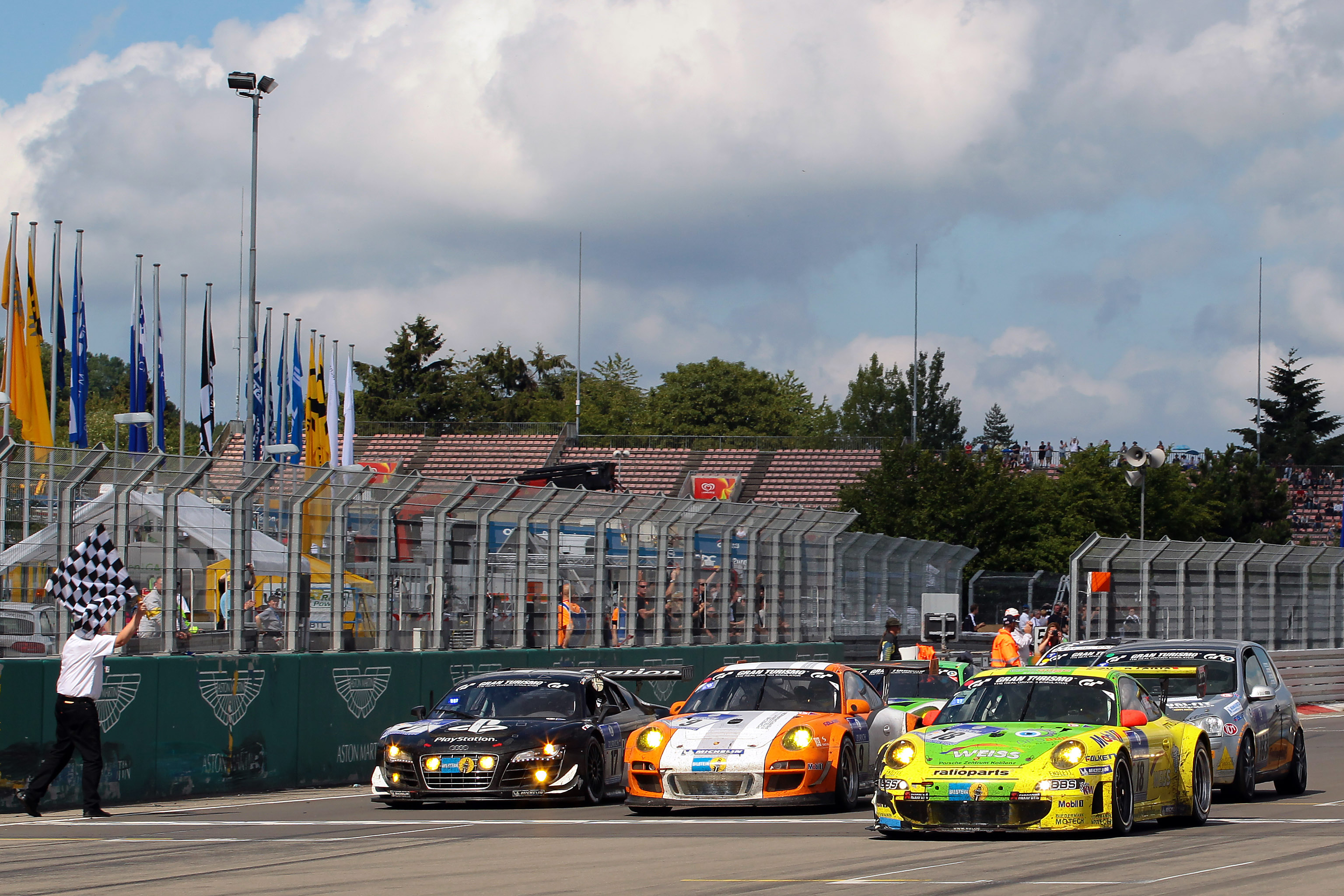
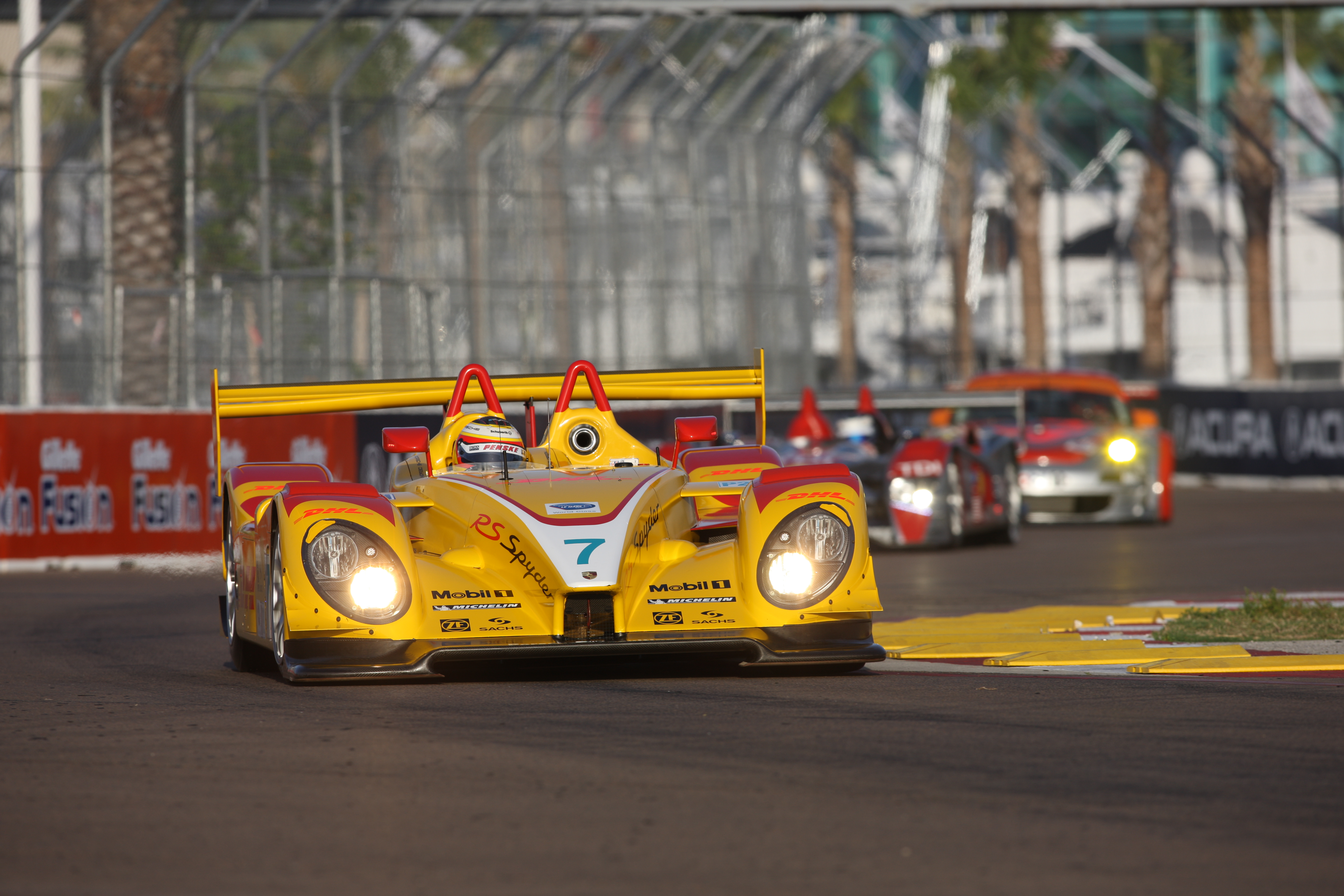
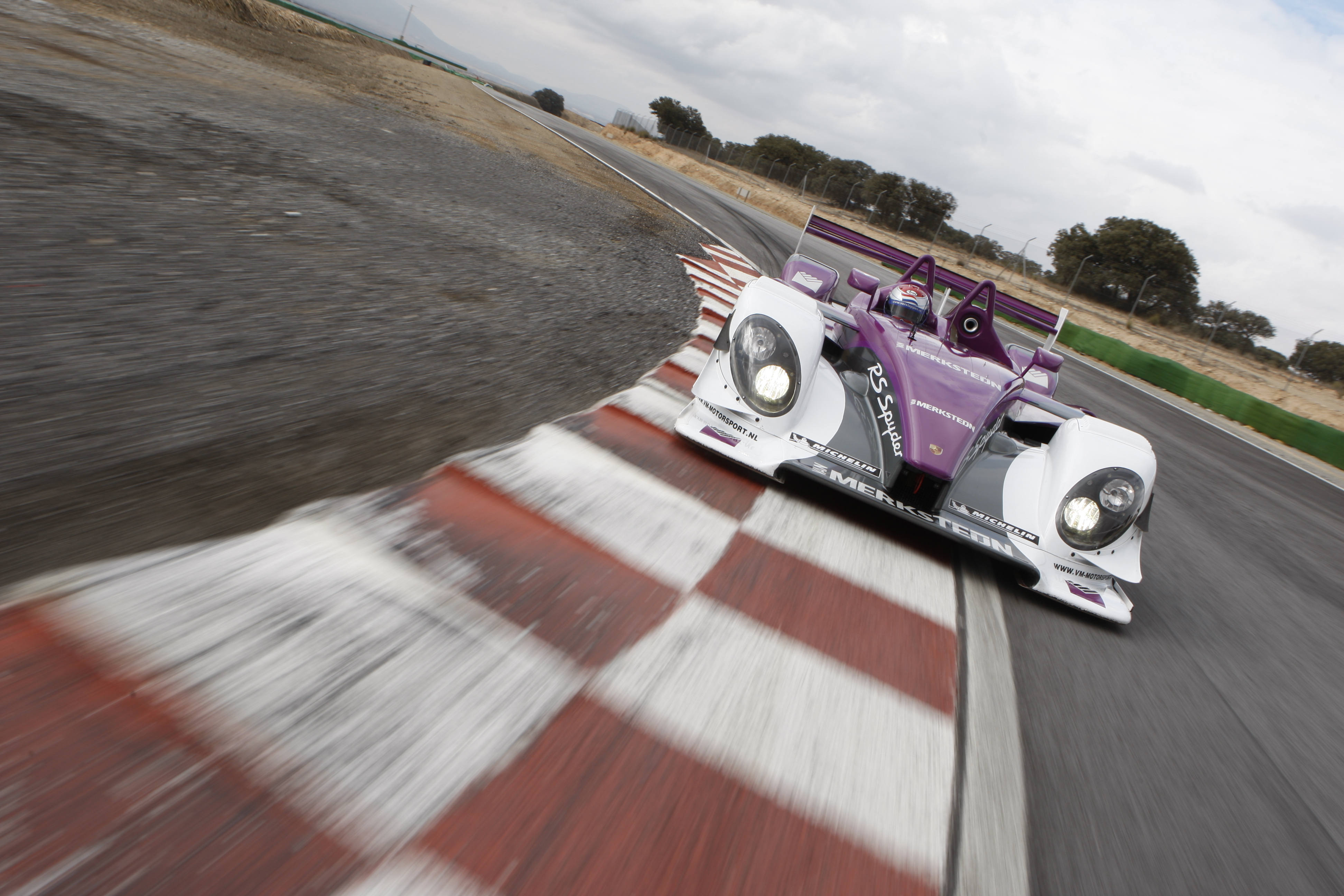
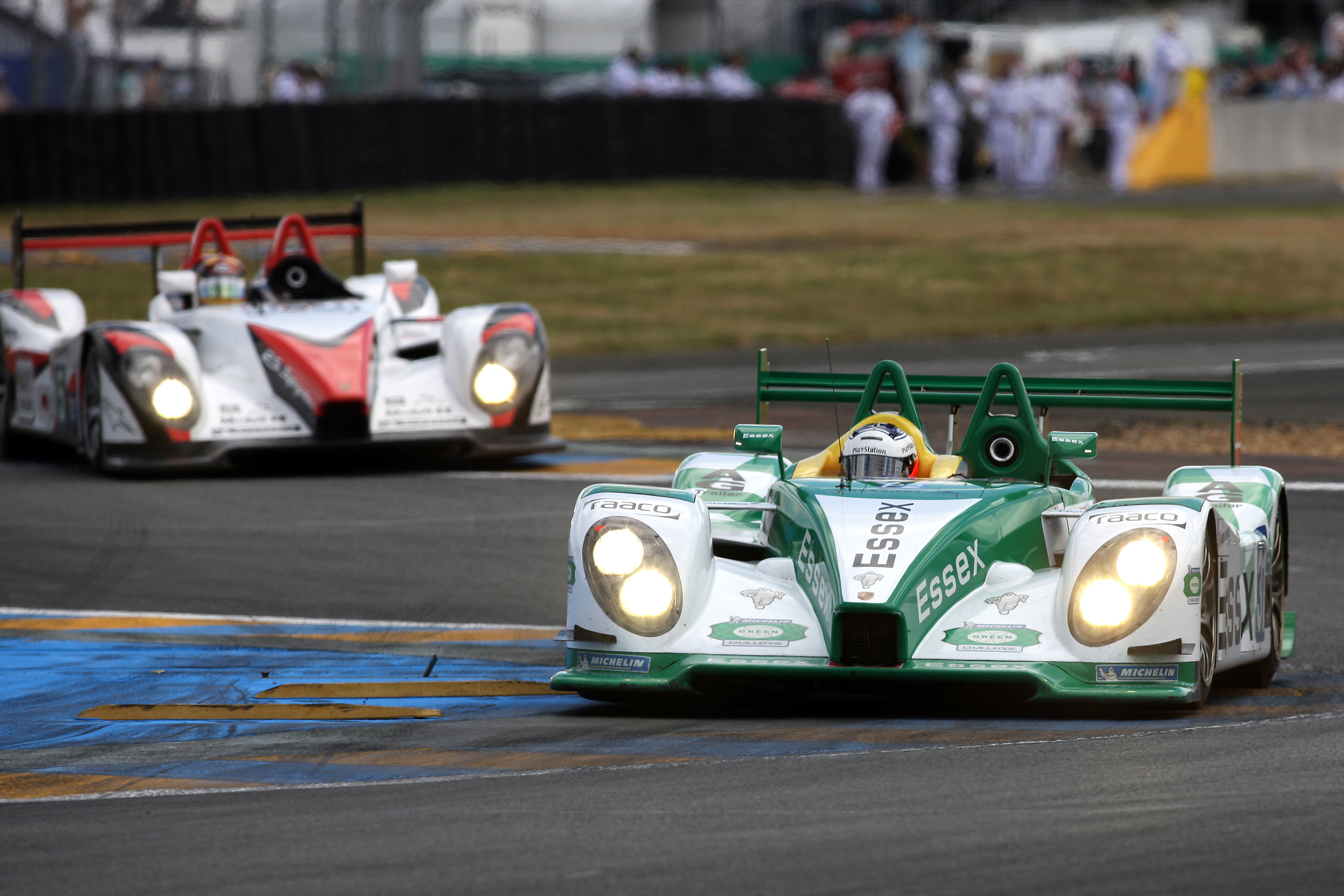
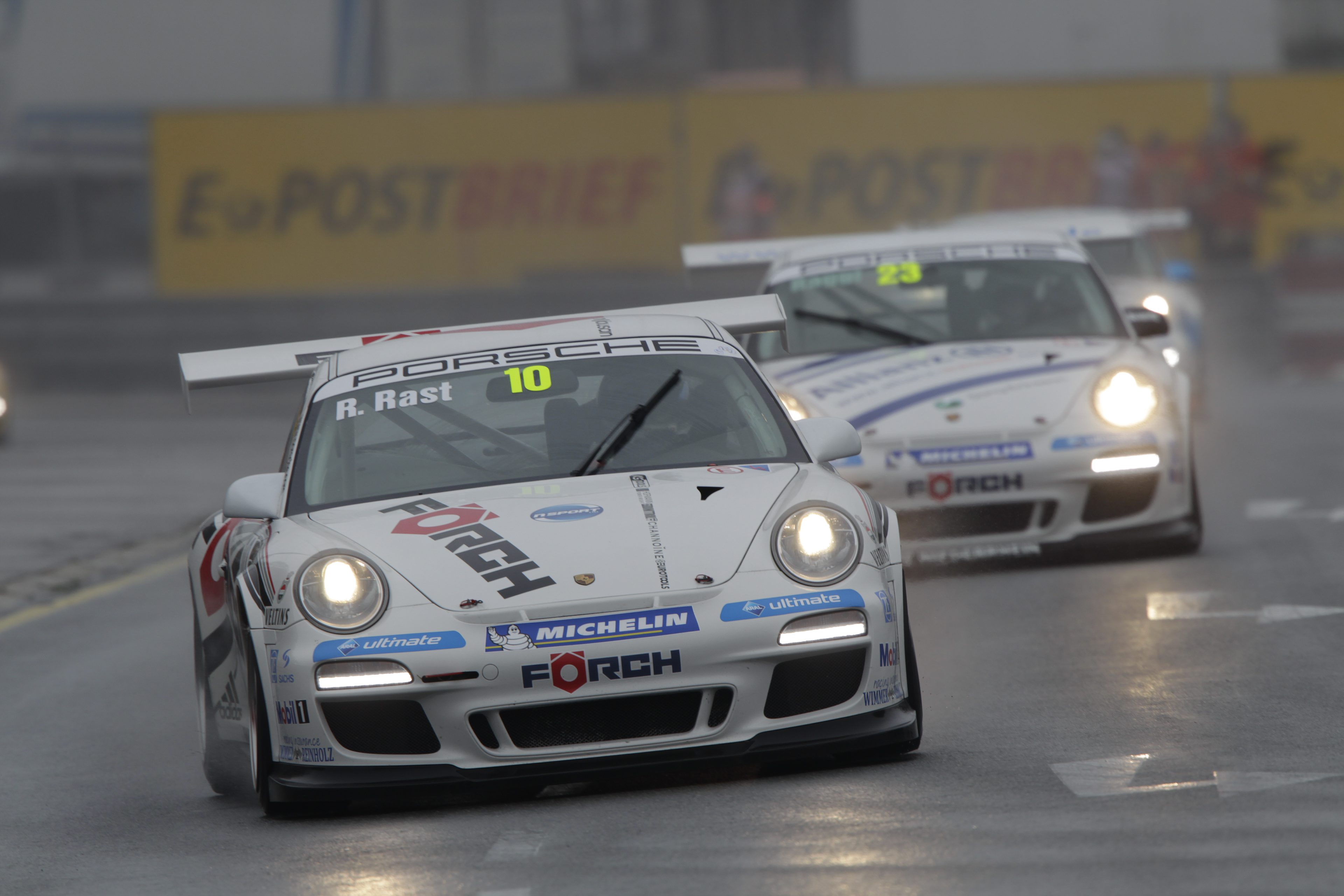
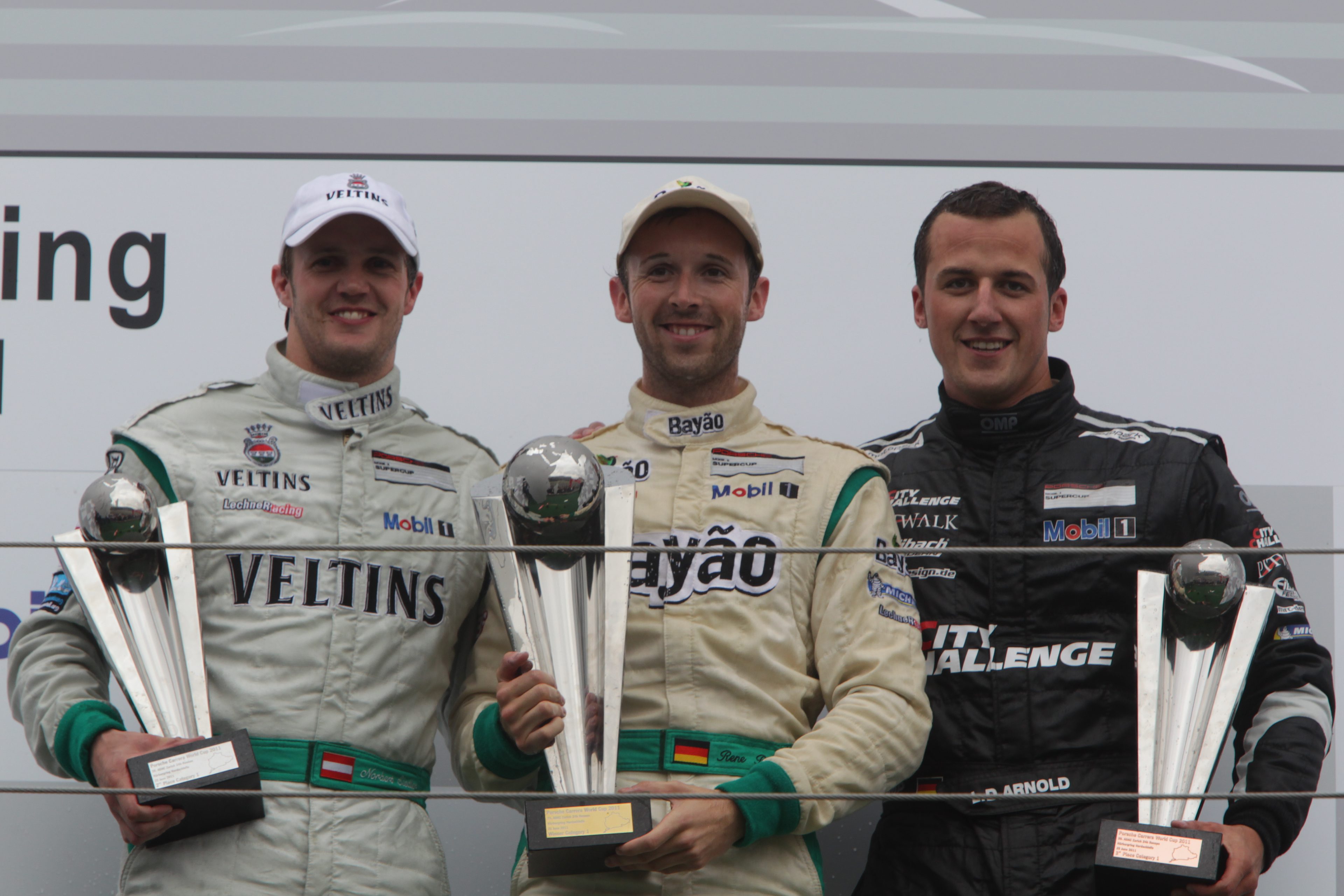
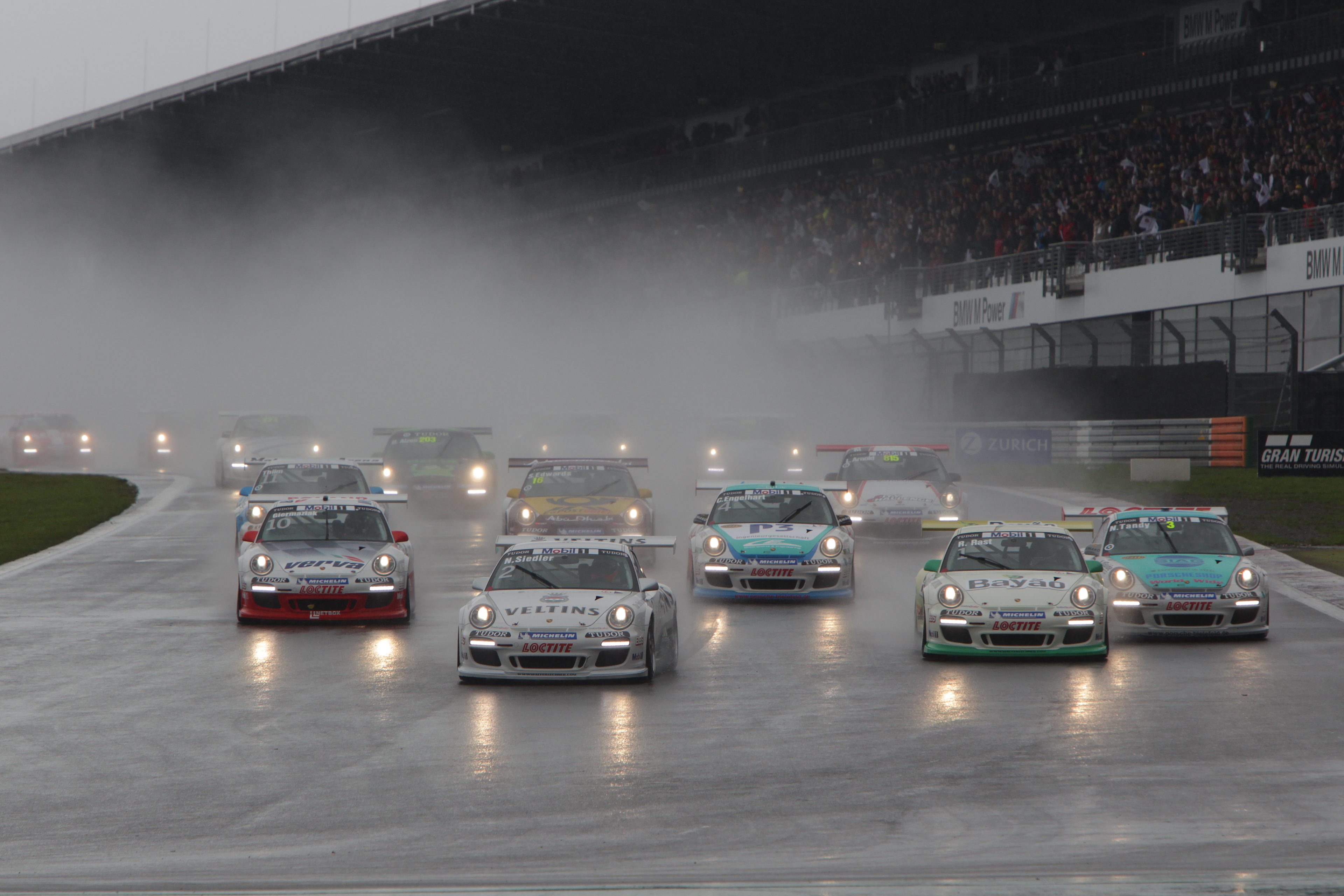
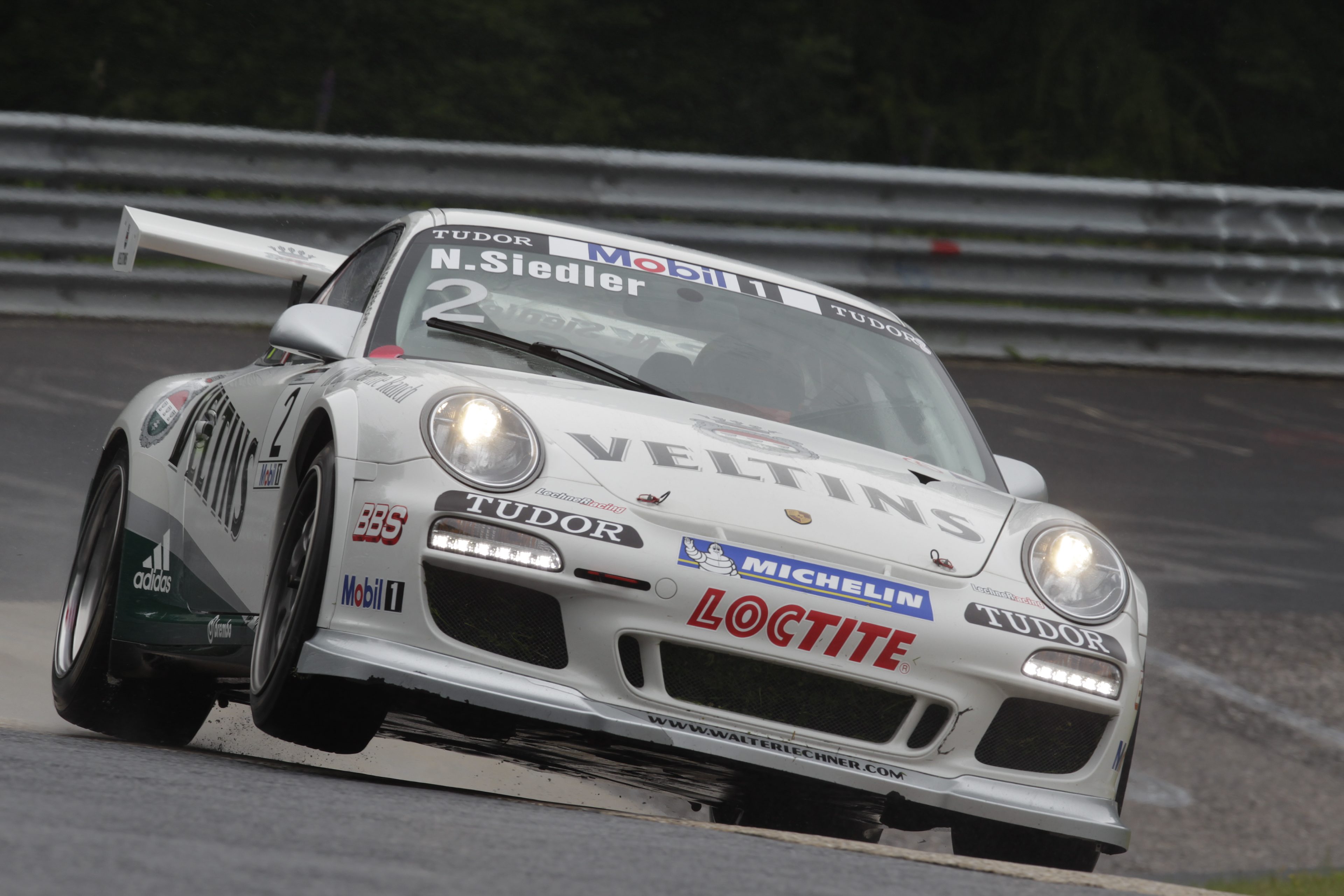
 Porsche Everyday Dedeporsches Blog