It's all about Porsche…if you're an owner of a Porsche,or a big enthusiast of Porsche Cars, Porsche Motorsports, Porsche Design, Porsche History, or a member of a Porsche Club….join me on focusing just about PORSCHE!!
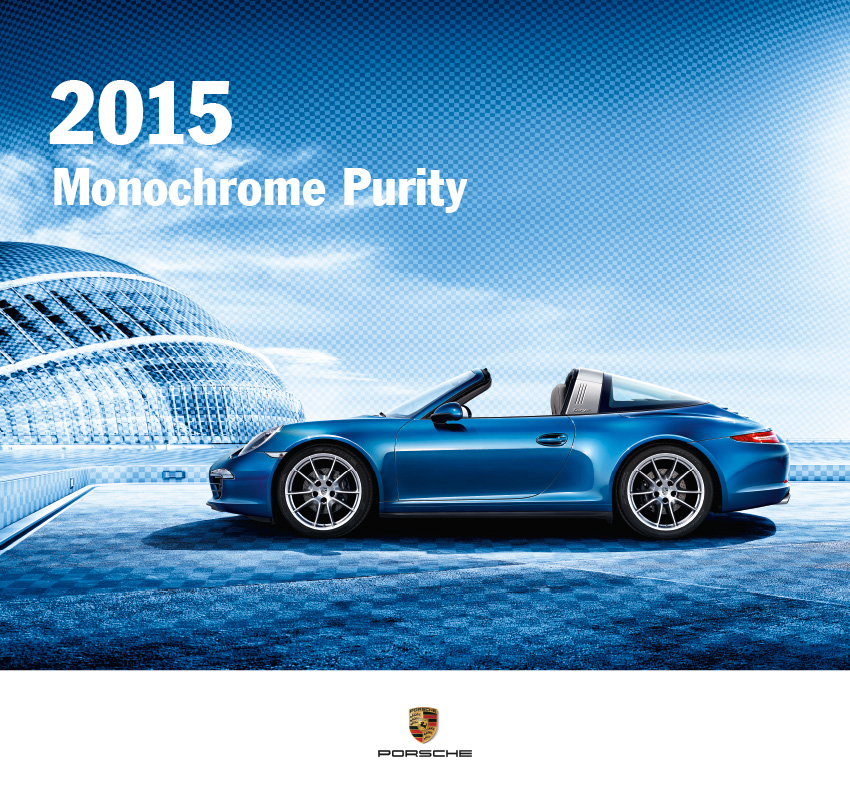
The Porsche Calendar 2015 “Monochrome Purity” Cover
Porsche Calendar 2015 available now
“Monochrome Purity” – a passion for Porsche all year round
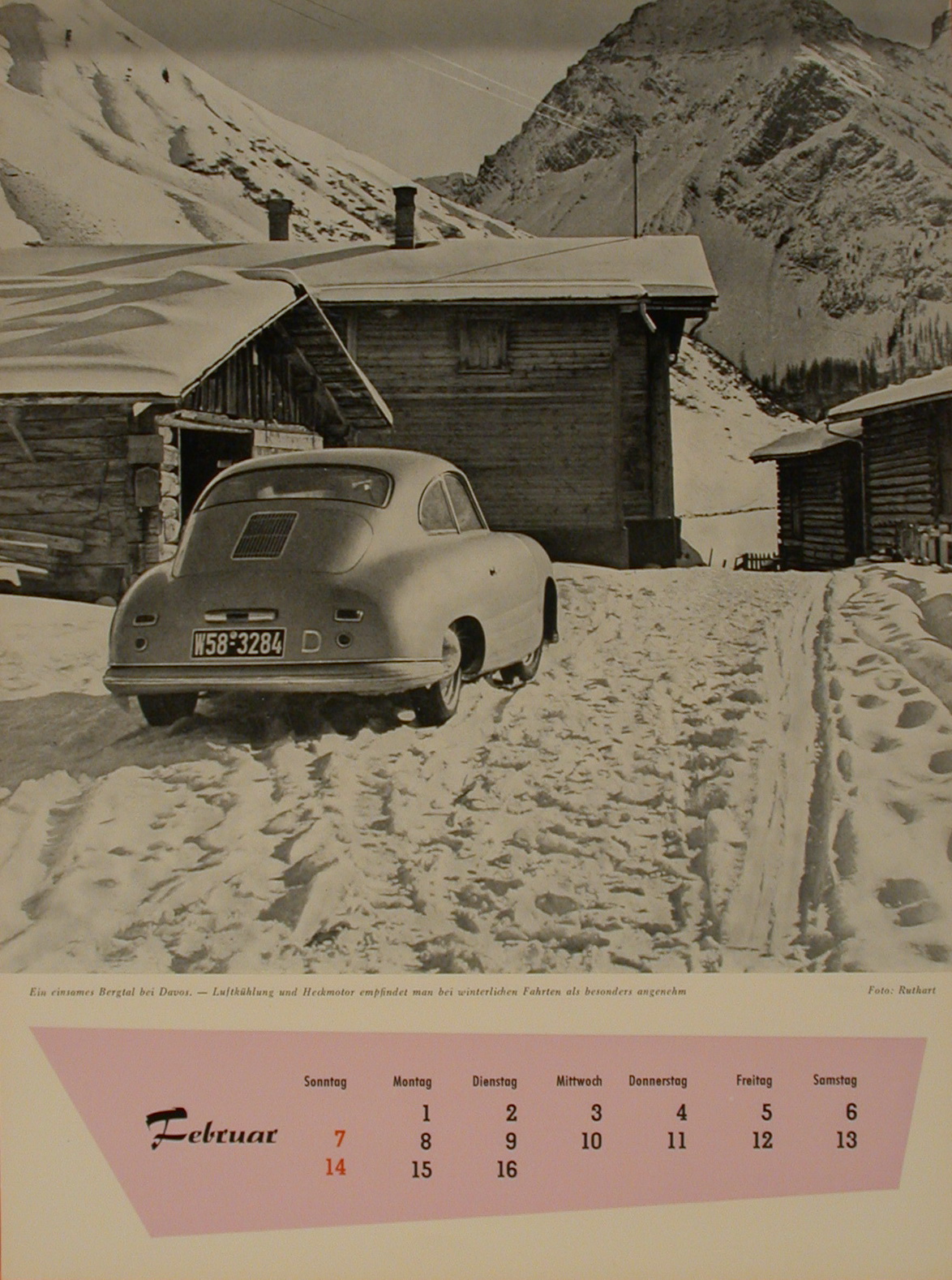
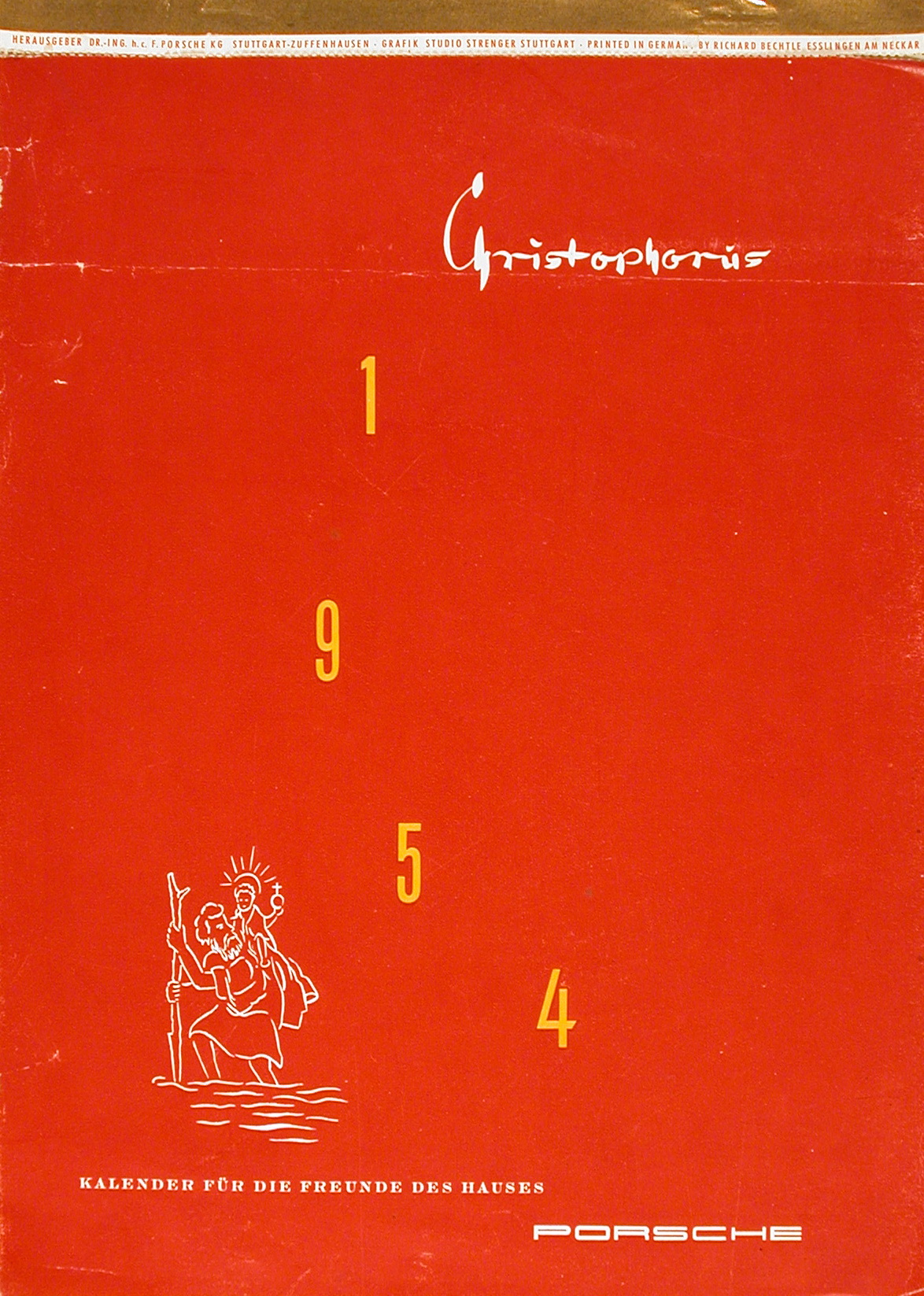
Stuttgart. Porsche has been synonymous with legendary sports cars for over 60 years. The Porsche Calendar has been a faithful companion to the brand and a coveted collector’s item since 1954. The first calendar published was a “Christophorus” edition in honour of the Porsche magazine.
The Porsche Calendar 1954 February
The new Porsche Calendar 2015 measures 59 cm by 55.5 cm and promises exceptional Porsche moments all year round. The calendar embodies passion for the sports cars from Zuffenhausen with this year’s theme, “Monochrome Purity”.
The Porsche Calendar 1954 Cover
Each image depicts a new world – inspired by the unique design of Porsche sports cars. The minimalist background ensures that the vehicles take centre stage. Each shot features a landscape that mirrors the vehicle’s paint finish to give a harmonious overall composition.
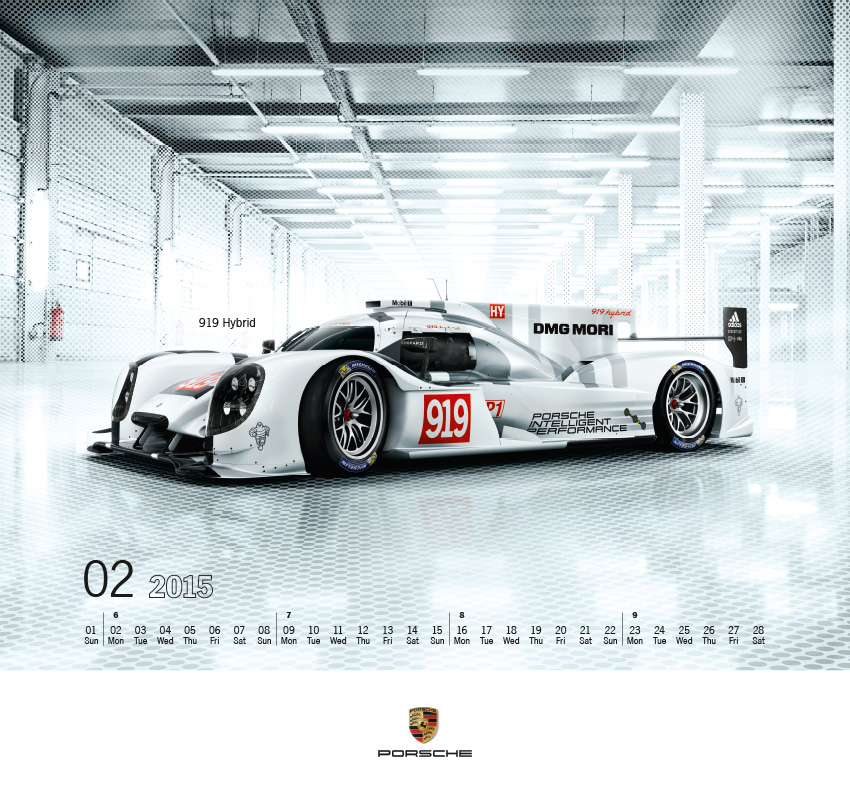
The Porsche Calendar 2015 “Monochrome Purity” February
The official Porsche Calendar is traditionally supplied with an exclusive 40-mm collector’s medal. This year’s medal is embossed on the front with the calendar title “Monochrome Purity” and the year, and the Porsche 919 Hybrid is on the reverse. The Porsche Calendar, complete with medal, costs EUR 39 and is available now in Porsche Centres worldwide or online atwww.porsche.com/shop.
Dear Dede,
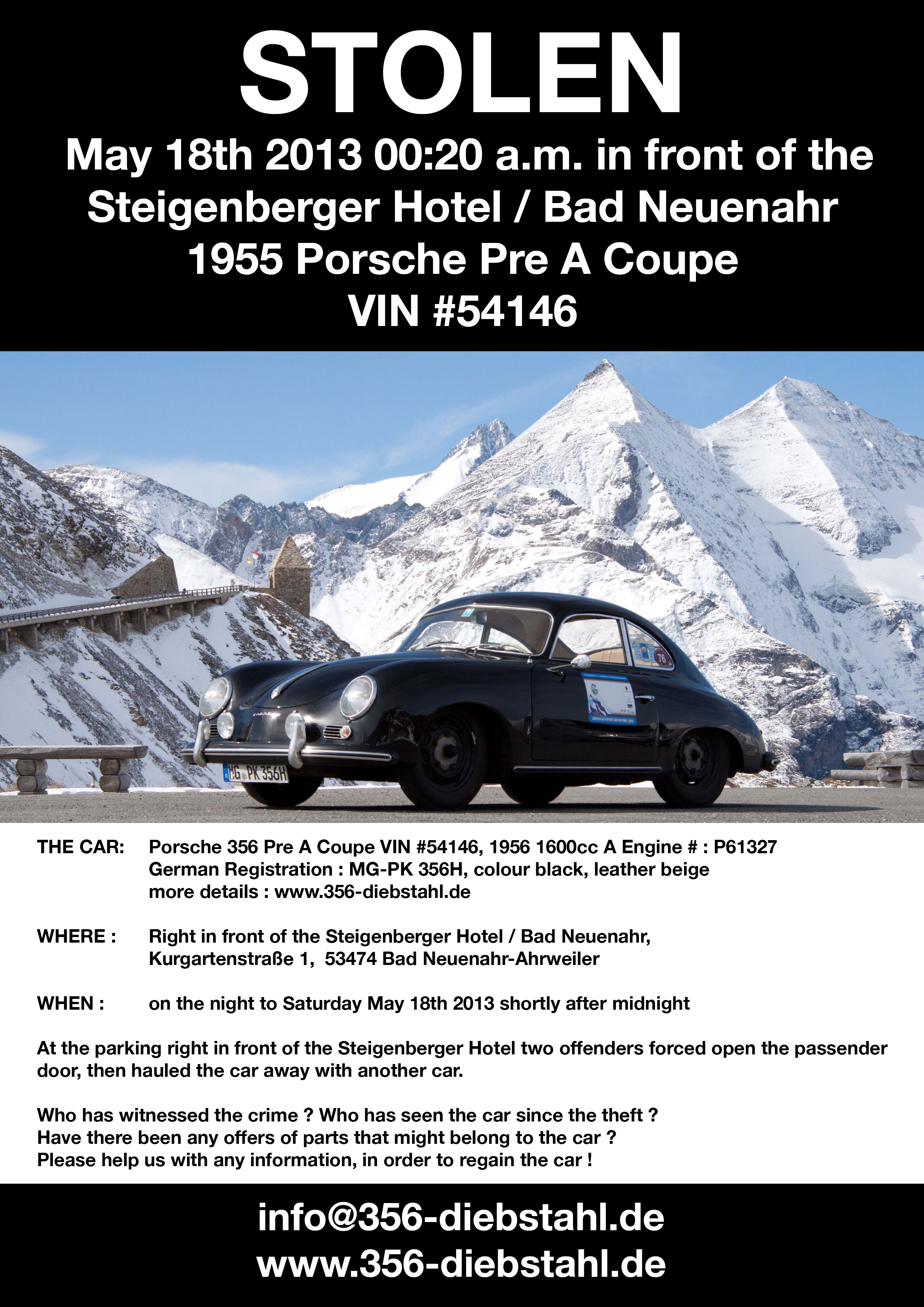
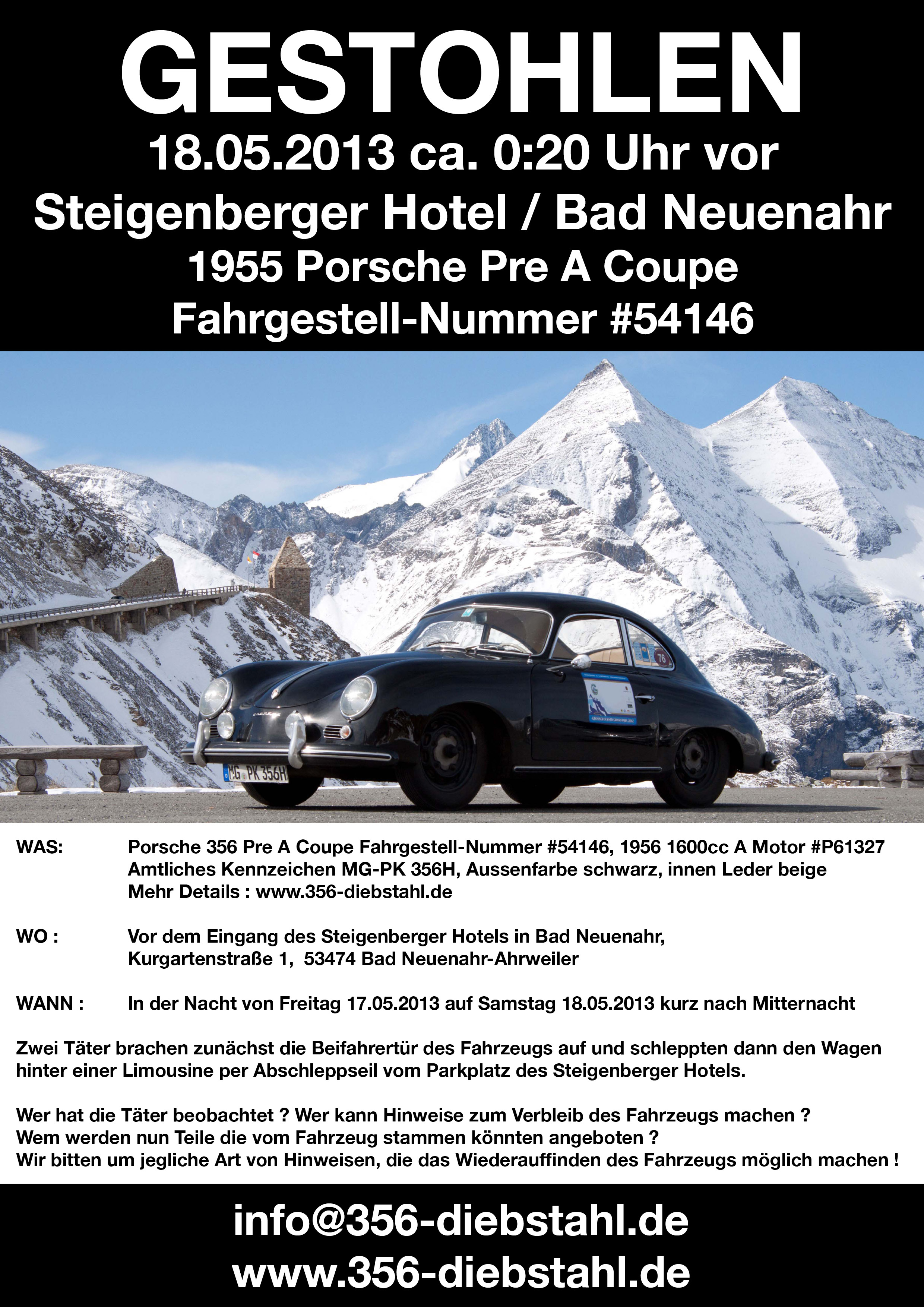
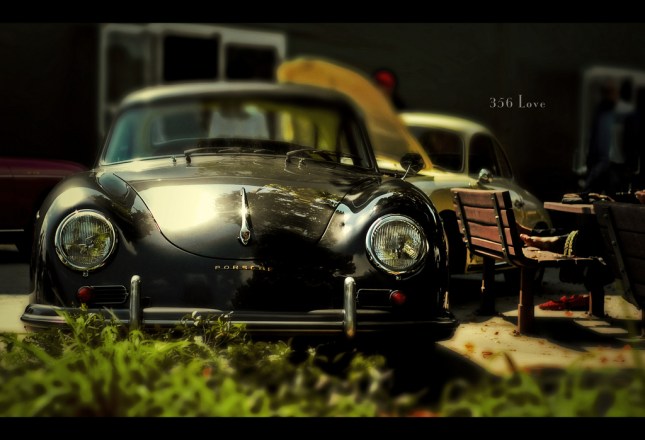
thanks for sharing this.The car was stolen last Saturday May 18th 2013 at 0:20 a.m. right in front of the Steigenberger Hotel in Bad Neuenahr close to the Nürburgring in Germany. It is a black car with beige interior. The Vin is #54146. It has an 1956 1600cc A engine #61327. More infos will be on the website we are currently creating which can be reached under www.356-diebstahl.de.
It would be very kind of you to spread the word wherever you can.
Kind regards,
Marcus
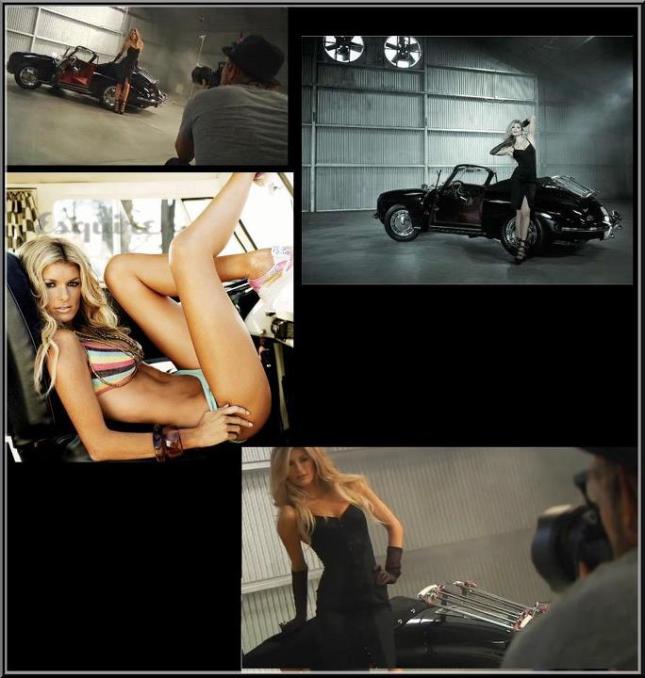
Producer – Martin Jánský
Driver – Jan Červenka
Photographer – Jan Svoboda
Camera – David Režný
Editor – David Režný
Styling – Martina Knížová
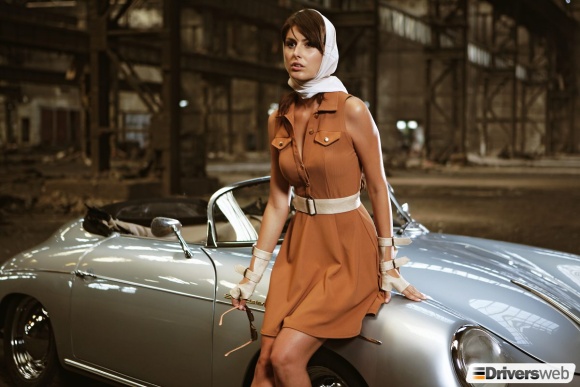
Model – Sandra Marková
Owner of the Porsche is Jan Červenka editor in chief of the Czech Magazines Speed and TopGear
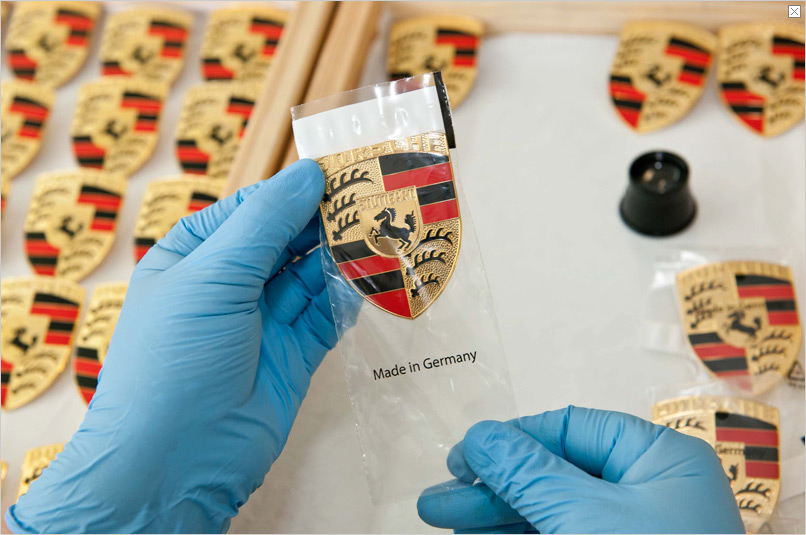
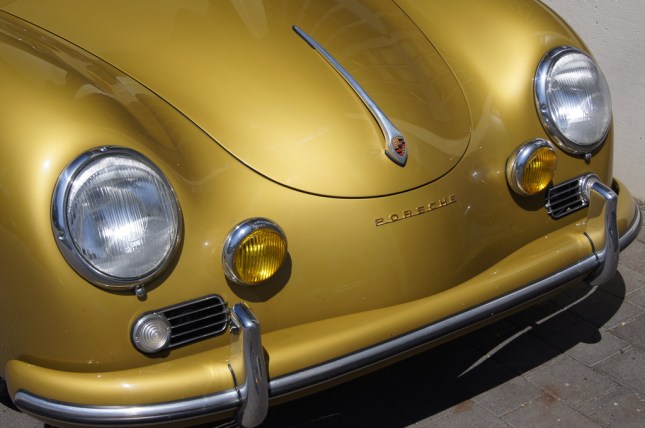
It’s the little things that make a classic complete. Porsche crests for the Porsche 356 and the early 911, of course, “Made in Germany”.
An essential and much-loved detail of the Porsche 356 and the early Porsche 911 is now available again. Following extensive research, the experts at Porsche Classic have reproduced the original Porsche crest.
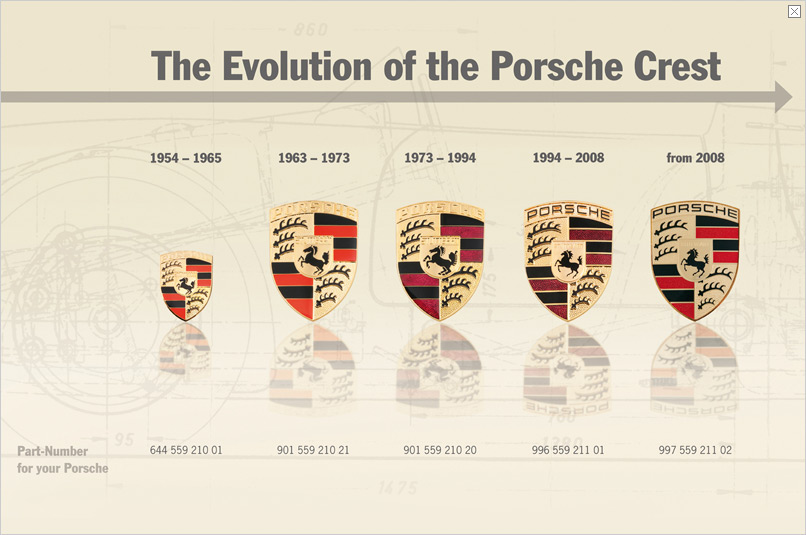
The Evolution of Porsche Crest
The relaunched crest is true to the colours and materials of the original and is, of course, “Made in Germany”. The new Porsche Crests are available for the front hood handle of all Porsche 356 (model year 1954 – 1965) and for the hood of the early 911 models (model year 1963 – 1973). As of August 2012, you can order them via your local Porsche centre.
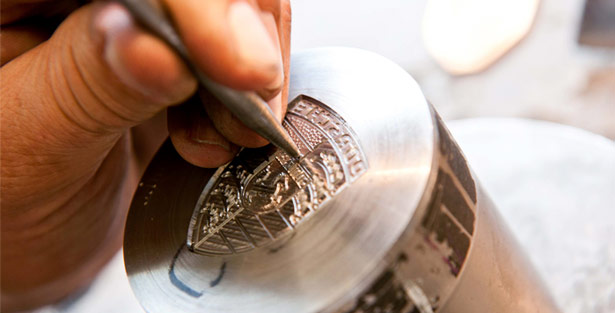
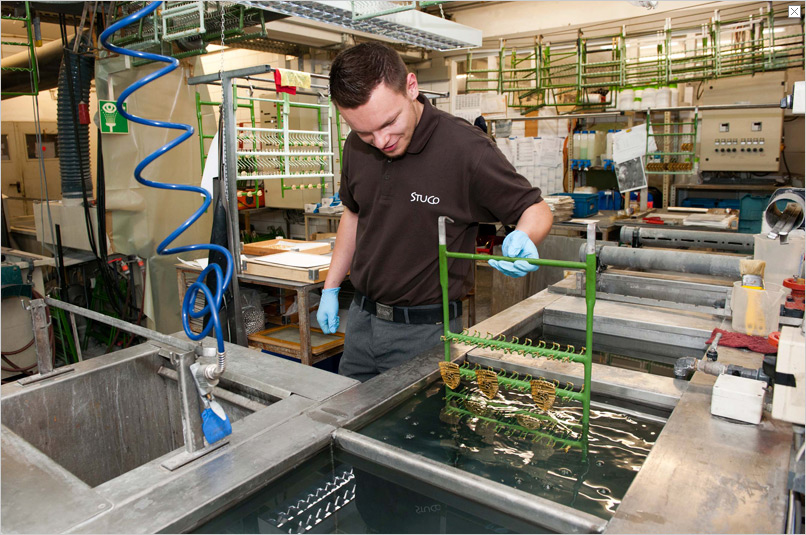
1. Production of the special tool: engraving
Still in the Classic product range are the 911 Porsche Crests for the model years 1974 – 1998.
Such an unmistakeable and sought-after symbol has naturally had a very colourful and sometimes unusual history and been copied many times.
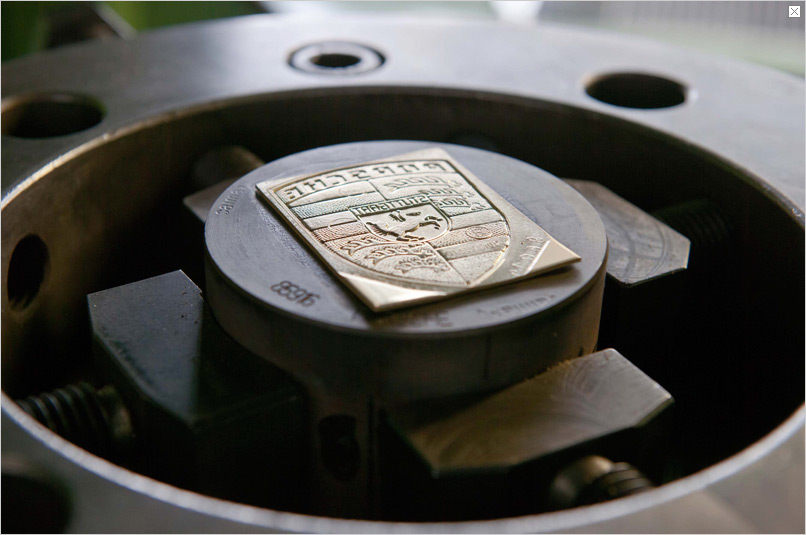
2. Stamping of the blanks
To eliminate all doubt, the experts at Porsche Classic delved deep into the history of the crest, which was first suggested as a quality seal for the Type 356 at a meeting between Ferry Porsche and US importer Max Hoffman back in 1952.
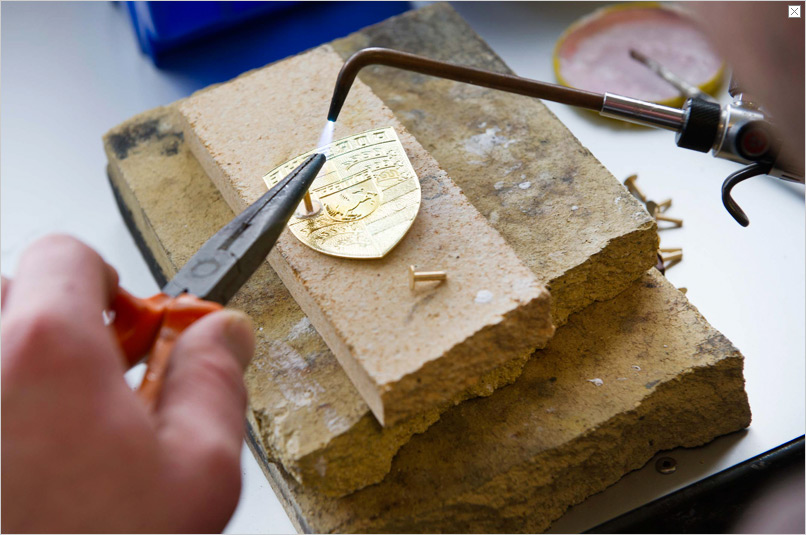
3. Brazing of the fixing pins
In the same year, advertising manager Herrmann Lapper and designer Franz Xaver Reimspieß produced a preliminary design that is still used to this day with just a few minor differences in detail. Reimspieß, who is also said to have designed the Volkswagen logo in 1936, sketched a magnificent crest that symbolised the roots of the company as well as the dynamism and quality of its products.
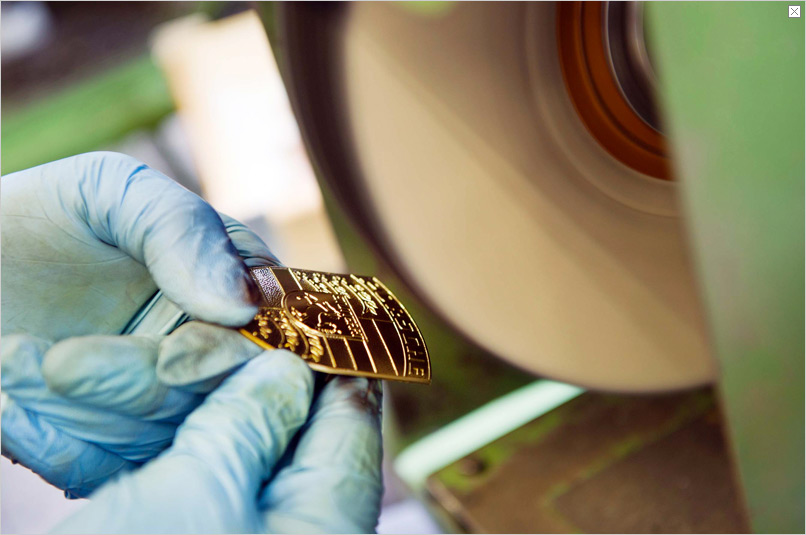
4. Polishing of the crests
At the centre of the golden shield, the horse of the official coat of arms of Stuttgart is depicted along with the name of the city. The composition is surrounded by the red and black state colours and the stylised antlers from the crest of Württemberg-Hohenzollern. The all-encompassing Porsche logo acts as a protective “roof” over all the design elements.
5. Silver and gold plating of the crests
In contrast to the current crest, the Porsche logo on the original crest was only embossed and was not black. In addition, the red elements of the crest were actually more orange in colour to reflect the Württemberg-Hohenzollern state colours.
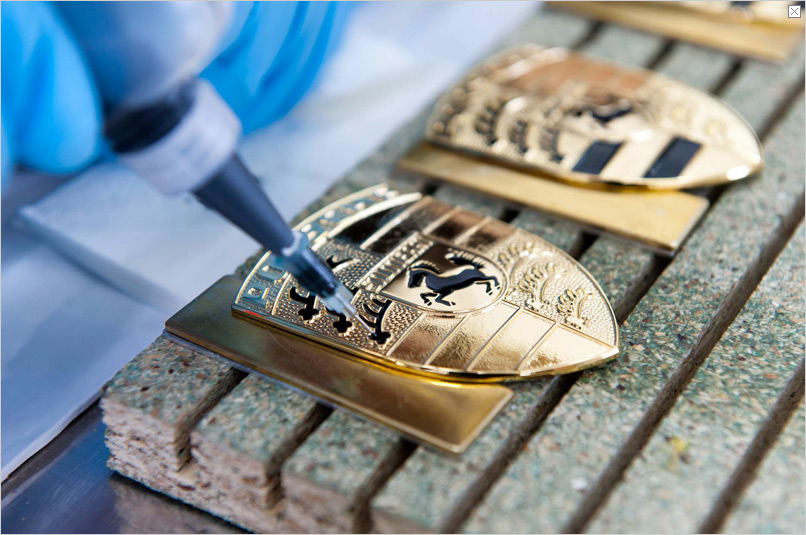
6. Application of the enamel coating
The Classic experts charged with reproducing the crest went a lot further than merely ensuring that the colours were true to the original. The crest is being produced using special tools based on original drawings. The silver and gold plating is being applied using the same technique as the original and the colour and enamelling are being meticulously applied by hand.
7. Quality check of the final crest
The new “old” crest has also had to undergo the same quality tests as the original. This involved the simulation of a stone impact test using a ballistic firing range at the Research and Development Centre in Weissach. The crest also spent 240 hours in the salt spray chamber.
The Porsche crest passed these challenging tests with flying colours, thus proving its credentials as a genuine quality product, 100 per cent made in Germany.
The Evolution of Porsche Crest
This symbol, steeped in history, signals a continued long life for classic Porsche models.
Paraphrasing from “Excellence was Expected”:
The design was created by Ferry Porsche (on the proverbial napkin sketch) at the request of Max Hoffman, and refined/finalized by Erwin Komeda. The emblem first appeared on the steering wheel hubs of Porsches in 1953.
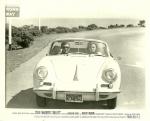
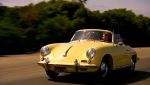
STEVE MCQUEEN Steve McQueen zipping along with the knockout Jacqueline Bisset (always will be a Century-Fox) in a Porsche 356 in a classic scene from 1968′s Bullitt. Press Photo – original rare vintage movie advertising
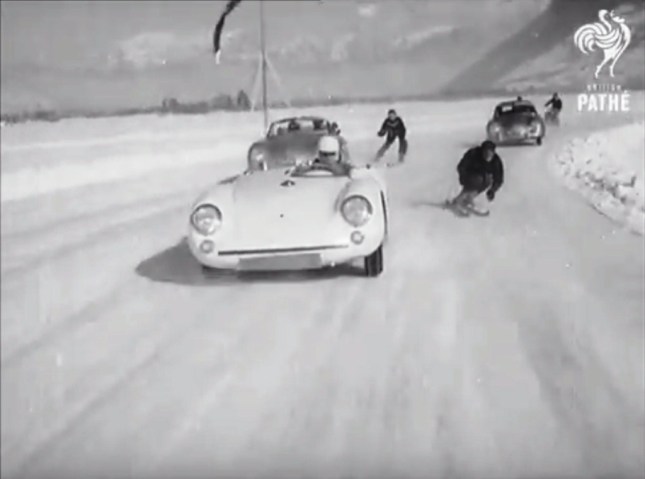
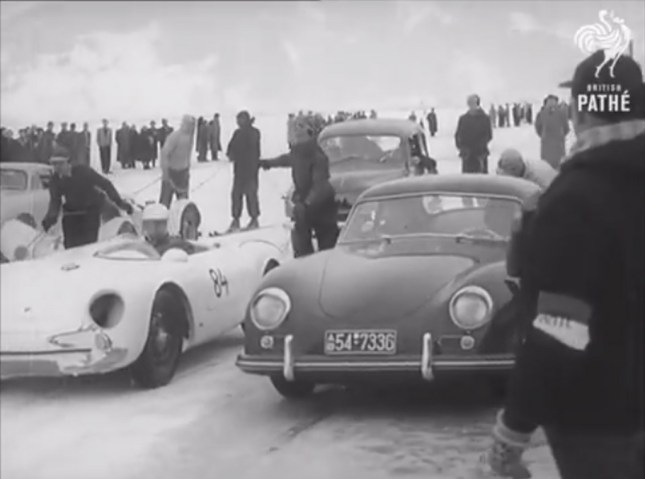
The roots of ‘skijoring’ or motor skiing can be traced back to Bavaria, circa 1955, when a group of Germanic lunatics decided it would be a good idea to use motorbikes, VW Beetles and Porsches to tow themselves around for fun.
Filmed in Bavaria, Germany. The skiers are towed behind cars travelling at great speed.
The concept is simple enough: put a rope on a car or motorcycle, presumably equipped with studded snow tires, then have the driver navigate a race course at speeds up to 100 miles per hour.
Probably not considered the most dangerous sport by today’s standards!
Evidently safety was not as big of a concern back then either. The speeds and proximities to other skiers in this clip are unlike anyone would have attempted.
See the Teutonic madness, featuring Porsche 356s and even a Porsche 550 Spyder, a short but sensationalized video below.
You can spot the Porsche 550 Spyders in the video, and what appears to be Otto Mathe’s famous 4 cam-powered single seat racer, which you can see in person visiting the Prototype Museum in Hamburg.
Probably the Gmund 040, then used by Otto Mathe to tow his ice racer
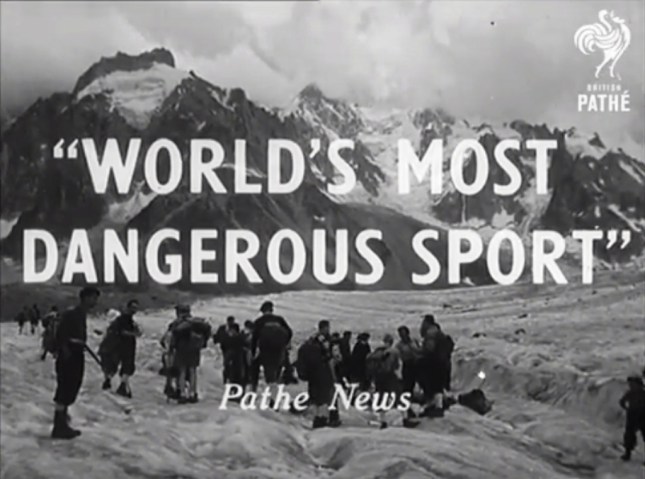
World’s Most Dangerous Sport (1955). Filmed in Bavaria, Germany. Skiers are towed by cars and motorcycles travelling at great speed. Probably not considered the most dangerous sport by today’s standards!
1948 Porsche 356 Roadster – the good Doctor’s First. She rolls and steers but the brakes are to fear- By Joe Kyte
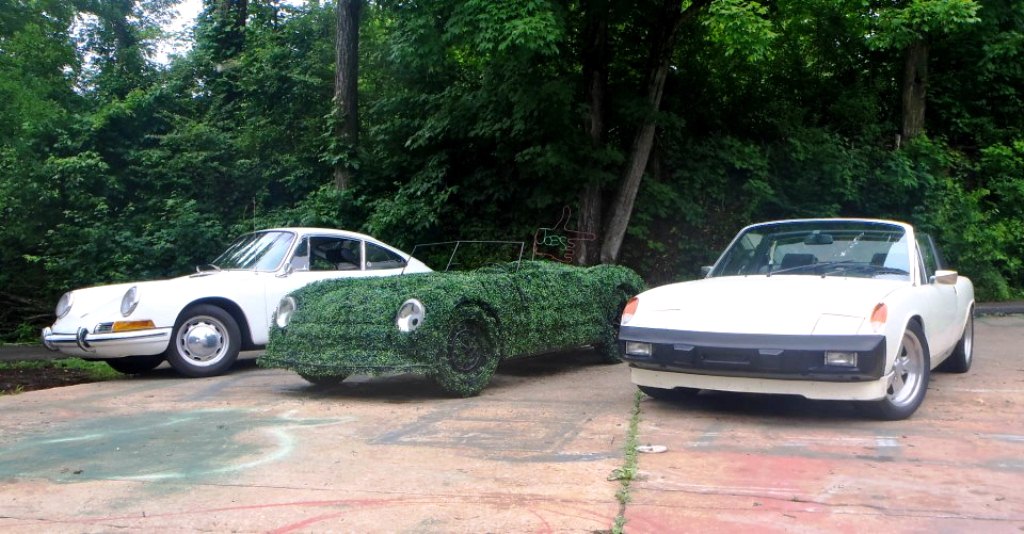
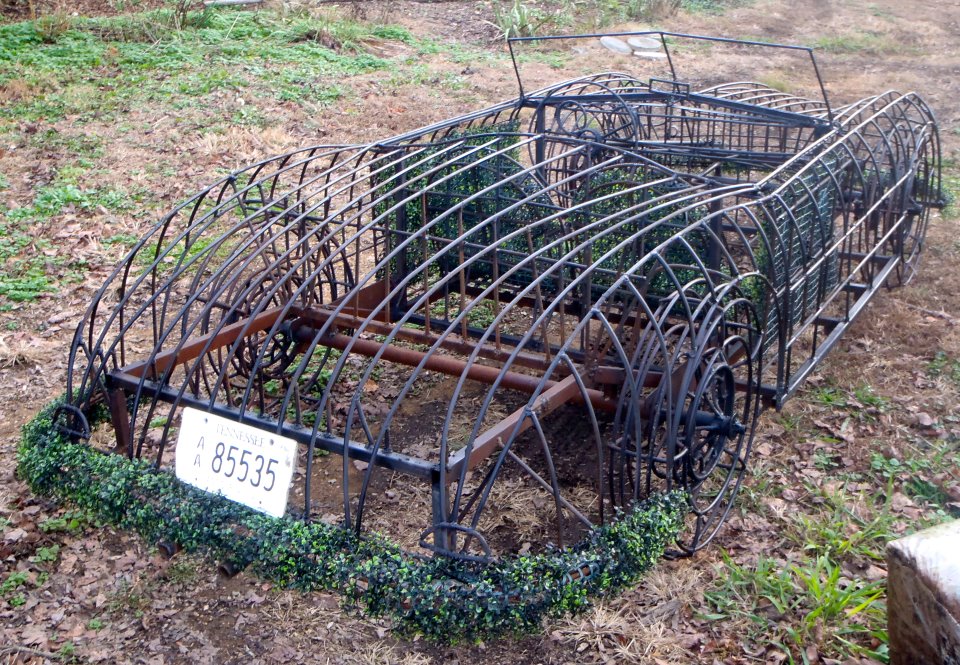
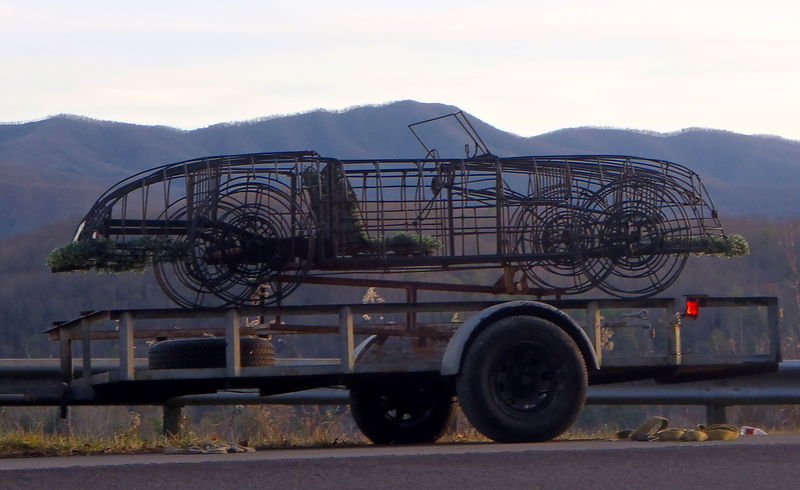
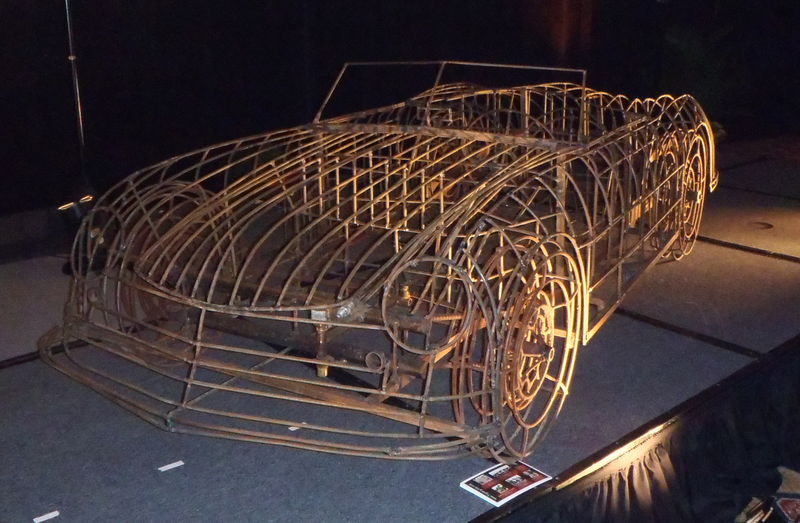
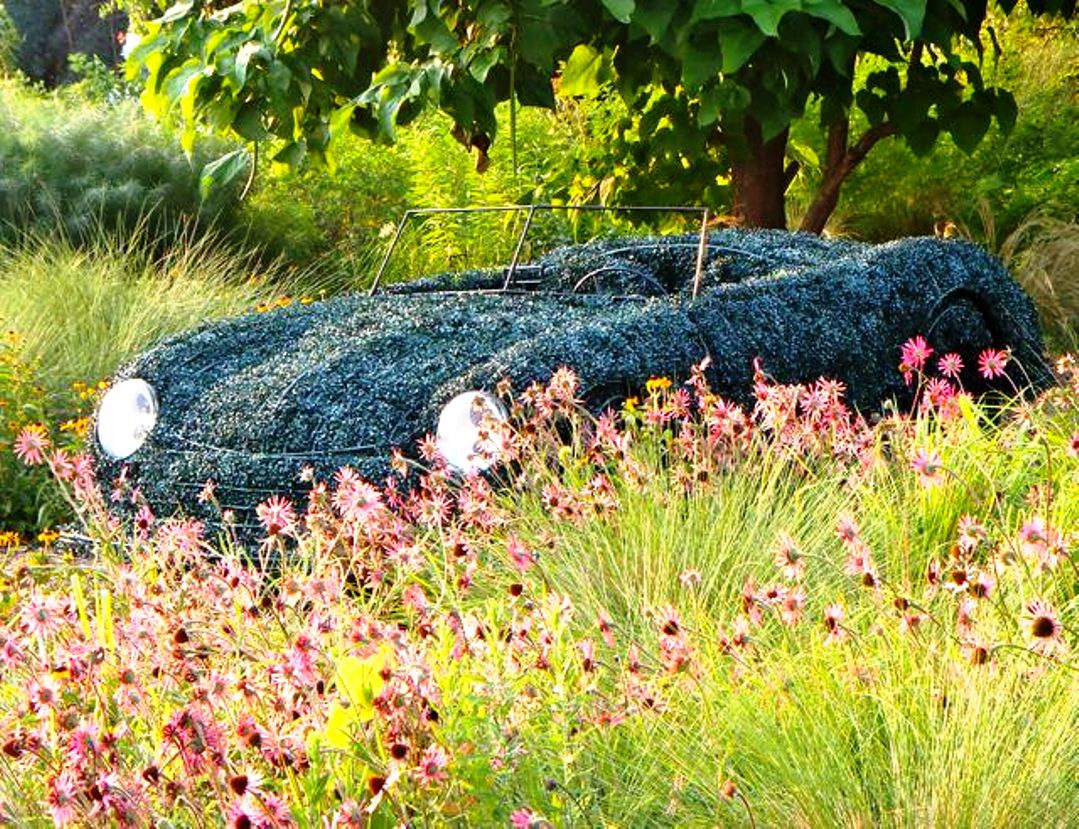
What is Topiary? Topiary is the art of creating sculpture in the medium of clipped trees, shrubbery and vines. Joe Kyte provides traditional cutting frames of all sizes yes, but he goes way beyond that!
Topiary Joe builds giant planted topiary animals, Living Logo public art work, huge Mosaiculture and giant steel wire green sculpture World Wide.
Conservatory grade planted character figures, green roof/green wall integrated sculpture, geometric box shrubbery cutting frames of horses, dinosaurs, vintage cars – even Lions, Tigers and Bears!
He creates large scale 3D sustainable advertising sculptures to your specifications, on the job site or in his shop.
“My father took the prints and made a wooden pattern of the car from which the foundry made an aluminum sand casting. The first casting was a test pour, the second was a keeper, and the first Porsche replica toy was created – based on real prints, no less!” – quote byJeff Gasparitsch
This story begins with a phone call to the front office at the 356 CAR – California Alta Region, vice-president Jim Reeder’s place of business in Fremont:
“There’s a guy on the phone named Jeff who says he wants to talk about Porsche 356s.”
Never one to pass up a Porsche conversation in the middle of his work day, Jim takes the call from Jeff Gasparitsch who said he found Jim on the 356CAR website and saw that they both lived in the same town. He was anxious to tell the story about his father Victor Gasparitsch and his personal history with Ferdinand Porsche and what turned out to be the Gmünd Coupe.
Jim listened in amazement as the following incredible tale unfolded from Jeff Gasparitsch.
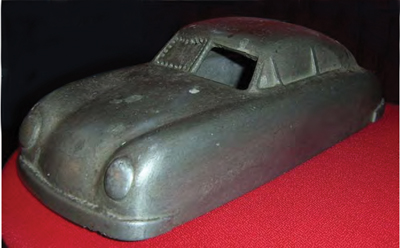
Any idea what the very first Porsche toy ever made was?
It is very likely the 15-inch-long cast Gmünd replica made by my father. As a young boy I found an old and somewhat odd toy car on a family trip back to Austria back in 1976. It was used as doorstop at my grandparent’s house in Ledenitzen.
When we returned to Canada, I kept reminding my father on future visits to bring the “toy” back for me. At the time I had no idea what it was. It was just neat and different. It wasn’t until after several subsequent trips in the 1980s that he finally remembered to pick it up for me and bring it to Canada.
That is when I finally learned the real story behind my funny old toy car.
My father, Victor Gasparitsch, was schooled as a Mechanical Engineer at the Federal Engineering School for Mechanical & Electrical Engineering in Lundenbrg (which at the time I believe was Austria, and is now part of the Czech Republic). Then he apprenticed as a Pattern Maker at a company called KMF (Kärntner Maschinenfabrik) in Carinthia, Austria from 1945 until the spring of 1948.
It was during the latter part of this tenure that two gentlemen came to the shop in which he worked. They had a meeting with the foundry manager and after some time, they approached my father.
The gentlemen were Erwin Komenda (known to my father as Chief Engineer Komenda) and Ferry Porsche! As it turned out, the foundry manager and other senior people turned down the job proposal so Porsche and Komenda decided they would speak to my father directly, since he had a background in Mechanical Engineering and not just pattern making.
They showed him some drawings of what was to become the first Porsche 356 and asked if he could produce for them what became the metal-forming fixtures for the left and right doors. He accepted the challenge and KMF got the work from the fledgling Porsche Company.
As my father was completing the work on the first fixture (it was for the left door) he approached his management and asked to be paid a salary commensurate with the other senior tradesmen as he was doing the work the seniors would not touch while being paid substantially less.
The management turned down his request, citing the union pay scale rules. This was enough to make my father decide to leave KMF. He informed Chief Engineer Komenda of his intentions to leave. Komenda asked that he stay with KMF until the first assembly was complete, then roll the drawing up under his arm and they would follow him. My father did so, and Porsche followed suit as promised.
My father moved to what was a new pattern making division of the J. Fercher Company in Villach, Austria that was then a relatively small furniture making company. Porsche then placed the balance of the order with J. Fercher and that is where my father completed the right side door fixtures. J. Fercher then received additional work from Porsche including the firewall for the car.
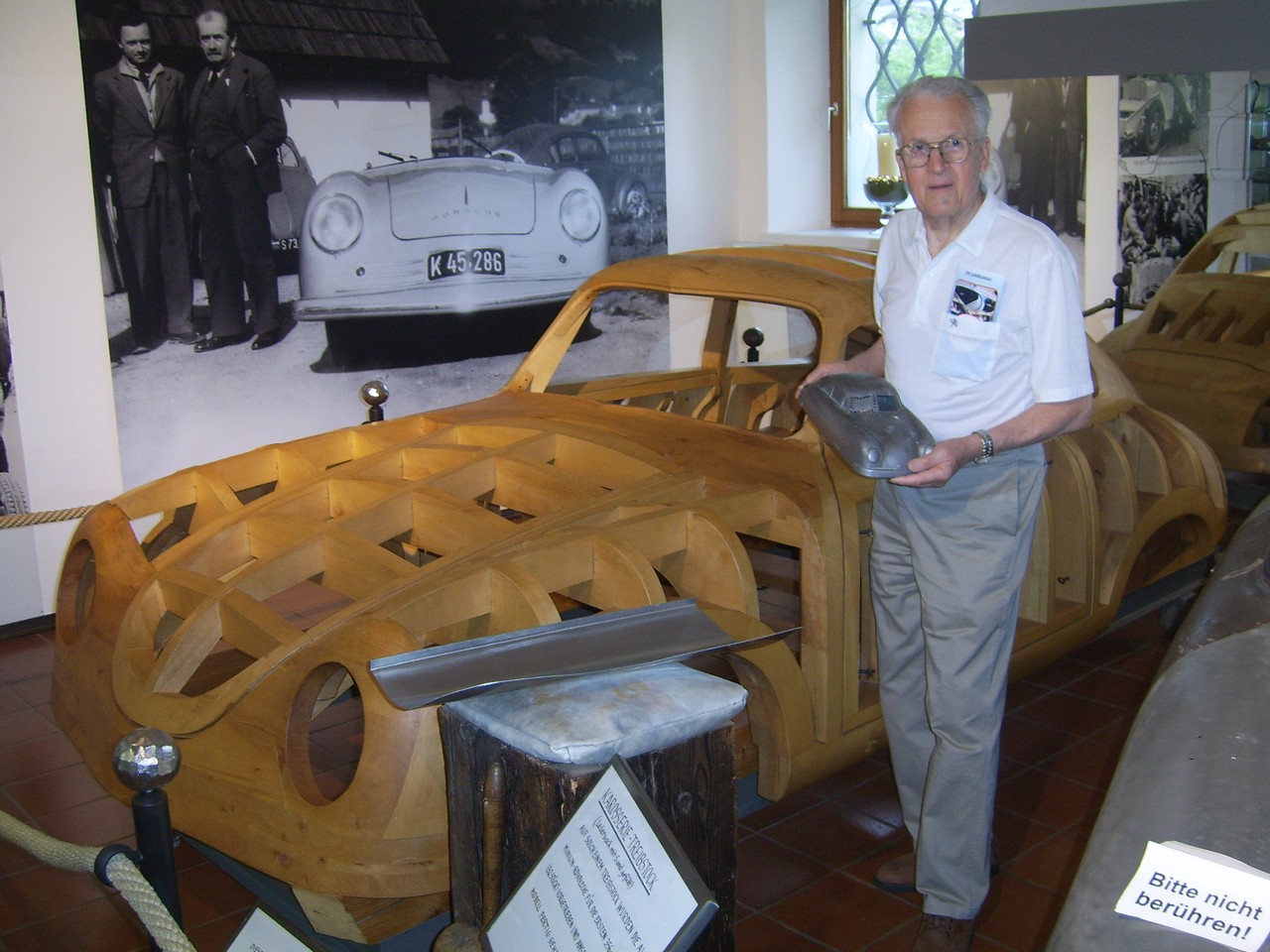
It was during this time that my father requested a 1:10 scale drawing from Chief Engineer Komenda so he could build a small model for personal use. Komenda was happy to oblige. My father took the prints and made a wooden pattern of the car from which the foundry made an aluminum sand casting. The first casting was a test pour, the second was a keeper, and the first Porsche replica toy was created – based on real prints, no less!
After Ferdinand Porsche’s death and the company’s move, the J. Fercher Company closed the doors on its Pattern Shop in 1952 to focus on the furniture business. I would have to assume that all the old patterns from the pattern shop were scrapped. Today J. Fercher (now operated as FRC Austria) is a very large furniture company in Austria. I visited the plant in 1976 with my father, but only recently learned what the connection was to his past.
My dad moved on to work in Switzerland and eventually immigrated to Canada. In 1966 he opened his own pattern shop, Cosmos Pattern Company in Stoney Creek, Ontario that he operated until 1994. Into the late ‘80s he still received requests for quotations from Porsche. The last I saw was for several large wind tunnel sections for work that I believe was going to be conducted in Toronto.
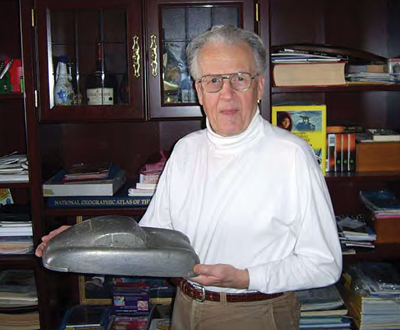
Victor Gasparitsch and the first Porsche 15-inch-long cast Gmünd replica toy
That one remaining generic toy casting became a play toy for various generations of kids visiting my grandparents over 40+ years. Of course no one was the wiser as to its origin. Unfortunately, somewhere over the course of the toy’s life someone tried to alter it to make it more of a toy than a casting. They used a drill to open one of the front windows and started on the second window but fortunately never finished the job.
My father will be 82 years old this year and I have made a point to return to his home in Canada to document several details of his life before it is too late.
One day soon we’ll drop by Stuttgart perhaps to find a spot on a shelf for it in the Porsche Museum. That seems to be a much more fitting place for it than where it previously resided for over 55 years! – Jeff Gasparitsch
UPDATE December 2012 – Jeff Gasparitsch recently was kind of enough to be in touch with me and he forwarded several photos from the visit to Stuttgart with his father and the model was documented at the Porsche Museum in the summer of 2010.
Germany – birthplace of the inventors of the automobile and home to chief brands in the four wheels market, such as Mercedes-Benz, BMW, Audi, Volkswagen and Porsche, of course – is celebrating the 125° anniversary of this mean of transportation with a series of events in several cities. The hub of celebrations will be the region of Baden-Württemberg and its capital, Stuttgart.
FOR PORSCHE: “125 years of the car” birthday procession kicks off on the Porscheplatz
Porsche classic cars on the streets of Stuttgart
Stuttgart. On Sunday 8 May 2011, Dr. Ing. h.c. F. Porsche AG, Stuttgart, will be teaming up with Mercedes-Benz and Audi, two other car brands also based in Baden-Württemberg, to stage a car procession through Stuttgart. 125 vehicles, contemporary witnesses all, will bring the history of the three carmakers to life – in some cases with well-known drivers at the wheel.
The Zuffenhausen sports car manufacturer will be putting 45 current and historic vehicles from more than six decades of Porsche history on the start line.
The “125 years of the car” procession will get under way at 11.00 a.m. at the Porsche museum, which will be offering visitors free admission on the day.
Matthias Müller, Chairman of the Board of Management of Porsche AG, will head the birthday procession in a Porsche 911 Turbo S – together with his Mercedes-Benz and Audi opposite numbers.
Dr. Wolfgang Porsche, Chairman of the Supervisory Board of Porsche Automobil Holding SE, will be driving the first Porsche prototype, the Type 356 “No. 1”, developed by his father Ferry Porsche in 1948.
Ferry Porsche with the Porsche Type 356 “Nr. 1”
Current and former Porsche AG works and racing drivers will also be taking part in the drive through the town. For example, racing legend Hans Hermann will be piloting the Porsche 917 KH on the streets of Stuttgart, the same car he and Richard Attwood drove in the 1970 Le Mans 24 Hours when they won the first ever overall victory for the Zuffenhausen company.
Le Mans winner car 917 KH with Hans Herrmann and Richard Attwood.
The three times winning Porsche 908/03 Spyder is being withdrawn from the Porsche museum’s exhibition for Porsche works driver Marc Lieb.
Porsche 908/03 Spyder – 970 2997cc 350PS
Finally, the 612 hp (450 kW) Carrera GT high performance sports car, once limited to 1,270 units, will be driven by double world rally champion Walter Röhrl.
In addition to a “police presence”, the car procession will also give an outing to the Swabian sense of humour. Stuttgart “Tatort” (Crime Scene Investigation) Inspector Richy Müller will be switching on the blue lights on the Porsche 356 C Cabriolet. In the Sixties, this classic car was used by the Württemberg motorway police.
Police Interceptor, German style: A 1956 Porsche 356C 1600SC Cabriolet.
And cabaret artist Christof Sonntag will be behind the wheel of a Porsche 911 Targa (Type 964).
The destination of the procession that will start at Zuffenhausen’s Porscheplatz is the Schlossplatz in the centre of Stuttgart. Here there will be an opportunity on Sunday afternoon to admire all the participating vehicles at close quarters.
Porsche will also be showcasing itself on the Schlossplatz as part of an innovation exhibition true to its “Porsche Intelligent Performance” philosophy: more power with lower consumption, increased efficiency and reduced CO2 emissions.
Three modern day Porsche vehicles await the visitor there, providing an impressive demonstration of alternative driveline technologies: the Porsche Boxster E, the Porsche Cayenne S Hybrid and the Porsche 911 GT3 R.
“Porsche Sounds”, a cooperation with the Historical Archives of the Porsche AG, describes the development of the company and the individual models, in which the most important ones are illustrated double-sided. In addition, the book gives an insight into the Porsche successes in motor sport.
Also the topic emotion doesn’t come short: Audiophile automotive enthusiasts not only find two CDs of classical and rock music in the book, they also find a CD with the original engine sounds of the most interesting Porsche vehicles. The coolest Porsche product – after the car itself: book, library and design piece in one.
Just few words: TURN UP your SPEAKERS, and listen to the sweet rumble of 10 different Porsche Engine Sounds. Some of the best music to your ears…..Enjoy!
The story of Porsche from the beginning till today. Text, pictures and rare memorabilia, plus 3 Cds featuring Engine Sounds, Rock Music and Classical Music: Technology, power and elegance, the essence of PORSCHE.
Hardcover: 219 pages
Publisher: edel Distribution GmbH; Pap/Com Bl edition (November 16, 2010)









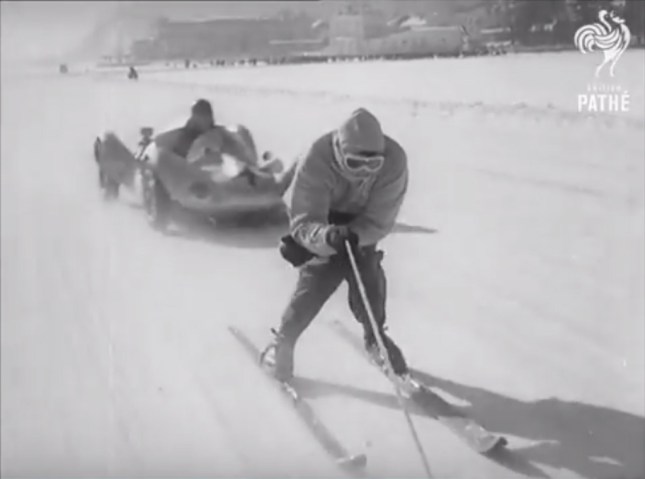

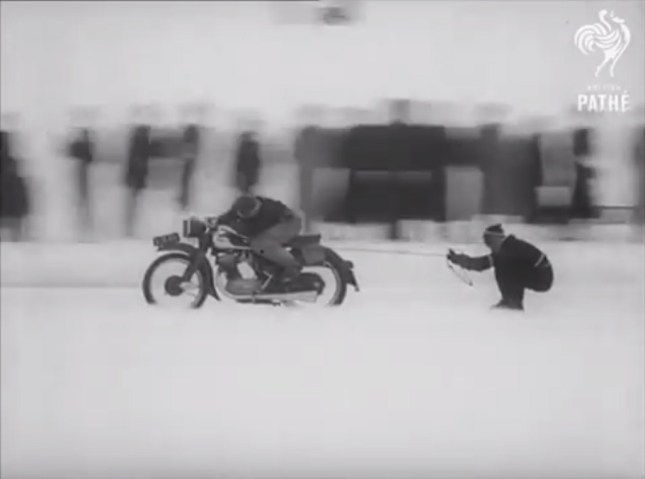
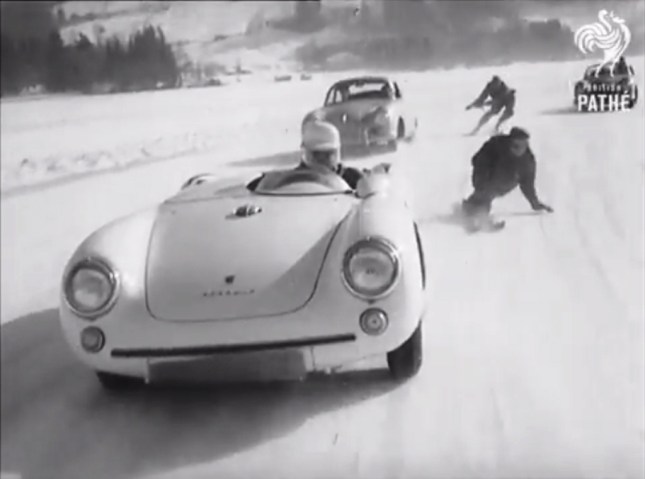
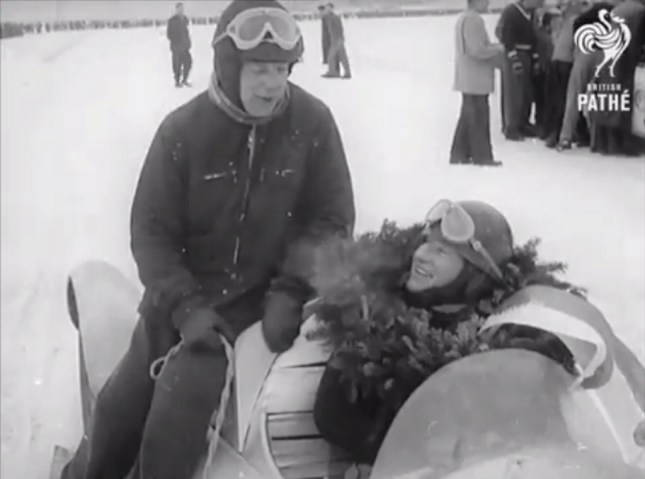
 Probably the Gmund 040, then used by Otto Mathe to tow his ice racer





 Porsche Everyday Dedeporsches Blog