It's all about Porsche…if you're an owner of a Porsche,or a big enthusiast of Porsche Cars, Porsche Motorsports, Porsche Design, Porsche History, or a member of a Porsche Club….join me on focusing just about PORSCHE!!
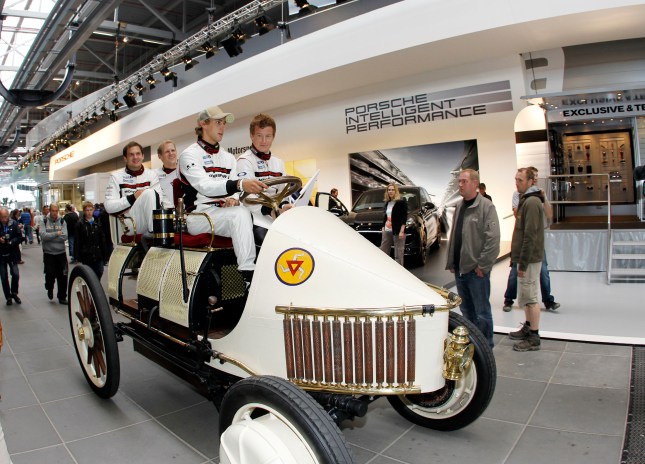
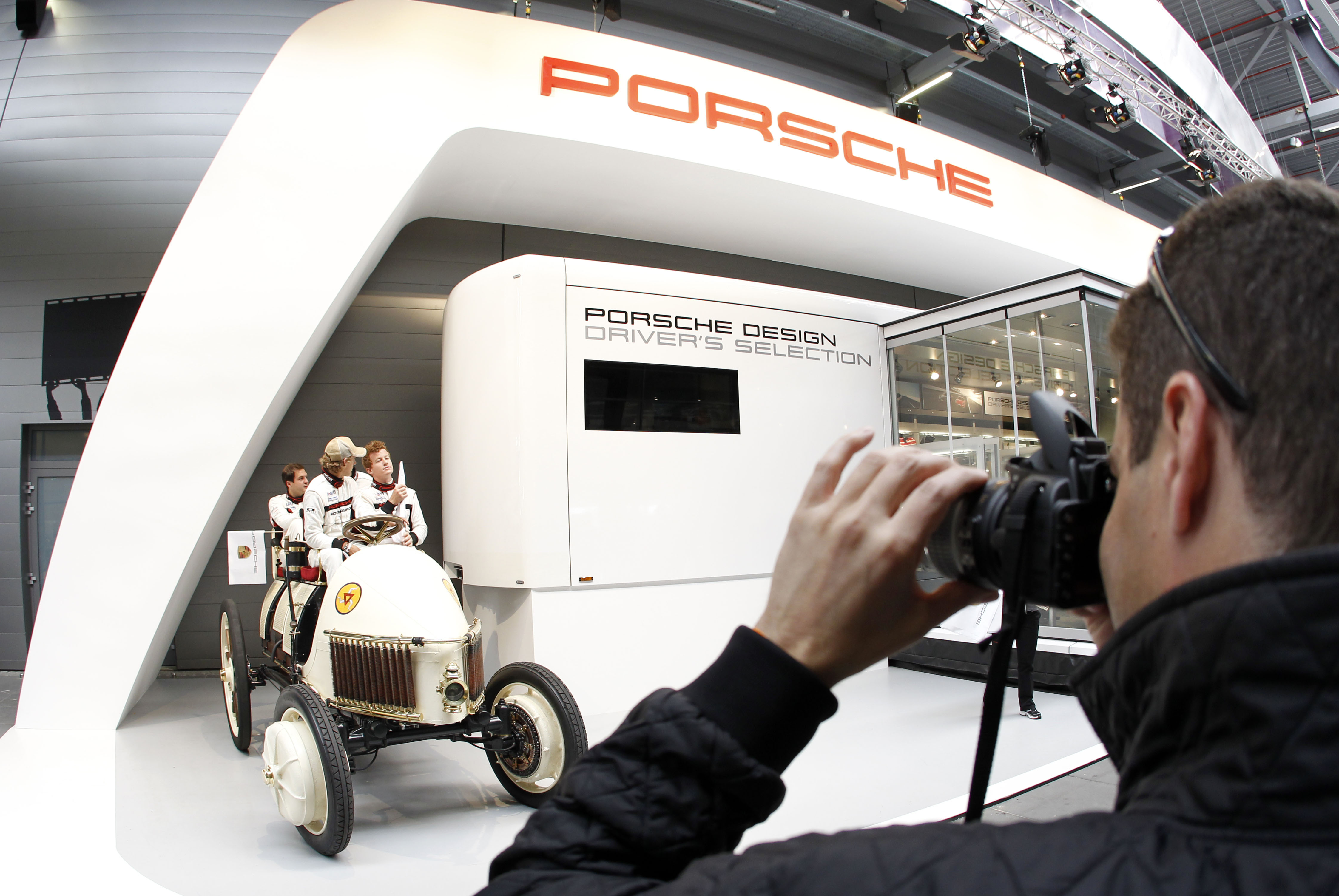
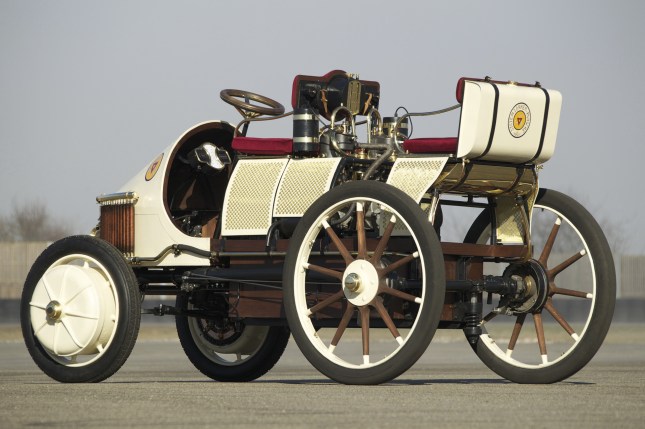
Lohner-Porsche “Semper Vivus” thrilled fans at the Nurburgring
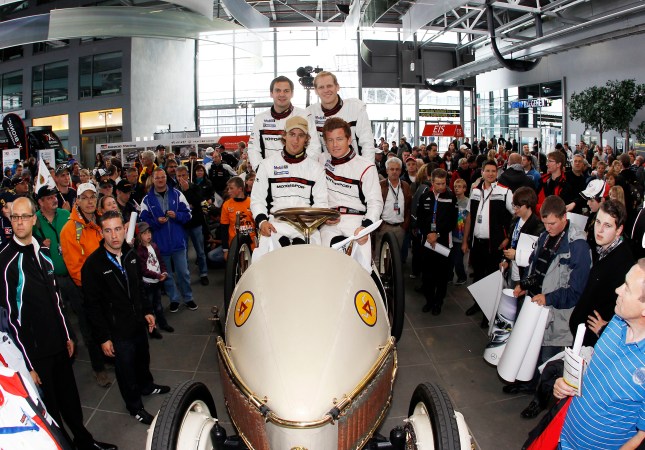
Lohner-Porsche “Semper Vivus”, Porsche factory drivers Richard Lietz, Jörg Bergmeister, Marco Holzer, Patrick Long (l-r)
Click on photos for better viewing
Stuttgart. Two days before the start of the 24-hour race at the Nurburgring, Porsche turned back the clock. At exactly 111 years.
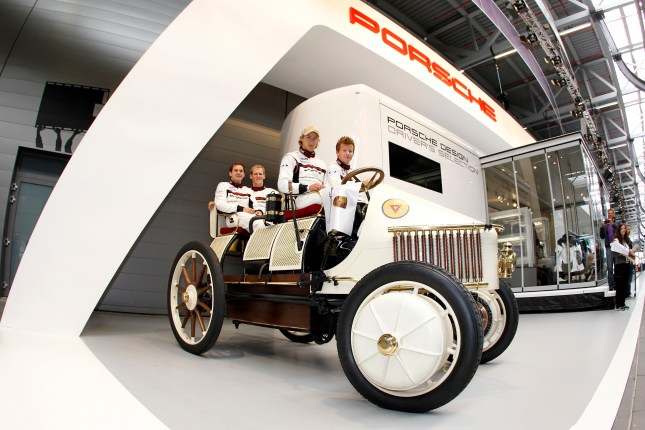
Lohner-Porsche “Semper Vivus”, Porsche factory drivers Richard Lietz, Jörg Bergmeister, Marco Holzer, Patrick Long (l-r)
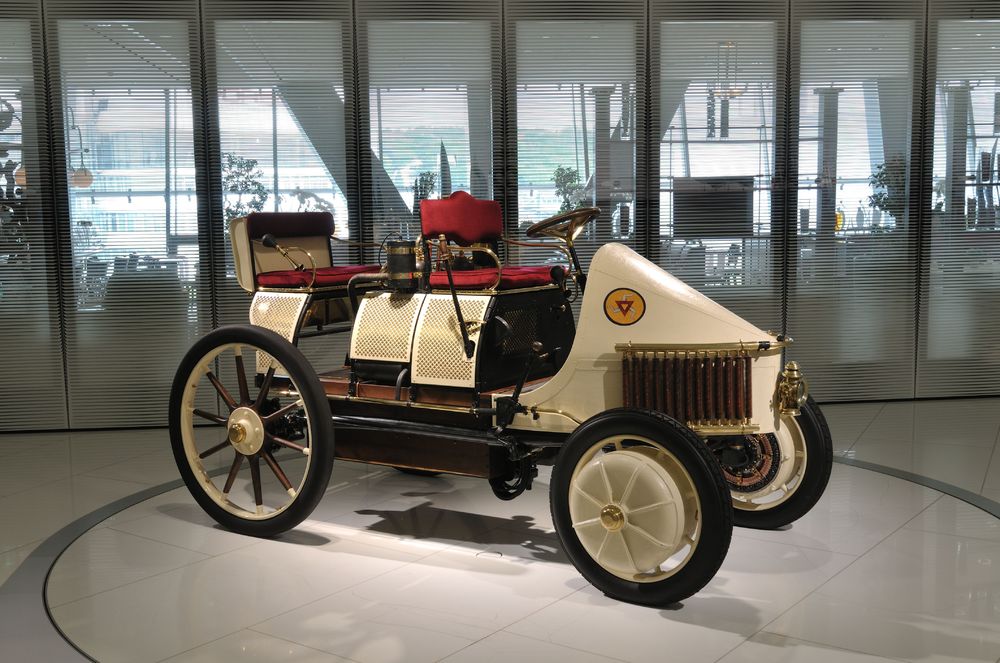
The motor sport fans in the Eifel region were presented with the Lohner-Porsche “Semper Vivus”, developed in 1900 by Ferdinand Porsche, as the first functional vehicle with full hybrid propulsion.
Lohner-Porsche “Semper Vivus”, Porsche factory drivers Richard Lietz, Jörg Bergmeister (rear from left), Marco Holzer, Patrick Long (front from left))
With the faithfully reconstructed ancestor of the Porsche 911 GT3 R Hybrid, the Porsche Factory Drivers Jörg Bergmeister, Richard Lietz, Patrick Long and Marco Holzer drove the Hybrid among the 24-hour Nürburgring fans to the Porsche autograph session – almost silently, because the hybrid is all-electric.
Lohner-Porsche “Semper Vivus” with Porsche factory drivers
Ferdinand Porsche, the visionary of his time entered a new technical ground with the construction of “Semper Vivus”. The drive concept of the brilliant designer and pioneer, has been taken up by Porsche with the development of the Porsche 911 GT3 R Hybrid, thus ushered in over a year ago as a new chapter in history of the Porsche 911.
Lohner-Porsche “Semper Vivus” with Porsche factory drivers
Porsche GT3 R Hybrid’s first race in the 24-hour race at the Nurburgring in 2010 made worldwide headlines: eight hours into the race at the forefront of the field on victory course, was an impressive example of the ” Porsche Intelligent Performance ” More power on less fuel, more efficiency and lower CO2 emissions – on the racetrack and on the road.
Lohner Porsche “Semper Vivus”
Despite the much lower speed to drive the first hybrid car, is no less strenuous than full throttle on the Nürburgring Nordschleife with the 911 GT3 R hybrid. With a front axle weight of 1,060 kilograms – 830 kilograms – and the steering without power assistance is hard work. But the Porsche drivers are well trained – and met with much applause by fans during the demonstration drive.
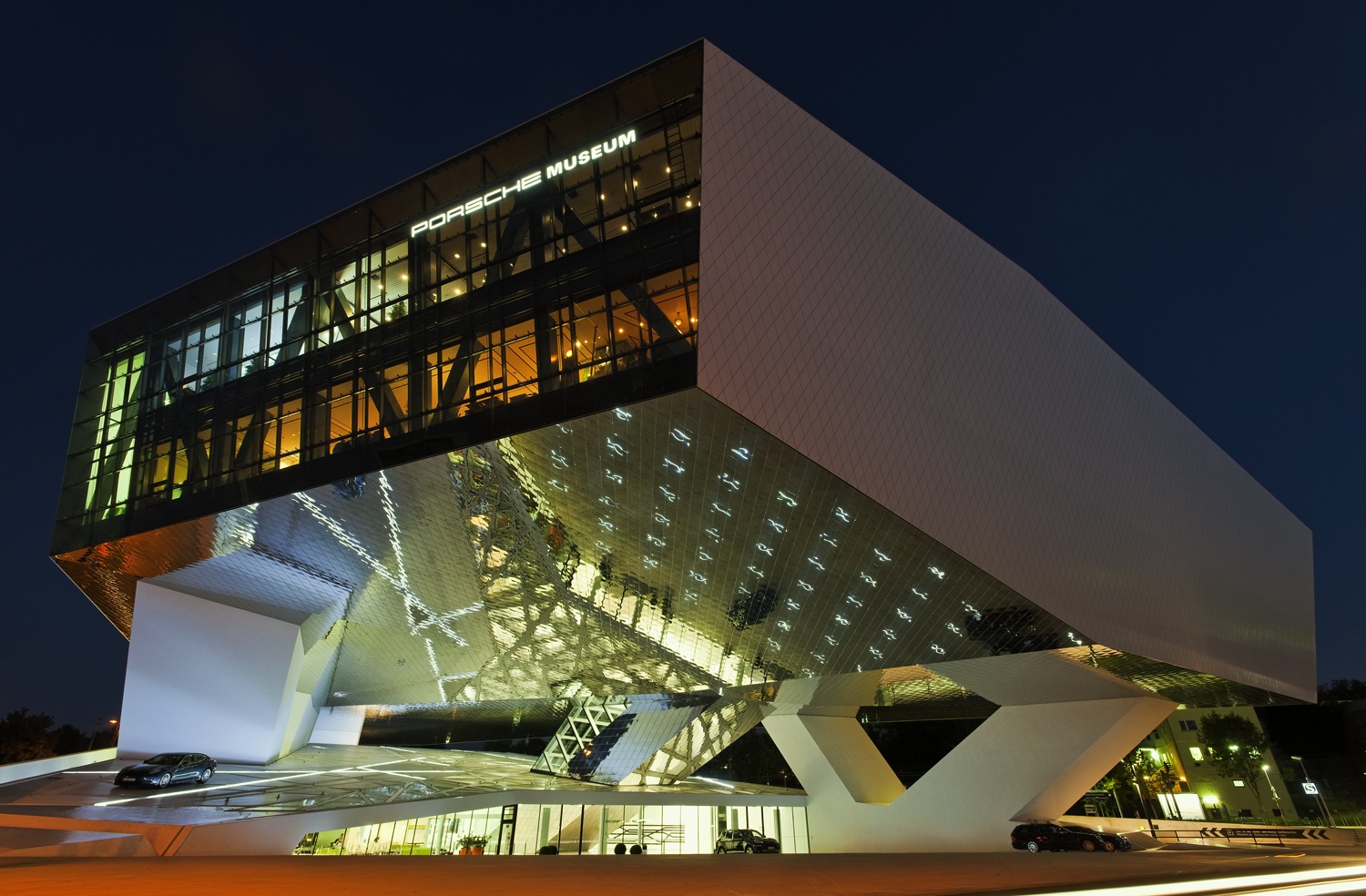
Stuttgart. In establishing his engineering office in Stuttgart in 1931, Ferdinand Porsche laid the foundations for the future success of what is today Porsche AG. The Dr. Ing. h.c. F. Porsche AG, Stuttgart museum is paying tribute to this milestone with a new special exhibition “80 years of Porsche Engineering”.
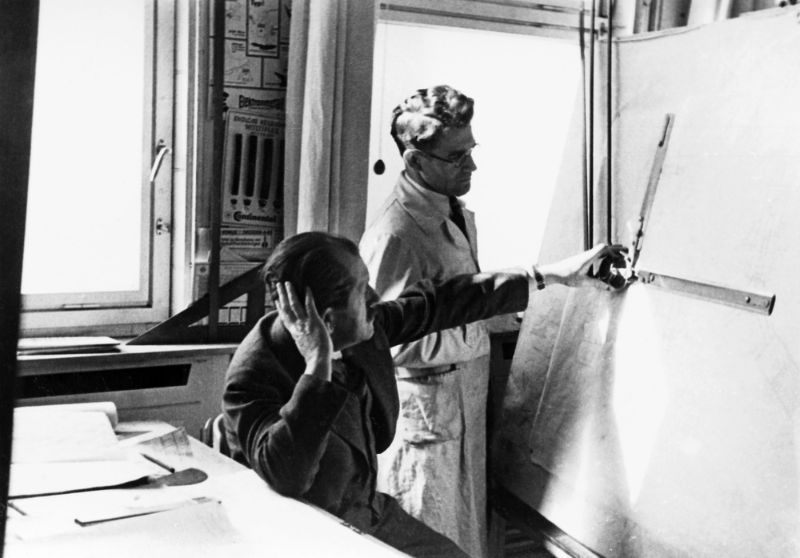
Ferdinand Porsche (left) and engine specialist Josef Kales 1937 in the Porsche engineering office at Kronenstrasse 24 in Stuttgart.(Click on photo to enlarge)
From 21 June until 11 September, 2011 visitors will be able to experience the most important and exciting customer developments of the past eight decades.
(Click on photo to enlarge)
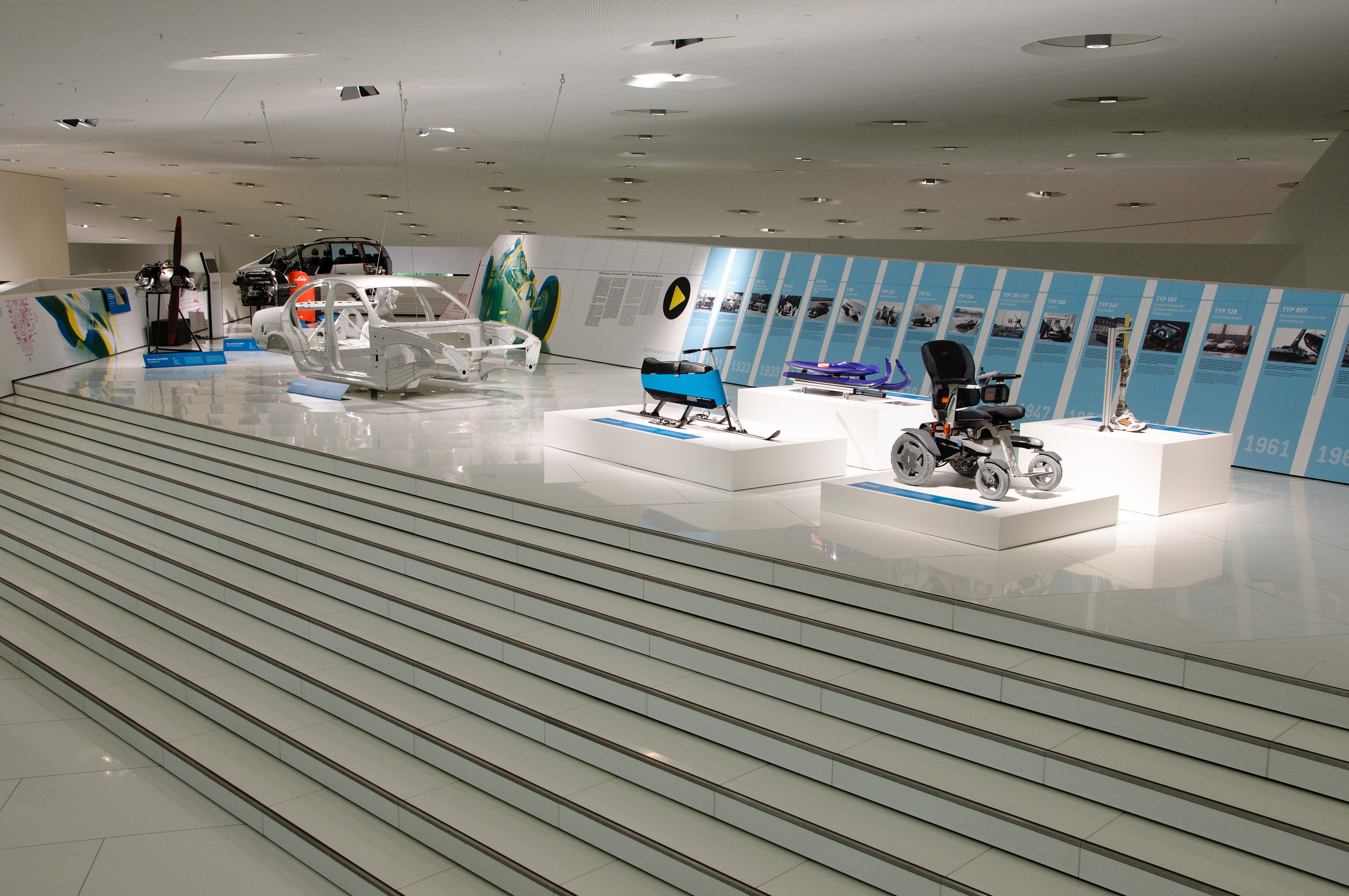
On display will be approximately 20 special exhibits ranging from the development of entire vehicles via engines and transmissions to remarkable industrial projects of the present day.
(Click on photo to enlarge)
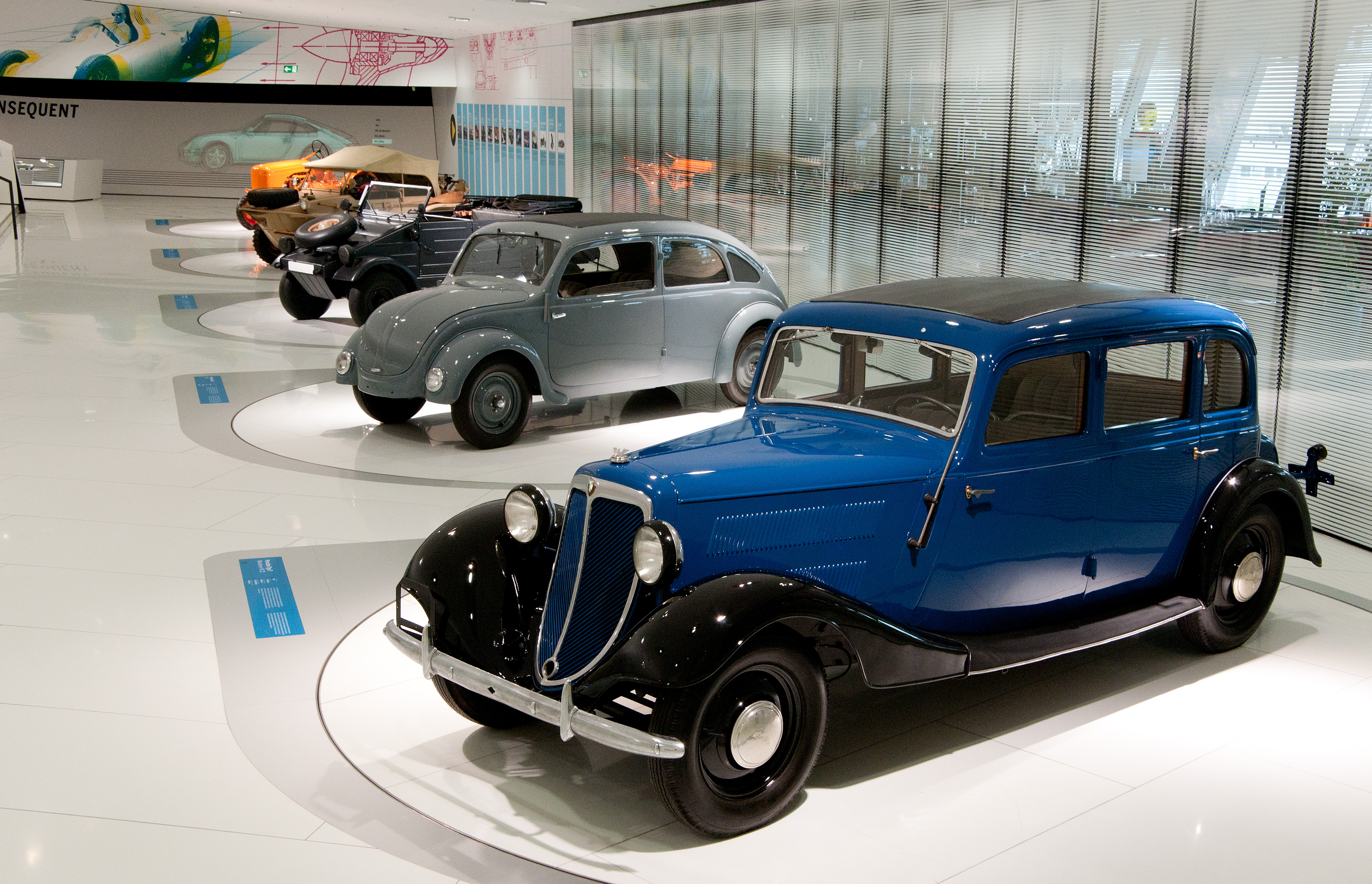
For example, among the exhibition pieces you will find one of the first Porsche developments that the Chemnitz-based car manufacturer Wanderer placed with the engineering office in 1931: the Wanderer W22, also known in-house at Porsche as the Type 7. This mid-size saloon features a six-cylinder alloy engine with 1.7 or two litre displacement that was also later to power the famous “Audio front”.
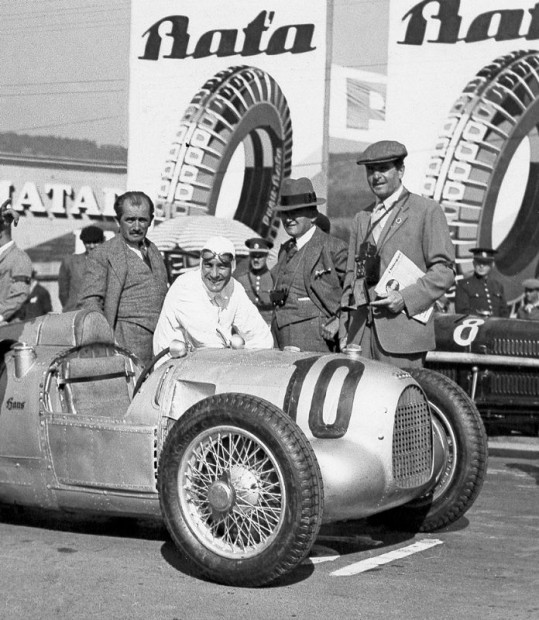
Two years later Auto Union commissioned the design of a Grand Prix racing car, which is now one of the most legendary racing cars of all time. Driven by motor racing legends such as Hans Stuck and Bernd Rosemeyer the Auto Union “P racing car” achieved no fewer than 30 Grand Prix victories and 15 world records between 1934 and 1937.
Hans Stuck in the Auto-Union racing car at the 1934 Brno Grand Prix at the Masaryk-Ring. Ferdinand Porsche is next to Hans Stuck on the left.(Click on photo to enlarge)
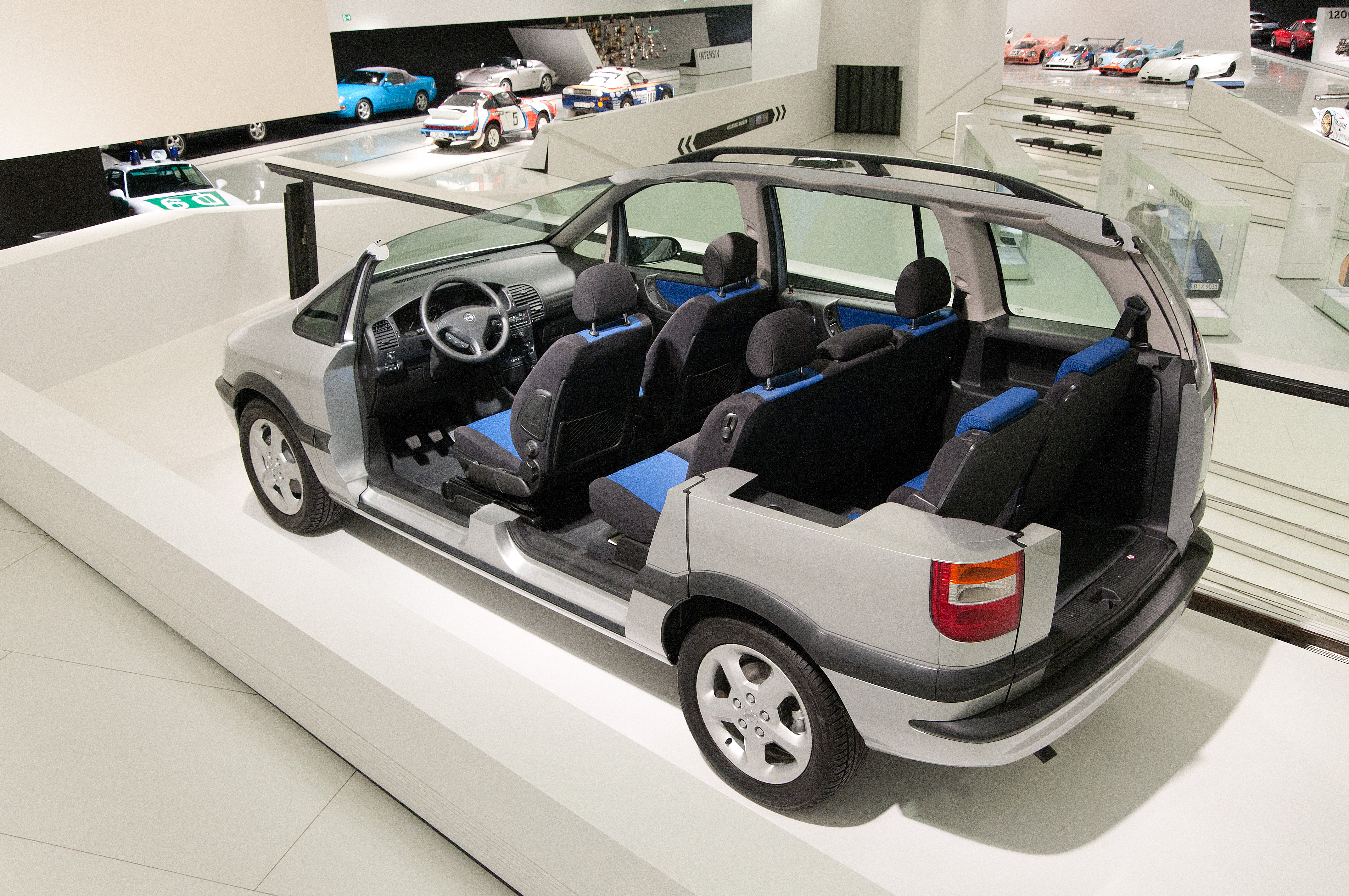
The “Opel Zafira” compact MPV as well, which Porsche designed in 1994 for Adam Opel AG, will enjoy equal billing with the Mercedes-Benz 500 E, which was in series production between 1990 and 1995 in Porsche’s very own Zuffenhausen plant.
The anniversary exhibition, the most comprehensive special event since the museum first opened, will also surprise the visitor with unusual Porsche know-how beyond the automotive arena.
(Click on photo to enlarge)
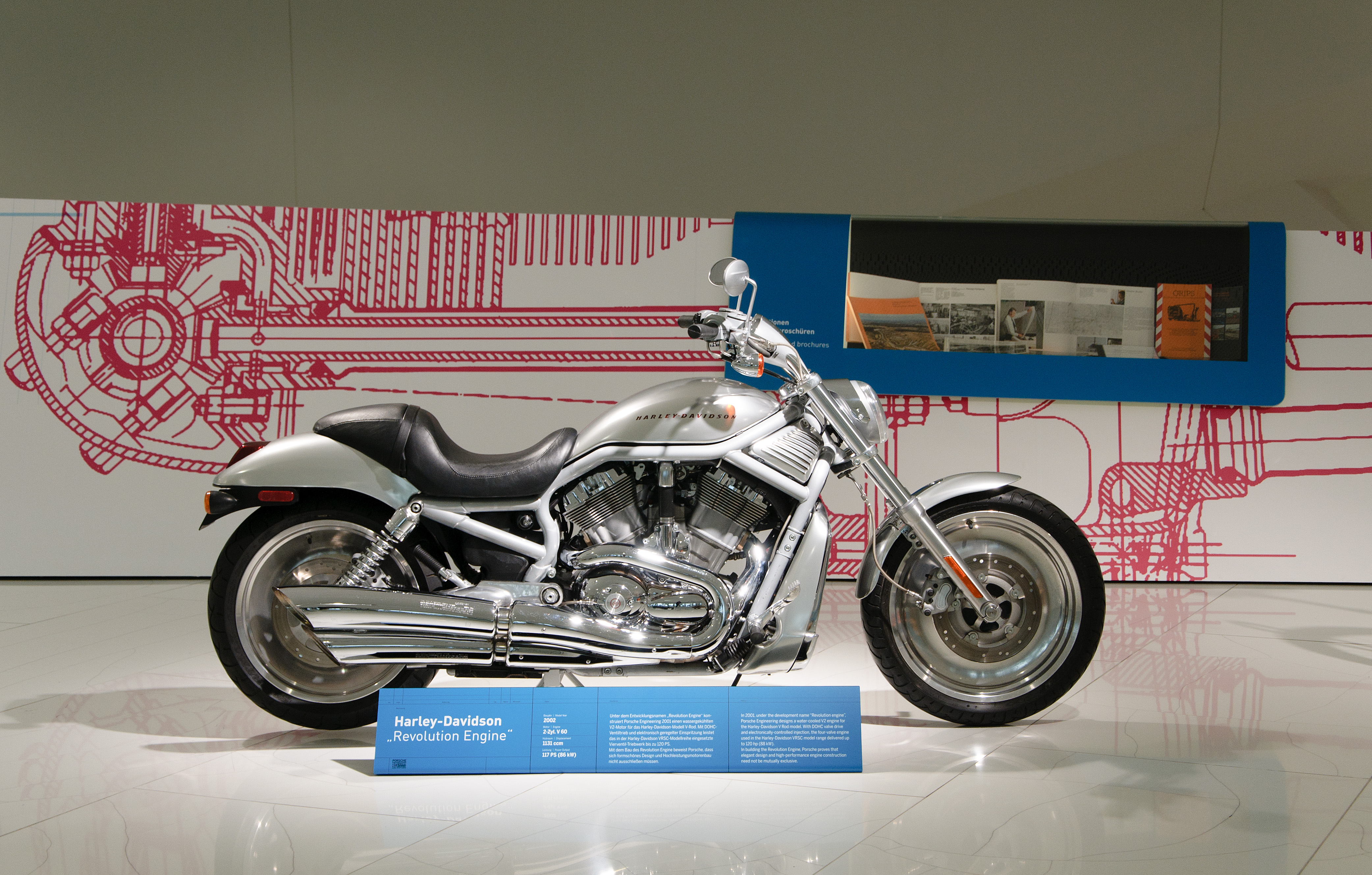
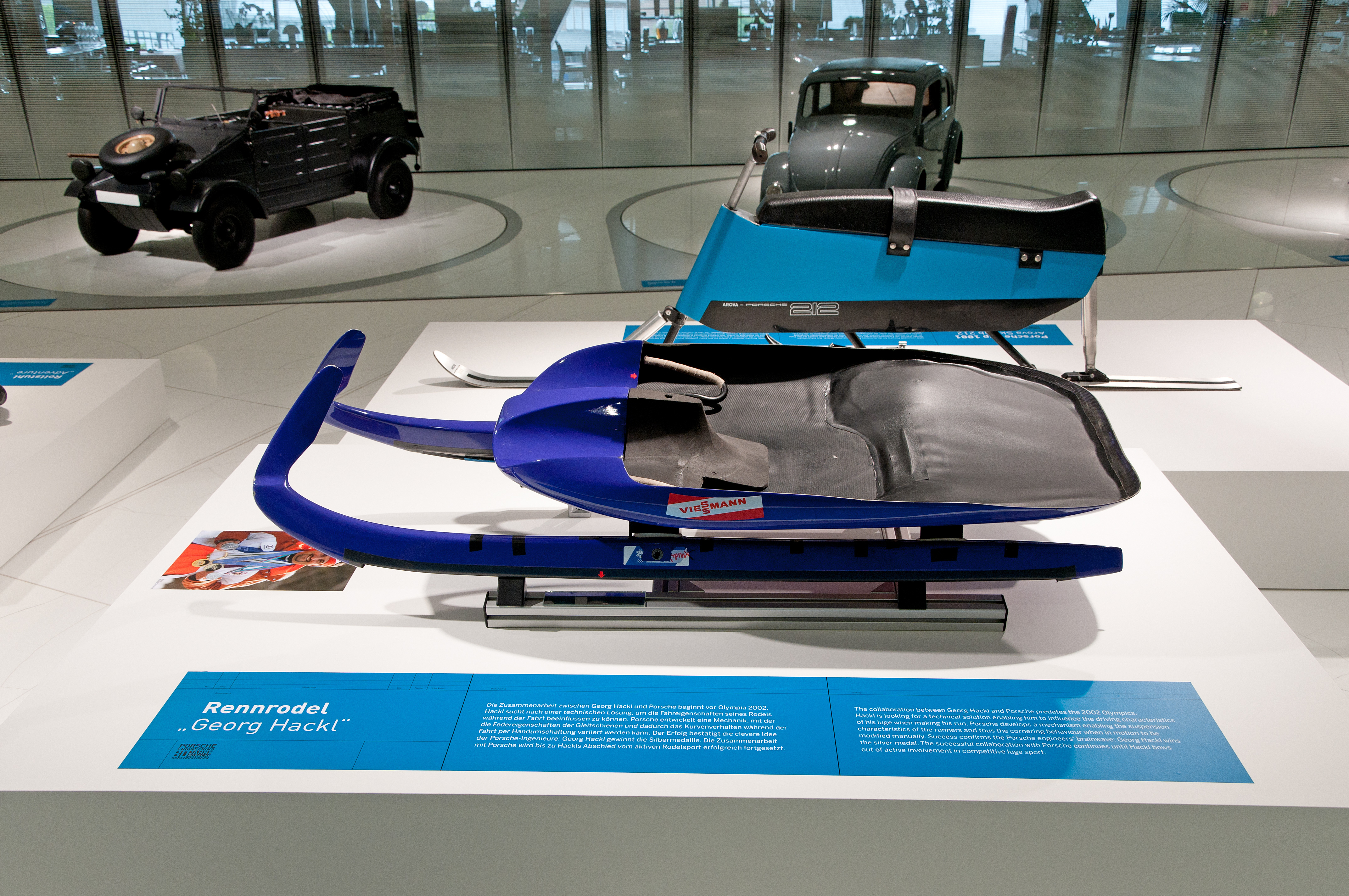
In addition to a Harley-Davidson “V-Rod”, the Porsche Museum will also be exhibiting the original racing sled that Porsche engineers designed together with professional sportsman Georg Hackl.
(Click on photo to enlarge)
It was with this model that Hackl, a professional sportsman, won the Olympic silver medal in 2002.
(Click on photo to enlarge)
The “Adventure” electric wheelchair with independent four-wheel spring suspension will also be on show, designed by Porsche in 2004 on behalf of Ulrich Alber GmbH.
In addition to the already familiar guided tour offering of the permanent exhibition, the Porsche museum also provides exclusive tours of the “80 years of Porsche Engineering” special exhibition. The visitor service can be reached on +49(0)711 911 20911 or via e-mail info.museum@porsche.de for inquiries about dates and bookings.
Next generation of inventors wanted
The Porsche museum is staging a creative competition for young boffins: Children up to the age of 12 are invited to follow in the footsteps of Ferdinand Porsche. The next generation of engineers has until August 22 to submit their own original ideas and inventions on anything and everything to do with the car. Materials as diverse as wood, plasticine, paper or polystyrene are allowed.
This will culminate in the award of a prize for the most ingenious ideas. The handiwork can either be submitted in person at the Porsche museum information desk or sent by post under the heading “Next generation of inventors wanted”: Porsche museum, visitor service, Porscheplatz, 70435 Stuttgart.
The Porsche Museum is open Tuesday to Sunday from 9:00 a.m. to 6:00 p.m. Further information is available online at www.porsche.com/museum.
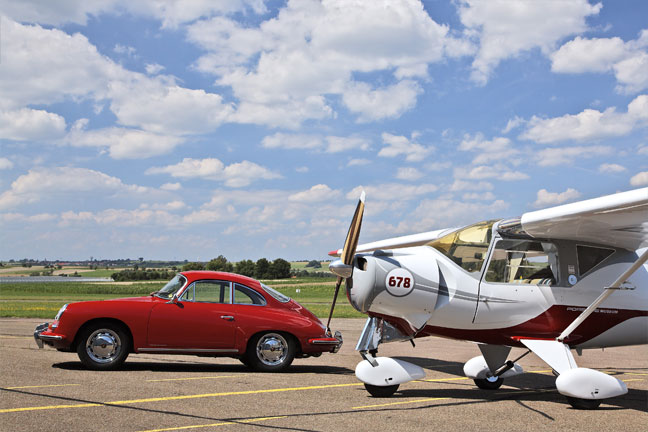
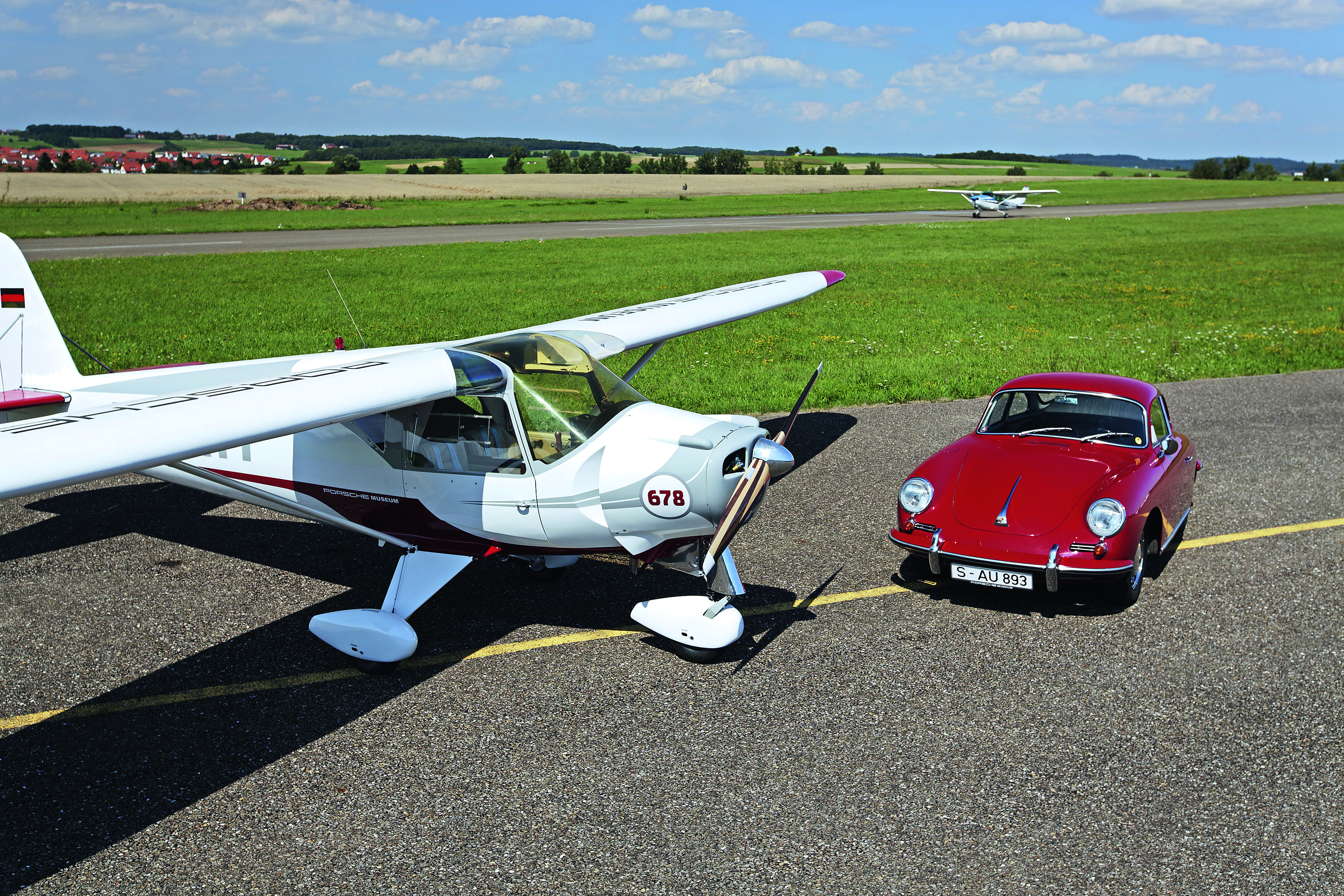
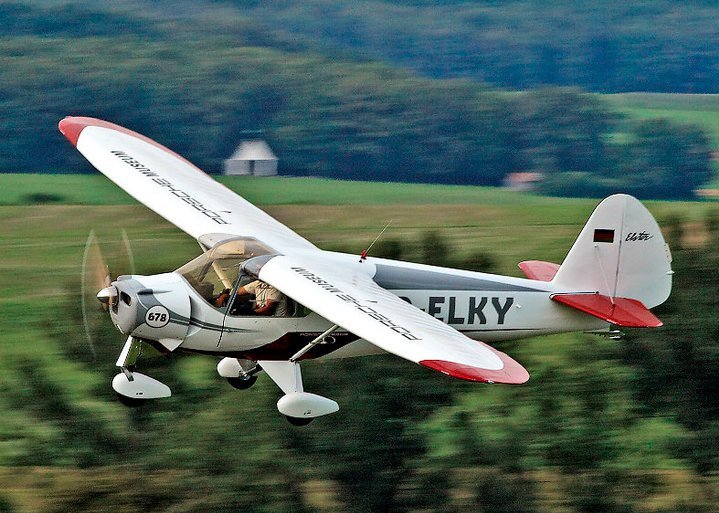
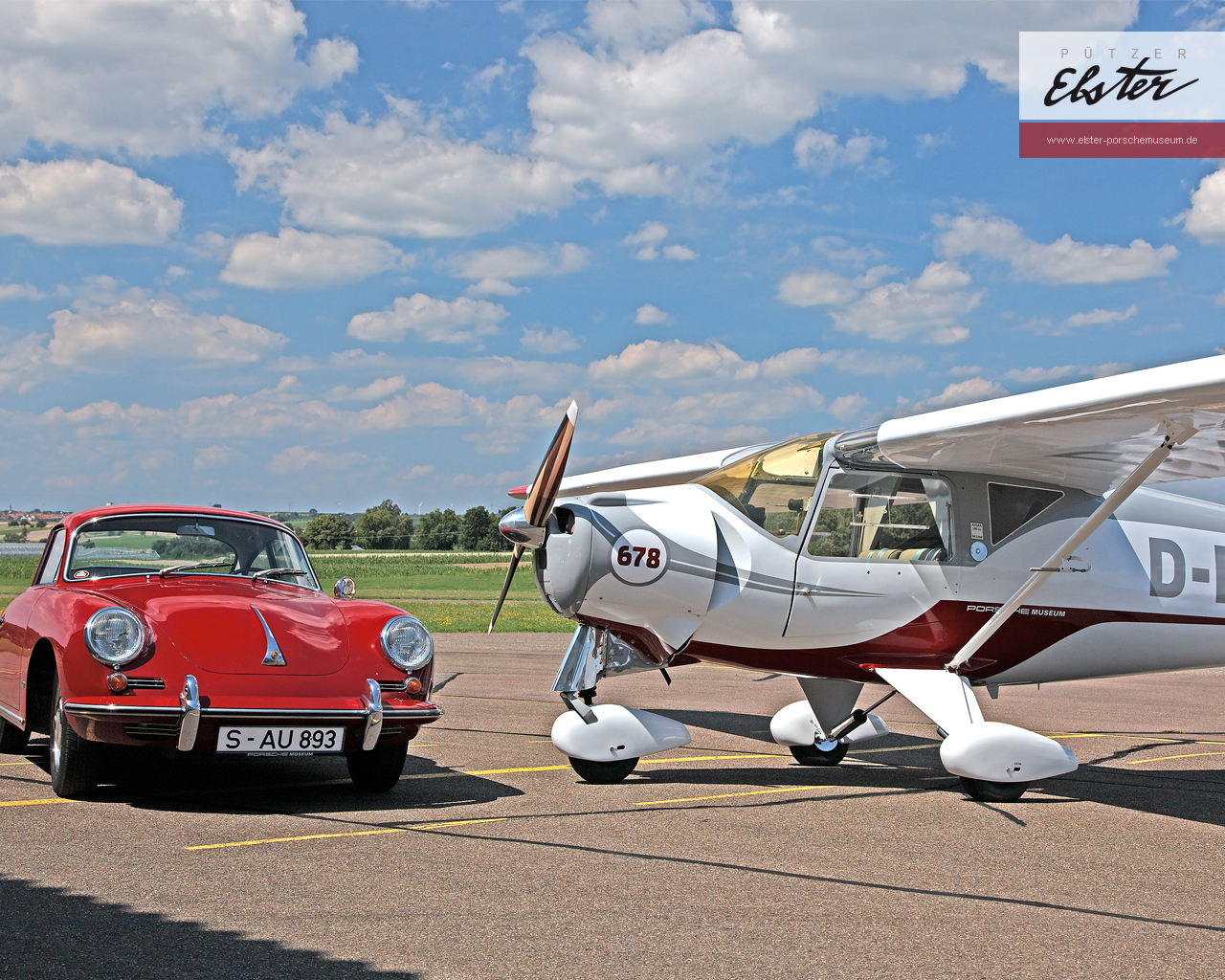
It was the first German aircraft to be built in any significant numbers after the Second World War: a classic aircraft of the type “Pützer Elster B” has been extensively restored with the assistance of the Porsche Museum and will now have the mission of representing the museum at airshows as its “flying ambassador”.
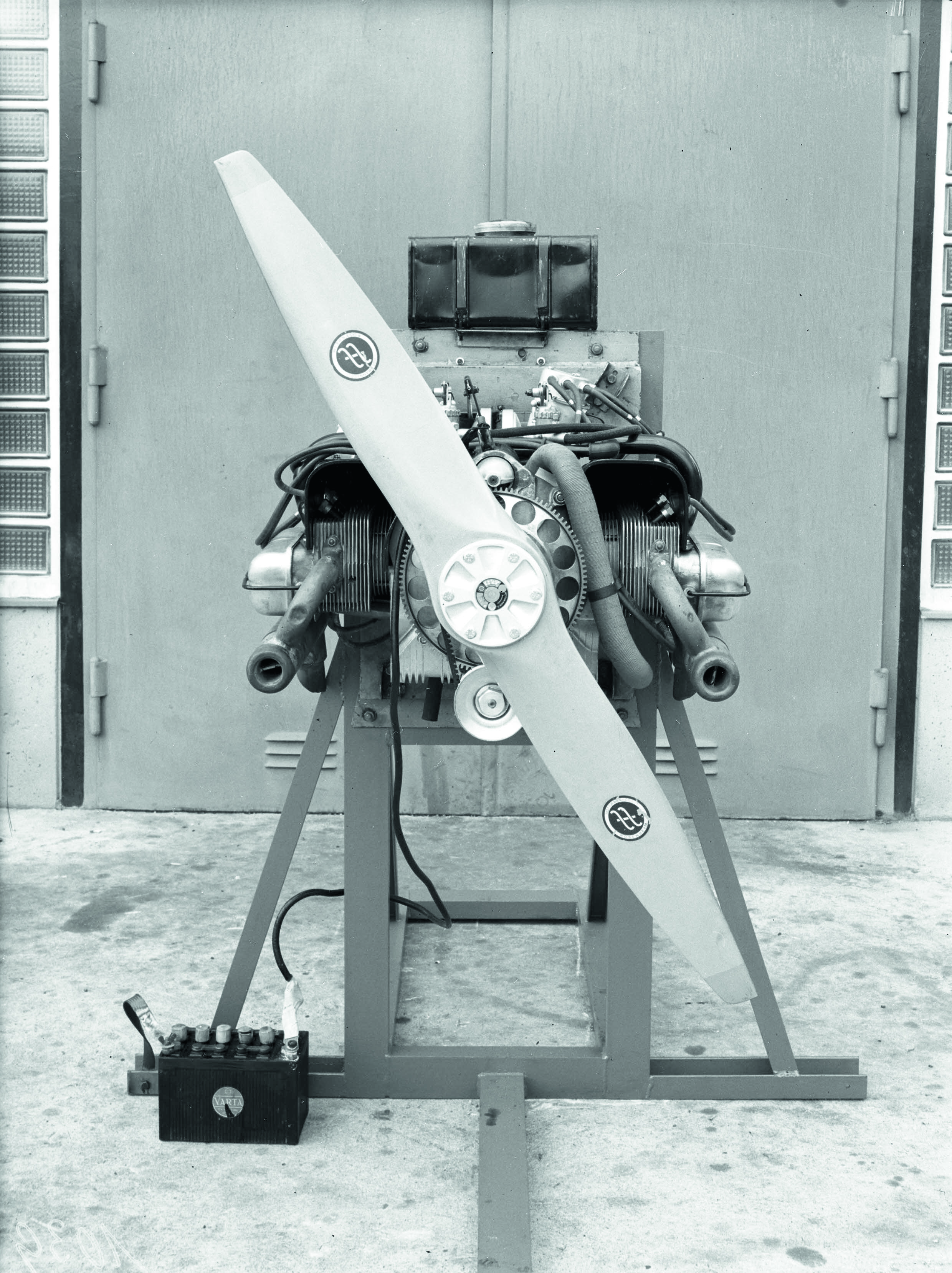
There are close historic ties between the Porsche Museum and the “Elster” (magpie): the Porsche aeroengine Type 678 was tested in this aircraft type at the end of the 1950s. The engine of the Porsche 356 was used not only as a drive for the first German post-war sports car, but also the first German aircraft engine production.
After extensive restoration lasting three years under Project Manager and owner Jürgen Gassebner, a “Pützer Elster B” has been restored to its former splendor. The restorers invested over 1,000 hours in giving the flying machine a thorough overhaul. Particular attention was paid to reconditioning original parts as thoroughly as possible, to minimize the need for new parts.
Tradition of care in the air: vintage aircraft promotes the Porsche Museum
Stuttgart. Not only on land but also in the air, operates the museum of Dr. Ing hc F. Porsche AG, Stuttgart, maintaining tradition.
A vintage aircraft of the type “Pützer Elster B” from 1963 and was extensively restored with Porsche support, and will continue to advertise as a “flying ambassador” for the museum.
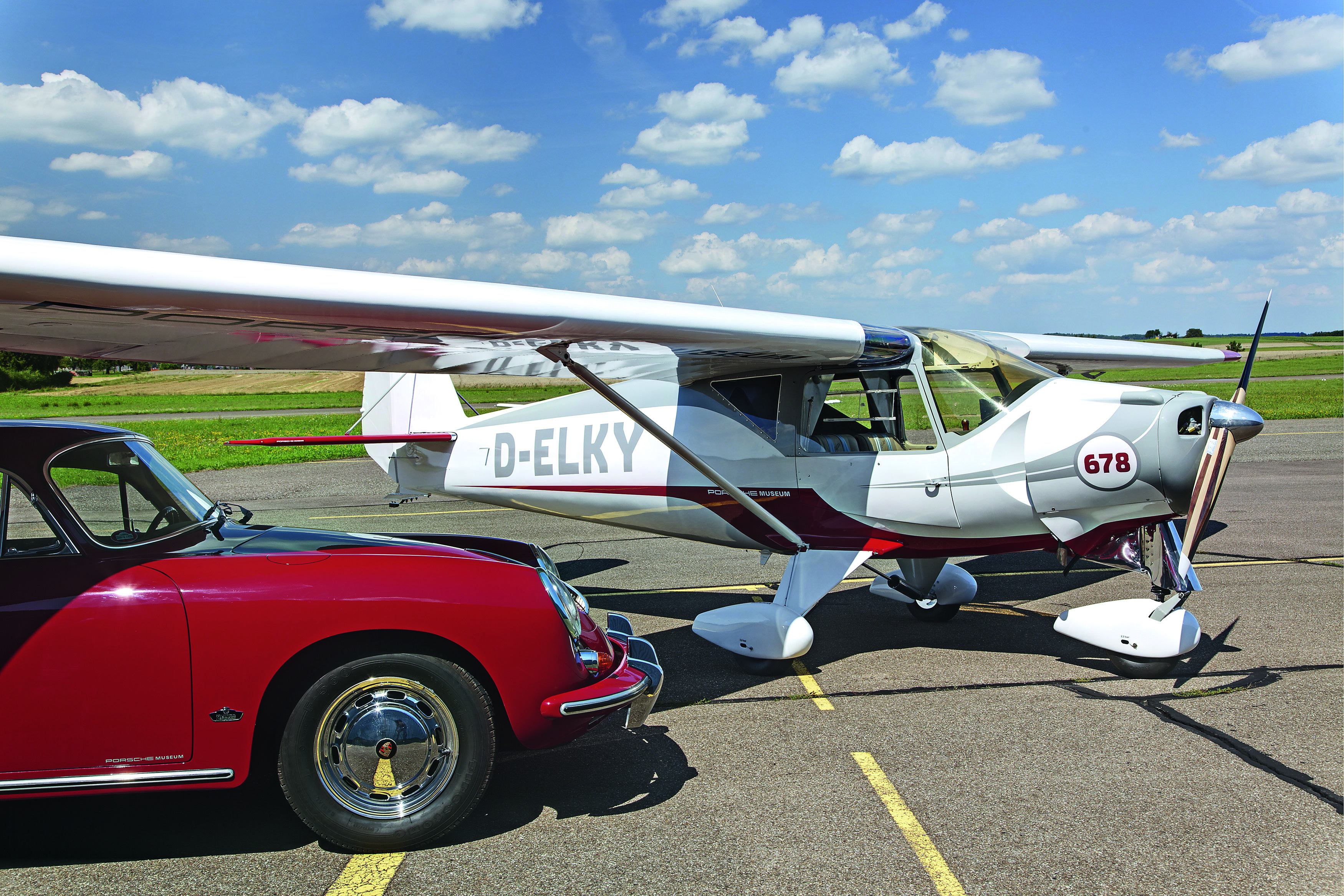
Between the Porsche Museum and the “Magpie”, marked D-ElkY from 1963 is a close historical reference: Coinciding with the Porsche 356 was the “Magpie” is the first built in any significant quantity German engine aircraft after the Second World War.
Moreover, that aircraft type in 1957, the Porsche 678 type aircraft engine tested. This four-cylinder boxer engine was based on the drive of the Porsche 356 and was built in the late 50s to a whole aircraft engine program with launch services for up to 75 hp.
Ancestor of the aircraft type “Magpie” was the famous glider double Raab, “from which the aircraft maker Alfons Pützer with Fritz Raab, first developed the motor ship” Motor Raab, a little later – using the double-Raab-wings – after the prototype “Elster A to develop. ”
This was driven in 1957 by a strong 52 hp engine from the Porsche-type 678th Due to increased demands on the flight performance was the “Elster B” later the 95 horsepower Rolls-Royce Continental engine, type C-90 12 and 14 F. From this vintage aircraft that the KG Alfons Pützer constructed in 1957, are now only ten aircraft at LBA approved.
In the extensive, three-year long overhaul of the “magpie” the Restoration invested over 1,000 hours of work. Special emphasis was placed on work up original parts as possible to dispense with the installation of new parts as much as possible. Thus, in addition to the motor and the electronic equipment on board, called the avionics have been updated. Also received the wood airplane has a fully renovated interior and a proper overhaul of the cell, so the wings and the fuselage.
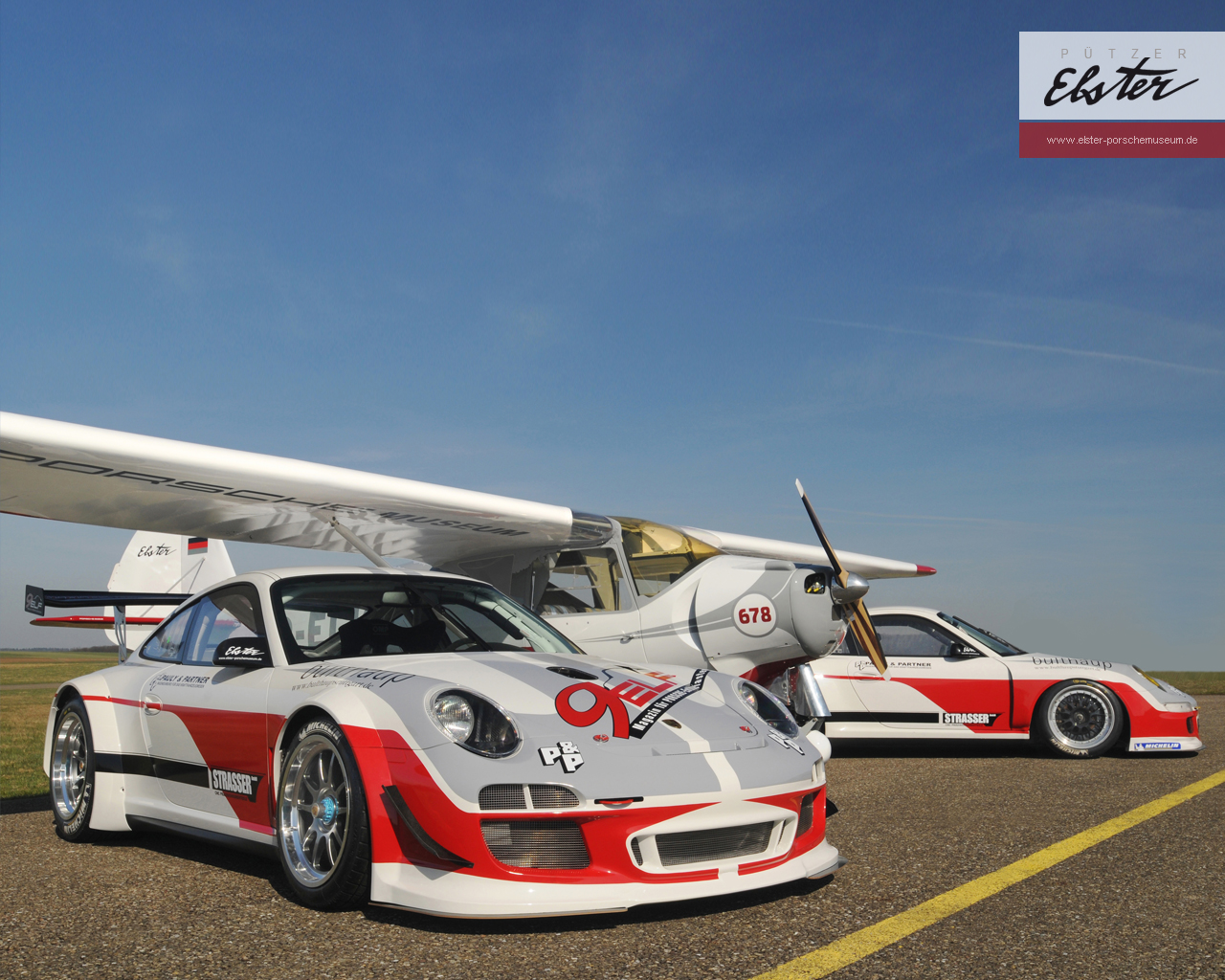
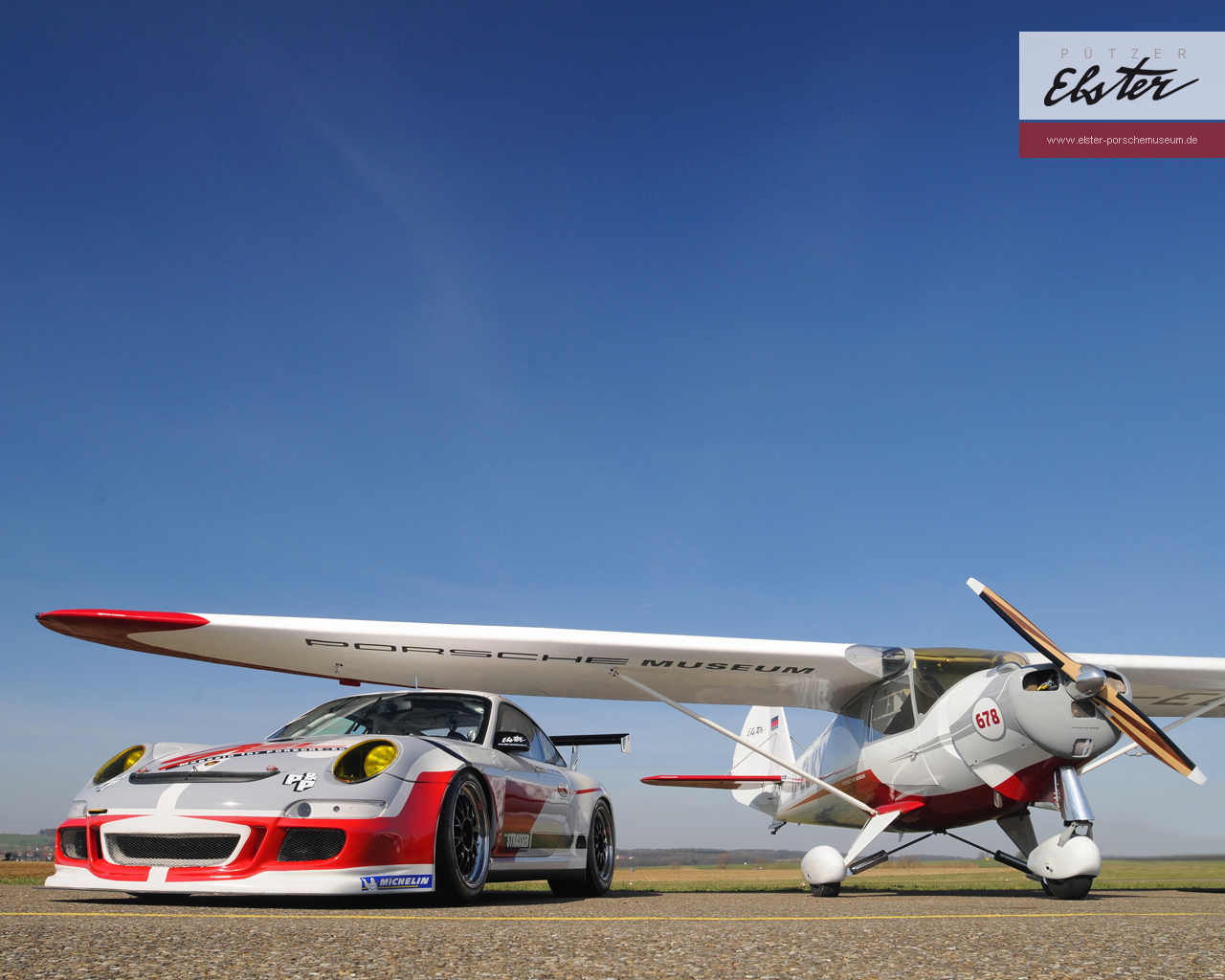
“Magpie” now with a new and classically modern painting: by the renowned Stuttgart designer Wolfgang Seidl developed design concept was quoted as traditional Porsche colors red, white and gray is the classic race car design from the 50s and 60s.
On the wings as well as the lettering on the fuselage has the Porsche Museum in the historical relationship between Porsche and the “Magpie” out.
In future, stationed in the Swabian Heubach Magpie D ElkY ” seen as a flying ambassador for the Porsche Museum at numerous vintage air shows. This museum pays tribute once again the engineering achievements of the company founder Professor Ferdinand Porsche. For over 100 years ago, he developed as Austro-Daimler chief designer in addition to automotive engines and aircraft engines successfully.
PICTURES: Porsche AG Database
Public Relations and Media
Porsche-Museum
Astrid Böttinger
As well as the engine, the electronic equipment on board – known as the avionics – was replaced. The wooden aircraft’s interior was also given full restoration treatment and the airframe, in other words the wings and fuselage, were expertly overhauled. The “Elster” also sports a modern, fresh design: the design concept created by renowned Stuttgart designer Wolfgang Seidl gives a nod to classic Porsche racing car design of the 1950s and 1960s in adopting the traditional Porsche colours red, white and grey. Both the wings and the fuselage itself are emblazoned with the Porsche Museum logo.
After three years of work the Puetzer Elster B D-ELKY took off for its first flight in Porsche colours and branding.
Economic miracle – the 356 runs like hot cakes.
Even in the automotive sector, where well-heeled in those days with the Porsche 356 at prices of around 12,000 .- Mark up can buy the first German sports car. And they do it diligently. The 356 sold like hot cakes, the known, and so roll this year, 4529 copies in Zuffenhausen assembly line.
Porsche is going really well, and Germany experiencing prosperity, at least in parts of the population. A simple employee earned in those days, however, only 250 marks a month. That will have a wife and family. As is to think of a Porsche 356 almost. While automobiles, the very front of 356, followed by VW beetles, Lloyds and other four-wheeled motorbikes with NSU as the Max and the streets of Regina Horex rule, must settle for a small minority of people with dreams. Dreams of flying with airplanes, which had in its extreme forms, the likes of North American P-51 Mustang, a Spitfire, a Messerschmitt Bf 109 or the previous decade brought so much suffering to the world. Memories of Icarus come to mind, the crash and the death sentence of the gods for his grip after the sun had.
Aircraft engines as a new business field for Porsche.
So it is only plausible that where the Allies of Germany in the postwar period, almost everything – not only just flying. The Potsdam agreements seal 1945, the flight ban, which will consolidate the demilitarization of Germany. Only about six years after the war, at least, the construction and flying gliders allowed again. Only four years later, in 1955, with the Paris agreements Germany again to build aircraft engines and operate.
Sun in 1955, anything seems possible, especially at Porsche in Zuffenhausen and we quickly recognize that the four-cylinder boxer engine of the 356 is good not only for vehement propulsion in a sports car, but could also serve as a formidable power an aircraft. The slim, compact design makes it ideal Boxer almost to slip under a plane-Cowling, and then make the Porsche engineers are working the 356-engine flying to teach.
The starting point for the first engine of the 356 had been delivered by the Porsche design office in 1938 and 1940 designed VW boxer engine with central camshaft, push rods and valves arranged in parallel. A design that is improved over the 356-company is a success and has become a powerful drive.
From this moment on D-ELKY is the PORSCHE MUSEUM’s official flying ambassador.
Flying ambassador of the Porsche Museum.
At the meeting in the Swabian Heubach, restored over a period of three years and 1,000 hours Elster B hits with the serial number 32 from the year 1963 therefore, a Porsche 356 B Super 90 from 1963. Quite the contrast to the first, 40-hp 356 with 1.1-liter engine of 1951, so that already at least 185 km / h “peak” and Porsche-typical sports-car performance possible.
With a maximum speed of 180 mph and a cruising speed of 142 km / h at 75 percent power marks the Elster B, the perfect matching flying counterpart.
Much like the posh restored 356 B of the Porsche Museum exudes the luxury of its interior in the 50s and 60s. Stitched gray genuine leather combined with walnut wood and a lot of glittering chrome and polished aluminum. As noble a magpie B was never so at the time, but it was for basic training in the Air Force, the Air sports groups in the armed forces and the training and the glider tow was built in clubs.
The historical connection between Porsche and Pützer is to the restoration team can be here to give full attention to detail, and so every little part not only once or twice, but assessed as long review, and possibly obsolete and refurbished is met by the claim of the highest quality.
On 25 and 26 June 2011, Aerospace and Porsche fans will be at the air shows in Schwäbisch Hall in their element. Heubach fly out of the magpie, and some machines with PFM3200 Porsche engine in the association are to Schwäbisch Hall.
On the ground, the planes form an attractive display with Porsche automobiles. The range that extends from the center of Schwäbisch Gmünd PORSCHE vehicle provided while classic cars like the Porsche 356 Cabriolet to current models like the 911 GT3 RS. Also is the team of 9ELF Dutt’s Motorsport in the ADAC GT Masters race cars used by the 911 GT3 R with 480 hp.
Not only on land but also in the air, operates the Museum of Dr. Ing hc F. Porsche AG, Stuttgart, maintaining tradition.
A vintage aircraft of the type “Pützer Elster B” from 1963 and was extensively restored with Porsche support, and will continue to advertise as a “flying ambassador” for the Porsche Museum.
Between the Porsche Museum and the “Magpie”, marked D-ElkY from 1963 is a close historical reference: Coinciding with the Porsche 356 was the “Magpie” is the first built in any significant quantity German engine aircraft after the Second World War.
Moreover, that aircraft type in 1957, the Porsche 678 type aircraft engine tested. This four-cylinder boxer engine was based on the drive of the Porsche 356 and was built in the late 50s to a whole aircraft engine program with launch services for up to 75 hp.
Since September 2010 the Puetzer Elster B D-ELKY is the PORSCHE MUSEUM’s official flying ambassador. Its design was transferred to 9ELF Team’s 911 GT3 R.
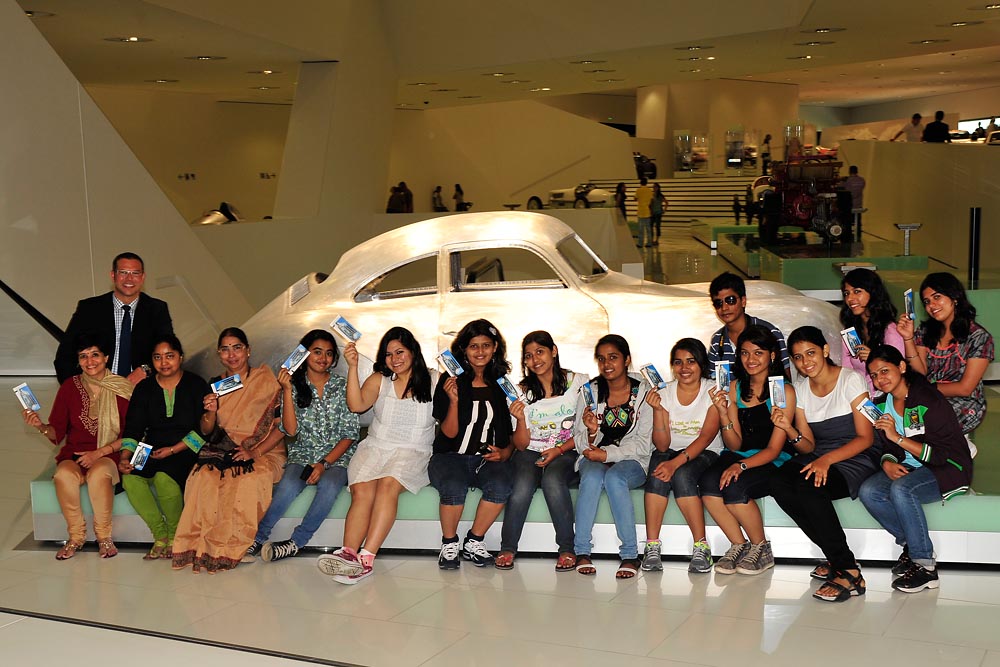
Stuttgart. The museum of Dr. Ing. h.c. F. Porsche AG, Stuttgart, has passed the million visitor mark just two and a half years after opening:
Today, museum director Achim Stejskal welcomed not just one, but 13 school children from India as jubilee guests. “We are very pleased to have been able to surprise these Indian boys and girls from Mumbai,” explained Achim Stejskal. “Almost 35 percent of our visitors are guests from other countries. Fascination for the Porsche brand and its history continues undiminished, all around the world.”
Museum director Achim Stejskal invited the class from Mumbai to take a look behind the scenes: In the museum workshop, which is not normally accessible to visitors, the school children were able to take a seat in a 1954 Porsche 550 Spyder. At the end of their visit, the young jubilee guests received a very special surprise: The Porsche Museum is to support their school project. The boys and girls construct a well in a village close to their school.
Since its opening on 31 January 2009, the Porsche Museum has provided more than 5,100 tours through the 5,600 m2 exhibition and hosted ten special exhibitions.
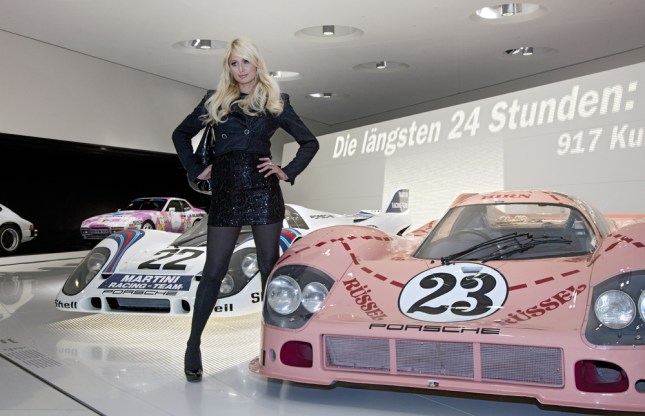
Many celebrities from all over the world, including Jerry Seinfeld, Paris Hilton, Jamiroquai, Robby Naish, Udo Lindenberg and Peter Maffay have also taken an interest in this historic vehicle collection on Porscheplatz.
This slideshow requires JavaScript.
Tickets sold to date would stretch a total of 150 km from Stuttgart to Lake Constance. Furthermore, since then more than 300 classics from the museum’s collection have been travelling the world as rolling brand ambassadors, attending historic racing and classic car events.
Whitsun sees the Porsche Museum opening exclusively for its visitors with the current special exhibition “Ferdinand Porsche – Pioneer of the Hybrid Drive” running until Whit Monday, 13 June 2011.
The Museum is open from Tuesday to Sunday, from 9 am to 6 pm. Entry costs € 8, € 4 for concessions. Children under the age of 14 go free when accompanied by an adult. Further information is available on the internet from www.porsche.com/museum.
SOURCE: Porsche Public Relations and Media Database
Porsche-Museum
Astrid Böttinger
Brian Redman winning the 1970 Targa Florio, with Jo Siffert in a 908/3 – Porsche won the grueling mountain race in Sicily 11 times, more than any other manufacture
British Racing Legend Will Add His Expertise and Energy to the Much Anticipated October Event
ATLANTA, April 13, 2011 – Porsche Cars North America (PCNA) announced the appointment of Brian Redman as Official Ambassador to Rennsport Reunion IV. In his new role Redman will serve as an advisor to PCNA’s organizing team in the months leading up to the October 14 to 16 event and represent the company vis-à-vis race fans and participants in all Rennsport related matters.
“I can’t think of a more qualified person than Brian to help us realize another successful Rennsport Reunion”, said Detlev von Platen, President and CEO of Porsche Cars North America.
“Not only was he instrumental in designing and organizing the previous venues, but with his own colorful racing history, not the least with some of our most famous race cars, Brian Redman personifies the spirit and fascination that we want to encourage with this next gathering of Porsche race cars and their designers and drivers”, von Platen added.
Starting in 1959, Redman’s career has spun more than four decades of racing sports cars as well as Formula 5000 and Formula One. Although making a name for himself as an all-round talent, his biggest triumphs came in racing sport prototypes in the world’s most famous and notorious venues.
Brian Redman/Porsche 908.3/Nürburgring 1000 Km/1970
From Nürburgring, Spa, Monza, Imola, the Targa Florio, Brands Hatch, Zeltweg, Watkins Glen to Daytona and Sebring, Redman won them all. As a member of 1969 factory team he helped Porsche win the World Manufacturers Championship for the first time in the 908LH and 908/2. He then repeated this feat in 1970 with the 908/3 and awesome 917K.
Redman still drives vintage race cars, organizes and promotes historic automotive events and provides individual and group driving instructions.
Even now, at age 74, Redman still competes approximately a half-dozen times a year in various Vintage Series events. After more than 50 years of racing, the sport continues to pull him in.[Picture Source: International Motorsports Hall of Fame; Autosports Marketing Assoc.]
A member of the Detroit and Sebring halls of Fame, was inducted into the Talladega Hall of Fame earlier this year.
Brian Redman 1971 Porsche 908/3
Porsche Rennsport Reunion IV will be the world’s greatest gathering of Porsche race cars and the drivers that drove them to victory, held at Mazda Raceway Laguna Seca from October 14 to 16, 2011. Hosted by Porsche Cars North America, it will assemble the wide variety of Porsche’s most historic racing models from the nimble 550 Spyder of the mid-Fifties through the mighty 917 and 956/962 of the Seventies and Eighties to the highly successful RS Spyder of the last decade.
Special tribute will be paid to the numerous racing versions of the Porsche 911 and their countless victories on the dawn of what will become another milestone of this iconic sports car.
Additional details of the Porsche Rennsport Reunion IV will be published on Porsche’s press web site (press.porsche.com), and Mazda Raceway Laguna Seca’s web site (www.mazdaraceway.com), as they become available. Ticket information is available by contacting 800-327-7322 or online at www.mazdaraceway.com.
Like in the previous reunions, Rennsport Reunion IV will bring together over 60 years of Porsche racing history from the tiny but nimble Porsche 550 Spyder through the groundbreaking 906 and 908 with their plastic bodies to the mighty 917 with over 1,000 horsepower.
PRESS RELEASE: PORSCHE RENNSPORT REUNION IV STARTS ITS ENGINE
Groupings, Schedule of Greatest Gathering of Porsche Race Cars Released
More details and a schedule of events are listed below in the press release.
Atlanta, May 13, 2011 – Preparations for Rennsport Reunion IV continue, and Porsche Cars North America and Mazda Raceway Laguna Seca today released the latest race groupings and schedules for the fourth installment of fourth installment of its historic event, to be held Oct. 14-16, 2011.
This rare occasion will reunite the cars and drivers that together have written Porsche’s motorsports history during the last 60 years on all five continents.
When Porsche Cars North America held the first Rennsport Reunion in the summer of 2001 at Lime Rock Park, it didn’t take long for the participants to realize they were sharing in something extraordinary. Subsequent Rennsports, II and III, were both held at Daytona International Speedway in Florida and built upon the original premise, remarkable racecars reunited with their equally remarkable drivers.
As in the past three reunions, cars will be grouped by the period in which they raced so that enthusiasts can fully focus on the different motorsports eras with their ever more ferocious machines and increasingly sophisticated technology.
All fans will have full access to both paddocks and track side to view everything from the tiny but nimble Porsche 550 Spyder through the groundbreaking 906 and 908 with their plastic bodies to the mighty 917 with over 1,000hp.
A majority of the hundreds of racecars expected will be made up by the many racing versions of Porsche’s iconic 911 model. From its rather humble beginnings as 911 TR in the mid-1960s this car was for two decades the platform of motorsports legends. Letters and numbers such as RSR, 934 or 935 to GT3 series have stood for proven winners at that time and contributed heavily to the over 30,000 victories that Porsches collected over the past 60 years.
Eight groups promise a jam-packed, three-day racing program with practice, qualifying and warm-up for each group.
The races will be complemented by an exhibition parade and a Concours on Saturday afternoon.
The weekend will conclude with a guest appearance of the Cayman Interseries and a race of modern 911 Cup cars for the Rennsport Reunion Trophy.
Tentative schedule
Group 1: Gmund Cup
550, 550A, RSK, RS60-61 (4&8 cyl.) 2000 GSGT (Dreikantschaber), Abarth Carrera, 356 GT, and any other 356 with FIA history. Selected 356 history cars.
Group 2: Eifel Trophy
904 (4&6 cyl.), 914/6 GT, 911TR, 911ST, 911 (911 up to 2.5 liter), Lotus/Porsche, Cooper/Porsche (Pooper) etc, Elva/Porsche.
914’s & 911’s must have period racing history
Group 3: Weissach Cup
906, 910, 907, 908, 908/2, 908/3 (8 cyl. & 6 turbo), 909, 917 (normally aspirated and turbocharged)
Group 4: Carrera Trophy
911 (over 2.5 liter), RSR, 3.0 RSR, 2.1 Turbo, 934, 935, 936, 924 GTS, 924 GTR.
Group 5: Stuttgart Cup
956, 962, GT1, WSC, RS Spyder.
Group 8: Rennsport Reunion Cup – Porsche Cup Cars
911 Feature Race: – 911 Trophy
PORSCHE RENNSPORT REUNION IV 2011 Event Schedule Subject to change
For PORSCHE RENNSPORT REUNION IV 2011 Event Schedule pdf clickhere
FRIDAY, October 15, 2011
7:00 AM Gates Open
7:00 AM – 5 :00 PM Registration : Embassy Suites, Seaside
8:00 AM – 8:20 AM Practice Group 1 – Gmund Cup
8:30 AM – 8:50 AM Practice Group 2 – Eifel Trophy
9:00 AM – 9:20 AM Practice Group 3 – Weissach Cup
9:30 AM – 9:50 AM Practice Group 4 – Carrera Trophy
10:00 AM – 10:20 AM Practice Group 5 – Stuttgart Cup
10:30 AM – 10:50 AM Practice Group 6 – Cayman Interseries
11:00 AM – 11:20 AM Practice Group 7 – PCA Club Racing
11:30 PM – 11:50 PM Practice Group 8 – Rennsport Reunion Cup – 911 Cup Cars
11:50 PM – 1:00 PM LUNCH -VIP hot laps/Parade Laps
1:00 PM – 1:20 PM Qualifying Group 1 – Gmund Cup
1:30 PM – 1:50 PM Qualifying Group 2 – Eifel Trophy
2:00 PM – 2:20 PM Practice Group 3 – Weissach Cup
2:30 PM – 2:50 PM Practice Group 4 – Carrera Trophy
3:00 PM – 3:20 PM Practice Group 5 – Stuttgart Cup
3:30 PM – 3:50 PM Practice Group 6 – Cayman Interseries
4:00 PM – 4:20 PM Practice Group 7 – PCA Club Racing
4:30 PM – 4:50 PM Practice Group 8 – Rennsport Reunion Cup – 911 Cup Cars
SATURDAY, October 16, 2011
7:00 AM Gates Open
7:00 AM – 5 :00 PM Registration : Embassy Suites, Seaside
8:00 AM -8:15 AM Warm up Group 1 – Gmund Cup
8:25 AM – 8:40 AM Warm up Group 2 – Eifel Trophy
8:50 AM – 9:10 AM Qualifying Group 3 – Weissach Cup
9:20 AM – 9:40 AM Qualifying Group 4 – Carrera Trophy
9:50 AM – 10:10 AM Qualifying Group 5 – Stuttgart Cup
10:20 AM – 10:40 AM Qualifying Group 6 – Cayman Interseries
10:50 AM – 11:10 AM Qualifying Group 7 – PCA Club Racing
11:20 AM – 11:50 AM Practice Group 8 – Rennsport Reunion Cup – 911 Cup Cars
11:50 AM – 1:30 PM LUNCH – VIP hot laps/Parade Laps
1:30 PM – 1:50 PM RACE Group 1 – GMUND CUP
2:00 PM – 2:20 PM RACE Group 2 – EIFEL TROPHY
2:30 PM – 3:30 PM Parade/exhibition of Porsche’s racing history to include significant Porsche racing cars
3:30 PM -6:00 PM Concours on Pit Lane
SUNDAY, October 17, 2011
7:00 AM Gates Open
7:00 AM – 12:00 PM Registration : Embassy Suites, Seaside
8:00 AM – 8:15 AM Warm up Group 7 – PCA Club Racing
8:25 AM – 8:40 AM Warm up Group 4 – Carrera Trophy
8:50 AM – 9:05 AM Warm up Group 5– Stuttgart Cup
9:15 AM – 9:30 AM Warm up Group 6 – Cayman Interseries
9:40 AM – 9:55 AM Warm up Group 3 – Weissach Cup
10:05 AM – 10:35 AM Qualifying Group 8 – Rennsport Reunion Cup – 911 Cup Cars
10:45 PM -11:15 PM Race Group 7 – PCA CLUB RACING
11:25 PM – 11:45 AM Race Group 3– WEISSACH CUP
11:45 AM – 1:00 PM LUNCH – VIP hot laps/Parade Laps
1:00 PM – 1:20 PM Race Group 4 – CARRERA TROPHY
1:30 PM – 1:50 PM RACE -911 TROPHY
2:00 PM – 2:20 PM Race Group 5 -STUTTGART CUP
2:30 PM – 3:00 PM Race Group 6 – CAYMAN INTERSERIES
3:15 PM – 4:00 PM Race Group 8 – RENNSPORT REUNION CUP – 911 CUP CARS
For the Porsche Museum in Stuttgart-Zuffenhausen, the 80th anniversary of the Porsche engineering office founded in 1931 is one of the central themes of 2011.
From 7 July to 28 August 2011, the special exhibition “Porsche Engineering – 80 years of Porsche design” will be paying tribute to the most important and interesting third-party client developments of the past eight decades.
On display will be approximately 20 special exhibits extending from the development of entire vehicles via engines and gearboxes to remarkable industrial projects of the present day.
The ten third-party client vehicle developments include a 1931 vintage Wanderer saloon, the legendary Auto Union Grand Prix racing car and the Audi Sport Quattro S1 with the Porsche Doppelkupplungsgetriebe (PDK) driven by Walter Röhrl.
The Porsche Museum is open Tuesday to Sunday from 9:00 a.m. to 6:00p.m.
On 25 April 1931 Ferdinand Porsche founded an engineering office called “Dr. Ing. h.c. F. Porsche Limited, construction and consulting for engine and automobile manufacturing” (Dr. Ing. h.c. F. Porsche Gesellschaft mit beschränkter Haftung, Konstruktion und Beratung für Motoren- und Fahrzeugbau). Porsche Engineering, contract development by Porsche, thus dates back to the oldest predecessor company of today’s Porsche AG and for more than 80 years has developed customised solutions on behalf of automotive manufacturers and suppliers from the automotive industry, but also for other industrial companies from around the world.
Discover the milestones of Porsche history and join Porsche in taking on the challenges of the future.
Stuttgart. Dr. Ing. h.c. F. Porsche AG, Stuttgart, has been the leading manufacturer of premium sports cars for more than six decades. However, the historic roots of the Porsche brand go back much further than that. When Ferry Porsche built the legendary Type 356 in 1948, he and his engineers were able to look back on a wealth of comprehensive technological experience.
Back on 25th April 1931, Ferdinand Porsche founded and registered a design bureau named “Dr. Ing. h.c. F. Porsche Gesellschaft mit beschränkter Haftung, Konstruktion und Beratung für Motoren- und Fahrzeugbau” in Stuttgart.
Since then, the Porsche company has experienced many highs and lows and has grown from a small design bureau to a world famous manufacturer of sports and racing cars. This success story is based on decades of development experience, stretching far beyond just building sports cars. Over an 80 year period, Porsche has built up a reputation as one of the best known and multi-faceted engineering service providers in the world. The tradition of customer development started by Ferdinand Porsche in 1931 is still successfully continued today by Porsche Engineering Group GmbH, based in Weissach.
Porsche Engineering carries out development work on behalf of car manufacturers and suppliers, as well as companies from other sectors, combining the skills of Porsche as a series manufacturer, technology company and engineering service provider and making these available to third parties.
The 80th anniversary of the founding of the Porsche design bureau in 1931 is one of this year’s central themes for the Porsche Museum in Stuttgart-Zuffenhausen. From 21st June to 11th September 2011 the special exhibition entitled “Porsche Engineering – 80 Years of Porsche Designs” will honour the most important and interesting customer developments from the last eight decades. It will display around 20 special examples ranging from whole vehicle developments, through engines and gearboxes to extraordinary industrial projects in the present. The ten vehicle customer developments on display include a Wanderer Limousine from 1931, the legendary Auto Union Grand Prix racing car and the Audi Sport Quattro S1 with Porsche dual clutch gearbox (PDK). The Porsche Museum is open from Tuesday to Sunday, from 9 am to 6 pm. Further information is available on the internet from www.porsche.com/museum.
80 years of Porsche designs
Discover the history of Porsche customer growth in the Webspecial.
For more than six decades, Dr. Ing. h.c. V. Porsche AG, Stuttgart, has enjoyed a reputation as a leading manufacturer of sporty premium cars. But the Porsche brand has much deeper historical roots. When Ferry Porsche built the legendary Type 356 in 1948, he and his engineers were able to draw on a comprehensive trove of technical experience.As long ago as 25 April 1931, Ferdinand Porsche had established an engineering office in Stuttgart under the name “Dr. Ing. h.c. F. Porsche Gesellschaft mit beschränkter Haftung, Konstruktion und Beratung für Motoren- und Fahrzeugbau“, (“Dr. Ing. h.c. F. Porsche Ltd., Design and Consultancy Company for Engine and Vehicle Production”) and had it entered in the trade register.
Since then, the Porsche company has experienced many ups and downs and grown from a small engineering office into a manufacturer of sports and racing cars that is known throughout the world. This success story is based also on decades of development experience extending far beyond sports car construction. Over an eighty-year period, Porsche has acquired the reputation as one of the world’s most illustrious and versatile engineering service providers. The tradition begun by Ferdinand Porsche in 1931 of third-party client development has been successfully carried on to this very day by the Porsche Engineering Group GmbH with its headquarters in Weissach. Porsche Engineering develops on behalf of automotive manufacturers and suppliers but also for companies from other sectors, bundling the know-how of the manufacturer, technology company and engineering service provider that is Porsche and making this available to third parties.
Ferdinand Porsche the automotive designer
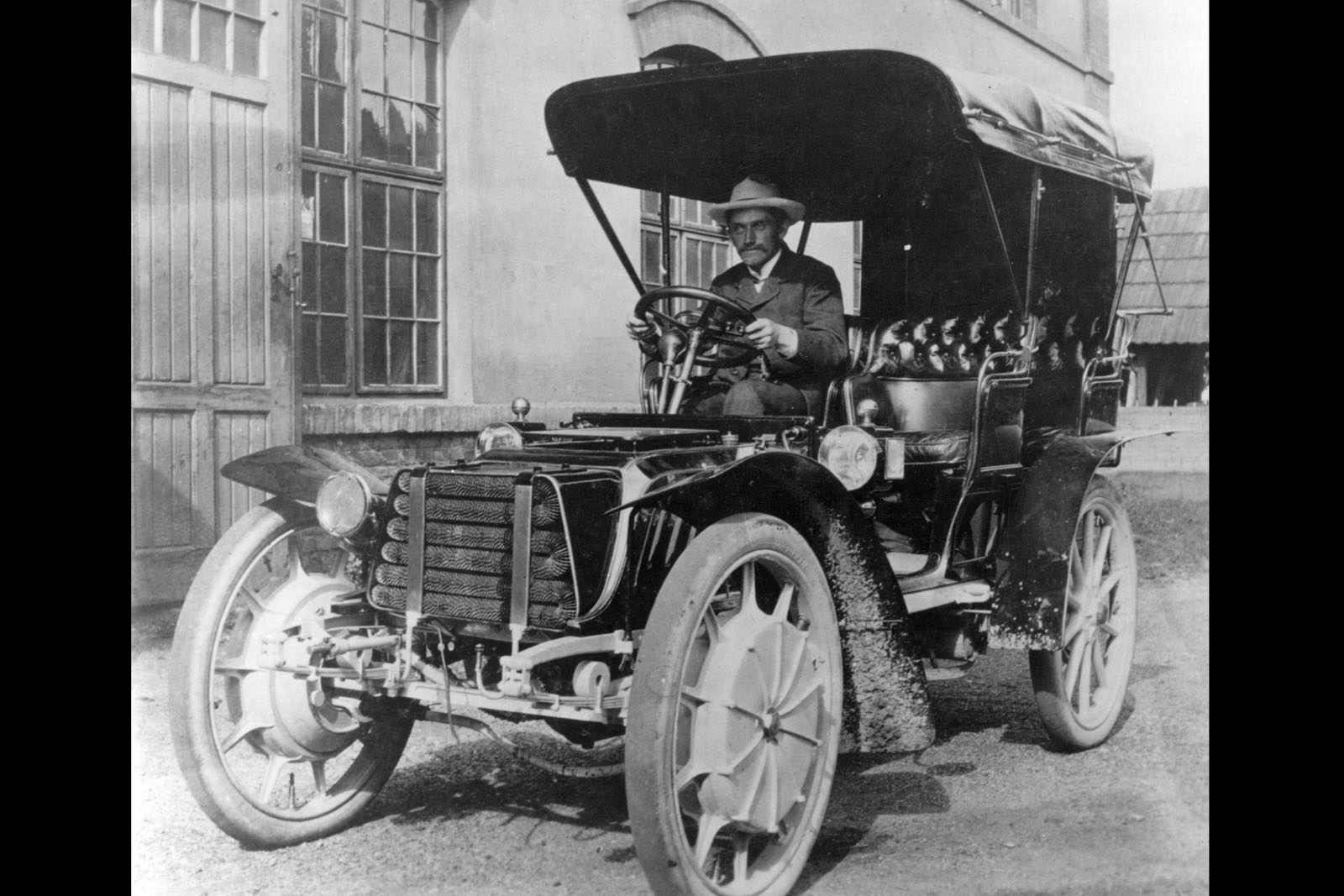
The name Porsche has been associated with pioneering innovations in automotive engineering since the beginning of the last century. Ferdinand Porsche had been busy designing and developing his first cars as far back as 1896. The first fruit of this endeavour was an electric vehicle known as the “Lohner-Porsche” driven by steered wheel hub motors that caused a sensation at the Paris World Exhibition in 1900. This was soon followed by ever more impressive proof of just how innovative Ferdinand Porsche was. A racing car boasting four wheel hub electric motors became the world’s first all-wheel drive passenger car, brilliant also for having four-wheel brakes. No less visionary was Ferdinand Porsche’s next idea: Again in 1900 he combined his battery-powered wheel hub drive with a petrol engine – the principle of the serial hybrid drive had been born.
With this first functional, full-hybrid car in the world, the “Semper Vivus” (“always alive”), Ferdinand Porsche had entered uncharted territory. In this vehicle, two generators twinned with petrol engines formed a single charging unit, simultaneously supplying electricity to wheel hub motors and batteries. As a full hybrid concept, the “Semper Vivus” was also able to cover longer distances purely on battery power until the combustion engine had to be engaged as a charging station. To save weight and create space for a petrol engine, Ferdinand Porsche used a comparatively small battery in the “Semper Vivus” with a mere 44 cells. In the middle of the vehicle he installed two water cooled 3.5 hp (2.6 kW) DeDion Bouton petrol engines for generating electricity, driving two generators, each producing 2.5 hp (1.84 kW). Both engines operated independently of one another, each delivering 20 amps with a voltage of 90 volts. The electricity generated by the dynamos initially flowed to the wheel hub motors, with the surplus power being forwarded to the batteries. An additional special side effect was that it was possible to use the generators as electric starter motors for the petrol engines by reversing the direction of rotation. Starting as far back as 1901 as the Lohner-Porsche “Mixte” and from 1906 onward as the “Mercedes Electrique”, Ferdinand Porsche brought his hybrid drive to the start of volume production.
Ferdinand Porsche in the Lohner-Porsche
This was followed in 1906 by the next step in Ferdinand Porsche’s career. At the tender age of only 31 he landed the position of Technical Director at Austro Daimler in Wiener Neustadt, giving him product responsibility for one of Europe’s leading automotive companies. One of the greatest successes of this era was the so-called “Prinz-Heinrich Car”, in which the Austro-Daimler works team won the first three places in the 1910 running of the highly regarded Prinz-Heinrich Race. In the guise of the Austro-Daimler “Sascha”, he developed a small car which, thanks to its excellent power-to-weight ratio prevailed against its larger displacement competitors in the 1922 Targa Florio, notching up no fewer than 43 racing victories in total.
In 1923 Ferdinand Porsche moved to the Daimler engine company in Stuttgart-Untertürkheim as Technical Director. There, in addition to the Type 8/38 midsized model and the first eight cylinder engine Mercedes-Benz, the “Nürburg” Type 460, it was first and foremost the supercharged sports and racing cars that further consolidated his worldwide reputation as an automotive designer. The sports and racing cars developed under his guidance with the abbreviations “S” (Sport), “SS” (Super Sport) and “SSK” (Super Sport Kurz, or short) ranked among the most coveted cars of their time. In January 1929 he left Daimler-Benz AG. Following a short interlude at the Austrian Steyr works, at the end of 1930 he returned to Stuttgart and opened an engineering office.
Ferdinand Porsche at the office
The founding of the Porsche engineering office
The “Dr. Ing. h.c. F. Porsche Gesellschaft mit beschränkter Haftung, Konstruktion und Beratung für Motoren- und Fahrzeugbau“ was entered in the Stuttgart trade register on 25 April 1921, at the height of the world economic crisis. In addition to Ferdinand Porsche, who contributed 24,000 Reichsmarks to the limited company’s share capital, his son-in-law Anton Piëch and Adolf Rosenberger also invested 3,000 Reichsmarks each as executive partners. From the outset, the work undertaken by the initial twelve strong team around Ferdinand Porsche spanned the entire gamut of motor vehicle technology. Legendary cars such as the Auto Union Grand Prix racing car or the Volkswagen “Beetle” were to emerge from this Stuttgart engineering office in the years that followed. Porsche’s workplace progressed to be one of the most important seedbeds of automotive technology, at the same time preparing the ground for mass car ownership in Germany.
As early as 1931, Porsche designed a six cylinder average mid-size saloon for the Chemnitz car manufacturer Wanderer as well as a new in-line eight cylinder engine. This was followed by a swing axle for the Horch-Werke in Zwickau and an air-cooled five-cylinder radial engine designed for the Phänomen-Werke in Zittau, intended for use in trucks. In addition, the engineering office developed a small car for Zündapp GmbH, which with its rear-engine, rigid tubular backbone chassis and transmission mounted forward of the rear axle was to prove to be decisive for the Volkswagen that came later. The torsion bar suspension patented on 10 August 1931 and used in international automotive manufacturing over many decades is also held to be a milestone in automotive history.
In the spring of 1933, Ferdinand Porsche was commissioned by Auto Union in Saxony to develop the Grand Prix racing car. The moment the contract was signed, the Porsche team led by senior engineer Karl Rabe began work on the Auto Union P racing car (P for Porsche), configured as a mid-engined vehicle. The first test drives took place as early as November 1933 and in the very first racing season in 1934 this vehicle set three world records and won three international Grand Prix races in addition to several hill climb races. Between 1934 and 1939, with drivers such as Bernd Rosemeyer, Hans Stuck or Tazio Nuvolari, the constantly refined Auto Union racing car became one of the most successful pre-war era racing cars . Its technical mid-engine concept proved to be a trendsetter for all modern racing cars and is used to this very day in Formula One.
In addition to developing racing cars, the engineering office had been equally hard at work since 1933 on the design of a low-cost small car commissioned by the NSU works – an idea that was also exercising other car designers such as Belá Barényi or Hans Ledwinka against the backdrop of the world economic crisis. When Ferdinand Porsche began work on designing the Type 32 compact car, this was already the seventh small car design of his career. A number of prototypes of this vehicle type were built, which with the air-cooled, flat-four, rear-mounted engine and Porsche torsion bar suspension exhibited distinct similarities with the later Volkswagen Beetle. The “Memorandum on the construction of a German people’s car” (Volkswagen) that he presented to the Reich Transport Ministry on 17 January 1943 was to prove critical to the breakthrough of the small car concept. Shortly thereafter, on 22 June 1934, he received the official order from the RDA, the “Reichsverband der Deutschen Automobilindustrie” (German Reich Automobile Industry Association) to design and build Volkswagen prototypes that were assembled in the garage of his Porsche villa in the north of Stuttgart in 1935.
Ferdinand Porsche and Auto Union GP
Contrary to the initial idea of having the Volkswagen built jointly by Germany’s car manufacturers, the Reich government decided in 1936 to build an independent Volkswagen plant, the planning of which was entrusted to Dr Ferdinand Porsche. Since the incorporation of the “Gesellschaft zur Vorbereitung des Deutschen Volkswagens mbH” (Gezuvor) in May 1937, a company established to pave the way for the construction of the German “people’s car”, Porsche, as one of three Managing Directors, was officially responsible for technology and the planning of the future Volkswagen plant and, accompanied by his son Ferry, travelled to the United States of America to find out about modern production methods.
In addition to the Volkswagen project, the Porsche engineering office, located in the Zuffenhausen district of Stuttgart since 1938, was working on numerous other development contracts from the automotive industry. For Daimler-Benz AG work included the development of technical engine components for the Mercedes “silver arrows” between 1937 and 1939 as well as the design of the Type 80 high-speed car for an attempt on the land speed record. The Type 110 compact agricultural tractor with an air-cooled two cylinder engine, developed for the “Deutsche Arbeitsfront” (German Labour Front) (DAF), was the model for the later “People’s Tractor” and the Porsche diesel tractor produced after the Second World War.
In 1938 the Volkswagen works awarded the Porsche engineering office the contract to develop a racing car based on the Volkswagen Type 60, which was to take its place on the grid for a planned long distance race from Berlin to Rome as a promotional stunt for the “KdF car” (“Strength through Joy” car). By the spring of 1939, the Porsche engineers had developed three sports car coupés under the in-house designation Type 64, for the “Non-stop speed endurance test” scheduled for September. As much of the more than 1500 kilometre long race was to be on the new motorways, particular attention was lavished on the vehicle’s aerodynamics. With a sleek streamlined aluminium body, shrouded wheel wells and a modified VW horizontally opposed engine, the would-be record-breaking car, weighing a mere 600 kg, topped 140 km/h (87 mph). When the outbreak of the Second World War prevented the race from being held, the Porsche engineering office used the completed sports cars as fast touring cars, achieving average speeds in excess of 130 km/h (81 mph) on long business trips.
After the outbreak of the Second World War, other types of vehicle were spun off from the Volkswagen for military use. In addition to the Type 81 “VW Kastenwagen” the company, trading as Porsche KG since the end of 1937, developed the Type 62 “KdF off-road vehicle”, the Type 82, known as the “VW Kübelwagen” and the all-wheel drive Type 87 and Type 166 “VW Schwimmwagen” amphibious vehicle, among others. At the end of 1939, the Army’s Armaments Office also awarded the Porsche engineering office the development contract for a medium tank, the design of which however was temporarily shelved owing to the need for heavier types of tank. Initially employed by the Armaments Ministry as a consultant, Ferdinand Porsche headed the Tank Commission from 1941 to 1943. In 1942 Ferdinand Porsche received the contract to design a super heavy tank, the Type 205 “Maus” (Mouse), of which only two prototypes were ever built, however, and never saw action. During the war, development of the military derivatives of the Volkswagen as well as various tank prototypes – including the involvement of prisoners of war employed as forced labourers – took place predominantly in Stuttgart-Zuffenhausen. With the intensification in bombing raids, the Porsche KG engineering office, classified as important to the war effort, was relocated in autumn 1944 from Stuttgart to Gmünd in Carinthia, Austria.
New beginning with third-party client development and sports car construction
With the war over, the Porsche engineering office in its new home in Austria strove to attract new contracts from the automotive sector. But initially it was water turbines, cable winches, ski lifts, mowing bars and various types of tractor based on the “People’s Tractor” that were developed and for the first time also sold under the Porsche name. The most important customer in the early post-war years was the Italian company Cisitalia, whose car enthusiast owner Piero Dusio awarded numerous design contracts at the end of 1946. In addition to a tractor and water turbine, Dusio ordered a mid-engine sports car with hydraulic torque converter and a Grand Prix racing car. The upshot was the Type 360 “Cisitalia” completed in 1948, which technically was far ahead of its time on many counts. Unlike the front-engine Formula One racing cars of the post war year, which for the most part still featured rigid axles, the Type 360 was designed with a mid-engine layout. The suspension featured double trailing arms on the front axle, the rear axle being configured as a double-joint swing axle with torsion bar suspension. In terms of drive train, the single-seater featured a 385 hp (283 kW) 12-cylinder engine with compressor, achieving a maximum engine speed of 10,600 rpm. The 1.5 litre boxer engine’s four camshafts were driven by bevel shafts. The synchronised five-speed transmission – as with the gear change on a motorbike – could be operated with just two gearshift levels via a dog clutch. Thanks to the experience with the Auto Union P-racing car, there was an awareness of the traction problems with the narrow racing tyres that were customary at the time. Power transmission was therefore by means of all-wheel drive that could be activated by the driver if required. But financial difficulties affecting the client Cisitalia prevented the Type 360 from taking part in Grand Prix races.
In July 1947, independent design work began on the Type 356 “VW sports car”. The design concepts became reality in the first half of 1948 under the in-house design number 356 based on earlier designs such as the Volkswagen or Type 64 “Berlin-Rome car”. Once the chassis had completed its maiden drive in February, the finished prototype with the chassis number 356-001 received one-off approval by the State Government of Carinthia. The Porsche sports car brand had been born. Production of the rear-engined coupé and convertible versions of the Porsche Type 356/2 started in the second half of 1948. Series production of this sports car began after the return to Stuttgart in 1950, approximately 78,000 vehicles being built by 1965. The successor model, the Porsche 911, finally helped the company to make the breakthrough as one of the technically and stylistically leading sports car manufacturers in the world.
From the Weissach Engineering Office to the Weissach Development Centre
Despite the successful entry into vehicle manufacturing, third-party client development commissions remained a firm fixture in the then Porsche KG’s service portfolio. The most important client right into the 1970s was Volkswagen AG, with whom there had been an extensive cooperation agreement. Numerous detailed improvements were devised for the VW “Beetle”, which was produced in Wolfsburg in exchange for payment to Porsche of a licence fee of approximately DM 5 per vehicle. Porsche was also involved in developing the successor models for the successful Beetle. The Stuttgart-based company developed numerous prototypes on behalf of the Volkswagen Group, which were to prove groundbreaking for the Wolfsburg Group’s passenger vehicle programme. The best-known contract developments were the VW Porsche 914 unveiled in the autumn of 1969 and the Porsche 924 built in response to Volkswagen development contract EA 425.
In addition to the numerous orders for the Volkswagen Group, Porsche’s third party client development engineers developed numerous other innovations for domestic and foreign clients in the 1950s and 1960s. Porsche developed the amphibious all-wheel-drive Type 597 Jagdwagen vehicle in response to a Bundeswehr invitation to tender. Although the Jagdwagen proved to be technically superior, the contract was awarded to car and motorcycle manufacturer DKW for labour market reasons. Overseas customers as well, such as the Studebaker Corporation, put their faith in Porsche KG’s experience. Between 1952 and 1954, the Stuttgart-based sports car manufacturer developed a four-door saloon with self-supporting body and modern ponton design for the American carmaker.
In 1971, Porsche’s Development Division with its Construction, Testing and Design Departments relocated to the newly constructed Development Centre in Weissach, 25 kilometres to the north-west of Stuttgart-Zuffenhausen. Ferry Porsche had already had a so-called “skid pad” built there 10 years earlier, which had been used ever since for conducting suspension tests. In addition to a large test track, the 1970s and 1980s saw the building of high-spec installations such as wind tunnel, crash facility, emissions testing centre and a wealth of engine test rigs that are available for third-party contracts and in-house developments alike. The Development Centre spanned virtually all areas of civil and military engine technology. Large orders from the German Army were also handled as were future automotive studies for the Federal Ministry of Research and Technology. The client portfolio was recruited from virtually the whole of the world’s automotive industry, which drew on Porsche’s know-how for its own vehicle programmes, from detailed technical solutions to entire vehicles.
Industrial projects and series development
Breaking new ground is a tradition with Porsche’s third-party client development. For example, in the early 80s, Weissach engineers and aircraft manufacturer Airbus joined forces to design a cockpit layout for wide-bodied aircraft, setting a trend by using displays in place of the conventional analog instruments. The project sought to achieve discernible improvements for the pilots’ working environment through optimised styling.
Another major project was the “TAG Turbo made by Porsche” engine developed for the British McLaren International racing team, with the aim of causing a sensation at the very pinnacle of motor sport. Unveiled in the summer of 1983, the 1.5 litre, six-cylinder turbocharged engine dominated Formula One, with 25 Grand Prix victories and three world championship titles between 1984 and 1986. The secret of the Formula One high-performance engine’s success lay in marrying the turbocharger technology with an electronic engine management system. As a consequence, the racing car’s fuel consumption was particularly economical, which critically influenced the racing strategy
A milestone in the development of vehicles for industry was the beginning of the tie-in with Linde Material Handling, which continues successfully to this very day. Having already designed slewing gears and chain drives for Linde, in the 1980s the sports car manufacturer Porsche was retained to design a new generation of forklift trucks. In addition to the functional design of the machine, the Porsche engineers paid particular attention to developing a new ergonomically designed driver workstation concept. The symbiosis of technology and aesthetics also proved beneficial to sales: Sales of the stylistically distinctive Linde forklift trucks increased by approximately 15 per cent in the mid-1980s. In addition to steering axles and lifting masts for every conceivable forklift truck weight class, an electric forklift truck model line was also jointly developed with Porsche to the point of market launch. The Porsche styling of Linde’s conveyor systems has since become an award-winning trademark. For example, the Linde T20 pallet truck received the coveted “Red Dot Award for Product Design” from the prestigious North Rhine Westphalia design centre.
Linde forklift truck
But Porsche Engineering also regularly worked for other carmakers. From 1990 onwards, Porsche’s third-party client development team worked for Daimler-Benz AG on the design and test aspects of a W 124 production saloon fitted with the 5 litre, V8 four-valve M 119 engine. The result was impressive performance. With the four-speed automatic transmission fitted as standard, the Mercedes-Benz 500 E reached the 100 km/h mark (62 mph) in only 5.9 seconds with the top speed electronically limited to 250 km/h (156 mph). In the process, the contract far exceeded the usual development activities. Series production together with the assembly of the body shell and final assembly took place at Porsche’s Zuffenhausen works. The Daimler-Benz works in Sindelfingen were responsible for the paint finish and delivery. Production of the Mercedes-Benz 500 E kicked off in the spring of 1990. The sales success of the speedy GT saloon testified to the successful outcome of the collaboration: 10,479 units had been built by April 1995.
In the early 1990s, Porsche’s third-party client development department entered into a joint venture with Audi to develop a high-performance sport estate car, which caused a sensation. The Audi Avant RS2 unveiled in the autumn of 1993 came into being in Weissach based on the 315 hp (232 kW) variant of the all-wheel drive Audi Avant S2. This borrowed numerous Porsche components, such as for example wheel hubs, high-performance brakes and rims. Exterior parts such as fog lights and indicators as well as the exterior mirrors also came from the Porsche 911 of the then current 993 model series. The Audi Avant RS2 was built at Porsche’s Zuffenhausen works between October 1993 and July 1994. The “Porsche estate car in Audi clothing” – as “Auto Bild” magazine put it – enjoyed keen customer interest. The planned production run of 2000 vehicles was exceeded by 895 units.
In 2001, under the development name “Revolution Engine”, Porsche Engineering started work as a development partner on developing a new V2 engine for the American motorbike manufacturer Harley-Davidson’s “V-Rod” model. Against the backdrop of a collaborative relationship stretching back to the 1970s, Porsche engineers designed a water-cooled, 1131 cc power unit based on a racing engine which delighted discerning Harley-Davidson customers with its performance and engine sound in equal measure.
Harley Davidson V Rod
Into the future with tradition and innovation
Today, as in the past, Porsche Engineering is grappling with the engineering challenges of the future. Be it the conspicuous expertise in the electromobility arena that Porsche Engineering displayed in the Boxster E research project in 2011 or in the development of the Seabob production water sport sled, experience in the lightweight construction and downsizing arenas but also thinking outside the box with the development of a premium outdoor grill in 2008 – Porsche Engineering’s engineers dedicate themselves to each project with the same commitment to ultimate quality, innovative concepts and customised solutions.
Nowadays, all development projects for clients worldwide are controlled by the Porsche Engineering Group GmbH (PEG) founded in 2001 and headquartered in Weissach. Thanks to Porsche’s own distinctive development network, PEG is able to call on the services of its subsidiaries Porsche Engineering Services GmbH in Bietigheim and Porsche Engineering Services s.r.o. in Prague. By networking all its locations and sharing information closely between project teams, PEG offers interface competency and lateral thinking, ensuring that client projects are delivered consistently and productively and without a hitch.
The combined expertise of Porsche Engineering’s engineers and the comprehensive resources at the Weissach Development Centre’s disposal are behind innovative services to the highest quality standards.But the public only gets to see the tip of the iceberg. Thanks to draconian confidentiality, Porsche Engineering protects its clients’ product strategies and brand identities with the greatest care at all times. Only very few projects are known of, and only with the clients’ explicit consent. Because Porsche’s third-party client development will only succeed if a customer returns. This maxim prevails to this day – as it has for more than 80 years.
April 24, 2011 — Porsche Race Car Classic organizers announced today that they will raffle a 2012 Porsche Turbo Cabriolet to help raise funds to support lung cancer research. This is one fast car with 500hp, a 0-60 time of 3.6 seconds, and a top speed of 194 mph.
A maximum of 3,000 raffle tickets will be sold at $100 each with no limit to the number that may be purchased per person. “We deeply appreciate Porsche Cars North America for providing this opportunity for people to show their support of Lung Cancer Research as proceeds from the raffle will go directly to the *Bonnie J. Addario Lung Cancer Foundation,” said event organizer Steve Heinrichs. “And a chance to win the best open-top sports car in the world is enticing to say the least,” he added.
The drawing will be held at the Porsche Race Car Classic event on October 16, 2011 at Quail Lodge in Carmel, California. The winner will be announced the same day. The winner will get a choice of color and certain options and need not be present to win. Go to www.porscheracecarclassic.com for details and to download a raffle ticket form.
About the Porsche Race Car Classic
The Porsche Race Car Classic will be a once-in-a-lifetime gathering of race cars from Porsche’s break-out era of 1950-1965 — the cars that made Porsche the most revered name in racing. Rarely-seen cars from the stablesof the Porsche AG Museum, Ingram Collection, Collier Collection, Ranson Webster Collection, Dr. Julio Palmaz Collection, and Seinfeld Collection will join scores of purpose-built and production race cars with significant race history on the grassy fields of the Quail Lodge Resort in Carmel, California on October 16, 2011.
More than 3,500 people are expected including special guests and celebrities. Attendees will enjoy gourmet specialties and wine from leading vintners while they celebrate Porsche’s iconic race cars and the pilots who drove them into history. All net proceeds will go directly to UCSF Thoracic Oncology Program and the Bonnie J. Addario Lung Cancer Foundation to aid their in fight to Drive Lung Cancer off the Planet.
* The 2012 Porsche Turbo Cabriolet Raffle is solely for the benefit of the Bonnie J. Addario Lung Cancer Foundation.
* * *
Official Rules:
1. Raffle ticket entries (“entries”) will be sold only using the official “Bonnie J. Addario Lung Cancer Foundation (“BJALCF”) Raffle Form” for a 2012 Porsche 911 Turbo Cabriolet. Entries may not be assigned, transferred or sold either before or after the drawing. The odds of winning will depend upon the total number of entries sold.
2. The price of each entry is US$100.00. No raffle ticket entries will be mailed to purchasers, however, entries will be confirmed via email. There is no limit to the number of entries a member may purchase, but a maximum of 3,000 entries will be sold.
3. No person under the age of 18 may purchase an entry or receive any prize.
4. An entry purchaser does not have to be present at the drawing to be eligible to win a prize.
5. Entry purchases may be made by Paypal, cash, check , Visa, MasterCard, or American Express. All payments for entries must be made in US funds.
6. The winner will be notified by certified mail, and the winner’s name will be announced at the Porsche Race Car Classic on October 16, 2011. The winner’s name will also be posted on the BJALCF website at www.LungCancerFoundation.org and at the PRCC website at www.PorscheRaceCarClassic.com.
7. No entries will be sold after October 1, 2011. Requests for entries received after October 1, 2011, or after 3,000 entries have been sold, will not be included in the drawing and will be returned. Entry requests will be subject to acceptance by BJALCF.
8. The raffle is subject to the sale of a minimum of 1,500 entries. If fewer than 1,500 entries are sold, the raffle will be cancelled and all purchases of entries will be refunded. Subject to the foregoing, all purchases of entries are final upon acceptance by BJALCF and there will be no refunds except as noted above.
9. The name of the winner will be posted on the BJALCF website at www.LungCancerFoundation.org and at the PRCC website at www.PorscheRaceCarClassic.com. For the name of the winner, you may also send a self-addressed, stamped envelope to Bonnie J. Addario Lung Cancer Foundation, 1100 Industrial Road, #1, San Carlos, CA after October 31, 2011.
10. The car being offered as a prize will be a US specification car and will be available for pick-up at a US located authorized Porsche Dealership after it has been ordered and built. The winner will be responsible for all licensing, registration, taxes, fees, duties, insurance and other costs as well as transportation to and from the dealership. BJALCF and PRCC specifically disclaim any and all express or implied warranties, including warranties of merchantability and fitness for a particular purpose, regarding the raffle car.
11. Unless prohibited by law, the winner may substitute a cash prize in the amount of US$75,000 in lieu of taking possession of the car. Any election to take the cash prize must be made within ninety (90) days after the drawing by delivering written notice of such election to BJALCF.
12. The winner is responsible for all applicable local, state and federal taxes including all sales, use, luxury, income and other applicable taxes. All prizes will be subject to applicable Federal and other applicable tax withholding at the then applicable rate in accordance with the requirements of Federal and any other applicable law. Our understanding is that entries are not considered contributions to BJALCF and therefore are not tax deductable by entry purchasers.
13. All requests for entries must be submitted on an official entry form which is available on the BJALCF website at www.LungCancerFoundation.org, the PRCC website at www.PorscheRaceCarClassic.com, and contained in BJALCF promotional materials. Entry forms may be reproduced. All entry forms must be submitted by hand to a BJALCF representative or by mail or other delivery method to Bonnie J. Addario Lung Cancer Foundation, 1100 Industrial Road, #1, San Carlos, CA 94070.
14. The winner will be selected at a random drawing from all eligible entries to be conducted at the Porsche Race Car Classic on October 16, 2011. The winning entry will be drawn from a container in which all eligible raffle ticket entry stubs purchased for the drawing will be mixed. Each entry will have an equal chance of being drawn.
15. This offer is void where prohibited by law.
16. BJALCF employees and Board members and PRCC organizers as well as persons living in the same households as such employees, Board members and organizers and, immediate family members (spouses, children, siblings and parents) of such employees, Board Members and organizers are not eligible to enter or to win prizes.
17. Acceptance of a prize constitutes permission for BJALCF and PRCC to use the winner’s name, regional affiliation, likeness and photograph in any BJALCF and PRCC publicity worldwide in all media including the Internet without additional compensation unless prohibited by law.
18. By participating in the raffle, participants agree to be bound by these Official Rules.
19. This raffle is sponsored by the Bonnie J. Addario Lung Cancer Foundation, 1100 Industrial Road, #1, San Carlos, CA 94070. The entire net proceeds (at least 90% of the gross proceeds) of the raffle shall be devoted exclusively to benefit of or provide support for the beneficial or charitable purposes of the Bonnie J. Addario Lung Cancer Foundation.
Legendary automotive artist Dennis Simon has once again been chosen to create the event posters for Porsche’s Rennsport Reunion, a not-quite-annual gathering of historic Porsche racecars.Simon has created the posters for two of the previous three Rennsport Reunions. His 2004 poster featured three 908s crossing the finish line at the 1970 Daytona endurance race, and the 2007 version included a 917 in Gulf livery and a 962 in Lowenbrau colors.
For Porsche-philes, these posters have become instant collectibles. The 2011 Rennsport Reunion IV will be held at
Laguna Seca from October 14-16.
it’s official…..Here’s the press release:
Quote: PORSCHE ANNOUNCES RENNSPORT REUNION IV TO BE HELD IN OCTOBER ~ World’s Largest Gathering of Porsche Race Cars and Drivers Seeks New Frontiers, Moves West
ATLANTA, GA – March 8, 2011 — Porsche Cars North America (PCNA) and Mazda Raceway Laguna Seca today announced Porsche Rennsport Reunion IV will take place at the famed California racetrack the weekend of October 14 – 16, 2011.Sponsored by PCNA, Rennsport Reunion IV brings together an unprecedented gathering of significant Porsche vintage and current race cars, as well those who have driven them to victory in the world’s most famous sports car races. The three-day program of on-track competition is complemented by a concours d’elegance, which is open to invited race participants, and special activities celebrating the decade-long, illustrious history of the legendary 911 race cars.
This is from the archives and from the 2007 Rennsport Reunion III. A bunch of 917s, 908s, 906s, etc
After the highly successful staging of three venues in the East, held every three years, with the first one held in Lime Rock in 2001, Rennsport Reunion IV will now be moving west, tapping a vast array of car aficionados and Porsche enthusiasts.
Porsche 917 and 956/962 racecars during Rennsport III, held at Daytona International Speedway in 2007. The 917 debuted in the late 1960s and the 956 in the early 1980s with the 962 shortly thereafter. It was the largest gathering of the legendary machines with Coupes, Spyders and Longtails both racing and on display.
(Photo Source by PORSCHE CARS NORTH AMERICA )
“While the Rennsport name has become a staple fixture for international collectors and racers over the past ten years, choosing the Monterey Peninsula will open up this one-of-a-kind gathering to the many Porsche fans in California and beyond who were previously unable to attend,” said Detlev von Platen, President and Chief Executive Officer of Porsche Cars North America. “Now they’ll have the opportunity to see, feel and hear from up close hundreds of famous Porsche race cars and dozens of their drivers from past and present during a truly memorable weekend dedicated to Porsche’s motorsport heritage.”
Porsche Rennsport Reunion IV will assemble the wide variety of Porsche’s most historic racing models from the nimble 550 Spyder of the mid-Fifties through the mighty 917 and 956/962 of the Seventies and Eighties to the highly successful RS Spyder of the last decade. Special tribute will be paid to the numerous racing versions of the Porsche 911 and their countless victories on the dawn of what will become another milestone of this iconic sports car from Stuttgart-Zuffenhausen.
911 CARRERA Porsche 911 Carrera RSR Turbos lined up during Rennsport III, held at Daytona International Speedway in 2007. The 911 RSR was the first turbocharged 911 racecars, starting in 1974. Rennsport Reunions are an extraordinary gathering of significant Porsche vintage racecars and those who have driven them to victory in the world’s most famous sports car races.
(Photo Source by PORSCHE CARS NORTH AMERICA )
“This will truly be a rare gathering of significant Porsche race cars on the West Coast,” commented Gill Campbell, CEO/general manager of Mazda Raceway Laguna Seca. “Porsche has a long racing tradition in Monterey and we look forward to celebrating its heritage in a befitting manner for everyone to enjoy.”
Laguna Seca tickets for Rennsport… look here!
Additional details of the Porsche Rennsport Reunion IV will be published on Porsche’s press web site (press.porsche.com), and Mazda Raceway Laguna Seca’s web site (www.mazdaraceway.com), as they become available.
Porsche and Mazda Raceway Laguna Seca are working in association with the Porsche Race Car Classic to combine efforts to raise awareness for the Bonnie J. Addario Lung Cancer Foundation and the UCSF Thoracic Oncology Program.
Complementing the Rennsport Reunion IV venue is the Porsche Race Car Classic, an exclusive concours held at nearby Quail Lodge in Carmel on Sunday, October 16. Steve Heinrichs, producer of the Porsche Race Car Classic, explained, “this once-in-a-lifetime gathering of vintage Porsche race cars solely from Porsche’s break-out era of 1950-1965 will raise critical funding to directly support lung cancer research. We’ll have Gmünds, Glöcklers, 550s, 718s, 804s, 904s, 356s, Abarths and more – in numbers and provenance never before seen.”
(Photo Source by PORSCHE CARS NORTH AMERICA )
A feature on the 2007 Porsche Rennsport Reunion III held at Daytona International Speedway. Courtesy of Porsche Cars North America / GrandTouringPrototype.com
Pelican Parts is to be a sponsor of Rennsport Reunion IV at Laguna Seca!
Come October the world’s finest examples of 1950-1965 Porsche race cars will roll onto the Monterey Peninsula. Cars from the Porsche AG Museum, Ingram Collection, Ranson Webster Collection, Dr. Julio Palmaz Collection, and Seinfeld Collection will all be represented on the grassy fields at Quail Lodge in Carmel, California on October 16, 2011 for the Porsche Race Car Classic.
 Lohner-Porsche “Semper Vivus”, Porsche factory drivers Richard Lietz, Jörg Bergmeister, Marco Holzer, Patrick Long (l-r)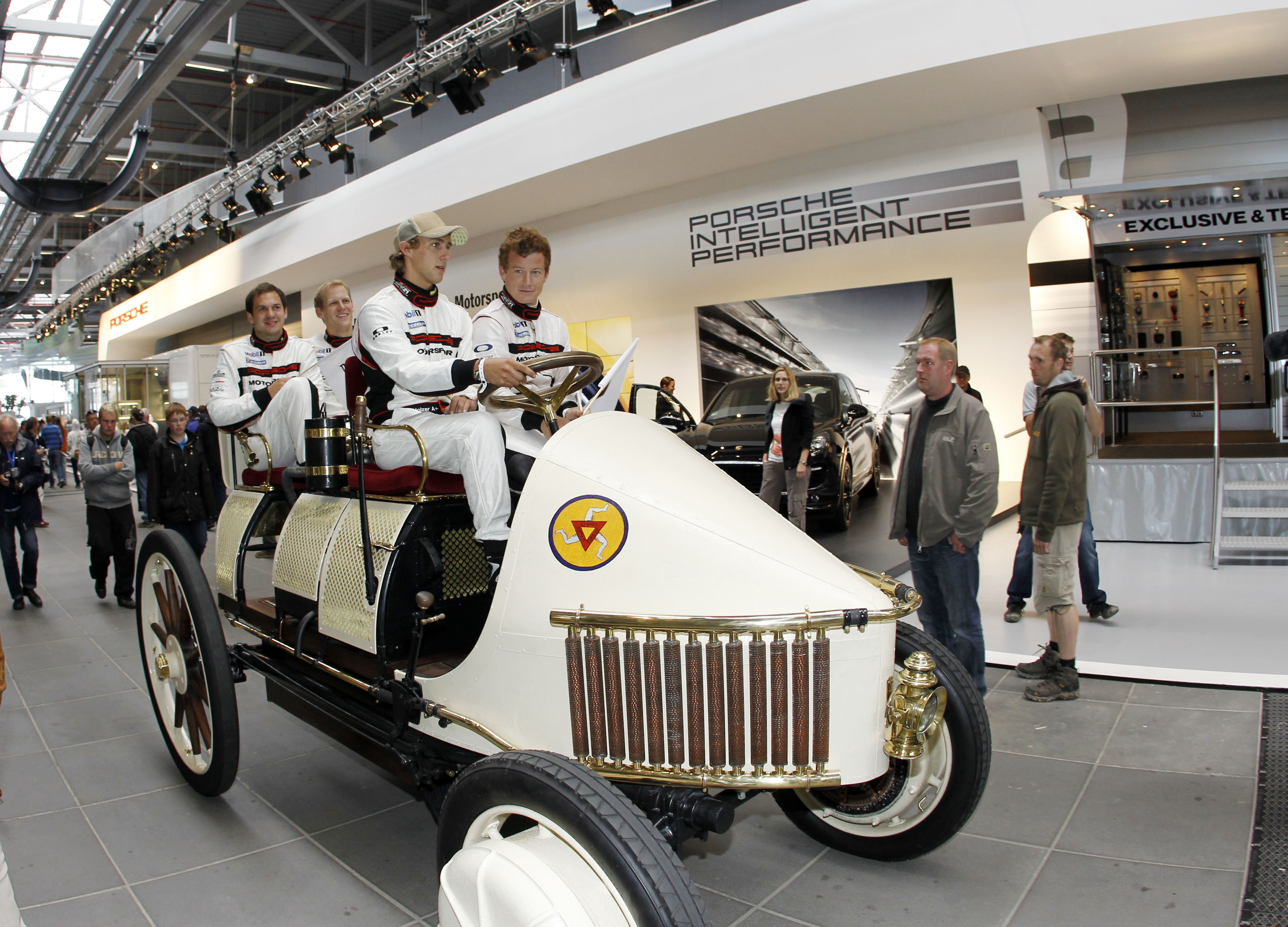
 Lohner-Porsche “Semper Vivus”, Porsche factory drivers Richard Lietz, Jörg Bergmeister, Marco Holzer, Patrick Long (l-r)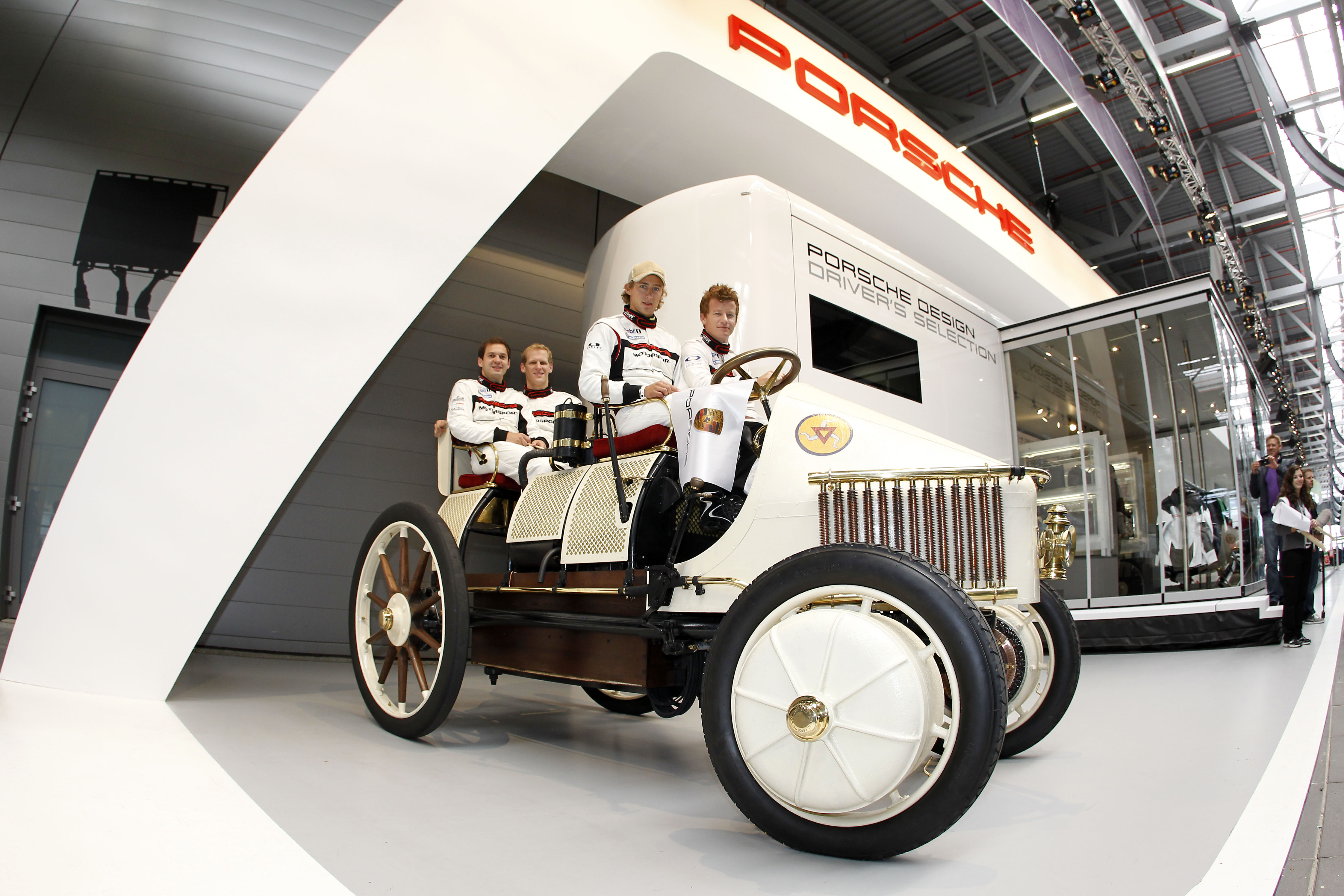
 Lohner-Porsche “Semper Vivus”, Porsche factory drivers Richard Lietz, Jörg Bergmeister (rear from left), Marco Holzer, Patrick Long (front from left))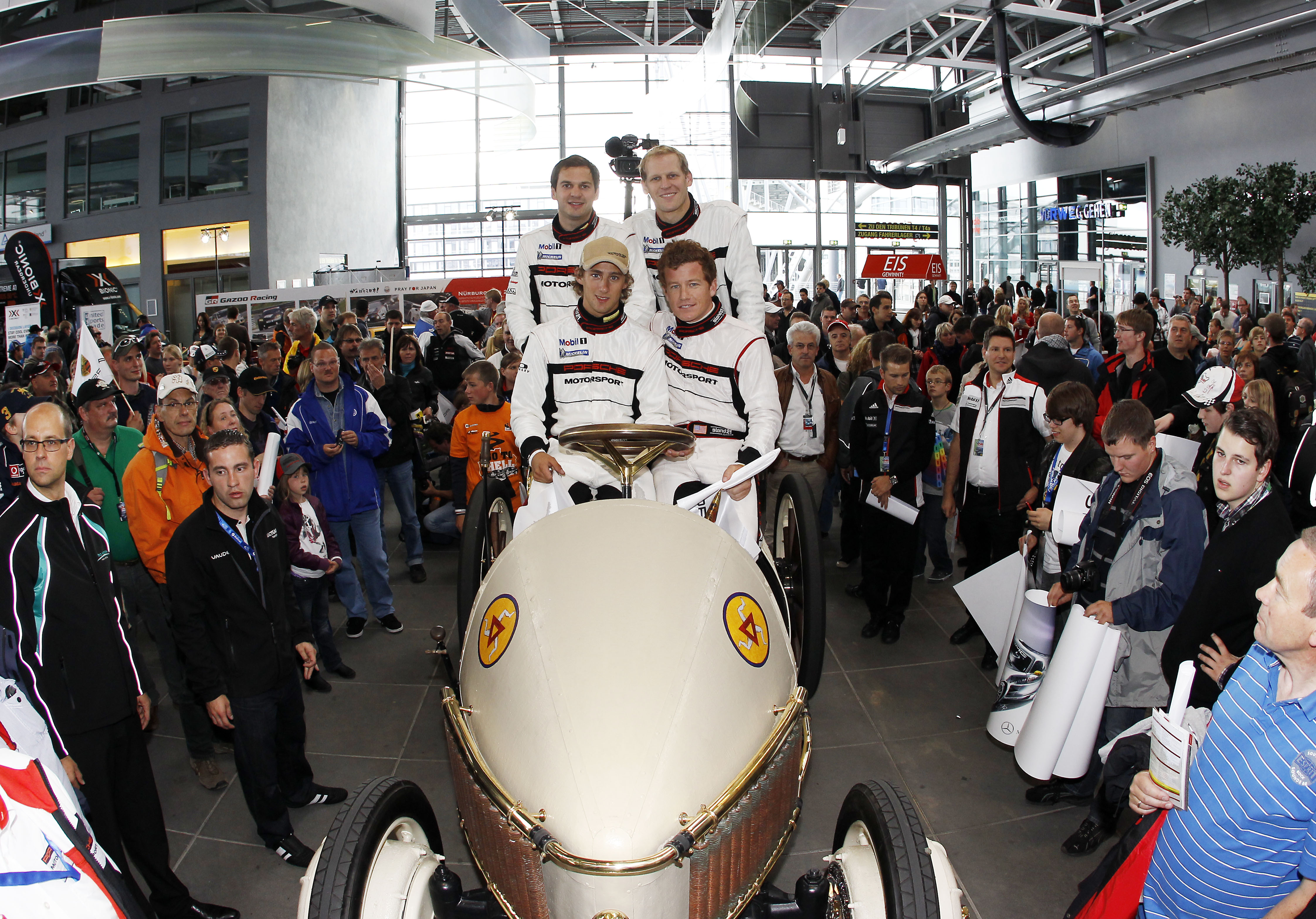
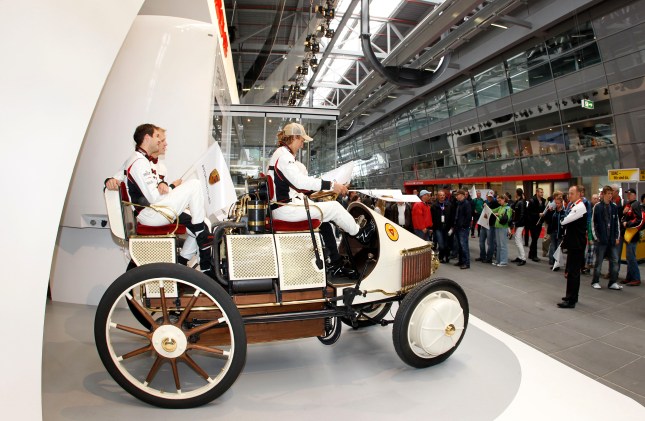 Lohner-Porsche “Semper Vivus” with Porsche factory drivers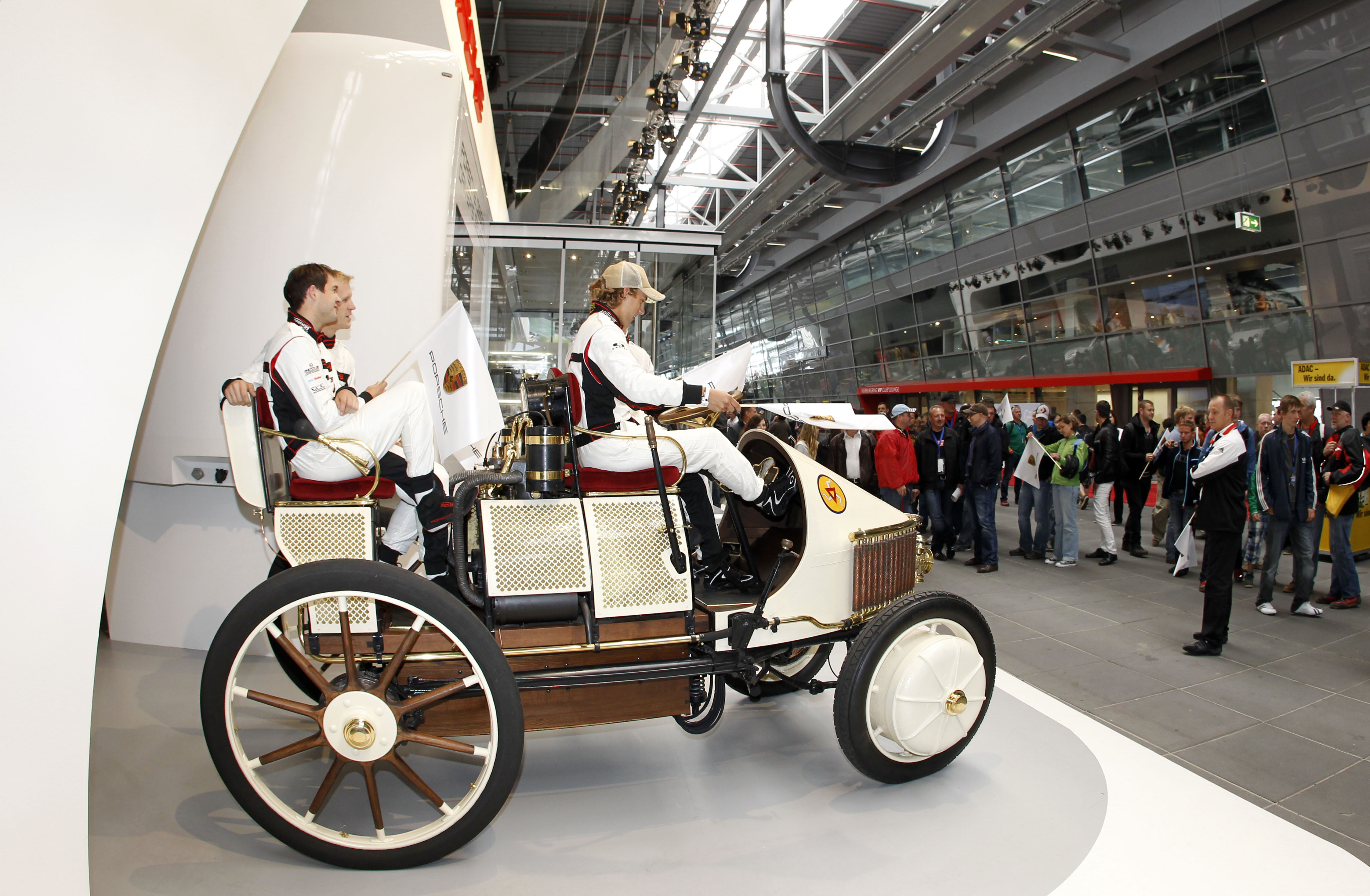
 Lohner Porsche “Semper Vivus”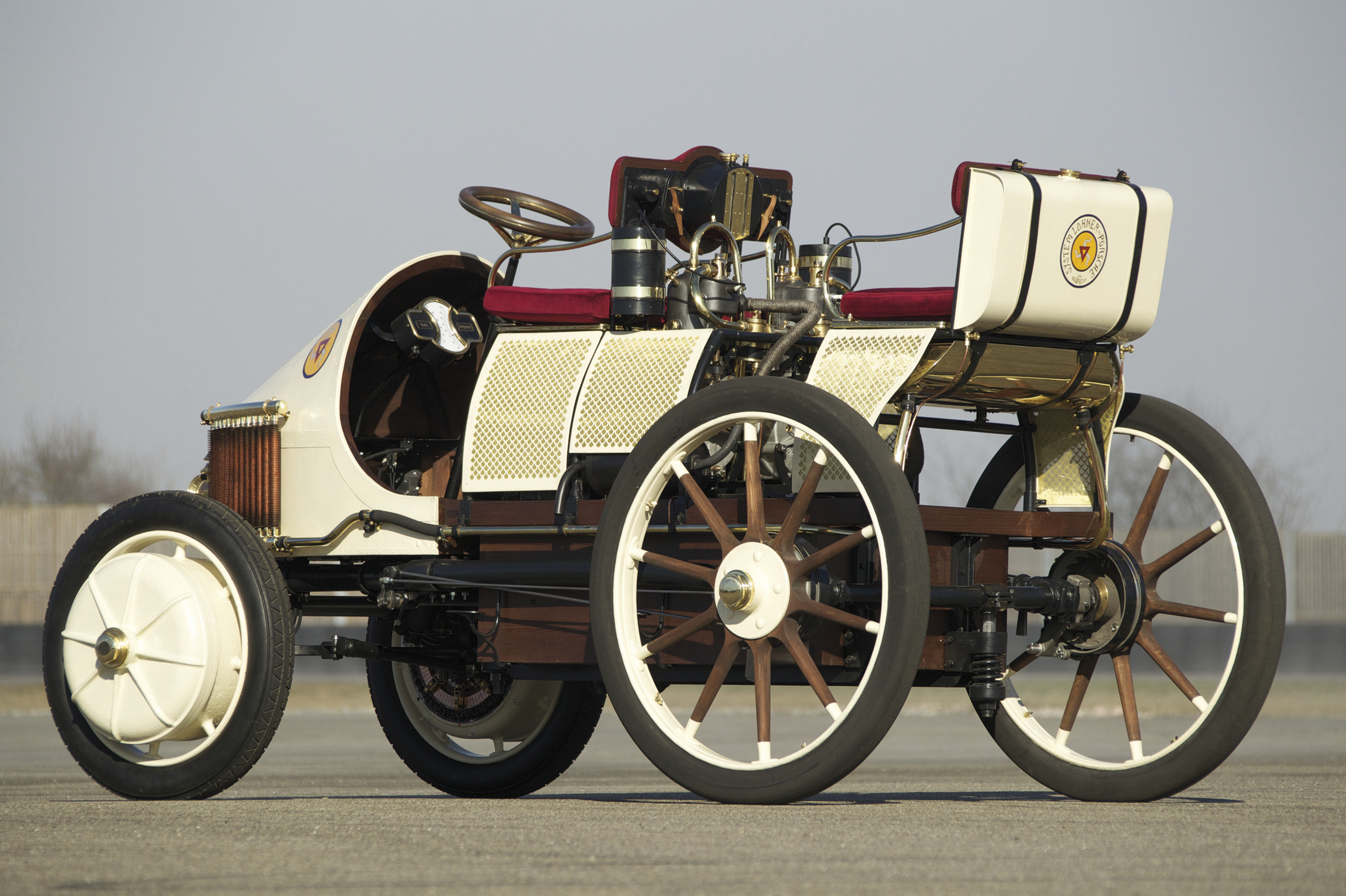



![[x]](https://i0.wp.com/files.porsche.com/filestore.aspx/zoom.jpg)




 Porsche Everyday Dedeporsches Blog