RSS

Tag Archives: Porsche

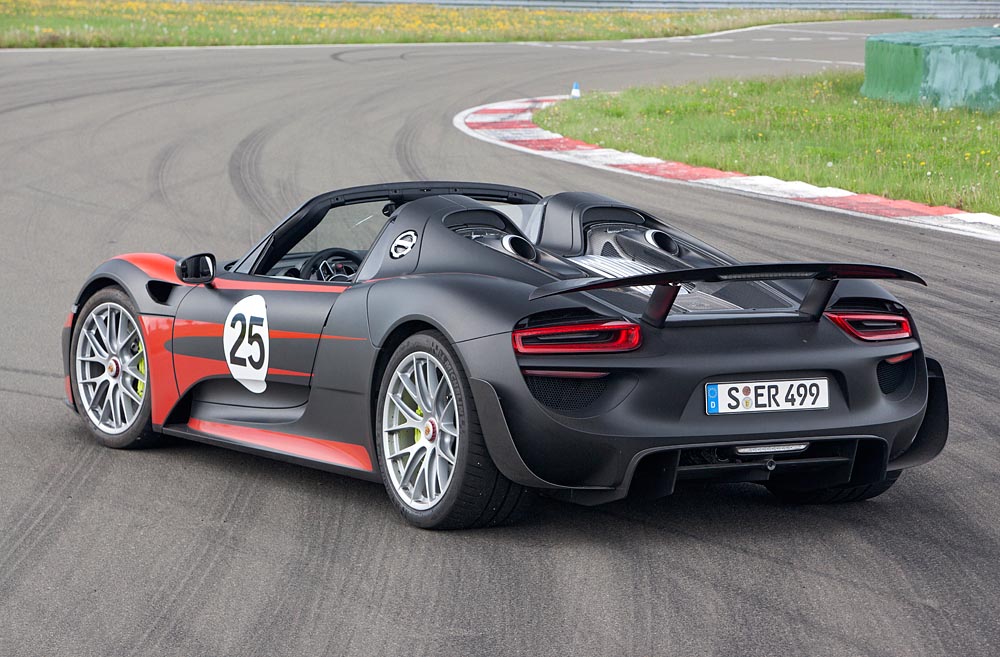
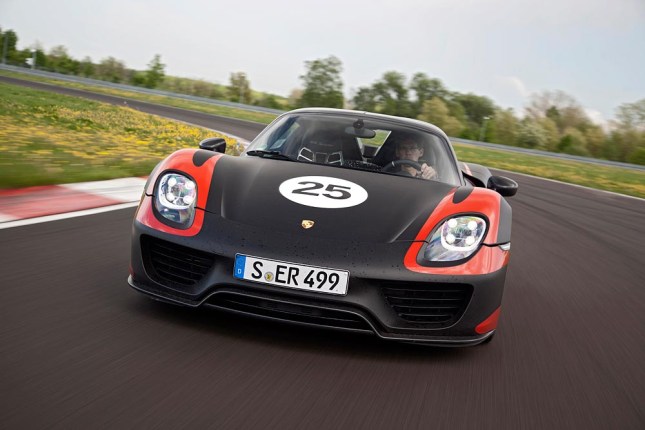
Porsche 918 Spyder A unique combination of performance and efficiency


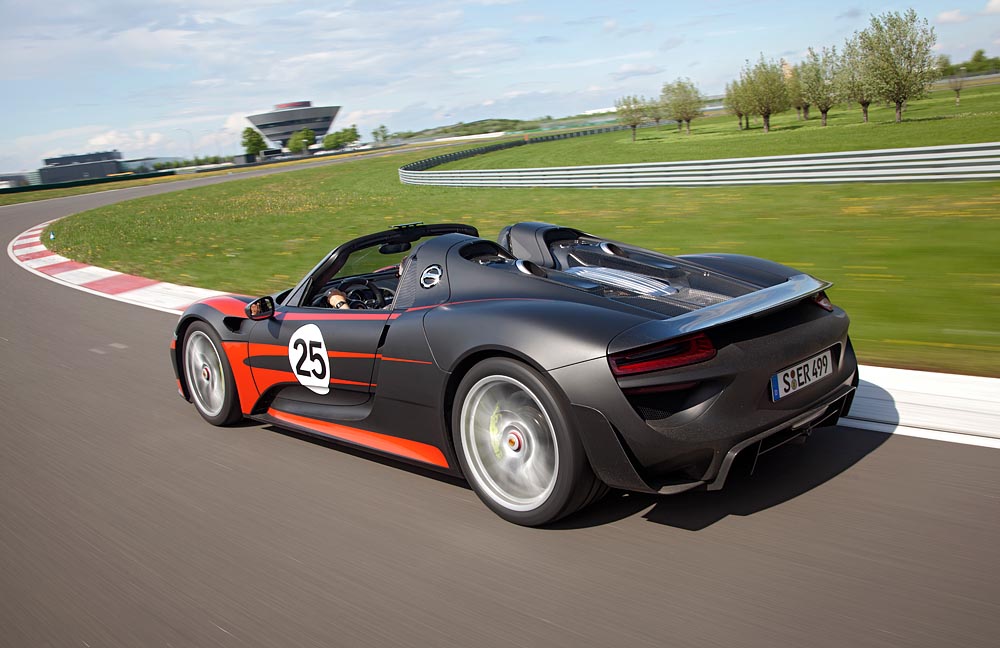
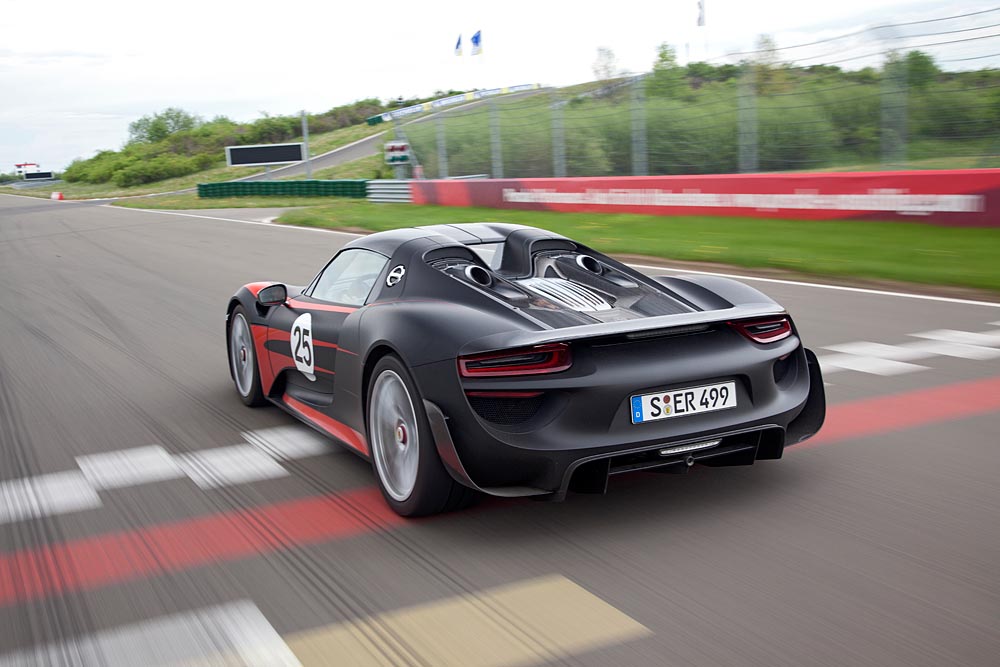
Prototyp 918 Spyder

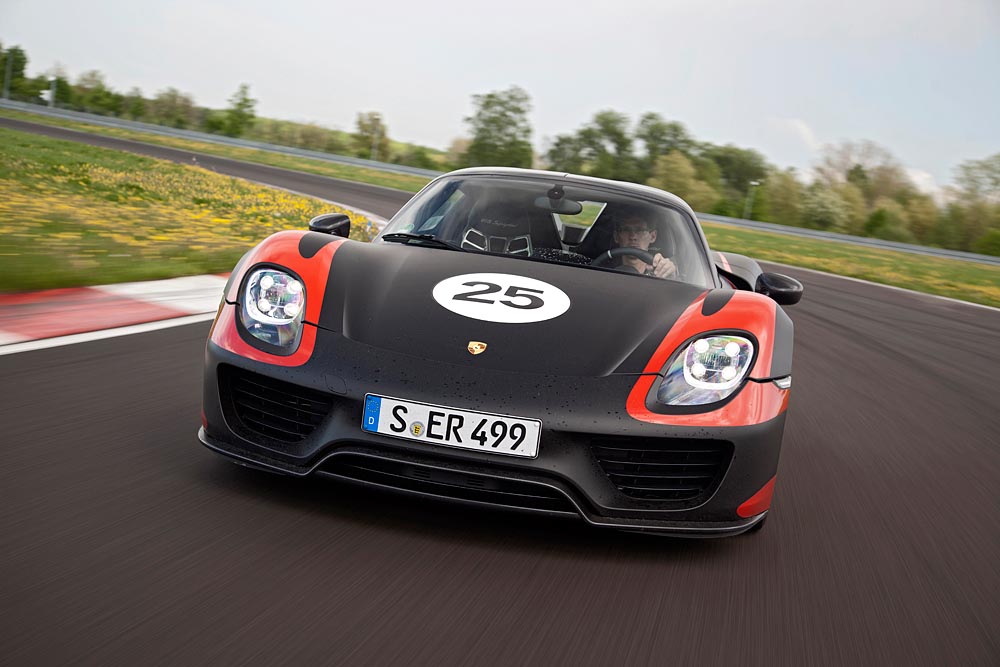
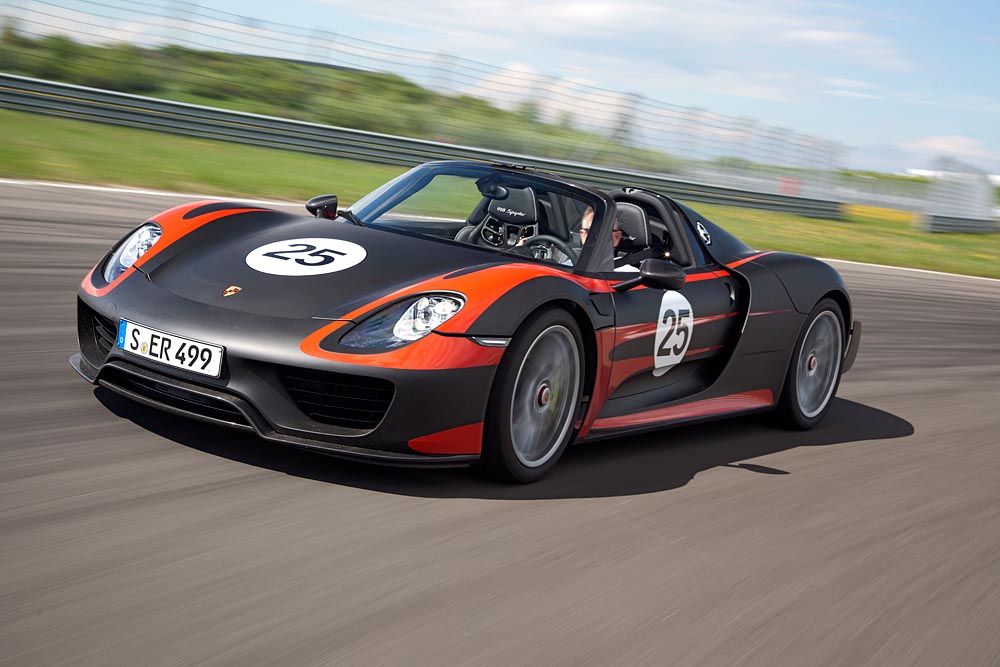
Stuttgart. The 918 Spyder embodies the essence of the Porsche idea: it combines pedigree motor racing technology with excellent everyday utility, and maximum performance with minimum consumption. The task faced by the development team was to create the super sports car for the next decade with a highly efficient and powerful hybrid drive. Developing the car from scratch, appropriately beginning with a sheet of white paper, allowed the team to come up with a no-compromise concept. The entire car was designed around the hybrid drive. The 918 Spyder therefore demonstrates the potential of the hybrid drive to a degree never seen before: the parallel improvement of both efficiency and performance without one being at the cost of the other. This is the idea that has made the Porsche 911 the most successful sports car in the world for 50 years. In short, the 918 Spyder will act as the gene pool for the Porsche sports cars of the future.
Prototyp 918 Spyder
The 918 Spyder reveals its close links to motorsport in a variety of ways. It has been designed, developed and produced by Porsche engineers who build race cars, in cooperation with series production specialists. A great deal of insight gained from the development of Porsche race cars for the 24 hours race in Le Mans in 2014 is thus integrated into the 918 Spyder – and vice versa. The structural concept of the 918 Spyder with a rolling chassis as its basis – a basic vehicle that can be driven even without a body – is race car tradition at Porsche. The concept of the V8 engine originates from the LMP2 RS Spyder race car. The load-bearing structures, the monocoque and subframe, are made of carbon fibre reinforced polymer. Porsche has many years of experience with this high-strength, lightweight construction material and has again achieved top results with the development of the series production 918 Spyder. Many parts of the super sports car come from manufacturers who have a proven record as suppliers for motorsport vehicles.
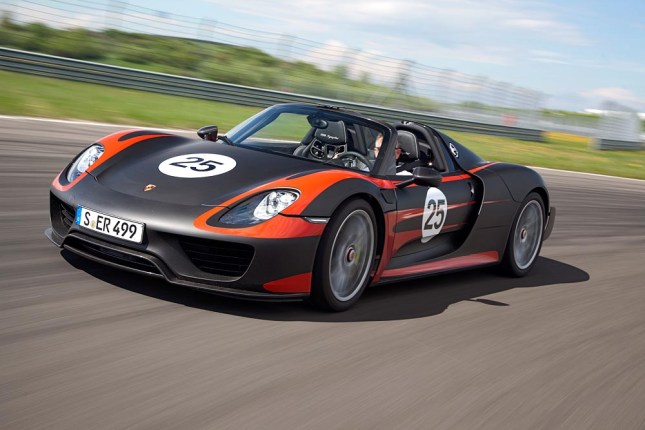
Prototyp 918 Spyder
Hybrid drive brings advantages in terms of driving dynamics 
A key message of the 918 Spyder is that the hybrid drive from Porsche is a plus for no-compromise driving dynamics. Drivers can experience this thanks to the unique all-wheel drive concept with a combination of combustion engine and electric motor on the rear axle and the second electric motor on the front axle. It is based on knowledge gained by Porsche during motor races with the successful 911 GT3 R Hybrid. Due to the additional, individually controllable front drive, new driving strategies for extremely high, safe cornering speeds can be implemented, especially for bends. Furthermore, the advanced “boost” strategy manages the energy of the electric drive so intelligently that, for every sprint with maximum acceleration, the full power of the 918 Spyder can be tapped into by simply pressing the accelerator down fully. In short, the 918 Spyder allows even drivers without motorsport training to experience the potential of advanced longitudinal and transverse dynamics.
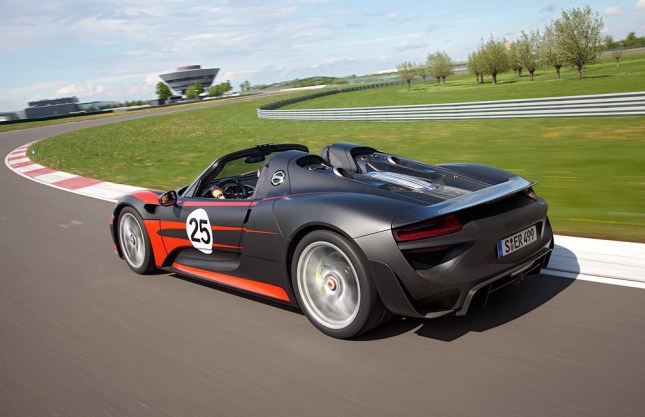
Prototyp 918 Spyder
The Porsche 918 Spyder also has the potential to break many records. The current lap time for the North Loop of the Nürburgring is 7:14 minutes. This time was achieved in the presence of international journalists during test drives in September 2012 – more than a year before start of production. The 918 Spyder prototype was therefore approximately 20 seconds quicker than the Porsche Carrera GT. More test drives on the Nürburgring North Loop will follow. An even more important factor is that the 918 Spyder surpasses previous models and competitors by far in its efficiency as well. As a plug-in hybrid vehicle, it systematically combines the dynamic performance of a racing machine with over 880 hp and low NEDC fuel consumption, which at about three litres fuel per 100 km is better than that of most small cars today. To sum it up: maximum driving fun with minimal fuel consumption.
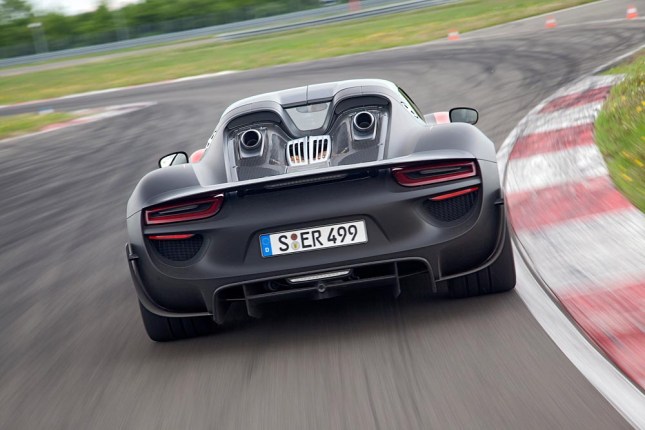
Prototyp 918 Spyder
Carbon monocoque guarantees lightweight design with a low centre of gravity 
The 918 Spyder utilizes the best state-of-the-art technologies, taken straight from motor racing, to achieve its top performance. The entire load-bearing structure is made of carbon fibre reinforced polymer (CFRP) for extreme torsional rigidity. Additional crash elements at the front and rear absorb and reduce the energy of a collision. The car’s unladen weight of approximately 1,640 kg (“Weissach” package), an excellent low weight for a hybrid vehicle of this performance class, is largely attributable to this concept. The drivetrain components and all components weighing over 50 kg are located as low and as centrally as possible within the vehicle. This results in a slightly rear end biased axle load distribution of 57 per cent on the rear axle and 43 per cent on the front axle, combined with an extremely low centre of gravity at approximately the height of the wheel hubs, which is ideal for driving dynamics. The central and low position of the traction battery directly behind the driver not only supports efforts to concentrate masses and lower the centre of gravity; it also provides the best temperature conditions for optimum battery power capacity.
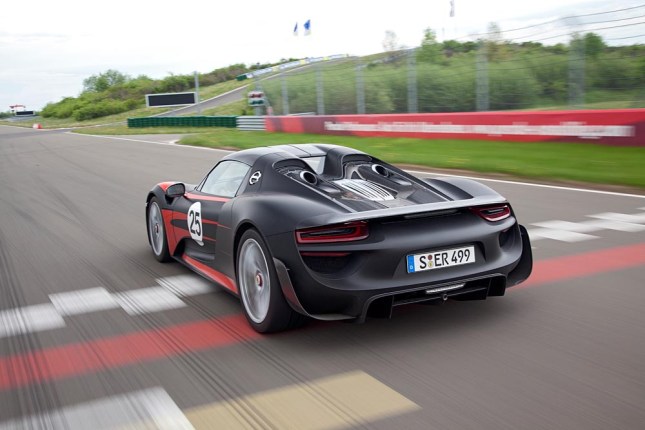
Prototyp 918 Spyder
Chassis with race car genes and rear-axle steering 
The multi-link chassis of the Porsche 918 Spyder is inspired by motorsport design, complemented by additional systems such as the PASM adaptive shock-absorber system and rear-axle steering. Basically, this incorporates an electro-mechanical adjustment system at each rear wheel. The adjustment is speed-sensitive and executes steering angles of up to three degrees in each direction. The rear axle can therefore be steered in the same direction as the front wheels or in opposition to them. At low speeds, the system steers the rear wheels in a direction opposite to that of the front wheels. This makes cornering even more direct, faster and more precise, and it reduces the turning circle. At higher speeds, the system steers the rear wheels in the same direction as the front wheels. This significantly improves the stability of the rear end when changing lanes quickly. The result is very secure and stable handling.
Porsche Active Aerodynamic (PAA) for different driving modes 
Porsche Active Aerodynamic (PAA), a system of adjustable aerodynamic elements, ensures unique and variable aerodynamics; its layout is automatically varied over three modes ranging from optimal efficiency to maximum downforce and is tuned to the operating modes of the hybrid drive system. In “Race” mode, the retractable rear wing is set to a steep angle to generate high downforce at the rear axle. The spoiler positioned between the two wing supports near the trailing edge of the airflow also extends. In addition, two adjustable air flaps are opened in the underfloor in front of the front axle, and they direct a portion of the air into the diffuser channels of the underbody structure. This also produces a “ground effect” at the front axle.
Prototyp 918 Spyder
In “Sport” mode, the aerodynamic control system reduces the attack angle of the rear wing somewhat, which enables a higher top speed. The spoiler remains extended. The aerodynamic flaps in the underfloor area close, which also reduces aerodynamic drag and increases attainable vehicle speeds. In “E” mode, the control is configured entirely for low aerodynamic drag; the rear wing and spoiler are retracted and the underfloor flaps are closed.

Adjustable air inlets under the main headlights round off the adaptive aerodynamic system. When the vehicle is stationary and in “Race” and “Sport” mode, they are opened for maximum cooling air intake. In “E-Power” and “Hybrid” modes, they close immediately after the car is driven off in order to keep aerodynamic drag to a minimum. They are not opened until the car reaches speeds of approximately 130 km/h or when cooling requirements are higher.

From comfortable to race-ready: five modes for three motors 
The core of the 918 Spyder concept is its distribution of propulsive power among the three power units; their cooperation is controlled by an intelligent management system. To best exploit these different approaches, the Porsche developers defined five operating modes that can be activated via a “map switch” on the steering wheel, just like in motorsport cars. On the basis of this pre-selection, the 918 Spyder applies the most suitable operating and boost strategy without driver intervention, thus allowing the driver to concentrate fully on the road.

Quiet and elegant: “E-Power” 
When the vehicle is started up, the “E-Power” mode is the default operating mode as long as the battery is sufficiently charged. In ideal conditions, the 918 Spyder can cover over 30 kilometres on purely electric power. Even in pure electric mode, the 918 Spyder accelerates from 0 to 100 km/h in less than seven seconds and can reach speeds of up to 150 km/h. In this mode, the combustion engine is only used when needed. If the battery’s charge state drops below a set minimum value, the vehicle automatically switches to hybrid mode.

Efficient and comfortable: “Hybrid” 
In “Hybrid” mode, the electric motors and combustion engine work alternately with a focus on maximum efficiency and minimum fuel consumption. The use of individual drive components is modified as a function of the current driving situation and the desired performance. The Hybrid mode is typically used for a fuel economy-oriented driving style.

Sporty and dynamic: “Sport Hybrid”
In more dynamic situations, the 918 Spyder selects the “Sport Hybrid” mode for its power sources. The combustion engine now operates continuously and provides the main propulsive force. In addition, the electric motors provide support in the form of electric boosting or when the operating point of the combustion engine can be optimised for greater efficiency. The focus of this mode is on performance and a sporty driving style at top speed.

For fast laps: “Race Hybrid”
“Race Hybrid” is the mode for maximum performance and an especially sporty driving style. The combustion engine is chiefly used under high load, and charges the battery when the driver is not utilising its maximum output. Again, the electric motors provide additional support in the form of boosting. Furthermore, the gear-shifting programme of the PDK is set up for even sportier driving. The electric motors are used up to the maximum power output limit to deliver the best possible performance for the race track. In this mode, the battery charge state is not kept constant, rather it fluctuates over the entire charge range. In contrast to Sport Hybrid mode, the electric motors run at their maximum power output limit for a short time for better boosting. This increased output is balanced by the combustion engine charging the battery more intensively. Electric power is thus available even with several very fast laps.

For pole position: “Hot Lap”
The “Hot Lap” button in the middle of the map switch releases the final reserves of the 918 Spyder and can only be activated in “Race Hybrid” mode. Similar to a qualification mode, this pushes the traction battery to its maximum power output limits for a few fast laps. This mode uses all of the available energy in the battery.

Main propulsion: the race car’s eight cylinder engine 
The main source of propulsion is the 4.6-litre, eight cylinder engine that produces 608 hp of power. The engine is derived directly from the power unit of the successful RS Spyder, which explains why it can deliver engine speeds of up to 9,150 rpm. Like the race engine of the RS Spyder, the 918 Spyder power unit features dry-sump lubrication with a separate oil tank and oil extraction. To save weight, components such as the oil tank, the air filter box integrated into the subframe and the air induction are made of carbon fibre reinforced polymer. Further extensive lightweight design measures have resulted in such features as titanium connecting rods, thin-wall, low-pressure casting on the crank case and the cylinder heads, a high-strength, lightweight steel crankshaft with 180 degrees crankpin offset and the extremely thin-walled alloy steel/nickel exhaust system. Striking features of the V8 are that it no longer supports any auxiliary systems, there are no external belt drives and the engine is therefore particularly compact. Weight and performance optimisations achieve a power output per litre of approx. 132 hp/l – the highest power output per litre of a Porsche naturally aspirated engine – which is significantly higher than that of the Carrera GT (106 hp/l) and outstanding for a naturally aspirated engine.

Unique race car design heritage: top pipes 
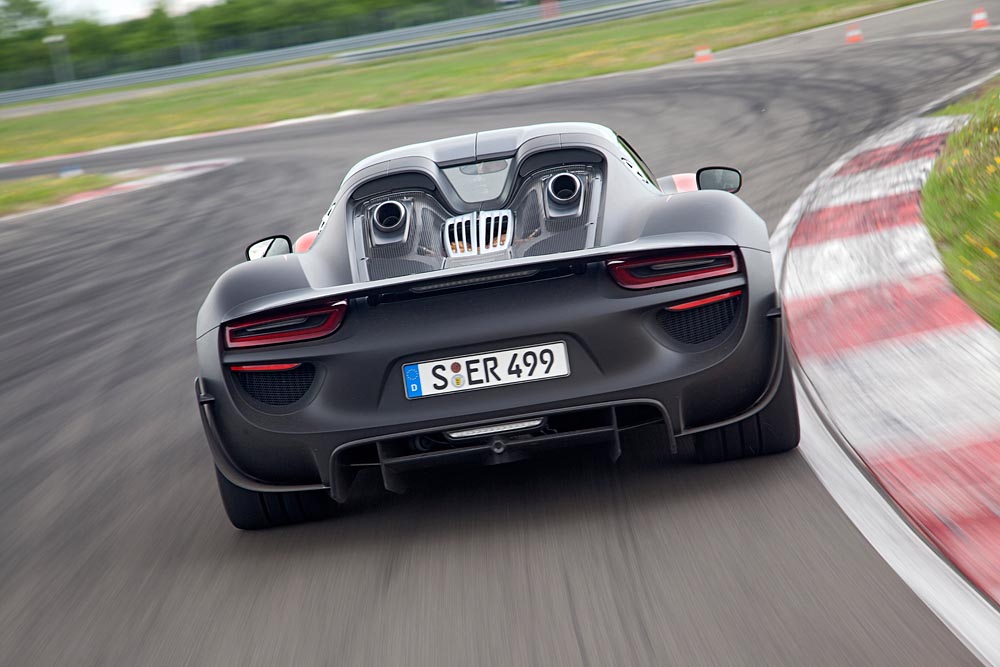
It isn’t just this engine’s performance but also the sound it makes that stokes the emotionality of the 918 Spyder. This is attributable first and foremost to the so-called top pipes: the tailpipes terminate in the upper part of the rear end immediately above the engine. No other production vehicle uses this solution. The top pipes’ greatest benefit is optimal heat removal, because the hot exhaust gases are released via the shortest possible route, and exhaust gas back pressure remains low. This design requires a new thermodynamic air channelling concept. With the HSI engine, the hot side is located inside the cylinder V, the intake channels are on the outside. There is another benefit as well: the engine compartment remains cooler. This is especially beneficial to the lithium-ion traction battery, as it provides optimum performance at temperatures between 20 and 40 degrees Celsius. Consequently, less energy needs to be used for active cooling of the battery.

In parallel in the drivetrain: hybrid module 
The V8 engine is coupled to the hybrid module, since the 918 Spyder is designed as a parallel hybrid like the current hybrid models from Porsche. Essentially, the hybrid module comprises a 115 kW electric motor and a decoupler that serves as the connection with the combustion engine. Because of its parallel hybrid configuration, the 918 Spyder can be powered at the rear axle either individually by the combustion engine or electric motor or via both drives jointly. As is typical for a Porsche super sports car, the power pack in the 918 Spyder has been placed in front of the rear axle, and does not have any direct mechanical connection to the front axle.

Upside-down for a low centre of gravity: Doppelkupplung 
A seven-speed Doppelkupplung (PDK) transmission handles power transmission to the rear axle. The high-performance transmission is the sportiest version of the successful PDK; it has undergone a complete redesign for the 918 Spyder and has been further optimised for high performance. To ensure a low mounting position for a low centre of gravity of the entire vehicle, the gear unit was turned “upside down” by rotating it 180 degrees about its longitudinal axis, in contrast to other Porsche series. If no power is required on the rear axle, the two motors can be decoupled by opening the decoupler and PDK clutches. This is the action behind the Porsche hybrid drive’s typical “coasting” with the combustion engine switched off.

Independent all-wheel drive: front axle with electric motor 
On the front axle, there is another independent electric motor with an output of approximately 95 kW. The front electric drive unit drives the wheels at a fixed ratio. A decoupler decouples the electric motor at high speeds to prevent the motor from over-revving. Drive torque is independently controlled for each axle. This makes for very responsive all-wheel drive functionality that offers great potential in terms of traction and driving dynamics.

Lithium-ion battery with plug-in charging system 
The electric energy for the electric motors is stored by a liquid-cooled lithium-ion battery comprising 312 individual cells with an energy content of about seven kilowatt hours. The battery of the 918 Spyder has a performance-oriented design in terms of both power charging and output, so that it can fulfil the performance requirements of the electric motor. The power capacity and the operating life of the lithium-ion traction battery depend on several factors, including thermal conditions. That is why the battery of the 918 Spyder is liquid-cooled by a dedicated cooling circuit. The global warranty period for the traction battery is seven years.

To supply it with energy, Porsche developed a new system with a plug-in vehicle charge port and improved recuperation potential. This vehicle charge port in the B-column on the front passenger side lets users connect the storage battery to a mains supply at home and charge it. The charge port is standardised for the country of purchase. The on-board charger is located close to the traction battery. It converts the alternating current of the mains supply into direct current with a maximum charge output of 3.6 kW. Using the supplied Porsche Universal Charger (AC), the traction battery can be charged within four hours from a ten ampere rated, fused power socket on the German 230 Volt mains supply, for example. Furthermore, the Porsche Universal Charger (AC) can be installed at home in the garage using the Charging Dock. It enables rapid and convenient charging within approximately two hours, irrespective of regional conditions. The Porsche Speed Charging Station (DC) is available as an optional extra. It can fully charge the high-voltage battery of the 918 Spyder in just 25 minutes.

Pioneering control concept: clear organization of the cockpit
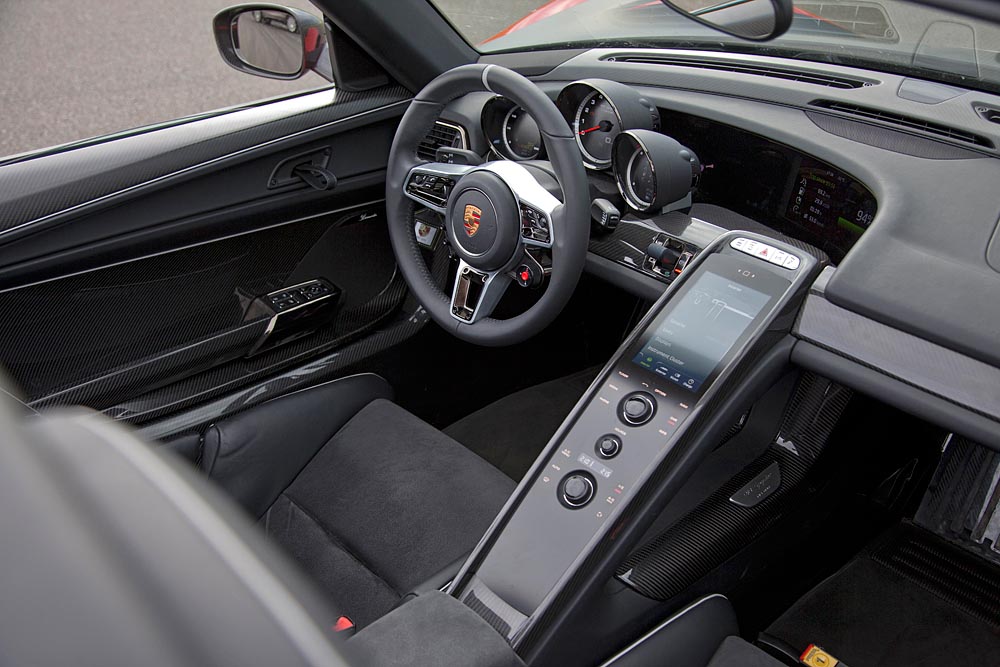
The driver is the focus of all technology in the future Porsche super sports car. A cockpit was created for the driver that is typical of the brand and pioneering in its clarity. It is partitioned into two basic areas. First, there are the controls that are important for driving, which are grouped around the multifunction steering wheel, combined with driver information displayed on three large round instruments. Second, there is the infotainment block that is housed in the lifted centre console, which was introduced in the Carrera GT. Control functions, e.g. for the automatic climate control system, wing adjustment, lighting and Porsche Communication Management (PCM), including a Burmester high-end sound system, can be intuitively operated by multitouch with a new type of black panel technology.

For even higher performance: the Weissach package
For very performance-oriented customers of the 918 Spyder, Porsche offers the “Weissach” package. These modified super sports cars can be recognised at first glance by special colours and designs that are based on legendary Porsche race cars. The roof, rear wings, rear-view mirrors and frames of the windscreen are made of visible carbon. Parts of the interior are upholstered with Alcantara instead of leather, and visible carbon replaces much of the aluminium. Sound insulation has been reduced. The emphasis on performance is not just visual: very lightweight magnesium wheels reduce unsprung masses; gross weight was reduced by about 35 kg. The benefits are experienced in further improved dynamic performance. Other references from motorsport are six-point seatbelts for driver and front passenger, optional film-coating instead of body paint, as well as additional aerodynamic body parts in visible carbon.

Porsche redefined: a new super sports car for a new decade
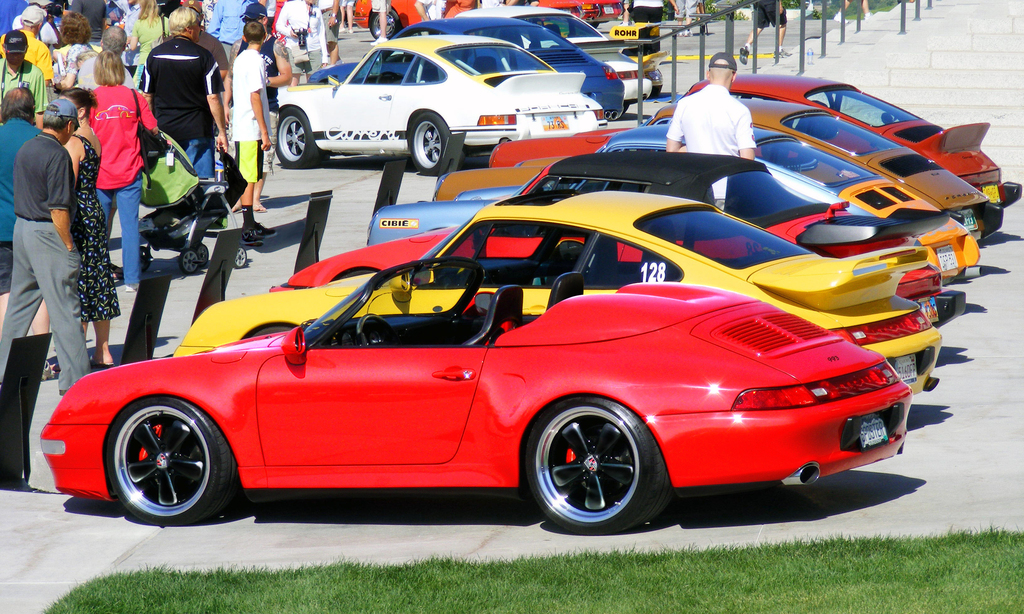
The 918 Spyder continues a long tradition of super sports cars at Porsche; as technology platforms, as the driving force behind both car emotion and car evolution and as the ultimate sports cars of their decades: the Carrera GTS, the first Porsche Turbo, the 959, the 911 GT1, the Carrera GT. More than any of its predecessors, the 918 Spyder is providing key impetus for developing technologies for future vehicle concepts. It offers a complete package of components that reflect Porsche DNA – more concentrated than ever before.
SOURCE: Porsche AG Media Database

Product and Technology Communication
Product Communication


Tags: , , , , , , , ,

NEED YOUR VOTE…for Porsche 993 speedster “Speedy” at 50 years 911 photo competition

Please VOTE for my friend Jäger red speedster @50years 911 photo competition. Porsche.com: He is in the Top 10!

http://50years.porsche.com/50-years-of-911/items/15601/

993 "speedy" photo by my friend Jäger

993 “speedy” photo by my friend Jäger

Photo Permission by my very good friend Jäger (Rennlist) aka 993 speedster “Speedy” – photo’s relevant for the Porsche contest honoring decades of 911s, because that’s what’s in the photograph. It was taken at the most recent PCA Parade, where Speedy was personally invited to the official Heritage/History display

Please take a minute and Vote for ‘Speedy’ .…thank you!!

To vote just click on the heart icon  http://50years.porsche.com/50-years-of-911/items/15601/
Hang on, it will be fun ride, especially with your help …thanks!

 
4 Comments

Posted by on May 10, 2013 in Porsche


Tags: , , , ,

Porsche “Mission 2014. Our return.” Interactive microsite highlighting Porsche’s comeback into top motor racing

Interactive journey through time into the history of Porsche Motorsport

Stuttgart. At the 24 Hours of Le Mans, Porsche returns to the pinnacle of endurance motor racing in 2014 with a newly designed sports prototype. The greatly anticipated comeback will be accompanied by a multimedia microsite entitled “Mission 2014. Our Return.” on porsche.com/mission2014.

© Porsche AG

© Porsche AG

It takes fans on an interactive journey through 60 years of Porsche Motorsport history showcasing previously unreleased films, photo galleries and stories. Phase one of the three-stage Web Special highlights the legendary venues of Porsche’s racing history and brings the greatest moments of motorsport back to life.

© Porsche AG

© Porsche AG

Each week, new content is added, outlining why Porsche and motorsport are inseparably connected. In addition to historical film documentaries, interviews with drivers, engineers and former race directors allow a fascinating glimpse behind the scenes.

© Porsche AG

© Porsche AG

The microsite “Mission 2014. Our Return.” is found under porsche.com/mission2014

© Porsche AG

© Porsche AG

Source: Porsche AG Media Database

Communication Porsche AG
Motorsport Press


Tags: , , , , , , , , , ,

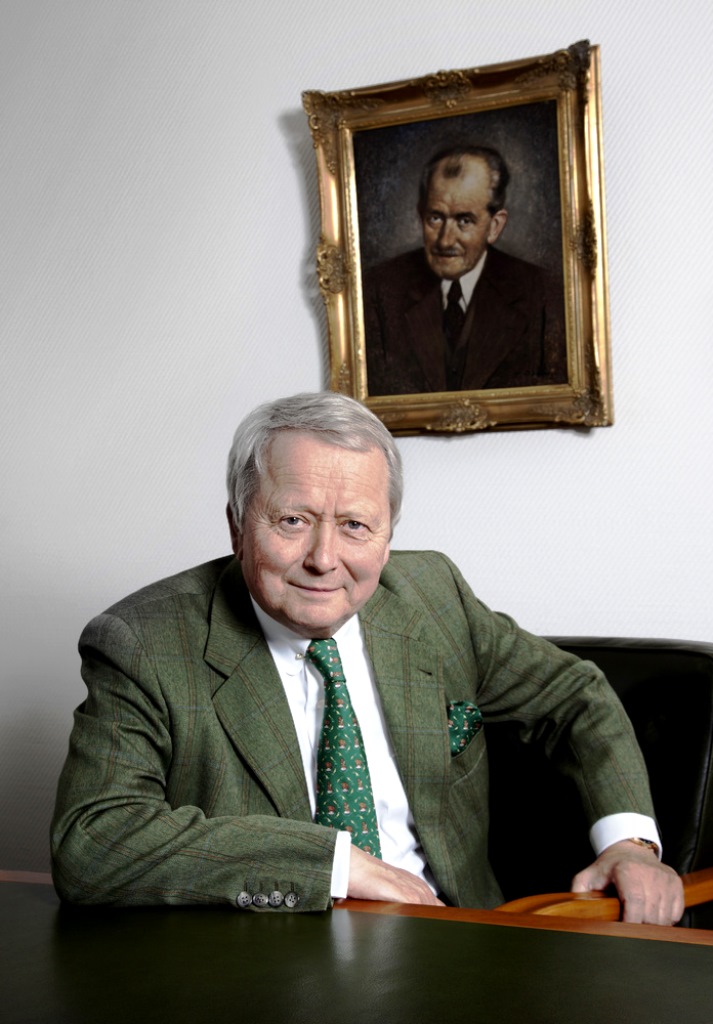
Dr. Wolfgang Porsche 70th birthday on May 10, Chairman of the Porsche Supervisory Board keeps company tradition alive

Chairman of the Porsche Supervisory Board keeps company tradition alive

Chairman of the Porsche Supervisory Board keeps company tradition alive

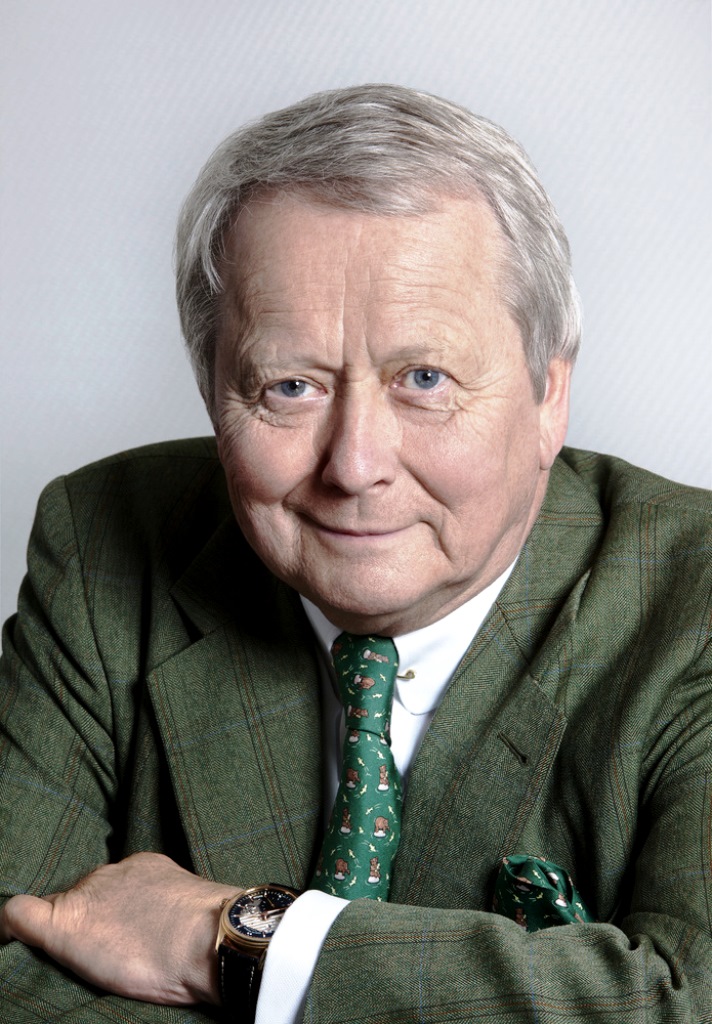
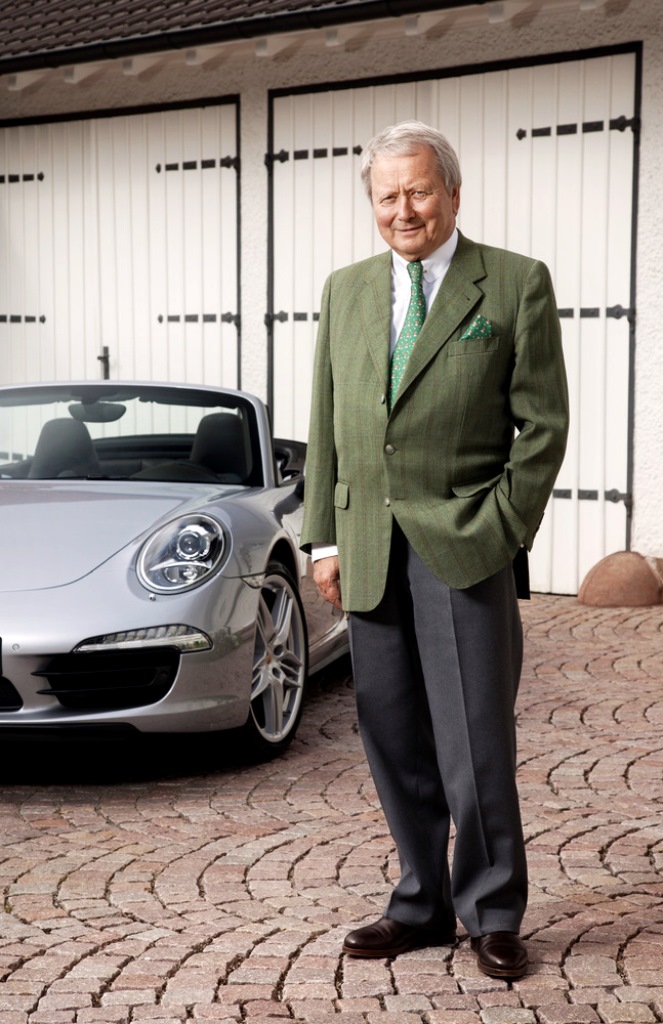
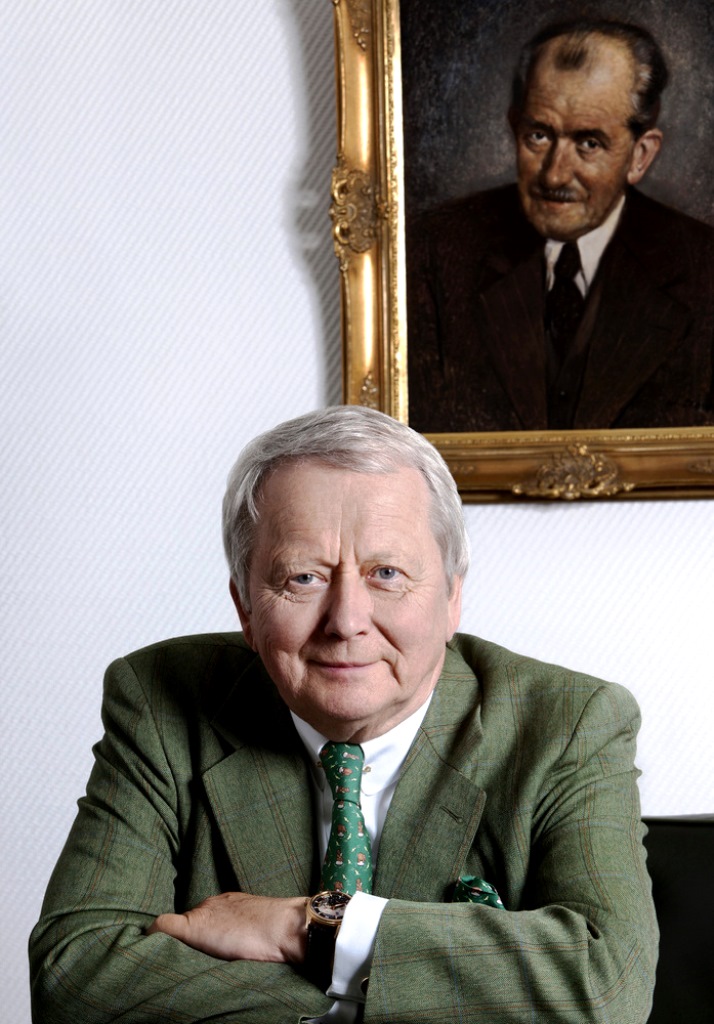
Stuttgart. Dr. Wolfgang Porsche, Shareholder and Chairman of the Supervisory Board of Porsche Automobil Holding SE as well as of the Dr. Ing. h.c. F. Porsche AG, is celebrating his 70th birthday on May 10, 2013.

Matthias Müller, President and CEO of Dr. Ing. h.c. F. Porsche AG, paid tribute to the “invaluable contribution” Mr. Porsche has made for the sports car maker:

“The fact that a member of the founder family is actively representing our company internationally is essential for many Porsche fans in their extraordinary identification with the brand and its products.

As the son of Professor Ferry Porsche, Dr. Wolfgang Porsche supports our company with the greatest personal commitment. He has shaped the development of the Porsche AG over the past 35 years as a Member of the Supervisory Board and since 2007 as Chairman of the Supervisory Board.”

Wolfgang Porsche was born in Stuttgart on May 10, 1943, the youngest son of Dorothea and Ferry Porsche, the founder of the Porsche sports car brand. His grandfather was the brilliant automotive design engineer who shaped the history of the car with his Stuttgart automotive design engineering office.

Chairman of the Porsche Supervisory Board keeps company tradition alive

Chairman of the Porsche Supervisory Board keeps company tradition alive

Wolfgang Porsche spent the first six and a half years of his life at the so-called “Schüttgut” in Zell am See, Austria, the estate of his grandfather Ferdinand Porsche. The family, and the company, returned to Stuttgart in 1950. Wolfgang obtained his Abitur (higher school-leaving certificate) in 1965. He also passed his journeyman’s examination as a metalworker. Afterwards, Porsche obtained his degree in Business Administration from the Vienna University of Economics and Business Administration. He received his doctorate in International Business in 1973.
S13_0130
At first, Dr. Wolfgang Porsche went into business as an independent entrepreneur: As Managing Director of JAMOTO, he became general importer of Yamaha motorbikes in Austria. He returned to Germany in 1976 and worked at the Daimler-Benz AG in Stuttgart as manager in various areas of domestic and foreign sales. In 1978, he was appointed a member of the Supervisory Board of Porsche AG, taking over the position of Chairman in 2007. He was also appointed Chairman of the Supervisory Board of Porsche Automobil Holding SE at its incorporation in June 2007.

In addition, Dr. Wolfgang Porsche has been a member of the Supervisory Board of Volkswagen AG, Wolfsburg, since April 24, 2008.
S13_0133.jpg Dr. Wolfgang Porsche 70th birthday on May 10
Upon the death of his father Ferry in 1998, he was selected spokesman by the Porsche family. The father of four lives alternatively in Salzburg and the “Schüttgut” in Zell am See, which he acquired from the family estate.

There, in Salzburger Land, he operates an Alpine organic farm with around 200 dairy cows. An ardent hunter, he has always felt close to nature. His enthusiasm for sports cars has been the focus of his life from his very early youth on. Over the course of decades, a private collection of vintage cars has evolved that contains numerous very rare Porsche vehicles, which he drives regularly.

Dr. Wolfgang Porsche has received numerous honours for his services to business. In 2005, he was awarded the “Great Golden Medal for Services to the Republic of Austria” by the Chancellor of Austria, the highest award granted by his homeland.

For his services to the federal state of Baden-Württemberg, he received the Gold “Staufermedaille” Award. At the onset of 2012, Dr. Wolfgang Porsche was appointed Honorary Senator of Salzburg University and was admitted to the University’s Council in 2013.

S13_0131

Résumé Dr. Wolfgang Porsche

Dr. Wolfgang Porsche

May10,1943

Born in Stuttgart

1965

Abitur

1965 – 1971

Academic studies at the Vienna University of Economics and Business Administration

Graduation in Business Administration

1973

Doctorate in International Business at Vienna University of Economics and Business Administration

1976 – 1981

Active in various sales areas at home and abroad for Daimler-Benz AG, Stuttgart-Untertürkheim

Since 1978

Member of the Supervisory Board of Dr. Ing. h.c. F. Porsche AG, Stuttgart, Member of the Supervisory Board or Administrative Board in various Porsche sales companies

1983

Member of the Supervisory Board of the Austrian Porsche Group, Salzburg

1988 -2011

Managing Director in Porsche Holding Ges.m.b.H., Salzburg

Since 2007

Chairman of the Supervisory Board of Dr. Ing. h.c. F. Porsche AG, Stuttgart

Chairman of the Supervisory Board of Porsche Automobil Holding SE, Stuttgart

SOURCE: Porsche AG Media Database

Communication Porsche AG
Corporate Communication


Tags: , , , , , , , , , ,

First Porsche Press Video from Spa-Francorchamps rd 2 of the World Endurance Championship (WEC)

Press Release

03/05/2013

World Endurance Championship, round 2 in Spa-Francorchamps

Spa: More than just Eau Rouge

Stuttgart. A first video from Spa-Francorchamps of round 2 of the World Endurance Championship (WEC)  e weekend.

SOURCE: Porsche AG Media Database

Communication Porsche AG
Motorsport Press


Tags: , , , , , , , , , , , , , , , , , , , , ,

Porsche pilots hope for improvement in the World Endurance Championship, rd 2 at Spa-Francorchamps/Belgium

Porsche 911 RSR, Porsche AG Team Manthey: Marc Lieb, Richard Lietz, Romain Dumas

Porsche 911 RSR, Porsche AG Team Manthey: Marc Lieb, Richard Lietz, Romain Dumas

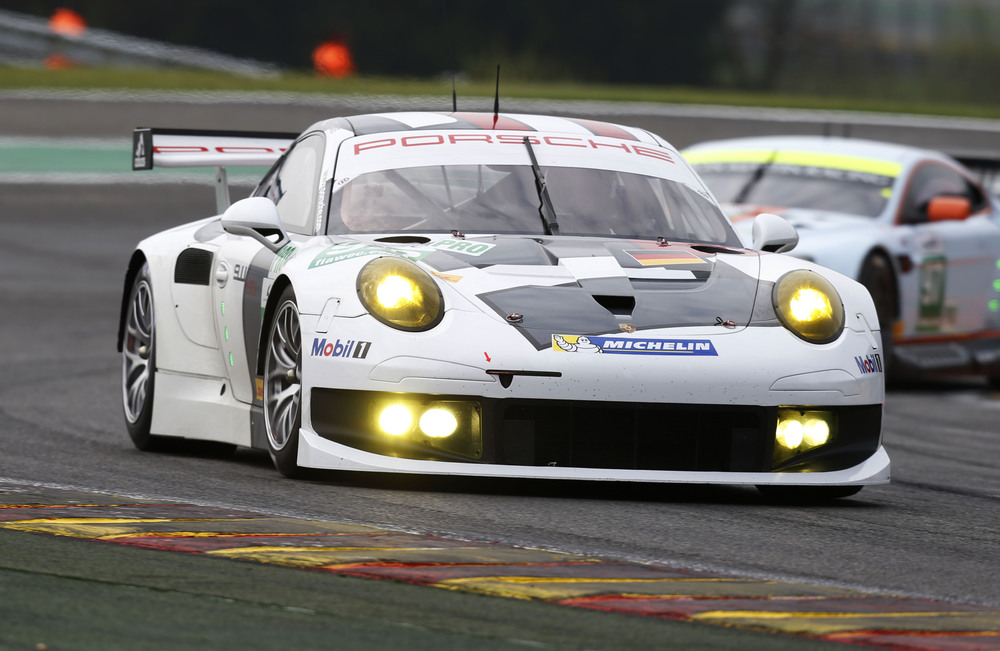
Stuttgart. In the qualifying for the six hour race of Spa-Francorchamps, round two of the World Endurance Championship (WEC) for sports cars on the storied circuit in the Ardennes,

Porsche 911 RSR, Porsche AG Team Manthey: Marc Lieb, Richard Lietz, Romain Dumas

Porsche 911 RSR, Porsche AG Team Manthey: Marc Lieb, Richard Lietz, Romain Dumas

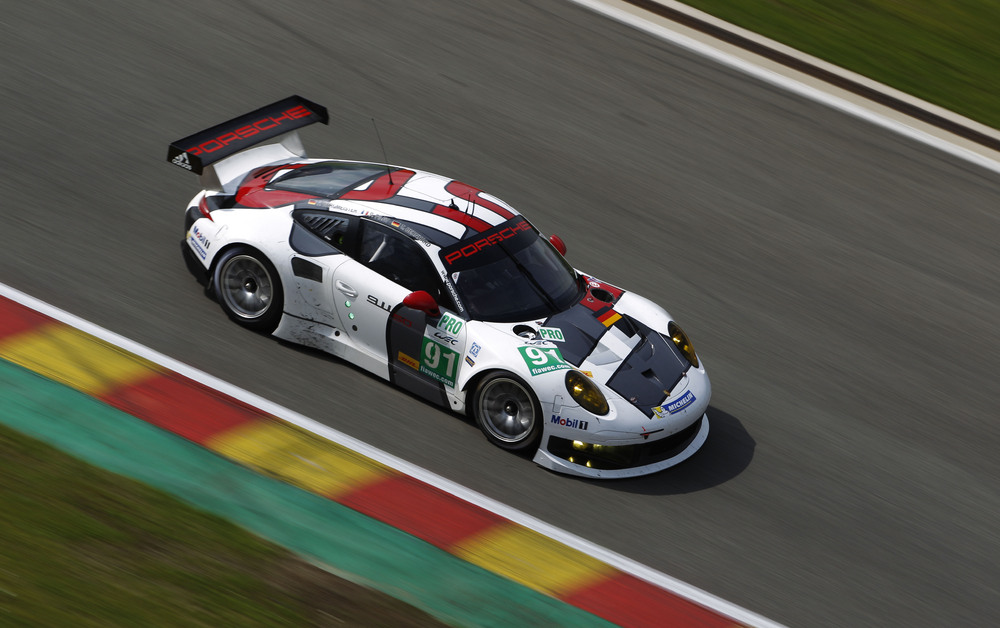
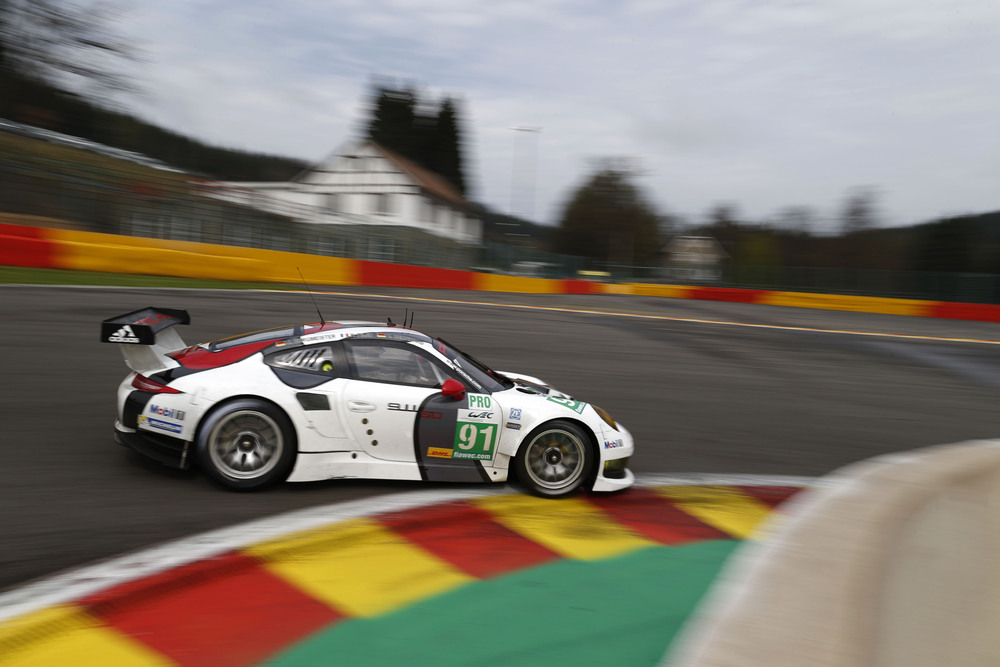
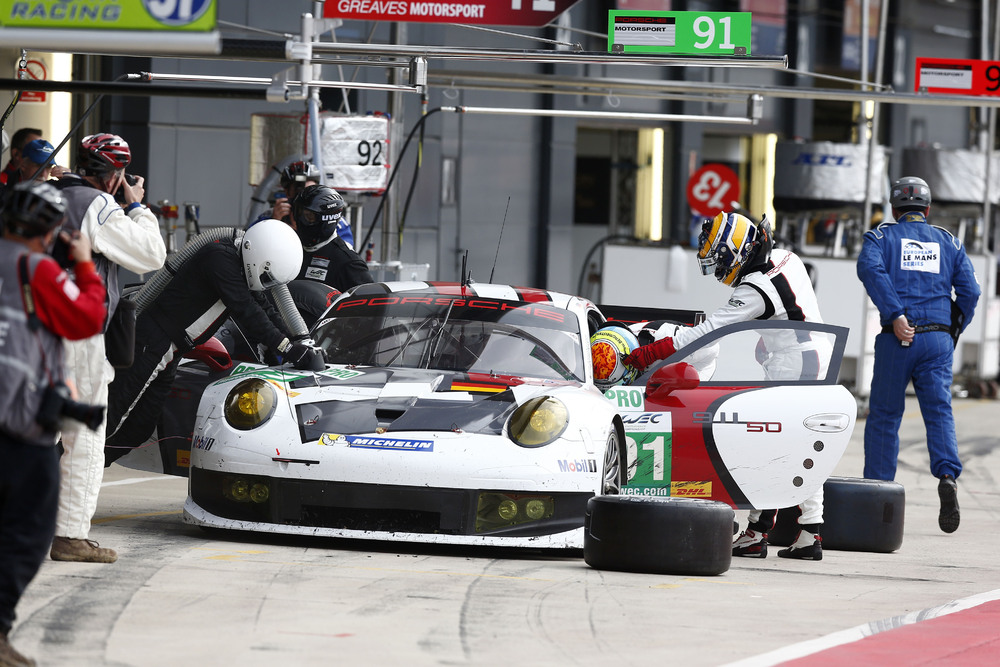
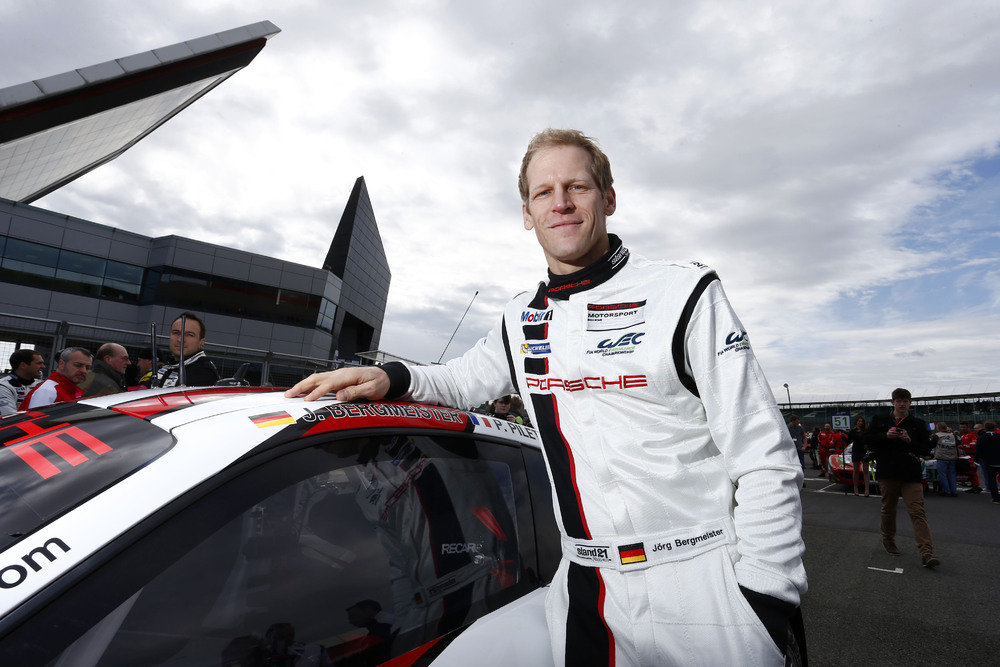
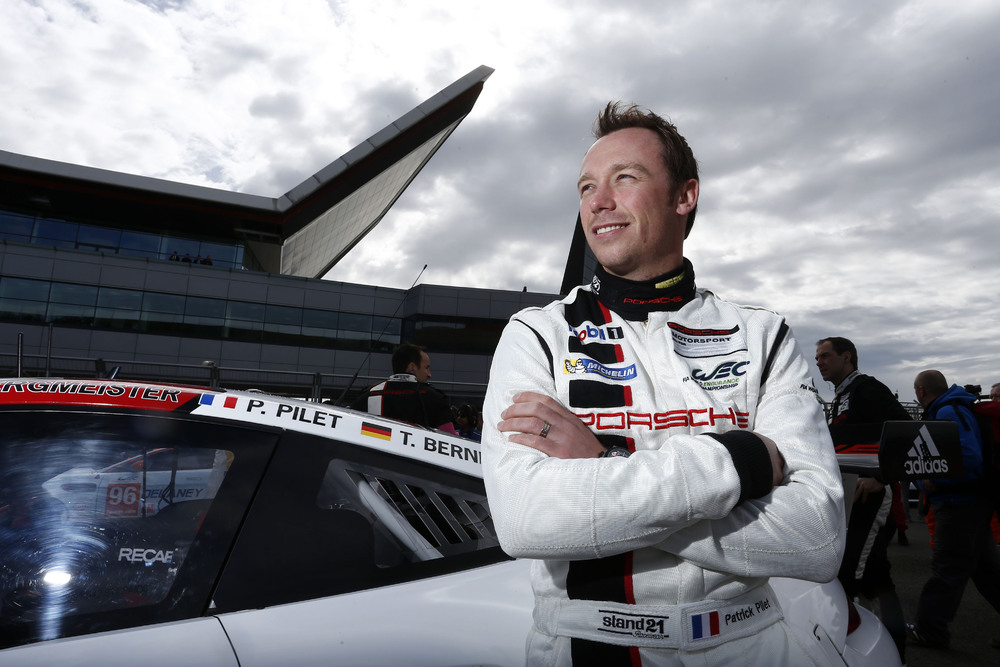
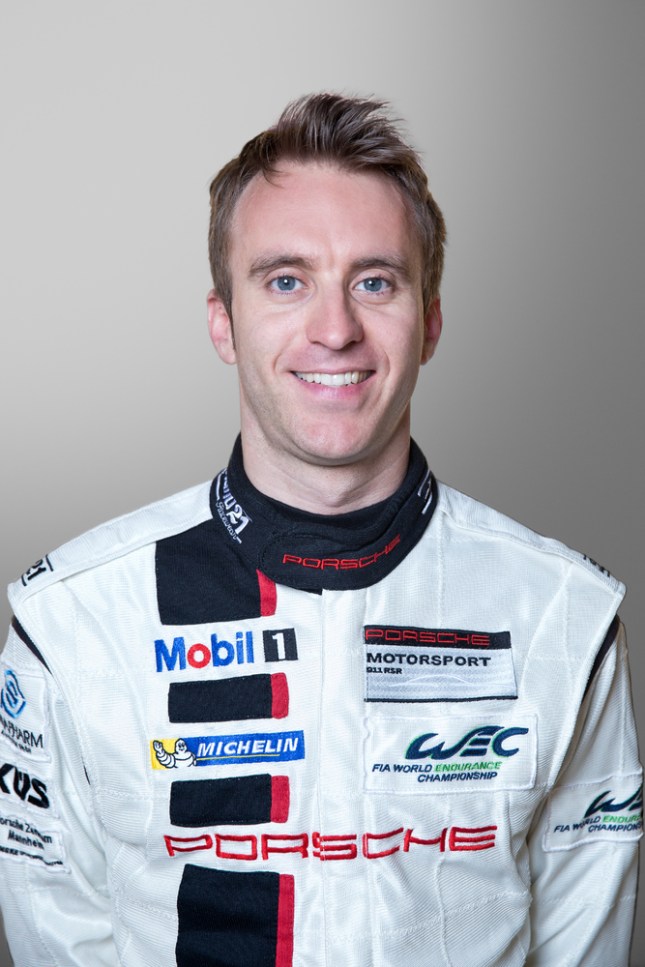
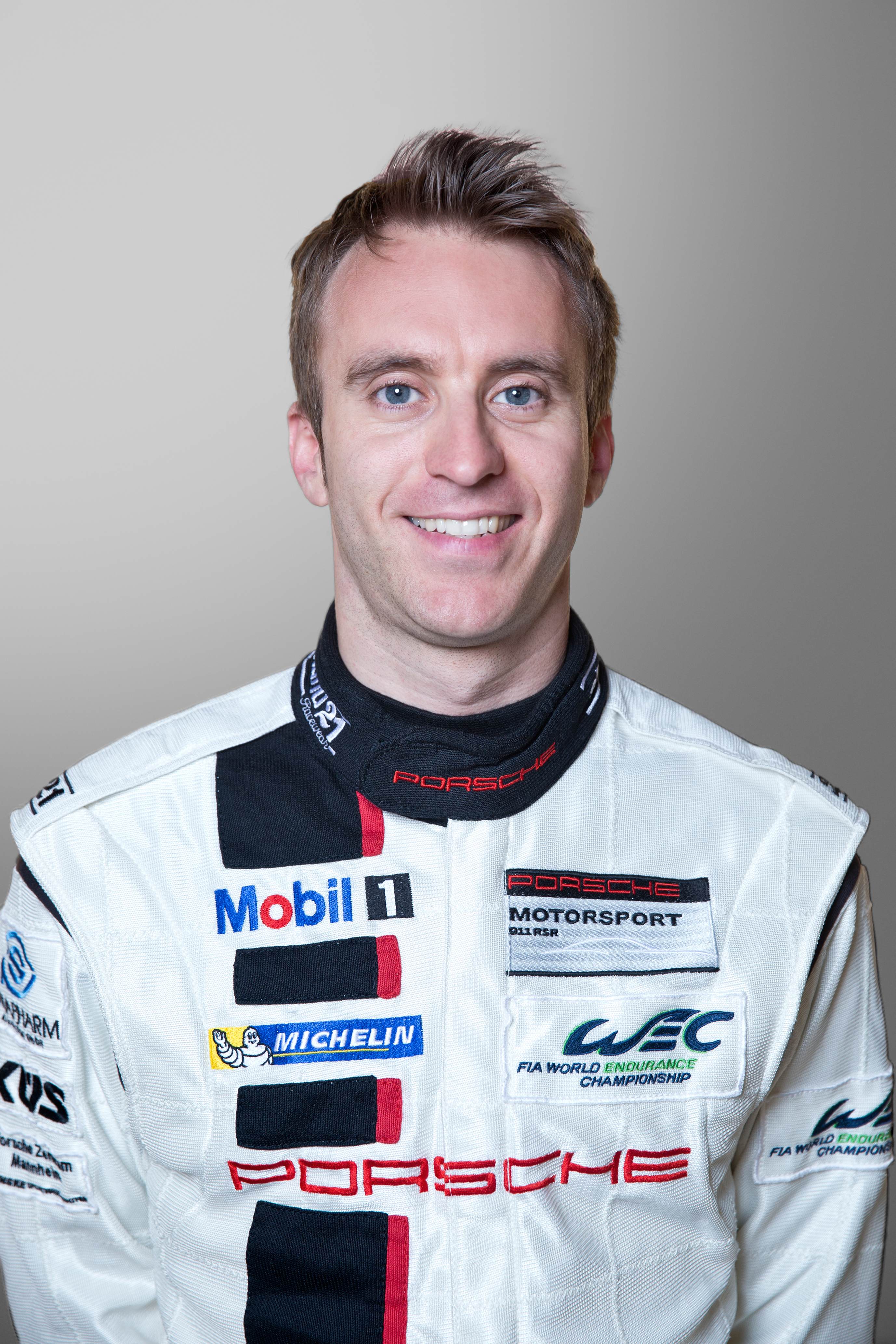
Porsche works pilots Joerg Bergmeister (Germany) and Patrick Pilet (France) planted their Porsche 911 RSR on the sixth grid spot in the GTE-Pro class. For Saturday’s race, they share the cockpit of the number 91 car with Timo Bernhard (Germany).

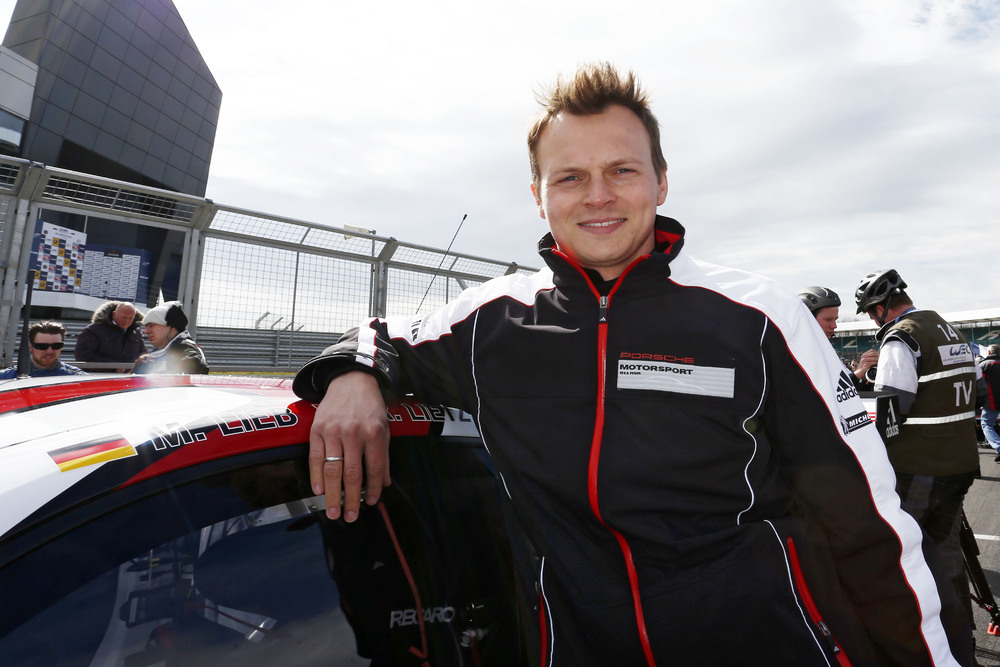
Marc Lieb, Romain Dumas, Richard Lietz, Porsche AG Team Manthey

Marc Lieb, Romain Dumas, Richard Lietz, Porsche AG Team Manthey

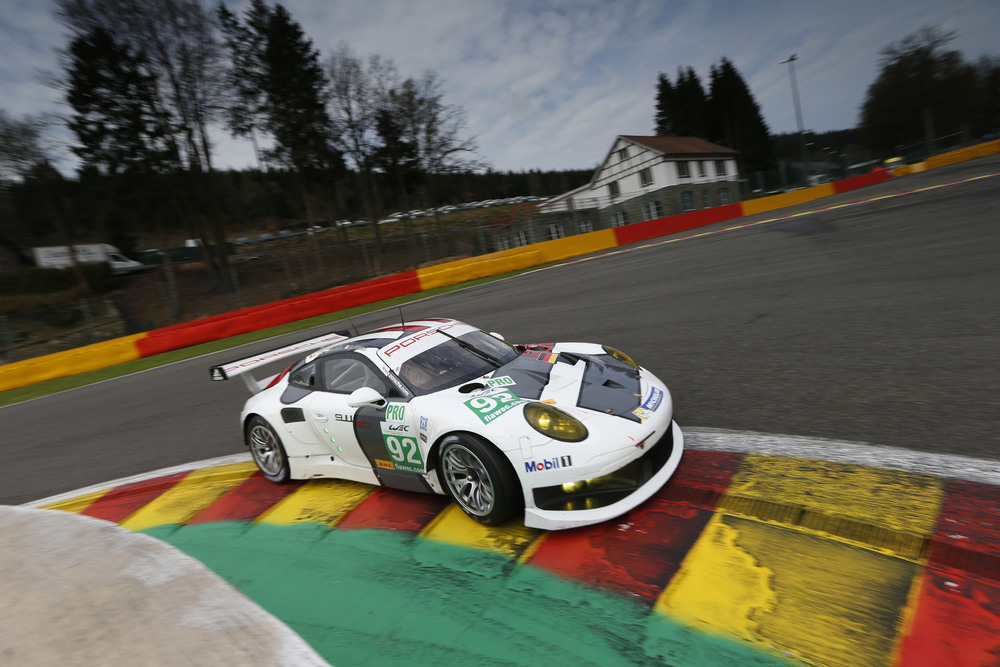
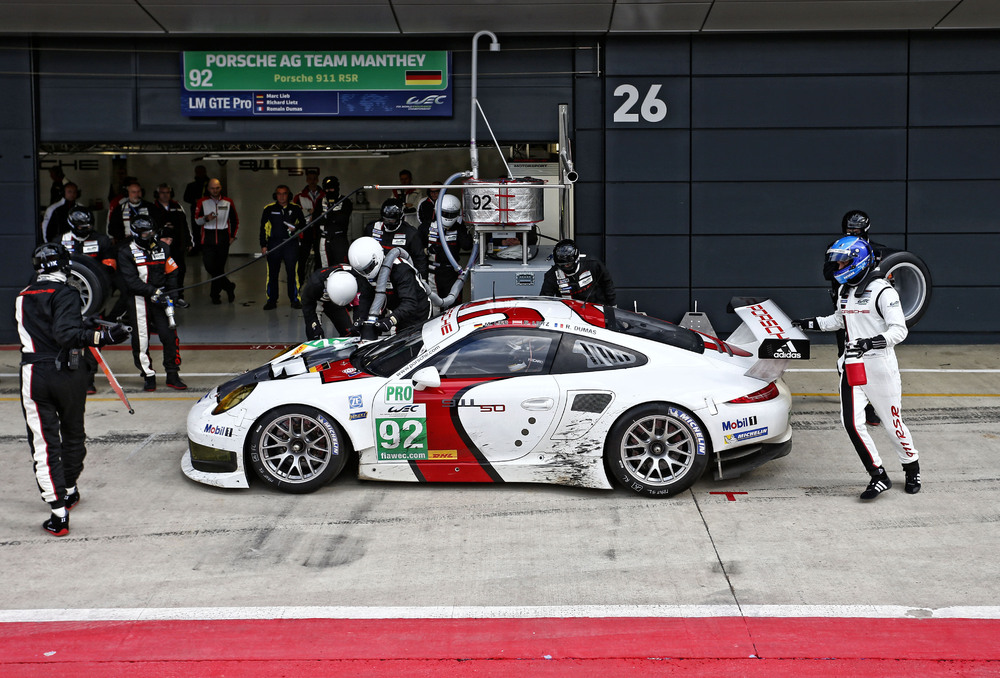
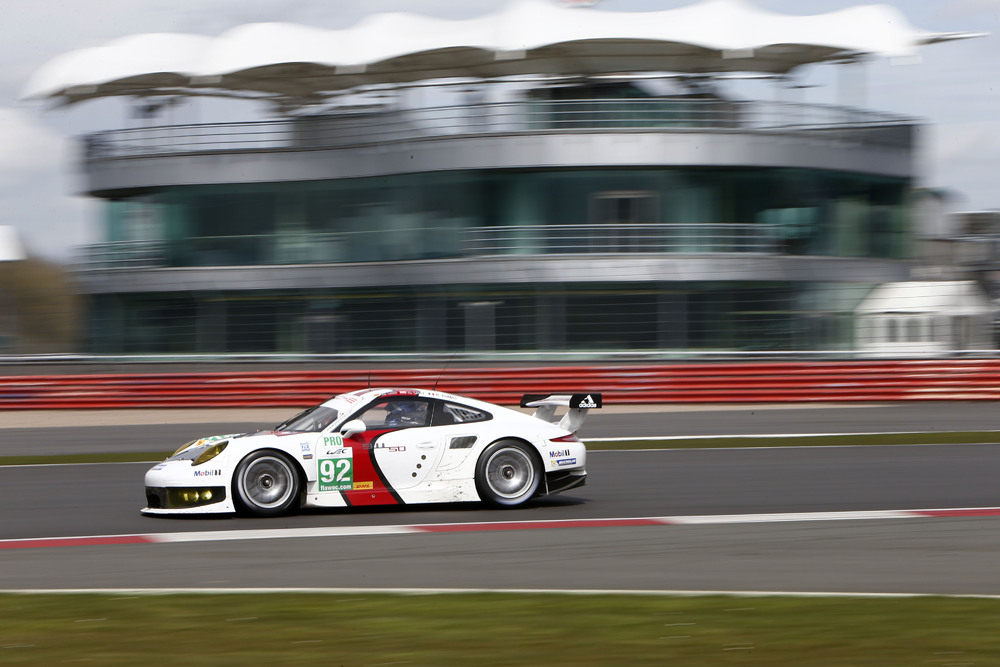
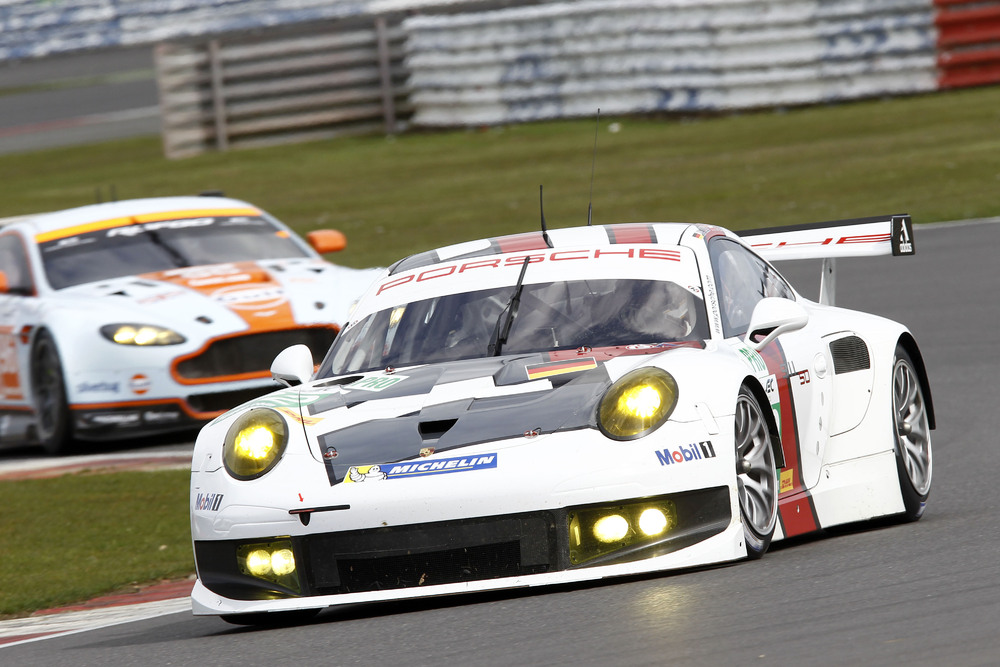
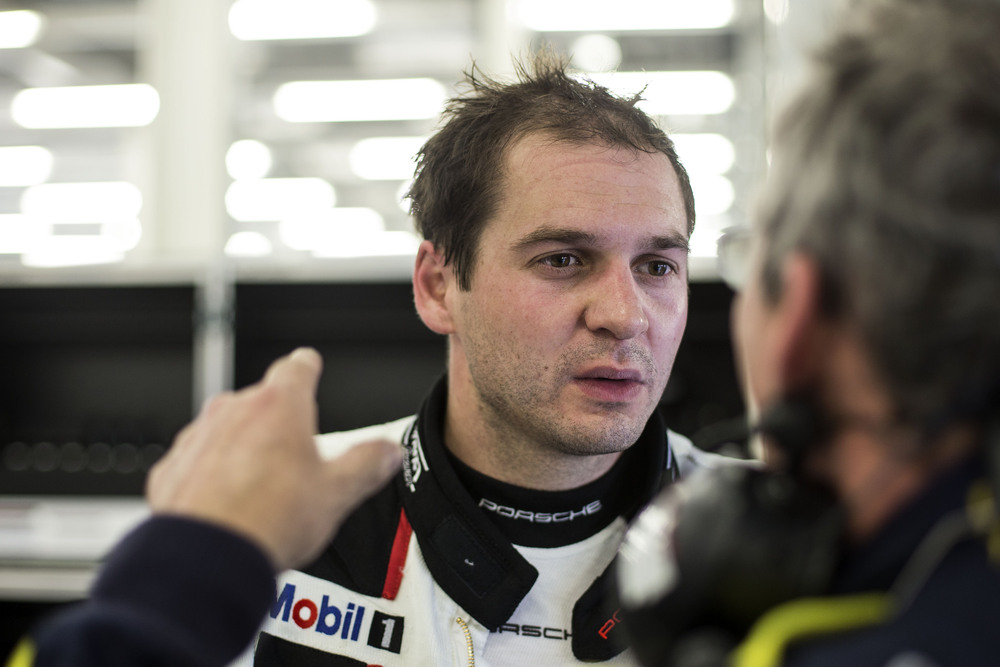
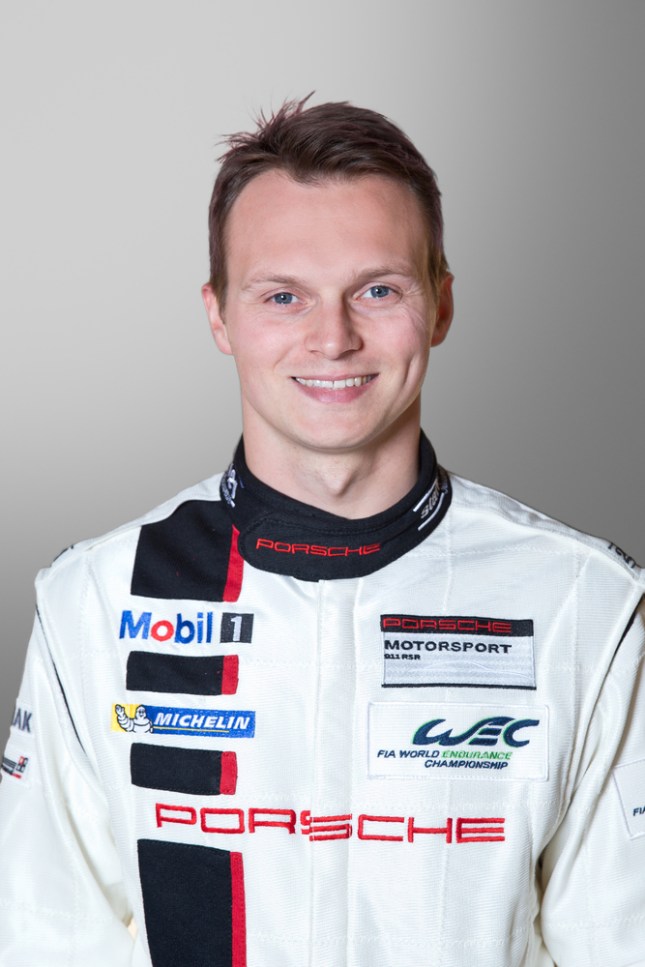
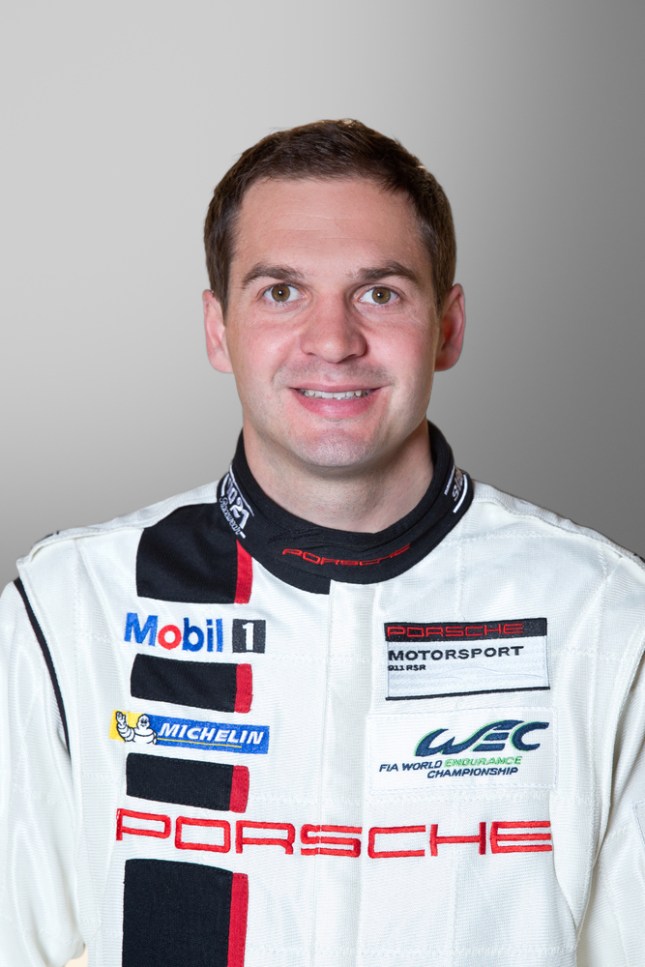
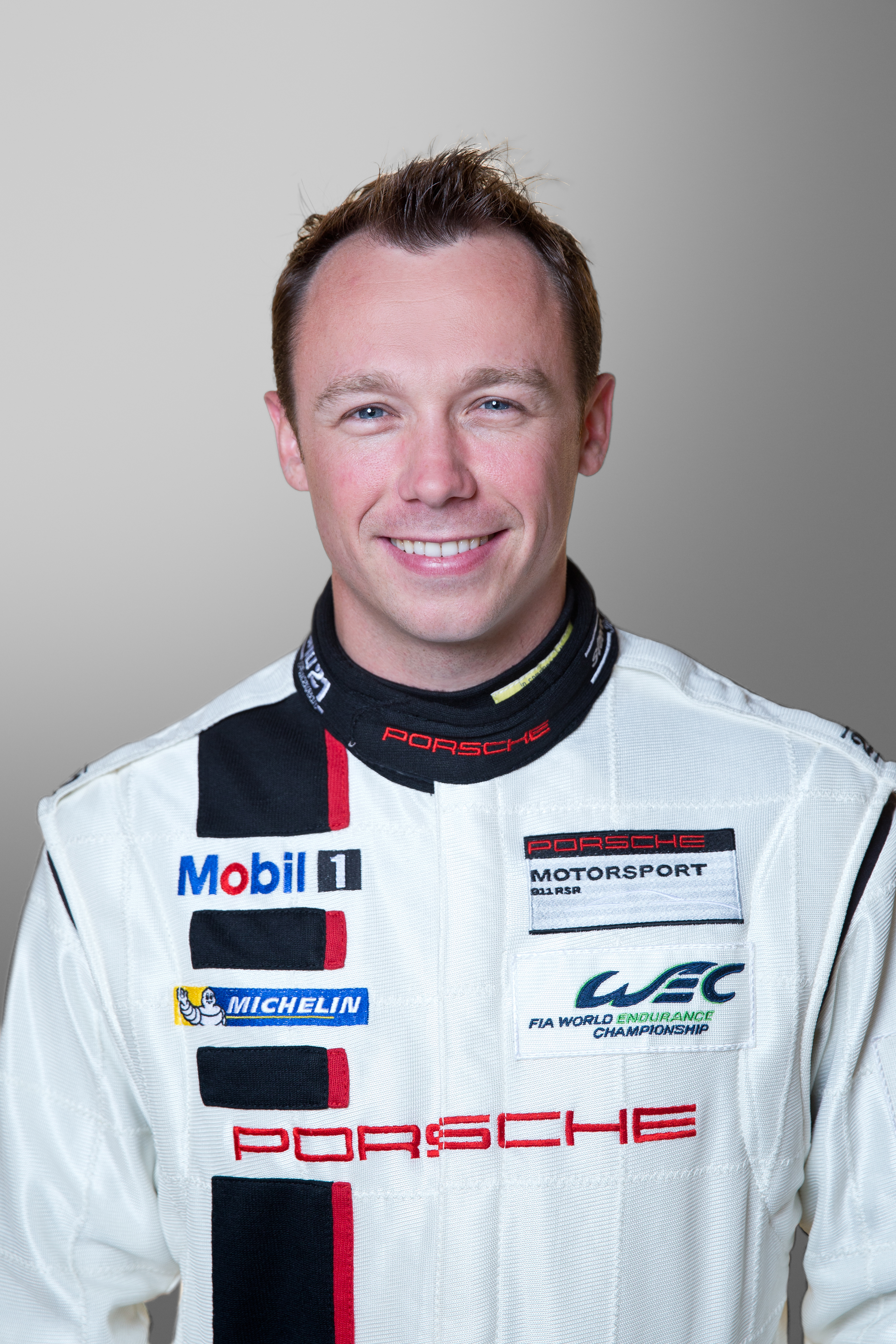
Their works driver colleagues Marc Lieb (Germany) and Romain Dumas (France) take up the race one position behind them. The third driver in the 470 hp # 92 GT racer is Richard Lietz (Austria). Porsche AG Team Manthey field both Porsche 911 RSR.
M13_0478
From this season on, the qualifying in the WEC is conducted following a new format: For the first time, two drivers must qualify one car. The grid positions for the race are determined by the average of the two fastest timed laps of each of these drivers.

Porsche 911 RSR, Porsche AG Team Manthey: Joerg Bergmeister, Timo Bernhard, Patrick Pilet

Porsche 911 RSR, Porsche AG Team Manthey: Joerg Bergmeister, Timo Bernhard, Patrick Pilet

Joerg Bergmeister (#91)

“I made a small mistake in my second lap. Otherwise I could have gone a little faster. But I still pitted so that I didn’t wear the tyres too much for Patrick.”

Patrick Pilet (#91):

“The car ran very steadily and that’s good for the race. We’re not too far back and I hope that we can do even better tomorrow.”

Romain Dumas (#92):

“That qualifying wasn’t perfect. But I’m sure we’ll look better in the race.”


Marc Lieb (#92):

“Our car performed better than in practice so that’s a small step in the right direction. Let’s see what tomorrow’s race brings.”

Porsche AG Team Manthey

Porsche AG Team Manthey

Qualifying result
GTE-Pro class
1. Makowiecki/Bell/Senna (F/GB/BRA), Aston Martin Vantage, 2:19.811 minutes
2. Bruni/Fisichella (I/I), Ferrari F458 Italia, + 0.042 seconds
3. Kobayashi/Vilander (J/SF), Ferrari F458 Italia, + 0.278
4. Turner/Mücke/Dumbreck (GB/D/GB), Aston Martin Vantage, + 0.296
5. DallaLana/Stanaway/Lamy (CAN/NZ/P), Aston Martin Vantage, + 0.430
6. Bergmeister/Pilet/Bernhard (D/F/D), Porsche 911 RSR, + 0.432
7. Lieb/Lietz/Dumas (D/A/F), Porsche 911 RSR, + 1.049

GTE-Am class
1. Nygaard/Poulsen/Simonsen (DK/DK/DK), Aston Martin Vantage, 2:21.265 minutes
2. Potolicchio/Aguas/Malucelli (I/P/I), Ferrari F458 Italia, + 0.030 seconds
3. Goethe/Hall/Campbell-Walter (D/GB/GB), Aston Martin Vantage, + 0.284
4. Bornhauser/Canal/Rees (F/F/BRA), Chevrolet Corvette, + 0.480
5. Ried/Roda/Ruberti (D/I/I), Porsche 911 GT3 RSR, + 1.425
7. Narac/Vernay (F/F), Porsche 911 GT3 RSR, + 2.156

This slideshow requires JavaScript.

The World Endurance Championship
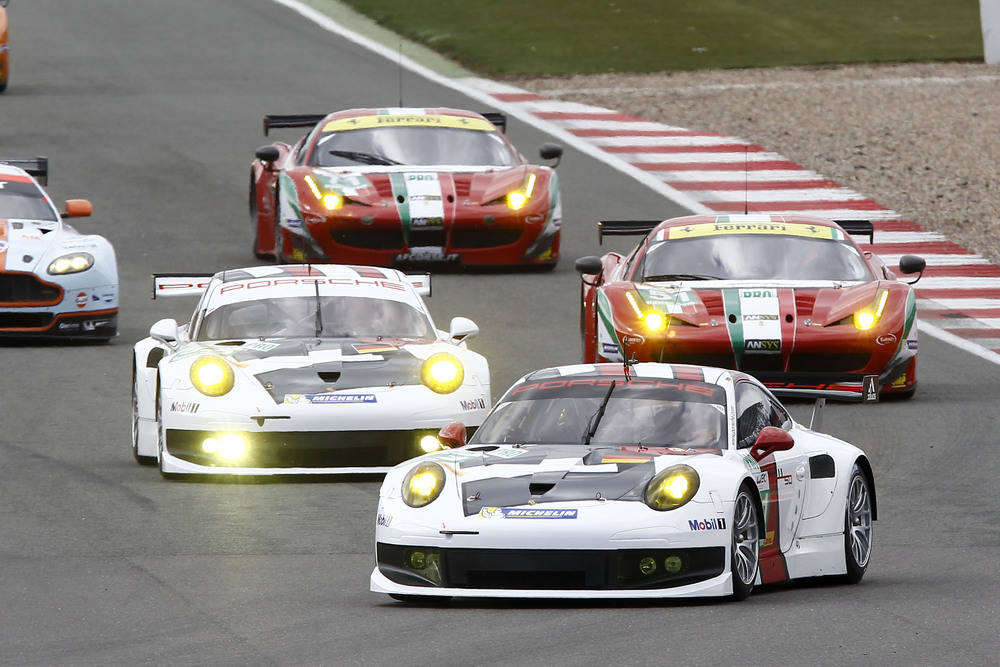
In the World Endurance Championship, sports prototypes and GT vehicles start in four classes: LMGTE-Pro, LMGTE-Am, LMP1 and LMP2. They all compete together in one race but are classified separately.

SOURCE: Porsche AG Media Database Photo

Communication Porsche AG
Motorsport Press


Tags: , , , , , , , , , , , , , , , , ,

VIDEO – New Generation Porsche 911 Turbo and 911 Turbo S

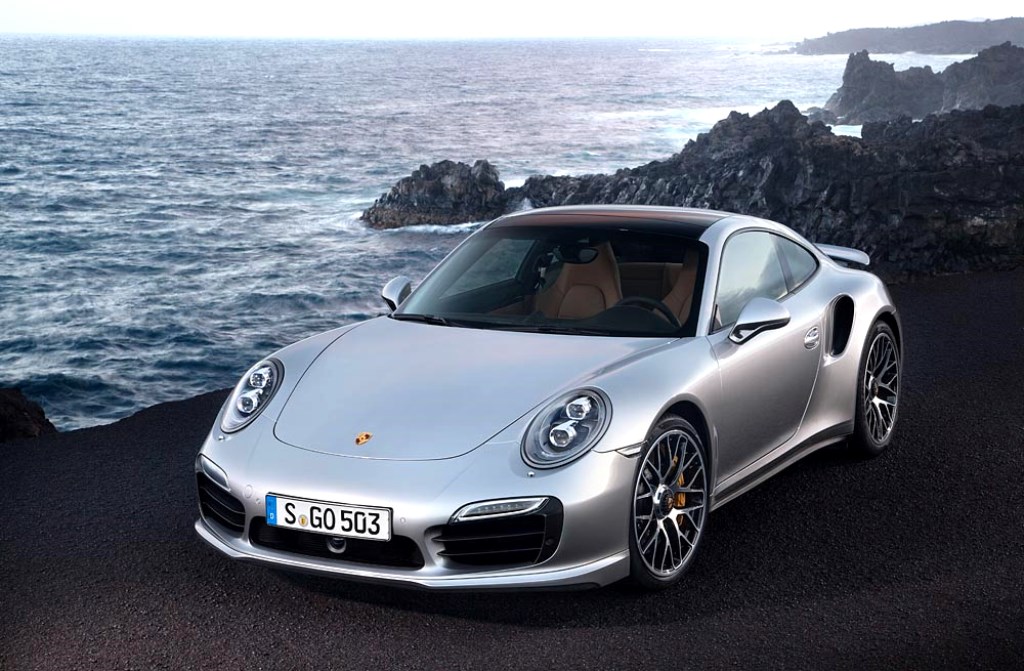
911 Turbo S Coupé

911 Turbo S Coupé

911 Turbo sets new reference values for dynamics and fuel consumption


Stuttgart. The Porsche model offensive in the anniversary year of the 911 is reaching new heights.

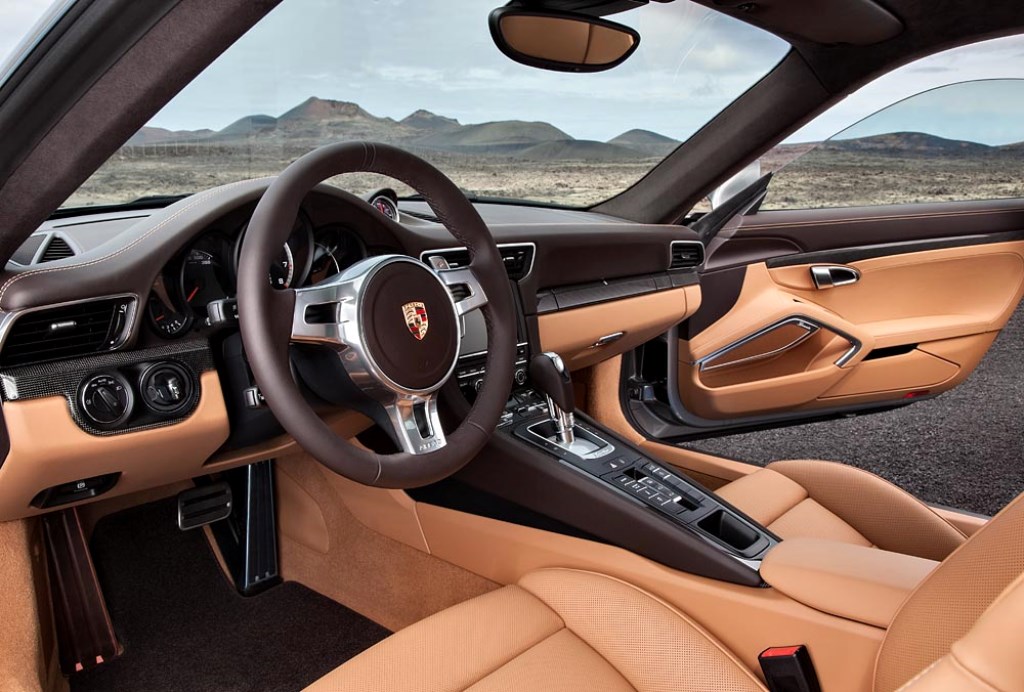
911 Turbo S Coupé Interior

911 Turbo S Coupé Interior

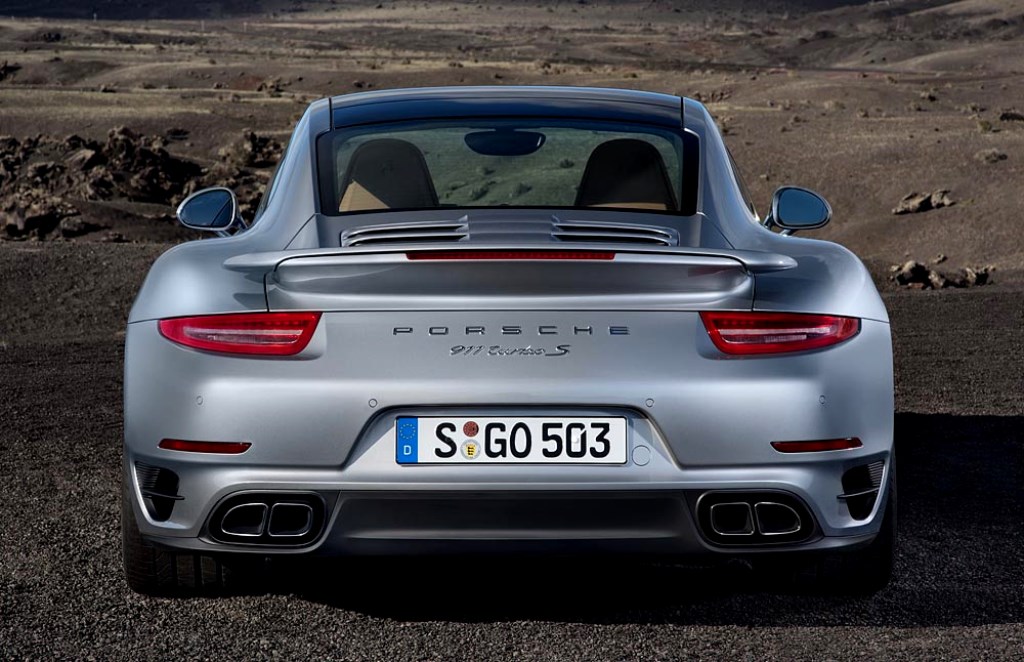
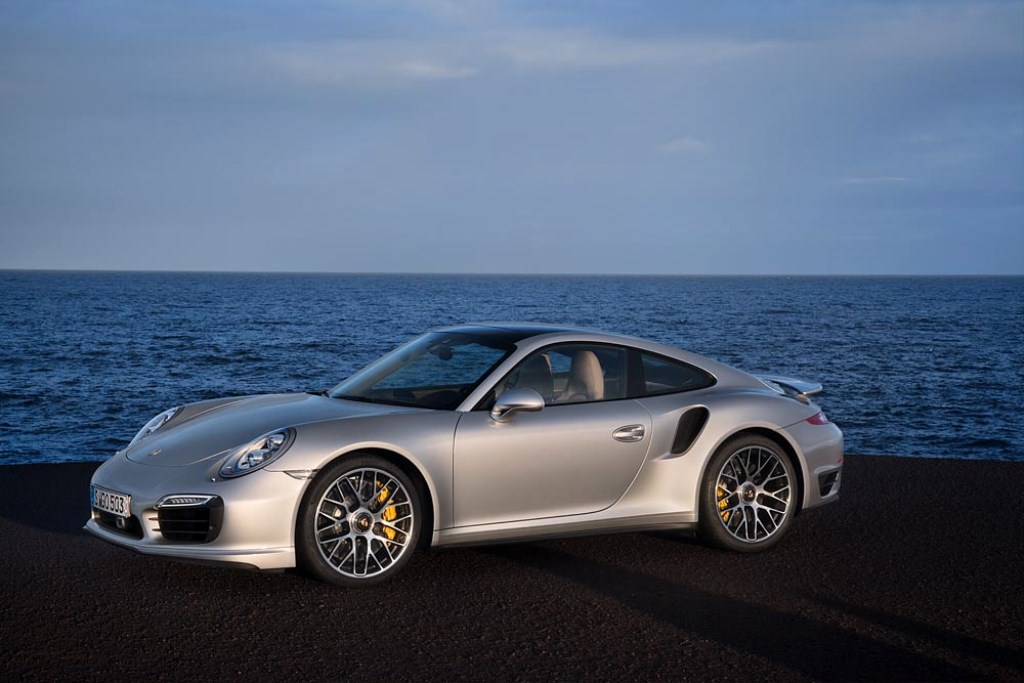
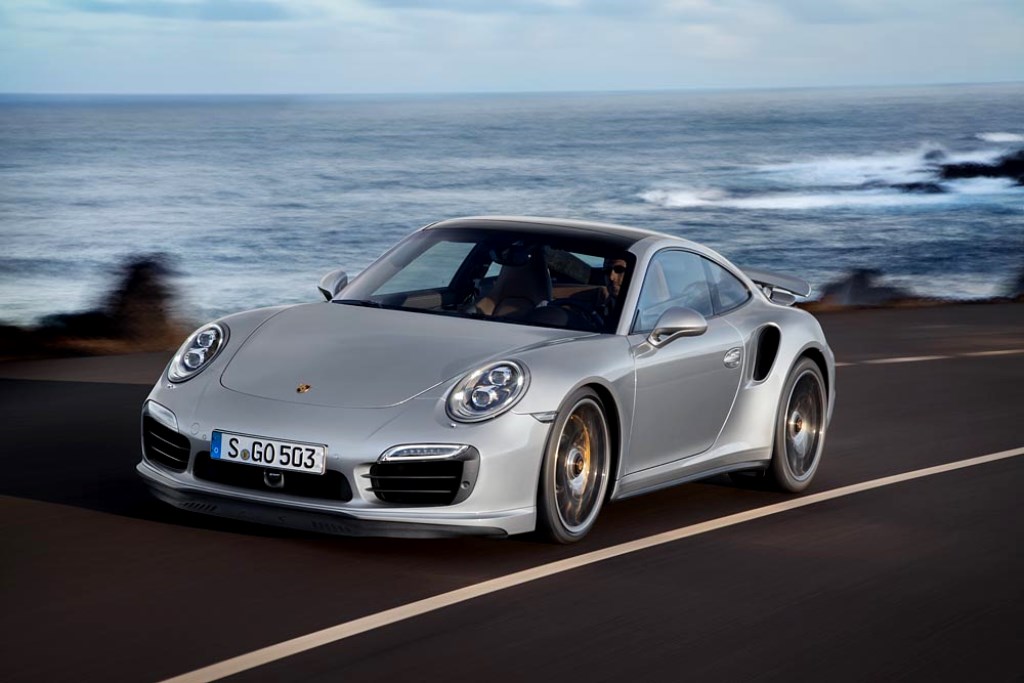
50 years ago, the 911 made its debut at the Frankfurt International Auto Show. And just ten years later, the first 911 Turbo prototype was at the IAA. On this 40th anniversary Porsche is now presenting the new generation 911 Turbo and Turbo S – the technological and dynamic performance peak of the 911 series.

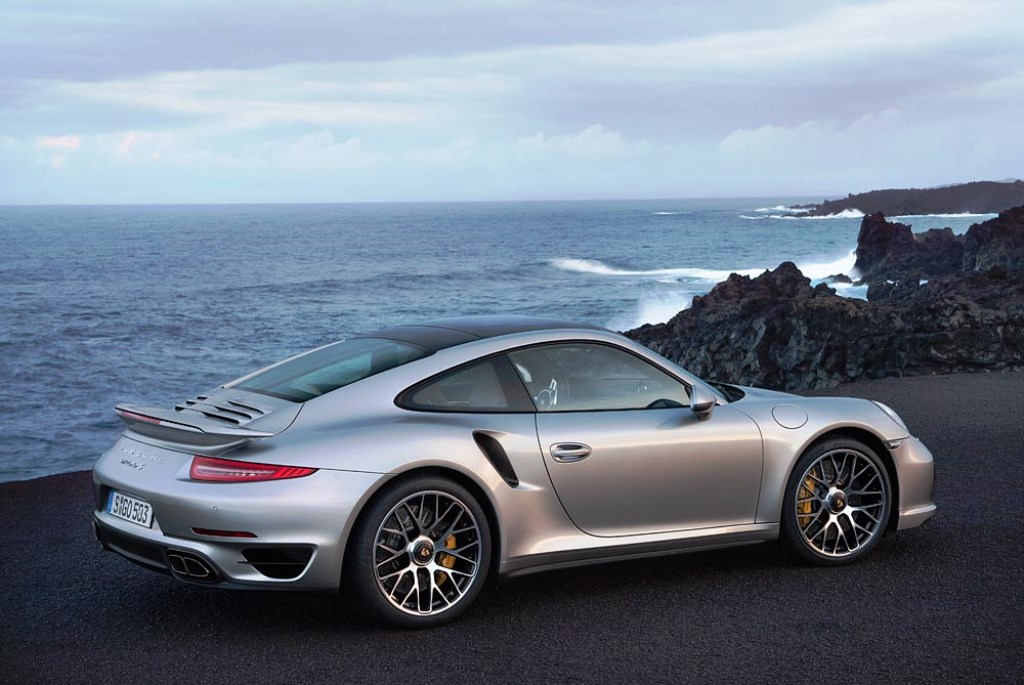
911 Turbo S Coupé

911 Turbo S Coupé

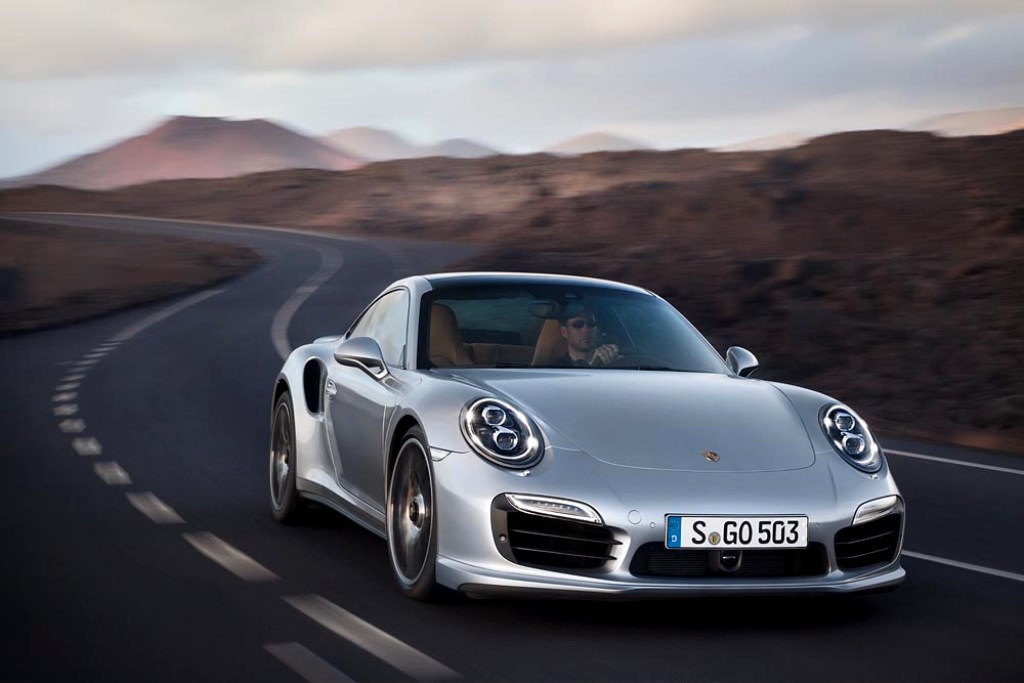
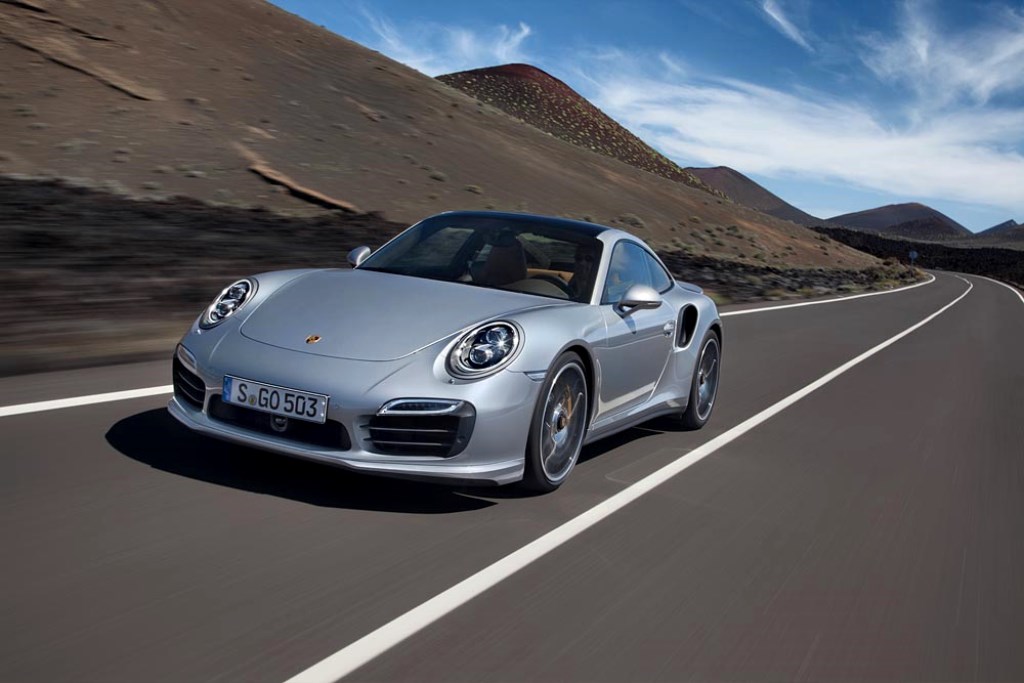
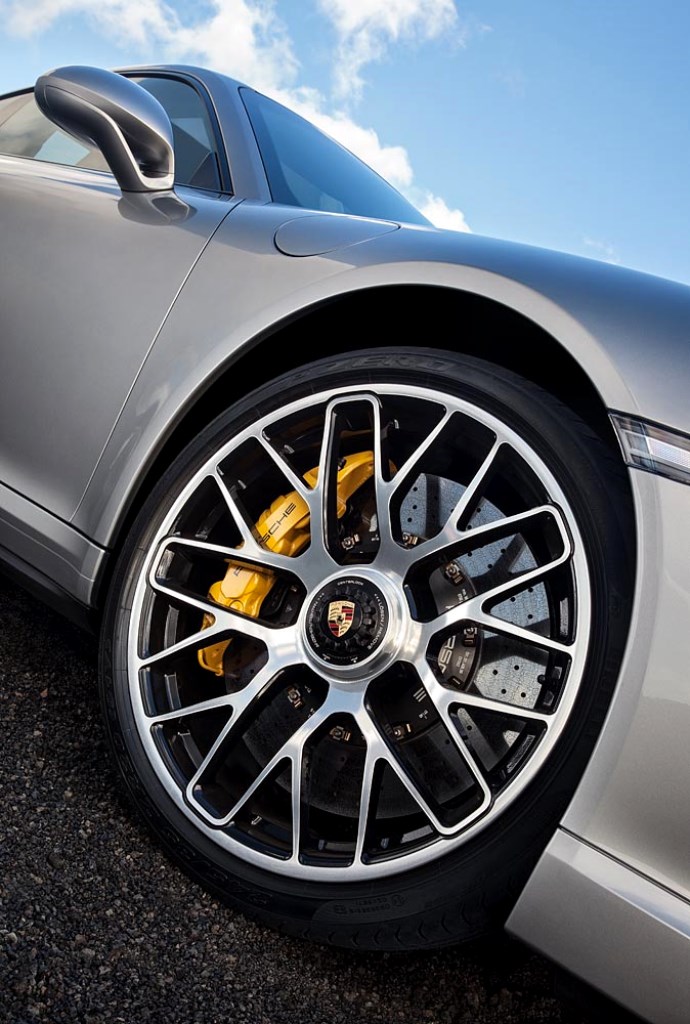
New all-wheel drive, active rear axle steering, adaptive aerodynamics, full-LED headlights and the up to 560 hp flat six-cylinder engine with bi-turbo charging underscore the role of the new generation 911 Turbo as a circuit racing car, everyday car and technology platform. Playing an equally crucial role are the entirely new chassis in lightweight design with a 100 mm longer wheelbase and larger 20-inch wheels.

911 Turbo S Coupé Interior

911 Turbo S Coupé Interior

The PDCC active anti-roll system, which is being offered for the first time in 911 Turbo models, increases dynamic performance even more. This system is standard equipment in the 911 Turbo S, as is the Sport Chrono Package with dynamic engine mounts and PCCB ceramic brakes; all of these features are also available as options in the 911 Turbo.
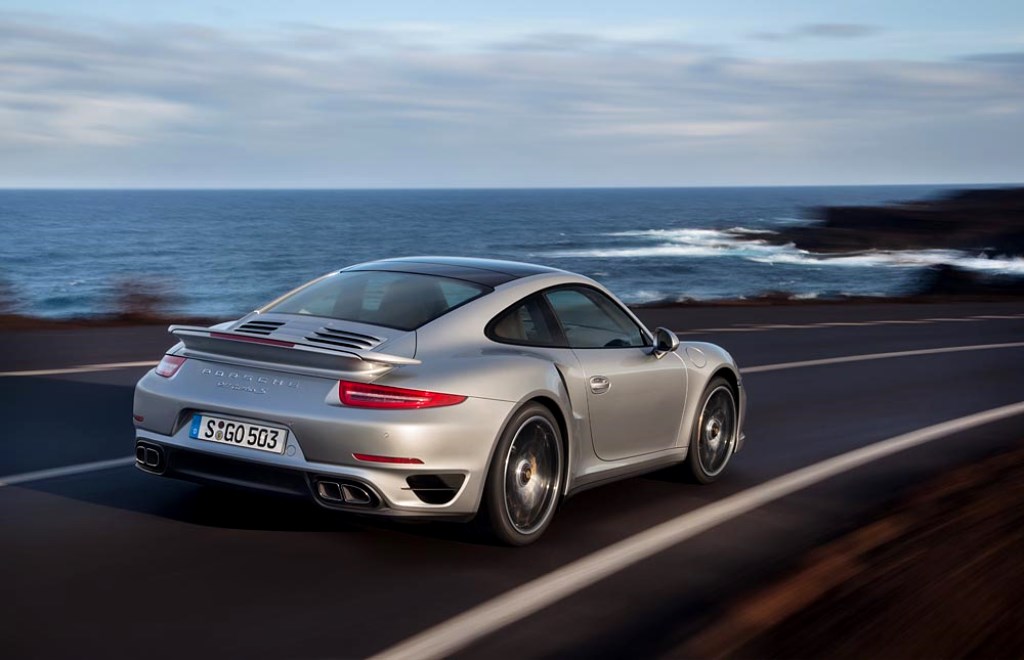
911 Turbo S Coupé

911 Turbo S Coupé

The results:

The new 911 Turbo S shortens the lap time for the North Loop of the Nürburgring to well under 7:30 minutes – naturally with standard production tyres. The standard sound symposer intensifies the driving experience; it transmits induction sounds of the turbo engine to the passenger compartment via a speaker diaphragm.

911 Turbo S Coupé

911 Turbo S Coupé

More power, fuel economy improved by 16 per cent 
The performance partners in the powertrain area are the further advanced engines and the new PTM all-wheel drive system. The turbocharged 3.8-litre six-cylinder engine with direct petrol injection produces 520 hp (383 kW) in the 911 Turbo and 560 hp (412 kW) in the S model. Porsche continues to be the only carmaker to offer two turbochargers with variable turbine geometry for a petrol engine.

911 Turbo S Coupé

911 Turbo S Coupé

Power is transferred to the drivetrain via the seven-speed dual clutch transmission (PDK), which now enables an auto start/stop function with engine shutoff that now activates earlier during coasting to a stop as well as a coasting function. Together with the new thermal management system for the turbo engine and the PDK transmission, fuel efficiency technologies have reduced NEDC fuel consumption by up to 16 per cent to 9.7 l/100 km; these figures apply to both models.

911 Turbo S Coupé

911 Turbo S Coupé

New all-wheel drive with electro-hydraulic control
For an even faster and more precise power distribution to the two axles, Porsche developed a new all-wheel drive system (PTM) with electronically controlled and activated multi-plate coupling. The system is equipped with a new water cooling function, so that it can direct even more drive torque to the front wheels if necessary. Simultaneously, the optimised interplay of the engine, transmission and all-wheel drive systems takes the new top 911 to even better sprint capabilities. The 911 Turbo with the optional Sport Chrono Package accelerates from zero to 100 km/h in 3.2 seconds, which is even one-tenth better than the value of the previous 911 Turbo S. The new 911 Turbo S handles the standard sprint to 100 km/h in just 3.1 seconds. The car’s top speed is 318 km/h.

911 Turbo S Coupé

911 Turbo S Coupé

Widest body of all 911 cars
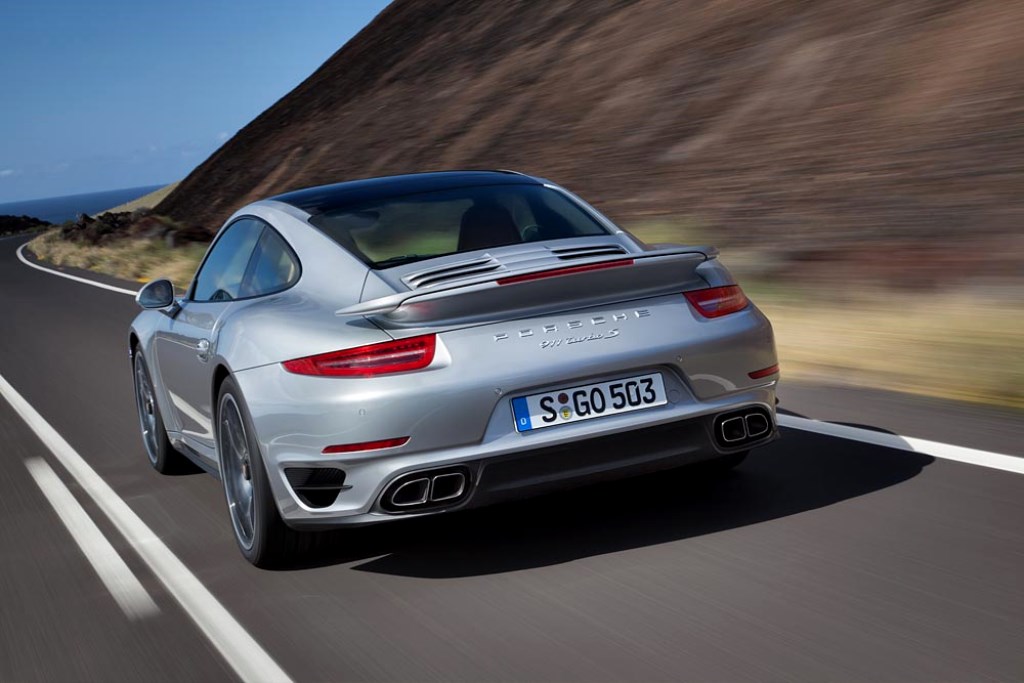
The two new top models display their performance visually more than ever. The characteristic, expansively wide rear body panels of the new generation 911 Turbo are 28 mm wider than on the 911 Carrera 4 models – they feature a nearly level surface, about the width of a hand, between the C-pillar and the outer edge of the car body. Other differentiating characteristics include two-tone forged 20-inch wheels – on the 911 Turbo S they have hub wheel locks. The Turbo S is also making its appearance with new full-LED headlights that feature four-point daytime running lights and dynamic, camera-based main beam control, which can be ordered as an option for the 911 Turbo.

911 Turbo S Coupé

911 Turbo S Coupé

Rear axle steering sustainably improves handling 
The introduction of rear axle steering in all turbo models immensely improves both circuit racing and everyday performance of the two new top sports cars. The system consists of two electro-mechanical actuators instead of the conventional control arms on the left and right of the rear axle. The steering angle of the rear wheels can be varied by up to 2.8 degrees, depending on vehicle speed. At speeds up to 50 km/h, when the front wheels are turned the system steers the rear wheels in the opposite direction. This actually corresponds to a virtual shortening of the wheelbase by 250 mm, which gives the 911 Turbo unrivalled performance in bends. The system lets the car turn faster into the bend and offers more dynamic steering response. This noticeably simplifies manoeuvring and parking.

911 Turbo S Coupé

911 Turbo S Coupé

At speeds above 80 km/h, the system steers the rear wheels parallel to the turned front wheels. This is equivalent to a virtual lengthening of the wheelbase by a significant 500 mm and gives the sports car tremendous stability, especially at high speeds. At the same time, the steering input by the driver leads to significantly faster build-up of lateral force at the rear axle, which initiates the change in direction more spontaneous and harmoniously.

Active aerodynamics improve efficiency and performance
Porsche developed an active aerodynamic system on the new 911 Turbo models for the first time — Porsche active aerodynamics (PAA). It consists of a sturdy, retractable three-stage front spoiler, whose segments can be pneumatically extended, and a deployable rear wing with three adjustable wing positions. This makes it possible to tune the aerodynamics of the 911 Turbo to fulfil driver wishes for either optimal efficiency (speed position) or top dynamic performance. In the performance position, all segments of the front spoiler are fully extended, and they generate considerable downforce at the front axle. Similarly, the rear wing is extended to its maximum height with the greatest angle of attack. This also generates more downforce at the rear axle. Dynamic performance is improved to such an extent that lap times at the North Loop of the Nürburgring are improved by up to two seconds due to this system alone.

911 Turbo S Coupé

911 Turbo S Coupé

New interior with high-end features
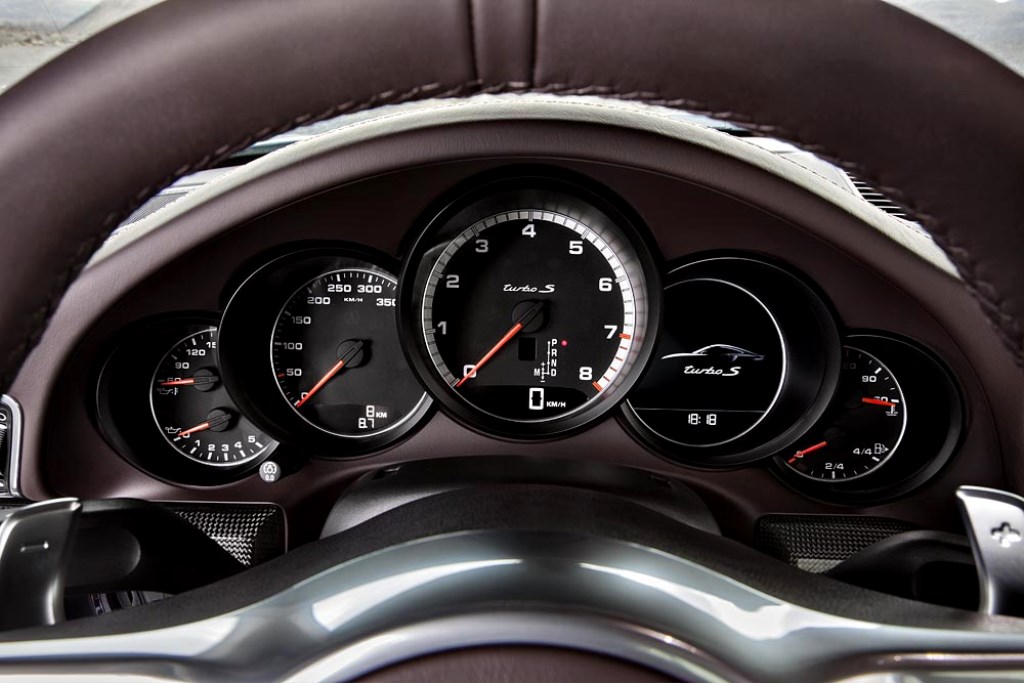
The interior was completely redesigned in both 911 Turbo models, and it builds on the 911 Carrera family. The S model is particularly well equipped, offering such features as an exclusive interior in a black/carrera red colour combination and adaptive sport seats plus with 18-way adjustment and memory. In addition, the seat backrest shells are leather upholstered with double cap seams and various elements in carbon look. Like on the previous models, the Bose sound system is installed as standard; for the first time, a Burmester system is also available as an optional feature. A radar-controlled cruise control system, camera-based road sign recognition and speed limit recognition are other new options being offered.
The new top models of the 911 model series arrive on the market at the end of September 2013. In Germany, the 911 Turbo costs 162,055 euros; the new 911 Turbo S costs 195,256 euros, including VAT and country-specific features.

This slideshow requires JavaScript.

SOURCE: Porsche AG Media Database

Product and Technology Communication
Product Communication


Tags: , , , , , , , , ,

World Endurance Championship, round 2 in Spa-Francorchamps Latest Photos

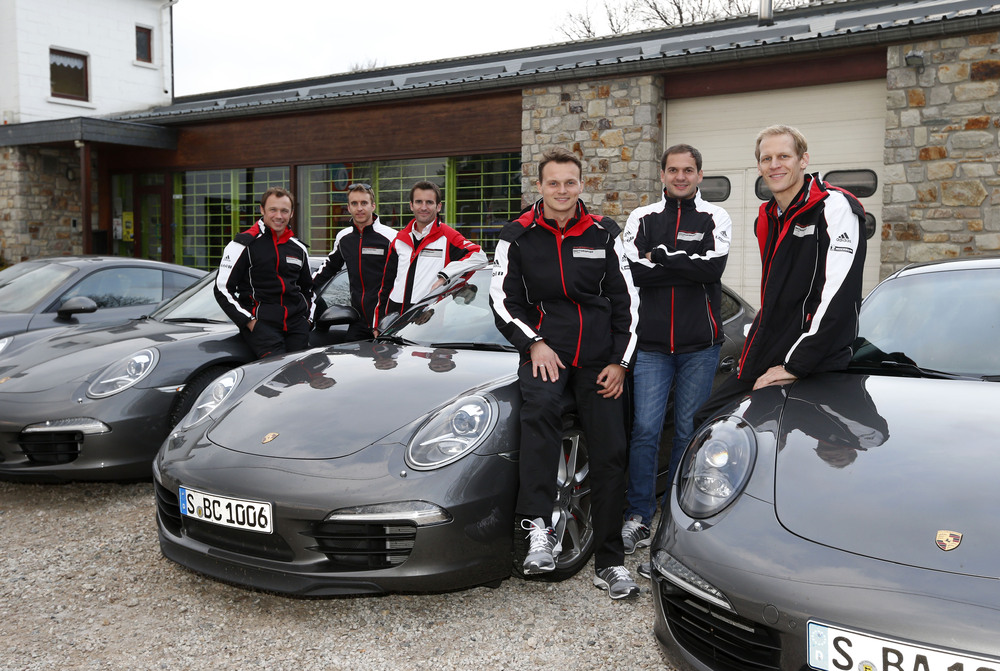
Patrick Pilet, Timo Bernhard, Romain Dumas, Marc Lieb, Richard Lietz, Joerg Bergmeister (l-r), Porsche AG Team Manthey

Patrick Pilet, Timo Bernhard, Romain Dumas, Marc Lieb, Richard Lietz, Joerg Bergmeister (l-r), Porsche AG Team Manthey

Stuttgart. Latest photos from free practice 1 in Spa-Francorchamps, where round 2 of the World Endurance Championship (WEC) is contested on Saturday.

Porsche 911 RSR, Porsche AG Team Manthey: Marc Lieb, Richard Lietz, Romain Dumas

Porsche 911 RSR, Porsche AG Team Manthey: Marc Lieb, Richard Lietz, Romain Dumas

Porsche 911 RSR, Porsche AG Team Manthey: Marc Lieb, Richard Lietz, Romain Dumas

Porsche 911 RSR, Porsche AG Team Manthey: Marc Lieb, Richard Lietz, Romain Dumas

Porsche 911 GT3 RSR, Proton Competition, Christian Ried, Gianluca Roda, Paolo Ruberti

Porsche 911 GT3 RSR, Proton Competition, Christian Ried, Gianluca Roda, Paolo Ruberti

M13_0413

M13_0408


Patrick Pilet, Romain Dumas, Joerg Bergmeister, Marc Lieb, Richard Lietz,Timo Bernhard (l-r), Porsche AG Team Manthey

Patrick Pilet, Romain Dumas, Joerg Bergmeister, Marc Lieb, Richard Lietz,Timo Bernhard (l-r), Porsche AG Team Manthey


This slideshow requires JavaScript.


SOURCE: Porsche AG Media Databse
Communication Porsche AG Motorsport Press


Tags: , , , , , , , , , , , , , , , , , , ,

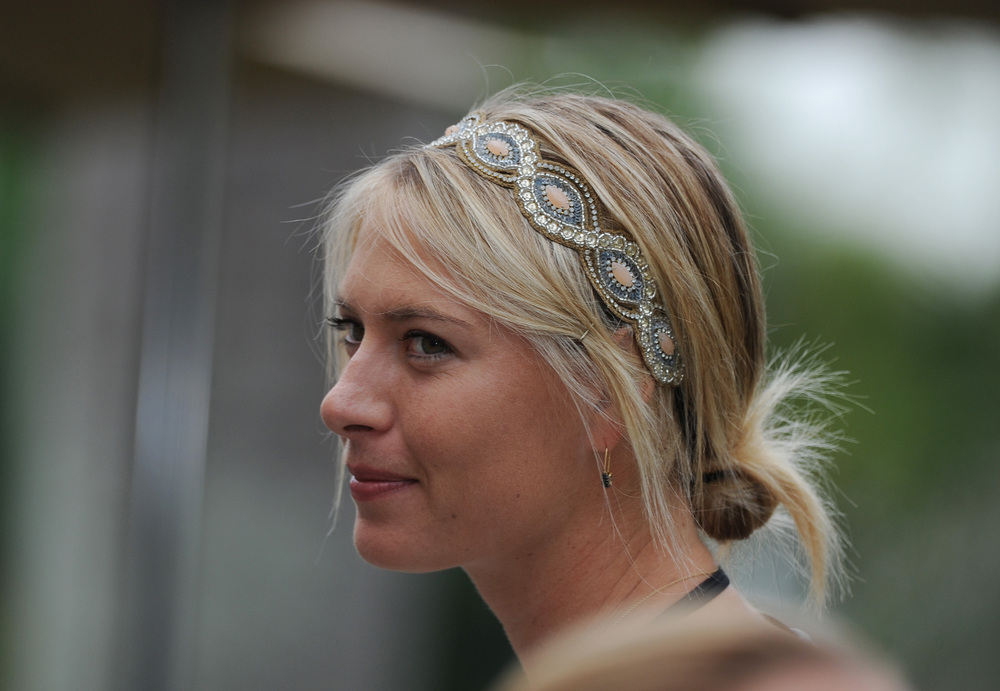
PORSCHE NEWS: Tennis Idol Maria Sharapova – The new Global Ambassador for Porsche

Maria Sharapova...global ambassodor to Porsche

Maria Sharapova…global ambassodor to Porsche

Tennis idol to become brand ambassador of the Stuttgart sports car manufacturer
**Maria Sharapova to represent Porsche**

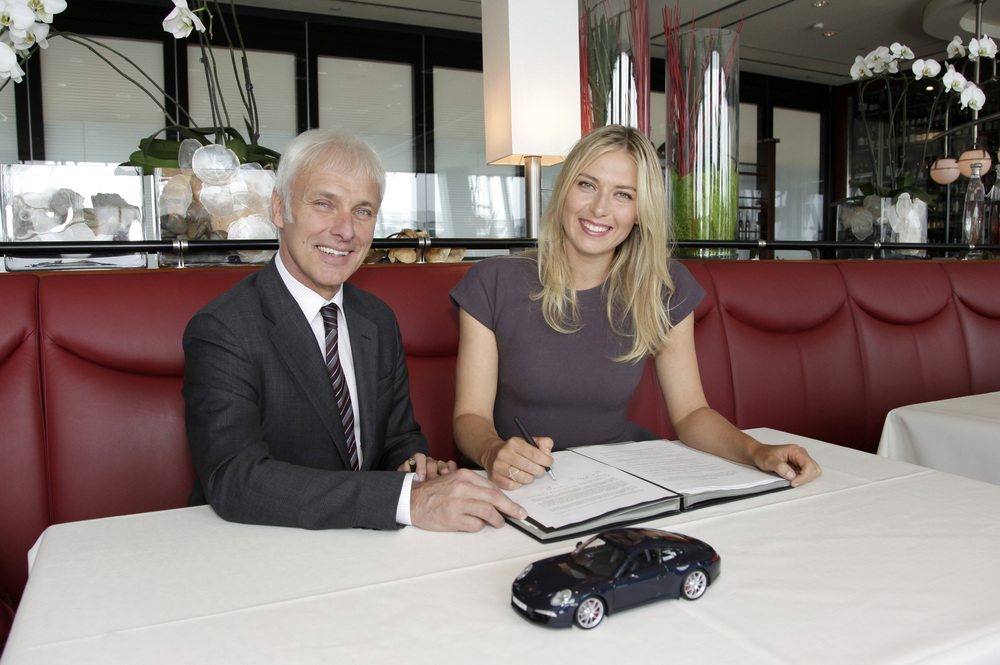
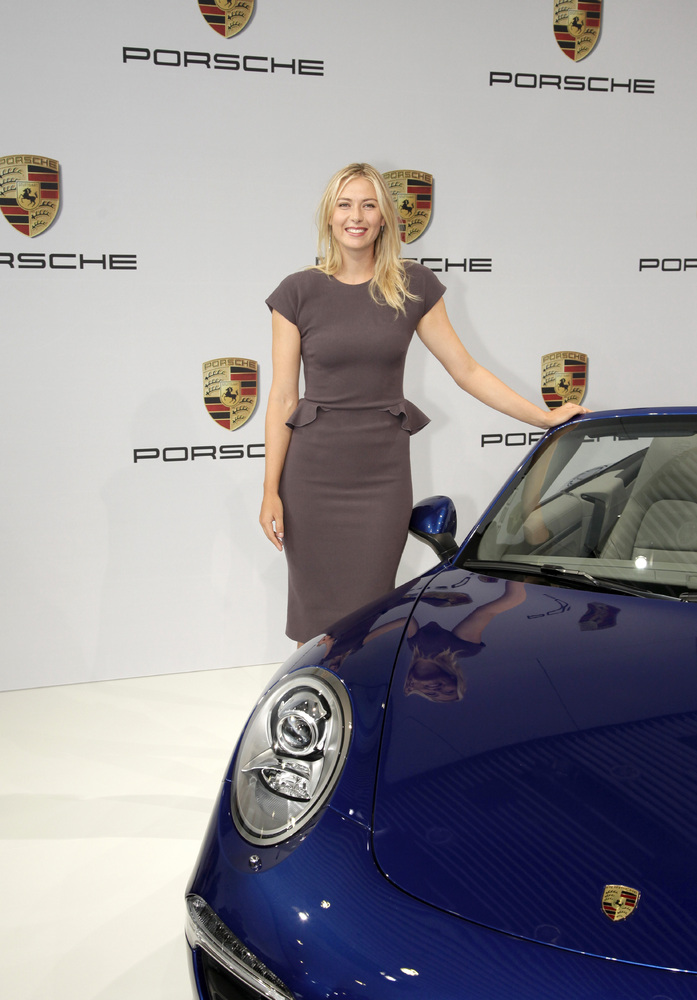
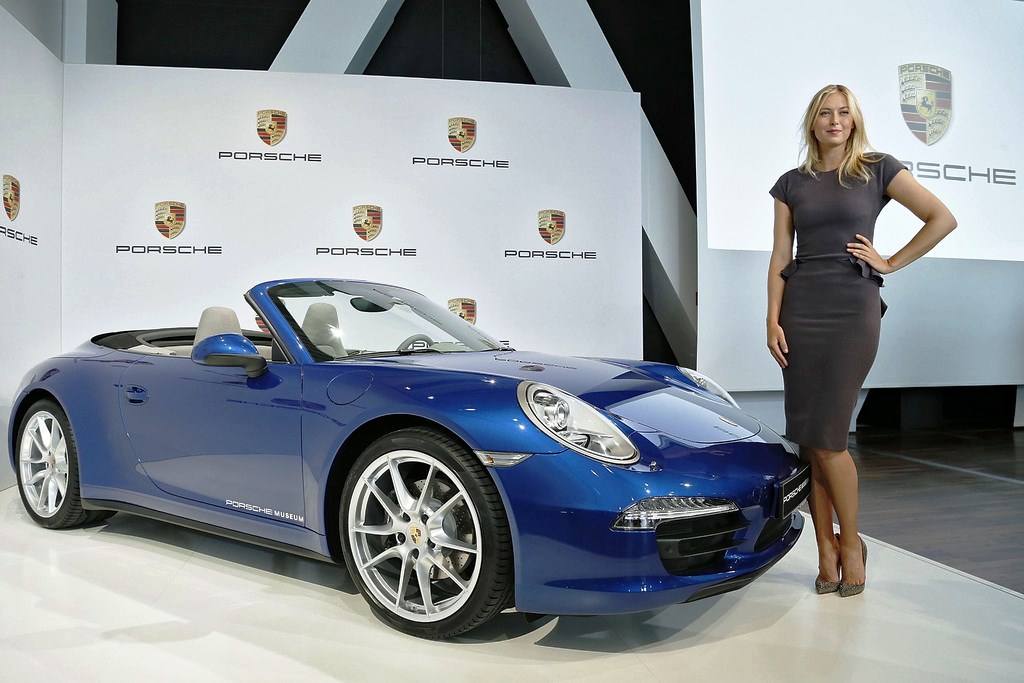
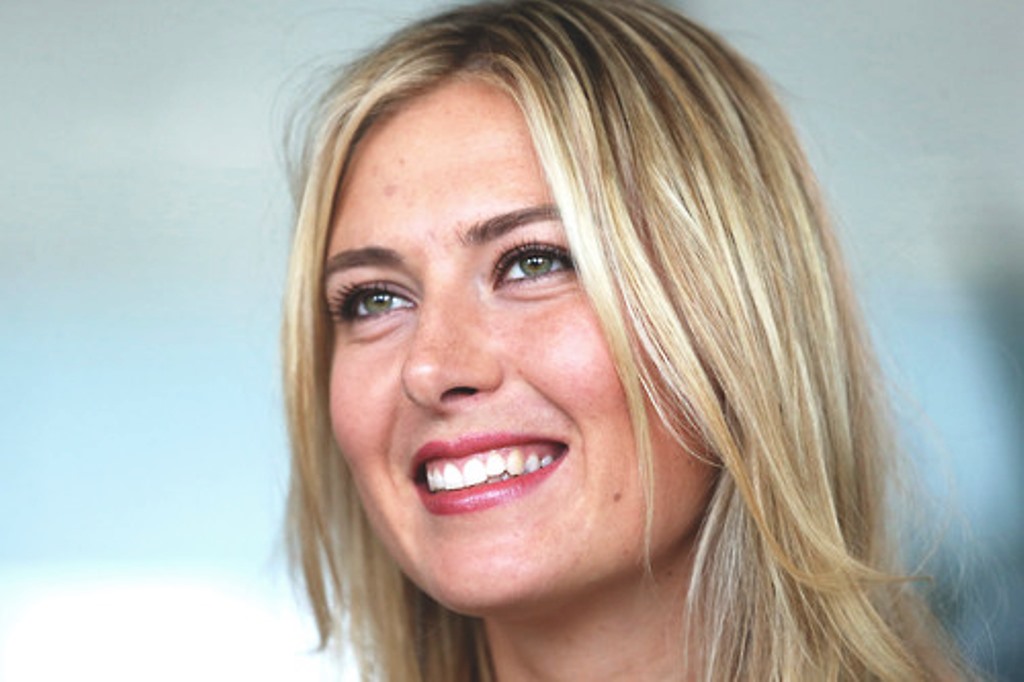
Stuttgart. Tennis megastar Maria Sharapova has taken on a new role: Effective immediately, the 26-year-old world class player will be representing the sports car manufacturer, Porsche AG, as brand ambassador.

Maria Sharapova...

Maria Sharapova…

The cooperation is initially signed for three years and involves a global communications campaign. The athlete is already very familiar with the vehicles from Zuffenhausen: As last year´s winner of the Porsche Tennis Grand Prix in Stuttgart, Sharapova not only took home prize money, but also a white 911 Carrera S Cabriolet.

Maria Sharapova to represent Porsche

Maria Sharapova to represent Porsche

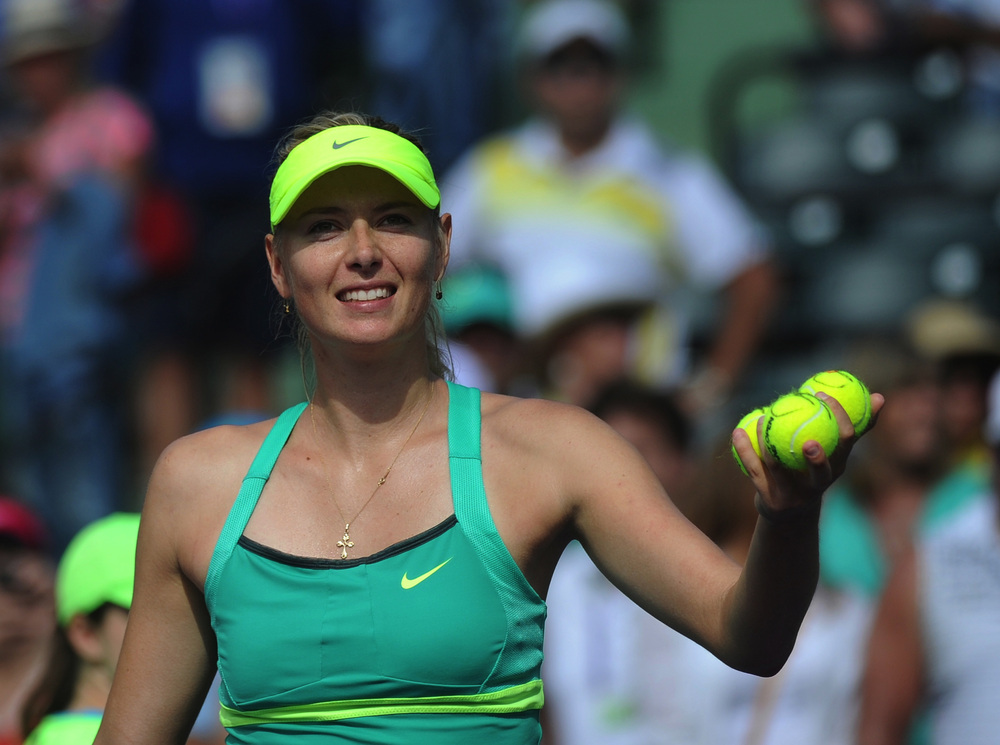
Born in Russia and living in the United States, Sharapova has achieved victories at all four Grand Slam tournaments in women’s tennis and she was ranked number 1 for a total of 21 weeks.

“Maria Sharapova is an exceptional athlete. She combines top performance in her sports with elegance and power. These are precisely the qualities that are embroiled in our sports cars”, as Matthias Mueller, CEO of Porsche AG, explained in today’s introduction of the partnership. According to Mueller it was not easy to find the right person to be Porsche´s ambassador.
Matthias Müller President and CEO, Porsche AG, Maria Sharapova

Matthias Müller President and CEO, Porsche AG, Maria Sharapova

“Maria Sharapova is the perfect choice. Her profile and charisma are an ideal fit for Porsche. She is also highly respected around the world and enjoys an outstanding reputation.”

Maria Sharapova did not really have to think twice: “This is a really special day for me. I have had the privilege to be associated with some of the best brands in the world, but now to be partners with Porsche, is such an amazing honor”, she explained during her presentation in Stuttgart.

Maria Sharapova to represent Porsche

Maria Sharapova to represent Porsche

For Porsche, the choice of Maria Sharapova as brand ambassador extends its long-term commitment to women´s tennis. The company sponsors the German women’s national team, which competes as the Porsche Team Germany in the Fed Cup, and the Porsche Talent Team Germany, which supports promising young players.

Maria Sharapova to represent Porsche

Maria Sharapova to represent Porsche

“We are fully committed to these activities for a long term. And with Maria Sharapova, we are now extending our involvement in women’s tennis globally”, Mueller added.

Maria Sharapova was born in the Western Siberian town of Nyagan on 18 April, 1987. She moved to Bradenton on the Gulf Coast of Florida (USA), when she was seven years old. Two years later she was accepted at the world-renowned Tennis Academy of coach Nick Bollettieri. In 2004, at the age of 17, she won her first Grand Slam tournament at Wimbledon, the third-youngest player ever.

Maria Sharapova to represent Porsche

Maria Sharapova to represent Porsche

This feat was followed by titles in the other three Grand Slam tournaments: U.S. Open 2006, Australian Open 2008, and French Open 2012. To date, Maria Sharapova has won a total of 28 singles titles, including last year´s Porsche Tennis Grand Prix in Stuttgart, the WTA Championships in 2004, and the silver medal at the 2012 Olympic Games in London.

Along with her involvement in the “Maria Sharapova Foundation”, she is also active as ambassador of the United Nations Development Program.

SOURCE: Porsche AG Media – Corporate Communication


Tags: , , , , , , , , ,

BREAKING NEWS: Timo Bernhard and Romain Dumas in the LMP1-Porsche, World Endurance Championship and 24 Hours of Le Mans

Stuttgart. The first two drivers to contest the top class of the sports car World Endurance Championship (WEC) and the Le Mans 24 hour race are confirmed.

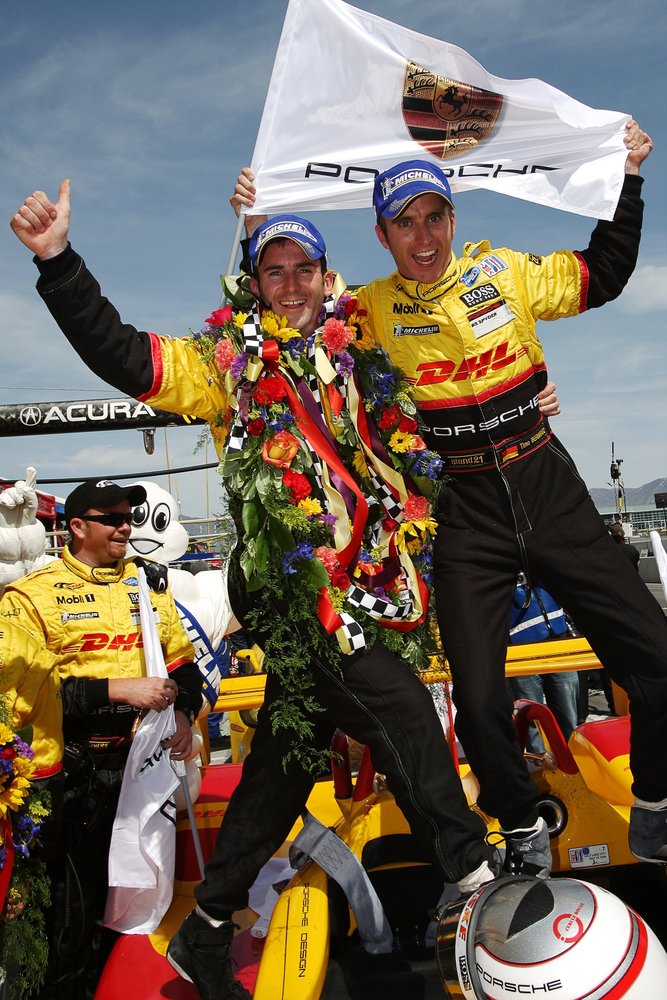
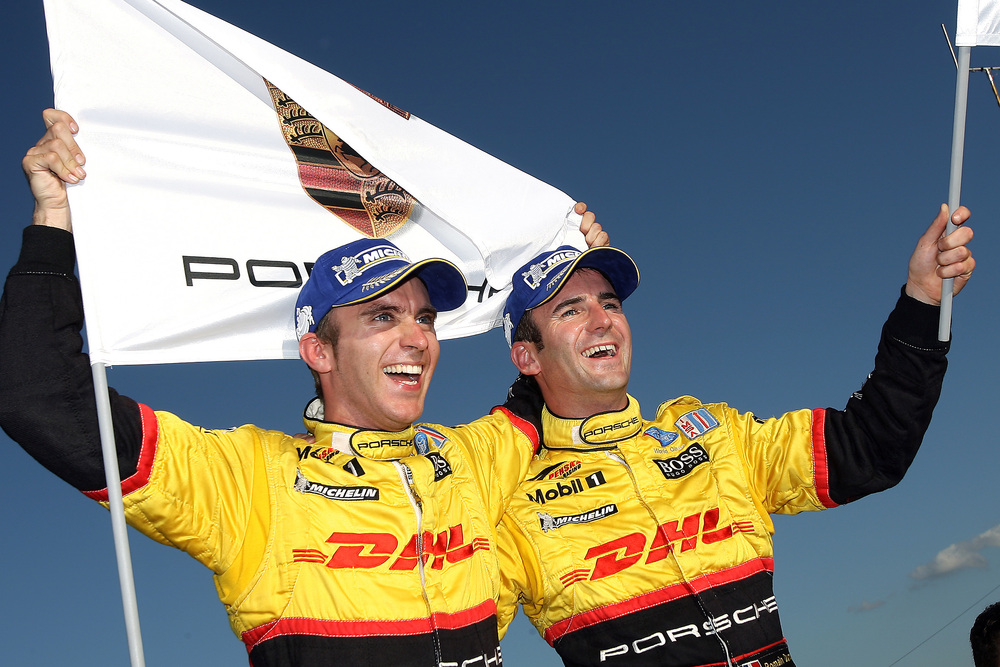
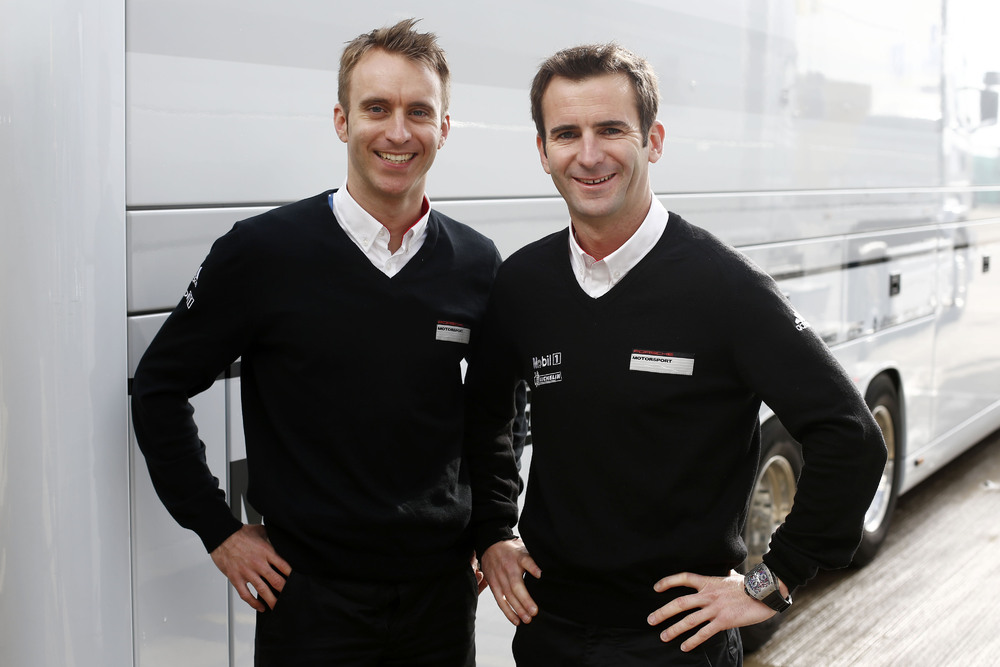
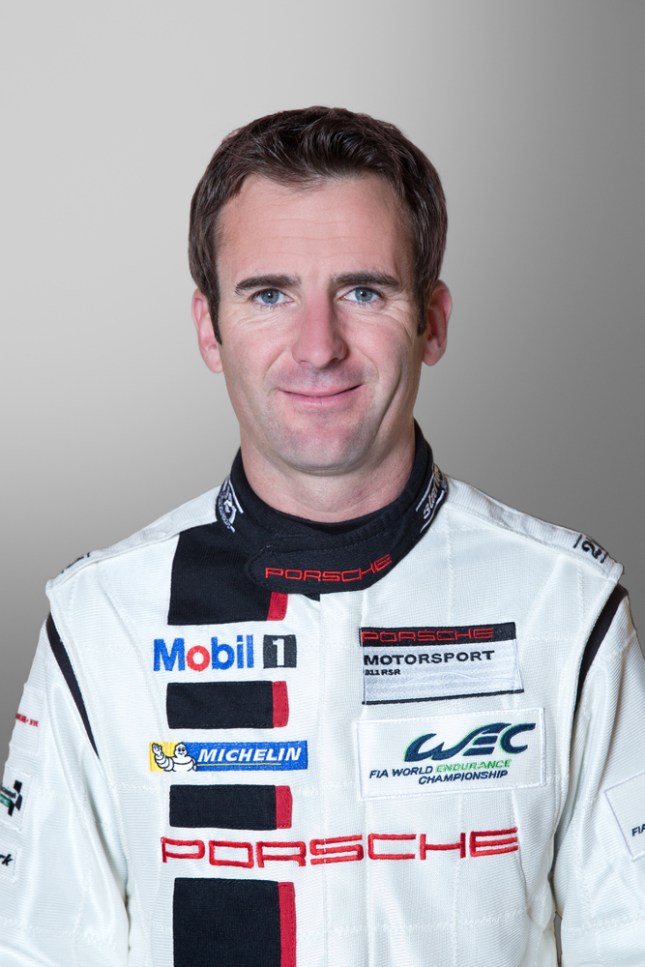
Le Mans overall winners Timo Bernhard (Germany) and Romain Dumas (France) will take the wheel of the new LMP1 vehicle from Weissach in the 2014 season.

Already this year the two Porsche works drivers Bernhard and Dumas will commence testing the new Le Mans racer.

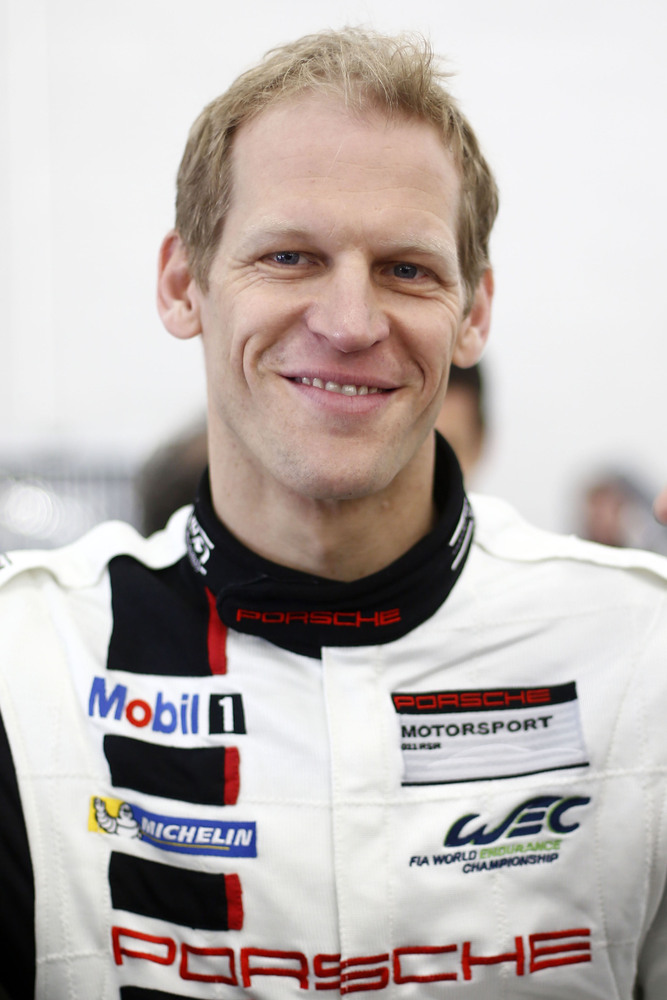
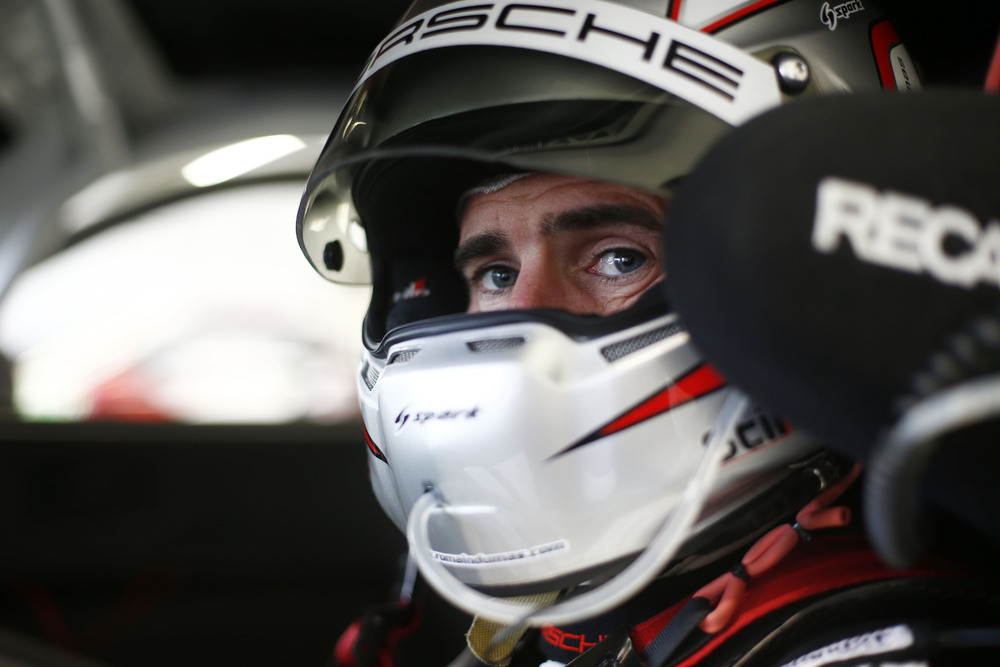
Timo Bernhard & Romain Dumas

Timo Bernhard & Romain Dumas

“Timo Bernhard and Romain Dumas are regarded as some of the fastest and most experienced sports car pilots in the world. I’m very pleased that we have these two men contesting the World Endurance Championship and the Le Mans 24 Hours for us from 2014”, says Wolfgang Hatz, Member of the Executive Board – Research and Development at Porsche AG.

“I particularly appreciate about the two is their competence as test drivers. For this reason the pair is already closely integrated in the development program of our new car and will embark on an intensive test schedule from the middle of this year”, says Fritz Enzinger, director LMP1-project.


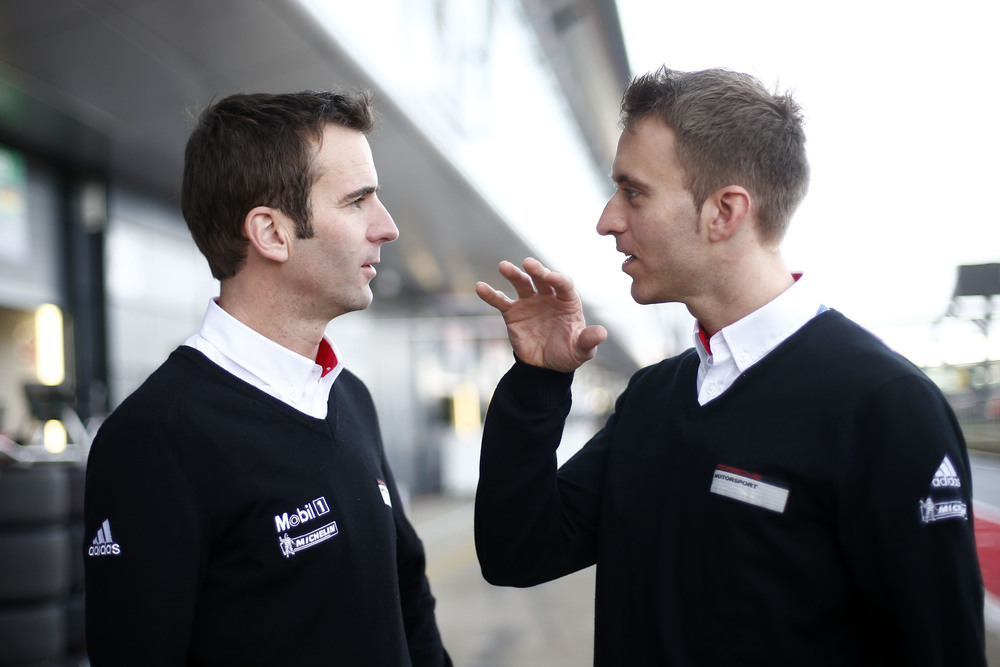
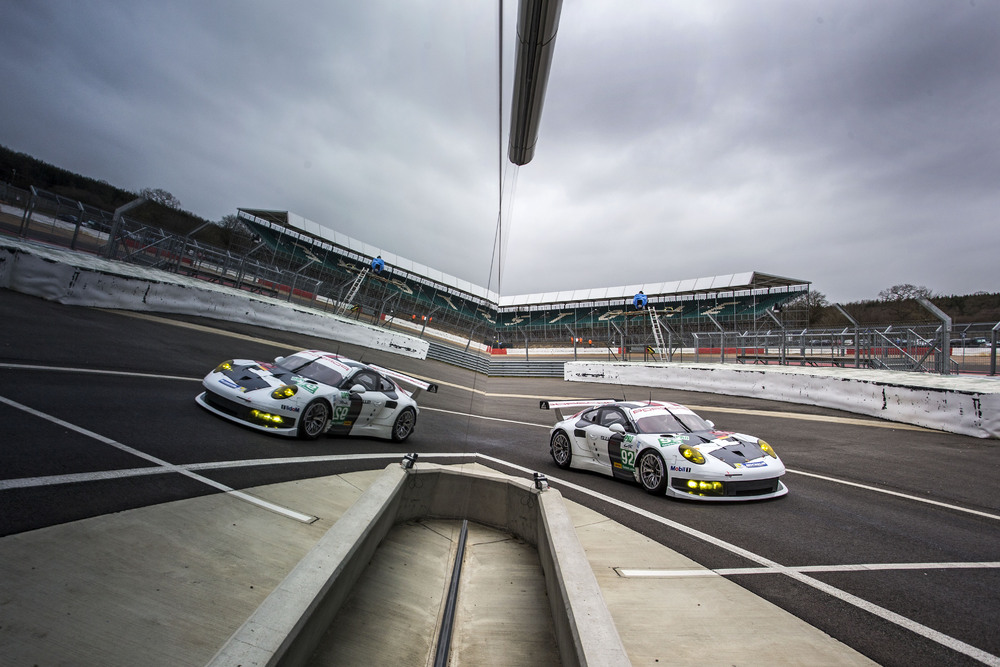
Timo Bernhard & Romain Dumas in Silverstone

Timo Bernhard & Romain Dumas in Silverstone

Timo Bernhard comes from Porsche’s own junior development programme. In 1999, Porsche recognised the talent of the then 18-year-old and coached him in the Porsche Junior Team to become a professional race driver.

In 2002, Bernhard was signed on as a works driver and since then has notched up victories and championship titles all over the world. In 2010 he was voted “Race Driver of the Year” by Germany’s automobile club ADAC for his outstanding achievements. Bernhard is the only race driver to have clinched overall victory at all four of the most famous sports car classics.

He won the Le Mans 24 Hours in 2010, in 2003 the Daytona 24 Hours, the 12 Hours of Sebring in 2004, and a total of five times at the 24 hour race on the Nürburgring – another record.

Timo Bernhard & Romain Dumas in Silverstone

Timo Bernhard & Romain Dumas in Silverstone

Romain Dumas joined the circle of Porsche factory drivers in 2004. Previously he attracted attention in the Formula 3, Formula 3000, at international GT races as well as the Porsche Carrera Cup Deutschland.

He is one of the most experienced pilots at the 24 Hours of Le Mans. All together, Dumas has contested his favourite race at La Sarthe twelve times. With Timo Bernhard, he scored overall victory there in 2010 at the wheel of an Audi. Together, the pair also celebrated huge successes in the U.S. in the RS Spyder sports prototype.

In 2007 and 2008, the two Porsche works drivers convincingly clinched the title in the American Le Mans Series. Bernhard shared the cockpit with Dumas at four of his five wins at the Nürburgring 24 hour race. Moreover, in 2010 Dumas celebrated overall victory in Spa at the wheel of a Porsche 911.

Fritz Enzinger, director LMP1-project

Fritz Enzinger, director LMP1-project

SOURCE: Porsche AG Media Database

Communication Porsche AG
Motorsport Press


Tags: , , , , , , , , , , ,

New Porsche 911 RSR scores 4th at its race debut, WEC, Rd 1 in Silverstone,Great Britain

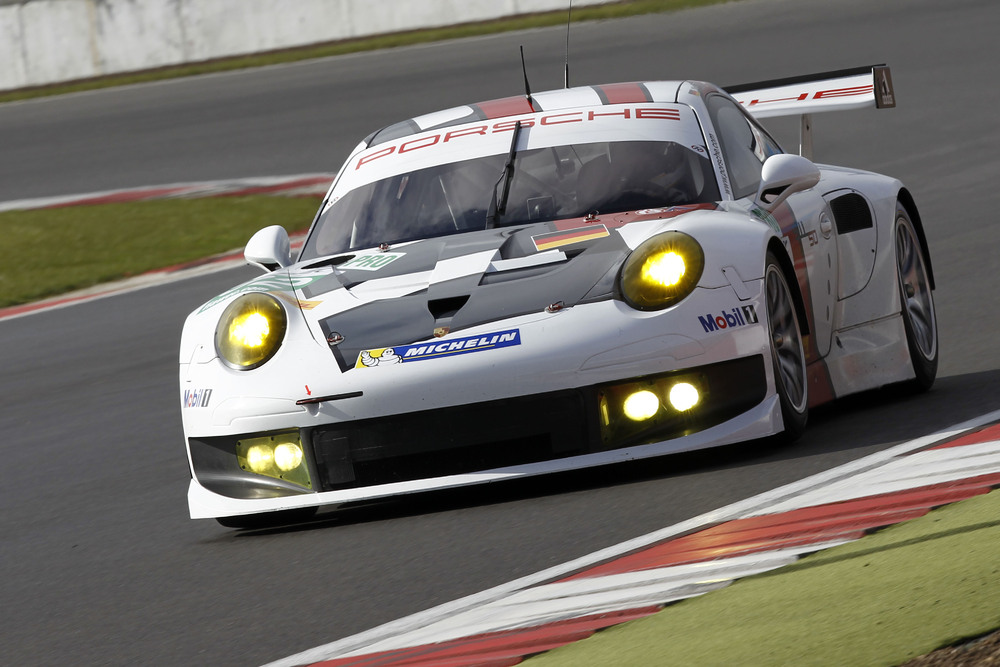
Porsche 911 RSR, Porsche AG Team Manthey- Marc Lieb, Richard Lietz, Romain Dumas

Porsche 911 RSR, Porsche AG Team Manthey- Marc Lieb, Richard Lietz, Romain Dumas

Stuttgart. The new Porsche 911 RSR narrowly missed out on a podium spot at its first race outing.

Porsche 911 RSR, Porsche AG Team Manthey- Marc Lieb, Richard Lietz, Romain Dumas

Porsche 911 RSR, Porsche AG Team Manthey- Marc Lieb, Richard Lietz, Romain Dumas

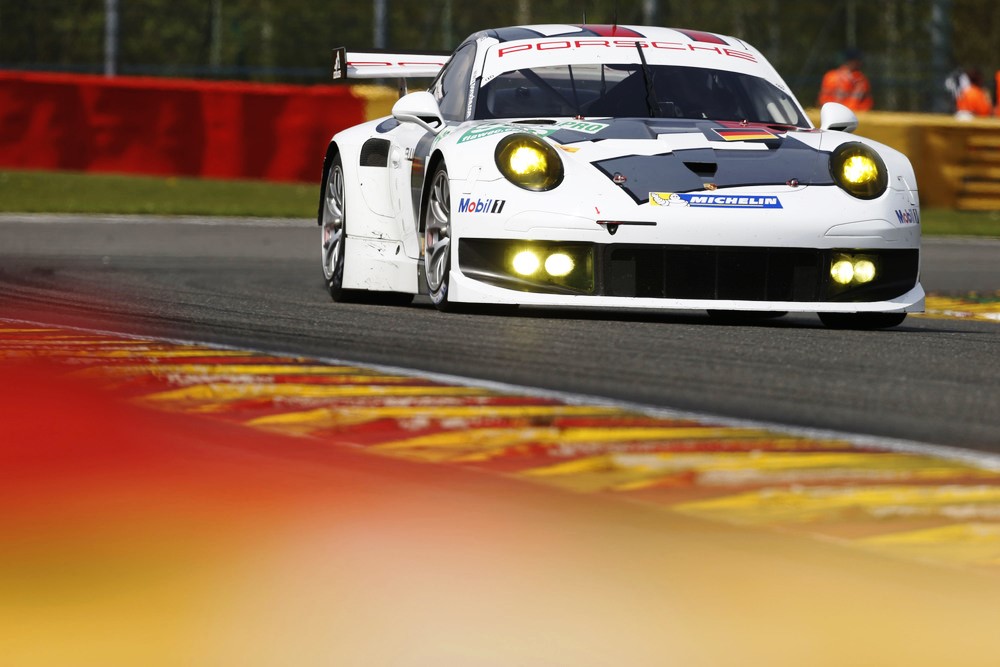
At the six hour race in Silverstone, the season-opener of the sports car World Endurance Championship (WEC), Porsche works drivers Marc Lieb (Germany), Richard Lietz (Austria) and Romain Dumas (France) occupied fourth in the GTE-Pro class with the 470 hp race car from Weissach.

Porsche 911 RSR, Porsche AG Team Manthey- Marc Lieb, Richard Lietz, Romain Dumas

Porsche 911 RSR, Porsche AG Team Manthey- Marc Lieb, Richard Lietz, Romain Dumas

At the wheel of the second 911 RSR, also fielded by the newly-formed Porsche AG Team Manthey, their works driver colleagues Joerg Bergmeister (Germany), Patrick Pilet (France) and Timo Bernhard (Germany) took the flag in sixth.

Porsche 911 RSR, Porsche AG Team Manthey- Joerg Bergmeister, Timo Bernhard, Patrick Pilet

Porsche 911 RSR, Porsche AG Team Manthey- Joerg Bergmeister, Timo Bernhard, Patrick Pilet

On the storied British race track, the Porsche 911 RSR, based on the seventh generation of the iconic 911 sports car, took up the race after a good qualifying result from the second row of the grid and could match the pace of its strongest opponents for some time.

Porsche 911 RSR, Porsche AG Team Manthey- Joerg Bergmeister, Timo Bernhard, Patrick Pilet

Porsche 911 RSR, Porsche AG Team Manthey- Joerg Bergmeister, Timo Bernhard, Patrick Pilet

At times, Patrick Pilet was running third with the #91 car, before an unscheduled pit stop cost him more than two laps and pushed him down the field.

 Porsche 911 RSR, Porsche AG Team Manthey- Marc Lieb, Richard Lietz, Romain Dumas

Porsche 911 RSR, Porsche AG Team Manthey- Marc Lieb, Richard Lietz, Romain Dumas

Halfway through the race, Romain Dumas was also on track for a podium place in third with the #92 car. Later, his teammate Richard Lietz even moved into second place – but at the end of the day it was not enough for a top three placing.

Wolfgang Hatz, Member of the Executive Board – Research and Development:

Wolfgang Hatz, Vorstand Forschung und Entwicklung Porsche AG, Porsche 911 RSR

Wolfgang Hatz, Vorstand Forschung und Entwicklung Porsche AG, Porsche 911 RSR

“That was the first race for the new car and the new team. The organization of the squad worked well. Of course, there are areas where we have room for improvement, but it’s like a football team, we first have to get everything running smoothly.Technically, everything worked on the 911 RSR apart from a one small thing which we will have fixed by the next race.

As far as the performance is concerned, we still have room for improvement. Naturally we also have to work on the car, it has a little too much oversteer.

But all in all I regard it as a positive weekend. It wouldn’t have been good if the car had experienced lots of problems, but that was not the case. We saw that the 911 RSR can turn consistently quick lap times over the race distance. Now if we do our homework, I think we’ll finish further up the field at the next races.”

Hartmut Kristen, Porsche Head of Motorsport:

“Both new 911 RSR reached the flag at their race debut, and there were no major technical problems. With a new team, of course there is still some fine-tuning to be done, that’s normal. We are looking forward to the next race and hope that the car will make another step forward there.”

Marc Lieb (#92):

 Marc Lieb, Porsche AG Team Manthey

Marc Lieb, Porsche AG Team Manthey

“We gained many important insights in the race. The car underlined its potential. Now we just need to work a little more on that.”

Richard Lietz (#92):

 Richard Lietz, Porsche AG Team Manthey

Richard Lietz, Porsche AG Team Manthey

“We were looking good in the fast corners, but we need to sort out the oversteer exiting the slow corners. But our engineers should be able to correct this by the next race. If so, the podium is within reach.”

Romain Dumas (#92):

“An interesting race. We learned a lot. On the straights we are a little slower than our opponents which makes overtaking very difficult. Still, there are many positives things we can take from this race.”

Joerg Bergmeister (#91):

 Joerg Bergmeister, Porsche AG Team Manthey

Joerg Bergmeister, Porsche AG Team Manthey

“That wasn’t our dream result. But we’ve learned a lot this weekend. The conditions were not the easiest, because we had no time to practice on the dry track for setting up the car.”

 Patrick Pilet, Porsche AG Team Manthey

Patrick Pilet, Porsche AG Team Manthey

“It’s bad luck that we lost more than two laps, but the mechanics did a good job. In any case, we’ve found a good basis to work on and we are optimistic for the rest of the season.”

Timo Bernhard (#91):

“Heading towards Le Mans that was a very valuable race for us. Our performance wasn’t too bad. Without the front axle problem a podium place would have been within reach.”

 Porsche 911 GT3 RSR, Proton Competition, Christian Ried, Gianluca Roda, Paolo Ruberti

Porsche 911 GT3 RSR, Proton Competition, Christian Ried, Gianluca Roda, Paolo Ruberti

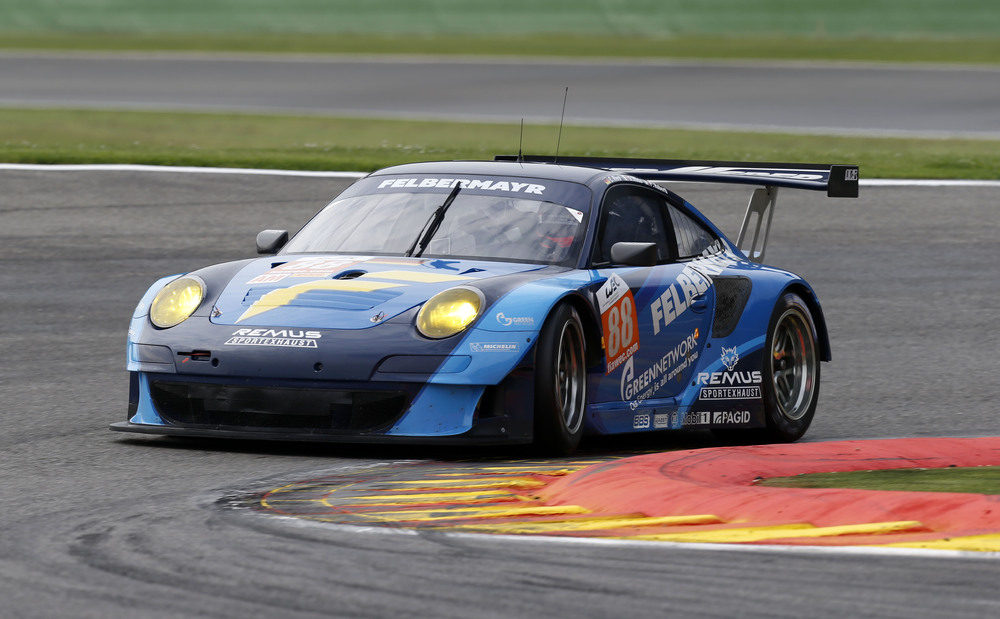
In the GTE-Am class, Christian Ried (Germany) and his Italian teammates Gianluca Roda and Paolo Ruberti scored fifth place in last year’s Porsche 911 GT3 RSR fielded by the customer team Felbermayr-Proton.

This slideshow requires JavaScript.

Round two of the World Endurance Championship (WEC) takes place on 4 May in Spa-Francorchamps (Belgium).

Race result
GTE-Pro class
1. Turner/Mücke/Senna (GB/D/BRA), Aston Martin Vantage, 171 laps
2. Kobayashi/Vilander (J/SF), Ferrari F458 Italia, 170
3. Dalla Lana/Macowiecki/Lamy (CAN/F/P), Aston Martin Vantage, 170
4. Lieb/Lietz/Dumas (D/A/F), Porsche 911 RSR, 170
5. Bruni/Fisichella (I/I), Ferrari F458 Italia, 170
6. Bergmeister/Pilet/Bernhard (D/F/D), Porsche 911 RSR, 168

GTE-Am class
1. Nygaard/Poulsen/Simonsen (DEN/DEN/DEN), Aston Martin Vantage, 169 laps
2. Bornhauser/Canal/Rees (FRA/FRA/BRA), Chevrolet Corvette, 166
3. Potolicchio/Aguas/Peter (I/VEN/A), Ferrari F458 Italia, 165
4. Goethe/Hall/Campbell-Walter (D/GB/GB), Aston Martin Vantage, 165
5. Ried/Roda/Ruberti (D/I/I), Porsche 911 GT3 RSR, 165
7. Narac/Bourret/Tandy (F/F/GB), Porsche 911 GT3 RSR, 163

The World Endurance Championship
In the World Endurance Championship, sports prototypes and GT vehicles start in four classes: LMGTE-Pro, LMGTE-Am, LMP1 and LMP2. They all compete together in one race but are classified separately.

SOURCE:  World Endurance Championship  Porsche AG Press Media Database

Communication Porsche AG
Motorsport Press


Tags: , , , , , , , , ,

VIDEO: New 2013 Porsche 911 RSR in the second grid row, WEC rd 1 in Silverstone, Great Britain

 Porsche 911 RSR, Porsche AG Team Manthey- Joerg Bergmeister, Timo Bernhard, Patrick Pilet

Porsche 911 RSR, Porsche AG Team Manthey- Joerg Bergmeister, Timo Bernhard, Patrick Pilet

Stuttgart. The new Porsche 911 RSR heads into its race debut from the second grid row of the GTE-Pro class.

Porsche 911 RSR, Porsche AG Team Manthey: Joerg Bergmeister, Timo Bernhard, Patrick Pilet

Porsche 911 RSR, Porsche AG Team Manthey: Joerg Bergmeister, Timo Bernhard, Patrick Pilet

In qualifying for the six hour race on the tradition-steeped British race circuit, on which the World Endurance Championship (WEC) kicks off the new season on Sunday, Porsche works drivers Joerg Bergmeister (Germany) and Patrick Pilet (France) posted the third quickest average time.

Porsche 911 RSR, Porsche AG Team Manthey- Joerg Bergmeister, Timo Bernhard, Patrick Pilet

Porsche 911 RSR, Porsche AG Team Manthey- Joerg Bergmeister, Timo Bernhard, Patrick Pilet

Sharing the number 91 cockpit for the race is their works driver colleague Timo Bernhard (Germany). The 470 hp 911 RSR is based on the seventh generation of the iconic 911 sports car and is fielded by the Porsche AG Team Manthey squad.

Porsche 911 RSR, Porsche AG Team Manthey- Marc Lieb, Richard Lietz, Romain Dumas

Porsche 911 RSR, Porsche AG Team Manthey- Marc Lieb, Richard Lietz, Romain Dumas

From this season on, the qualifying in the WEC is conducted following a new format: For the first time, two drivers must qualify one car.

The grid positions for the race are determined by the average of the two fastest timed laps of each of these drivers.

Joerg Bergmeister, Porsche AG Team Manthey

Joerg Bergmeister, Porsche AG Team Manthey

“As far as the set-up is concerned we have found some potential because prior to this qualifying we had very little time in the dry,” said Joerg Bergmeister.

“So we had to take a bit of a risk and almost found the right point. I think we’ll get it under control in time for the race.” Patrick Pilet commented: “In a six hour race, the qualifying times are not everything. I’m looking forward to Sunday and can’t wait for the first race with the new 911 RSR.”

 Porsche 911 RSR, Porsche AG Team Manthey- Marc Lieb, Richard Lietz, Romain Dumas

Porsche 911 RSR, Porsche AG Team Manthey- Marc Lieb, Richard Lietz, Romain Dumas

In the second Porsche 911 RSR with the starting number 92, the factory pilots Richard Lietz (Austria) and Romain Dumas (France) achieved the fourth quickest average time. For the race, the pair receives support from Marc Lieb (Germany).

Romain Dumas, Porsche AG Team Manthey

Romain Dumas, Porsche AG Team Manthey

“That was the first time that I drove the car on the dry track this weekend,” stated Richard Lietz. “We knew it would be difficult. But much more important than the result was that I got a good feel for dry conditions with new slicks. I was very happy with my laps.”

Romain Dumas, Porsche AG Team Manthey

Romain Dumas, Porsche AG Team Manthey

His teammate Romain Dumas said: “That was an interesting qualifying. We are going well with our new car, but we’re still certain to learn a great deal over the season.”

Romain Dumas, Porsche AG Team Manthey

Romain Dumas, Porsche AG Team Manthey

“The qualifying went quite well so far. We were lucky that it stayed dry,” said Porsche’s Head of Motorsport, Hartmut Kristen. “The whole team is now raring to tackle the first race with the 911 RSR.”

 Porsche 911 RSR, Porsche AG Team Manthey- Marc Lieb, Richard Lietz, Romain Dumas

Porsche 911 RSR, Porsche AG Team Manthey- Marc Lieb, Richard Lietz, Romain Dumas

Qualifying result
GTE-Pro class
1. Turner/Mücke/Senna (GB/D/BRA), Aston Martin Vantage, 2:00.556 minutes
2. DallaLana/Macowiecki/Lamy (CAN/F/P), Aston Martin Vantage, + 0.216 seconds
3. Bergmeister/Pilet/Bernhard (D/F/D), Porsche 911 RSR, + 0.742
4. Lieb/Lietz/Dumas (D/A/F), Porsche 911 RSR, + 0.886
5. Bruni/Fisichella (I/I), Ferrari F458 Italia, + 0.946
6. Kobayashi/Vilander (J/SF), Ferrari F458 Italia, + 1.237

GTE-Am class
1. Goethe/Hall/Campbell-Walter (D/GB/GB), Aston Martin Vantage, 2:01.158 minutes
2. Nygaard/Poulsen/Simonsen (DEN/DEN/DEN), Aston Martin V., + 0.382 seconds
3. Gerber/Griffin/Cioci (ZAF/IRL/I), Ferrari F458 Italia, + 1.238
6. Narac/Bourret/Tandy (F/F/GB), Porsche 911 GT3 RSR, + 1.860

The World Endurance Championship
In the World Endurance Championship, sports prototypes and GT vehicles start in four classes: LMGTE-Pro, LMGTE-Am, LMP1 and LMP2. They all compete together in one race but are classified separately.

This slideshow requires JavaScript.

SOURCE:  World Endurance Championship   Porsche AG Media Press Database   https://presse.porsche.de.

Communication Porsche AG
Motorsport Press


Tags: , , , , , , , , , ,

Latest Photos: Porsche Free Practice World Endurance Championship, rd 1 in Silverstone, Great Britain

This slideshow requires JavaScript.

Stuttgart. Latest photos from free practice on the Silverstone Circuit, on which the first round of the World Endurance Championship WEC is contested on Sunday.

SOURCE: Porsche AG Media Database

Communication Porsche AG
Motorsport Press


Tags: , , , , , , , , , , , , , , ,

Race debut of the new Porsche 911 RSR, World Endurance Championship, rd 1 in Silverstone, Great Britain

World Endurance Championship, round 1 in Silverstone, Great Britain

Joerg Bergmeister, Porsche 911 RSR, Porsche AG Team Manthey

Joerg Bergmeister, Porsche 911 RSR, Porsche AG Team Manthey

Stuttgart. At the six hour race on the Silverstone Circuit, which signals the start of the 2013 World Endurance Championship (WEC) season on 14th April, the Porsche 911 RSR celebrates its race debut. Running the campaign on the storied 5.981 kilometre circuit in the British Midlands is the Porsche AG Team Manthey works team with Olaf Manthey at the helm.

Joerg Bergmeister, Porsche 911 RSR, Porsche AG Team Manthey

Joerg Bergmeister, Porsche 911 RSR, Porsche AG Team Manthey

The Porsche drivers

Porsche works drivers Joerg Bergmeister (Germany), Patrick Pilet (France) and Timo Bernhard (Germany) take up the GTE-Pro class in the 911 RSR with starting number 91.

Porsche 911 RSR , Porsche AG Team Manthey: Joerg Bergmeister, Timo Bernhard, Patrick Pilet

Porsche 911 RSR , Porsche AG Team Manthey: Joerg Bergmeister, Timo Bernhard, Patrick Pilet

Sharing driving duties in the cockpit of the number 92 vehicle are their factory driver colleagues Marc Lieb (Germany), Richard Lietz (Austria) and Romain Dumas (France).

Porsche 911 RSR, Porsche AG Team Manthey: Marc Lieb, Richard Lietz, Romain Dumas

Porsche 911 RSR, Porsche AG Team Manthey: Marc Lieb, Richard Lietz, Romain Dumas

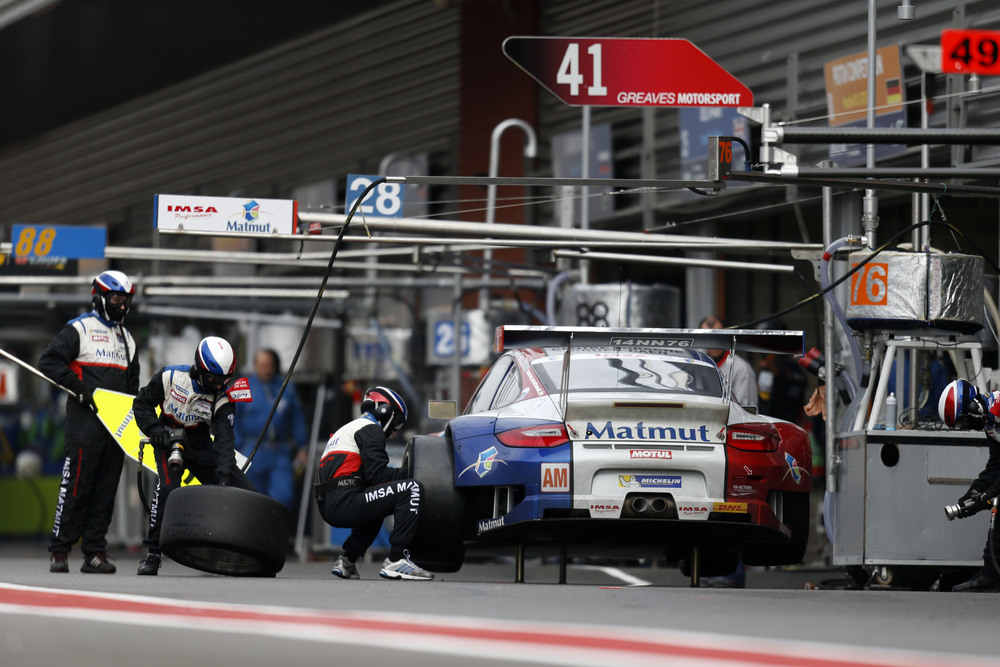
Two customer teams tackle the GTE-Am class with last year’s Porsche 911 GT3 RSR: Driving the Proton Competition entry is Christian Ried (Germany) and his Italian teammates Paolo Ruberti and Gianluca Roda, with an all-French line-up of Raymond Narac, Christophe Bourret and Jean-Karl Vernay competing for IMSA Performance Matmut.

The Porsche 911 RSR

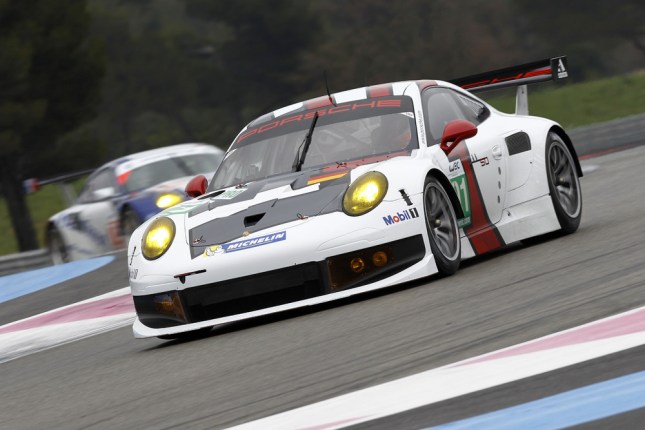
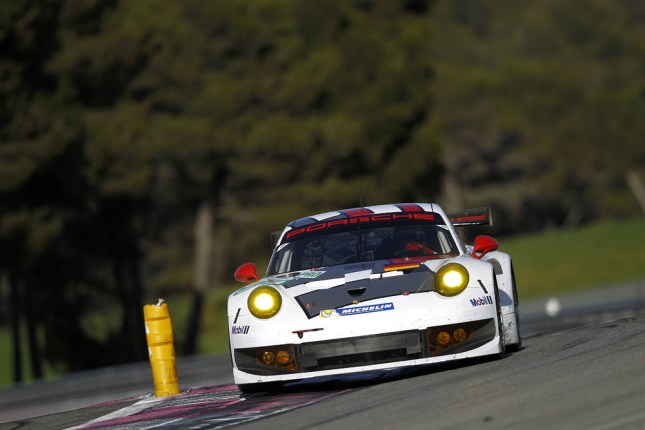
The Porsche 911 RSR delivers 460 hp and is based on the seventh generation of the iconic 911 sports car.

Timo Bernhard, Porsche 911 RSR, Porsche AG Team Manthey

Timo Bernhard, Porsche 911 RSR, Porsche AG Team Manthey

As the successor to the winning 911 GT3 RSR, with which Porsche customers scored many victories and title wins since 2004, it is characterized by consequent lightweight design and sophisticated aerodynamics.

Porsche 911 RSR, Porsche AG Team Manthey: Marc Lieb, Richard Lietz, Romain Dumas

Porsche 911 RSR, Porsche AG Team Manthey: Marc Lieb, Richard Lietz, Romain Dumas

Joerg Bergmeister, Porsche 911 RSR, Porsche AG Team Manthey

Joerg Bergmeister, Porsche 911 RSR, Porsche AG Team Manthey

The look of the new 911 RSR is dominated by the flared mudguards and the deep cooling air intakes at the front. The exceptional vehicle styling honours the anniversary “50 years of the 911”.

Timo Bernhard, Porsche 911 RSR, Porsche AG Team Manthey

Timo Bernhard, Porsche 911 RSR, Porsche AG Team Manthey

The schedule

The six hour race takes off on Sunday, 14 April, at midday local time (13.00 hrs CET). Eurosport 2 televises the start of the race live at 13.00 hours (30 minutes) and returns to a live broadcast at 15.00 hours (30 minutes). The final hour is aired live from 18.00 hours on Eurosport 1. The race can be viewed live on the internet under http://www.fiawec.com.

Comments before the race

Hartmut Kristen, Head of Porsche Motorsport: “The whole team is ready and raring to tackle the first race with the 911 RSR. Our squad has worked extremely hard over the last months to make our new car competitive right from the start.”

Jörg Bergmeister

Jörg Bergmeister

Joerg Bergmeister (# 91): “I’m looking forward to my premiere in the WEC – in the most beautiful and spectacular 911 ever.”

Patrick Pilet

Patrick Pilet

Patrick Pilet (# 91): “To share the cockpit with such successful Porsche pilots like Joerg and Timo is a great and exciting challenge.”

Timo Bernhard

Timo Bernhard

Timo Bernhard (# 91): “I felt great at the tests in the 911 RSR. We have a good chance to win our class with this car.”

Marc Lieb

Marc Lieb

Marc Lieb (# 92): “The new 911 RSR is a significant step forward. I hope that the good test results can be confirmed at the first race.”

Richard Lietz

Richard Lietz

Richard Lietz (# 92): “We face very strong opposition from the works teams from Ferrari and Aston Martin. In Silverstone we’ll see where we stand.”

Romain Dumas

Romain Dumas

Romain Dumas (# 92): “I’m looking forward to racing the new 911 RSR with Marc and Richard and I’m confident that we’ll make a good start into the season.”

In the World Endurance Championship, sports prototypes and GT vehicles start in four different classes: LMGTE-Pro, LMGTE-Am, LMP1 and LMP2. They all compete together in one race but are classified separately.

SOURCE:   World Endurance Championship Porsche Media Database

Communication Porsche AG
Motorsport Press


Tags: , , , , , , , , , ,

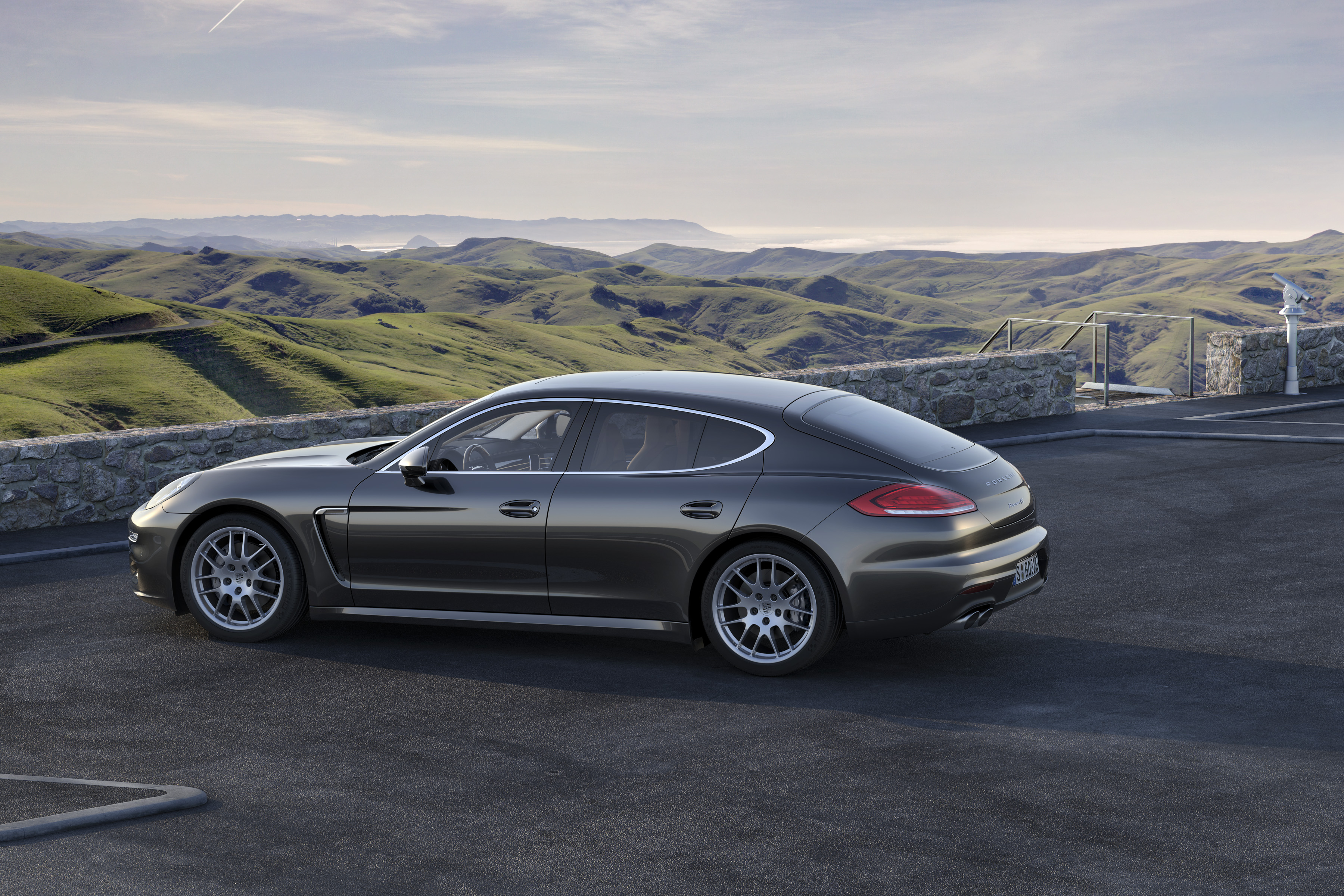
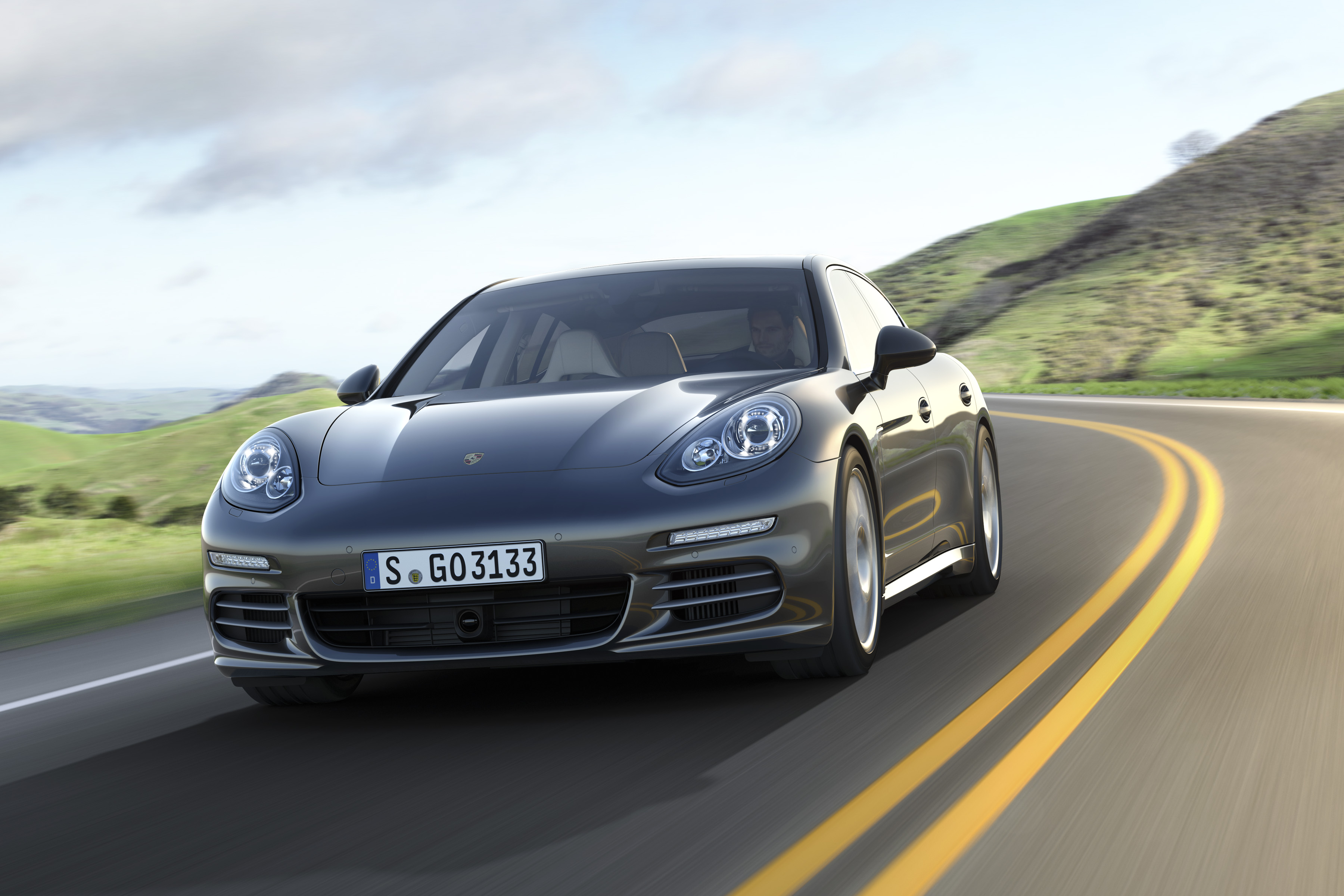
VIDEO: 2014 Porsche Panamera – Looking to the future: World’s first plug-in hybrid drive in the luxury class

Panamera S E-Hybrid

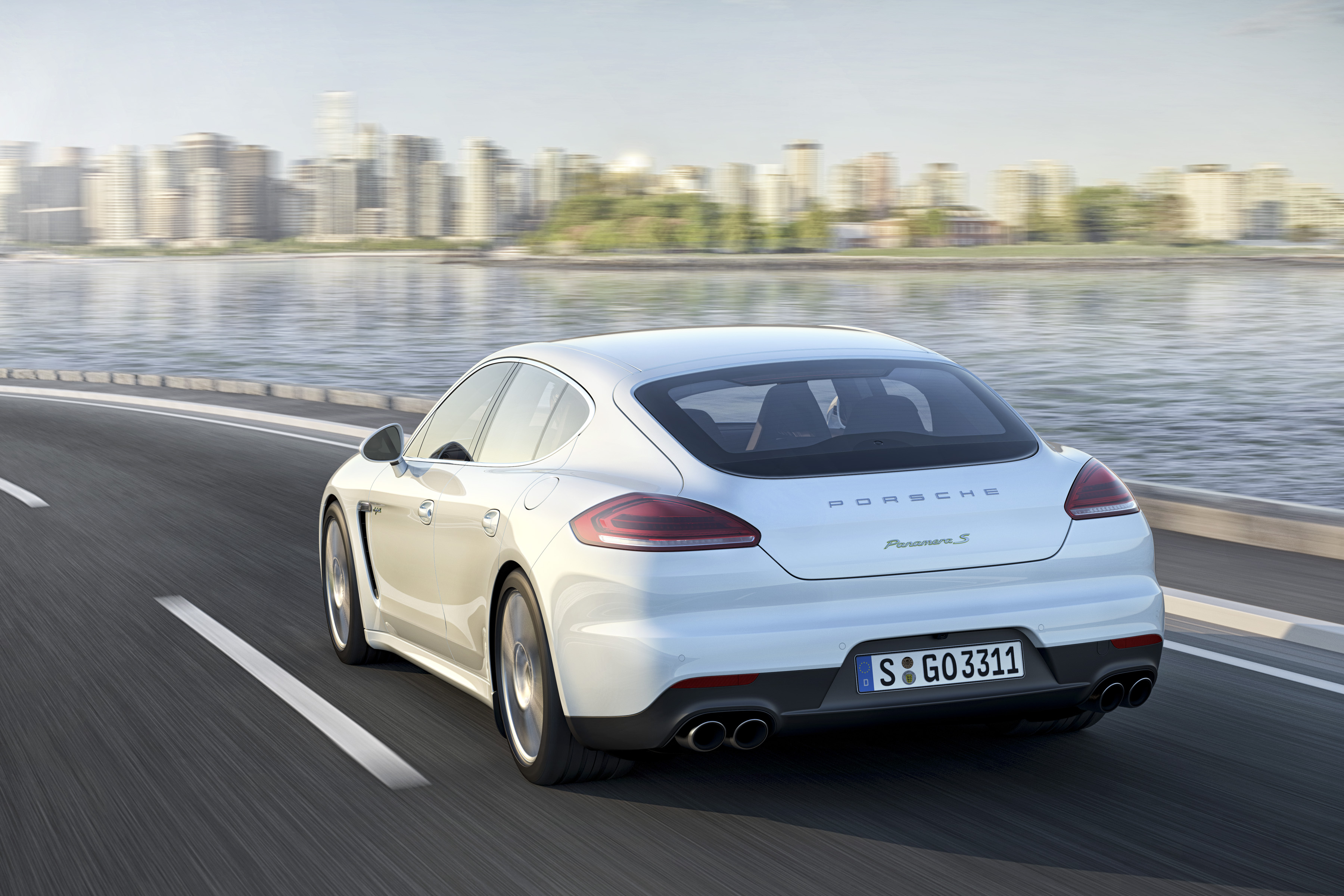
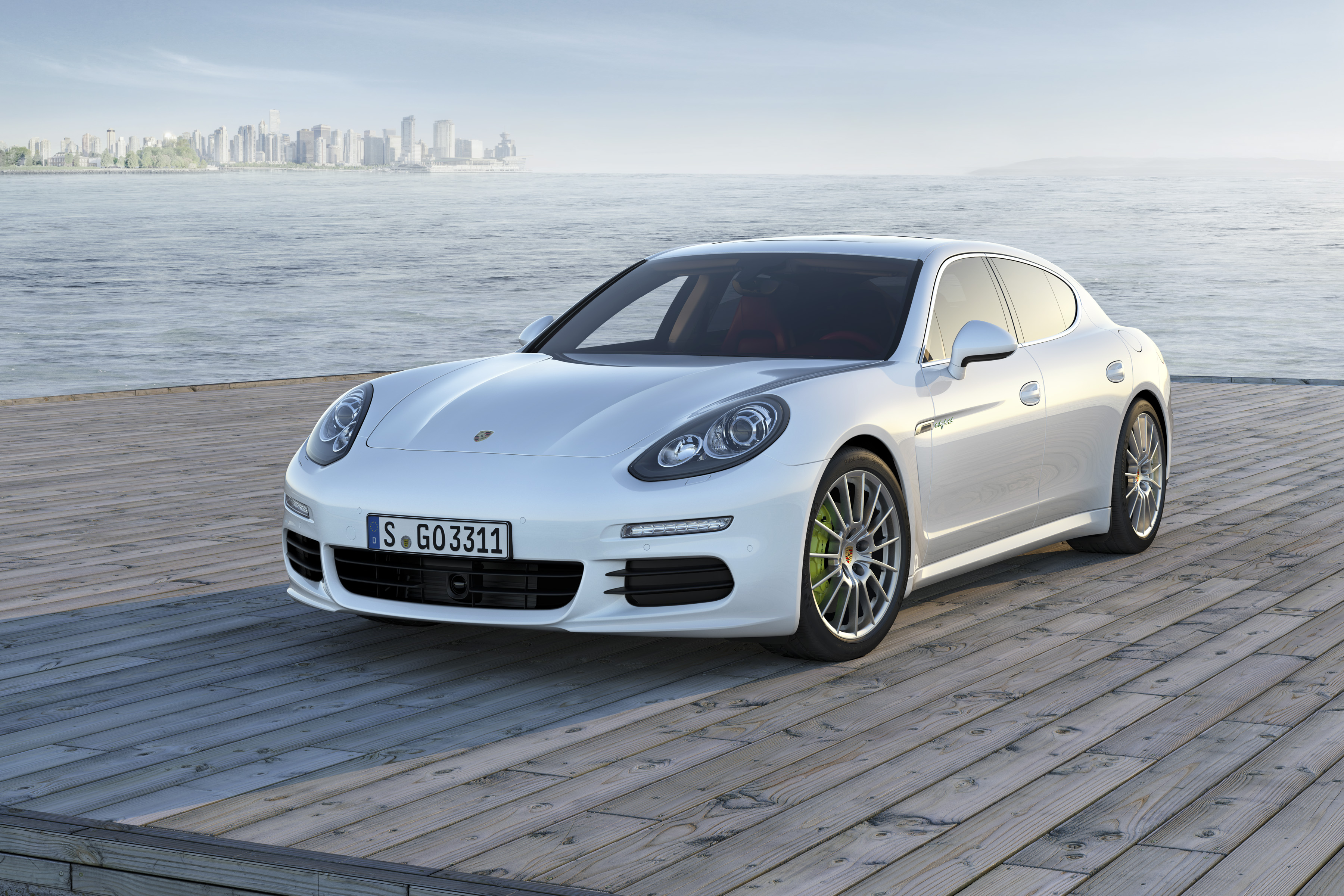
Stuttgart. In the second generation of the Gran Turismo, Porsche is introducing the world’s first plug-in hybrid to the luxury class. Along with the Panamera S E-Hybrid with 416 hp of system power, two luxurious Executive versions are also making their debut with an extended wheelbase and an entirely new three-litre V6 engine with biturbo charging for the Panamera S and Panamera 4S.

Panamera S E-Hybrid


Panamera S E-Hybrid

An already unrivalled broad base of models has now been extended and consists of ten models offering an even further broader range between sportiness and comfort. New and further developed technologies have enabled fuel savings of up to 56 per cent, while further enhancing operating and driving comfort. The new Panamera underscores its exceptional positioning with an even more expressive design language in the style of the new sports car generations that are marked by tighter lines, more pronounced contours and newly shaped body elements. In short: The Porsche Panamera is even more efficient, sporty, comfortable and elegant. The new generation Gran Turismo celebrates its world premiere at Auto China in Shanghai, which opens its gates on the 21st of April 2013.

Panamera Turbo Executive

Panamera Turbo Executive

Panamera S E-Hybrid sets new standards in efficiency, performance and operating convenience
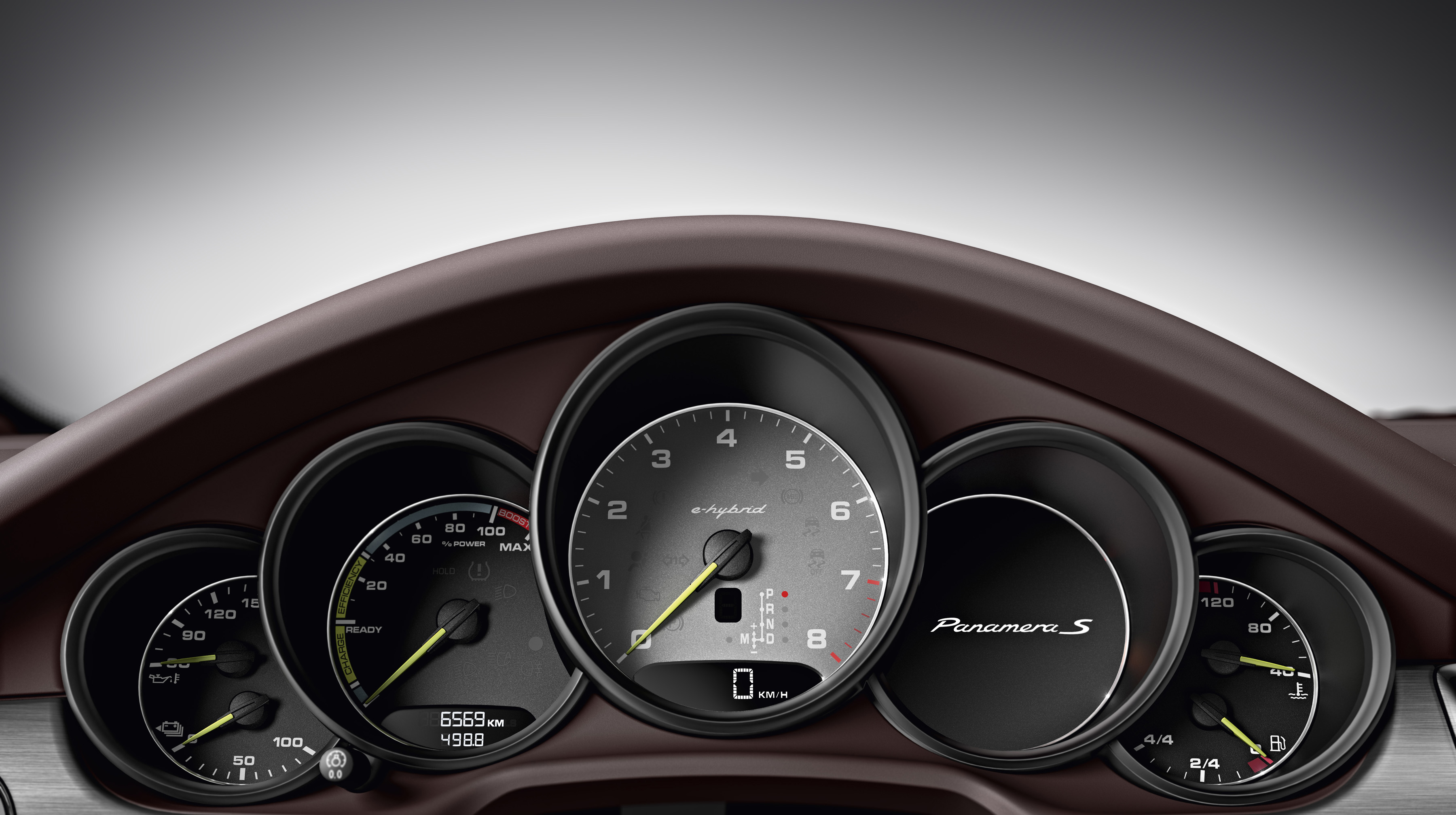
The Panamera S E-Hybrid is a systematically advanced development of the parallel full hybrids with a more powerful electric motor, a higher-performance battery that supplies more energy and the ability to charge it externally from the electrical grid. The electric drive produces 95 hp (70 kW), which is more than double the power of the previous model’s electric motor at 47 hp (34 kW). It draws its energy from a newly developed lithium-ion battery, which at 9.4 kWh has over five times the 1.7 kWh energy capacity of the previous battery in nickel metal hydride technology.

Panamera Turbo Executive

Panamera Turbo Executive

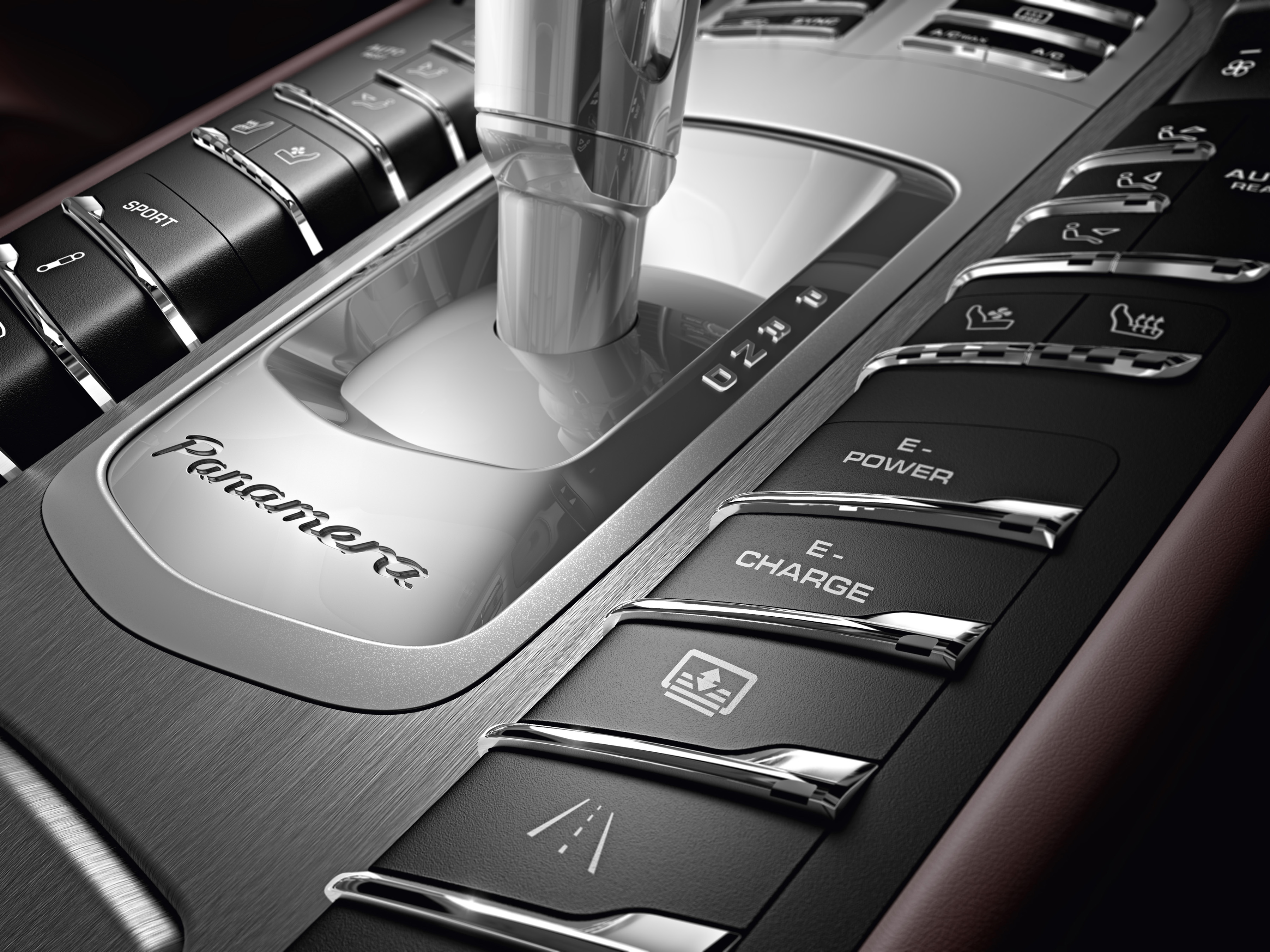
When connected to an industrial outlet, it can be charged within around two and a half hours via the integrated on-board charger and the standard Porsche Universal Charger (AC), and it can be charged in less than four hours when connected to a conventional household electrical outlet in Germany.

Panamera 4S

Panamera 4S

The Panamera S E-Hybrid far exceeds the driving performance of the previous model. In addition, the previous model’s NEDC fuel consumption of 7.1 l/100 km was reduced by 56 per cent to 3.1 l/100 km. That equates to CO2 emissions of 71 g/km. At the same time, its all-electric driving performance was substantially improved with regard to electric acceleration, the electric range and electric top speed. An intensive pure electric driving experience is possible without any fuel consumption or local emissions, which is especially advantageous in the urban environment.

Panamera 4S

Panamera 4S

The electric driving range of the Panamera S E-Hybrid was determined to be 36 kilometres in NEDC-based testing. Driving range may vary in real operation, since air conditioning and heating are deactivated in NEDC test conditions, for example. A realistic all-electric driving range in everyday operation would lie somewhere between 18 and 36 km – and under particularly favourable conditions it could even exceed this range. The Panamera with the new hybrid drive can reach speeds of up to 135 km/h in all-electric operation.

Panamera S E-Hybrid - Innenraum

Panamera S E-Hybrid – Innenraum

The acceleration time from a standstill to 100 km/h was shortened by half a second to 5.5 seconds. The electric boost function helps here, in which the performance of the electric motor boosts that of the combustion engine. Boosting can also be activated by kick-down – such as in overtaking situations. The car’s top speed is 270 km/h. The parallel full hybrid concept developed by Porsche also offers “coasting” at higher speeds, which refers to free coasting with the internal combustion engine shut off and energy recovery by generating electricity.

Panamera S E-Hybrid - Innenraum

Panamera S E-Hybrid – Innenraum

The forward-looking concept of the Panamera S E-Hybrid also embodies an entirely new range of convenience functions, which can also be activated and called up by a smart phone app.

There is the charge status indicator, for example. In addition, the auxiliary climate control option of the plug-in hybrid enables car preheating or cooling via Porsche Car Connect; it can be programmed in the vehicle or even more conveniently via the smart phone app. A smart phone may also be used for battery management or for remote access to vehicle information such as the remaining driving range or for guiding users back to their parked vehicles. All functions that are not specific to the hybrid drive are also available as options for the other Panamera models via the Car Connect smart phone app from Porsche.

Panamera Turbo Executive - Innenraum

Panamera Turbo Executive – Innenraum

Long wheelbase, spacious rear seating area: Executive models with the comfort of the exclusive class
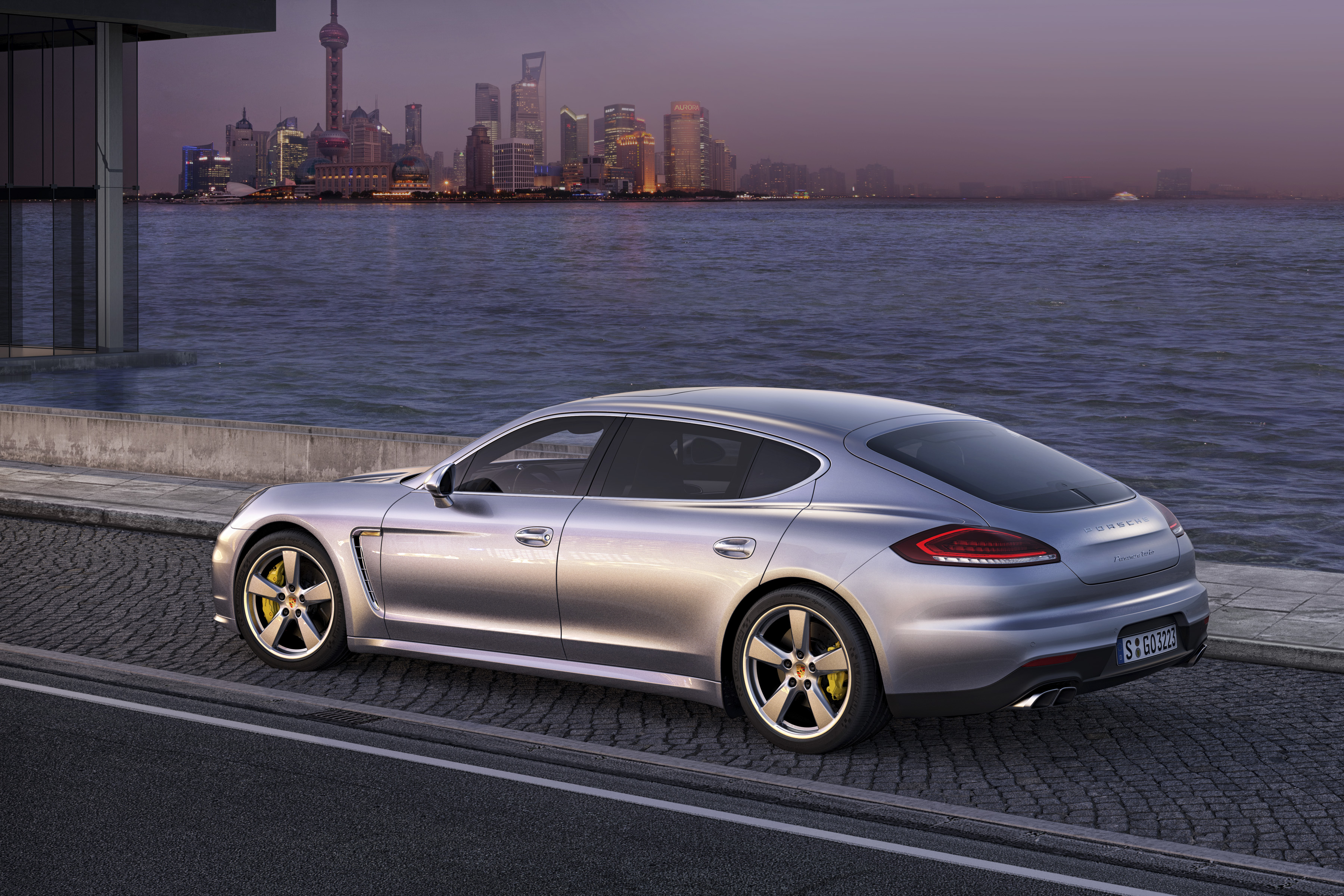
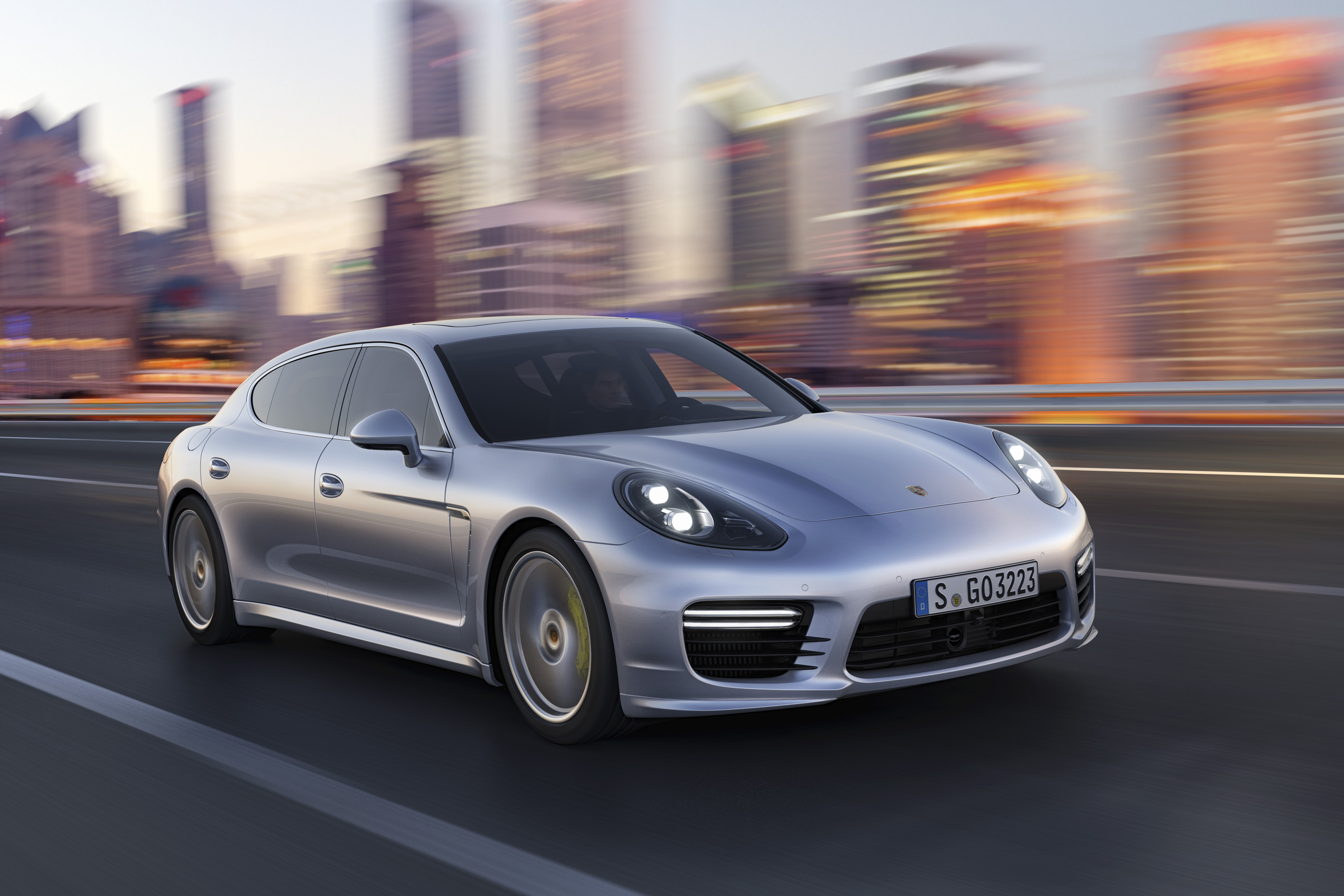
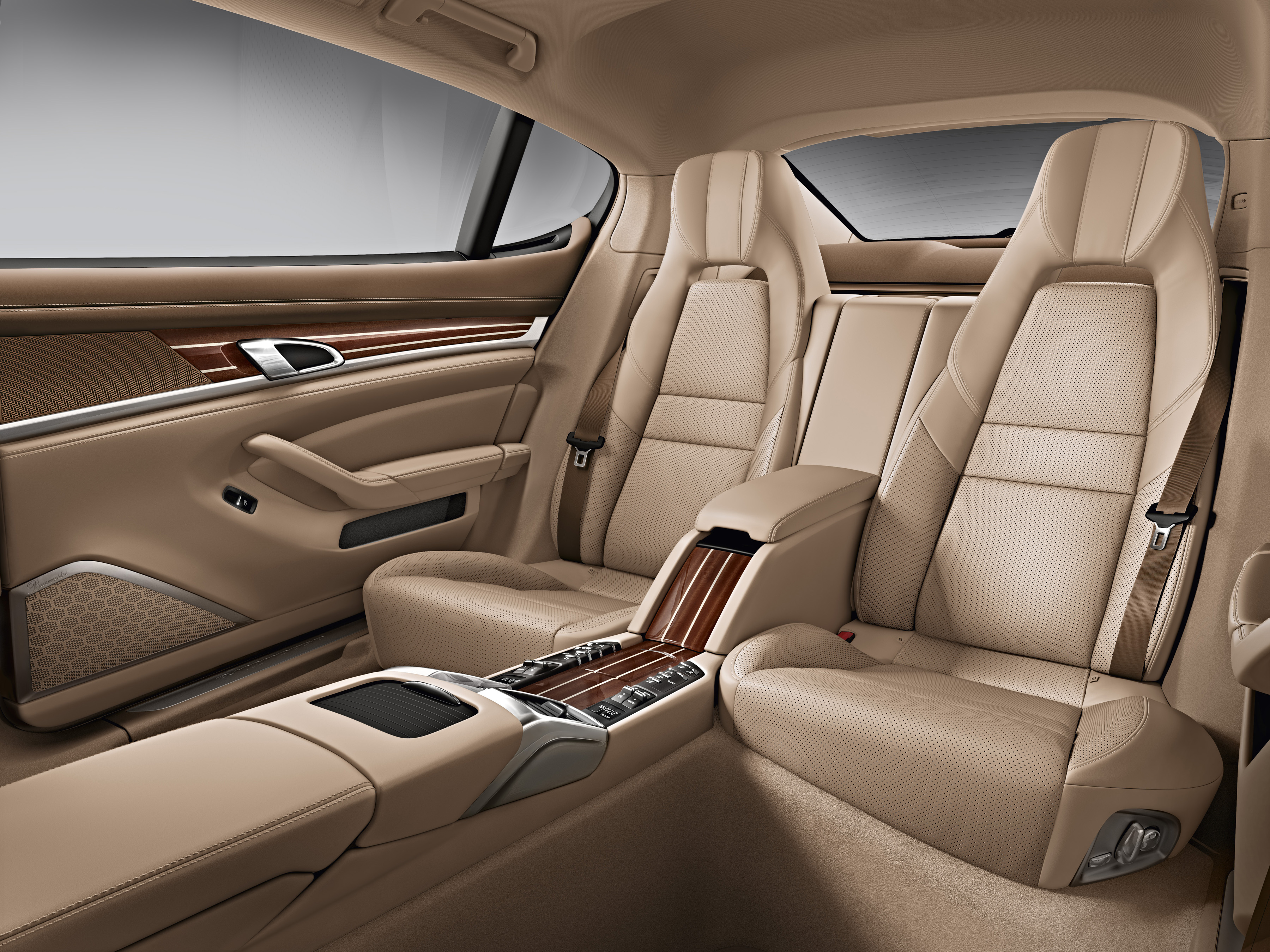
The spatial concept of the Panamera with two full-fledged bucket seats in the rear seating area proved to be so successful that Porsche is further extending it in the new generation Gran Turismo. The new Panamera Turbo Executive and Panamera 4S Executive models – with their 15 cm longer wheelbase – offer more rear seating space and even better ride comfort. They have a very extensive range of features, and above all they offer exceptional comfort at both rear seat locations as standard. All Executive models have the innovative Panamera air suspension, which combines excellent ride comfort and typical Porsche driving properties.

More performance and efficiency by downsizing: new V6 biturbo engine
Boosting of performance and efficiency is a core competency at Porsche. In developing the new Panamera, this led to an entirely new engine based on the downsizing concept: a V6 engine with three litres displacement and biturbo charging.

The V6 biturbo replaces the previous 4.8-litre V8 engine in the Panamera S and Panamera 4S, and it is also used in the new Executive version of the Panamera 4S. Its basic parameters themselves are indicators of progress: 20 hp more power and 20 Newton metres more torque, but up to 18 per cent better fuel economy compared to the V8 engine in the previous model. This not only gives the driver a more powerful and efficient engine; turbocharging results in a maximum torque of 520 Newton metres being available over a very broad range of engine speeds for a superior and uniform power curve, even at low revs.

Most Panamera models are equipped with the seven-speed Porsche Doppelkupplung PDK. The comfortable eight-speed automatic Tiptronic S operates in the Panamera Diesel and Panamera S E-Hybrid. This transmission creates optimal conditions for further development of other efficiency functions. For example, the extended start-stop function now deactivates the engine earlier while coasting to a stop, which saves more fuel. With the exception of the Panamera GTS, models with PDK also offer a coasting function in which the clutches open in overrun, the engine idles, and the vehicle coasts freely. This function can significantly improve fuel economy, especially when travelling on the motorway.

Further developed design with a new option: LED headlights
The further advanced exterior design of the Panamera can be made out at first glance. The tighter and more prominent linework at the front end is especially apparent in the larger air intakes and the distinctive transition to the headlights. In side profile, the new, more swept-back rear window creates an even more extended silhouette. When viewed from the back, the new generation Panamera is primarily made out by its new boot lid. The widened rear window emphasises the horizontal orientation of the Gran Turismo and therefore its sporty character. The rear section itself was also redesigned, including the wider spoiler, and it shows a tighter transition to the rear lights, similar to the visual transition of the headlights at the front of the car.

As in previous models, the new Panamera models also offer many differentiating exterior characteristics. Further customisation is achieved by the numerous options that are offered, including the new LED headlights, which give the Gran Turismo a very special appearance.

The Panamera models are further upgraded by new standard features such as bi-xenon headlights, multifunction steering wheel and an automatic boot lid. In addition, an extended line-up of assistance systems is available for safety and convenience. The optimised adaptive cruise control system, for example, now actively intervenes in the braking process in hazardous situations. Camera-based traffic sign detection and lane departure warning offer greater convenience in cross-country and motorway travel.

The new generation of Panamera models will be launched on the market in July 2013. Prices start at 81,849 euros for the Panamera Diesel and 83,277 Euro for the Panamera. The Panamera 4 is priced at 88,513 euros, the Panamera S at 101,841 euros and the Panamera 4S at 107,196 euros. The Panamera S E-Hybrid costs 110,409 euros, which is followed by the Panamera GTS at 121,595 euros and the Panamera 4S Executive at 132,662 euros. The top models are the Panamera Turbo for 145,990 euros and the Panamera Turbo Executive for 163,364 euros. The cited prices are valid for Germany, including VAT and market-specific features.

At the beginning of next year, a new diesel engine with 300 hp (220 kW) will replace the current diesel, offering even more driving fun with typical diesel efficiency. Also arriving on the market in 2014 are the new Porsche Panamera Turbo S and Panamera Turbo S Executive. They represent the exclusive and sporty pinnacle of the model range.

SOURCE: Porsche AG Media Database

Product and Technology Communication
Product Communication


Tags: , , , , , , ,

Porsche 911 RSR – Consequent lightweight design for 50th anniversary

Porsche 911 RSR

Porsche 911 RSR

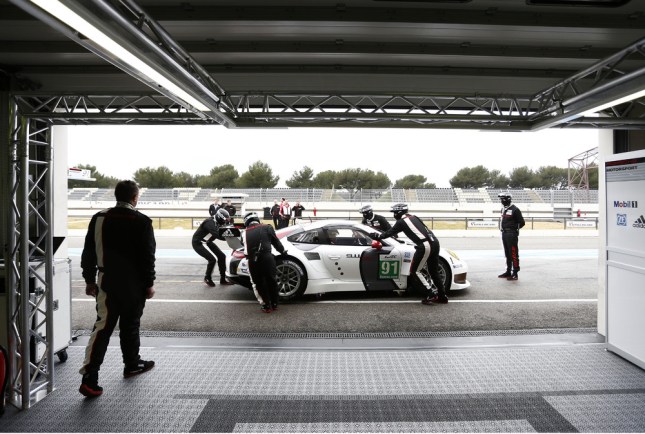
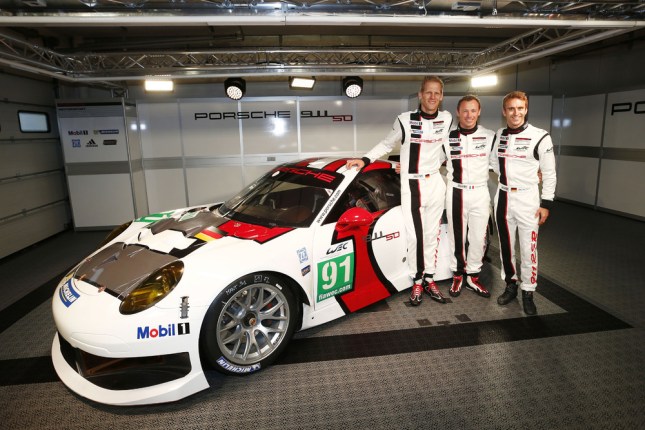
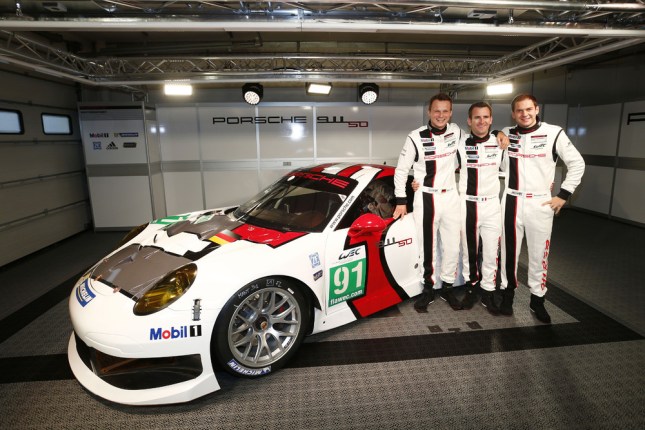
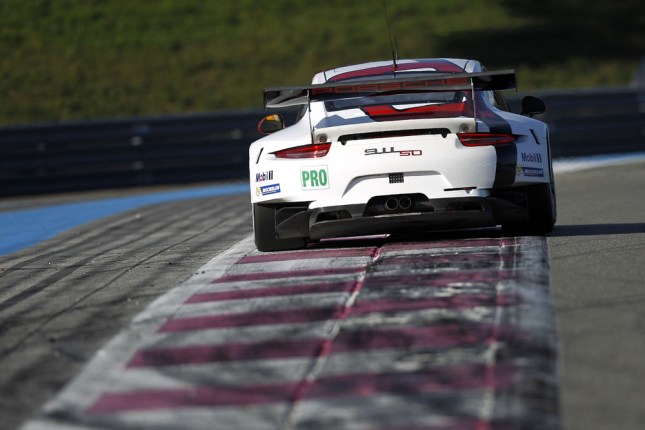
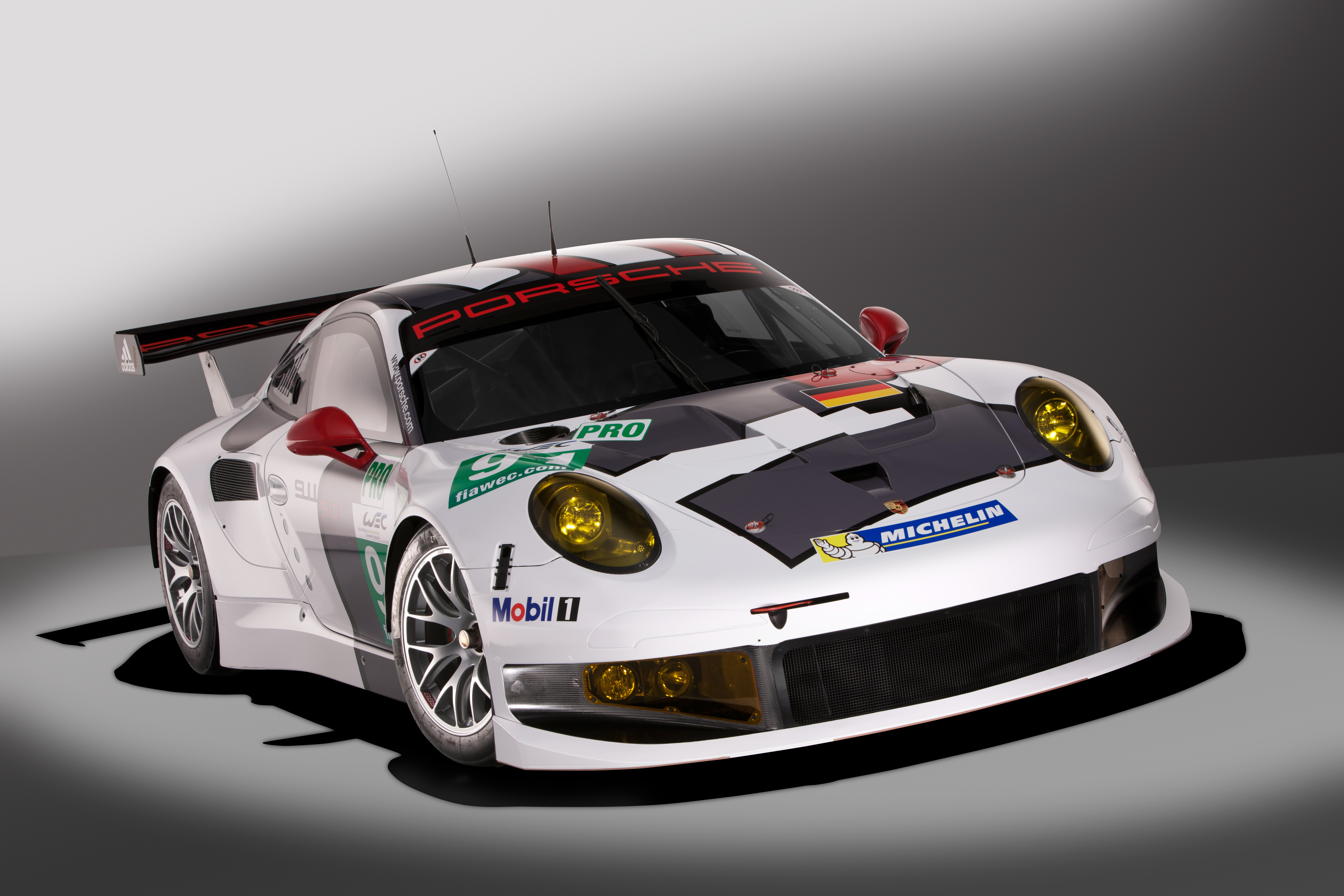
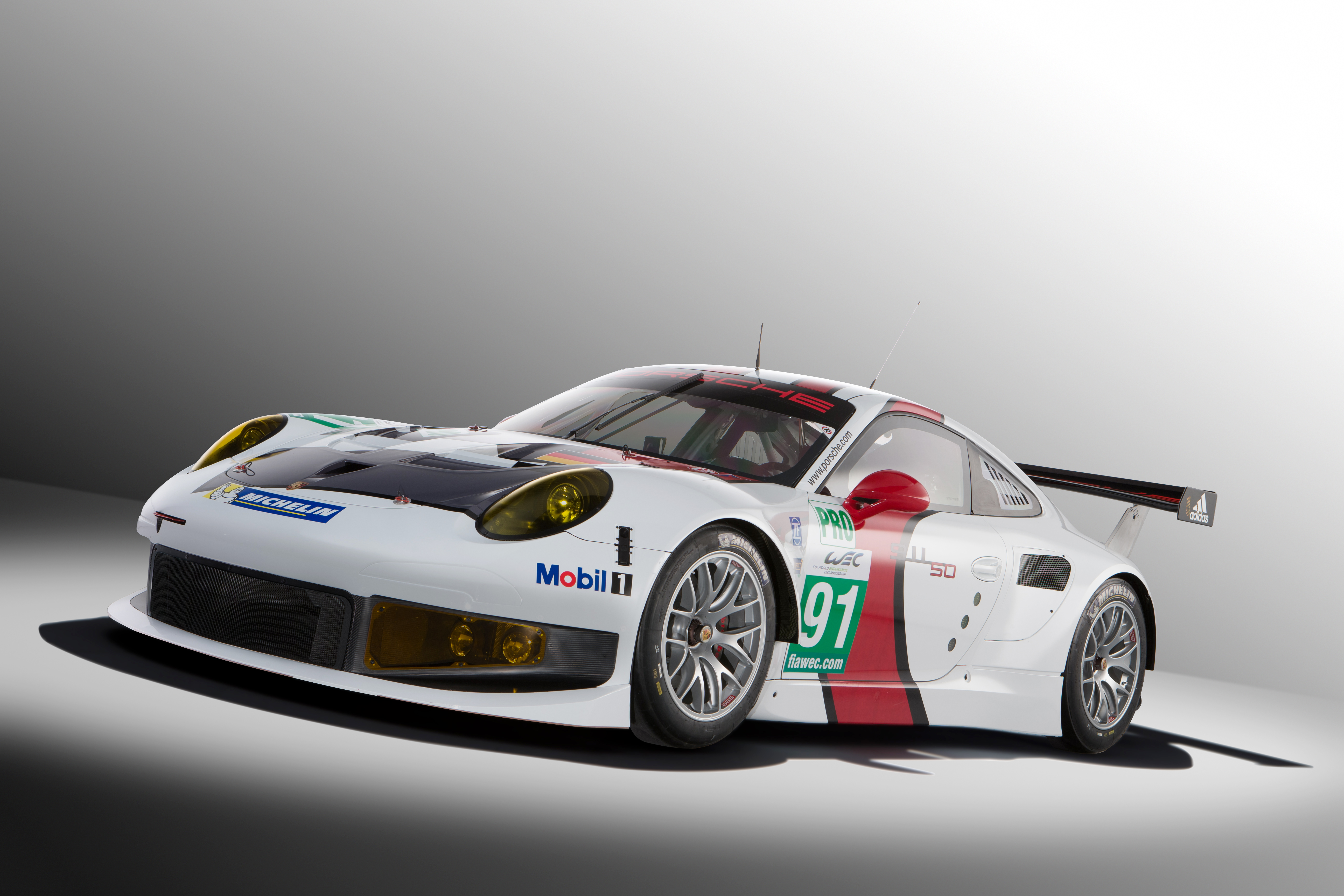
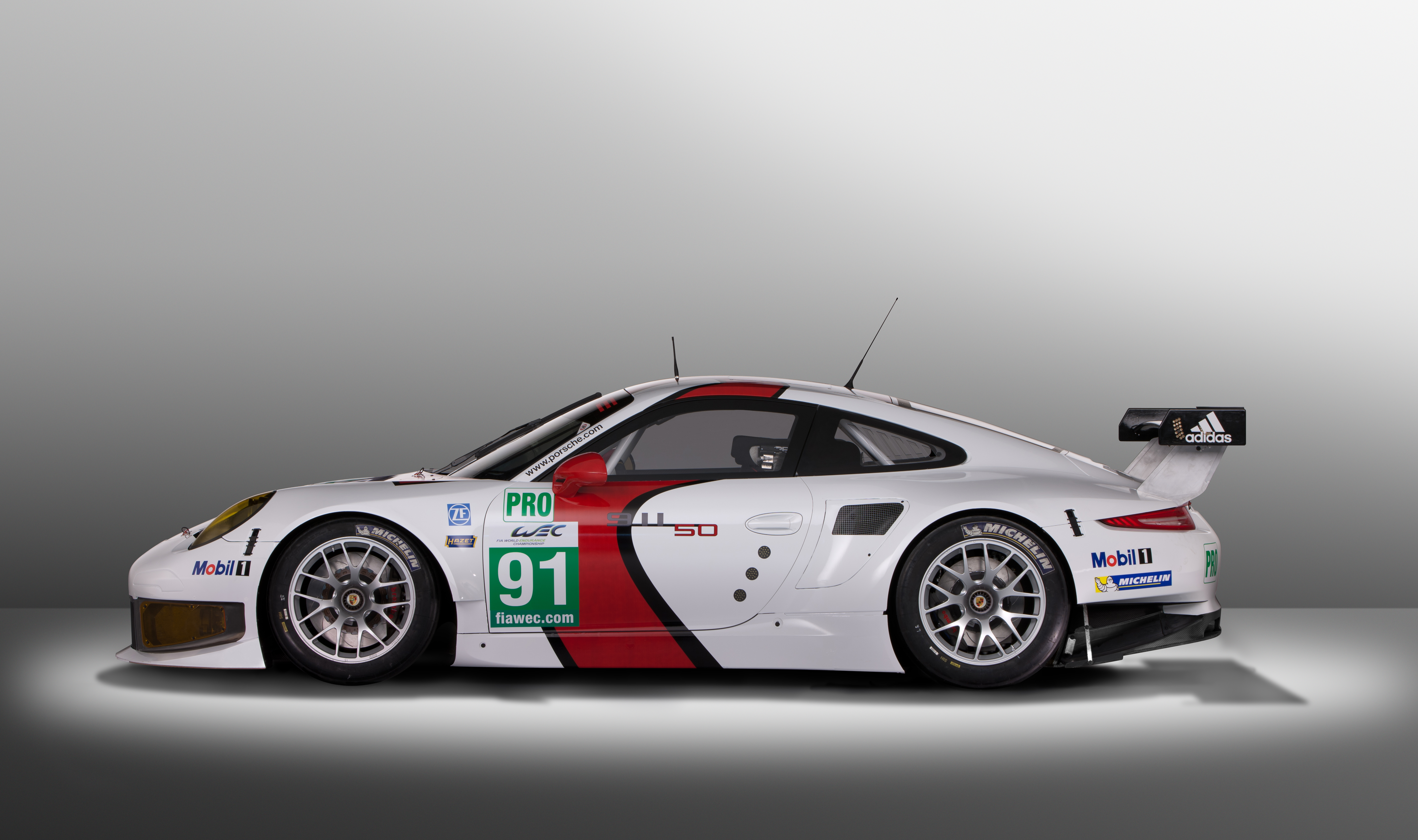
Stuttgart. Porsche has developed a new GT race car for the World Endurance Championship (WEC) and the Le Mans 24 Hours. The new 911 RSR is characterised by consequent lightweight design and sophisticated aerodynamics. The exceptional vehicle styling honours a very special anniversary:

Porsche 911 RSR

Porsche 911 RSR

From a bird’s eye perspective, the numbers 50 and 911 are visible. These stand for 50 years of the Porsche 911. The Porsche AG Team Manthey works squad exclusively fields two Porsche 911 RSR in the 2013 season.

Porsche 911 RSR

Porsche 911 RSR

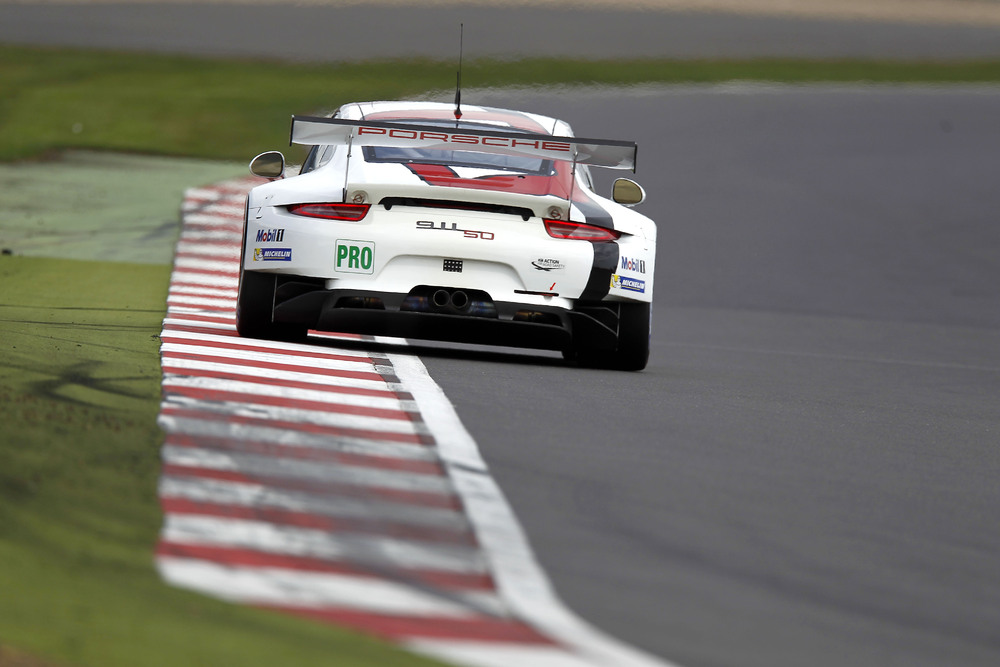
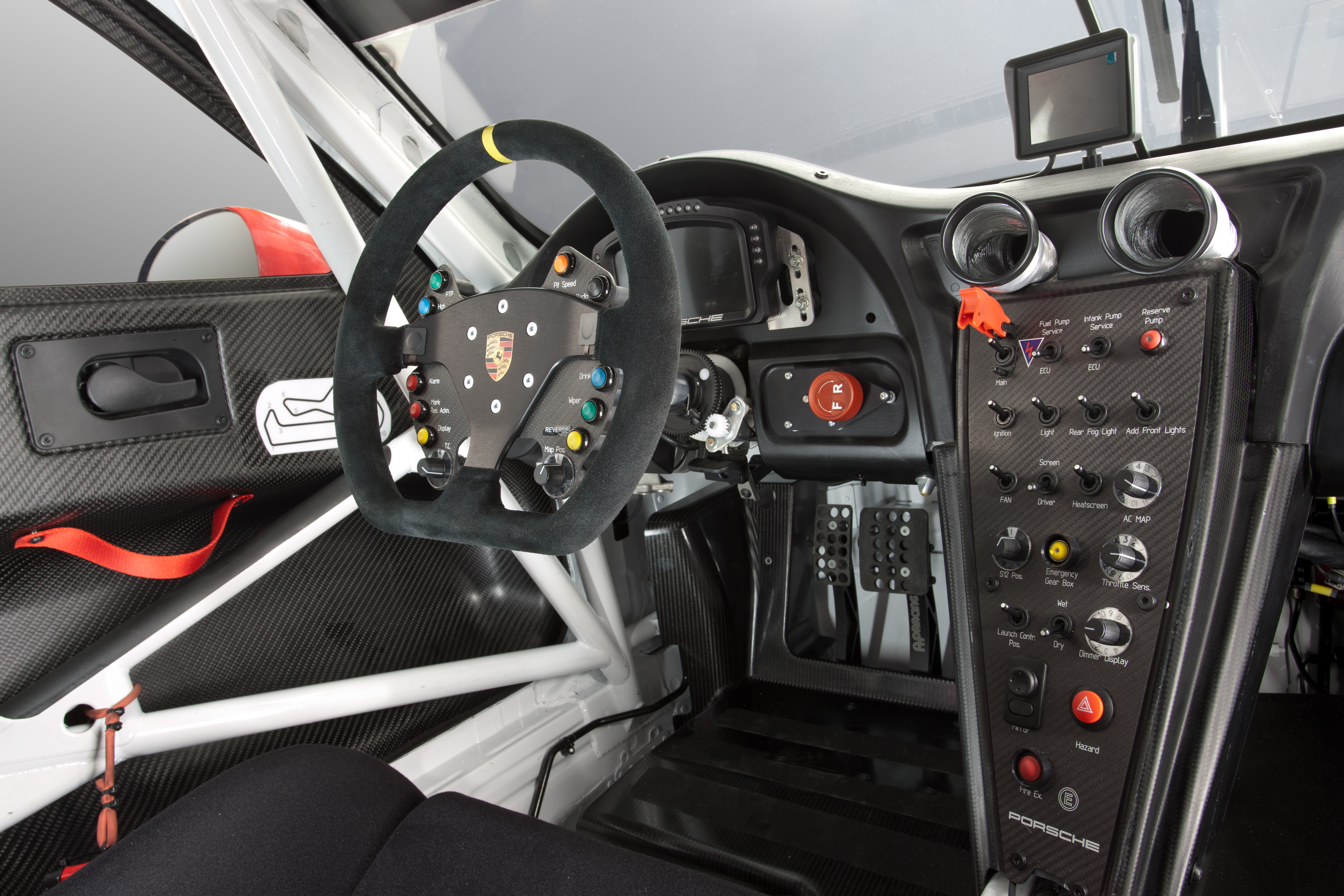
The new 911 RSR, which is based on the seventh generation of the iconic 911 sports car, follows in the footsteps of its successful predecessor, the 911 GT3 RSR. As with the production vehicle, the wheelbase grew by about ten centimetres. A new wishbone front suspension replaces the previously used McPherson struts. Another new development from Porsche Motorsport is the particularly lightweight racing gearbox. The six gears are selected via paddles on the steering wheel. The 460 hp, 4.0-litre six-cylinder boxer engine was taken from the predecessor and optimised in detail.

Porsche 911 RSR

Porsche 911 RSR

One of the priorities in the development of the new 911 RSR was the more evenly balanced weight distribution. The centre of gravity is also significantly lower than that of its predecessor. Carbon fibre played a crucial role in the new design. The front and rear mudguards, front and rear lids, doors, underbody, wheel arches, rear wing, dashboard and centre console are constructed from the very light and strong material. Moreover, all windows are made of particularly thin and light polycarbonate. Also contributing to the weight reduction is the lithium-ion battery known from the GT road-legal models.

Porsche 911 RSR

Porsche 911 RSR

The look of the new 911 RSR is dominated by the flared mudguards and the deep cooling air intakes at the front. With the new air ducting, the radiator is now centrally-located in the front and even more effective than in the previous model. At the same time, the cockpit air conditioning became more efficient. The quick-change concept of the body parts was specially adapted for endurance racing, allowing for easier maintenance and shorter repair times. The front end, front lid and rear panel are fitted with quick release systems and can be replaced within seconds.

Porsche 911 RSR

Porsche 911 RSR

Competing in the Porsche 911 RSR with starting number 92 are Porsche works drivers Marc Lieb (Germany) and Richard Lietz (Austria), who already shared a cockpit in the 2012 WEC. At the first two races of the season in Silverstone (14.4) and Spa (4.5) as well as at the 24 Hours of Le Mans (22.6), they receive support from their works driver colleague Romain Dumas (France).

Richard Leitz

Richard Leitz

Marc Lieb

Marc Lieb

Romain Dumas

Romain Dumas

Factory pilots also drive the #91 sister car, with Joerg Bergmeister (Germany) and Patrick Pilet (FR)  making up a team. In Silverstone, Spa and Le Mans, the duo is joined by Timo Bernhard (Germany).

Joerg Bergmeister

Joerg Bergmeister

Timo Bernhard

Timo Bernhard

Patrick Pilet

Patrick Pilet

SOURCE: Porsche AG Media Database

Communication Porsche AG
Motorsport Press


Tags: , , , , , , , , , , , , , , , ,

Porsche at the Techno Classica 2013, 50 years anniversary of Porsche 911

tce2013

Porsche at the Techno Classica 2013

StuttgartPorsche Classic will be in attendance at the world’s largest old-timer car show in Essen from April 10 to 14, 2013.

911 Carrera 4S Coupé and 911 2.0 Coupé (Model Year 1964)

911 Carrera 4S Coupé and 911 2.0 Coupé (Model Year 1964)

The extensive range of Classic Genuine Parts and the full spectrum of services provided by the Porsche Classic workshop for the restoration, maintenance and repair of classic Porsche vehicles will be on show in Hall 7.0. The main focus at the spacious exhibition stand will be on the 50th anniversary of the Porsche 911. The sports car icon from Zuffenhausen has excited car enthusiasts all over the world for five decades.

S13_0029

Few other automobiles in the world can look back on such a long tradition and such continuity as the Porsche 911. It has been inspiring car enthusiasts the world over since its debut as the model 901 at the IAA International Automotive Show in September 1963.

Porsche 911 Carrera 4S Coupé and Porsche 911 2.0 Coupé (Model Year 1964)

Porsche 911 Carrera 4S Coupé and Porsche 911 2.0 Coupé (Model Year 1964)

Today it is considered the quintessential sports car, the benchmark for all others. The 911 is also the central point of reference for all other Porsche series. Over 820,000 Porsche 911s have been built, making it to one of the most successful sports car in the world. Like no other vehicle, the 911 reconciles apparent contradictions such as sportiness and everyday practicality, tradition and innovation, exclusivity and social acceptance, design and functionality. And about 70 percent of all built 911 are still driving on the streets today.

Porsche Classic will take this opportunity to present four 911 models to illustrate the broad scope of the 911’s history. Two early coupés will provide visitors with an insight into the technology of the first 911 models: one 911 (1964) currently being restored in the Porsche Classic workshop as well as a 911 (1965) straight from the Porsche Museum.

The 911 Turbo Cabriolet concept car will also be on show in Essen. This made its debut in September 1981 at the IAA in Frankfurt. Porsche Exclusive and Tequipment will present the modern 911 range with a current 911 (type 991) which has been specially equipped to demonstrate the broad range of personalisation options. In addition, fans of the 911 predecessor, the 356, will not be disappointed at the Techno Classica, as Porsche Classic will be presenting a rare fully restored 356 B T5 GS Carrera GT model.

Naturally, Porsche Classic experts will be present to advise and assist visitors to the show. They will be pleased to provide information on the extensive availability of Genuine Parts for Porsche Classic models as well as insider tips on the maintenance and correct servicing of these historic vehicles. Many of the Genuine Parts and accessories from the Classic range will be presented in a large shelving unit. In this way, Porsche Classic is clearly stating that its commitment to the preservation of old sports car treasures has never been stronger. A total of 35,000 Genuine Parts for Classic vehicles are available via the Porsche Centres worldwide.

The large selection of products on show on the Porsche stand will be complemented with the Sales Truck of Driver’s Selection by Porsche Design, which has a large selection of current Porsche accessories on offer.

For further information, visit our homepage at:
http://www.porsche.com/classic

25th Techno-Classica Essen – 10th* – 14th April 2013

SOURCE: Porsche AG Media Database

Product and Technology Communication
Product Communication


Tags: , , , , , , , , , ,

Porsche Museum New special exhibition until 26 May 2013

Built in Zuffenhausen – Construction and architecture

of the Porsche Museum

Visitors to the special exhibition will learn more about the construction techniques employed for the museum from a selection of material samples.

Visitors to the special exhibition will learn more about the construction techniques employed for the museum from a selection of material samples.


Stuttgart. Ever since it first opened in 2009, the Porsche Museum has fascinated visitors with its combination of unique vehicles and stunning architecture.
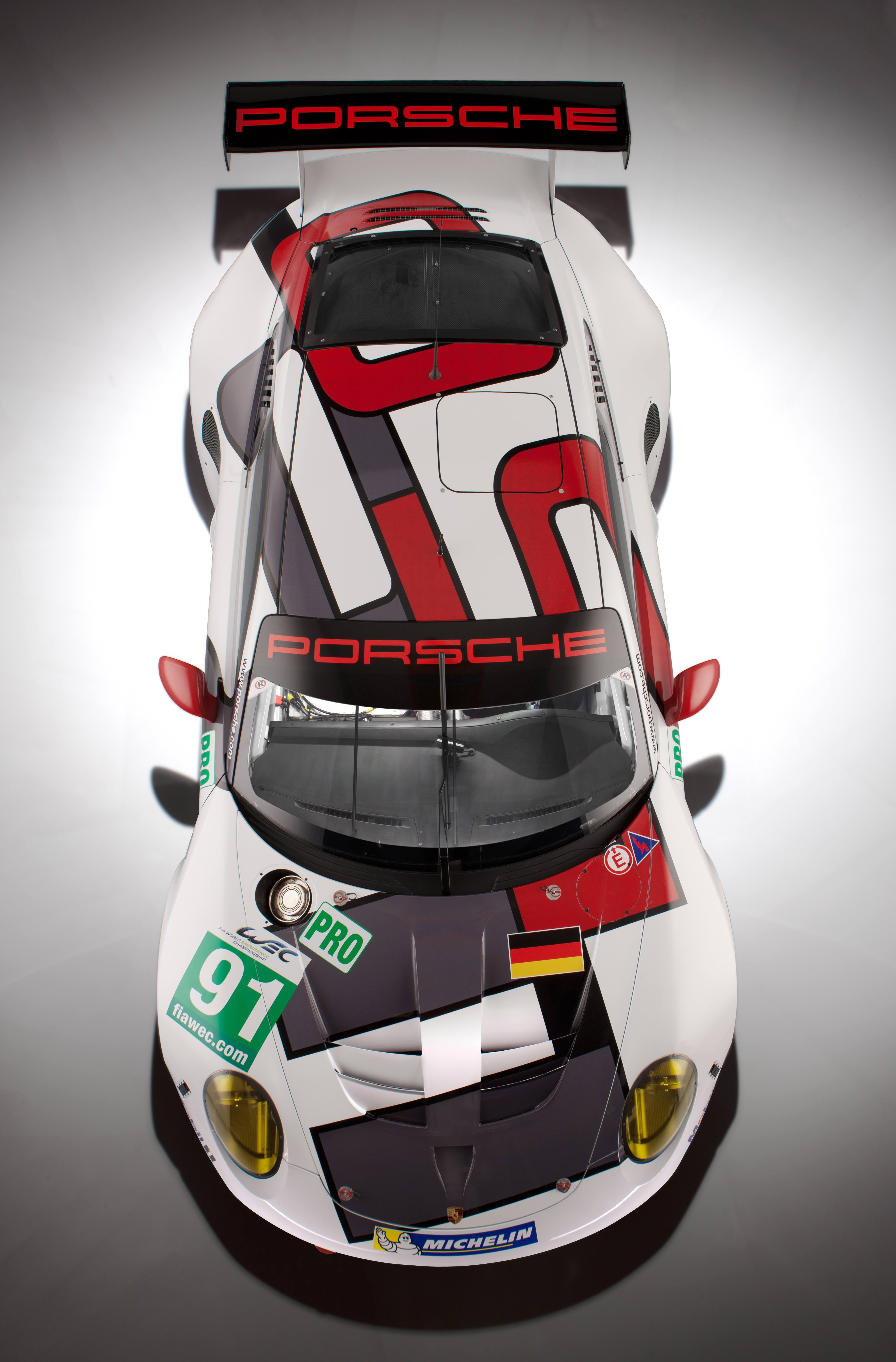
From now until 26 May 2013, a special exhibition staged by the sports automobile manufacturer will show the making of what is probably the most spectacular architectural project in the history of the company. For the first time, diverse exhibits and technical drawings will explain how the museum came into being and present the structural challenges involved in its creation.

Diverse exhibits and technical drawings will explain the structural challenges involved in its creation.

Diverse exhibits and technical drawings will explain the structural challenges involved in its creation.

“Built in Zuffenhausen” will be centred around the design by Delugan Meissl Associated Architects of Vienna, winner of the architects’ competition in 2005. Visitors to the special exhibition will also learn more about the construction techniques employed for the museum from a selection of material samples. Plans and models submitted by the architectural practices which participated in the competition can likewise be admired – some of them never before seen in public.

The simple facts and figures about the museum building are equally impressive. More tons of steel were used to build the Porsche Museum, for instance, than the Eiffel Tower in Paris. The monolithic body, weighing 35.000 tons, rises 45 metres above Porsche Square and is supported on a highly complex steel skeleton.
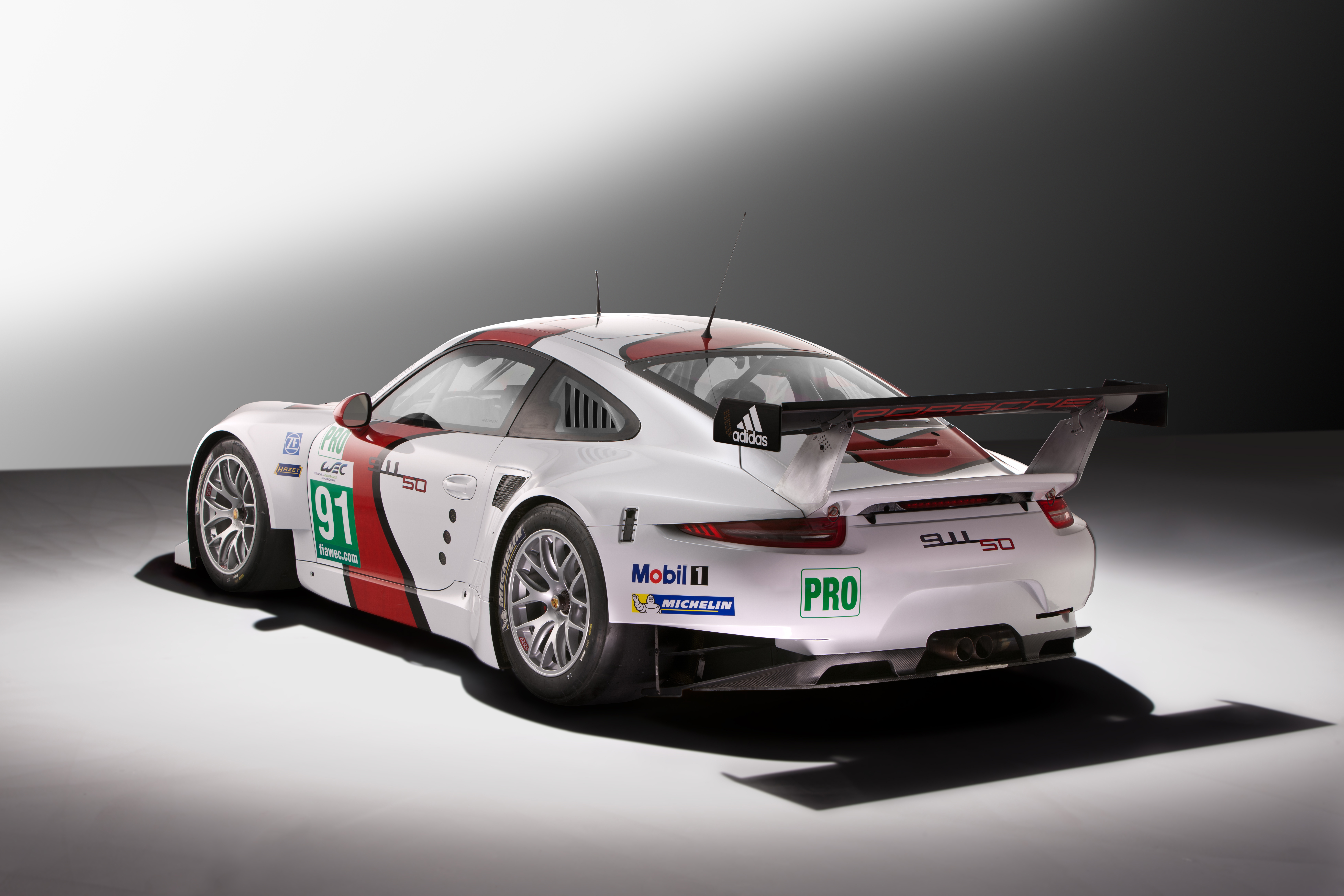
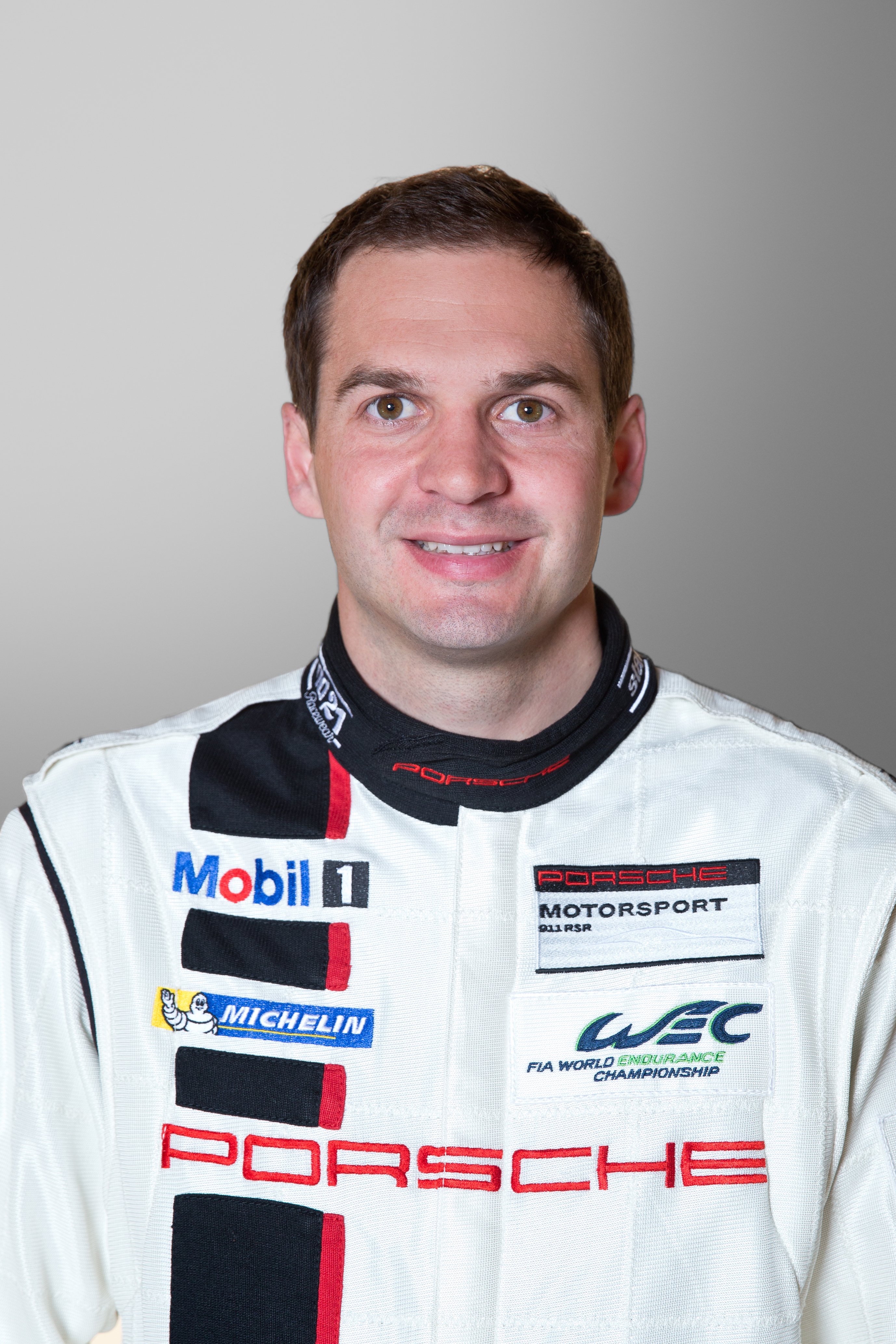
Resting on just three V-shaped columns, the museum’s dominant main structure appears to hover in mid-air. Its central location on Porsche Square reflects the close ties with the sports automobile manufacturer and its Zuffenhausen headquarters. Today, the Porsche Museum is a centre of knowledge about the history of the sports car brand and Porsche Square would be unthinkable without it.

Visitors can take advantage of an extended themed tour covering both the museum itself and the special exhibition.

Visitors can take advantage of an extended themed tour covering both the museum itself and the special exhibition.

“Built in Zuffenhausen” is being used as an opportunity to supplement the one-hour architectural tour with a visit to the special exhibition. At 3 p.m. on Wednesdays and Sundays, visitors can take advantage of an extended themed tour covering both the museum itself and the special exhibition at a price of four euros per person (on top of the normal cost).

New special exhibition until 26 May 2013: Built in Zuffenhausen - Construction and architecture of the Porsche Museum

New special exhibition until 26 May 2013: Built in Zuffenhausen – Construction and architecture of the Porsche Museum

The Porsche Museum is open from 9 a.m. to 6 p.m. on Tuesdays to Sundays. The admission price is 8 euros for adults or 4 euros for children and concessions. Children up to the age of 14 are entitled to free admission when accompanied by an adult. More information can be found on the Internet at http://www.porsche.com/museum.

Source: Porsche AG Media Database

Communication Porsche AG
Porsche Museum


Tags: , , , , , , ,

Porsche Juniors 2013: The most intensive youth development ever

P01_0305_cymk

Stuttgart. Never before has Porsche supported so many young drivers at one time. Four Porsche Juniors will tackle Porsche’s brand trophy series in 2013.

Now that they have chosen the teams with which they will compete, the four talented young racers enter the critical phase of preparation for the 2013 season.

Austria’s Klaus Bachler (21) contests the Porsche Mobil 1 Supercup, which starts on 12 May in Barcelona, with FÖRCH Racing.

Klaus Bachler (A), Porsche Junior

Klaus Bachler (A), Porsche Junior

Michael Christensen (22) from Denmark drives for the new French Supercup team DAMS, last year’s champions of the GP2 Series.

Michael Christensen, Porsche Junior

Michael Christensen, Porsche Junior

In the Porsche Carrera Cup Deutschland which kicks off in Hockenheim on 4 May, Spaniard Alex Riberas Bou (19) competes for Attempto Racing,

Alex Riberas Bou (ESP), Porsche Junior

Alex Riberas Bou (ESP), Porsche Junior

with American Connor de Phillippi (20) driving for FÖRCH Racing by Lukas Motorsport.

Connor de Phillippi (USA), Porsche Junior

Connor de Phillippi (USA), Porsche Junior

For Klaus Bachler and Michael Christensen, 2013 marks their second year as Porsche Juniors. Last year the pair contested the Porsche Carrera Cup Deutschland and promptly demonstrated their ability: Michael Christensen celebrated his first victory at the season final in Hockenheim, whilst Klaus Bachler scored a podium spot at his home race on the Red Bull Ring. In the international Porsche Mobil 1 Supercup run as support for the Formula 1 races they are now eager to forge ahead with their successes.

Hartmut Kristen, Head of Porsche Motorsport

Hartmut Kristen, Head of Porsche Motorsport

Porsche’s Head of Motorsport Hartmut Kristen is convinced that they will succeed in this with the new 460 hp Porsche 911 GT3 Cup that was developed parallel to the recently presented 911 GT3 at the Geneva Motor Show. “They have huge potential and are following the path that we had in mind for our junior support programme.”

As a thank you for their strong performance in the Porsche Carrera Cup Deutschland, the juniors are not only promoted to the top series of Porsche’s brand championships. With support from Porsche, they also contested the famed 24 Hours at Daytona/Florida in January which proved to be not just a fantastic new experience for the pair but also gave them an added motivation.


“This is a big vote of confidence from Porsche. I will again work hard to live up to these expectations,” says Michael Christensen. And for Klaus Bachler, “it’s a dream come true. I’ve learned a great deal in the Carrera Cup and I’m now looking forward to using what I have learned in the Supercup.”

The duo joined the Porsche works drivers at a training camp in Tenerife to build up the fitness levels required for the demands of a long racing season.

Alex Riberas Bou and Connor de Phillippi tackle their first season as Porsche Juniors. In a tough, two-tiered selection process where factors like fitness, mental strength and technical understanding as well working with engineers, and simulated qualifying laps were taken into account, in Potsdam and Vallelunga the two outshone other talented youngsters from all over the world.

“I’m very proud to be chosen by Porsche, especially when I see how the careers of many successful Porsche works drivers began as junior drivers,” says Alex Riberas Bou.

Connor de Phillippi, who like Alex Riberas Bou has driven single-seaters until now, is looking forward to getting behind the wheel of last year’s spec Porsche 911 GT3 Cup.

“It’ll undoubtedly be a huge challenge.”

Porsche takes on a large proportion of the four juniors’ budget for the season and also assigns them Sascha Maassen as a junior coach. The successful professional racer from Germany won the American Le Mans Series three times with sports prototypes and GT race cars and celebrated class victories at the 24 Hours of Le Mans and the Sebring 12 hour race. Moreover, he has a great deal of experience as a talent scout, coach and driving instructor.

Porsche Mobil 1 Supercup and the Porsche Carrera Cup Deutschland
Source: Porsche AG Media Database

Communication Porsche AG

Motorsport Press


Tags: , , , , , , , , , ,

American Le Mans, Falken Porsche, Henzler, Tandy, Sellers Third in GT at 12 Hours of Sebring

Wolf Henzler, Nick Tandy, Bryan Sellers (r - l)

Wolf Henzler, Nick Tandy, Bryan Sellers (r – l)

American Le Mans Series, round in Sebring, Florida USA

Stuttgart. At the wheel of the Porsche 911 GT3 RSR fielded by the Falken Tire squad, Porsche works driver Wolf Henzler (Germany) and his teammate Bryan Sellers (USA) and works driver Nick Tandy (GB) finished the opening round of the American Le Mans Series season on the GT podium in third place.

Porsche 911 GT3 RSR, Team Falken Tire: Wolf Henzler, Nick Tandy, Bryan Sellers

Porsche 911 GT3 RSR, Team Falken Tire: Wolf Henzler, Nick Tandy, Bryan Sellers

With this result, they were the best of the Porsche pilots on the bumpy 17-turn Sebring circuit which hosts America’s oldest endurance race.

Porsche 911 GT3 RSR, Team Falken Tire: Wolf Henzler, Nick Tandy, Bryan Sellers

Porsche 911 GT3 RSR, Team Falken Tire: Wolf Henzler, Nick Tandy, Bryan Sellers

The team qualified in 12th place in class, but Henzler timed his acceleration at the green flag perfectly, scooting to sixth place in the 500 meters between the start line and turn one. Then, with perfect pit stops and some great driving in traffic from all three racers, the customer Porsche entry outran and outlasted factory teams from Corvette, BMW, SRT Viper and Aston Martin.

Porsche 911 GT3 RSR, Team Falken Tire: Wolf Henzler, Nick Tandy, Bryan Sellers

Porsche 911 GT3 RSR, Team Falken Tire: Wolf Henzler, Nick Tandy, Bryan Sellers

“When the week began, I wouldn’t have thought we had a chance to make it on the podium as we didn’t have the speed of the others. Our Porsche was consistent, with the engine, brakes and handling all perfect, and we made up positions one at a time until we moved into the top three.

We are very satisfied with third place. We tested several times here, and that certainly helped, but we have more work to do for the season. One of the secrets to our success today was the fast and consistent driving of my colleagues Bryan and Nick,” said Henzler, the 2008 ALMS co-champion.

Porsche 911 GT3 RSR, Paul Miller Racing: Marco Holzer, Richard Lietz, Bryce Miller

Porsche 911 GT3 RSR, Paul Miller Racing: Marco Holzer, Richard Lietz, Bryce Miller

The other Porsche customer team in the GT class was the Paul Miller Racing orsche 911 GT3 RSR, with factory drivers Richard Lietz (AUS) and Marco Holzer (GER) joining Bryce Miller (USA), finished in sixth place. Holzer, who will drive this car all season with Miller, was pleased with the performance of his Porsche for the last half of the race

Porsche 911 GT3 RSR, Paul Miller Racing: Marco Holzer, Richard Lietz, Bryce Miller

Porsche 911 GT3 RSR, Paul Miller Racing: Marco Holzer, Richard Lietz, Bryce Miller

“This was not an easy race for us as our setup in the beginning needed modification, but we picked up our pace and made up four positions in the second half to give Paul Miller Racing its best Sebring finish ever.

Bryce and Richard drove great, and a sixth position gives us valuable points for the season,” said Holzer.

In the GTC class for matched Porsche 911 GT3 Cup race cars, no less than seven cars led the class during the 12-hour race, with the #66 TRG Porsche with Damien Faulkner (IRL) in the lead late in the race when an air gun failure during a tire change allowed the #22 Alex Job Racing Porsche being driven by Jeroen Bleekemolen (NL) to take the lead with 90 minutes remaining.

Porsche 911 GT3 Cup, Alex Job Racing: Jeroen Bleekemolen, Cooper MacNeil, Dion von Moltke

Porsche 911 GT3 Cup, Alex Job Racing: Jeroen Bleekemolen, Cooper MacNeil, Dion von Moltke

Bleekemolen, former Porsche Mobil1 Supercup champion, who shared the driving duties with Cooper MacNeil and Dion von Moltke (both USA), then took the car to the checkered flag to win the class.

Round two of the American Le Mans Series takes place on 20 April on the street circuit in Long Beach, California USA.

Result
GT class
1. Milner/Gavin/Westbrook (USA/GB/GB), Chevrolet Corvette, 333 laps
2. Bruni/Beretta/Malucelli (ITA/MC/ITA), Ferrari F458 Italia, 333
3. Henzler/Sellers/Tandy (GER/USA/GB), Porsche 911 GT3 RSR, 332
4. J.Mueller/Martin/Auberlen (MC/BEL/USA), BMW Z4, 330
5. Farnbacher/Goossens/Dalziel (GER/BEL/USA), SRT Viper, 329
6. Holzer/Miller/Lietz (GER/USA/AUS), Porsche 911 GT3 RSR, 329
7. D.Mueller/Hand/Edwards BMW Z4 (CH/USA/USA), BMW Z4, 321
8. Senna/Muecke/Turner (BRA/GER/GB), Aston Martin Vantage V8, 318
9. Lamy/Della Lana/Johnson (POR/CAN/USA), Aston Martin Vantage V8, 309
10. Kendall/Wittmer/Bomerito (USA/CAN/USA), SRT Viper, 303

GTC class
1. Bleekemolen/MacNeil/von Moltke (NL/USA/USA), Porsche 911 GT3 Cup, 315 laps
2. Pumpelly/Wong/Canache, Jr. (USA/USA/VEN), Porsche 911 GT3 Cup, 315
3. Edwards/Cisneros/Seefried (GB/USA/GER), Porsche 911 GT3 Cup, 314

Points’ standings
GT class
Driver
1. Oliver Gavin, Tommy Milner, Richard Westbrook, Chevrolet, 24 points
2. Gianmaria Bruni, Olivier Beretta, Matteo Malucelli, Ferrari, 20
3. Wolf Henzler, Bryan Sellers, Nick Tandy, Porsche, 17
4. Joerg Mueller, Maxime Martin, Bill Auberlen, BMW, 14
5. Ryan Dalziel, Marc Goossens, Dominik Farnbacher, SRT Viper, 12
6. Richard Lietz, Marco Holzer, Bryce Miller, Porsche, 10
7. Joey Hand, Dirk Müller, John Edwards, BMW, 7
8. Darren Turner, Stefan Muecke, Bruno Senna, Aston Martin Vantage V8, 7
9. Jonathan Bomarito, Tommy Kendall, Kuno Wittmer, SRT Viper, 6
10. Pedro Lamy, Paul Della Lena, Billy Johnson, Aston Martin Vantage V8, 5

Manufacturers – GT
1. Chevrolet, 24
2. Ferrari, 20
3. Porsche, 17
4. BMW, 14
5. SRT Viper, 12

Teams – GT
1. Corvette Racing, Chevrolet, 24
2. RISI, Ferrari, 20
3. Team Falken Tire, Porsche, 17
4. Rahal RLL, BMW, 14

The American Le Mans Series

The American Le Mans Series (ALMS) was created in 1999 for sports prototypes and GT vehicles. The field is divided into five classes that start together but are classified separately:
GT class: This most popular class amongst car manufacturers traditionally receives the most support: Slightly modified standard sports cars with 440 to 500 hp and a minimum weight of 1,245 kilograms (e.g. Porsche 911 GT3 RSR).
GTC class: This class is reserved for vehicles from one-make race series like the Porsche 911 GT3 Cup.
LMP1 class: Sports prototypes with up to 550 hp and a minimum weight of 900 kilograms.
LMP2 class: Sports prototypes with ca. 440 hp and a 900 kg minimum weight.
LMPC class: Prototype brand trophy series for the ORECA FLM 09.

SOURCE: American Le Mans Series Porsche AG Media Database
Communication Porsche AG, Motorsport Press


Tags: , , , , , , , , , , ,